Ready
Ready
Best Car Emergency Kits for 2026: What Every Driver Should Keep in the Car
Your car breaks down on an interstate at night. The temperature is dropping. Your phone has 12 percent battery left. You have kids in the back seat. What do you have in the trunk?
For most drivers, the honest answer is: not much. A spare tire that has never been checked, maybe some jumper cables from three cars ago, and a blanket that belongs to someone else.
A car emergency kit does not need to be complicated or expensive. But it does need to exist, and it needs to have the right things in it. This guide covers the best prebuilt car emergency kits available right now, what they do well, where they fall short, and exactly what you should add or swap out based on where you live and how you drive.
- Handles dead batteries: Can start your car again without needing a second vehicle to help.
- Escape ability: Lets you cut a stuck seatbelt and break a window if you get trapped.
- Roadside visibility: Includes warning triangles or flashing lights so others can see you.
- Built to last: Made from strong materials that hold up when you really need them.
Below are our top picks for keeping you safe on the road. Keep reading the rest of the article to see how each one earned its spot.

NOCO Boost GB40 Jump Starter
This reliable lithium jump starter fixes the most common car emergency, a dead battery, all by itself with no second car needed. It has spark-proof and reverse polarity protection plus a built-in power bank, which makes it the safest and most useful pick for any driver.

resqme Car Escape Tool
This small keychain tool does two lifesaving jobs, cutting a jammed seatbelt and breaking a window to escape. It fits right on your keys so it is always within reach in a rollover, fire, or sinking car.

142 PCS Roadside Kit
This kit packs the most gear in one bag, with jumper cables, warning triangles, flashing lights, a tow rope, and a safety hammer. It covers a wide range of roadside problems in a single grab-and-go package.
MAXTRAX MKII Recovery Board
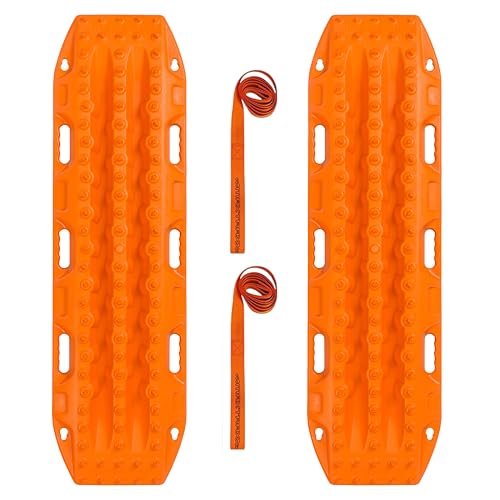
This Australian-made board is our premium pick for getting unstuck from mud, sand, or snow. Built from strong reinforced nylon with glove-friendly handles and a lifetime warranty, it is tough enough for the hardest recoveries.
In this guide



Reviewed by James W., Ryan C. & Beth O. — contributors with hands-on preparedness experience. How we test
Why Trust This Guide?
This article was researched and reviewed by contributors with hands-on experience in emergency preparedness. They have tested gear, built real systems, and lived through situations where these skills actually mattered.
Why Car Emergencies Are More Common Than People Think
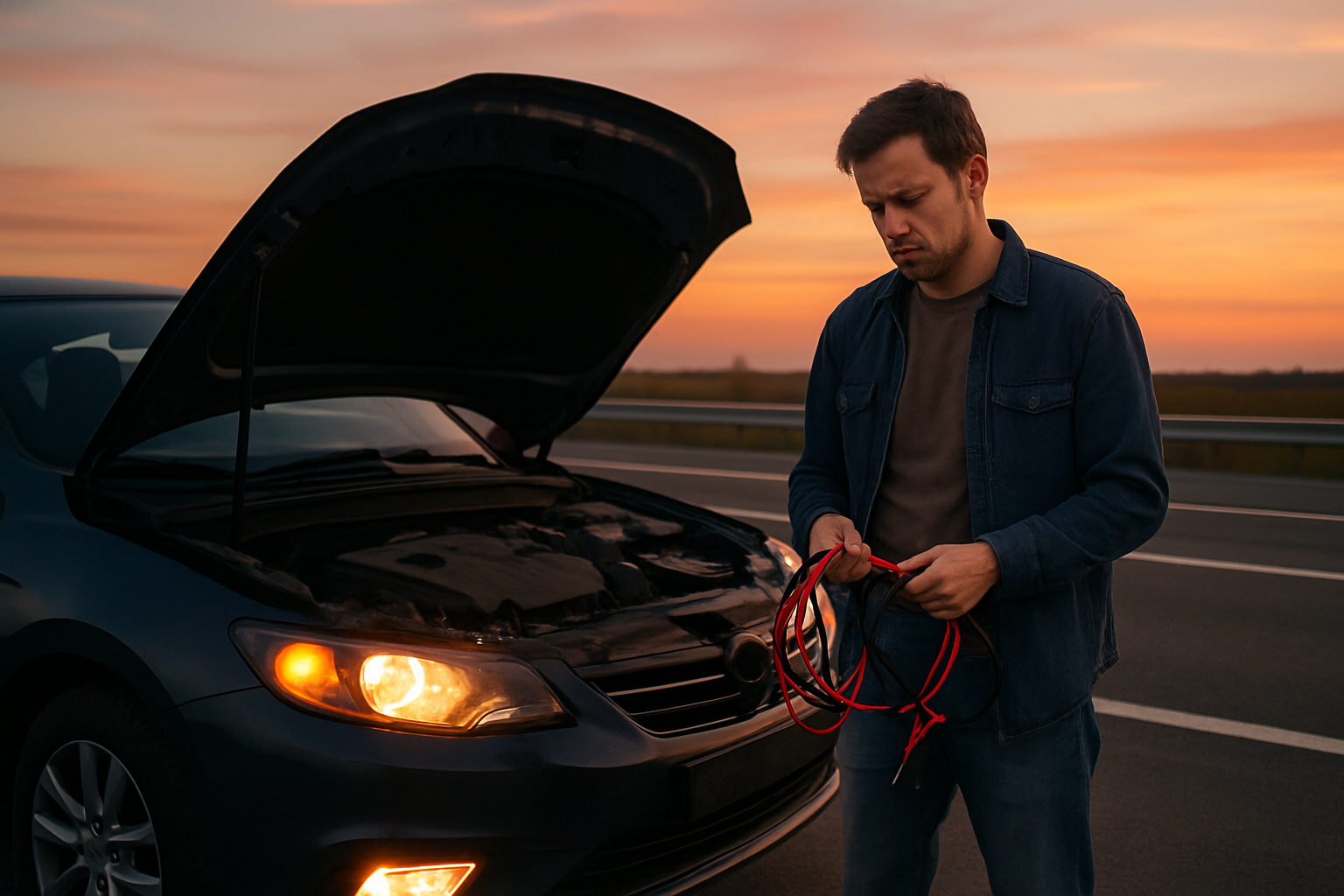
The AAA estimates that it responds to more than 30 million calls for roadside assistance every year in the United States. Dead batteries account for the largest share, followed by flat tires, lockouts, and overheating.
What those numbers do not capture is the situations that do not result in a service call: the driver who pushed a car off a rural road and waited three hours for help, the family stranded during a winter storm on a highway that closed, the solo driver whose cell service dropped after a fender bender in a canyon.
A car emergency kit does not replace roadside assistance. It buys you time, comfort, and safety while you wait. It can also handle situations that a tow truck cannot: a medical emergency, a fire, a serious injury, or a situation where help is genuinely not coming for a while.
The best time to think about this is before it happens.
What to Look for in a Car Emergency Kit
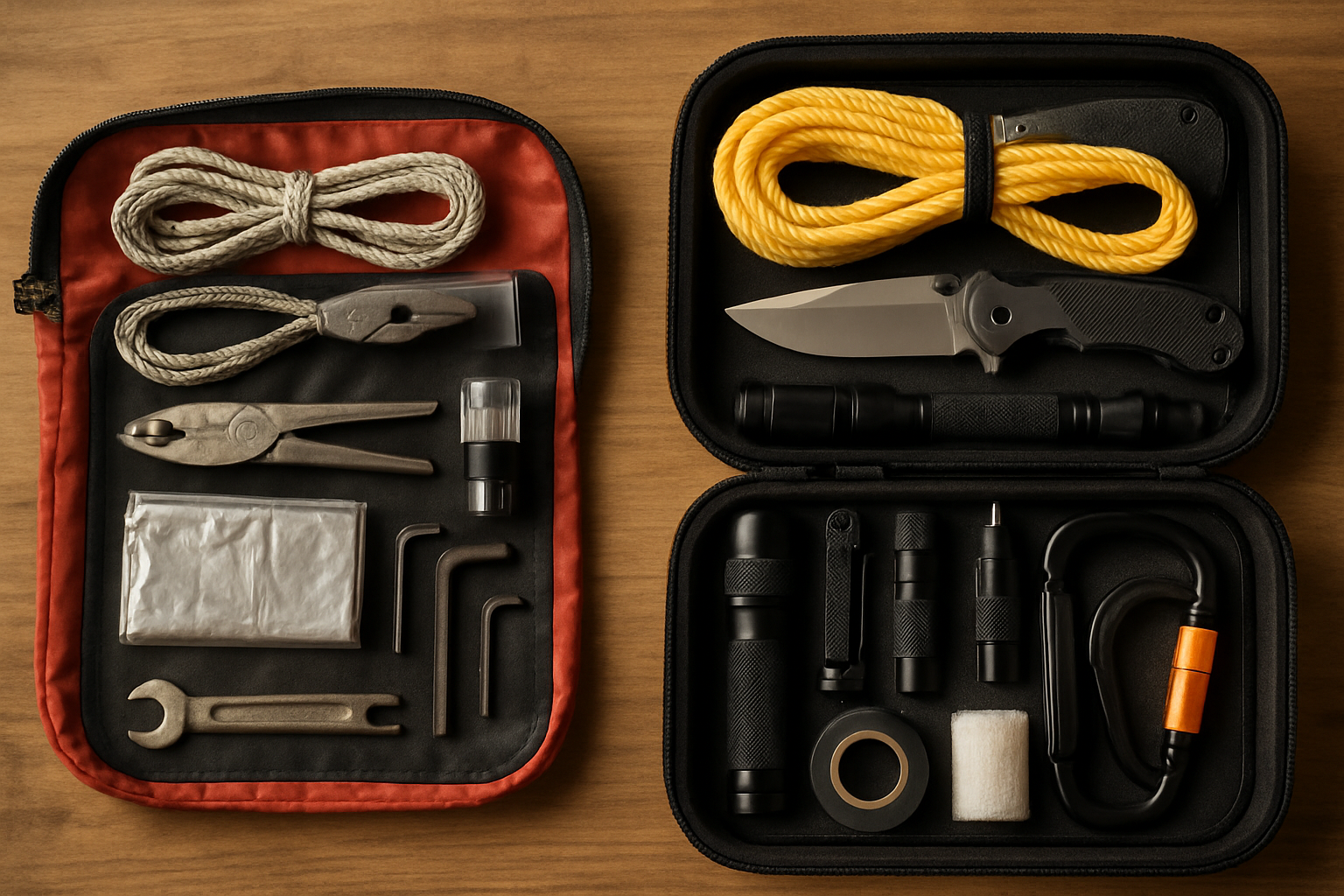
Not all car emergency kits are equal. The budget ones sold at gas stations are better than nothing, but only barely. The expensive ones sold as “professional grade” are sometimes just marketing. Here is what actually matters.
Jump start capability. A dead battery is the most common car emergency. A kit without jump capability, or without a jump starter included, is missing its most important component.
Reflective warning devices. Whether it is LED flares or reflective triangles, you need to alert oncoming traffic when your car is stopped on the road. This is not optional. It can save your life.
Basic hand tools. A screwdriver, pliers, and a utility knife. Not a full tool set. Just enough to handle the things that actually break.
Traction or recovery gear. If you drive in snow or on unpaved roads, traction boards or tow straps matter more than you think.
Warmth and shelter. An emergency blanket takes up almost no space and can prevent hypothermia if you are stranded in cold weather.
First aid basics. Not a trauma kit, but enough to handle cuts and minor injuries while waiting for help.
Quality of materials. Cheap kits have cheap cables, thin gloves, and reflective triangles that fall apart. Look for kits that specify cable gauge. 6-gauge or lower is what you want for jumper cables. 10-gauge or higher (thinner wire) is not adequate for most vehicles.
Our Top Picks for 2026
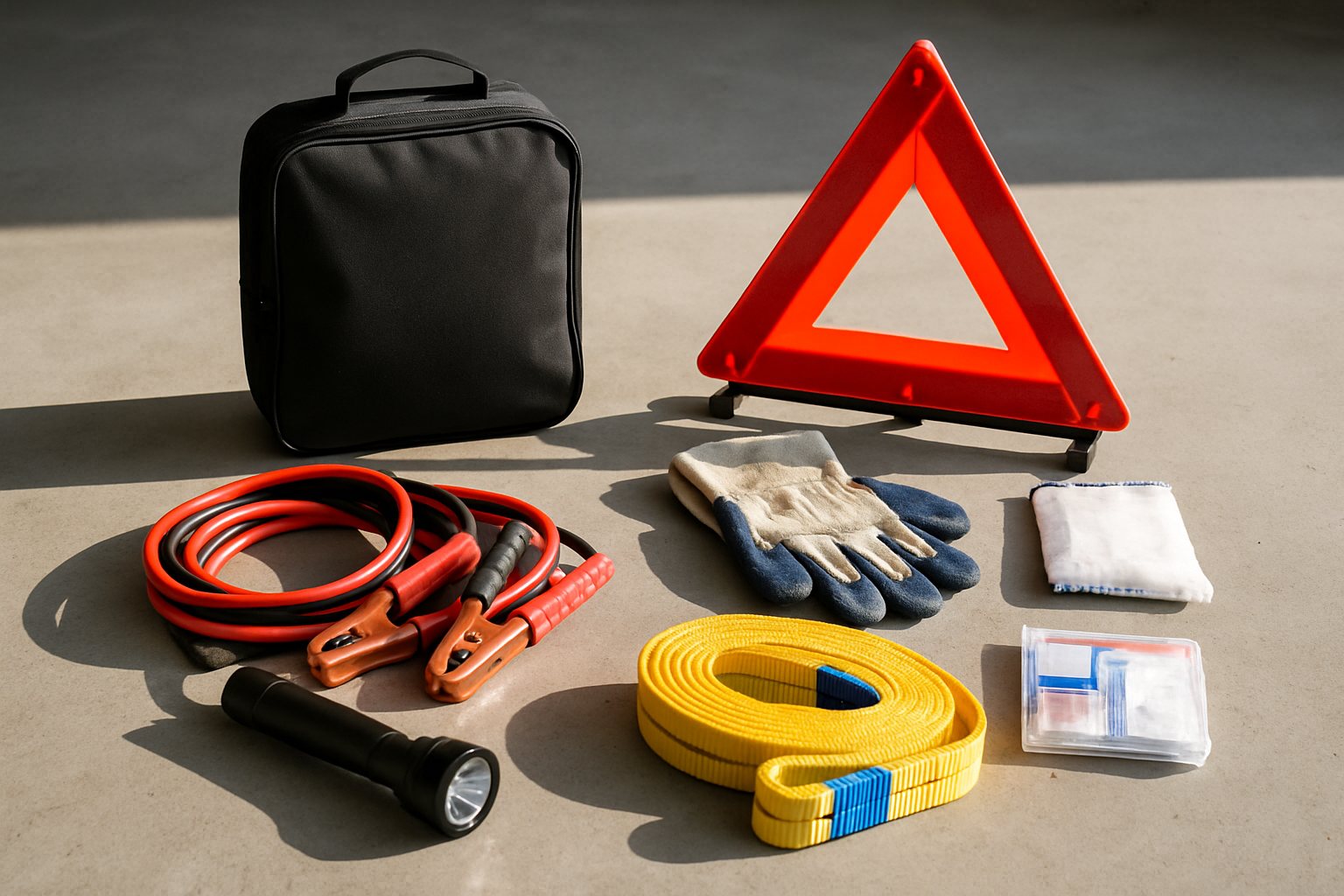
Best Overall: 142 PCS Emergency Roadside Kit for Car
The 142 PCS Emergency Roadside Kit for Car is the best all-around prebuilt car emergency kit for most drivers. It packs a lot of gear into one bag. It includes what you need for the most common roadside situations. It fits in a trunk without taking over the space. It also makes a great gift for new drivers.
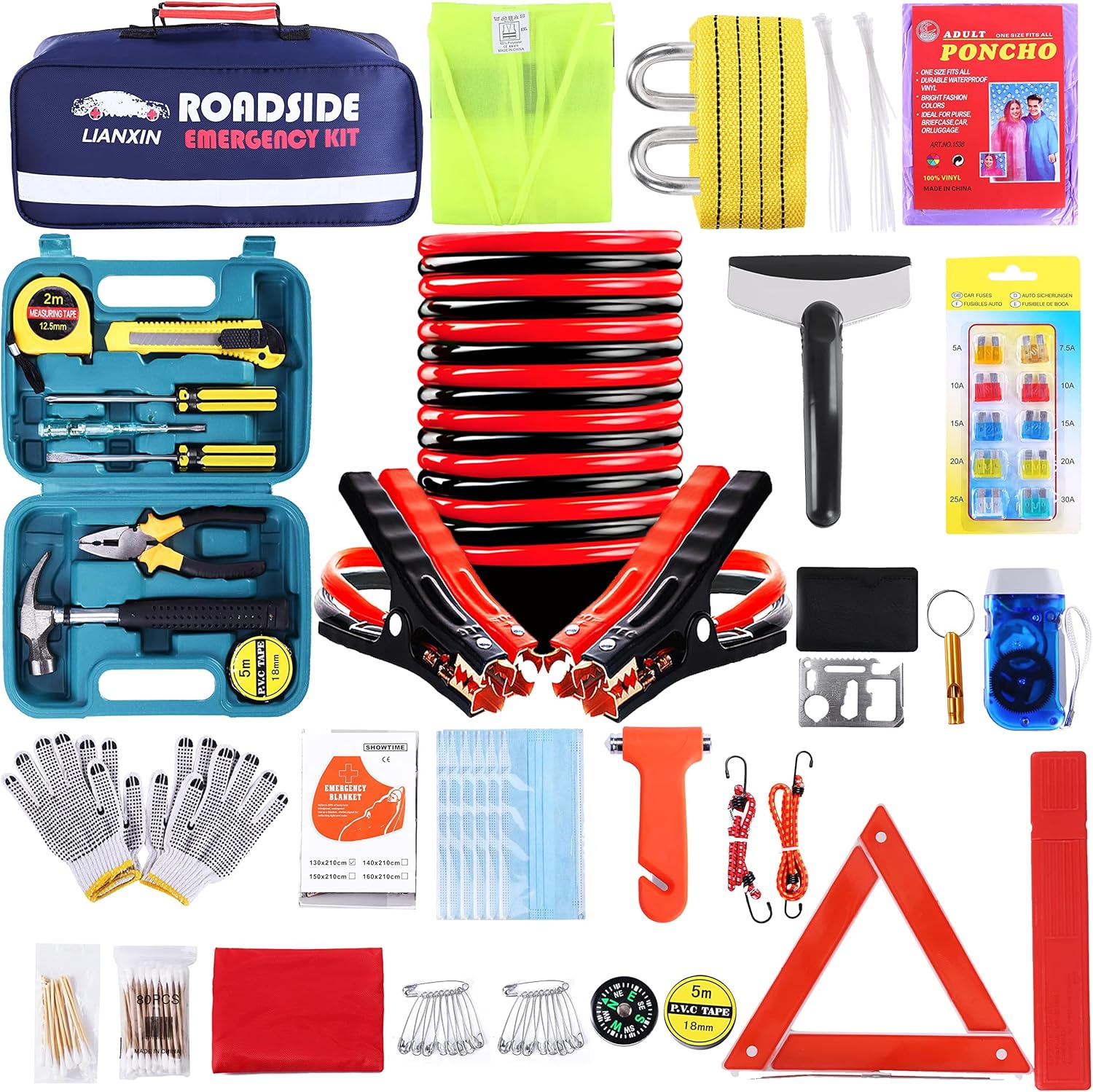
What you get: 142 pieces including jumper cables, a snow shovel, flashing lights, a reflective warning triangle, a tow rope, a safety hammer with a seat belt cutter, an emergency blanket, a raincoat, and a compass. There is also a small tool box. It has a hammer, pliers, a utility knife, a tape measure, PVC tape, a digital test pen, and 3 screwdrivers.
The jumper cables are UL certified. That makes them safer and more reliable than cables that are not certified. Four large alligator clips give a strong grip. The clips have an insulating rubber sleeve. The cables use high-quality PVC that resists freezing, cracking, and tangling. The cables are 8.2 feet long.
The tool box is small and compact. Each tool has its own spot, so things stay neat. The plastic shell is light but strong and can handle pressure.
The gap: No jump starter. The jumper cables require a second working vehicle to use. If you drive alone often, budget for a jump starter separately.
Best for: Commuter vehicles, families, new drivers, anyone who wants one kit that covers the basics without overthinking it.
Best Budget: AstroAI Emergency Roadside Kit
The Everlit Survival Car Emergency Kit is the best option under $30 for drivers who need a kit but are working with limited budget. It is not a full solution, but it is a strong foundation.
It includes jumper cables (10-gauge, 12 feet), a reflective warning triangle, a window breaker and seatbelt cutter, a flashlight, gloves, tow rope, and a rain poncho. The items are packaged in a compact bag that fits easily in a smaller trunk.
The build quality is adequate. The flashlight is basic. The jumper cables will work for most cars on a mild day but may struggle with larger engines in cold weather.
The gap: No first aid supplies. The tow rope is basic. In cold climates, add an emergency blanket and hand warmers.
Best for: Drivers who have nothing and need a starting point, younger drivers, second vehicles, gift kits.
Best for Comprehensive Coverage: Everlit Emergency Roadside Kit
Car Roadside Emergency Kit, Premium is one of the most complete prebuilt kits on the market. It includes 100-plus pieces: jumper cables, LED road flares, tow strap, first aid supplies, fire extinguisher, emergency hammer, multi-tool, duct tape, rain poncho, blanket, and a number of smaller items.

The fire extinguisher is a notable inclusion. Most kits skip it entirely. A small fire extinguisher in your car is something most people do not think about until they need one, and then they need it badly.
The bag is large and organized into sections. It is not subtle. This is a trunk kit, not a glovebox kit.
The gap: The fire extinguisher is small. It is enough to handle a small engine fire or a burning road debris fire, but not a fully engulfed vehicle. Still, it is better than nothing. The jumper cables are 8-gauge, which is an improvement over many competitors.
Best for: Families, road trippers, anyone who wants the most comprehensive prebuilt kit available without building one from scratch.
Best for Families: Kolo Sports Emergency Roadside Kit
The Kolo Sports 156-Piece Roadside Emergency Car Kit stands out for families with kids because it takes a more organized, section-by-section approach that makes the kit usable under stress. When your kids are in the back seat and you are dealing with a flat tire in the rain, you do not want to dig through a pile of gear.

The kit includes 105 pieces organized in labeled pouches inside the main bag. First aid, safety, tools, and car-specific items each have their own section. The first aid pouch includes more bandage variety than most kits. It also includes a pair of work gloves, which are one of the most overlooked items in any car kit.
The gap: Like most prebuilt kits, it does not include a jump starter. The jumper cables are 10-gauge. Upgrade to a jump starter if you are frequently driving on your own.
Best for: Families, people who want organization under pressure, drivers with a longer commute who may deal with emergencies alone.
Best Jump Starter: NOCO Boost Plus GB40
No prebuilt car emergency kit includes a quality jump starter. They include jumper cables. There is a significant difference.
Jumper cables require a second vehicle to work. A jump starter works on its own. You can use it alone, at night, in a parking lot, on a rural road, without flagging down a stranger.
The NOCO Boost Plus GB40 is the most trusted jump starter for personal vehicles. It delivers 1,000 amps of peak current and can jump start most gas engines up to 6 liters and diesel engines up to 3 liters. It includes a built-in flashlight with strobe and SOS modes, and it holds a charge for up to a year in storage.
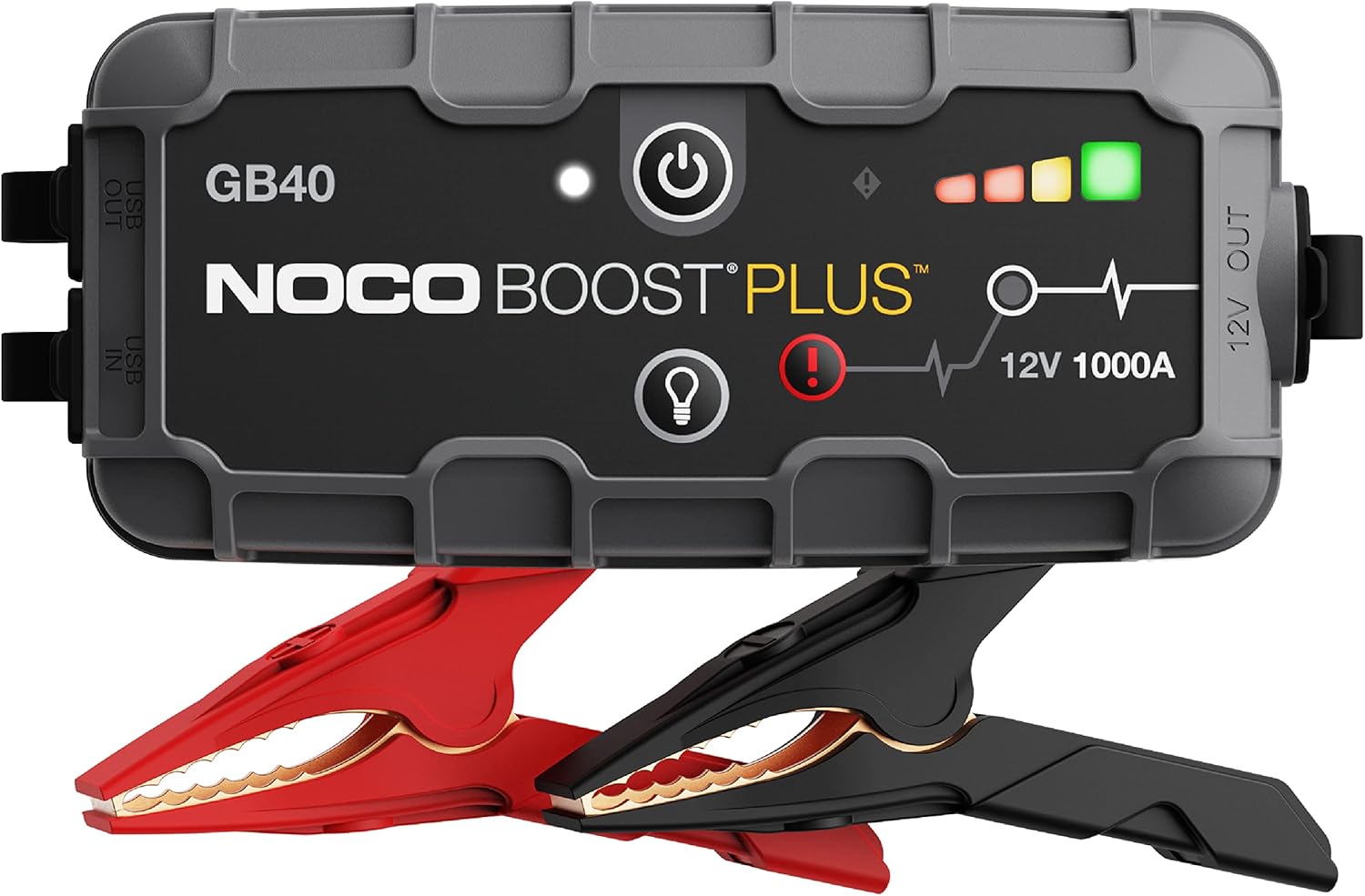
The NOCO is about the size of a large paperback book. It fits in a glovebox or door pocket. You connect the clamps to your battery terminals, wait a few seconds for the unit to register the battery, and start the car. Most people who own one say the same thing afterward: they wish they had bought it years earlier.
The gap: The GB40 is not for every vehicle. Large diesel trucks or vehicles with drained batteries may need the more powerful GB70 or GB150. Check your engine displacement before buying.
Best for: Solo drivers, anyone who drives in areas without reliable cell service, commuters who park in isolated areas, anyone who has ever been stranded with a dead battery.
Best Tire Solution: Slime 50107 Flat Tire Puncture Repair, Smart Spair
Most drivers think of the spare tire as their flat tire solution. The problem: many vehicles now come with either no spare or a compact spare that is only rated for 50 miles at reduced speeds. A tire inflator handles a slow leak or a nail puncture, which accounts for a large share of flat tires, without requiring a full tire change in the dark on the side of a highway.
The Slime 50107 Flat Tire Puncture Repair, Smart Spair includes both sealant and an electric inflator. It plugs into your 12-volt outlet. The sealant coats the inside of the tire and seals punctures up to 3/8 inch. The inflator brings the tire back to pressure. It is not a permanent fix, but it gets you to a tire shop safely.
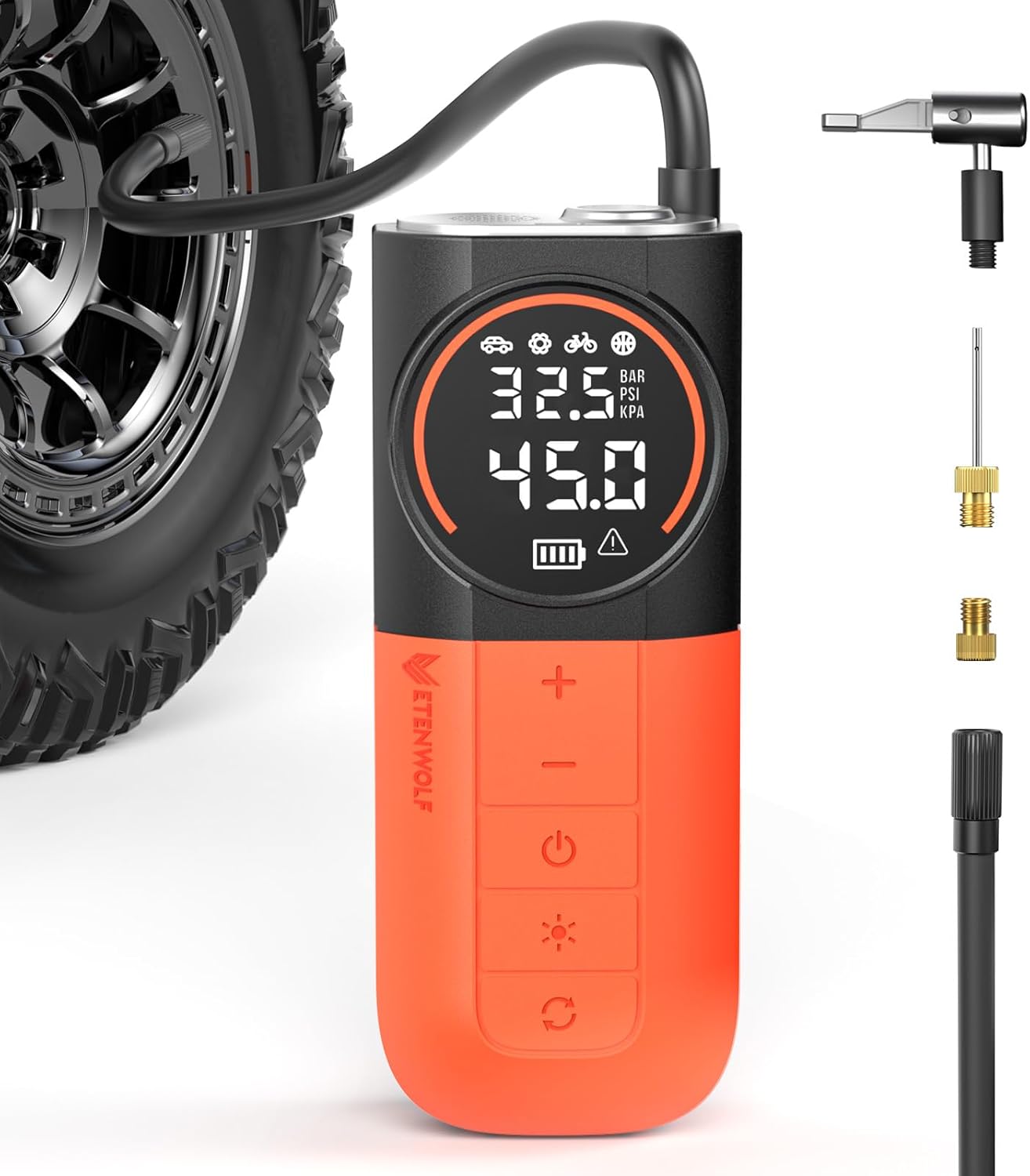
For a true tire-only inflator without sealant, the ETENWOLF S1 Tire Inflator is a compact and reliable option that fits in a glovebox. It is a cordless portable air compressor with a max pressure of 160 PSI and 20L/min airflow. It can inflate a 195/65R15 tire from 30 to 35 PSI in just 60 seconds. The 5200mAh battery can fill up to 17 car tires on a single charge. It also has an LED light and a digital pressure gauge. The air hose stores on the back, and there are slots for the ball needle and french valve adapter. It works for cars, SUVs, motorcycles, bikes, and sports balls.
Best for: Drivers without a full-size spare, anyone driving long distances on rural highways.
Quick Comparison Table
The Items Most Prebuilt Kits Miss
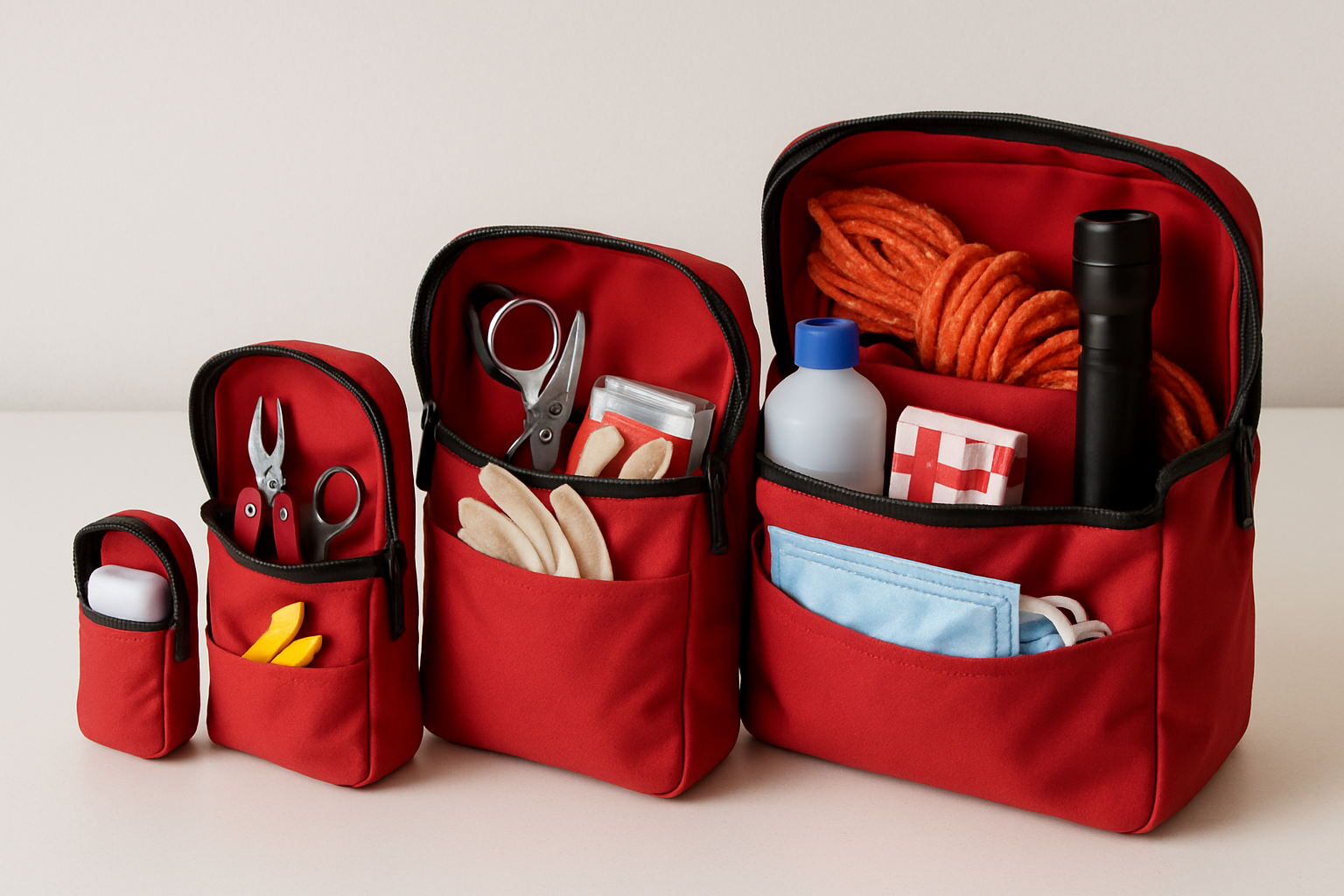
Even the best prebuilt kits leave gaps. Here are the items you should add on your own regardless of which kit you choose.
Window Breaker and Seatbelt Cutter
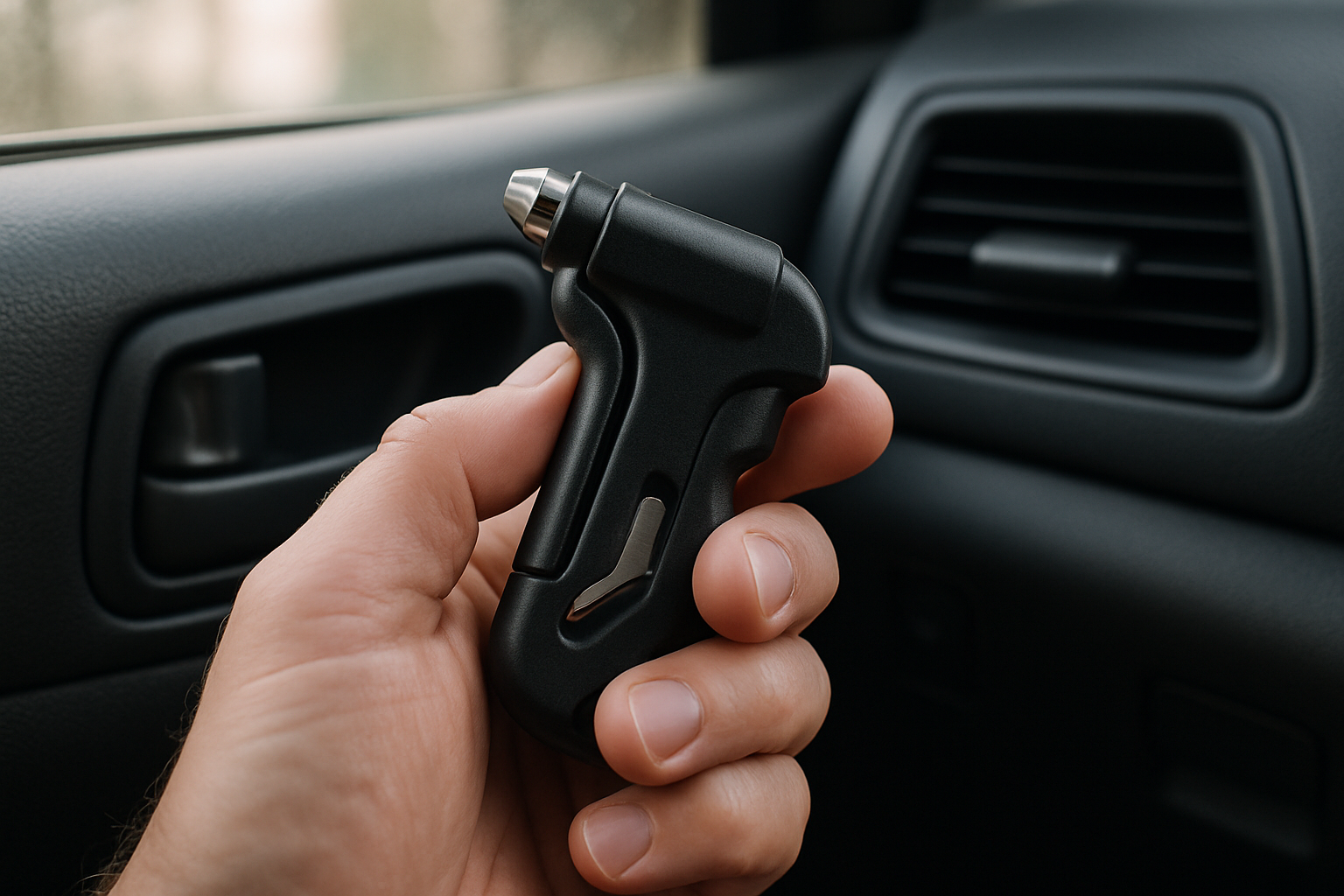
If your car ends up underwater or a door is jammed after a collision, you need a way out that does not depend on an electric window or a door handle. A window breaker and seatbelt cutter combo should be within reach from the driver’s seat, not buried in the trunk.
The ResQMe Keychain Rescue Tool attaches to your keychain and does both. It is small, it is always with you, and it has been independently tested. This is one of the highest-value preparedness purchases you can make for a vehicle.
SOL Heavy Duty Emergency Blanket
A good emergency blanket reflects up to 90 percent of your body heat back to you. They fold down to the size of a deck of cards and weigh almost nothing. If you are stranded in a cold car overnight, this can prevent hypothermia.
SOL Heavy Duty Emergency Blankets are thicker and more durable than the cheapest versions, and they are still small enough to store easily. Buy a two-pack and put one in the glovebox, one in the trunk kit.

Water and Food
Most kits include no food and no water. A roadside emergency rarely requires you to survive for days, but a few bottles of water and a handful of energy bars can make a multi-hour wait significantly more tolerable. Keep a 72-hour supply of snacks for longer trips through remote areas.
Road Flares or LED Safety Triangles
The warning devices in most prebuilt kits are basic. Actual road flares burn for 15 to 30 minutes and are highly visible in daylight and at night. LED road flares are more practical for most drivers because they are reusable and do not require flame handling on the side of a road.
Warnlamp LED Emergency Flares are bright, weather resistant, and have multiple flash modes including a steady red mode that is visible from far away. Set one behind the vehicle, one at the rear of the safety zone, and keep one near where you are working.
Work Gloves
Standard thin gloves will not protect your hands when you are dealing with a hot engine, sharp metal, or rough pavement. A pair of leather or synthetic work gloves belongs in every car kit.
Duct Tape
Yes, duct tape. A split hose, a leaking pipe, a door that will not close properly. Duct tape solves a surprising number of temporary car problems long enough to get you to a shop.
Complete Car Emergency Kit Checklist
Use this to audit your current kit or build one from scratch.
How to Store Your Kit So You Will Actually Use It
The most common problem with car emergency kits is not the contents. It is that the kit ends up buried under luggage, bags, and sports equipment, and the person who needs it in an emergency cannot get to it.
Put it somewhere you can reach it. The trunk is fine for most items. The glovebox or door pocket should have the highest-priority items: the window breaker, a small flashlight, your phone charger cable, and the emergency blanket.
Use a bag with handles. If you ever need to pull the kit out in a hurry, a bag with a grab handle is far easier than a box or a flat pouch.
Check it annually. Set a reminder every spring. Check battery levels, replace expired food and water, make sure the jump starter is charged if you have one, and confirm the tire inflator still powers on.
Label sections. Under stress, people do not think clearly. If your bag has labeled pouches for “first aid,” “tools,” and “safety,” you will find what you need faster.
What to Do When Your Car Breaks Down
Knowing what is in your kit matters less than knowing how to use it. Here is the right sequence for the most common breakdown scenarios.
Step 1: Get safe first. If you can drive, move the car fully off the road and as far from traffic as possible. If you cannot drive, put on your hazard lights immediately. Do not stay in the road.
Step 2: Place your warning devices. Once you are out of the car and in a safe position, place your reflective triangles or road flares behind the vehicle. The first one goes about 10 feet behind the car. The second goes about 100 feet back. The third goes 300 feet back if you are on a highway. This creates a warning zone that gives approaching drivers time to slow down.
Step 3: Call for help. Call roadside assistance or emergency services before you start working on the car. If you have no cell service, walk to higher ground or a visible position and try again. If you are on a highway, use the orange emergency phones located at regular intervals.
Step 4: Assess the problem. Only after you are safe and help has been called should you open the hood or start working on the car. Do not crawl under the car on the side of a road unless you have no other option.
Step 5: Manage heat and cold. If you are waiting in summer heat, stay in the shade. Run the engine briefly every 30 minutes to cool the car if safe to do so. In winter, run the engine no more than 10 minutes per hour to conserve fuel and prevent carbon monoxide buildup. Keep a window cracked.
Special Situations: What to Add for Your Region
One kit does not fit every region or driving style. Here is how to adjust based on where you live and drive.
Cold Climate Drivers
Add: Bag of kitty litter or sand for traction, a small folding shovel, extra wool blanket or sleeping bag, hand warmers, ice scraper, boot traction cleats for walking on ice.
Remove or deprioritize: Light rain poncho in favor of a heavier waterproof layer.
Desert and Hot Climate Drivers
Add: Extra water (at minimum a gallon per person), sunblock, reflective windshield shade, electrolyte packets, a hat, a lightweight emergency shelter or tarp.
Remove or deprioritize: Heavy wool blanket in favor of a lightweight emergency blanket.
Rural and Off-Road Drivers
Add: Full-size spare tire, tow strap with shackles rated for your vehicle weight, traction boards like the MAXTRAX MKII Recovery Boards, a high-lift or bottle jack, satellite communicator if you go beyond cell service, additional water and food for 72 hours.

Note: If you drive seriously remote terrain, consider a dedicated recovery kit beyond what any prebuilt car kit provides.
Parents and Families
Add: Extra emergency blankets (one per seat), child-safe snacks that tolerate heat, any prescription medications with at least a 72-hour backup supply, entertainment for kids (a deck of cards, a small book), and diapers or supplies if relevant.
Frequently Asked Questions
Do I need a car emergency kit if I have roadside assistance?
Yes. Roadside assistance covers a range of specific services: towing, jump starts, lockouts, flat tire changes. It does not cover the 45 minutes to 2 hours you may wait in the dark or cold before help arrives. It does not cover a medical emergency. It does not cover a car fire. The kit handles the gap between when something goes wrong and when help arrives.
Where is the best place to store a car emergency kit?
The trunk is the most practical location for the main kit. Heavier items like jumper cables, a tow strap, and tools belong there. Put smaller, highest-priority items in the glovebox or door pocket: window breaker, flashlight, emergency blanket, and phone charger.
How often should I replace the items in my kit?
Most items last indefinitely if stored properly. Items to rotate on a schedule: water (every 6 to 12 months), food (every 6 to 12 months), batteries (every year), and any medications (check expiration dates). Recharge your jump starter every 3 to 6 months even if it has not been used.
Is a jump starter better than jumper cables?
For solo drivers, a jump starter is significantly better. It does not require a second vehicle, which means you can use it alone, at night, in a parking lot, or anywhere. Jumper cables require finding another driver willing to help and positioning two vehicles correctly. A quality jump starter like the NOCO GB40 also doubles as a flashlight and a phone charger.
What fire extinguisher type should I get for a car?
A small ABC-rated dry chemical extinguisher works for car fires, which typically involve electrical fires and burning materials. A 1-pound or 2.5-pound extinguisher fits in a car without taking up excessive space. The First Alert Auto Fire Extinguisher is a reliable and affordable option. Mount it in the cab where you can reach it quickly, not in the trunk.
Should children learn what is in the family car emergency kit?
Yes. Kids old enough to understand basic safety should know where the kit is and what it contains. A 10-year-old can learn how to use a road flare, how to call for help, and what to do if an adult is injured or unconscious. Familiarity with the kit reduces panic in an actual emergency.
The Bottom Line
The best car emergency kit is the one that is actually in your car.
A prebuilt kit is the fastest way to get from nothing to covered. The 142 PCS Emergency Roadside Kit handles most common situations for most drivers. It comes with UL certified jumper cables, a tow rope, a warning triangle, a safety hammer, and more. Add a NOCO GB40 jump starter if you drive solo or in areas without reliable cell service. The Everlit kit is worth the higher price for road trip regulars and families.
Regardless of which kit you choose, add a window breaker and seatbelt cutter, a pair of work gloves, a Mylar blanket, and at least two bottles of water. Those four additions cost almost nothing and cover gaps that prebuilt kits almost universally leave open.
Check your kit once a year. Recharge the jump starter. Swap out the water. Make sure everyone in your family knows where the kit is and what is in it.
The goal is not to be ready for everything. The goal is to be ready for the things that actually happen on the road. A dead battery. A flat tire. A long wait in bad weather. A minor injury after a fender bender. A car emergency kit handles those situations, and that is enough.
This post contains affiliate links. If you purchase through a link on this page, we may earn a small commission at no additional cost to you. We only recommend products our contributors have evaluated or used. See our affiliate disclosure for full details.