Ready
ReadyBest Emergency Food Kits: Honest Reviews for Every Budget (2026)
Emergency food kits are not all the same. Some taste fine. Some taste like cardboard. Some claim to feed a family for a month but fall short on actual calories. This guide cuts through the marketing to help you find emergency food that works for your budget and your family.
Here is what most people get wrong: they buy a kit based on the number of servings listed on the box. A “30-day supply” sounds great until you realize it only provides 1,200 calories per day. That is not enough for most adults. By the end of this guide, you will know exactly how to read those labels and pick the right kit for your situation.
- Shelf life: Look for food that stays good for 25 years or longer.
- Serving count: Check how many meals the kit gives you per person.
- Meal variety: Pick kits with breakfasts and entrees so meals stay interesting.
- Easy storage: Choose buckets or bags that stack neatly in a closet.
Below are our top choices for building your emergency food storage. Keep reading to see how each one earned its spot.

Mountain House 14-Day Supply
This kit wins Top Pick because it blends proven reliability, great taste, and a long shelf life. With 84 servings, it feeds one person for two full weeks, making it our most dependable all-around choice.

ReadyWise 7 Day Supply
This grab bag is a solid starter kit for outages, storms, and outdoor trips. With 60 servings packed in a backpack, it keeps you ready without taking up much space.

ReadyWise 30 Day Supply
This two bucket bundle earns our premium spot with a big 296 servings of ready to eat meals. The stackable buckets store easily and keep you fueled through longer emergencies.
In this guide



Reviewed by Dale M., Elena V. & Beth O. — contributors with hands-on preparedness experience. How we test
Why Emergency Food Storage Matters
FEMA recommends keeping at least a 3-day supply of food on hand. That is the bare minimum. Most emergency preparedness experts suggest 2 weeks to 3 months depending on your situation and location.
The reasoning is simple. After a major disaster like a hurricane, earthquake, or severe winter storm, grocery stores may be closed or empty. Supply chains can take days or weeks to recover. During the Texas winter storm of 2021, some areas went without power for over a week. People who had food stored were fine. People who relied on grocery runs were not.
Emergency food is not about doomsday scenarios. It is about practical preparation for realistic events that happen every year across the country.
Why Trust This Guide?
This article was researched and reviewed by contributors with hands-on experience in emergency preparedness. They have tested gear, built real systems, and lived through situations where these skills actually mattered.
How Much Food Do You Actually Need?
The math is straightforward. Most adults need about 2,000 calories per day to maintain their weight and energy levels. Children need 1,200 to 1,800 depending on age. Older adults or people with sedentary lifestyles might need 1,600 to 1,800.
During an emergency, you may need more calories than usual. Stress burns energy. If you are doing physical work like clearing debris, walking long distances, or staying warm without heat, your calorie needs go up.
Here is how to calculate your household needs:
For a 72-hour supply (minimum):
- 1 adult: 6,000 calories
- 2 adults: 12,000 calories
- 2 adults + 2 children: 20,000 to 24,000 calories
For a 2-week supply (recommended):
- 1 adult: 28,000 calories
- 2 adults: 56,000 calories
- 2 adults + 2 children: 90,000 to 100,000 calories
When shopping, add up the total calories in a kit and divide by 2,000 to find how many adult-days it actually covers. A 30-day kit with 45,000 calories actually covers 22 days for one adult eating normally.
How to Read Emergency Food Labels
Emergency food marketing is designed to sound impressive. Here is how to see through it.
Servings vs. Meals: A “serving” in emergency food is often half a cup or less. That is not a meal. That is a snack. Look for total calories, not total servings.
Calories per day: Some kits list this directly. If they do not, add up the total calories and divide by the number of days claimed. Anything under 1,800 calories per day should be treated as a partial supply.
Sodium content: Freeze-dried and dehydrated foods tend to be high in sodium. This is not a problem for most people during a short emergency, but if you have high blood pressure or are on a sodium-restricted diet, check the nutrition facts.
Water requirements: Most emergency food requires water to prepare. Some meals need only hot water. Others can rehydrate with cold water but taste better warm. Know what your kit needs and make sure your water storage matches.
Dietary restrictions: Check ingredients if you have allergies or dietary restrictions. Many kits contain wheat, soy, dairy, or tree nuts. Vegetarian and gluten-free options exist but are less common.
Shelf Life Explained
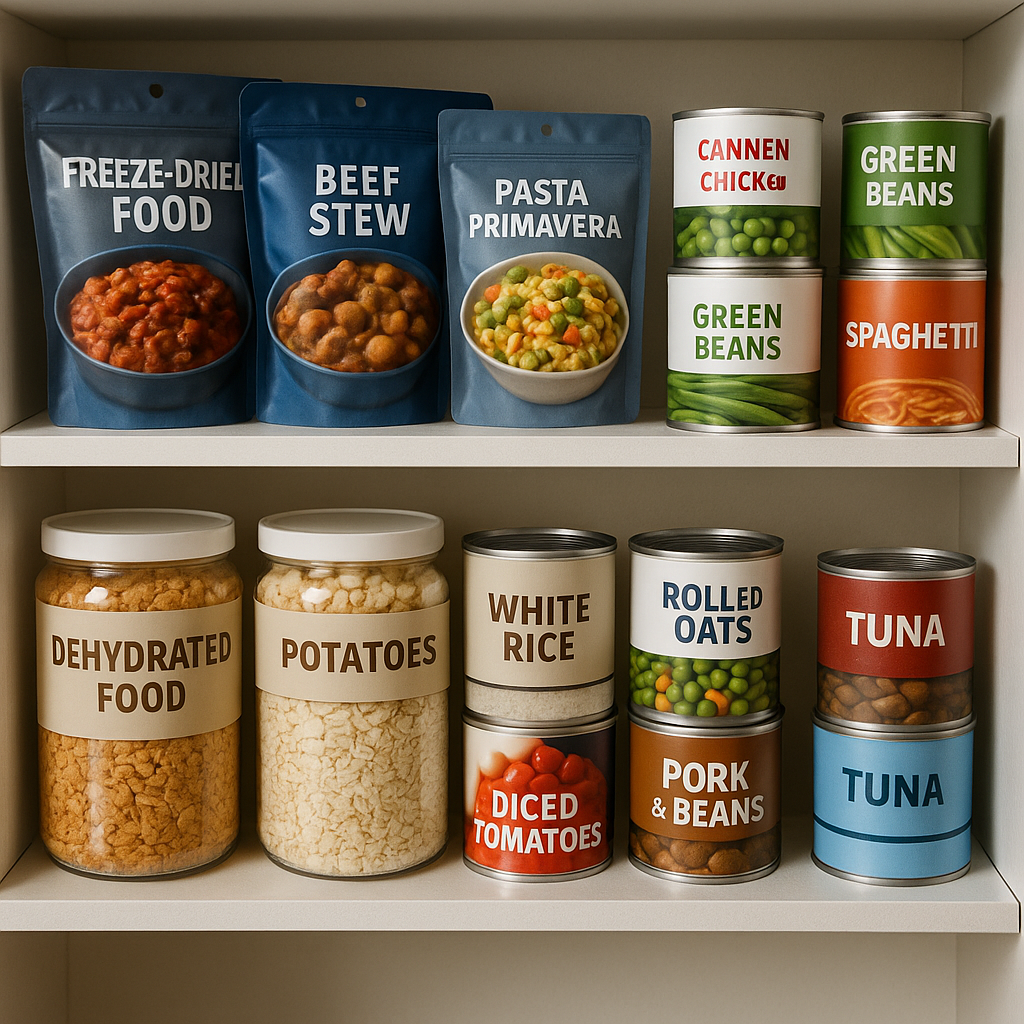
Emergency food falls into several categories based on preservation method:
Freeze-dried (25 to 30 year shelf life): The gold standard for long-term storage. Food is flash-frozen, then the moisture is removed through a vacuum process. This preserves texture, flavor, and nutrition better than other methods. Freeze-dried food is lightweight and rehydrates quickly. It is also the most expensive option per calorie.
Dehydrated (10 to 25 year shelf life): Food is dried using heat to remove moisture. This method works well for fruits, vegetables, and grains. Dehydrated food is heavier than freeze-dried because some moisture remains. It also takes longer to rehydrate and may have a chewier texture.
Canned goods (2 to 5 years): Traditional canned food from the grocery store has a shorter shelf life than specialized emergency food. However, it requires no preparation water and is ready to eat immediately. Canned beans, tuna, chicken, and soup make excellent additions to any emergency supply.
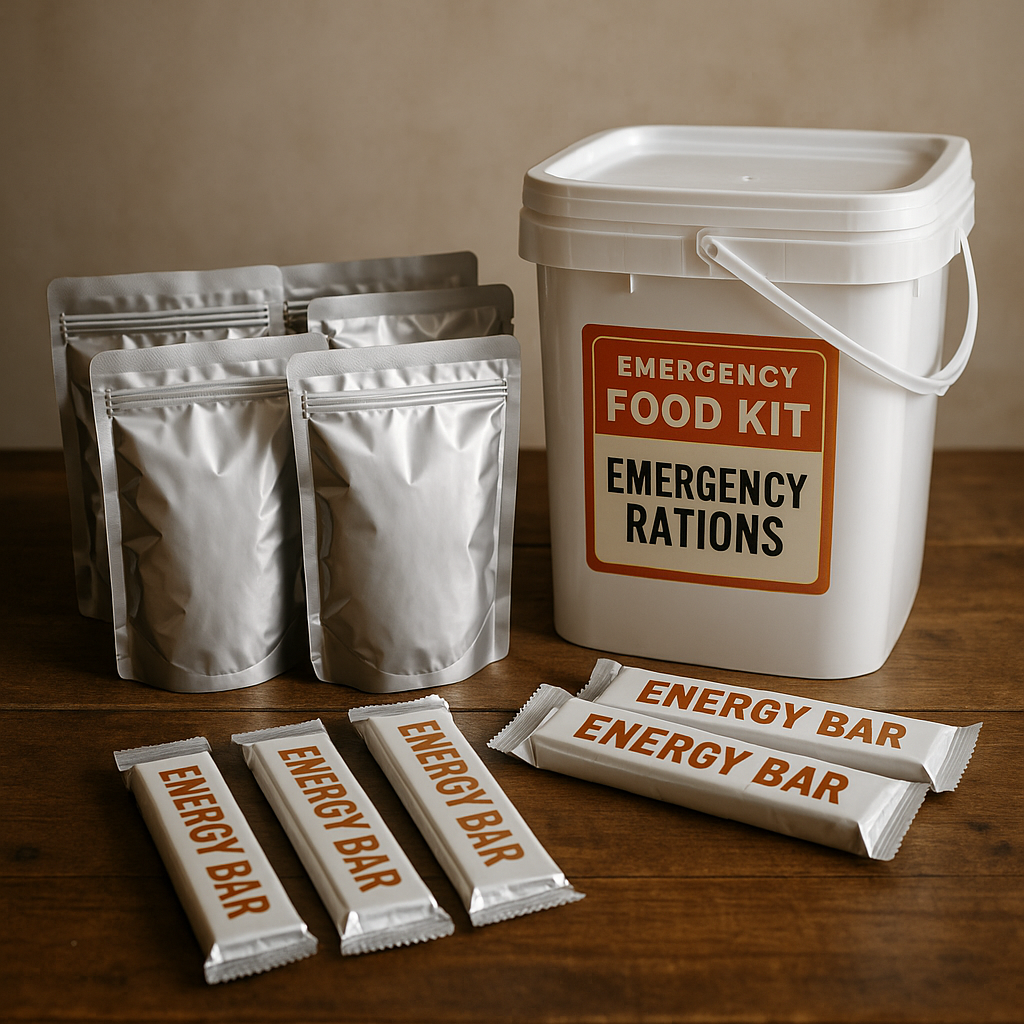
Emergency ration bars (5 years): Compact, calorie-dense bars designed for survival kits. They require no preparation and do not provoke thirst. The trade-off is monotony. Eating the same bar for every meal gets old fast.
Regarding those 25-year claims: Shelf life depends on storage conditions. The 25-year numbers assume a cool, dark, dry environment with stable temperatures. If you store food in a hot garage or a damp basement, expect shorter life. Most manufacturers recommend storage below 75 degrees Fahrenheit.
What to Look For in an Emergency Food Kit
Total calories: More important than servings. Divide total calories by 2,000 to find actual adult-days of food.
Variety: Eating the same meal three times a day is psychologically difficult. Look for kits with breakfast, lunch, and dinner options.
Preparation method: Does it need hot water, cold water, or no water? Can you eat it straight from the pouch? Simpler is better during an emergency.
Packaging: Mylar pouches with oxygen absorbers last longer than plastic containers. Resealable pouches are more convenient than single-serve packets that must be eaten immediately once opened.
Actual ingredients: Look for real food ingredients, not just flavor additives. Better kits use real vegetables, real meat, and whole grains.
Price per calorie: Divide the price by total calories to compare value across brands. Emergency food typically runs $0.25 to $0.60 per 100 calories.
Our Picks for 2026
After researching dozens of options and reading thousands of customer reviews, these are the emergency food kits we recommend.
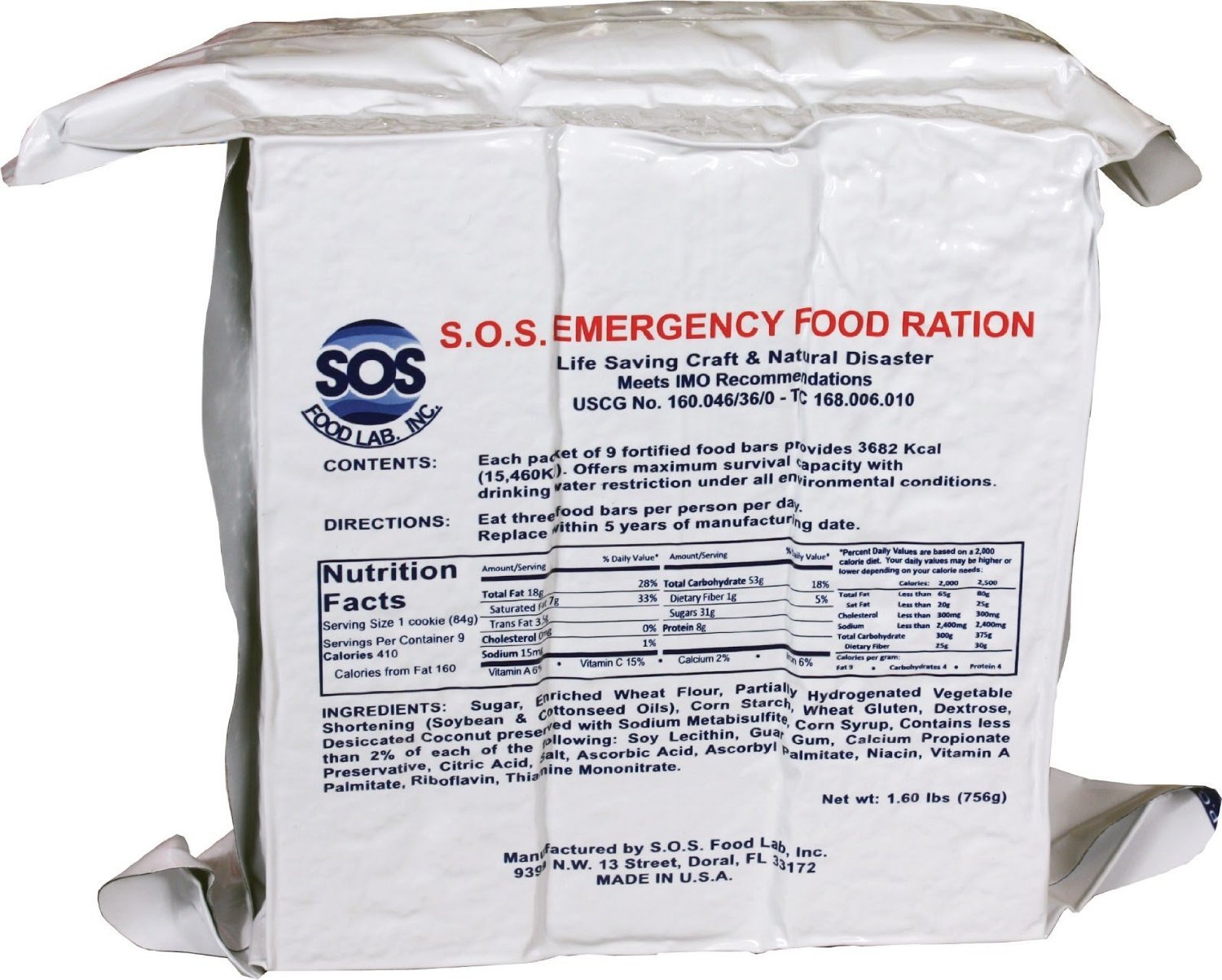
1. S.O.S. Rations Emergency 3600 Calorie Food Bar, Best Budget Option
The S.O.S. Emergency Food Rations pack 3,600 calories into a compact, ready-to-eat bar. This is the same type of ration used in life rafts and emergency boats. It requires no preparation and does not make you thirsty, which is critical when water may be limited. Perfect for car kits, bug-out bags, or as a backup to your main food supply.
- 3,600 calories per package (9 bars at 410 calories each)
- 5-year shelf life
- US Coast Guard approved
- No preparation or water needed
- Compact size fits in any emergency kit
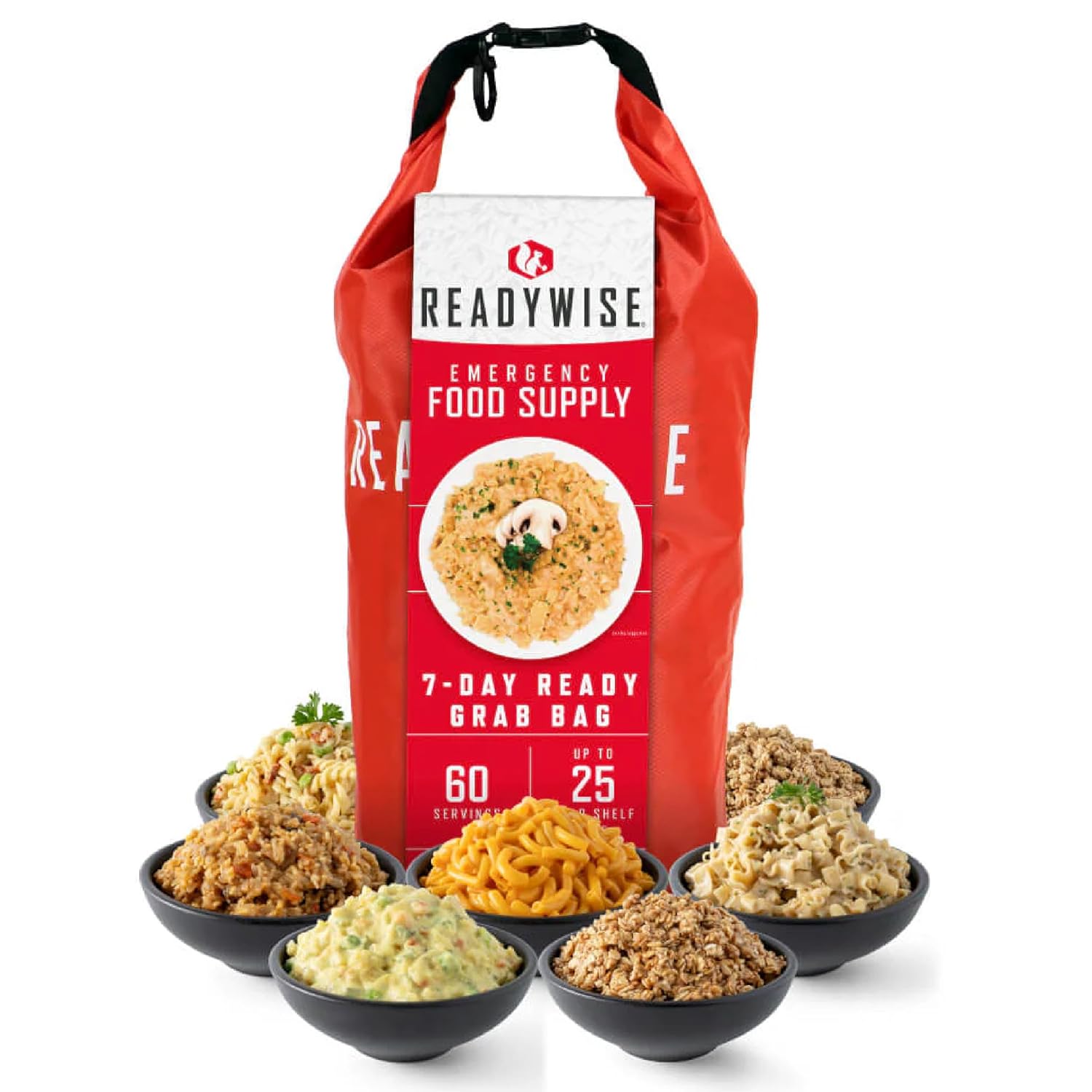
2. ReadyWise 7-Day Emergency Food Supply, Best Starter Kit
The ReadyWise 7-Day Grab Bag is a solid entry point for emergency food storage. It includes 60 servings of breakfast and entree meals in individually packaged pouches. The grab bag design makes it easy to store in a closet or take with you if you need to evacuate. This kit works well for one person for a week or for a family for a few days.
- 60 servings total
- Up to 25-year shelf life
- Lightweight grab bag design
- Mix of breakfast and dinner options
- Just add water preparation
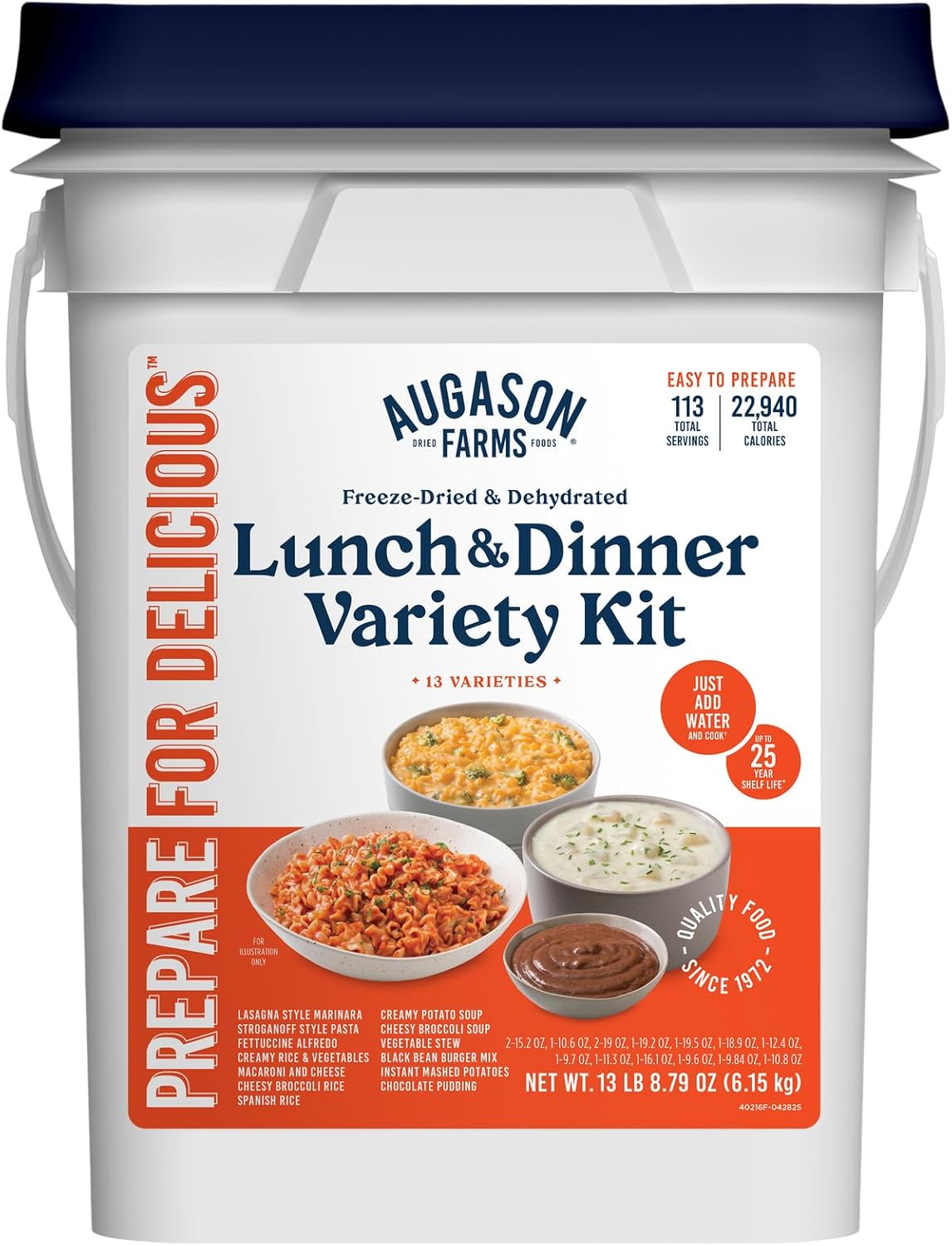
3. Augason Farms Emergency Food Supply Bucket, Best Mid-Range Value
This 4-gallon pail from Augason Farms delivers 92 servings with over 21,000 calories. The variety includes pasta dishes, soups, and side dishes. At around $80, it offers one of the best price-per-calorie ratios in the emergency food market. The resealable bucket makes a convenient storage container after you open it.
- 92 servings, 21,170 total calories
- Up to 25-year shelf life
- Stackable 4-gallon pail
- Mix of soups, sides, and entrees
- Good variety for the price
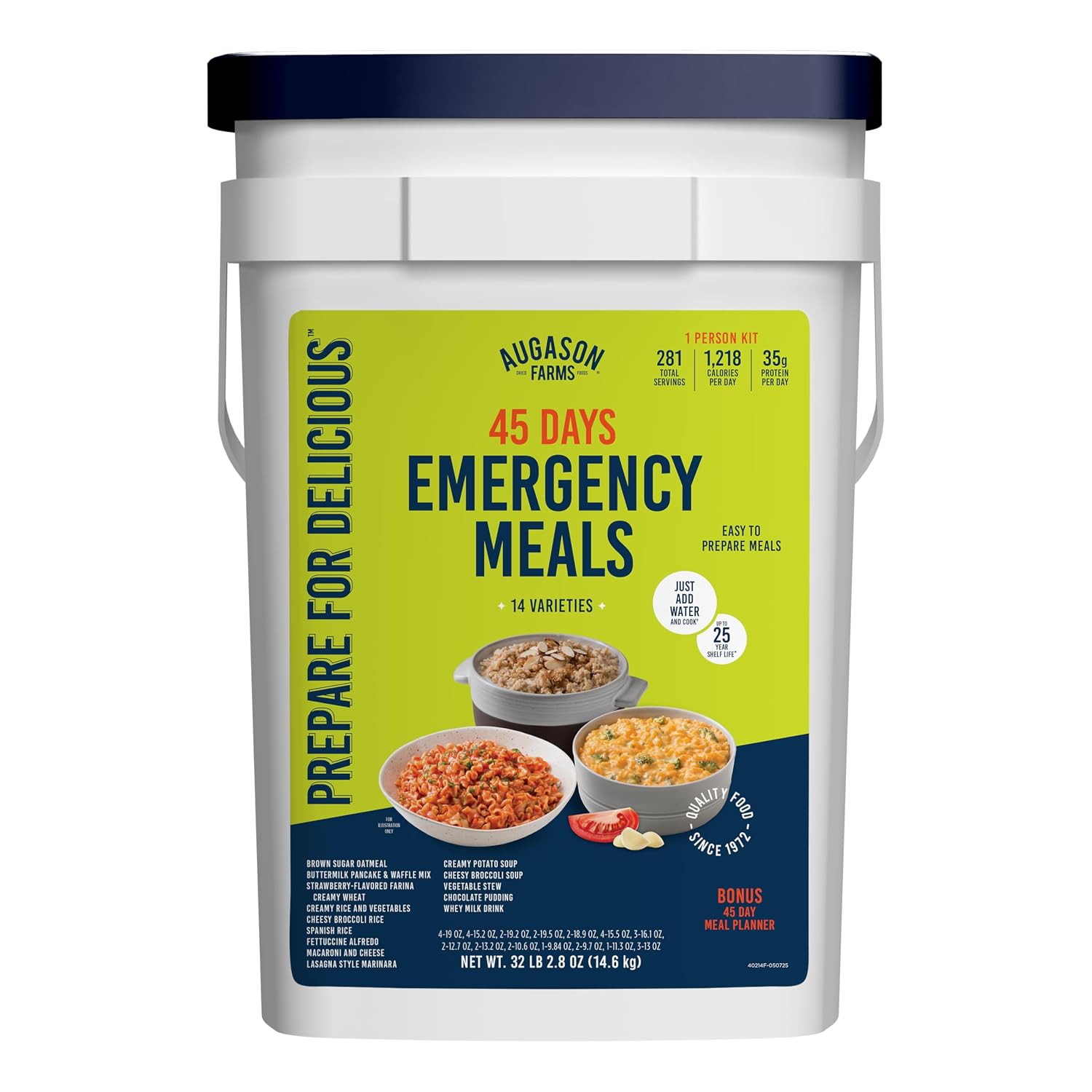
4. Augason Farms 30-Day Emergency Food Supply, Best Long-Term Storage
For serious preparedness, the Augason Farms 30-Day kit provides 307 servings covering breakfast, lunch, and dinner for one person for a full month. The variety includes oatmeal, pasta, soup mixes, and drink mixes. At around $150 to $180, it is one of the most affordable ways to build a 30-day supply.
- 307 servings across multiple meal categories
- Up to 25-year shelf life
- Stackable pail for easy storage
- Includes fruits, grains, proteins, and beverages
- About 1,800 calories per day (supplement for active adults)

5. Mountain House 14-Day Emergency Food Supply, Best Tasting Premium Kit
Mountain House is the brand that backpackers trust, and their emergency kits use the same recipes. The 14-Day Emergency Food Supply includes 84 servings of their most popular freeze-dried meals. The taste is noticeably better than budget options. If you want emergency food that you will actually enjoy eating, this is the one.
- 84 servings designed for 14 days
- 30-year shelf life
- Premium freeze-dried quality
- Just add boiling water
- Includes breakfast, lunch, and dinner options
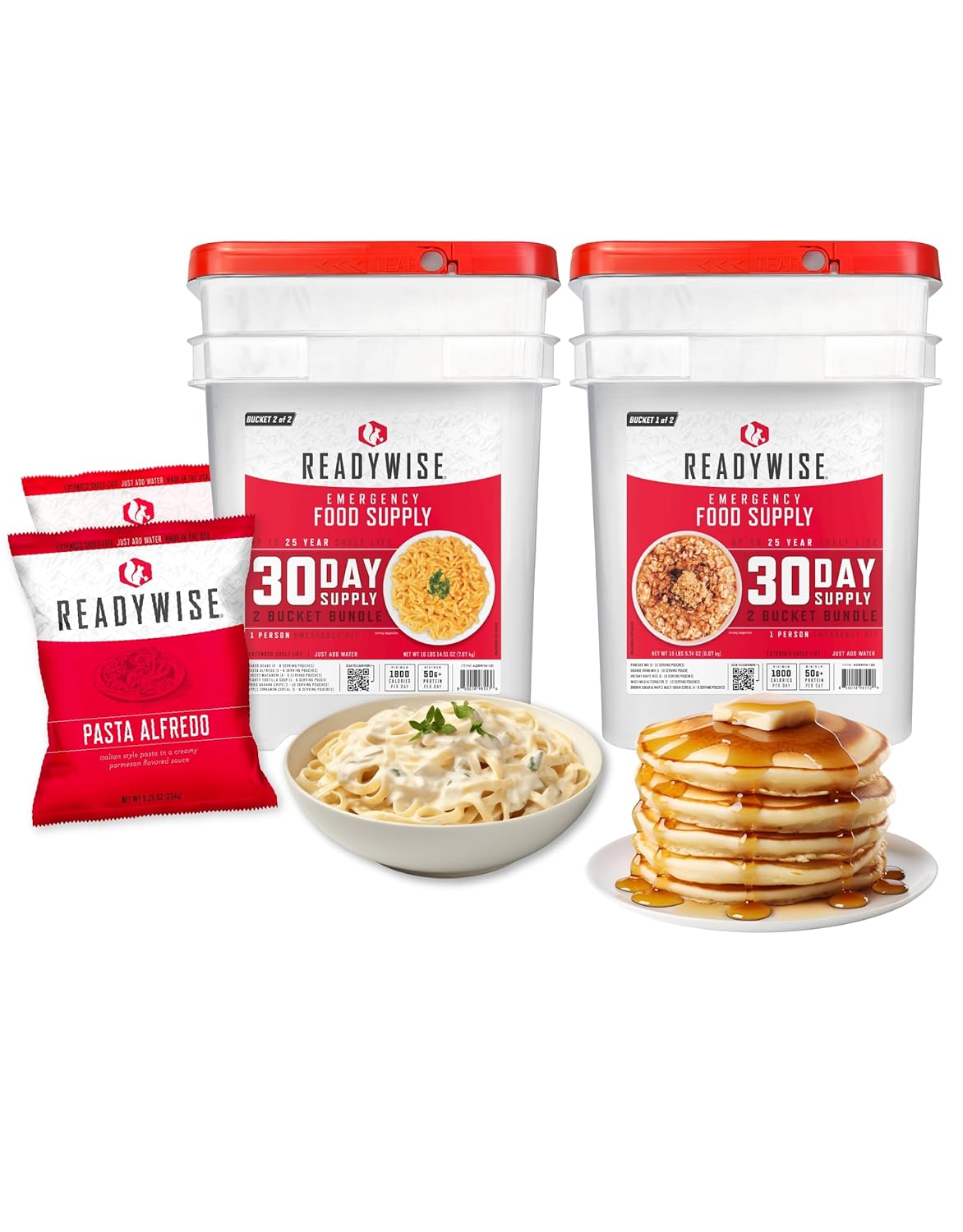
6. ReadyWise 30-Day Emergency Food Supply, Best for Families
This two-bucket set from ReadyWise provides 296 servings designed for 30 days. It includes a variety of freeze-dried entrees, breakfast options, and sides. The stackable buckets make storage simple, and the 25-year shelf life means you can buy it once and forget about it for decades.
- 296 servings in two stackable buckets
- Up to 25-year shelf life
- Includes protein-rich meals
- Easy stackable storage
- Good variety of breakfast and dinner options
Foods to Avoid in Emergency Kits
Not all shelf-stable foods belong in an emergency kit. Here are some to skip:
Foods that provoke thirst: Some snacks like crackers, chips, and jerky make you thirsty. In an emergency where water may be limited, this is a problem. Emergency ration bars are specifically formulated to avoid this issue.
High-sodium foods without balance: Sodium is fine in moderation, but a diet of only high-sodium canned soups will leave you feeling terrible. Balance salty items with plain grains and fruits.
Foods you have never tried: An emergency is not the time to discover you hate freeze-dried beef stroganoff. Buy a few pouches of any new food and try them before committing to a large supply.
Foods with short shelf life: Granola bars, protein bars, and similar items typically last 1 to 2 years at most. They are fine as supplements but should not be your primary emergency food.
Anything requiring refrigeration after opening: Some items like peanut butter in large jars need to be eaten quickly once opened or refrigerated. In a power outage, this becomes a problem.
How to Store Your Emergency Food
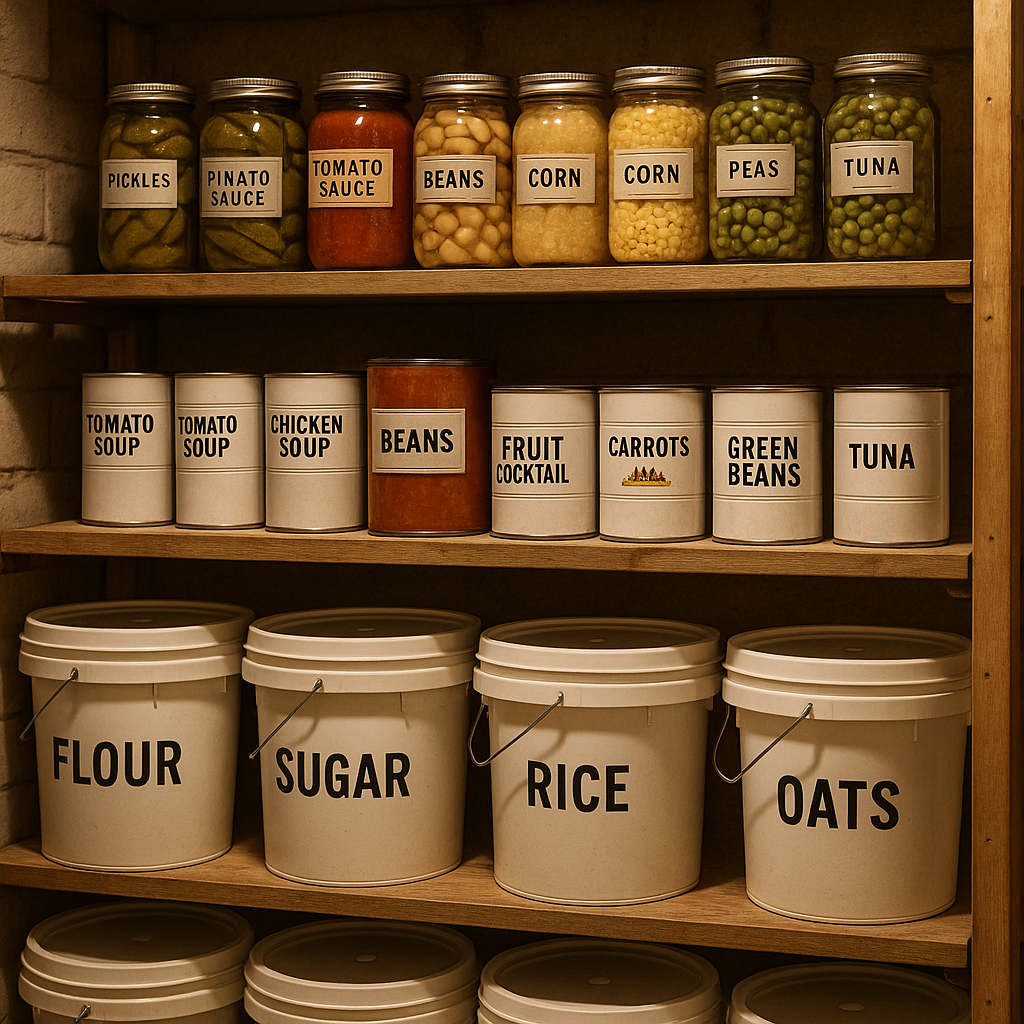
Storage conditions directly affect how long your emergency food lasts.
Temperature: Keep food in a cool area, ideally below 75 degrees Fahrenheit. Every 10-degree increase in storage temperature can cut shelf life significantly. A climate-controlled closet is better than a garage.
Light: Store food away from direct sunlight. Light breaks down nutrients and packaging over time. A dark closet, basement, or pantry works well.
Humidity: Moisture is the enemy of dried food. Even sealed mylar pouches can absorb moisture in very humid environments. Use a dehumidifier if storing in a basement.
Pests: Keep food in sealed containers or the original packaging. Check periodically for signs of rodents or insects. Plastic totes add an extra layer of protection.
Off the ground: Never store food directly on a concrete floor. The concrete can transfer moisture and temperature changes. Use pallets, shelves, or plastic totes.
Rotation: Even with long shelf life, first in first out (FIFO) is a good practice. Mark containers with the purchase date and use older items first when rotating stock.
Building Beyond the Kit: Supplementing with Pantry Staples
Commercial emergency food kits are convenient but expensive. You can stretch your budget by adding regular pantry staples.
Rice and beans: The classic combination. Together they provide complete protein. White rice lasts 10 to 30 years when properly stored. Dried beans last 10 to 20 years. Store in mylar bags with oxygen absorbers.
Oatmeal: Rolled oats last 1 to 2 years in original packaging, longer in sealed mylar. They provide fiber and slow-release energy.
Honey: Lasts essentially forever. Never spoils. Good for sweetening, energy, and wound care.
Peanut butter: High in calories and protein. Lasts 1 to 2 years unopened. Buy the kind that does not require refrigeration after opening.
Canned vegetables and fruits: 2 to 5 year shelf life. Provide vitamins and variety. No preparation needed.
Canned meat: Tuna, chicken, and spam last 2 to 5 years. Good protein source that requires no cooking.
Comfort foods: Coffee, tea, hot chocolate, and hard candy have long shelf lives and provide morale boosts during stressful times. Do not underestimate the psychological value of a familiar treat.
Frequently Asked Questions
How much does emergency food cost per person? Budget kits run about $50 to $100 for a 72-hour supply. Mid-range 2-week kits cost $100 to $200. Premium 30-day supplies range from $200 to $500 per person. Building your own supply from bulk staples can reduce costs significantly.
Is emergency food actually good to eat? Quality varies by brand. Mountain House and Backpacker’s Pantry are generally well-regarded for taste. Budget options like Augason Farms and ReadyWise are serviceable but less exciting. Emergency ration bars are edible but monotonous.
Do I need a way to heat water? Most freeze-dried and dehydrated foods taste better with hot water but can be prepared with cold water if necessary. Having a small camp stove, Sterno cans, or even a solar cooker makes meal preparation much more pleasant.
How do I know if my stored food has gone bad? Signs include unusual odors, discoloration, swelling pouches, or visible mold. When in doubt, throw it out. Properly stored food should look and smell normal when opened even after years in storage.
Should I store food for pets? Yes. Store at least a 2-week supply of pet food in sealed containers. Rotate it every 6 months since pet food has a shorter shelf life than human emergency food.
What about water for food preparation? A good rule of thumb is 1 gallon per person per day for drinking plus an additional half gallon for food preparation if using dehydrated or freeze-dried meals. See our water storage guide for details.
How often should I check my emergency food? Check at least once a year. Look for damaged packaging, expired dates, and signs of pests. Rotate older items to the front and use them before they expire.
Can I survive on emergency food long-term? Most emergency food is designed for short-term use during a crisis. It typically provides adequate calories but may lack variety in vitamins and minerals for long-term health. For extended preparedness, combine commercial kits with home-canned goods, frozen foods with backup power, and a plan to garden or forage if needed.
Cooking Your Emergency Food: Heat Sources
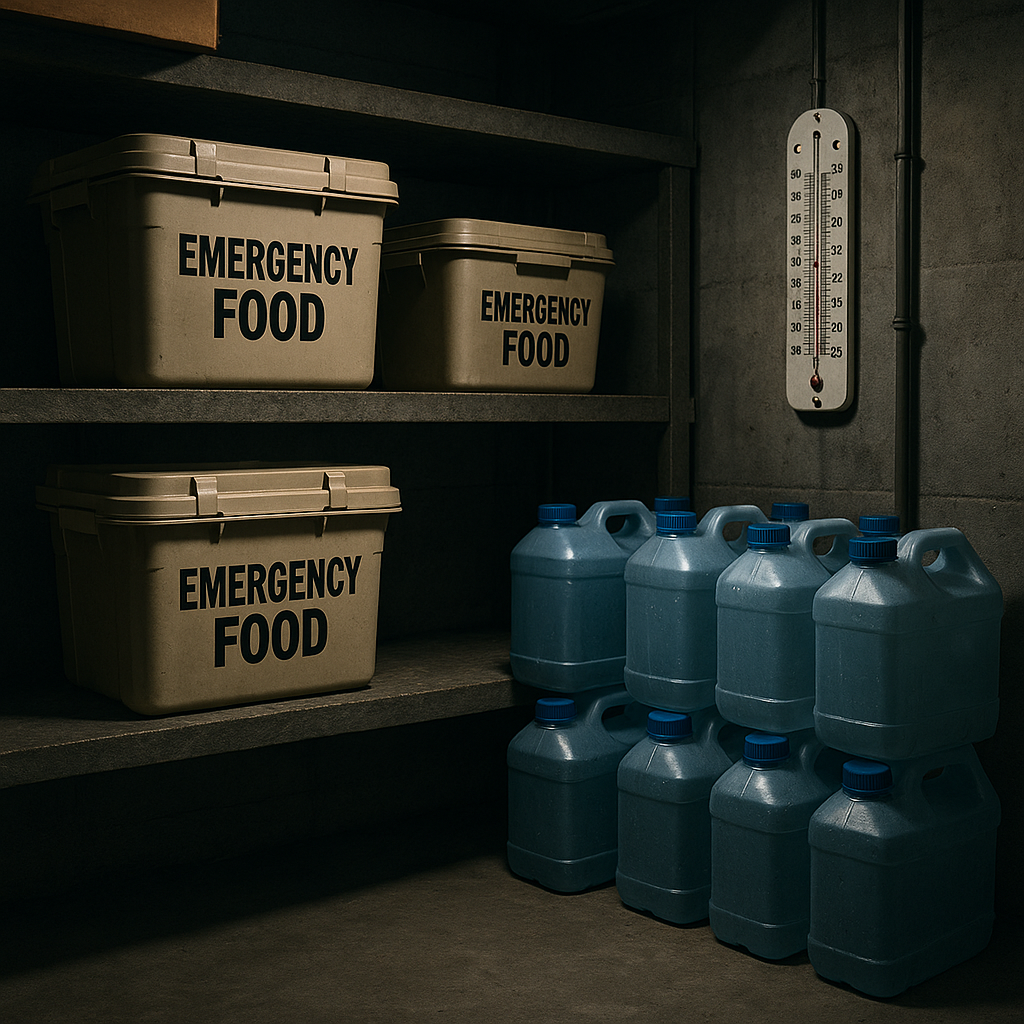
Most emergency food requires hot water for best results. When the power is out, you need an alternative heat source.
Camp Stoves
Small propane or butane camp stoves are the most practical option for indoor or outdoor use. They boil water quickly and are easy to operate. Store extra fuel canisters with your kit.
Propane stoves: Use the small green Coleman-style canisters. Each canister provides about 1 to 2 hours of cooking time. They work well in cold weather.
Butane stoves: Compact and popular for tabletop cooking. They do not perform as well in temperatures below 32 degrees Fahrenheit.
Sterno Cans
Sterno is a gel fuel in a small can. It burns for 2 to 6 hours depending on size. It is slower than a camp stove but extremely reliable with no moving parts. Good backup option.
Solar Cookers
If you have sunny weather, a solar cooker can boil water using only sunlight. They are slow (45 to 90 minutes to boil water) but require no fuel. Useful for extended situations where fuel may run out.
What About Fires?
Open fires are impractical for most emergencies. They require ventilation, create smoke, and present fire hazards. A camp stove is safer, faster, and more controllable.
Special Dietary Considerations
Gluten-Free Options
Several companies make gluten-free emergency food. Mountain House labels their gluten-free products clearly. ReadyWise also offers a gluten-free line. Check labels carefully because cross-contamination is possible in facilities that process wheat.
Alternatively, build your own supply using naturally gluten-free staples: rice, beans, canned meats, and canned vegetables.
Vegetarian and Vegan Options
Most emergency food companies offer some vegetarian options, but variety is limited. True vegan options are even harder to find. Your best bet is to supplement commercial kits with:
- Canned beans and lentils
- Rice and quinoa
- Nuts and nut butters
- Dried fruits
- Canned vegetables
- Vegetable-based soups
Allergies
Emergency food commonly contains wheat, soy, dairy, eggs, and tree nuts. If you have allergies, read every label. Consider building a custom supply from known-safe ingredients rather than relying on pre-made kits.
Infant and Toddler Needs
Emergency food kits are designed for adults. Infants and toddlers have different needs:
- Store formula or shelf-stable toddler milk
- Include baby food pouches and jars
- Pack familiar snacks and comfort foods
- Remember bottles, sippy cups, and utensils
Rotating Your Emergency Food
Even long-shelf-life food eventually needs replacement. A rotation system keeps your supply fresh without waste.
First In, First Out (FIFO)
Mark all containers with purchase date. Place new items in the back. Use older items first. This ensures nothing sits forgotten in storage.
Annual Inventory
Once a year, check every item:
- Verify packaging is intact
- Check expiration dates
- Look for signs of pest damage
- Move items expiring soon to the front or into regular use
Using Expiring Food
Do not throw away food just because it is approaching its listed date. Most emergency food is still safe well beyond printed dates if stored properly. Dates indicate peak quality, not safety.
Use soon-to-expire food for:
- Camping trips
- Weeknight dinners (many freeze-dried meals are quite good)
- Donation to food banks (check their policies on dates)
Building Your Emergency Food Plan: Step by Step
Step 1: Calculate Your Needs
Count the people in your household. Multiply by 2,000 calories per day for adults, 1,500 for children. Decide how many days you want to cover (minimum 3, recommended 14).
Example: 2 adults + 2 children for 14 days = (4,000 + 3,000) × 14 = 98,000 calories
Step 2: Set a Budget
Emergency food ranges from $0.25 to $0.60 per 100 calories. A 14-day supply for a family of four costs roughly $250 to $600 depending on quality.
If budget is tight, start small. A 72-hour supply is better than nothing. Build up over time.
Step 3: Choose Your Mix
A practical approach combines:
- 50% commercial emergency food (convenience, long shelf life)
- 30% pantry staples (value, familiarity)
- 20% comfort foods and variety (morale)
Step 4: Buy and Store
Purchase your supplies. Store in a cool, dry, dark location. Keep an inventory list.
Step 5: Maintain
Check annually. Rotate stock. Replace expired items. Test new foods before buying in bulk.
The Bottom Line
Start with something. A single 72-hour kit is better than nothing. A 2-week supply is better than 72 hours. Build gradually if budget is a concern.
For most households, we recommend:
- Start with a 72-hour supply using ReadyWise or S.O.S. ration bars
- Expand to 2 weeks with Augason Farms buckets for value
- Add variety with Mountain House for better-tasting meals
- Supplement with pantry staples like rice, beans, and canned goods
- Do not forget water storage and purification
- Include a heat source like a camp stove with extra fuel
- Consider dietary needs for everyone in your household
The best emergency food is the food you actually have when you need it. Stop planning and start stocking.