Ready
Ready
Best Emergency Stoves for Power Outages and Disasters: A Complete Buying Guide (2026)
Power outages are the most common emergency in America. Storms, heat waves, equipment failures, and wildfires knock out power for millions of households every year. In most of those situations, you have food in your pantry. You have water stored or available. But if your stove is electric, or if your gas stove relies on electronic valves, you cannot cook anything.
That is a real problem. Hot food is not just comfort. It matters for morale, for children, for older adults, and for anyone eating freeze-dried or dehydrated meals that need hot water to rehydrate. Boiling water is also the most reliable way to make questionable water safe to drink when filters are not available.
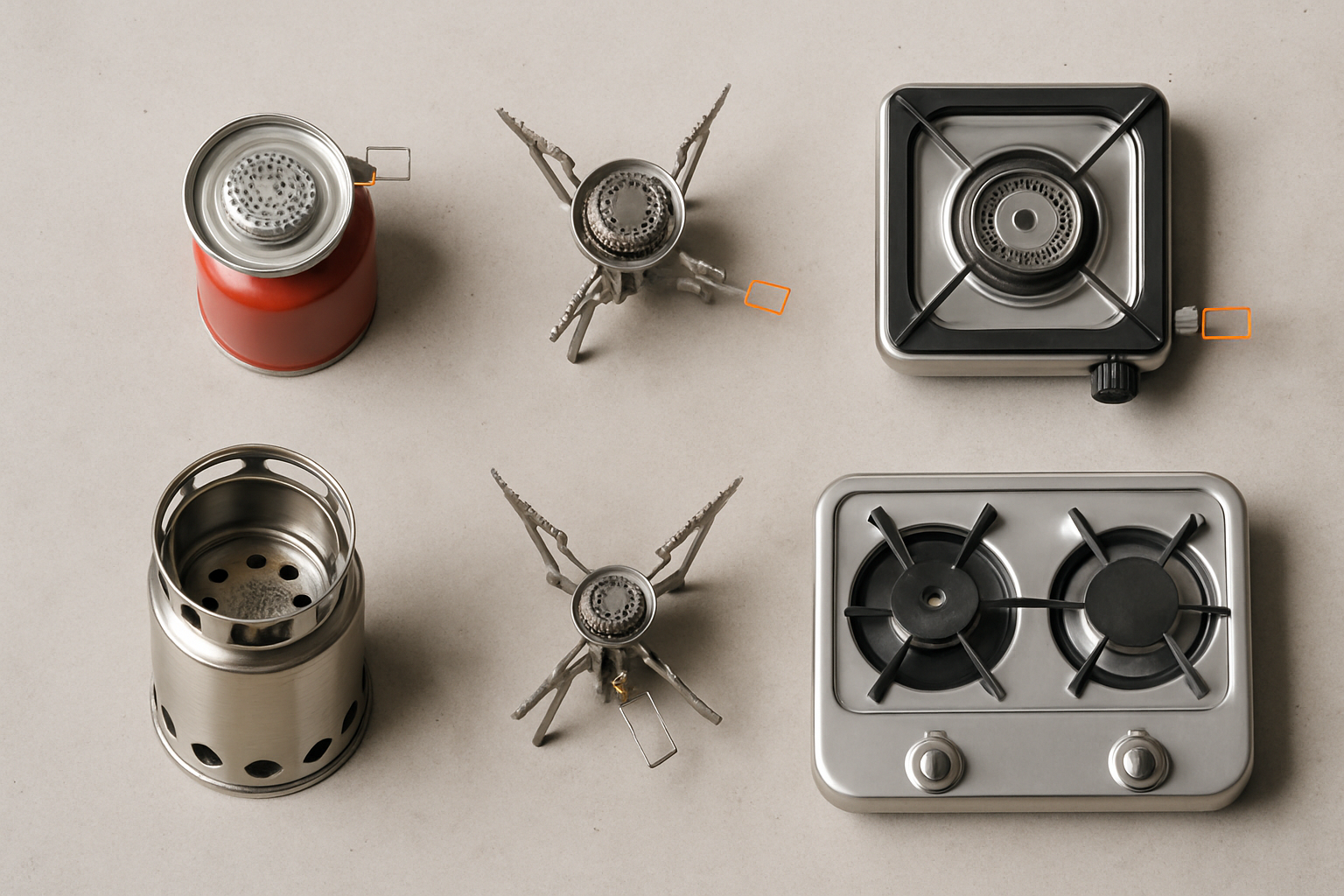
A dedicated emergency stove changes your situation completely. With the right stove and enough fuel, you can cook full meals and boil water for your whole family through a multi-day outage or a long evacuation. This guide covers the five main types of emergency stoves, the best specific models at every price range, how much fuel to store, and the safety rules you need to follow.
- Indoor Safety: Can it run safely inside your home when the power is out
- Fuel Storage: Uses fuel that is easy to find and simple to store for a long time
- Quick Setup: Works fast with little or no assembly when you need it most
- Heat Output: Puts out enough steady heat to boil water and cook food
Below are our top picks for emergency stoves. Keep reading the full guide to learn why each one made the list.
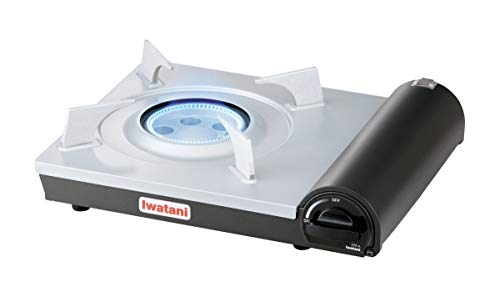
Iwatani Portable Butane Stove
This is our top pick because it is safe to use indoors during a power outage and runs on butane canisters that are easy to find and store. It needs no setup and lights with one touch, making it the most dependable choice for home emergencies.

Solo Stove Lite
This wood burning stove earned the most popular spot because it runs on twigs and sticks you can gather anywhere, so you never run out of fuel. Its clean burning design boils water quickly and stays light enough to carry.

BioLite CampStove 2+ Kit
This premium pick burns wood while turning heat into electricity, so you can cook and charge a phone or headlamp at the same time. The complete kit adds a grill, kettle, and light for a full outdoor cooking setup.
In this guide



Reviewed by Dale M., Ryan C. & James W. — contributors with hands-on preparedness experience. How we test
Why Trust This Guide?
This article was researched and reviewed by contributors with hands-on experience in emergency preparedness. They have tested gear, built real systems, and lived through situations where these skills actually mattered.
Why Your Home Stove Is Not a Backup Plan
Most people think they can cook during a power outage. Often, they cannot.
If you have an electric range or smooth-top cooktop, it does not work when the grid goes down. There is no workaround for this. The heating elements need electricity to function.
If you have a natural gas range, the situation is more complicated. Some older gas stoves can be lit manually with a match or lighter even when power is out. But many modern gas stoves use electronic ignition and solenoid-controlled gas valves. These stoves will not light at all without electricity, even though the fuel is right there. Check your stove’s manual to know which type you have.
Even if your gas stove lights manually, there are two other problems. First, if you are evacuating your home, your gas line does not come with you. Second, natural gas service can be shut off by the utility during major disasters or if gas lines are damaged in an earthquake or flood.
A dedicated emergency stove is independent of all of this. You own the fuel. You control when it runs. It works at home, in a parking lot, at a shelter, in the woods, or wherever you end up. That independence is the point.
The Five Types of Emergency Stoves
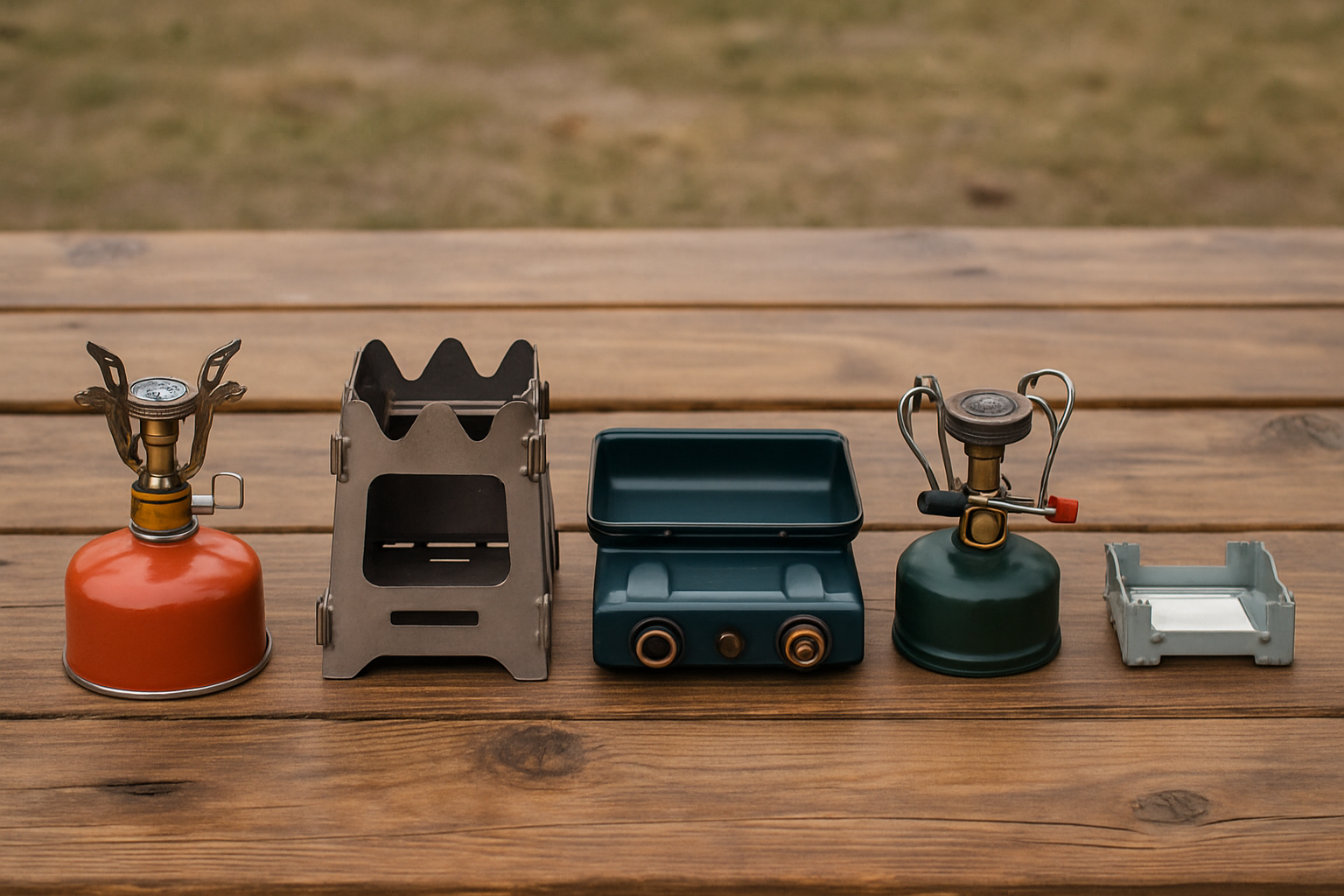
Not all emergency stoves are the same. The right choice depends on how you plan to use it, how much space you have to store fuel, and whether you need something that can go in a bag or stay at home.
Here is a breakdown of the five main fuel types.
For most households, propane is the default choice for home backup use. For apartment dwellers or anyone who needs to cook inside, butane with a window cracked open is the closest thing to an indoor option. We will get into the safety details in a dedicated section below.
Indoor vs. Outdoor: The Rule That Cannot Be Broken
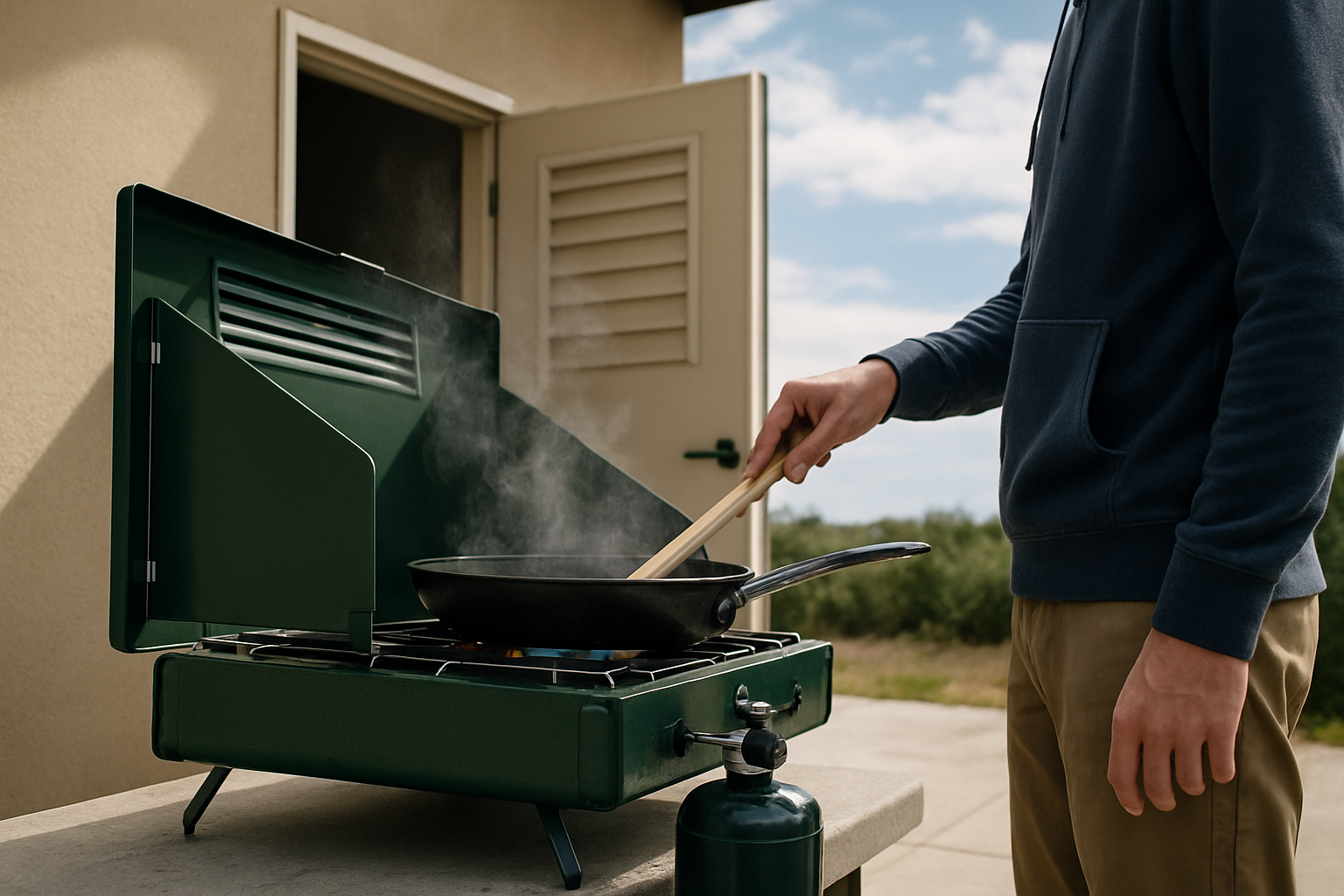
Before we get into product picks, this needs to be said clearly.
Propane, butane, wood-burning, and liquid fuel stoves all produce carbon monoxide. Carbon monoxide is a colorless, odorless gas that kills people in enclosed spaces every year during power outages. This is not a theoretical risk. Dozens of people die from it every winter when they bring outdoor cooking equipment inside.
The rule is simple: run combustion stoves outside or with a door and window fully open.
A garage with the door closed is not safe. A basement is not safe. A small kitchen with just a window cracked is borderline and not a good idea.
The butane stove category gets described as “semi-indoor” in a lot of articles. That is because butane burns cleaner than propane, and the small canisters used in portable butane stoves produce less carbon monoxide per minute of use. That does not make them safe in a sealed room. It means they are marginally more forgiving if you have good airflow. A door to the outside open while you boil water for a few minutes is the minimum for butane. Never sleep in a room where any combustion stove has recently been used.
If you want something truly indoor-safe, look into propane or electric fuel cells designed specifically for indoor emergency use, or stick to non-cooking food options like protein bars and meals that do not need to be heated. Those are real options for the first 24 hours.
Best Emergency Stoves: Our Picks by Category
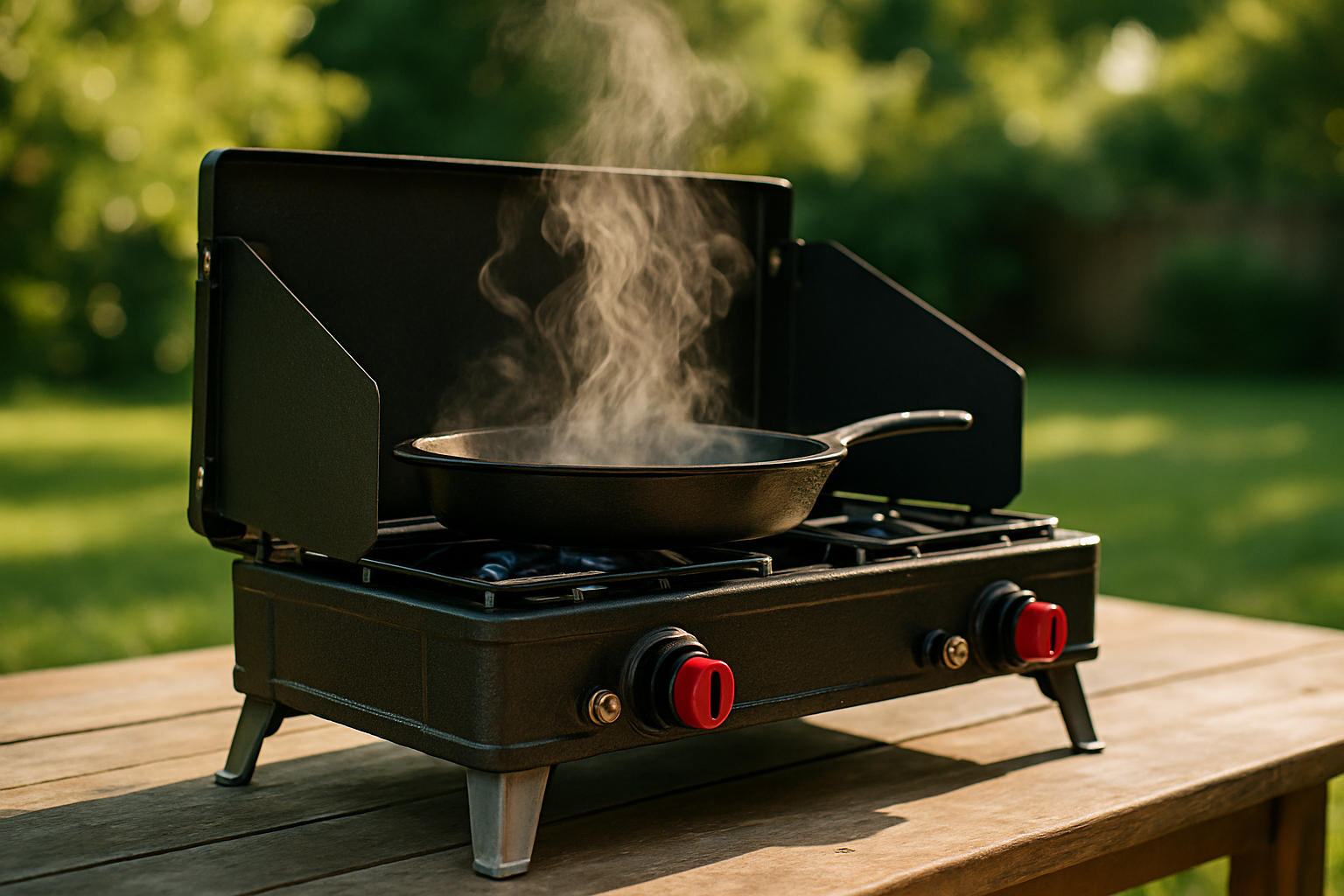
Best Overall Home Backup Stove: Camp Chef Everest 2X
If you are building a home emergency kit and you have a backyard or a patio, the Camp Chef Everest 2-Burner Propane Stove is the best choice for most families.

The Everest has two burners with a combined output of 30,000 BTUs. That is more than enough to cook a full meal on one burner and boil a pot of water on the other at the same time. It connects to a standard one-pound propane canister or, with an adapter hose, to a larger 20-pound tank that you probably already have for your grill.
The build quality on the Everest is noticeably better than budget camp stoves. The burners sit in a recessed windscreen that keeps the flame going even in moderate wind. The legs fold flat for storage. The grate is cast iron, which holds up to real pots and pans rather than just the lightweight backpacking cookware some stoves are sized for.
What we like most about this stove for emergency use is that it functions almost exactly like a home range. Two burners. Standard knob controls. Grates sized for a 12-inch skillet. If someone in your family is not a confident outdoor cook, the learning curve here is nearly zero. During a power outage when stress is already high, that matters.
The Everest runs on the same propane canisters and tanks that 90 percent of American households already own for grilling. You do not need to buy a special fuel. You can start with whatever is left in your grill tank and add dedicated emergency storage from there.
Camp Chef Everest 2X at a glance:
- Two burners, 30,000 BTU total
- Fits standard 12-inch pans
- Works with 1-pound canisters or 20-pound tanks
- Folds flat for storage
- Best for: home backup, family cooking, outdoor use
Best Budget Pick: Coleman Triton 2-Burner Propane Stove
The Coleman Triton 2-Burner Propane Stove is a solid, no-frills camp stove. It gives you two burners and a reliable cooking surface. That makes it a smart pick for camping trips and home emergencies alike.

The Coleman Triton has two burners. That is enough to cook a pot of rice and simmer a can of soup at the same time. It connects to standard one-pound propane canisters.
The tradeoffs compared to the Camp Chef: the grates are a little smaller, the build is a little lighter, and it handles wind less well. In a pinch, these things do not matter much. In a genuine emergency where you need to feed your family for a week, you will be grateful you have it.
If you are just starting to build your emergency kit and you want a backup stove without spending a lot, the Coleman Triton is the right starting point. Add a dedicated propane storage plan later.
Coleman Triton at a glance:
- Two burners
- Works with 1-pound canisters
- Simple, reliable design
- Available at most hardware and outdoor stores
- Best for: budget-first buyers, basic home backup
Best for Apartments and Small Spaces: Iwatani Butane Portable Stove
If you live in an apartment, a condo, or any space without a patio or yard, the Iwatani Butane Portable Stove is the most practical option for cooking during a short outage.

Butane stoves designed for table-top use are widely used in Asian restaurant kitchens for tableside cooking. The Iwatani is the benchmark for this category. It runs on small butane canisters that cost about two dollars each and are available at Asian grocery stores, outdoor retailers, and online. Each canister lasts about 1.5 to 2 hours of actual cooking time.
The Iwatani has a single burner rated at 15,000 BTUs. That is strong enough to boil a pot of pasta water in a few minutes and cook most one-pot meals. The stove unfolds flat to fit a standard pot or pan. The canister clicks in without tools and the whole unit is about the size of a hardcover book when folded.
Butane canisters are much easier to store than propane. They are small, flat, and safe to keep in a kitchen drawer or pantry shelf. A case of eight canisters takes up less space than a shoe box and gives you roughly 12 to 16 hours of cooking time.
The safety caveat, again: butane still produces carbon monoxide. Use near an open window. Do not use in a fully enclosed space. Do not leave the stove burning while you sleep. These rules matter.
Iwatani Butane Stove at a glance:
- Single burner, 15,000 BTU
- Runs on inexpensive standard butane canisters
- Compact and easy to store
- Available at Asian grocery stores and online
- Best for: apartments, indoor-adjacent cooking with ventilation, travel
Best for Bug Out Bags: Jetboil Flash
If you are building a bug out bag or a 72-hour kit, cooking speed and weight are the two things that matter most. The Jetboil Flash Cooking System wins on both.
The Jetboil Flash is an integrated cooking system: the burner, the pot, and an insulating sleeve all snap together into a compact unit that fits inside most backpacks. It boils two cups of water in about 100 seconds. That is faster than most people’s home kettles. For cooking freeze-dried or dehydrated emergency meals, this is the most efficient tool available.
The secret to the Jetboil’s speed is the flux ring on the bottom of the pot. The fins on this ring pull heat from the burner directly into the metal of the pot rather than letting it escape into the air around it. It is dramatically more fuel-efficient than a standard stove and pot combination. One 100-gram canister of isobutane fuel can boil about 12 liters of water, which covers roughly 24 meals when you are just rehydrating freeze-dried food.
The Jetboil Flash is not the right tool for cooking complex meals. The pot fits about 1 liter of water or food. It is a single-user or two-user system, not a family cooking solution. But for an evacuation scenario where you need to move fast, boil water quickly, and keep your pack light, it is the best option available.
Jetboil Flash at a glance:
- Boils 2 cups of water in about 100 seconds
- Integrated pot, burner, and insulating sleeve
- Runs on isobutane-propane canisters
- Compact enough for any bug out bag
- Best for: evacuation kits, solo or two-person use, ultralight setups
Best for Cold Weather: MSR PocketRocket 2
Standard propane and isobutane stoves lose pressure and heat output as temperatures drop. Below about 20 degrees Fahrenheit, a standard canister stove can struggle to boil water at all. The MSR PocketRocket 2 handles this better than most.

The PocketRocket 2 is a tiny, ultralight backpacking stove that folds up to barely larger than a lighter. It screws directly onto a standard isobutane canister and holds a pot or pan on three fold-out arms. At 2.6 ounces, it is one of the lightest stoves made.
What makes it relevant for emergency use is its four-season performance. The burner design and the way it handles fuel flow keeps it working reliably in cold conditions where cheaper stoves fail. If you live somewhere that gets real winters and you are building an emergency kit that needs to work in January, this stove is worth the extra few dollars over budget alternatives.
Pair it with an MSR or Jetboil-compatible isobutane canister and you have a stove system that fits in a shirt pocket and works when other stoves are struggling. It does not replace a two-burner home backup stove, but it is an excellent addition to a bug out bag or car emergency kit.
MSR PocketRocket 2 at a glance:
- 2.6 ounces, fits in a jacket pocket
- Strong cold-weather performance
- Reliable four-season operation
- Runs on standard isobutane-propane canisters
- Best for: cold climates, backup stove in a bag or car kit
Best Wood-Burning Stove: Solo Stove Lite
Every other stove on this list depends on fuel you bought, stored, and kept dry. The Solo Stove Lite runs on small sticks, pine cones, bark, and other debris you find on the ground. The fuel is free. You never have to spend money on white gas or expensive liquid canister fuel.

That is a meaningful advantage in a long-term emergency. If propane becomes unavailable or your fuel runs out, a wood-burning stove can cook for you indefinitely as long as there are trees nearby. In a rural or suburban setting, that is almost always true.
The Solo Stove Lite is a compact, lightweight wood-burning stove. It measures about 4.2 inches and weighs about 9 ounces. You load it with small sticks, light it, and feed sticks in as they burn. Its patented double-wall design creates ultra-clean gasification and a secondary combustion. This lets the fuel burn more completely and with less smoke than a campfire.
The Solo Stove Lite is a gasification rocket stove built for a quick boil. It is efficient enough to boil water fast once the fire is going, using a handful of dry sticks. It is not as fast or convenient as a propane stove. There is no knob to turn off the flame instantly. But it gives you a cooking option that costs nothing to fuel and never runs out.
The Solo Stove Lite is the original super-efficient, ultralight Solo Stove, and it won a Gear of the Year award. It fits in a bug out bag and is a smart secondary stove for anyone who wants to reduce their dependence on stored fuel.
Solo Stove Lite at a glance:
- Burns sticks, bark, and debris
- No fuel to buy or store
- Patented double-wall design for less smoke
- 9 ounces and 4.2 inches, compact and lightweight
- Best for: rural and suburban preparedness, long-term backup, zero fuel dependency
Best for Device Charging: BioLite CampStove 2+
The BioLite CampStove 2+ is the most unusual stove on this list. It burns wood, like the Solo Stove, but it also includes a thermoelectric generator that converts heat into electricity. While you cook, it charges a built-in battery that can then charge your phone or other USB devices.
In a multi-day outage, keeping your phone charged can be as important as keeping your family fed. The BioLite does both from a pile of sticks.
The stove includes a fan that automatically adjusts airflow to optimize combustion. This also reduces smoke significantly compared to a basic campfire. The built-in battery stores about 3,400 mAh, enough to charge a phone from zero to about 80 percent. While cooking a full meal, you can expect to generate enough electricity to give a phone a meaningful charge.
The BioLite is heavier and more complex than the Solo Stove Lite. It weighs about 2 pounds compared to 9 ounces. The fan system requires the internal battery to have some charge to start. But the combination of cooking capability and phone charging makes it a genuinely useful tool for extended outages.
If your main concern is a long power outage at home or a shelter-in-place scenario where communications matter, the BioLite adds real value that no other stove on this list provides.
BioLite CampStove 2+ at a glance:
- Burns wood and generates electricity
- Charges phones and USB devices while cooking
- Fan-controlled combustion, reduced smoke
- About 2 pounds
- Best for: extended outages, communications-focused preparedness, shelter-in-place scenarios
Comparison Table: All Six Picks
How Much Fuel to Store
One of the most common mistakes people make when buying an emergency stove is buying the stove and forgetting about the fuel. The stove is useless without it.
Here is a practical way to think about fuel storage.
For propane: A standard one-pound propane canister lasts about 1 to 2 hours of cooking time at medium heat. For a family of four cooking three meals a day for three days, plan on about 6 to 8 hours of total cooking time. That is roughly 4 to 6 one-pound canisters. If you have a 20-pound tank from your grill, that holds roughly 200 hours of cooking time. One full grill tank is probably more than enough for most scenarios. Keep it filled.
For butane: A standard 8-ounce butane canister lasts about 1.5 to 2 hours of actual cooking. Plan on the same math: 4 to 6 canisters for three days of cooking for a family. Butane canisters are cheap and store well. A case of 12 canisters is a good starting point.
For isobutane (Jetboil and PocketRocket): A 100-gram canister boils about 12 liters of water. If you are cooking freeze-dried meals that each need about 2 cups of boiling water, that is roughly 24 meals per canister. One person eating three meals a day uses about one canister every 8 days. Two people, 4 days. Keep three to five canisters on hand.
For wood stoves: No storage needed, but do keep a small supply of dry kindling and fire starters nearby. Wet wood is a common obstacle. Keep a handful of waterproof fire starters in any kit that includes a wood-burning stove.
Propane Storage Safety
Propane canisters and tanks are safe to store if you follow basic rules.
Store outside or in a ventilated area. One-pound canisters should not be stored in a home interior, a car, or any space that lacks ventilation. A garage with the door slightly cracked, a shed, or an outdoor storage box are all appropriate.
Keep away from heat. Do not store propane near a water heater, furnace, grill, or any source of flame or significant heat. Propane tanks that overheat can vent or rupture.
Check for damage before use. Look for rust, dents, or valve damage before attaching a canister to any stove. A damaged canister should not be used.
Do not store full 20-pound tanks indoors. Large propane tanks should always be stored outside. The exception is during a disaster scenario where theft is a genuine concern; if that is the case, store in a locked, ventilated outbuilding.
Rotate your stock. Propane does not expire, but canisters can develop slow leaks over time. Inspect stored canisters every year and use them up on regular camping trips to keep your supply fresh.
What to Cook on an Emergency Stove
An emergency stove is not the time to try complicated recipes. Keep it simple. Here are the foods that work best and why.
Oatmeal and grains: Fast to cook, easy to store, and nutritious. A pot of oatmeal for four people takes five minutes and very little fuel.
Rice and beans: The classic long-term food storage combination. Rice needs about 20 minutes at a simmer after boiling. Beans need to be pre-soaked or you can use canned beans that just need heating.
Canned food: Any canned food can be heated directly in the can (with the lid off) or in a pot. No recipe required.
Freeze-dried and dehydrated meals: These need only boiling water. With a Jetboil or similar fast-boil stove, a full meal is ready in under 10 minutes from lighting the stove.
Pasta: Boil water, cook pasta, drain. Pair with canned sauce. It is one of the fastest hot meals you can make.
Eggs: If you have fresh eggs or powdered eggs, a camp stove handles scrambled or fried eggs without any problems.
The main thing to avoid on a single-burner emergency stove: anything that requires precise temperature control for a long time, like braised meat or baked goods. Those foods exist, but they require skill and patience that a stress situation does not always allow.
Common Questions About Emergency Stoves
Can I use a camp stove on an apartment balcony?
Most apartment leases prohibit open flames on balconies. Check your lease. If it is allowed, a propane stove on an open balcony is a reasonable option. If it is not allowed, a small butane stove near an open door inside is the alternative.
How long does propane last in storage?
Propane itself does not degrade over time. An unopened canister stored in a safe location can last indefinitely. What degrades is the valve and the canister material. Inspect canisters annually for rust or damage.
Can I use a camping stove to heat my home?
No. Do not use any combustion appliance to heat a living space. Carbon monoxide accumulates quickly in enclosed spaces and is fatal at relatively low concentrations. Combustion stoves are for cooking only, outdoors or with significant airflow.
What is the best stove for a car emergency kit?
The MSR PocketRocket 2 or Jetboil Flash, paired with two or three fuel canisters, fits easily in a car emergency kit without taking up significant space. Both work in cold weather and cold storage conditions that a trunk experiences in winter.
Do I need a special pot for a camp stove?
No. Any standard pot or pan that sits stably on the stove grate will work on a two-burner propane stove like the Camp Chef or the Coleman Triton 2-burner propane stove. For integrated systems like the Jetboil, use the included pot for the best efficiency. For small single-burner stoves with fold-out arms like the PocketRocket, use a stable pot with a flat bottom.
Emergency Stove Accessories Worth Having
A stove alone is not a complete cooking setup. A few accessories make a real difference.
Windscreen. A portable windscreen (a simple folding aluminum panel) dramatically improves cooking in wind. Most two-burner stoves have built-in windscreens. Small backpacking stoves do not.
Fuel gauge. A propane tank gauge tells you how much fuel is left in a 20-pound tank without having to weigh it. Inexpensive and genuinely useful.

Adapter hose. A propane adapter hose lets you connect most camp stoves that take one-pound canisters to a larger 20-pound tank. This is how you go from a few hours of fuel to days of fuel without changing anything about the stove itself.
Lighter and matches. Stoves with built-in ignition use a battery or piezo mechanism. These fail. Always keep a lighter and a box of waterproof matches as a backup.
Cast iron skillet. For home backup use, a well-seasoned cast iron skillet is the most versatile cooking surface you can have. It holds heat well, cleans easily, and lasts a lifetime. It works on propane stoves, wood fires, and anything else you end up cooking on.
The Bottom Line
The best emergency stove for most households is a two-burner propane stove like the Camp Chef Everest or the Coleman Triton, stored with a full 20-pound tank or six to eight one-pound canisters. If you live in an apartment, add an Iwatani butane stove with a case of canisters. If you are building a bug out bag, the Jetboil Flash is the fastest and most efficient option available. And if you want a backup that never runs out of fuel, the Solo Stove Lite requires nothing more than a handful of dry sticks.
None of this equipment is complicated. A camp stove with a fuel supply is one of the simplest and most impactful additions you can make to a home emergency kit. The goal is to make sure that when the power goes out and the stress is already high, the ability to cook a hot meal is not one more thing to worry about.
Buy the stove. Store the fuel. Use it once on a weekend camping trip before you actually need it. That is the whole plan.