Ready
Ready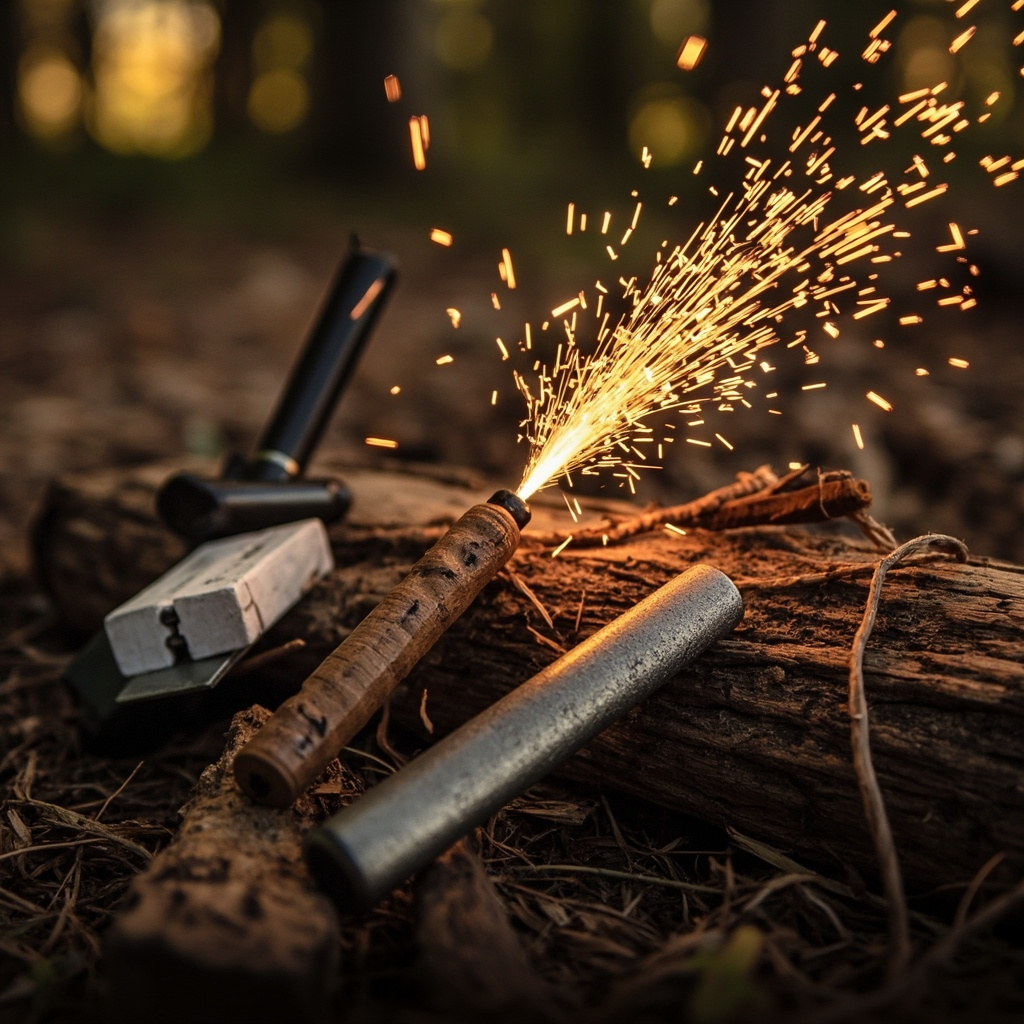
Best Fire Starters for Emergency Preparedness: The 3-Source Rule That Could Save Your Life
Fire is not optional when things go wrong. It boils water so you can drink it safely. It keeps your core temperature up when hypothermia threatens. It cooks food, signals for rescue, keeps insects and predators at a distance, and does something that no other survival skill can quite replicate: it lifts morale. Sitting in the dark and cold feels desperate. Sitting next to a fire feels survivable.
The problem is that most people carry exactly one way to start a fire. One lighter. One book of matches. Maybe nothing at all. That is a fragile system, and fragile systems fail at the worst possible time. A lighter runs out of fuel. Matches get wet. A ferro rod gets lost. If you have only one ignition source and it fails, you have no fire. In an emergency, no fire can mean no drinking water, no heat, and no signal for help.
This guide covers the three-category fire-starting system that experienced survivalists use, reviews the specific products worth carrying, and explains what actually matters when you are trying to start a fire in wet conditions, cold temperatures, or with shaking hands and limited daylight.
- Works when wet: It should still light a fire after getting rained on or soaked.
- No fuel needed: The best options have nothing that can leak, dry out, or expire over time.
- Many uses: Look for something that lasts through hundreds or thousands of fires.
- Reliable ignition: It should catch tinder fast in wind, cold, or high places.
Below are our top picks for building your 3-source fire kit. Keep reading the article to see how each one fits into the rule and why we chose it.
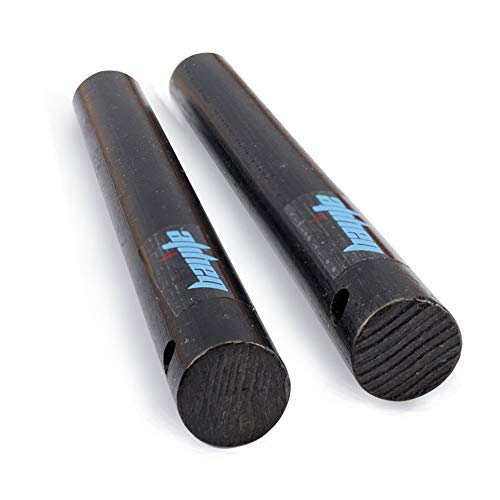
bayite XL Ferro Rod
This large, thick ferro rod is the most dependable emergency fire source you can carry. It works soaked, frozen, windy, or at any altitude, has no fuel to leak or dry up, lasts for thousands of strikes, and stores forever, so it earns the top spot as the most fault-tolerant pick.

Vaseline Petroleum Jelly
Petroleum jelly rubbed on cotton makes tinder that lights fast and burns steady. It is a simple, easy-to-find item that doubles as skin care, making it a handy backup source.
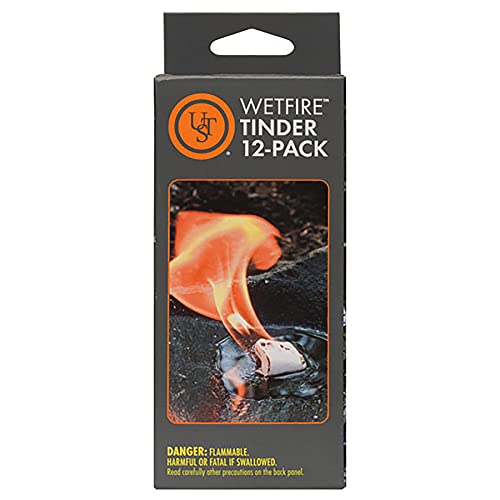
WetFire Tinder 12 Pack
These tinder cubes light even when wet and burn hotter the wetter they get, which is why they are the most popular choice. Each cube is wrapped on its own so it stays ready until you need it.
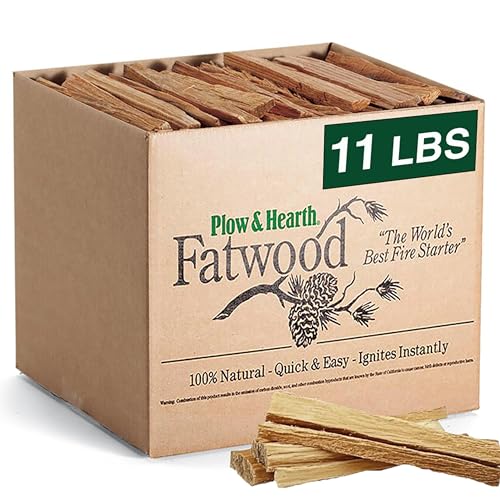
Plow & Hearth Fatwood
This all-natural fatwood is packed with resin that ignites quickly and burns hot, making it the premium pick for reliable kindling. It works great in fire pits, wood stoves, and campfires with no chemicals or newspaper needed.
In this guide



Reviewed by Dale M., Priya K. & James W. — contributors with hands-on preparedness experience. How we test
Why Trust This Guide?
This article was researched and reviewed by contributors with hands-on experience in emergency preparedness. They have tested gear, built real systems, and lived through situations where these skills actually mattered.
The 3 Ignition Sources Rule: Why One Is Never Enough
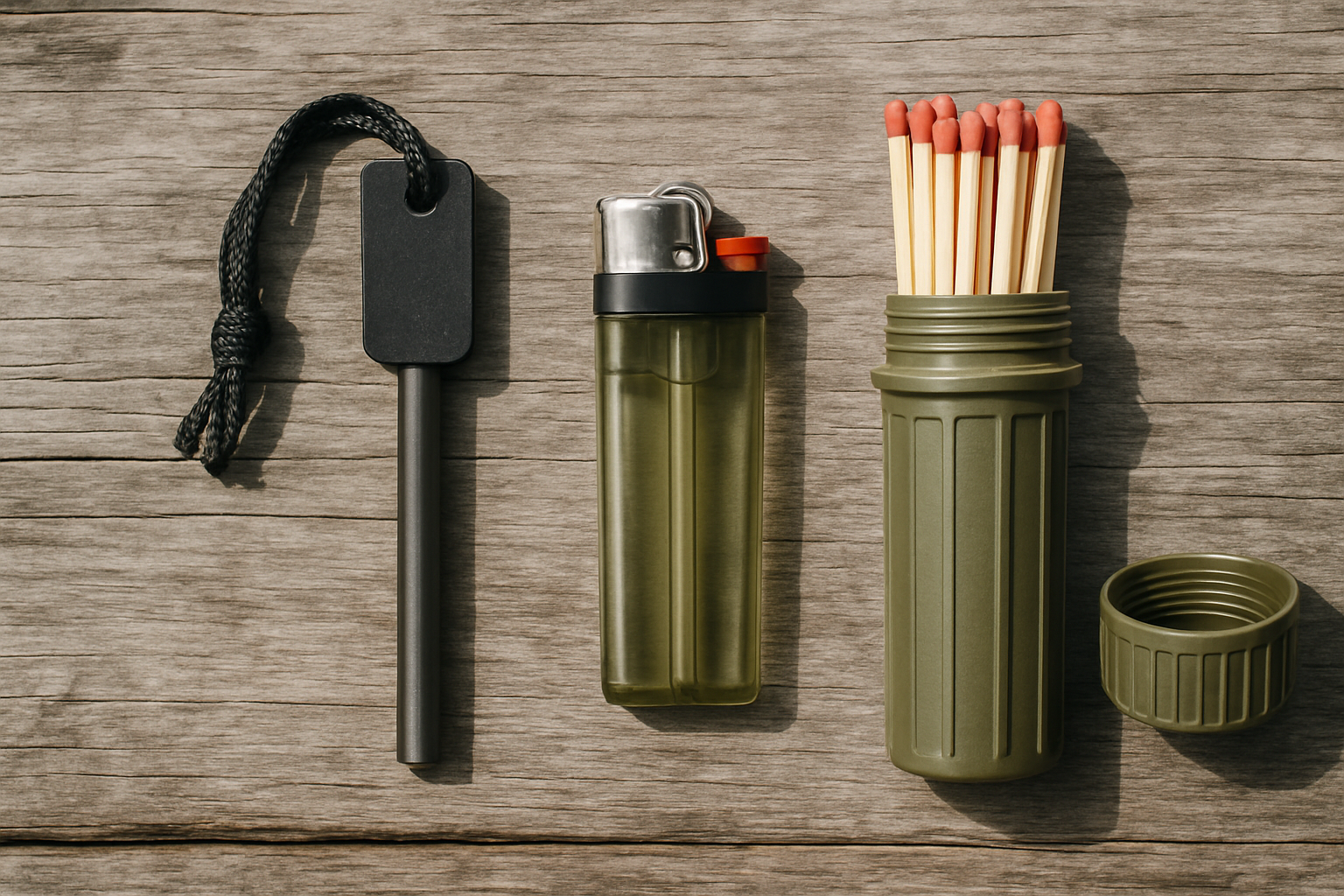
The core rule for emergency fire-starting is simple: carry at least three different ways to make fire, from at least two different categories.
This is not about redundancy for its own sake. Each ignition source has real weaknesses, and those weaknesses are predictable.
Lighters are fast and easy in good conditions. But butane pressure drops in cold weather. A lighter that works fine at 70 degrees may barely spark at 20 degrees. They run out of fuel. They get wet and the flint wheel gums up. They are subject to altitude effects. A BIC Maxi Pocket Lighter is one of the most reliable tools in a warm pocket, and one of the most frustrating tools at a winter campsite when it is sitting at the bottom of a bag. A 10-pack is handy because you can store lighters in more than one place. Note that these lighters are child-resistant, but no lighter is child-proof. There is no substitute for proper adult supervision.
Matches are reliable at lighting quickly if they are the right kind. But standard matches are useless when wet. Book matches are fragile. Even strike-anywhere matches can fail if the striking surface degrades or the tips absorb moisture. Matches are also a consumable. You strike one, it burns, it is gone. A box of 40 matches sounds like a lot until you have burned through 15 trying to get damp tinder to catch in the wind.
Ferro rods (also called fire steels or ferrocerium rods) do not run out of fuel, do not care about altitude, and work when soaking wet if you dry off the rod and striker. They can be stored for years or decades. A quality ferro rod will produce thousands of strikes before it wears out. The downside is that a ferro rod requires practice, a proper striker, and good tinder preparation. It will not bail you out the first time you pick one up with cold hands.
When you carry all three, the weaknesses of each are covered by the strengths of the others. Your lighter handles 95 percent of daily use and easy conditions. Your matches give you quick ignition when the lighter fails. Your ferro rod is the tool that works when everything else has failed and the conditions are at their worst.
A good emergency kit has at least one item from each category, stored separately so losing your pack or one pouch does not wipe out all three.
Ferro Rods: The Backbone of Your Fire Kit
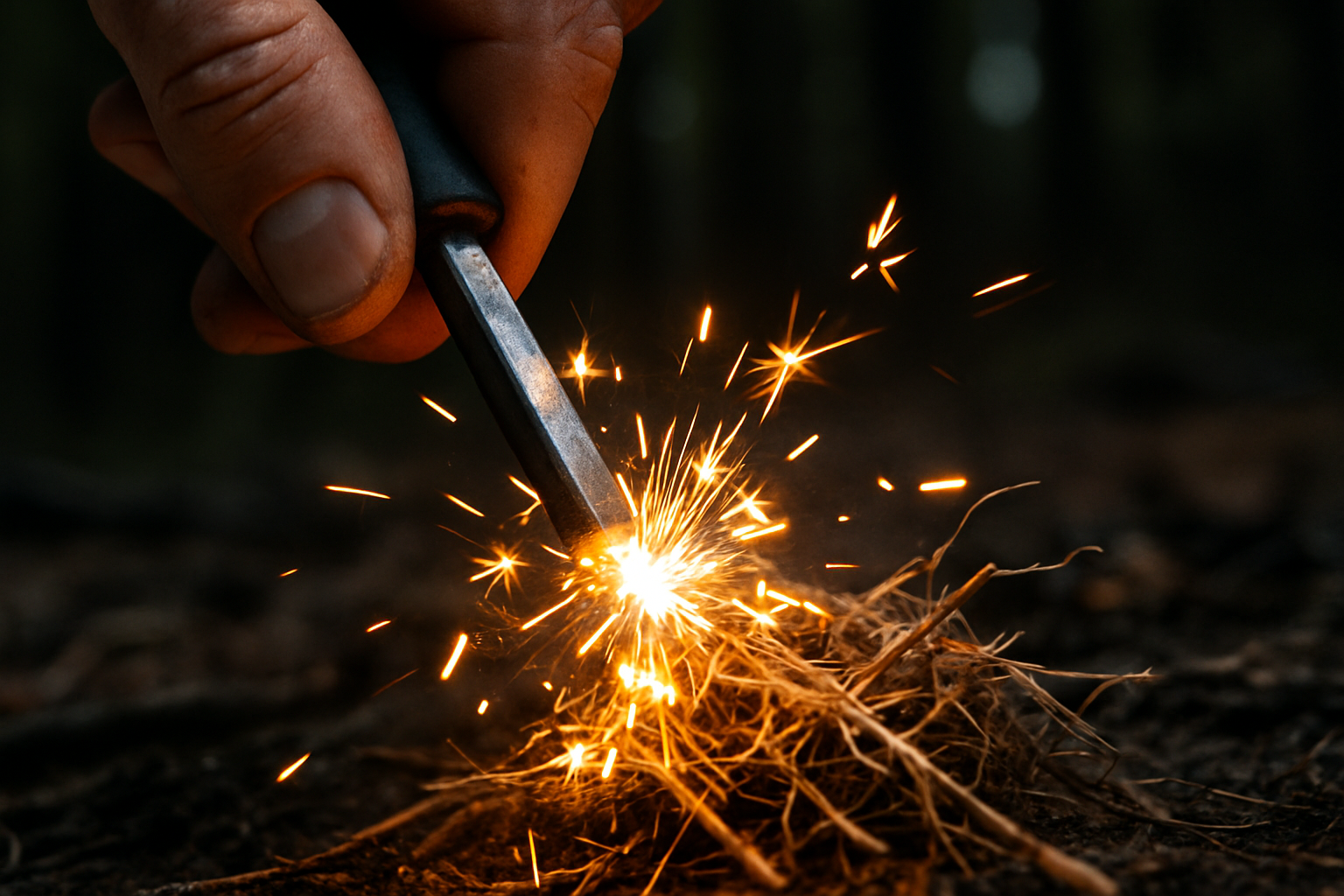
A ferro rod is a stick made from ferrocerium, an alloy of iron, cerium, and other rare earth metals. When you scrape a steel striker across it, it sheds burning sparks at temperatures between 5,400 and 5,900 degrees Fahrenheit. That is hot enough to ignite almost any prepared tinder, even when everything around you is damp.
Ferro rods do not wear out like a lighter. They do not run out of butane. They work at altitude, in cold, and when soaking wet. That makes them the most resilient ignition source in your kit, which is why experienced outdoors people put one at the center of their fire-starting system.
But not all ferro rods are equal. Here is what to look for.
Rod Diameter
This is the single most important spec when choosing a ferro rod. A thicker rod produces more sparks per strike and lasts far longer.
A 3/8-inch (10mm) rod is a solid minimum for a survival kit. Larger is better. The standard “large” size sold by quality brands is 1/2 inch (12-13mm). Some specialty rods go up to 5/8 inch or larger. Thin rods, often under 1/4 inch, are marketed as ultralight or keychain fire starters. They work, but they produce a smaller spark shower and wear out much faster. For an emergency kit, avoid anything under 3/8 inch.
Handle Quality
You will be using a ferro rod with cold hands, possibly wet hands, possibly in the dark under stress. A bad handle is not just uncomfortable. It is a safety and reliability problem. The handle needs to be wide enough to grip firmly, made from a material that is not slippery when wet, and attached to the rod in a way that will not fail under hard use.
Look for handles made from paracord-wrapped steel, wood, or quality polymer. Avoid thin plastic handles or rods where the handle connection feels loose. Some rods come with a striker cord attached or a hole for a lanyard, which is useful for clipping to gear or keeping the striker and rod together.
Striker Quality
A ferro rod is only as useful as its striker. The striker is the hardened steel piece you scrape against the rod to produce sparks. Many rods come with a dedicated striker attached by a cord. Others rely on the spine of your knife.
A good dedicated striker has a square, sharp 90-degree edge that bites into the rod surface cleanly. Rounded or worn strikers produce weaker sparks. The spine of a quality fixed-blade knife can work as a striker if it is ground at 90 degrees, but many modern knives have a rounded spine that is poor for ferro rods.
If you are pairing a ferro rod with a knife for emergency use, test the combination at home before you are relying on it.
Top Ferro Rods: Honest Reviews
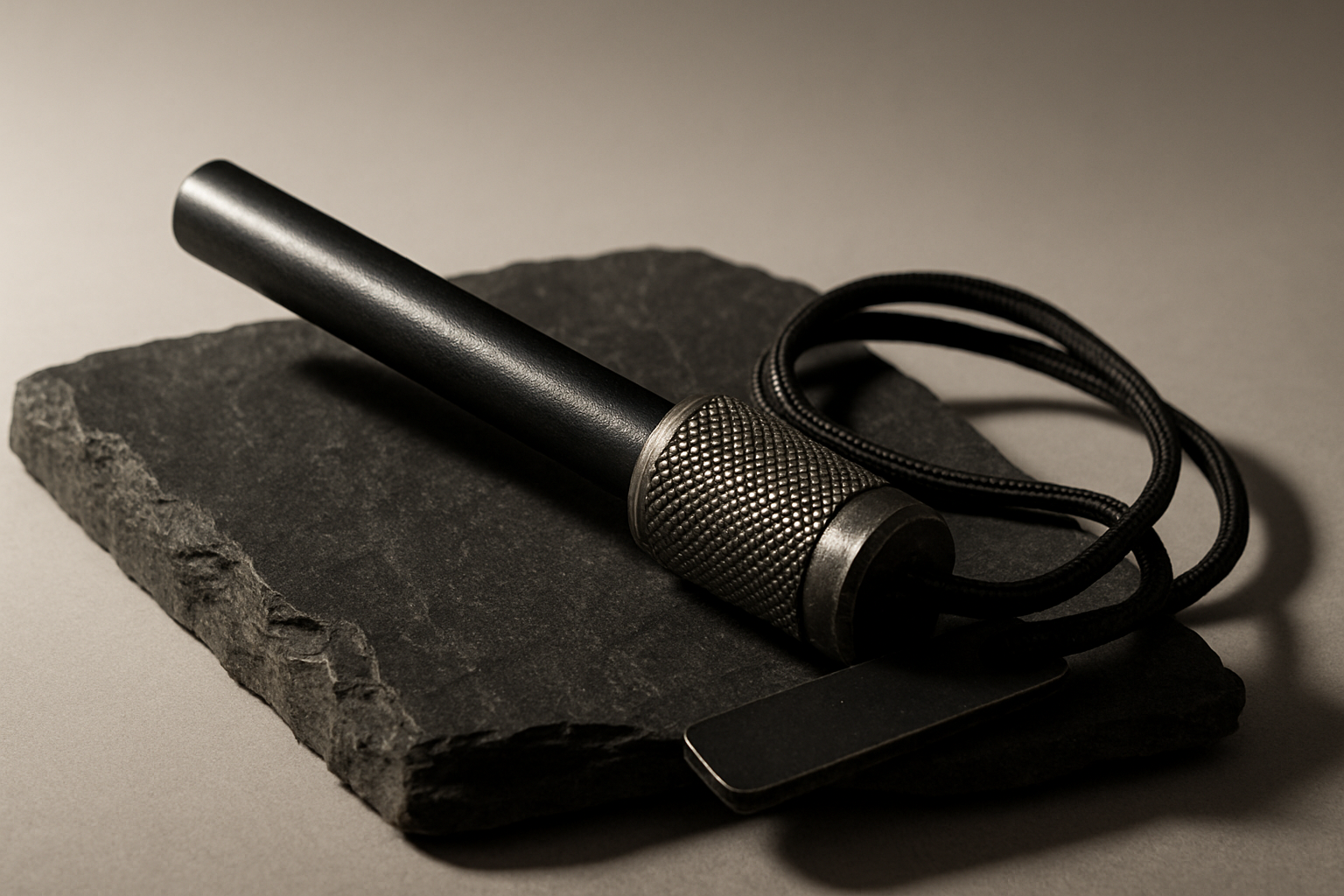
Überleben Zünden Ferro Rod
The Überleben Zünden is one of the best all-around ferro rods available at any price. It comes in 5/16-inch, 3/8-inch, and 1/2-inch rod sizes. The handle is a solid chunk of wood available in several species, including oak, maple, and cherry. It feels genuinely good in the hand, not like a plastic toy.
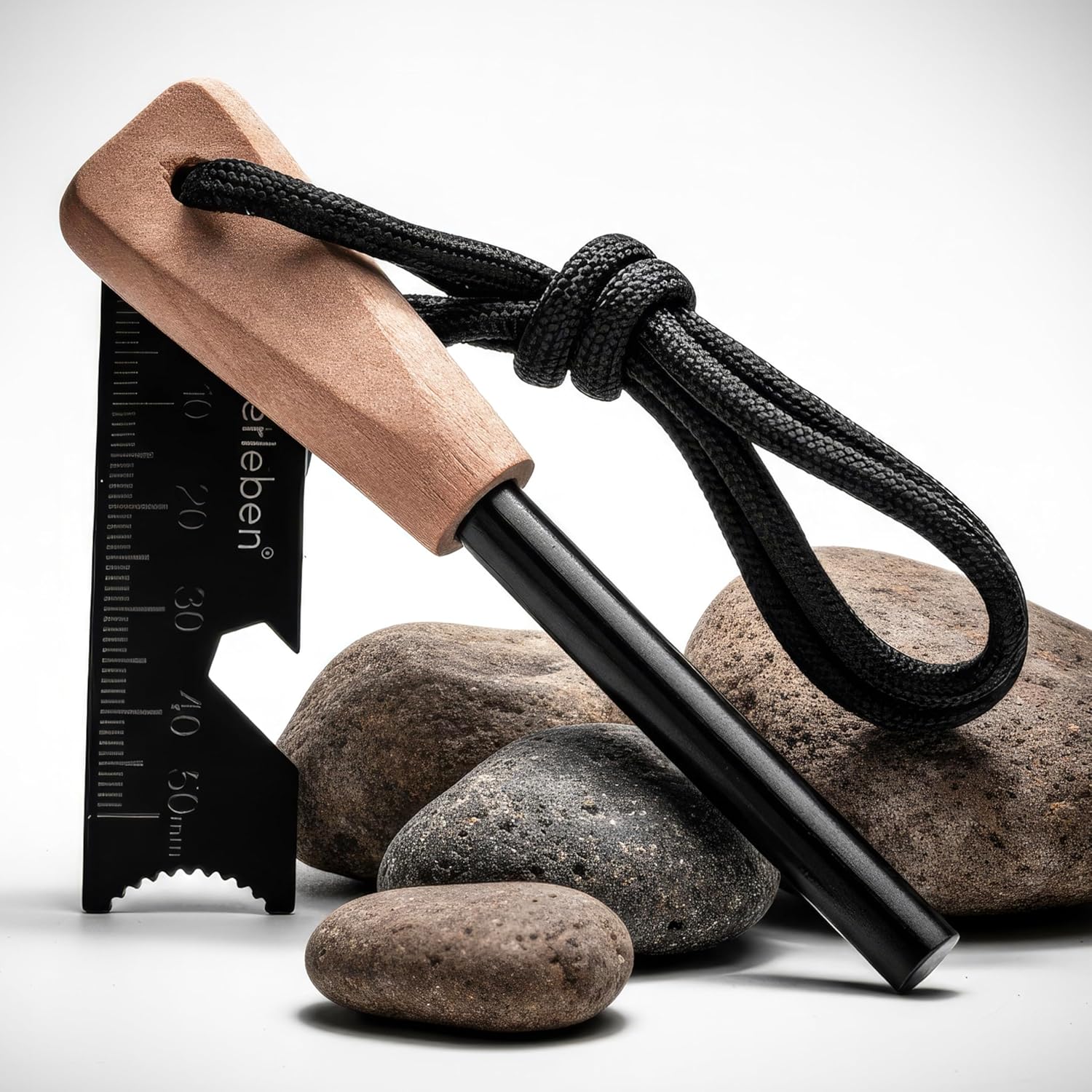
The rod produces a bright, dense spark shower with each strike. The included striker is excellent, with a sharp scraping edge that bites consistently. Überleben also has a reputation for using high-quality ferrocerium that burns hotter than the cheap alloys found in budget rods.
For a kit where you want something that will last for years of use or decades of storage, the Zünden is worth it. It is a premium pick.
BIC Maxi Pocket Lighters
The BIC Maxi Pocket Lighters come in a pack of ten. They are a simple, budget backup for any fire kit. A lighter is the fastest way to make fire. Having ten means you can spread them across many bags and kits.

These lighters are 100% tested and safe. They meet or exceed lighter safety standards. That makes them a dependable choice you can trust.
The lighters are also designed to be child-resistant. But no lighter is child-proof. There is no substitute for proper adult supervision. Read all warnings before you use the lighter. The colors are assorted and may vary.
At a budget price for a 10-pack, these are a smart buy for building redundancy. A car kit, a home kit, a bug out bag, and a get-home bag can each have a lighter with plenty to spare. Pair them with a ferro rod so you always have more than one way to start a fire.
Bayite Ferro Rod
The Bayite ferro rod is the best budget option for preppers who want to stock multiple fire kits without spending a lot per rod. The 1/2-inch diameter rod is large for its price tier, producing a good spark shower. The handle is simple paracord wrapping, which is actually functional for grip in wet conditions.

The ferrocerium alloy is not quite as hot as the Überleben, but it is more than adequate for experienced users with good tinder prep. For beginners, the larger rod diameter compensates for technique weaknesses.
Bayite rods are a smart budget buy for building redundancy across multiple bags and kits. A car kit, a home kit, a bug out bag, and a get-home bag can each have a ferro rod for a low cost.
Lighters: Fast and Reliable When They Work
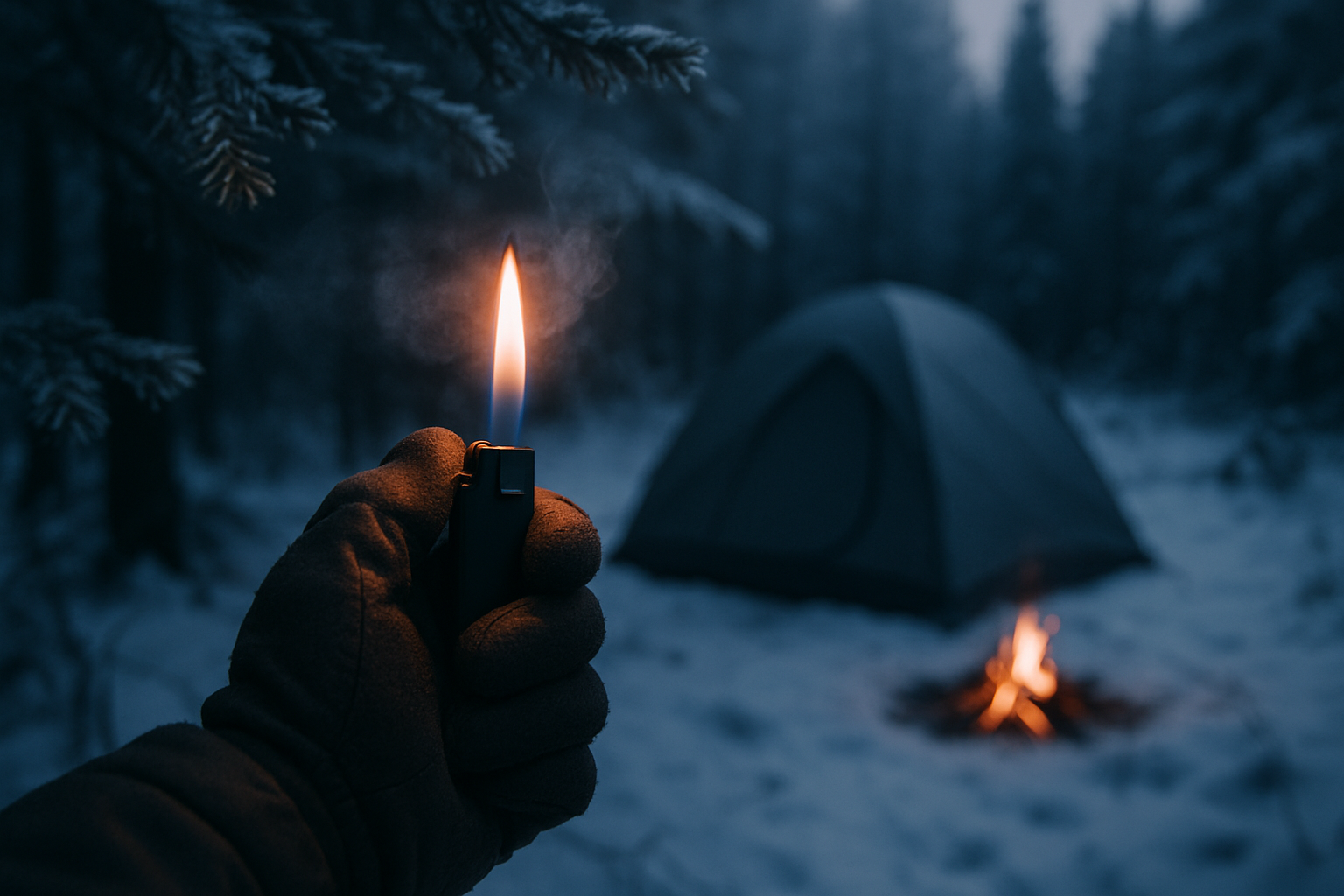
A lighter is the right tool for 95 percent of fire-starting situations. When conditions are reasonable and your lighter is warm, nothing is faster or easier. The challenge in emergency preparedness is choosing lighters that perform at the edges of their operating range.
Zippo Windproof Lighter
The Zippo Windproof Lighter runs on liquid naphtha fuel rather than butane. This matters because naphtha does not suffer from the pressure-drop problems that make butane lighters unreliable in cold weather. A Zippo that is fueled and working will light in conditions that would defeat a standard butane lighter.

The windproof design uses a chimney structure that protects the flame from gusts that would extinguish a regular lighter. You can light a Zippo in substantial wind without cupping your hands around it.
The downside: Zippos require fuel replenishment every few weeks even when not used, because naphtha evaporates through the wick and seal. If you store a fueled Zippo for six months, it may be dry when you need it. The solution is to store the lighter empty and keep a small bottle of lighter fluid with it. Fill it when conditions demand it.
A basic Zippo model is a budget addition to any emergency kit where you can manage the fuel storage requirement.
BIC Maxi Pocket Lighters, 10-Pack
The BIC Maxi Pocket Lighters 10-Pack comes with ten dependable, long-lasting lighters in assorted colors. Each one is 100 percent tested and safe. They meet or exceed lighter safety standards. They are also designed to be child-resistant. No lighter is child-proof, so there is no substitute for proper adult supervision. Read all warnings before using these lighters. For everyday carry and warm-weather use, this pack is simple and easy to keep on hand.
Butane lighters do have cold-weather limits. Below about 40 degrees Fahrenheit, butane pressure drops and ignition becomes inconsistent. The fix is to keep your lighter in a warm pocket, close to your body. A lighter that has been resting against your leg for an hour will light in much colder conditions than one that has been sitting at the bottom of a cold pack.
A ten-pack means you can keep one in every kit. That makes redundancy easy. Spread five or six across your various bags and kits so you always have a backup.
Matches: The Backup That Belongs in Every Kit
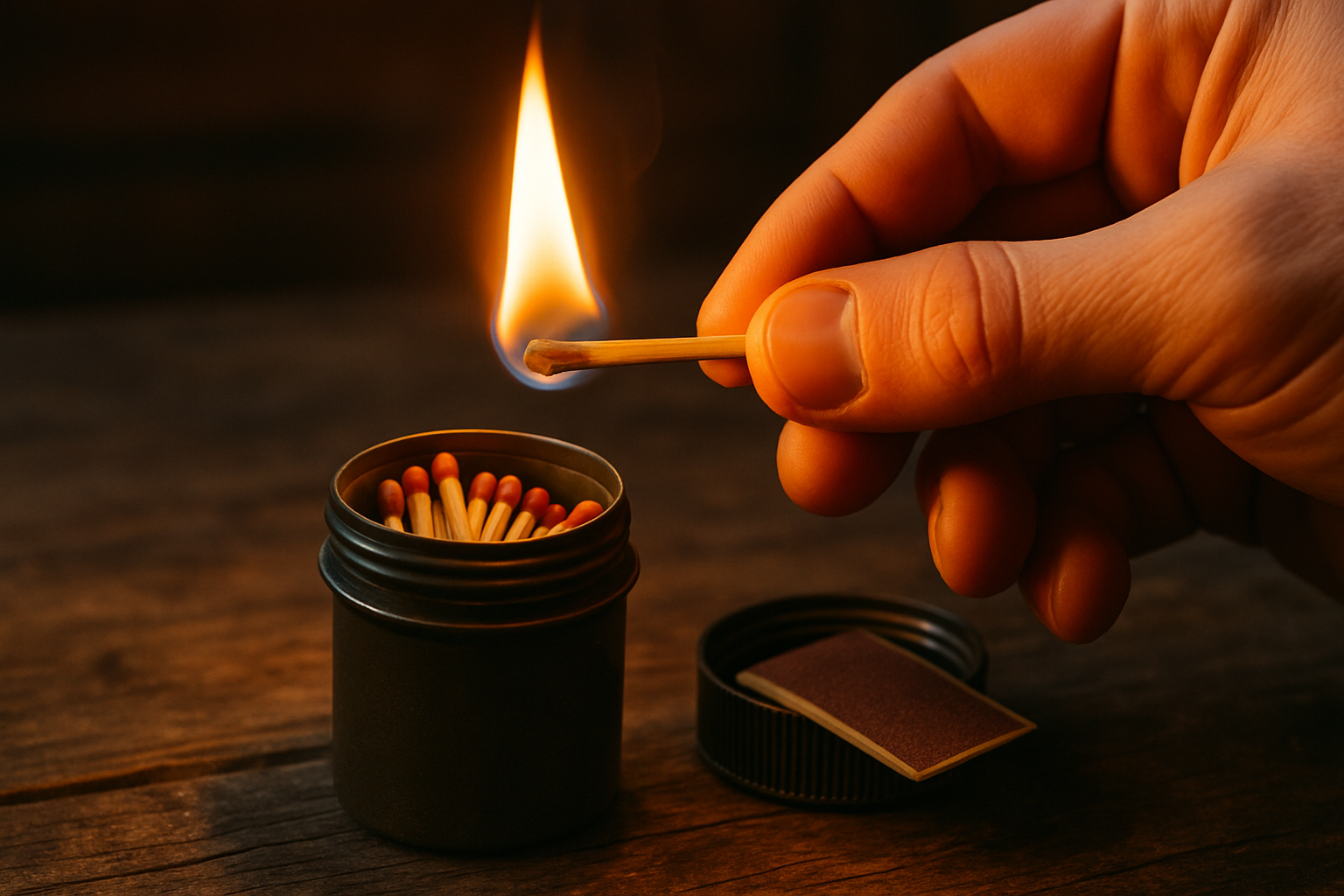
Matches get dismissed by serious survivalists because wet matches are useless. But the right kind of matches stored correctly are a legitimate and important backup ignition source.
BIC Maxi Pocket Lighters
BIC Maxi Pocket Lighters come in a pack of ten. They are a dependable and long-lasting ignition source. Each lighter is 100% tested and safe. They meet or exceed lighter safety standards. The lighters are also designed to be child-resistant. But no lighter is child-proof. There is no substitute for proper adult supervision. Read all warnings before you use one.

These BIC lighters are a budget option. You get ten of them in one pack. That makes them easy to spread across your kits. When you want a simple and reliable backup, a pack of BIC lighters gives you a fighting chance.
Keep one in your bug out bag, one in your car kit, and one in your home emergency supplies. The colors may vary, so you may get an assorted mix.
Tinder: The Part Most People Skip
A fire starter without good tinder is like a match without a striking surface. You can produce sparks from the best ferro rod in the world and get nothing if your tinder is wrong.
Tinder has one job: catch a spark or small flame and hold it long enough for you to build it into a sustained fire. The best tinder ignites quickly, burns hot enough to light your kindling, and stays lit long enough to transfer the flame.
WetFire Tinder Cubes
WetFire tinder cubes are one of the best commercial tinder options for emergency kits. They are non-toxic, float on water, and ignite even when wet. A single cube burns for about two to three minutes at very high temperature, giving you plenty of time to get your kindling going. They are individually wrapped, which means they store for years without degrading.

The tradeoff is cost: WetFire is a premium tinder option. For an emergency kit that you are building once and storing, this is reasonable. WetFire is particularly valuable in wet climates or for kits that may get wet during transport.
Fatwood Fire Starters
Fatwood fire starters are a natural product made from the resin-saturated heartwood of dead pine trees. The resin content is so high that fatwood shavings or sticks ignite quickly and burn hot even in damp conditions. It has been used as a fire-starting material for centuries.

Fatwood works with both lighters and ferro rods. Shave a small pile of curls with a knife and apply sparks or a lighter flame. It catches quickly and burns for a couple of minutes. Fatwood stores indefinitely, has no chemical treatments, and is safe to use for cooking fires.
The limitation is bulk. Fatwood is heavier and larger than chemical tinder options, which makes it better for home kits, car kits, and base camp supplies than for ultralight bug out bags.
BIC Maxi Pocket Lighters
Sometimes the simplest flame source is the best one. A BIC Maxi Pocket Lighter gives you an instant flame with no skill needed. This pack comes with ten lighters, so you can spread them across your kits and still have spares.

Each lighter is 100% tested and meets or exceeds lighter safety standards. They are also designed to be child-resistant. No lighter is child-proof, though. There is no substitute for proper adult supervision, so read all warnings before you use one.
The colors come assorted and may vary. A ten-pack is a budget way to make sure every kit has a reliable flame source. Pair a lighter with good tinder, and you have a fast, dependable way to start a fire.
DIY Vaseline Cotton Balls
The cheapest and arguably most effective tinder for a survival kit is also the simplest to make: cotton balls coated in petroleum jelly (Vaseline).
To make them, take a cotton ball and work a small amount of Vaseline into its fibers. You do not need to saturate it. A thin coating throughout the cotton is enough. The cotton provides a fibrous structure that catches sparks, and the petroleum jelly extends the burn time dramatically. A plain cotton ball burns for about 30 seconds. A Vaseline-coated cotton ball burns for two to four minutes.
They cost almost nothing and are a budget option. Store them in a small waterproof container or zip-lock bag. They are one of the most reliable ferro rod tinder options you can carry, and they work even in wet conditions once the flame is going.
The only downside is shelf storage. Vaseline cotton balls can compress and lose their structure over time if they are packed too tightly. Keep them in a rigid container with a little room.
How to Start a Fire in Wet and Cold Conditions
Understanding what ignition sources to carry is only part of the skill. Knowing how to use them when conditions are against you is what actually keeps you alive.
Step 1: Protect your tinder from moisture before you start. Store your tinder in a waterproof container or zip-lock bag and do not open it until you are ready to use it. If your tinder gets wet before you have a flame, you have made the job much harder.
Step 2: Build a tinder bundle on a dry platform. If the ground is wet, kneeling in a puddle and trying to start a fire is going to fail. Set up your tinder on a flat piece of dry bark, a folded piece of emergency blanket, or even a folded piece of cardboard. Keeping the tinder off wet ground keeps moisture from wicking into it from below.
Step 3: Shield the tinder from wind. Wind is the enemy of early fire. It can extinguish a small flame before it has had a chance to build. Use your body as a windbreak. Kneel with your back to the wind. Cup your hands around the tinder bundle loosely enough to allow airflow but block gusts.
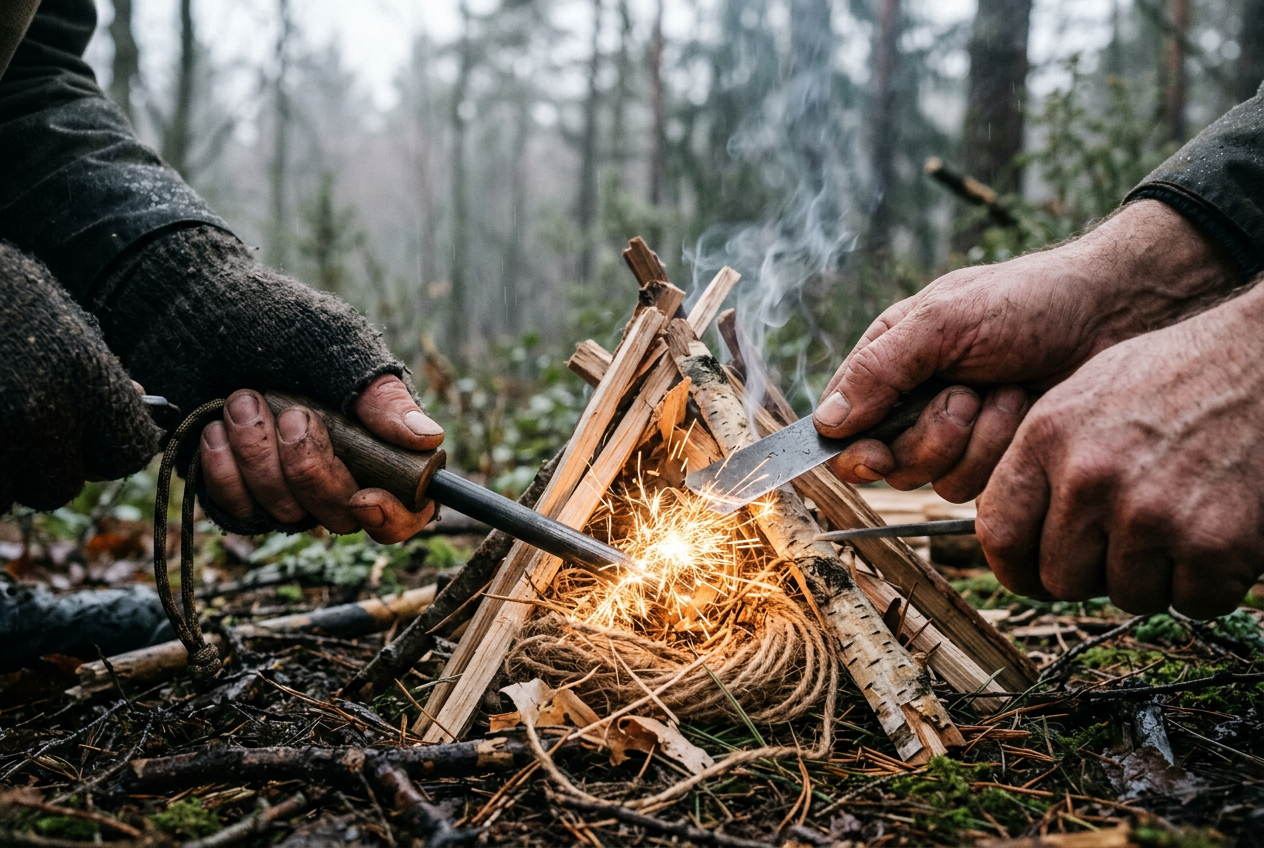
Step 4: Use the right stroke with a ferro rod. Most beginners try to move the ferro rod toward the tinder while holding the striker still. This often knocks the tinder bundle out of place. Instead, hold the ferro rod steady and low, positioned a few inches above the tinder, and pull the striker backward in one firm, fast stroke. The sparks will fall into the tinder instead of scattering.
Step 5: Feed the fire carefully. Once you have a flame or a glowing ember, add air by blowing gently at the base of the tinder, not the top. Add small kindling as the flame grows, not large pieces. The biggest mistake people make once a fire catches is loading it with large wood too soon and smothering the small flame.
In extreme cold: Keep your lighter in an inner chest pocket or waistband pocket where body heat keeps the butane pressurized. Remove it from the pack only when you are ready to use it. A 10-pack of BIC Maxi Pocket Lighters gives you plenty of backups, so you can leave the rest packed away and warm. With a ferro rod, keep the rod and striker warm and dry. Wet ferrocerium still works, but cold fingers fail before the rod does. Wear gloves with a grip surface or use a ferro rod with a large, textured handle.
Comparison Table: Top Fire Starters at a Glance
How to Store Your Fire Kit
The best fire starters in the world fail if they are stored wrong. A few practical rules.
Keep your fire kit in a waterproof container. A small hard-sided waterproof case or even a quality zip-lock bag keeps moisture away from matches and tinder. This is the single most important storage practice.
Store fire kit components in multiple locations. One set in your bug out bag. One set in your car kit. One set in your home emergency supplies. If you have only one kit and you leave your bag behind or your car gets flooded, you have nothing.
Check your lighters regularly. Test fire each lighter in your kit twice a year. Butane lighters very slowly lose pressure over time. Zippos need fuel replenishment. Catching a failed lighter before an emergency is much better than discovering it during one.
Separate your ferro rod and striker. This sounds counterintuitive, but some people store their ferro rod with the striker attached in a position where the striker constantly rubs against the rod during transport. This slowly erodes the rod coating (many new rods have a factory coating over the ferrocerium that must be scraped off for first use). Once you have broken in the rod, this is less of a concern, but loose storage is better than constant friction in a pouch.
Keep a fire kit in your EDC. Everyday carry (EDC) means the things you have on your person, not in a bag you might leave behind. A BIC Maxi Pocket Lighter in your pocket and a small ferro rod on your keychain takes up almost no space and means you always have two ignition sources no matter what. These lighters come in a 10-pack, so you can spread them across all your kits. The Swedish FireSteel Scout and the Überleben Zünden both come in compact sizes suitable for keychain carry.
What Not to Buy
The fire-starting market has a lot of products designed to look impressive rather than work reliably. Here are the things to skip.
Magnesium fire starters. The combo magnesium block with a ferro rod embedded in the side is a classic camping product. The idea is that you shave magnesium flakes into a pile and then use the ferro rod to ignite them. In practice, this is slow, fiddly, and frustrating, especially in wind. The magnesium flakes scatter. The pile disperses. You spend 20 minutes coaxing a fire that a Vaseline cotton ball would have started in 30 seconds. Skip the magnesium block and just carry better tinder.
Stormproof lighters with electronic ignition. Plasma arc lighters and electric arc lighters are popular because they look futuristic and have no butane. But they are battery-powered, and batteries fail. Cold weather drains batteries faster than anything. A plasma lighter that ran out of charge or was damaged by water is completely useless. Stick with proven technology: butane, liquid fuel, or ferrocerium.
Novelty fire kits. Kits sold as “survival sets” that include 12 items in a tiny bag typically include a thin ferro rod, a single-use firestarter block, a couple of strike-anywhere matches, and various low-quality accessories. None of the individual items are as good as buying quality versions separately. Buy the best ferro rod you can afford and a small number of tested tinder types rather than a novelty multi-item kit.
Building Your Three-Source Fire Kit: Recommended Setups
Minimal Bug Out Bag Kit (Budget)
- 1x Light My Fire Swedish FireSteel Army
- 2x BIC Maxi Pocket Lighters (keep one in inner pocket)
- 10x DIY Vaseline cotton balls in a small waterproof container
- 1x UCO Stormproof match box
This setup covers all three source categories, weighs very little, packs small, and handles wet and cold conditions well. It is a budget-friendly kit.
Full Home and Vehicle Kit (Premium)
- 1x Überleben Zünden ferro rod (1/2")
- 1x Zippo Windproof Lighter with spare fuel
- 1x BIC Maxi Pocket Lighters (10-pack) distributed across kits
- 1x UCO Stormproof matches
- 1x WetFire tinder cubes (pack of 12)
- 1x Fatwood fire starters for home/vehicle
This is a comprehensive setup for home, vehicle, and bug out bag use. You have quality tools in every category and tinder options for all conditions. The 10-pack of BIC lighters means you can spread them across every kit.
Practice Before You Need It
The most important thing this guide can tell you: practice starting fires before an emergency.
A ferro rod is not intuitive. The first time most people try one, they get weak sparks that miss the tinder, or they knock the tinder bundle out of position, or they try to use tinder that is too coarse to catch. These are learnable skills, but they take practice.
Set aside an afternoon and practice with your actual kit. Use the ferro rod you intend to carry with the tinder you intend to use. Practice in your backyard, then practice in damp conditions, then practice at night with a headlamp. When you can reliably start a fire with cold hands in the rain, you have a fire kit. Until then, you have a collection of fire-starting equipment.
The three-ignition-source system, quality tools in each category, and practiced technique are what turn fire starting from a theoretical skill into a real capability. Get all three right, and fire is something you can count on when the power is out, the temperature is dropping, and you need heat to survive.
All prices are approximate and may change. Always verify current pricing on Amazon before purchasing.