Ready
Ready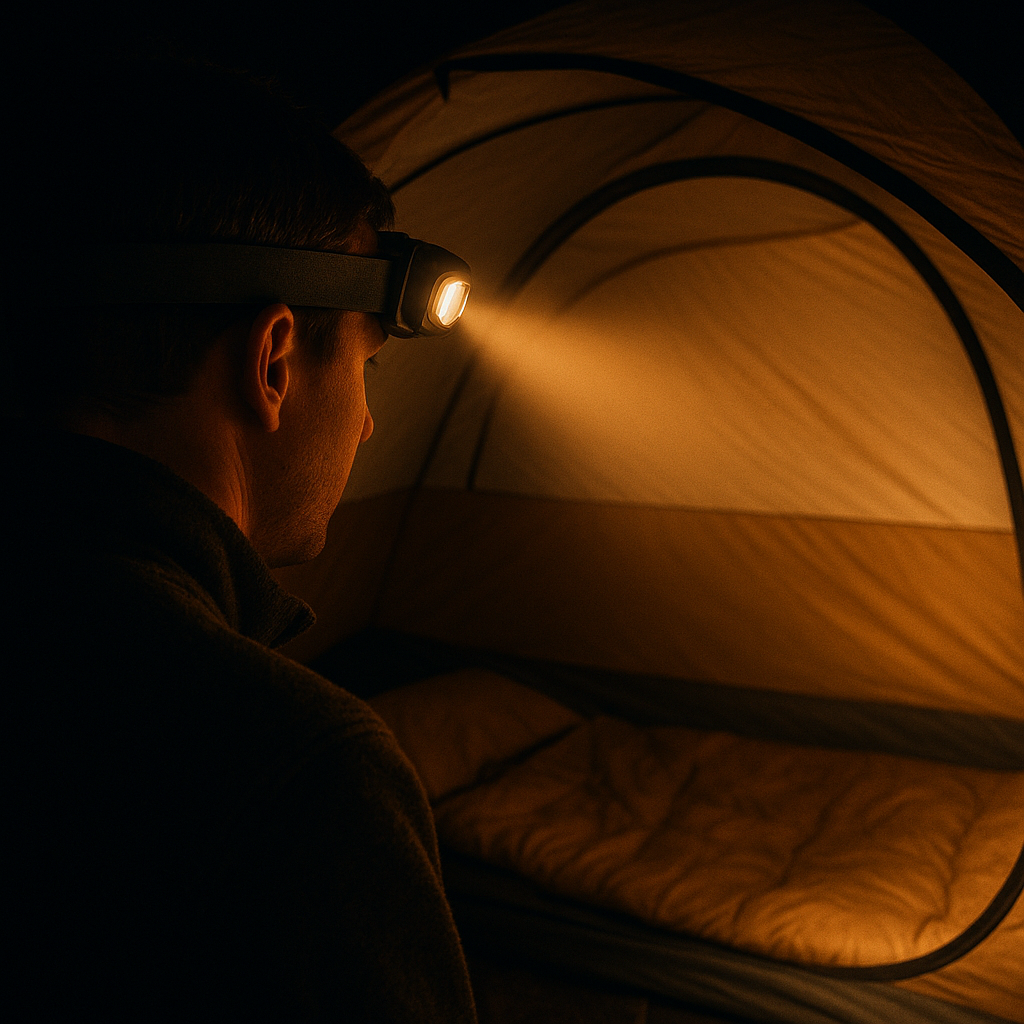
Best Headlamps for Emergencies and Power Outages (2026)
When the power goes out at 2 AM, you don’t have time to dig around for a flashlight. You need light immediately, and you need both hands free to flip breakers, check on family, grab your emergency kit, or just move through a dark house without tripping. A headlamp does what a flashlight never can: it points where you look, stays put, and keeps your hands completely free.
Headlamps are one of the most overlooked items in emergency preparedness. People think flashlights, candles, or lanterns first. But a good headlamp is faster to grab, easier to use in the dark, and more practical for almost every emergency task you can think of, from checking the fuse box to changing a tire on a dark road.
This guide explains what the specs mean, what actually matters for home emergencies versus outdoor use, and which headlamps are worth your money.
- Power options: Look for a rechargeable pack that also runs on regular batteries as backup.
- Bright enough: Pick one with strong output so you can light a whole room or a dark yard.
- Red light mode: A red beam saves your night vision and does not blind others nearby.
- Built tough: Choose a durable, trusted brand that holds up to drops and rough handling.
Here are the headlamps we trust most when the lights go out. Keep reading to see what makes each one stand out.
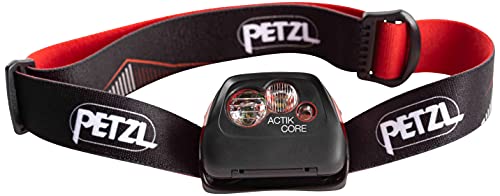
Petzl ACTIK CORE Headlamp
This is our top pick because it is the most emergency-ready. It runs on a rechargeable CORE battery and can switch to AAA batteries when you cannot charge, and it offers strong brightness plus a reliable red night mode. Petzl's proven toughness makes it the most dependable choice for any power outage.
In this guide



Reviewed by Priya K., Ryan C. & Elena V. — contributors with hands-on preparedness experience. How we test
Why Trust This Guide?
This article was researched and reviewed by contributors with hands-on experience in emergency preparedness. They have tested gear, built real systems, and lived through situations where these skills actually mattered.
What Lumens Actually Mean (and Why You Don’t Always Need More)
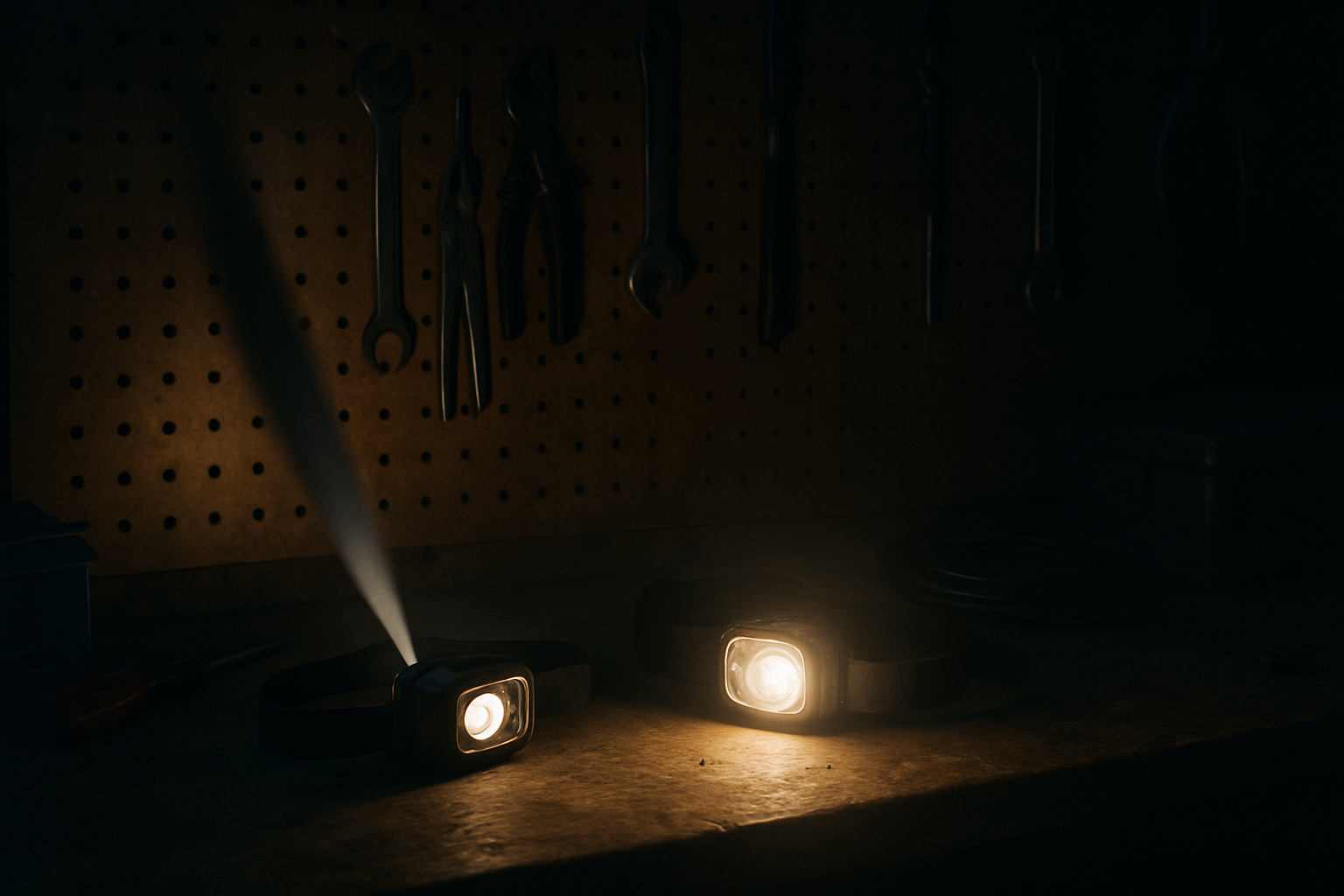
Lumens measure the total amount of light a headlamp puts out. More lumens means a brighter beam. Simple enough. But lumens alone don’t tell the whole story.
Here’s a practical breakdown:
10 to 30 lumens is enough to read a book, navigate a dark hallway, or find things in a drawer. This is low-mode territory. Very efficient on batteries.
50 to 100 lumens is good for most home emergency tasks: moving through rooms, checking on kids, cooking by headlamp light, looking at a circuit breaker panel.
200 to 300 lumens is bright enough for outdoor use, navigating trails, checking a yard, or working in a garage or basement with no ambient light.
300 to 400+ lumens is “spotlight” territory. Great for seeing far ahead on a trail, scanning a field, or signaling. But it burns through batteries fast, and up close it’s often too bright to be useful.
The trap people fall into is buying the highest-lumen headlamp they can find, then running it on max mode and draining the batteries in an hour. Most real-world use happens at low and medium brightness. A headlamp with solid low-mode performance and long battery life at 50 to 100 lumens is more useful in an emergency than one that can hit 700 lumens but dies quickly.
Battery Life vs. Brightness: The Real Tradeoff
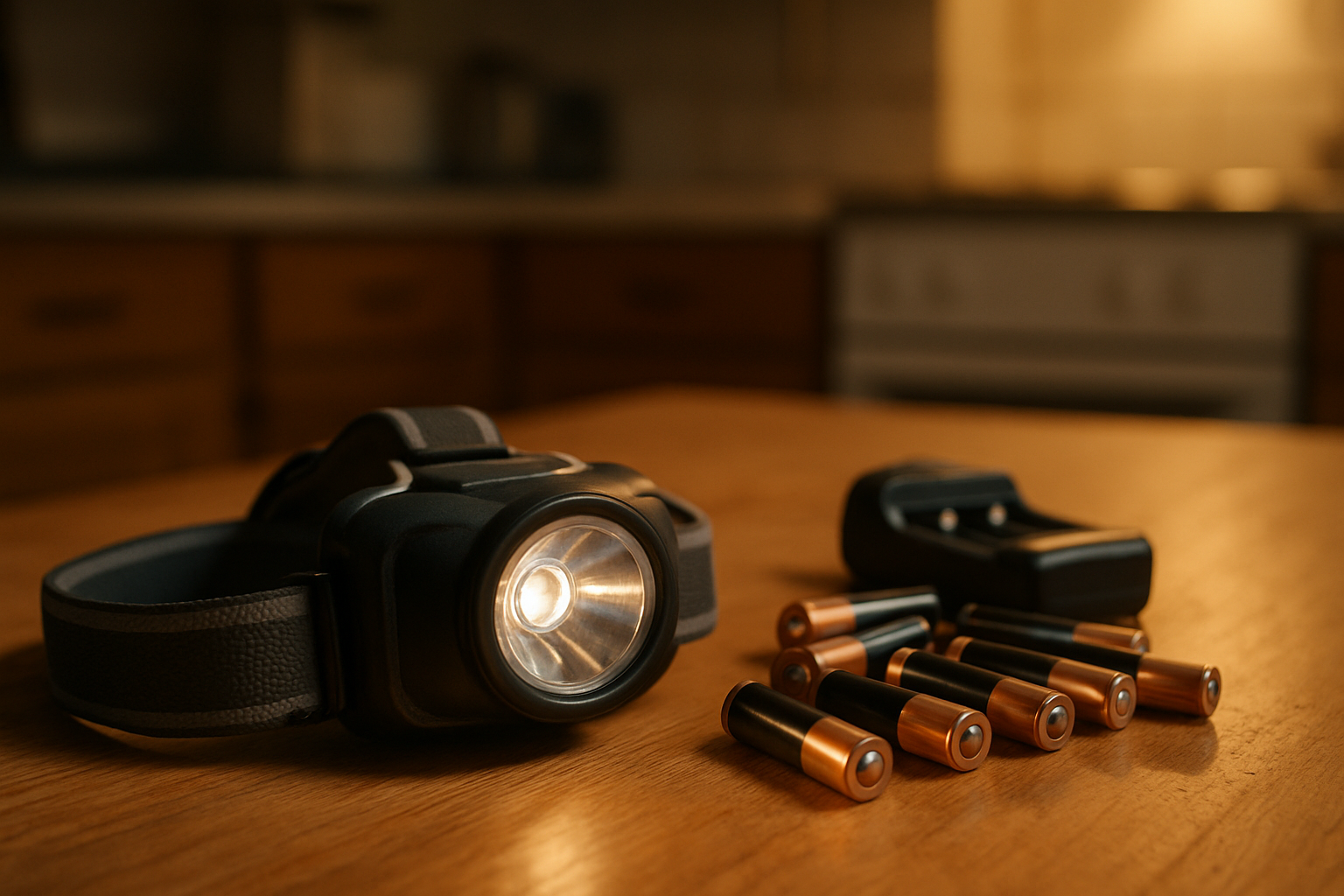
Every headlamp has this problem: the brighter you run it, the faster the batteries drain. Manufacturers list “max lumens” and “max run time” on the box, but those two numbers almost never go together. The max lumens is measured at the beginning. The max run time is measured at the lowest setting.
When evaluating a headlamp, look for the run time at the mid-level setting. That’s what you’ll actually use during an outage.
A headlamp that runs 40 hours at low mode is far more valuable during a 3-day power outage than one that runs 2 hours at max. In a real emergency, you’re not running your headlamp on full blast continuously. You’re turning it on, doing a task, turning it off, repeating. Efficient low-mode performance keeps you lit for days.
Why Red Light Mode Matters
This one surprises people who haven’t used headlamps much.
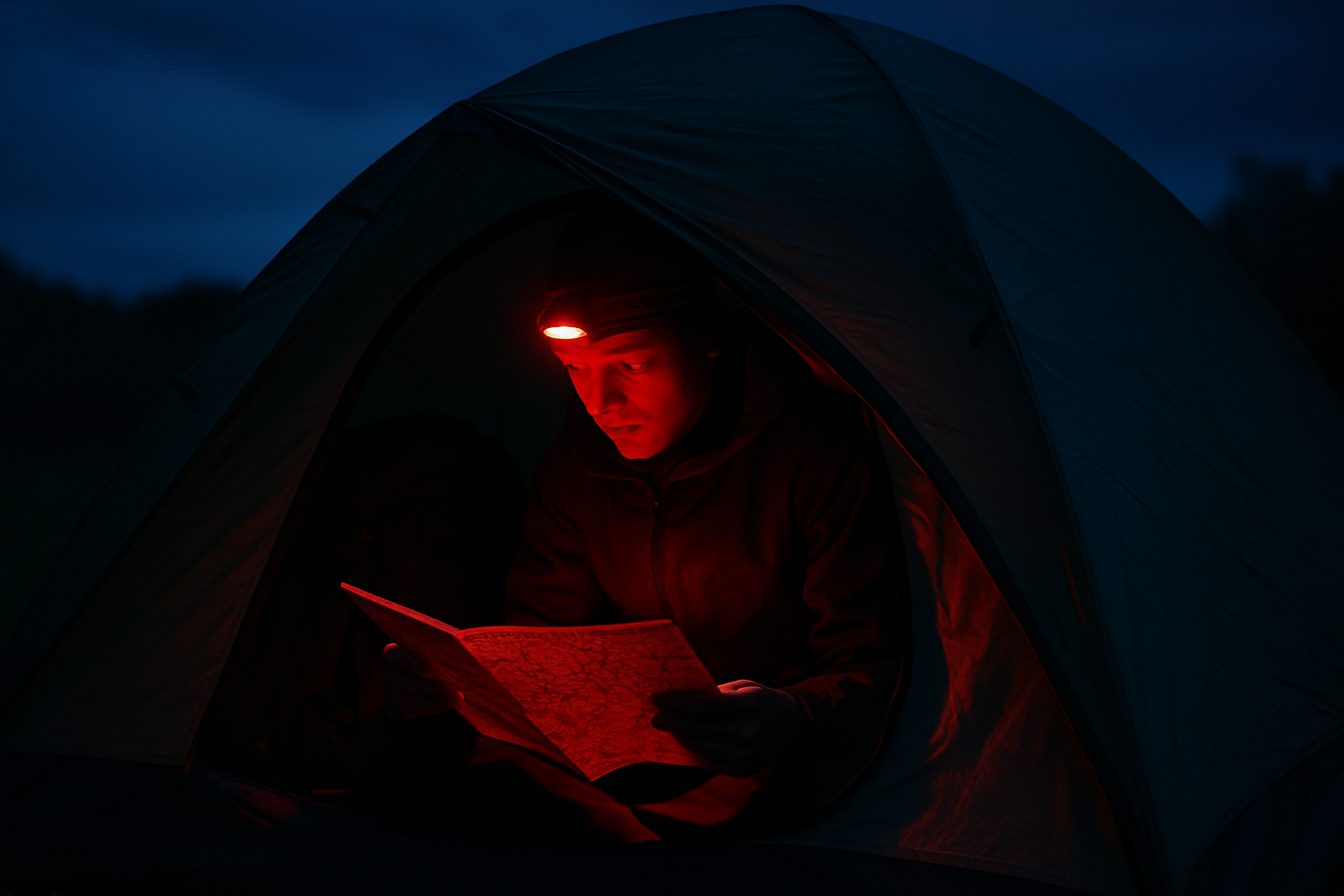
Your eyes adapt to darkness over about 20 to 30 minutes. This is called dark adaptation. When you turn on a bright white light, that adaptation resets immediately. You’re back to being night-blind the moment the light goes off.
Red light does not destroy your night vision. Your eyes stay adapted to the dark even while using a red LED. This matters in several situations:
Moving around a dark house at night. If you turn on a white light and then turn it off to avoid waking family members, you’re blind again. Red light lets you see what you need to see while keeping your eyes adjusted.
Outdoor emergencies. If you’re outside at night during a storm or evacuation, maintaining night vision lets you see beyond the edge of your beam: obstacles, people, animals.
Checking on sleeping family members. Red light is dim enough to not wake people up the way white light does.
Conserving batteries. Red LEDs use very little power. If you just need to find the bathroom or check on something at night, red mode might last 100+ hours on a single set of batteries.
Any emergency headlamp worth buying should have a dedicated red light mode. It’s not a luxury feature. It’s practical.
Rechargeable vs. AA Batteries: Which Is Better for Emergencies?
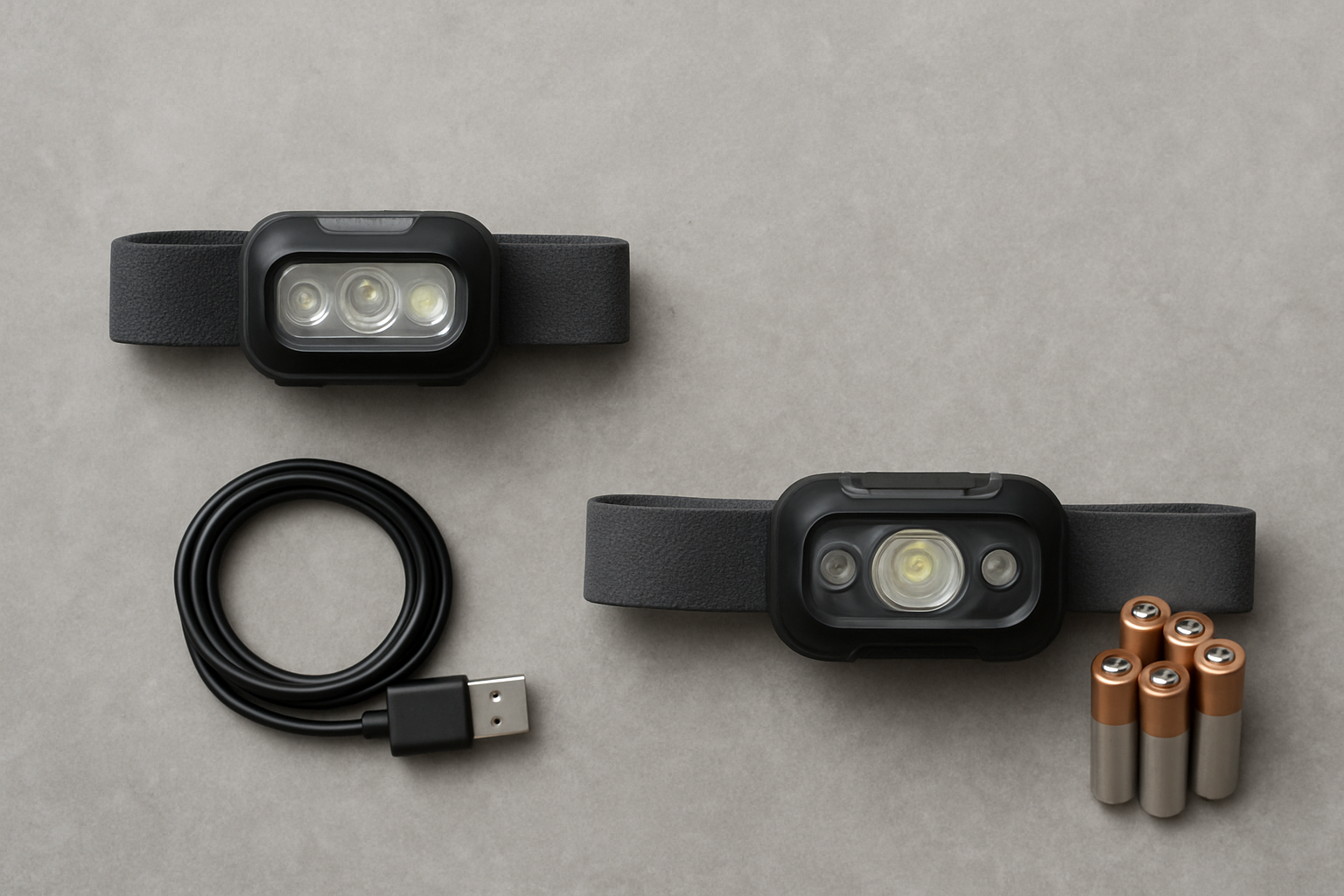
This is the most common debate in the headlamp world. Here’s the honest answer: both have real advantages, and the best pick depends on your situation.
Rechargeable Headlamps
Pros:
- Lower long-term cost (no buying batteries)
- Usually more powerful (USB charging supports higher-drain LEDs)
- Convenient for everyday and camping use
Cons:
- Useless if you can’t charge them
- During a multi-day outage, they may run out before power returns
- Require a charged power bank, solar panel, or car charger to stay useful in extended emergencies
AA Battery Headlamps
Pros:
- You can stockpile AA batteries easily
- AA batteries are available everywhere
- In a long outage, just swap batteries and keep going
- Batteries stay stable in storage for 10+ years
Cons:
- Ongoing cost of batteries
- Heavier with alkaline batteries
- Less power output than rechargeable equivalents
For home emergency kits: AA wins. Store extra batteries with the headlamp and you’re covered for weeks. No charging required.
For active outdoor use or everyday carry: rechargeable wins. More convenient, more power, lower cost over time.
Some headlamps, like the Petzl Actik Core, use a rechargeable battery pack but also accept standard AA batteries as a backup. This hybrid approach is ideal for emergency preparedness because you get the convenience of USB charging while keeping the option to use AA batteries when the power is out.
Water Resistance Ratings: What IPX Means
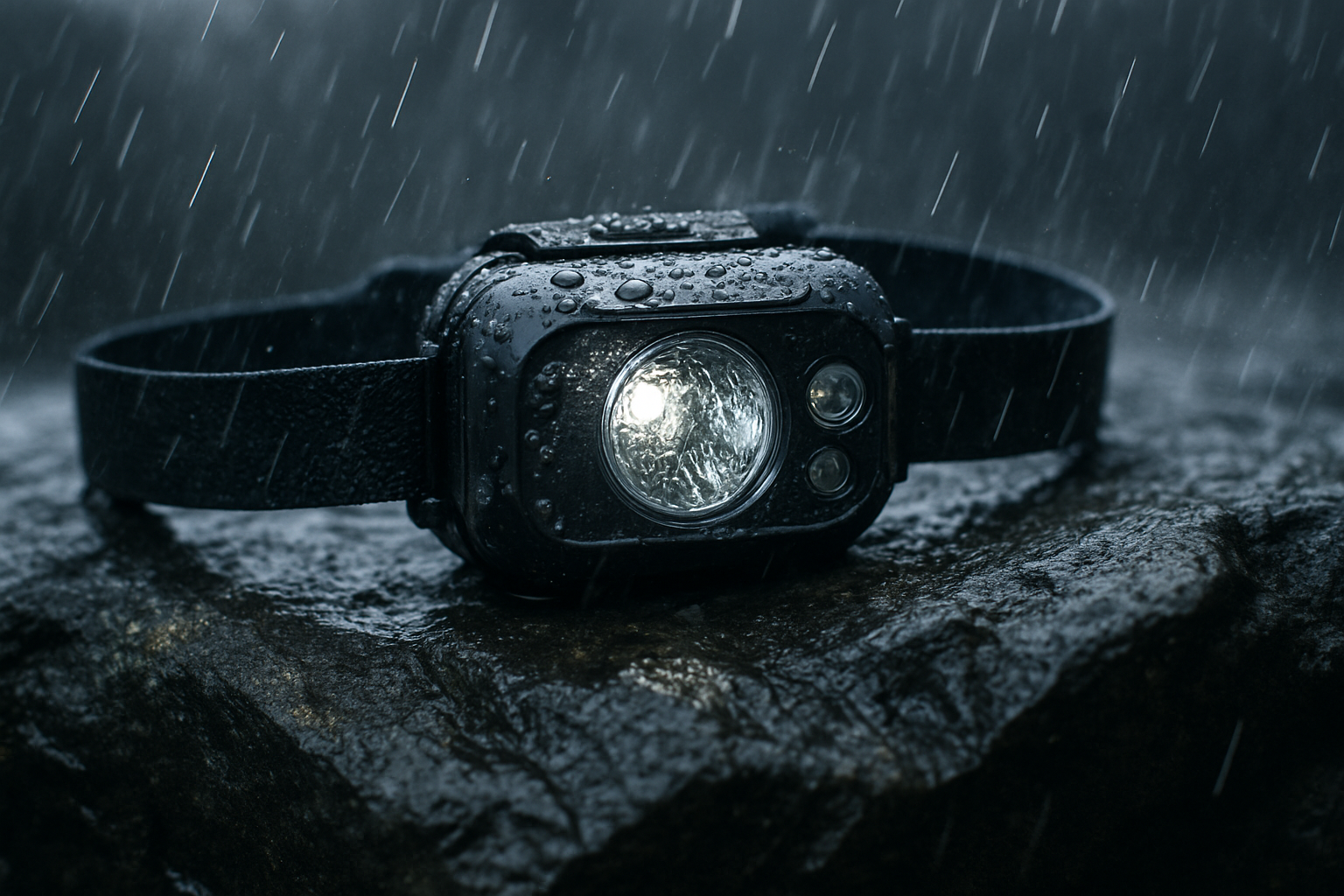
Headlamps get rated for water resistance using the IPX system. Here’s what the numbers mean:
IPX4: Splash resistant. Fine for light rain. Not for submersion or heavy downpours.
IPX5: Resistant to water jets from any direction. Good for most outdoor conditions.
IPX6: Resistant to powerful water jets. Heavy rain, waves, being caught in a storm.
IPX7: Can be submerged in 1 meter of water for 30 minutes. Good for flood conditions or accidental drops in water.
IPX8: Can be submerged deeper than 1 meter. Typically rated for diving or serious water work.
For home emergency use, IPX4 is fine. For bug out bags, outdoor use, or areas prone to flooding and storms, IPX6 or IPX7 is a smarter choice.
Home Emergency vs. Outdoor Use: Different Priorities
Not every headlamp is right for every situation. Here’s how to think about it:
Home Emergency (Power Outages, Blackouts, Indoor Use)
- Battery type: AA preferred for long-duration stockpile capability
- Lumens: 100 to 200 is plenty; you don’t need max brightness indoors
- Red light: Essential for nighttime use without destroying night vision
- Weight: Doesn’t matter much
- Comfort: Matters more since you may wear it for long periods
- Spending level: A basic model is fine; this headlamp mostly sits in a drawer
Outdoor and Bug Out Use
- Battery type: Rechargeable with AA backup option is ideal
- Lumens: 200 to 400 for trail navigation, camp tasks, and signaling
- Red light: Still important for preserving night vision outdoors
- Water resistance: IPX6 or higher for rain and wet conditions
- Weight: Lighter is better when it’s in a pack
- Beam type: Flood (wide) for camp tasks, spot (focused) for navigation
Top Headlamp Picks for Emergency Preparedness
Black Diamond Spot 400
The Black Diamond Spot 400 is one of the most trusted headlamps on the market, and for good reason. It packs 400 lumens into a compact, rugged body rated IPX8, which means it can be submerged in water for up to 30 minutes. That’s the highest water resistance rating of any headlamp on this list.
It runs on three AAA batteries and includes both a white LED and a red LED. The dimming feature lets you dial in exactly the brightness you want rather than cycling through preset modes. This is more useful than it sounds: in an actual emergency, you want control, not hunting through five modes to find the right one.
The Spot 400 also has a “proximity” mode for close-up tasks and a “distance” mode for seeing far ahead. The lockout feature prevents accidental activation when stored in a bag or drawer, which is important for an emergency headlamp that might sit unused for months.
Battery life goes up to 200 hours on low mode. Realistic mid-mode use will get you significantly less, but it’s genuinely one of the longer-lasting headlamps in its class.
This is the best all-around choice if you want one headlamp that works for both home emergencies and outdoor use.

Petzl Actik Core
The Petzl Actik Core is the best headlamp on this list for people who want the convenience of USB charging without losing the ability to fall back on standard batteries. It ships with a rechargeable lithium battery pack that charges via micro-USB, but it also accepts three standard AAA batteries if the rechargeable pack is dead and no power is available.
That flexibility matters enormously in emergency preparedness. During a normal week you keep it charged and ready. During a multi-day outage you can run it off your stockpile of AA batteries when the rechargeable pack runs out.
At 450 lumens max, it’s the brightest headlamp on this list. It has both red and green light modes: red for night vision preservation, green for reading maps (green is easier on the eyes for fine detail work). The beam combines flood and spot elements so you get good coverage for close tasks and distance for scanning ahead.
Water resistance is IPX4, which is adequate for rain but not submersion. If your emergencies include flood risk, the Black Diamond Spot 400 handles that better.
This is the best pick for bug out bags and active outdoor emergency use where you want maximum versatility.

Petzl Tikka
The Petzl Tikka is the no-fuss option in Petzl’s lineup. It’s simpler, lighter, and cheaper than the Actik Core, and it runs on standard AAA batteries. No rechargeable battery to manage, no USB port to forget, just fresh batteries and you’re set.
It puts out 300 lumens at max and has a long run time of up to 160 hours on low. Like all Petzl headlamps, it has a solid reputation for durability and reliability. The elastic headband is comfortable enough to wear for hours without much discomfort, which matters if you’re cooking dinner by headlamp during a multi-day outage.
The Tikka has a red light mode and a simple single-button interface. One button cycles through modes. It’s easy enough that anyone in your household can figure it out without instructions, which is exactly what you want from a device that might get used in a stressful situation by someone who has never touched it before.
This is one of the best choices for your home emergency kit or as a nightstand headlamp. It’s reliable, simple, and reasonably priced.

Princeton Tec Byte
The Princeton Tec Byte is the smallest and most affordable headlamp on this list. It runs on just two AAA batteries, puts out up to 100 lumens, and weighs almost nothing. This is not a powerhouse. It’s a lightweight backup and a great option for kids’ emergency kits.
100 lumens is more than enough for navigating a dark house, reading, or performing close-up tasks. The run time on low can stretch past 90 hours, which is excellent for a budget option.
Princeton Tec is an American company that has been making quality outdoor lighting since 1975. The Byte is not their flagship product, but it’s built with the same attention to quality. The IPX4 rating handles rain and splashing without issue.
Where this headlamp shines is as a secondary light source. Put one in each child’s go bag, keep one in the glove box, toss one in the junk drawer in the kitchen. At this price, having three or four of them makes sense.

Energizer LED Headlamp
Energizer makes some of the most widely available emergency lighting products in the world, and their LED headlamp is a solid performer that you can find at most major retailers. This matters: if you need a replacement or extra batteries at the last minute, you can probably find them locally without ordering online.
The Energizer LED headlamp puts out up to 300 lumens on high and includes a red light mode. It runs on three AAA batteries, is rated IPX4, and has a comfortable fit with an adjustable strap.
The reason this headlamp earns a spot on this list is reliability and accessibility. Energizer’s reputation is built on batteries, and their LED headlamps benefit from that expertise. The batteries that came in the box will likely still have charge two years from now.
This is a great nightstand headlamp for exactly this reason: buy it, put it in the nightstand drawer, load it with fresh batteries, and trust that it will work when you grab it during a 3 AM power outage.

Coast HL7R
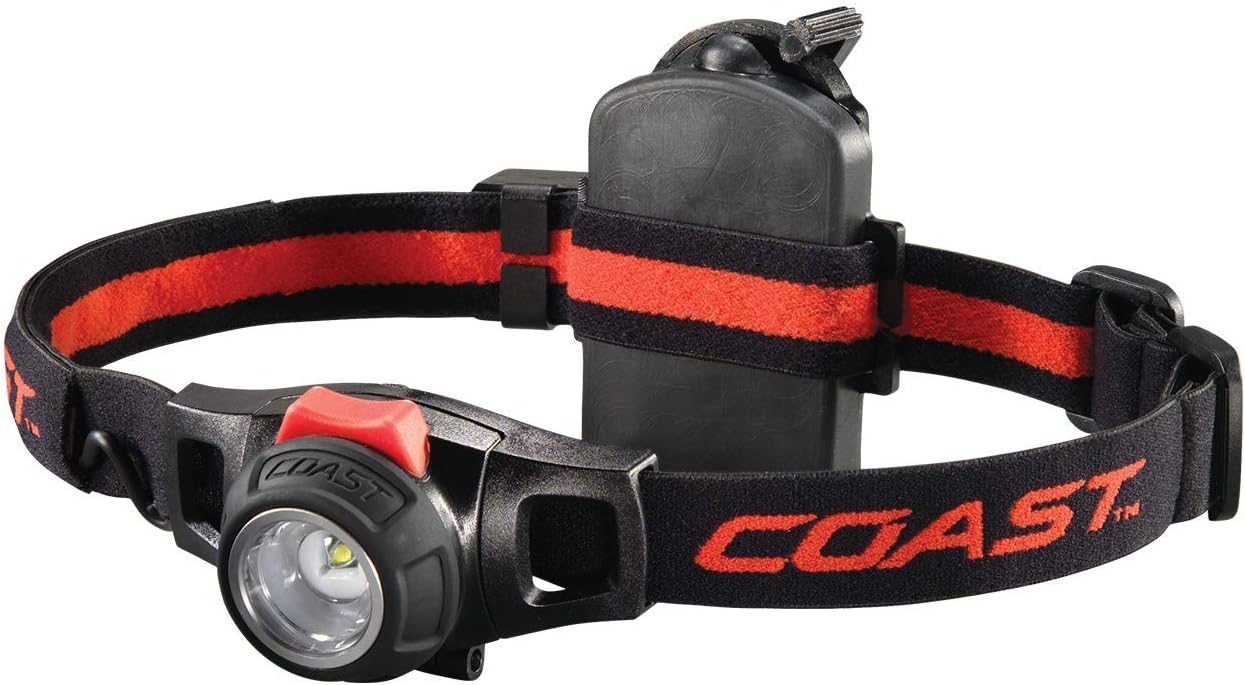
The Coast HL7R is a rechargeable headlamp that also accepts AAA batteries, similar to the Petzl Actik Core but at a lower price. It puts out up to 400 lumens, includes a pure beam focusing system (sliding the head adjusts the beam from flood to spot), and charges via USB-C.
The focusing system is a standout feature. Most headlamps are fixed either as flood or spot. The HL7R lets you physically adjust the beam width on the fly. Wide flood mode for close tasks, narrow spot for seeing far. This is useful for outdoor use and also practical around the house when you want to light a whole room versus focus on a single point.
Run time is shorter than some competitors at up to 34 hours, but that’s partly because it’s running a more powerful LED that requires more power. At medium brightness the real-world run time is more practical than the max number suggests.
The Coast HL7R is a good fit for a car emergency kit. Keep it charged using the car’s USB port during normal driving, and it’s ready when you need it for roadside issues, storms, or anything else that happens on the road.
Foxelli Headlamp
The Foxelli headlamp punches well above its price point. It runs on three AAA batteries, has an IPX5 water resistance rating (which is better than many competitors at this price), and includes multiple modes including a red light mode and an SOS strobe.
At 165 lumens max it’s not the brightest on this list, but for home emergency use and basic outdoor tasks it’s more than sufficient. The headband is wide and padded, making it one of the more comfortable budget headlamps available.
What makes Foxelli stand out is consistency in customer reviews: it has thousands of verified reviews and maintains a high rating over years, which is harder to fake than a single-month sales spike. It’s a genuine value pick for people who want a capable headlamp without spending $40 or more.
The IPX5 rating means it handles rain and water spray from any direction, which puts it a step above most similarly priced headlamps. Good for outdoor emergency use in wet conditions.

The Rule of Three: Where to Keep Your Headlamps
One headlamp is not enough. Emergency preparedness planning is about redundancy. If one headlamp is in your go bag when the power goes out at home, you’re still in the dark. Here’s the framework:
One in Every Emergency Kit
Your main emergency kit, whether it’s a 72-hour kit, a bug out bag, or a simple household emergency box, needs at least one headlamp. This is your primary emergency light source. Pick one with long battery life and AA or AAA batteries, and store extra batteries with it.
Keep the headlamp accessible. If it’s buried at the bottom of a bin under 40 pounds of gear, it’s not ready. Put it near the top, in an outer pocket, or in a dedicated spot you always know.
Recommended: Petzl Tikka or Black Diamond Spot 400
One on the Nightstand
Power outages often happen at night. Reaching for a headlamp in the dark and putting it on takes about three seconds. That’s faster than finding a flashlight, turning it on, and holding it while you try to do something.
A simple, reliable AA-powered headlamp in the nightstand drawer is one of the highest-value preparedness moves you can make. It’s ready for nighttime outages, middle-of-the-night emergencies, and anything else that happens while you’re sleeping.
Recommended: Energizer LED headlamp or Petzl Tikka
One in Your Car
Roadside emergencies happen at night more often than during the day, at least in terms of the situations where lighting really matters. A flat tire in the dark, a dead battery in a parking garage, a storm that cuts visibility. A headlamp in your car’s glove box gives you hands-free light for all of these.
A rechargeable headlamp with a USB charging option works well here because you can keep it topped off from the car’s USB port. Just build a habit of plugging it in when you fill up for gas or do any other car maintenance routine.
Recommended: Coast HL7R or Petzl Actik Core
What to Look for When Buying
Here’s a quick checklist for choosing any headlamp for emergency use:
Battery type. AA or AAA for home emergency kits where long storage matters. Rechargeable with battery backup for active outdoor use.
Red light mode. Non-negotiable. Any headlamp without red light is missing a critical feature.
Run time at low mode. Find this number specifically. A 200-hour run time on low is far more useful in a multi-day outage than 400 lumens that drain batteries in 90 minutes.
Water resistance. IPX4 minimum for home use. IPX6 or higher for outdoor emergency and bug out use.
Simple interface. One or two buttons maximum. In a stressful situation at 3 AM, you don’t want to cycle through seven modes to find red light.
Tilt adjustment. The ability to angle the headlamp up or down is more useful than it sounds. Fixed-angle headlamps force you to tilt your head to aim the beam, which gets uncomfortable fast.
Lockout mode. Prevents accidental activation in storage. Fresh batteries in a stored headlamp that has been accidentally on for six months aren’t going to help you much.
Frequently Asked Questions
How many lumens do I need for a power outage?
Between 50 and 150 lumens is sufficient for navigating a home, cooking, reading, and most indoor tasks. You don’t need 400 lumens to find the bathroom. Save the high modes for outdoor or long-distance use.
How long do batteries last in a headlamp?
It depends heavily on brightness. At low mode (10 to 30 lumens), many headlamps last 100 to 200 hours on a set of batteries. At max mode, the same headlamp might last 2 to 4 hours. For emergency preparedness, plan around low-mode run time.
Can I use rechargeable AA batteries in my headlamp?
Yes. Modern rechargeable AA batteries like Eneloop work well in most headlamps. They hold a charge for years in storage and can be recharged hundreds of times. Just check that the headlamp accepts 1.2V batteries (most do, and most rechargeable AAs run at 1.2V rather than 1.5V for alkaline).
How do I store a headlamp for emergency use?
Remove the batteries if storing for more than a few months, or use lithium batteries which last longer in storage and don’t corrode. Keep the headlamp in a cool, dry place. Check and replace batteries once a year, ideally when you change smoke detector batteries.
Is a headlamp better than a flashlight for emergencies?
For most emergency tasks, yes. Hands-free lighting is more practical when you’re working, moving, or caring for family members. A flashlight is better for directing a beam precisely at something specific. For an emergency kit, both serve different purposes, but a headlamp is typically more versatile.
Final Thoughts
A headlamp is one of the cheapest and most practical items you can add to your emergency preparedness setup. Prices start around $18 and even the top picks on this list cost less than $60. The cost of not having one during a real emergency is higher than that.
Get one in your emergency kit, one in your nightstand, and one in your car. Make sure everyone in your household knows where each headlamp is stored. The one that gets grabbed in an emergency is the one that’s accessible and ready, not the one buried in a bin or dead from a drained battery.
For most people, the Petzl Tikka is the best starting point: reliable, simple, long battery life, and made by a company with decades of proven performance. For those who want more power and outdoor capability, the Black Diamond Spot 400 is the upgrade worth paying for. For budget-first buyers or backup units, the Princeton Tec Byte and Foxelli are both solid choices.
Whichever you pick, pick one today, put it somewhere obvious, and put fresh batteries in it. That’s the whole game.