Ready
ReadyBest Portable Power Stations for Home Emergencies (2026)
A portable power station keeps your phone charged, your CPAP running, and your refrigerator cold when the grid goes down. Unlike a gas generator, it runs silently indoors with no fumes, no fuel storage, and no maintenance. For most home emergencies, a power station is the better choice.
This guide explains what you need to know before buying, breaks down the key specifications that actually matter, and recommends the best options at every price point.
- Battery capacity: Enough stored power in watt-hours to run your devices through an outage.
- Power output: High enough wattage to run demanding items like fridges and electric pots.
- Recharge speed: Fills back up fast so you are ready for the next outage.
- Portable size: Light enough to carry and easy to store when not in use.
Here are the power stations we picked for home emergencies. Keep reading to see what makes each one stand out.

Anker SOLIX C1000 Gen 2
This one earns our top pick because it balances a large 1,024Wh capacity with strong 2,000W output to run demanding appliances. It also charges in about 49 minutes, has 10 ports, and stays portable enough to store easily.

Jackery Explorer 300
This is our most popular pick because it is light and easy to grab and go. At only 7.5 pounds it gives you reliable backup power without adding bulk.

Jackery Explorer 1000 v2
This premium pick delivers strong power in a compact build, running appliances like fridges, AC units, and electric pots. It packs 1,070Wh into a body that weighs just 23.8 pounds with a foldable handle.
In this guide



Reviewed by Marcus T., Priya K. & Beth O. — contributors with hands-on preparedness experience. How we test
Why a Portable Power Station Beats a Generator for Most Homes
Gas generators have been the standard for backup power for decades. They work. But they come with significant downsides:
Noise: Most generators produce 60 to 80 decibels of sound. That is comparable to a vacuum cleaner running continuously. Your neighbors will hear it.
Fumes: Generators burn fuel and produce carbon monoxide. They must run outdoors, away from windows and vents. Every year, people die from generator fumes used incorrectly.
Fuel storage: Gasoline degrades in 3 to 6 months without stabilizers. You need to store fuel safely, rotate it, and keep it away from living areas.
Maintenance: Generators need oil changes, spark plug replacement, and periodic service. Sit unused for a year and they may not start when you need them.
Starting: Pull-start generators can be difficult to start, especially in cold weather or for people without upper body strength.
A portable power station eliminates all of these issues. It is silent, produces no emissions, works indoors, requires no fuel, and has no maintenance. You charge it, store it, and forget about it until you need it.
The trade-off is capacity. The largest portable power stations hold about 3,000 to 5,000 watt-hours. A gas generator can run as long as you have fuel. For multi-week outages, a generator may be necessary. For outages lasting hours to a few days, a power station is simpler and safer.
Why Trust This Guide?
This article was researched and reviewed by contributors with hands-on experience in emergency preparedness. They have tested gear, built real systems, and lived through situations where these skills actually mattered.
Key Terms Explained
Power station specs can be confusing. Here is what the numbers actually mean.
Watt-Hours (Wh), Total Capacity
Watt-hours measure the total energy stored in the battery. Think of it like the gas tank on a car. A bigger tank means you can drive farther before refueling.
How to use this number: Divide the watt-hours by the wattage of your device to estimate runtime in hours.
Example: A 1,000Wh power station running a 50W device lasts about 20 hours (1000 ÷ 50 = 20).
In practice, expect about 85% of the rated capacity due to inverter efficiency and other losses. A 1,000Wh station delivers about 850Wh of usable power.
Watts (W), Output Power
Watts measure how much power the station can deliver at any moment. This is like the engine horsepower. A bigger engine means you can pull heavier loads.
Continuous watts: The maximum sustained output. A 600W station can run any device that draws 600 watts or less.
Surge/peak watts: The temporary burst capacity for starting motors. Refrigerators, air conditioners, and power tools need a surge of power to start, then settle to lower continuous draw. A station rated 600W/1200W surge can handle a brief 1,200W spike.
What happens if you exceed the limit: The station shuts off to protect itself. No damage, but whatever you were running stops.
Amps (A)
Amps measure electrical current. For household AC power in the US, you can convert between watts and amps using: Watts = Volts × Amps.
At 120V (standard US outlets): 1,000W = about 8.3 amps
Most power stations rate their AC output in watts, so you can ignore amps for most purchasing decisions.
Battery Chemistry
Lithium-ion (Li-ion): Older technology, lighter weight, but degrades faster. Typically rated for 500 to 1,000 charge cycles before losing significant capacity.
Lithium Iron Phosphate (LiFePO4 or LFP): Newer technology, heavier, but lasts much longer. Rated for 2,500 to 3,500 charge cycles. Also safer and more stable. Most quality power stations now use LiFePO4.
What this means for you: A LiFePO4 battery charged every week lasts about 50 to 70 years in theory (though other components may fail first). A Li-ion battery in the same scenario lasts 10 to 20 years. For emergency backup that may sit unused for long periods, LiFePO4 is worth the extra weight.
What Can You Run?
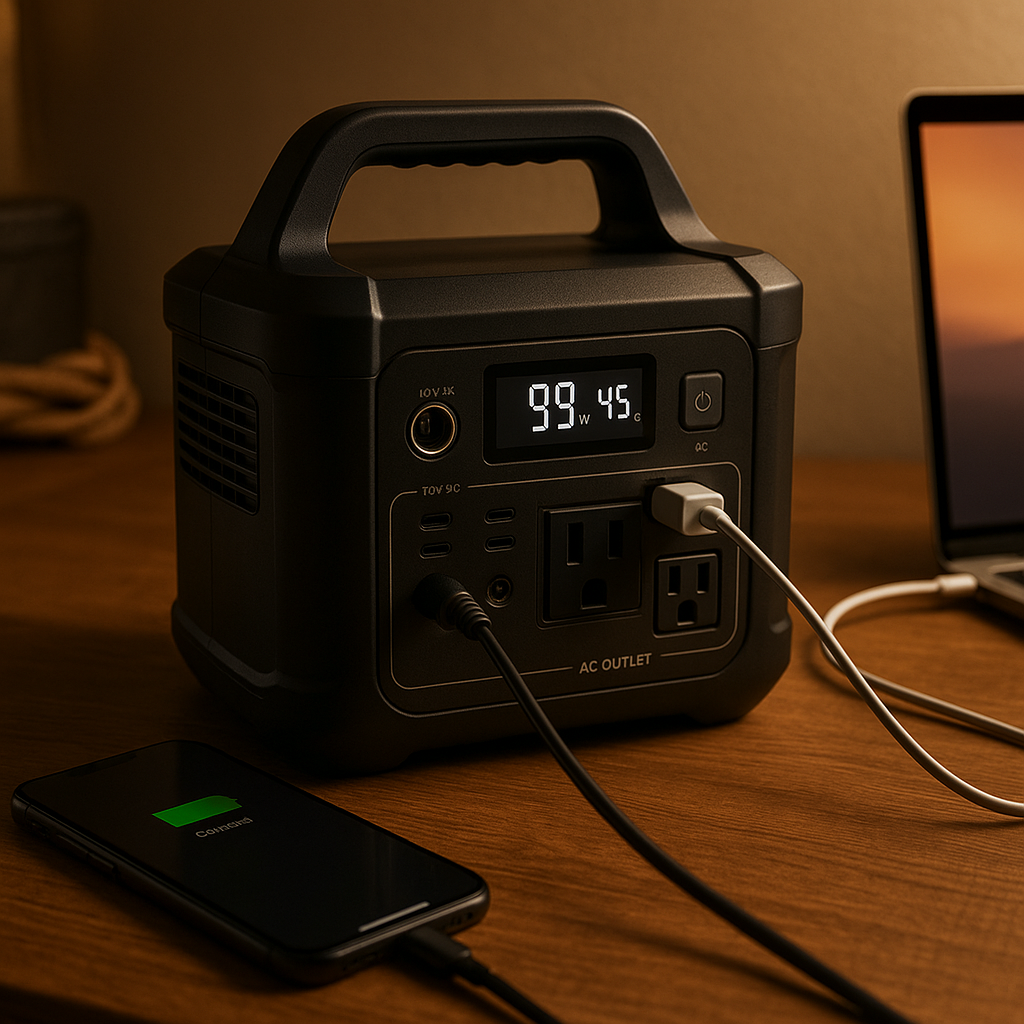
This is the practical question. Here is a reference chart for common devices:
Key insight: Power stations are great for charging devices, running lights, powering medical equipment, and keeping a mini fridge cold. They are not efficient for heating, cooling, or high-draw appliances.
If you need to run a full-size refrigerator through a multi-day outage, you need either a high-capacity station (1,500Wh+) with solar charging, or a generator.
What to Look For When Buying
Capacity (Wh)
Match capacity to your needs:
- Under 300Wh: Phones, tablets, small electronics. Good for camping, not for home emergencies.
- 300-600Wh: Phones, laptops, lights, CPAP, small fans. Covers basics for 1-2 days.
- 600-1,200Wh: Add a mini fridge, TV, and power tools. Handles most home needs for 2-3 days.
- 1,200-2,000Wh: Can run a full-size refrigerator intermittently. Extended outages without solar.
- 2,000Wh+: Whole-home backup capability. Multiple high-draw devices simultaneously.
AC Output (Watts)
Check the continuous output against your devices. Common thresholds:
- 300W: Phones, laptops, lights, small fans
- 600W: Add CPAP, small TV, mini fridge
- 1,000W: Add coffee maker, microwave (briefly)
- 1,500W+: Add power tools, full-size appliances
Recharge Time
How long does it take to refill the battery?
- Wall charging: Modern stations range from 1 to 8 hours for a full charge. Faster is better for emergencies where you get intermittent power.
- Solar charging: Depends on panel size and sunlight. A 200W panel in full sun might add 100-150Wh per hour to the battery.
- Car charging: Usually slower than wall charging. Takes 6-12 hours in most cases.
Ports
More ports mean more flexibility:
- AC outlets: Standard 3-prong outlets for household devices. At least 2, preferably 4+.
- USB-A: Standard USB ports for phones and small devices. 2-4 is typical.
- USB-C with Power Delivery: Fast charging for phones and laptops. Look for 60W to 100W PD ports.
- 12V car port: For devices that use car adapters. Useful for car coolers, tire inflators, etc.
- Wireless charging pad: Nice to have but not essential.
Weight
More capacity means more weight:
- Under 300Wh: 5-10 lbs
- 300-600Wh: 10-20 lbs
- 600-1,200Wh: 20-35 lbs
- 1,200-2,000Wh: 35-50 lbs
- 2,000Wh+: 50-80 lbs
Think about who needs to move it. An elderly person or someone with limited mobility may struggle with anything over 30 pounds.
Warranty and Brand
Stick with established brands: Jackery, EcoFlow, Bluetti, Anker, Goal Zero. They have customer service, replacement parts, and track records. Unknown brands may work fine, but support is uncertain.
Most quality power stations come with 2 to 5-year warranties. LiFePO4 models often have longer warranties due to superior battery longevity.
Our Picks by Category
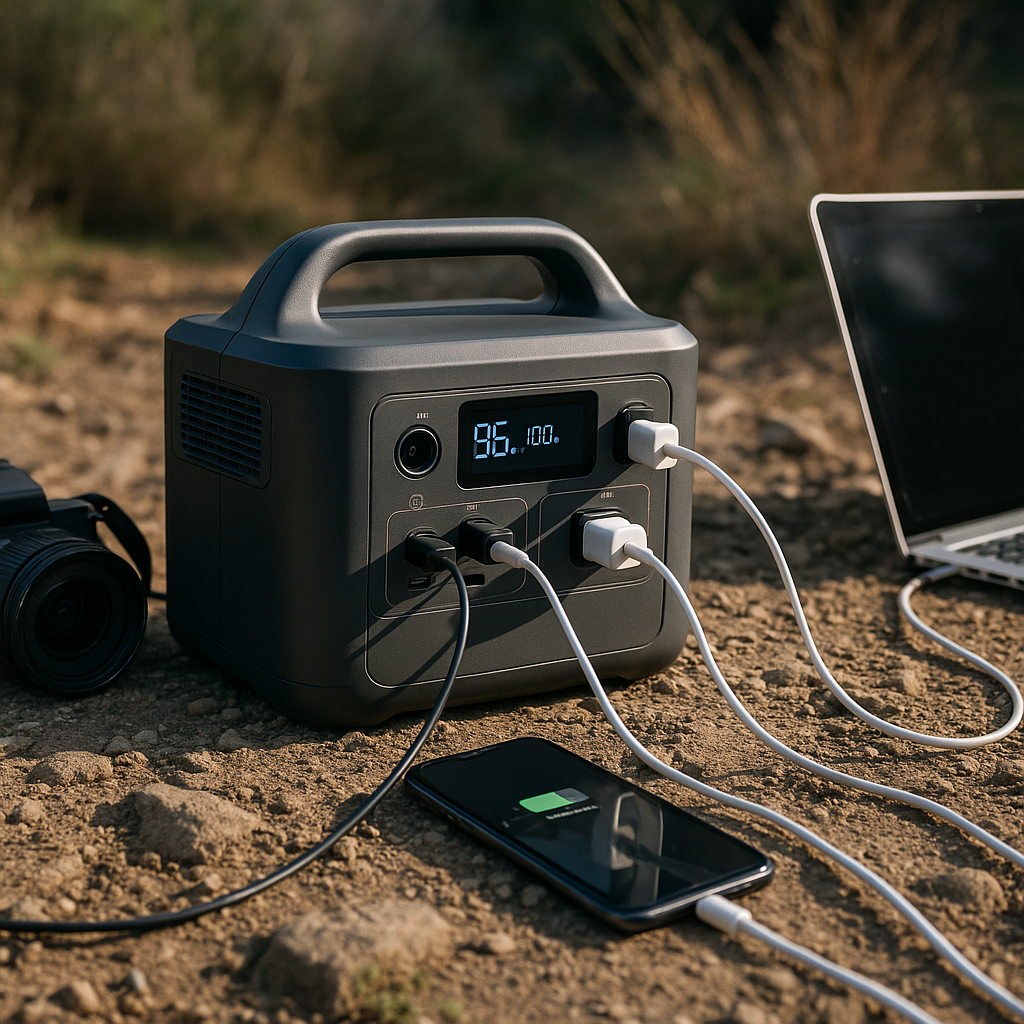
After researching dozens of models and reading thousands of customer reviews, these are the best power stations for home emergency use in 2026.
Budget Picks: Under $300
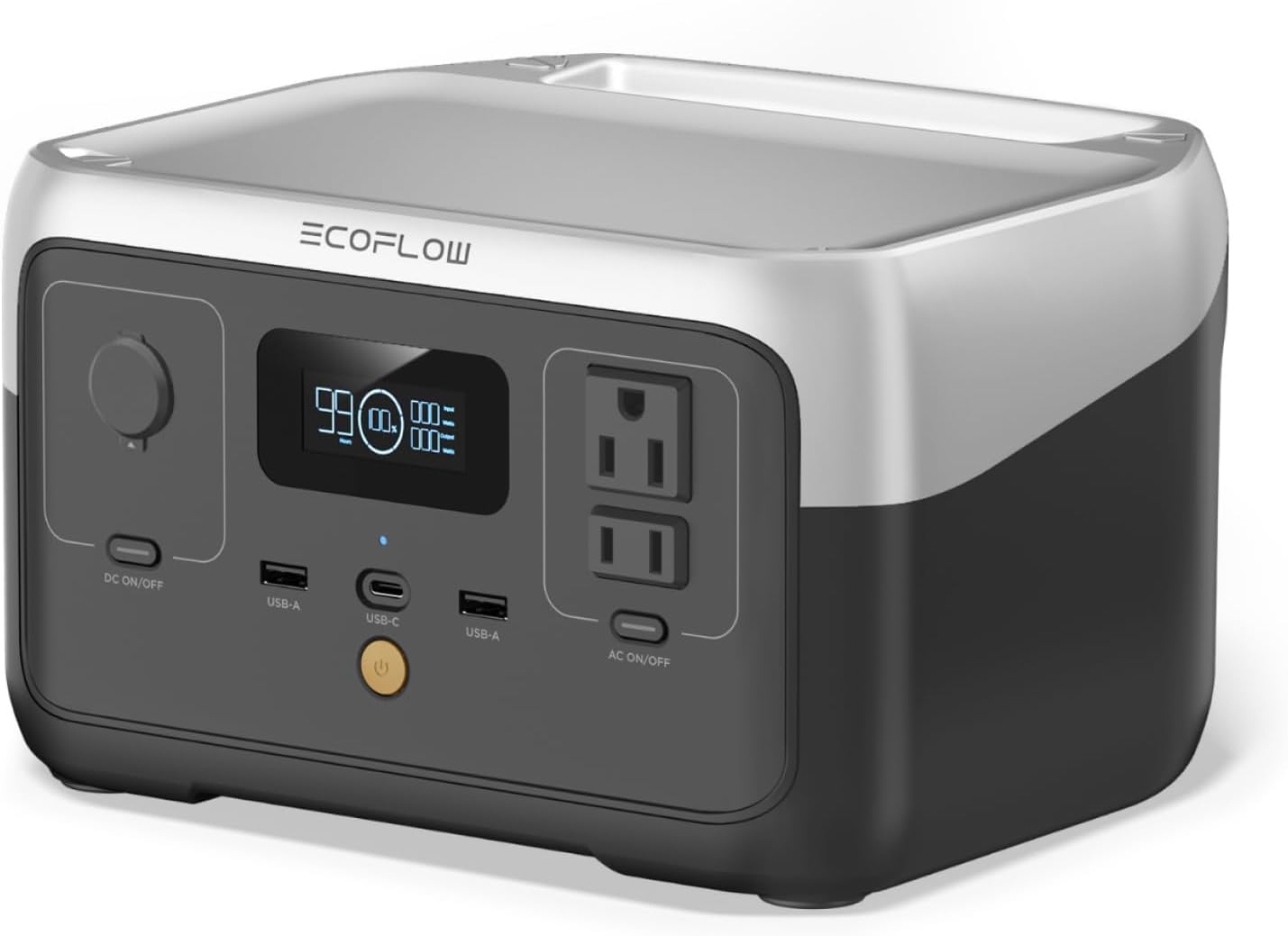
1. EcoFlow RIVER 2, Best Budget Power Station
The EcoFlow RIVER 2 sets the standard for compact power stations. The 256Wh LiFePO4 battery provides reliable capacity, but the real standout feature is charging speed: 0 to 100% in just 60 minutes from a wall outlet. For an emergency situation with intermittent power, this fast recharge is invaluable.
- 256Wh LiFePO4 battery (3,000+ cycle life)
- 300W AC output (600W surge)
- Recharges 0-100% in 60 minutes
- 2 AC outlets, 2 USB-A, 1 USB-C (60W)
- Solar input up to 110W
- Weighs 7.7 lbs
2. EcoFlow RIVER 2, Best for Fast Charging
The EcoFlow RIVER 2 packs 268Wh of LiFePO4 capacity into a compact, portable package. The 600W output (1,200W surge) is impressive for this size class, allowing you to run more demanding devices. Recharge from 0 to 80% in just 30 minutes using the included wall charger.
- 268Wh LiFePO4 battery
- 600W AC output (1,200W surge)
- Recharges 0-80% in 30 minutes
- 2 AC outlets, 2 USB-A, 1 USB-C (100W)
- Solar input up to 200W
- Weighs 10.1 lbs
Mid-Range Picks: $300-$700
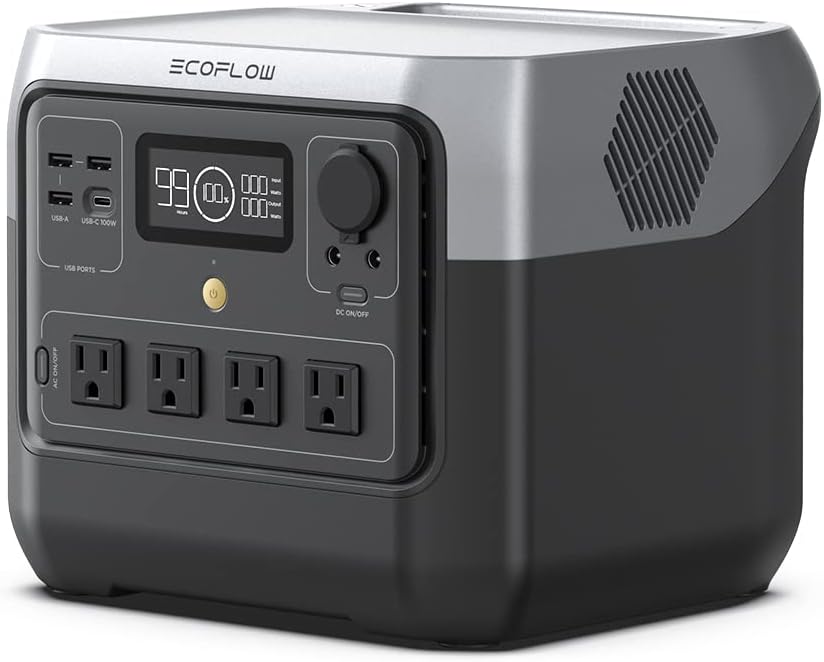
3. EcoFlow RIVER 2 Pro, Best Mid-Range Overall
The RIVER 2 Pro triples the capacity of the standard RIVER 2 while maintaining fast charging. 768Wh is enough to run a mini fridge through an overnight outage or power essential electronics for multiple days. The 800W output (1,600W with X-Boost) handles most household devices.
- 768Wh LiFePO4 battery
- 800W AC output (1,600W X-Boost surge)
- Recharges 0-100% in 70 minutes
- 4 AC outlets, 2 USB-A, 2 USB-C (100W total)
- Solar input up to 220W
- Weighs 17.4 lbs
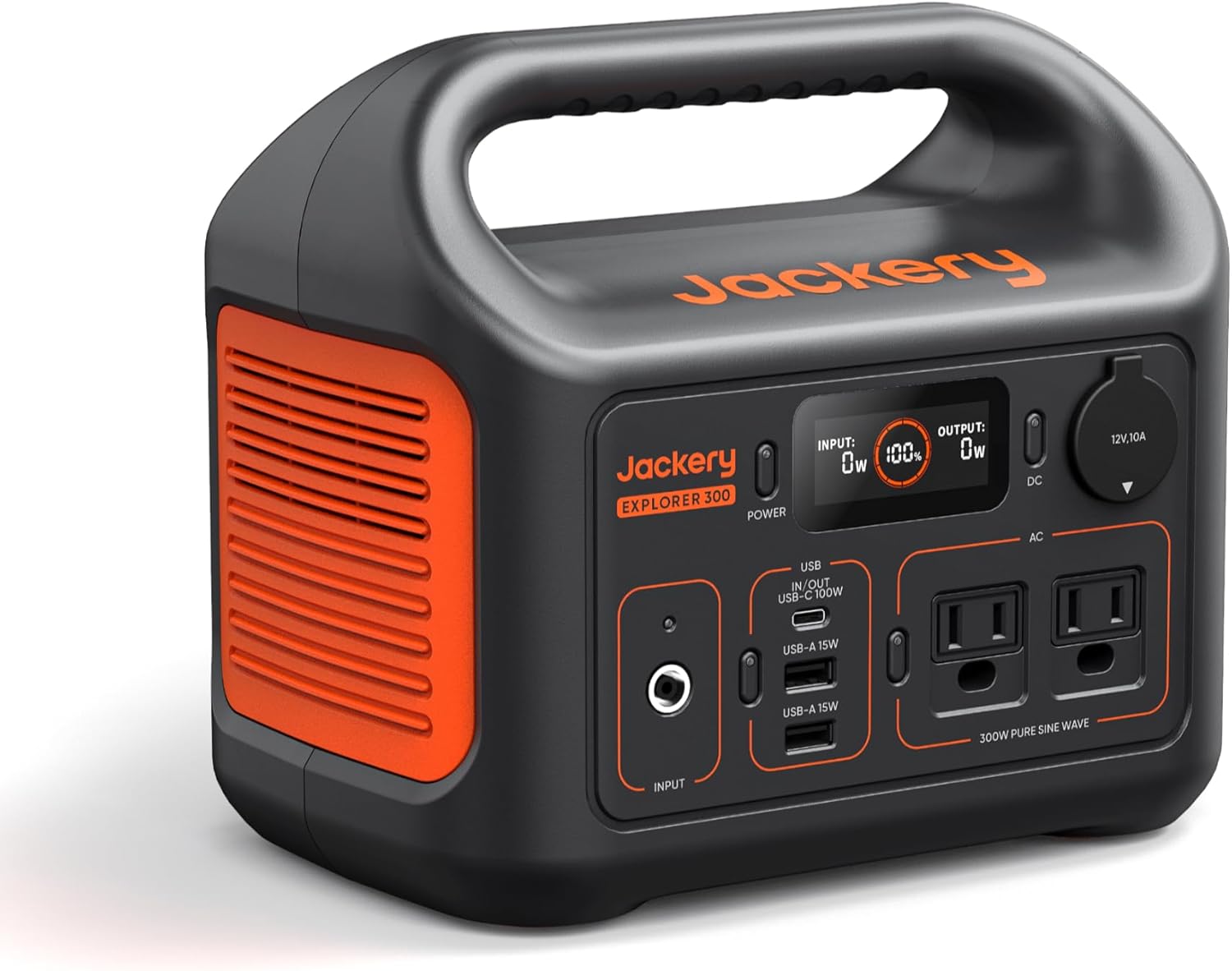
4. Jackery Explorer 300, Most Portable
The Jackery Explorer 300 is one of the most popular portable power stations on the market. At just 7.1 pounds with 293Wh capacity, it is extremely portable. The pure sine wave inverter handles sensitive electronics well. A solid choice for basics if you prioritize portability over raw capacity.
- 293Wh lithium-ion battery
- 300W AC output (500W surge)
- Recharges in 2 hours via wall outlet
- 2 AC outlets, 2 USB-A, 1 USB-C
- Solar input up to 100W
- Weighs 7.1 lbs
High-Capacity Picks: $700-$2,000
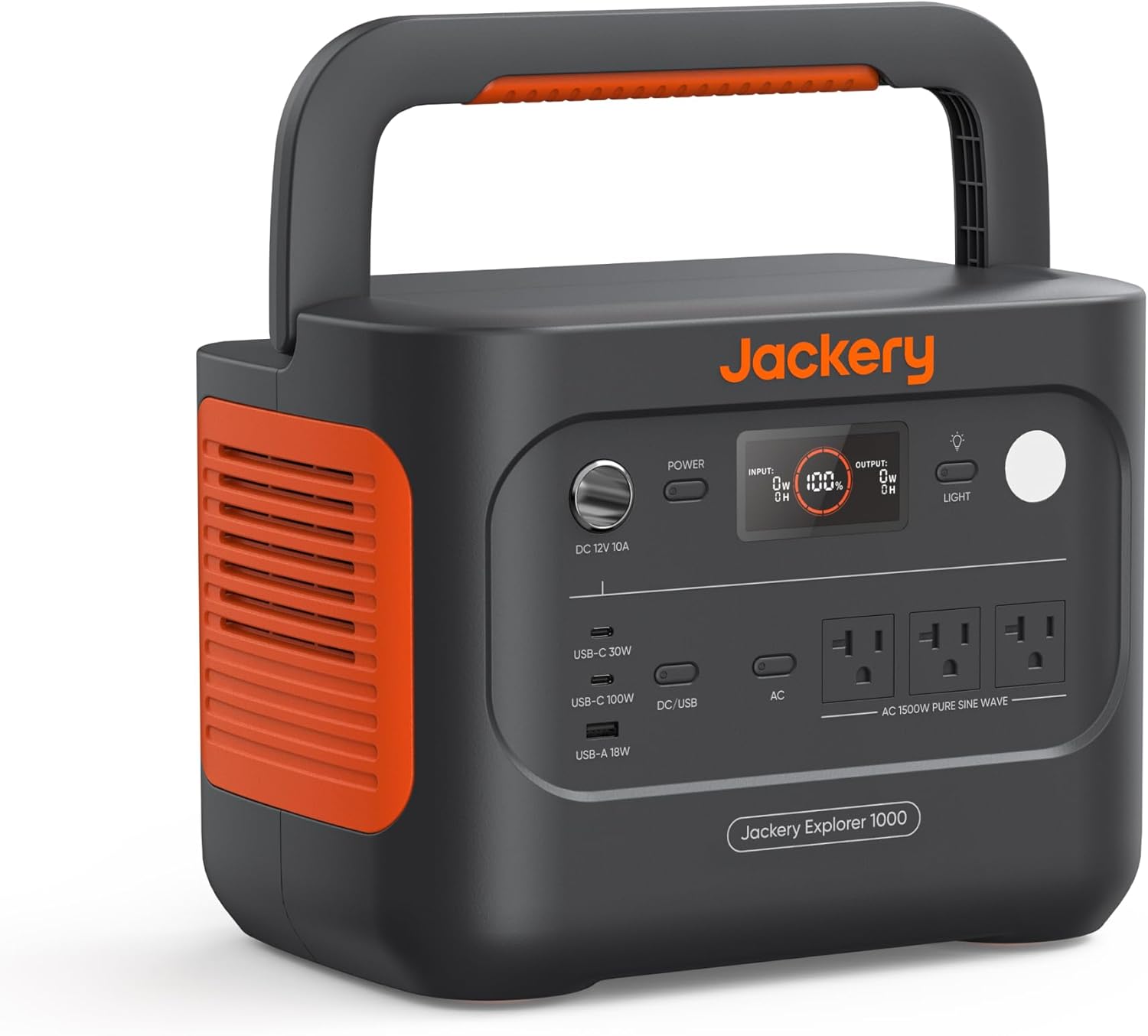
5. Jackery Explorer 1000 v2, Best for Refrigerators
The 2024 update to the Explorer 1000 brings LiFePO4 chemistry for dramatically longer battery life. With 1,070Wh of capacity and 1,500W output, it can run a full-size refrigerator intermittently or power a mini fridge for 20+ hours. Fast charging fills the battery in about an hour.
- 1,024Wh LiFePO4 battery
- 2,000W AC output (3,000W peak)
- Recharges 0-100% in about 49 minutes
- 3 AC outlets, 2 USB-A, 2 USB-C (100W)
- Solar input up to 400W
- Weighs 24.2 lbs
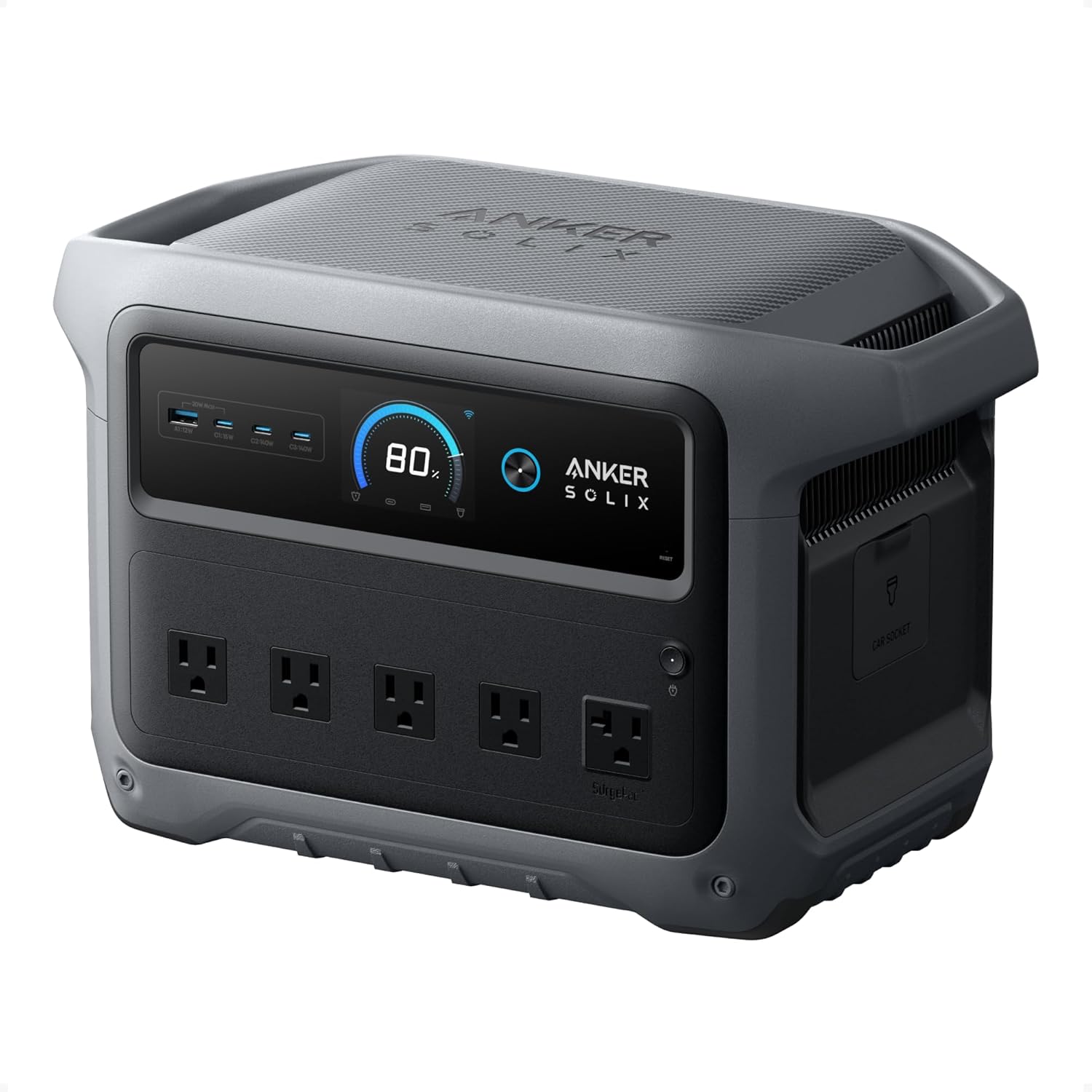
6. Anker SOLIX C1000 Gen 2, Best Premium Build
Anker brings their reputation for quality to the power station market. The 1,229Wh LiFePO4 battery is rated for 3,000 cycles, and the build quality is noticeably premium. Six AC outlets provide flexibility for multiple devices. The 10-year warranty shows Anker’s confidence in durability.
- 1,229Wh LiFePO4 battery
- 1,500W AC output (2,400W surge)
- 6 AC outlets, 4 USB-A, 2 USB-C (100W total)
- Solar input up to 300W
- 10-year warranty
- Weighs 43.9 lbs
Solar Charging: How It Works
Solar panels extend your power station’s capability beyond a single charge. During multi-day outages, solar can keep your station topped up indefinitely.
Understanding Solar Input
Each power station has a maximum solar input rating (measured in watts). The station cannot accept more power than this rating, regardless of how many panels you connect.
Example: A station rated for 200W solar input cannot use more than 200W even if you connect 400W of panels.
Panel Sizing
For emergency preparedness, you want enough solar capacity to recharge your station in one day of sunlight:
- 300Wh station: 100W panel
- 500-700Wh station: 200W panel
- 1,000Wh station: 200-400W panel
- 2,000Wh+ station: 400W+ panel (or multiple panels)
Real-World Expectations
Solar panel ratings are based on ideal conditions: full sun, perpendicular angle, optimal temperature. In reality, expect 50-70% of rated output.
A 200W panel in good sun produces about 100-140W. In partial clouds or suboptimal angle, expect 50-100W.
Panel Recommendations
Most power station brands sell matching solar panels. These work well but are not required. Any compatible solar panel works. Look for:
- MC4 connectors (universal standard)
- Voltage within your station’s input range
- Portable/foldable design for storage
Generator vs. Power Station vs. Battery Bank
Different backup power options serve different needs.
Gas Generator
Best for: Extended outages (1 week+), running high-draw appliances continuously, construction sites, areas without grid power.
- Capacity: Unlimited (as long as you have fuel)
- Output: 1,000-10,000W depending on model
- Runtime: Hours per tank (3-12 hours typical)
- Pros: Highest capacity, can run anything, refuelable
- Cons: Noise, fumes, fuel storage, maintenance, must run outdoors
Portable Power Station
Best for: Short outages (hours to days), apartments and homes, medical equipment, quiet backup, indoor use.
- Capacity: 200-5,000Wh depending on model
- Output: 200-3,000W depending on model
- Runtime: Hours to days depending on load
- Pros: Silent, no emissions, indoor use, low maintenance, solar rechargeable
- Cons: Limited capacity, cannot run very high-draw appliances, expensive per Wh
Battery Bank (Power Bank)
Best for: Charging phones and small electronics only, travel, individual use.
- Capacity: 5,000-30,000mAh (about 20-110Wh)
- Output: USB only, no AC outlets
- Runtime: Multiple phone charges
- Pros: Cheap, pocket-sized, simple
- Cons: Very limited capacity, no AC power, cannot run appliances
Comparison Table
What NOT to Power with a Portable Station
Some appliances are impractical for battery power:
Space heaters (1,000-1,500W): Drain batteries in under an hour. Use blankets, layers, and sleeping bags instead.
Window air conditioners (500-1,500W): High draw plus compressor surges. A 1,000Wh station might run a small unit for 1-2 hours at most. Not practical.
Electric water heaters: Way too much draw. Use a camping shower or heat water on a camp stove.
Electric stoves and ovens: Thousands of watts. Use a camp stove or grill instead.
Hair dryers (1,000-1,800W): Let hair air dry or use a lower setting briefly.
Washing machines: Possible for short cycles on high-capacity stations, but not efficient use of limited power.
The pattern: anything that generates heat or moves large amounts of air draws too much power for battery backup. Focus your power station on charging devices, running medical equipment, keeping a fridge cold, and powering lights.
Maintenance and Storage Tips
Power stations are low maintenance, but some care extends their life.
Storage
- Store in a cool, dry place (40-80°F ideal)
- Avoid extreme temperatures (no garages that get very hot or cold)
- Keep at 40-80% charge for long-term storage
- Recharge every 3-6 months if not using
Before an Emergency
- Check charge level monthly
- Test run once per year
- Verify all outlets work
- Update firmware if applicable (some stations have apps)
During Use
- Do not exceed output limits
- Keep vents clear for cooling
- Avoid moisture and rain
- Do not discharge to 0% regularly (bad for batteries)
Battery Care
- LiFePO4 batteries are more tolerant of abuse but still benefit from care
- Avoid charging in freezing temperatures
- Do not leave fully charged at high temperatures for extended periods
- Normal use (not extreme) extends battery life
Frequently Asked Questions
How long will a power station run my refrigerator? A typical refrigerator draws 100-200W when running, but only runs 30-50% of the time. A 1,000Wh station can keep a modern efficient refrigerator cold for 12-24 hours, longer if you minimize door openings.
Can I run a CPAP machine on a power station? Yes. Most CPAP machines without heated humidifiers draw 30-50W. A 500Wh station runs a CPAP for 8-12+ hours. With heated humidifier enabled, draw increases to 50-80W. Most power stations handle CPAPs well.
Are power stations safe to use indoors? Yes. They produce no emissions. This is one of their main advantages over generators. Keep them away from water and do not cover the vents while running.
How many years does a power station last? LiFePO4 models are rated for 2,500-3,500 charge cycles before losing significant capacity. For most users, this translates to 10-20+ years of service. Lithium-ion models last 5-10 years typically.
Can I charge a power station while using it? Most modern power stations support pass-through charging. You can charge the station from the wall while simultaneously powering devices from the station. This is useful for intermittent power situations.
What size power station do I need for my whole house? There is no single power station that runs an entire house normally. For selective backup of essentials (fridge, lights, phones, medical equipment), a 1,000-2,000Wh station works well. For whole-home backup, consider multiple stations, a large solar setup, or a generator.
Should I buy solar panels with my power station? If you want the ability to recharge during extended outages, yes. Solar extends your capability beyond a single charge. For short outages where you expect power to return within a day, solar is optional.
What happens if I overload my power station? The station shuts off automatically to protect itself. No damage occurs. Simply reduce your load and restart.
Real-World Emergency Scenarios
Understanding how power stations perform in actual emergencies helps you choose the right capacity.
Scenario 1: Overnight Power Outage
A thunderstorm knocks out power at 9 PM. Power returns by 6 AM.
Needs: Phone charging, a few lights, maybe a fan for comfort.
What works: A 300Wh station handles this easily. You will use maybe 100-150Wh overnight and still have plenty left in the morning.
Scenario 2: 24-Hour Outage with Refrigerator
A winter storm downs power lines. Repair crews estimate 24 hours.
Needs: Keep refrigerator cold, charge phones, run some lights.
What works: A 1,000Wh station runs a modern efficient refrigerator for about 20-24 hours if you minimize door openings. Add phone charging and lights and you are using most of the capacity.
Scenario 3: Multi-Day Outage with Medical Equipment
A hurricane causes regional damage. Power may be out 3-5 days.
Needs: CPAP machine every night, phone charging, lights, small fan.
What works: A 500-700Wh station with a 200W solar panel. The solar panel recharges during the day while you use the station at night. This setup can run indefinitely in good weather.
Scenario 4: Extended Grid-Down Situation
Major infrastructure failure. Power may be out for a week or more.
Needs: Everything above plus cooking, keeping a freezer viable, powering tools.
What works: Multiple high-capacity stations (1,500Wh+) with robust solar arrays (400W+), or a gas generator for high-draw needs combined with a power station for quiet nighttime use.
Common Mistakes to Avoid
Buying Too Small
People often buy the cheapest option and regret it during the first real outage. A 200Wh station cannot run a refrigerator. It barely handles a long day of phone charging and lights. Buy for your actual needs, not the minimum.
Ignoring Recharge Options
A power station without a way to recharge is a one-time use device. If your outage lasts longer than your battery, you are stuck. Solar capability or at least the ability to charge from a car extends your options significantly.
Forgetting Surge Requirements
Refrigerators, power tools, and anything with a motor draw a surge of power to start. A station rated for 500W continuous might not start a 400W refrigerator because the startup surge exceeds capacity. Check both continuous and surge ratings.
Leaving the Station Dead
Lithium batteries lose charge over time, especially if stored fully charged or fully depleted. Check your station monthly. Keep it between 40-80% for storage. A dead station on the day you need it defeats the purpose.
Not Testing Before an Emergency
Run your station before you need it. Plug in the devices you plan to power. Time how long they run. Discover problems now, not during an ice storm at midnight.
Power Station vs. Whole-Home Generator
Some homes need more than a portable station. Here is when to consider alternatives.
Portable Power Station is Right If:
- Your outages typically last hours to a few days
- You primarily need to power phones, lights, and small appliances
- You live in an apartment or rental without generator hookup options
- You value quiet, fume-free operation
- You want something low-maintenance that is always ready
Portable Generator is Right If:
- Your outages may last a week or more
- You need to run high-draw appliances (central AC, electric water heater, well pump)
- You have outdoor space and can handle fuel storage
- Budget is limited and you need maximum output per dollar
Whole-Home Standby Generator is Right If:
- You have a large home with critical power needs
- You experience frequent or extended outages
- You want automatic switchover without intervention
- Budget is not the primary concern ($5,000-$15,000+ installed)
The Hybrid Approach
Many prepared households use both. A portable power station handles short outages quietly. A gas generator comes out for extended events. The station charges from the generator during the day, then runs quietly overnight.
The Bottom Line
For most home emergencies, a portable power station in the 500-1,500Wh range handles the essential needs: charged phones, lights, medical equipment, and a refrigerator running intermittently.
For apartments or basic needs: EcoFlow RIVER 2 or EcoFlow RIVER 2 ($200-300)
For family homes: EcoFlow RIVER 2 Pro or Jackery Explorer 1000 v2 ($500-900)
For extended backup with solar: Anker 757 or high-capacity BLUETTI models ($1,000-2,000)
Buy the capacity you need, from a brand you can trust, and forget about it until you need it. When the power goes out, you will be ready.