Ready
Ready
Best Satellite Communicators for Emergency Preparedness (2026): Tested and Reviewed
When a disaster hits, cell towers are often the first thing to fail. A major earthquake can knock them out instantly. A hurricane can take them offline for days or even weeks. And in a remote area, you may never have had a signal to begin with. A satellite communicator bypasses the entire cell network. It talks directly to satellites orbiting overhead, which means it works anywhere on earth with a clear view of the sky. This guide covers the best satellite communicators for emergency preparedness, who needs one, what to look for, and how each device stacks up when it counts most.
- Two-Way Messaging: Can you send and receive messages, not just push a single alert?
- SOS Coverage: Look for global reach that connects you to 24/7 search and rescue.
- Size and Weight: A compact, lightweight unit is easy to pack and carry anywhere.
- Extra Features: Navigation, tracking, or location sharing add real value in an emergency.
We put each of these satellite communicators through real testing to see how they hold up. Here are the picks we trust most, and the full article below explains how each one earned its spot.

Garmin inReach Mini 2
This is our top pick because it delivers the best all-around emergency reliability, with global two-way messaging and interactive SOS over the strong Iridium network. It also adds navigation and location sharing in a compact, easy-to-store package that fits almost any kit.

Spot Gen 4 GPS Messenger
This one is a solid choice when you want a simple, dependable way to check in and call for help far from cell towers. It lets family know you are okay or sends your GPS location to responders with the SOS button.

Spot X 2-Way Satellite Messenger
This is the most feature-packed pick, with two-way messaging and Bluetooth sync to your phone. It even has its own mobile number and connects you to 24/7 search and rescue for real peace of mind.

ACR ResQLink 400 Beacon
This premium beacon skips subscriptions entirely, so it is always ready to send a rescue alert. Its 406 MHz distress and homing signals help rescuers pinpoint your location fast with global coverage.
In this guide



Reviewed by Marcus T., Ryan C. & James W. — contributors with hands-on preparedness experience. How we test
Why Trust This Guide?
This article was researched and reviewed by contributors with hands-on experience in emergency preparedness. They have tested gear, built real systems, and lived through situations where these skills actually mattered.
Why Cell Phones Fail When You Need Them Most
Cell service seems reliable until a real emergency hits. Here is what actually happens:
Network congestion: After a major disaster, every person in the affected area is trying to call or text at once. Cell towers can only handle so many connections. Most calls drop. Most texts queue for hours before sending.
Tower damage: Earthquakes, tornados, and hurricanes can physically destroy towers. Flooding can take out the power that keeps them running. Even a fire in the right equipment room can knock out a large area.
Power outages: Cell towers run on electricity. Most have battery backup, but that only lasts 4 to 8 hours. When the grid goes down for days, so do cell towers.
Remote locations: If you are hiking in the backcountry, driving through rural areas, or living far from a city, you may already have no cell service under normal conditions. In an emergency, that is a major problem.
Satellite communicators solve all of these issues. They use networks of low-earth orbit satellites to send and receive messages and trigger emergency SOS alerts. The satellites do not care if the cell towers are down. They do not care if you are in the middle of the desert or on a boat three hundred miles offshore.
Two-Way Messengers vs Personal Locator Beacons: Know the Difference
Before buying anything, you need to understand the two main categories of satellite emergency devices.
Two-Way Satellite Messengers
A two-way satellite messenger lets you send and receive text messages via satellite. You can check in with family, send your GPS coordinates, describe your situation, and get a response back. In a real emergency, you can trigger an SOS and communicate directly with rescue coordinators. You pay a monthly subscription fee for messaging access.
Examples: Garmin inReach Mini 2, Zoleo, SPOT X
Best for: Anyone who needs ongoing communication, wants to track locations over time, or plans to use the device regularly for outdoor recreation as well as emergency preparedness.
Personal Locator Beacons (PLBs)
A PLB is a one-way device. When activated, it sends a distress signal directly to the international COSPAS-SARSAT satellite rescue system and notifies your country’s search and rescue organization. There is no subscription fee. You register the device once for free, and it is ready to use for the life of the battery (typically 5 to 7 years with a battery replacement cycle). You cannot send messages, track your location on a map, or receive anything back.
Examples: ACR ResQLink 400, ACR ResQLink View
Best for: Backup emergency devices, boaters, solo hikers, and people who want no-cost, no-maintenance protection. Also excellent as a backup to a two-way messenger.
What to Look For Before You Buy
Satellite Network
There are two main satellite networks used by consumer devices:
Iridium: Uses 66 low-earth orbit satellites with true global coverage, including the poles. Garmin inReach, Zoleo, and Bivy Stick all use Iridium. Message delivery is fast and reliable almost anywhere on earth.
Globalstar: Uses 24 satellites with good coverage in North America, Europe, and parts of South America and Asia, but limited polar coverage. SPOT devices use Globalstar. Coverage is strong in the continental United States and most common travel destinations, but not everywhere.
For emergency preparedness in the continental United States, both networks work well. If you plan to use the device internationally or in Alaska, Hawaii, or other remote areas, Iridium gives you more confidence.
SOS Alert System
All devices in this guide connect to rescue services when you trigger SOS. Two-way devices connect you to a private monitoring center (like Garmin Response) staffed 24/7, which then contacts local search and rescue. PLBs connect directly to COSPAS-SARSAT, the international satellite rescue system used by governments worldwide.
Both work. Both are legitimate. The main difference is that two-way devices allow back-and-forth communication during the rescue, which can help rescuers find you faster.
Battery Life
In a multi-day emergency, charging may not be possible. Battery life matters.
The Garmin inReach Mini 2 lasts up to 14 days in 10-minute tracking mode, or up to 30 days in 30-minute tracking mode. The Zoleo lasts about 4 days with messaging, or longer in standby. The ACR ResQLink 400 has a 5-year battery life under normal conditions, with 24 hours of continuous distress signal when activated.
Subscription Plans
Two-way messengers require a monthly subscription to use the messaging and SOS network. Plans typically run from $15 to $65 per month. Some plans allow you to pause service between trips so you only pay when you need coverage.
PLBs require no subscription. You register once with NOAA (in the United States) for free, and the device is active.
Ease of Use Under Stress
In a real emergency, you may be cold, tired, injured, or panicked. A device you cannot operate under stress is not useful. Consider how easy it is to trigger SOS, how visible the controls are, and whether you can operate it with gloves on.
Quick Comparison
Garmin inReach Mini 2: The Best Overall Two-Way Satellite Communicator
The Garmin inReach Mini 2 is the most capable and most trusted two-way satellite communicator available to consumers. It is used by military personnel, search and rescue teams, wilderness guides, sailors, and serious preppers around the world. If you want the best, this is it.
Key specs:
- Satellite network: Iridium (true global coverage)
- Two-way messaging: Yes
- SOS monitoring: Garmin Response Center, staffed 24/7
- Battery life: Up to 14 days (10-min tracking) or 30 days (30-min tracking)
- Weight: 3.5 oz
- Dimensions: 3.9 x 2.0 x 1.0 inches
- Water rating: IPX7 (submersion up to 1 meter)
- Pairs with: Garmin Earthmate app on iPhone or Android
- Subscription required: Yes (from $14.95 to $64.95 per month depending on plan)
What makes it stand out:
The inReach Mini 2 uses the Iridium satellite network, which has 66 low-earth orbit satellites and covers the entire planet including both poles. Iridium is the same network used by the U.S. military for communications in the field. Message delivery is fast and reliable in ways that Globalstar-based devices simply cannot match in remote or high-latitude areas.
The SOS system is excellent. When you activate SOS, it opens a two-way conversation with the Garmin Response Center. You can describe your situation, tell them how many people are injured, provide details about what help you need, and receive updates on rescue progress. This back-and-forth capability is far more useful than a one-way beacon that just says “someone is in distress somewhere in this area.”
The device pairs with the Garmin Earthmate app on your phone, which gives you a larger screen for composing messages, tracking your route on a map, and monitoring your GPS coordinates. But the inReach Mini 2 also works as a standalone device without a phone. You can send preset messages and trigger SOS without pairing it to anything.
Battery life is excellent. At the 10-minute tracking interval, it runs for up to 14 days. You can extend this to 30 days by switching to 30-minute tracking. For a multi-week emergency where power is unavailable, this matters a lot.
What to watch out for:
The inReach Mini 2 requires a subscription plan to activate any satellite functionality. The cheapest plan starts at $14.95 per month for a limited number of messages. Unlimited messaging plans run $64.95 per month. You can pause your plan when you are not using the device, which makes it more manageable for people who only need it occasionally.
The device is small, which is a feature, but it does mean the keyboard for composing messages is on the tiny side. Pairing with the Earthmate app solves this.
Bottom line: The inReach Mini 2 is the right choice for anyone serious about satellite communication for emergency preparedness. It costs more and requires a subscription, but the Iridium network and two-way SOS capability justify every dollar.
Zoleo Satellite Communicator: Best Value Two-Way Messenger
The Zoleo is the best two-way satellite communicator for people who want Iridium-based global coverage without paying the premium price of a Garmin inReach. It does not have as many features as the inReach Mini 2, but for emergency preparedness, it covers the essentials very well.
Key specs:
- Satellite network: Iridium (true global coverage)
- Two-way messaging: Yes
- SOS monitoring: GEOS Response Center, staffed 24/7
- Battery life: About 96 hours with messaging; up to 200 hours in check-in mode
- Weight: 5.2 oz
- Dimensions: 3.0 x 3.0 x 0.7 inches
- Water rating: IP68 (dustproof, submersion rated)
- Pairs with: Zoleo app on iPhone or Android
- Subscription required: Yes (from $20 to $50 per month)
What makes it stand out:
The Zoleo uses the Iridium network, which puts it in the same coverage tier as the inReach Mini 2. This is a major advantage over SPOT devices for anyone who travels outside the continental United States or ventures into remote terrain.
One unique feature: the Zoleo gives you a dedicated device phone number and email address. Your contacts can send messages to that number or email address and you receive them via satellite. You do not need to tell them to use a special app or service. They just text or email you like normal, and it comes through. This is a nice feature for family communication during a multi-day emergency.
The Zoleo also allows unlimited messaging with the Iridium network on its mid-tier plan. If you send a lot of messages or expect ongoing communication needs during an emergency, the Zoleo can be less expensive per message than some inReach plans.
What to watch out for:
Battery life is the main limitation. At 96 hours with messaging enabled, the Zoleo runs for about 4 days. The inReach Mini 2 can run for 14 to 30 days in tracking mode. If you are in a long-duration emergency, the Zoleo needs to be charged more often.
The Zoleo is also designed primarily as a smartphone accessory. It pairs with the Zoleo app on your phone, and composing messages on the device itself without the app is more limited. In a power-out scenario where your phone battery is also dead, this is a real limitation. The device does have physical buttons for check-in and SOS functions without the app, but for full messaging, you need the phone.
Bottom line: The Zoleo is an excellent choice for people who want Iridium coverage at a lower device price. The unlimited messaging plans make it cost-effective for regular use. For pure emergency preparedness, the Zoleo’s shorter battery life is a consideration. It works best for people who will also use it during camping trips or travel where charging is possible.
SPOT Gen4: Best Budget One-Way Satellite Messenger
The SPOT Gen4 is the most affordable way to get satellite SOS capability. It uses the Globalstar network and offers one-way messaging: you can send preset “I’m OK” check-ins and trigger an SOS alert, but you cannot receive messages back.
Key specs:
- Satellite network: Globalstar
- Two-way messaging: No
- SOS monitoring: GEOS Response Center, staffed 24/7
- Battery life: About 7 days with 5-minute tracking
- Weight: 3.6 oz
- Dimensions: 3.4 x 2.7 x 1.0 inches
- Water rating: IP67 (submersion rated)
- Subscription required: Yes (from about $12 to $50 per month)
What makes it stand out:
The SPOT Gen4 is the right device if your main goal is emergency SOS coverage and your budget is tight. At roughly $150, it costs less than half the price of the inReach Mini 2. The subscription plans are also lower cost than Garmin plans.
For most people in the continental United States, Globalstar coverage is solid. The network has been reliable for years across North America and most of Europe. If you are hiking in the Sierra Nevada, road tripping across the Southwest, or keeping one of these in the car for emergencies, the SPOT Gen4 gives you a real safety net.
The SOS button is large, covered by a protective cap, and triggers rescue coordination through the GEOS Response Center. When activated, it sends your GPS location to rescue services. You cannot describe your situation, but your coordinates go out immediately.
What to watch out for:
The lack of two-way messaging is a real limitation in a serious emergency. You cannot tell rescuers that you are injured and cannot move. You cannot ask for status on your rescue. You cannot let family members know you are okay once help has arrived. You are sending a distress beacon and hoping.
The Globalstar network also has coverage gaps, particularly outside North America and in polar regions. If you travel internationally or do serious backcountry work, Iridium devices are a better choice.
Bottom line: The SPOT Gen4 is a solid entry-level option for people who want emergency SOS coverage in North America without the cost of a full two-way messenger. It is better than nothing and better than relying on cell service. But if you can stretch the budget, the Zoleo offers two-way messaging on the Iridium network for about $50 more.
SPOT X with Bluetooth: Two-Way Messaging on the Globalstar Network
The SPOT X adds two-way messaging to the SPOT lineup. It has a small keyboard on the device itself, Bluetooth connectivity to your phone, and the ability to send and receive messages via satellite. It sits between the Gen4 and the inReach Mini 2 in terms of both price and capability.
Key specs:
- Satellite network: Globalstar
- Two-way messaging: Yes
- SOS monitoring: GEOS Response Center, staffed 24/7
- Battery life: About 7 days in tracking mode
- Weight: 7.1 oz
- Dimensions: 5.8 x 2.5 x 1.2 inches
- Water rating: IP67
- Subscription required: Yes
What makes it stand out:
The SPOT X has a built-in QWERTY keyboard, which makes composing messages easier without needing a phone. Bluetooth pairing with a smartphone expands this further. For people who want to send custom messages in an emergency without relying entirely on a companion app, the keyboard is a useful feature.
What to watch out for:
The SPOT X runs on the Globalstar network, which means its coverage limitations apply here too. It is also heavier and bulkier than the Zoleo, which is also a two-way messenger at roughly the same price. Most people who are choosing between the SPOT X and another two-way device will find the Zoleo (with Iridium coverage) a better value unless they specifically need the standalone keyboard.
Bottom line: The SPOT X is a decent two-way satellite messenger for North America. If you are looking at this price range and need two-way messaging, compare it closely with the Zoleo before deciding. The Zoleo offers global Iridium coverage at a similar price.
ACR ResQLink 400: The No-Subscription Emergency Beacon
The ACR ResQLink 400 is a Personal Locator Beacon (PLB), not a messaging device. It does one thing: when you activate it, it sends a distress signal to the international COSPAS-SARSAT satellite rescue system, which notifies your country’s search and rescue organization with your GPS coordinates. There is no subscription fee. You register it once with NOAA for free and it is ready.
Key specs:
- Satellite network: COSPAS-SARSAT (used by governments worldwide for search and rescue)
- Two-way messaging: No
- SOS monitoring: International search and rescue via COSPAS-SARSAT
- Battery life: 5-year shelf life; 24 hours of continuous distress signal when activated
- Weight: 4.5 oz
- Dimensions: 4.6 x 1.9 x 1.3 inches
- Water rating: Waterproof, rated to 15 meters
- Subscription required: No
What makes it stand out:
The ACR ResQLink 400 connects to the most serious rescue infrastructure on earth. COSPAS-SARSAT is the international satellite-aided search and rescue system. It is backed by the governments of 45 countries. When a PLB activates, it goes to a mission control center that contacts the country’s search and rescue coordination center, which dispatches actual rescue services. This is not a private monitoring company. This is the same system that rescues downed aircraft and lost ships.
The no-subscription model is a genuine advantage for emergency preparedness. You buy it, register it, and put it in your kit. There is no monthly bill. There is no account to maintain. There is no plan that lapses if you forget to renew it. The battery is rated for 5 years under normal storage conditions, with a manufacturer battery replacement service available.
The ResQLink 400 is the kind of device you want as a backup in addition to a two-way messenger. Keep it in your car kit, your go-bag, or your boat. You hope you never use it, but if everything else fails, it does the one thing that matters most: it calls for help.
What to watch out for:
This is a one-way device. You cannot send a message. You cannot say you are injured or describe your situation. You cannot receive any confirmation that your signal was received. You activate it and wait. In some emergencies, especially remote ones, the rescue response may take hours or longer.
PLBs are also not a communication tool for everyday emergencies. They are for serious, life-threatening situations. Activating a PLB for a minor injury or a non-life-threatening situation can divert rescue resources from people who need them more urgently.
Bottom line: The ACR ResQLink 400 is the best emergency beacon for people who want no-subscription protection. It is an excellent backup device for anyone who already has a two-way messenger. If you can only afford one device and you are primarily preparing for home and vehicle emergencies in North America, consider the SPOT Gen4 instead. If you are a sailor, backcountry hiker, or anyone with serious wilderness exposure, the ResQLink 400 belongs in your kit.
Subscription Plans Compared
Two-way satellite messengers require a monthly plan. Here is how the major options break down as of 2026:
Tip: If you are buying a two-way messenger primarily for emergency preparedness and you do not plan to use it on outdoor trips, activate the lowest plan possible and keep it suspended between emergency kit checks. Most services let you pay just $4.95 to $5 per month to keep the device registered and SOS-ready without paying for full messaging.
Should You Also Have a Ham Radio?
Satellite communicators are excellent tools, but they have a limitation: they require satellite access. In a disaster where GPS or satellite signals are jammed (rare but possible), they are less useful. They are also one-way or limited communication tools compared to a true radio.
Ham radio (amateur radio) is different. A ham radio lets you communicate with anyone within range using radio frequencies. During major disasters, ham radio operators often form the backbone of emergency communications when all other systems fail. FEMA relies on amateur radio operators for emergency communication support.
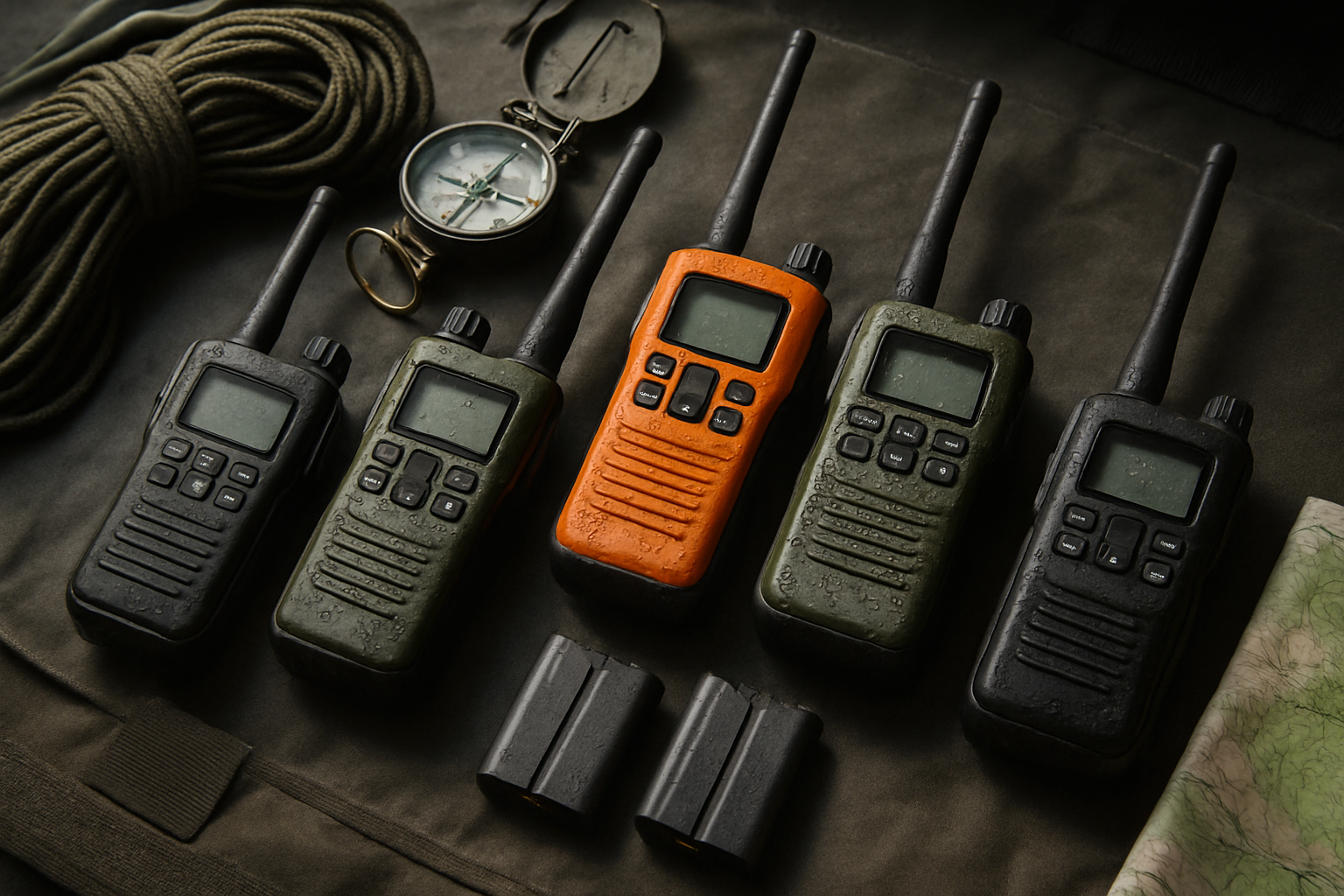
Getting a ham radio license requires passing a written test. The Technician class license is the entry level and allows you to operate handheld radios on local repeater networks. Many preppers keep a handheld ham radio like the Baofeng UV-5R alongside their satellite communicator.
The two tools serve different roles. The satellite communicator reaches rescue services anywhere on earth, one message at a time. The ham radio reaches local emergency responders and community networks in real time, with voice communication.
If you are serious about emergency communication, consider building toward both.
How to Test Your Device Before You Need It
A device you have never used is a device that may fail you in an emergency. Test your satellite communicator before you put it in your go-bag.
For two-way messengers (Garmin inReach, Zoleo, SPOT X):
- Activate your subscription plan.
- Take the device outside with a clear view of the sky.
- Send a test message to a family member and confirm they receive it.
- Have them reply and confirm you receive the reply.
- Check the tracking function to confirm your GPS coordinates are accurate.
- Most services have a test SOS mode that lets you simulate an SOS without triggering a rescue. Use it.
For PLBs (ACR ResQLink 400):
- Register your device with NOAA at beaconregistration.noaa.gov.
- Most PLBs have a self-test function. Press the self-test button to confirm the device is functioning without broadcasting an actual distress signal.
- Check the battery indicator. Replace the battery at the manufacturer’s recommended interval, typically every 5 to 7 years.
Maintenance schedule: Check your device every 6 months. Verify the battery level, check for firmware updates, and confirm your subscription is active. Put a reminder in your calendar.
Who Should Buy What: Matching Device to Situation
You are preparing for home emergencies and do not do outdoor recreation:
Start with the SPOT Gen4. It gives you real satellite SOS capability for the lowest cost. If a disaster forces you to evacuate on foot or leave your neighborhood, you have a way to call for help that does not depend on cell towers.
You are an active outdoor person who also wants emergency preparedness:
The Garmin inReach Mini 2 is the right choice. You will use it on camping trips, hiking, and travel, and it will be ready for a serious emergency when you need it. The inReach Mini 2 is one device that serves multiple purposes well.
You want global Iridium coverage on a budget:
The Zoleo is an excellent middle ground. It costs less than the inReach Mini 2, uses the same Iridium network, and the messaging plans are competitive.
You want zero monthly costs:
The ACR ResQLink 400 is your device. No subscription, no monthly bill, just emergency SOS protection backed by the international search and rescue system.
You want maximum protection:
Buy the Garmin inReach Mini 2 as your primary two-way communication device and add the ACR ResQLink 400 as a backup PLB. The PLB does not need a subscription and will work even if you forget to maintain your inReach plan. Between the two devices, you have full two-way communication and a government-grade emergency beacon.
Frequently Asked Questions
Do satellite communicators work everywhere?
Iridium-based devices (Garmin inReach, Zoleo) have true global coverage. Globalstar-based devices (SPOT) have strong coverage in North America, Europe, and parts of South America and Asia, but not everywhere. PLBs use the COSPAS-SARSAT system, which also has global coverage.
How long does it take rescue services to respond to an SOS?
It depends on location and the nature of the emergency. In well-populated areas with local search and rescue teams, response times can be measured in hours. In remote areas, it may take longer. The advantage of a two-way messenger is that you can communicate with the monitoring center and get realistic expectations.
Can I use a satellite communicator indoors?
Satellite communicators need a clear view of the sky. They do not work inside buildings or under dense tree cover. In an emergency, you may need to step outside to send a message or trigger SOS.
What happens if I accidentally activate SOS?
For two-way messengers, contact the monitoring center immediately and tell them it was an accident. Most services have a process for canceling false alarms quickly.
For PLBs, the signal goes directly to COSPAS-SARSAT. Contact your country’s rescue coordination center as quickly as possible to cancel. In the United States, contact the Coast Guard or the AFRCC (Air Force Rescue Coordination Center). False PLB activations can result in fines in some jurisdictions, so treat the SOS button on a PLB with the seriousness it deserves.
Do I need a satellite communicator if I have an iPhone 14 or newer with Emergency SOS via satellite?
The satellite SOS feature built into newer iPhones is a useful backup, but it has real limitations. It works through Apple’s service, which currently supports emergency SOS text communication in the United States and a limited number of other countries. It does not have a subscription, but it is also not designed for the kind of ongoing communication, location tracking, and international coverage that a dedicated satellite communicator provides. For serious emergency preparedness, a dedicated device is still the better choice.
Final Recommendations
A satellite communicator is one of the most overlooked tools in emergency preparedness. Cell phones have made us forget that communication infrastructure is fragile. In a real disaster, that infrastructure fails. A satellite communicator is what you reach for when everything else is down.
If you can only buy one item after reading this guide, make it the SPOT Gen4 as an entry point or the Garmin inReach Mini 2 if your budget allows. Either one gives you a level of emergency communication capability that most households do not have. Most households also never need it. But the ones who do are very glad they prepared.