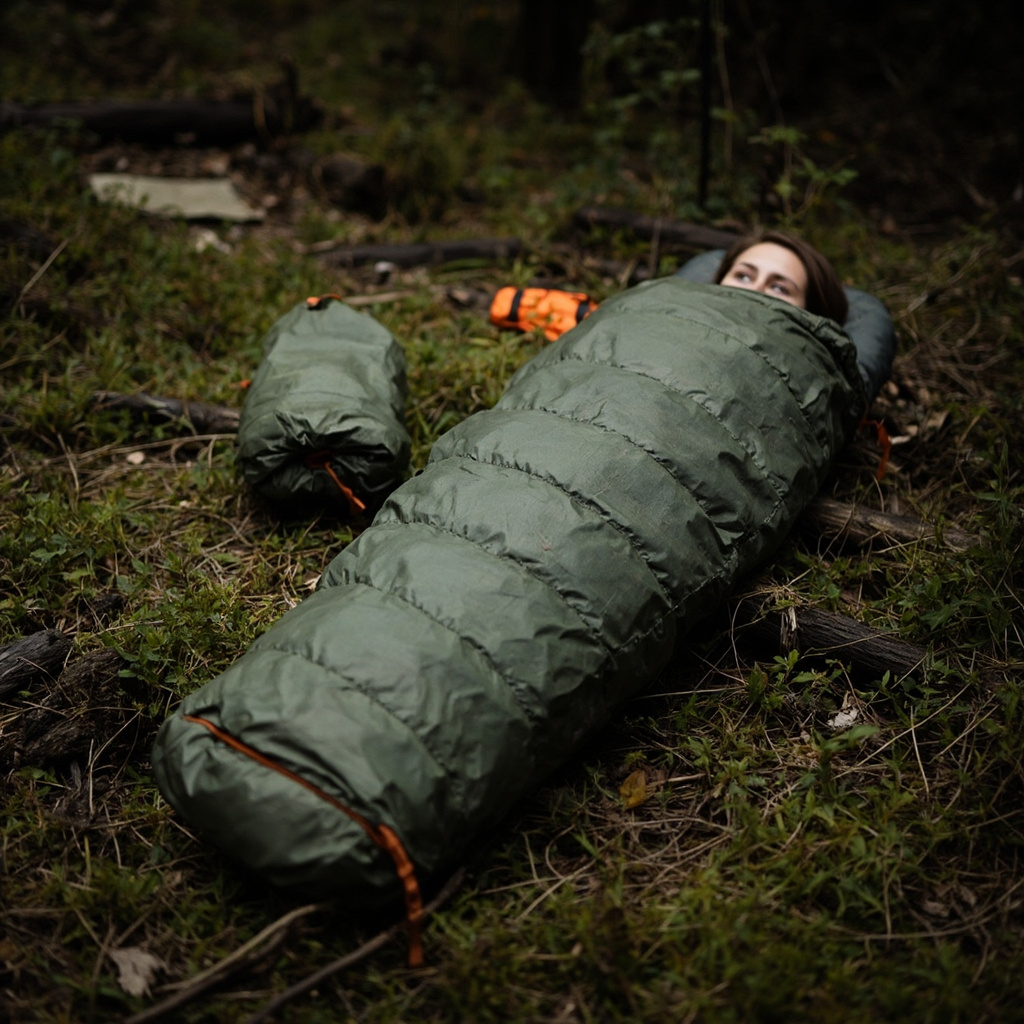
Best Sleeping Bags for Emergency Preparedness and Bug Out Bags (2026)
Hypothermia kills faster than most people expect. Your core body temperature does not need to drop much before things go wrong. A drop of just a few degrees leaves you confused, clumsy, and unable to make good decisions. A few degrees more and you are in serious danger. The cold is not dramatic. It just quietly takes over.
A sleeping bag is not camping gear. It is survival gear. In any emergency that leaves you outdoors overnight, whether from a wildfire evacuation, a flood, a vehicle breakdown, or a full bug-out situation, your sleeping bag is what stands between you and the most dangerous condition you can face in the field.
This guide covers everything you need to know before you buy: how temperature ratings actually work, the real differences between down and synthetic, how to store a bag in a bug out bag without wrecking it, and which bags are worth your money across three budget tiers.
Why Trust This Guide?
This article was researched and reviewed by contributors with hands-on experience in emergency preparedness. They have tested gear, built real systems, and lived through situations where these skills actually mattered.



How Temperature Ratings Actually Work
The number printed on a sleeping bag sounds simple. A bag rated to 20F should keep you warm at 20F. Right?
Not exactly.
The EN/ISO Standard
Most quality sleeping bags sold today carry an EN 13537 or ISO 23537 temperature rating. These ratings come from a standardized lab test using a heated mannequin and specific measurement points. The result gives you three numbers, though most bags only advertise one.
Comfort rating: The temperature at which an average woman can sleep comfortably in a relaxed position. This is the conservative number.
Lower limit rating: The temperature at which an average man can sleep in a curled position without waking from cold. This is the number most bags advertise.
Extreme rating: The temperature at which survival is possible but sleep is not. This is not a usable temperature. It is a warning label.
When a bag says “20F rated,” it almost always means the lower limit. An average woman might find that bag comfortable down to 30F or 35F. A lean person, someone who runs cold, a child, or anyone who is tired or dehydrated might need 10 degrees of extra margin.
The practical rule for emergency use: Choose a bag rated 10 to 15 degrees colder than the coldest temperature you realistically expect. If nights in your area hit 25F in winter, look for a 10F or 15F bag. The stakes in an emergency are too high to rely on the optimistic number.
What Throws Off the Rating
Lab conditions and field conditions are different. A bag rated to 20F assumes:
- You are sleeping on an insulating pad (more on this below)
- You are wearing clean, dry base layers
- You are hydrated and reasonably well-fed
- You are not wet or damp from exertion or weather
In an emergency, some of those conditions will not be met. You might be wet. You might be exhausted and under-fueled. You might not have a quality sleeping pad. Each of those factors can effectively raise the temperature at which you feel cold by 5 to 10 degrees.
Down vs Synthetic: Which Is Right for Emergency Use?
This is the single most important material decision you will make. Both options work. Neither is perfect.
Down Fill
Down comes from the underfeathers of waterfowl, usually geese or ducks. It compresses to almost nothing, bounces back to full loft when unpacked, and provides exceptional warmth for its weight. A well-made down bag can last 20 to 30 years with proper care.
Fill power is the number you see alongside down ratings: 650, 700, 800, 850. Higher fill power means the down is fluffier, traps more air per ounce, and compresses smaller. A 700-fill bag and an 850-fill bag rated to the same temperature will feel similar in warmth. The 850 bag will just weigh less and pack smaller.
Why down is great for preparedness:
- Packs dramatically smaller than synthetic at the same warmth level
- Lighter, which matters when your bag is one item among many in a pack
- Incredibly durable over years of use and storage
- Breathes well for temperature regulation
Why down creates problems in emergencies:
- Loses nearly all insulating ability when wet
- Takes a long time to dry in the field
- More expensive, sometimes significantly
- Requires careful storage (cannot be left compressed for months)
Treated down (hydrophobic down, often marketed as DWR-treated or with brand names like DownTek or Q.Shield) improves wet-weather performance considerably. It does not make down waterproof. It buys you time before the down gets saturated and loses its loft.
Synthetic Fill
Synthetic insulation, most commonly polyester-based materials like Primaloft or Thermoball, keeps much of its insulating ability even when wet. It dries faster. It costs less. It is also heavier and bulkier than down at the same warmth rating, though modern synthetics have closed that gap considerably.
Why synthetic works better for many preppers:
- Retains insulation when wet, which matters in rain, snow, or flood scenarios
- Dries faster if you need to air it out
- No ethical concerns around animal welfare
- Less expensive, leaving budget for other gear
- Better for people with down allergies (rare, but real)
The tradeoffs:
- Heavier and bulkier than comparable down bags
- Breaks down faster over many compression cycles
- Synthetic bags from 10 years ago may have lost significant loft
The honest answer for most people: For a bug out bag that lives in a closet until you need it, synthetic is often the smarter choice. You can grab it, stuff it wet if needed, and rely on it to still insulate. If weight is critical and you commit to keeping the bag dry with a cover or waterproof compression sack, down gives you better performance per ounce.
Weight vs Warmth: Finding the Right Tradeoff
The warmest sleeping bag is not always the right sleeping bag.
A bag you cannot carry is useless. A bag so heavy it slows you down creates its own risks. At the same time, a bag too light for your conditions saves you a pound but costs you your safety.
Here is a simple framework:
Bug out bag or 72-hour kit: You need warmth, but you also need to move. Target a bag that covers your coldest realistic overnight temperature and weighs under 3.5 pounds. Under 2.5 pounds is better. A mummy-style bag conserves more heat than a rectangular one.
Home cache or vehicle kit: Weight matters less when the bag is not on your back. Prioritize warmth and durability over packed size. Rectangular bags are fine here and often cheaper.
Long-term shelter in place: Comfort becomes more relevant. A bag wide enough to sleep in comfortably matters when you are spending days or weeks in a disrupted scenario.
Mummy bags are almost always the right choice for serious emergency use. The fitted shape prevents cold air pockets and retains significantly more body heat than a rectangular design. The tradeoff is that they feel confining to some people. If that is a dealbreaker, look for semi-rectangular designs that compromise between the two.
The Sleeping Pad Problem Nobody Talks About
Your sleeping bag loses most of its insulation on the ground side when you lie on it. Body weight compresses the fill flat. Flat fill does not trap air. Air is what insulates you.
The ground is also a massive heat sink. Even in moderate temperatures, an uninsulated ground contact will drain your body heat quickly.
A sleeping pad is not optional in cold conditions. It is more important than your sleeping bag in some scenarios.
R-value is the standard measurement of a pad’s insulation. Higher is warmer.
- R-1 to R-2: Three-season use, temperatures above freezing
- R-3 to R-4: Cold weather use, down to around 20F
- R-5 and above: Winter and extreme cold use
For emergency preparedness, a closed-cell foam pad is the most reliable choice. It cannot be punctured. It does not need inflation. It costs very little. It lasts almost indefinitely. The tradeoff is bulk since foam pads do not compress. Inflatable pads save space but can fail. A foam pad and a lightweight inflatable together give you redundancy and excellent insulation.
Do not skip the pad. A 15F sleeping bag on bare ground in 30F weather can fail to keep you warm. The same bag on a quality R-4 pad will feel comfortable.
Bivy vs Sleeping Bag: When Each Makes Sense
A bivy (short for bivouac sack) is a waterproof or water-resistant shell that goes around your sleeping bag or around your body. Some bivies are used alone as emergency shelters. Others are intended to extend the performance of a sleeping bag in wet conditions.
Emergency bivies like the SOL Escape Bivvy are aluminum-coated sleeping-bag-shaped shelters designed to reflect body heat back to you. They are not sleeping bags. They do not insulate on their own. They are windproof and waterproof emergency tools that can buy you time when you have nothing else, or add several degrees of warmth to a bag that is too light for conditions.
An emergency bivy weighs a few ounces and costs around $25 to $50. Every bug out bag should have one. They fold to the size of a deck of cards.
What a bivy cannot do: It cannot replace a proper sleeping bag in cold conditions. The reflective heat retention is real but limited. You will still be cold in serious winter conditions with only a bivy.
Using a bivy with a sleeping bag: Slipping your sleeping bag inside a bivy adds meaningful warmth and weather protection. It is particularly valuable for down bags in wet climates. The bivy keeps rain and condensation off the down, protecting the fill from the moisture that would otherwise wreck its loft.
Storing a Sleeping Bag in a Bug Out Bag
How you store a sleeping bag matters almost as much as which one you buy.
Do not store a sleeping bag compressed long-term. Compressed fill, both down and synthetic, loses loft over time. A bag stored stuffed in its compression sack for a year will not perform as well as a bag stored loosely. The fibers or clusters get permanently crushed.
How to store it properly:
- Keep the bag in a large mesh storage sack or loosely in a breathable bag when at home
- Pack it compressed only when actively carrying it or when the pack is on standby for short periods (days, not months)
- If your bug out bag will sit for months, store the sleeping bag separately and attach it to the outside of the pack when you deploy it
Waterproofing during storage and carry:
- A waterproof compression sack is your best option for a bug out bag
- Even if you have a down bag, a waterproof dry bag costs $10 to $20 and eliminates your biggest vulnerability
- Trash compactor bags (not standard garbage bags) are an excellent improvised dry bag in a pinch
Keep it clean: Oils from skin and hair degrade both down clusters and synthetic fibers over time. Wash your bag occasionally. Follow the manufacturer’s instructions. For down bags, use a specialty down wash, not regular detergent. Dry on low heat with clean tennis balls to break up clumps.
Budget Tiers: What You Get at Each Price Point
Not everyone needs the same bag. Here is how to think about the tiers.
Under $80: Get the Basics Right
At this price, you get functional warmth, synthetic fill, and acceptable weight. You are not getting the lightest bag or the smallest pack size. What you are getting is a bag that works and will not break on you.
The Teton Sports Tracker is a standout at this price. It comes in a variety of temperature ratings, uses synthetic fill, and has a thoughtful mummy shape with good hood insulation. It compresses reasonably well for the price and earns consistent praise from users who bought it for exactly this purpose.
The Coleman Brazos 20F is a budget workhorse. It is heavier than most backpacking bags but warm and easy to find. This is a good choice for a vehicle kit or a home emergency cache where weight is not critical.
$80 to $200: Better Performance, More Options
This is the sweet spot for most preparedness shoppers. You gain access to lighter bags, better synthetic insulation, and some entry-level down options.
The Marmot Trestles 15 is a consistent recommendation in this range. Marmot makes real gear. The Trestles uses a quality synthetic fill, compresses well for its rating, and has a proper mummy shape with a good draft collar. This is a bag you can count on.
The Coleman North Rim 0F is the heavy hitter for cold-weather preparedness in this price range. It is not light. It is not compact. But it will keep you warm at zero degrees for under $150, which is a remarkable value for what it does. If you live somewhere cold or want serious margin in your temperature rating, this is worth considering even at the expense of pack size.
$200 and Up: Lightweight, Long-Lasting Performance
At this level, you access bags that weigh under 2 pounds, pack to the size of a water bottle, and will last 20 years with proper care.
The Hyke and Byke Eolus 15F is a genuine overperformer. It uses 800-fill down, weighs around 1.5 pounds, and compresses to an impressively small size. For a bug out bag where every ounce counts and you need maximum temperature performance in minimum space, this is one of the best values in the down category.
The Snugpak Softie 9 is a British military-inspired synthetic bag with a strong reputation in survival and preparedness communities. It uses Snugpak’s proprietary hollow fiber fill, handles damp conditions better than most synthetics, and is built to take real-world abuse. Not the lightest choice, but remarkably tough.
Comparison: Top Picks at a Glance
Product Reviews: What You Need to Know Before You Buy
Teton Sports Tracker Sleeping Bag
The Teton Sports Tracker is the budget sleeping bag that keeps showing up in preparedness discussions for good reason. It does not try to be the lightest bag on the market. Instead, it focuses on function: a proper mummy shape with a contoured hood, a draft collar that actually blocks cold air, and synthetic fill that handles the occasional damp storage closet better than down would.
The Tracker comes in several temperature ratings. For emergency preparedness, the 20F version hits the right balance between warmth and cost. If you live somewhere that regularly gets below freezing in winter, bump to a colder-rated version.
This bag is heavier than premium options. You are looking at around 4.5 pounds, which is noticeable in a loaded pack. But if you are building a vehicle emergency kit or a home cache, that weight is not a problem. And at under $60, you can buy one for every vehicle and still have change left over.
Coleman Brazos 20F Sleeping Bag
Coleman has been making camping gear for over a century. The Brazos 20F is not exciting. It is heavy, it compresses to a large stuff sack, and it offers no meaningful upgrades over cheaper alternatives in terms of features. What it offers is reliability, availability, and a proven track record.
For a home emergency kit, a grab-and-go bag in the garage, or a vehicle kit where space is not constrained, the Brazos delivers warm and dependable sleep at a price almost anyone can manage. It is also widely available in physical stores, which matters if you need to replace or supplement gear quickly without waiting for shipping.
The zipper design lets you unzip and use it as a blanket, which adds flexibility in sheltered environments like a community shelter where you do not need the full mummy seal.
Marmot Trestles 15 Sleeping Bag
Marmot is a serious outdoor gear brand, and the Trestles 15 is their entry point into genuinely capable cold-weather sleeping bags. The 15F rating (lower limit) gives you meaningful margin over a 20F bag without adding dramatically more weight or bulk.
The fill is Marmot’s synthetic SpiraFil, which outperforms cheaper polyester fill in both loft recovery and moisture management. The design includes a proper draft collar, an anti-snag zipper, and a hood that actually fits over a beanie without gaping. These are details that matter when you are tired, cold, and trying to set up camp in the dark.
At around 3.4 pounds and a reasonably compact stuff size, the Trestles 15 is a credible bug out bag sleeping bag if you can handle the weight. It is also an excellent base for anyone building a comprehensive three-season emergency kit.
Coleman North Rim 0F Sleeping Bag
Zero degrees Fahrenheit is a serious temperature rating. Most people will never face those conditions in an emergency. But if you live in a region with harsh winters, are preparing for a scenario where your shelter could be compromised, or want maximum margin in your warmth planning, the North Rim 0F delivers.
It is not a bag you want to carry far. At around 6.5 pounds with a large packed size, it is built for car camping, vehicle kits, and home caches. The thermolock draft tube along the zipper is a real feature at this price, blocking cold air infiltration that can otherwise undermine a bag’s rated performance.
If weight is not a constraint and cold-weather survival is a real risk in your region, the North Rim 0F is outstanding value. There are very few bags that get you to zero degrees for under $100.
Hyke and Byke Eolus 15F Down Sleeping Bag
The Eolus 15F is a genuine surprise. Hyke and Byke is not a household name, but the Eolus competes directly with bags from brands that charge twice as much. It uses 800-fill-power down, which is premium territory. The result is a bag that weighs around 1.5 pounds and compresses to roughly the size of a large water bottle.
For a bug out bag where every ounce matters, those numbers are genuinely impressive at the price. You get 15F rated warmth, a proper mummy shape, a hood with a drawcord, and a draft collar, all in a package that barely registers in your pack.
The tradeoffs are the same as any down bag: moisture is your enemy. Use this bag with a waterproof compression sack. If rain is likely, pair it with a bivy. Do not let it get wet and trust it to insulate.
If you are willing to manage the moisture concern and you want the lightest possible bag at 15F performance, the Eolus is one of the best values available.
Snugpak Softie 9 Sleeping Bag
Snugpak makes gear that gets used by military and rescue professionals in demanding conditions. The Softie 9 draws on that heritage. The name comes from its rated comfort range: it is designed to be comfortable around 23F.
What separates the Softie 9 from generic synthetic bags is the Softie fiber itself. It is a hollow fiber construction that compresses better than standard polyester fill and recovers its loft more consistently. The bag also handles damp storage and incidental moisture better than most. In survival scenarios, where your bag might get wet from sweat, condensation, or weather, that resilience matters.
The Softie 9 also has a narrower mummy taper than some sleeping bags, which helps trap warmth more efficiently. The zipper is robust and smooth. The shell fabric resists abrasion better than thin ultralight materials. This is a bag built to survive rough handling.
At around 2.4 pounds, it is not the lightest choice. But for a preparedness bag that will be grabbed in high-stress conditions and possibly treated hard, it is worth the weight.
SOL Escape Bivvy
Every bug out bag should have a SOL Escape Bivvy. Not instead of a sleeping bag. In addition to one.
The SOL Escape uses a material called ESCAPE that reflects up to 70 percent of your body heat back to you. It is windproof and waterproof. The whole thing weighs around 8 ounces and folds to the size of a deck of cards.
In a true emergency with no other shelter, the SOL Escape Bivvy can keep you alive through a cold night. That is a strong claim and it is backed by real-world testing. Combined with a sleeping bag, it adds meaningful effective warmth, turning a 20F bag into something that performs closer to 10F in some conditions.
A few other things make the Escape worth carrying:
- It breathes enough to reduce condensation buildup, unlike pure mylar emergency blankets
- It has a two-way zipper for ventilation
- It is reusable, not a one-time-use disposable
The SOL Escape Bivvy is not a substitute for preparedness. It is insurance for when preparedness fails.
Accessories That Extend Your System
A sleeping bag is one piece of a warmth system. These additions make it work better.
Sleeping pad: As covered above, this is not optional in cold conditions. A Therm-a-Rest Z Lite Sol foam pad is the most dependable choice. It cannot be punctured, costs around $50, and provides an R-value of 2.0. Pair it with an inflatable for serious cold.
Waterproof compression sack: A silnylon dry bag in the 10-15 liter range keeps your sleeping bag dry and small. Sea to Summit and Outdoor Research both make reliable options.
Liner: A fleece or silk liner inside your sleeping bag adds 5 to 15 degrees of effective warmth. They also keep the bag cleaner between washes, extending its lifespan. A fleece liner is a very cheap way to extend a three-season bag into colder conditions.
Wool or fleece base layers: What you wear inside your bag matters. Sleeping in full synthetic base layers adds warmth. Sleeping in damp cotton takes it away. Have dedicated sleep layers in your kit.
Building a Complete Sleep System for a Bug Out Bag
Here is how to think about a complete sleeping system at three budget levels.
Budget system (under $150 total):
- Teton Sports Tracker 20F (synthetic, mummy)
- SOL Escape Bivvy (emergency backup, adds warmth)
- Closed-cell foam pad (Therm-a-Rest Z Lite or generic)
- Fleece liner
This system works down to around 10F with all elements deployed. It weighs around 6 pounds plus the pad. It is not lightweight, but it is warm, reliable, and affordable.
Mid-range system ($150 to $350 total):
- Marmot Trestles 15 (synthetic, mummy)
- SOL Escape Bivvy
- Therm-a-Rest NeoAir XLite (inflatable pad, R-3.2) plus a foam backup
- Fleece liner
This system works down to around 5F and weighs around 4.5 pounds for the bag and pad. The inflatable pad compresses to almost nothing in your pack.
Performance system ($350 and up):
- Hyke and Byke Eolus 15F (800-fill down)
- Waterproof compression dry bag for the down bag
- SOL Escape Bivvy
- Therm-a-Rest NeoAir XTherm (R-5.7)
This system weighs around 3 pounds total for bag and pad. It works in genuine winter conditions and still fits inside a 65-liter pack without dominating it.
How to Choose: The Short Version
If you want one clear recommendation for most people building a bug out bag or emergency kit:
Get the Marmot Trestles 15. It is synthetic so moisture is not a crisis. It is 15F rated so you have real margin. Marmot makes it well enough that it will not fail on you. Add a SOL Escape Bivvy as a backup and pair it with whatever sleeping pad you already have or can afford.
If you are weight-limited and committed to keeping your bag dry, upgrade to the Hyke and Byke Eolus 15F and use a waterproof dry bag.
If you are building a vehicle kit and weight is not a concern, the Coleman North Rim 0F at under $100 gives you ridiculous cold-weather margin for the money.
Do not overthink it. A sleeping bag in your kit beats the perfect sleeping bag still in your shopping cart.
Final Thoughts
Emergency preparedness is about closing gaps before they become crises. Sleep is not a luxury. Without adequate rest in a survival situation, your judgment degrades, your body loses its ability to regulate temperature, and your risk of making dangerous decisions increases sharply.
A good sleeping bag closes one of the most important gaps there is. It does not need to be expensive. It does not need to be perfect. It needs to be warm enough for your realistic conditions, packable enough to be with you when you need it, and reliable enough to work after sitting in a closet for a year.
Pick something from this list. Put it in your bag. Then focus on the next gap.
Always test your sleeping system before you need it. Sleep in your bag at home. Know how warm it actually feels. Adjust before an emergency teaches you the hard way.