Ready
Ready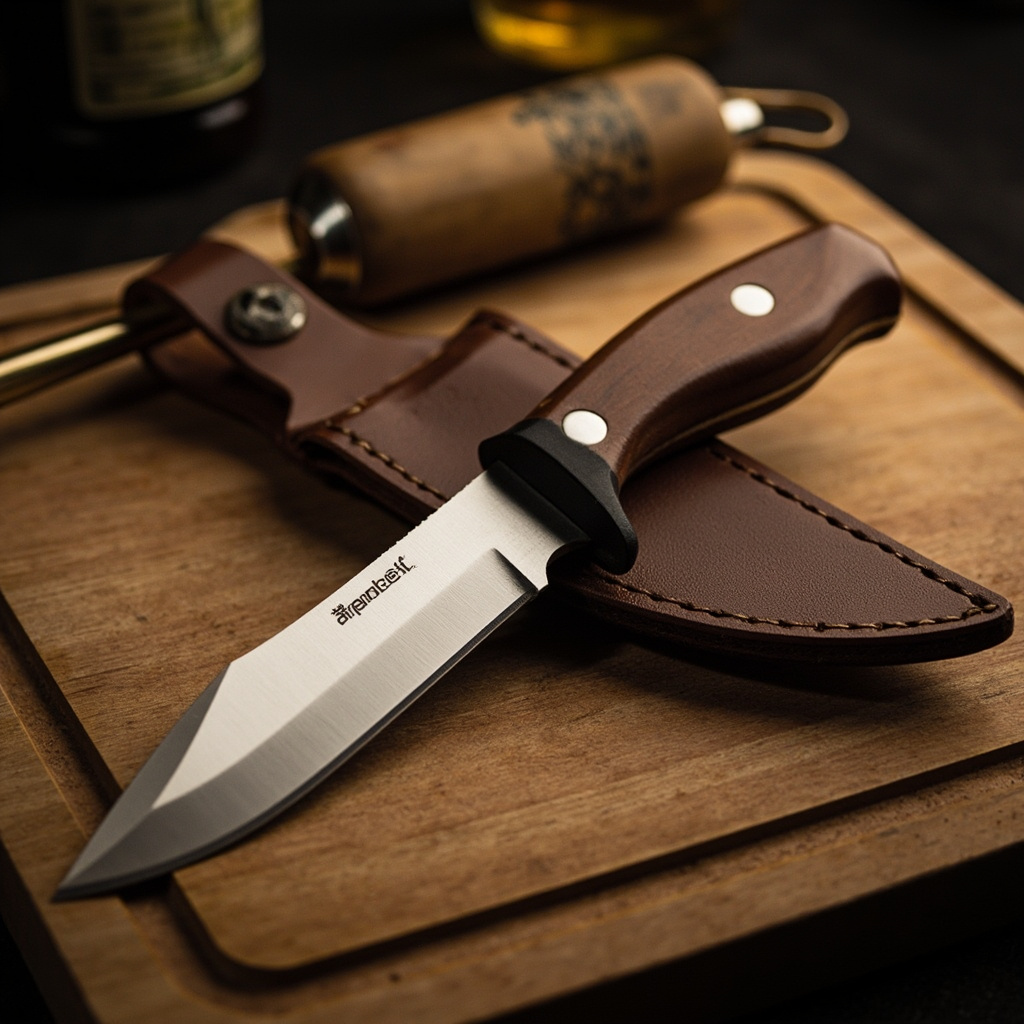
Best Survival Knives for 2026: Honest Reviews for Real Emergencies
A survival knife is one of the most important pieces of gear you can carry in a bug out bag, a camp kit, or an emergency vehicle. When other tools fail or run out of power, a good fixed-blade knife keeps working. It can process firewood, prepare food, build a shelter, signal for help, and handle dozens of tasks that come up when things go wrong outdoors.
But the survival knife market is full of junk. Fancy-looking blades with hollow handles stuffed with cheap gear. Oversized machete-style knives that weigh a pound and a half. Folding knives dressed up with tactical branding that would fall apart under real use. Knowing what separates a real working knife from a gimmick is the most important thing you can learn before spending money.
This guide covers everything you need to make a good decision: blade steel, tang construction, blade length, fixed versus folding, sheath quality, and price tiers. Then we review nine specific knives, from a budget Mora that costs under $15 to a Benchmade that costs over $200, so you know exactly what you are getting at each price point.
- Blade steel: Look for tough steel that holds a sharp edge and resists rust.
- Full tang: The blade should run all the way through the handle for real strength.
- Blade length: Around 4 to 4.5 inches handles most survival jobs well.
- Sheath included: A solid sheath lets you carry the knife safely and grab it fast.
We tested and picked the knives below so you can trust them when it counts. Keep reading to see why each one made our list.
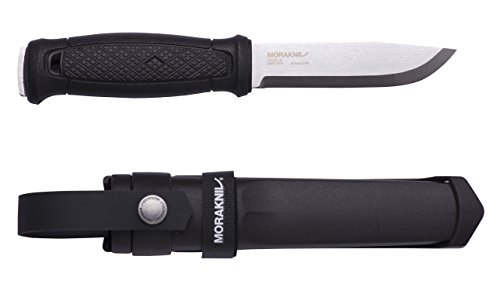
Morakniv Garberg Fixed Blade
The Morakniv Garberg pairs a full-tang, rust-resistant Sandvik stainless blade with a firesteel-striking spine and rugged sheath. That mix of reliability, durability, and wide emergency use makes it our best all-around survival knife.

ESEE-4 Clip Point
The ESEE-4 uses tough 1095 carbon steel and comes with a coyote brown sheath, making it a favorite hard-use blade that shrugs off heavy field work.

Victorinox Outdoor Master Mic S
This Swiss Army hunting knife blends a full-tang blade with careful, safety-focused build quality, so it carries easily and performs when you need it.
In this guide



Reviewed by Marcus T., Ryan C. & Beth O. — contributors with hands-on preparedness experience. How we test
Why Trust This Guide?
This article was researched and reviewed by contributors with hands-on experience in emergency preparedness. They have tested gear, built real systems, and lived through situations where these skills actually mattered.
Fixed Blade vs. Folding Knife: Which One Do You Actually Need?
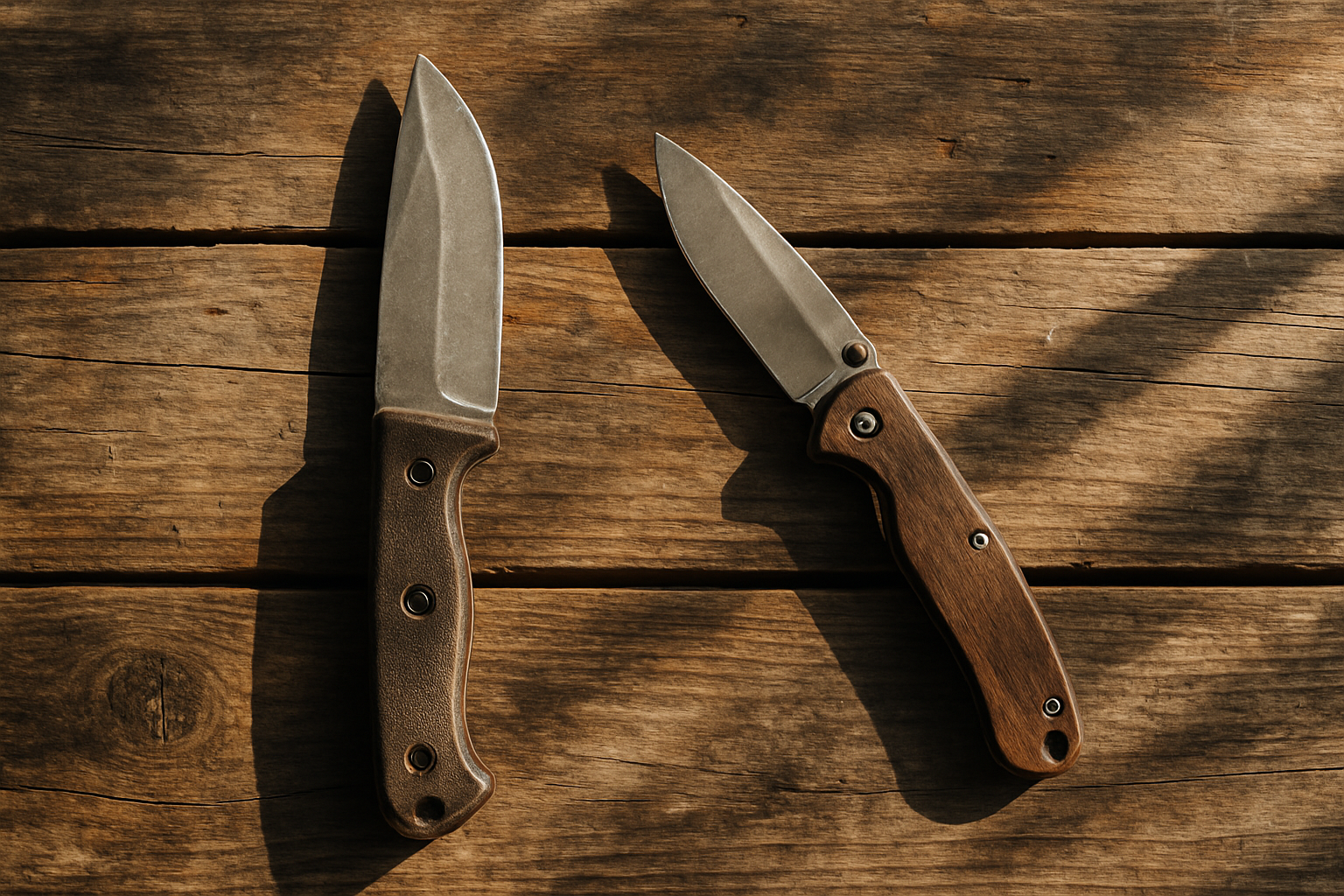
This is the most fundamental question in survival knife selection, and most gear guides gloss over it.
Fixed blade knives have no moving parts. The blade is one continuous piece of steel that extends through the handle. There is nothing to open, nothing to break, no pivot pin to fail when you are putting serious force on the blade. For any real survival scenario, a fixed blade is the correct answer. It can handle batoning (splitting wood by striking the spine), prying, digging, and sustained hard use that would destroy a folding knife.
Folding knives have a pivot mechanism that allows the blade to fold into the handle. This makes them more compact and convenient to carry in a pocket. A good quality folder is perfectly useful for food prep, cutting cordage, and everyday tasks. But folding knives are not built for the hard, lateral stress that survival situations create. The lock can fail. The pivot screws can loosen. The thinner blade stock used in folders is more prone to flexing under load.
The honest answer: for a dedicated survival knife or bug out bag, carry a fixed blade. A small folding knife is a useful addition, but it is not a replacement for a proper fixed blade when your life depends on it.
Full Tang vs. Partial Tang: Why This Matters More Than You Think
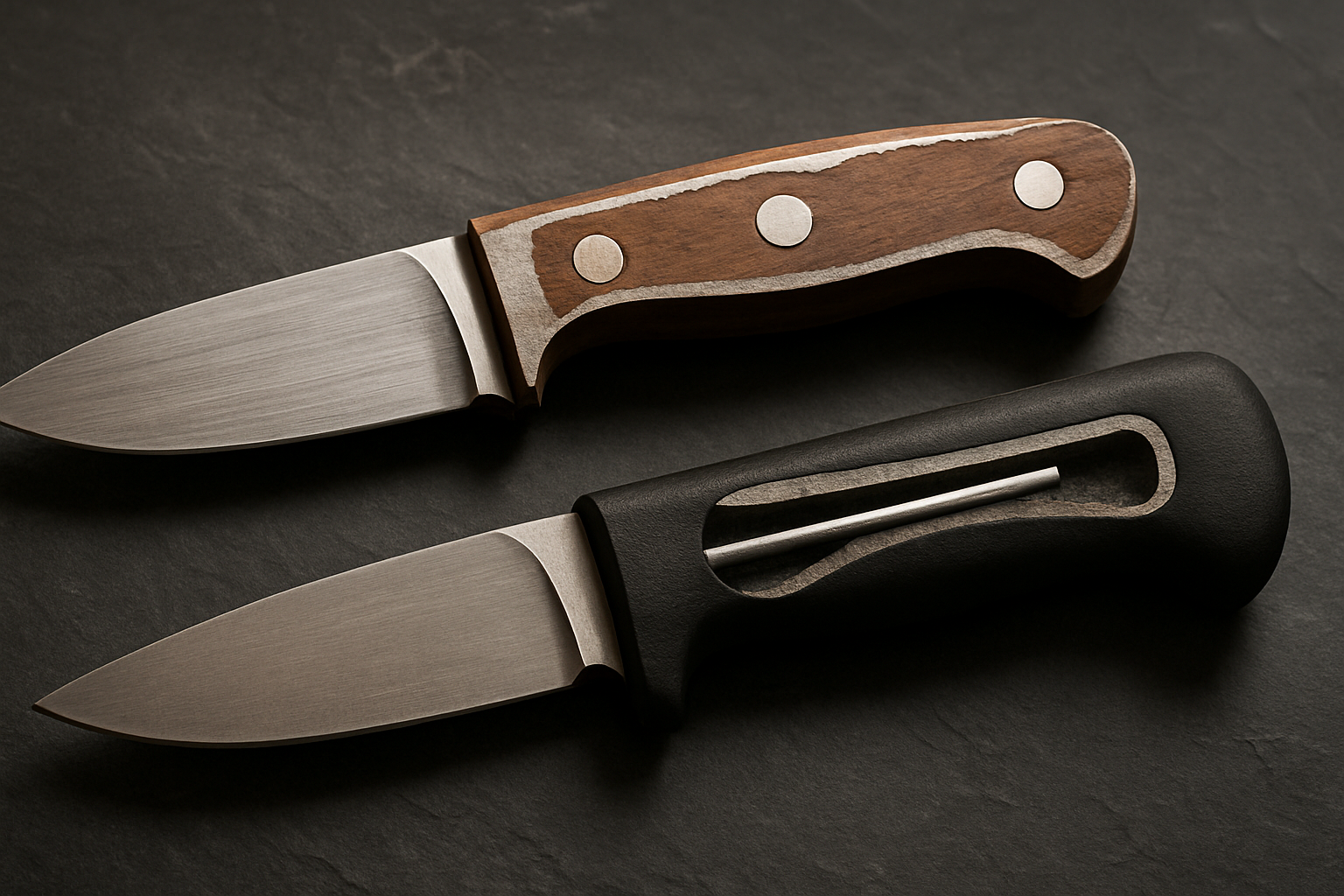
Tang refers to the portion of the blade steel that extends into the handle.
Full tang means the blade steel extends the full length and width of the handle. The handle scales (the grip material on each side) are attached to the sides of the tang. You can often see the edge of the metal running along the top and bottom of the handle. Full tang construction is dramatically stronger than any other design. Under heavy force, the knife behaves as one solid piece.
Partial tang (also called rat-tail tang, stick tang, or push tang) means the blade steel narrows to a thin rod or tab that goes into the handle. The handle is typically hollow, with the tang inserted and sometimes glued or pinned in place. This is cheaper to manufacture and allows for the hollow-handle design you see on a lot of novelty survival knives. Under hard use, partial tang handles can crack, split, or separate from the blade entirely.
Hollow handle knives deserve special mention because they look survival-ready and often come packaged with a little kit of matches and fishing line inside. Discard the kit. The hollow handle makes the knife weaker at exactly the point where it needs to be strongest: the juncture between blade and handle. These knives are props, not tools.
Rule: for a real survival knife, buy full tang only.
Blade Steel: What You Need to Know Without Getting Lost
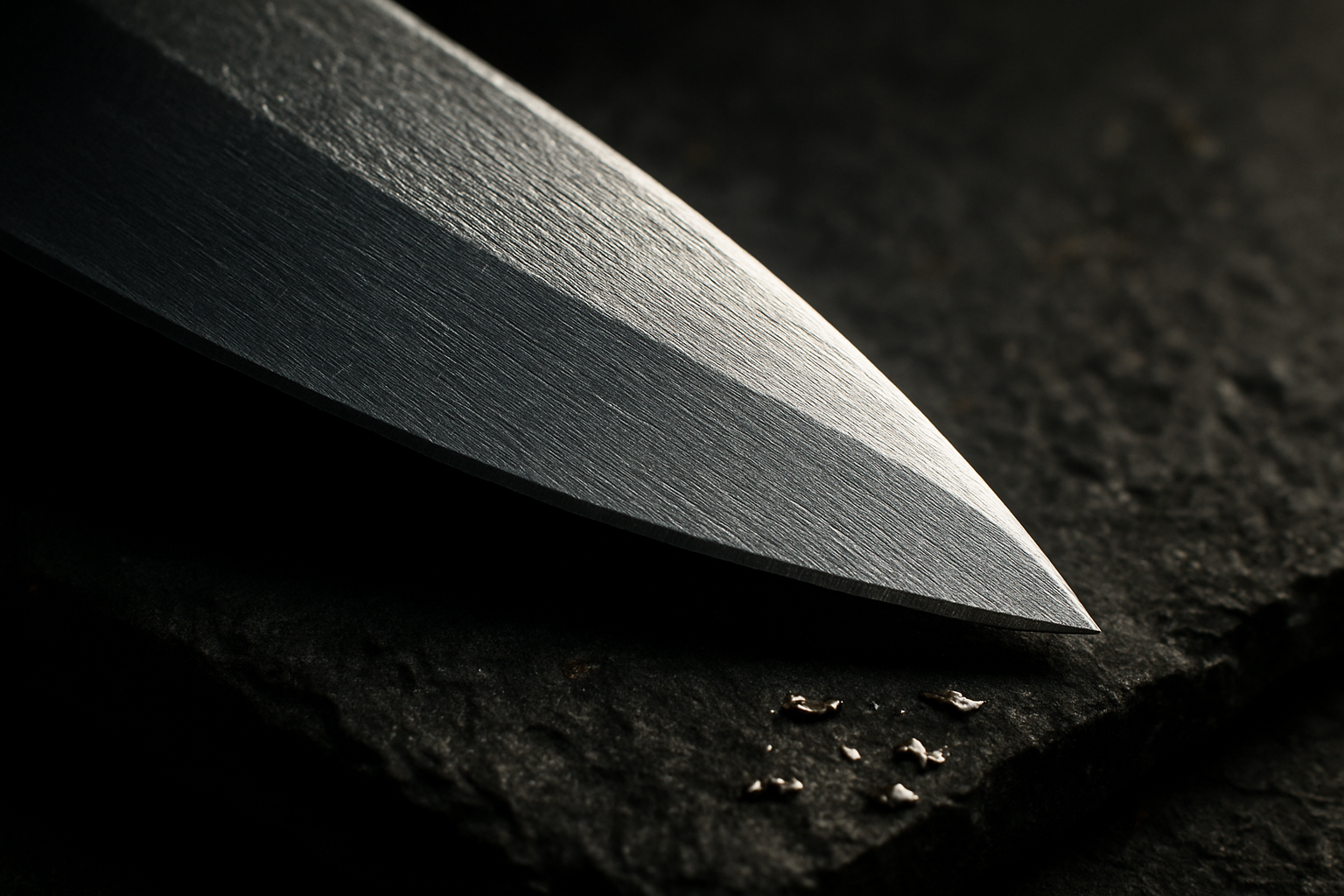
Knife steel is a topic people spend years obsessing over. For a survival knife, you do not need to become an expert. You need to understand a few practical trade-offs.
Stainless steel resists rust and requires less maintenance. This is a meaningful advantage in wet environments, coastal areas, and bug out bag storage where a knife might sit for months or years without being cleaned and oiled. The trade-off is that stainless steel is typically harder to sharpen by hand than carbon steel.
Carbon steel is easier to sharpen to a very keen edge using basic stones or even improvised sharpeners like the unglazed bottom of a ceramic cup. It holds an edge well under use. The downside is that carbon steel rusts if not maintained. In a wet environment or extended outdoor use, a carbon steel blade needs to be dried and lightly oiled regularly.
Common steels worth knowing:
- 1095 carbon steel is used in many American-made survival knives (ESEE, Ka-Bar). It is tough, easy to sharpen, and proven. It rusts if neglected.
- 12C27 stainless steel is used in Morakniv blades. It is a Scandinavian steel with excellent edge retention for its price point. Very resistant to rust.
- 420HC stainless is used in Buck Knives. It is softer than 1095 but very stain resistant and easy to sharpen.
- CPM-154 stainless is a premium steel found in higher-end knives like the Benchmade Bushcrafter. Excellent edge retention, good toughness, moderate corrosion resistance.
For most people in most situations, 1095 carbon or 12C27 stainless will serve you well. You do not need to spend for premium steel unless you are doing sustained professional use or you want the best possible edge performance.
Blade Length: The Practical Answer
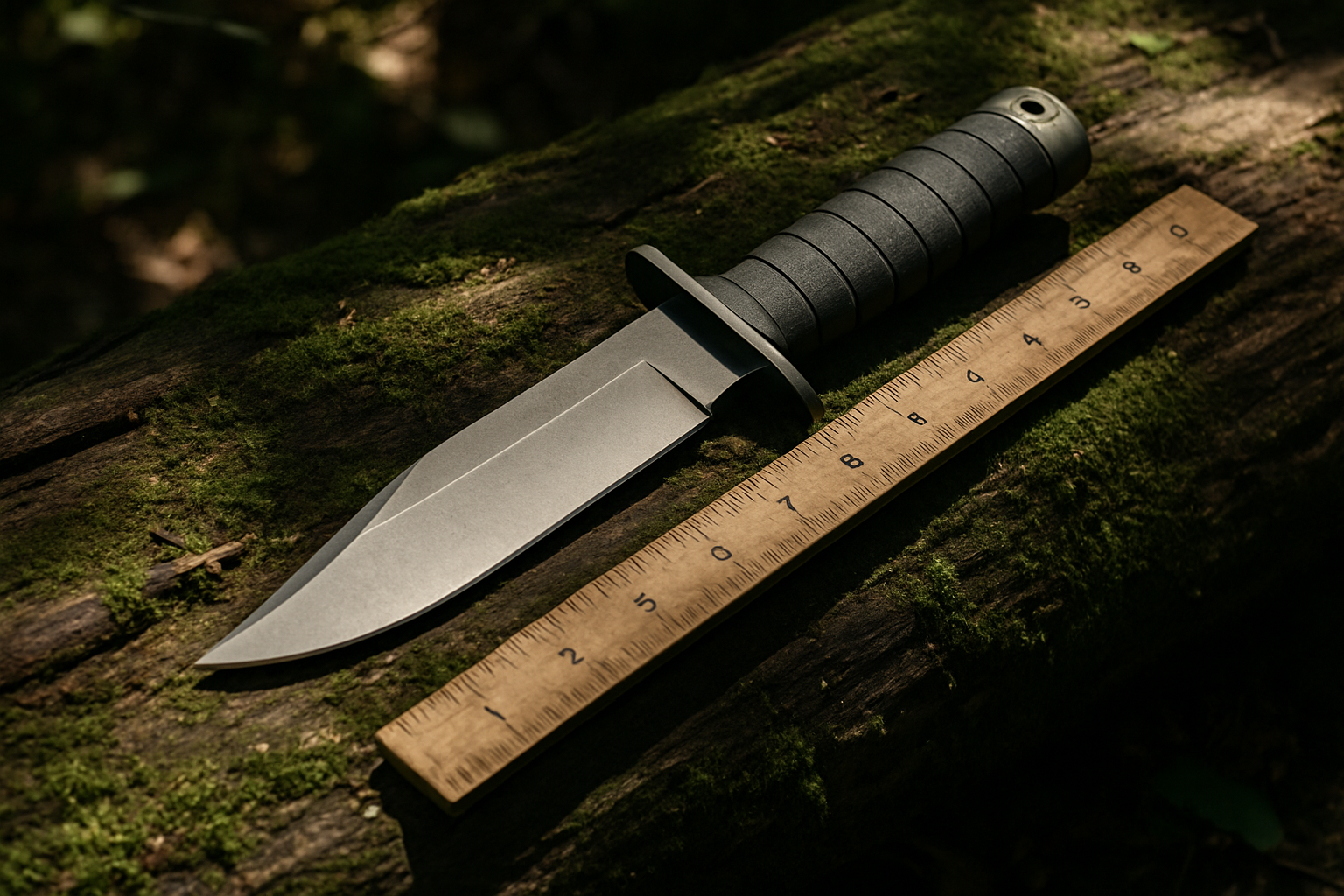
Longer is not better. This surprises people who picture a survival knife as something that looks like a small sword.
A blade between 4 and 5 inches handles nearly every survival task well: food prep, wood processing, shelter building, cordage work, first aid applications. It is long enough to be useful for fire-prep batoning on smaller wood, and short enough to be controllable and safe for close work.
Blades under 4 inches (like the Morakniv Companion at 4.1 inches and the ESEE-4 at 4.5 inches) are actually preferred by many experienced survivalists because they are lighter, easier to control, and still fully capable.
Blades over 6 inches start to lose versatility. They become harder to use for precision tasks, heavier to carry, and in some jurisdictions, longer blades trigger legal restrictions on carry.
For most people building a bug out bag or emergency kit: stay between 4 and 5.5 inches.
Sheath Quality: The Part Everyone Ignores
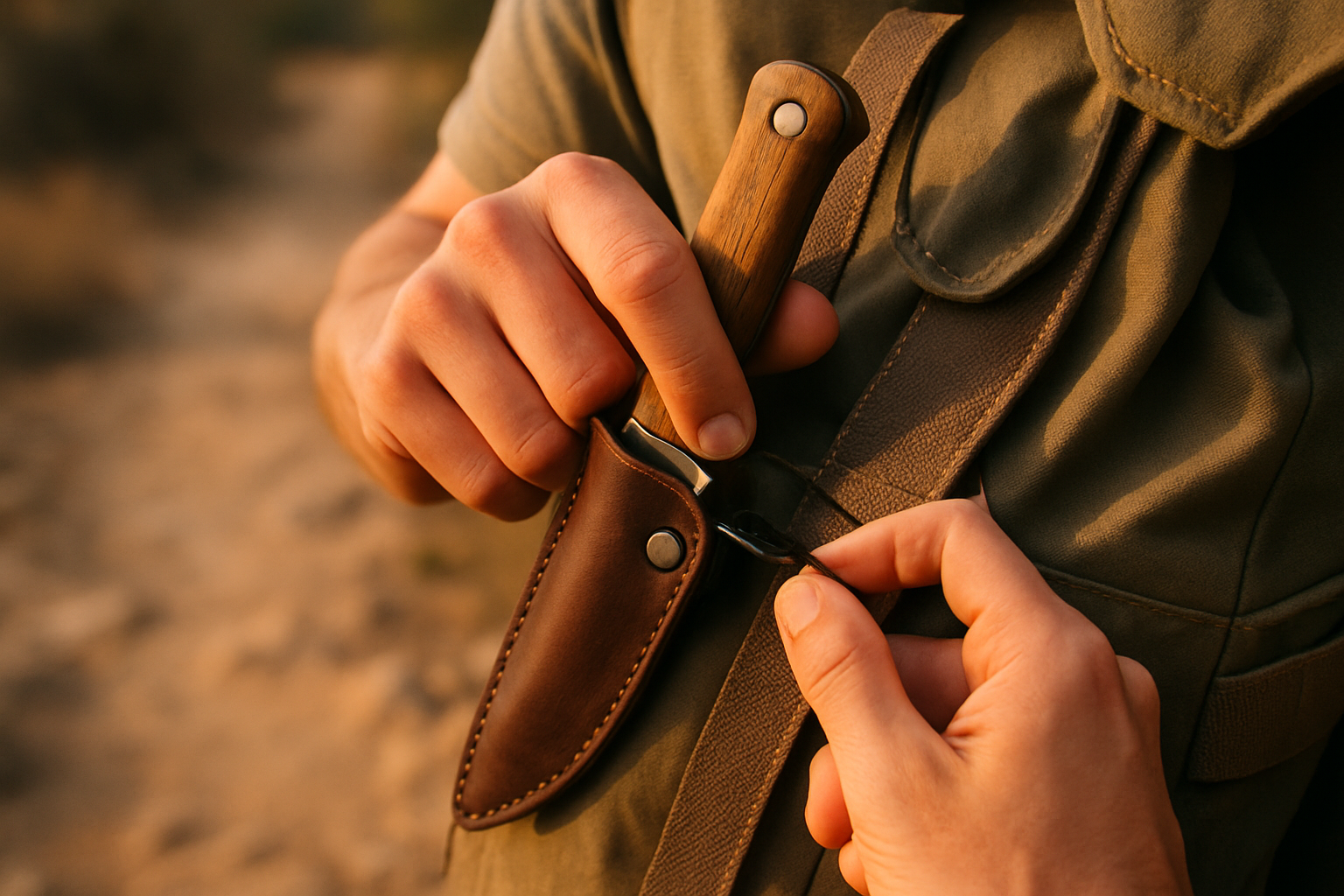
A bad sheath is a safety hazard and a functional problem. In a survival scenario, you need your knife accessible with one hand, secure so it does not fall out during movement, and positioned so drawing it is natural and fast.
Kydex sheaths are molded thermoplastic. They are waterproof, light, and hold the knife securely with a positive click retention. They do not retain moisture against the blade. Kydex is the best material for a survival sheath.
Leather sheaths look good and feel good in the hand. They are less waterproof, can retain moisture against the blade (promoting rust on carbon steel), and the snap or strap retention is slower to access than Kydex. A leather sheath is fine for camp carry and looks traditional. It is not ideal for bug out bag use.
Nylon sheaths are common on budget knives. They are adequate and light but tend to wear out faster and often have loose retention that lets the knife rattle or fall free.
Look for a sheath that mounts to your belt in at least two positions (vertical and angled), has a secure retention system, and keeps the knife from moving during activity. A drainage hole at the tip is a small detail that matters in wet environments.
What Makes a Survival Knife a Gimmick
Now that you know what to look for, here is what to avoid:
Hollow handles with gear inside. The knife is weaker where it most needs to be strong. The gear inside is usually junk. Pass.
Serrated spine or saw teeth on the spine. The serrations on the top of the spine are too small to function as a real saw and too aggressive to use the spine as a striking surface for a ferro rod. They add no value.
Oversized blades marketed as tactical. A blade over 7 inches is a machete. Machetes have their uses. They are not survival knives.
Overly complex multi-function designs. A knife that also has a compass, a glass breaker, a whistle, a fire starter, and a built-in LED is a marketing gimmick. Each of those functions is done better by a dedicated tool. Carry a separate compass, a separate whistle, and a separate ferro rod. Keep the knife a knife.
Unbranded import knives with inflated specs. A $20 knife claiming D2 tool steel and full-tang construction at that price point is making false claims. Stick with brands that have a verifiable manufacturing history.
Comparison Table: Top 9 Survival Knives
Knife Reviews: The Full Breakdown
Morakniv Companion: The Best Knife for the Money
If you have never owned a fixed-blade knife and want to start somewhere smart, buy the Morakniv Companion on Amazon. It costs about $15. For that price you get a 4.1-inch blade of 12C27 stainless steel that comes from the factory razor sharp, a comfortable polymer handle with a good grip even in wet conditions, and a basic plastic sheath with a belt clip.

The Companion has a partial tang, which is the one real compromise in this knife. Morakniv uses a very robust attachment method that is more durable than most partial-tang designs, and in testing the Companion handles normal camp and survival tasks without issue. What it will not do is survive repeated hard batoning of large wood or serious prying. Use it for food prep, carving, featherstick making, and light camp tasks, and it will last for years.
The 12C27 stainless steel sharpens easily and holds an edge well. It does not rust. If you want a backup knife, a training knife, or a lightweight option for a 72-hour bag, the Companion is hard to beat at any price.
Bottom line: Best budget knife. Not for extreme hard use, but excellent for the price.
Morakniv Garberg: The Full-Tang Mora Worth Upgrading To
The Morakniv Garberg is where Morakniv answers the one real criticism of its cheaper knives. The Garberg is full tang. The 4.3-inch blade runs all the way through the handle in solid metal. The steel is upgraded to 14C28N, a step up from 12C27 with slightly better edge retention and corrosion resistance.

The Garberg runs around $75 and comes with a Kydex sheath that has multiple mounting options including a parka hook for cold-weather carry. The handle has a very secure grip in wet and cold conditions.
This is one of the best survival knife values at any price point. You get full-tang construction, excellent steel, a practical blade length, a quality sheath, and Morakniv’s reputation for out-of-the-box sharpness. The Scandinavian grind on the blade (a flat bevel that runs all the way to the edge) makes it very easy to sharpen in the field using a flat stone.
If you want one knife that costs under $100 and can handle real survival use, the Garberg is the answer.
Bottom line: Best value full-tang knife. The upgrade from a Companion that actually makes a difference.
ESEE-4: The Workhorse That Professionals Trust
ESEE Knives is a company run by instructors who teach survival skills for a living. Their knives are designed around what their instructors carry and use in the field. The ESEE-4 is their most popular model and one of the most recommended survival knives on the market.

The blade is 4.5 inches of 1095 carbon steel with a powder coat that slows oxidation while still allowing easy resharpening. The handle is glass-filled nylon, textured for grip, and virtually unbreakable. The full-tang construction is massive and solid. This knife is built to be used hard without any concern for the knife itself.
The ESEE-4 comes with a versatile MOLLE-compatible sheath that mounts in multiple orientations. ESEE also offers a lifetime warranty that covers any damage including breakage, which says a lot about the confidence they have in the design.
At around $110, the ESEE-4 is not cheap. But it is the knife that many serious preppers, hunters, and outdoor instructors carry as their primary blade. It earns its reputation.
Bottom line: Best all-around mid-price survival knife. Buy it once and carry it for decades.
ESEE-6: When You Need More Blade
The ESEE-6 is the larger sibling of the ESEE-4. The blade stretches to 6.5 inches and the knife is noticeably heavier. It uses the same 1095 carbon steel and the same bombproof construction.

The ESEE-6 is better suited to tasks that need more blade: processing larger branches for shelter, making camp furniture, splitting kindling by batoning, and heavier cutting work. It is not as nimble for food prep or fine carving.
Whether you want an ESEE-4 or ESEE-6 comes down to your expected use. If you are building a pack-weight-conscious bug out bag and need one knife for everything, the ESEE-4 is the better choice. If you are building a vehicle emergency kit or a base camp setup where you might also need to process wood, the ESEE-6 earns its extra weight.
Bottom line: Great choice when you know you need a bigger blade. Not an upgrade over the ESEE-4, just a different tool.
Ka-Bar USMC: Decades of Proven Reliability
The Ka-Bar USMC Fighting Knife has been carried by US Marines since World War II. It is one of the most recognized knife designs in American history and it is still being made in Olean, New York.
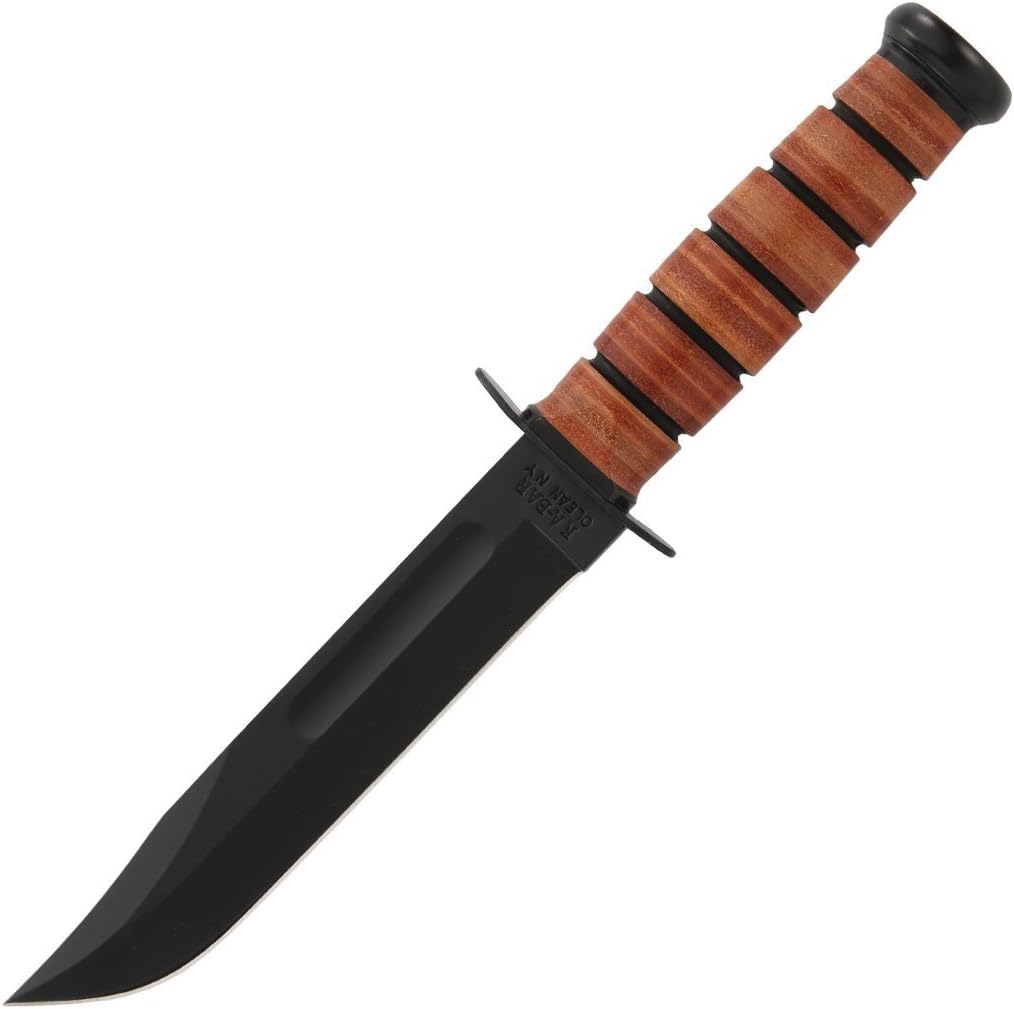
The blade is 7 inches of 1095 carbon steel with a classic clip point shape. The handle is stacked leather rings over the full tang, finished with a steel pommel. This knife is large, heavy by modern standards, and built for serious work.
The Ka-Bar’s 7-inch blade puts it at the edge of what most people would call practical for a survival knife. It is excellent for camp tasks and wood processing. The leather sheath is traditional and decent but not as convenient as Kydex.
At around $85, the Ka-Bar is priced very competitively for what it is. Its main value is reliability and heritage. It has been proving itself for 80 years and there is essentially no situation where a Ka-Bar will let you down from a materials standpoint. The question is whether the size is right for your use case.
Bottom line: A legendary knife with proven construction. Good for vehicle kits and base camps. Heavier than ideal for a pack.
Buck 119: The Classic Camp Knife
The Buck 119 Special is another American classic that has been in continuous production since 1947. The 6-inch blade uses 420HC stainless steel that Buck heat-treats in-house, producing a steel that performs well above what most 420HC knives offer.
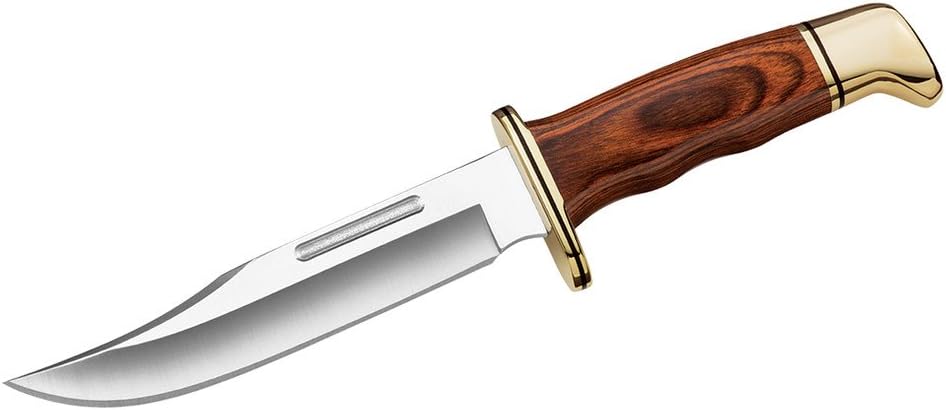
The handle is phenolic resin with brass guard and pommel, giving it a traditional hunting knife look that plenty of people appreciate. The leather sheath is nicely finished and fits the knife well.
The Buck 119 is a straightforward camp knife: easy to sharpen, good edge retention, comfortable in the hand, and priced accessibly at around $65. It is not a high-tech knife and does not pretend to be. What it is, is reliable and honest.
If you want a classic-feeling fixed blade that does not require maintenance anxiety and is easy to touch up in the field, the Buck 119 is a solid choice.
Bottom line: A classic American fixed blade at a fair price. Great for camp use and traditional-style carry.
Gerber StrongArm: A Solid Mid-Range Bug Out Bag Knife
The Gerber StrongArm is one of the best-selling mid-price survival knives. The 4.8-inch blade is full tang, the handle is rubberized for grip in wet conditions, and it comes with a versatile multi-mount sheath that works in drop-leg, MOLLE, and belt configurations.

The 420HC stainless steel keeps maintenance simple and the blade profile is practical for camp and survival tasks. The pommel doubles as a glass breaker, which is a legitimately useful feature rather than a gimmick since it is integrated into the handle structure rather than being a separate attachment.
Gerber has had quality control inconsistencies over the years and the StrongArm is not in the same build quality tier as ESEE or Morakniv Garberg. However, at around $70, it is a capable knife that will serve most preppers well.
Bottom line: Good mid-price bug out bag knife. Not quite ESEE quality but solid for the price.
Benchmade Bushcrafter 162: The Premium Choice
The Benchmade Bushcrafter is what you buy when you want the best and are willing to pay for it. The 4.4-inch blade is CPM-154 stainless steel, a powder metallurgy steel with exceptional edge retention and good toughness.

The handle is stabilized wood with a smooth but secure feel. The full-tang construction is impeccable. Benchmade hand-finishes and inspects each knife before it ships. The sheath is leather with secure retention.
At around $230, the Bushcrafter is a significant investment. What you get is a knife that stays sharper longer than anything else on this list, has Benchmade’s LifeSharp warranty (free sharpening for life), and is made to standards that most production knife companies cannot match.
Is it worth the money? For someone who will use and appreciate it, yes. For someone building a basic emergency kit, the Morakniv Garberg at one-third the price covers 90% of the same use cases.
Bottom line: The best knife on this list. Worth the price if you will use it. Not necessary for most preppers.
Victorinox Outdoor Master Mic S: The Folding Companion
The Victorinox Outdoor Master is a folding knife and it earns its place on this list as exactly that: a complement to a fixed blade, not a replacement.
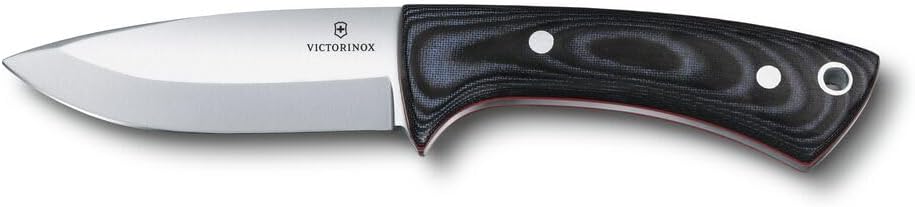
Victorinox has been making Swiss Army knives for over a century. The Outdoor Master is their premium folding outdoors knife with a 3.4-inch locking blade and additional tools. The fit and finish are excellent and the steel performs well above what cheaper folders offer.
If you carry a fixed blade as your primary survival knife and want a compact folding knife for everyday tasks and pocket carry, the Victorinox Outdoor Master is an excellent choice. It is not the right tool for batoning firewood. It is the right tool for cutting food, trimming rope, opening packages, and the hundred small cuts that happen during normal camp life.
Bottom line: The best folding knife companion to your fixed blade. Buy this alongside a Garberg or ESEE-4, not instead of one.
Price Tiers: What to Buy at Each Budget
Under $25: Morakniv Companion
If you have a very tight budget and you need a functional fixed-blade knife for an emergency kit, buy the Morakniv Companion. Nothing at this price competes with it. Accept the partial tang and use it appropriately: light camp tasks, food prep, and as a backup to a more robust primary knife if you eventually add one.
$60 to $100: Morakniv Garberg or Ka-Bar USMC or Buck 119
This tier gives you access to full-tang construction from proven manufacturers. The Garberg is the best all-around pick in this range. The Ka-Bar is the right choice if you want American-made heritage and do not mind the larger size. The Buck 119 is the right choice if you want a classic camp knife with easy maintenance.
$100 to $150: ESEE-4 or ESEE-6
The ESEE line is where serious preppers, instructors, and professional outdoorspeople spend their money. The ESEE-4 is the standard recommendation for a bug out bag primary knife. The ESEE-6 is the right step up when you need more blade.
Over $200: Benchmade Bushcrafter
The Benchmade Bushcrafter is for buyers who want the best available production survival knife and intend to use it seriously for years. It is an excellent knife and a good investment for the right buyer.
Building a Complete Knife Kit for Your Bug Out Bag
If budget allows, the best kit is a fixed blade plus a compact folding knife.
Budget kit: Morakniv Companion ($15) plus any quality folding knife. Total cost under $40.
Mid-range kit: Morakniv Garberg ($75) plus a Victorinox folding knife (~$50). Full-tang primary blade with stainless steel, plus a compact everyday folder. Total around $125.
Best kit: ESEE-4 ($110) plus Victorinox Outdoor Master ($50). A bombproof primary blade with a lifetime warranty, plus a quality folder. Total around $160.
At the top end: Benchmade Bushcrafter plus Victorinox. Premium in every respect.
No kit needs more than two knives. More knives means more weight and more maintenance. One great fixed blade and one quality folder covers every realistic scenario.
Caring for Your Survival Knife
Even the best knife will fail if it is not maintained.
Carbon steel knives (1095, like the ESEE and Ka-Bar) need to be dried after use and given a light coat of mineral oil or knife oil regularly. If you are going to store your knife in a bug out bag for extended periods, wipe the blade with an oiled cloth, store it in the sheath, and check it every few months. Carbon steel left wet will rust quickly.
Stainless steel knives (12C27, 420HC, CPM-154) are much more forgiving. Rinse with fresh water after salt water exposure, dry, and store. A light oiling is good practice but not critical.
Sharpening: The most important maintenance task is keeping your knife sharp. A dull knife is harder to control and requires more force, which increases the chance of an accident. Learn to use a simple whetstone or a ceramic rod. The Morakniv Scandinavian grind and the 420HC in Buck and Gerber knives are both easy to sharpen on a basic stone without special technique. CPM-154 and 1095 are a bit more demanding but still manageable with a quality stone.
Store your sharpening equipment in your kit. A pocket-sized sharpener weighs almost nothing and keeps your blade ready.
Final Recommendations
For most preppers building a bug out bag: buy the Morakniv Garberg if you want the best value, or the ESEE-4 if you want the most proven professional-grade blade. Either knife, used correctly, will handle every task that a survival scenario is likely to throw at you.
Avoid gimmicks. Avoid hollow handles. Avoid knives that try to do too many things. A simple, well-made, full-tang fixed blade with a quality sheath will serve you better than any gadget-heavy novelty knife every single time.
Buy a knife you will actually carry, sharpen it, and learn to use it well. That is the entire formula for getting real value out of a survival knife.
Prices listed are approximate and subject to change. Always verify current prices on Amazon before purchasing.