Ready
Ready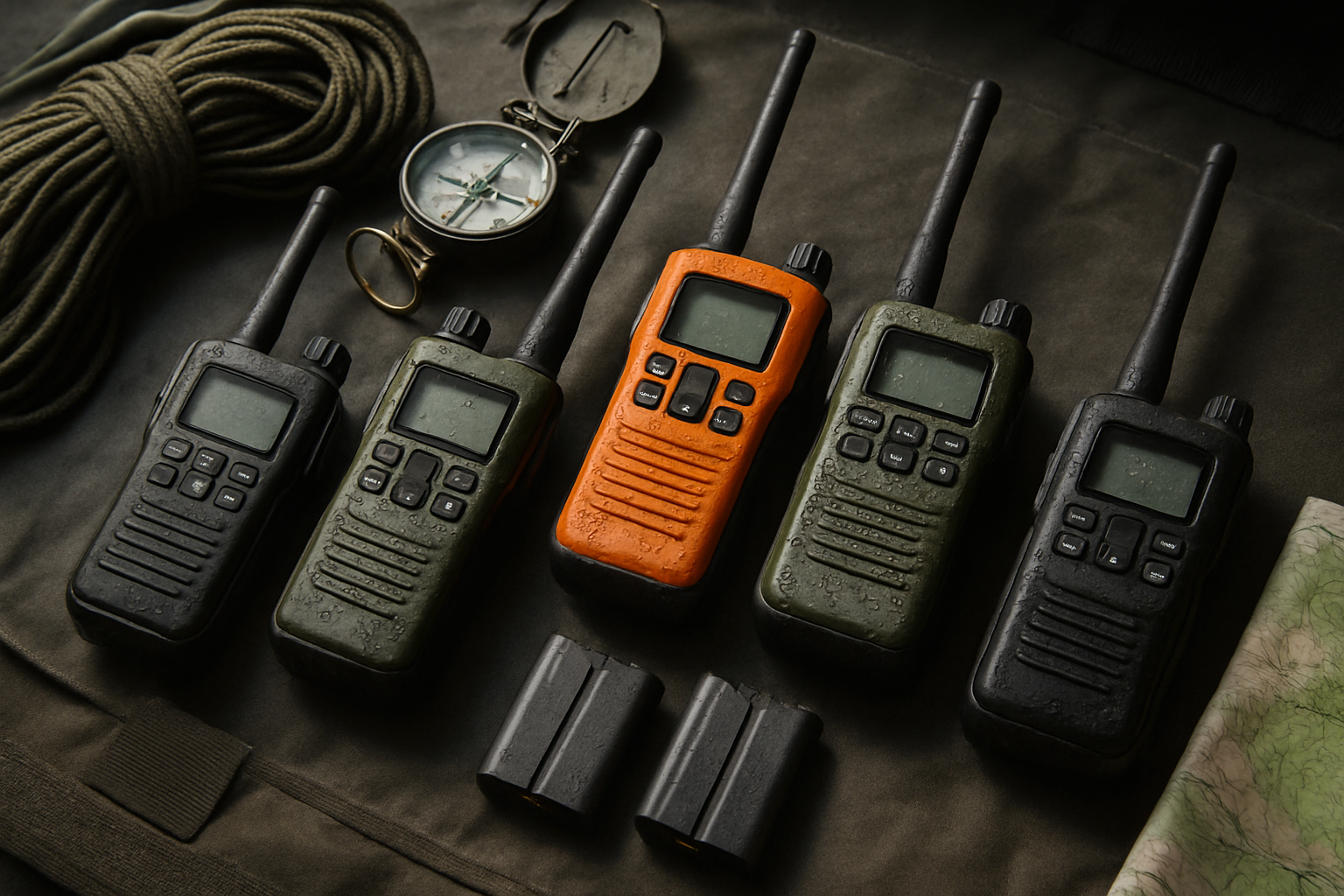
Best Walkie Talkies for Emergencies (2026): Tested Two-Way Radios for Preparedness
When a big storm hits, the first thing to go is often your cell phone signal. Towers lose power. Networks get jammed with too many calls. And just like that, you cannot reach the people you care about. This happens during hurricanes, floods, wildfires, and even bad winter storms. It also happens at big events or in remote spots where there is no service at all.
Walkie talkies fix this problem. They talk radio to radio, so they do not need cell towers or the internet to work. You press a button, you talk, and the people nearby hear you. That simple setup can matter a lot when everything else is down.
This guide covers the best walkie talkies for emergencies and everyday backup use. You will see picks for every need and budget. Some are cheap two-packs you can toss in a drawer. Others are rugged and waterproof for the water and the trail. A few can charge themselves with solar power or a hand crank, so a dead battery never leaves you stuck.
Along the way, we will explain the stuff that trips people up. That means real talk about range claims, which radios need a license, and which features actually help in an emergency. Things like NOAA weather alerts, VOX hands-free talk, and long battery life. By the end, you will know exactly which radio fits your plan.
Why Trust This Guide?
This article was researched and reviewed by contributors with hands-on experience in emergency preparedness. They have tested gear, built real systems, and lived through situations where these skills actually mattered.



Our Top Walkie Talkie Picks at a Glance
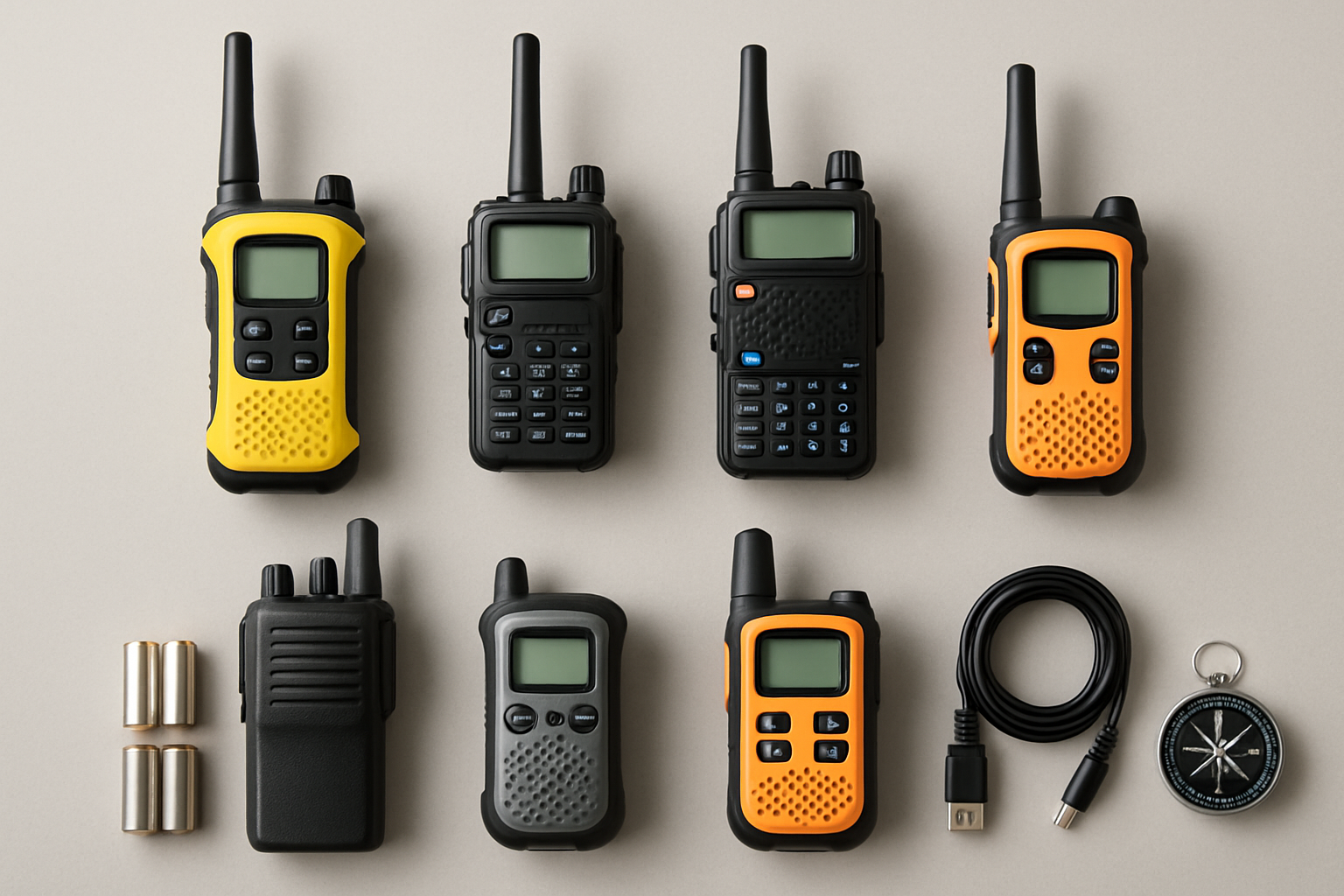
Here is a quick look at every walkie talkie we recommend. Use this table to compare the key facts side by side. Then read the full reviews below to pick the right one for you.
What each pick is best for
Our top overall choice is built for emergencies. It has NOAA weather alerts, a solar panel, and a hand crank. You can even charge your phone with it. That mix of features makes it a strong pick when the power goes out.

If you spend time near water, waterproof matters. The Retevis RT49P has an IP67 rating and floats. That means you can drop it in a lake and it will not sink.

The KETELESE T3 is another waterproof option. It works well for surfing, boating, and cruise ships. It also adds NOAA weather alerts.

Want the most range? The 36-Channel FRS/GMRS radio claims up to 6 miles in open areas. It charges with USB-C and has NOAA weather scan.

For families and small groups, the pxton 4-pack is a good value. Each radio comes with an earpiece. The set is easy to charge and simple to use.

If you need more radios, the MaxTalker 6-pack covers a large group. It has NOAA alerts and rechargeable batteries. This is a smart choice for events or big trips.

On a tight budget? The Joycall JF-22 costs under $20 and still has NOAA weather alerts. It charges with USB and has long standby time.

The MOICO 2-pack is the cheapest backup option. It runs on batteries and skips weather alerts. But it is a fine choice to keep in a drawer for spare radios.

Prices and pack sizes can change over time. Check the current listing before you buy. Now let’s dig into each pick in detail.
Best Overall for Emergencies: Emergency Walkie Talkies with NOAA, Solar & Hand Crank
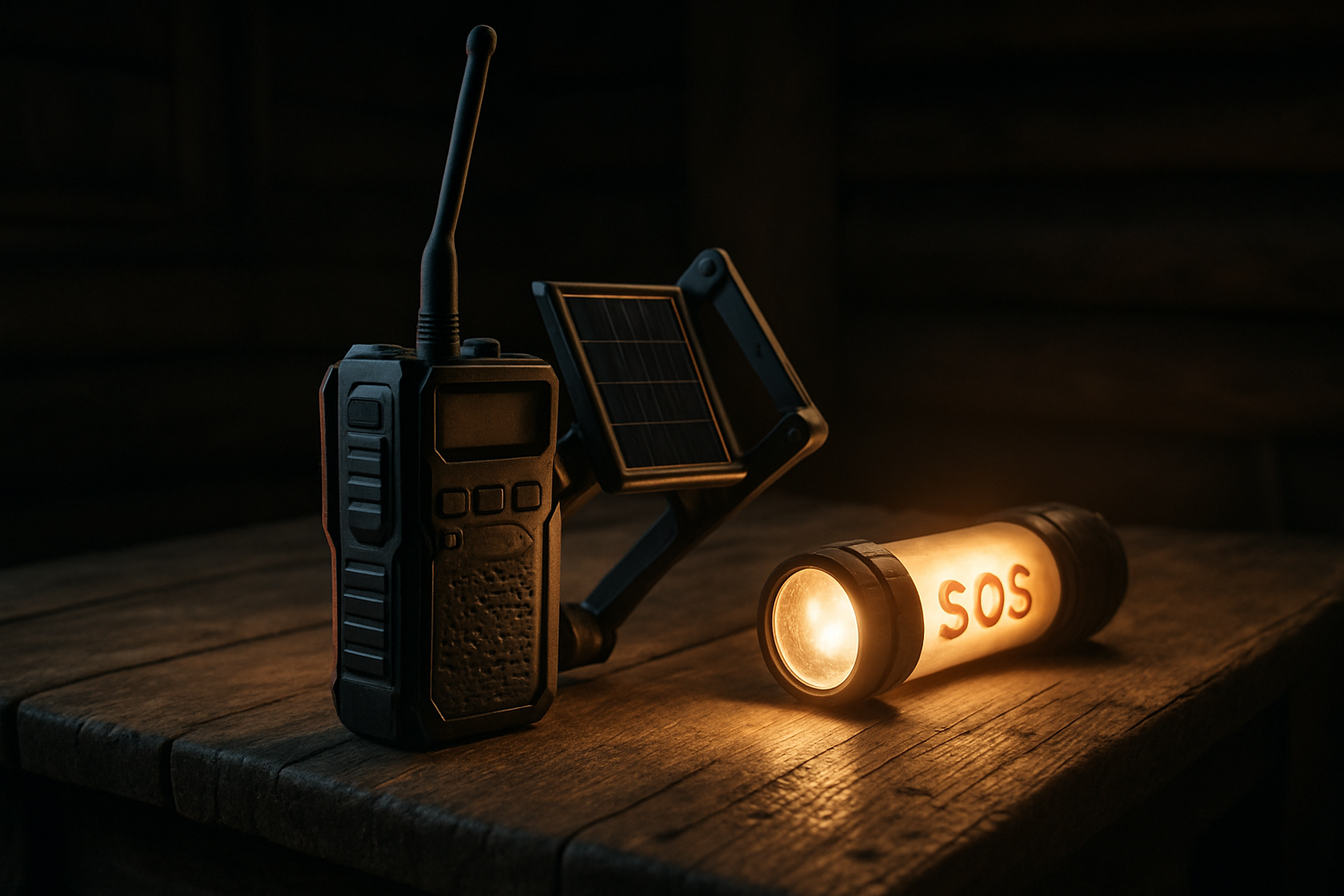
When the power goes out for days, most walkie talkies become useless. You cannot charge them without an outlet. That is what makes these emergency radios our top pick. They give you three ways to stay powered when the grid is down.
Why the 3-in-1 power supply wins
Most radios need a wall charger. These do not. The Emergency Walkie Talkies with NOAA, Solar and Hand Crank use a 2000mAh built-in battery. You can fill that battery three different ways.
First, there is a solar panel on top. Leave the radio in the sun and it slowly charges. This works well for long trips or long outages. Second, there is a hand crank. Turn it for a few minutes and you get talk time. This matters most at night or on cloudy days when solar will not help. Third, you can charge by USB when you have power.
Having all three options means you are never stuck. A storm can knock out power for a week. A wildfire can force you to leave home fast. In both cases, you can keep these radios working without an outlet. Most other walkie talkies cannot say that.
NOAA weather alerts keep you informed
These radios scan 7 NOAA weather channels. That gives you real-time alerts for tornadoes, hurricanes, floods, and earthquakes. During an emergency, knowing what is coming is half the battle. You can plan and move before things get worse.
There is also a built-in FM radio. It covers 87.5 to 108MHz. So you can catch news and updates even when your phone is dead or has no signal.
Range and everyday use
The radios reach up to 10 miles in open areas. Keep in mind that hills, trees, and buildings cut that range down. This is true for every walkie talkie, not just this one. Still, 10 miles in open country is solid for a self-powered radio.
You get 22 channels and 99 privacy codes. That helps you find a clear channel when others are nearby. There is also auto-scanning, a low battery alert, and VOX hands-free mode. VOX lets you talk without pressing a button, which is handy while driving or working.
The SOS flashlight
Each radio has a flashlight with High, Low, and Strobe modes. It also has an SOS alarm. If you get hurt or lost, you can signal for help. You can even charge a phone through the USB port, though the cable is not included.
At $69.99, these cost more than basic radios. But you are paying for power options and safety features that matter most in a real emergency. For preppers and anyone who wants a radio that works when nothing else does, this is the best overall choice.
Best Waterproof: Retevis RT49P Floating IP67 Two Way Radio
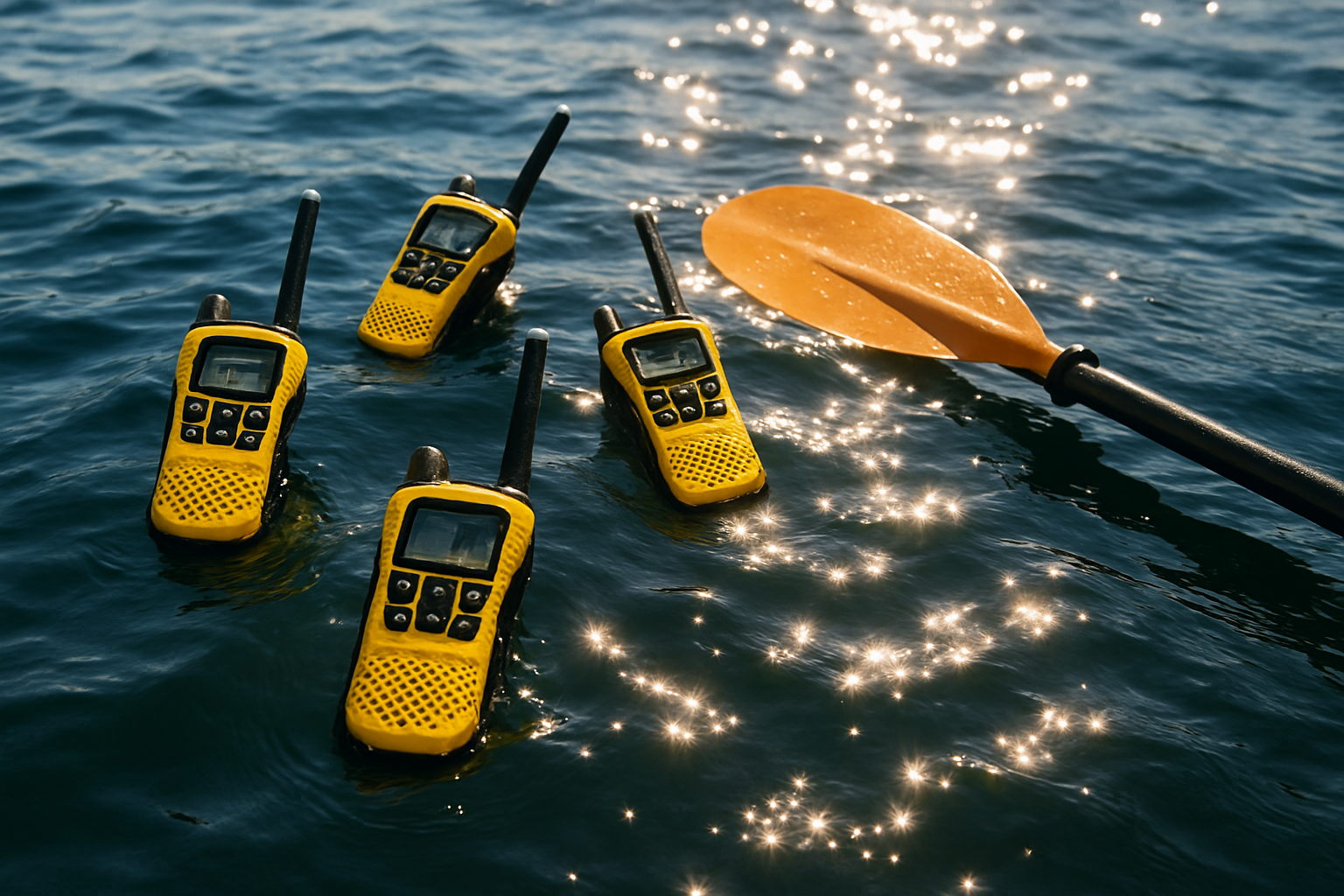
Water can ruin most electronics fast. If you spend time near lakes, rivers, or the coast, you need a radio that can handle it. The Retevis RT49P is built for wet conditions. It comes in a four-pack, which is enough for a small group or family.
Waterproof and floats
The RT49P carries an IP67 rating. That means it can sit in water up to one meter deep for about 30 minutes and keep working. This is a real safety feature, not a marketing word. Splashes, rain, and quick dunks will not stop it.
Even better, this radio floats. If you drop one off a kayak or a dock, it stays on the surface. You can reach down and grab it instead of watching it sink. Many so-called waterproof radios do not float. The RT49P does, and that makes it a smart pick for anyone on the water.
Good for wet-weather emergencies
Floods are a common emergency. Storms bring heavy rain. In these moments, a normal radio may fail. The RT49P keeps running when things get wet. That makes it useful far beyond boating trips.
Think about a flooded basement, a leaking roof, or a family split up during a storm. You want a radio you can trust in the rain. This one is made for those exact conditions. It also works well for camping, fishing, and skiing, where snow and moisture are common.
Key features for safety
The RT49P packs several features that matter in an emergency:
- NOAA weather channels. You can tune in to weather broadcasts. This helps you track storms and know when to move.
- SOS function. With one button, you can send an emergency signal. This can help others find you if you get lost or hurt.
- VOX hands-free mode. The radio can send your voice without you pressing a button. This is helpful when your hands are busy, like paddling or holding a rope.
- Flashlight. A built-in light helps you see in the dark or signal for help.
Range and battery
Retevis lists this as a long-range set. Real range depends on where you are. Open water and flat land give you the best reach. Hills, trees, and buildings cut it down. On an open lake, you can expect solid performance for group trips.
The radios are rechargeable, so you do not need to buy batteries. That saves money over time and keeps waste down.
Who should buy it
The RT49P is the best choice if water is part of your plan. Kayakers, boaters, and anglers will get the most from it. Families who worry about floods or heavy storms will also find it useful. At around $120 for four radios, the Retevis RT49P set offers strong value for wet conditions.
Best for Water Sports: KETELESE T3 IP67 Waterproof Walkie Talkies
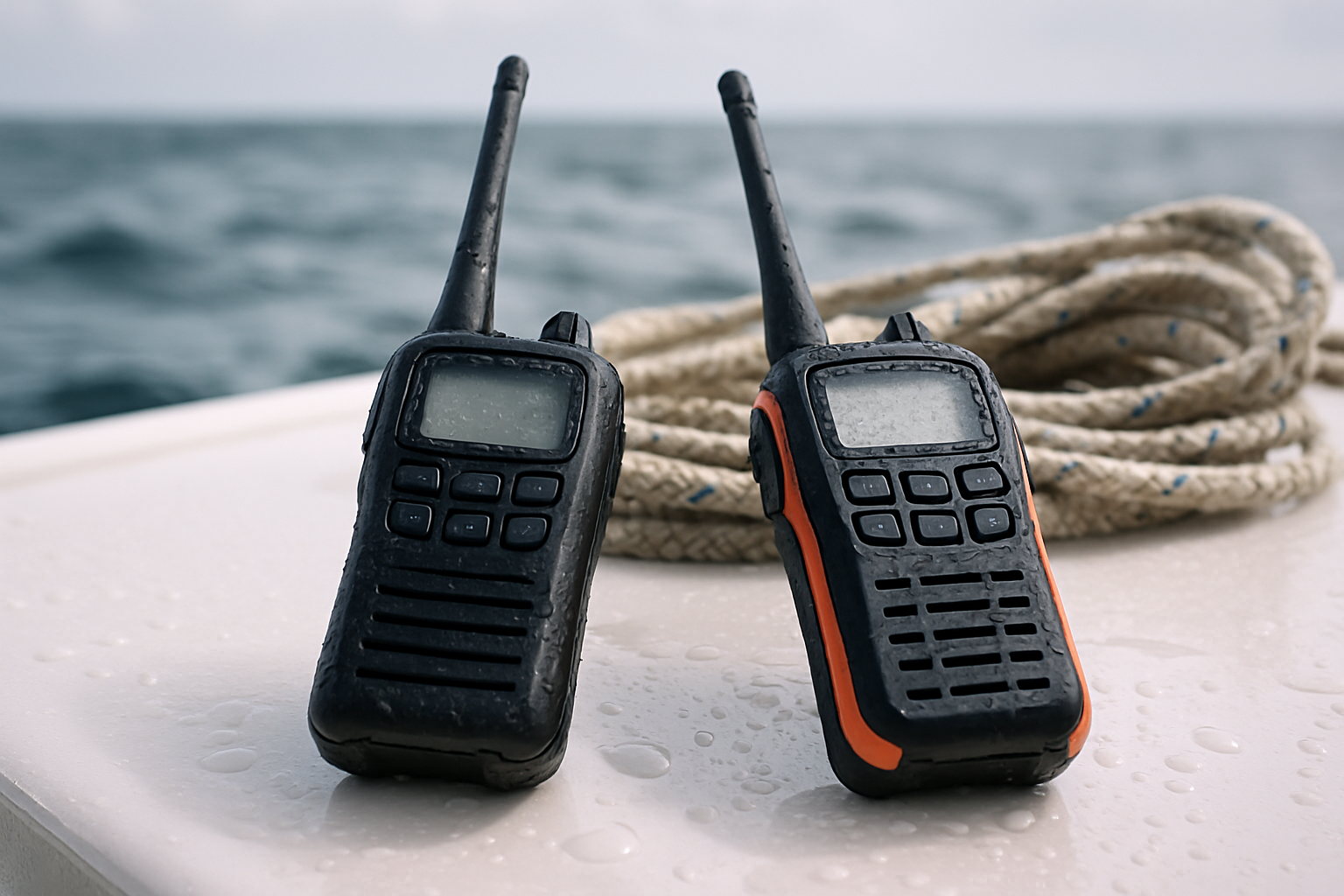
If you spend time on the water, you need a radio that can take a soaking. The KETELESE T3 is built for that job. This two-pack is waterproof, floats-friendly, and comes with NOAA weather alerts. It fits well for cruises, boating, kayaking, and surfing.
What makes it good for water sports
The T3 carries an IP67 waterproof rating. That means it can handle rain, splashes, and being dunked in shallow water for a short time. So if a wave hits you or you drop it in the surf, it should keep working. This is the main reason to pick it over most standard walkie talkies.
Each radio uses a 1100mAh rechargeable battery. You charge them with a small USB mini charger. That is handy on a boat or in a cabin where you may only have a USB port. You do not need to hunt for special batteries.
The NOAA weather alert feature is a real plus for anyone on open water. Weather can turn fast when you are out on a lake or the ocean. The T3 can pull in weather channels and warn you about storms, thunder, or heavy snow. That gives you a chance to head back to shore before things get rough.
Channels and range
The T3 runs on 22 FRS channels with 121 codes. Because it uses FRS, it can talk to other FRS radios on the same channel and code, even ones from other brands. That is useful on a cruise ship or at a busy marina where other people may have their own radios.
Keep your range hopes realistic. FRS radios do best with a clear line of sight. Out on open water, you may get decent range because there are few walls or hills in the way. In a big ship with lots of metal and decks between you, range will drop.
How it compares to the Retevis pack
The Retevis RT49P is our top waterproof pick, and it is a strong radio. Both packs share the IP67 rating, so both can handle wet use. The Retevis is known for floating, which matters a lot if you drop a radio in deep water. The KETELESE T3 leans more toward the water sports crowd who want NOAA alerts and simple USB charging in one small package.
Price is another factor. The T3 sits at a higher price for a two-pack. If your main worry is dropping a radio overboard, the Retevis floating design may win. If you want built-in weather alerts for surfing, kayaking, or cruise trips, the T3 is a smart choice.
Pick the T3 when wet activities and weather warnings are your top needs.
Best Long Range: 36-Channel FRS/GMRS Rechargeable Two Way Radios
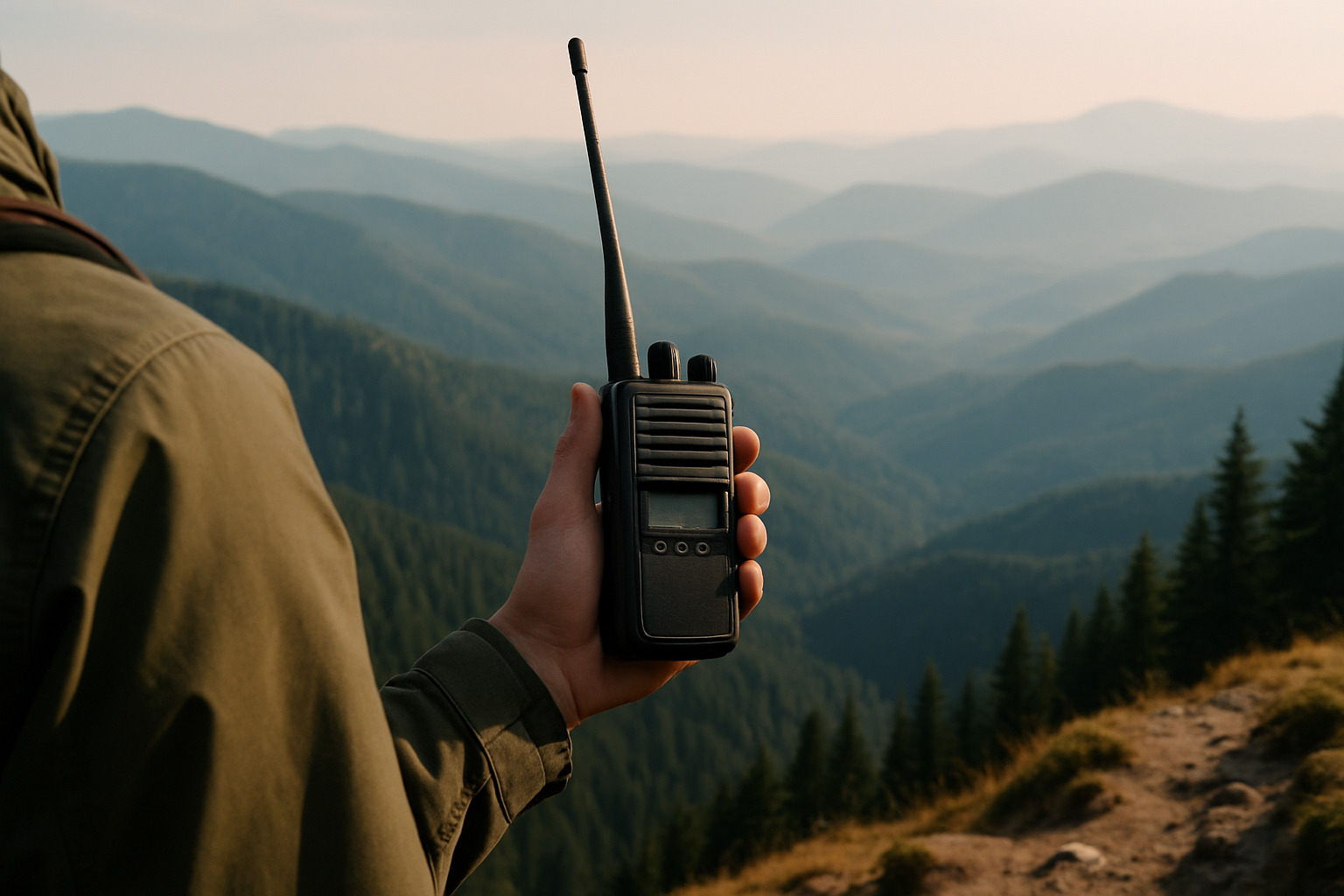
If range matters most to you, this radio is built for it. It uses both FRS and GMRS channels. That gives you 36 channels to work with. On top of that, you get 142 privacy codes. When you mix the channels and codes together, you get 3,124 setups. This helps you find a clear line to talk on. It cuts down on other people breaking into your chat.
What the range numbers really mean
The listing says up to 10 kilometers of open range. That is about 6 miles. But you need to read those numbers with care. Open range means flat land with nothing in the way. Think of a wide field or a lake with clear sky above. You will rarely see those perfect spots in real life.
The maker also gives two more honest numbers. You get about 5 kilometers in woodland. That is around 3 miles through trees. In a town or city, the range drops to about 2 kilometers. That is a little over 1 mile. These lower numbers are the ones you should plan around. Walls, hills, and trees all block the signal. Metal buildings block it the most.
So set your hopes right. In the woods, keep your group within a mile or two. In a neighborhood, stay closer. If you climb to high ground, you will get more range. Radio waves travel best with a clear path.
NOAA weather alerts
This radio has a built-in NOAA weather scan. It locks onto 10 weather channels. It can broadcast real-time alerts for bad weather. This is helpful during a storm or a power outage. You do not need internet or a phone signal. The radio pulls the alert straight from the weather service. That makes it a solid tool for camping and home prep.
Charging and hands-free use
The radio runs on a built-in lithium polymer battery. You charge it with a Type-C USB cable. This is the same cable many newer phones use. So you likely have one already. You can top it off from a wall plug, a power bank, or a car charger. That flexibility helps when the power is out.
It also has 3-level VOX. This lets you talk without pressing a button. Your voice turns the radio on. This is handy when your hands are busy. You can pick how sensitive it is with the three levels.
Who should pick this one
Choose this radio if you want reach and clear channels. It works well for hunting, hiking, and camping. The NOAA alerts add real safety value. Just remember that woodland and urban range is what you will get most of the time. Plan your group spacing with those numbers in mind.
Best 4-Pack Value: pxton Rechargeable Walkie Talkies with Earpieces
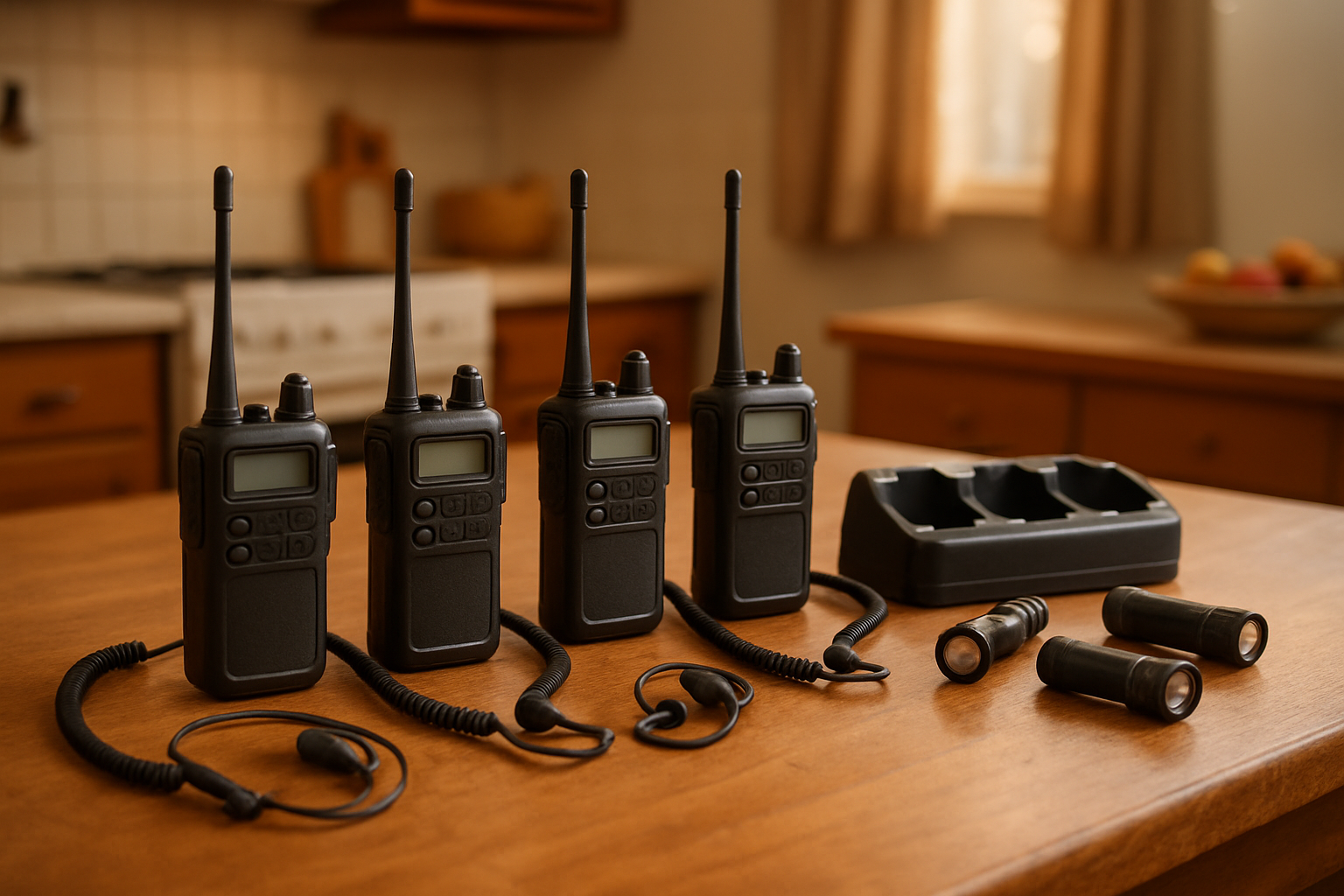
If you need more than two radios but do not want to spend a lot, the pxton Walkie Talkies are worth a look. You get four radios in one box for a low price. That makes them a smart pick for families or small groups.
What you get in the box
Each pack comes with four radios. It also includes four battery packs, four chargers, four belt clips, four hand straps, and four earpieces. You get a user manual too. That is a full kit for the whole group right out of the box. You do not need to buy extra parts to get started.
The earpieces are a nice touch at this price. They let you hear calls without holding the radio to your ear. This helps when you want to keep quiet or when things are loud around you. Each radio also has a built-in flashlight. That is handy during a power outage or at night.
How they work
These radios use 16 preset channels. You pick a channel by turning the knob on top. Everyone in your group just needs to set the same channel to talk. You can also set privacy codes. The radios support 50 CTCSS codes and 105 CDCSS codes on each channel. These codes help cut down on chatter from other people nearby.
The radios have VOX voice control. This means you can talk hands-free without pressing the button. They also have a scan feature, a low battery alarm, and the night flashlight.
The battery lasts a good while. On a full charge you can get 8 to 96 hours, depending on how much you talk. With steady use, plan on about 8 to 12 hours. A dead battery takes 3 to 4 hours to fully charge. That is fair for radios in this price range.
Range and limits
pxton lists a range of up to 3 miles in open areas. Think rural land, fields, or the seaside where nothing blocks the signal. In a city or town, expect closer to 0.6 to 1.2 miles. Walls, trees, and hills all cut the range. This is normal for radios like these. Do not count on the top number in a real emergency.
Who these are for
These radios fit families, small work crews, or friends heading outdoors. They are a good choice if you want four matching units without a big spend. They do not have NOAA weather alerts, so they are not a full emergency radio on their own. Pair them with a weather radio and you have a solid setup. For the price and the extras, this four-pack gives you strong value.
Best for Large Groups: MaxTalker 6-Pack Rechargeable Walkie Talkies
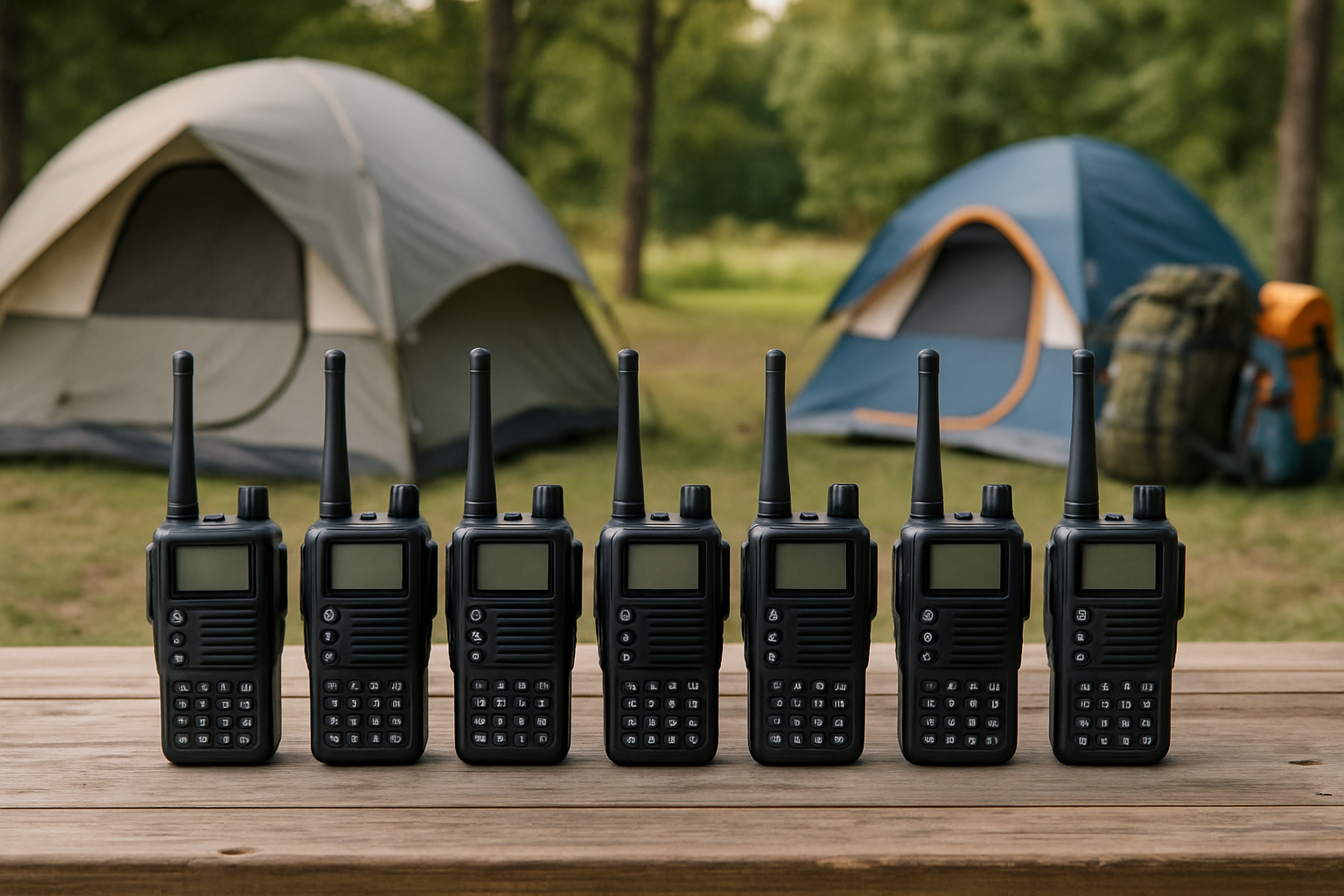
When you need to keep a big group in touch, more radios help. A pair of walkie talkies works for two people. But what if you have a whole family or a work team? That is where a six-pack shines. The MaxTalker 6-Pack gives you enough units to cover everyone at once.
Why six units matter in an emergency
During an emergency, people often split up. One person checks the house. Another watches the kids. Someone else heads to the car. With only two radios, most of your group is left out. With six, everyone can carry their own. That keeps the whole team coordinated.
This matters most in places with no cell service. If the power goes out or towers go down, phones may stop working. Walkie talkies do not need cell towers. They talk radio to radio. Six units mean six people can share updates fast.
Groups also lose track of each other in crowds or wide areas. Think of a campsite, a big store, or a spread-out neighborhood. Handing a radio to each person cuts down on confusion. Nobody has to shout or run around looking for others.
Key features of the MaxTalker MT10
The MaxTalker MT10 uses a 1200mAh rechargeable lithium battery. This replaces the older design that used AAA batteries. That change saves you money over time. You do not have to keep buying throwaway batteries. The standby time reaches up to 72 hours. So you can charge them, then set them aside for later use.
These radios include NOAA weather channels. That lets you hear storm alerts and safety updates. During bad weather, this feature helps you plan your next move. You can track a storm and warn your group in time.
The MT10 also has VOX. VOX means voice activation. You can talk without pressing a button. This is handy when your hands are full. You might be carrying gear, holding a child, or driving. VOX lets you keep talking anyway.
Each unit has 22 channels and 121 sub-channels. That gives you many ways to find a clear signal. If one channel is busy or noisy, you switch to another. The radios also work with other brands on the same channel and code. So you are not locked into one system.
Range runs about 0.6 to 1.5 miles in normal conditions. In open, ideal spots, they can reach up to 5 miles. Terrain and weather change the real distance. Hills and buildings cut range. Flat, open land helps.
Each unit also has an LED flashlight. That adds a small but useful tool for dark condtions. For families and teams who want everyone covered, this six-pack is a smart pick.
Best Budget with Weather Alerts: Joycall JF-22 Rechargeable Walkie Talkies
If you want weather alerts without spending a lot, the Joycall JF-22 is a smart pick. It costs about the same as a basic radio. But it adds real safety features that cheaper models skip. That makes it a strong choice for anyone building a starter emergency kit on a tight budget.
Weather Scanning You Can Count On
The biggest reason to choose this radio is the NOAA weather feature. The JF-22 scans all 12 NOAA Weather Radio channels. These channels give you real-time updates on storms and other danger. This helps you know when bad weather is coming your way. Many budget radios do not have this at all. So you get a real safety boost for the money.
The radio also has a built-in SOS feature. You press and hold the LAMP button for 3 seconds. This sets off a loud siren and a flashing flashlight. That can help others find you if you get lost or hurt. It is a simple feature, but it could matter a lot in a real emergency.
Battery Life and Range
The JF-22 runs on a 1400mAh rechargeable lithium battery. You get about 18 hours of normal use. Standby time reaches up to 120 hours. That means the radio can sit ready for days between charges. It also warns you when the battery gets low. You charge it with a USB cable, so you do not need special batteries.
The range is up to 5km in open areas like plains or the coast. That number drops in towns or the woods, like all radios in this class. Still, it works well for keeping a small group in touch. It also has VOX for hands-free talking. That is handy when your hands are full. No license is needed to use it on FRS channels.
How It Compares to the Cheapest Option
You might wonder if you should save even more with the cheapest radio on this list, the MOICO 22-channel set. That one costs less and comes as a pair. But it does not scan NOAA weather channels. It also lacks the SOS siren and flashlight combo. For a backup radio or a kid’s toy, the MOICO makes sense.
But for emergencies, weather alerts are worth the small step up. Knowing a storm is coming can change your whole plan. The JF-22 gives you that for just a few dollars more. It is sold as a single unit, though. So you may need to buy two to talk with someone else.
Who Should Buy It
The Joycall JF-22 fits anyone who wants safety features on a budget. It works for hikers, campers, and home preppers. If your top need is weather info without a high price, this is the radio to get. Just buy a pair if you plan to talk between two people.
Cheapest Backup Option: MOICO 22-Channel Walkie Talkies
Sometimes you just need a simple radio you can toss in a bag and forget about. The MOICO 22-Channel Walkie Talkies fill that role. They are the lowest-priced pick on this list. That makes them a smart backup choice, not your main emergency radio.
What you get for the price
At under $20 for a two-pack, these radios keep things basic. You get 22 FRS channels and 99 privacy codes. That adds up to over 2,000 channel and code combinations. This helps you find a channel that other people are not using. On a busy trail or in a crowded store, that matters.
The radios also come with a built-in LED flashlight. This is handy at night or during a power outage. There is a VOX hands-free feature too. VOX lets the radio send your voice without pressing a button. You can pick from three sensitivity levels. This works well when your hands are full or you are driving.
The LCD display shows your channel and settings. The controls are simple. Most people can figure them out in a few minutes. That makes them good for kids, older family members, or anyone who does not want to read a long manual.
Know the limits before you buy
The low price comes with real trade-offs. You should know these before you count on these radios.
First, the range is short. MOICO lists 0.5 to 1 mile in cities and towns. You may get more in open areas like fields or beaches. But buildings, cars, and bad weather all cut the range down. Do not expect these to reach across a large town. For that, look at the MOICO 22-Channel radios as a close-range tool only. Think within a campsite, a store, or a small work site.
Second, there are no NOAA weather alerts. Many other radios on this list can pull in weather channels. This lets you hear storm warnings straight from the source. The MOICO radios cannot do this. If you want weather alerts, you need a different pick, like one of the NOAA-capable models covered earlier.
Third, these run on batteries. That is fine for backup use. But it means you need to keep spare batteries on hand. A rechargeable radio may save you money over time if you use it a lot.
Who should buy these
Buy the MOICO radios if you want a cheap, no-fuss pair for short-range talk. They work well as backups to a better main radio. They also make sense for casual use like camping, hiking with a small group, or keeping tabs on kids nearby. Just do not lean on them for long-range or storm-alert needs. For those jobs, spend a little more.
How to Choose a Walkie Talkie for Emergencies
Picking the right walkie talkie comes down to a few key features. Match them to your most likely emergency. Here is what matters most.
Understand Realistic Range
Ads love to promise big range numbers. You will see claims like 10 miles or 36 miles. These numbers only work in perfect conditions. That means flat open land with nothing in the way.
In a city or town, expect much less. Most radios reach about 0.5 to 1.5 miles between buildings. Trees, hills, and cars cut range too. Plan for the low end of any range claim. That way you will not be caught off guard.
FRS vs GMRS and Licensing
Walkie talkies use two main radio types. FRS radios need no license. They work right out of the box. Most family and camping radios are FRS.
GMRS radios can use more power and reach farther. But they need a license from the FCC. The license is cheap and covers your whole family. If you want the 36-channel FRS/GMRS radios for their longer reach, remember you may need that license to use the strongest channels.
NOAA Weather Alerts
In an emergency, information saves lives. NOAA weather radio broadcasts alerts for storms, floods, and other danger. A radio with NOAA alerts scans these channels and warns you.
Many good picks include this feature. The Joycall JF-22 scans all 12 NOAA channels. If you live in a storm-prone area, do not skip this.
Power Source
How you charge your radio matters a lot. A dead battery is useless when the power is out.
Rechargeable radios save money and cut waste. But you need a way to charge them. USB charging is common and easy. For long outages, look at the solar and hand crank radio. You can power it with the sun or by cranking. It can even charge your phone.
Waterproofing
If water is a risk, get a waterproof radio. Look for an IP67 rating. This means the radio survives being dunked in water.
The Retevis RT49P even floats. That is smart for boating or kayaking. For most home use, waterproofing is nice but not required.
Battery Life
Check both standby time and talk time. Standby is how long the radio lasts while waiting. Talk time is much shorter because talking uses more power.
Many radios offer 8 to 18 hours of use. Some reach over 100 hours on standby. For a long emergency, longer battery life wins. Buy spare batteries or a charging backup if you can.
Match Features to Your Scenario
Think about your biggest risk. Storm country? Get NOAA alerts and crank power. Water sports? Get waterproof radios. Coordinating a big group? Get a multi-pack. Start with your real needs, not the flashiest specs.
Frequently Asked Questions
How far can a walkie talkie really reach?
The range you see on the box is the best case. It only happens in open land with no trees or buildings. Most radios claim 3 to 10 miles. In real life you get far less. In a city you may only reach 0.5 to 1.5 miles. Walls, hills, and trees block the signal. If you want the best shot at long range, keep a clear line of sight. Get up high if you can. A radio with more power, like the 36-channel FRS/GMRS radio, will do better than a small budget set.
Do I need a license to use one?
It depends on the type. FRS radios do not need a license. Most of the picks here are FRS. You can just turn them on and talk. GMRS radios can use more power on some channels. To use those higher power GMRS channels legally, you need a GMRS license from the FCC. The license is cheap and covers your whole family. You do not have to take a test. If you only use the FRS channels, you are fine without one.
Will walkie talkies work when cell towers go down?
Yes. This is their biggest strength. Walkie talkies do not use cell towers or the internet. They talk radio to radio. So when the power is out and phones are dead, your radios still work. This makes them great for storms, quakes, and long outages. Just make sure everyone in your group has one and knows the channel and code to use.
How do I keep them charged during a long outage?
Plan for no wall power. Some radios charge over USB. You can top those off with a power bank or a car charger. For a long outage, a radio with its own backup power is smart. The emergency radio with solar and hand crank can charge itself with the sun or by turning a crank. That means you never fully run out. It can even charge your phone. For other sets, keep a charged power bank and spare batteries ready before a storm hits.
Can different brands talk to each other?
Often yes. Most FRS radios share the same 22 channels. If two radios are on the same channel and the same privacy code, they can talk. The brand does not matter. So a MOICO radio can talk to a MaxTalker radio if the settings match. The trick is the privacy code. If one radio uses code 5 and the other uses code 0, they may not hear each other well. Set every radio to the same channel and the same code. Test them before you need them.
How many radios should I have?
Get one for each person in your group. Buying a set like the MaxTalker 6-pack costs less than buying them one at a time. It also makes sure every radio matches.
Final Recommendations and Next Steps
You have seen a lot of radios. Now let’s make your choice simple. The best walkie talkie for you depends on how you plan to use it.
Pick the Right Radio for You
If you want one radio that does it all, go with the Emergency Walkie Talkies with NOAA, FM, and hand crank. The solar panel and crank mean you can charge them with no wall outlet. That makes them a smart choice for power outages and long emergencies.
If you spend time near water, pick a waterproof model. The Retevis RT49P floats and holds an IP67 rating. It is great for kayaking, fishing, and boating. The KETELESE T3 is another strong water pick and works well on cruise ships and at the beach.
If you need the most distance, look at the 36-channel FRS/GMRS radios. They offer more channels and privacy codes, plus NOAA weather alerts.
For families or small teams on a budget, the pxton 4-pack with earpieces gives you good value. For larger groups, the MaxTalker 6-pack keeps everyone connected.
Want weather alerts without spending much? The Joycall JF-22 is a solid budget choice. And if you just need a cheap backup pair, the MOICO 22-channel radios cost the least.
Buy, Test, and Store Before You Need Them
Do not wait for an emergency to open the box. Buy your radios now. Charge them all the way. Then take them outside and try them.
Walk apart from each other and test the range in your own area. Buildings and hills cut down range fast, so real numbers may be lower than the box says. Learn how to set the same channel and privacy code on each radio. Try the NOAA weather alerts if your model has them. Test the flashlight and the SOS or siren too.
Once you know they work, store them in a smart spot. Keep them in your kit with fresh charges. Check the batteries every few months. Rechargeable radios can lose charge just sitting around, so top them off often. If your radio uses a crank or solar panel, give the crank a few turns now and then to make sure it still works.
Keep Building Your Kit
A radio is just one part of being ready. Pair it with a good emergency radio for news and weather when you cannot use the walkie talkies. Add your radios to a 72-hour kit with water, food, a first aid kit, and light.
Check out our related guides on emergency radios and 72-hour kits to round out your plan. Start small, test what you buy, and build from there.