Ready
Ready
Best Emergency Water Filters for Preppers (2026)
You can survive three weeks without food. You cannot survive three days without water. In any emergency longer than 24 hours, water becomes your most urgent problem.
The challenge is that you cannot carry enough water to last more than a day. A gallon weighs 8.3 pounds. A three-day supply for one person weighs 25 pounds before you have packed anything else.
The solution is not to carry water. It is to carry the ability to make water safe.
A good water filter turns a muddy creek, a rain barrel, or a questionable tap into drinking water in seconds. This guide explains how they work, what the specs actually mean, and which ones to buy.
- Filter rating: Look for a 0.1 micron rating that blocks bacteria, protozoa, and cysts.
- Filter lifespan: Choose a filter that cleans many thousands of gallons before it wears out.
- Size and weight: Pick something light enough to carry in a bag or pack.
- Setup options: Make sure it connects to pouches, bottles, or hydration packs you already own.
Below are our top water filter picks for preppers. Keep reading to see how each one earned its spot.
Sawyer MINI Water Filter
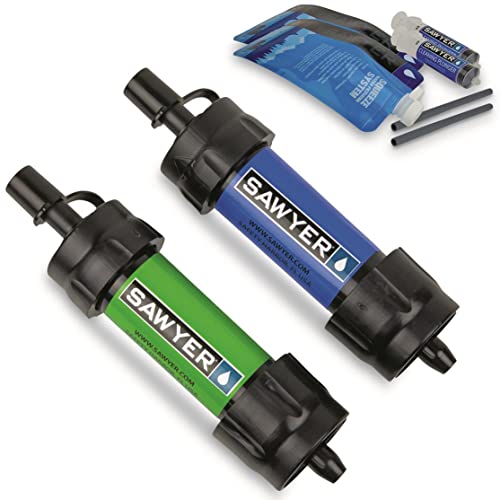
The Sawyer MINI is our best all around emergency pick with a 0.1 micron absolute rating and a huge 100,000 gallon lifespan. It weighs just 2 ounces, fits in your palm, and attaches to pouches, bottles, and hydration packs, making it the most reliable and flexible choice.

Sawyer Squeeze Filter Kit
This complete kit removes bacteria, protozoa, cysts, sediment, and 100 percent of microplastics, and comes with two squeeze pouches, a straw, and a hydration pack adapter. It is the most chosen pick for preppers who want everything ready to go.

Big Berkey Countertop System
The Big Berkey is our premium pick for home use, turning tap water into great tasting drinking water right on your countertop. Its 2.25 gallon size and two Black Berkey elements make it ideal for staying put and filtering larger amounts at home.
In this guide



Reviewed by Ryan C., Dale M. & Elena V. — contributors with hands-on preparedness experience. How we test
Why Trust This Guide?
This article was researched and reviewed by contributors with hands-on experience in emergency preparedness. They have tested gear, built real systems, and lived through situations where these skills actually mattered.
Why Tap Water Fails in Emergencies
Most people assume tap water will keep running during an emergency. Sometimes it does. Often it does not.
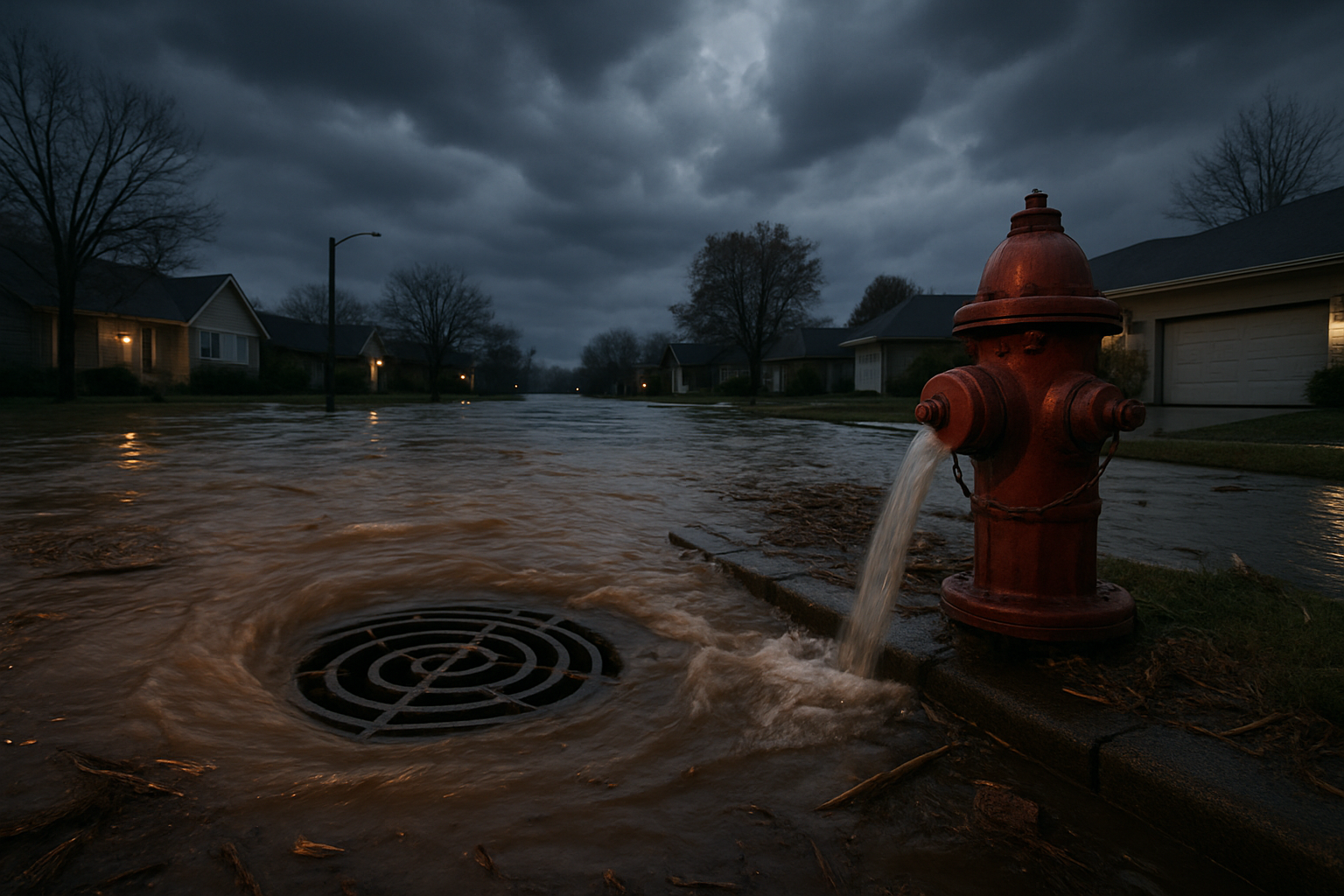
Flooding contaminates municipal water supplies with bacteria, sewage, and chemical runoff. Earthquakes break underground pipes. Extended power outages shut down water treatment plants and pumping stations. Wildfires disrupt supply infrastructure. Storms overwhelm filtration systems.
After Hurricane Katrina, tap water in New Orleans was unsafe to drink for weeks. After the 2021 Texas winter storms, millions of residents went without running water for days. Boil water notices are issued across the US hundreds of times each year, even in normal conditions.
The answer is not stockpiling 50 gallons in your garage, though some storage is smart. The answer is a reliable filter you can use on any available water source when the tap stops being trustworthy.
What Filters Remove and What They Do Not
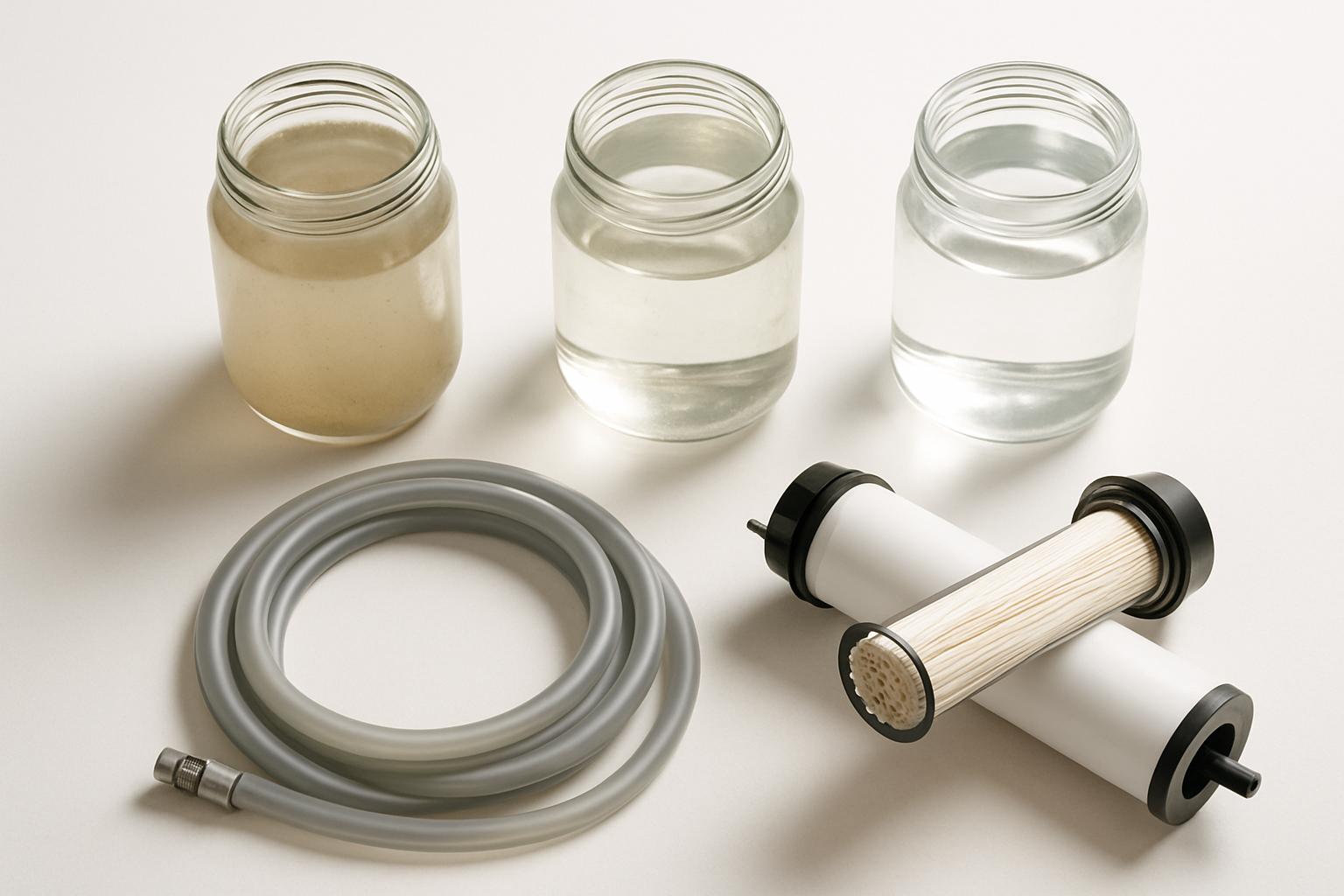
This is the most important thing to understand before buying. No single filter type handles every threat. Here is the breakdown:
Bacteria: Includes E. coli, salmonella, cholera, and dozens of others. All quality filters remove these. This is the baseline.
Protozoa: Includes giardia and cryptosporidium, which cause severe gastrointestinal illness. All quality filters remove these. This is the second baseline.
Viruses: Includes hepatitis A, norovirus, and rotavirus. Standard filters with hollow fiber membranes do NOT remove viruses. The pores are too large. Viruses are far smaller than bacteria.
Heavy metals and chemicals: Standard filters do not remove these either. Activated carbon filters address some chemicals and taste/odor issues but are not sufficient for heavy contamination.
The practical implication: In the United States and Canada, viruses in fresh water sources are rare under normal conditions. Bacteria and protozoa are the main risk. After a major disaster involving sewage or flooding, virus risk increases. If you are traveling internationally, especially to developing countries, virus protection matters significantly more.
For domestic emergency preparedness, a 0.1-micron hollow fiber filter covers your realistic needs. If you want full-spectrum coverage, pair a filter with purification tablets (which kill viruses) or choose a UV purifier.
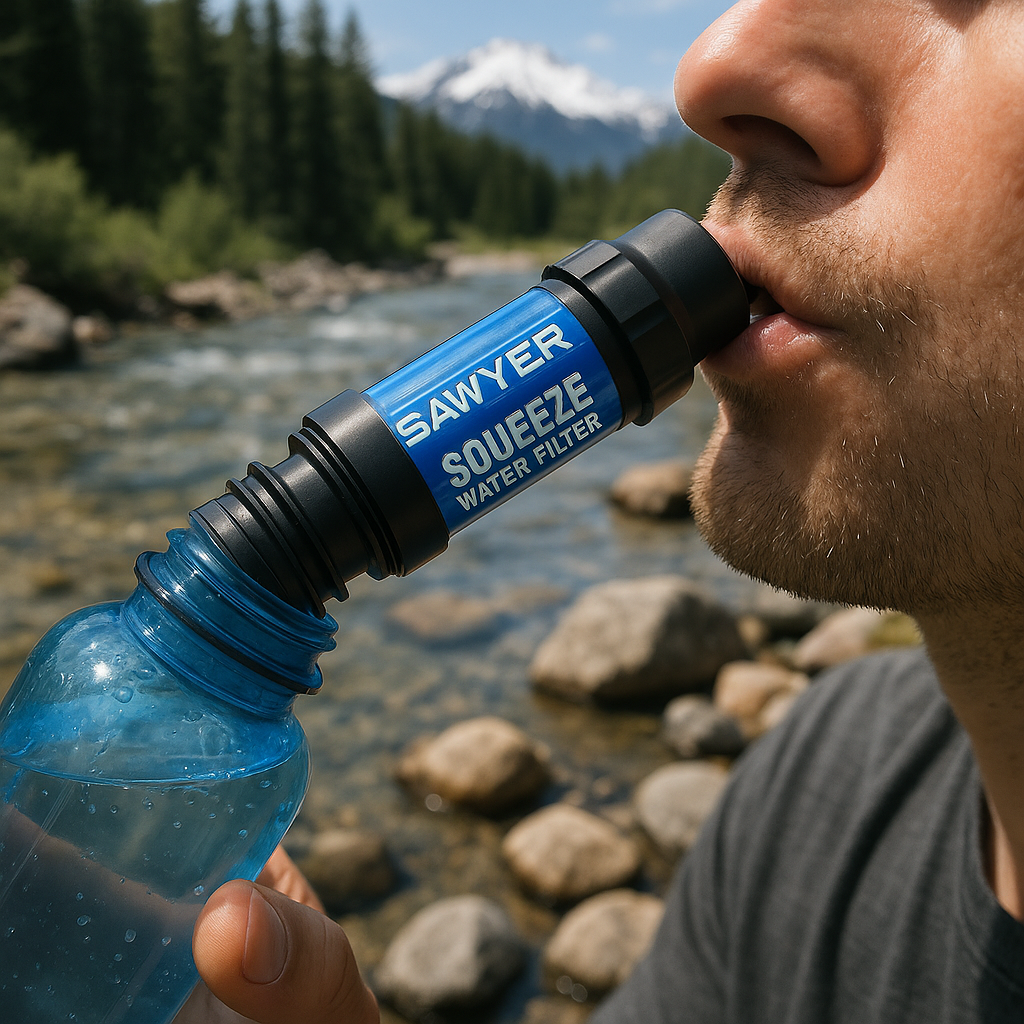
The Best Water Filter for Most People: Sawyer Squeeze
The Sawyer Squeeze is the standard recommendation for good reason. It combines a massive filter lifespan, a versatile design, and a proven track record in one 3-ounce package.
What it filters: Bacteria and protozoa down to 0.1 microns. That covers every common waterborne illness in North America.
How long it lasts: 100,000 gallons. Drink a liter a day and this filter lasts you over 370 years. The number is almost meaningless in practice. You will never replace this filter.
How to use it: Screw it onto the included squeeze bag, fill the bag with water, squeeze through the filter. Or attach it inline on a hydration bladder. Or use it as a straw directly from a water source. It works in every configuration you can imagine.
Why it beats the competition: The Sawyer Squeeze has a better flow rate than the Sawyer Mini, a more versatile design than the LifeStraw Personal, and is a fraction of the price of pump filters with similar capability.
The one thing it does not do: Remove viruses. For domestic use this is not a concern. For international travel or post-disaster conditions with significant sewage contamination, add purification tablets.
Best Budget Option: LifeStraw Personal
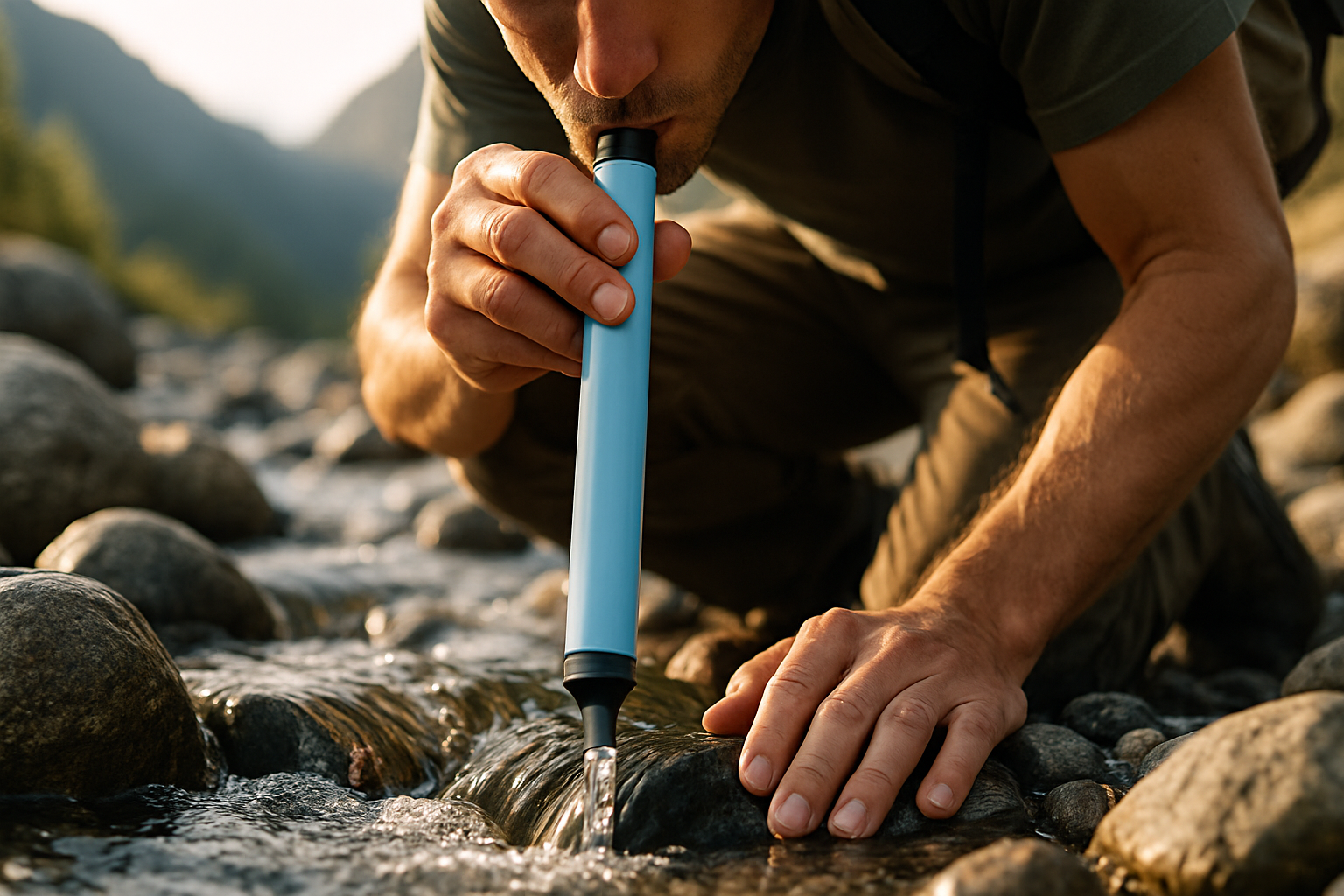
The LifeStraw Personal is the most recognizable water filter in the world. For good reason: it works, it is simple, and it costs around $15.

You drink through it like a straw, directly from any water source. No moving parts. No pumping. No setup. Fill it with water and go.
Where it fits: As a backup filter in every kit. As a first filter for someone just getting started. As a gift for someone who has not started prepping yet. At $15 it is the easiest prep purchase you can make.
Where it falls short compared to the Sawyer: You cannot fill a bottle with it. You cannot gravity-filter or inline-filter with it. You must drink directly from the source or collect water in a separate container and bend down to drink. For serious use, the Sawyer is more versatile.
Capacity: 1,000 gallons. That is about 4,000 liters, enough for one person for roughly 11 years at a liter a day. In practice, it lasts more than long enough.
Bottom line: Buy one for every kit as a backup. Buy a Sawyer Squeeze as your primary.
Best Filtered Water Bottle: LifeStraw Go
The LifeStraw Go puts the LifeStraw filter inside a 22-ounce water bottle. Fill it from any source and drink through the filter built into the lid.

This is the best option for everyday carry, travel, and people who want water filtration built into a normal-looking bottle rather than a piece of survival gear.
The two-stage version adds an activated carbon capsule that removes chlorine taste and some chemicals, worth the extra few dollars if you are filling from tap water that tastes bad or unknown sources.
Who this is for: People who want to carry filtered water access daily without it looking like emergency gear. Hikers, travelers, anyone who fills up from fountains or streams regularly. Also excellent for kids, easy to understand, hard to use wrong.
Best Ultra-Light Backup: Sawyer Mini
The Sawyer Mini is the same filter membrane as the Squeeze in a package the size of a finger. It weighs just 2 ounces and fits in a shirt pocket.

The trade-off is flow rate. The Mini flows significantly slower than the Squeeze, which gets frustrating if you are filtering large amounts of water. For a backup filter or a kit where every gram counts, the Mini is the right choice. For a primary filter, get the Squeeze.
Pack one Mini in every kit and bag you own. At $20 each they are cheap enough to have everywhere.
Best Option With Virus Protection: Survivor Filter PRO
If you want virus protection without spending $200 on a pump filter, the Survivor Filter PRO is the answer. It uses a three-stage system: ultra-membrane filter, activated carbon, and a second ultra-membrane stage rated to 0.01 microns. That last stage catches viruses.

It is a hand pump, which means more effort than a squeeze filter but faster output than gravity. Flow rate is about 17 ounces per minute.
When to choose this: If you travel internationally, if you are in a region where post-disaster sewage contamination is a realistic concern, or if you simply want the added peace of mind of virus protection without buying a SteriPen separately.
Best for Home Base: Big Berkey Gravity Filter
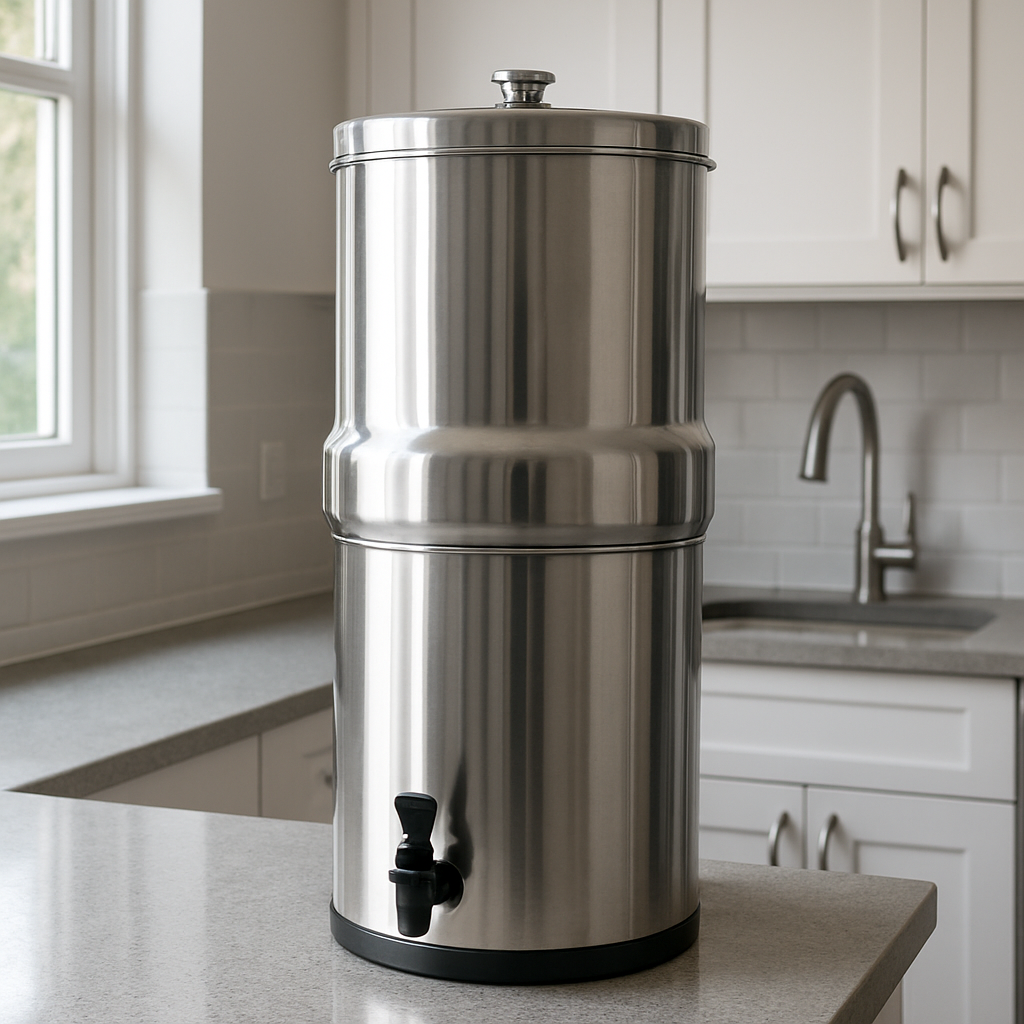
The Big Berkey is not a field filter. It is a countertop gravity system that holds 2.25 gallons and filters 3,000+ gallons per element.

You pour water in the top. Gravity pulls it through the Black Berkey elements. Clean water collects in the bottom chamber. No electricity. No plumbing. No effort.
The Big Berkey removes bacteria, protozoa, viruses, heavy metals, chlorine, pharmaceutical residue, and a long list of other contaminants. The Black Berkey elements are among the most tested filter media available to consumers.
Who this is for: Every household that takes emergency preparedness seriously. This is your home water system if municipal water becomes unreliable. Fill it from a rain barrel, a creek, a bucket, or any available source and it produces clean drinking water for a family indefinitely.
Capacity: The Big Berkey holds 2.25 gallons and serves 1 to 4 people. The Royal Berkey (3.25 gal) and Crown Berkey (6 gal) are available for larger households.
Best UV Purifier: SteriPen Adventurer
UV purifiers work differently from filters. They do not physically remove particles. Instead, they expose water to ultraviolet light, which destroys the DNA of bacteria, viruses, and protozoa. Nothing survives.
The SteriPen Adventurer treats 16 ounces of water in 48 seconds. Stir it in your bottle, wait a minute, drink. That is faster than any filter system.

The catch: UV does not remove particles, chemicals, or heavy metals. It also requires the water to be relatively clear. Cloudy water blocks UV penetration. If your water source is murky, pre-filter through a bandana or coffee filter first.
When to choose UV: International travel (viruses are a real concern), situations where you need to purify large volumes quickly, or as a complement to a physical filter for complete coverage.
Battery dependency: The Adventurer uses CR123 batteries. Pack extras. In a cold environment, batteries drain faster.
What About Purification Tablets?
Aquatabs and Potable Aqua iodine tablets are not filters. They are chemical purifiers that kill bacteria, viruses, and protozoa.


They are not your primary water treatment. They are your backup when everything else fails.
Why not primary? They take 30 minutes to work. Iodine tablets leave a taste. They do not remove particles or chemicals.
Why keep them anyway? They weigh almost nothing, cost almost nothing, and require zero mechanical parts that can break. If your filter gets lost or breaks, tablets keep you alive.
Pack 30 to 50 tablets in every bag. They have a 5-year shelf life. Just have them.
How to Layer Your Water Treatment
The right approach is not one product. It is a layered system.
For a bug out bag:
- Primary: Sawyer Squeeze (bacteria + protozoa, versatile, long life)
- Backup: LifeStraw Personal or Sawyer Mini (straw-style, zero failure points)
- Chemical backup: 30 Aquatabs (virus coverage + emergency backup)
- Storage: 32 oz Nalgene hard bottle + 2L Platypus collapsible bag
For home emergency prep:
- Primary: Big Berkey (whole-family gravity system, handles everything)
- Portable backup: Sawyer Squeeze (if you need to leave or travel to a water source)
- Chemical backup: Aquatabs
For travel:
- Primary: LifeStraw Go bottle (always with you, no extra gear)
- Backup: SteriPen Adventurer (virus protection)
- Tablets as last resort
What to Look for When Comparing Filters
Micron rating: This is the pore size in the filter membrane. A lower number means smaller pores and more things filtered out. 0.1 microns removes bacteria and protozoa. 0.01 microns removes viruses. Anything rated higher than 1 micron is not adequate for emergency prep.
Hollow fiber vs. other types: Hollow fiber is the most common technology in portable filters. Tiny tubes with microscopic pores allow water to pass through while blocking contaminants. It is reliable, lightweight, and does not require chemicals.
Backwashing: Most hollow fiber filters can be cleaned by pushing clean water backward through the membrane. This restores flow rate. You can do it in the field with a syringe or by squeezing clean water backward. Do not skip this step when flow slows down.
Flow rate: How fast it filters water. Measured in ounces or liters per minute. A slow filter is annoying when you need a liter fast. The Sawyer Squeeze filters about a liter per minute with a good squeeze. Gravity systems filter slower but need no effort.
Weight: For bug out bags, every ounce matters. The Sawyer Mini (2 oz) is the lightest quality option. The Sawyer Squeeze (3 oz) is barely heavier and significantly more capable.
Freezing: Hollow fiber filters are destroyed by freezing. The water trapped inside the membrane expands and cracks the tiny tubes. If your filter freezes, it may look fine but will no longer filter anything. Store your filter inside your sleeping bag in cold weather. If you suspect it froze, replace it.
What Does Not Work
Brita and PUR pitchers: Designed for improving tap water taste. They remove chlorine and some metals. They do not remove bacteria, viruses, or protozoa. Do not use these as emergency filters.
Boiling: Boiling water for one minute at a rolling boil kills bacteria, viruses, and protozoa. It works. But it requires fuel, a pot, and waiting time. It does not remove chemicals or heavy metals. Boiling is a good backup when you have a fire and no filter. It is not a replacement for a dedicated filter.
Pre-made “survival” filter kits: Many of the cheap combination kits sold online contain low-quality components with misleading claims. Stick to established brands: Sawyer, LifeStraw, MSR, Katadyn, Berkey, Survivor Filter.
How to Maintain Your Filter
A water filter that is not maintained will fail when you need it.
Backwash after every use: Push clean water backward through the filter to clear any buildup from the membrane. Most filters come with a syringe for this. Takes 30 seconds.
Dry completely before storage: A damp filter can grow mold or bacterial colonies inside. After cleaning, blow air through it and let it dry completely before putting it back in your bag.
Never let it freeze: See above. Store it indoors in winter. If you are camping in freezing temperatures, keep it close to your body heat.
Check periodically: Before an emergency is not the time to discover your filter is cracked. Every six months, take it out and run water through it. Verify the flow rate feels normal. Look for cracks or damage.
Replace when needed: The Sawyer Squeeze technically lasts 100,000 gallons, but if flow rate is severely reduced even after backwashing, or if the filter has been frozen, replace it. At $30, it is not worth the risk.
The Complete Water System
One filter is not a plan. A plan includes storage, filtration, backup chemical treatment, and containers for both dirty and clean water.
Minimum kit for one person:
- Sawyer Squeeze, primary filter
- LifeStraw Personal, backup
- Aquatabs 50-count, virus backup and chemical emergency
- Nalgene 32 oz wide mouth, hard container, can boil in it
- Platypus 2L collapsible, dirty water collection, extra clean storage


Total cost: around $80. Less than two restaurant dinners. This system handles any realistic emergency water scenario in North America.
Reviewed by Ryan C. (backcountry guide, water purification specialist) and Dale M. (homesteader, off-grid water systems).