Ready
Ready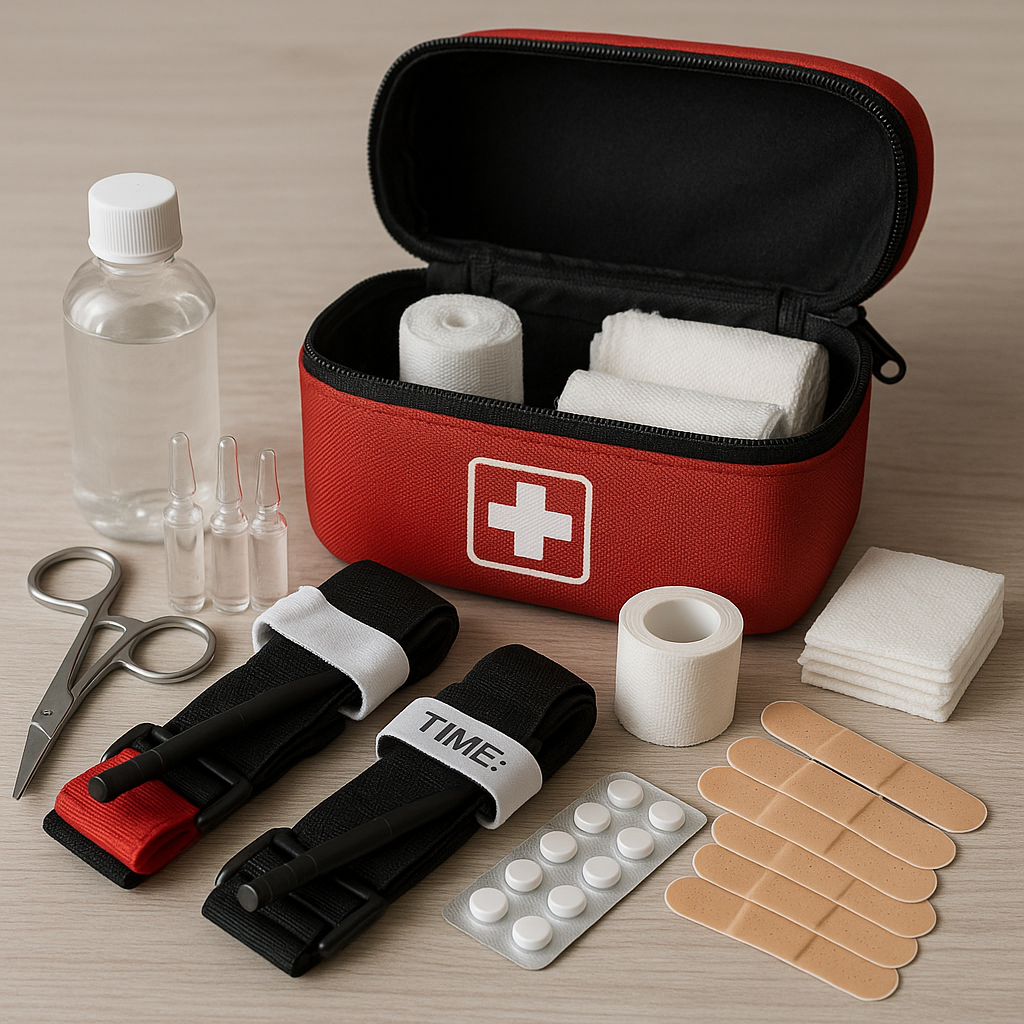
The Complete Emergency Kit Checklist (72-Hour & 2-Week)
One-page checklist designed for print. Put it on a clipboard and walk through your home.
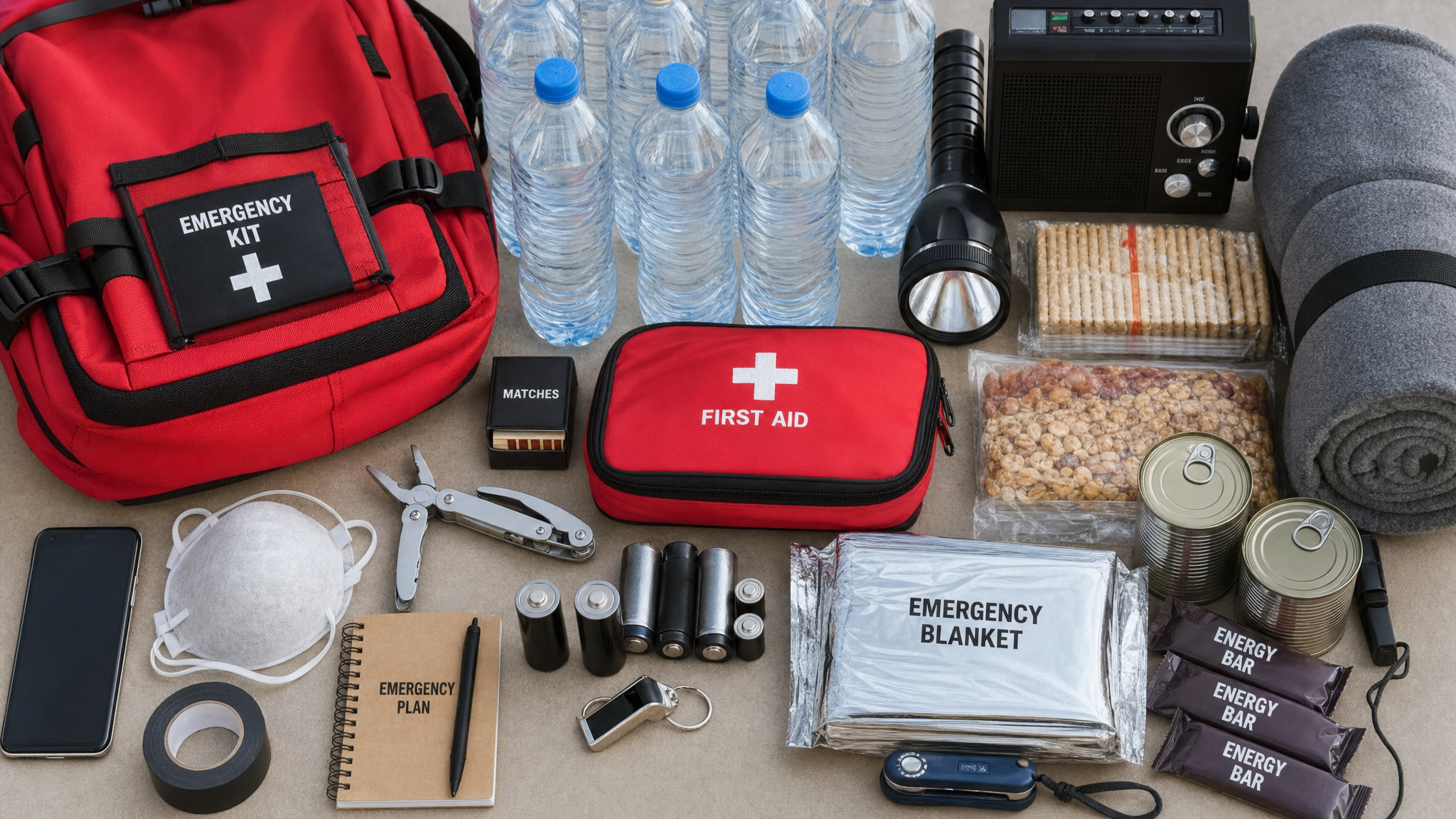
Most people think an emergency kit is a backpack with a flashlight and some granola bars. That is not a kit. That is a good start for a camping trip. A real emergency kit covers water, food, medical needs, communication, documents, and the specific needs of your household. This guide walks you through everything, step by step.
The goal is simple: have everything you need to survive comfortably for 72 hours without outside help, and be equipped to extend that to 2 weeks if the situation calls for it.
- Store at least 1 gallon of water per person per day, so plan for 3 gallons per person for 72 hours and 14 gallons for 2 weeks.
- Keep both stored water and a way to filter more, since stored supplies run out fast.
- Stack shelf-stable food that needs no cooking, aiming for 3 days minimum and 2 weeks for full coverage.
- Fill up extra water the moment a storm warning hits, before taps go dry or dirty.
- Rotate and check your kit twice a year so nothing is expired when you need it.




Reviewed by Beth O., James W., Priya K. & Dale M. — contributors with hands-on preparedness experience. How we test
Getting ready starts with the right gear in your cart. Keep reading to see why each of these belongs in your emergency kit.

Stackable 30-Gallon Water Tanks
These six food-grade tanks give you 30 gallons of long-term water storage with treatment drops that keep it fresh for years. This covers your daily drinking needs for the first stretch of any emergency.
Check Price on Amazon
waterBOB Bathtub Water Bladder
When a storm is coming, this liner turns your bathtub into up to 100 gallons of clean water storage in minutes. It is a fast way to grab a huge supply before the water shuts off.
Check Price on Amazon
Sawyer Squeeze Water Filter
This tiny filter removes bacteria, protozoa, and microplastics down to 0.1 micron, so you can safely drink from streams or rain barrels. It keeps you supplied long after your stored water is gone.
Check Price on AmazonIn this guide
The Emergency Kit Myth vs. Reality
Here is what most people imagine: a pre-packed bag sitting in the closet, ready to grab and go. That might work for a single person. For a family of four with a baby, elderly parent, and a dog? That mythical single bag does not exist.
Real emergency preparedness looks more like this:
- A primary home kit with enough supplies for your entire household
- A grab-and-go bag for each family member with personal essentials
- A car kit with basic supplies that stays in your vehicle
- Knowledge of where everything is and how to use it
The pre-made kits sold at big-box stores are a starting point, not a solution. They typically contain 20 to 50 items that cover the basics but miss personal needs entirely.
Why Trust This Guide?
This article was researched and reviewed by contributors with hands-on experience in emergency preparedness. They have tested gear, built real systems, and lived through situations where these skills actually mattered.
The Two Levels: 72-Hour vs. 2-Week
FEMA recommends a 72-hour supply as the minimum. That number comes from the typical time it takes for government aid to mobilize after a regional disaster. Three days is the floor, not the ceiling.
Recent disasters show that 72 hours is often not enough. The Texas winter storm of 2021 left some areas without power for over a week. Hurricane Maria knocked out power in Puerto Rico for months. The Covid-19 pandemic disrupted supply chains for weeks.
A more realistic approach:
- 72-hour kit: The absolute minimum. Enough to survive a short-term emergency or evacuate.
- 2-week kit: The practical goal. Enough to weather an extended power outage, regional disaster, or supply chain disruption.
- 30-day+ supply: For serious preparedness. Covers scenarios where normalcy takes a month or more to return.
Start with 72 hours. Build to 2 weeks. Expand from there if you have the space and budget.
Water: Your First Priority
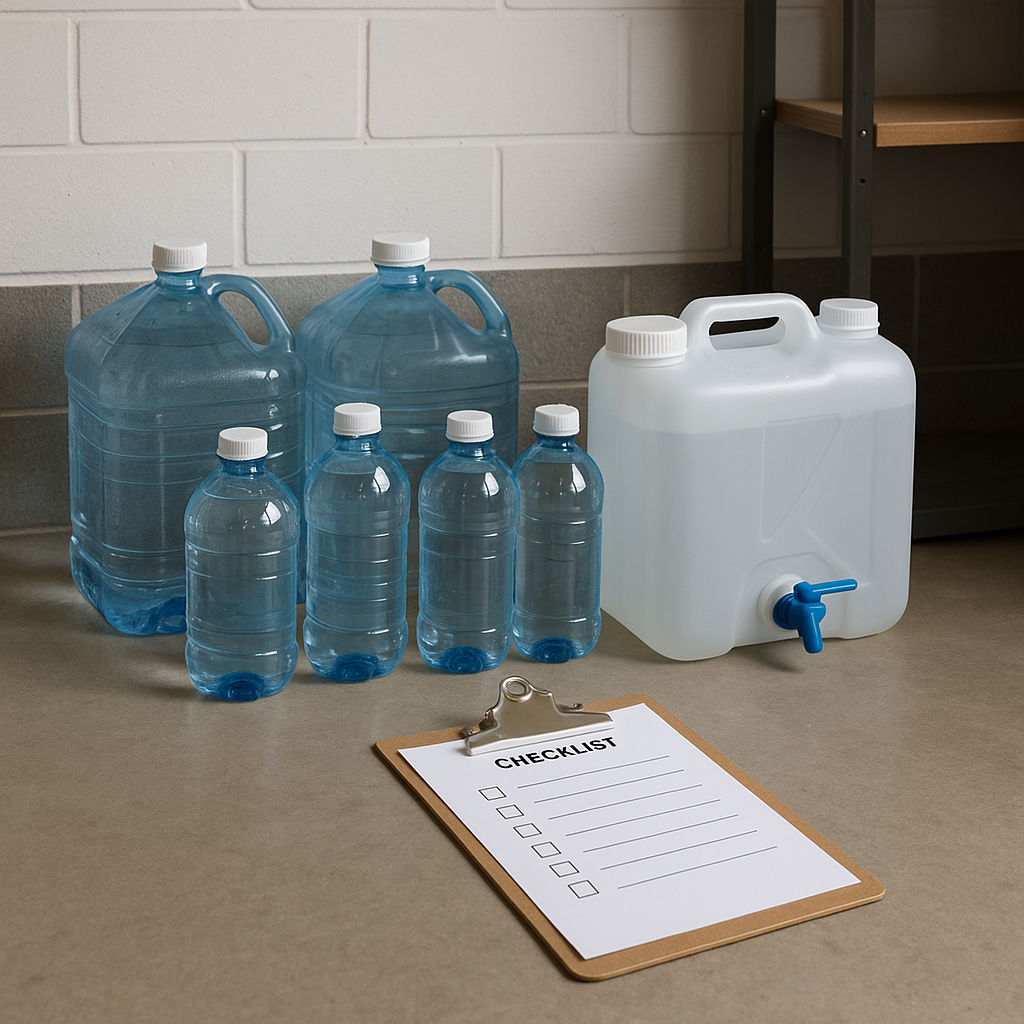
You can survive weeks without food. You can survive only 3 days without water. In hot weather or with physical exertion, even less.
How Much to Store
The standard is 1 gallon per person per day. That covers drinking and basic hygiene. It does not cover bathing, laundry, or extensive cooking.
72-hour supply:
- 1 person: 3 gallons
- 2 people: 6 gallons
- 4 people: 12 gallons
2-week supply:
- 1 person: 14 gallons
- 2 people: 28 gallons
- 4 people: 56 gallons
Add extra for:
- Pets (1 quart per small animal per day, more for large dogs)
- Infants or nursing mothers
- Hot climate or physical labor
- Medical conditions requiring extra fluids
Storage Options
Commercial bottled water is the easiest option. It comes sealed, treated, and dated. Buy cases and stack them. Replace every 1 to 2 years.
Food-grade containers like 5-gallon jugs work well for bulk storage. Look for containers marked HDPE (recycling #2) or PETE (#1). Do not use milk jugs. They break down and cannot be cleaned thoroughly.
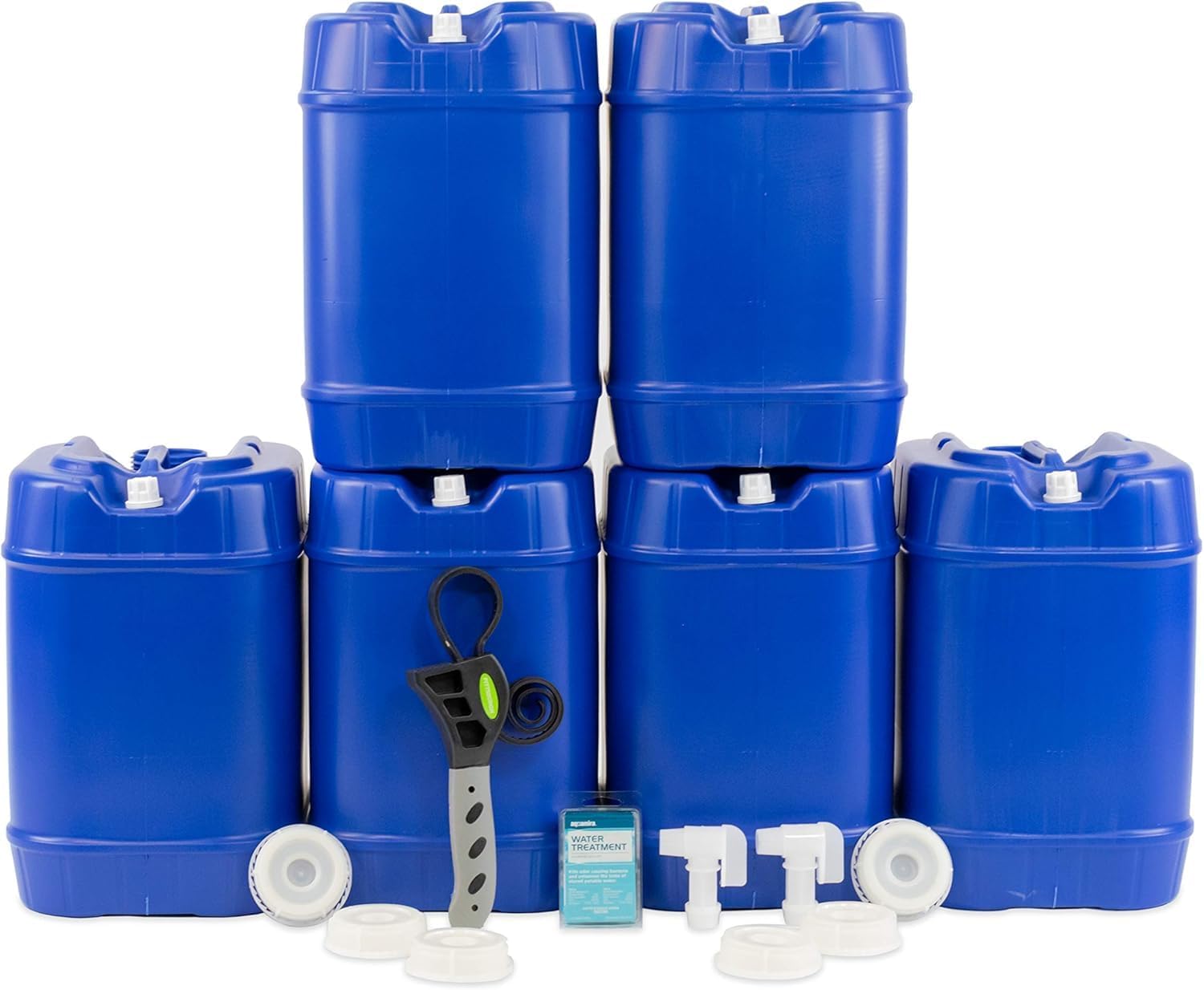
1. Legacy 5-Gallon Water Storage Containers, Best for Home Storage
These BPA-free stackable containers hold 5 gallons each and are designed specifically for long-term water storage. The 6-pack provides 30 gallons total. The heavy-duty construction and spigot design make dispensing easy.
- 6 stackable 5-gallon tanks (30 gallons total)
- BPA-free food-grade plastic
- Spigot compatible
- Designed for long-term emergency storage
WaterBOB bathtub bladders provide instant large-volume storage when you know a storm is coming. Fill your bathtub with a WaterBOB and you have up to 100 gallons of clean drinking water. They cost about $35 and take up no space until you need them.
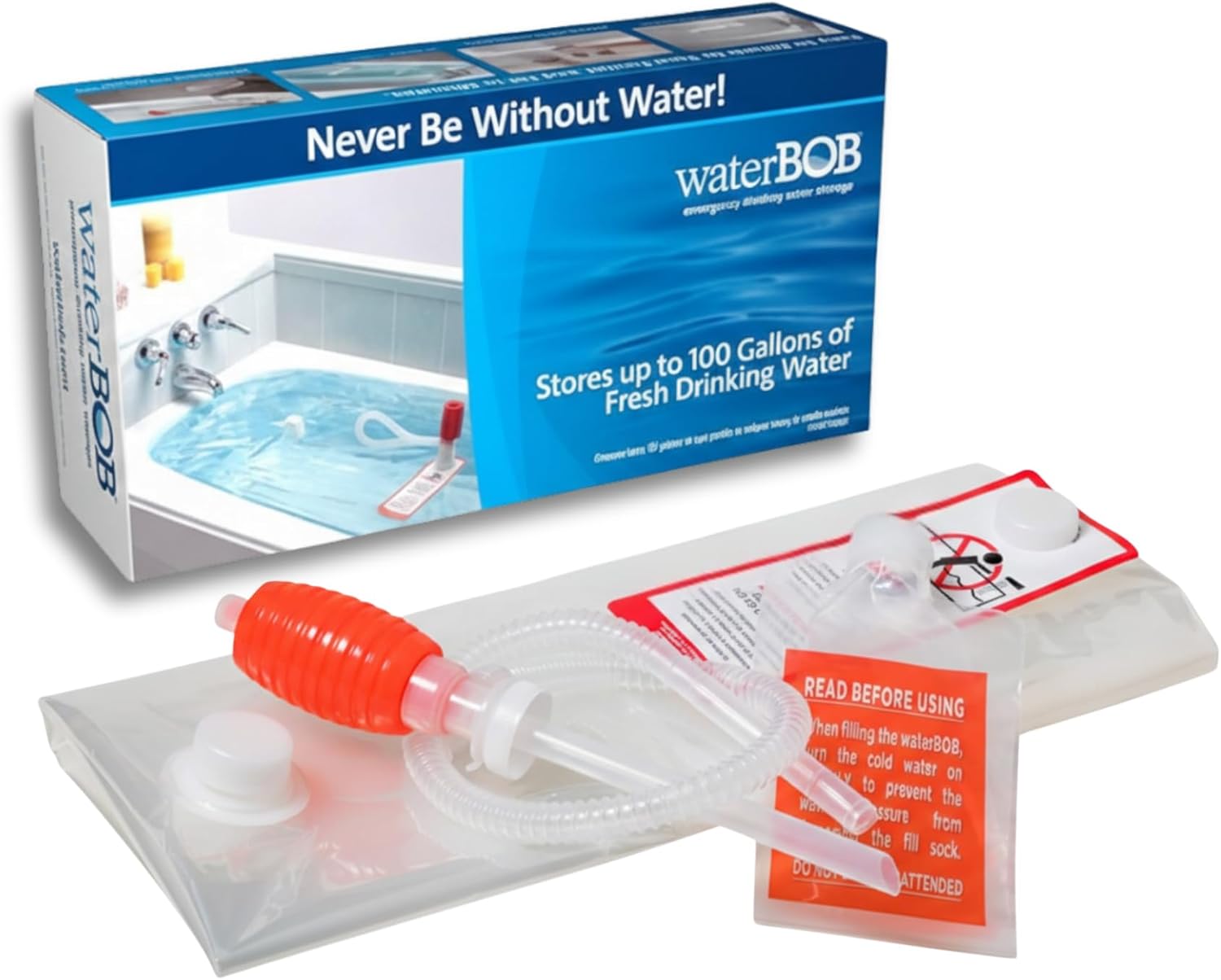
2. WaterBOB Emergency Drinking Water Storage, Best for Storm Preparation
The WaterBOB holds up to 100 gallons in any standard bathtub. Fill it when a storm is announced and you have a week or more of drinking water for a family. The included pump makes dispensing easy. Single-use but stores flat indefinitely.
- Holds up to 100 gallons
- Food-grade BPA-free plastic
- Keeps water fresh up to 16 weeks
- Includes hand pump for dispensing
- Stores flat until needed
Water Purification Backup
If your stored water runs out, you need a way to make more water safe to drink.
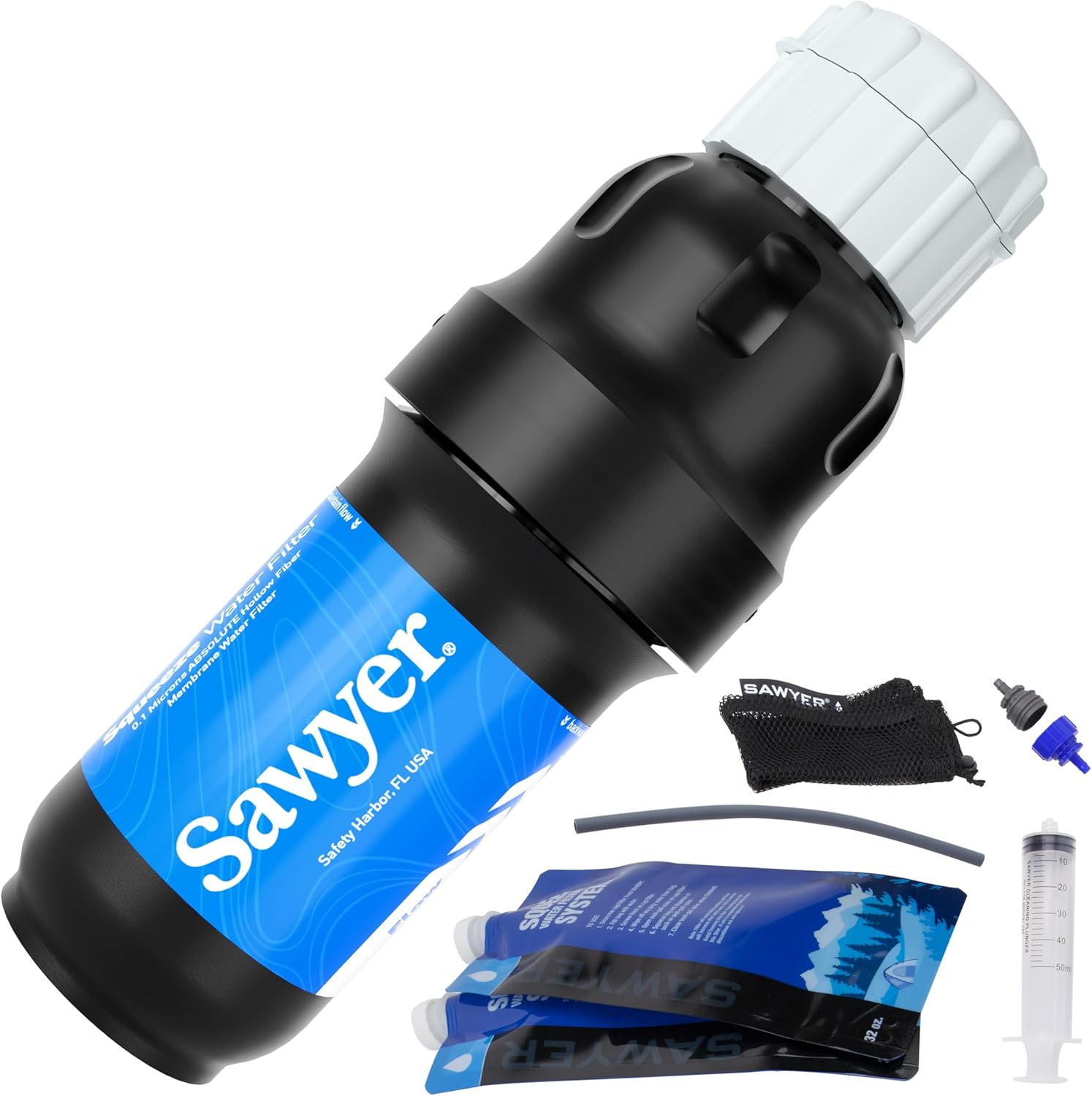
3. Sawyer Squeeze Water Filtration System, Best Water Filter
The Sawyer Squeeze removes 99.99999% of bacteria and 99.9999% of protozoa. It filters up to 100,000 gallons before replacement. Use it to filter water from streams, ponds, rainwater collection, or questionable tap water. Compact and lightweight for grab bags.
- Filters bacteria and protozoa
- 100,000 gallon filter life
- Includes two 32-oz squeeze pouches
- Weighs just 3 oz
- Backwashable to restore flow rate
Food: Calories to Keep You Going
Adults need about 2,000 calories per day. In a stressful situation with physical demands, you may need more. Focus on shelf-stable foods that require minimal or no cooking.
What to Stock
72-hour supply: Focus on grab-and-go foods that need no preparation.
- Energy bars and granola bars
- Peanut butter
- Crackers
- Dried fruit and nuts
- Canned tuna or chicken (with a manual can opener)
- Ready-to-eat pouched meals
2-week supply: Add variety with foods that require minimal cooking.
- Canned soups, beans, vegetables, and fruits
- Pasta and sauce (store in sealed containers)
- Rice and instant rice
- Oatmeal and cereal
- Freeze-dried or dehydrated meals
- Comfort foods: coffee, tea, hot chocolate
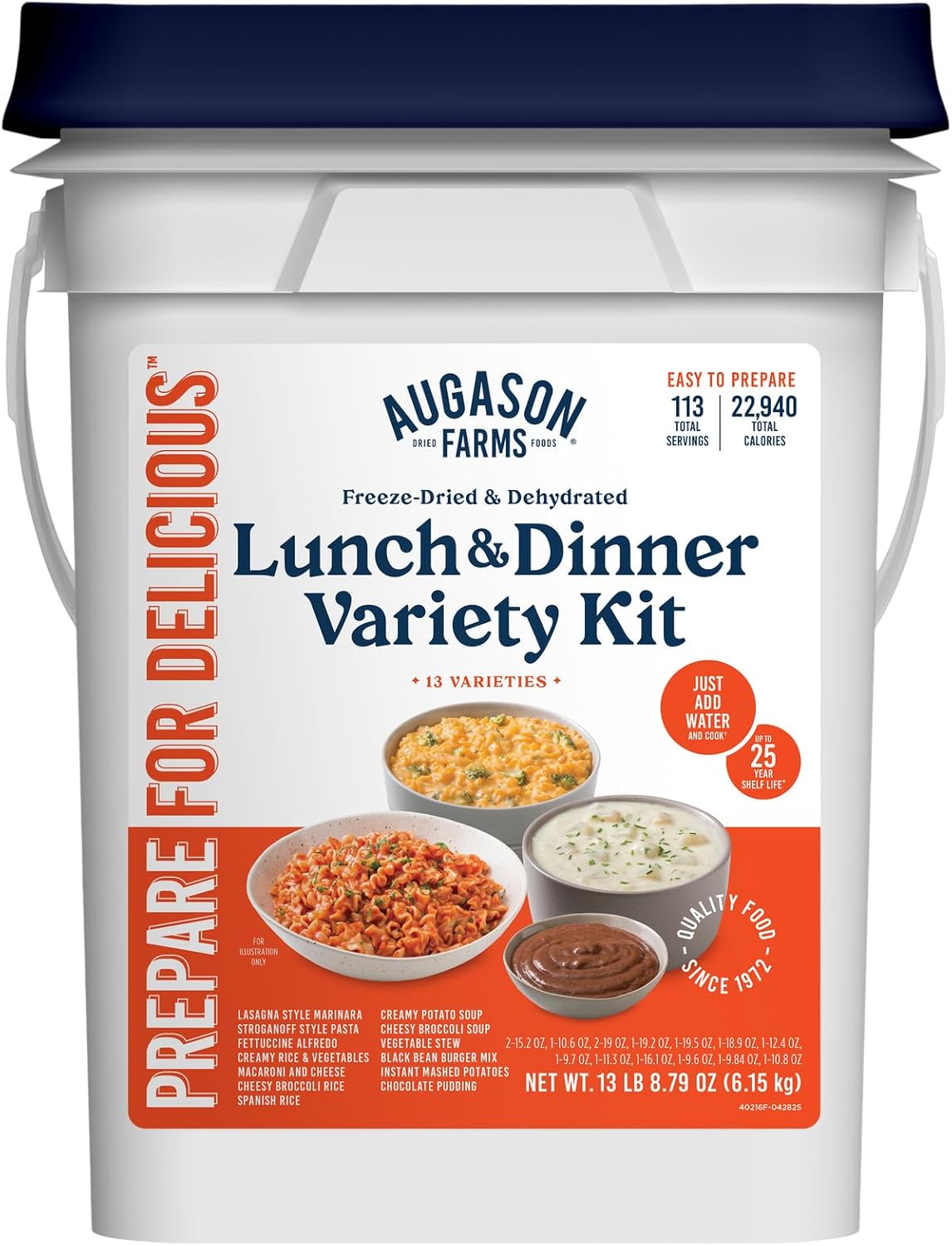
4. Augason Farms Emergency Food Supply Bucket, Best Value Food Kit
This 4-gallon pail includes 92 servings of various meals with over 21,000 calories. The stackable design makes storage easy. For the price, it is one of the best ways to build a foundation of emergency food.
- 92 servings, 21,170 calories
- Up to 25-year shelf life
- Stackable bucket design
- Variety of soups and entrees
- Just add water preparation
Do not forget a manual can opener. Electric can openers do not work without power. A simple manual opener costs a few dollars and is essential.
First Aid: Beyond the Bandages
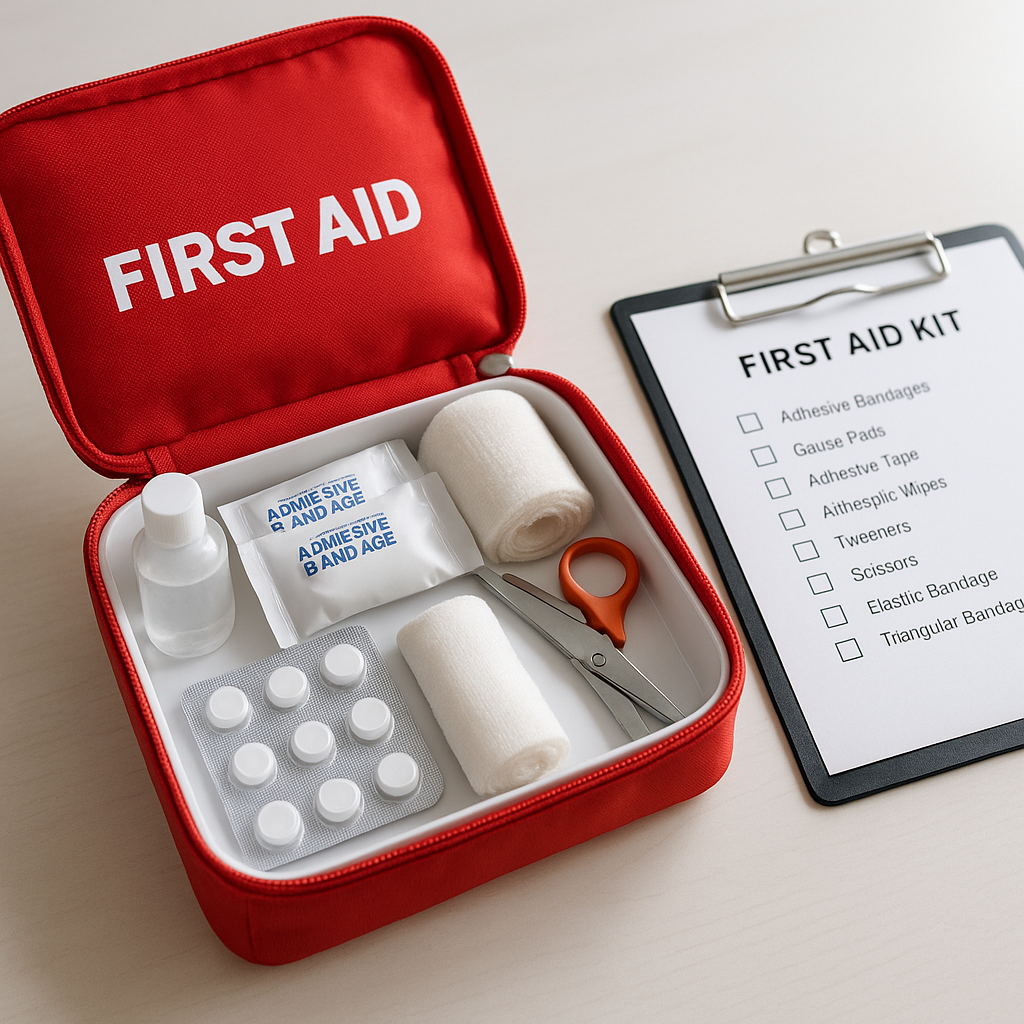
A basic first aid kit handles cuts, scrapes, and minor injuries. A comprehensive kit also addresses medication needs, serious wounds, and specific household requirements.
Basic First Aid Supplies
- Adhesive bandages (assorted sizes)
- Sterile gauze pads and rolls
- Medical tape
- Elastic bandage for sprains
- Antiseptic wipes and antibiotic ointment
- Tweezers and small scissors
- Instant cold packs
- Disposable gloves
Serious Wound Care
- Trauma shears (EMT scissors)
- Tourniquet
- Israeli bandage or pressure dressing
- Hemostatic gauze (QuikClot or similar)
- SAM splint or improvised splinting materials
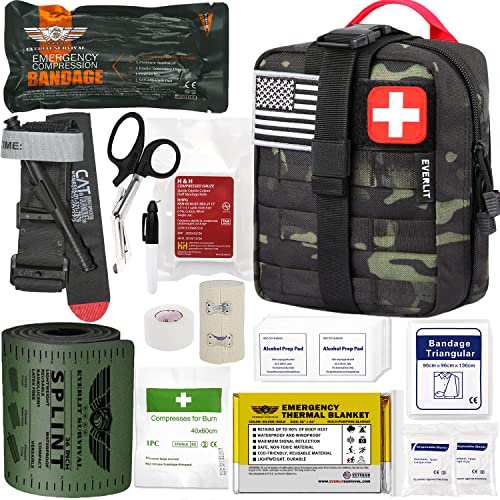
5. EVERLIT Emergency Trauma Kit, Best for Serious Injuries
This IFAK (Individual First Aid Kit) includes a genuine CAT Gen-7 tourniquet, 36-inch splint, Israeli bandage, and other trauma supplies. Military-grade quality for civilian use. If you want to be prepared for serious bleeding control, this is the kit.
- Genuine CAT GEN-7 tourniquet
- 36-inch aluminum splint
- Israeli pressure bandage
- Compact MOLLE-compatible pouch
- Color-coded organization
Medications
Prescription medications: Work with your doctor to maintain a 7 to 14-day supply of essential prescriptions. Store them in original bottles with labels. Check and rotate every 6 months.
Over-the-counter medications:
- Pain relievers (ibuprofen, acetaminophen)
- Antihistamines (for allergies and sleep)
- Antidiarrheal medication
- Antacids
- Cough and cold medicine
- Hydrocortisone cream
- Personal medications (EpiPen, insulin, inhaler, etc.)
Copies of medical records: Keep printed copies of prescription information, medical conditions, allergies, and insurance cards in your emergency documents.
Light and Communication
Power outages are the most common component of disasters. You need light to see and a way to get information when your phone dies.
Lighting
- Headlamps: Free your hands while providing light. Get one per person.
- Flashlights: Backup to headlamps. Keep spare batteries.
- Lanterns: Better for area lighting in a room. Battery-powered or solar.
- Candles: Use with extreme caution. Open flame is a fire hazard.
- Light sticks: Single-use but require no batteries. Good backup.
Communication
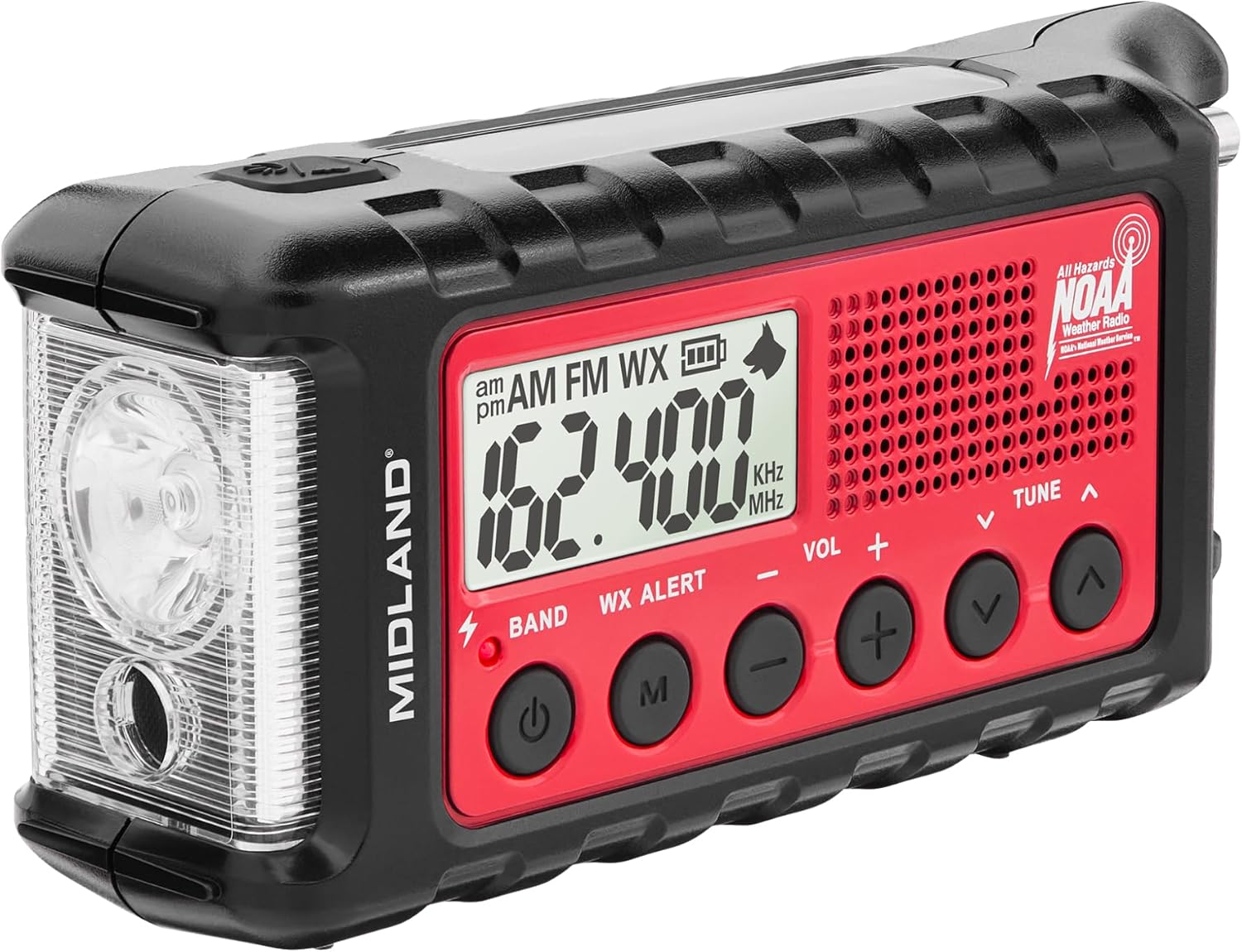
6. Midland ER310 Emergency Crank Weather Radio, Best Emergency Radio
The Midland ER310 receives all 7 NOAA weather channels plus AM/FM. It charges via hand crank, solar panel, or USB. The built-in flashlight and SOS beacon add emergency functionality. Works when the grid is down and your phone is dead.
- NOAA weather channels plus AM/FM
- Hand crank, solar, USB, and battery charging
- Built-in flashlight and SOS alarm
- USB port to charge your phone
- Ultrasonic dog whistle for signaling
Backup Phone Charging
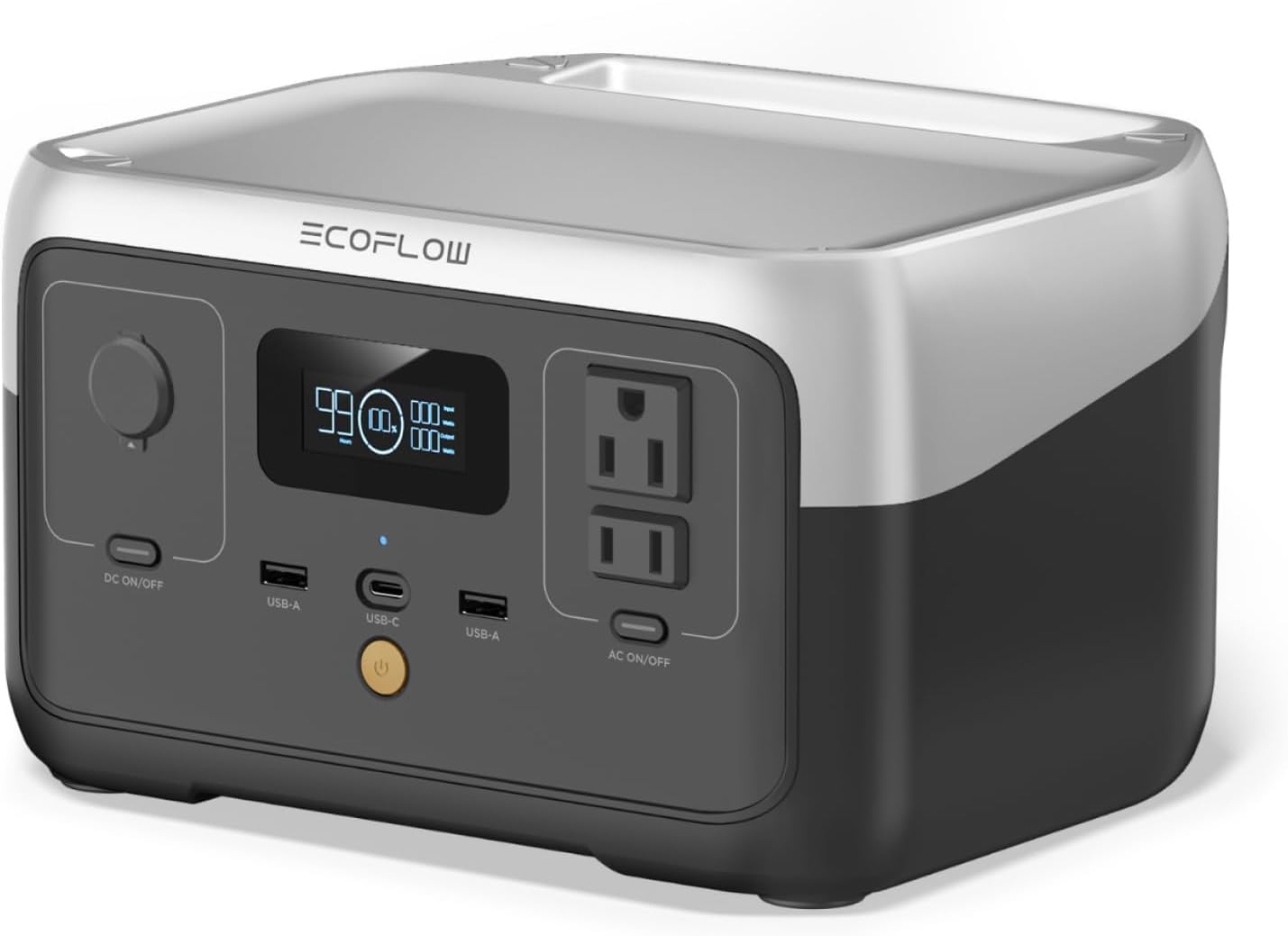
7. EcoFlow RIVER 2 Portable Power Station, Best Phone and Device Charging
The RIVER 2 provides 256Wh of power, enough to charge phones dozens of times or run small appliances. It recharges in just 60 minutes from a wall outlet and accepts solar panels for off-grid charging. More versatile than a basic power bank.
- 256Wh capacity
- Recharges 0-100% in 60 minutes
- 2 AC outlets, USB-A, USB-C
- Solar panel compatible
- LiFePO4 battery lasts 10+ years
Documents: The Often-Forgotten Essential
In an emergency, you may need to prove who you are, access bank accounts, or file insurance claims. Keep copies of important documents in a waterproof bag or container.
Documents to Copy
Personal identification:
- Driver’s licenses or state IDs
- Passports
- Birth certificates
- Social Security cards
- Marriage certificates
Financial:
- Bank account numbers and contact info
- Credit card numbers and contact info
- Investment account information
- Property deed or rental agreement
- Vehicle titles
Insurance:
- Health insurance cards
- Homeowners or renters insurance
- Auto insurance
- Life insurance policies
Medical:
- Prescription list with dosages
- Medical conditions and allergies
- Doctor contact information
- Immunization records
- Copies of important test results
Emergency contacts:
- Family members
- Out-of-state contact person
- Employers
- Children’s schools
- Veterinarian
Storage Options
- Waterproof document bag: Protects against water damage. Keep in your grab bag.
- Fireproof safe: Protects originals at home.
- Digital backup: Scan everything and store encrypted in the cloud. Also save on a USB drive in your kit.
- Photos of family members: Useful for identification if separated.
Tools and Safety
A small toolkit handles common emergency tasks like shutting off utilities, making minor repairs, and staying safe.
Essential Tools
- Multi-tool or knife
- Adjustable wrench (for gas shutoff)
- Duct tape
- Work gloves (leather or heavy-duty)
- N95 or N100 respirators (at least 10)
- Safety glasses
- Tarp or plastic sheeting
- Rope or paracord (50+ feet)
- Fire extinguisher (know how to use it)
- Whistle (to signal for help)
Optional but Useful
- Crowbar or pry bar
- Saw (folding or bow)
- Shovel
- Axe or hatchet
- Radio (two-way for family communication)
Sanitation: The Uncomfortable Essential
If water or sewer service is disrupted, sanitation becomes critical. Disease spreads quickly in unsanitary conditions.
Basic Sanitation Supplies
- Toilet paper (store plenty)
- Hand sanitizer (60%+ alcohol)
- Soap
- Feminine hygiene products
- Diapers if needed
- Disposable bags (for waste)
- Bucket with lid (emergency toilet)
- Bleach (for disinfection)
- Trash bags (heavy duty)
Emergency Toilet
If toilets do not flush, line a toilet or 5-gallon bucket with a heavy-duty garbage bag. Add kitty litter or sawdust after each use to control odor. Seal bags and dispose of properly.
Special Needs: Babies, Elderly, Pets, and Disabilities
Generic checklists miss individual needs. Consider everyone in your household.
Babies and Young Children
- Formula and bottles (7-day supply minimum)
- Baby food
- Diapers and wipes (more than you think)
- Comfort items (blanket, stuffed animal)
- Children’s medications
Elderly Family Members
- Extra prescription medications
- Mobility aids (walker, wheelchair)
- Hearing aid batteries
- Reading glasses
- Comfortable clothing
People with Disabilities
- Medical equipment and power requirements
- Service animal supplies
- Communication aids
- Specialized medications
- Contact info for support services
Pets
- Food (2-week supply)
- Water
- Medications
- Carrier or crate
- Leash and collar with ID
- Recent photo
- Vaccination records
- Comfort items
Financial Preparedness
ATMs and credit card terminals do not work without power. After a disaster, cash is king.
Cash on Hand
Keep small bills ($1, $5, $10, $20) in your emergency kit. At least $100 to $300 for each adult. Small bills are important because making change may be impossible.
Insurance Documentation
Review your insurance coverage before a disaster:
- Does your homeowners or renters insurance cover the likely disasters in your area?
- Do you have flood insurance if needed?
- Is your coverage adequate to replace your belongings?
- Do you know how to file a claim?
Take photos or video of your home and possessions. Store these in the cloud and on a USB drive. They will help with insurance claims.
Your Car Kit: Separate from Home
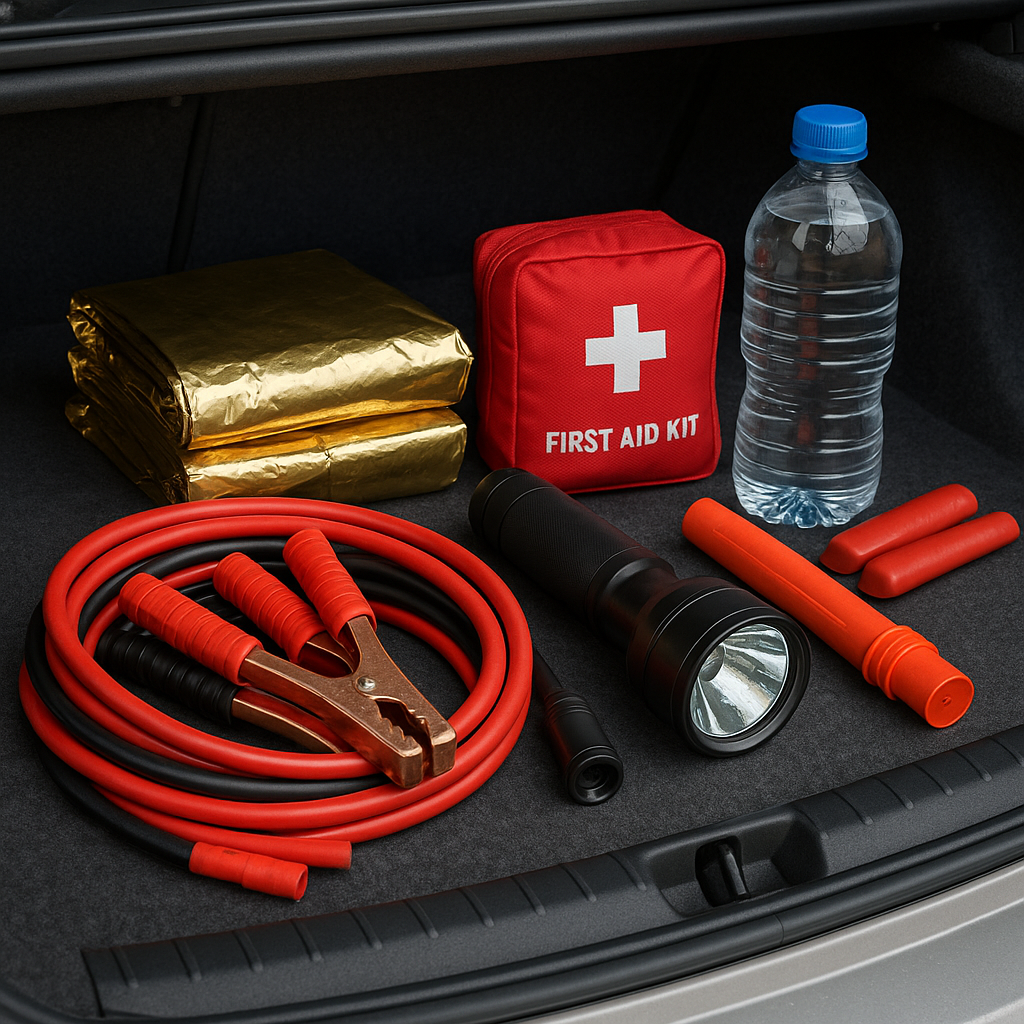
Your car should have its own emergency supplies. You may be away from home when disaster strikes.
Car Kit Essentials
- Water (at least 1 gallon)
- Non-perishable snacks
- Blanket
- First aid kit
- Flashlight and batteries
- Jumper cables
- Basic tool kit
- Phone charger (car and portable battery)
- Emergency flares or reflectors
- Paper maps of your area
- Spare cash
Seasonal Additions
Winter: Ice scraper, shovel, sand or kitty litter for traction, extra warm clothes, hand warmers.
Summer: Extra water, sunscreen, hat.
Putting It All Together: Storage and Maintenance
Where to Store
- Home kit: Accessible location that all family members know. Closet, garage, basement.
- Grab bags: By the door or in bedrooms for quick access during evacuation.
- Car kit: In the trunk, replaced seasonally as temperatures change.
Maintenance Schedule
Monthly:
- Check flashlight batteries
- Charge portable power devices
- Review and update emergency contacts
Every 6 months:
- Check prescription medications for expiration
- Rotate water supply
- Check first aid kit supplies
- Test smoke and CO detectors
Yearly:
- Review and update insurance coverage
- Replace any expired food
- Update copies of documents
- Review and practice your emergency plan with family
Printable Checklist
Use this checklist to build or review your emergency kit:
Water
- 1 gallon per person per day (72-hour minimum)
- 2-week supply if possible (14 gallons/person)
- Water filter or purification tablets
- Water storage containers
Food
- 72-hour supply of non-perishable food
- 2-week supply if possible
- Manual can opener
- Disposable plates, cups, utensils
- Camp stove or Sterno for cooking
First Aid
- Comprehensive first aid kit
- Trauma supplies (tourniquet, pressure bandage)
- Prescription medications (7-14 day supply)
- Over-the-counter medications
- Copies of medical records
Light and Communication
- Headlamp for each person
- Flashlight with extra batteries
- Lantern for area lighting
- NOAA weather radio
- Portable phone charger or power station
Documents
- Copies of IDs and passports
- Insurance information
- Bank account information
- Medical records
- Emergency contacts
- Waterproof storage bag
Tools and Safety
- Multi-tool or knife
- Wrench for utility shutoff
- Duct tape
- Work gloves
- N95 respirators
- Whistle
Sanitation
- Toilet paper
- Hand sanitizer
- Soap
- Feminine hygiene products
- Garbage bags
- Bucket with lid
Shelter and Warmth
- Blankets or sleeping bags
- Emergency mylar blankets
- Tarp or plastic sheeting
- Extra clothing
- Rain gear
Special Needs
- Baby supplies if applicable
- Pet supplies if applicable
- Mobility aids if applicable
- Specialty medications
Financial
- Cash in small bills ($100-300)
- Copies of insurance policies
Frequently Asked Questions
Where should I store my emergency kit? Keep your main kit in an accessible location that all family members know. A hall closet, garage shelf, or basement corner works well. Avoid attics (too hot) and areas prone to flooding.
How often should I replace water? Replace stored tap water every 6 to 12 months. Commercial bottled water can last 1 to 2 years. Label containers with fill dates.
What if I live in an apartment? Space is limited, but a 72-hour kit fits under a bed or in a closet. Use stackable containers. Consider a WaterBOB for your bathtub instead of storing large water jugs.
Should I have one kit for the whole family or individual kits? Both. A main home kit covers everyone. Individual grab bags with personal items (medications, glasses, documents) supplement the main kit during evacuation.
How much does an emergency kit cost? A basic 72-hour kit can be built for $100 to $200. A comprehensive 2-week kit runs $300 to $500 depending on family size and specific needs. Spread purchases over time if budget is a concern.
What is the most important item? Water. You can survive weeks without food, days without shelter, but only about 3 days without water. Prioritize water storage and purification above everything else.
Should I include weapons? This is a personal decision based on your training, local laws, and comfort level. If you choose to include a firearm, ensure proper storage, training, and legal compliance.
Regional Considerations
Different areas face different emergencies. Customize your kit based on where you live.
Hurricane Zones (Gulf Coast, Atlantic Coast)
- WaterBOB for bathtub water storage (fill when storm approaches)
- Plywood or storm shutters for windows
- Extended food and water supply (1-2 weeks minimum)
- Cash in small bills (ATMs will be down)
- Important documents in waterproof containers
- Full tank of gas before storm arrives
- Evacuation route mapped and practiced
Earthquake Zones (California, Pacific Northwest, Alaska)
- Heavy items secured to prevent falling
- Wrench for gas shutoff accessible
- Sturdy shoes by bed (broken glass hazard)
- Fire extinguisher (gas leaks cause fires)
- Tent or tarp (buildings may be unsafe)
- Extra water (infrastructure damage common)
- Plan for being stranded at work or school
Tornado Zones (Midwest, Southeast)
- Designated safe room or storm shelter identified
- Bicycle helmets for head protection
- NOAA weather radio with alerts enabled
- Sturdy shoes for debris
- Flashlights immediately accessible
- Important documents in safe room
- Neighborhood meetup point established
Winter Storm Zones (Northeast, Midwest, Mountain West)
- Alternative heating source (propane heater, wood stove)
- Extra blankets and sleeping bags rated for cold
- Insulated clothing and boots
- Snow removal tools
- Car kit with cold-weather items
- Pipe insulation materials
- Extended food supply (stores may be inaccessible)
Wildfire Zones (California, Colorado, Arizona)
- Go-bag always ready (you may have minutes to evacuate)
- N95 masks for smoke (several per person)
- Irreplaceable documents in safe deposit box or with relatives
- Photos/video inventory of possessions for insurance
- Multiple evacuation routes mapped
- Air purifier for indoor air quality
- Sprinkler system or hose attachments for property protection
Teaching Your Family
An emergency kit only helps if everyone knows what is in it and how to use it.
Family Emergency Meeting
Hold a meeting to discuss:
- Where the kit is located
- How to use key items (fire extinguisher, water filter, radio)
- Meeting points if separated
- Out-of-area contact person
- Basic first aid and CPR
Practice Drills
- Practice evacuation routes from home
- Test your emergency communication plan
- Run a power-outage drill for a few hours
- Let kids pack their own small emergency bags
Age-Appropriate Involvement
Young children: Know their full name, address, and parent phone numbers. Know meeting points. Have a comfort item in the kit.
Older children: Can help pack kits, use flashlights and radios, assist younger siblings.
Teenagers: Should be capable of executing the emergency plan independently. Teach all skills you know.
Final Thoughts
An emergency kit is not a purchase. It is a process. Start with the basics, build over time, and maintain what you have. The goal is to be ready for the emergencies most likely in your area, not every possible scenario.
Do not aim for perfection. Aim for progress. A basic kit is infinitely better than no kit at all.