Ready
Ready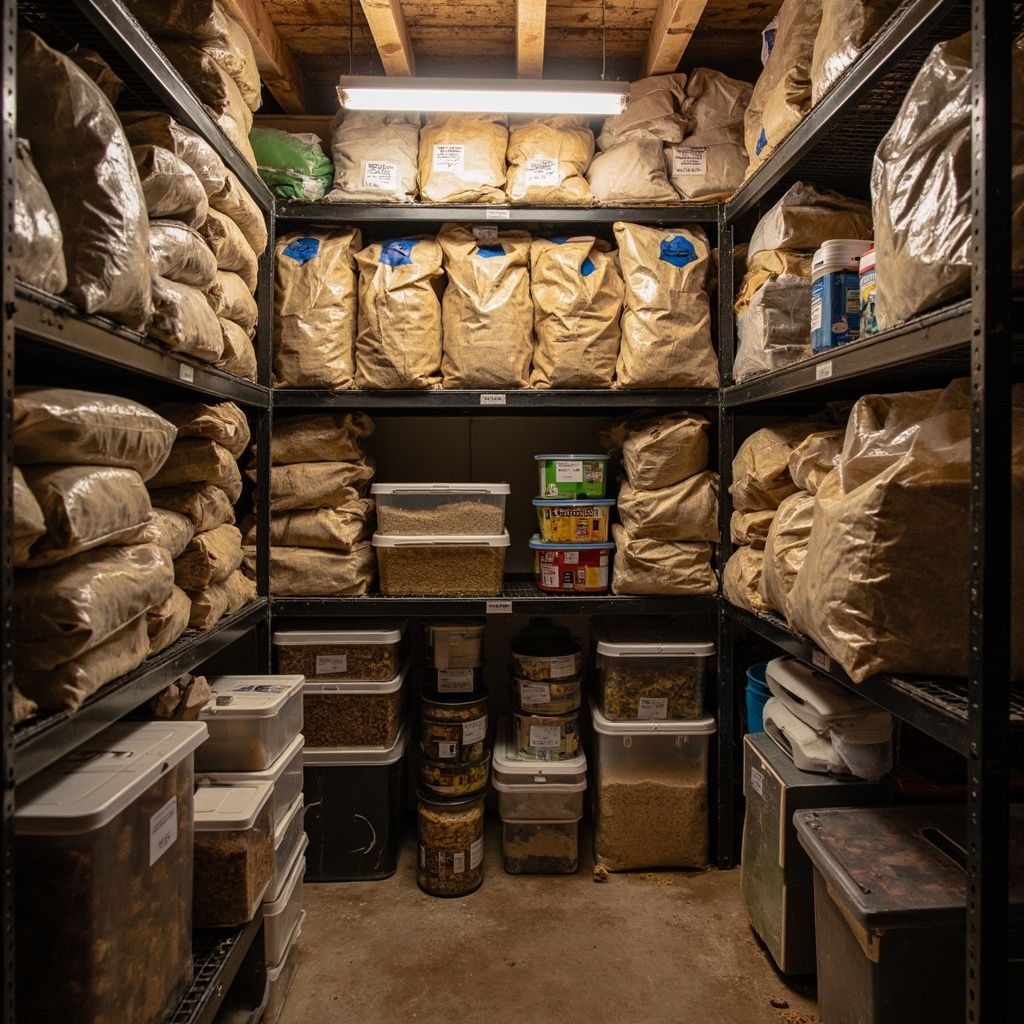
Long-Term Food Storage: The Complete Guide to Stocking Up for Any Emergency
Long-term food storage is one of the most practical things you can do for your family’s safety. Grocery store shelves can empty in hours after a hurricane warning. A job loss, severe winter storm, or supply chain disruption can leave you scrambling for food. But if you have a well-stocked pantry built around foods that last for years, none of that has to be a crisis.
This guide covers everything you need to know: what foods last the longest, how to seal and store them correctly, how to calculate how much you need, what to avoid, and which ready-made products are actually worth your money.
Why Trust This Guide?
This article was researched and reviewed by contributors with hands-on experience in emergency preparedness. They have tested gear, built real systems, and lived through situations where these skills actually mattered.



Why Long-Term Food Storage Is Worth It
Most people think of food storage as something only extreme preppers do. That idea misses the point entirely.
Long-term food storage is practical insurance. It is the same thinking behind car insurance or a savings account. You probably will not need it. But if you do need it and you do not have it, the consequences are serious.
Here are some very normal situations where a food supply matters:
Job loss or income disruption. Even a few weeks of food at home means you do not have to choose between groceries and rent.
Natural disasters. Hurricanes, earthquakes, ice storms, and wildfires can cut off access to stores and supply chains for days or weeks.
Medical emergencies. If someone in the household is sick or injured, being able to stay home and eat from your pantry is a real comfort.
Price spikes. Food prices rise every year. Buying bulk staples at today’s prices protects you from tomorrow’s increases.
The goal is not a bunker full of food. The goal is a reasonable supply that keeps your family fed during realistic disruptions. Start with one month. Work toward three. If you get to a year, you are doing great.
How Much Food Does Your Family Actually Need?
Before you buy anything, you need to know your target. This means calculating calories.
Most adults need about 2,000 calories per day to maintain their weight and keep their energy up. Children need 1,200 to 1,800 depending on their age. Older adults or people with low activity levels might get by on 1,600 to 1,800.
During an emergency, calorie needs often go up. Stress burns energy. Cold weather burns more calories as your body works to stay warm. Physical activity like clearing debris or hauling supplies increases your needs further.
A simple rule: plan for 2,000 calories per adult per day, 1,500 calories per child per day.
Those numbers can feel overwhelming at first. The key is to break them down into food categories. Bulk staples like white rice, dry beans, and rolled oats are incredibly calorie-dense and cheap per calorie. A 50-pound bag of white rice contains roughly 80,000 calories and costs around $25. That alone covers one adult for 40 days.
What Foods Store the Longest
Not all food is created equal when it comes to shelf life. The foods that store longest share a few things in common: low moisture, low fat, and protection from oxygen and light.
Here is a breakdown of the best long-term storage foods and their realistic shelf life when stored correctly.
The big takeaway: white rice, dried beans, whole wheat, rolled oats, sugar, honey, and salt are your foundation. These are cheap, widely available, and have some of the longest shelf lives of any food on earth. Everything else builds on this base.
How to Properly Seal and Store Food
The difference between food that lasts 5 years and food that lasts 30 years is almost entirely about how you package it. Oxygen, moisture, light, and heat are the four enemies of stored food. Good storage eliminates all four.
The Mylar Bag and Oxygen Absorber Method
This is the gold standard for bulk dry food storage. Mylar bags are made from a metallic foil that creates a nearly perfect barrier against moisture, light, and oxygen. Combined with oxygen absorbers, you remove any remaining oxygen from inside the bag, and bacteria and insects simply cannot survive.
Mylar Bags (5-Gallon Size) for Long-Term Food Storage
Heavy-duty 5-mil Mylar bags create an airtight, lightproof barrier around your dry food. A proper Mylar seal can keep white rice or beans fresh for 25 to 30 years. These work perfectly inside a standard food-grade 5-gallon bucket for added protection and easy stacking.
- 5-gallon size fits standard buckets perfectly
- 5-mil thick foil construction
- Blocks oxygen, moisture, and light
- Heat-sealable with a standard clothing iron or flat iron
- Pack of 10 or more bags per order
Oxygen Absorbers (300cc) for Long-Term Storage
Oxygen absorbers are small packets filled with iron powder. When you drop one into a sealed bag or container, it absorbs all the oxygen, creating an environment where bacteria, mold, and insects cannot survive. Use one 300cc absorber per gallon of dry food.
- 300cc oxygen absorbers
- Remove 99% of oxygen from sealed containers
- Food-safe iron powder filling
- Works for grains, beans, pasta, and powders
- Use immediately once opened (they activate on contact with air)
Step-by-step: Sealing food in Mylar bags
- Place a Mylar bag inside a clean food-grade bucket. The bucket gives structure and protects the bag.
- Fill the bag with dry food. Leave about 4 inches at the top.
- Drop one 300cc oxygen absorber per gallon of food into the bag. For a 5-gallon bag, use five absorbers.
- Squeeze out as much air as possible by hand.
- Fold the top of the bag over and seal it with a hot clothing iron or hair straightener. Press firmly along the fold for 3 to 5 seconds. Move the iron across the entire width of the bag to create a complete seal.
- Press around the edges of the seal to check for any gaps. If you find any, re-seal.
- Label the outside of the bag with the food type and date.
- Place the sealed bag inside the bucket and close the lid.
The whole process takes about 5 minutes per bag once you get the hang of it.
Food-Grade 5-Gallon Buckets
Not all buckets are safe for food storage. Hardware store buckets may contain chemical residue or be made from plastic that leaches into food over time. You need food-grade buckets specifically rated for contact with food.
Food-Grade 5-Gallon Buckets for Dry Food Storage
These white HDPE buckets are made from food-safe plastic with no chemical additives. They are stackable, durable, and designed for long-term storage. Pair with gamma seal lids for easy access or standard lids for sealed storage. Each bucket holds about 30 to 33 pounds of rice or 25 pounds of beans.
- Food-grade HDPE construction
- BPA-free
- Stackable design
- Includes lid
- Holds roughly 5 gallons of dry goods
Gamma Seal Lids: The Upgrade Worth Having
Standard snap-on bucket lids seal tight, but they are a pain to open and close repeatedly. Gamma seal lids solve this. They consist of a ring that permanently snaps onto the bucket and a screw-on center lid. Opening and closing takes seconds and creates a solid airtight seal every time.
Gamma Seal Lids for 5-Gallon Buckets
Once you try gamma seal lids, you will never go back to standard bucket lids. The ring snaps on once and stays. The center lid threads on and off easily. These create an airtight seal that is far more convenient than prying off a standard lid with a bucket wrench every time. Color-code your buckets by food type using different lid colors.
- Fits standard 12-inch diameter 5-gallon buckets
- Converts any bucket to a screw-top container
- Airtight gasket seal
- Available in multiple colors for easy organization
- Food-safe construction
Vacuum Sealing Smaller Quantities
A vacuum sealer is useful for sealing smaller amounts of food or items from your regular pantry that you want to extend the life of. It removes most of the oxygen from the bag, which slows oxidation and greatly extends shelf life. A FoodSaver is the most well-known brand and works well for this purpose.
FoodSaver Vacuum Sealer Machine
A vacuum sealer is one of the most versatile tools for food preservation. Vacuum-seal portions of bulk food, freeze meat without freezer burn, extend pantry item shelf life by 3 to 5 times, and create custom-sized portions for your storage system. The FoodSaver is the category leader for good reason: it is reliable, widely available, and bags and rolls are sold everywhere.
- Removes air to extend freshness 3 to 5 times
- Works with FoodSaver bags and rolls (cut to any size)
- Moist and dry food settings
- Can seal mason jars with the optional jar sealer attachment
- Good for both fresh food and long-term pantry storage
Note that vacuum-sealed bags are not as effective as Mylar plus oxygen absorbers for true long-term storage. Vacuum sealing removes most oxygen but not all, and the bags are not moisture-proof in the same way Mylar is. For food you plan to use within a few years, vacuum sealing works great. For 10 to 30 year storage, use Mylar.
Where and How to Store Your Food
Location matters as much as packaging. Here is what to look for in a storage location:
Temperature: Aim for cool and consistent. Between 50 and 70 degrees Fahrenheit is ideal. Every 10-degree increase in temperature roughly cuts shelf life in half. A basement is often the best spot in the house.
Darkness: Light breaks down nutrients over time, especially vitamins. Keep food in opaque containers or in a dark room or closet.
Dry: Moisture is one of the fastest ways to ruin stored food. Avoid areas near water heaters, washing machines, or any place prone to condensation.
Off the floor: Keep buckets and boxes elevated on shelves or pallets. This protects from potential flooding, allows air circulation, and keeps food away from pests.
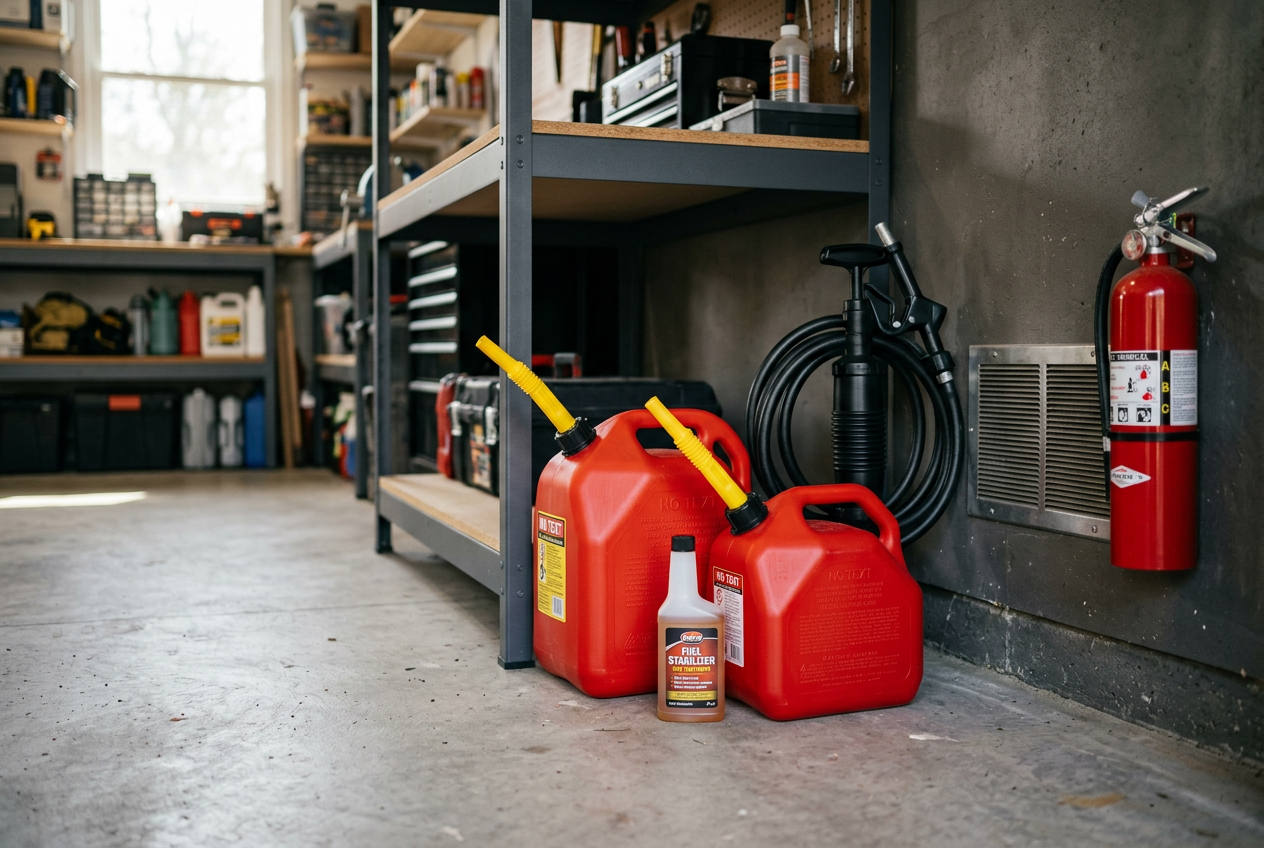
Away from chemicals: Certain chemicals can permeate plastic over time. Do not store food near gasoline, pesticides, cleaning products, or paint.
Ready-Made Long-Term Food Options
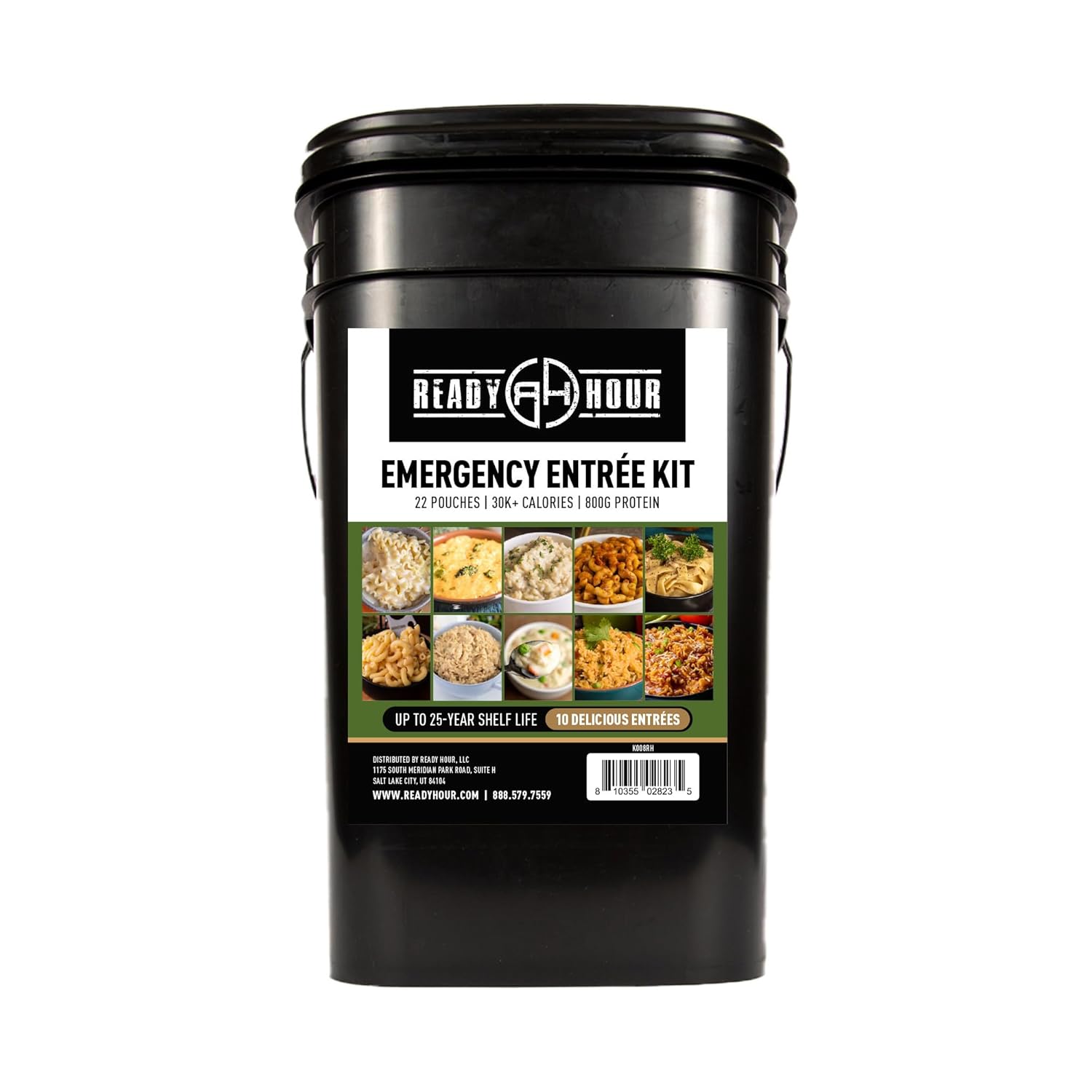
Not everyone wants to package bulk food themselves. Ready-made options from companies like Augason Farms and Mountain House let you skip the labor. These products are packaged in sealed cans or pouches with oxygen absorbers already included.
Augason Farms: Best Value for Bulk Storage
Augason Farms makes a wide range of freeze-dried and dehydrated foods in #10 cans. Their 30-day buckets and larger kits are popular because they offer good calorie counts at reasonable prices.
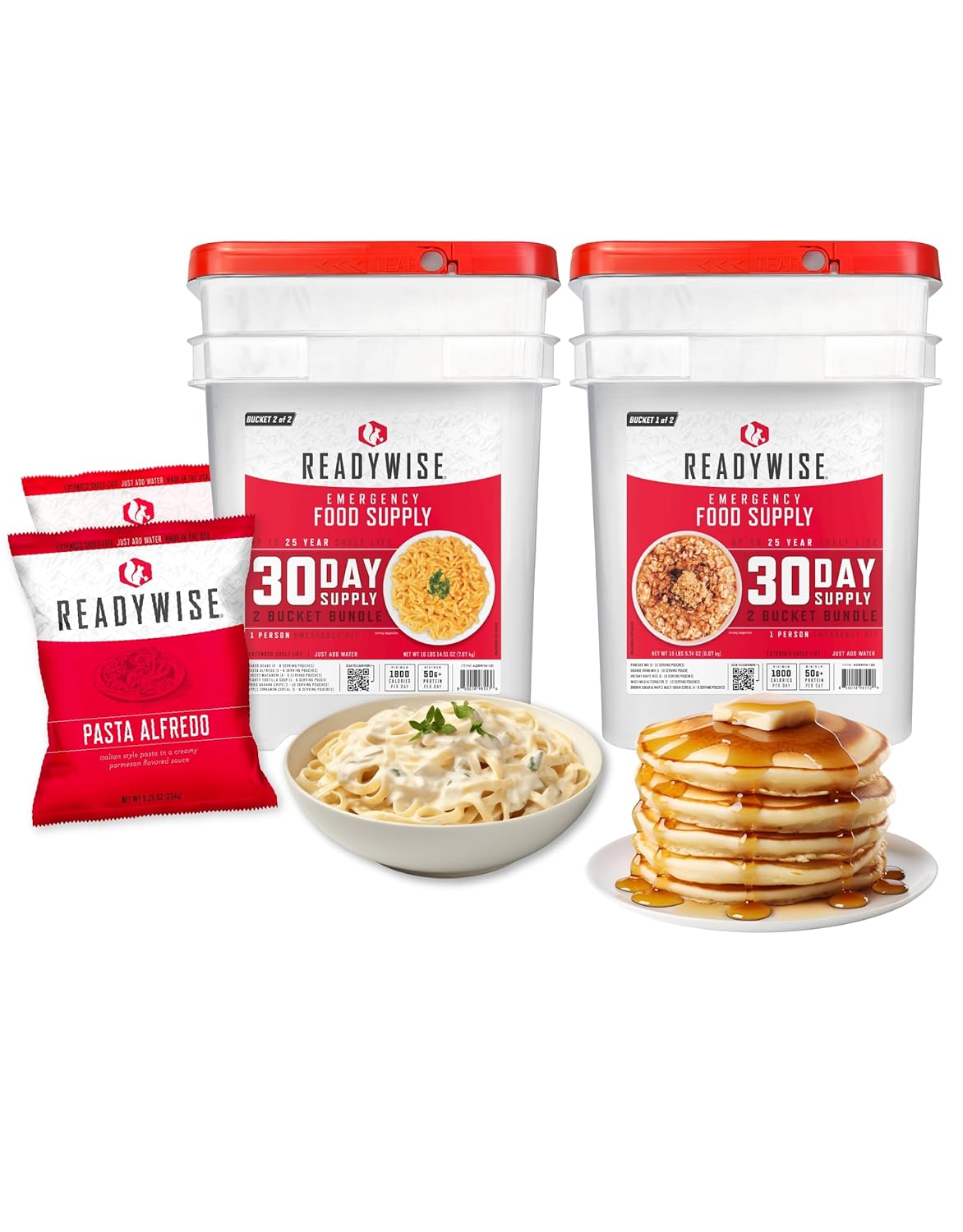
Augason Farms 30-Day Emergency Food Supply Bucket
This is one of the best starting points for serious food storage. One bucket covers one adult for 30 days at roughly 1,800 calories per day. The food comes pre-sealed in a heavy-duty bucket with an airtight lid. Varieties include oatmeal, powdered eggs, potato products, and pasta dishes. Shelf life is up to 25 years unopened.
- 307 total servings across 36 different varieties
- Approximately 1,800 calories per day for one adult for 30 days
- Up to 25-year shelf life (unopened)
- Just add water to prepare most items
- Ships directly from Augason Farms via Amazon
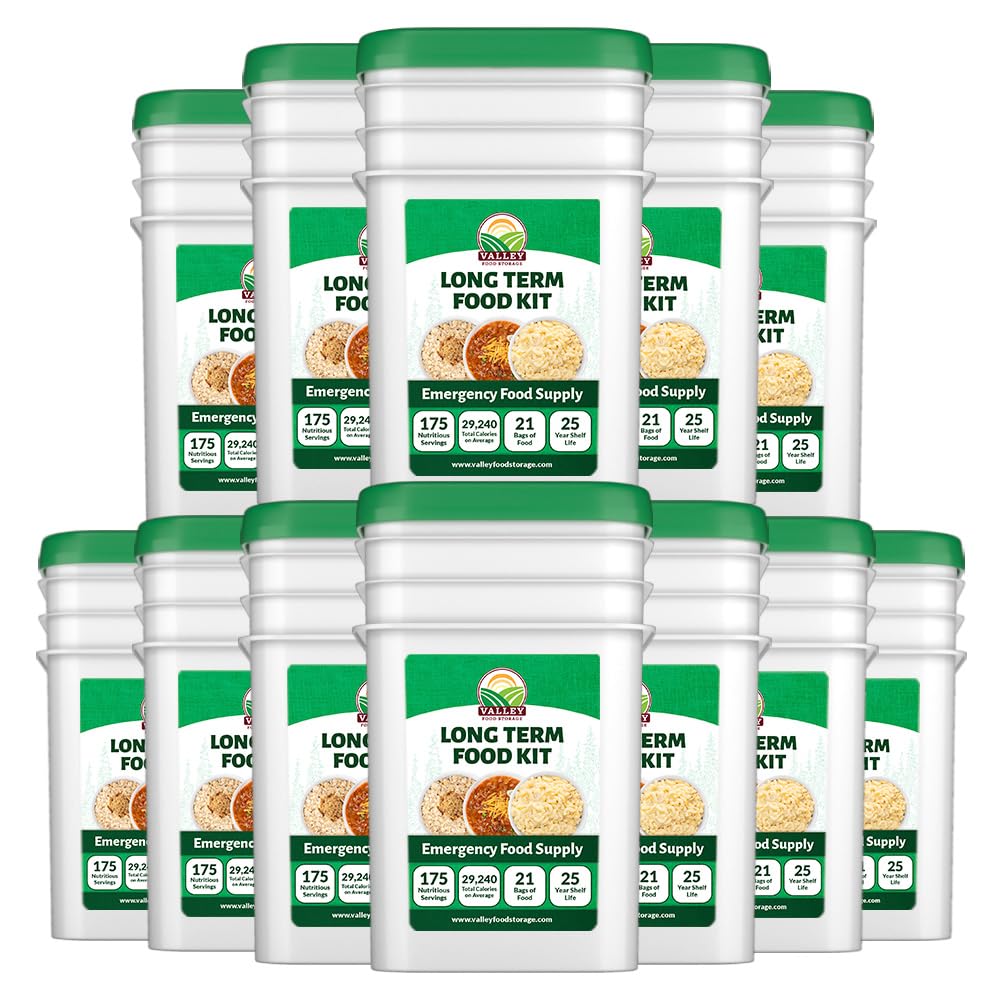
Augason Farms 1-Year Emergency Food Supply (4-Person)
For families that want a complete ready-to-go solution, the Augason Farms 1-year supply is one of the most comprehensive options on the market. It covers four people for a full year, arriving on a pallet in sealed, stackable buckets. While this is a significant investment, the per-calorie cost is competitive and the convenience is hard to beat.
- Covers 4 people for 1 full year
- Approximately 1,800 calories per person per day
- Up to 25-year shelf life (unopened)
- Arrives on pallet in sealed buckets
- Includes breakfast, lunch, dinner, and snack varieties
Mountain House: Best Freeze-Dried Meals
Mountain House is the go-to brand for freeze-dried meals. Their pouches produce remarkably good-tasting food that just needs hot water and a 5 to 10-minute wait. The texture and flavor are much closer to real food than most emergency meal brands.
Mountain House Just In Case Emergency Food Kit
Mountain House’s signature variety packs give you a selection of their most popular freeze-dried meals in a convenient case. These are individual pouches, not buckets, so you can grab exactly what you need without opening a large container. Popular flavors include beef stroganoff, chicken and rice, and scrambled eggs with bacon. The 30-year taste guarantee is the best in the industry.
- 30-year taste guarantee (shelf life)
- Individual meal pouches (no mess, no waste)
- Just add boiling water, wait 8 to 10 minutes
- Popular flavors in every pack
- Lightweight for both home storage and bug-out bags
Building a Rotation System
A food storage system that never gets used is a waste. The right approach is FIFO: First In, First Out. The oldest food gets used first, and new food goes to the back or bottom of the stack.
Here is how to set this up practically:
Label everything with the purchase date. Use a permanent marker on the outside of every container. If the date is not visible at a glance, you will not rotate properly.
Organize your shelves so oldest items face front. When you buy new food, put it behind the old stuff. When you cook, grab from the front. This works for canned goods, bulk buckets, and even freeze-dried pouches.
Set an annual review date. Once a year, go through your storage and identify anything nearing its expiration or the recommended rotation window. Pull those items into your regular cooking and replace them.
Actually eat your stored food. This is the most important part. Stored food is not sacred. Cook with your rice, beans, oats, and canned goods regularly. Learn how to prepare them. Your family will eat better during an emergency if they have been eating these foods all along. Plus, rotating through your supply keeps everything fresh.
Track what you have. A simple spreadsheet or even a paper list on the inside of the pantry door helps you see what you have, what you need, and what needs to be rotated soon.
What to Avoid Storing
Some foods are tempting to stockpile but create real problems in long-term storage.
Brown rice. The natural oils in brown rice go rancid within 6 to 12 months, even when stored well. White rice stores 25 times longer. Stick with white rice for long-term storage and eat brown rice fresh.
Whole grain flours. Like brown rice, whole wheat and other whole grain flours contain oils that turn rancid quickly. Store whole wheat berries instead and grind fresh flour as you need it.
Nuts and nut butters. High fat content means these go rancid. A sealed jar of peanut butter lasts about a year. Freeze-dried peanut butter powder lasts longer but is expensive. Keep nuts in your short-term rotation, not your long-term supply.
Canned foods with damaged cans. Bulging, rusting, or dented cans are food safety risks. Discard any can that shows damage without tasting the contents.
Foods your family will not eat. Storing 50 pounds of lentils sounds practical until an emergency comes and nobody in your house knows how to cook them or likes them. Store what your family actually eats, in forms they are familiar with.
Opened packages. Once a bag of rice or beans is opened, oxygen starts the degradation clock. If you open a Mylar bag or bucket, use a gamma seal lid, add a fresh oxygen absorber, and work through the contents within a year.
Vitamin supplements past expiration. Multivitamins lose potency over time. If you are planning to supplement nutrition with vitamins in long-term storage, rotate them regularly. Most vitamins are potent for 2 to 3 years.
Keeping Nutrition in Mind
One of the biggest mistakes in food storage is building a supply that keeps you alive but leaves you deficient in key nutrients. A diet of only rice and beans will not cause starvation, but it will lead to vitamin deficiencies over weeks and months.
Plan for nutrition, not just calories.
Protein. Beans provide plenty of protein. Freeze-dried meats, canned tuna, and powdered eggs add variety. Aim for at least 50 grams of protein per person per day.
Vitamins. Freeze-dried vegetables retain most of their original vitamins and minerals. Add freeze-dried spinach, broccoli, or mixed vegetables to your supply. Vitamin C is especially important and depletes quickly on a grain-heavy diet. Store multivitamins and vitamin C tablets as well.
Fats. Pure fats like vegetable shortening (up to 8 years), coconut oil (up to 2 years), and ghee (up to 5 years when sealed) store reasonably well. Fats are essential for nutrient absorption and provide concentrated calories.
Variety and morale. Food boredom is real. During a stressful emergency, familiar comfort foods matter for morale. Store coffee, tea, hot cocoa mix, spices, and comfort foods like pasta sauce and canned soups alongside your staples.
Common Questions About Long-Term Food Storage
How do I know if oxygen absorbers are still good? Fresh oxygen absorbers feel slightly soft. If they feel hard and stiff, they have already activated and are used up. Buy absorbers in sealed bags and use them all within 30 minutes of opening the bag. Any unused absorbers can be stored in a mason jar with a metal lid screwed on tight.
Can I store food in a shed or garage? Technically yes, but temperature swings in most garages and sheds will dramatically shorten shelf life. A shed that reaches 100 degrees in summer and 20 degrees in winter will age your food much faster than a cool basement. If this is your only option, choose the most insulated area and monitor conditions.
What about pets? Do not forget your animals. Store enough pet food for the same duration as your human supply. Dry kibble stores well in sealed containers for 12 to 18 months. Canned pet food lasts 2 to 5 years. Many pet owners also store freeze-dried raw pet food.
How do I get started without spending a lot? Start with a one-month supply of bulk staples. A 25-pound bag of white rice costs about $15 and provides roughly 40,000 calories. A 25-pound bag of pinto beans costs about $20 and adds 36,000 more calories and significant protein. Combined, that is a one-month supply for one adult for around $35. Add oats, sugar, salt, and a few cans of protein and you have a solid base for under $100.
Summary: What to Buy First
Here is a practical shopping list to get your long-term food storage started. Work through this list in order, starting with the basics and adding more complete solutions over time.
Start Small, Think Long
The biggest mistake most people make is waiting until they have a perfect plan before starting. Start with a 30-day supply. That alone puts you ahead of most households.
Buy a bag of rice, a bag of beans, a can of oats, some salt, and a little sugar. Pick up an Augason Farms bucket or a few Mountain House pouches for easy ready-to-eat meals. Get some food-grade buckets and Mylar bags for when you are ready to pack your own bulk staples.
Then actually use the food. Cook rice and beans for dinner. Make oatmeal from your storage oats. Taste the freeze-dried meals before an emergency so you know what to expect. Your family should be comfortable eating your storage food, because someday that comfort will matter.
Long-term food storage is not about fear. It is about making sure that no matter what happens, your family eats.