Ready
Ready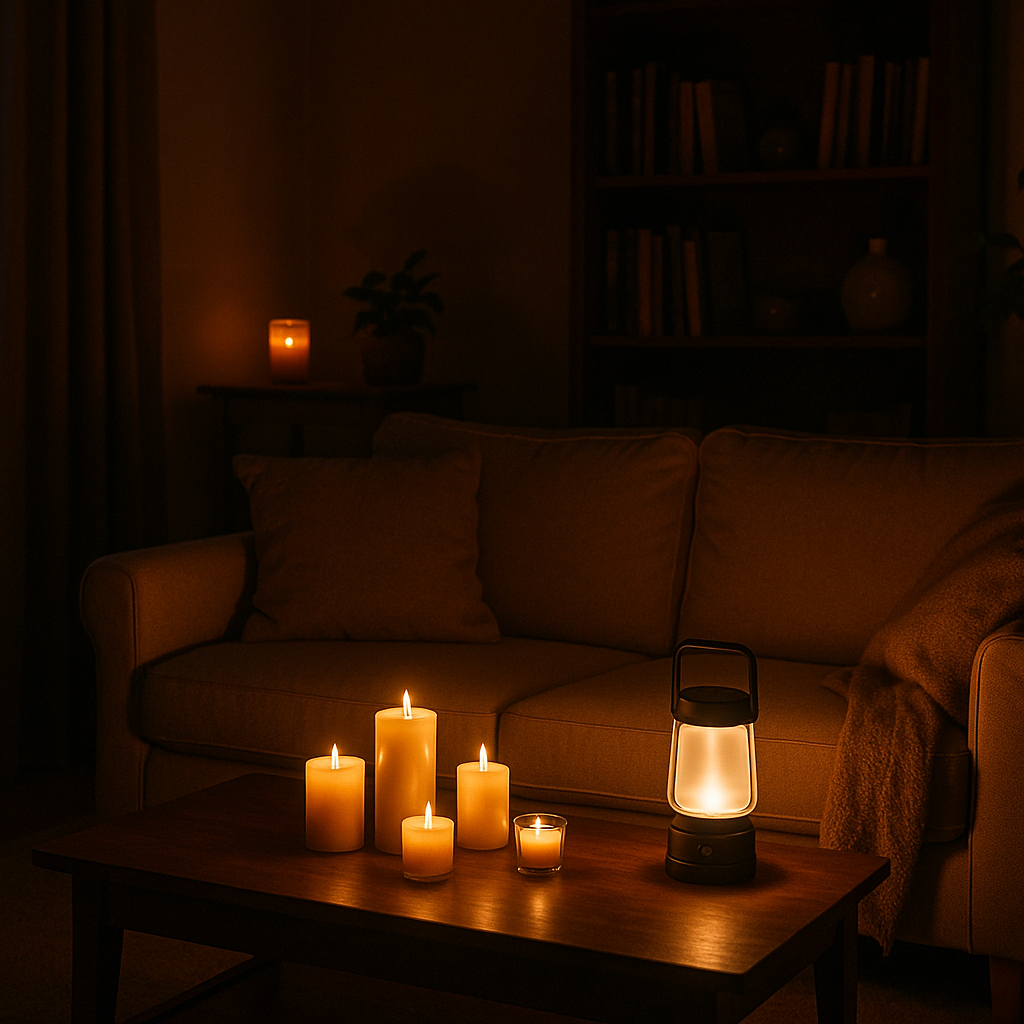
Power Outage Preparedness: The Complete Guide for Any Duration
The lights go out. Your refrigerator stops humming. Your phone is at 40 percent. What do you do next?
Most people freeze for a moment, find a candle, and hope the power comes back in an hour. Sometimes it does. But sometimes it does not. A summer thunderstorm can knock out power for two days. A major ice storm can keep a region dark for a week. A grid failure or hurricane can push that number to two weeks or longer.
The difference between a miserable experience and a manageable one is preparation. Not a bunker. Not a year of supplies. Just smart, practical steps taken before the lights go out.
This guide covers everything: what to do in the first 30 minutes, how long your food will last, how to stay hydrated, how to light your home safely, how to keep medical devices running, how to use a generator without getting hurt, and how to decide when to stay versus when to leave.
Why Trust This Guide?
This article was researched and reviewed by contributors with hands-on experience in emergency preparedness. They have tested gear, built real systems, and lived through situations where these skills actually mattered.



Duration Tiers: Thinking About Outages the Right Way
Not all power outages are the same. A 3-hour outage after a thunderstorm needs almost no preparation. A 10-day outage after a major hurricane is a survival situation.
Before diving into specifics, let us look at how outages break into three tiers. Your planning should address all three.
Most household preparation targets the multi-day tier and builds upward. If you are ready for five days, you are probably ready for two.
The First 30 Minutes: What to Do Right Now
When the power goes out, the first 30 minutes matter. Acting fast and smart can protect your food, your safety, and your peace of mind.
Minutes 1 to 5: Orient Yourself
- Do not panic. Take a breath. Most outages are short.
- Check your neighbors. Look outside. If the whole block is dark, it is a utility issue. If only your house is dark, check your breaker box first.
- Call or text your utility company. Most have outage reporting by text or a dedicated phone line. Report the outage. This puts you in the queue.
- Check for damage. If a tree hit a power line near your home, stay inside and call 911.
Minutes 5 to 15: Protect Your Food and Power
- Close your refrigerator and freezer. Every time you open them, cold air escapes. A closed fridge stays cold for about 4 hours. A closed freezer holds temperature for 24 to 48 hours. Stop opening them.
- Charge your devices. Your phone, tablet, and backup battery pack should start charging from any power source you have: a power station, car charger, or battery bank. Do this now, before those sources get depleted.
- Find your emergency kit. Get your flashlights, batteries, and radio out of wherever you stored them.
Minutes 15 to 30: Assess and Plan
- Check the weather. A storm outage in summer heat is a different problem than one in winter cold. Temperature extremes change your priorities fast.
- Turn off large appliances and electronics. When power returns, a surge can damage sensitive equipment. Unplug TVs, computers, and kitchen appliances. Leave one light switched on so you know when power is restored.
- Fill containers with water. If you are on well water, your pump will not work without power. Fill bathtubs, sinks, and every clean container you have right now.
- Tell someone. Text a friend or family member outside your area. Let them know your situation so someone is aware if things escalate.
Food Safety: How Long Does Your Food Last?
The biggest money-waster in a power outage is a full refrigerator full of food that goes bad. The biggest health risk is eating food that has already gone bad.
Here are the facts.
The Refrigerator
A refrigerator that stays closed will keep food safe for about 4 hours after the power goes out. After that, the temperature inside will creep above 40 degrees Fahrenheit, which is the danger zone where bacteria grow fast.
If the outage is expected to last longer than 4 hours:
- Move most perishable items (meat, dairy, eggs) to a cooler with ice.
- Eat what is already cooked first.
- Do not reopen the fridge unless necessary.
The Freezer
A full freezer holds its temperature for 24 to 48 hours. A half-full freezer lasts about 24 hours.
This is why a packed freezer is actually better for emergencies. Fill empty space with water bottles. They act as thermal mass, keeping everything colder longer.
If food still has ice crystals when the power comes back, it is generally safe to refreeze. If it has fully thawed and been above 40 degrees for more than 2 hours, discard it.
The Rule to Remember
“When in doubt, throw it out.” Food poisoning on top of a power outage is a bad combination. Do not taste-test questionable food to check if it is still good. Bacteria that cause illness do not always change the smell or taste of food.
What to Stock for Extended Outages
For multi-day and extended outages, you need food that does not need refrigeration or cooking. The best options are:
- Canned goods (beans, tuna, soup, vegetables)
- Peanut butter and crackers
- Dried fruit and nuts
- Instant oatmeal (just needs hot water)
- Freeze-dried meal kits
The Augason Farms 30-Day Emergency Food Supply bucket is a solid option for long-term storage. One bucket holds a month of calories for one adult, sealed in a durable container with a 25-year shelf life. It takes up about the same space as a large carry-on bag.
Water Supply: Do Not Assume the Tap Works
Electricity and water are more connected than most people realize. If your home uses well water, your pump runs on electricity. No power means no running water. Even city water can be affected during large-scale emergencies when pumping stations lose power.
How Much Water You Need
Store at least 1 gallon of water per person per day. That covers drinking and basic hygiene. It does not cover bathing or laundry.
For a family of four:
- 3-day supply: 12 gallons
- 1-week supply: 28 gallons
- 2-week supply: 56 gallons
A Nalgene wide-mouth water bottle is a great everyday carrier and emergency storage option. They are BPA-free, nearly indestructible, and hold 32 ounces, so you can track exactly how much water you are going through.
Water Filtration When Supplies Run Low
If your stored water runs out during an extended outage, you need a way to make questionable water safe. The Sawyer Squeeze water filter is one of the best options for this. It removes 99.99999% of bacteria and 99.9999% of protozoa. It weighs just 3 ounces and filters up to 100,000 gallons before needing replacement.
You can filter water from a bathtub, stream, or rain collection. Always filter before drinking.
Your Lighting Plan
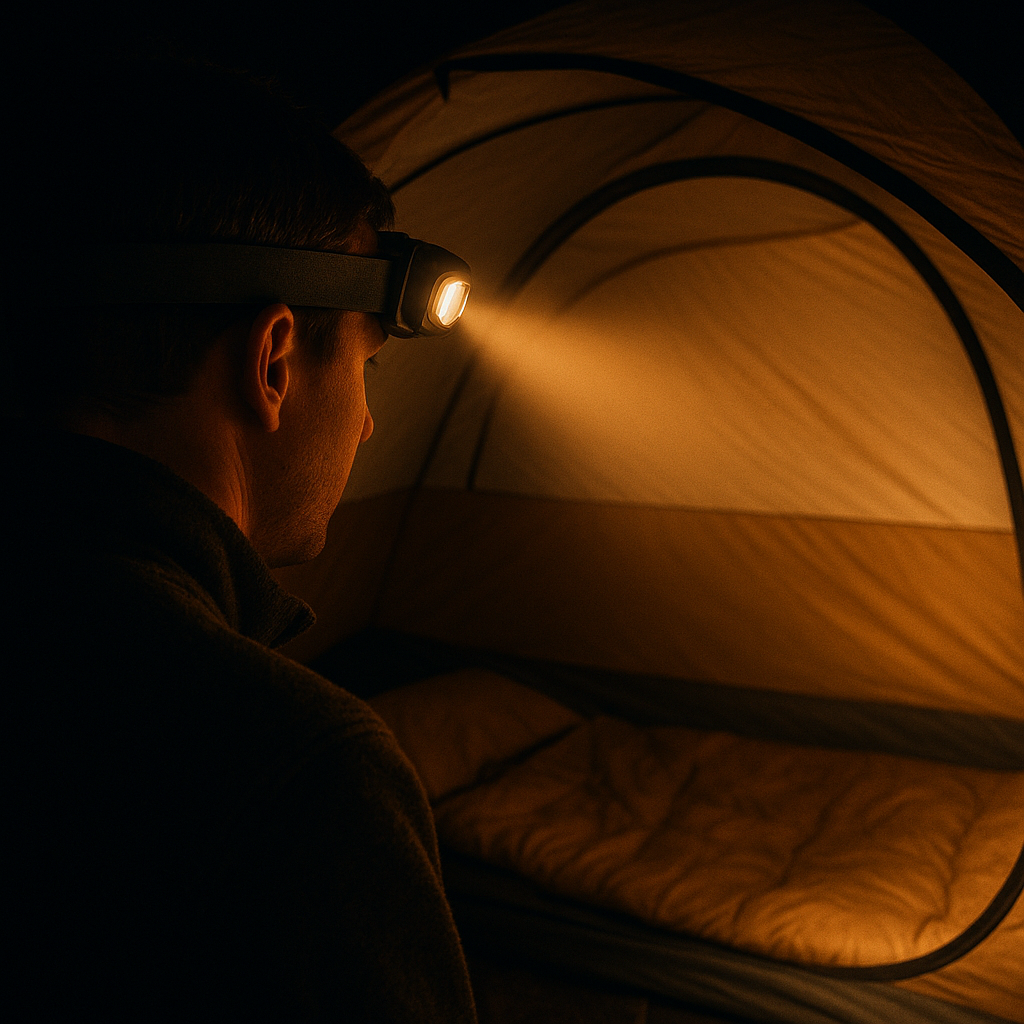
Candles feel cozy, but they are also a fire hazard. A flashlight is safer. A headlamp is even better because it keeps your hands free.
Layer Your Lighting
A good lighting plan has three layers:
Primary: Headlamps. One per person. The Black Diamond Spot headlamp is the gold standard here. It has a bright beam, a red light mode to preserve night vision, and runs on AAA batteries that are easy to stock. Headlamps are ideal for cooking, reading, and moving around the house.
Secondary: Lanterns. A battery-powered LED lantern or one powered by a power station can light a whole room. This is better for family areas where everyone gathers.
Backup: Candles. Keep them, but use them only when you have nothing better. Never leave candles unattended. Keep them away from curtains, papers, and children. Use a candle holder on a stable surface.
Battery vs. Rechargeable
Battery-powered lights are more reliable during outages because they do not depend on having a charged power station. But rechargeable lights are cheaper to run long-term. The best approach is to have both:
- Rechargeable headlamps and lanterns for everyday use
- A good stock of spare batteries for backup
Keep at least a 12-pack of fresh AAA and AA batteries in your emergency kit. Check them once a year.
Portable Power Stations: The Modern Backup Solution
A portable power station is basically a large rechargeable battery with outlets. You charge it ahead of time, and during an outage you can run small appliances, charge phones, power medical devices, and run lights.
They are quieter, safer, and easier to use than generators for most households.
Small Power Stations (Under 300Wh)
The Jackery Explorer 300 is a popular entry-level option. It holds 293Wh of capacity, which is enough to charge a smartphone about 25 times, run a CPAP for one night, power a small fan for several hours, or keep LED lights running for days. It weighs 7.1 pounds and fits in a large bag.
The EcoFlow RIVER 2 is a strong competitor at the same size. What sets it apart is its X-Stream charging, which can recharge from 0 to 80% in about 50 minutes with a standard outlet. If you have warning before an outage (storm incoming), you can fully charge it fast.
Large Power Stations (700Wh and Up)
For households with more power needs, the Anker 767 PowerHouse is a serious option. At 2048Wh, it can run a mini fridge, power a CPAP for multiple nights, and keep devices charged for several days. It also supports 1000W solar input, so you can recharge it without grid power during a long outage.
How to Choose
Pick based on your biggest need:
- Phone charging and lights only: 300Wh is plenty
- CPAP or small medical device: 500Wh or more
- Mini fridge or larger medical device: 1000Wh or more
Medical Device Backup: CPAP, Insulin, and Other Critical Needs
If you or someone in your household depends on medical devices, power outages become a medical issue, not just an inconvenience. Plan for this specifically.
CPAP and BiPAP Users
Most CPAP machines use 30 to 60 watts. A 300Wh power station can run a standard CPAP for 4 to 8 hours, which covers one night. A 500Wh station gives you two nights.
Some CPAP machines have a travel mode that reduces power consumption. Check your manual. Many machines also support DC power input, which is more efficient than using an inverter.
CPAP users should also talk to their doctor about which settings are truly essential. Humidification, for example, uses extra energy and may not be necessary for a few nights in mild weather.
Insulin and Medications That Need Refrigeration
Most insulin stays stable at room temperature for 28 to 30 days, but this varies by type and manufacturer. Check your specific insulin. If you are not sure, keep it in a cooler with ice packs.
A small 12-volt cooler powered by a power station or car adapter is a good solution for extended outages. Do not put insulin directly on ice, since freezing damages it.
Keep an emergency supply of medications that does not require refrigeration. Talk to your doctor about this before an emergency happens.
Oxygen Concentrators and Powered Wheelchairs
These devices draw significant power. An oxygen concentrator typically uses 150 to 300 watts continuously. A 2000Wh power station would run it for 6 to 13 hours.
For these situations, contact your utility company before an emergency. Many utilities maintain a list of customers with life-sustaining equipment and prioritize their areas for restoration. This is a free service and takes about 10 minutes to register.
Generator Safety: Avoiding Carbon Monoxide Poisoning
Generators save lives during outages. They also kill people every year, mostly from carbon monoxide poisoning.
Carbon monoxide (CO) is a colorless, odorless gas. You cannot see it or smell it. It can kill in minutes at high concentrations. Most generator-related deaths happen when people run generators indoors, in garages, or too close to windows.
The Golden Rules of Generator Use
Never run a generator inside. Not in the house. Not in the garage. Not in a shed attached to the house. Not under a covered porch. Outside only.
Keep it 20 feet from windows, doors, and vents. CO drifts. Even an outdoor generator can push CO into your home through open windows or HVAC vents.
Install carbon monoxide detectors. Every floor of your home should have one. The Kidde carbon monoxide detector is a plug-in model with a battery backup so it keeps working even during an outage. Put one near bedrooms and one on each additional floor.
Do not refuel while running. Turn the generator off and let it cool before adding gasoline. Fuel on a hot engine is a fire risk.
Do not back-feed the grid. Plugging a generator directly into a wall outlet can energize utility lines and injure utility workers. Use a transfer switch or a generator-specific extension cord to connect appliances directly to the generator.
How Much Generator Power Do You Need?
Calculate the running watts of everything you need to power at once. Common loads:
- Window AC unit (10,000 BTU): 900 to 1400 watts
- Refrigerator: 100 to 400 watts
- Sump pump: 750 to 1500 watts
- Microwave: 600 to 1200 watts
- CPAP: 30 to 60 watts
- LED lights: 5 to 15 watts each
Add them up. Add 20% for safety margin. That is your minimum generator size.
Staying Cool or Warm Without Power
Extreme temperatures are the most dangerous part of a power outage. In summer heat, adults and children can overheat fast. In winter cold, hypothermia sets in when indoor temperatures drop below about 50 degrees Fahrenheit.
Summer Heat: Staying Cool
- Close blinds and curtains on sunny sides of the house to block heat.
- Move to the lowest level of the home, since heat rises.
- Use a battery-powered fan to circulate air. The O2COOL battery-powered fan is a popular compact option that runs on D batteries for extended periods.
- Stay hydrated. Sweating is your body’s cooling system and it requires water.
- Know your nearest cooling center. Many communities open libraries, community centers, or malls as cooling shelters during heat events.
- If someone shows signs of heat stroke (confusion, hot dry skin, very high body temperature), call 911 immediately.
Winter Cold: Staying Warm
- Seal off one room and gather everyone there. A smaller space is easier to heat.
- Layer clothing. Wool and synthetic layers trap heat much better than cotton.
- Use sleeping bags rated for lower temperatures.
- Do not use a gas oven or stove for heat. This produces CO and is a fire risk.
- If the home drops below 55 degrees, consider going to a warming shelter, hotel, or family member’s home.
Emergency Communications: Staying Informed
When cell towers are overloaded or internet is down, a battery-powered weather radio is how you stay connected.
The Midland ER310 is one of the best all-around options. It receives NOAA weather alerts, can be powered by hand crank or solar panel (no batteries required), has a built-in LED flashlight and reading lamp, and includes a USB phone charging port. If your area is under an evacuation warning or disaster declaration, this radio will receive that alert directly.
Keep one charged and stored with your emergency kit. Test it twice a year when you check smoke detector batteries.
When to Stay vs. When to Evacuate
Most power outages do not require evacuation. But some do, and waiting too long to leave can be dangerous.
Reasons to Stay
- The outage is expected to be short (under 24 hours).
- The weather is mild and the temperature in your home is comfortable.
- You have enough water, food, and medication for the expected duration.
- No flooding, fire, or structural damage near your home.
- Roads are accessible.
Reasons to Leave
- It is summer and your indoor temperature is approaching 85 degrees or higher, especially with vulnerable people in the home.
- It is winter and your home has dropped below 55 degrees with no prospect of warming.
- You are running low on medication, especially insulin or life-sustaining drugs.
- Your area is under a mandatory evacuation order. Follow official orders.
- There is flooding, fire, downed power lines, or structural damage nearby.
- You have no water and cannot access safe water for your household.
Where to Go
- A hotel or motel outside the affected area
- A friend or family member’s home with power
- An official emergency shelter (check local government or Red Cross website)
- A designated community warming or cooling center
Always bring your emergency bag if you leave. Keep it pre-packed so you can be out the door in 15 minutes.
The Complete Preparedness Checklist by Time Horizon
This checklist organizes your supplies and actions by how long the outage has lasted.
What About Kids and Pets?
Kids During Outages
Children pick up on adult anxiety fast. Keep things calm and frame the outage as an adventure when you can. Have a few items set aside just for them:
- A headlamp of their own (kids love having gear)
- A small battery-powered speaker for music or stories
- Books, cards, and non-battery games
- Familiar snacks they enjoy
Talk to kids ahead of time about what to do during an outage. Children who have a clear script (“we check the fridge, we get the flashlights, we stay calm”) handle emergencies much better than children who have never thought about it.
Pets During Outages
- Store extra water for pets. Dogs and cats need roughly the same proportional water per day as humans, adjusted for weight.
- Keep a 3-day supply of pet food in your emergency kit.
- Keep veterinary records and medication information with your documents.
- If you evacuate to a shelter, check whether it accepts pets. Many emergency shelters do not, and you may need a pet-friendly hotel instead.
Building Your Emergency Kit Step by Step
If you are starting from zero, here is a practical order of purchases. Start with the most critical items and work down.
Maintaining Your Supplies
Buying supplies is only half the work. You have to maintain them.
Once a year (pick a date, like daylight saving time or your birthday), do a full check:
- Rotate food. Eat the oldest cans and replace them. Check expiration dates.
- Rotate water. Commercially bottled water is usually good for 1 to 2 years. Tap water stored in clean containers should be replaced every 6 months.
- Check batteries. Replace any that have been sitting unused for more than a year, or test them with a battery tester.
- Charge your power station. Most lithium power stations should be stored at 50 to 80% charge, not fully charged or fully depleted.
- Test your gear. Turn on the headlamps. Check the radio. Make sure everything works.
- Review your plan. Has your household changed? New medications? New family members? Update your supplies to match.
Think of your emergency kit like car insurance. You do not want to need it. But if you do need it, you really need it to work.
Final Thoughts
Power outages happen to everyone. Most are short and inconvenient. Some are long and dangerous. The difference between managing well and struggling is almost entirely preparation done in advance.
You do not need to spend a fortune or build a bunker. Start with the basics: water, food, light, communication, and a plan. Add medical-specific gear if your household needs it. Build from there as time and budget allow.
The goal is to feel ready, not anxious. When the lights go out, you want to calmly walk to your kit, switch on a headlamp, pour a glass of water, and settle in. That calm comes from knowing you have what you need.
Start today. Even one step is better than none.