Ready
Ready
Wildfire Evacuation Checklist: What to Grab and When to Go
Wildfires move fast. The 2018 Camp Fire destroyed the town of Paradise, California in under two hours. In 2021, the Marshall Fire in Colorado jumped from a spark to a neighborhood-consuming inferno in a single afternoon with almost no warning. By the time most people realize they need to leave, they are already behind.
The difference between a safe escape and a desperate scramble usually comes down to one thing: how much thinking you did before the fire started. This guide walks through everything, from understanding evacuation levels to grabbing your go bag to protecting your home as you leave. Read it now. Practice it. Then you will be ready when you need it most.
Why Trust This Guide?
This article was researched and reviewed by contributors with hands-on experience in emergency preparedness. They have tested gear, built real systems, and lived through situations where these skills actually mattered.



What Evacuation Levels Actually Mean
Most areas that use evacuation orders follow a tiered system. The exact names vary by county and state, but the underlying logic is almost always the same. Knowing what each level means helps you act at the right time instead of waiting too long or panicking too early.
Level 1: Evacuation Watch (or Advisory)
A watch means a wildfire threat exists in your area and you should be ready to leave quickly. This is your signal to stop whatever you are doing and prepare. Get your go bag by the door. Fill your car with gas. Charge your devices. Review your evacuation route. Check on neighbors who might need help.
You do not have to leave yet. But you should be ready to leave in under 15 minutes if the situation changes.
Level 2: Evacuation Warning
A warning means the threat is closer and more serious. Many people should leave now, especially anyone who needs extra time: elderly people, people with disabilities, families with young children, and anyone with animals. If you have livestock or horses, leave at the warning level because moving large animals takes much more time.
At a warning, leaving is strongly encouraged. Authorities use this level when they believe the fire has a real chance of reaching your area within hours.
Level 3: Evacuation Order (or Mandatory Evacuation)
Leave now. This is not a suggestion. An order means the fire is an immediate threat to your life. Emergency crews may not be able to reach you if you stay. Staying puts your life at risk and uses first responder resources that are needed elsewhere.
In some states, staying during a mandatory order can result in being unable to return until authorities allow reentry, even if your home survives. Do not gamble on the fire changing direction. Go.
How to Get Alerts
Sign up for your county’s emergency notification system before fire season. Most counties use systems like Nixle, Everbridge, CodeRED, or a local version. Find your county’s system by searching for your county name plus “emergency alerts signup.” Also sign up for Wireless Emergency Alerts on your phone, which push official alerts to your device automatically.
Keep a battery-powered or hand-crank weather radio in your home. Cell service often fails during large wildfires because towers burn or get overwhelmed with traffic. The Midland ER310 is a solid choice with AM, FM, NOAA weather radio, USB charging, a hand crank, and a built-in flashlight. It can receive alerts even when cell networks are down.
The “Go Bag Ready” Mindset
Most people think about their go bag as a one-time project: pack it, put it in the closet, forget about it. That is not the mindset that saves lives.
The go bag ready mindset means your bag is always packed, always accessible, and always current. It means you know where your documents are. It means your car has at least a half tank of gas during fire season. It means your kids know the plan. It means your pets have carriers and your animals have a destination.
This mindset does not require obsessing over disaster scenarios every day. It just requires a little preparation done once and then maintained. Think of it like keeping your car insured: you do not think about it constantly, but it is always there when you need it.
The goal is to reach a state where evacuation becomes a simple execution of a plan you already made, not a frantic decision-making session under smoke and stress.
Your Go Bag at a Glance
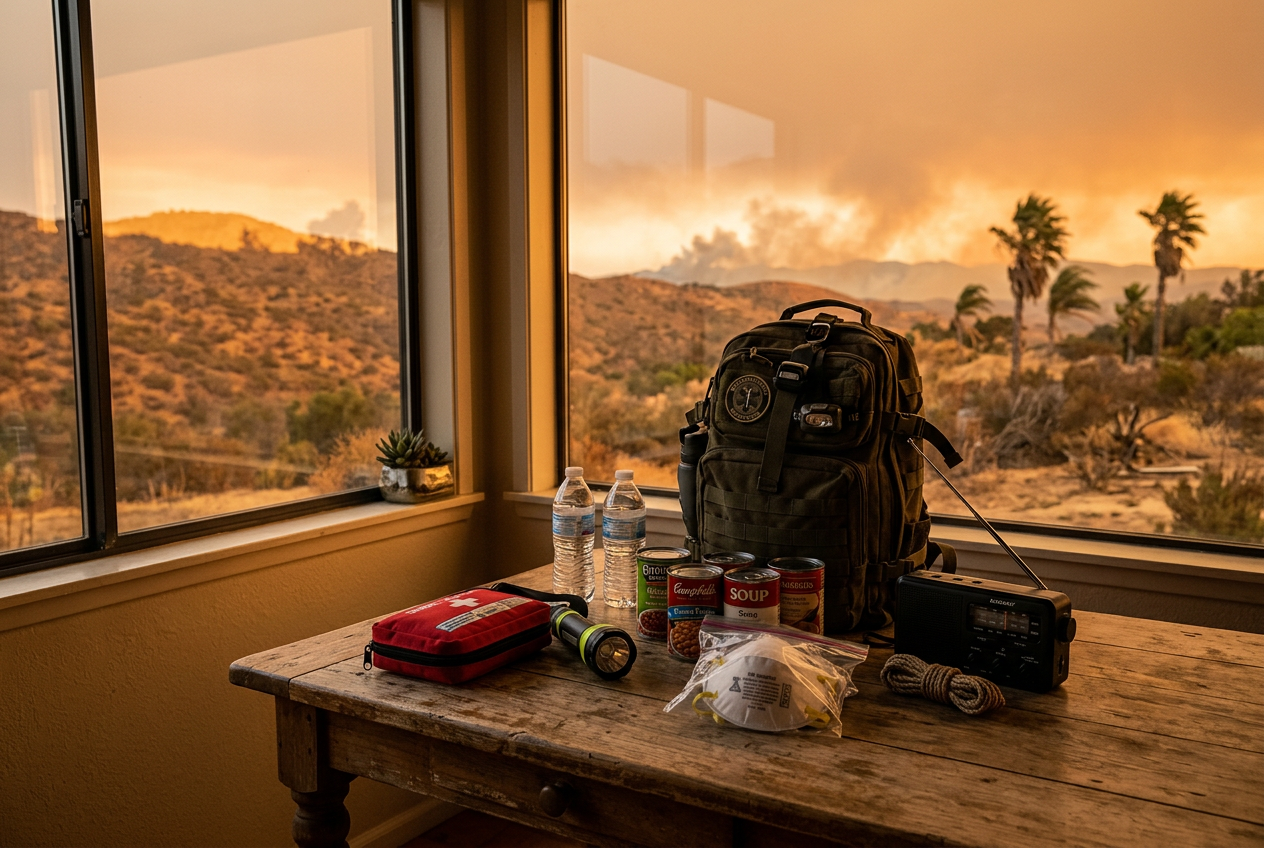
A wildfire go bag serves a different purpose than a general emergency kit. You need to move fast, carry it comfortably, and have everything that matters most in one place.
The 5.11 RUSH72 is a popular choice for a serious go bag. It holds 55 liters, has a MOLLE webbing system for attaching extras, and holds up to serious use. It is large enough for a thorough kit without being so heavy it slows you down.
Core go bag items:
- Water and a filter (covered below)
- Food for at least 72 hours
- First aid kit
- Medications (at least a week’s supply)
- Documents (copies and originals, covered below)
- Phone charger and battery bank
- Emergency radio
- Emergency blankets
- Dust and smoke protection (covered below)
- Cash in small bills
- Clothing for 3 days and sturdy shoes
- Flashlight with extra batteries
- Multi-tool or knife
- Pet supplies if applicable
Understanding the Time Tiers
When a fire threatens your neighborhood, the time you have to act determines what you can take. Think in three tiers.
The core lesson of this table: if you have 5 minutes, your pre-packed go bag is the only thing standing between you and leaving with nothing at all. Pack it now so that future-you does not have to think.
What to Grab in 5 Minutes
If you only have 5 minutes, the mental model is simple: people, pets, pre-packed bag, and go. That is it. Nothing else matters enough to risk your life.
This is why pre-packing is so important. The 5-minute scenario is not hypothetical. The Marshall Fire gave some neighborhoods in Broomfield, Colorado almost no warning. Residents reported having minutes, not hours. Some made it out with only the clothes on their backs.
Before fire season each year, go through this quick-prep habit:
- Make sure your go bag is fully stocked and near the door or in the car
- Put your document bag in the go bag or right next to it
- Keep your car keys in the same spot every day
- Keep pet carriers somewhere easy to grab
- Keep your phone charged to at least 50% every night
Those five habits mean you can leave in 5 minutes with everything that matters most.
What to Grab in 30 Minutes
Thirty minutes is enough time to be thoughtful without being careless. Once everyone is accounted for and animals are loaded, work through this list:
Documents and data:
- Grab your pre-packed document bag (more on this below)
- Take any hard drives with photos or important files
- Grab your laptop if it is nearby
Medications:
- Current prescription bottles (all of them)
- Add to your pre-packed medications if you have more
Clothing:
- 3 days of clothes for each person
- Sturdy closed-toe shoes for everyone
- Layers for cold nights
Food and water:
- Top off water bottles and a hydration reservoir
- Add shelf-stable food to fill out the bag
Communication:
- Make sure your emergency radio is packed
- Phone chargers for everyone
- Battery bank fully charged
Home:
- Close all interior doors (slows fire spread significantly)
- Close all windows and doors on the exterior
- Turn off propane tanks if safe to do so
- Leave lights on inside and out so firefighters can see the house
What to Do in 2 Hours
Two hours is a gift. Use it completely.
At the watch level, most people wait and see. That is often the wrong call. Use those two hours to fully prepare so that if the warning comes, you are already loaded and pointed at the exit.
Home ember-proofing steps (covered in detail in the next section)
Document scanning:
- Use a scanner app on your phone to scan all key documents
- Upload them to cloud storage before you lose cell service
- Email copies to a family member in a different region
Notify your network:
- Tell family members where you are going
- Check in with neighbors, especially elderly ones
- Post on your neighborhood app if you are evacuating
Valuables and irreplaceable items:
- Family photos (grab physical albums, or do a fast phone scan)
- Heirloom jewelry or small items with deep sentimental value
- External hard drives with irreplaceable data
- Items that cannot be replaced with money
Animals:
- Fill the tank and load animals (more below)
- Take copies of vaccination records
Review your route:
- Check road closures and fire locations on an app like Watch Duty or PulsePoint
- Have a primary route and a backup route memorized
- Tell someone outside the area which route you are taking
Protecting Your Home Before You Leave
If time allows, there are steps you can take to slow a wildfire’s path through your home. These steps will not save a house that is directly in a fire’s path, but they can help prevent ember ignition, which is actually how most homes catch fire during wildfires.
Embers travel miles ahead of the fire front. They land in gutters, on decks, against wood fences, and in open vents. The steps below reduce the number of places where embers can get in and start burning.
Outside the Home
- Move patio furniture, cushions, doormats, and any wood piles away from the house or into the garage
- Move propane tanks away from structures if possible, or turn them off at the valve
- Close all vents, including crawl space and attic vents, if you have covers for them
- Clear gutters of any leaves or debris (ideally done before fire season, not in the moment)
- Close garage doors
- Remove any combustible material from the immediate zone around your home: dead plants, dry leaves, mulch within 5 feet of the foundation
Inside the Home
- Close all interior doors. This simple step can mean the difference between a kitchen fire and a total loss. Closed doors act as fire barriers and slow the spread of smoke.
- Close all windows
- Close all fireplace dampers
- Turn off ceiling fans, which can spread embers and fire
- Leave lights on so the house is visible to firefighters
Water If Time Allows
If your home has an outdoor hose and you have time:
- Connect hoses and leave them near outdoor spigots so firefighters can use them
- Do not wet the roof or exterior and assume it is now protected; wet wood dries quickly in intense heat and this is not a reliable defense
Breathing During a Wildfire
Wildfire smoke is genuinely dangerous. It is not like regular smoke from a campfire. It contains fine particles (PM2.5), carbon monoxide, benzene, formaldehyde, and dozens of other toxic compounds from burning homes, vehicles, and vegetation. Exposure for even a few hours can cause serious respiratory harm, especially for children, elderly people, and anyone with asthma or heart conditions.
Why N95 Masks Actually Matter
During a wildfire evacuation, you may be moving through heavy smoke. A standard cloth mask or surgical mask does not filter fine particles. An N95 respirator filters at least 95% of airborne particles when properly fitted.
Stock at least one N95 per person in your go bag. The 3M Aura N95 respirator and similar NIOSH-approved models are what you want. Make sure it fits snugly against your face with no gaps. Beards reduce the seal significantly.
For people who wear glasses or need eye protection in heavy smoke, add safety goggles rated for dust and particulate to your bag. Eyes can burn and tear in heavy smoke, making it difficult to navigate or drive safely.
In the Car
Roll up all windows. Set the HVAC system to recirculate rather than pull in outside air. This is usually a button that shows arrows cycling inside the car cabin rather than fresh air coming in from outside. If you do not know how to switch your car to recirculation mode, find out now.
Air Quality Tracking
Check air quality on AirNow (airnow.gov) before and during an evacuation. An AQI above 150 is unhealthy. Above 300 is hazardous and poses immediate risk. If you must move through hazardous air, wear your N95.
Water and Hydration During Evacuation
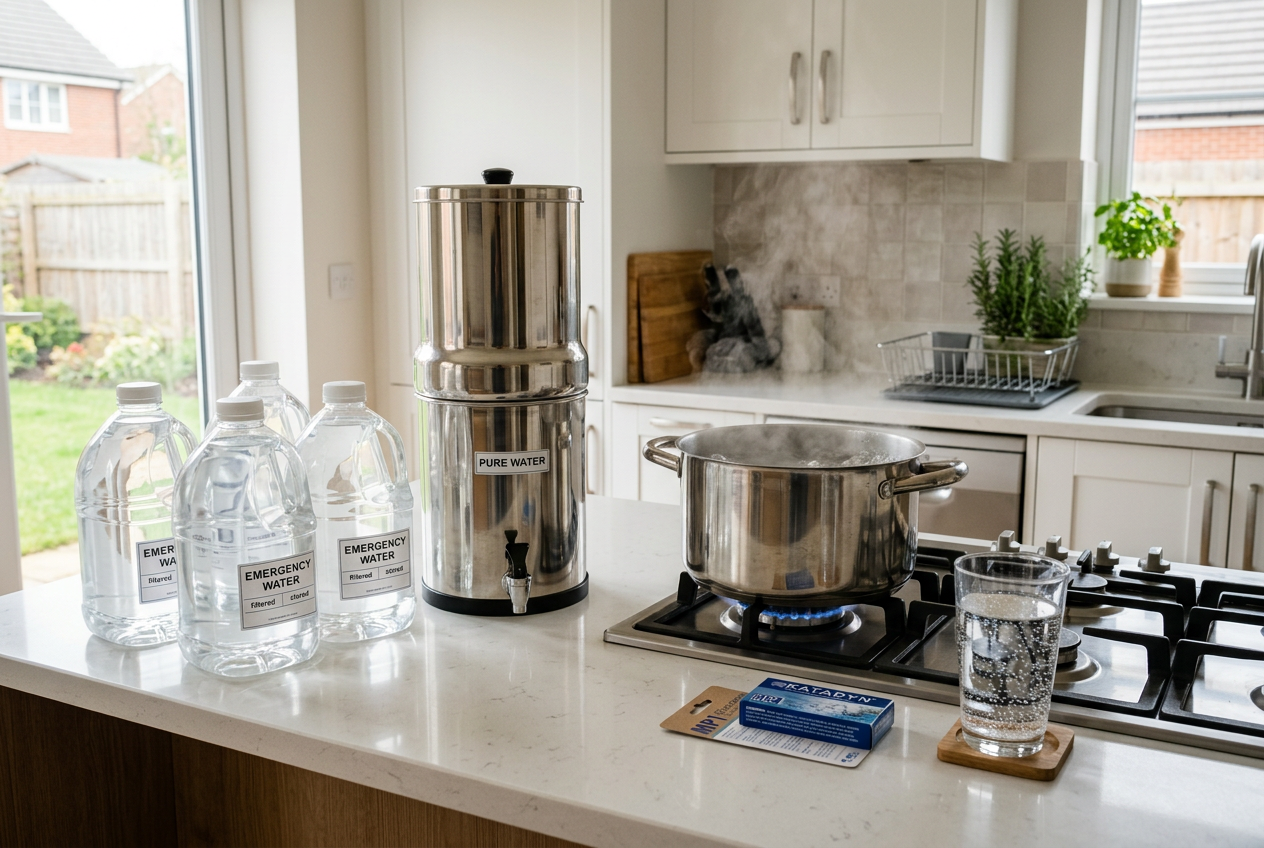
Stress, heat, and smoke all increase your need for water. Pack at least one liter of water per person in your go bag for immediate hydration during travel. For longer-term needs, include a quality water filter.
The Sawyer Squeeze water filter weighs under 3 ounces and filters up to 100,000 gallons of water. It removes 99.99999% of bacteria and 99.9999% of protozoa. At an evacuation shelter or campsite, it lets you safely drink from questionable water sources.
Pair it with several SOL emergency Mylar blankets for warmth if you end up sleeping in a car or at an outdoor shelter. The SOL brand uses a stronger material than budget versions and reflects up to 90% of body heat.
Documents: What to Take and How to Protect Them
Documents are one of the hardest losses after a disaster. Replacing them is slow, frustrating, and sometimes expensive. A little preparation makes recovery much faster.
The Documents That Matter Most
How to Protect Your Documents
Store physical documents in a waterproof document bag. These bags protect against water damage if your car is flooded, documents get wet in rain, or you encounter wet conditions at a shelter. Look for one with a zipper seal and made from heavy-duty PVC or similar material.
For digital backup:
- Scan or photograph every document above
- Upload to a secure cloud service (Google Drive, iCloud, Dropbox) that you can access from any device
- Email a set to a trusted family member who lives in a different part of the country
- Consider a password manager to store account numbers and contact info securely
Pre-Built Document Checklist
Every few months, check your document bag:
- Are all documents still current?
- Have any IDs or cards expired?
- Are insurance policies up to date?
- Do medical records reflect any changes?
Thirty minutes of review twice a year keeps your document bag reliable.
Power During an Evacuation
Your phone is your lifeline during an evacuation. It is how you navigate, get alerts, contact family, and access digital documents. Keeping it charged matters more than almost anything else.
A high-capacity portable battery bank is essential. For families or extended situations, a portable power station is even better.
The EcoFlow RIVER 2 holds 256Wh of capacity and can charge phones, laptops, small appliances, and medical devices like CPAP machines. It weighs about 7.7 pounds and charges from a wall outlet in about an hour. During an evacuation or multi-day shelter stay, it keeps your devices running and provides a sense of normalcy in a chaotic situation.
At minimum, keep a small battery bank in your go bag that can charge your phone at least twice.
Evacuating with Animals
Animals complicate evacuation significantly. Most public emergency shelters do not accept pets. Many hotels do not take large animals. Livestock require trailers, destination planning, and much more time than most people expect.
Dogs and Cats
- Keep carriers accessible and in working condition year-round
- Practice crate training so animals enter willingly under stress
- Have a leash, collar with ID tags, and vaccination records ready
- Pack at least 3 days of food and a collapsible bowl
- Bring any medications your pet takes
- Know which hotels and motels along your route are pet-friendly (search using Bring Fido or similar sites, and save a list)
Birds, Reptiles, and Small Animals
- Have transport containers ready
- These animals are highly sensitive to smoke and heat
- Bring food, water, and any special supplies
- Many evacuation shelters will not take exotic animals; call ahead to wherever you plan to go
Horses and Livestock
This is where the evacuation warning level matters most. You cannot load horses and cattle in 5 minutes. It takes time to catch animals, load trailers, and transport to a safe location.
Steps to take before fire season:
- Know where your animals can go (a farm farther from fire risk, a county fairground, a friend’s property)
- Have a trailer available or know who to call for livestock hauling
- Write your contact info on your horses with livestock marker or paint
- If you cannot transport your animals in time, open gates to give them a chance to flee
- Contact your county agricultural extension office for local livestock evacuation resources
Route Planning and Navigation
Your usual route out of the neighborhood might be blocked by fire, fallen trees, or evacuating traffic. Plan at least two exit routes before fire season.
How to Plan Your Routes
- Drive both routes during non-emergency conditions so they feel familiar
- Identify the major roads and turns without relying entirely on your phone’s GPS
- Note where gas stations are along each route
- Save offline maps to your phone using apps like Google Maps or Maps.me (download your region when you have service)
- Write the routes on paper and keep it in your car
During Evacuation Traffic
Wildfires can create gridlock on major roads. If traffic stalls and fire is approaching:
- Do not abandon your vehicle in the road; it blocks emergency vehicles
- Pull completely off the road if you must stop
- Stay inside the vehicle; a car offers more protection than open air
- Call 911 to report your location if fire is imminent
- Turn on headlights and hazard lights
Apps to Use
- Watch Duty: Shows real-time wildfire perimeter maps, evacuation zones, and road closures
- PulsePoint: Fire and emergency incident alerts from local agencies
- AirNow: Air quality index by location
- Google Maps or Apple Maps: Download offline maps before leaving
Staying Informed Without Cell Service
During major wildfires, cell networks often fail or become overloaded. Do not count on your phone as your only information source.
The Midland ER310 emergency radio mentioned earlier picks up NOAA weather radio broadcasts, which are updated every few minutes during emergencies. Local emergency management agencies broadcast evacuation updates, road closures, and shelter locations over these channels. Keep the radio in your go bag with fresh batteries.
If you are traveling with multiple people in separate vehicles, establish a meeting point and check-in plan before separating, so you can reconnect without relying on cell calls.
Returning Home Safely
The urge to return home the moment smoke clears is completely understandable. But returning too soon is one of the most common mistakes people make after a wildfire.
Wait for Official Clearance
Do not return until your specific area has been officially reopened by local authorities. Fire activity can reignite. Air quality may still be hazardous. Roads may have debris, downed power lines, or structural damage. Return too early and you may be exposing yourself to serious harm and potentially overwhelming first responders who are still working.
Check your county’s official website, their social media accounts, or the Watch Duty app for reentry announcements.
Gear Up Before You Return
When returning to a fire-affected area:
- Wear your N95 respirator even if the sky looks clear. Ash and residual smoke particles remain in the air for days after active burning stops.
- Wear goggles, gloves, and long sleeves. Ash contains toxic compounds from burned homes including lead, arsenic, and asbestos in older structures.
- Wear sturdy, closed-toe boots.
When You Arrive
- Do not turn utilities back on yourself. Wait for official clearance from the utility company.
- Check the exterior structure before entering. Look for cracks in the foundation, leaning walls, or damage to the roof.
- Do not use water from the tap until your water utility confirms it is safe. Wildfire heat can contaminate pipes.
- Document all damage with photos and video before touching anything. Your insurance company will need this.
- Call your insurance company to begin the claims process as soon as possible.
After-Fire Air Quality Indoors
Even if your home survived, smoke and ash may have entered. Before sleeping there:
- Open windows to ventilate if outdoor air quality has improved (check AirNow)
- Wipe down hard surfaces with damp rags, not dry dusting which redistributes particles
- Run air purifiers with HEPA filters if you have them
- Dispose of any food that was exposed to smoke or ash
Building Your Complete Wildfire Kit
Based on everything in this guide, here is a consolidated product list. These are the items that belong in a serious wildfire-ready household.
The One Thing To Do This Week
If you read this entire guide and you are not sure where to start, here is the one step that will make the biggest difference: sign up for your county’s emergency alert system today.
Search your county name plus “emergency alert registration” and spend five minutes filling out the form. Add your phone number, your email, and your address. That system is what will tell you when a watch or warning has been issued in your neighborhood. Everything else in this guide builds on that foundation.
Then, before the end of the week:
- Fill a gallon jug of water and put it by your door
- Find your passport and put it in a Ziploc bag
- Make sure your phone is set to receive wireless emergency alerts (check in your phone’s settings under Notifications)
Three small actions. That is the first layer of wildfire readiness. Every step after that makes you more prepared than most people around you.
Wildfires are not going away. The conditions that create them, hot and dry summers, more people living at the edge of wild lands, decades of accumulated fuel from fire suppression, are all getting more intense. But with the right mindset and a little preparation, you can face fire season with a clear head instead of a panicked one.
Quick Reference Summary
Level 1 Watch: Get ready. Pack, fill the tank, review routes.
Level 2 Warning: Leave now if you have animals, kids, or need extra time. Everyone else: finish packing and prepare to move.
Level 3 Order: Leave immediately without hesitation. No exceptions.
Your N95 is not optional during a wildfire. Cloth masks do not filter fine smoke particles. Carry one per person.
Your pre-packed go bag is your 5-minute plan. If you have not packed it yet, that is the most important thing you can do after finishing this article.
Close all interior doors before leaving. It is one of the most effective things you can do to slow fire spread through your home, and it takes 30 seconds.
Wait for official clearance before returning. Ash is toxic. Reignition is real. Return when authorities say it is safe.
Stay alert, stay ready, and stay safe.