Winter Storm Preparedness: The Complete Home Survival Guide
Winter storms kill more Americans than tornadoes, hurricanes, and floods combined in most years. They kill slowly and quietly, through cold exposure, carbon monoxide poisoning, and traffic accidents on icy roads. They stretch across days or weeks rather than hours. And unlike a hurricane, which gives you days of warning and a clear evacuation option, a winter storm can move faster than forecast and strand you at home with no heat and no power before you have time to act.
The households that come through major winter storms with the least damage are not the ones with the best luck. They are the ones who thought through their specific vulnerabilities before the first storm warning of the season, stocked supplies when the stores were not crowded, and had backup systems in place before they needed them.
This guide covers everything that matters: how to heat your home without power, how to keep your pipes from freezing, how to build a water and food supply that works in winter, how to prepare your vehicle, and what to do when a serious storm is on the way.
- Have a backup heat source ready before the storm so you stay warm even if the power goes out for days.
- Keep a hand crank or solar radio on hand to hear NOAA weather alerts when the electricity and cell service fail.
- Store at least one gallon of water per person per day, and enough for 3 days minimum.
- Stock 3 days of food that does not need cooking, plus flashlights, batteries, and warm blankets.
- Make a family plan and keep a first aid kit and extra medicine close by.



Reviewed by Dale M., James W. & Beth O. — contributors with hands-on preparedness experience. How we test
Getting ready for a winter storm means having the right gear before the snow hits. Here are the items you should grab now, and below we explain why each one matters.

Midland ER310 Emergency Radio
This radio keeps you connected to NOAA weather alerts so you know when the storm is getting worse. It charges by solar, hand crank, or battery, so it works even during a long power outage.
Check Price on Amazon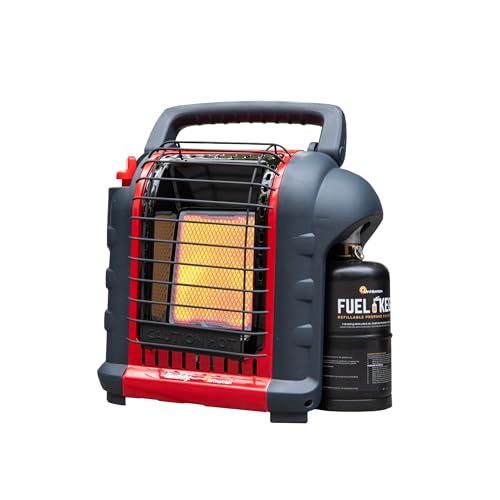
Mr. Heater Portable Buddy
This propane heater gives off up to 9,000 BTU and warms about 225 square feet, so a room stays livable if the furnace quits. It is approved for indoor and outdoor use, which makes it a safe backup heat source.
Check Price on Amazon
Mr. Heater Big Buddy
This heater puts out up to 18,000 BTU and warms about 400 square feet, so it can keep a larger space comfortable during a power outage. It is built for indoor and outdoor use, making it a strong choice for bigger homes.
Check Price on AmazonIn this guide
Why Trust This Guide?
This article was researched and reviewed by contributors with hands-on experience in emergency preparedness. They have tested gear, built real systems, and lived through situations where these skills actually mattered.
Understanding Winter Storm Alerts
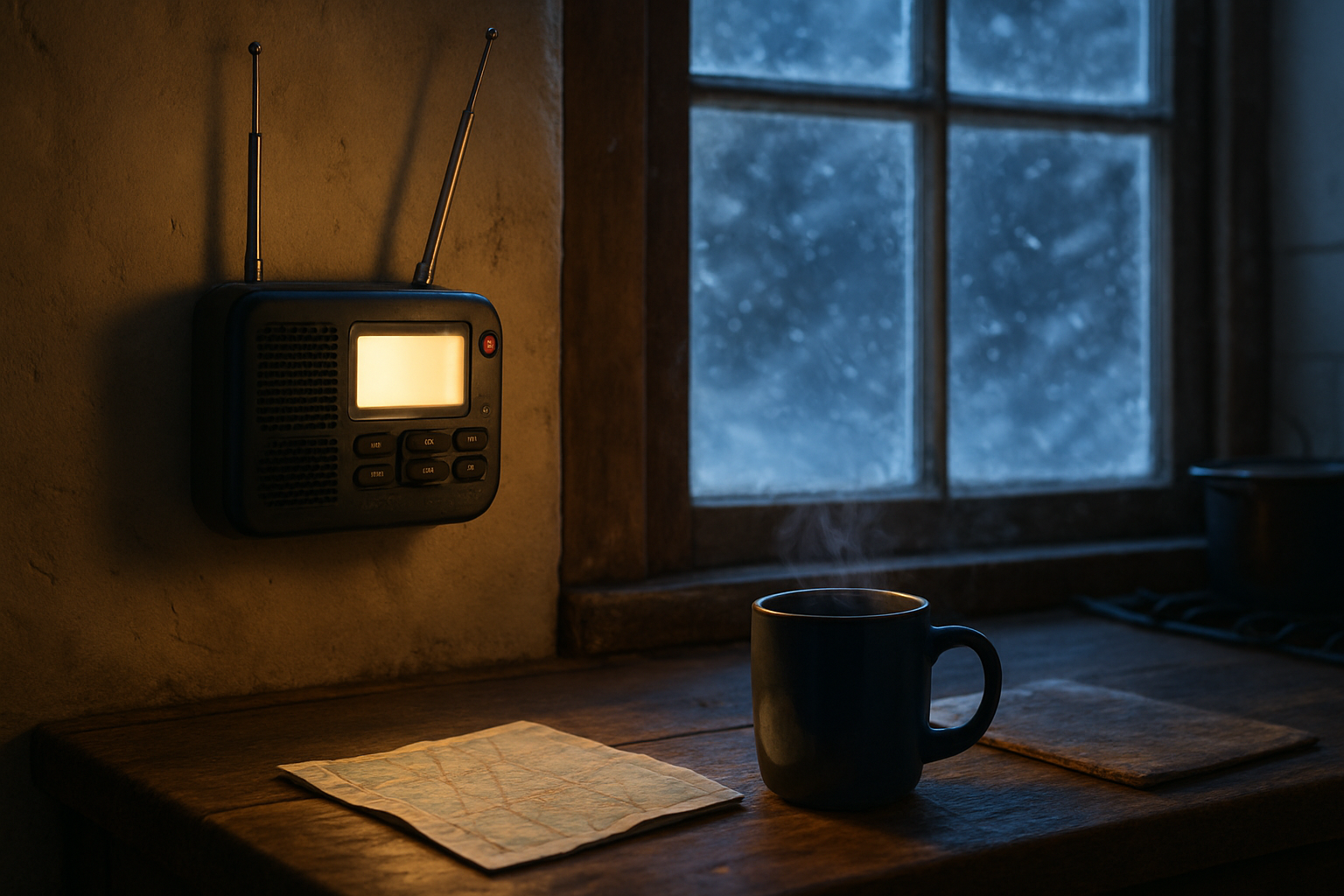
The National Weather Service issues different levels of alerts for winter weather. The terminology varies slightly by region, but the core hierarchy is consistent across the country.
A Winter Weather Advisory means that winter weather conditions are expected to cause significant inconvenience but generally are not severe enough to be life-threatening if you use caution. This is the lowest level of alert. Road conditions will be slippery. Travel may be difficult.
A Winter Storm Watch means that severe winter storm conditions are possible within 48 hours. A watch is not a warning. It means conditions are favorable for a major storm but not yet certain. Use this window to review your supplies, charge your devices, and verify that your backup heating and power systems are working.
A Winter Storm Warning means that severe winter storm conditions are expected within 36 hours. Hazardous conditions will make travel dangerous or impossible. This is the trigger to finish your preparations and stay home.
A Blizzard Warning is a more specific and more serious alert. It means sustained winds or frequent gusts of 35 mph or more are expected, along with considerable falling or blowing snow that reduces visibility to less than a quarter mile, for three or more consecutive hours. A blizzard is not just a heavy snowfall. It is a snow event combined with dangerous wind that can strand vehicles and make travel disorienting and potentially fatal.
A Wind Chill Warning is issued when wind chill values are expected to be cold enough to cause frostbite on exposed skin within 30 minutes or less. The threshold varies by climate region but is typically in the range of minus 25 to minus 35 degrees Fahrenheit.
| Alert Level | What It Means | Your Response |
|---|---|---|
| Winter Weather Advisory | Significant inconvenience. Slippery roads. Travel difficult. | Avoid unnecessary travel. Check supplies. Charge devices. |
| Winter Storm Watch | Severe conditions possible within 48 hours. Not yet certain. | Top off water. Fuel car. Verify backup heat. Stage go-bag. |
| Winter Storm Warning | Severe conditions expected within 36 hours. Will impact travel. | Stay home. Finish all preparations now. Bring in firewood. |
| Blizzard Warning | Snow plus 35+ mph winds, visibility under 1/4 mile for 3+ hours. | Do not go outside. Treat as a multi-day shelter-in-place event. |
| Wind Chill Warning | Wind chill cold enough to cause frostbite in 30 minutes or less. | Cover all exposed skin if you must go outside. Limit time outdoors. |
The most important weather tool for winter storms is the same one that matters for every disaster: a battery-powered or hand-crank NOAA weather radio. The Midland ER310 Emergency Hand Crank Radio receives all NOAA weather band channels and runs on AA batteries, solar, or hand crank. When your power is out and your phone battery is dead, this radio is how you find out that the storm is getting worse before it gets better.

Your Biggest Winter Risk: Losing Heat
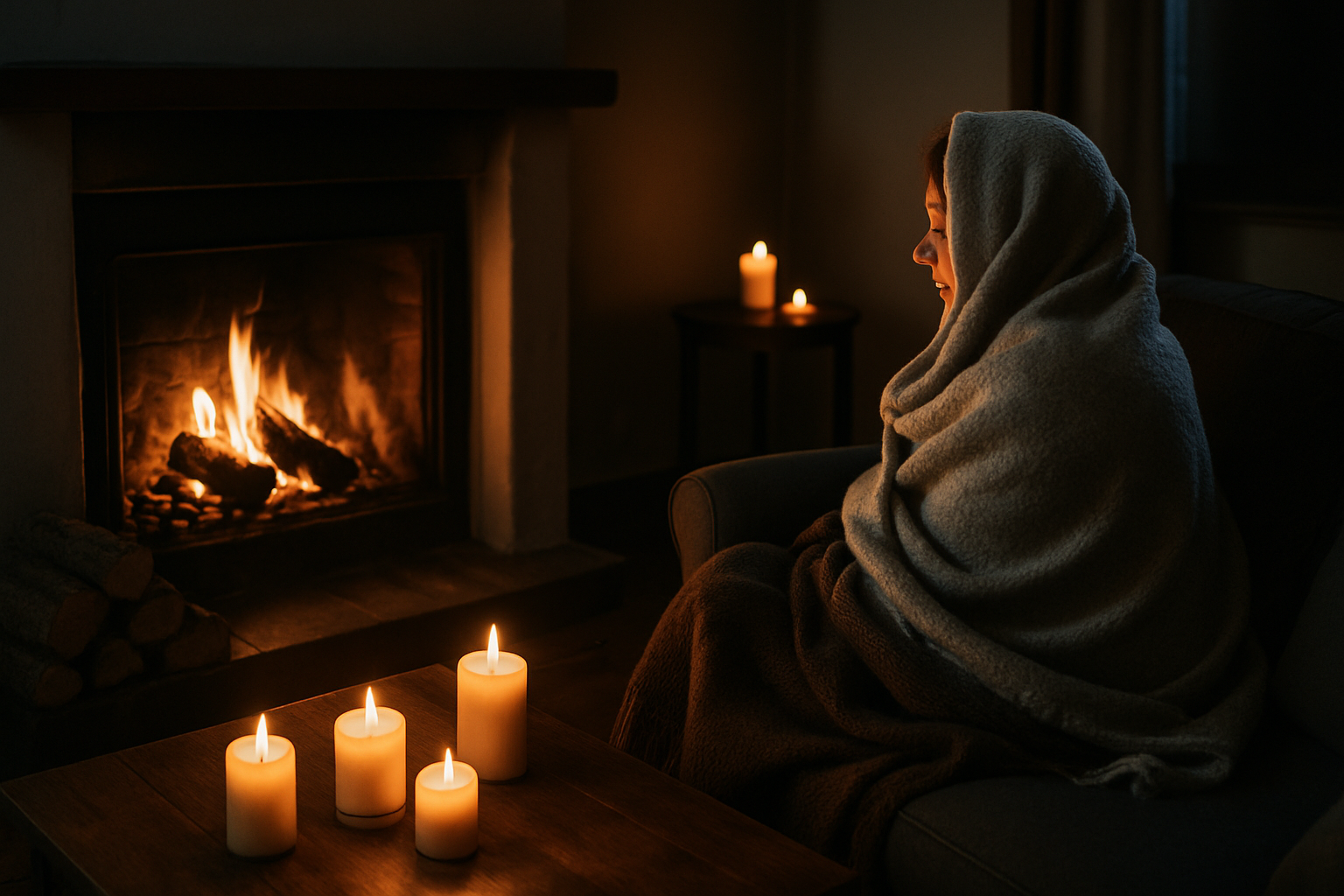
In a hurricane, the primary threat is wind and water. In a tornado, it is wind. In a winter storm, the primary threat is heat loss. Everything else, pipes, power, food, water, flows from that.
Most American homes rely on a single heating system: a gas furnace with an electric ignition, an electric heat pump, or an oil furnace. All of them require electricity to operate the blower, ignition, or control systems. When the power goes out in a winter storm, the heat goes with it.
The question to answer before winter is: if your primary heating system fails, how will you keep at least one room warm enough for your family to survive?
Propane Heaters
The most practical backup heating solution for most households is a portable propane heater designed for indoor use. The Mr. Heater Portable Buddy MH9BX Indoor-Safe Propane Heater is the standard recommendation for this role. It puts out up to 9,000 BTU per hour, which is enough to heat a 225-square-foot space. It runs on standard one-pound propane camping cylinders or connects to a larger tank with an adapter hose.

The Portable Buddy includes a low-oxygen shutoff (ODS) and a tip-over shutoff, both of which are safety features that allow it to be used safely in enclosed spaces. That said, you should still crack a window slightly for ventilation any time you use a fuel-burning heater indoors. The oxygen sensor shuts the heater down if oxygen levels drop, but having some fresh air exchange is always the better practice.
For larger spaces or households that want more heat output, the Mr. Heater 18000 BTU Big Buddy Heater NF puts out up to 18,000 BTU per hour. It is the right choice for households that need to heat a larger room. It can help keep a bigger area livable during a multi-day outage.

How much propane do you need? At the medium setting (4,000 BTU), a Portable Buddy will run approximately five to six hours on a single one-pound cylinder. For a three-day outage, you would need approximately twelve to fifteen one-pound cylinders to run the heater for eight to ten hours per day. A better approach for extended use is to connect the heater to a standard 20-pound propane tank with a compatible adapter hose. A 20-pound tank holds roughly 430,000 BTU of energy, which is enough for over 100 hours of use at the medium setting.
Store at least two full 20-pound propane tanks before winter. Refill them at the start of each season. The cost is low and the investment is worth it.
Wood Stoves and Fireplaces
A wood stove or a fireplace with an insert is one of the most reliable backup heating systems available. Neither requires electricity. Both run on a fuel that can be stored locally in large quantities.
If you have a fireplace, have the chimney inspected and cleaned each fall before heating season. A dirty chimney is a fire hazard. Creosote buildup is the cause of most chimney fires, and creosote builds up faster when wood is burned at low temperatures or when wet wood is burned.
Stock firewood before winter. A standard cord of firewood (4 feet by 4 feet by 8 feet) is the baseline unit of measurement. A well-insulated home burning a cord over winter as backup heat only is using it conservatively. For a full heating season relying primarily on wood, plan on two to four cords depending on your climate and home size.
Burn dry seasoned wood, not green wood. Green wood has too much moisture, burns inefficiently, produces a lot of smoke, and creates more creosote. Wood that was cut at least one year ago and stored off the ground with good airflow is properly seasoned.
What Not to Use
Never use a gas range or oven for heat. Gas ranges are not designed for space heating, produce carbon monoxide, and cause deaths every year when used this way during power outages.
Never use a charcoal grill, hibachi, or charcoal-burning device indoors. Charcoal produces massive amounts of carbon monoxide. Using it indoors in any space, including a garage, will kill you.
Never use a camp stove indoors for extended periods. Camp stoves are designed for brief outdoor cooking use. Using one inside for warmth produces dangerous levels of carbon monoxide.
Protecting Your Pipes
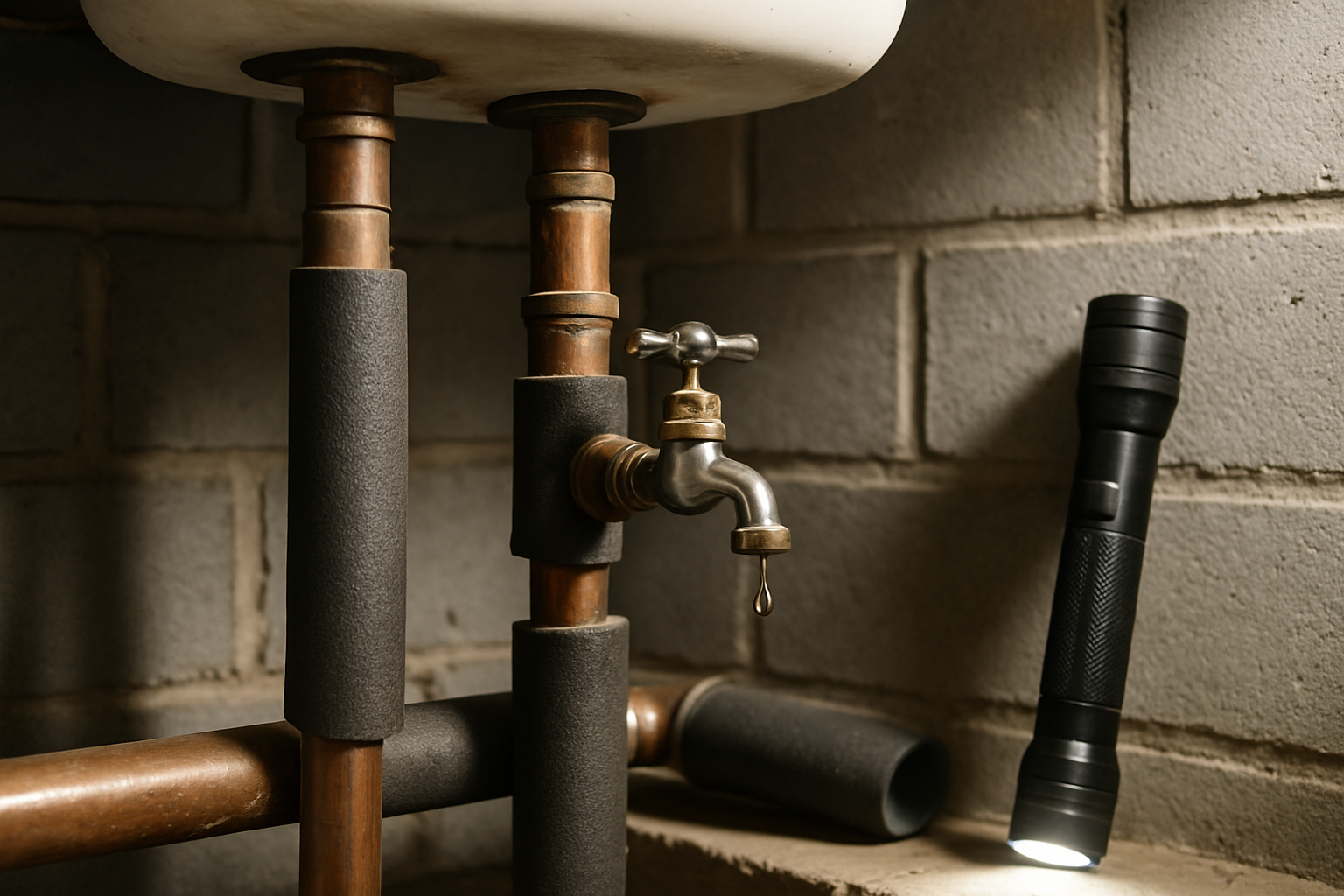
Frozen pipes are one of the most damaging consequences of winter storms. When water freezes inside a pipe, it expands. The expansion can crack or burst the pipe. When the ice thaws, the water flows freely through the break and floods the wall, ceiling, or floor.
The pipes most likely to freeze are the ones that run through exterior walls, unheated crawl spaces, attics, or garages. Pipes running along outside walls in kitchens and bathrooms are common problem areas.
Before the Storm
Insulate vulnerable pipes. Pipe insulation foam sleeves are inexpensive and take less than an hour to install. Measure the diameter of your pipes and buy the matching foam sleeve. Cut it to length, slit it lengthwise, and wrap it around the pipe. For pipes in very cold spaces, use foam pipe insulation with a higher R-value or wrap with Frost King Electric Pipe Heating Cable. This heat tape plugs into an outlet and keeps the pipe temperature above freezing as long as power is available. It is the most effective protection for chronically cold pipe runs.

Know where your main water shutoff is. If a pipe does burst, you need to be able to shut off the water to the house immediately. Find the main shutoff valve now and make sure everyone in the household knows where it is and how to turn it off. A gate valve requires several full turns. A ball valve requires a quarter turn. Either way, knowing where it is saves thousands of dollars in water damage.
Disconnect and drain outdoor hose bibs. Outdoor faucets are among the first things to freeze. Disconnect garden hoses before the first freeze of the season. If your outdoor faucets do not have a frost-free design, shut off the supply valve inside the house and open the outdoor faucet to drain the remaining water in the line.
During a Freeze or Extended Power Outage
When your heat fails during extreme cold, the interior of your home will eventually drop below freezing. At that point, your pipes are at risk. Here is how to manage it:
Open cabinet doors under sinks. Especially cabinets on exterior walls. This allows the home’s residual heat to reach the pipes.
Let faucets drip. A slow, steady drip from both hot and cold taps keeps water moving through the line. Moving water is much harder to freeze than standing water. This is especially useful for overnight when temperatures are lowest.
If you are leaving the home during the winter: Shut off the main water supply and drain the system. Open all faucets to allow the pipes to drain completely. This eliminates the freeze risk entirely.
If a pipe freezes: Do not use an open flame to thaw it. Use a hair dryer on low heat, starting from the faucet end and working back toward the frozen section. Keep the faucet open so that water and steam can escape as the ice melts.
Power Backup for Winter Storms
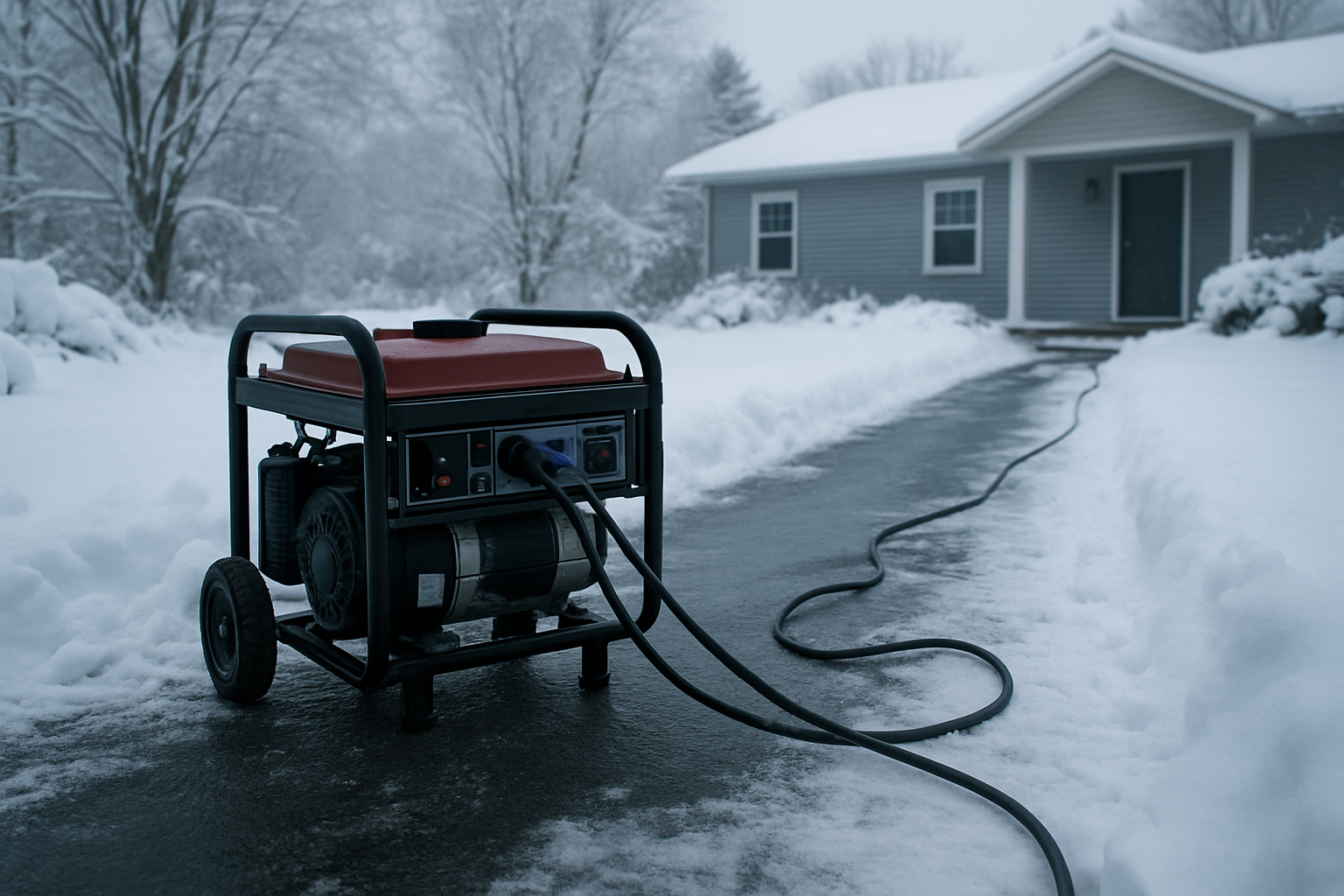
Winter storm power outages are among the most dangerous of any disaster type. Losing power in August is uncomfortable. Losing it in January in a cold climate can be life-threatening within hours if you do not have backup heating in place.
Portable Generators
A portable generator is the most capable backup power solution for winter outages. It can run your furnace blower (typically 300 to 800 watts), keep the refrigerator running, power lights and devices, and run a sump pump if you have flooding risk.
The WEN 56380i 3,500-Watt Dual-Fuel Inverter Generator runs on gasoline or propane, which matters in winter when gasoline stations may be out of fuel or inaccessible. At 3,500 running watts it handles most household essential loads. The inverter design produces clean power safe for electronics and medical devices.

Generator safety rules are non-negotiable in winter. Carbon monoxide from a generator running in a garage has killed entire families. Always run your generator outside, at least 20 feet from any window or door. In a winter storm, this means keeping it covered from snow while maintaining full ventilation clearance. Never run it inside a garage, even with the door open.
Store fuel appropriately. Gasoline stored in an approved container with a fuel stabilizer added will stay fresh for up to 12 months. Store at least 10 gallons at the start of winter season. Rotate stock by using it in your lawn equipment in spring.
Propane Heaters for Backup Warmth
A propane heater is a simple way to add backup heat when the power goes out. It does not need electricity to make heat.
The Mr. Heater 18000 BTU Big Buddy Heater NF puts out up to 18,000 BTU. That is enough to warm a room during a winter outage. It runs on propane, so it works even when the grid is down.
Use a propane heater with care. Follow the maker’s directions. Give the heater plenty of clearance from anything that can burn. Make sure the room has fresh air. Never leave it running while you sleep unless the maker says it is safe to do so.
Battery Power Stations
Battery power stations are the right solution for quiet, indoor backup power. They produce no emissions and can be used safely inside the house.
The EcoFlow Delta 2 Portable Power Station holds 1,024 watt-hours and outputs 1,800 watts continuously. In a winter outage, it can run LED lights and phone chargers indefinitely between solar recharges, power a CPAP machine through the night, or run a small electric space heater (400 to 600 watt models) for several hours. It recharges from solar panels or from a car’s 12V outlet, which means it does not depend on grid power to recharge.

Battery power stations cannot run a standard electric furnace or central heat pump. Those loads are too high. But for lights, communications, medical devices, and small space heaters, they are the cleanest and safest backup option available.
Carbon Monoxide: The Winter Storm Killer
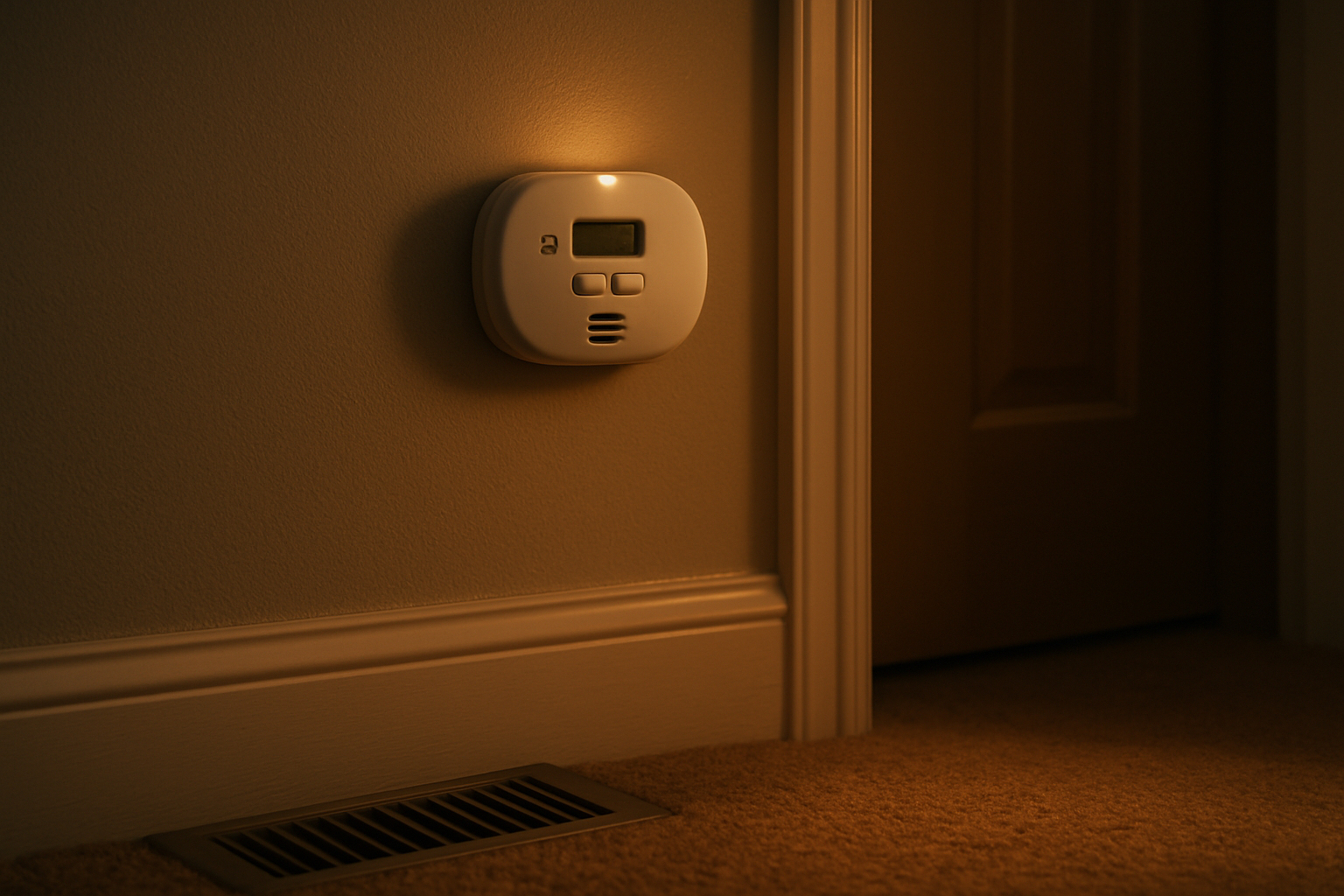
More people die from carbon monoxide poisoning in winter weather events than from exposure to cold. Carbon monoxide is colorless, odorless, and tasteless. It builds up slowly. The symptoms, headache, dizziness, nausea, confusion, feel like the flu. By the time you realize what is happening, you may not be able to act.
Carbon monoxide is produced by any combustion process. Generators, propane heaters, gas stoves, charcoal grills, wood fires, and gasoline engines all produce it. In an enclosed space, the levels can reach lethal concentrations quickly.
The rules:
- Generators go outside, at least 20 feet from any opening. No exceptions.
- Propane heaters rated for indoor use can be used inside but require ventilation. Crack a window.
- Gas stoves are for cooking. Never use one to heat a space.
- Charcoal and camp stoves stay outside. Always.
Install carbon monoxide detectors. You should have a working CO detector on every level of your home and outside every sleeping area. Battery-operated or battery-backup models continue working when the power is out, which is exactly when carbon monoxide risk is highest. Test your CO detectors at the start of every winter season and replace the batteries at the same time.
If your CO detector alarms: get every person and pet outside immediately, call 911 from outside or a neighbor’s house, and do not go back inside until emergency responders say it is safe.
Water Preparation for Winter
Winter complicates water storage in ways that other seasons do not. Stored water in an unheated garage or outbuilding will freeze, making it unavailable when you need it. Water supply infrastructure is also vulnerable: storms can cause pipe breaks in municipal supply lines, contamination from flooding, and pressure loss that makes tap water unreliable.
Store your water in a heated living space where it will not freeze. Even a closet inside the home will maintain above-freezing temperatures as long as the interior of the home is being heated, whether by your backup propane heater or a wood stove.
A WaterBOB Emergency Drinking Water Storage bathtub liner holds 100 gallons of water and stores flat when not in use. Fill it when a storm watch is issued. Water from a tub liner in a heated bathroom stays liquid even when outside temperatures are well below zero.

For permanent stored water, stackable containers kept in a heated interior space are the most practical option. Store at least one gallon per person per day for a minimum of seven days. Winter water use for drinking, cooking, and minimal sanitation runs about one to two gallons per person per day under emergency conditions.
Food for Winter Storm Emergencies
Winter storm food planning is simpler than hurricane food planning in one important way: you do not have to worry about food spoiling from heat. The ambient cold actually helps. If you lose power and the outside temperature is below freezing, you can use your garage or a cooler on the porch as a supplemental freezer for frozen foods.
The rules are simple: have at least seven days of shelf-stable food at home before winter season. Foods that require no cooking or minimal preparation are the best foundation.
Stove-dependent cooking. In a winter power outage, a propane camp stove used outdoors, or a gas range if your supply is not affected, lets you cook normally. A single 1-pound propane cylinder is enough to boil water and cook simple meals for several days. Keep a camp stove and two cylinders as part of your winter emergency kit.
For long-term caloric backup, the Augason Farms 30-Day Emergency Food Supply provides roughly 1,900 calories per day for one adult in a single bucket. The meals rehydrate with hot or warm water in minutes. In a winter scenario where you have a propane stove or a wood fire, getting warm water is not a problem, which makes freeze-dried emergency food especially practical.

Beyond your emergency food supply, stock pantry basics that provide calories without cooking: peanut butter, crackers, nuts, dried fruit, granola bars, oatmeal packets, canned goods with pull-top lids. These carry you through the first day or two without touching your long-term supply.
Staying Warm: Layering and Sleeping
If your backup heating can only keep one room above freezing, consolidate your household into that room. Close doors to unused rooms. Seal gaps around interior doors with towels. Concentrate body heat where you are spending time.
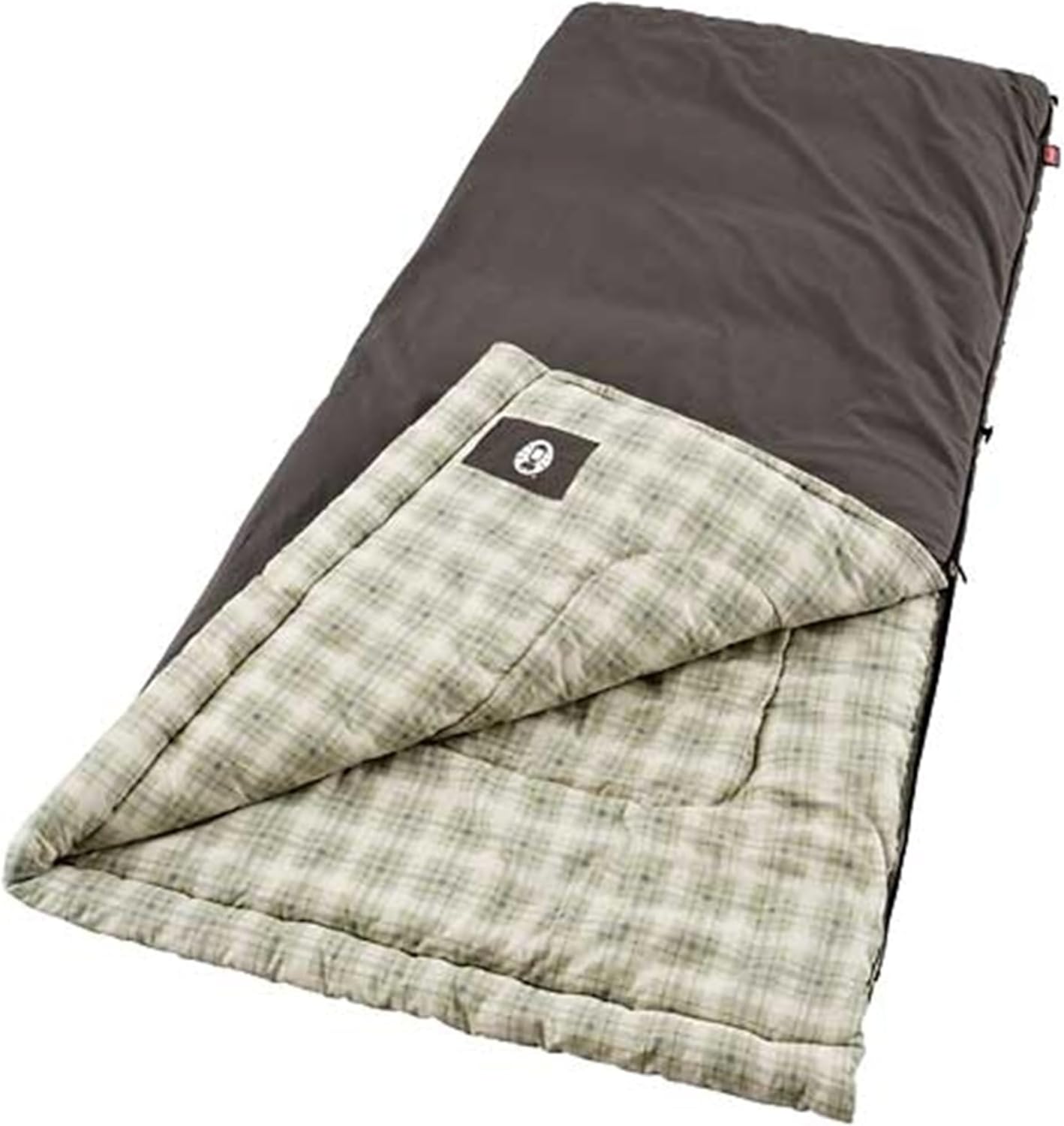
Sleeping. Cold is most dangerous when you are sleeping and your activity level drops. Before winter, make sure every member of your household has access to adequate bedding for cold temperatures. Sleeping bags rated for cold weather are more useful than extra blankets in a power outage scenario because they trap heat around the body rather than relying on the sleeper to stay still under layers.
The Coleman Sleeping Bag rated to 0 degrees Fahrenheit is a practical solution for home use during cold weather outages. It is bulky compared to backpacking bags, but for a family that needs to stay warm in a house with failing heat, bulk is not a drawback. It packs down small enough to store in a closet and comes out only when needed.
Emergency Mylar blankets are not a substitute for a good sleeping bag, but they are a useful backup layer. A package of 4-Pack Emergency Space Blankets takes up almost no space and reflects up to 90 percent of body heat back to the user. Wrap one around the outside of a sleeping bag for additional warmth, use one as a ground barrier to prevent conductive heat loss, or hand one to someone who did not pack adequate bedding.
Hand warmers are an underrated part of a winter emergency kit. HotHands Hand Warmers (40-pack) activate with air exposure and produce heat for up to 10 hours. They are safe to use inside sleeping bags, inside mittens and boots, and in the pockets of a coat. Keep at least two packs in your winter emergency kit.
Dress in layers. Base layer of moisture-wicking material, mid layer of insulation (fleece or down), outer layer for wind and water resistance. This applies inside a cold house as much as outside. Cotton holds moisture and loses insulating value when wet. Wool and synthetic fleece maintain warmth even when damp.
Vehicle Preparedness for Winter
More people die in winter storms in their vehicles than anywhere else. Getting stuck or stranded on a road during a blizzard is not a minor inconvenience. It is a survival situation.
The first rule is simple: if there is a Blizzard Warning in effect, do not drive unless it is a genuine emergency. Roads that look passable can become impassable within minutes in a blizzard.
Before Winter: Maintenance
Have your vehicle serviced before the winter season. Key items:
Battery. Cold temperatures reduce battery capacity significantly. A battery that starts your car reliably in September may not start it at 10 degrees Fahrenheit. Have your battery tested at the start of the season if it is more than three years old. Replace it if the cold cranking amp (CCA) rating is testing below 80 percent of its rated value.
Tires. All-season tires handle most winter driving adequately. Dedicated winter tires provide significantly better grip in snow and ice and are worth the investment in high-snowfall climates. Regardless of tire type, check pressure before the season. Cold air compresses and tires lose about one pound per square inch for every 10 degrees Fahrenheit drop in temperature.
Coolant. Make sure your antifreeze is properly mixed. A 50/50 mix of antifreeze and distilled water protects down to roughly minus 34 degrees Fahrenheit.
Wipers. Install winter-rated wiper blades in November. Standard summer blades freeze up in winter conditions and stop clearing effectively.
Fuel. Keep your fuel tank at least half full throughout the winter season. A nearly empty tank can develop moisture in the fuel line that freezes. And if you are ever stranded, fuel is what runs your heat while you wait for help.
Vehicle Emergency Kit
Your vehicle should carry a dedicated winter emergency kit from November through March. This is separate from your standard car emergency kit and adds winter-specific gear.
| Item | Purpose | Notes |
|---|---|---|
| Ice scraper and snow brush | Clear windows and roof before driving | Long-handled brush saves your back |
| Traction boards or kitty litter | Get unstuck when tires spin on ice | Compact traction boards work better than sand |
| Small folding shovel | Dig out tires and clear exhaust pipe | Critical for vehicles buried in drifting snow |
| Warm blanket or sleeping bag | Stay warm if stranded and waiting for help | One per passenger is ideal |
| Hand warmers (6 to 10 packs) | Supplemental heat while stranded | Essential if heater fails or fuel runs low |
| Emergency snacks and water | Nutrition and hydration for a long wait | Use water bottles that can handle freezing |
| Jumper cables or jump starter | Restart a dead battery | A portable jump starter works without another vehicle |
| Bright LED flashlight | Visibility in low-light or nighttime conditions | Bring extra batteries; cold drains them fast |
| Road flares or reflective triangles | Make your vehicle visible to other drivers | LED flares do not burn out and are reusable |
If you get stranded: Stay with your vehicle. It is a shelter and it is easier for rescuers to find than a person on foot in a blizzard. Run the engine for 10 minutes out of every hour for heat. Before running the engine, clear snow away from the exhaust pipe to prevent carbon monoxide buildup. Tie a bright cloth or flag to the antenna or door handle to signal your location.
Your Winter Home Emergency Kit
Beyond your backup heating and power systems, your home winter emergency kit should include everything needed to function for at least five to seven days without leaving. Here is the minimum:
Food and water: Seven days of shelf-stable food per person and at least one gallon of water per person per day, stored where it will not freeze. See the food and water sections above for specifics.
Light: Several battery-powered LED lanterns and a headlamp for each person. Avoid candles during extended outages. The Black Diamond Storm 450 Headlamp is a reliable choice with a 450-lumen output and a battery life of over 200 hours at a lower setting. Keep lithium batteries in cold-weather use gear, as alkaline batteries lose significant capacity in sub-freezing temperatures.
First aid: A comprehensive first aid kit including bandages, wound care supplies, OTC pain relievers, antidiarrheal, antacid, cold and flu medicines, and any prescription medications refilled to at least a 14-day supply. Winter emergencies commonly result in frostbite and hypothermia alongside any injuries. Know how to recognize and treat both.
Communication: NOAA weather radio, a written list of emergency contacts, and a portable charger for phones. If any family member has a medical device that requires power (such as a CPAP), have a battery power station specifically for that purpose and keep it charged.
Warmth: Sleeping bags for every household member rated to at least 20 degrees Fahrenheit below the coldest expected night temperature in your area. Emergency Mylar blankets as backups. Hand warmers. Warm layered clothing accessible without digging through closets in the dark.
Tools: A manual can opener, matches or a lighter in a waterproof container, duct tape, a snow shovel (inside, not frozen in the garage), a manual phone charger, and basic hand tools.
Before the Storm: The Final Preparation Window
When a Winter Storm Watch is issued for your area, you have roughly 24 to 48 hours to complete your preparations. This is the time to act, not the day of the storm.
Run through this list during a watch:
Test your backup heating system. Light the propane heater and confirm it works. If you have a wood stove, confirm there is dry wood staged inside the house and that the flue damper opens freely.
Top off your water storage. Fill the WaterBOB if you have one. Fill all water containers to capacity. Fill the bathtub with water as a reserve.
Check your fuel. Fill the car with gasoline. Fill propane tanks if they are low. Make sure firewood is staged inside the house or in a covered area where you can access it without going through a blizzard.
Charge everything. Phones, tablets, laptops, portable power stations, radios. A fully charged power station is a better backup than a half-charged one.
Get cash. ATMs and card readers will not work in a power outage. Keep at least $200 in small bills.
Check on neighbors. Winter storms are isolating. Elderly neighbors, neighbors with young children, and neighbors with medical needs may not have adequate preparations. A quick check-in costs five minutes and can save a life.
During the Storm
Once a Winter Storm Warning is in effect, the best thing you can do for your safety is stay inside and stay put.
Do not go outside unless you must. Blizzard conditions can cause disorientation. People have gotten lost and died within a few hundred feet of shelter they could not see through the snow. If you must go outside, tell someone where you are going and when to expect you back. Dress appropriately for the temperature and wind chill, not just for the distance.
Monitor your heating and carbon monoxide detectors. If a CO detector alarms, go outside immediately and call 911. Do not try to find the source yourself.
Keep an eye on your roof load. Wet, heavy snow can collapse roofs. If you hear unusual cracking sounds or see walls bowing inward, that is a structural warning. Get out of the building.
Watch for signs of hypothermia and frostbite. Hypothermia symptoms include intense shivering, confusion, slurred speech, slow breathing, and loss of coordination. Frostbite appears as skin that turns white, gray, or yellow and loses sensation. Both conditions require immediate warming. Move the person to a warm environment, replace wet clothing with dry, and apply gentle warmth. For suspected hypothermia, call 911.
After the Storm: Safe Recovery
Assess before you go outside. After a major storm, downed power lines may be buried under snow. Touching a downed power line, or water in contact with one, is fatal. Look before you walk. If a line is down near your property, call your utility and stay away.
Clear snow from exhaust vents. If your furnace, water heater, or dryer vents are buried under snow, the appliances will not work properly and may back up carbon monoxide into the living space. Clear the vents before turning any appliances back on.
Shovel early and often. Wet heavy snow that has sat on a sidewalk or driveway overnight and then refroze is significantly harder to remove than snow during or right after the storm. Shoveling in multiple passes during a storm is easier than waiting until it is over. Lift with your legs, not your back. Snow shoveling causes cardiac events and back injuries every winter.
Check for structural damage. Look for water staining on ceilings that might indicate ice dam damage, cracks in exterior walls, and any areas where snow may have infiltrated the structure. Ice dams form when heat escapes through the roof, melts snow, and the meltwater refreezes at the cold eaves. The water backs up under the shingles and leaks into the attic and ceiling. The solution is better attic insulation and ventilation, which is an off-season project.
Check on your pipes. After temperatures drop severely, even well-insulated pipes can freeze. Run all faucets to test flow. If a faucet produces no flow, you likely have a frozen pipe in that line. Follow the thawing procedure described earlier.
Winter Storm Preparedness Checklist
| Category | Action | When |
|---|---|---|
| Heat | Buy and test propane backup heater. Stock two full 20-lb propane tanks. Inspect fireplace or wood stove. Stack firewood indoors. | Before first storm of season |
| Pipes | Insulate vulnerable pipe runs. Install heat tape on exposed outdoor pipes. Locate main water shutoff. Disconnect outdoor hoses. | Before winter season |
| Power | Test generator and run it under load. Store 10 gallons of stabilized gasoline. Charge battery power station. Test CO detectors. | Before winter season |
| Water | Store 7 days of water per person in heated interior space. Buy WaterBOB for storm filling. Confirm water purification tablets are stocked. | Before winter season |
| Food | Build 7-day shelf-stable food supply. Stock a camp stove and fuel cylinders. Confirm manual can opener is accessible. | Before winter season |
| Warmth | Cold-rated sleeping bags for every person. Emergency Mylar blankets. Two boxes of hand warmers. Warm layered clothing accessible. | Before winter season |
| Vehicle | Test battery. Check antifreeze. Install winter wipers. Stage winter vehicle kit. Keep tank above half full all winter. | Before November |
| Storm Watch | Fill water containers. Top off fuel. Fill WaterBOB. Charge all devices and power stations. Get cash. Check on neighbors. | When watch is issued |
| After Storm | Check for downed lines before going outside. Clear exhaust vents. Check pipes for freezing. Assess roof for ice dam damage. Shovel carefully. | After storm passes |
Putting It All Together
Winter storms are predictable in their general nature and unpredictable in their specific timing and severity. The forecast on Monday for a Friday storm can shift dramatically by Wednesday. A storm expected to bring four inches can deliver fourteen. A system forecast to stay north of your location can move south in a matter of hours.
This unpredictability is the strongest argument for building your winter preparedness before the season starts rather than in response to a specific forecast. Your propane tanks should be full before the first watch of the year, not on the day the watch is issued. Your sleeping bags should be staged before the first freeze, not when the power has already gone out.
The core of a sound winter preparedness plan is not complicated: a way to stay warm without grid power, protection for your pipes, a supply of food and water that does not require leaving the house, a safe way to generate limited electricity, and a vehicle prepared for winter driving. Start with one category at a time. Do it in October, before the season begins, before the propane dealers are backlogged and the stores are out of hand warmers.
Cold is patient. Your preparation does not have to be rushed. It just has to happen.
For more on home backup power, see our guide to best home backup generators and best portable power stations. For building your food and water supply, start with long-term food storage and emergency water storage.