 Ready
Ready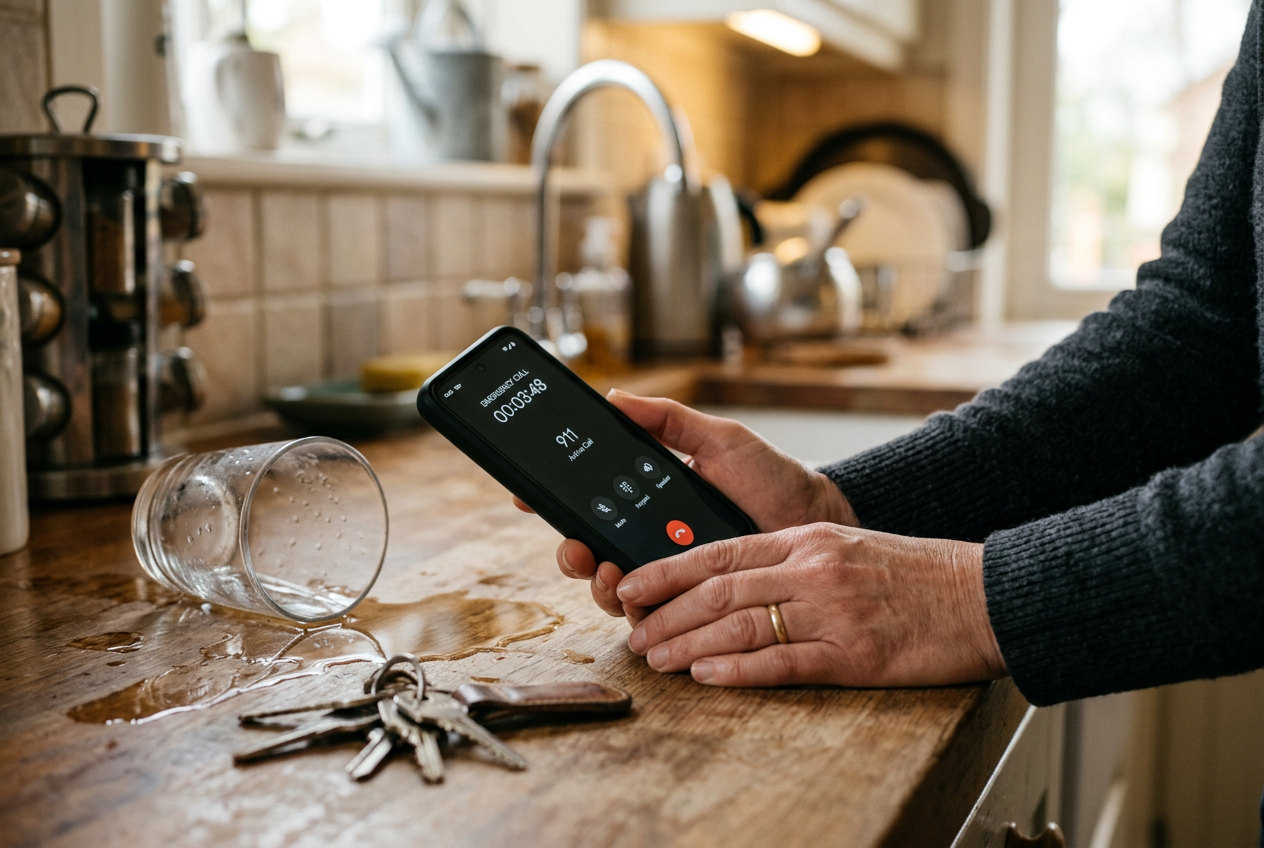
How to Talk to a 911 Dispatcher in an Emergency: What to Say and Do (2026)
When you type “911” into a search bar, you might be curious about one thing: how to become a 911 dispatcher. It is a real job, and it takes training, background checks, and testing. But most people never work in a dispatch center. There is a far more useful skill that every household should have. That skill is knowing how to call 911 and talk clearly during a real emergency.
Here is the problem. When something goes wrong, your heart races. Your hands shake. You may forget your own address. You might freeze when the dispatcher starts asking questions. These seconds matter. A clear, calm call helps the dispatcher send help faster. A confused call wastes time you may not have.
The good news is that calling 911 well is a skill you can learn. You can practice it before you ever need it. You can even set up your home so anyone can make the call, including kids, seniors, and visitors.
This guide walks you through the whole process. You will learn what to say when the dispatcher answers. You will learn what information they need and why. You will learn how to stay calm under stress and speak clearly. You will also learn how to prepare your home ahead of time so the call goes smoothly.
Let’s start with what a dispatcher actually does and why it matters to you.
- Call 911 and stay calm. Give your exact address first in case the call drops.
- Answer the dispatcher's questions clearly. They ask details to send the right help, not to slow things down.
- Do not hang up until the dispatcher tells you to. They may guide you through first aid or CPR while help is on the way.
- Keep medical info where responders can find it fast, like on the fridge.
- Make sure seniors and kids can call for help with easy to use phones and SOS buttons.



Reviewed by Elena V., Marcus T. & James W. — contributors with hands-on preparedness experience. How we test
Getting ready for an emergency means having the right tools on hand before you ever need them. Read on to see why these items can help when every second counts.

ICE Medical Info Magnet
This laminated card sits on your fridge so first responders can quickly see your medications, allergies, and emergency contacts. It saves time when you cannot speak for yourself.
Check Price on Amazon
Big Button Senior Phone
The large one-touch buttons and SOS key let seniors or kids call for help fast, even with poor vision or memory trouble. It makes reaching 911 simple in a crisis.
Check Price on Amazon
Fridge Emergency Info Kit
This File of Life style kit keeps your medications, conditions, and contacts organized right where EMTs look first. It gives responders key details in seconds.
Check Price on AmazonIn this guide
Why Trust This Guide?
This article was researched and reviewed by contributors with hands-on experience in emergency preparedness. They have tested gear, built real systems, and lived through situations where these skills actually mattered.
What a 911 Dispatcher Actually Does (and Why It Matters to You)
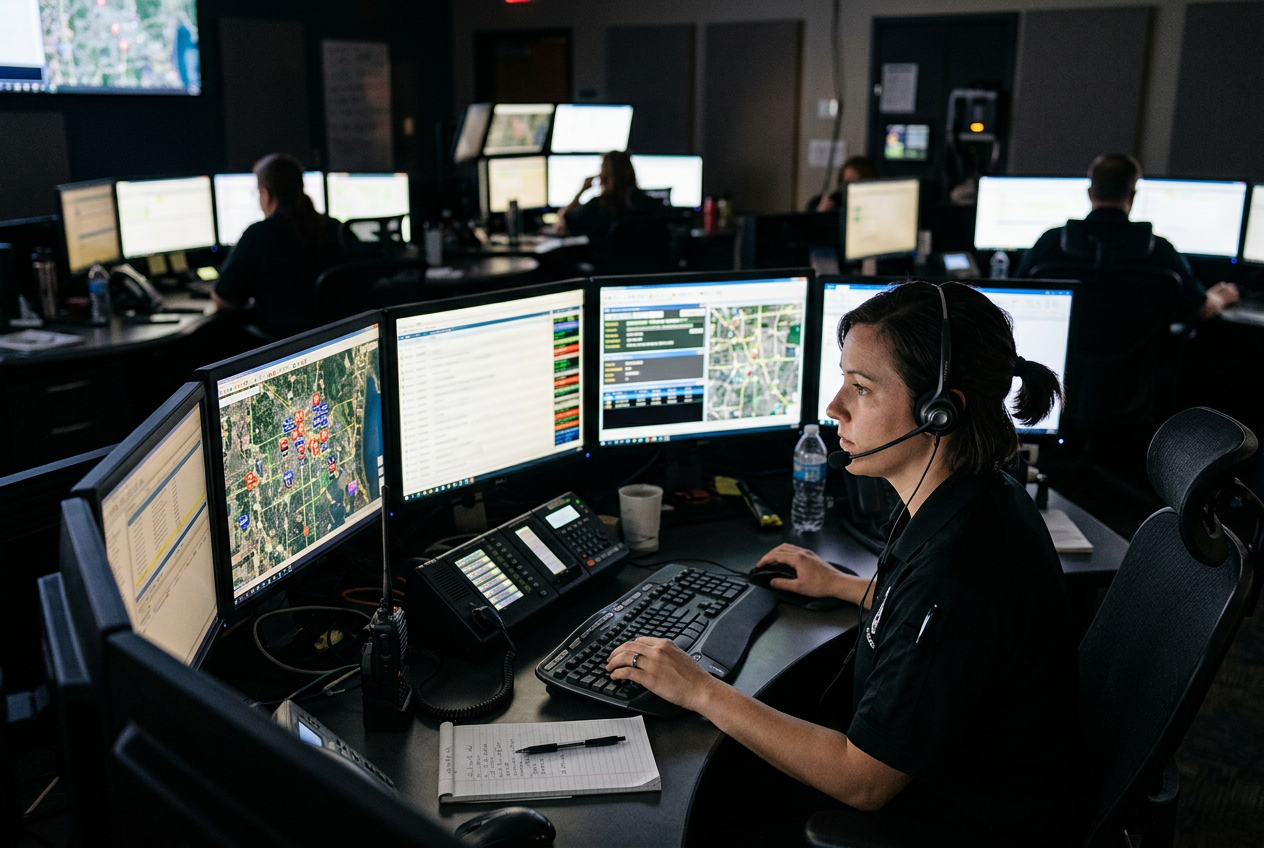
When you call 911, the person who answers is not the police officer, firefighter, or paramedic. You reach a 911 dispatcher. Their official job title is often “public safety telecommunicator.” That is a long name for a simple role. They are the first voice you hear in an emergency. They take your call, figure out what is wrong, and send the right help.
The Three Main Jobs of a Dispatcher
A dispatcher does three big things on every call.
First, they answer the phone fast. Speed matters in an emergency, and dispatchers are trained to pick up quickly.
Second, they gather information. They ask where you are, what is happening, and who needs help. These questions are not there to slow you down. They are there to get the right people moving. A dispatcher may ask more questions even while help is already on the way.
Third, they send help. Based on what you tell them, they decide who to send. That could be police, fire, or medical crews. Sometimes they send more than one. They stay on the line and guide you until help arrives.
A High-Stress Job That Depends on Clear Answers
Being a 911 dispatcher is one of the most stressful jobs in public safety. People who want this career often complete a training program, pass a background check, and prove they can handle pressure. Many centers run their own training to teach new dispatchers how to stay calm and act fast.
Why does this matter to you as a caller? Because the whole system works best when both sides are clear. A dispatcher can only act on what you tell them. If your answers are short and clear, they can send help faster. If you panic or give vague answers, it takes longer. The dispatcher is trained to stay calm under pressure. Your job is to help them do their work.
Why Knowing Their Role Makes You a Better Caller
You do not need to be an expert to call 911. But understanding what a dispatcher does helps you in two ways.
One, you will know what to expect. The questions will not surprise you. You will know that answering them is normal and helpful, not a delay.
Two, you will stay focused. When you know the dispatcher needs your location, the type of emergency, and who is involved, you can give that right away. You become part of the team working to get help to the scene.
Think of the dispatcher as your partner in a crisis. They have the training and the tools. You have the facts about what is happening right in front of you. When you share those facts clearly, help arrives sooner. The rest of this guide shows you exactly what to say and do.
Before You Call: The Key Information to Have Ready
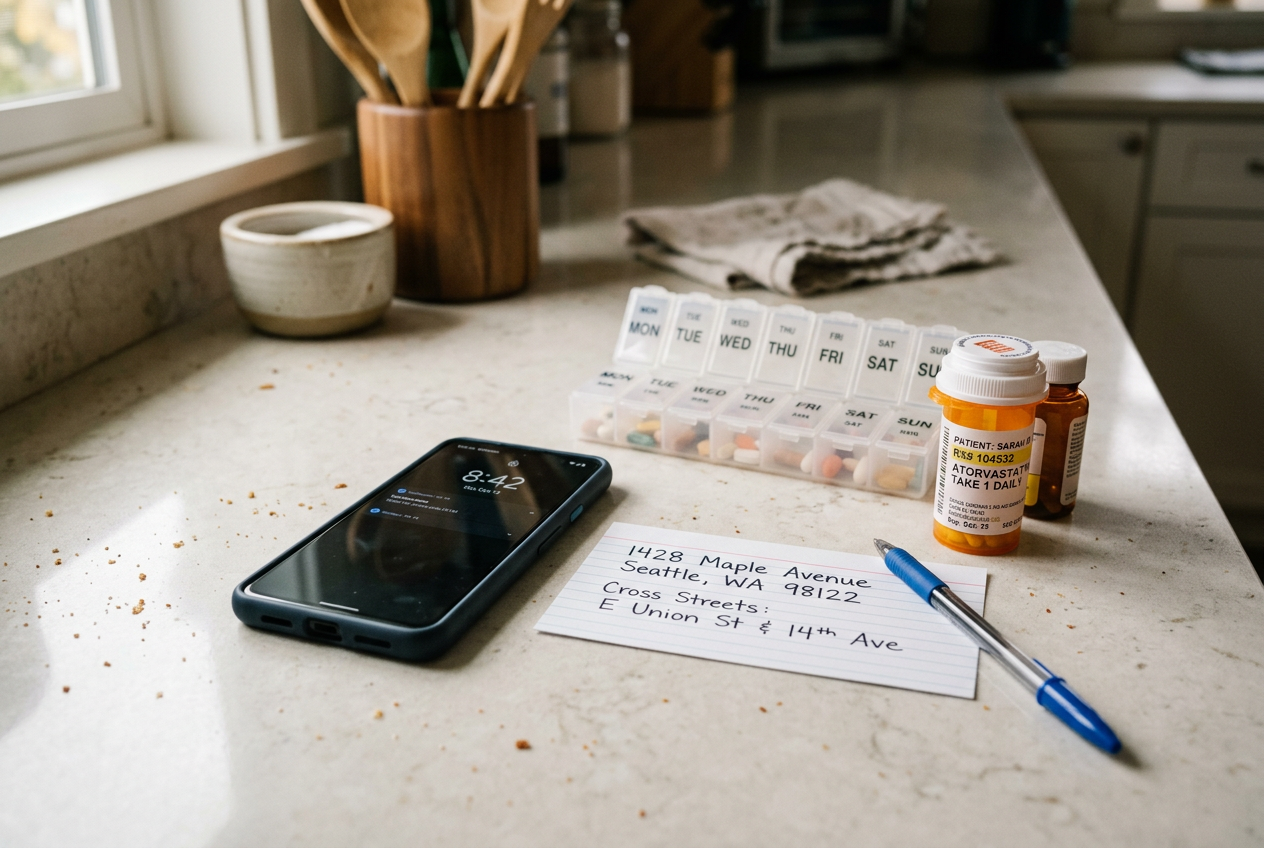
When you call 911, the dispatcher needs a few key facts right away. Knowing these ahead of time helps you stay calm and speak clearly. Here are the three things that matter most.
Your Location Comes First
Your location is the single most important detail. If the call drops or you cannot keep talking, responders still need to know where to go. Help cannot arrive if no one knows where you are.
Give your full street address if you know it. Include the apartment or unit number. If you do not know the exact address, give cross streets. These are the names of the two roads that meet near you. You can also give landmarks, like a store, a park, or a gas station.
This matters even more on a cell phone. A call from a home landline often shows the dispatcher your address. A cell phone does not always do that. Your phone may only show a rough area. So always be ready to say exactly where you are.
If you are not sure of your location, look around. Read signs. Check mile markers on a highway. Ask someone nearby. The dispatcher will help you figure it out.
The Phone Number You Are Calling From
Tell the dispatcher the phone number you are using. If the call drops, they can call you back. Give the number even if you think they already have it. This small step saves time.
The Nature of the Emergency
Next, say what is happening. Is it a fire, a crime, or a medical problem? Keep it simple and clear. For example, say “There is a kitchen fire” or “My father fell and cannot get up.” The dispatcher will ask follow up questions. Just answer each one as best you can.
Keep Medical Details Easy to Find
Sometimes the person who needs help cannot speak. They may be hurt, confused, or unable to talk. That is why medical details should be easy to find.
Write down important facts for each person in your home. Include allergies, medicines, and health conditions. Add emergency contacts and your doctor’s name. Keep this list where responders can see it fast. The refrigerator is a common spot. EMTs often look there first.
A medical information kit makes this simple. One option holds all your key papers in a magnetized pouch on the fridge. It keeps medication lists, contact cards, and other forms in one place.
If you want something simpler, a single reference card works too. One choice is a large laminated card with an erasable marker. You can hang it on the fridge and update it as your health changes. The big size makes it easy for responders to read.
Having these facts ready means less guessing during a crisis. You give the dispatcher what they need, and help can reach you faster.
What to Say When the Dispatcher Answers
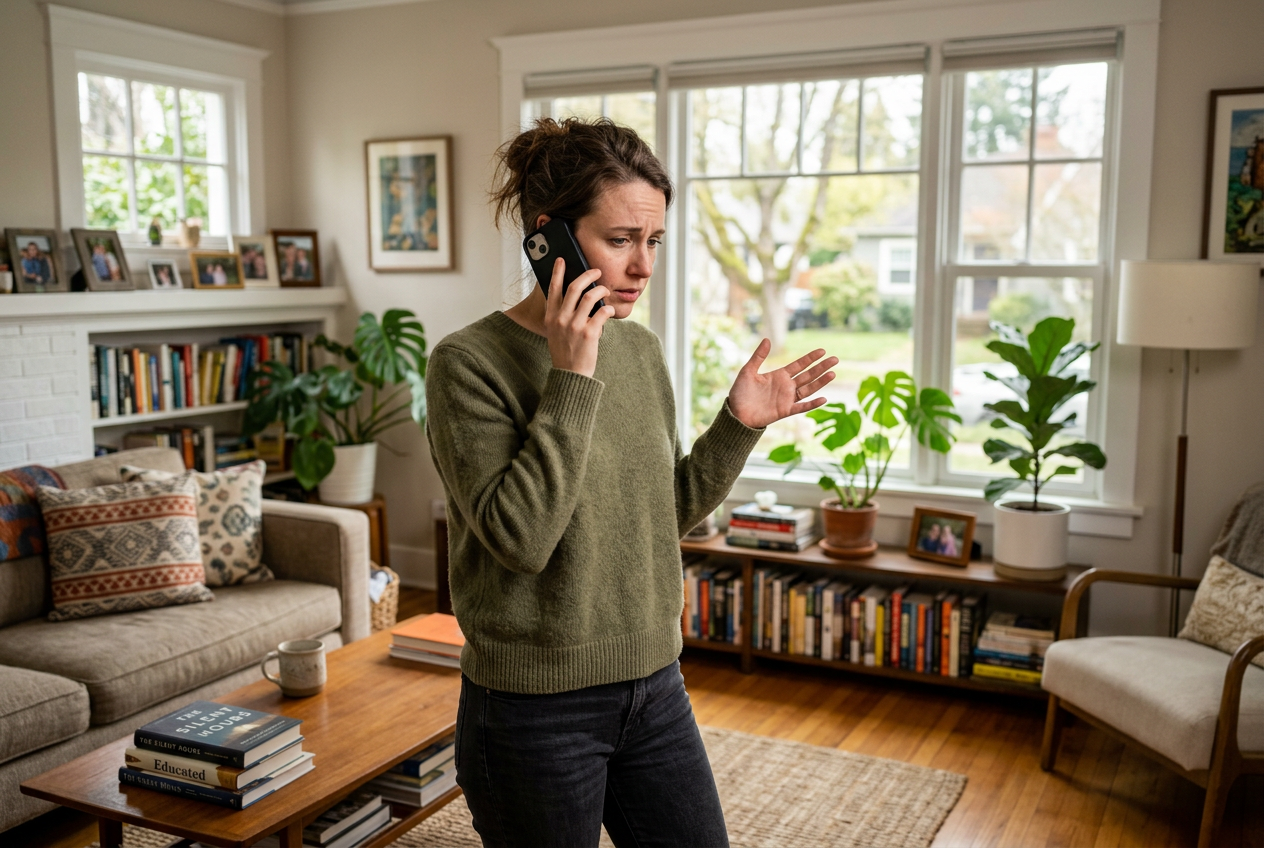
When someone picks up, take a breath. The dispatcher is trained to help you. Your job is to give clear facts in the right order. Here is what to say and when.
Start With Your Location
Say where the emergency is first. This is the most important thing you can share. If the call drops, the dispatcher still needs to know where to send help.
Give the full address if you know it. Include the street number, street name, and city. Add helpful details like an apartment number, a floor, or a nearby cross street. If you are not sure of the exact address, describe landmarks. You might say “the gas station on the corner of Main and 5th” or “the blue house next to the park.”
If you are on a cell phone, do not assume the dispatcher can see your location. Say it out loud anyway.
Say What Is Happening
Next, explain the emergency in a few words. Keep it simple. You could say:
- “There is a fire in my kitchen.”
- “A man collapsed and is not moving.”
- “There was a car crash with two cars.”
This tells the dispatcher who to send. A fire, a medical problem, and a crime each get different responders.
Answer the Dispatcher’s Questions
After that, the dispatcher will ask questions. Just answer them one at a time. Common questions include:
- “Is anyone hurt?”
- “Is the person breathing?”
- “Are they awake?”
- “How many people are involved?”
These questions are not a delay. They help the responders arrive ready. For example, if the dispatcher learns someone is not breathing, the ambulance crew knows to bring the right gear. The dispatcher may also walk you through first aid, like how to do CPR, while help is on the way.
Here is the key thing to understand. In most centers, help is already being sent while you talk. One person can send responders out while the dispatcher keeps asking you questions. So answering does not slow things down. It makes the help that arrives more useful.
Speak Clearly and Stay on the Line
Talk slowly and plainly. Do not use slang the dispatcher might not know. If you do not understand a question, say so. It is fine to say “I don’t know” if you are not sure of an answer. A guess can send help the wrong way.
Do not hang up until the dispatcher tells you it is okay. They may need more details. They may also give you steps to follow until responders arrive. If you hang up too soon, they cannot help you anymore.
If you called by mistake, stay on the line and tell them. Do not just hang up. If you hang up, they may call back or send an officer to check on you.
Staying Calm and Communicating Clearly Under Stress
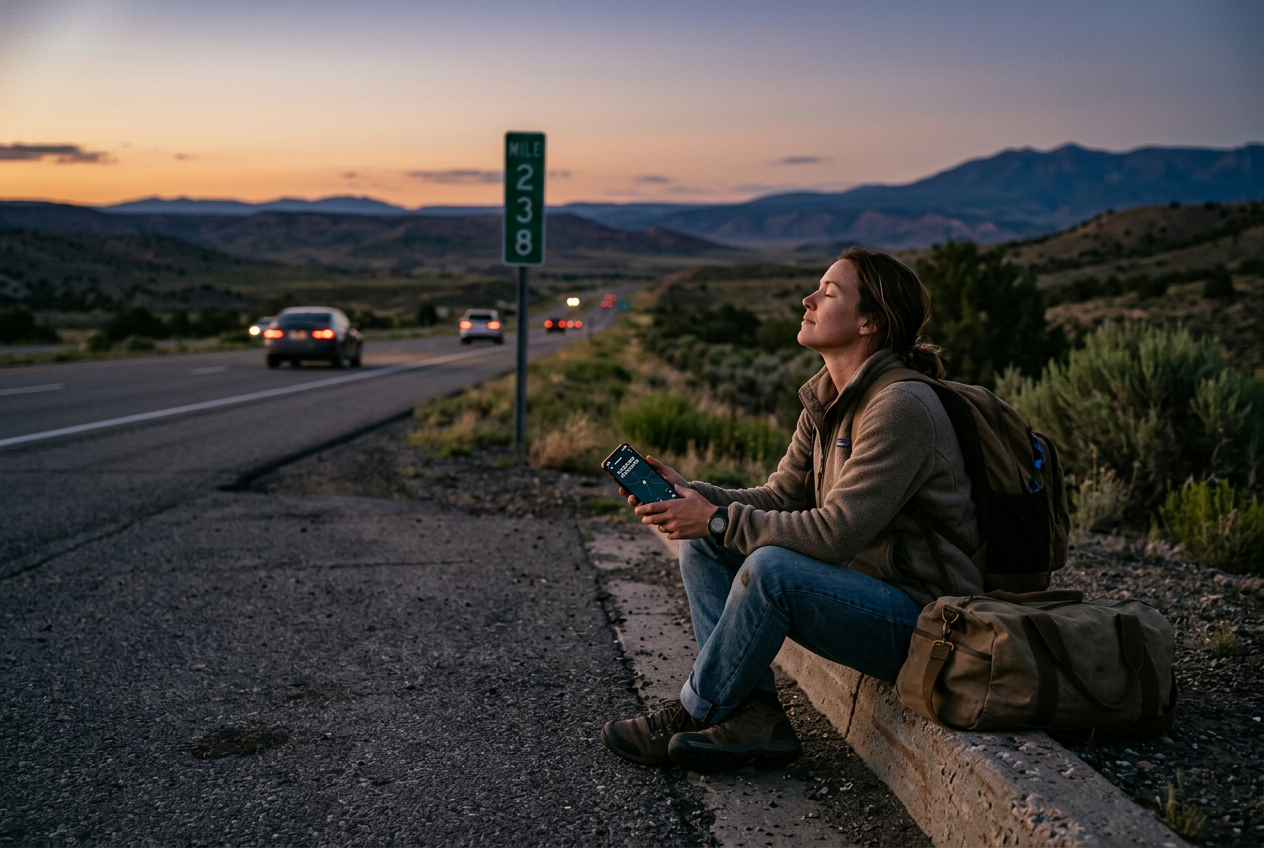
An emergency can make your heart race. Your voice may shake. That is normal. But the calmer you stay, the faster you can help. A few simple habits make a big difference.
Take One Breath Before You Speak
When the dispatcher answers, take one slow breath. Just one. This small pause helps steady your voice. Then speak slowly and clearly. Do not rush your words together. If you talk too fast, the dispatcher may ask you to repeat yourself. That wastes time.
Speak at a normal volume. You do not need to shout. The dispatcher can hear you. Shouting can make your words harder to understand.
Answer Only What Is Asked
The dispatcher will ask you questions in a certain order. There is a reason for this. Answer the question they ask. Then wait for the next one. Try not to tell the whole story all at once.
This may feel slow. It is not. The dispatcher is trained to get the right facts in the right order. Help can be sent while you are still on the phone. Answering clearly keeps things moving.
Do Not Hang Up Until Told To
This is a big one. Stay on the line. Do not hang up until the dispatcher tells you it is okay. They may need more details. They may give you steps to follow while help is on the way. If you hang up early, they may not be able to reach you again fast.
Describing a Place You Do Not Know
Sometimes you are not home. You may be on a road or in a place you do not know. You can still help the dispatcher find you.
Look around for clues. These can help:
- Road signs or the name of the nearest cross street
- Mile markers along a highway
- The name of a store, gas station, or landmark nearby
- Exit numbers
Your phone can also help. Most smartphones can show your GPS location. Open your map app and look for your coordinates or the address shown. Read those numbers to the dispatcher. This can point them right to you.
When You Cannot Speak Safely
Sometimes you cannot talk out loud. Maybe someone dangerous is near you. Maybe you are hurt and cannot speak.
In many areas, you can send a text to 911. Type your location first. Then say what is wrong. Keep it short. Not every area supports text-to-911 yet, so call if you can.
If you call but cannot talk, do not hang up. Leave the line open. Some dispatchers can still trace the call and send help. If it is safe, you may be able to tap a key or make a small noise to show someone is there.
Knowing these steps ahead of time helps. When the moment comes, your mind will know what to do.
Making It Easy for Seniors and Vulnerable Household Members to Call
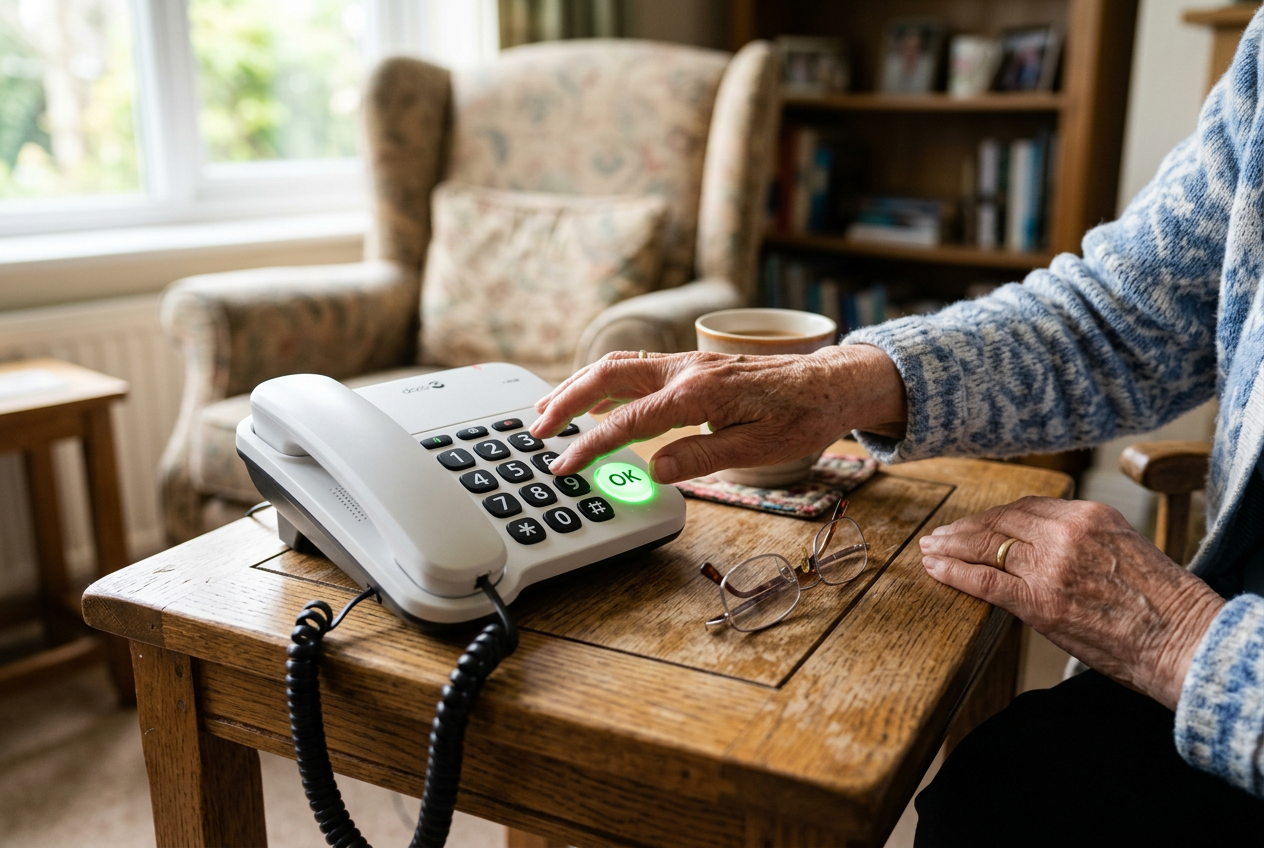
Not everyone in your home can grab a smartphone and dial fast. Older adults, young children, and people with memory, vision, or hearing challenges may struggle in an emergency. A good phone makes calling for help simple. The right setup can save precious minutes.
What to Look For
Pick a phone that is easy to see, hear, and use. Here are the features that matter most:
- Big buttons. Large, high-contrast numbers help people with poor vision or shaky hands dial without mistakes.
- Loud ringer. A ring of over 100 dB helps people with hearing loss know a call is coming in. A flashing light helps too.
- One-touch or SOS keys. A single button that dials a trusted contact or calls for help removes the need to remember numbers.
- Speakerphone. Hands-free calling helps people who are bedridden or have limited movement.
A corded landline phone is a smart backup. It works during a power outage and does not need charging. It also stays in one spot, so it is always where you expect it.
Two Simple Phones to Consider
The Uvital Big Button Phone offers eight one-touch speed dial buttons plus a dedicated SOS button. You can add photos to the buttons. That helps someone with memory loss or a young child press a face to call instead of recalling a number. The ringer reaches up to 120 dB, and it has hands-free speakerphone calling. This is a strong choice for someone who needs loud sound and easy, picture-based dialing.
The Large Button Landline Phone focuses on big, coin-sized keys with black numbers on a white background. It has M1 and M2 memory keys and a red SOS button for quick calls. The ringer is over 110 dB, and a flashing light alerts users with hearing loss. Note that this model does not have a speakerphone. It is a good fit for someone who mainly needs large, clear buttons and a simple layout.

Quick Comparison
Set It Up Before You Need It
Buying the phone is only the first step. Program the speed dial keys with trusted contacts. Add 911 only if the phone and your local service allow direct dialing, and test it carefully. Place a photo or label on key buttons. Then practice. Have the person make a test call to a family member so pressing the button feels familiar. A phone only helps if the user knows how to use it without stress.
Posting Emergency Numbers and Info Where Everyone Can Find Them
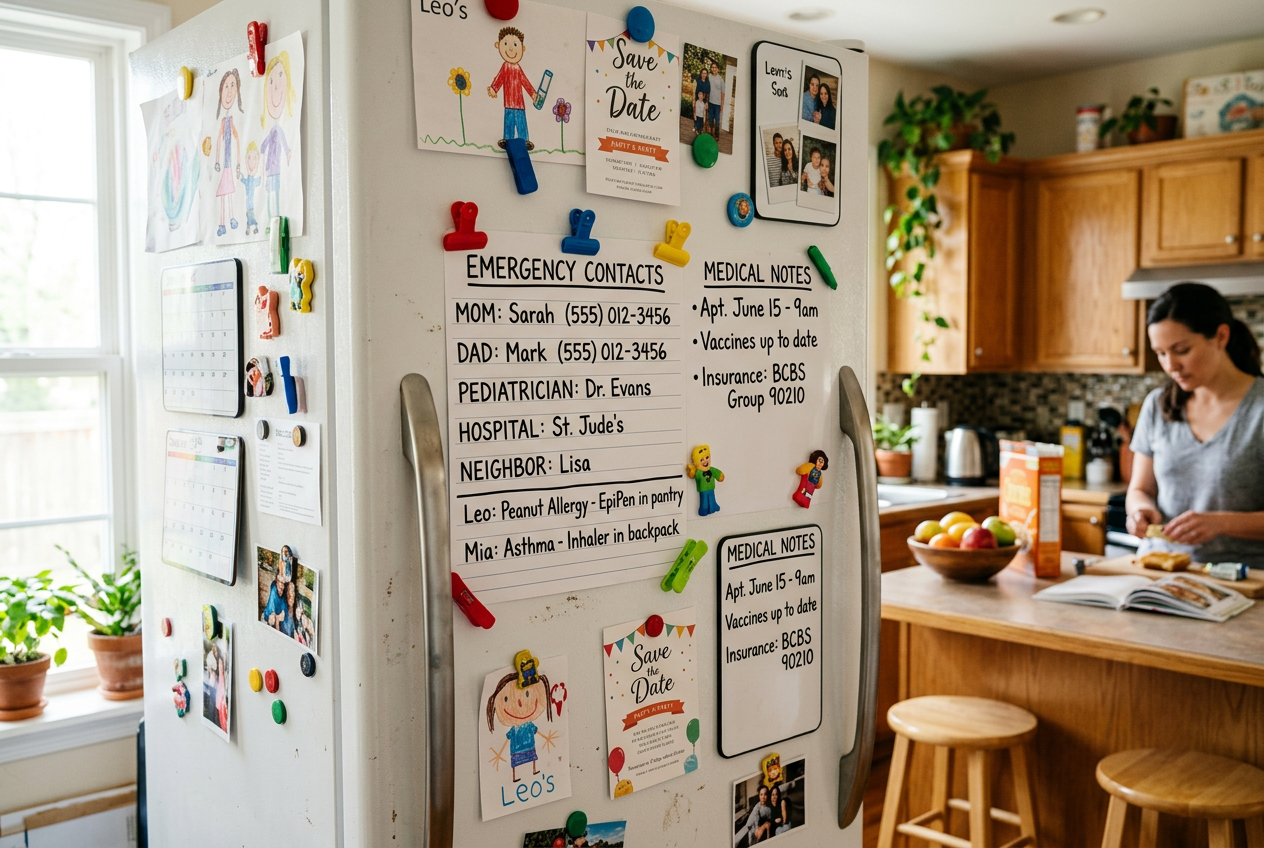
When an emergency hits, you may not have time to search your phone. You might not even be the one making the call. A child, a guest, or an older family member could be the person who needs to reach help. That is why a visible list of key numbers matters. It lets anyone in your home act fast without stopping to think.
What to Put on Your List
Keep more than just 911 on the list. In a real emergency, people often need numbers for many kinds of help. A good list includes:
- Poison control
- Your family doctor
- Your dentist
- Your pharmacy
- The nearest hospital
- Your utility companies (gas, electric, water)
- A trusted neighbor or relative
- Your veterinarian, if you have pets
Also add your full home address. Under stress, even adults can forget the exact house number or street name. A guest may not know it at all. Writing it down means the caller can read it straight to the dispatcher.
Where to Put It
Pick one spot that everyone can see. The refrigerator is a smart choice. It is a shared, obvious place, and most people look there first. First responders also know to check the fridge for medical information. If someone in your home has a serious condition or takes important medicine, a note there can help paramedics act faster.
Make sure the list is easy to read. Use large, clear handwriting. Keep it at a height a child can reach. Tell everyone in your home where it is, including babysitters and visitors.
Use a Write-On List You Can Update
Phone numbers change. Doctors retire. You switch pharmacies. A good list is one you can update without starting over. A write-on, wipe-off board lets you change a number in seconds.

This Emergency Numbers List gives you set spaces for the contacts that matter most. There are lines for emergency contacts, your doctor, dentist, pharmacy, poison control, utilities, and your veterinarian. It comes with a dry-erase marker and a Velcro holder, so the pen stays with the board. When a number changes, you just wipe it and write the new one.
The set also includes self-stick tape and strong magnets. That means you can mount it on the fridge, a file cabinet, or any metal surface. Put it where your whole household passes by every day.
Keep It Simple
You do not need a special board to get started. A sheet of paper taped to the fridge works too. The key is that the information is visible, current, and easy for anyone to use. Fill it out today while things are calm. That way, when seconds count, the answer is already on the wall.
Frequently Asked Questions
Can I text 911?
In many places, yes. Some areas let you send a text message to 911. This can help if you cannot speak safely, like during a break-in or an abusive situation. But texting is not available everywhere. A phone call is still the best choice when you can make one. If you do text, keep your message short and clear. Give your location first, then say what is wrong. If your area cannot accept the text, you may get a message telling you to call instead.
What if I call 911 by accident?
Do not hang up. Stay on the line and tell the dispatcher it was a mistake. This takes only a few seconds. If you hang up, the dispatcher may think something is wrong. They might call you back or even send help to check on you. A quick “Sorry, I dialed by accident, everything is fine” clears it up fast. This is true for pocket dials and for kids pressing buttons too.
What if I don’t speak English?
You can still call. Many 911 centers can connect you to an interpreter. Say the name of your language if you can, like “Spanish” or “Vietnamese.” Then wait. The dispatcher will bring a translator onto the call. Try to stay on the line and speak slowly. Help is still coming even while they find the right language support.
Do I need to know the exact address?
It helps a lot, but you do not always need it. If you know the address, say it first. If you do not, give the dispatcher any clues you can. Name a cross street, a store nearby, a building color, or a landmark. On a cell phone, your location is not always exact, so details matter. The dispatcher is trained to help you figure out where you are.
Should kids ever call 911?
Yes. Children can and should call 911 when there is a real emergency. This includes a fire, a hurt or sick adult who will not wake up, or a stranger trying to get in. Teach kids that 911 is only for true emies, not for jokes or small problems.
How do I teach my kids to call 911?
Keep it simple. Practice with them using a phone that is turned off or in airplane mode. Teach them these basic steps:
- Dial 9, then 1, then 1.
- Say their name and what is wrong.
- Say where they are, like your home address.
- Do not hang up until the dispatcher says it is okay.
Help kids learn your home address by heart. You can write it somewhere they can see it, like on the fridge. A phone with big buttons or photo speed dial can make calling easier for young children. Practice a few times a year so it stays fresh. Remind them that calling 911 for a real emergency is never something to be scared of.
Your 911 Readiness Action Checklist
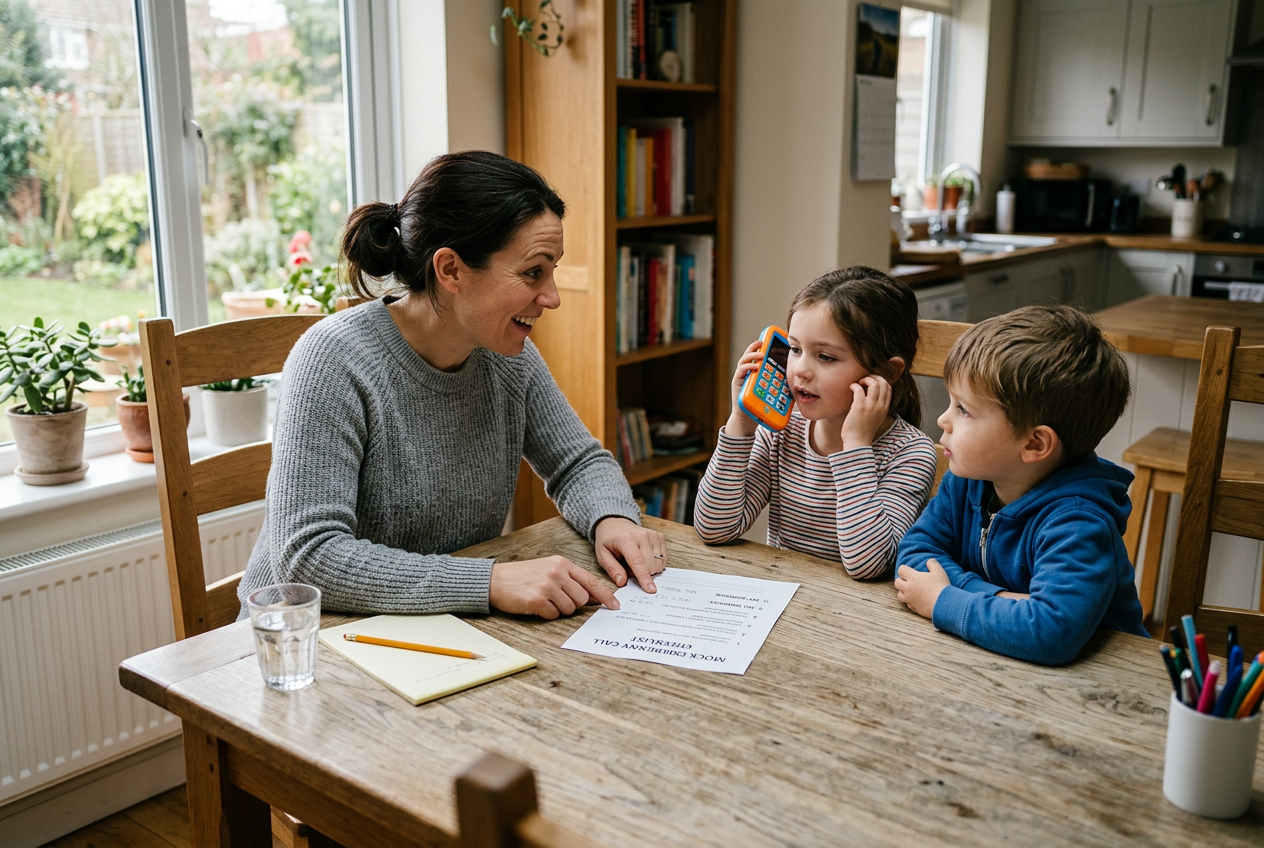
You do not need to buy anything to get ready. Most of these steps take just a few minutes. Try to finish them all this week. Then your whole household will know what to do if an emergency ever happens.
Confirm Your Home Address Is Visible
Walk outside and look at your house from the street. Can you see your house number clearly? Check it in daylight and at night. If the numbers are faded, small, or blocked by plants, fix that. Clear numbers help responders find you fast. This matters most at night or when you call from a cell phone.
Also make sure everyone in the house knows your full address by heart. That includes the street name, number, and city. If someone cannot remember it, write it down and post it near the phone.
Teach Everyone How and When to Call
Sit down with your family. Explain that 911 is for real emergencies only. That means fires, serious injuries, crimes in progress, or someone who cannot breathe. Teach kids not to call for fun or by accident.
Show each person how to dial on your home phone and on a cell phone. Make sure they know to stay on the line and answer the dispatcher’s questions. Remind them not to hang up until the dispatcher says it is okay.
Post Your Emergency Numbers
Write down the numbers your household may need. Include 911, poison control, your doctor, and a trusted neighbor or family member. Put the list somewhere everyone can see it, like the fridge.
A simple magnet board makes this easy to read and update. Something like the Emergency Numbers List with Marker lets you write numbers with a dry-erase pen and change them when they change.
Keep Medical Info Where Responders Can Find It
If someone in your home has health conditions, allergies, or takes medicine, write it down. Responders often check the fridge first. A medical info card or kit kept there can speak for a loved one who cannot. Options like the ICE Contact Magnet give responders the details they need in seconds.
Keep the info current. Update it when medicines or contacts change.
Practice a Calm Sample Call
Pick a quiet time and do a pretend call. Do not actually dial 911. Just act it out. Have a child or family member describe a fake emergency out loud.
Practice saying the address first. Then the problem. Then answering simple questions calmly. Teach them to speak slowly and clearly. The more you practice, the calmer everyone will be when it counts.
Your Quick Recap
- Check that your house number is easy to see.
- Make sure everyone knows the full address.
- Teach how and when to call 911.
- Post emergency numbers where all can see them.
- Keep medical info on the fridge.
- Practice a calm sample call with kids.
You can print this page and keep it handy as you work through each step.
Next Steps: Practice Before You Need It
Calling 911 sounds simple. In a real emergency, it is harder than you think. Stress makes people freeze. They forget their address. They talk too fast. The good news is that calling 911 well is a skill. Like any skill, you get better with practice.
You do not need to make a real call to practice. That ties up the line and keeps help from people who need it. Instead, you can rehearse out loud at home. Five minutes is enough to build confidence.
Run a Five-Minute Family Practice
Gather everyone in the house. Walk through a pretend emergency together. Pick something simple, like a kitchen fire or a fall.
Have each person answer these questions out loud:
- Where are you? Say the full street address and city.
- What is happening right now?
- Who needs help, and what is wrong?
Take turns playing the dispatcher. Ask follow-up questions. This helps children and older adults get used to the back-and-forth. The more they say the words now, the easier it will be later.
Teach one more rule during practice. Stay on the line. Do not hang up until the dispatcher says it is okay. Many people hang up too soon. Make sure everyone knows to wait.
Make Sure the Tools Are Ready
A smooth call depends on the right tools being in place. Check these now, while things are calm.
Make sure every phone in the house can reach 911. Seniors and children do well with a simple phone that has large buttons and a one-touch emergency key. Phones like the large button landline phone or the big button speakerphone make calling easier for people who struggle with small keypads or holding a handset.
Post your home address and key numbers where everyone can see them. A write-on board like the emergency numbers list keeps this info in one spot on the fridge.
Keep medical details ready too. If someone cannot speak, first responders look for this fast. A fridge card like the ICE contact magnet lets EMTs see medications, allergies, and contacts in seconds.
Link This to Your Family Emergency Plan
A good 911 call is one piece of a bigger plan. Think about the other pieces too. Where will your family meet if you leave the house? Who checks on the kids or an older relative? Who holds a spare key?
Write it all down in one place. Go back through this guide and build your own list. There is no file to download. You can print this page and keep it with your other emergency notes.
The goal is simple. Do the small work now so the call goes smoothly later. Practice once this month. Then practice again in a few months so no one forgets. A few minutes today could save real time when it matters most.