Two-Week Emergency Supply List: Going Beyond 72 Hours for a Longer Disruption (2026)
You already know about the 72-hour kit. Three days of water, food, and basics to get you through a short storm or a quick power outage. That plan works well for many emergencies. But some disruptions last longer than three days.
Think about a big winter storm that keeps roads closed for a week. Or a power outage that stretches on and on. Or a time when store shelves stay empty because trucks cannot get through. In moments like these, a three-day kit runs out fast. You are left waiting, and help may not come right away.
That is why two weeks matters. A 14-day supply gives your household more room to breathe. You do not have to rush to a crowded store. You do not have to worry the moment the lights go out. You have a cushion.
Here is the good news. Building a 14-day emergency kit is not about buying strange, expensive gear. It is about scaling up the basics you already understand. More water. More food that stores well and cooks easily. A way to cook and see in the dark. Medicine, first aid, sanitation, and copies of key papers.
This guide walks you through each part step by step. We cover water, food, cooking, light, power, health supplies, and a simple action checklist. By the end, you will know exactly what to gather and how to do it without stress.
- Plan for at least 14 days of supplies, not just the usual 72 hours, since bigger disruptions can drag on much longer.
- Store about 1 gallon of water per person each day, which adds up to roughly 56 gallons for a family of four over two weeks.
- Keep shelf-stable meals that need little cooking, aiming for at least 1,200 to 2,000 calories per person each day.
- Choose food with a long shelf life so your kit stays ready for years without constant replacing.
- Pick supplies that store easily in closets, trunks, or RVs so you can grab and go if needed.



Reviewed by Beth O., Elena V. & James W. — contributors with hands-on preparedness experience. How we test
Getting ready for a two-week disruption means having the right food and water on hand before trouble hits. Here are the key items to stock, and below we explain why each one matters.
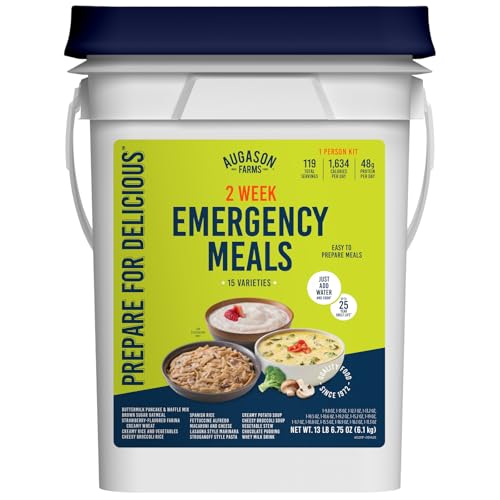
Augason Farms 2 Week Kit
This kit gives one person two weeks of real meals packed in a watertight pail. The grab-and-go design makes it easy to store in a closet or car for fast access.
Check Price on Amazon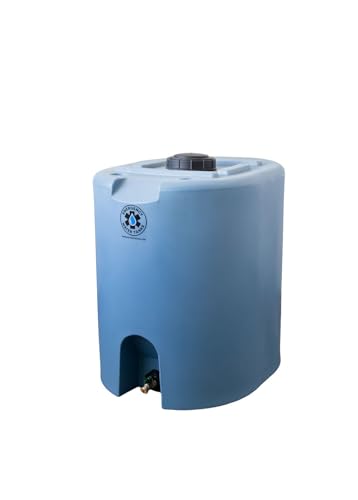
55 Gallon Water Storage Tank
This large tank holds enough drinking water for a family of four for about two weeks. The stackable shape saves space while keeping your water safe and ready.
Check Price on Amazon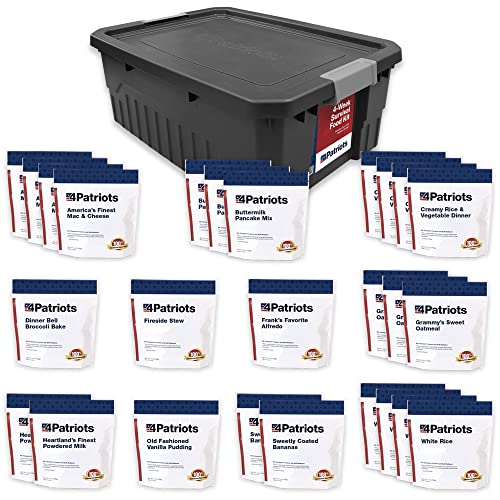
4Patriots 4-Week Food Kit
This supply offers 192 servings across 11 recipes, giving you extra days of meals beyond the two-week mark. Built to last 25 years, it stays ready for whenever you need it.
Check Price on AmazonIn this guide
Why Trust This Guide?
This article was researched and reviewed by contributors with hands-on experience in emergency preparedness. They have tested gear, built real systems, and lived through situations where these skills actually mattered.
How a 14-Day Kit Differs From a 72-Hour Kit
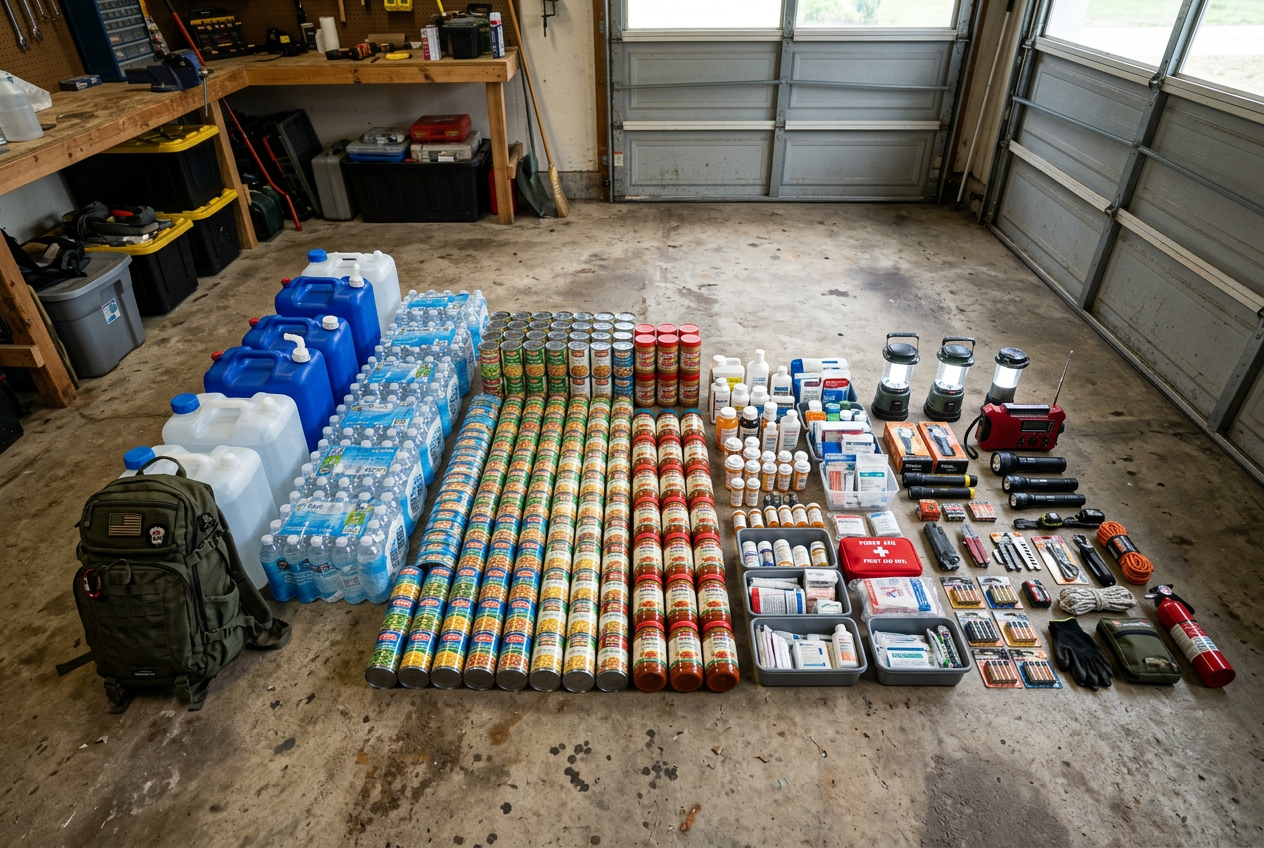
A 72-hour kit is built to grab and go. It holds enough basics to get you through the first three days of a disaster. Many kits fit in one bag. You keep it near the door so you can move fast if you need to leave.
A 14-day kit is different. It is built to help you stay home for two weeks. This is called sheltering in place. You are not packing light. You are stocking up. The goal shifts from “carry it out the door” to “live on it at home.”
That shift changes how you think about every category. Here is what to scale up and why.
The core categories to grow
Water. This is the biggest jump. A common guide is one gallon per person per day. For three days, one person needs three gallons. For 14 days, that same person needs 14 gallons. A family of four needs a lot more. You cannot fit that in a backpack. You need real storage containers.
Food. Three days of snacks is easy. Two weeks of meals takes planning. You want food that stores well and cooks with little effort. Look for a long shelf life so your supply does not spoil before you use it. Many two-week kits just need water and heat to prepare.
Medicine. The American Red Cross suggests a seven-day supply of medications in a basic kit. For two weeks, you want more. Talk to your doctor or pharmacist about keeping extra on hand. Do not forget things like pain relievers and any daily prescriptions.
Sanitation. Three days without normal plumbing is a nuisance. Two weeks is a real problem. Stock more hygiene items, trash bags, and supplies to stay clean. This matters more the longer you are cut off.
Light and power. A short outage needs a flashlight and some batteries. A long one needs more. You want backup light, extra batteries, and a way to cook or heat food without the grid.
Information. You need to know what is happening around you. A battery or hand crank radio helps you get updates when the power is out. Keep copies of important documents too.
Why quantity and shelf life matter more
At three days, almost anything works. You will use it up fast. At 14 days, two things become important.
First is quantity. You need enough of each item to last the whole time. Run the math for your household size.
Second is shelf life. Your supply may sit for months or years before you need it. Food and water should be safe and good to use when the time comes. Check dates and rotate older items out.
You do not need to buy everything at once. Start with what you already own. Add a little at a time. The next sections walk you through each category step by step.
Water: Storing Two Weeks for Your Household
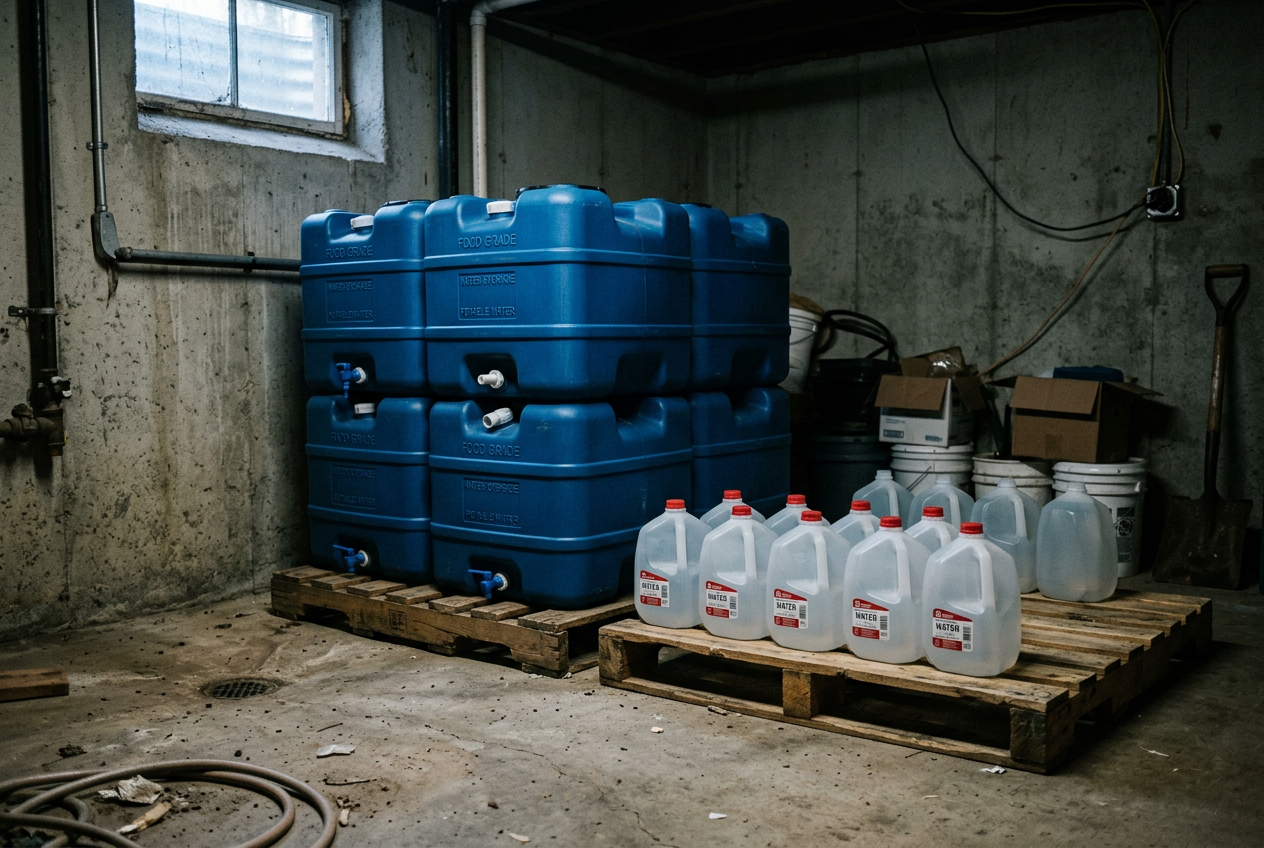
Water is the most important thing to store. You can go days without food. You cannot go long without water. For a two-week plan, you need a lot more than a 72-hour kit holds.
How Much Water You Need
The common planning figure is about one gallon per person each day. Roughly half is for drinking. The rest is for cooking, brushing teeth, and basic washing. Some sources use half a gallon per person per day just for drinking. Use one gallon per person per day to stay safe.
Now multiply for 14 days. Here is a quick guide.
Add extra if you have pets, sick family members, or hot weather. More water is always better.
Safe Containers
Only store water in food-grade containers. These are made to hold water safely for a long time. Look for BPA-free plastic. Never reuse old milk jugs or containers that held chemicals.
You have a few good choices. Portable jugs are easy to move and stack. Collapsible containers fold flat when empty, so they save space. Large tanks hold the most water in one place.
For small households or renters, collapsible containers work well. They are light and store flat until you need them.
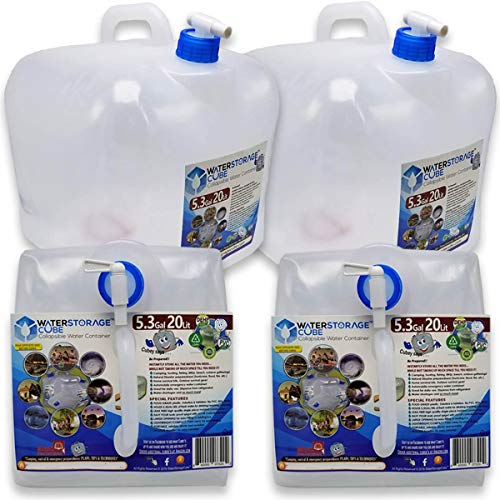
Stackable 5-gallon jugs are a strong middle option. They stack to save floor space. The handles make them easy to carry. A set of four gives you 20 gallons, close to what one person needs for two weeks.

If you want big capacity in one spot, a large stackable tank holds a lot. A 55-gallon tank can cover a family of four for about two weeks. It is best for a garage, basement, or shed.
Where to Keep It
Store water in a cool, dark place. Keep it away from direct sunlight. Sunlight can help algae grow. Keep containers off bare concrete floors if you can. Set them on wood or cardboard.
Spread your water across a few spots if you have room. That way, one leak does not cost you everything.
Rotate Your Water
Water does not go bad on its own, but it can pick up taste or grow algae over time. Check your stored water a few times a year. If it looks cloudy or smells off, replace it. A good habit is to label each container with the date you filled it. Refill it about every six months.
Start with what you already have at home. Even a few filled jugs are better than none. Then build up to your full 14-day supply over time.
Food: Two Weeks of Meals That Store and Cook Easily
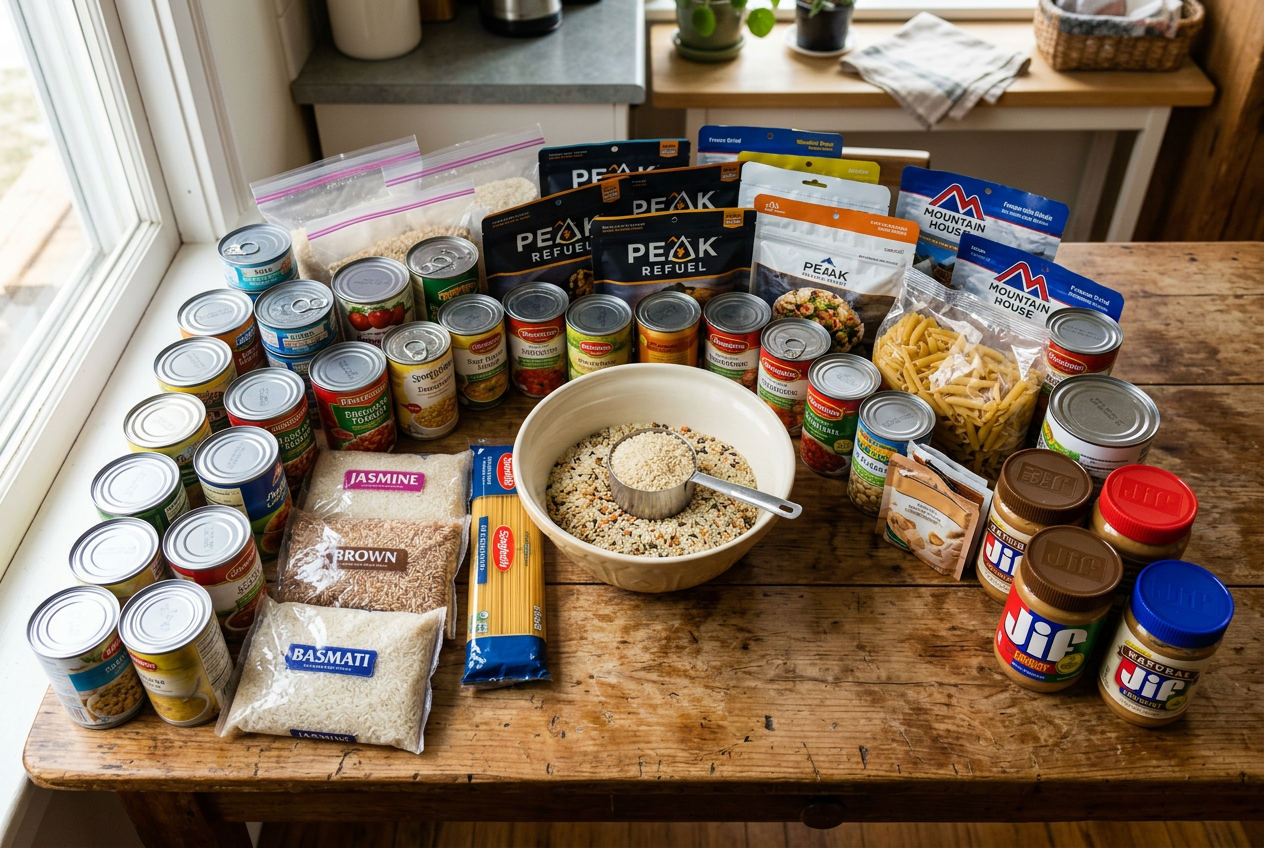
Two weeks of food takes more planning than a 72-hour kit. The smart move is to mix two things. First, shelf-stable pantry items you already eat. Second, just-add-water emergency kits that store for years. Together they cover your household without much fuss.
Start With Your Pantry
Begin with what you have. Canned beans, canned meat, pasta, rice, peanut butter, and oats all store well. You can rotate them into normal meals so nothing goes to waste. Keep a manual can opener nearby. An electric one is useless if the power is out.
Add Ready-Made Emergency Kits
Emergency food kits fill the gaps. They are light, easy to store, and simple to cook. Most just need water and heat. They also add variety, which matters more than people think. Eating the same meal every day gets old fast. That is called food fatigue, and it can make people eat less than they should.
Here are three kits built for this job.
The Augason Farms kit comes in a watertight 4-gallon pail. It has 15 meal varieties, like pancakes, mac and cheese, and stroganoff. Each meal just needs water and heat.

The Ready Hour 2-Week kit lists its calories clearly. It gives over 2,000 calories per day, with 27,780 total calories in the kit. It has 10 meal varieties and a 25-year shelf life.

The ReadyWise Sample Bucket holds 120 servings of entrees. It has a 25-year shelf life and a stackable design. The lid opens for quick access to the pouches.
Read the Numbers Before You Buy
Do not trust the name alone. A kit that says “2-week” often means one person. Look at two things on the label. Total servings and total calories. A serving may be smaller than a real meal. And most adults need close to 2,000 calories a day to feel full and stay strong.
Do the math. Take the total calories and divide by 2,000. That tells you how many person-days the kit really covers. For a family of four, two weeks means 56 person-days. You will likely need more than one kit, plus your pantry food.
Aim for meals you actually like. Comfort food helps morale when things are hard.
Comparing Ready-Made 2-Week and Larger Food Kits
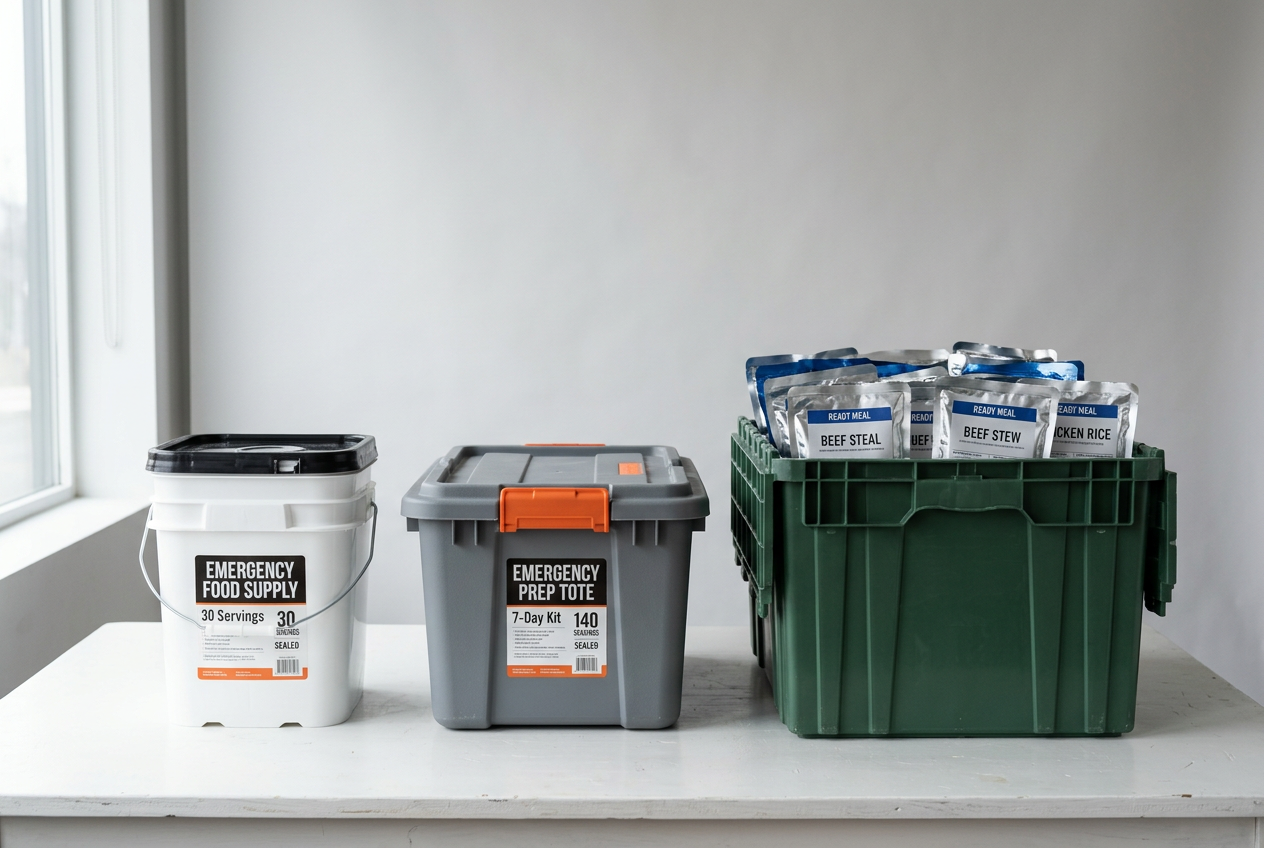
Building your own food supply takes time. Ready-made kits give you a faster start. They store for years and need little prep. But not every kit fits every home. Some cover full meals. Some skip breakfast. Some hold more calories than others. Below, we compare two kits so you can match one to your household.
Here is a quick look at the specs side by side.
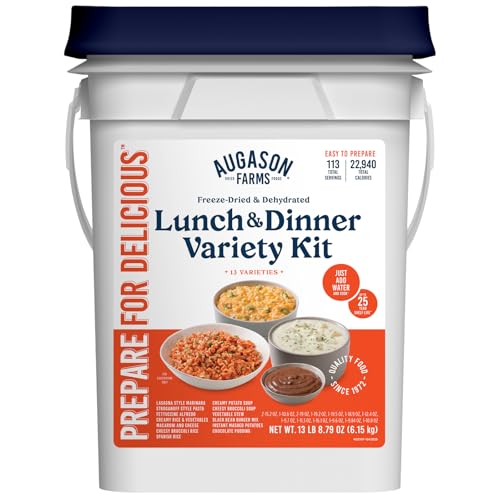
Augason Farms Lunch & Dinner Variety Kit
This kit focuses on lunch and dinner meals. It has 113 servings across 13 meal types. That variety helps keep meals from feeling boring. You just add water and heat on a stove. No special cooking skills are needed. It ships in a 4 gallon bucket, which is easy to store and carry. The bucket has a 25-year shelf life.
Keep one thing in mind. This kit does not include breakfast foods. It also holds about 22,940 total calories. For a two-week plan, that may cover one adult for lunch and dinner. You would need to add breakfast items and more calories for a full 14 days. It works well as a base you build on.
4Patriots 4-Week Survival Food Kit
This kit is larger. It has 192 servings and 11 recipes, like oatmeal and mac and cheese. Because it includes breakfast options, it can round out a meal plan more fully. The maker lists an average of 36,480 total calories. That is about 1,302 calories a day over four weeks for one person.
Read that number closely. Most adults need more than 1,302 calories a day, especially during hard work or cold weather. So this “4-week” supply may feed one person for two weeks at a fuller calorie level. Or it can stretch across more days at a lighter level. Plan for your real needs, not just the label.
The food comes in triple-layer Mylar packaging with an oxygen absorber. That protects against air, light, and moisture. It also carries a 25-year shelf life.
How to Choose
Match the kit to your household size and eating habits. Count how many people you feed and how many calories each needs per day. Then compare that to the totals above. Many homes buy a kit as a base, then add their own staples like rice, canned goods, and comfort foods. That mix gives you variety and control without guessing.
Cooking, Light, and Power Without the Grid
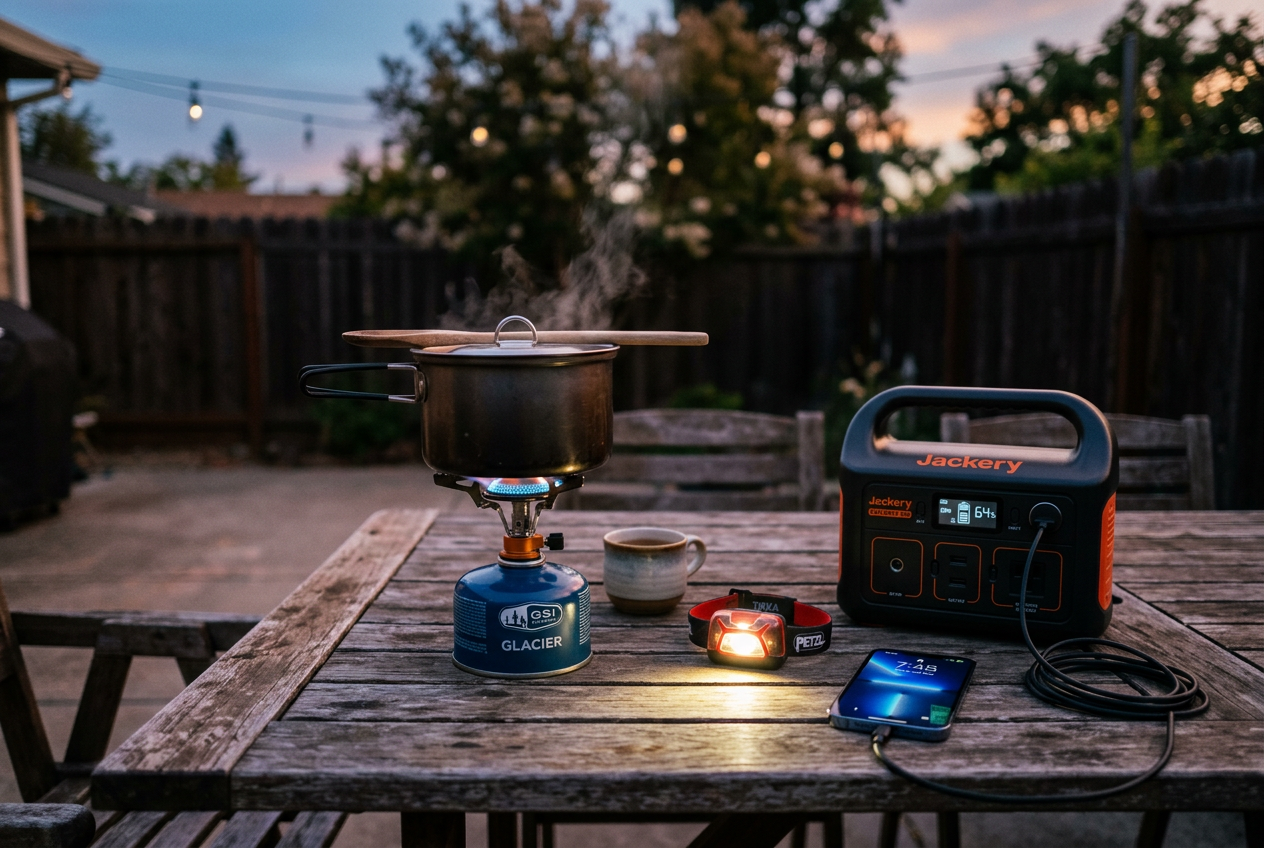
When the power goes out, you still need to eat, see, and stay in touch. Most of your emergency food needs hot water to cook. Many of the freeze-dried and dehydrated meals in this guide say “just add water and heat.” That means you need a safe way to boil water for two full weeks, not just a few days.
Heating Water and Meals
Your kitchen stove may not work in an outage. So plan for a backup way to cook. A small camp stove or portable burner can heat water fast. Keep enough fuel on hand for two weeks of meals. Think about how many times you will boil water each day, then store fuel to match.
Here is the most important rule. Never use a camp stove, grill, or any fuel-burning device inside your home. This includes the garage, even with the door open. These devices give off carbon monoxide, a gas you cannot see or smell. It can kill you. Only use them outside in open air, away from windows and doors.
Follow a few more fuel safety steps:
- Store fuel in approved containers only. Never in your living space.
- Keep fuel away from heat, flames, and children.
- Let a hot stove cool fully before you refuel it.
- Follow the maker’s directions and your local fire rules.
If you want help picking a stove, see our stove guide on the site for the emergency-kits section.
Lighting for Two Weeks
You will need light every night for two weeks. Flashlights work, but they tie up one hand. A headlamp keeps both hands free while you cook or care for others. Battery-powered lanterns work well for lighting a whole room. Store plenty of extra batteries for each light you keep.
Skip open-flame candles when you can. They are a fire risk, and knocked-over candles cause house fires. Battery lights are safer for indoor use. For more help, check our headlamp guide.
Keeping Phones Charged
Your phone is your link to alerts, family, and help. Over two weeks, you cannot count on wall outlets. A power bank can recharge a phone many times. For a longer outage, a portable power station holds much more energy and can run small devices too. A solar panel can top these up when the sun is out.
Think about what you need to keep charged. A phone is small. A CPAP machine or medical device needs much more power. Match your power station size to your real needs. See our power station guide for help choosing.
Start with what you already own. Gather your flashlights, batteries, and any camp gear now. Test them today so you know they work before you need them.
Medicine, First Aid, Sanitation, and Documents
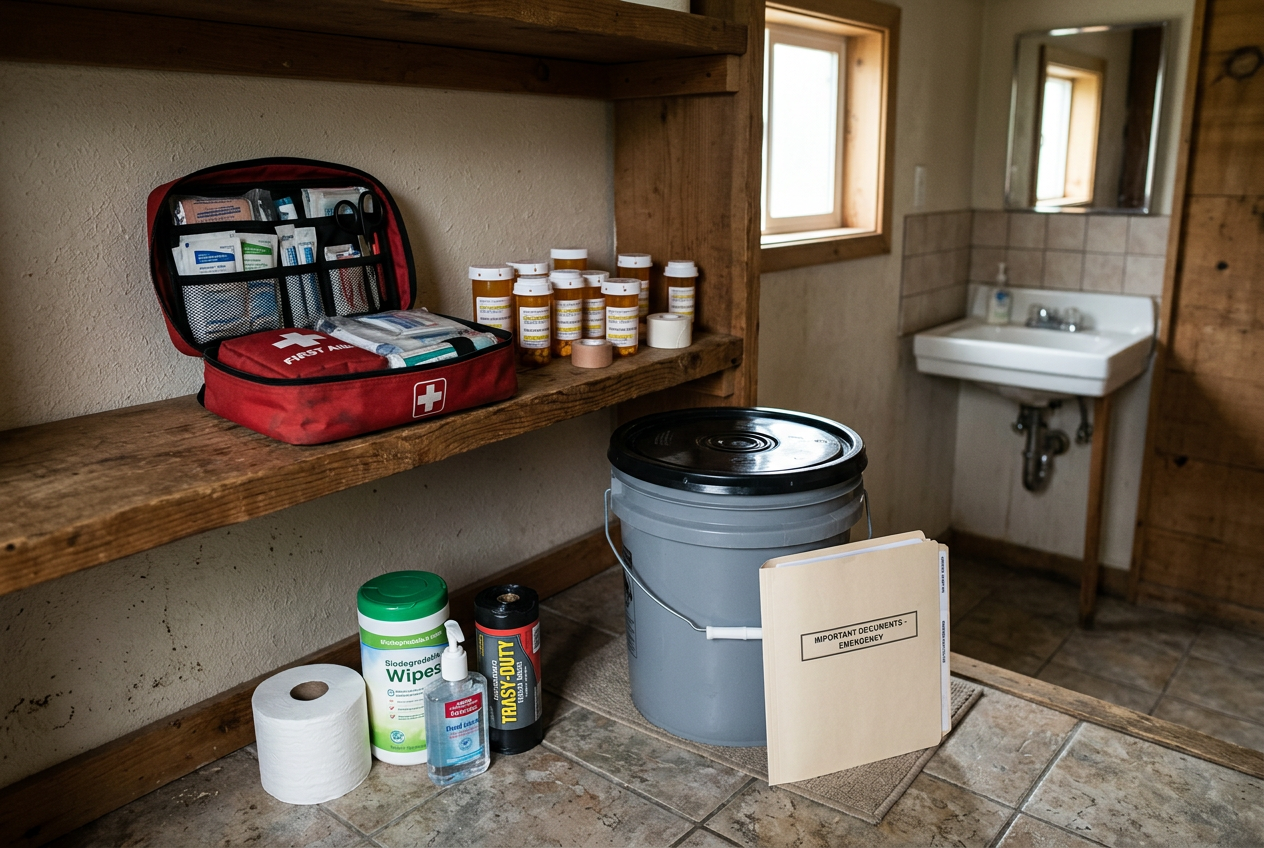
Water and food keep you going. But you also need to stay healthy and clean during a long disruption. This part of your kit covers your health, your hygiene, and your paperwork. The good news is that many of these steps cost you nothing. They just take a little planning.
Prescription Medicine
Try to keep at least a two-week supply of any prescription you take. Ask your pharmacist or doctor how to build up a small extra amount. One easy way is to refill a few days early each time. Over a few months, you can grow a backup supply without a big cost. Store your medicine in a cool, dry spot. Check the dates now and then. Rotate older stock so nothing goes to waste.
Do not forget things like inhalers, insulin, or other special items. Keep a written list of what you take, the dose, and why. This helps if you ever need care away from home.
First Aid Basics
Every household should have a first aid kit. You can buy one or build your own. The American Red Cross suggests including a first aid kit and basic medical items in your supplies. Good basics include bandages of different sizes, gauze, tape, and antiseptic wipes. Add pain relievers, tweezers, and scissors. A multi-purpose tool is handy too.
Learn how to use what you pack. A kit only helps if you know the basics. Check your kit twice a year and replace anything you used or that expired.
Hygiene and Toilet Backups
Staying clean helps you stay well. Stock soap, hand sanitizer, wet wipes, and personal hygiene items. Include toilet paper, trash bags, and feminine supplies. Do not forget diapers if you have a baby.
Plan for the toilet in case the water stops working. A backup can be as simple as a sturdy bucket lined with a heavy trash bag. Keep some kitty litter or sawdust to help control odor. Seal used bags well and store them away from your living space. This keeps your home safer and more comfortable during a long outage.
Important Documents
Paperwork is easy to forget until you need it. Make copies of your key documents now. This includes ID cards, insurance papers, medical records, and your medication list. Keep copies in a waterproof bag or folder. You can also save digital copies on a phone or a small drive.
Organizing this today costs nothing. It just takes an hour or two. If you ever have to leave in a hurry, you will be glad these papers are ready to grab.
A No-Purchase Head Start
Before you buy anything, look at what you already have. Gather loose bandages, extra soap, and spare hygiene items from around the house. Refill your prescriptions early. Sort your paperwork. These small steps build real readiness without spending a dime.
Your 14-Day Kit Action Checklist
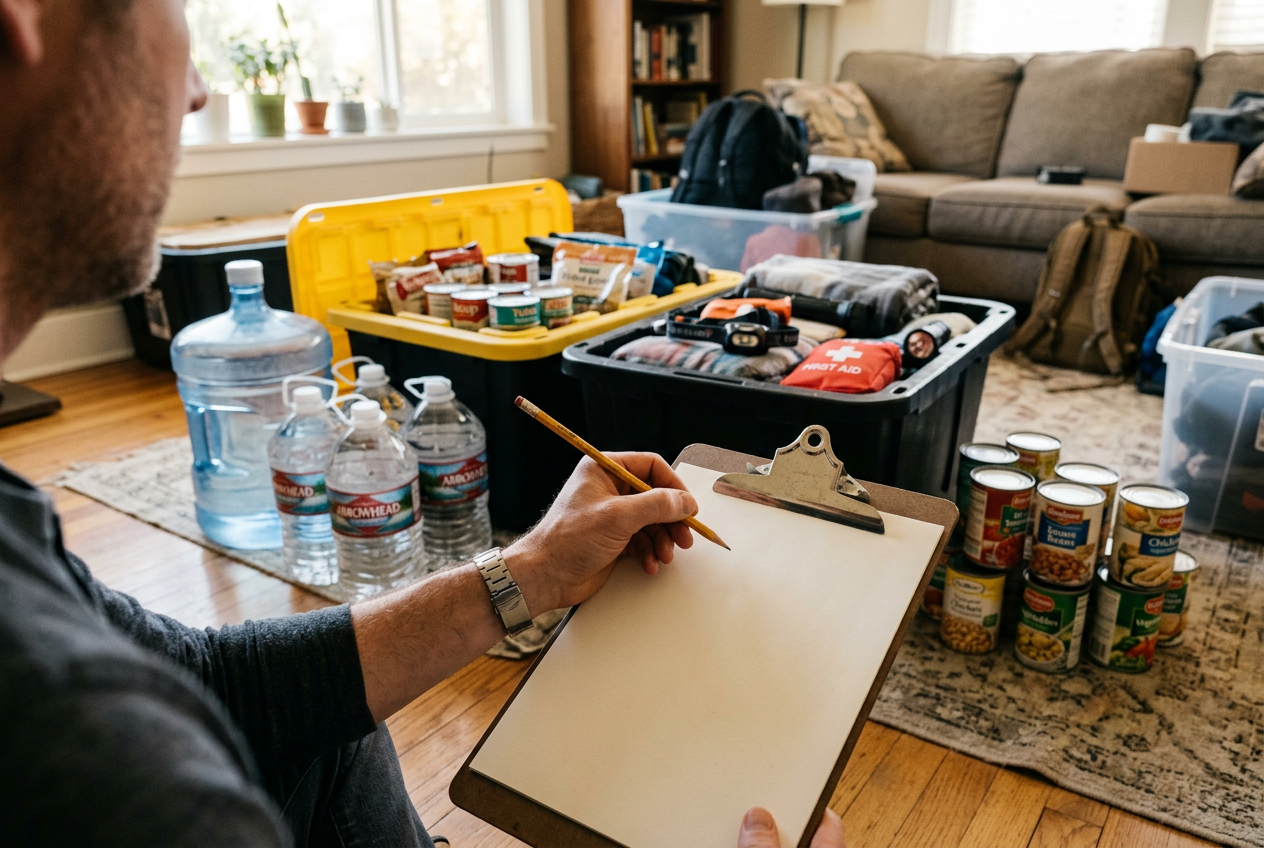
You do not need to buy everything at once. Start with what you already own. Then fill the gaps one category at a time. Spread your purchases over several weeks so it stays easy on your budget. You can print this page and check off each step.
Step 1: Take Stock of What You Have
Walk through your home first. Gather flashlights, batteries, canned food, bottled water, and a manual can opener. Write down what you already own. This shows you what is left to buy.
Step 2: Build It Category by Category
Work through one category each week. Do not rush. Here is a simple order to follow.
Step 3: Water
Store 1 gallon per person per day. For a family of four, that is a lot for two weeks. Use food-grade containers only. A large tank like the 55 gallon stackable water tank works well for a family of four. Prefer smaller jugs? The Saratoga Farms 5-gallon containers are easy to move and stack.
Step 4: Food
Aim for 14 days of meals that store well and cook easily. Pick foods your family will actually eat. A ready-made kit like the Ready Hour 2-Week supply can fill gaps fast. Just add water and heat.
Step 5: Medicine, First Aid, Sanitation, and Documents
Keep at least a 7-day supply of any medicines you take. Refill a first aid kit. Add hygiene items and copies of key papers.
Step 6: Rotate What You Store
Stored water and food do not last forever. Check them a few times a year.
- Label each container with the date you filled it.
- Rotate stored water every six months. Empty, rinse, and refill.
- Eat and replace shelf-stable food before it expires.
- Test batteries and swap out any that are weak.
Rotation keeps your kit fresh and ready. A little upkeep now means fewer surprises later.
Step 7: Store It Where You Can Reach It
Keep your kit in one spot that is easy to grab. A closet, garage, or basement works. Tell everyone in your home where it is. Do not store fuel inside your living space.
Check off each step as you go. Once you finish all seven, you have a full 14-day kit.
Frequently Asked Questions
How much water do I need per person for two weeks?
A good rule is one gallon per person per day. That covers drinking and basic hygiene. For two weeks, that means about 14 gallons per person. A family of four would need around 56 gallons.
You do not have to buy one giant tank. You can mix a few options. A large stackable tank like the 55 gallon stackable water storage tank holds enough for a family of four for about two weeks. Smaller jugs like the Saratoga Farms 5 gallon containers are easier to move and refill. Collapsible jugs also fold flat when empty.
How much food do I need per person for two weeks?
Aim for about 2,000 calories per person each day. Some people need more. Growing kids, active adults, and larger bodies may need extra.
Choose foods that store well and need little cooking. Ready-made kits make the math simple. For example, the Ready Hour 2-Week Emergency Food Supply provides over 2,000 calories a day for one person. Always read the label. Some kits list servings, not full daily calories. Add snacks and pantry items to fill any gaps.
How long do emergency kits last?
It depends on the item. Many freeze-dried food kits list a 25 year shelf life when sealed and stored right. Water does not expire, but you should store it in clean, food-grade containers and rotate it over time.
Other items need checking. Batteries, medicine, and first aid supplies have shorter lives. Mark dates on your calendar. Check your kit twice a year and replace anything old.
Where should I store my supplies?
Pick a cool, dark, and dry spot. Closets, basements, and interior rooms work well. Keep water and food off bare concrete if you can. Use a shelf or a pallet.
Never store fuel inside your living space. Keep fuel in approved containers only. Store it away from heat, flames, and children. Follow the maker’s directions and your local fire rules.
Spread your supplies out if you have room. That way one leak or problem will not ruin everything.
Should I build my own kit or buy a ready-made one?
Both work. It comes down to time and budget.
Building your own gives you full control. You choose foods your family likes. You can use things you already own. This is often the cheaper path. Start with what you have at home, then fill gaps over time.
Buying a ready-made kit saves time. Everything is packed and ready to grab. Many kits come in watertight buckets that store or travel well. If you want a starter kit you can add to, the Augason Farms 2 Week Emergency Food Supply Kit is one option. You can build your own water and first aid supplies around it.
Many people do a mix. They buy a food kit for the base, then add their own water, medicine, and comfort items.
Next Steps: Turn This List Into a Ready Household
You now know what goes into a 14-day emergency kit. Let’s turn that list into real supplies on your shelf. You do not have to buy everything at once. Start small. Build week by week.
Recap the Core Categories
A two-week kit covers a few main needs. Keep these in mind:
- Water. Plan about one gallon per person each day. That covers drinking and basic cleaning.
- Food. Choose meals that store well and need little cooking. Many just need added water and heat.
- Cooking, light, and power. You need a safe way to cook and see when the grid is down.
- Medicine and first aid. Keep a first aid kit and a supply of any prescriptions you take.
- Sanitation and documents. Pack hygiene items and copies of your important papers.
Each of these has its own section above. Come back to them as you build.
Take One Action Today
The best way to start is to do one thing right now. Pick the step that fits your household.
Do the water math. Count the people in your home. Multiply by 14 days. That is your two-week gallon total. A family of four needs about 56 gallons. Knowing your number makes the next choice easy. A large stackable tank like the 55 Gallon Stackable Emergency Water Storage Tank can hold close to two weeks for a family of four. If you want smaller, easier to move containers, look at the Saratoga Farms 5-Gallon Stackable Water Containers.
Refill a prescription. Call your pharmacy today. Ask how to keep a small backup supply on hand. Do not let a needed medicine run low.
Start your food store. If cooking from scratch feels like too much, a ready-made kit is a simple base. The Ready Hour 2-Week Emergency Food Supply is built for two weeks and just needs water and heat.
Pick one action. Finish it before you move on. Small steps add up fast.
Keep Building With Related Guides
This article is one piece of a larger plan. To go deeper on each part, read our other guides in the emergency kits cluster.
- Water storage. Learn how to store, rotate, and treat water so it stays safe to drink.
- Food kits. Compare ready-made kits and learn how to mix them with pantry food.
- Power outages. Find safe ways to keep light, heat, and small devices running when the power is off.
You can print this page to use the checklist offline. Keep it with your supplies. Check off each item as you gather it. In a few weeks, your household will be ready for a much longer disruption than 72 hours.