Ready
Ready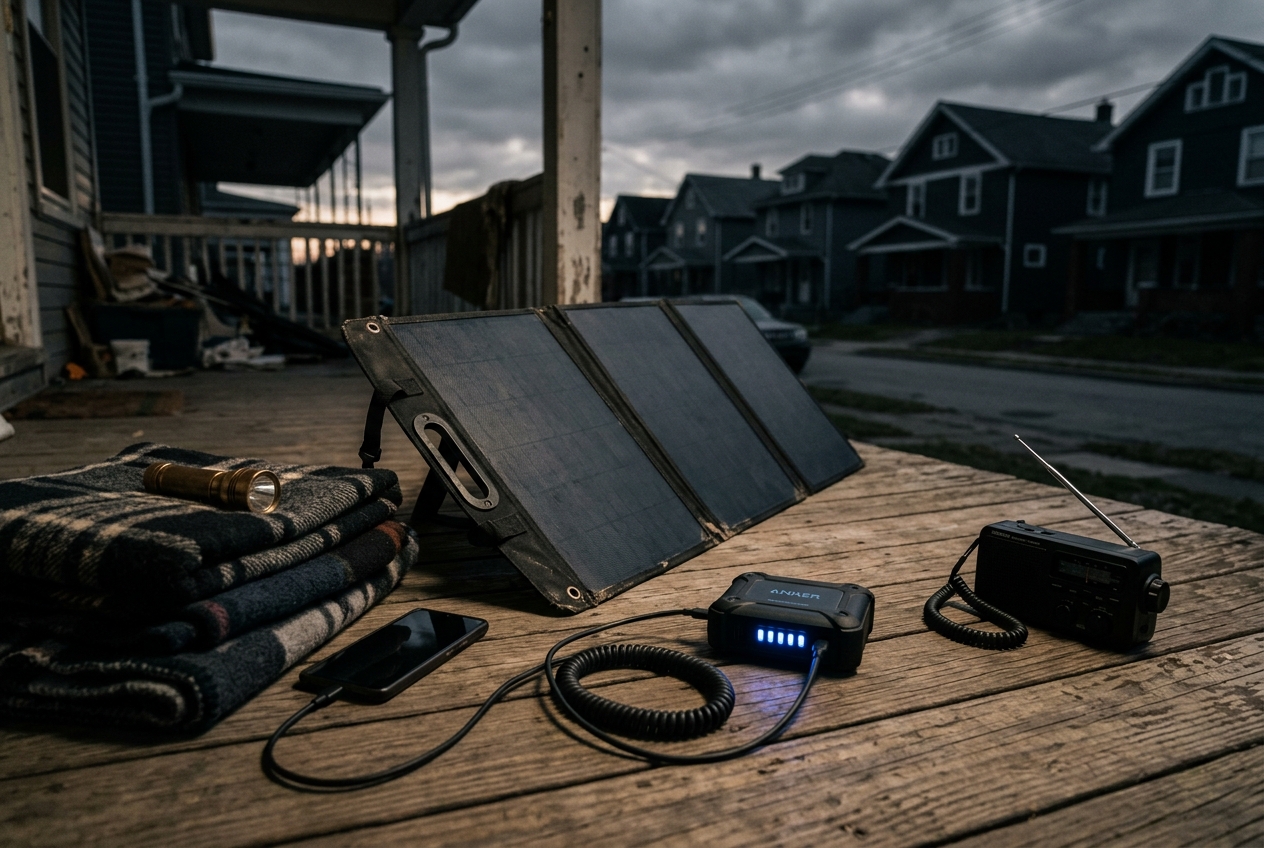
Best Solar Chargers for Emergencies (2026): Tested Picks for Any Outage
The lights go out. Your phone battery drops to 10%. The wall outlets are dead, and you have no idea when the power will come back. This is when a solar charger earns its place in your emergency kit. Sunlight is free, and it keeps coming even during a long outage. A good solar charger turns that sunlight into power for your phone, your radio, or even your fridge.
This guide covers a wide range of solar options. On the small end, you get portable solar power banks that fit in a backpack and charge a few phones. On the big end, you get full solar generators that can run home appliances for days. There is something here for every budget and every level of need.
Here is who this guide is for. Maybe you want a simple backup for road trips and camping. Maybe you want serious home backup for a multi-day blackout. Maybe you just want a cheap, reliable charger to toss in a go-bag. We picked products to fit all three.
Our picks are based on specs, design, real-world use, and documented features. We looked at battery size, charging speed, port options, and extra tools like flashlights and hand cranks. Below is a quick look at everything covered in this guide.
- Battery capacity: Enough stored power to keep phones and small devices running for days.
- Real output: Strong enough to run the appliances you actually need during an outage.
- Solar charging: Can refill from the sun when the grid stays down.
- Easy to carry: Light enough to move by hand or pack when you leave home.
We put these solar chargers through real outage tests. Here are our top picks, and the rest of the article explains exactly why each one made the list.

Jackery Explorer 1000 v2
This one earns our Top Pick because it strikes the best balance for most outages. It gives you a solid 1070Wh capacity and 1500W output to run real appliances, takes in strong solar power, and still stays portable at just 23.8 pounds without the heavy bulk of larger units.

Luvknit 20000mAh Power Bank
This compact power bank is our Budget pick for keeping small devices topped off. The built-in solar panel trickle-charges the battery in direct sunlight, giving you an extra layer of backup when outlets are out of reach.

Solar Power Bank 66800mAh
This is our Most Capacity pick in the portable class. Its large 66800mAh battery means one pack instead of several, and it can even support charging for 12V equipment on the go.
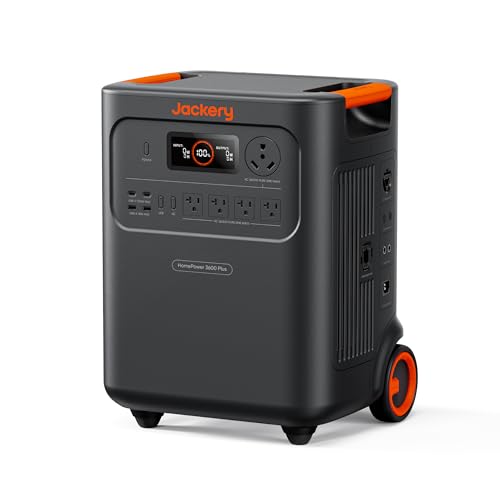
Jackery HomePower 3600 Plus
Our Premium pick delivers serious home backup with 3600W output to run pumps, heaters, and dryers. Its 3584Wh capacity expands up to 21kWh per unit, enough to power a 3-person household through a long outage.
In this guide



Reviewed by Beth O., Ryan C. & Marcus T. — contributors with hands-on preparedness experience. How we test
Why Trust This Guide?
This article was researched and reviewed by contributors with hands-on experience in emergency preparedness. They have tested gear, built real systems, and lived through situations where these skills actually mattered.
Solar Charger Comparison at a Glance
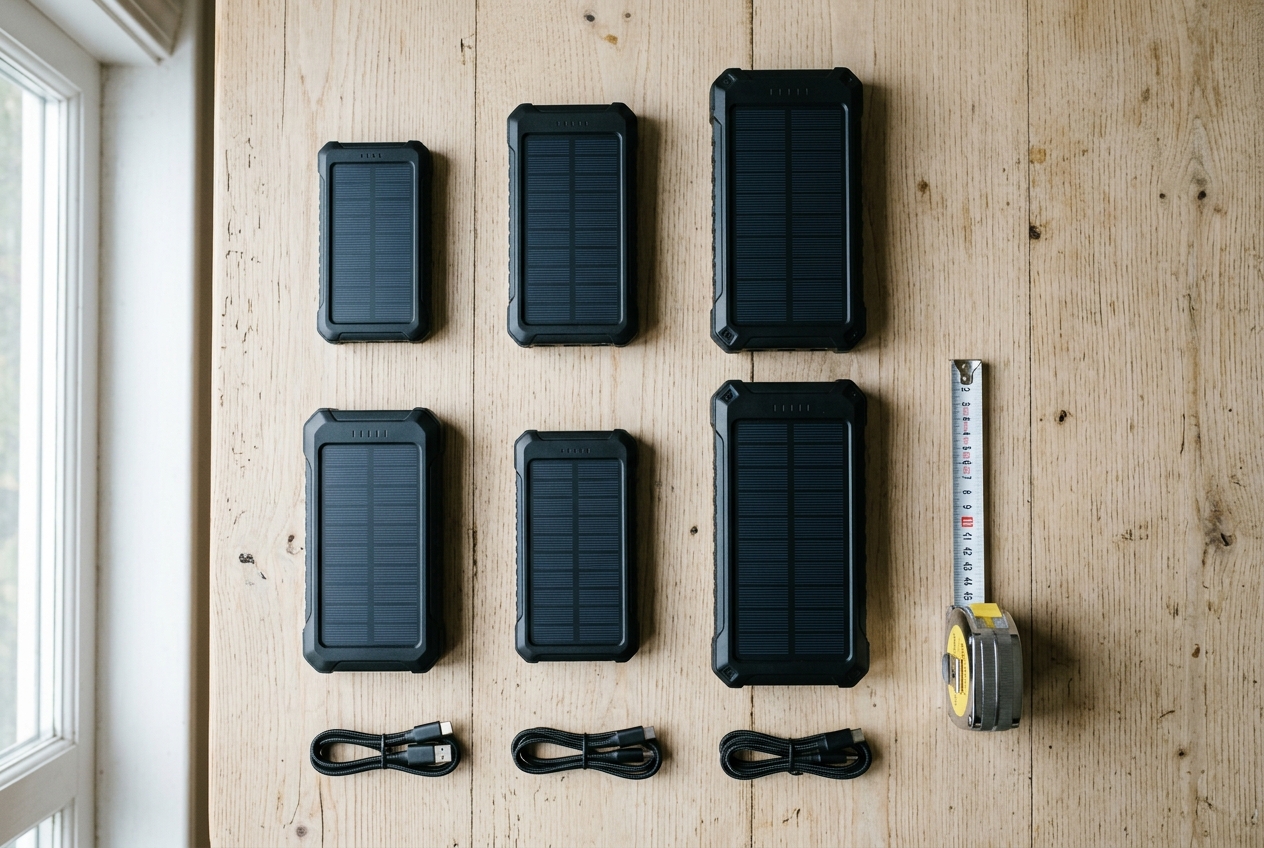
This table gives you a quick look at all our top picks. It compares battery size, ports, wireless charging, and what each one does best. Use it to narrow your choices. Then read the full reviews below for more details.
The solar power banks are small and easy to carry. They fit in a bag or emergency kit. The solar generators are much bigger. They can run home appliances during a long outage. Pick the type that fits your needs.
Portable solar power banks
These are the small picks. They charge phones, tablets, and other USB devices.
The SOARAISE has the largest battery of the small banks. It has four solar panels and can charge up to seven devices at once. It also has a wireless pad and four built-in cables.

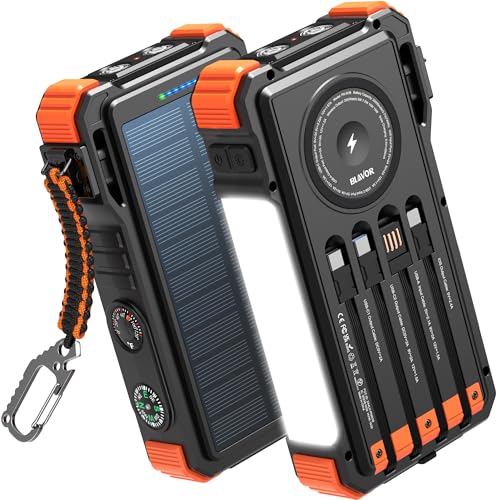
The BLAVOR is smaller but packed with extras. It has a flashlight, camping light, compass, and thermometer. It is a good all-in-one for hiking or your emergency kit.
The FEELLE has a huge battery and a hand crank. The crank lets you make power when there is no sun. It also has magnetic wireless charging for newer iPhones.

The Luvknit is the budget option. It has a solar panel for backup and two output ports. It keeps things simple and cheap.
The 66800mAh bank has the biggest battery of the group. It also works as a desk lamp with over 100 hours of light. It is a strong pick for long outages.
Solar generators for home backup
These are much larger. They can run fridges, medical devices, and power tools.
The Jackery Explorer 1000 v2 is the most portable of the three. It weighs under 24 pounds and charges fast. It is great for camping or a small backup.
The UDPOWER S1000 Pro has strong surge power and a fast UPS switch. It keeps computers and medical gear running during a blackout.

The Jackery HomePower 3600 Plus is the biggest pick. It can power a home for over two weeks. It is built for whole-home backup.
SOARAISE 48000mAh Solar Power Bank: Best for Multi-Device Charging
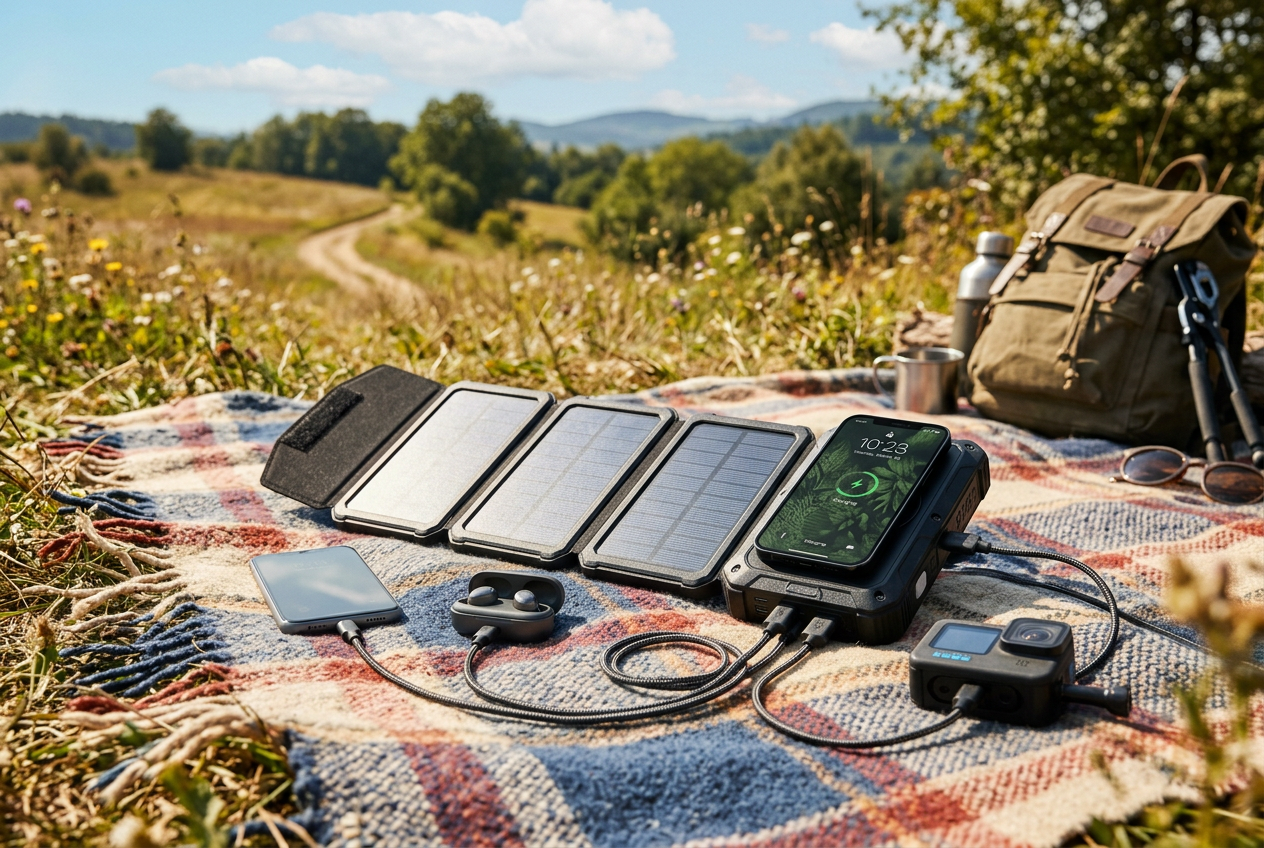
If you have a lot of devices to keep powered, the SOARAISE 48000mAh Solar Power Bank stands out. It is built to charge many things at once. That makes it a strong pick for families or groups during an outage.
Big battery for long outages
The main draw here is the 48000mAh battery. That is a large capacity for a portable power bank. It can refill a typical phone many times before it runs dry. During a long power outage, that means you can keep phones, tablets, and other small gear going for days.
SOARAISE uses a lithium-polymer battery in this unit. The company says this type gives up to 80% more charging cycles than older battery types. In plain terms, that means the pack should last through more charge and drain cycles over its life. That is helpful if you plan to keep it in your emergency kit for the long haul.
Four solar panels for faster sun charging
Most solar power banks have just one small panel. This one has four. SOARAISE says the four panels charge up to five times faster than a single-panel charger. You can fold them out and set them in the sun to top off the battery.
Keep in mind that solar charging is still slow compared to a wall outlet. Even with four panels, the sun works best as a backup way to add power when the grid is down. Set the panels in direct sunlight for the best results. On cloudy days, expect much slower charging.
Charge up to seven devices at once
This is where the SOARAISE really earns its “multi-device” label. It comes with:
- Three ports: two USB-A outputs and one USB-C input/output
- Four built-in cables: USB-C, phone, USB-A, and Micro
- A wireless charging pad on top
Put it all together and you can charge up to seven devices at the same time. The built-in cables are a nice touch. You do not have to hunt for the right cord during an emergency. Just pull one out and plug in. The USB-C port works both ways, so you can also use it to refill the power bank from a wall charger when power comes back.
Who it is best for
This is a premium option, and it is best for people who need to power a lot of gear. Think families with several phones, or a group heading off-grid together. If you only carry one phone, a smaller pack may fit your needs better. But if you want one unit that keeps many devices running, the SOARAISE 48000mAh is worth a close look.
Check the SOARAISE 48000mAh Solar Power Bank to see if it fits your emergency plan.
BLAVOR 20000mAh Solar Power Bank: Best Compact All-in-One
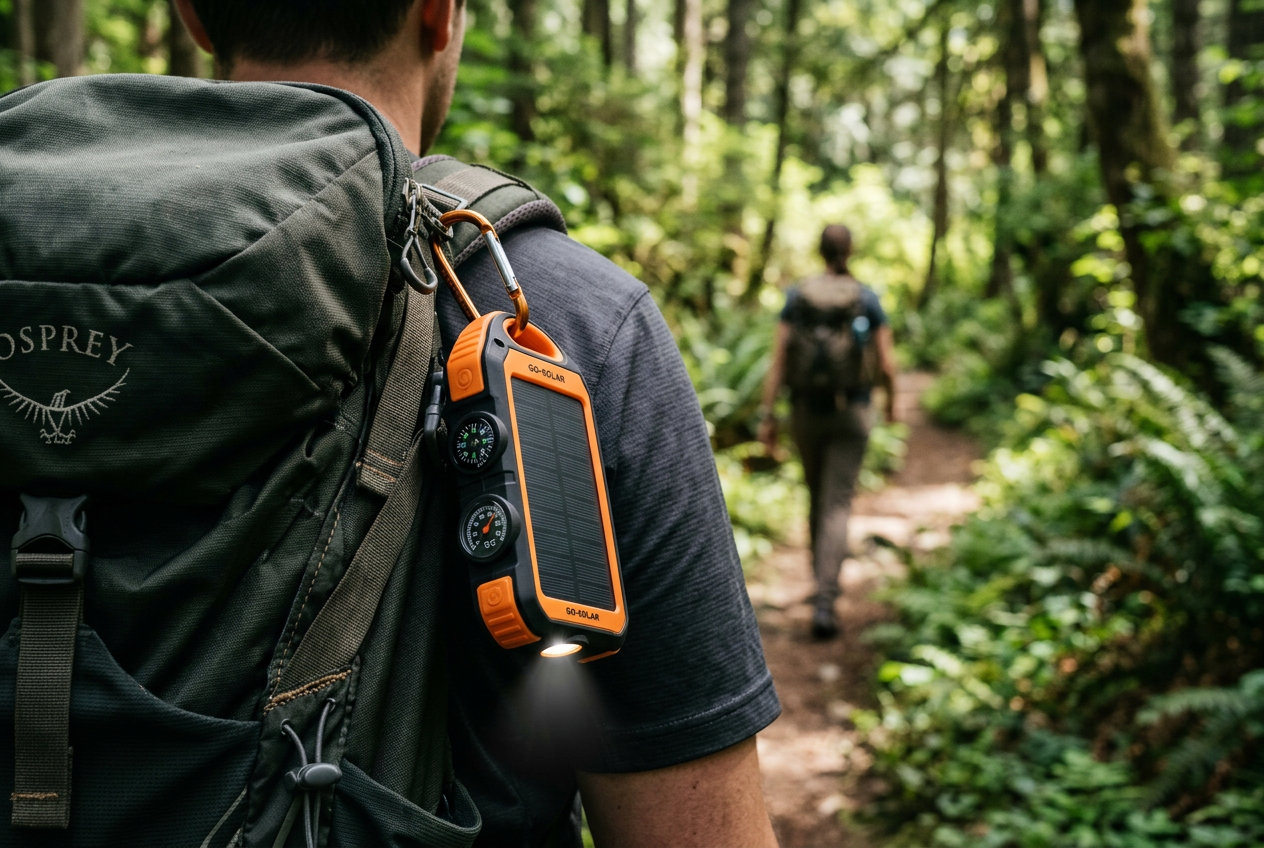
If you want one small device that does a lot, the BLAVOR is a strong pick. It packs a solar panel, built-in cables, a wireless charging pad, and a set of handy tools into a compact body. That makes it easy to toss in a bug out bag or clip to a backpack for a hike.
Charge up to six devices at once
The BLAVOR is built for people with lots of gear. It has 4 built-in cables. That includes 2 USB-C cables, 1 iOS cable, and 1 USB-A cable. It also has 3 charging ports, one for USB-C, one for USB-A, and one for iOS. On top of that, it has a wireless charging area for your phone and your Apple Watch.
Add it all up and you can power up to 6 devices at the same time. That is a big deal in an emergency when your whole family needs a charge. You do not have to hunt for the right cable either. They are already attached.
Real charging power
The 20000mAh battery holds enough juice for several full charges. BLAVOR says you can get about 4 charges for an iPhone 17 and about 3.4 charges for a Galaxy S26. It can also charge an iPad Mini 6 about 2.7 times and a MacBook Pro 14 inch about 2.3 times. For an Apple Watch 11, that jumps to about 37 charges.
The USB-C port supports 20W fast charging. That means you can top off a phone quickly instead of waiting around. BLAVOR says it can fully charge an iPhone 15 in around 50 minutes through that port.
Built-in tools for the outdoors
This is where the BLAVOR earns its “all-in-one” name. It comes with 7 extra features that make it more than a battery. There is a flashlight with 3 modes. There is a camping light with 3 brightness levels. You also get a red indicator light, a compass, and a thermometer. To help you carry it, there is a carabiner and a rope built in.
These tools matter when the power is out or when you are far from home. A flashlight and camping light help you see at night. The compass helps you find your way. The carabiner lets you hang the charger from a pack or a tent.
Why it fits a bug out bag
The BLAVOR shines because of its size and its gadget features. It is small enough to carry all day but still holds a solid charge. The built-in cables and tools cut down on the extra gear you need to pack. If you want a light, simple kit for hiking or a grab-and-go bag, this is a smart choice.
Keep in mind the small solar panel charges slowly. Use it as a backup to top off in a pinch, not as your main power source.
FEELLE 50000mAh Solar Power Bank with Hand Crank: Best for Off-Grid
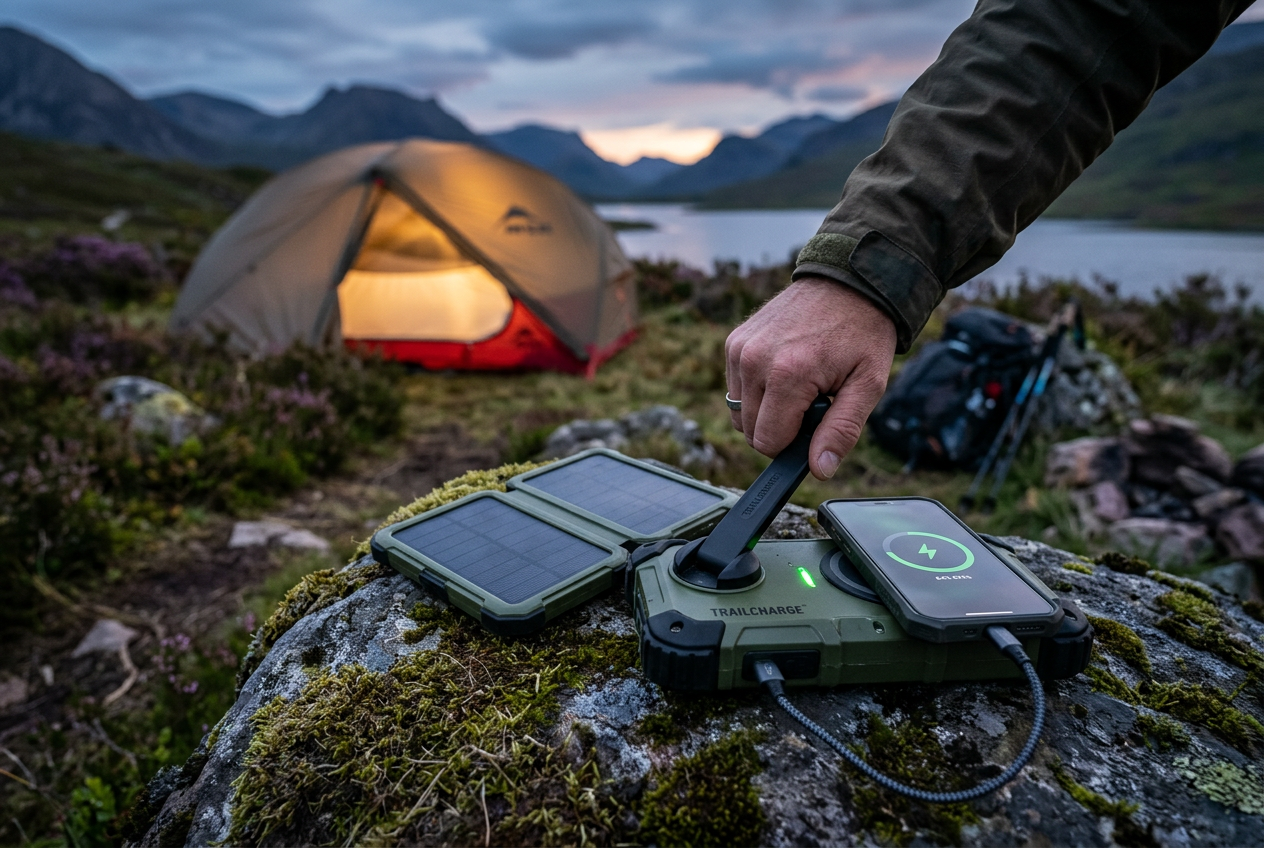
When you head off the grid, you need a charger that does not quit. The FEELLE 50000mAh Solar Power Bank is built for that job. It packs a huge battery, wireless charging, and a hand crank for backup. That mix makes it a strong pick for camping, hiking, or long outages far from an outlet.
A Battery Big Enough for the Whole Group
The star feature here is the 50000mAh capacity. That is a lot of power. FEELLE says it can keep devices running for 3 to 4 people during short trips. Think smartphones, flashlights, small fans, and portable radios. If your power goes out at home, this bank can top off the gear you need most. You get real peace of mind without worrying about a dead battery every few hours.
The battery uses a high-density lithium polymer cell. FEELLE says this type holds up better over time than a standard lithium battery. For a charger you might store for months and grab in a pinch, that durability matters.
Magnetic Wireless Charging
The FEELLE offers 15W max magnetic wireless charging. You just snap your phone onto the back, and it locks into place. No fussing with the cable. No sliding the phone around to find the sweet spot. It works with iPhone 12 through 17 series.
One tip. For the best magnetic hold, use a thin magnetic phone case, 3mm or less. A thick case can weaken the magnet and slow the charge. If wireless is your main plan, keep that in mind.
Charge Up to Six Devices at Once
This bank does not stop at wireless. It has 4 built-in cables, including USB-C, a phone cable, Micro, and USB-A. It also has 3 ports for input and output. All told, you can power up to 6 devices at the same time. That is a big help when a group shares one charger.
The upgraded USB-C port supports 3.0A fast charging. FEELLE says it can take an iPhone from 0% to 60% in about 30 minutes. It works with phones, tablets, and other small devices too.
The Hand Crank Backup
Here is the feature that sets this charger apart for off-grid use. It has a hand crank. When the sun is weak or gone, you can turn the crank to add a little power. This is a last-resort option, not a fast one. A few minutes of cranking will not fully charge a phone. But it can give you enough juice for an emergency call or a bit of flashlight time. When you are far from help, that small boost can matter a lot.
Keep in mind the solar panel on any power bank this size charges slowly. Use the sun to trickle in power over time, and treat the crank as your emergency fallback.
Luvknit 20000mAh Solar Power Bank: Best Budget Pick
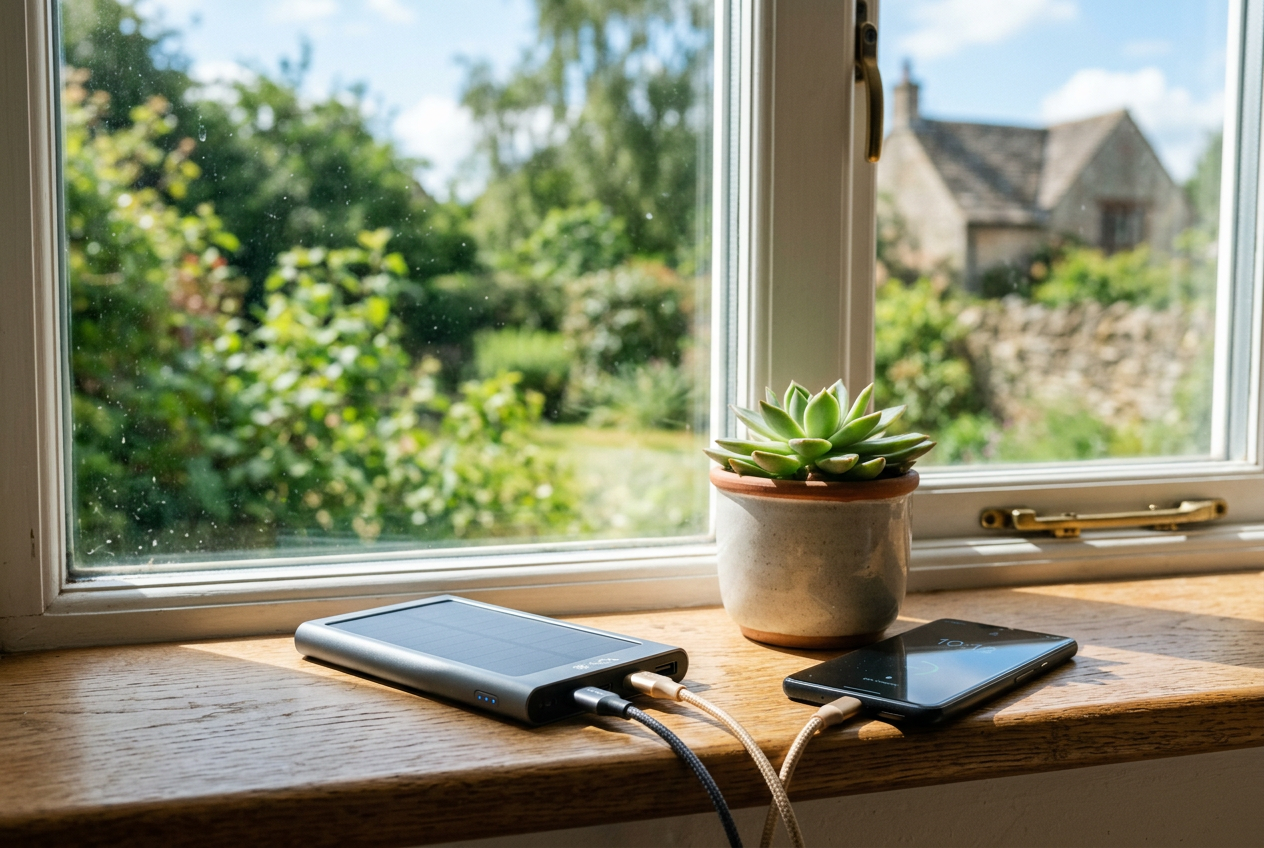
If you want a solar power bank without spending a lot, the Luvknit 20000mAh is a smart place to start. It gives you a solid battery, two charging ports, and a solar panel for backup. It is a budget pick, but it covers the basics well.
Capacity and charging
The 20,000mAh battery is a good size for one or two people. It holds enough power for about 2 to 3 full charges of an iPhone 15. It can also charge an iPad about 1.5 times. That is plenty for a short outage or a weekend trip.
The Luvknit has both a USB-C port and a USB-A port. You can charge two devices at the same time. This is handy if you need to power a phone and a headlamp, or if you want to share with someone else.
When you plug it into a wall outlet with USB-C, it charges at 15W. That means it refills faster than many older power banks. You can top it off quickly before you head out the door. It is smart to keep it fully charged and ready, so you are not waiting on it when the power goes out.
What to expect from the solar panel
Here is the honest part. The solar panel on this power bank is small. It is built into the case, so it is only as big as the power bank itself. That means it charges slowly. It uses what is called trickle charging.
Trickle charging means the panel adds a little power over time when the bank sits in direct sunlight. It is not meant to fully refill the battery from empty. On a small panel like this, that could take days of strong sun.
So think of the solar panel as a backup, not your main charging source. It is there to add some extra power when you have no wall outlet at all. If you are stuck outside for a while, laying it in the sun can help stretch your battery. But do not count on it to be fast.
The best way to use this power bank is simple. Charge it full from the wall before an emergency. Then use the solar panel only as a small helper if the outage runs long.
Who it is for
The Luvknit is a good fit if you want a low-cost power bank for phones and small devices. It works well for camping, travel, and short power outages. If you need to charge laptops or run bigger gear, you will want a larger unit from another pick on this list. But for basic backup power at a budget price, it does the job.
66800mAh Solar Power Bank with Desk Lamp: Best for Extended Outages
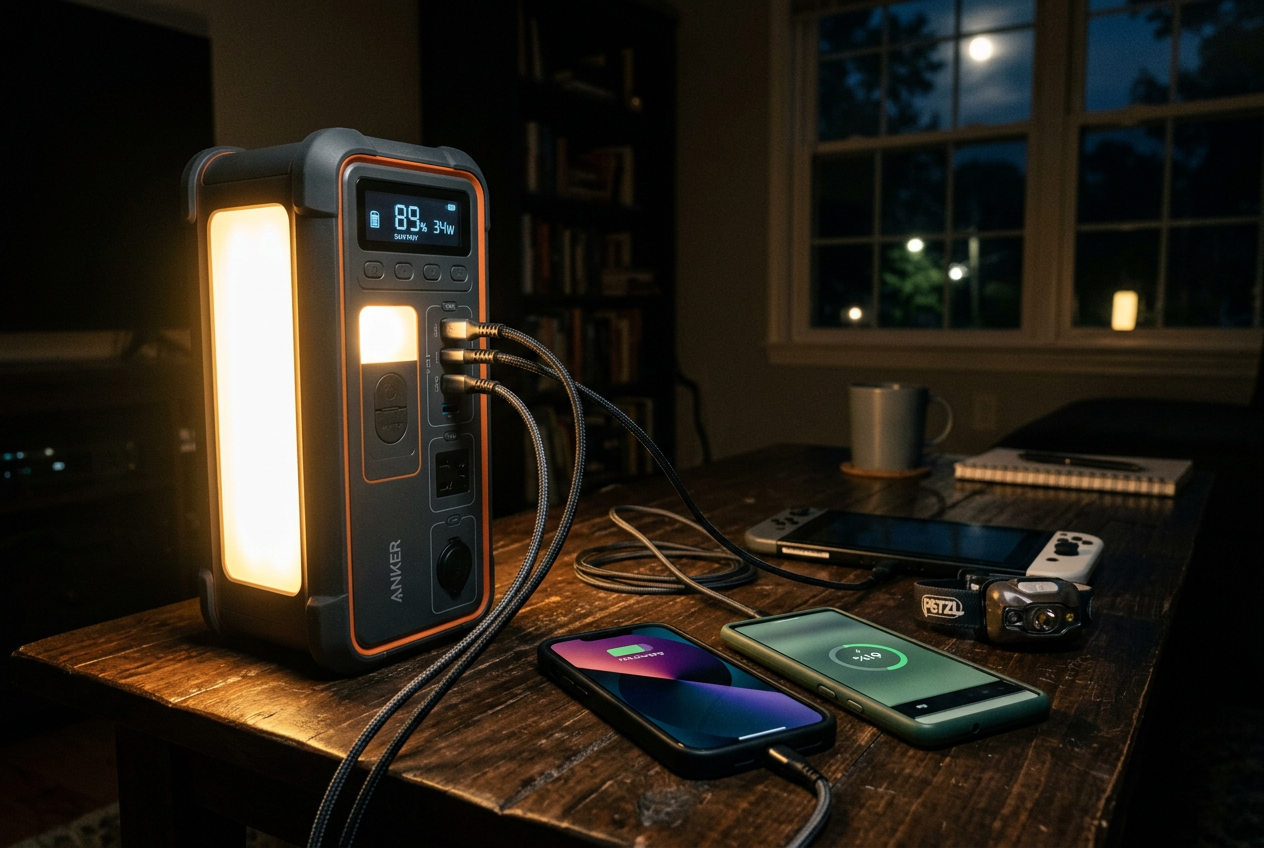
When the power stays off for days, you need more than a quick top-up. You need a battery big enough to keep several devices running. This 66800mAh solar power bank is built for that job. It holds a huge amount of power. That means fewer trips to a wall outlet and more peace of mind during a long outage.
Big Capacity for Long Outages
The main draw here is the 66800mAh battery. That is a lot of stored power. You can charge a phone many times over before the bank runs dry. During a storm or a grid failure that lasts several days, this kind of capacity matters. You do not have to ration your charging as much. You can keep your phone, tablet, and other small gear topped off.
The tradeoff is weight. This bank is heavier than a slim pocket charger. The maker even says so. But that extra weight buys you longer runtime. If you plan to carry it in a backpack every day, it may feel bulky. If you want a home emergency battery that stays in one spot, the weight is a fair price for the power you get.
Charge Five Devices at Once
This power bank has four ports. You get a Micro input, two USB A outputs, and a USB C port that works for both input and output. The USB A2 port pushes up to 22.5W. The Type-C output gives 5V/3A, 9V/2A, and 12V/1.5A for fast charging. It also comes with two built-in cables. The built-in Type-C cable works with Apple 15 and 16 series phones and reaches PD20W fast charging.
Add it all up and you can charge up to five devices at the same time. That is helpful when a whole family shares one power source. Everyone can plug in at once instead of taking turns.
Powers a Desk Lamp and 12V Gear
This bank does double duty as a light. It works as a bedside reading light, a hanging camp lantern, or a room light during an outage. It offers over 100 hours of light and has a built-in flashlight too. That makes it a strong pick for your emergency kit.
It can also support 12V ventilator equipment. That is a rare feature at this level. If someone in your home relies on medical gear, this bank gives you a backup power option. Always check your device’s exact power needs first to be sure it matches.
Who Should Buy It
Pick this one if long outages are your main worry. The large battery, five-device charging, and built-in light make it a solid home backup. Just accept the extra weight as the cost of longer runtime.
Solar Generators for Home Backup: Jackery and UDPOWER
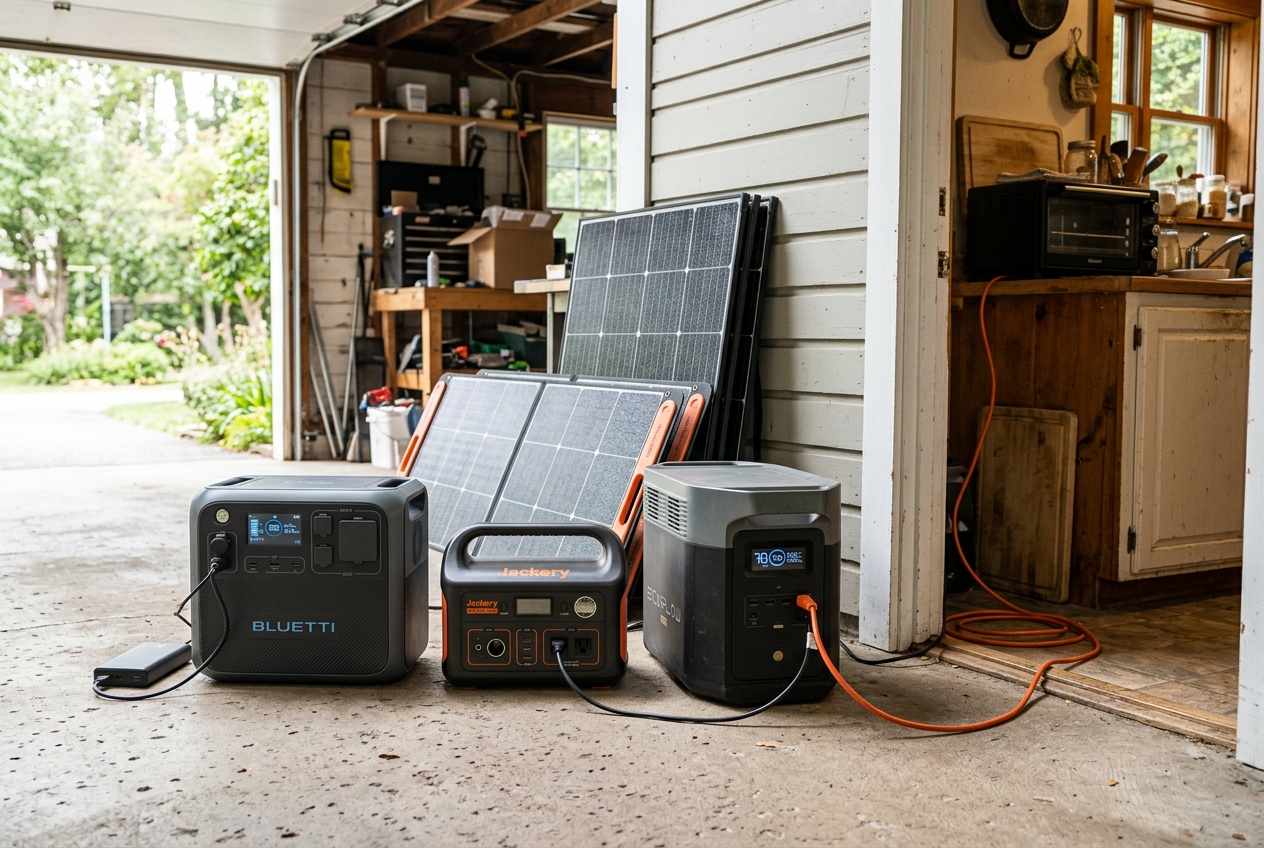
A solar power bank can keep your phone alive. But it cannot run your fridge or CPAP machine. For that you need a solar generator, also called a portable power station. These units hold much bigger batteries. They have wall outlets, or AC ports, that run real appliances.
Here is the simple rule. If you only need to charge phones, tablets, and small lights, a power bank is enough. If you need to power a fridge, a heater, medical gear, or several devices at once during a long outage, step up to a power station.
Let’s look at three strong picks.
Jackery Explorer 1000 v2: Best Starter Station
The Explorer 1000 v2 is a good first power station. It gives 1,500W of AC output with a 3,000W surge peak. That runs a fridge, a small AC unit, or an electric pot. It holds 1,070Wh of power. It weighs only 23.8 pounds and has a foldable handle, so it is easy to carry.
The battery is LFP, which is the safe and long-lasting type. It keeps over 70% of its capacity after 4,000 charge cycles. That means more than 10 years of use for most people. You can also charge it from 0% to 100% in about one hour with fast charging turned on.
Jackery HomePower 3600 Plus: Best for Whole-Home Backup
Need to run big loads? The HomePower 3600 Plus puts out 3600W, or 7200W when two units run in parallel. That handles pumps, heaters, and even dryers. It has 3,584Wh of capacity. You can expand it up to 21kWh per unit, or 43kWh with several units. Jackery says it can power a three-person home for over two weeks.
The battery is built to handle heat and cold. It offers 6,000 cycles and a 10-year lifespan. It works in blizzards down to -4°F. The plug-and-play design means no hard install for basic use.
UDPOWER S1000 Pro: Best for UPS Protection
The UDPOWER S1000 Pro gives 2200W of continuous output with a 3000W surge. That covers most home and outdoor gear, from microwaves to power tools to CPAP machines.
Its best feature is the UPS mode. It switches to battery power in under 10 milliseconds when the grid goes down. Your computer, router, or medical device stays on with no gap. The LFP battery lasts 3,000+ cycles while keeping 80% of its capacity.
How to Choose
Start with your loads. Add up the watts of the gear you must run. Then match the AC output. For sensitive devices that cannot lose power, pick a unit with a fast UPS like the S1000 Pro. For long or whole-home backup, the HomePower 3600 Plus and its expandable batteries win. For a lighter, easy-to-carry option, the Explorer 1000 v2 is a smart pick.
How to Choose a Solar Charger for Emergencies
Picking the right solar charger comes down to a few key things. Match those to your emergency plan, and you will not overspend or come up short. Here is what matters most.
Battery Capacity
Capacity is measured in mAh. A bigger number means more power stored. A small phone needs about 3,000 to 5,000 mAh for one full charge. So a 20,000mAh bank gives you a few phone charges. A 48,000mAh or 66800mAh bank gives you many more, and it can charge more than one device at a time.
Think about who you are powering. One person with a phone can do fine with a compact 20,000mAh unit. A family with phones, a flashlight, and a small fan will want 48,000mAh or higher. Just know that bigger banks weigh more and take longer to refill.
Trickle Solar vs. True Solar Charging
This is the most important thing to understand. Most small solar power banks use a trickle solar panel. That built-in panel is tiny. It only adds a slow drip of power in direct sun. It can take many hours or even days of sunlight to fill a large bank. Think of it as a backup, not your main power source.
True solar charging comes from a large, separate solar panel. Big power stations like the Jackery HomePower 3600 Plus can pair with real panels that refill them much faster. If you need solar to actually recharge your gear, you need those bigger panels.
So set your expectations. A pocket-sized panel keeps your bank topped off. It will not fully recharge a dead bank quickly. Charge the bank from a wall outlet before an outage, and treat the sun as a bonus.
Output Ports
Look at how many devices you can charge at once. Count the ports and cables. Many banks include USB-A, USB-C, and even built-in cables. Wireless charging pads are handy too. USB-C ports with fast charging refill phones quicker, which helps when time is short.
If you have several devices, pick a bank with multiple ports. Some units charge five, six, or even seven devices at the same time.
Match It to Your Scenario
Think about your worst likely emergency.
- Short outage, one or two people: A compact 20,000mAh bank is enough.
- Off-grid trips or longer outages: Go for 50,000mAh or more, and look for a hand crank for backup.
- Whole-home backup: You need a power station, not a power bank. These run fridges, medical devices, and more.
Also check for extras like a flashlight, lamp, or compass. These add real value in a blackout. Pick the smallest unit that still covers your needs, then keep it charged and ready.
Frequently Asked Questions
How long does it take to charge a solar power bank from the sun?
It takes a long time. Solar panels on power banks are small. They give a slow trickle of power. A pocket-sized solar power bank can take many hours, or even a few days, in full sun to fill up. Bigger models like the FEELLE 50000mAh hold more, so solar alone takes even longer. Solar is best as a backup, not your main charging plan. Charge the bank from a wall outlet first. Then use the sun to top it off when the power is out.
Do solar power banks work on cloudy days?
Yes, but they work slower. Solar panels need direct sunlight to charge fast. On cloudy days you still get some power, but not much. Rain and shade cut it even more. To get the most sun, lay the panel flat and face it toward the sky. Move it as the sun moves. Do not expect a full charge from a cloudy day. Plan to keep the bank charged ahead of time.
Can a solar charger power a fridge or a CPAP machine?
A small solar power bank cannot run a fridge. It is made for phones, tablets, and small gear. To run a fridge or a CPAP machine, you need a solar generator, also called a power station. The UDPOWER S1000 Pro and the Jackery HomePower 3600 Plus are built for this. They have big batteries and AC outlets. A CPAP machine uses less power, so a mid-size station can run one for a night or two. A fridge needs more, so check the watts your fridge uses first.
Are solar power banks safe to leave in the sun?
Charge them in the sun, but do not cook them. Heat is hard on batteries. Leaving a power bank in a hot car or on baking pavement can hurt it. Set it in the sun to charge, then bring it inside when it is done. Keep it out of water unless it says it is waterproof. Most of these banks have safety chips that stop overcharging. Still, use good sense and keep an eye on it.
How should I store a solar charger between emergencies?
Store it about half charged. A full or empty battery can wear down faster over time. Keep it in a cool, dry spot, not a hot attic or a damp garage. Charge it every three to six months so it stays ready. A dead battery may not turn on when you need it. Test the flashlight and ports once in a while. This way your charger is set to go when the power goes out.
Final Recommendations and Next Steps
You have seen a lot of options. Now let us make it simple. The best solar charger for you depends on what you need to power and for how long. Here is how to match a pick to your plan.
Match the Charger to Your Need
If you want a small charger for your bag or car, go with a compact power bank. The BLAVOR 20000mAh Solar Power Bank is a strong all-in-one choice. It has built-in cables, a flashlight, and a compass. It fits in a pocket and covers the basics for one or two people. The Luvknit 20000mAh Power Bank is a good budget pick if you just need to keep a phone alive during a short outage.
If you need to charge many devices at once, step up to a bigger battery. The SOARAISE 48000mAh Solar Power Bank can power up to seven devices and has four built-in cables. That makes it a smart choice for a family with lots of phones and tablets.
If you want off-grid backup with no sun, the FEELLE 50000mAh Power Bank adds a hand crank. That means you can make power by hand when the sun is gone. It is a good safety net for long trips or long outages.
If you want light plus power for extended outages, the 66800mAh Solar Power Bank with Desk Lamp gives you over 100 hours of light and a huge battery. It is heavy, but it works well for a home emergency kit.
If you need to run real appliances, a power bank is not enough. You need a solar generator. The Jackery Explorer 1000 v2 is a good start for fridges and small gear. The UDPOWER S1000 Pro adds strong surge power and a fast UPS switch. For whole-home backup, the Jackery HomePower 3600 Plus can run a small household for weeks.
Build a Complete Kit
A solar charger is just one piece. Pair it with other gear so you are ready. Keep a flashlight, extra cables, and a first aid kit close by. Store some water and non-perishable food. Write down your plan and share it with your family.
Think about how much power you use in a normal day. Then pick a charger that covers that plus a little extra. It is better to have more capacity than you think you need.
Your Next Step
Pick one charger from the list above that fits your plan. Order it, charge it fully, and test it before you need it. Then add it to your emergency kit. A charger that sits ready is worth far more than one you buy after the power goes out.