Ready
Four-State Southwest Flooding (2026): What Households Should Do When Rooftop Rescues and Evacuations Begin
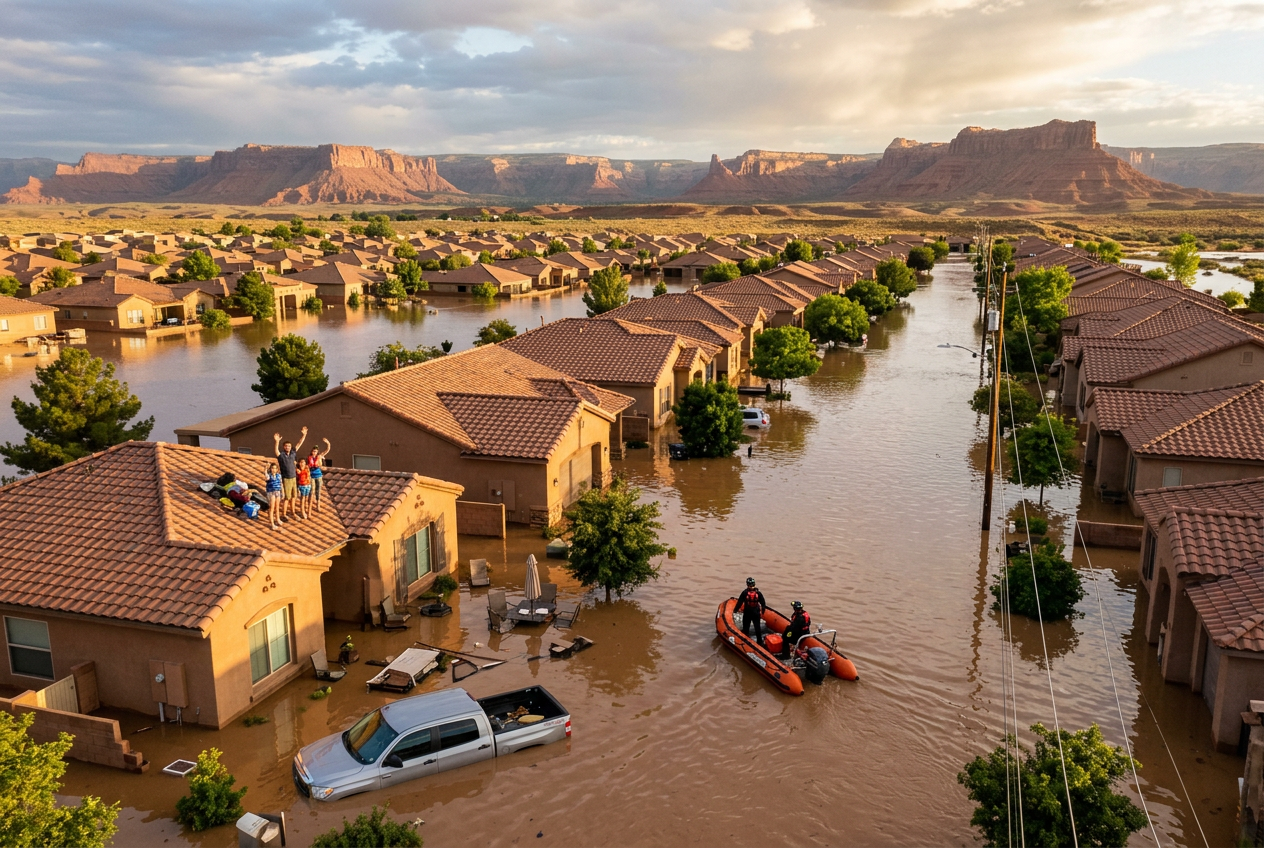
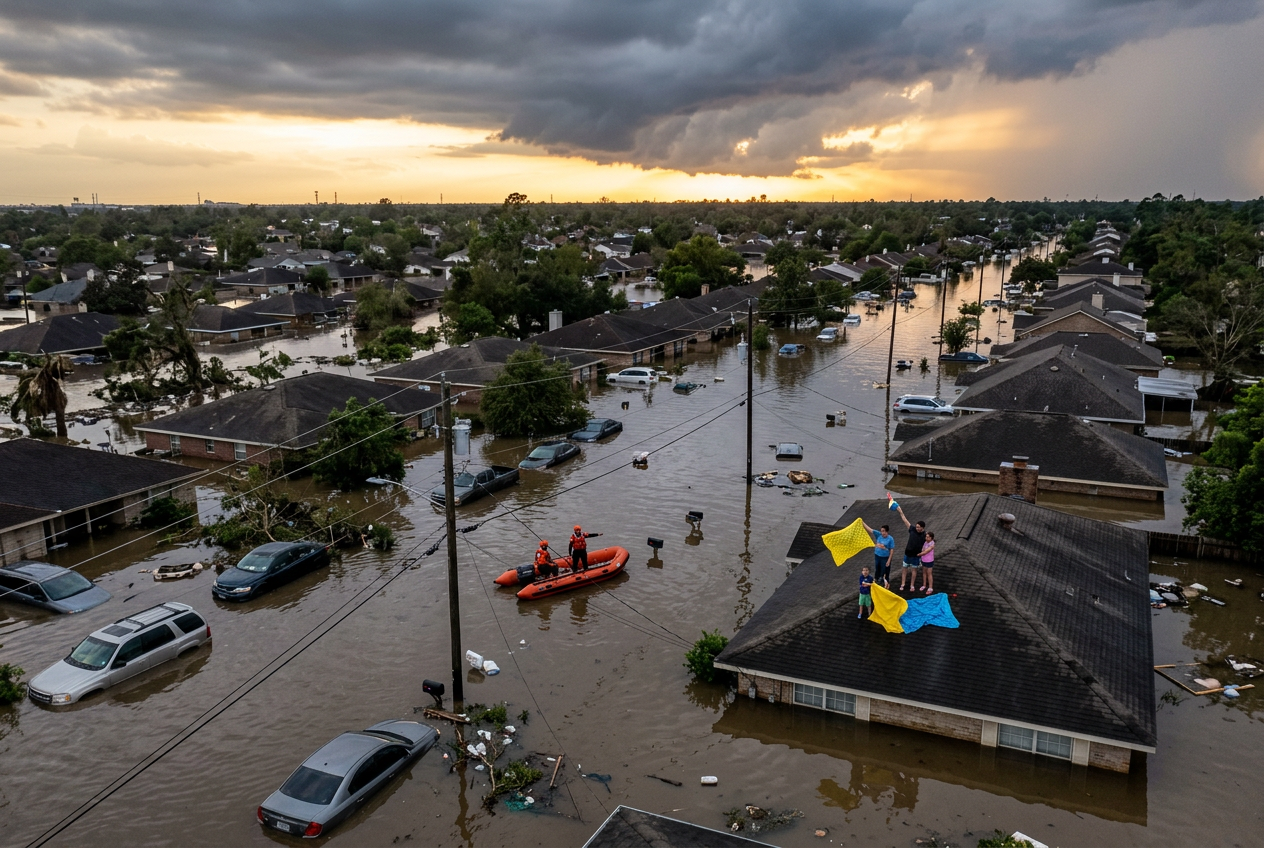
Heavy rains have caused major flooding across four states. Colorado, New Mexico, Arizona, and Utah are all dealing with high water. News reports show hundreds of households being evacuated. Some people have been rescued from their rooftops. On Navajo and Hopi lands in northern Arizona, leaders have declared states of emergency after the storms.
If you live in one of these areas, you may have little time to act. Water can rise fast. Roads can flood in minutes. You may need to make quick choices to keep your family safe.
This guide is built for that moment. It does not expect you to be an expert. It gives you plain, simple steps you can take right now.
Here is what we will cover:
- The difference between a flood watch and a flood warning, and when to act
- Why you should never drive through flooded roads
- How to decide when to leave and where to go
- What to grab when you only have minutes
- How to stay informed if power or cell service goes out
- How to protect your home and family before you leave
You will also find a simple checklist at the end. We will keep the language clear and the steps easy to follow. Let’s start with what the warnings mean.
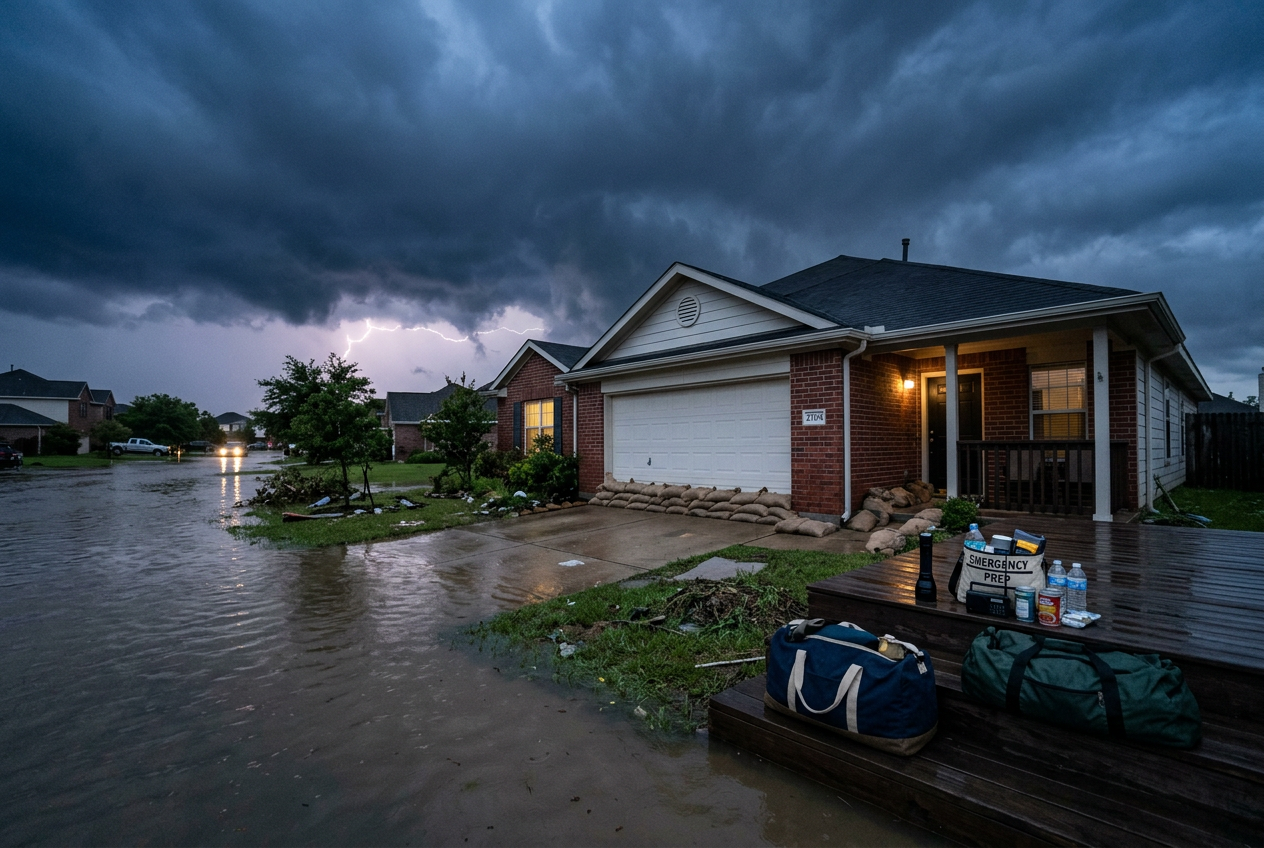
- Pack a go bag now with 3 days of food and water for everyone in your home.
- Know your evacuation route early, and leave when officials say to go, not after.
- Move to high ground fast. Never try to drive or walk through moving flood water.
- Keep a weather radio on so you hear rooftop rescue and evacuation orders even if the power and cell service drop.
- Carry signaling tools so rescue teams can spot you from the ground, water, or air.
One practical preparedness move each week. No fear-mongering, ever.



Reviewed by Elena V., James W. & Priya K. — contributors with hands-on preparedness experience. How we test
When flood water rises fast, the right gear can make your escape safer. Here are a few things to have ready before you read why they matter.

Ready America 2-Person 72-Hour Kit
This grab-and-go backpack holds food, water, and first aid for two people for three days. It lets your household leave in seconds when flooding forces a fast evacuation.
Check Price on Amazon
FosPower Solar Crank Weather Radio
This hand crank and solar radio keeps you tuned to NOAA alerts so you hear evacuation and rescue updates when the power is out. It also charges your phone and works as a flashlight during long outages.
Check Price on Amazon
Limcox Signal Mirror 2-Pack
The reflective mirror and whistle help rescue crews find you during a rooftop or water rescue. The built-in compass helps you pick a safe route toward higher ground.
Check Price on AmazonIn this guide
Why Trust This Guide?
This article was researched and reviewed by contributors with hands-on experience in emergency preparedness. They have tested gear, built real systems, and lived through situations where these skills actually mattered.
Know Your Warnings: Watch vs. Warning and When to Act
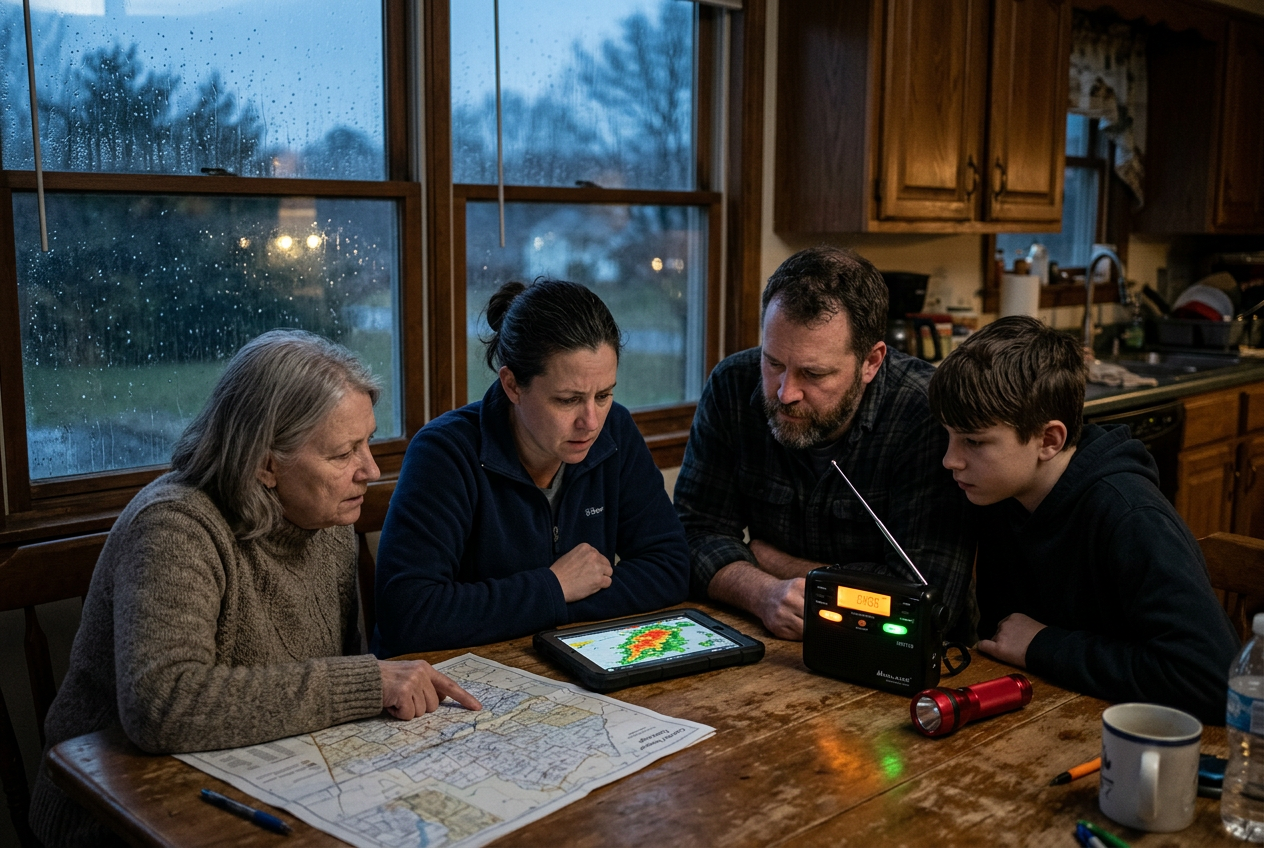
Weather alerts can feel confusing when you are worried. But two words matter most right now. Those words are “watch” and “warning.” They do not mean the same thing. Knowing the difference tells you when to get ready and when to act fast.
Flood Watch: Flooding Is Possible
A flood watch means flooding could happen. It does not mean flooding is happening yet. Think of a watch as a heads-up. The weather is right for flooding, so you should start getting ready.
When you hear a flood watch, take these simple steps:
- Pack your grab-and-go bag now, before you are rushed.
- Fill your car with fuel and park it facing out.
- Move important papers and valuables to a higher shelf or upper floor.
- Know your route to higher ground.
- Keep your phone charged and your weather radio nearby.
A watch gives you time. Use it. Do not wait for things to get worse before you prepare.
Flood Warning: Flooding Is Likely or Happening Now
A flood warning is more serious. It means flooding is likely or already happening. This is your signal to take action. Do not treat a warning like a watch. The time to prepare is over. Now it is time to protect yourself and your family.
Flash Flood Warning: Move to Higher Ground Now
A flash flood warning is the most urgent alert of all. Flash floods come fast and with little warning. Water can rise in minutes. If you get a flash flood warning, move to higher ground right away. Do not pack more. Do not wait to see the water. Be ready to leave at a moment’s notice.
If you live near a creek, river, or low area, treat a flash flood warning as a signal to go. This is extra important in areas burned by past wildfires. Burned ground cannot soak up rain, so water runs off fast and floods quickly.
Get Your Alerts From Official Sources
During a fast-moving event like this one, you need facts you can trust. Social media posts spread fast, but they can be wrong, old, or out of your area. Do not rely on them for life-and-death choices.
Instead, get your alerts from official sources:
- The National Weather Service for your area.
- Your county or city emergency management page.
- Local radio and TV news.
- Wireless emergency alerts on your phone. Keep these turned on.
In Colorado, New Mexico, Arizona, and Utah, your county emergency office is the best place for evacuation orders and road closures. Tribal communities, like the Navajo Nation and Hopi communities, may post their own emergency updates. Follow the official page for where you live.
A weather radio helps when power or cell service fails. It can keep bringing you NOAA alerts when your phone cannot. We cover good options later in this article.
Bottom line: a watch means get ready. A warning means act. A flash flood warning means go now.
Stay Off Flooded Roads: The Deadliest Mistake to Avoid
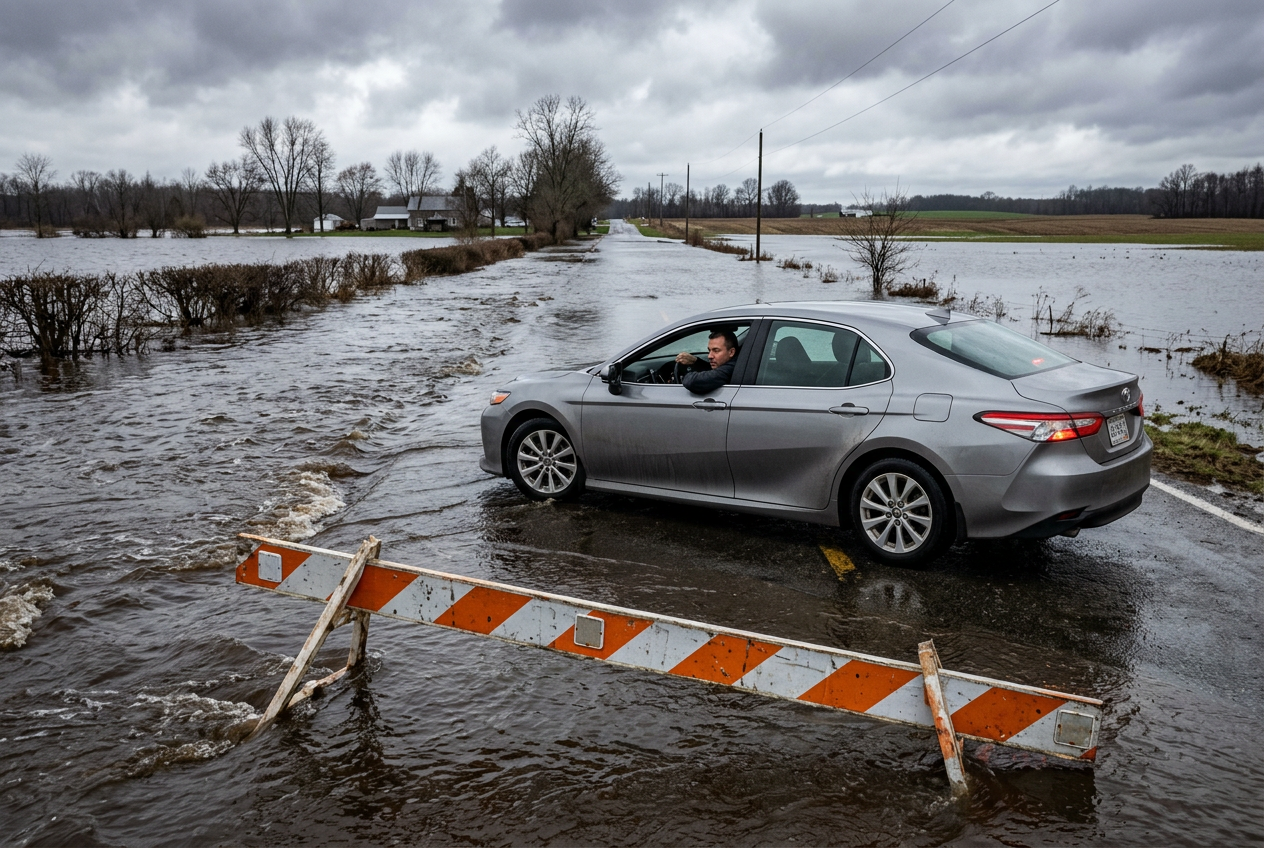
The most dangerous place to be during a flood is in your car. The National Weather Service warns that most flood deaths happen in vehicles. During this four-state flood across Colorado, New Mexico, Arizona, and Utah, authorities are urging drivers to stay off flooded roads. This one choice can save your life.
It is easy to think you can make it across. The water may look shallow. The road may seem fine. But water hides many dangers you cannot see.
Why Flooded Roads Are So Deadly
Moving water is far stronger than it looks. Just a small amount can sweep a car off the road. Once your tires lose grip, you have no control. The current can carry your vehicle into deeper water fast.
You also cannot see the road under the water. The pavement may be washed out underneath. What looks like a few inches of water could be a hole several feet deep. By the time you find out, it is too late to back up.
Floodwater can also be dirty and full of debris. You may not spot a downed power line, a missing bridge, or a strong current until you are in it.
Simple Rules When You See Water on the Road
Keep these rules in your head. They are easy to remember and they work.
- Turn around, do not drown. If you see water across the road, turn around and find another way. Do not drive through it, even if other cars are trying.
- Never guess the depth. You cannot tell how deep water is just by looking. Dark water and night driving make it even harder. Assume it is too deep.
- Avoid water that is moving. Moving water is the biggest threat. If you can see it flowing, stay out of it.
- Watch for barricades. If a road is closed or blocked off, do not go around the barrier. It is closed for a reason.
- Stay off low spots. Dips, underpasses, and bridges flood first. Skip them during heavy rain.
If Your Car Stalls in Water
If water rises around your car, do not stay inside and wait. Get out right away and move to higher ground if you can do so safely. A stalled car can be pushed by the current without warning.
If water is rising too fast to get out safely, climb onto the roof and call for help. Signal for rescue and stay as visible as you can.
The best plan is to avoid flooded roads in the first place. Before you leave home, check local alerts and plan a route that stays on high ground. If you are not sure a road is safe, do not drive it. Waiting is always better than taking the risk.
Decide to Evacuate: Triggers, Timing, and Higher Ground
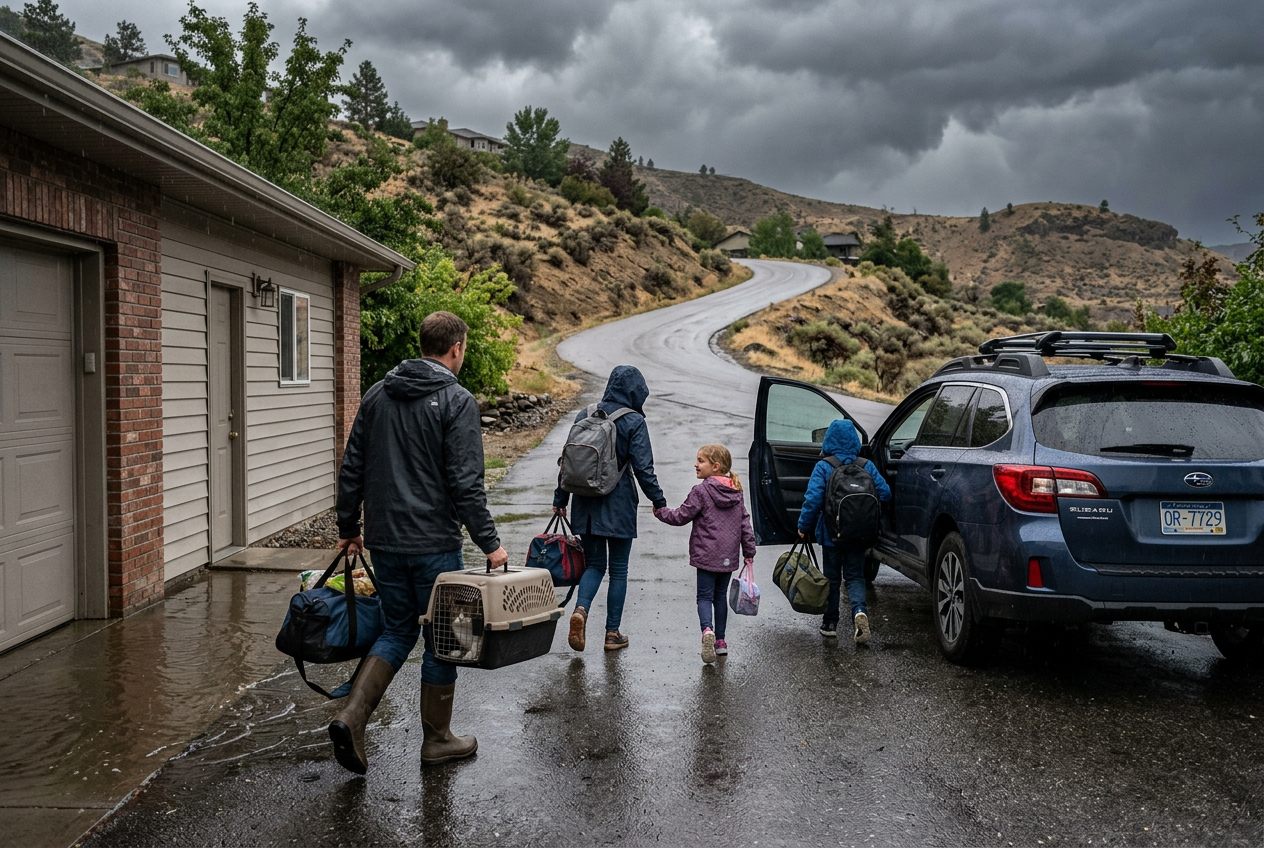
Flooding is moving fast across Colorado, New Mexico, Arizona, and Utah. Some households have already been rescued from rooftops. Others have been told to leave. You do not want to wait until water surrounds your home. Leaving early is safer than waiting for a boat or a helicopter.
Here is the simple rule. If any one of these things happens, you go.
Your Go Triggers
Leave right away if any of these are true:
- An official evacuation order is given for your area. Do not wait to see if it gets worse.
- Water is rising near your home. Water in the yard, street, or driveway means it is time to move.
- Your safe ways out are starting to close. If roads are flooding, you may soon be cut off. Go while you still can.
When a flood warning is issued, it means flooding is likely or already happening. Take action. Head for higher ground and stay there.
Leave Early, Not Late
A rooftop rescue is a last resort, not a plan. Rescue teams are stretched thin during a four-state event. Help may take a long time to reach you. Every minute you wait, the water gets higher and the roads get worse. If you have any doubt, leave now.
Pick a Safe Route to Higher Ground
Higher ground means land that sits above the flooding. Think of a hill, a ridge, or a tall building nearby.
Plan your route before you drive. Stay away from washes, creeks, rivers, and low spots. These fill up fast and are the most dangerous places to be. Do not drive through flooded roads. Most flood deaths happen in vehicles. If you see water across the road, turn around and find another way.
Have a backup route in case your first one is blocked. Tell someone outside the area where you are going.
If You Get Trapped
Sometimes water rises too fast to leave. If that happens, move up. Go to the highest safe floor or to the roof if needed. Bring a phone if you can.
Call 911 and give your exact location. Tell them how many people are with you and if anyone is hurt.
If your phone dies or there is no signal, you need another way to be seen and heard. A loud whistle carries farther than your voice. A signal mirror flashes sunlight so rescuers in a boat or helicopter can spot you. These tools are small and cheap. Keep them in your bag or clipped to a life vest.

Blow the whistle in short bursts. Aim the mirror flash toward people or aircraft you can see. Keep signaling until help arrives.
Pack a Grab-and-Go Bag: What to Take When You Have Minutes
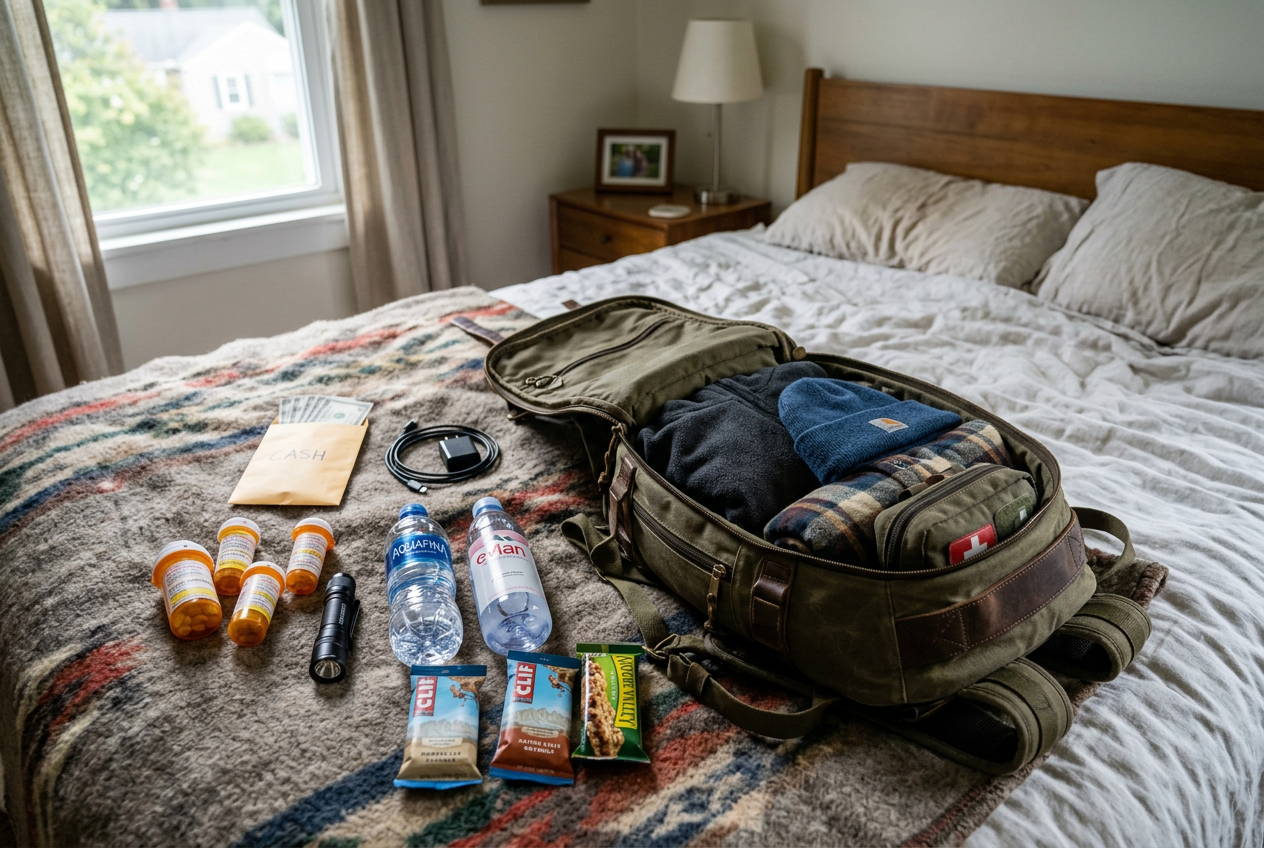
When rooftop rescues and evacuations begin, you may have only minutes to leave. A grab-and-go bag is a single bag you can grab and carry out the door fast. The goal is simple. Have your most important things ready before the water rises, so you do not waste time searching.
What to Pack First
Start with the things that are hard to replace or that keep you safe. Pack these:
- Medications. Grab prescriptions and a short list of what you take.
- IDs and documents. Driver’s license, insurance cards, and copies of key papers.
- Cash. Small bills help if card readers and ATMs are down.
- Phone and chargers. Add a power bank if you have one.
- Water and snacks. Bottled water and food that needs no cooking.
- Warm, dry layers. A change of clothes, a jacket, and rain gear.
- Basic first aid. Bandages, pain relievers, and any supplies you use often.
Do not forget family needs. Pack supplies for babies, older adults, and pets. Bring diapers, formula, pet food, and a leash or carrier if needed.
Build Your Own or Buy a Ready-Made Kit
You can build a bag from things you already own. Many homes have bottled water, snacks, flashlights, and a first aid kit in a drawer. Put them in one backpack and keep it by the door. Building your own costs less and lets you match it to your family.
The downside is time. In a fast flood, scrambling to gather items can cost you precious minutes. A pre-built 72-hour kit solves that problem. It is packed and ready to grab. For people new to preparedness, a ready-made kit is a simple way to start. You can always add your own medications and documents later.
Here are three ready-made kits built for 2 people and 3 days. Each holds food, water, and first aid supplies in one backpack.
This Ready America kit includes two emergency food bars, sealed water pouches, a 33-piece first aid kit, ponchos, and survival blankets. It covers the basics for two people.

The EVERLIT kit is more complete. It packs food bars, drinking water, water purification tablets, and 200 pieces of medical supplies in a heavy-duty backpack. The tablets can treat extra water, which helps if clean water runs short.

This deluxe Ready America kit adds more tools. It includes food bars, water pouches, purification tablets, a BPA-free bottle, lighting, and hygiene items for added comfort.
Whichever route you pick, keep your bag in an easy spot. Check it twice a year. Swap out old water, food, and batteries. Add your current medications so nothing is missing when you need to move fast.
Stay Informed When Power and Cell Service Fail
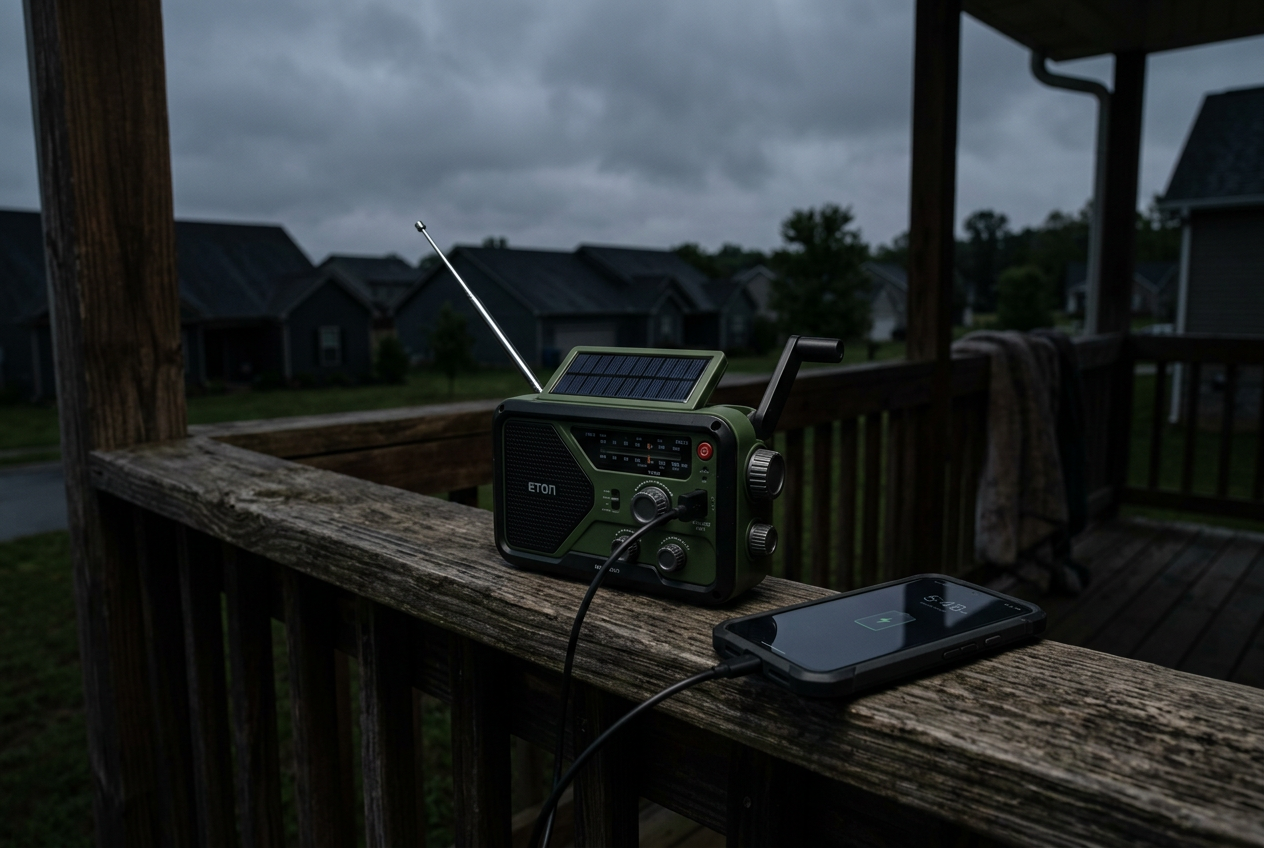
Floods often knock out power. When the grid goes down, cell towers can fail too. Your phone may lose signal. Your internet may stop working. That makes it hard to hear evacuation orders or know when the water is rising.
This is a real danger during a fast-moving flood. You need a way to get updates even when the power is out. A weather radio solves this problem.
Why a Weather Radio Helps
The National Weather Service sends out alerts over NOAA weather bands. A NOAA radio picks up these broadcasts. You can hear flood warnings, evacuation news, and safety updates. You do not need cell service or Wi-Fi to listen.
Many emergency radios also tune in to AM and FM. That lets you catch local news stations too. During a flood, local stations often share road closures and shelter locations.
Power When the Grid Is Down
The best emergency radios do not rely on wall power alone. Look for a radio with more than one way to charge. Hand crank and solar are the two most useful. When you turn the crank, the radio makes its own power. When the sun is out, the solar panel does the same. This keeps the radio working for days.
Some radios also hold a charge in a built-in battery. That battery can give your phone a small boost. A charged phone matters, even when towers are down. You may still get a text out, or your signal may come back.
Here are three radios that fit a flood kit for a regular household.
The FosPower radio runs on four power sources. It has a hand crank, a solar panel, AAA batteries, and a USB charge. It holds a 7400mWh power bank to top off a phone. It also has a flashlight and a reading light, which help when the lights go out.
The next radio has a larger 12000mAh battery. That gives it more backup power for your phone. It picks up seven NOAA channels plus AM and FM. It also has a big solar panel, a hand crank, and a 120dB SOS alarm to call for help.

The third radio also has a 12000mAh battery and a large solar panel. It offers clear NOAA, AM, and FM reception. It has a strong hand crank and dual USB outputs to charge two things at once.

Simple Tips for Using Your Radio
Charge your radio now, before the storm gets worse. Keep spare AAA batteries if your model uses them. Store the radio somewhere dry and easy to reach. Tune it to your local NOAA station and leave it on during the event. Give the crank a few turns if the battery runs low. Keep it near your grab-and-go bag so you can take it if you leave.
Comparison Table: Emergency Kits and Weather Radios at a Glance
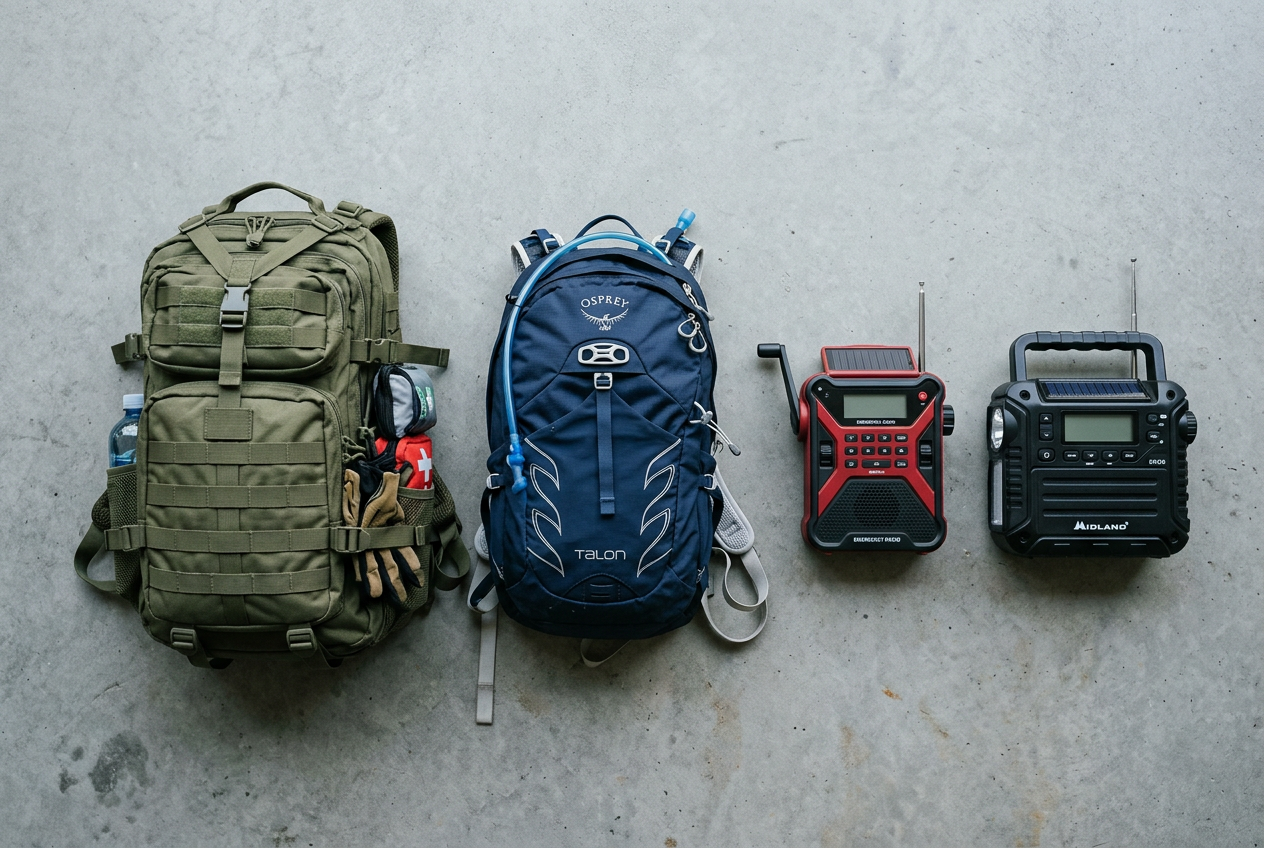
When the water is rising, you do not have time to read every section again. This table puts the go-bags and weather radios side by side. Use it to pick fast. The kits give you food, water, and first aid for two people. The radios keep you informed when power and cell service fail.
Emergency Go-Bags
All three kits below are built for two people and three days. That matches the common advice to have at least 72 hours of supplies ready. Each one comes in a backpack you can grab and carry. Check the food and water pouch dates when you get a kit. Swap in your own medicines, copies of key papers, and any items your family needs.
The Ready America 70280 covers the basics well. The Ready America 70285 Deluxe adds water purification tablets and a reusable bottle. The EVERLIT STORM II carries the most food, the most water pouches, and a larger first aid kit.
Weather Radios
A weather radio lets you hear NOAA storm updates even when your phone dies. Look for a hand crank and solar panel so you are never stuck without power. Many of these radios can also charge your phone. Keep one in your go-bag.
The FosPower A1 uses four power options, including AAA batteries as a backup. That is handy if the sun is weak and your arm is tired. The 12000mAh emergency radio and the 12000mAh solar radio both hold more charge and can top off a phone. A bigger battery helps during long outages.
How to Choose Quickly
Pick a kit that fits your household size, then add your own must-haves. Pick a radio with at least two power sources. If you may lose power for days, a larger battery and solar panel matter more. Charge your radio now, before the storm reaches you.
Protect Your Home and Family Before You Leave
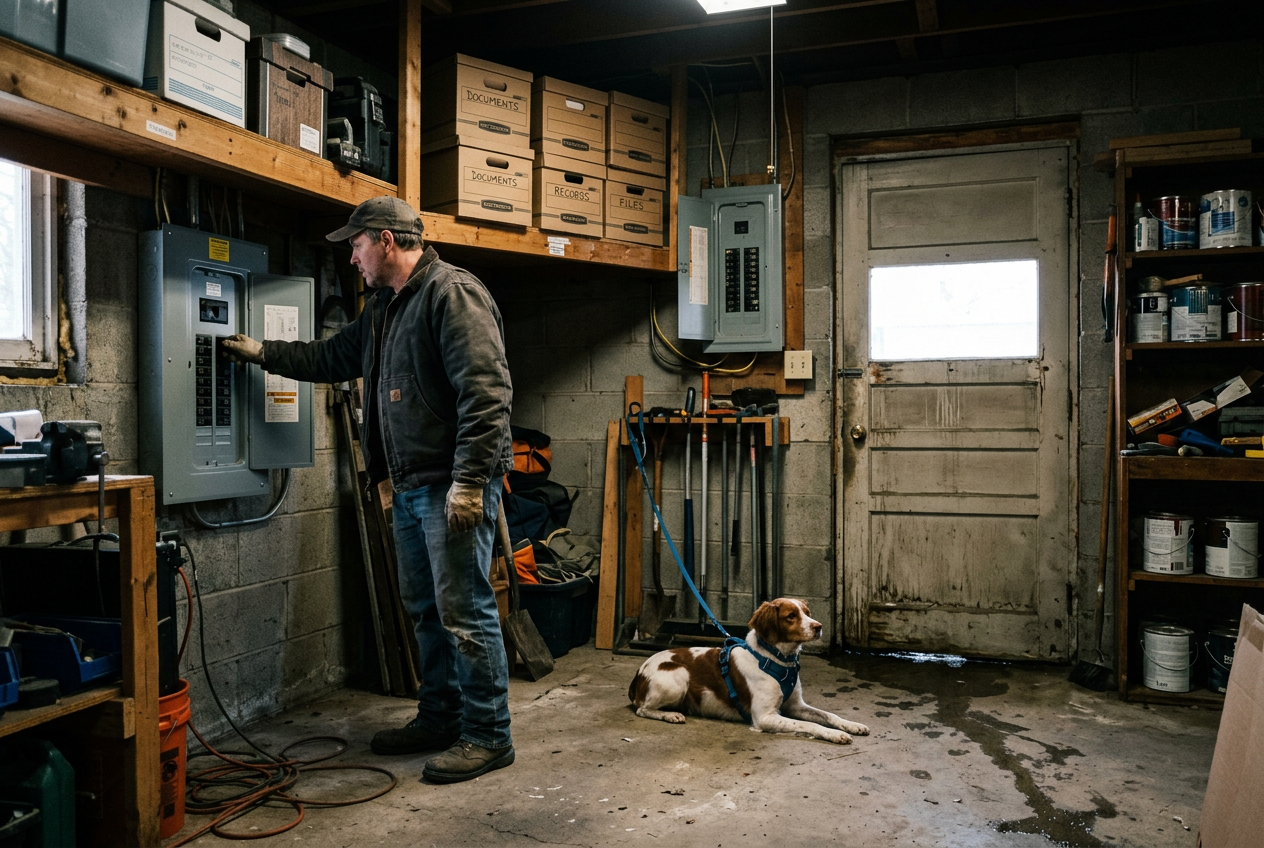
You may only have a few minutes before you go. Use that time well. A few quick steps can cut down on damage and keep your family safer. These steps cost nothing. You just need to act fast.
Turn Off Utilities If You Are Told To
Local officials may tell you to shut off your utilities. If they do, turn off the gas, power, and water at the main shutoff points. This can lower the risk of fire, shock, and more damage.
Only turn off the gas if you are told to or if you smell gas. Turning gas back on often needs a professional. Do not touch electrical switches or panels if you are standing in water. Water and electricity are a deadly mix. If reaching the panel means wading through water, leave it and get out.
Move Valuables and Documents Up High
Flood water rises fast. Move important things to the highest safe spot you can reach. This means the top floor, high shelves, or on top of tall furniture.
Grab key papers first. Think ID cards, birth certificates, insurance papers, and medical records. Put them in a sealed plastic bag if you have one. Take them with you if you can. If you must leave them, store them as high as possible.
Unplug electronics before you go. This protects them and lowers fire risk. Pull plugs for TVs, computers, and small appliances. Do not unplug anything if your hands or the floor are wet.
Account for Every Person and Pet
Count everyone before you leave. Do not forget to check on family members who need extra help. This includes older adults, young children, and anyone who cannot move quickly on their own. Make a plan to help them get out together.
Bring your pets with you. Do not leave them behind. If it is not safe for you, it is not safe for them. Have leashes, carriers, and some food ready to grab. Many rescue teams will not search for pets, so take them when you go.
Know the Burn-Scar Flood Risk
If you live near land that burned in a past wildfire, pay close attention. These areas are called burn scars. The ground there cannot soak up rain the way healthy soil does.
Water runs off burn scars fast. This can send a wall of water, mud, and debris downhill in minutes. You may flood even if the rain is far away and uphill from you. If you are near a recent burn area, do not wait. Leave early when a warning is issued.
Never Go Back Too Soon
Once you leave, stay away until officials say it is safe to return. Flood water can hide damage you cannot see. Roads may be washed out. Gas lines and power lines may be broken. Water may still be rising. Wait for the all-clear. Your home can be repaired. You cannot.
Frequently Asked Questions
How much water is too deep to drive through?
Less than you think. Just six inches of moving water can knock you off your feet. About one foot of water can float many cars. Two feet of rushing water can sweep away most vehicles, even trucks and SUVs.
You often cannot tell how deep the water is or how fast it moves. The road under the water may be washed out. The National Weather Service warns that most flood deaths happen in vehicles. If you see water over the road, turn around. Do not drive through it. Find another route or wait on higher ground.
What do I do if rising water traps me?
Get to the highest safe spot you can reach. If water is filling your home, move to an upper floor. Only go onto the roof if you must, and bring something bright to wave. A whistle or signal mirror helps rescuers find you. A basic whistle and signal mirror set is small enough to keep in a pocket or bag.
Do not go into an attic with no way out. You could get stuck if water keeps rising. Call 911 if you can. If phones are down, use your phone’s flashlight, wave bright cloth, or sound a whistle to get attention.
If your car gets trapped in water, leave it right away if you can do so safely. Move to higher ground on foot. Do not stay inside a car in rising water.
Where do I find official evacuation information?
Listen to your local emergency officials. They give the orders to leave and tell you which routes are safe. Here is where to check:
- Your county or city emergency management office
- Local radio and TV stations
- Official state or tribal alerts, including Navajo Nation and Hopi notices
- NOAA Weather Radio broadcasts
Sign up for your county’s alert system if you have not. A weather radio keeps you updated even if power and cell service fail. A hand crank weather radio can pull in NOAA broadcasts without a wall outlet.
Do not rely on rumors or random social media posts. Trust official sources only.
Is tap water safe to drink after a flood?
Not always. Floods can damage water lines and let in harmful germs or chemicals. After a flood, your local water utility may issue a “boil water” notice. That means you must boil tap water before you drink it, cook with it, or brush your teeth.
Follow your utility’s guidance. If you are told the water is unsafe, use bottled or stored water instead. Boil tap water for the time your officials recommend, then let it cool. If you cannot boil water, water purification tablets can help. Many emergency kits include them.
When in doubt, do not drink it. Wait for the all clear from your water provider before you go back to normal tap use.
Your Action Checklist: Do These Steps Now
Floods in Colorado, New Mexico, Arizona, and Utah are happening right now. People have been rescued from rooftops. Evacuations have been ordered. Do not wait. Work through this list from top to bottom.
1. Sign up for local alerts
Find your county or city emergency alert system. Most send warnings by text, call, or email. Sign up now so you hear about new flood warnings and evacuation orders fast. If you live on the Navajo Nation or Hopi lands, check your tribal government updates too. Keep your phone’s wireless emergency alerts turned on.
2. Pack your go-bag
Grab a bag you can carry. Put in water, food that needs no cooking, a first aid kit, any medicine you take, and copies of key papers. Add a flashlight, phone charger, and warm layers. If you do not have time to gather items one by one, a ready-made kit helps. The EVERLIT 72-hour kit and the Ready America 2-person kit both include food, water, and first aid in one bag.
3. Plan a higher-ground route
Floods rise fast. Pick a safe place on higher ground where you can go. Choose a main route and a backup route. Many usual roads may be flooded or blocked. Never drive through water on the road. You cannot tell how deep it is. Most flood deaths happen in vehicles. If a road is covered with water, turn around and find another way.
4. Charge your devices and radio
Power and cell service can go down during a flood. Charge your phone to full right now. Charge any battery packs too. A hand-crank weather radio keeps you informed even when the power is out. The FosPower NOAA weather radio runs on solar, hand crank, or batteries and can charge a phone. It picks up NOAA weather broadcasts so you hear warnings as they come.
5. Prepare your home before you leave
If you have a few minutes, do these fast:
- Move valuables and important papers to a higher floor.
- Unplug small electronics if water is a risk.
- Shut off power at the main breaker only if you can reach it safely and it is dry. Never touch electrical parts while standing in water.
- Shut off gas only if told to by officials.
- Lock the doors as you go.
6. Leave when told, or sooner
Do not wait for the water to reach you. If officials order an evacuation, go right away. If you feel unsafe before any order comes, trust that feeling and leave. Tell someone outside the area where you are going.
You can print this page to keep the checklist with you. Act on these steps now, while you still have time and dry roads.
Next Steps: Stay Ready After the Water Recedes
The flooding across Colorado, New Mexico, Arizona, and Utah will not end the moment the rain stops. Water can stay high for days. Roads can still be unsafe even after skies clear. The most important thing you can do now is stay patient and keep listening to the people in charge.
Keep Listening to Official Updates
Do not trust rumors or social media posts for safety calls. Follow your local emergency managers, the National Weather Service, and local news. On tribal lands like the Navajo Nation and Hopi communities, follow the guidance from your own leaders, who have declared states of emergency.
A weather radio helps you hear updates even when power or cell service fails. A hand crank and solar model keeps working when the lights go out. If you do not have one yet, something like the FosPower hand crank weather radio can pull NOAA weather alerts without batteries or a wall outlet.
Stay Out of Flooded Areas Until They Are Cleared
Floodwater can hide many dangers. It can carry sewage, sharp debris, and downed power lines. The ground under the water may be washed out. Just because you can see the road does not mean it is safe to drive or walk on.
Wait for officials to say an area is clear before you return home. If you were evacuated, do not go back until you get the all clear. Rushing back too soon is a common way people get hurt after a flood.
When you do return, go slowly. Watch for weak floors, gas smells, and standing water inside. If you smell gas or see damaged wiring, leave and call for help.
Restock Your Kit Once It Is Safe
If you used your emergency supplies, refill them as soon as you can. Check your food and water. Replace anything you opened or ate. Look at the dates on your water pouches and food bars. Swap out anything that is low or expired.
If this flood caught you without a ready bag, now is the time to build one. A packed kit like the EVERLIT 72 hour go bag gives you food, water, and first aid for two people for three days. Keep it by the door so you can grab it fast next time.
Plan for the Long Term
This event is a good reminder to think past today. Make a family emergency plan. Decide where you will meet and how you will reach each other if phones go down. Write down an evacuation route to higher ground.
For deeper help, read our broader flood safety and family emergency plan guides on ReadyGuidance. You can print this page too, so your checklist is handy even if the power is out. Staying ready now makes the next storm easier to face.
Sources and Further Reading
- Nearly 10 million Americans are under flood warnings …
- Tips for staying safe during floods
- Colorado evacuation plan for floods and fires
- Agencies offer aid amid post-fire flooding | public safety
- Essential Tips and Precautions for Southern Colorado
- Massive floods have engulfed four U.S. states: people are being rescued from rooftops, evacuations have been ordered
- Navajo, Hopi communities hit by destructive floods after heavy rains
- Utah weather: Severe weather and flooding possible across Utah