Ready
Four Corners Flooding and Rooftop Rescues: What Households in CO, NM, AZ, and UT Should Do Now (2026)
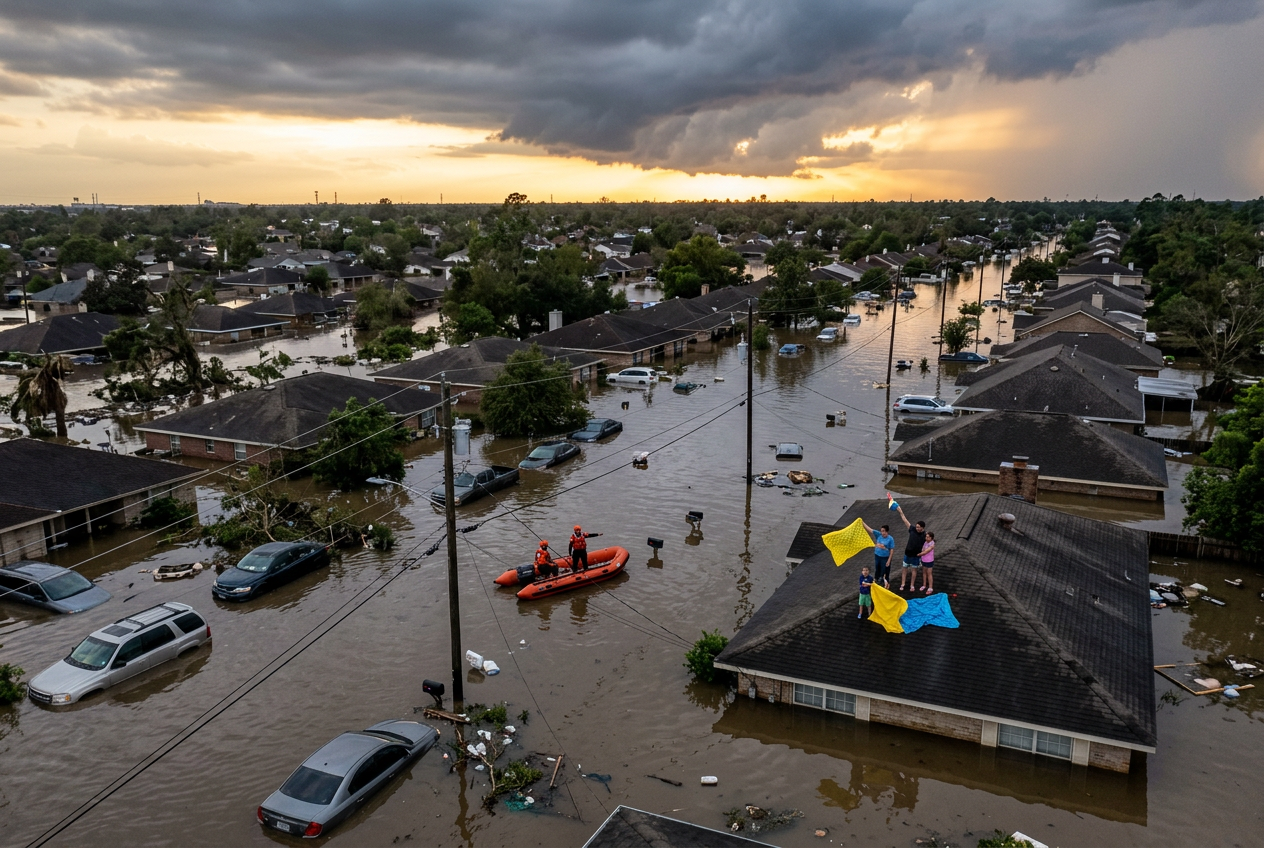
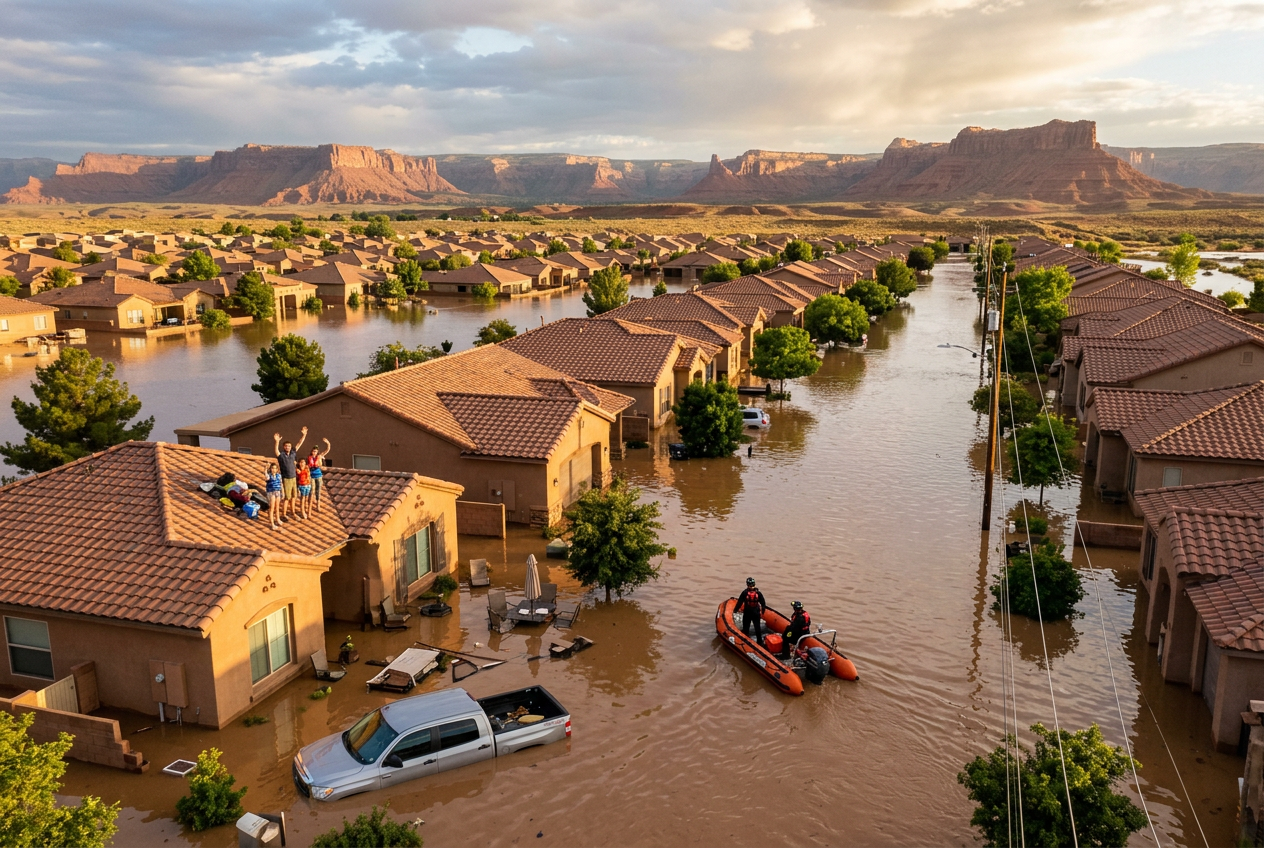
Severe flooding has hit the Four Corners region. That is where Colorado, New Mexico, Arizona, and Utah meet. Heavy rain soaked the area and water rose fast. Rescue teams have pulled people from rooftops. Roads have turned impassable. Some families have been told to leave their homes.
The danger is not over. Officials say the flood risk is still high after days of heavy rain. Floodwater can also be unsafe to touch. It may carry sewage and other contamination.
If you live in these states, you may be feeling worried right now. That is normal. The good news is that there are clear, simple steps you can take. This guide is here to help you make calm choices, not to scare you.
We will walk you through what matters most. You will learn how to read flood watches and warnings. You will learn when it is time to leave and why going early is safer. We will show you how to pack a grab-and-go kit, stay powered when the grid is down, and protect your water from contamination. We will also cover what to do if rising water traps you.
This is a current event. We will update this guide as the situation changes. For now, read on and take the next practical step for your household.
- Flash floods can rise fast in CO, NM, AZ, and UT, so plan to move to higher ground before water reaches your home.
- Keep a 72 hour kit ready for every person, with at least 1 gallon of water per person per day and food that needs no cooking.
- Use a NOAA weather radio with S.A.M.E. alerts so you hear local flood warnings even if power and cell service go down.
- Know two evacuation routes out of your area and never drive through flooded roads, since just 12 inches of water can move a car.
- If you are trapped and need rooftop rescue, go up, not into an attic, and signal rescuers with a flashlight or bright cloth.
One practical preparedness move each week. No fear-mongering, ever.



Reviewed by Marcus T., Elena V. & James W. — contributors with hands-on preparedness experience. How we test
Getting ready for Four Corners flooding starts with a few key supplies. Grab these now, then read on to see exactly how each one helps keep your household safe.

FosPower Solar Crank Radio
This hand crank and solar radio pulls in NOAA weather alerts even when the power is out. It also charges your phone, works as a flashlight, and has an SOS alarm to signal for help during a rooftop rescue.
Check Price on Amazon
Ready America 2-Person Kit
This grab and go backpack holds 3 days of food, water pouches, and first aid for two people. Keep it by the door so your household can evacuate to higher ground in seconds when flooding starts.
Check Price on Amazon
Midland NOAA Alert Radio
With S.A.M.E. local programming, this radio warns you about flood threats for your exact area and sounds an alarm for over 60 kinds of emergencies. That early warning gives your family time to move before water rises.
Check Price on AmazonIn this guide
Why Trust This Guide?
This article was researched and reviewed by contributors with hands-on experience in emergency preparedness. They have tested gear, built real systems, and lived through situations where these skills actually mattered.
Know Your Flood Risk Right Now: Watches, Warnings, and Local Alerts
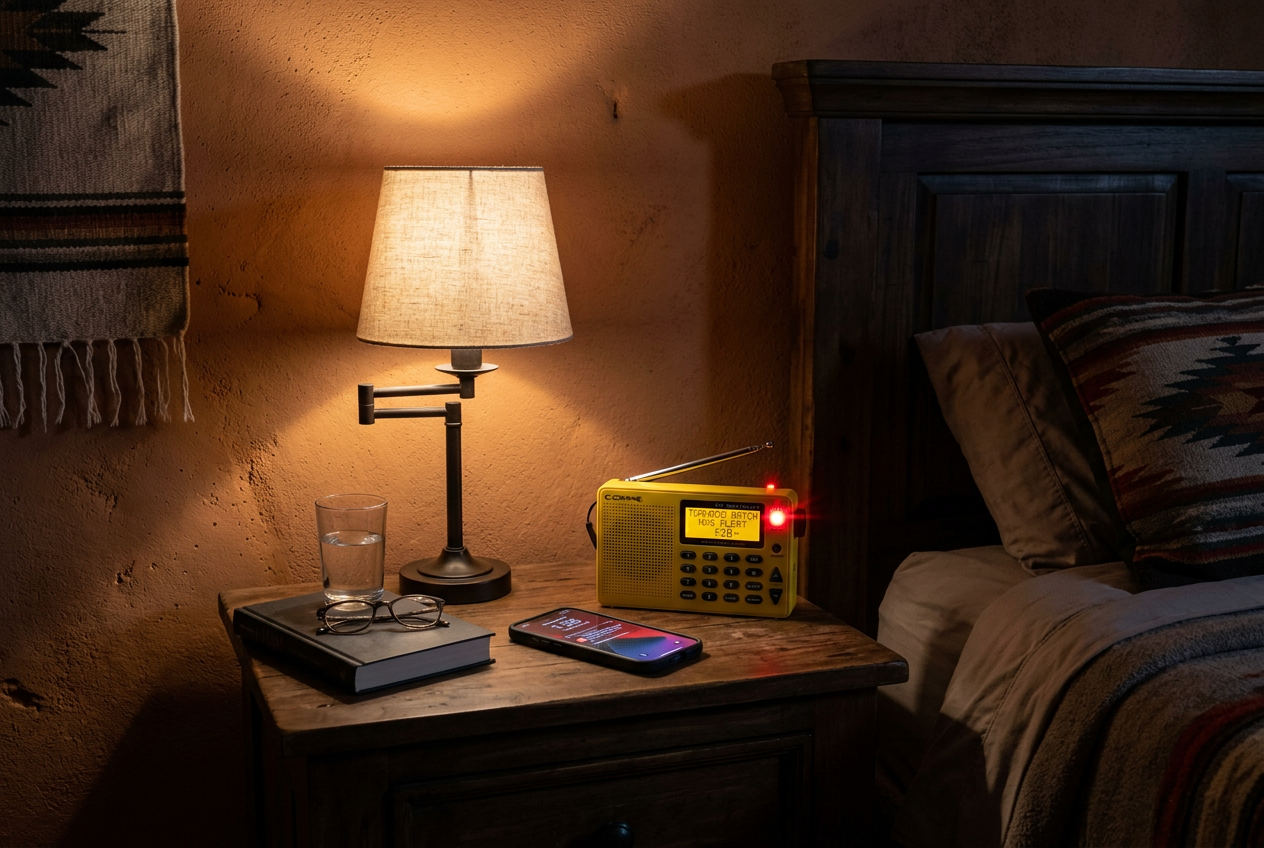
Flooding is hitting the Four Corners region hard right now. Colorado, New Mexico, Arizona, and Utah have all seen severe flooding. There have been rooftop rescues and evacuation orders. To stay safe, you need to understand the alerts coming your way. You also need more than one way to get them.
Watch Versus Warning
These two words mean very different things. Knowing the difference can save your life.
A flood watch means flooding is possible in your area. Conditions are right for it. This is your cue to get ready. Pack your bag. Charge your phone. Know your route out.
A flood warning means flooding is happening now or will happen very soon. This is your cue to act. If officials tell you to leave, leave right away.
There is also a flash flood warning. Flash floods are the most dangerous kind. Water can rise fast with little warning. A dry wash or road can turn into a rushing river in minutes. You may not have time to think. That is why you plan ahead and move early.
How to Get Real-Time Alerts
You want warnings from more than one source. If one fails, another still reaches you.
- The National Weather Service. Check weather.gov for your area. It posts watches and warnings as they happen.
- Local officials. Your county or city sends alerts about evacuations and road closures. Many areas use a free text or call sign-up. Search your county name plus “emergency alerts” to find it.
- Wireless Emergency Alerts. These come to most cell phones for free. They work without an app. Make sure alerts are turned on in your phone settings.
- A weather radio. This is the one that works even when the power and cell service go down.
Why a Weather Radio Matters
Floods often knock out power and cell towers. A weather radio runs on its own power. It can wake you with a loud alarm in the middle of the night. If water is rising while you sleep, this may be the only thing that warns you in time.
A good radio uses S.A.M.E. programming. That is a simple code system. You enter a code for your county. Then the radio only sounds off for alerts that affect you. You will not be woken by warnings for places far away.
The Midland WR120B is a NOAA weather alert radio built for this. It can scan and alert you to more than 60 kinds of hazards. With S.A.M.E. programming, you can set it for up to 25 counties and get color-coded alerts by severity. Set it up now, while you still have power and time. Program your county before the next warning hits, not during it.
Set up every alert source you can today. Then you will hear the warning no matter what fails.
Deciding When to Evacuate (and Why to Go Early)
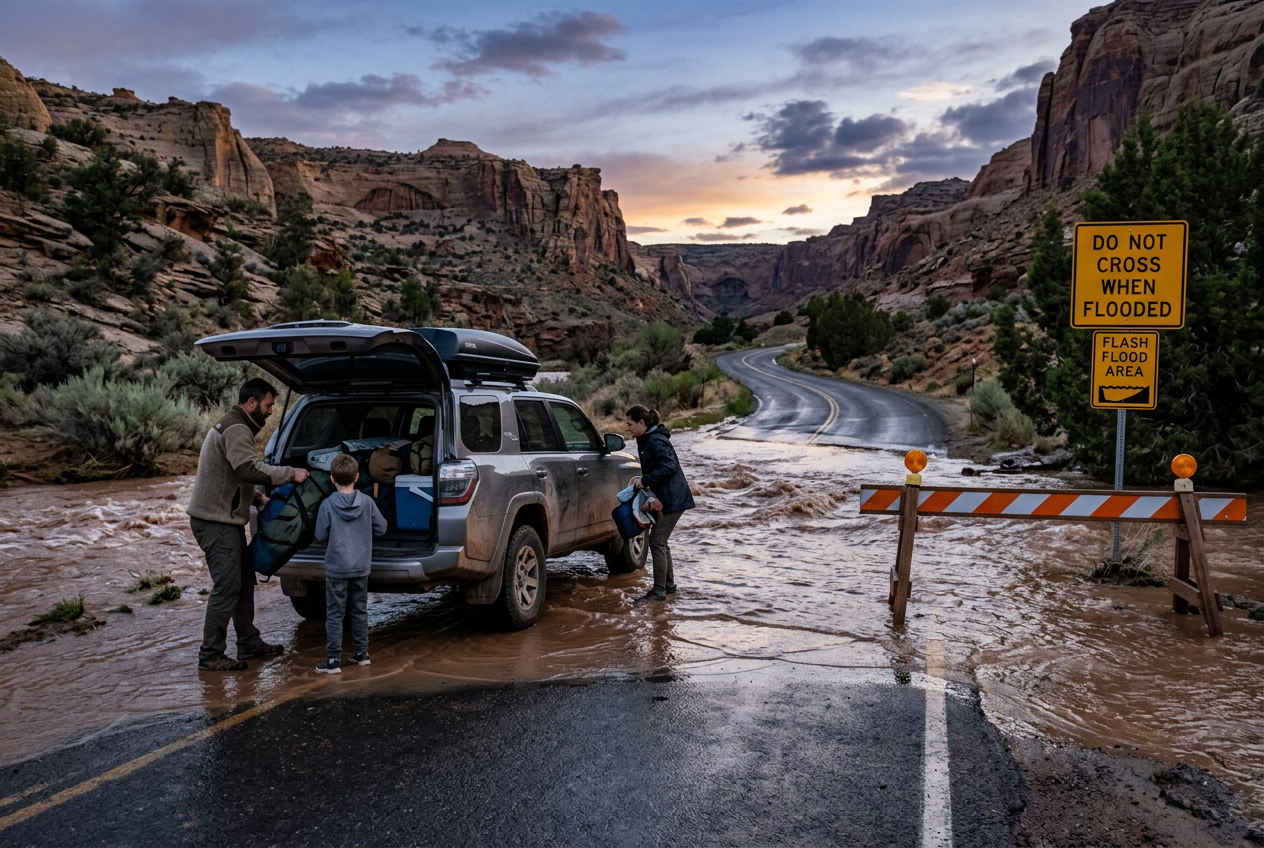
If local officials tell you to evacuate, go. An evacuation order is not a suggestion. It means staying put is dangerous. During the recent Four Corners flooding, crews had to pull people off rooftops. Some residents were told to leave their homes. Rescue is not a backup plan. It is a last resort that can fail.
Leave Early, Not Late
The best time to leave is before the water rises. Early roads are clear. Early, you can drive calmly to a safe place. Wait too long and your escape routes may flood. Once that happens, you are stuck. That is how people end up trapped in attics and on roofs.
Think of it this way. Leaving early feels like an overreaction right up until it saves your life. You can always come home if the threat passes. You cannot un-flood a road you are already stuck on.
Here is a simple rule. If you are not sure whether to go, go. If you have small children, older adults, or anyone who is slow to move, leave even sooner. It takes time to gather people and get on the road.
Turn Around, Don’t Drown
Never drive or walk into floodwater when you cannot see the bottom. You do not know how deep it is. You do not know if the road under it has washed away. Water that looks shallow can hide a hole or a strong current.
It takes less water than you think to knock you down or sweep away a car. Moving water is powerful. The safe choice is always the same. Turn around. Do not drown. Find another route or go back.
Floodwater is also dirty. In the Four Corners flooding, officials warned that the water may be mixed with sewage. That means it can make you sick. This is one more reason to stay out of it.
Check Roads Before You Travel
Before you leave, find out which roads are open. Do not just guess. A road that was fine an hour ago may be underwater now.
Here is how to check:
- Tune a weather radio to NOAA alerts for your area. A radio with S.A.M.E. local alerts can warn you about hazards near you.
- Check your state’s official road or transportation website on your phone.
- Follow your local emergency management office and sheriff on social media.
- Listen to local radio or TV for closures.
Pick more than one route out of your area. If one road floods, you want a backup ready. Write both routes down now, while things are calm.
The goal is simple. Get out before the water reaches you. Early is safe. Late is a rooftop.
Pack a Grab-and-Go Kit Before the Water Rises
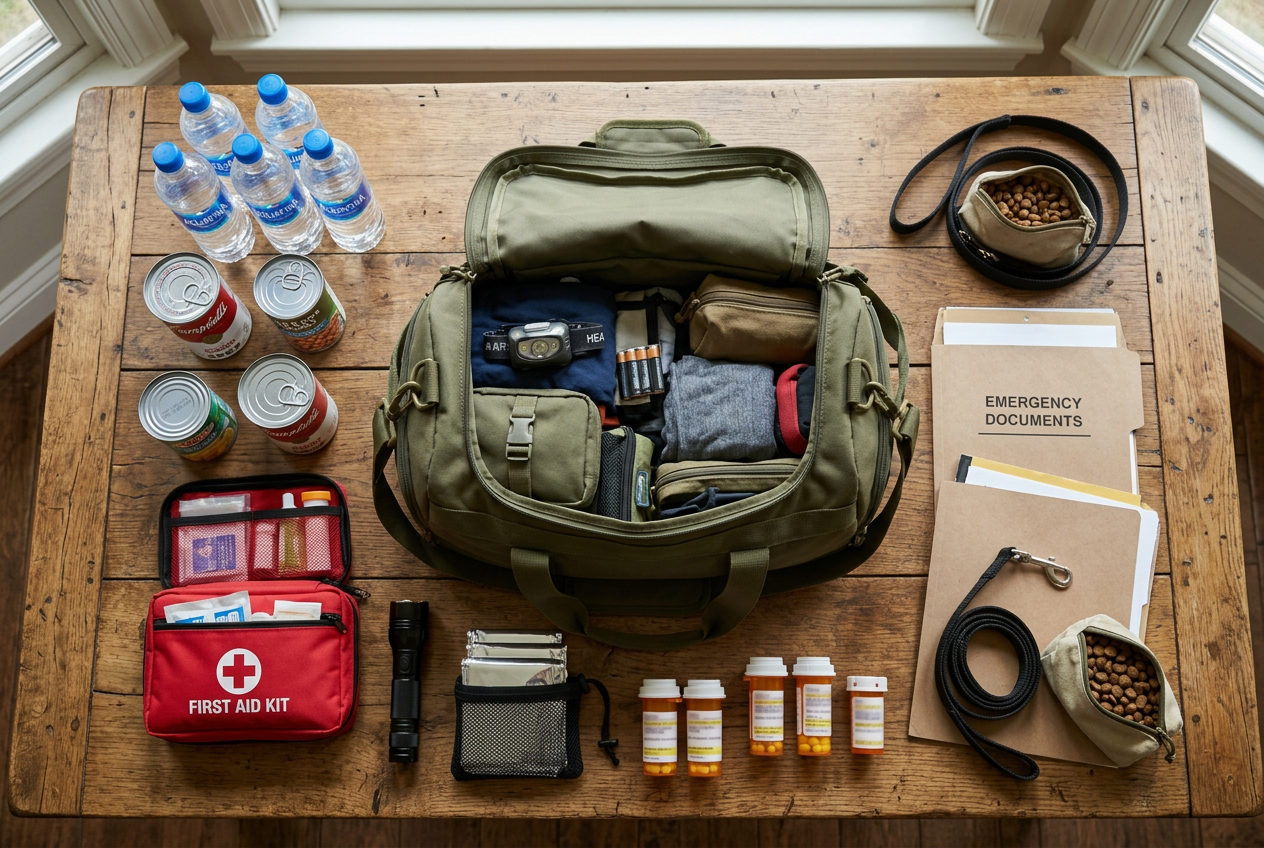
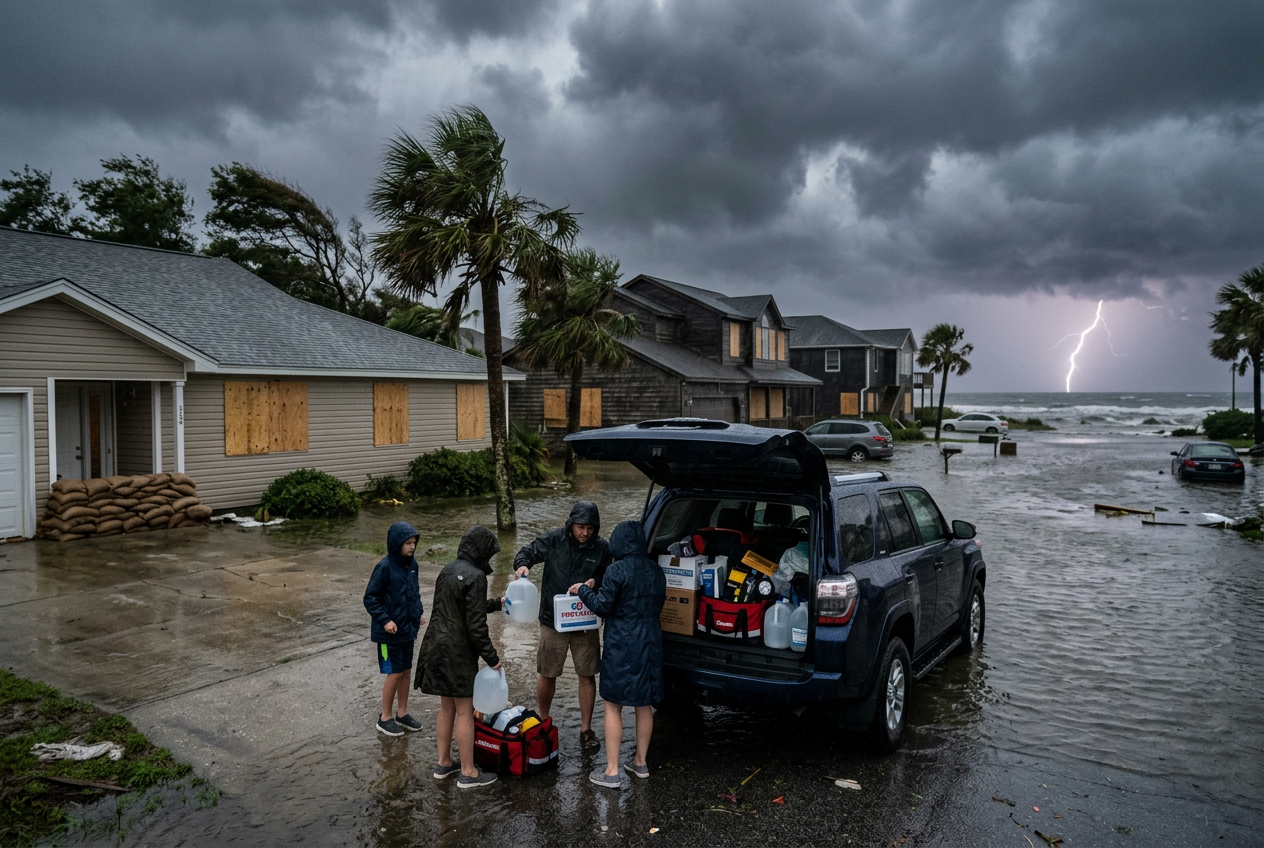
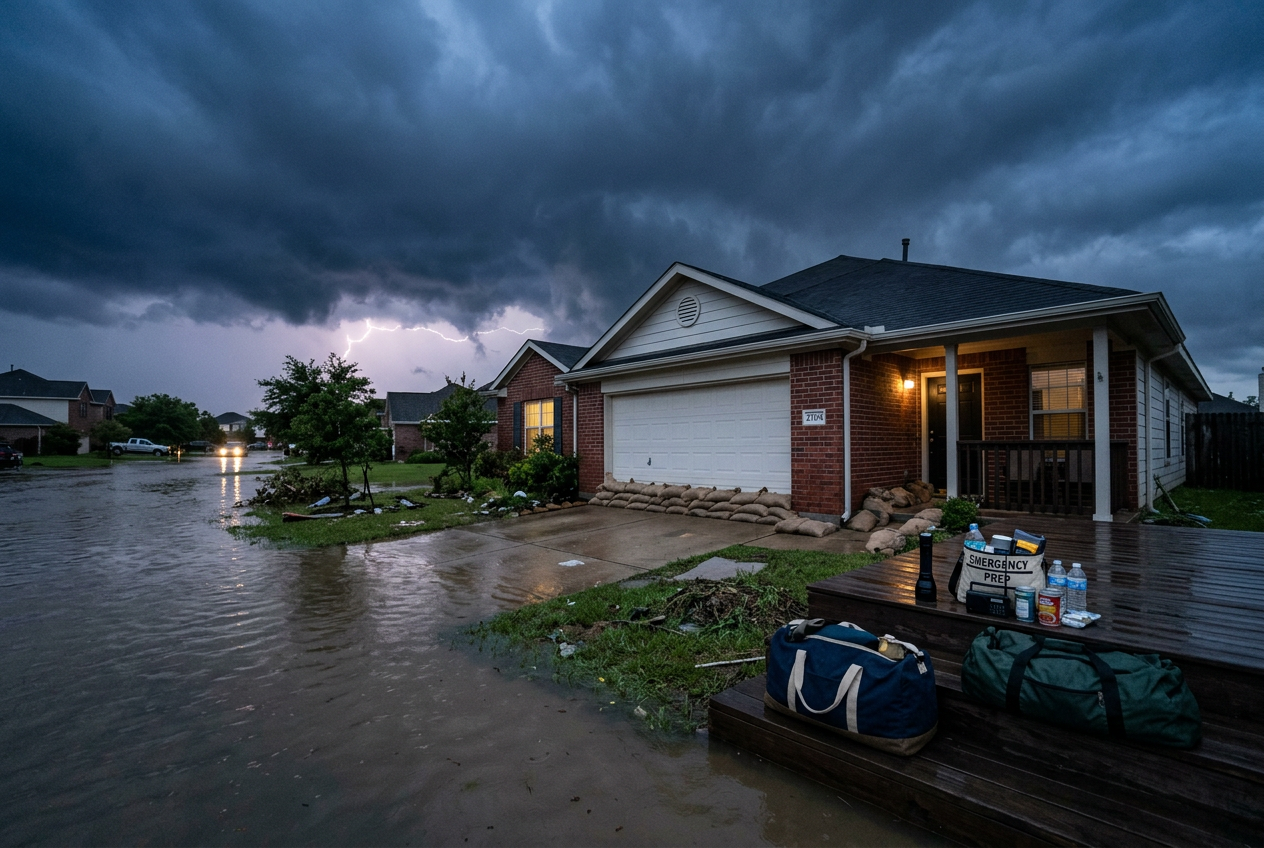
When floodwater rises, you may have only minutes to leave. A grab-and-go bag lets you walk out the door fast. Pack it now, before you need it. Keep it somewhere you can reach quickly, like by the front door or in a closet.
Aim for enough supplies to last three days. That is a common goal for emergency kits. For a household of two, you need food, water, first aid, and ways to stay warm and dry.
Build Your Own or Buy a Prepackaged Kit
You have two main choices. You can build your own bag, or you can buy a kit that is already packed.
Building your own gives you control. You pick the food you like and add items that fit your family. It can take more time, and it is easy to forget something. Buying a prepackaged kit saves time. It comes with the basics sorted and ready. Then you add your personal items on top.
If you want a packed starting point for two people, this kit covers the core needs:
It holds emergency food bars and sealed water pouches for two people over three days. It also comes with ponchos and survival blankets to help you stay dry and warm. The first aid kit, dust masks, and gloves cover basic cuts and scrapes. Flood safety note: officials warn that floodwater may carry sewage. Gloves and masks help you avoid contact with dirty water and debris.
A kit like this is a base, not the whole answer. You still need to add a few things that no store kit can include for you.
What to Add for Your Household
Every kit should be made personal. Add these items before you seal your bag.
- Medications. Pack a few days of any prescription drugs. Keep them in their labeled bottles if you can. Add a short list of what each person takes and the dose.
- Important documents. Put copies of your ID, insurance papers, and home records in a sealed plastic bag. Photos on your phone work too. Floodwater ruins paper fast, so keep originals high and dry.
- Cash. Keep some small bills. Card readers may not work during a power outage.
- Water. The pouches in a kit are small. Add more bottled water if you have room.
- Pet supplies. If you have a dog or cat, pack food, a leash or carrier, and a copy of their shot records. Many shelters ask for proof of vaccines.
- Phone charger. Add a cable and a small battery pack so you can keep your phone on.
Pack a change of clothes and sturdy shoes too. Keep the bag light enough to carry while you walk through a hurry. Once it is packed, check it twice a year. Swap out expired food, water, and medicine. A ready bag only helps if its contents still work.
Comparison Table: Emergency Radios and Go-Bags for Flood Households
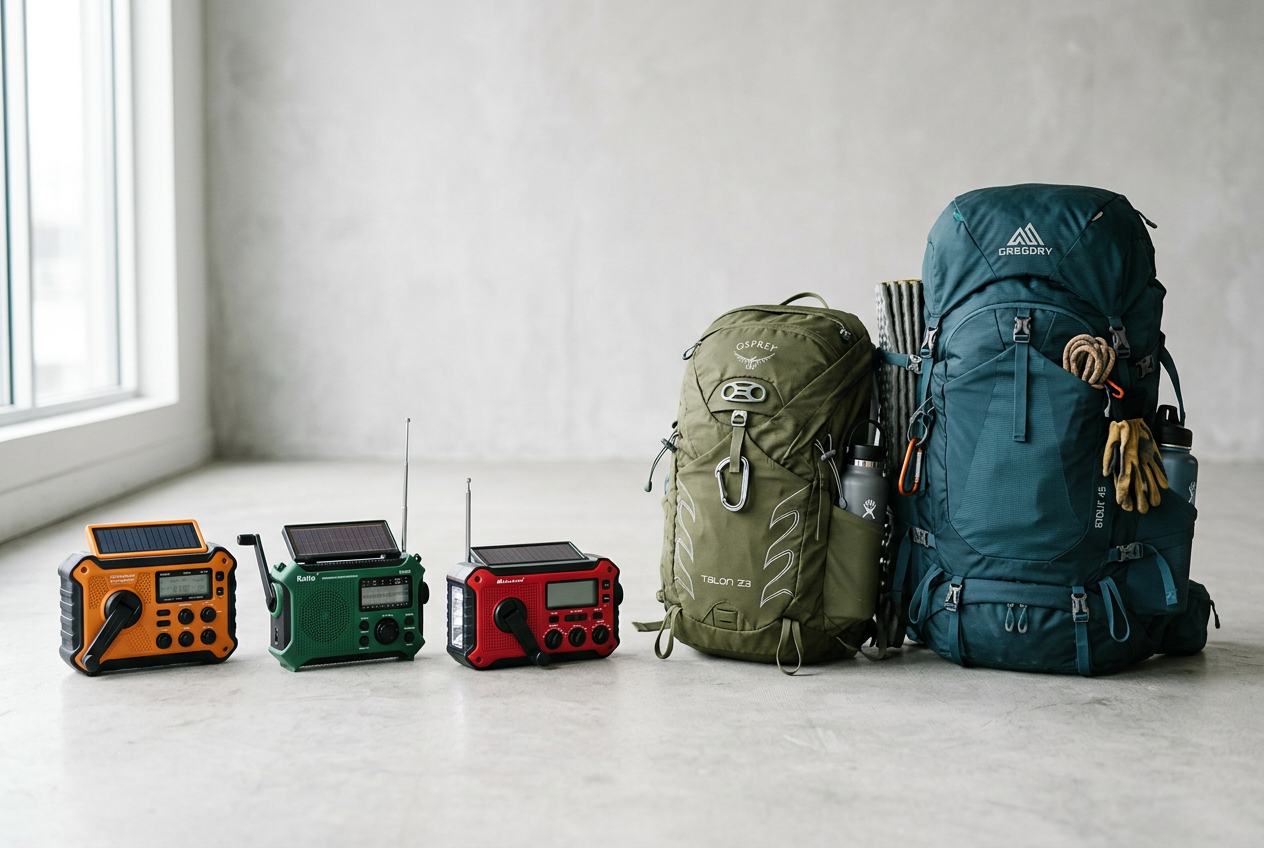
When water is rising, you want gear that is ready to grab. You do not want to shop in a panic. Below is a quick way to compare one prepackaged kit so you can match it to your household. This list is short on purpose. It focuses on a grab-and-go bag that fits most flood households in the Four Corners area.
A few things matter most during a flood. You want a kit that is already packed. You want clean water or a way to make water safe. You want basic first aid. And you want it all in a bag you can carry fast. The kit below covers those needs for a short-term evacuation.
EVERLIT 72 Hour Go-Bag
This kit is built to grab and go. It holds supplies for two people for 72 hours, which is three days. That lines up with the common advice to be ready for the first few days on your own. Everything comes packed in one backpack, so you are not hunting for items while water rises.
For water, the kit includes 24 packs of emergency drinking water. The maker says this water and the food bars are approved by the U.S. Coast Guard. It also comes with water purification tablets that can treat up to 25 quarts. That matters in a flood, because floodwater can carry sewage and other contamination. Having a way to treat water helps if the tap goes bad.
For food, you get two 3600 calorie emergency food bars. The maker says they meet the FEMA guideline of at least 1000 calories per person each day. The listed shelf life is 5 years, so you can pack it now and leave it ready.
For injuries, the kit includes a 200 piece first aid supply and a CAT tourniquet for serious bleeding. A tourniquet is a strap used to stop heavy bleeding from an arm or leg. Most households will never need it, but it is good to have in a true emergency. If someone is badly hurt, call 911 when you can.

This kit suits a two-person household that wants one ready bag. If you have more people, pets, or small children, you will need to add more water, food, diapers, and any medicines. No prepackaged kit covers everything. Use it as a strong start, then build on it.
Keep your bag up high and near the door. Check it twice a year so nothing is expired when you need it most.
Staying Powered and Connected When the Grid Goes Down
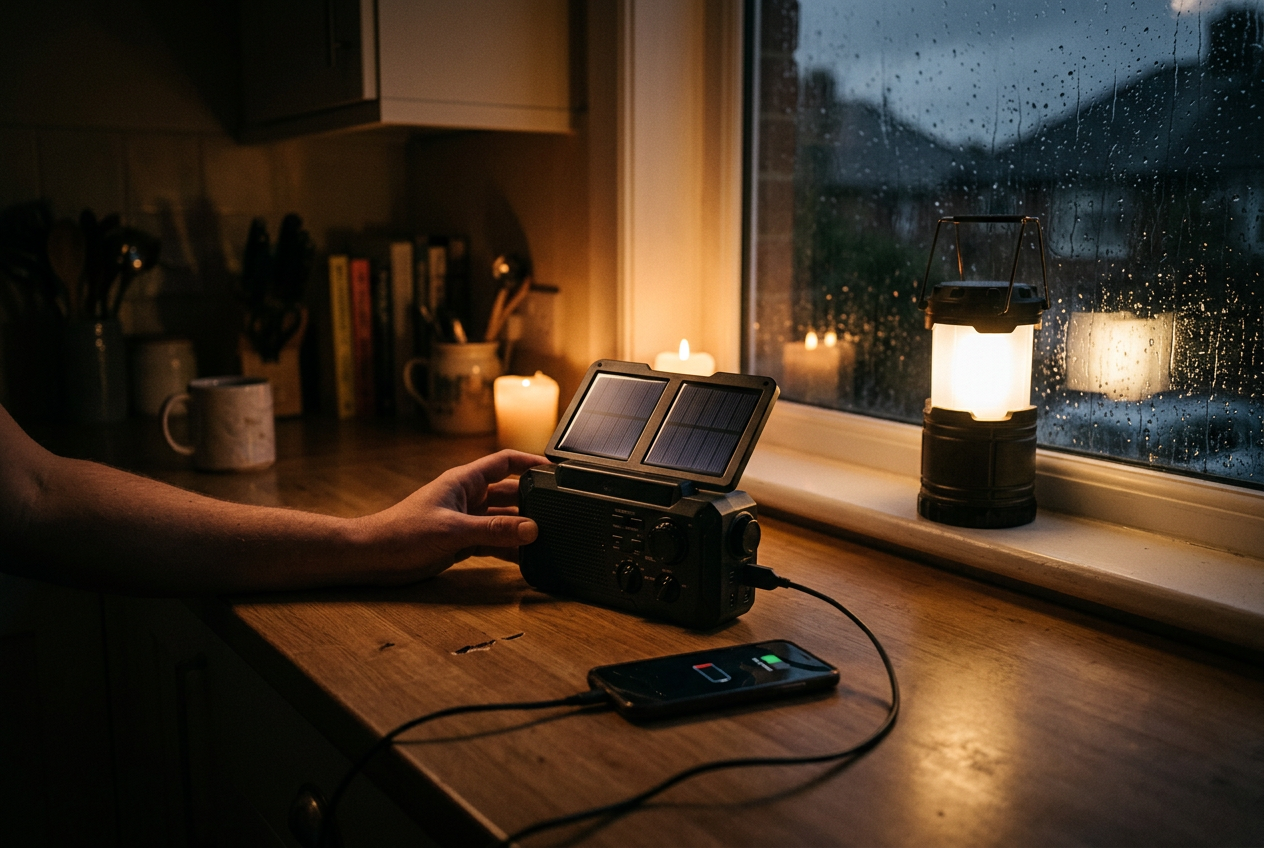
Flooding can knock out power for hours or days. Water can damage power lines and equipment. Cell towers can lose power too. That means your phone may stop working even if it still has battery. When the grid goes down, you need a way to keep getting alerts and a way to charge your phone.
Do These No-Cost Steps Right Now
You can do a lot before the water rises. None of it costs money.
- Charge every device you have. Fill up your phone, tablets, laptops, and any power banks. Do this as soon as bad weather is in the forecast.
- Save your battery once the power is out. Turn down screen brightness. Close apps you are not using. Switch to low power mode. Turn off apps that drain battery in the background.
- Send texts instead of calls. Texts use less data and often go through when calls will not.
- Keep a backup light source. A flashlight with spare batteries works well. Keep it where you can find it in the dark. Avoid candles near floodwater or gas leaks.
- Fill your car with gas now if you can. Your car can charge a phone in a pinch. Only run the engine outside, never in a closed garage.
Why a Hand-Crank or Solar Radio Helps
Your phone is not enough on its own. If cell service drops, you still need a way to hear official alerts. A weather radio that gets NOAA alerts can warn you about new flooding, even while you sleep. This matters because flood threats can change fast.
A good emergency radio does not need the grid. Look for one with more than one way to power it. Hand-crank and solar options let you run it when the power is out and batteries are dead. Many of these radios can also charge your phone through a USB port. That gives you one more way to keep your phone alive.
Here are the features that matter most for a flood:
- NOAA weather alerts, so you hear warnings right away.
- Multiple charging options, like hand-crank, solar, USB, and regular batteries.
- A phone charging port.
- A built-in flashlight or SOS siren.
The Raynic Emergency Radio covers these needs. It auto-scans for NOAA weather alerts, even in standby mode, so it can wake you if a warning comes through at night. It offers six ways to charge, including a built-in battery, solar panel, hand-crank, AC adapter, USB, and AAA batteries. It can also charge your phone and has a flashlight and SOS siren built in.

Keep your radio charged and within reach before the storm hits. Test it so you know how it works. When the lights go out, you want to hear the next alert, not hunt for batteries in the dark.
Protecting Your Home and Water Supply From Contamination
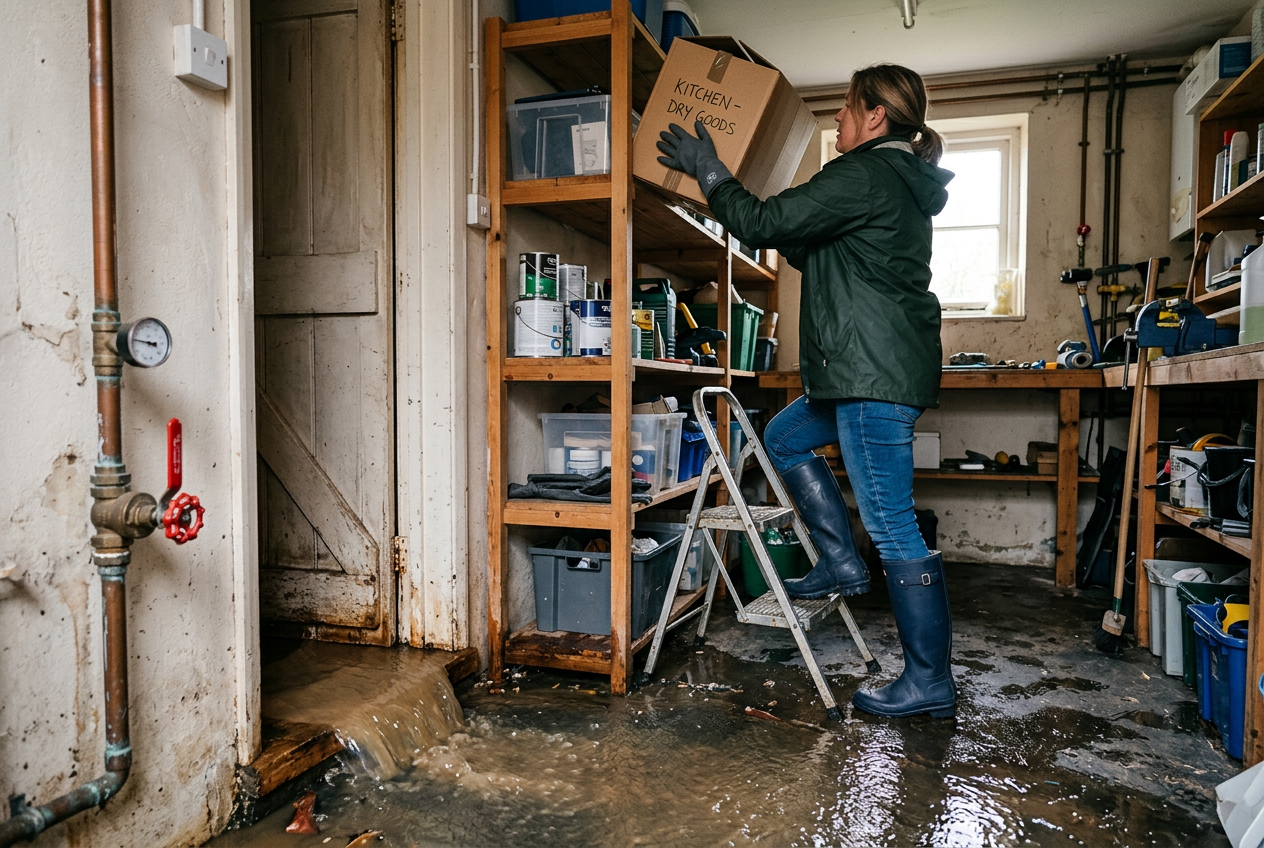
Floodwater in the Four Corners region may be dirty. Officials have warned that floodwater can carry sewage. That means it is not just wet. It can make you sick. Treat all floodwater as unsafe. Keep it off your skin, out of your mouth, and away from cuts.
Reduce damage before you leave
If you have time and it is safe, do a few quick things before you go.
- Move valuables and important papers up high. Put them on upper shelves or an upper floor.
- Lift electronics and furniture off the floor if you can.
- Put important documents in a sealed plastic bag.
Only do this if you are not in a rush. Your life matters more than your things. If you are told to leave now, just go.
Shut off utilities only if told to
Sometimes officials tell people to shut off power, gas, or water. Follow those orders.
Turn off power at the breaker box only if the area around it is dry. Never touch a breaker or electrical switch while standing in water. If you smell gas, do not touch switches. Leave right away and call for help once you are safe.
If you are not sure how to shut something off, ask your local utility or emergency line. Do not guess.
Assume your water may be unsafe
Flooded tap water and well water can be contaminated. If your home floods, do not drink straight from the tap until officials say it is safe. Well water is a special risk, because floodwater can seep right into the well.
Here is how to get safe water:
- Use bottled water if you have it.
- Boil tap water if your area allows it. Bring it to a rolling boil for one minute, then let it cool. Boiling kills many germs.
- Use water purification tablets as a backup. Follow the directions on the package.
Boiling does not remove chemicals. If you think the water has fuel or chemicals in it, do not drink it. Use bottled water instead.
Fill clean containers and your bathtub with water before a storm hits, while the tap is still safe. This gives you a reserve for washing and flushing.
Keep a light and power source in reach
When the grid goes down, you need light and a way to hear updates. Keep a backup light and power source where you can grab it fast. A hand crank radio with a flashlight covers both.
The FosPower NOAA Emergency Weather Radio has a solar panel and a hand crank, so you can power it without wall power. It picks up weather band alerts, has a flashlight and reading light, and holds a small power bank to top off a phone. Keep it near your go-bag and know where it is before the water rises.
If You Are Trapped by Rising Water
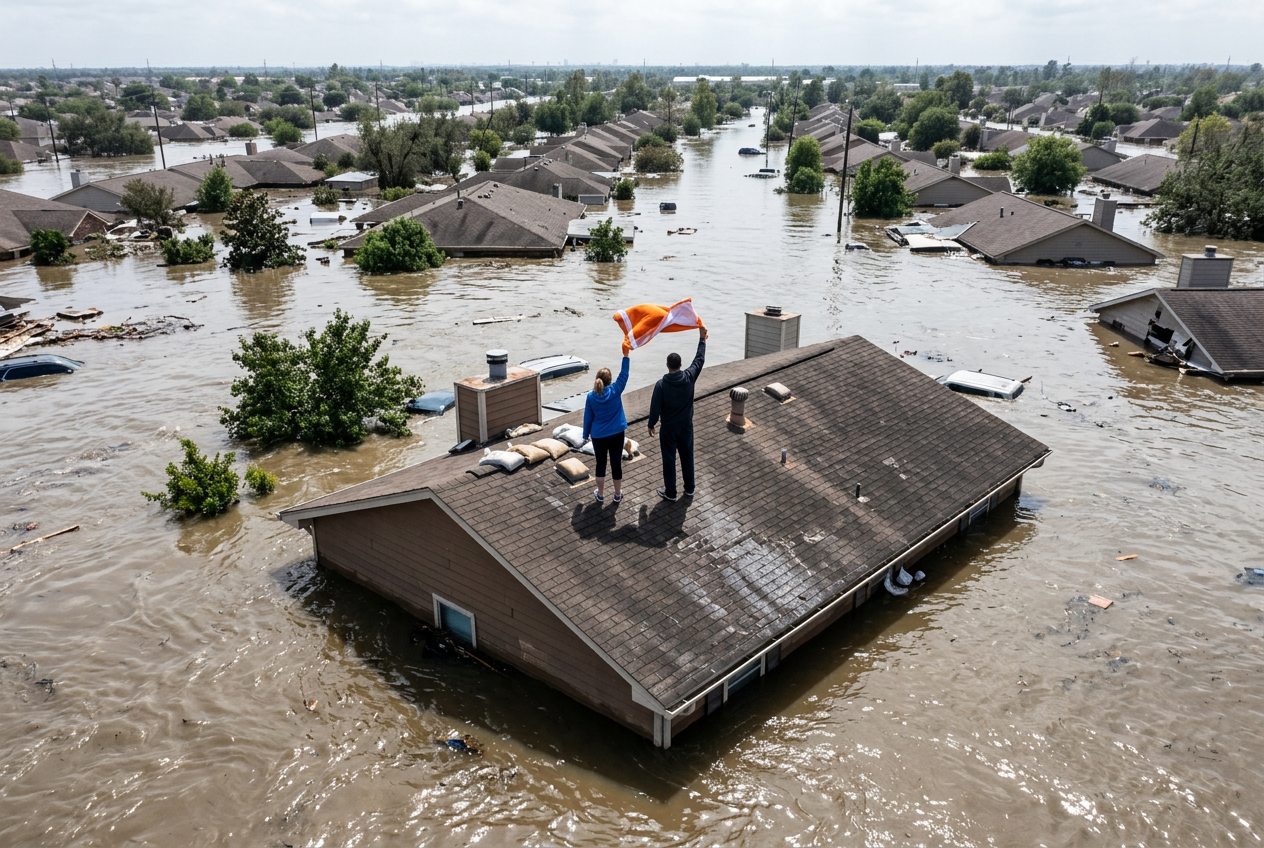
Sometimes the water rises faster than you can leave. If you are stuck inside, stay calm. There are clear steps that keep you safer while you wait for help. In the Four Corners region, rescue crews have pulled people from rooftops during this flooding. Rescuers are looking for you. Your job is to stay safe and easy to spot.
Move Up, Not Into Floodwater
Go to the highest safe level of your home. Water can rise quickly and quietly. Do not wait too long to move up.
Avoid walking or driving through floodwater. Even shallow water can knock you down. Deeper water can sweep away a car. Floodwater may also be dirty. Reports from this event warn that floodwater can carry sewage. Keep it off your skin and out of your mouth.
Watch out for electrical dangers. Water and electricity are a deadly mix. Do not touch outlets, cords, or switches if they are wet. If you can reach your main power switch safely and without stepping in water, turn it off. If you cannot do it safely, leave it alone.
When and How to Get on the Roof
An attic can trap you if the water keeps rising. If you must go higher, move to the roof. Try to carry something bright with you, like a towel, a sheet, or a flashlight.
Be careful. Roofs are steep and slippery when wet. Go slowly. Help children, older people, and pets. If you can bring a sturdy tool to break through, do that before you are stuck. Do not go on the roof unless the water forces you to.
Call for Help and Make Yourself Seen
Call 911 as soon as you can. Tell them exactly where you are. Give your full address. Share which floor or room you are in. Say how many people and pets are with you. Mention anyone who is hurt, very young, or very old.
If your phone signal is weak, try a text message instead. Texts can sometimes go through when calls will not. Save your battery. Turn down your screen and close extra apps.
Make yourself easy to see. Wave a bright cloth. Flash a flashlight at night. Use the SOS alarm on an emergency radio if you have one. A hand crank radio like the Raynic emergency radio has an SOS siren and a flashlight, and you can power it without the grid.
Blow a whistle or bang on metal to make noise. Three short bursts is a common signal for help.
Follow the Rescuers
When help arrives, do exactly what they say. Rescuers know the safest way to reach you. Move only when they tell you. Keep your hands free. Stay calm and listen. They are trained for this, and following their words helps everyone get out safely.
Action Checklist: What to Do in the Next 24 Hours
Flooding is happening right now across the Four Corners region. Colorado, New Mexico, Arizona, and Utah have all seen water rescues and evacuation orders. If you live in or near the affected areas, you do not need to read every section first. Start here. The steps are listed from most urgent to least.
1. Check for alerts and warnings
Find out if your area is under a flood watch, warning, or evacuation order. Listen to local radio or your phone’s emergency alerts. A NOAA weather radio can wake you with an alarm if a new warning comes in. The Midland WR120B lets you set codes for your county so you only hear alerts that matter to you.
2. Decide if you need to leave
If officials tell you to evacuate, go now. Do not wait to see if the water rises. Leaving early is safer than driving through floodwater later. Never drive across a flooded road. Turn around instead. Floodwater can be deeper than it looks and may carry sewage.
3. Plan your route and meeting place
Pick a safe place to go, like a friend’s home on higher ground or a shelter. Choose a backup route in case roads are closed. Agree on one person out of the area everyone can call to check in.
4. Grab or pack your go-bag
Have a kit ready by the door. A pre-made kit saves time. The Ready America 2-person 3-day backpack holds food, water, a first aid kit, and warmth supplies for 72 hours.
If you have more time, add medicines, phone chargers, cash, and spare clothes.
5. Charge your phone and power banks
Charge every phone and battery now while the grid is still up. A hand-crank radio with a power bank lets you charge a phone even if the lights go out.
6. Protect key documents
Put IDs, insurance papers, and birth certificates in a zip-top bag. Snap photos of them with your phone, too. Move paper copies to a high shelf or take them with you.
7. Get pets ready
Do not leave pets behind. Have leashes, carriers, food, and water by the door. Bring any pet medicine. Keep a recent photo in case you get separated.
8. Move valuables up high
If time allows, move furniture, electronics, and chemicals to upper floors or high shelves. Unplug appliances if water is close. Shut off power at the breaker only if you can reach it without standing in water.
9. Fill water containers
Store clean drinking water in case your tap water gets contaminated. Fill clean jugs and the bathtub. Aim for at least one gallon per person per day.
Do these steps in order. Even finishing the first three greatly improves your safety.
Frequently Asked Questions
How deep does floodwater need to be before it is dangerous?
Not very deep at all. Just six inches of moving water can knock you off your feet. A foot of water can float many cars. Two feet can sweep away most vehicles, even trucks and SUVs. You often cannot tell how deep water is or how fast it is moving by looking at it. The road under the water may also be washed out. If you see water across a road, treat it as dangerous no matter how shallow it looks.
Is it safe to drive through flooded roads?
No. Turn around, do not drown. This simple rule saves lives. Many flood deaths happen inside vehicles. Never drive around barriers or into water on a road. You cannot see if the road is still there. Your car can stall, float, or get swept away in seconds. If you are already driving and the water is rising, leave the car and move to higher ground if you can do so safely. Check road conditions before you travel, and pick a route that stays on high ground.
What should I do if I get an evacuation order?
Leave right away. Do not wait. Evacuation orders are given because staying is dangerous. Grab your go-bag, your phone, and any medicine you need. Take pets if you can do it safely. Follow the route officials give you. Do not try a shortcut, since other roads may be flooded. Leaving early is always safer than leaving late. If you wait, roads may close and rescue crews may not be able to reach you.
Is floodwater safe to touch?
No. Treat all floodwater as dirty and unsafe. It can carry sewage, chemicals, and sharp debris. It may also hide downed power lines, which can make the water electrically charged. Avoid wading through it when you can. If you must touch it, wash your skin with clean water and soap afterward. Keep floodwater away from your mouth, eyes, and any open cuts. Do not let children or pets play in it.
What if I cannot leave before the water rises?
Move to the highest safe level of your home. Bring a charged phone and a flashlight. Do not go into an attic that has no way out, since you could get trapped. If water keeps rising, get onto the roof and call for help. Signal rescuers with a bright cloth or a flashlight. A battery or crank radio helps you hear alerts even when the power is out.
How much water should I store for my family?
Store at least one gallon per person per day. Plan for three days at a minimum. More is better if you have room. Many go-bags include sealed water pouches and purification tablets to get you started while you build a larger supply.
Next Steps: Stay Ready After the Water Recedes
Floodwater will go down. But the work is not over when it does. The weeks after a flood matter just as much as the storm itself. Here is how to stay safe and get back on your feet.
Return Home Only When It Is Safe
Do not rush back. Wait until local officials say your area is clear. Roads may still be washed out or blocked. Floodwater can hide holes, sharp debris, and downed power lines.
Remember that floodwater may be contaminated with sewage. This has been a warning in the current Four Corners flooding. Do not let children or pets play in standing water. Wear gloves and boots when you clean up. Wash your hands often.
When you first go inside your home, watch for these dangers:
- Sagging ceilings or floors that could collapse
- Gas smells, which mean you should leave and call for help
- Wet electrical outlets or appliances, which you should not touch
- Mold or mildew starting to grow
If you smell gas or see damaged wiring, do not flip any switches. Leave and call your utility company or a professional.
Document the Damage for Insurance
Before you throw anything away, take photos and videos. Record every damaged room, wall, and item. Write down what was lost. This record helps when you file an insurance claim.
Call your insurance company as soon as you can. Ask what your policy covers. Keep receipts for anything you buy to clean up or make repairs. Save a list of the people you talk to and the dates you called.
Keep Your Go-Bag Ready for Next Time
This flood may not be the last. The Four Corners region has seen repeat flood threats during this event. A ready go-bag means you can leave fast if you need to again.
After you return home, restock your kit. Replace any food, water, or first aid supplies you used. A pre-made kit makes this simple for a household that is new to preparedness.
Check your emergency radio too. Make sure it still holds a charge or has fresh batteries. A hand-crank and solar model keeps working even when the power is out.
Your Calm Next Step
If you are in Colorado, New Mexico, Arizona, or Utah, take one small step today. Pack or restock a go-bag. Keep your phone and radio charged. Write down your evacuation route and a meeting place for your family.
You do not need to do everything at once. Start with one task. Then do the next. Staying ready is a habit, not a single day of work. When the next warning comes, you will be glad you prepared early and calmly.
Sources and Further Reading
- Rooftop rescues and evacuations as severe flooding soaks …
- 🌊 Historic flooding hits the Four Corners region Since …
- Flood Risk Remains High For Four Corners After Days Of …
- Four Corners Deluge Triggers Rooftop Rescues and …
- Rooftop rescues and evacuations as severe flooding soaks …
- Severe flooding in US west triggers rooftop rescues and evacuation orders
- Massive floods have engulfed four U.S. states: people are being rescued from rooftops, evacuations have been ordered
- Severe weather threat targets Four Corners as New Mexico sees its first Tornado Watch in 28 years