Ready
Ready
Best Ham Radios for Beginners (2026): Handheld, Mobile, and Base Station Picks
Ham radio can feel like a big, confusing hobby at first. There are strange terms, a license test, and a wall of radios that all look the same. Where do you even start? Most beginners just want one thing. A radio that works, does not cost a fortune, and helps them learn.
That is what this guide is for. Ham radio is more approachable than it looks. It is a fun hobby, and it is also a real backup when cell towers and the internet go down. When the power is out and phones are dead, ham operators can still talk to each other. That peace of mind is worth a lot.
In this guide, you will find picks for every kind of beginner. We cover cheap handheld radios you can hold in one hand. We cover mobile radios you can mount in a car or set up at home. We even cover a base station for people who want to explore shortwave and reach farther.
One quick note before you buy. To transmit on ham frequencies, you need a Technician license from the FCC. The test is not hard, and you can study for it in a few weeks. You can still buy a radio and listen while you study. Let’s look at the best ham radios for beginners and help you find the right first one.
- Frequency Range: Look for dual-band coverage so you can reach more people and repeaters.
- Weather Alerts: Pick a radio that can pull in NOAA weather channels during storms.
- Easy Charging: Choose a rechargeable radio so you are not always buying new batteries.
- Simple Setup: Look for programming cable or app support so setup does not feel confusing.
These are our top picks for new ham radio users. Keep reading to see why each one made the list.

Baofeng AR-5RM 10W 2 Pack
This comes as a pair of upgraded 10W handhelds with NOAA weather reception, 999 channels, and rechargeable batteries. That gives beginners strong range, easy portability, and a built in backup radio right out of the box, which is why it takes our top spot.
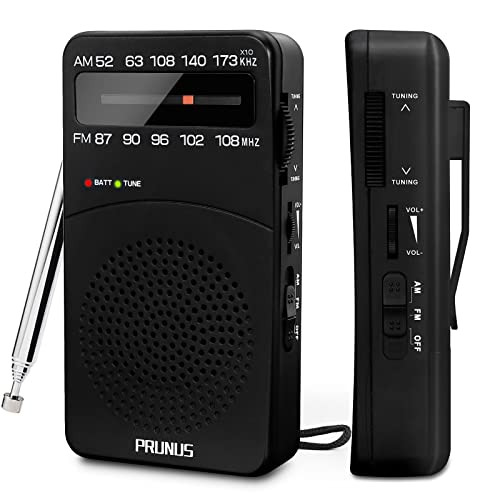
PRUNUS J-166 AM FM Radio
This tiny radio fits in one hand and slips right into an emergency kit. It is a simple grab and go pick for anyone who just wants to listen to AM and FM broadcasts.
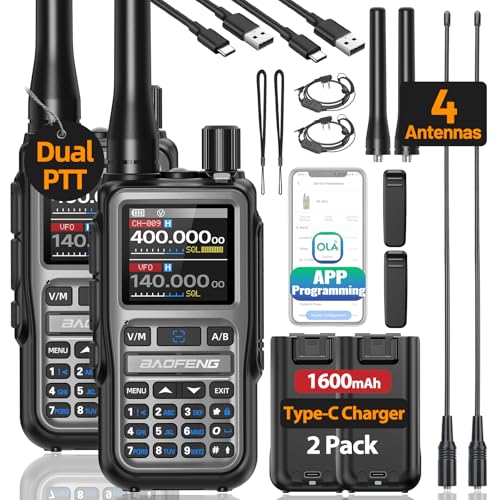
Baofeng UV-5R Mini Radio
This compact handheld packs 999 channels, NOAA weather, USB-C charging, and app programming into a small body. Its signal can push through wood, steel, and concrete, making it a solid everyday choice for most beginners.

Radioddity DB50 Mobile Radio
This dual band mobile unit puts out 50W for long distance talking from your vehicle or home base. With a detachable front panel and CTCSS/DCS tones, it is a strong step up for beginners ready for more reach.
In this guide



Reviewed by Marcus T., Elena V. & James W. — contributors with hands-on preparedness experience. How we test
Why Trust This Guide?
This article was researched and reviewed by contributors with hands-on experience in emergency preparedness. They have tested gear, built real systems, and lived through situations where these skills actually mattered.
Ham Radios at a Glance: Quick Comparison
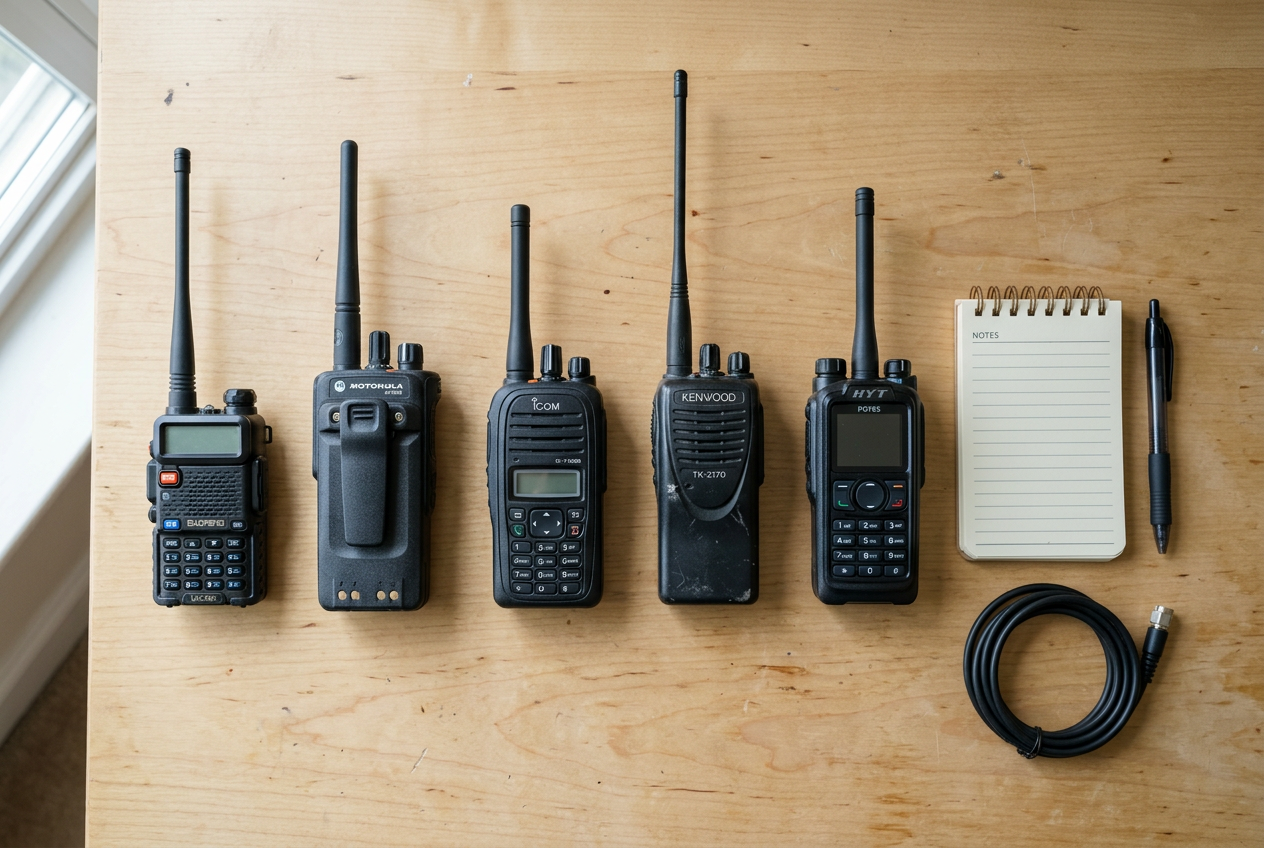
Not sure where to start? This table lines up all six radios side by side. You can see the type, the frequency bands, the power output, and the best use for each one. Use it to quickly match a radio to what you need.
Handheld radios
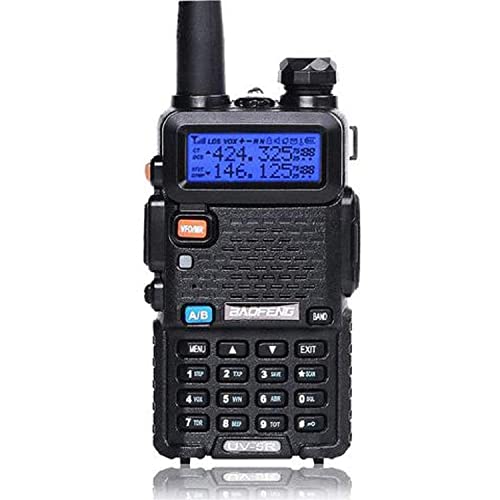
Handheld radios are the easiest way to begin. They are small, run on a battery, and cost the least. The classic Baofeng UV-5R is the one most new hams try first. It runs 5 watts and covers the 2 meter and 70cm bands. It is cheap and works with free CHIRP software.
The UV-5R Mini is the same idea in a smaller body. It charges over USB-C, so you can top it off from a power bank or laptop. That is handy when you travel light.
The Baofeng AR-5RM 2-Pack steps up to 10 watts and adds a color screen. You get two radios, so you can talk with a friend or family member right away.
Mobile radios
Mobile radios are bigger and more powerful. They mount in a car or sit on a desk at home. They need an outside antenna and a power source. The Retevis RT95 is a solid first mobile radio. It covers both the 2 meter and 70cm bands and is small enough to fit tight spaces.

Want more reach? The Radioddity DB50 puts out 50 watts. That extra power helps you hit far away repeaters and talk over longer distances. The front panel comes off, so you can mount it your way.
Base station
A base station is for hams who want to explore shortwave. The Retevis Ailunce HS4 works on the 10 meter band and supports many modes like AM, FM, SSB, and CW. This is a different kind of radio than the others. It opens the door to long-distance contacts once you have the right license and antenna.

The rest of this guide breaks down each radio in more detail. If you are still unsure, start with a handheld and grow from there.
Baofeng UV-5R Handheld: The Classic Starter Radio
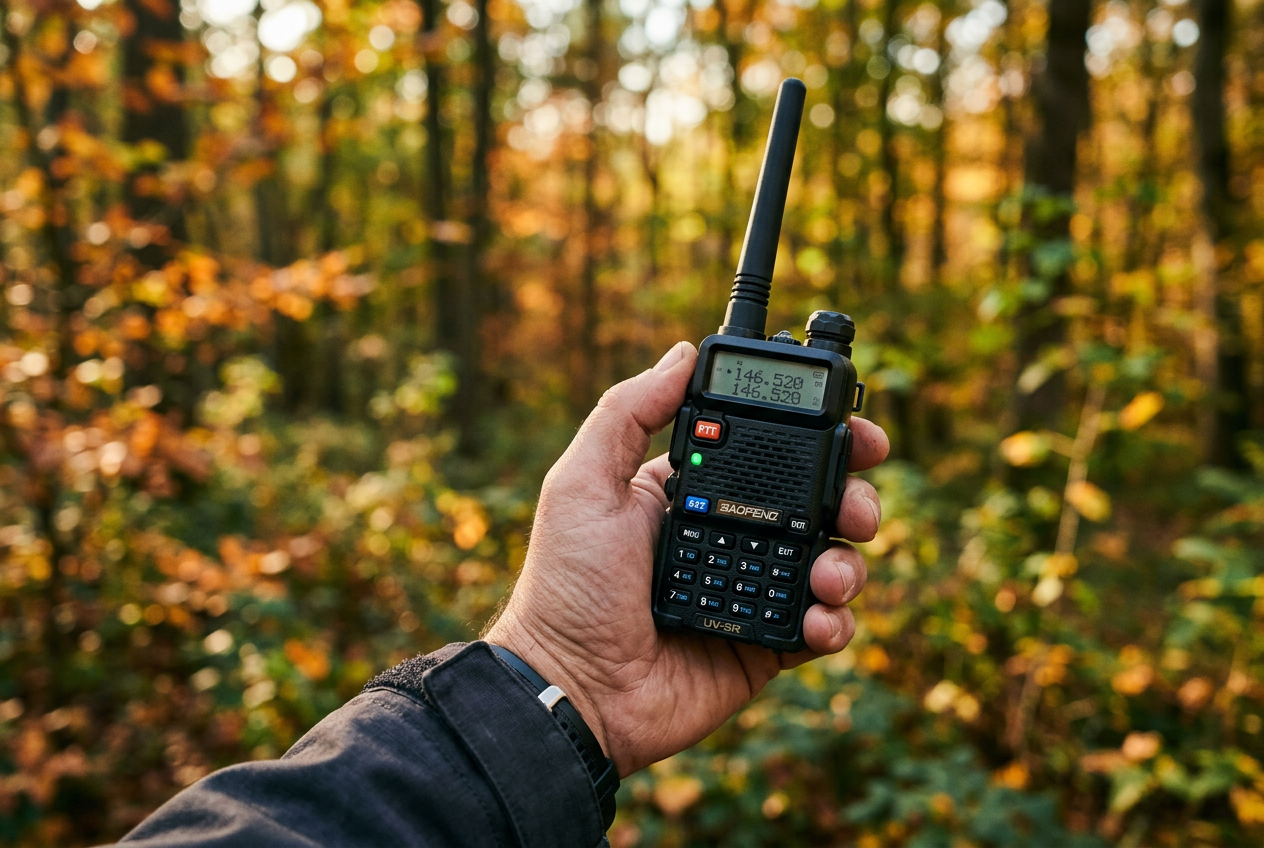
If you ask any ham radio group what to buy first, one name comes up again and again. That radio is the Baofeng UV-5R. It has become the default first radio for millions of new operators. There are good reasons for that.
Why It Is So Popular
The biggest reason is the price. The UV-5R sits in the budget range. That low cost takes away the fear of buying your first radio. You do not have to spend a lot of money to start learning. If you drop it, lose it, or decide ham radio is not for you, you are not out much cash. That makes it a safe way to test the hobby.
Being cheap also means you can buy more than one. Many beginners get a pair so they can talk with a friend or family member. Some keep extras in a car or a bag for emergencies.
What It Can Do
The UV-5R is a dual-band handheld. It covers 144 to 148 MHz and 420 to 450 MHz. Those are the two most common bands for local ham radio. They let you reach nearby repeaters and talk over good distances in your area. Note that the radio will not transmit outside those ranges, so it stays within the bands most beginners use.
The radio holds 128 channels. That is plenty of room for your local repeaters and simplex frequencies. It has a large LCD screen and shows two frequencies at once. This dual-standby feature lets you watch two channels and hear whichever one gets active first.
You also get useful extras. There is a built-in LED flashlight. You can set high or low transmit power to save battery. It has an emergency alert, a keypad lock, and VOX for hands-free talking. For a budget radio, the feature list is long.
Programming With CHIRP
Setting channels by hand on the UV-5R can feel slow. The menu takes some patience. The good news is that the radio works with CHIRP. CHIRP is free software that runs on your computer. You plug the radio in with a cable, load your channels, and send them to the radio in seconds.
Because the UV-5R is so common, there are countless guides, videos, and forum posts about it. If you get stuck, someone has likely already asked the same question. That huge base of help makes it easier to learn.
Who It Is For
The UV-5R is best for someone who wants to start cheap and learn the basics. It is a great first radio for getting your license and making your first contacts. The build feels plain and the menu is fiddly, but for the money, it is hard to beat as a learning tool.
Baofeng UV-5R Mini: Compact and USB-C Convenient
The UV-5R Mini takes the classic Baofeng and shrinks it down. It keeps the same 5W of power. It keeps the long range. But it fits better in your hand and your pocket. If you liked the idea of the standard UV-5R but wanted something smaller and more modern, this is a strong pick.
USB-C Charging Is a Big Deal
Older Baofeng radios use a charging cradle. You have to set the radio in the cradle to charge it. That works fine at home. But it is one more thing to pack and carry.
The UV-5R Mini charges with a USB-C cable. The port sits on the back of the battery. This means you can charge it the same way you charge your phone. You can top it off from a car charger, a power bank, or your laptop. When you are away from home, this makes life much easier. Most people already own USB-C cables, so you may not need anything extra.
Phone Programming Makes Setup Simple
Here is the part that helps beginners the most. Many new hams get stuck on programming. The standard way is to use a computer and software like Chirp. That means a cable, a driver, and a bit of trial and error. For a lot of people, that step feels scary.
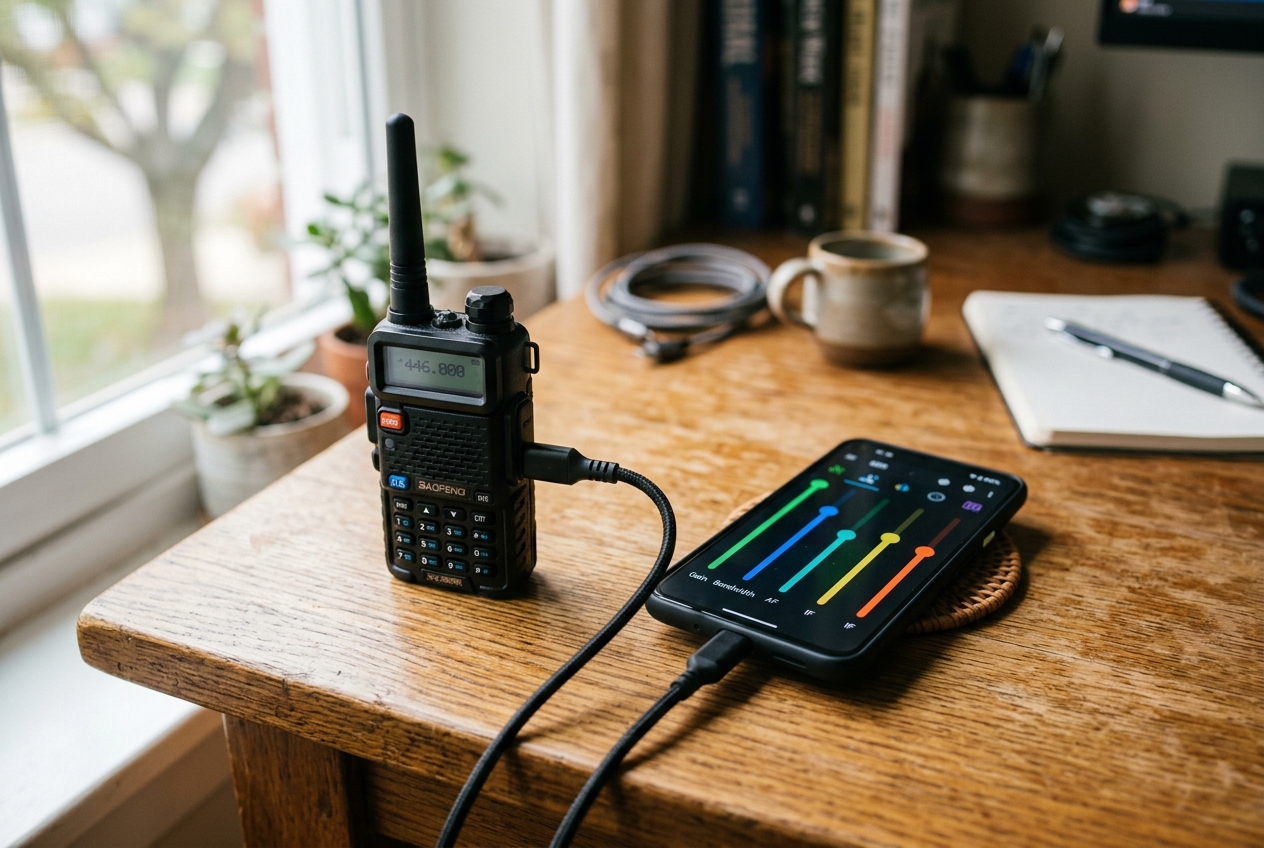
The UV-5R Mini lets you skip the computer. You pair the radio with your phone using an app called OLA Radio. Then you type in frequencies right on your phone. No cable. No driver. No software to install on a laptop. This turns a frustrating job into a few taps. If you have ever felt stuck getting a radio set up, this feature alone can save you time and stress.
The radio still works with Chirp too, if you want to go that route later. So you are not locked out of the computer method. You just have an easier option to start with.
Copy Frequency in Two Seconds
The UV-5R Mini has a copy frequency feature. If someone near you has a radio set to a channel, you can copy that frequency in about two seconds. You do not need to type anything or use a computer. This is handy when you are with a group and want to match their setup fast. It is a small feature, but it removes another common headache for new users.
What You Get
You still get 999 channels, dual PTT, VOX, DTMF, and NOAA weather radio. You also get AM and FM radio. The build is compact, and the signal holds up well around buildings and in cities.
This is a budget radio. It gives you the trusted Baofeng feel with two modern touches that beginners will appreciate: easy charging and easy programming. If the classic UV-5R feels a bit dated, the Mini is a smart update.
Baofeng AR-5RM 10W (2-Pack): More Power and a Color Screen
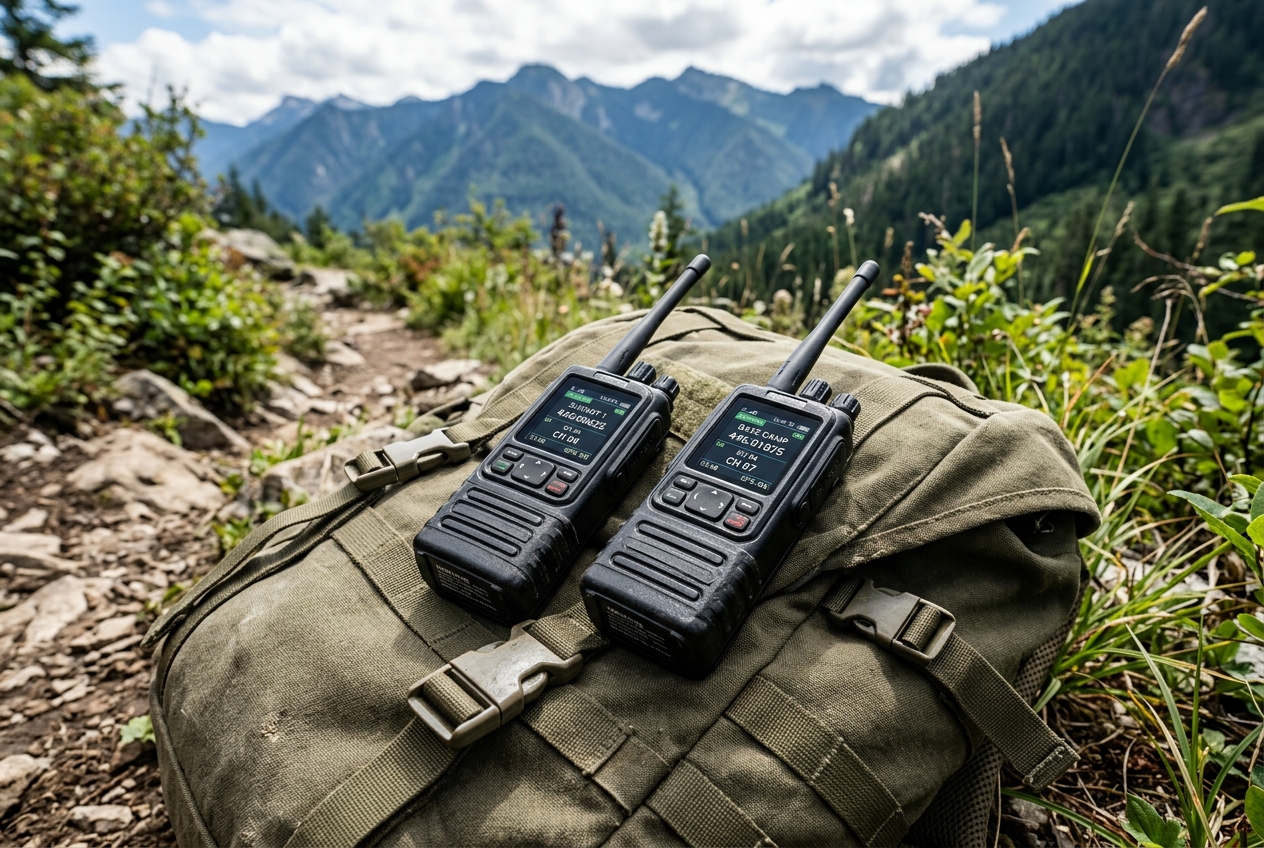
The Baofeng AR-5RM takes the classic UV-5R idea and gives it more muscle. It puts out up to 10 watts of power. That is more than most starter handhelds. Best of all, it comes in a 2-pack. If you want to set up your whole house with radios, this is a smart way to start.
Why the Extra Power Helps
More watts can mean more range. A 10W radio pushes your signal farther than a 5W radio in many cases. This helps when you talk over hills, trees, or long distances. It also helps when you reach a repeater that sits far away. Keep in mind that range still depends on your antenna, your location, and terrain. But the extra power gives you a better shot at getting through.
For a beginner, that extra reach can build confidence. You will not wonder as much if your radio is too weak. You can focus on learning how to use it instead.
A Bigger Screen and Bigger Battery
The AR-5RM has a 1.77 inch color screen. That is large for a handheld radio. The bigger screen makes it easier to read channels and settings. New users often struggle with tiny displays. This one is friendlier to your eyes.
The radio also comes with a 2500mAh battery. That is a larger battery than many entry radios use. A bigger battery means longer standby time. You can carry it all day and not worry as much about running low.
Charging is flexible too. Each radio ships with a USB-C cable and a base charger. You can charge from a wall outlet, a power bank, a car, or a laptop. This is handy during a power outage or a camping trip. You are not stuck with just one way to fill the battery.
NOAA Weather and Frequency Copy
The AR-5RM can receive NOAA weather channels. This lets you hear local weather alerts. It is a nice feature for anyone who wants to stay ready for storms.
The radio also supports a frequency copy feature. You can copy the settings from one radio to another. This saves time when you set up a pair. Instead of programming each radio by hand, you copy the first one over. It also works with CHIRP software, so you can program it from a computer.
Who Should Buy It
This radio fits a beginner who wants to equip a household. The 2-pack means you and a family member can each carry one. You can talk to each other right away. The extra power, big screen, and larger battery make it a step up from the basic UV-5R. If you want more capability without jumping to a mobile radio, the AR-5RM is a strong mid-range choice.
Retevis RT95 Mobile Radio: Stepping Up to a Car or Home Setup
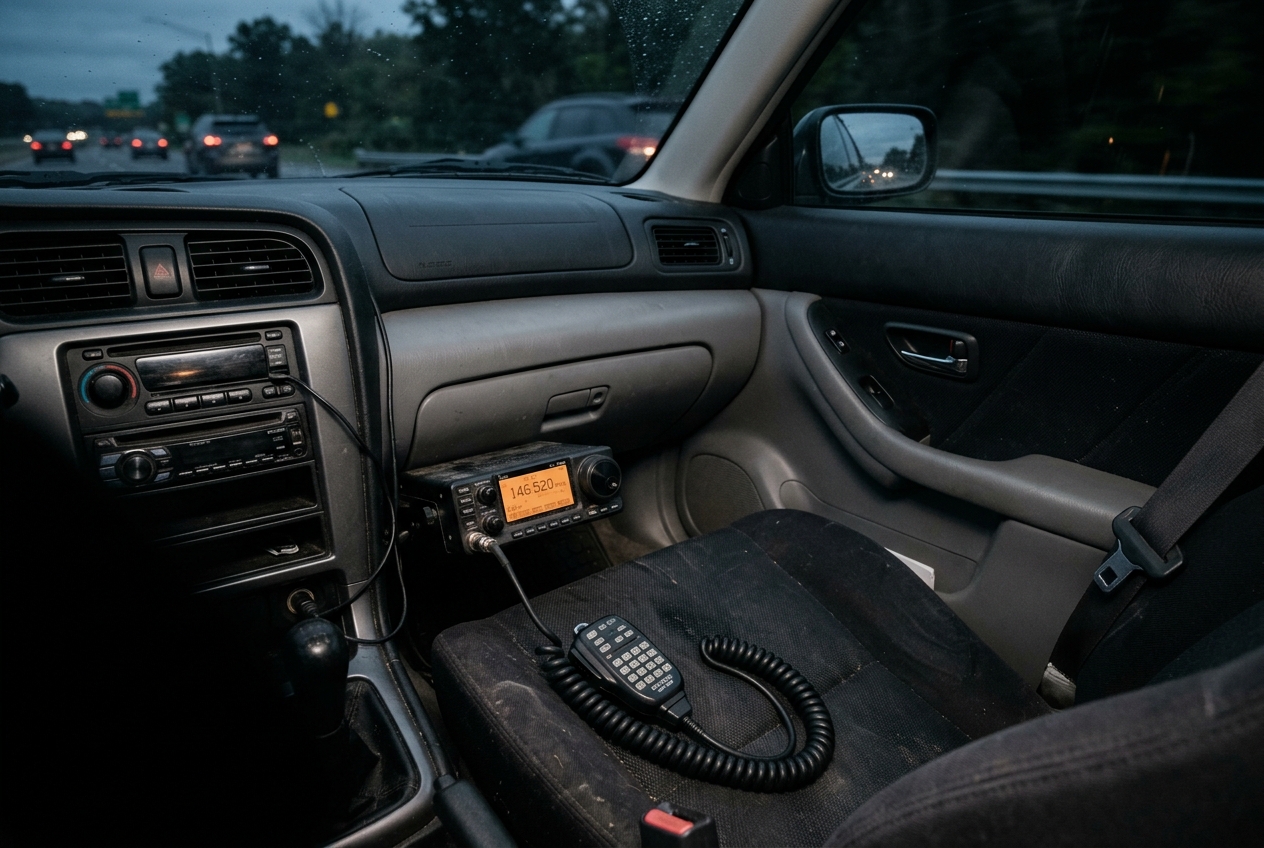
At some point, a handheld radio starts to feel limiting. The battery runs down. The signal fades when you move around. You want to talk farther and sound clearer. That is when many beginners move up to a mobile radio. The Retevis RT95 is a good first step.
What a mobile radio does better
A mobile radio is not just for cars. The name means it can go in a vehicle, but you can also set one up on a desk at home. Either way, you get more power and a stronger antenna than a handheld can offer. That means better range and a steadier signal.
The RT95 is a dual band radio. It works on the 2 meter and 70 centimeter bands. These are the two bands most new hams use for local talk. You can reach repeaters and other operators with more reach than a small handheld gives you.
The unit is compact. It measures about 6.42 by 4.88 by 1.54 inches. That is small for a mobile radio. It fits under a car dash or on a shelf without taking up much space. The cables you need come in the box, so you can get started without hunting for extra parts.
VOX and mic gain features
The RT95 has a VOX function. VOX means the radio keys up when you talk. You do not have to press a button. This is handy when your hands are busy, like when you are driving. You just speak and the radio sends your voice.
The radio also has an upgrade for mic gain. This comes through a firmware update. Mic gain makes soft sounds louder. That can help if people say you are too quiet. But there is a trade off. The higher you set the gain, the more background noise gets picked up. Set it at a middle level to keep your voice clear without extra hiss. A little testing helps you find the right spot.
Both the radio and the microphone have built in speakers. That gives you a clear way to hear calls no matter how you set things up.
Why beginners make this jump
You do not need this radio on day one. Many people start with a handheld and learn the basics first. But once you know how to use repeaters and want to talk more, a mobile like the RT95 makes sense.
The extra power and better antenna give you range and stability a handheld cannot match. The design is simple enough for a new operator. You can quickly change the band right from the microphone. If you want a real station at home or in your car without a steep learning curve, the RT95 is a solid choice.
Radioddity DB50 50W Mobile Radio: High Power for Serious Range
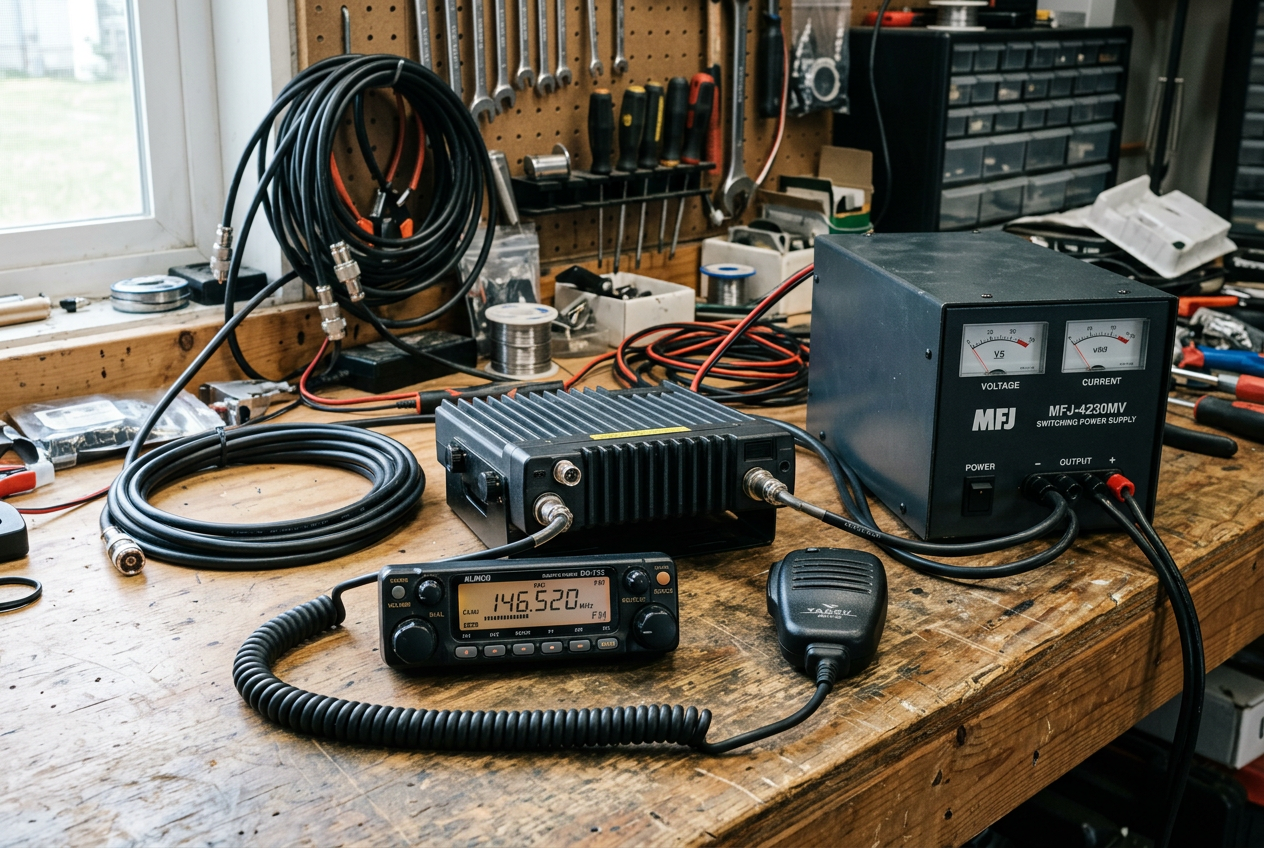
If you want to reach farther than a handheld can go, a mobile radio is the next step. The Radioddity DB50 puts out 50 watts of power. That is much more than the 5 to 10 watts you get from most handhelds. More power means your signal can travel farther and stay clear over long distances.
Why the Power Matters
Handheld radios are great for close range. But hills, trees, and buildings can block a weak signal. With 50 watts, the DB50 pushes through many of those problems. You can talk to distant repeaters and reach people miles away. This makes it a strong pick if you want to be ready for emergencies. When cell towers go down, a radio like this can keep you in touch with others.
The DB50 works on two bands, UHF and VHF. This gives you more choices for how and where you talk. It also has dual watch. That means it can listen to two channels at once. You can monitor a local group and a weather channel at the same time. You will not miss a call while you wait on another frequency.
A Detachable Front Panel
One of the best features for beginners is the detachable front panel. You can take the control panel off the main body of the radio. Then you can mount the panel where it is easy to reach. The heavier body can go under a seat or in a trunk. This makes it simple to fit the radio in tight spaces.
This flexible setup is helpful in cars, trucks, and even at home. You get the controls right in front of you. The bulky part stays out of the way. Radioddity suggests using the DB50-K panel bracket to hold the panel in place. That makes for a clean and safe install.
Setup and Programming
The DB50 comes with a programming cable. You can use free CHIRP software to set up your channels on a computer. This is much easier than typing every setting by hand. CHIRP is popular with beginners because it is simple and well documented. You can find guides and channel lists online to help you get started.
The radio also supports CTCSS and DCS tones. These help you use repeaters and cut out unwanted chatter. Many repeaters need these tones to open up.
Who Should Buy It
The DB50 is a good choice if you have your license and want more range than a handheld. It fits new hams who want a home base or a car setup. The 50 watts and dual band give you room to grow. The detachable panel makes install easy for first-timers. If long-distance and emergency-ready talk matter to you, this radio is worth a look.
Retevis Ailunce HS4 10 Meter Base Station: Exploring Shortwave
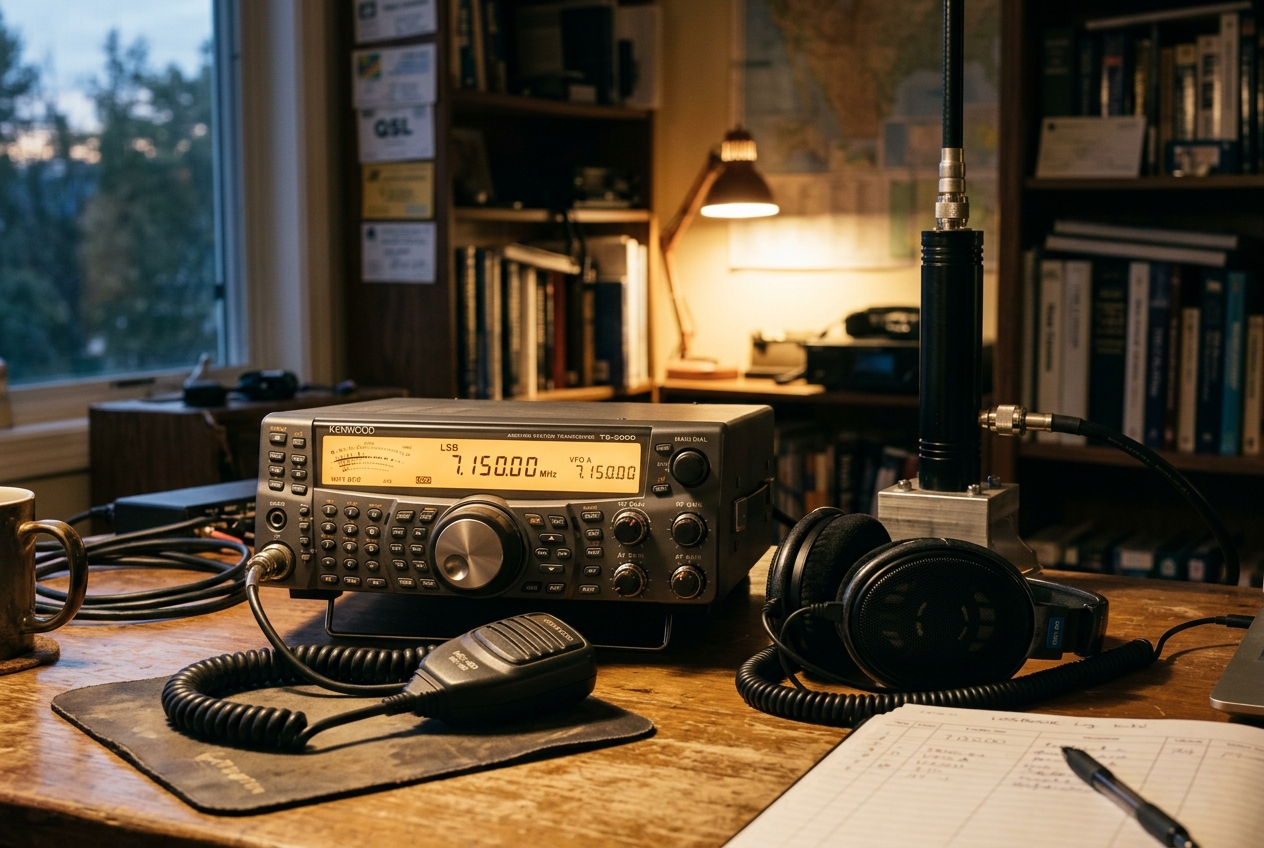
Most beginner radios stick to VHF and UHF. These bands are great for local talk. But at some point you may want to try something new. The 10 meter band lets you reach farther and explore shortwave style operation. The Retevis Ailunce HS4 is built for that step.
What Makes It Different
The HS4 is a base station radio. That means it sits on your desk or shelf, not in your pocket. It works on the 10 meter band. This band sits at the edge of HF, or high frequency. When conditions are right, signals on 10 meters can travel long distances. You might talk to people far outside your town. This is called skywave, and it feels different from short local chats.
To be clear, the 10 meter band needs a General class license in the United States. A Technician license gives you some voice access on part of 10 meters. So this radio fits a hobbyist who is ready to grow past the entry level.
Six Modes to Explore
The HS4 gives you six modes. This is where the fun starts.
- AM works well for long range calls.
- FM gives you clear, clean sound.
- USB and LSB make up SSB, or single sideband. SSB is the classic mode for long distance voice.
- CW is Morse code. You can connect an external key and send code the old way.
- PA turns the radio into a public address system.
Most handheld radios only give you FM. Having SSB and CW opens a whole new side of the hobby. SSB lets your voice travel farther on less power. CW is a skill many hams love to learn. The HS4 lets you try both without buying a full HF rig first.
The Large LCD Display
The HS4 has a big LCD screen. It shows the full frequency in large numbers. This matters more than it sounds. When you tune across a band, you need to read your spot fast. The numbers are easy to see. The whole faceplate lights up too. So you can read it in a dark room or at night. For a new operator learning to tune, a clear display saves a lot of frustration.
Who Should Get It
This radio is not your first purchase. Start with a handheld to learn the basics. But once you have your license and want to try long distance voice or Morse code, the HS4 is a smart next step. It costs more than a simple handheld, so plan on a mid-range budget. In return you get a real taste of shortwave style operation. For a curious beginner ready to experiment, that is a great trade.
How to Choose Your First Ham Radio
Picking your first ham radio comes down to how you plan to use it. Think about where you will be and what you want to do. A few key factors will guide your choice.
Handheld vs. Mobile vs. Base Station
Handheld radios are small and run on a battery. You can carry them anywhere. They are great for hiking, local chats, and learning the basics. They cost less, so they make a good first radio. The Baofeng UV-5R is a classic example.
Mobile radios are bigger. You mount them in a car or set them up at home. They plug into more power, so they reach farther. The Retevis RT95 is a solid pick if you want a step up from a handheld.
Base stations stay in one spot at home. Some, like the Retevis Ailunce HS4, work on shortwave bands. That lets you talk over longer distances and try new modes.
Power Output
Power is measured in watts. More watts can mean more range. A handheld like the UV-5R puts out low power, often around 5 watts. That works fine for close contacts. Mobile radios push out much more, like 50 watts. Just remember, your antenna and location matter as much as raw power.
Frequency Bands
Most beginner radios cover the 2 meter and 70 centimeter bands. These are called VHF and UHF. They are perfect for local talk and repeaters. The UV-5R and RT95 both work on these bands. If you want to reach far away stations, look at a shortwave radio like the HS4. It uses the 10 meter band and can travel long distances.
Programming Method
You set channels on a radio by programming it. You can do this by hand using the keypad. That takes patience. A faster way is to use a computer and free software like CHIRP. The UV-5R works with CHIRP, which makes setup much easier for new users. Check if your radio supports PC programming before you buy.
Licensing Requirements
You need a license to transmit on ham bands. In the United States, the Technician license is the first step. It lets you use VHF and UHF bands, which covers most handheld and mobile radios. To use more of the shortwave bands, you may need a General license. The test is not hard. Many people study for a few weeks and pass. Get your license before you start talking.
Matching Budget to Use
Start with what you need now. A budget handheld is smart for learning. If you drive a lot or want more range, a mid-range mobile radio fits well. Pick shortwave gear once you know you want to explore it.
Frequently Asked Questions
Do I need a license to use a ham radio?
Yes. To transmit on ham radio frequencies in the United States, you need a license from the FCC. The first level is called the Technician license. You take a test with 35 questions. You need to answer 26 correct to pass. The questions come from a public pool, so you can study the exact questions ahead of time. Many people pass after a week or two of study. Once you pass, the FCC gives you a call sign. You use that call sign when you talk on the air.
Can I use the radio before I get my license?
You can listen right away. Listening does not need a license. You can also program channels and learn the buttons. But you cannot transmit on ham frequencies until you pass the test. The one exception is a real emergency where life or property is at risk. Outside of that, wait for your license before you key up.
What frequencies can I legally transmit on?
That depends on your license and your radio. A Technician license gives you full access to the 2 meter and 70 centimeter bands. Radios like the Baofeng UV-5R and the Retevis RT95 work on those bands. Some radios reach other bands too. The Retevis Ailunce HS4 works on the 10 meter band. Part of that band needs a higher license class for voice. Always check the band plan for your license before you transmit.
How do I program my radio?
Most beginner radios use free software called CHIRP. You plug the radio into your computer with a cable. Then you load channels and settings. The AR-5RM 2-pack comes with a programming cable and supports CHIRP. Some newer radios skip the cable. The Baofeng UV-5R Mini uses a phone app called OLA Radio. You pair your phone and enter frequencies right there. Both ways work. The app is easier for many new users.
What is the difference between a ham radio and a walkie talkie?
A walkie talkie usually means a small FRS radio. Those work out of the box with no license. They use fixed channels and low power. Range is short. A ham radio needs a license, but it does far more. You get higher power, more channels, and the ability to reach repeaters. Repeaters extend your range across a whole region. A ham radio also lets you set your own frequencies and tones. That flexibility is why hams pick these radios.
Can I talk to people far away out of the box?
Not far by yourself at first. A handheld reaches a few miles on its own. To reach farther, you use repeaters. You program the repeater frequency into your radio. Then your signal travels much farther. Mobile radios like the Radioddity DB50 have more power and better range than handhelds.
Recommended Gear
These are solid, widely available picks that cover the needs discussed in this guide.
You have seen a lot of radios in this guide. Now let’s make it simple. The best ham radio for you depends on how you plan to use it. Here are the top picks by beginner type.
Best Picks by Beginner Type
If you want the easiest start, go with the Baofeng UV-5R Mini. It is small, light, and charges with a USB-C cable. That means you can top it off with a power bank, laptop, or car charger. It also lets you program frequencies from your phone using an app. That skips the confusing cable step. For most new hams, this is the best first radio.
If you want more power and a screen that is easy to read, look at the Baofeng AR-5RM 10W 2-Pack. It puts out more watts, so your signal can reach farther. The 1.77 inch color screen makes it simple to see your channels. It also comes in a 2-pack, so you can keep one and hand the other to a family member or friend. That way you can practice talking to each other right away.
If you want a car or home setup, a mobile radio like the ones covered earlier is the way to go. Mobile radios give you more power and better range than a handheld. If you want to explore shortwave and talk over long distances, a 10 meter base station is a fun next step.
Get Your License First
Before you press the transmit button, you need a license. In the United States, that means the Technician class license from the FCC. Do not skip this. Transmitting without a license can get you fined.
The good news is the test is easy to pass. It has 35 questions. You study from a set list, so there are no surprises. Many people pass after a week or two of study. Free practice tests are online. You can use apps and study guides too. Once you pass, you get a call sign and you are ready to talk.
Your Next Steps
Here is a simple plan to get started.
- Pick your first radio. The UV-5R Mini or the AR-5RM 2-Pack are great choices.
- Study for the Technician exam. Use free practice tests to check your progress.
- Take the test and get your call sign.
- Program a few local repeater frequencies into your radio.
- Listen first. Learn how other hams talk before you jump in.
Take it one step at a time. Buy a starter radio, pass your test, and start practicing. You will be on the air before you know it.