Ready
Emergency Communication Devices for Households (2026): Options When the Grid or Cell Service Fails
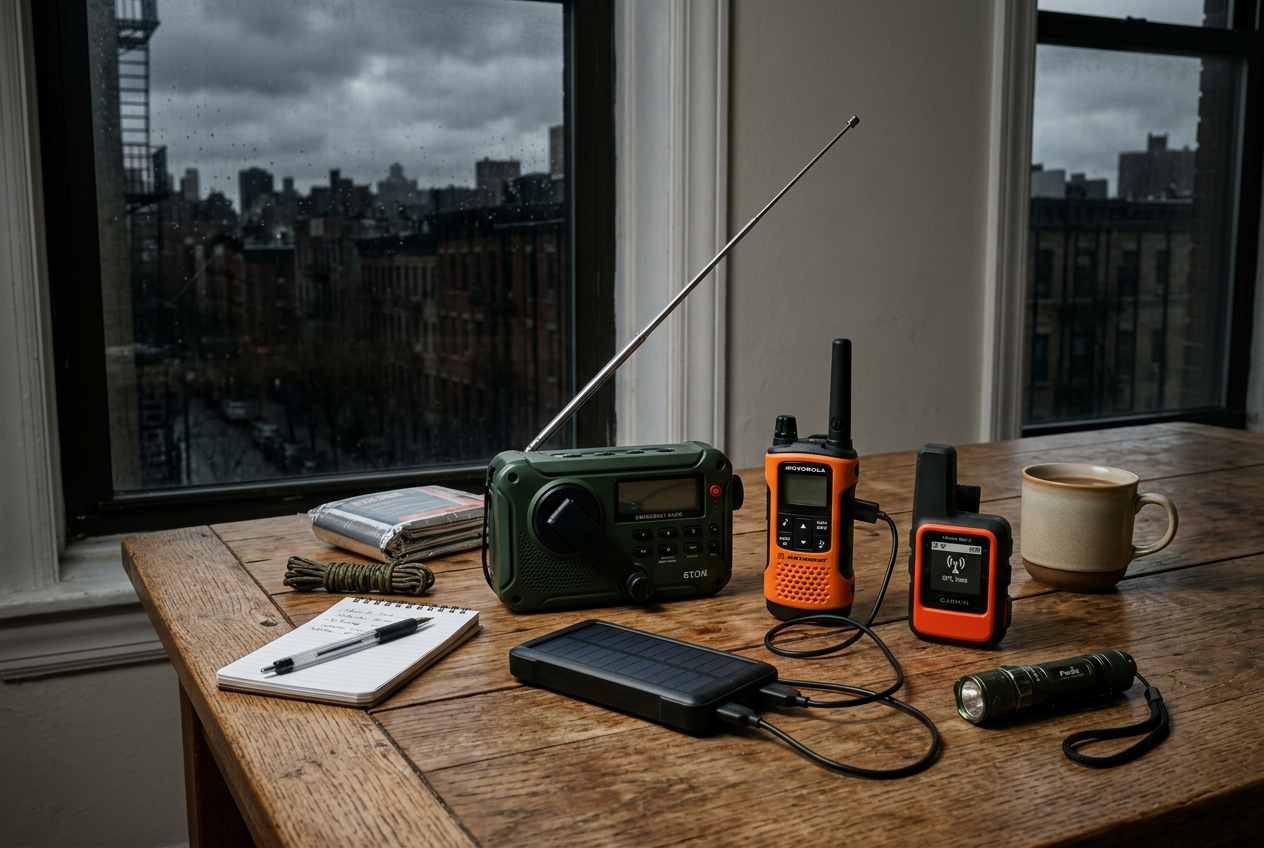
The power goes out. You reach for your phone, but there is no signal. The cell towers are down, or they are jammed with too many calls. Now you cannot reach your family. You cannot find out what is happening. This is a common problem during storms, wildfires, and other emergencies.
Your phone is great until the grid or cell network fails. When that happens, you need a backup way to get news and stay in touch. The good news is that you do not need to be a tech expert. A few simple devices can keep your household connected and informed.
This guide covers three main types of emergency communication devices. We explain each one in plain language.
First, there are two-way radios. These are handheld radios, often called walkie talkies. They let family members talk to each other over short distances without any cell service.
Second, there are emergency weather radios. These pull in news and weather alerts. Many can charge from a hand crank or the sun, so they work even when the power is out.
Third, there are satellite SOS beacons. These are for serious emergencies. They can send a distress signal to rescue teams when you are far from help.
Below, we compare real options in each category. We help you pick the right setup for your home, even if you are brand new to all of this.
- Power options: Works without the grid using hand crank, solar, or batteries.
- Weather alerts: Receives NOAA broadcasts so you hear warnings right away.
- Two-way range: Lets family members talk to each other when cell service is down.
- Built to last: Handles rain, drops, and rough outdoor conditions.
Below are our top picks for emergency communication. Keep reading the article to see how each one fits different household needs.

Midland ER310 Weather Radio
This is our top pick because it works for almost any household. It pulls in NOAA weather alerts plus AM/FM news using hand crank, solar, or batteries, so you get critical updates with no second person and no line of sight needed when the grid or cell service fails.
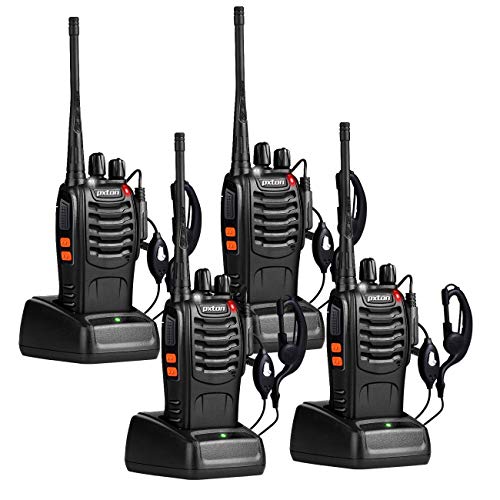
pxton Walkie Talkies 4 Pack
A simple way to keep a whole group connected during an emergency. The four radios cover many channels and come ready to charge, so everyone can stay in touch.

Motorola Talkabout T605
The most popular choice for families who head outdoors or face wet conditions. These radios are waterproof, float face up, and reach long distances to keep everyone talking.

ACR ResQLink View PLB
Our premium pick for true backcountry safety. This personal locator beacon sends a global SOS to search and rescue with GPS, confirms your signal was received, and needs no subscription.
In this guide



Reviewed by Marcus T., Elena V. & Priya K. — contributors with hands-on preparedness experience. How we test
One practical preparedness move each week. No fear-mongering, ever.
Why Trust This Guide?
This article was researched and reviewed by contributors with hands-on experience in emergency preparedness. They have tested gear, built real systems, and lived through situations where these skills actually mattered.
The Main Types of Emergency Communication Devices
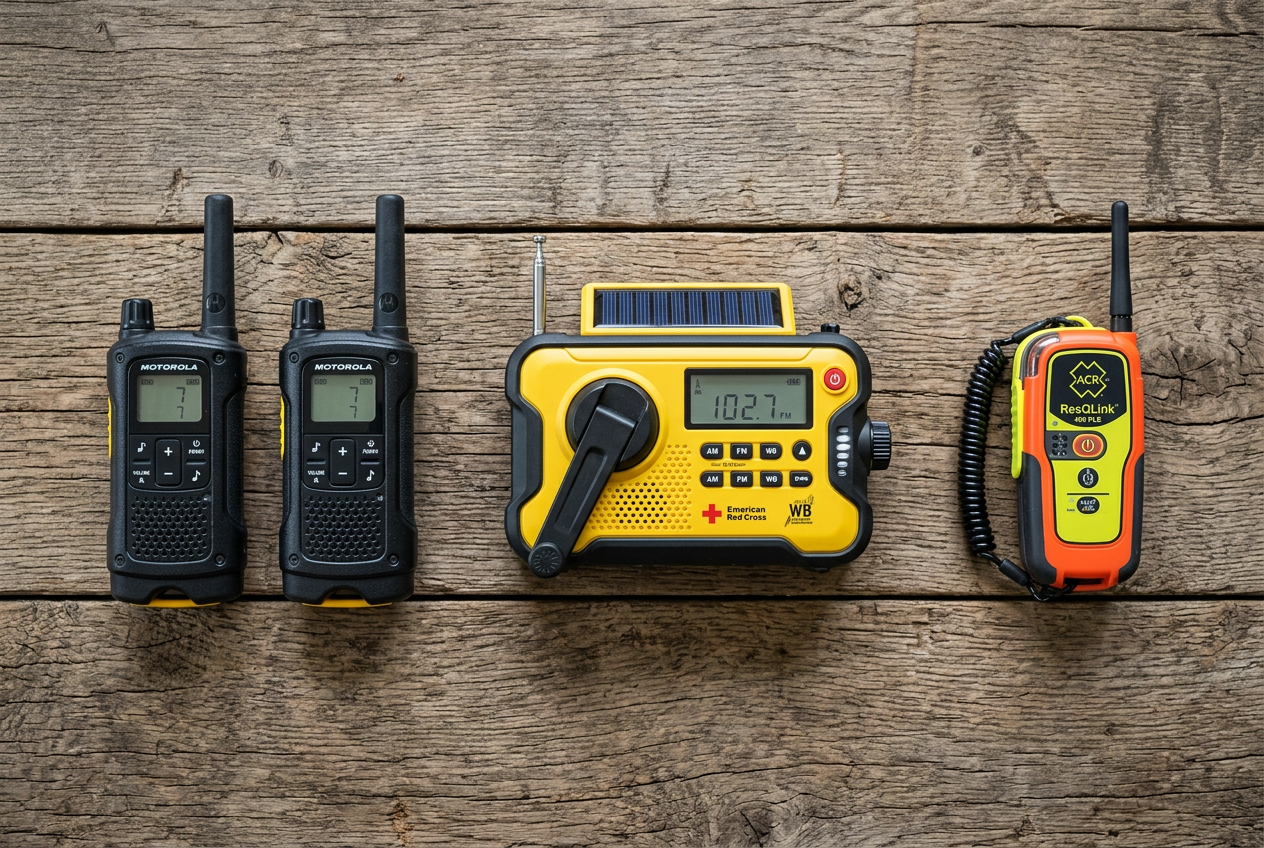
When the power goes out or cell towers go down, you need a backup way to stay informed and reach others. But there is no single device that does everything. Each type solves a different problem. Once you understand what each one does, it becomes easy to see which ones your household needs.
Most emergency communication devices fall into three main groups. Let’s look at each one and the job it does.
Two-Way Radios: Talking to Your Family or Neighbors
Two-way radios, often called walkie-talkies, let you talk directly to someone nearby. They do not need cell service or the internet. You press a button, you talk, and the other person hears you. This makes them perfect for keeping in touch with family members during a power outage or when phones stop working.
These radios work best over short distances. The range depends on your surroundings. In open areas like the countryside, they reach farther. In a town or city, buildings and hills can cut the range down. Still, for staying in touch around the house, the neighborhood, or a campsite, they do the job well.
Some models are waterproof and float, like the Motorola Talkabout T605 H2O. Others are built tough for rough handling, like the Retevis RB48. There are also simple, budget packs like the pxton 4-pack that are easy for anyone to use.
Crank Weather Radios: Getting the News and Alerts
A crank weather radio solves a different problem. It does not let you talk. Instead, it lets you listen. These radios pick up AM and FM stations and NOAA weather broadcasts. That means you can hear official alerts, storm warnings, and news even when the grid is down.
The best part is the power. Many of these radios have a hand crank, a solar panel, and a battery. So you are never stuck without a way to charge them. The Midland ER310 is a good example. It also has a flashlight and other handy features built in. If you only buy one device, a crank weather radio is often the smartest first choice.
Personal Locator Beacons: Signaling for Rescue
A personal locator beacon, or PLB, is for true emergencies. If you are lost or stranded and completely cut off, a PLB sends out a distress signal. This signal goes to search and rescue teams by satellite. It does not need cell service.
PLBs like the ACR ResQLink View or the McMurdo FastFind 220 are not for everyday chatting. They are a last resort to get help when no other option works. Most require you to register the device first, which is often required by law.
Why a Combination Works Best
No single device covers every need. Talking, listening, and signaling for rescue are three separate jobs. Most households are safest with a mix. A weather radio keeps you informed. Two-way radios keep your family connected. And a PLB is there if you are ever truly stranded.
Quick Comparison: Which Device Fits Your Household
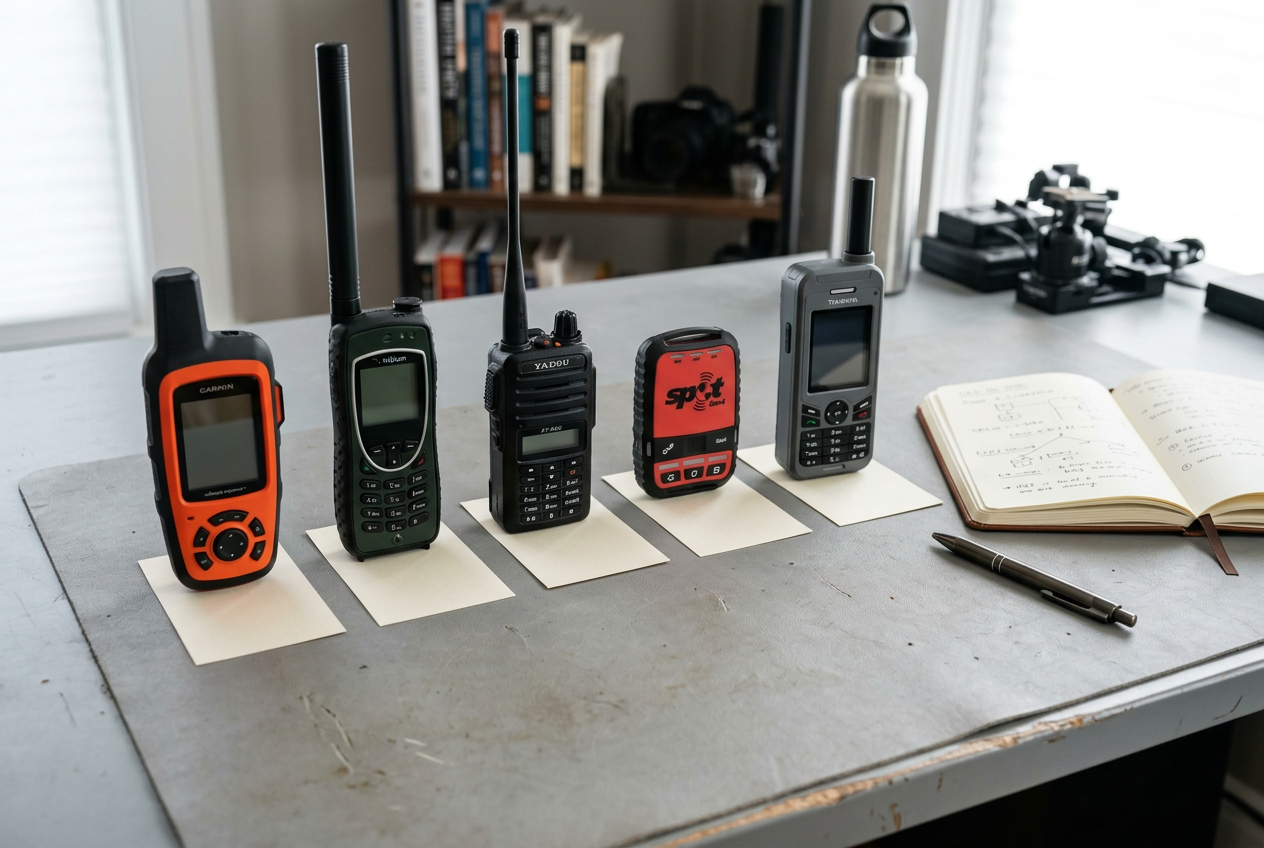
Before you read the full reviews, here is a quick look at all six devices side by side. Each one solves a different problem. Some help you get news and weather alerts. Some help your family talk to each other. Others send an SOS when there is no phone signal at all. Use this table to find the type that fits your needs, then read the full review below.
Radios that keep you informed
The Midland ER310 is a one-way radio. It does not let you talk back. It pulls in AM, FM, and NOAA weather alerts. It has many ways to charge, so it keeps working when the power is out. This is a good first device for any home.
Radios that let your family talk
The next three devices are two-way radios. They let people in your group talk to each other over short distances. Range depends on terrain. Buildings, hills, and trees cut it down. Open areas give you the best range.
The Motorola T605 H2O is waterproof and floats face up. That makes it a strong pick near water.
The Retevis RB48 is the toughest of the group. It is waterproof, dustproof, and built to military drop standards. It also receives NOAA weather.

The pxton 4-Pack is a budget option for families. You get four radios in one set, so everyone can carry one.
Beacons for true emergencies
The last two devices are personal locator beacons, or PLBs. These are not for chatting. You use them to send an SOS to search and rescue teams by satellite when there is no cell signal. Neither one needs a subscription.
The ACR ResQLink View has a screen and a Return Link Service. That feature tells you when your signal has been received.
The McMurdo FastFind 220 is another global SOS beacon. By law in most countries, you must register a PLB before you use it.

Midland ER310 Emergency Crank Weather Radio
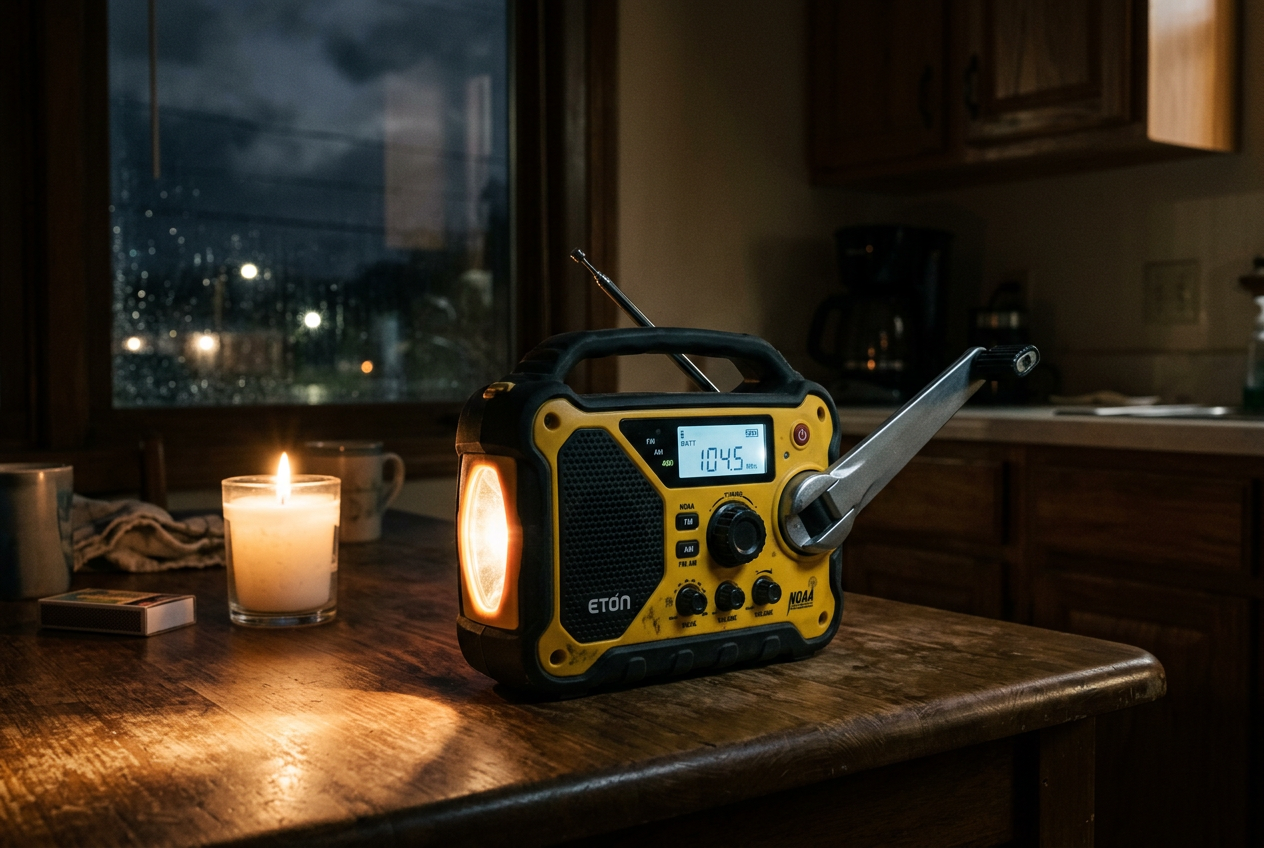
When the power goes out, the first thing most households lose is information. You cannot check the TV. Your phone battery drains fast. A simple weather radio fixes this. It lets you keep listening to news and warnings even when nothing else works.
The Midland ER310 is a hand-crank radio that picks up AM, FM, and NOAA weather channels. NOAA is the National Oceanic and Atmospheric Administration. It runs the weather stations that broadcast storm alerts across the country. With this radio, you can hear those alerts and tune in to regular stations for news. That makes it a smart first device for any home.
Why a receive-only radio is the easy first step
A receive-only radio does one job. It listens. You cannot talk back or send a message with it. That might sound limited, but it is actually the point. There is nothing to set up. No channels to program. No license to learn. You turn it on and listen. For a household that is new to preparedness, this is the simplest way to stay informed.
Two-way radios and beacons have their place. But they take more learning and more setup. A weather radio works right out of the box. Anyone in your home can use it, even kids or older family members.
Multiple power sources
The biggest worry in an outage is power. The ER310 solves this with several ways to stay charged.
- A hand crank. You turn it by hand to make power. No batteries needed.
- A built-in rechargeable battery. You can charge it ahead of time.
- Replaceable AA batteries as a backup.
- A solar panel on top that charges in sunlight.
This mix means you are not stuck if one source runs out. If the crank feels slow, you still have batteries. If the batteries die, you can crank or sit it in the sun. Having more than one power path is a real strength in an emergency.
Built-in flashlight and extras
The ER310 is more than a radio. It has a built-in LED flashlight. That helps when the lights go out and you need to move around. It also has an SOS feature and an ultrasonic dog whistle. These are nice extras, though the radio and flashlight are the parts you will use most.
Because it can charge its own battery, the ER310 can also give a small charge to a phone through a USB port. This is not a full charger. Think of it as a way to send a quick text or make one short call, not to top off your phone for the day.
For most households, a crank weather radio is the best place to start. It is cheap to own, easy to use, and keeps you connected to official alerts when everything else is dark. Add two-way radios or a beacon later if your household needs them.
Motorola Talkabout T605 H2O Waterproof Two-Way Radios
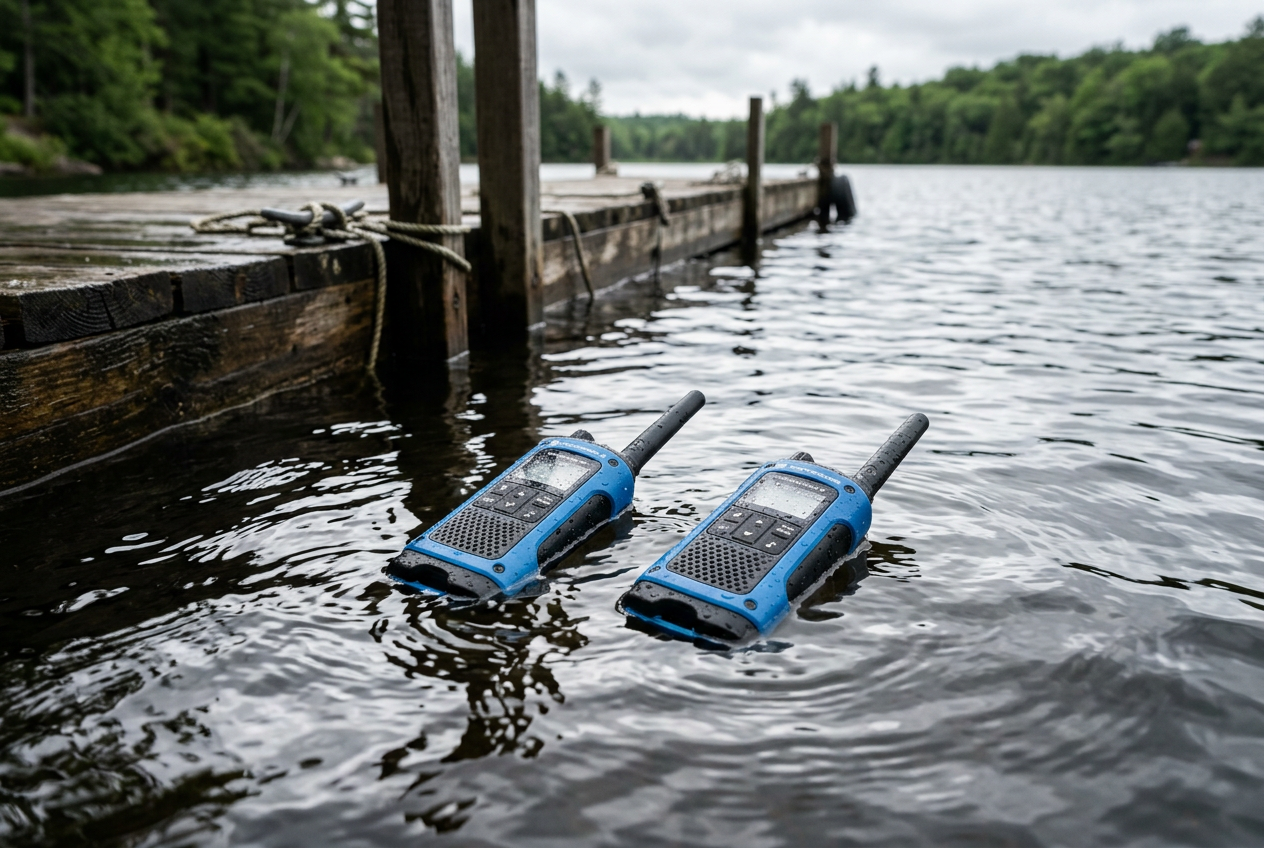
If you want a simple way to stay in touch with your family during a storm or outage, two-way radios are a smart pick. The Motorola Talkabout T605 H2O comes in a two-pack. That means two people can talk right out of the box. It is built for wet weather and rough conditions.
What “FRS” means in plain words
FRS stands for Family Radio Service. These are short-range radios that many people call walkie talkies. You do not need a license to use them. You do not need a cell signal or the internet either. You just turn them on, pick a channel, and talk. That makes them useful when the power is out or when cell towers go down.
The T605 uses 22 channels. Everyone in your group sets their radio to the same channel. Then you can press a button and talk to each other right away.
Built for water and bad weather
The big selling point here is the water protection. These radios carry an IP67 waterproof rating. In plain terms, that means they can handle rain, splashes, and even a short dunk in water. If you drop one in a lake or pool, it floats face up so you can grab it fast. There is also a flashlight that turns on when the radio hits water. That can help you find it in the dark.
This makes the T605 a good match for families who spend time near water. Think camping trips, boating, or riding out a storm that brings heavy rain and flooding.
Rechargeable and ready to go
The T605 is rechargeable. You charge the radios like you would charge a phone. That saves you from buying piles of batteries. For a backup plan, keep the radios charged before a storm hits. A small power bank or a crank charger can top them off if the grid goes down for a while.
What range to really expect
Motorola lists this pack at a 35 mile range. That number sounds huge, but it only happens under perfect conditions. Think of two people standing on open hilltops with nothing in between.
In a real neighborhood, you will get much less. Walls, trees, hills, and buildings all block the signal. In a town or a house, you might get a block or two. In open fields you will get more. This is normal for all FRS radios, not just this one. So set your plan around short distances. These radios shine for keeping your household in touch nearby, like between a house and a yard, a campsite, or a car in the driveway.
For a family that wants a tough, easy radio pair that works without cell service, the T605 H2O is a strong, no-fuss choice.
Retevis RB48 Rugged Waterproof FRS Radios
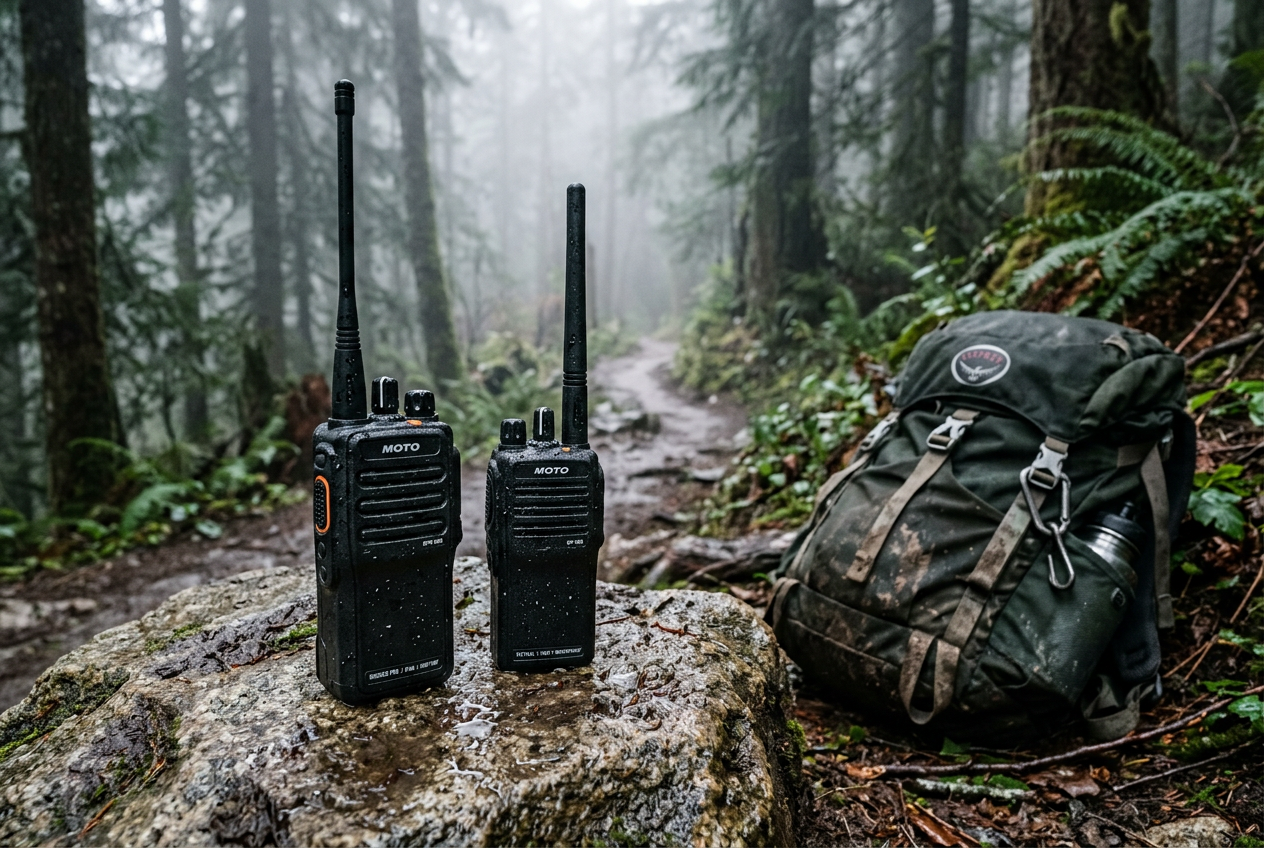
The Retevis RB48 is a two-way radio built to take a beating. If you want radios that keep working through rough weather, drops, and dust, this is a strong pick. It also picks up NOAA weather alerts, so your family can hear storm warnings even when cell service is down.
Built tough
The RB48 is made for harsh conditions. It is tested to a durability standard called MIL-STD-810H. In plain terms, that means it is built to survive drops, dust, heat, cold, and vibration. Retevis says it passed 1,000 drops from two meters without breaking. For an ordinary household, that kind of toughness means the radio can handle being dropped, knocked around, or left outside in bad weather.
It is also IP67 rated. That rating has two parts. The “6” means it blocks dust. The “7” means it can sit under water for a short time without damage. On top of that, the RB48 floats. If it falls in a puddle, a creek, or a flooded basement, it will not sink. That is a real plus if you live near water or expect flooding.
Weather alerts and range
The RB48 receives NOAA weather channels. NOAA is the government service that broadcasts weather warnings. Being able to tune in means you can get storm and emergency updates without relying on your phone. This is helpful when the grid or cell towers go down.
For range, Retevis lists up to 300,000 square feet, or about 25 floors. Keep in mind that range numbers like this come from open, clear conditions. Walls, buildings, hills, and trees all cut the real distance down. In a normal house or neighborhood, expect less than the headline number. Still, for talking across a property, a campsite, or a block, the RB48 should do the job.
Battery and everyday use
Battery life is a big strength here. Retevis rates the RB48 for up to 20 hours on a charge. That means you can get through a long day, or even a couple of days of light use, before you need to recharge. The radios are rechargeable, so you do not have to keep buying batteries.
Other handy features include a vibration alert and dual PTT. PTT stands for “push to talk,” the button you press to speak. Dual PTT gives you two of those buttons. The vibration alert can tell you about an incoming call when it is too loud to hear.
Who it fits
The RB48 is a good match for households that want tough, no-fuss radios with weather alerts built in. It is sold as a two-pack, so it works well for a couple or a small group. If you want gear that can handle outdoor use, flooding, and rough handling, this radio is worth a close look.
pxton 4-Pack Rechargeable Walkie Talkies
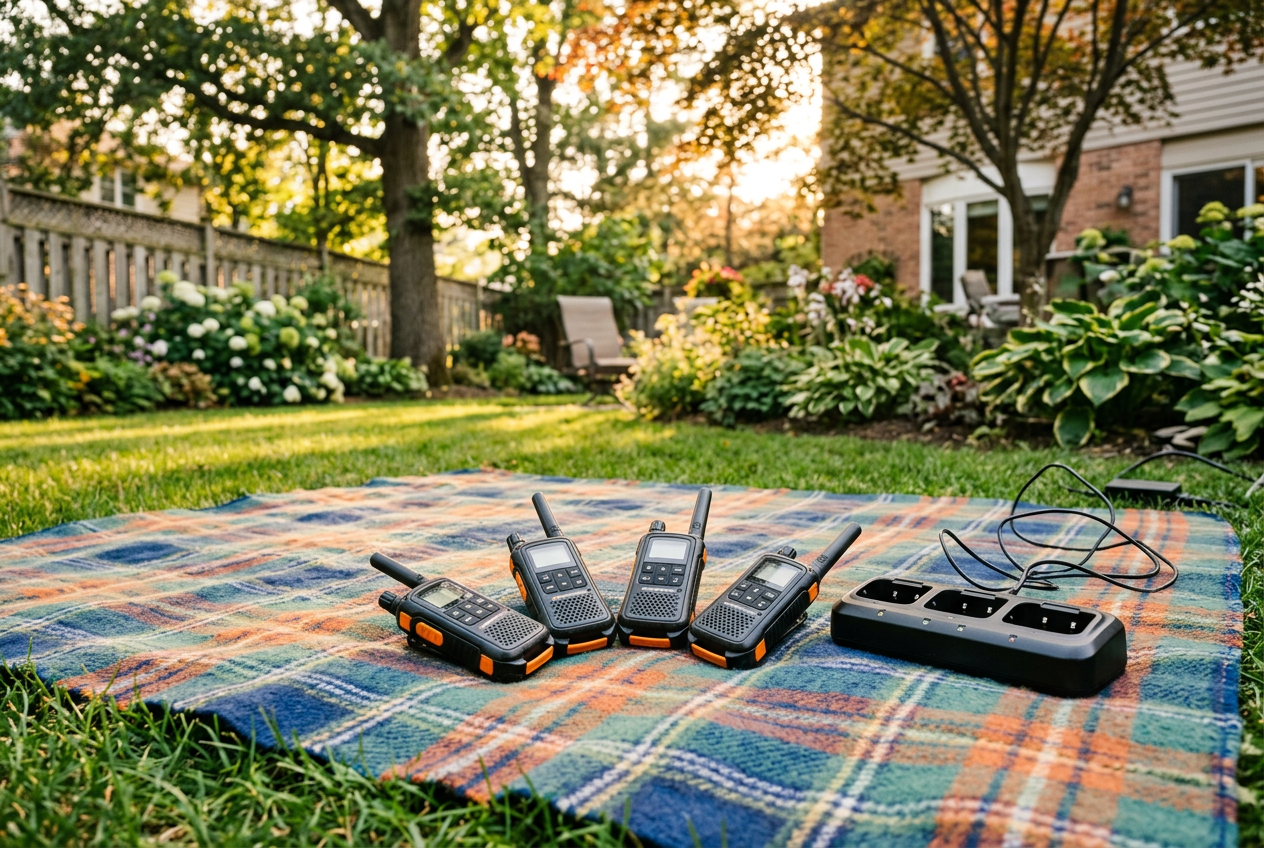
If you have a larger family or a group to keep in touch with, a four-pack of radios can be a smart choice. The pxton Walkie Talkies come as a set of four. That means more people can stay connected without buying separate pairs. This is a budget-friendly option for households that want simple, short-range communication when phones go down.
Preset channels and privacy codes
These radios use 16 preset channels. You pick a channel by turning the knob on the front. Everyone in your group sets the same channel, and then you can all talk to each other. It is easy to learn, even for kids or older family members.
The radios also have 165 privacy codes. A privacy code does not scramble or hide your voice. It just helps cut down on noise from other people using the same channel nearby. Think of it as a filter, not a lock. Anyone scanning your channel could still hear you. Keep that in mind during an emergency.
There are a few extra features too. The radios have VOX voice control, which lets you talk hands-free. They can scan channels, warn you when the battery is low, and have a built-in flashlight for night use.
Rechargeable batteries
Each radio uses a rechargeable lithium-ion battery. The set comes with a charger. A full charge takes about 3 to 4 hours when the battery is empty. After that, the radios can last between 8 and 96 hours, depending on how often you talk. With steady, continuous use you can expect about 8 to 12 hours.
Rechargeable batteries are handy because you are not always buying new ones. But there is a trade-off. If the power is out for a long time, you need a way to recharge. A small solar charger or a power bank can help here. Plan ahead so your radios do not die mid-crisis.
Knowing the range limits
Range is the biggest thing to understand before you buy. The pxton radios reach the farthest in open, clear spaces. Think rural areas, open fields, or the beach. There, you get the most distance.
In a town or city, the range drops. Buildings, walls, hills, and trees all block the signal. So the distance you get in a packed neighborhood will be much shorter than in open country. The real range always depends on what is between you and the other radio.
This makes the pxton set a good fit for keeping a group together over short distances. Family members in the same house, a small camp, or a nearby street can stay in touch. Just do not expect these to work across a whole city. For longer reach or satellite backup, you would need a different type of device.
Personal Locator Beacons: ACR ResQLink View and McMurdo FastFind 220
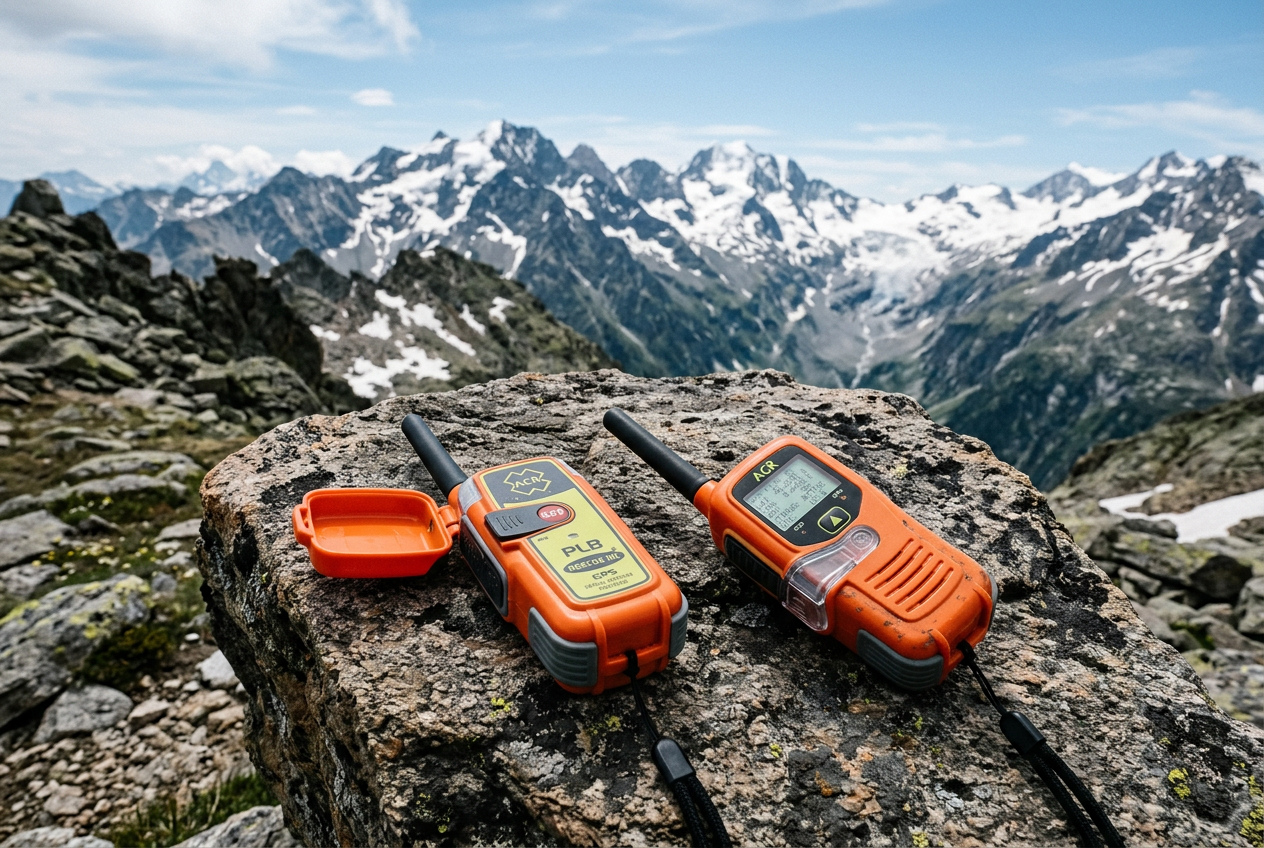
Sometimes you are far from help. No cell signal. No radio contact. You need to reach search and rescue right away. This is where a personal locator beacon, or PLB, comes in.
How a PLB Works
A PLB is a small device you carry with you. When you have a true emergency, you turn it on. The beacon then sends a distress signal through satellites. That signal reaches search and rescue teams. The beacon also sends your location so they can find you.
A PLB is not a phone. You cannot send a text or make a call. It does one thing. It tells rescuers you need help and where you are. Use it only in a real emergency.
Registration and Subscription
In most countries, the law requires you to register your beacon. This matters. When your beacon goes off, your registration tells rescue teams who you are. It may also list people they can call for your travel plans. Without that, a rescue can take longer to start. Registration is usually free and quick. Do it before you ever need the device.
Many PLBs need no monthly subscription. You buy the device, register it, and it is ready. There is no plan to pay for each month. That makes a PLB simple to own and keep on hand.
ACR ResQLink View
The ACR ResQLink View is a global SOS beacon. It works around the world and needs no subscription.
One standout feature is Return Link Service, or RLS. After you send a distress signal, RLS confirms that search and rescue received it. You get that confirmation right on the beacon. That can bring real peace of mind when you are waiting for help.
The device has a digital display. It also has an infrared strobe light. The strobe helps rescuers spot you, even in low light. The battery lasts up to 5 years in storage. Once you activate it, you get 28 or more hours of operating time. That is a long window for rescuers to reach you.
McMurdo FastFind 220
The McMurdo FastFind 220 is another trusted PLB. This version comes pre-programmed for the United States. It will work anywhere in the world. But if it is activated, US search and rescue would be the first point of contact.
If you live outside the US, the seller offers a different listing. That one includes a free reprogramming service for your country. Either way, you must register the beacon. The maker makes this point clear. Registration is required by law in most countries, and it helps rescuers know who you are.
Which One Fits You
Both beacons do the core job well. The ResQLink View adds RLS confirmation and a strobe. The FastFind 220 is a straightforward choice built around US registration. Pick the one that matches where you live and travel.
How to Choose the Right Setup for Your Home
Picking the right gear is easier when you go step by step. Start small. Add more only if your situation calls for it. Most households do not need every device. Match the tools to how you live and where you live.
Step 1: Start With a Weather Radio
A weather radio is the best first buy for almost everyone. It keeps you informed when the power is out and your phone is dead. The Midland ER310 can pull in NOAA weather alerts and AM/FM broadcasts. It has a hand crank and other power options, so you are not stuck if the batteries run low. For a household that just wants to know what is happening, a crank weather radio may be all you need.
Step 2: Add Two-Way Radios for Family Coordination
If your family gets separated during an emergency, radios help you stay in touch. This matters when cell service is down. Two-way radios let you check in without a network.
Pick based on where you will use them. If you have kids and want a simple set, the pxton 4-Pack is an easy choice for short distances around the house or yard. If you spend time near water or in rough weather, look at waterproof models. The Motorola Talkabout T605 is rated IP67 and floats face up. The Retevis RB48 is also IP67 and built to military durability standards. Range claims assume open space. Walls, hills, and buildings cut the distance a lot. Keep your expectations realistic in a town or city.
Step 3: Consider a PLB Only If You Travel Far
A personal locator beacon, or PLB, sends an SOS to search and rescue teams by satellite. This is powerful, but it is not for everyday household use. A PLB makes sense if you hike, boat, or live far from help. For a family in a normal neighborhood, it is usually overkill.
If you do need one, the ACR ResQLink View and the McMurdo FastFind 220 are both options. Note that PLBs must be registered. This is required by law in most countries. Registration lets rescuers know who you are if the beacon goes off.
Think About Power and Water
Two things matter across all these devices. First is power. Look for crank, solar, or rechargeable options so you are not left without a working device. Second is water resistance. If you face storms, floods, or spend time outdoors, pick waterproof gear. If you stay dry indoors, you can skip that feature and save the cost.
Keep It Simple
You do not need to buy everything at once. Start with a weather radio. Add radios if your family needs to stay in touch. Think about a PLB only if you travel or live far from help. A simple setup you understand beats a pile of gear you never learn to use.
Frequently Asked Questions
Do walkie talkies work without cell service?
Yes. This is the main reason they help in an emergency. Walkie talkies talk directly to each other over radio waves. They do not need cell towers, Wi-Fi, or the internet. If the power is out and your phone shows no bars, a two-way radio like the Motorola Talkabout T605 can still reach other radios nearby. Both radios just need to be turned on and set to the same channel.
What is the real range of FRS radios?
This is where many people get confused. Boxes often list big numbers like 25 or 35 miles. Those numbers only happen in perfect conditions. Think flat open land, water, or one hill to another with nothing in between. Real life is different. Walls, trees, hills, and buildings all block the signal.
In a town or city, your true range is often less than a mile. In the suburbs you may get a bit more. The radio makers say this themselves. The pxton walkie talkies note that range is best in open, unblocked areas and shorter where there are obstacles. So plan for short range around your home, not the big box number. Test your radios in your own area before you need them.
Do I need a license for these radios?
For the FRS radios in this guide, no license is needed. FRS stands for Family Radio Service. These radios use set channels and low power, so the FCC lets anyone use them without a license. The pxton pack, for example, lists an FCC ID, which shows it is approved for this use.
A license is only needed for more powerful radio types, like ham radio or some GMRS setups. Those are a different category and not covered here. For an ordinary household, the FRS radios in this article are license free and ready to use out of the box.
When is a personal locator beacon worth it?
A personal locator beacon, or PLB, does one job. When you set it off, it sends your location to search and rescue teams by satellite. It is not for chatting with family. It is for true life or death moments when no other help can reach you.
A PLB makes the most sense if someone in your home hikes, boats, hunts, or travels far from roads and cell towers. For those trips, a device like the ACR ResQLink View can call for rescue from almost anywhere. Some models need no subscription and have a long battery life.
If you mostly stay near town and already have radios and a weather radio, you may not need a PLB. Also note that in most countries you must register a beacon by law. Registration tells rescuers who you are and helps them respond faster. Do this as soon as you buy one.
Your Next Step
You do not need to buy everything at once. The smart move is to start small. Build your setup in layers. Each layer solves a different problem. Here is a simple plan any household can follow.
Start With a Crank Weather Radio
If you only buy one device, make it a crank weather radio. This is your first and most important tool. It keeps working when the power is out and your phone is dead. You can charge it by hand. You can hear NOAA weather alerts for your area. That means you get warnings even when cell service fails.
The Midland ER310 is a solid first pick. It has multiple power sources, a flashlight, and NOAA weather scan with alerts. For most homes, this covers the basics of staying informed during a storm or outage.
Add Two-Way Radios If You Need to Coordinate
The next layer depends on your household. Do you have family members who may be apart during an emergency? Kids walking home from school? Someone checking on a neighbor? If so, two-way radios help you stay in touch when phones go down.
For a simple, budget option, the pxton 4-pack gives you four rechargeable radios. That works well for a family. If you want waterproof radios that float, look at the Motorola Talkabout T605 H2O. For the toughest build, the Retevis RB48 is rugged and IP67 waterproof. Pick based on how and where you will use them. Remember that range depends on your surroundings. Buildings and hills shrink the distance.
Add a Beacon Only for Specific Needs
A personal locator beacon, or PLB, is not for everyone. Most households do not need one. A PLB is for people who travel to remote places or live far from help. If you hike, boat, or spend time off the grid, a beacon can call for rescue where no cell signal exists.
If that fits you, the ACR ResQLink View and the McMurdo FastFind 220 are both options. Keep in mind that registering a PLB is required by law in most countries. Do not skip that step.
A No-Cost First Action
Before you spend anything, do one free thing today. Check NOAA weather radio coverage for your area. Not every location gets a strong signal. This tells you if a weather radio will work well where you live. It also helps you decide which features matter most.
Then pick your first purchase. For most homes, that is a crank weather radio. Start there. Add two-way radios if your household needs to coordinate. Layer in a beacon only for travel or remote living. Build step by step, and you will be ready when the grid or cell service fails.
Sources and Further Reading
- 5 Factors to Consider When Designing an Emergency …
- DA-25-208A1.pdf
- Emergency Communication Preparedness - An Introduction
- Communicating During Emergencies: 3 Dos and 3 Don’ts
- Communication Systems for Hazardous Emergencies