Ready
When Governments Urge Households to Be Ready: A Calm, Practical 3-Day Prep Plan (2026)
Maybe you saw the headlines in late October 2026. The UK launched a campaign called “Be Ready.” It urged households to keep three days of food, water, cash, and a wind-up radio on hand. Around the same time, the Pentagon directed military bases to plan for running off the grid for an extended period. News of these moves spread fast. Some stores even sold out of wind-up radios.
If that made you a little uneasy, take a breath. This is not a reason to panic. It is not a signal to rush out and buy everything in sight. Governments ask people to prepare all the time. The goal is simple. If everyday life gets disrupted for a few days, you want your household to be calm and ready.
The good news is that getting ready does not mean hoarding. It does not mean spending a fortune. Most of what you need, you may already have at home.
This article gives you a clear, calm 3-day plan. We will cover water, food, power, staying informed, cash, and a simple family plan. You will find free steps you can take today and a few useful products if you want them. At the end, there is a plain checklist you can follow. You do not need to do it all at once. Start small, and you can finish this week.
- When officials ask households to be ready, aim for a simple 3-day supply of water, food, and power.
- Store at least 1 gallon of water per person per day, so a family of four needs about 12 gallons for 72 hours.
- Keep a way to hear official alerts even if the power and cell service go down.
- Pack one grab-and-go bag per household so you can leave quickly if told to evacuate.
- Have a backup plan for safe drinking water in case tap water is not usable.
One practical preparedness move each week. No fear-mongering, ever.



Reviewed by Elena V., Priya K. & Ryan C. — contributors with hands-on preparedness experience. How we test
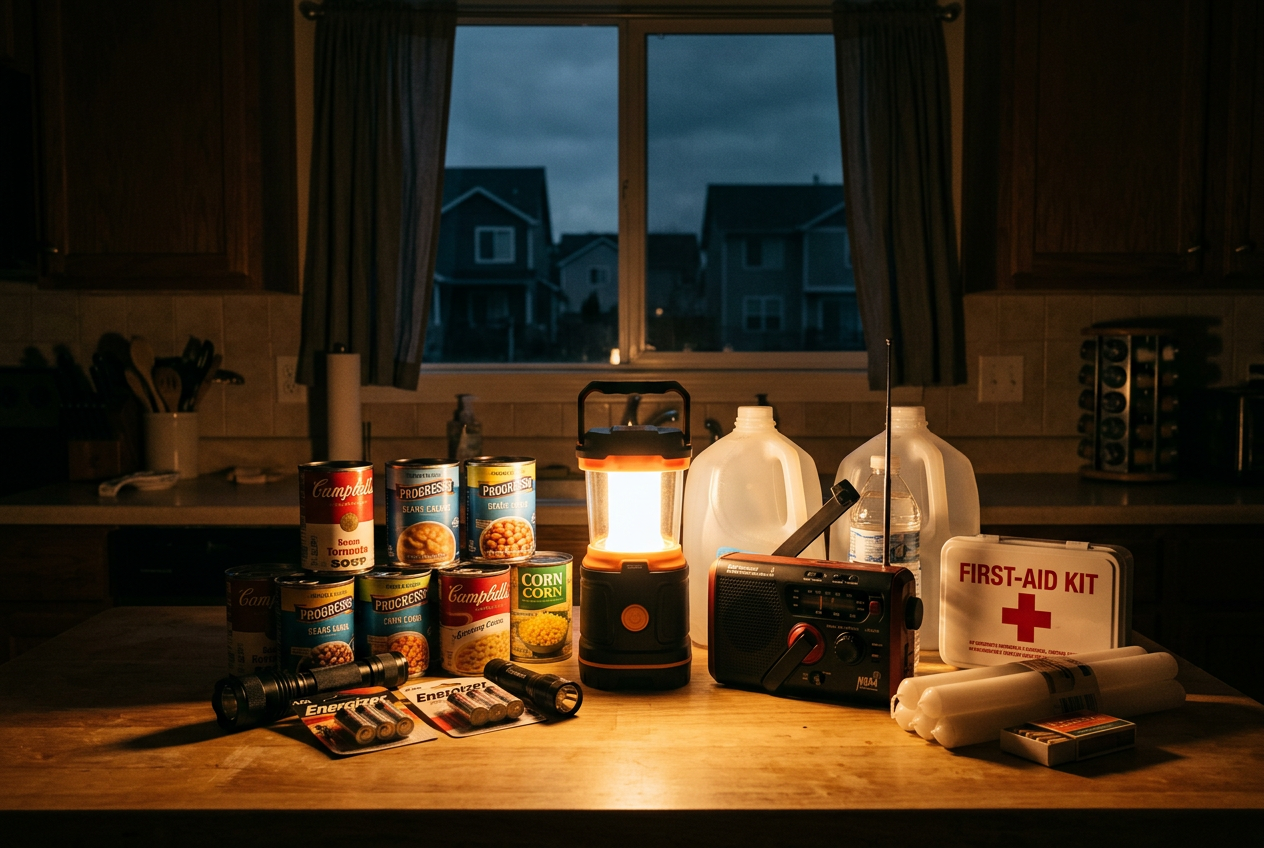
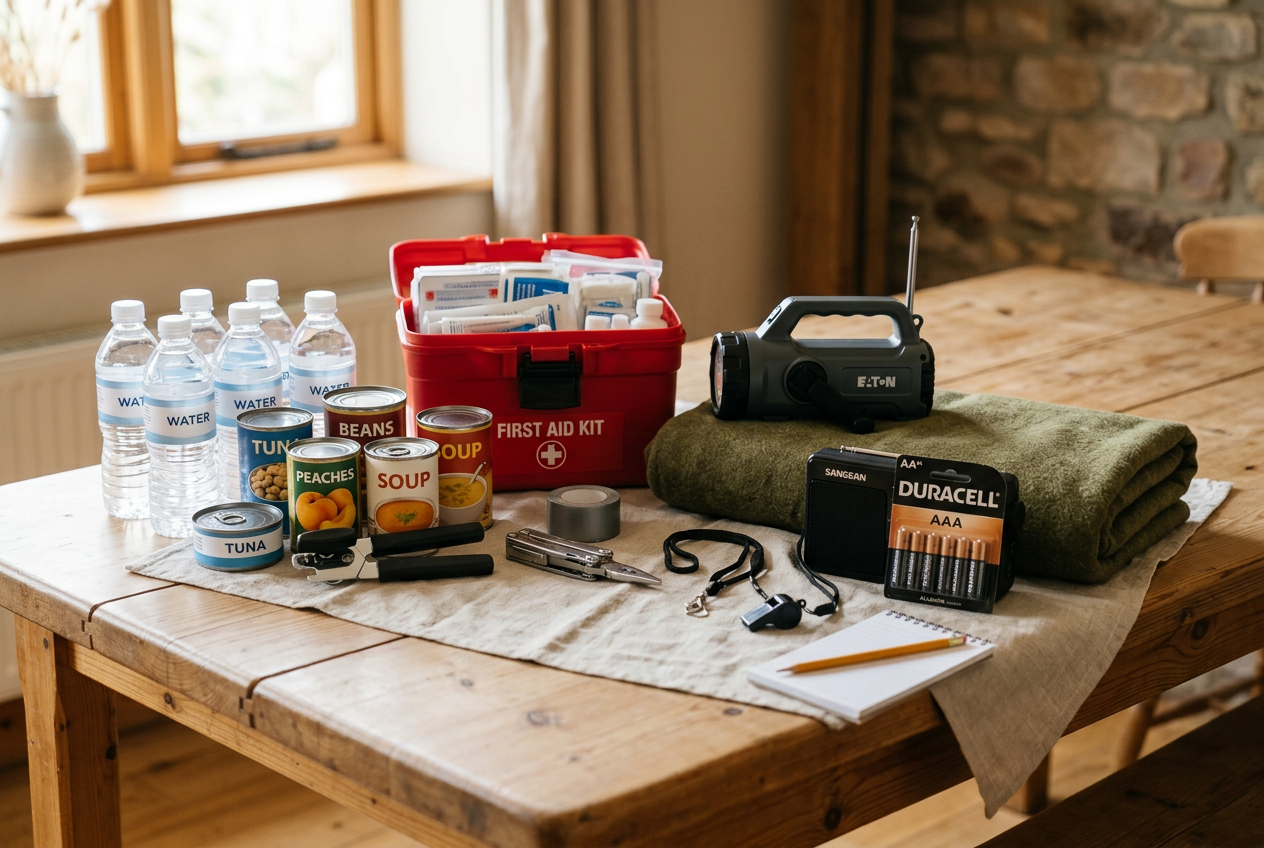
Getting ready starts with a few key items in your home. Grab these first, then read on to see exactly how each one helps.

FosPower NOAA Emergency Radio
It picks up AM, FM, and weather band broadcasts so you still get official alerts when the power is out. It also hand cranks or charges by solar, works as a flashlight, and can top off a phone.
Check Price on Amazon
72 Hour 4-Person Survival Kit
This 211-piece kit covers food, water, first aid, and shelter for a family of four for 72 hours or more. It is already organized so you can grab it and go the moment you need to leave.
Check Price on Amazon
Emergency Water Filter Straws
Each straw removes over 99.99% of waterborne bacteria and parasites, giving you safe drinking water if the tap is not trustworthy. The 5-pack means every family member has their own, with a long 1800-gallon lifespan.
Check Price on AmazonIn this guide
Why Trust This Guide?
This article was researched and reviewed by contributors with hands-on experience in emergency preparedness. They have tested gear, built real systems, and lived through situations where these skills actually mattered.
Why the Warnings, and Why 3 Days Is the Right Target
You may have seen the news. In October 2026, the UK launched a campaign called “Be Ready.” It urges households to keep three days of food, water, and cash on hand. News reports tied the push to weather events, cyberattacks, and supply chain worries. Around the same time, reports said the Pentagon asked major U.S. military bases to plan for up to 90 days without the power grid.
That sounds dramatic. It is easy to feel uneasy. But take a breath. The military planning for bases is a different job than planning for your home. A base runs critical operations for a nation. Your household has a much simpler goal. You want to stay safe and comfortable for a few days if normal services pause.
What “72 hours” really means
“72 hours” is just three days. That is the target most experts point to for home readiness.
Here is the idea in plain words. Most disruptions are short. A storm knocks out power. A water main breaks. A road closes. A system goes offline for a while. In most cases, services come back, or help arrives, within the first few days. Three days of supplies helps you ride out that gap without a scramble.
Three days is not a magic number. It is a reasonable starting point. It is small enough to finish this week. It is large enough to cover the most common bumps. If you want to build past three days later, you can. But three days is a solid, calm first goal.
The advice does not change with the cause
Notice something about the guidance. Whether the worry is a storm, a flood, a cyber problem, or a supply hiccup, the basic advice stays the same.
Government and Red Cross guidance all point in one direction. Store some water. Keep food you do not have to cook. Have a way to get alerts. Keep a little cash. Make a simple family plan. FEMA’s Ready.gov says to know your risks and plan ahead. The Red Cross says to sign up for local alerts and keep a battery radio handy. The specific headline may change. The steps you take do not.
This is good news. You do not need to guess which disaster to prepare for. The same short list covers most of them.
Separate the news from the habit
So treat the current headlines and your prep plan as two different things.
The news is the reason you are reading today. That is fine. But the habit is what protects you. A small, steady kit does its job no matter what the next headline says. You are not reacting to one scary story. You are building a calm baseline that lasts.
The rest of this guide walks you through that baseline, step by step.
Water First: Store, Then Have a Backup Filter
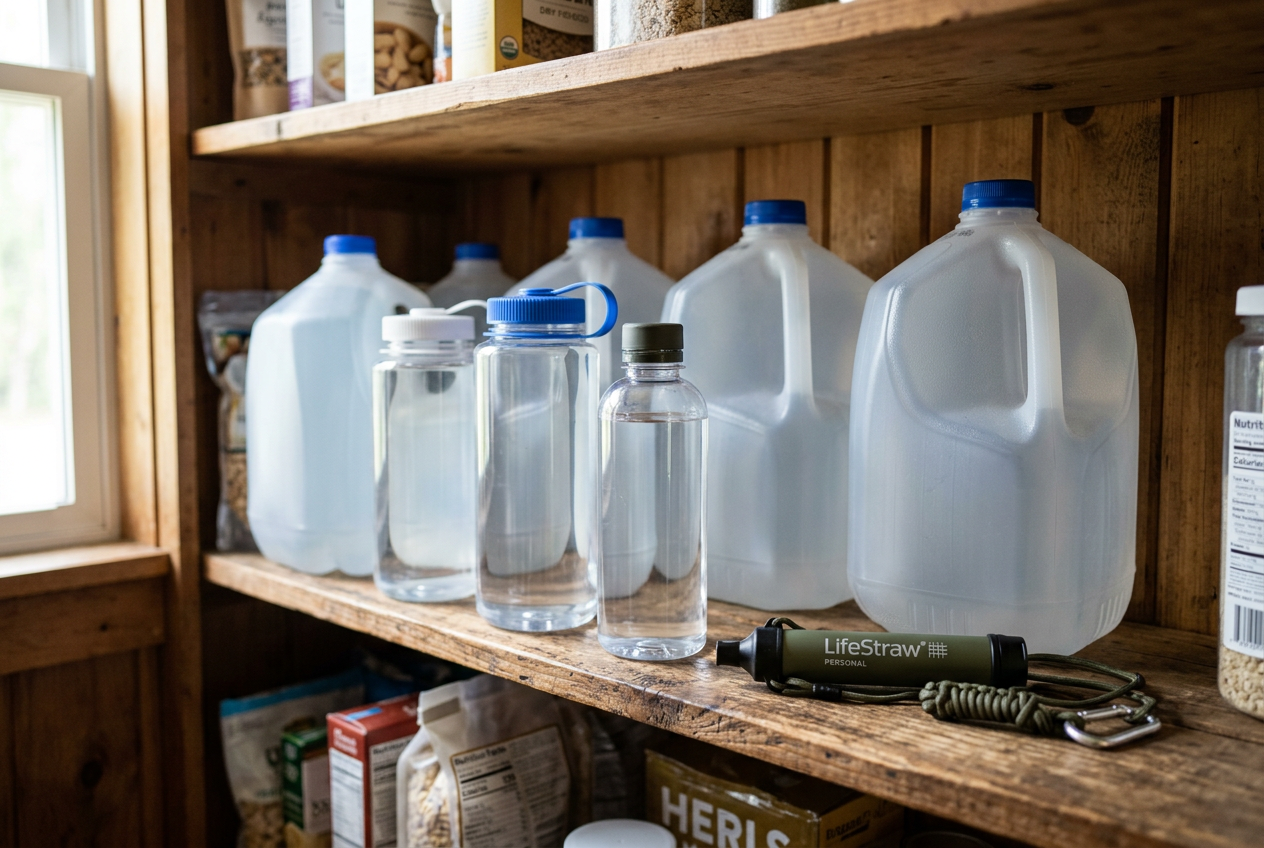
Water is the first thing to handle. You can start right now, with no shopping trip.
Fill Containers Today
Plan for about one gallon of water per person per day. Aim for three days. So one person needs about three gallons. A family of four needs about twelve gallons. Add a little more for pets.
You do not need fancy jugs. Clean containers you already own will work. Rinse them well first. Many people use large drink bottles or food-grade jugs. Fill them with tap water, seal them tight, and store them somewhere cool and dark.
Label each container with the date. Keep some water near your kitchen and some where you might shelter during a storm. Spreading it out helps if one spot becomes hard to reach.
This step costs nothing but a few minutes. It is the single best thing you can do today.
Why a Filter Is a Smart Backup
Stored water can run low. Tap water can also become unsafe during some emergencies. A small water filter straw is a light, simple backup for these moments.
A filter straw lets you drink directly from a water source. You sip through it, and it cleans the water as it passes. These straws are small and easy to tuck into a bag or drawer.
One popular option is the LifeStraw personal filter. The maker says it removes over 99.999 percent of waterborne bacteria, like E. coli and salmonella. It also removes parasites like Giardia and Cryptosporidium. The company says its claims are tested using standard lab protocols.
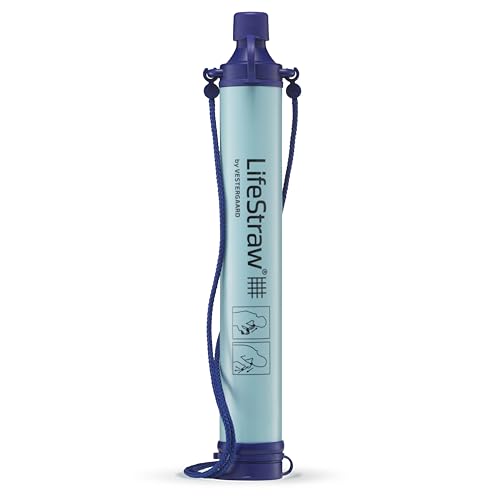
If you want more than one, a multi-pack can cover each person in your home. The Practical Survival 5-pack is one choice. The maker lists a high-capacity lifespan and says each straw removes over 99.99 percent of bacteria and parasites, down to very small sizes.
What These Straws Can and Cannot Do
It helps to know the limits. These straws filter out bacteria and parasites. They do not make all water safe to drink.
They are not built to remove viruses. They do not remove chemicals, heavy metals, or salt. So do not drink salt water or water near chemical spills through them.
Stored tap water is still your best drinking source. The filter is for when that runs out and your only option is a lake, stream, or rain barrel.
Learn More
Storing and treating water has more layers than one section can cover. We have deeper guides on safe water storage and on purification methods like boiling. Start with filling containers today. Add a filter as a backup. That two-step plan covers most households well.
Food You Already Have (No Hoarding Required)
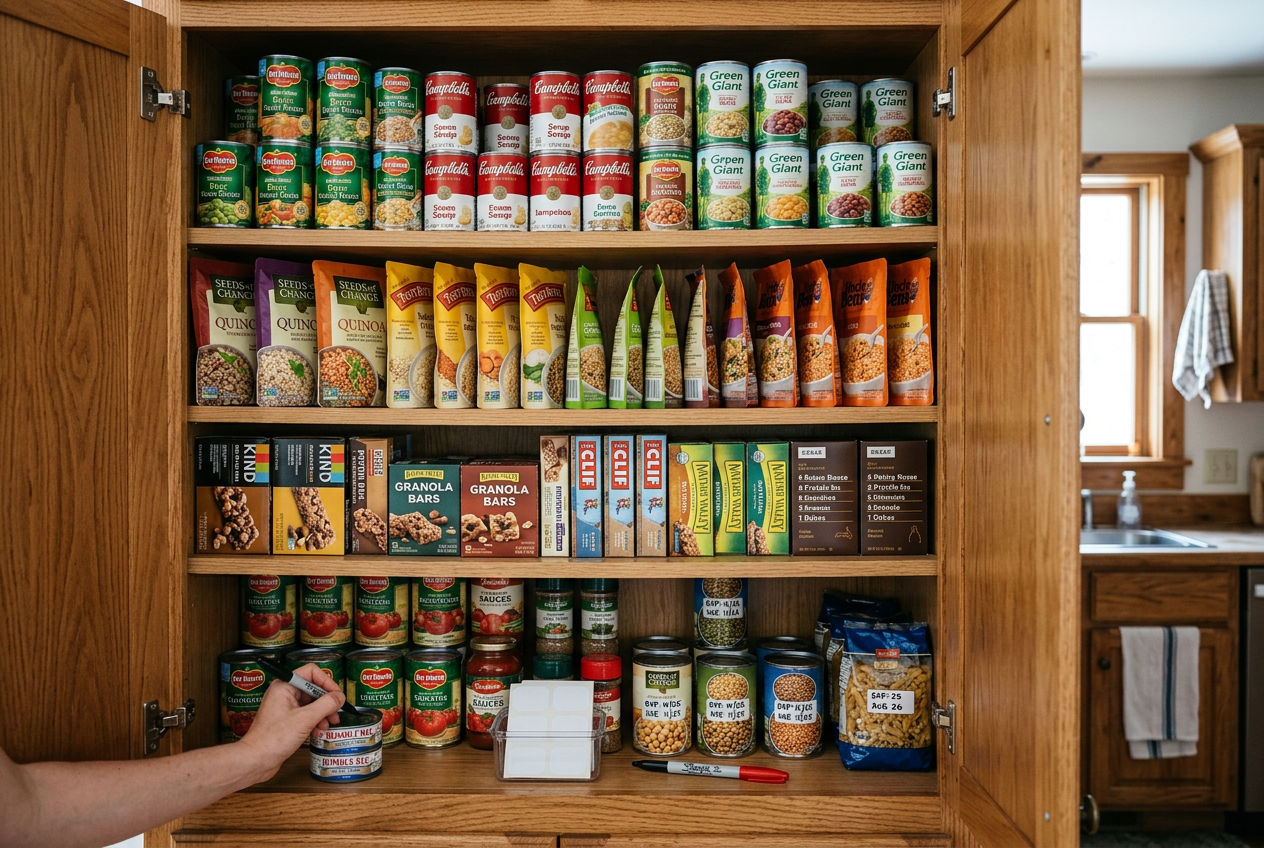
You do not need to clear the shelves. Three days of food is a small, reachable goal. Most of it is probably in your kitchen right now.
The UK’s new “Be Ready” campaign points families toward a three-day supply. The good news is that three days is easy. You can build it from normal groceries you already buy and eat.
Pick Foods That Need No Cooking or Fridge
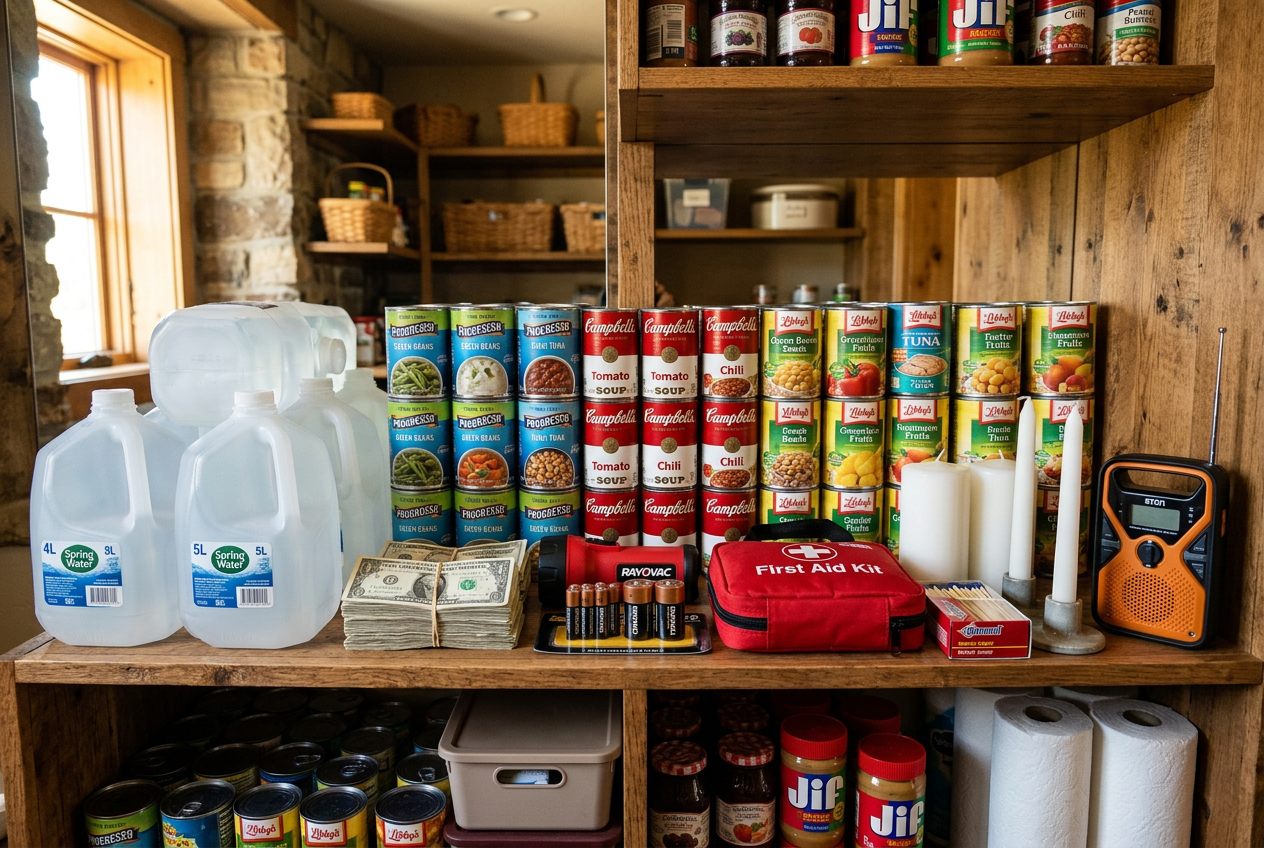
During a power outage, your stove and fridge may not work. So focus on food you can eat cold, straight from the package. Think about items like these:
- Canned beans, chili, soup, and vegetables
- Canned tuna, chicken, or salmon
- Peanut butter and jars of nut butter
- Crackers and dry cereal
- Granola bars and trail mix
- Dried fruit and nuts
- Canned fruit
- Shelf-stable milk or plant milk boxes
Keep a manual can opener in the same spot. An electric one will not help when the power is out.
Pick foods your family already likes. An emergency is not the time to test new meals. If someone has allergies or special needs, plan around them now.
Buy One or Two Extra, Not a Cart Full
The simplest way to build a supply is to shop like you always do. Just grab one or two extra of the things you already use. One extra jar of peanut butter. A couple more cans of soup. Over a few shopping trips, your three-day supply grows on its own.
This slow method keeps store shelves stocked for everyone. Panic-buying causes shortages. Calm, steady shopping does not.
Rotate So Nothing Goes to Waste
Food does not sit in a box forever. The trick is to use it and replace it.
Put your emergency items in the front of your pantry. Eat the oldest ones first in your normal meals. Then buy fresh ones to take their place. This is called “first in, first out.” Done this way, your supply stays fresh, and you never throw food away.
Check dates a couple of times a year. A good habit is to check when the clocks change.
A Grab-and-Go Option
Some households want food and basic supplies ready in one bag. A pre-built kit can be a simple starting point, and you can add your own extras later.
One option is an all-in-one kit built for four people. It includes food and water rations, an 85-piece first-aid kit, and shelter and warmth items. The maker says it exceeds Red Cross guidelines for preparedness.

A kit like this is handy if you may need to leave fast. But remember, the rations are basic. For comfort at home, your own pantry food will go further and taste better.
Keeping the Lights On and Devices Charged
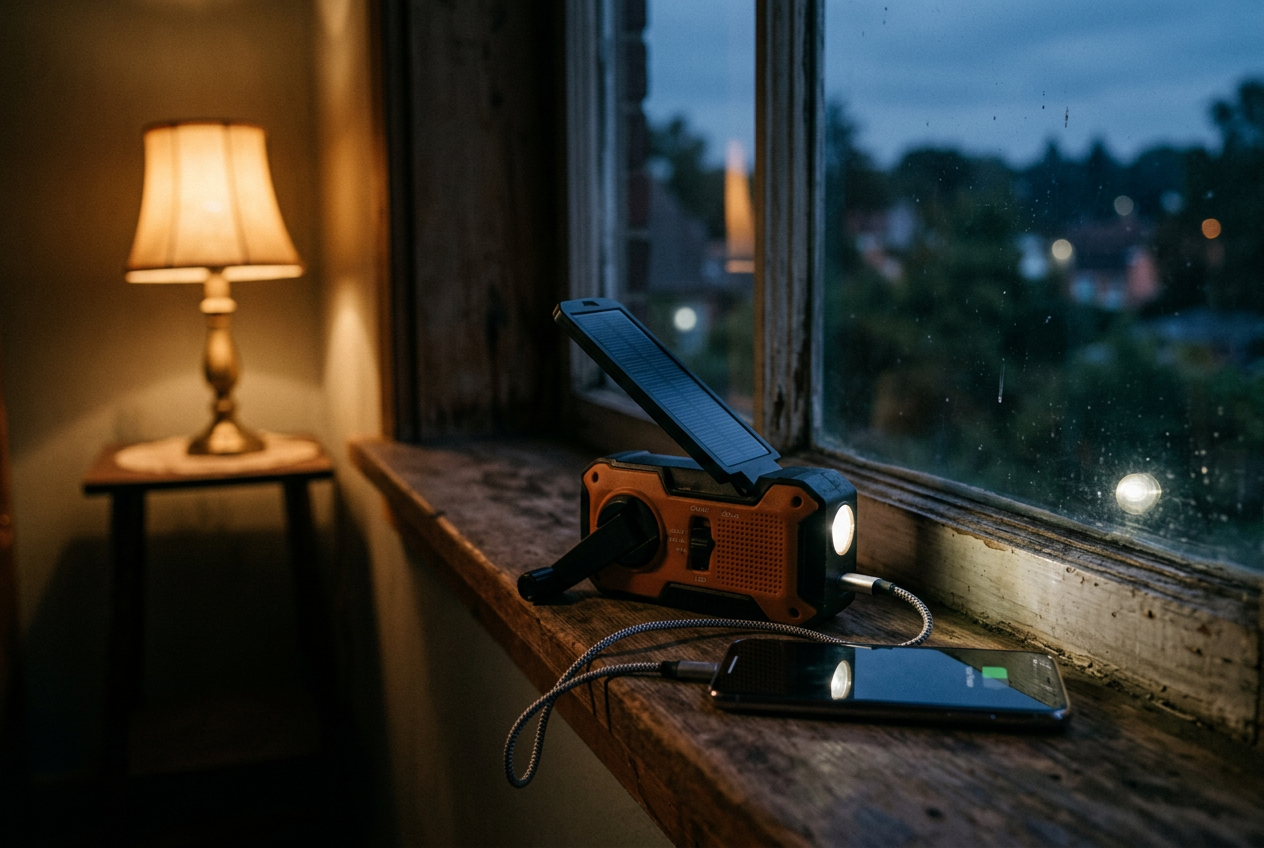
When the power goes out, the first thing most people reach for is their phone. But a dead phone is just a brick. And if the power stays off for a while, your charger at the wall is useless too. This is why a backup power source matters. You want a way to make your own power, even when the grid is down.
Cell networks can go down as well. During big storms or outages, towers may lose power or get overloaded. So you need more than one way to stay informed and stay in touch. A small, self-powered device can cover a lot of needs at once.
Why Hand-Crank and Solar Power Help
A hand-crank or solar power source does not need the grid. You turn a crank with your hand, or you set the panel in the sun. Either way, you make a little power. That power can run a radio, a light, and give your phone a small top-up.
This is the smart part. One device can handle three jobs. It gives you light when the room is dark. It gives you news and weather from the radio. And it gives you a short boost for your phone. You do not need to buy three separate things.
One Device, Three Jobs
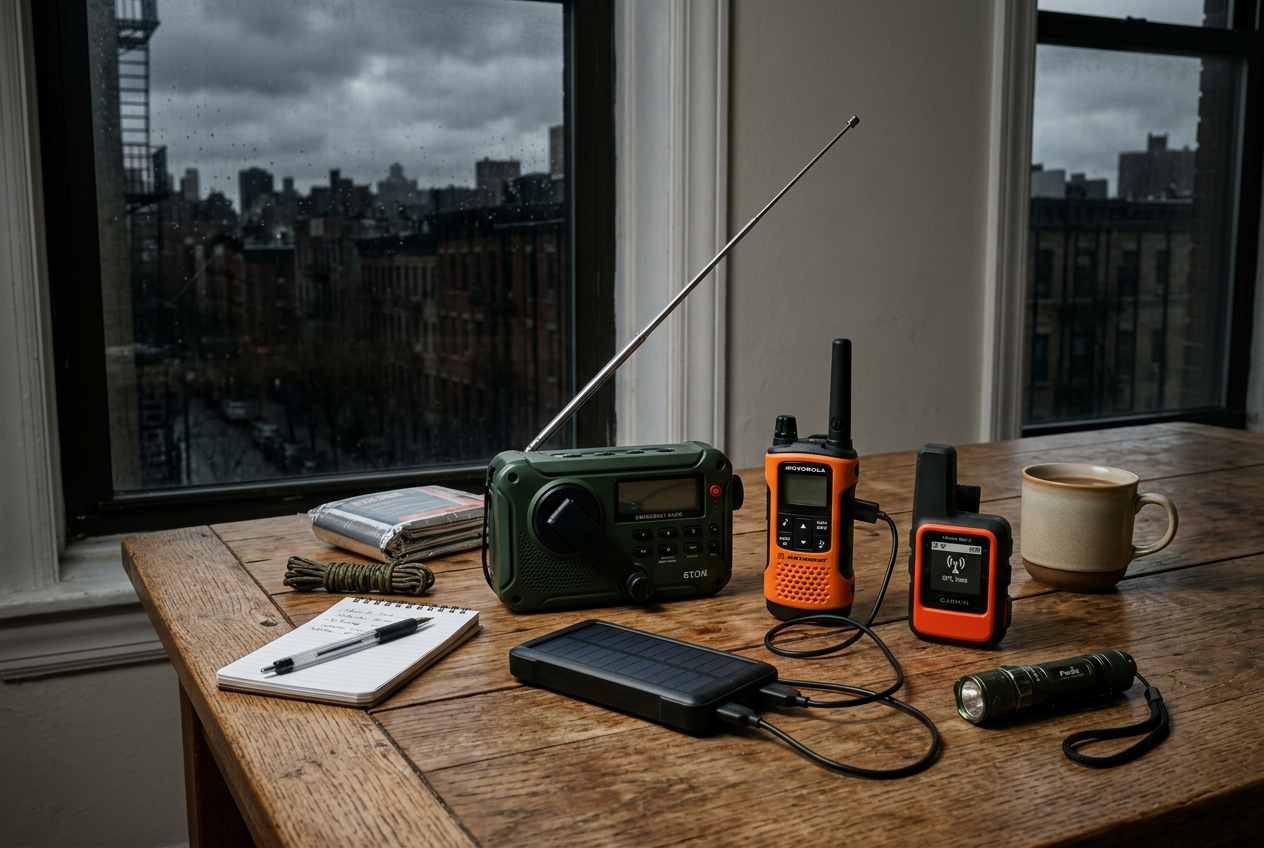
Here is a good example of this kind of tool. It has a built-in power bank, a flashlight, a reading light, and an NOAA weather radio. You can charge it with the crank, the solar panel, or AAA batteries. That means you always have a way to keep it running.
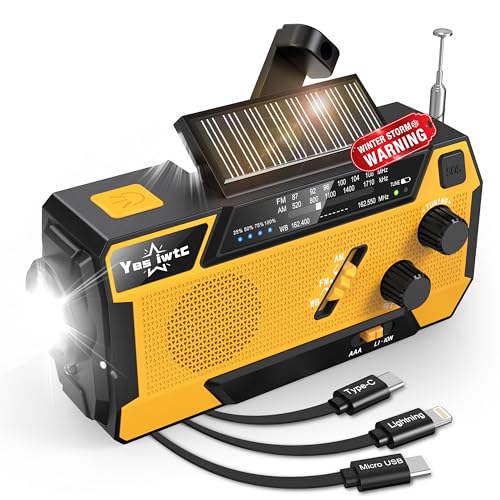
Another option comes with three charge cables built right in. That is handy because you never have to hunt for the right cable. It has a Lightning cable, a USB-C cable, and a Micro USB cable, so it works with most phones. It also gets NOAA weather alerts and runs on a crank, solar, USB-C, or AAA batteries.
Set Your Expectations
Here is the honest truth about cranking. A crank charge is a small boost, not a full phone charge. You might crank for several minutes just to get a short burst of battery. That is enough to send a text or make a quick call. It is not enough to stream video for hours.
So think of the crank as your backup to the backup. For a real charge, let the solar panel work in daylight, or charge the power bank fully before any storm hits. Then you start your outage with power in hand.
Keep the device somewhere easy to grab. A dark closet is no help if you cannot find it in the dark. Set it on a shelf you can reach, and make sure the family knows where it lives.
Staying Informed: NOAA and the Wind-Up Radio Rush
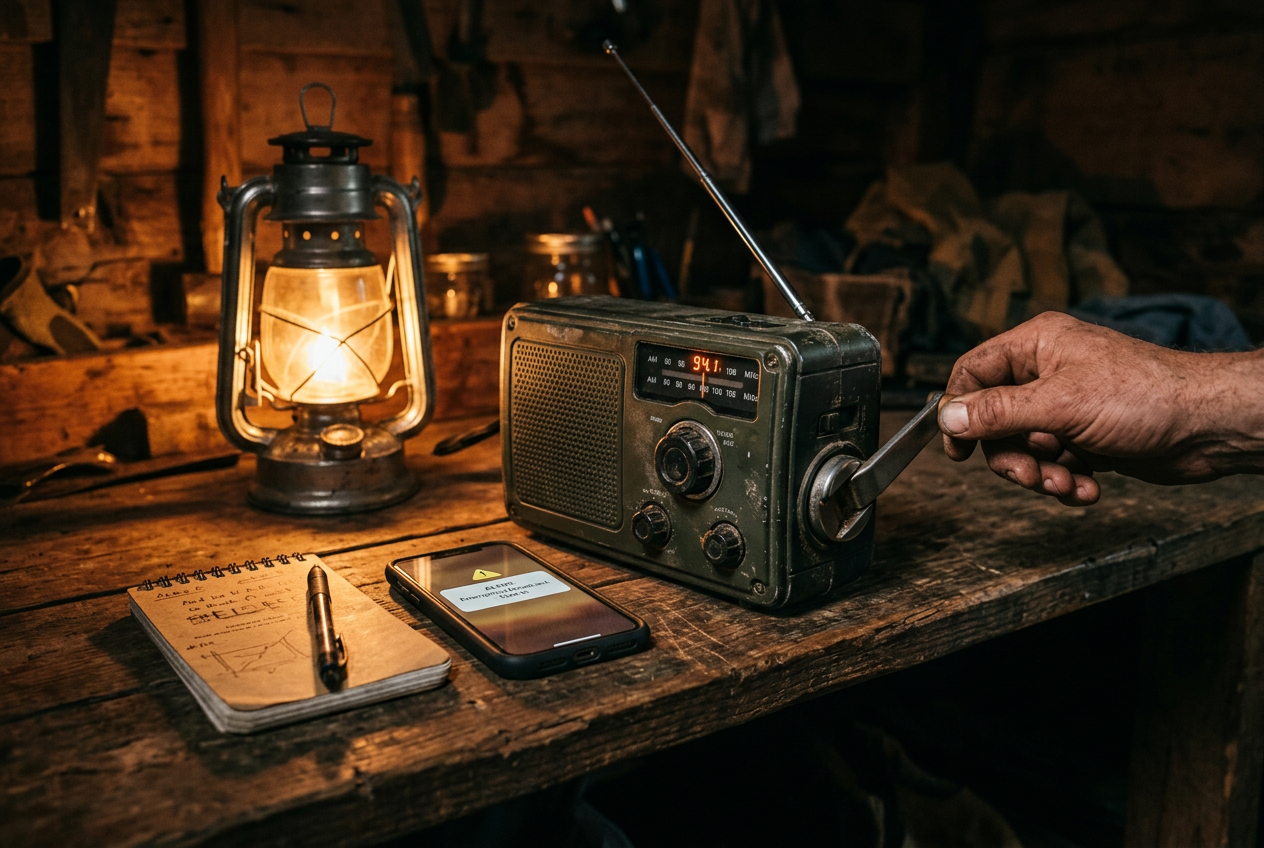
When the UK launched its “Be Ready” campaign, something interesting happened. Wind-up radios started selling out. News reports noted the sudden rush as households looked for a way to stay informed during an emergency. You do not need to panic-buy. But a reliable radio is a smart, simple tool to have at home.
Why a Radio at All?
In a power outage, your phone may still work for a while. But cell towers can go down. Your battery will drain. Websites can crash, as recent cyber disruptions showed. A radio does not depend on any of that. It pulls signals straight from the air. That makes it one of the most dependable ways to get news when everything else fails.
What NOAA Weather Bands Do
NOAA stands for the National Oceanic and Atmospheric Administration. In the United States, NOAA runs a network of radio stations that broadcast weather and emergency information all day, every day. A radio with NOAA bands can tune into these broadcasts directly.
This matters because NOAA alerts cover storms, floods, and other local hazards. You hear the warning as soon as it goes out. You do not wait for it to show up online.
Why Battery-Free Matters
A regular radio needs batteries. When those run out, the radio is useless. A wind-up or hand-crank radio solves this. You turn a small crank and it makes its own power. Many of these radios also charge with solar panels. Some can even charge your phone in a pinch.
Here is one option that covers the basics. It receives NOAA, AM, and FM signals. It charges three ways: hand crank, solar panel, and stored battery. It also has a flashlight and a USB port to charge a phone.

Think of a radio like this as your backup when the grid goes quiet. You crank it, you listen, and you stay informed.
For a closer look at how different models compare, see our dedicated emergency radio review.
Sign Up for Free Local Alerts
A radio is one layer. Free alerts are another. Most local governments offer emergency alerts by text or email. These tell you about dangers in your exact area. To find yours, search your city or county name plus “emergency alerts.” Sign up today while you are thinking about it. It takes just a few minutes and costs nothing.
How to Avoid Fake Alerts
During a crisis, bad information spreads fast. Scammers and rumors can cause real harm. Stick to trusted sources. Listen to NOAA broadcasts and official local channels. Check alerts against your city or county website. If a message asks for money or personal details, treat it as a scam. Real emergency alerts never ask you to pay.
Stay calm. Stay tuned to real sources. That is how you stay ahead.
Cash, Documents, and a Simple Family Plan
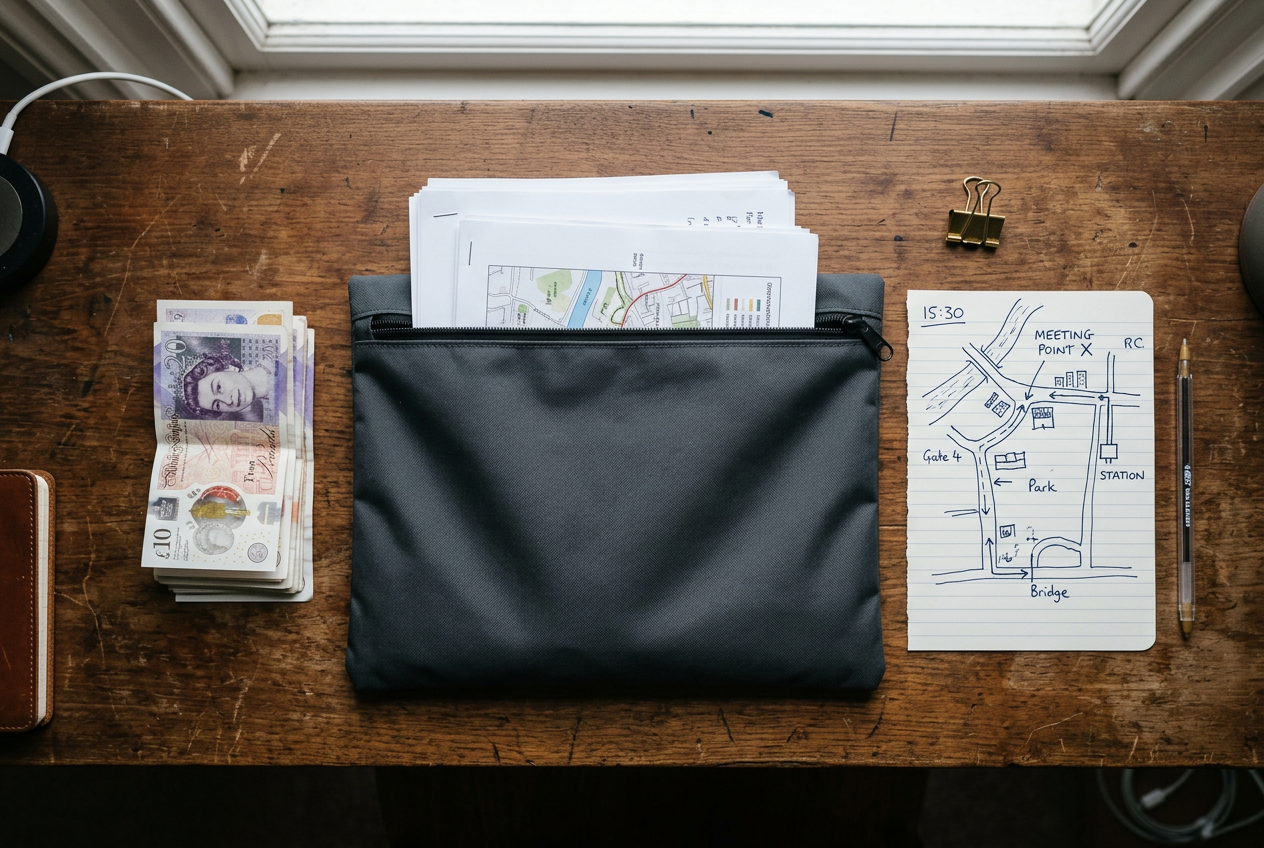
This part costs you little or nothing. It just takes an hour of your time. The recent UK “Be Ready” campaign urged households to keep some cash on hand along with food and water. The reason is simple. When power or internet goes down, card readers and ATMs can stop working too. Here is how to get ready in three easy steps.
Keep a Little Cash at Home
Set aside a small amount of cash where you can reach it fast. Use small bills and some coins. During an outage, a shop may not be able to make change for a large bill. You are not trying to fund a long crisis. You just want enough to cover a few basics for a day or two. Think gas, food, or a quick supply run.
Store the cash in a safe, dry spot. A sealed envelope in a drawer works. Do not tell many people where it is. Check it now and then so you remember it is there.
Protect Your Key Documents
If you had to leave home in a hurry, which papers would you need? Start by making a short list. Most people want copies of:
- Photo ID and passports
- Insurance papers
- Birth certificates
- Medical info and a list of medicines
- Bank and account details
Keep the originals in one safe place. Then make copies. You can do this two ways, and both are free. First, snap clear photos with your phone and save them to a secure cloud account. Second, keep paper copies in a sealed plastic bag with your kit. If your phone dies, the paper copies still work.
Write a One-Page Family Plan
Your plan does not need to be fancy. One page is plenty. You can write it by hand. Cover three simple things.
A meeting point. Pick a spot where your family will gather if you get split up. Choose one near home, like a neighbor’s house or a corner. Pick a second spot farther away in case you cannot get home.
An out-of-area contact. Choose one person who lives in another town. During a local emergency, it can be easier to reach someone far away than someone close by. Everyone in your family should know this person’s number. Write it down. Do not count on your phone’s memory alone.
Who grabs what. Decide ahead of time. One adult grabs the kit. Another grabs the kids or pets. Spell out these small jobs now so no one freezes later.
Share the plan with everyone in your home. Talk it through once so it sticks. You do not need a printed form from anyone. You can print this page or just write the plan on a sheet of paper and tape it inside a cabinet. That is it. A calm plan beats a rushed one every time.
Pre-Built 72-Hour Kits Compared
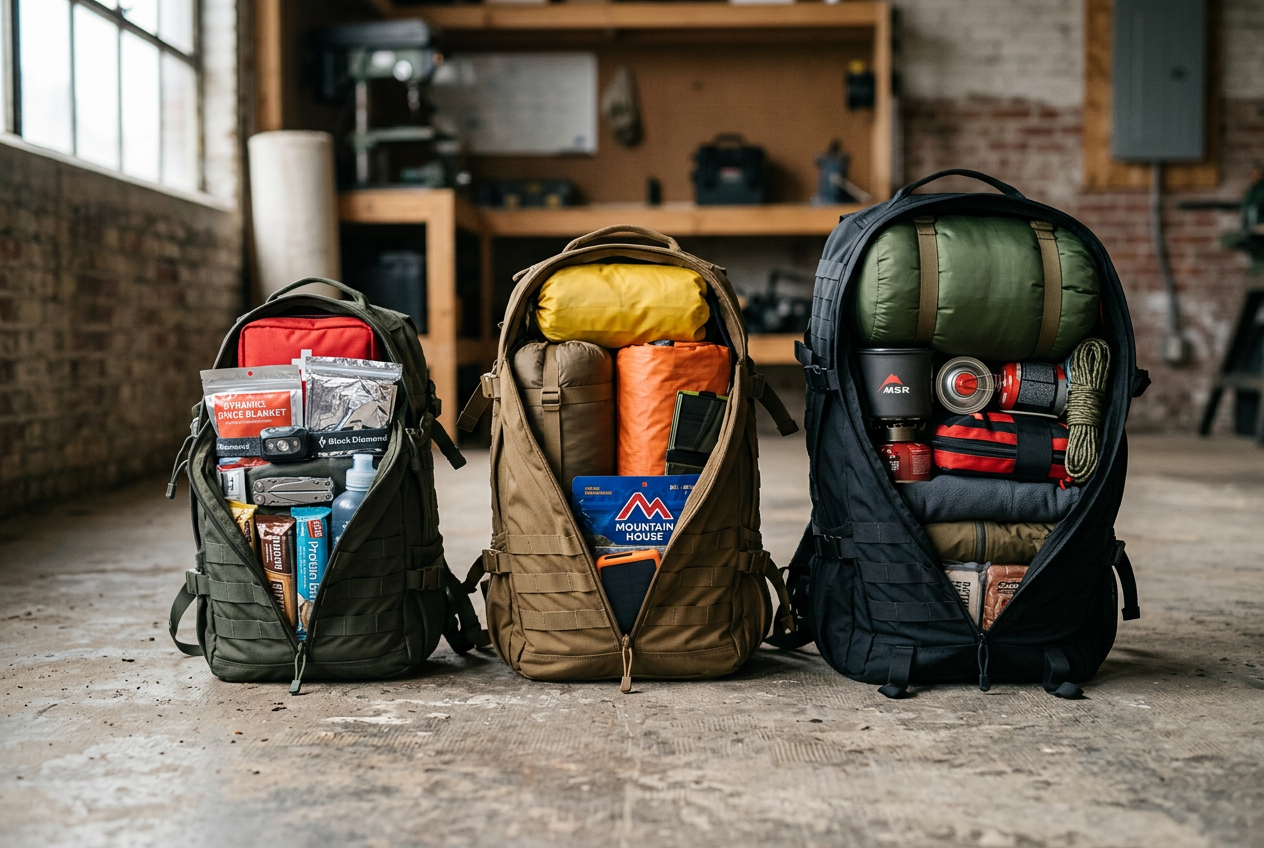
Some people like to build their own kit, piece by piece. Others want one box that is ready to go. A pre-built 72-hour kit can save you time. It gathers food, water, shelter, and first aid in one pack. This is helpful if you are new to all of this.
Below are two ready-made kits for households. One is built for up to four people. The other covers up to five people. Both aim to cover about three days, which lines up with the current “Be Ready” advice.
THE Quad 4-Person Kit
This kit is built for a family of up to four people. It is a large 211-piece pack. It includes emergency food, drinking water, and water filtration gear, plus purification tablets. It also comes with a first aid kit. For shelter, you get heat-reflective tents, sleeping bivies, emergency blankets, and ponchos. That makes it a good fit if you want both home and evacuation options in one bag.
Stealth Angel 5-Person Kit
This kit covers up to five people, so it suits a bigger household. It packs the essential emergency items into a backpack. The maker offers sizes from 1 person up to 5 people, so you can match it to your family. It was designed using advice from preparedness experts and follows guidelines from government agencies and non-profit groups.

What No Kit Includes
A pre-built kit is a strong start, but it is not the whole plan. No kit knows your family. You will still need to add a few things yourself.
- Cash in small bills, since card systems can go down.
- Copies of key documents, like IDs and insurance papers.
- Any medicine your family takes.
- Items for babies, older adults, or pets.
- A wind-up or battery radio if the kit does not have one.
Check and Personalize Every Kit
Do not just store a kit and forget it. Open it when it arrives. Read what is inside. Make sure the sizes fit your family. Check expiration dates on food and water, then mark a date to review them again.
Water needs vary by person, climate, and activity. A kit may not hold enough for everyone, so plan extra water on your own. Treat any pre-built kit as a base layer. Build your plan around it, and it will serve you well.
Your Calm 3-Day Action Checklist
Here is the good news. Getting ready for three days does not take a weekend. Most of these steps take only a few minutes. Many cost nothing at all. Work through the list below this week. Do one item today, and come back for the rest.
You can print this page and check off each item as you go.
1. Fill water for three days
Aim for about one gallon per person per day. Clean, used drink bottles or food-grade jugs work fine. Fill them from the tap and store them somewhere cool and dark. This takes about ten minutes.
Want a backup in case stored water runs low? A small filter straw can make questionable water safer to drink. The LifeStraw Personal Water Filter is a well-known option you can tuck in a drawer.
2. Set aside three days of food
You likely already have what you need. Pull together shelf-stable items you actually eat. Think canned beans, soup, peanut butter, crackers, and pasta. Pick foods that need little or no cooking. Put them in one spot so you can find them fast. No hoarding, no panic buying.
Keep a manual can opener nearby. A battery or electric opener is useless in an outage.
3. Charge a radio and a power source
Phones die fast in an outage. Charge a power bank now so it is ready. A hand-crank emergency radio gives you weather updates and a backup charge without the grid. The Hand Crank Emergency Radio includes built-in charging cables, so you will not hunt for cords during a storm.
4. Pull out a little cash
Card readers and ATMs can go down. A small amount of cash in small bills can cover basics like fuel or groceries. You do not need a large sum. Keep it somewhere safe at home. This takes one stop at the bank or ATM.
5. Sign up for alerts
Free alerts tell you when something is happening in your area. Sign up for your local government’s emergency alerts. Download the FEMA App for weather and emergency warnings. This takes a few minutes on your phone and costs nothing.
6. Write a one-page plan
Keep it simple. On one sheet of paper, write down:
- Where your family will meet if you get separated
- One out-of-town contact everyone can call or text
- Who picks up kids or helps older relatives
- Where your water, food, and radio are stored
Talk it through once with your household. Put a copy where everyone can find it.
That is it. Six steps, mostly free, most done in minutes. You do not need to buy a mountain of gear or clear the store shelves. Start with water today. Finish the rest this week. Then you can relax, knowing you are ready for three days.
Frequently Asked Questions
Does a government warning mean something bad is about to happen?
No. A campaign like the UK “Be Ready” effort is about long-term planning, not a specific threat. The UK launched it as a three-year program. In the US, agencies like FEMA and Ready.gov share the same message every year during National Preparedness Month. The goal is simple. They want households to be ready for everyday problems like storms, power outages, and short supply disruptions. Getting ready now is smart. Panicking is not needed.
How much water and food do I really need?
A good starting target is three days. That is the amount these campaigns point to. For water, a common rule is about one gallon per person each day. So a family of four would want roughly 12 gallons for three days. For food, you likely have enough already. Focus on shelf-stable items you can eat without cooking. Think canned goods, peanut butter, crackers, and dried fruit. You do not need special survival food. You just need to know what is in your pantry. For more detail, see our sections on storing water and using food you already have.
Do I need to panic-buy or stockpile?
No. Panic-buying makes shortages worse and often leads to wasted money. The news reported wind-up radios selling out fast after the UK campaign launched. That is a sign of rushing, not planning. You do not need to buy everything today. Start small. Fill a few water containers this week. Set aside some pantry food. Add one item at a time. Three days of basics is the goal, not a bunker full of supplies.
What about my pets?
Your pets need a plan too. Set aside three days of pet food and water for them. Keep it with your other supplies. If you have a cat, remember litter. If you have a dog, keep a spare leash handy. Write down your vet’s phone number. Pets count as part of your household when you figure out how much food and water to store.
What about medications?
Medications matter during any disruption. Try to keep a few days of any prescription on hand. Ask your pharmacy if you can refill a little early. Keep a written list of your medicines, doses, and your doctor’s contact info. Store that list with your important papers. See our section on cash, documents, and a simple family plan for how to organize these records.
What is the single first step I should take?
Make a plan with your household. Talk about what you would do if you had to stay home or leave quickly. This costs nothing. From there, fill some water containers and check your pantry. You can print this page and use our action checklist to track your progress. Small steps this week add up to real readiness.
The Bottom Line: Start Small, Finish This Week
Here is the good news. You do not need to panic buy or spend a lot. Most of what you need for three days is already in your home. The recent UK “Be Ready” campaign asked households to keep three days of food, water, cash, and a wind-up radio. That is a calm, doable goal. It is not a reason to clear the shelves at the store.
Think about what you already have. Cans, pasta, rice, and other shelf foods can cover a few days of meals. A few jugs of water, plus a way to fill containers before a storm, go a long way. A little cash in small bills helps if card readers go down. These are simple steps, not a big project.
The trick is to finish, not to overthink it. Set a goal to complete your 3-day checklist this week. Break it into small tasks. One evening, check your food shelf and fill any gaps. Another evening, store water and test your flashlights. On the weekend, pull together your documents and set a family meeting spot. Each step takes minutes, not hours.
A few low-cost tools make the plan stronger. A hand crank radio keeps you informed when the power is out and your phone battery is low. Models like the FosPower hand crank weather radio can pull in NOAA weather alerts and charge a phone in a pinch. A water filter straw gives you a backup if your stored water runs short. The LifeStraw personal water filter is a small, simple choice for this. These are helpers, not must-haves. Use what fits your home and budget.
Review It With the Seasons
Your prep is not a “set it and forget it” task. Check it a few times a year. Spring and fall are easy times to remember. Rotate older food into your meals and replace it with fresh. Test your radio and flashlight batteries. Swap out water if it has been sitting a long time. Make sure your cash and copies of key documents are still handy. A quick review keeps everything ready when you actually need it.
If you want to go further, start with the basics. A beginner’s guide to home preparedness can walk you through the first steps in order. A family emergency plan article helps you sort out who does what, where you will meet, and how you will reach each other if phones are down. These are natural next steps once your 3-day kit is done.
So take a breath. The headlines sound scary, but your job is small and clear. Start today. Finish this week. Review with the seasons. That is calm, real readiness, and it is well within reach for any household.
Sources and Further Reading
- Ready.gov: Plan Ahead for Disasters
- Emergency Preparedness and Response
- This National Preparedness Month, American Families …
- Emergency Preparedness | City of OKC
- Preparing for Disaster During COVID-19
- Pentagon orders bases to plan for 90 days without the grid as Britain urges families to stockpile food and water
- Britain Tells Families to Stock Food, Water and Cash as Be Ready Campaign Launches Amid Cyber Chaos
- UK launches ‘Be Ready’ campaign urging households to prepare for emergencies
- UK households urged to prepare for emergencies and ‘attacks’ in new government guidance
- Wind-up radios selling out after government advises public to stockpile for crisis