Ready
US, UK, and Japan Urge Households to Stock Food, Water, and Cash: A Calm Prep Plan (2026)
This month, a wave of government messages hit the news. The UK launched a campaign called “Be Ready.” It urges every household to keep food, water, and cash at home. The US has its own plan, called FORTRESS. Japan issued a similar advisory for families. Across Europe, countries like Germany and Sweden have sent out their own preparedness plans too.
If you saw the headlines, you might feel uneasy. Words like “stockpile” and “national emergency” can sound scary. But the core message is simple and calm. Governments want ordinary families to have a few basics on hand. That way, a short disruption does not turn into a crisis.
This is not about panic. It is not about hoarding or clearing the shelves. It is about everyday readiness. Think of it like keeping a spare tire in your car. You hope you never need it. But you are glad it is there.
In this guide, we turn the headlines into simple, affordable steps. We will show you how much water to store first. We will help you build a food buffer you will actually eat. We will explain why a small cash buffer matters during card and bank outages. We will also cover a grab-and-go kit for the whole household.
You do not need to spend a lot. You just need a plan. Let’s keep it calm and practical.
- Governments in the US, UK, and Japan are asking homes to keep food, water, and cash ready for about 72 hours.
- Store at least 3 days of drinking water, about one gallon per person each day.
- Keep a stash of shelf stable food that lasts for years so you never run short.
- Have a go bag with first aid and shelter gear ready for your whole family.
- Keep some cash on hand in case card systems or power go down.
One practical preparedness move each week. No fear-mongering, ever.



Reviewed by Dale M., Elena V. & Priya K. — contributors with hands-on preparedness experience. How we test
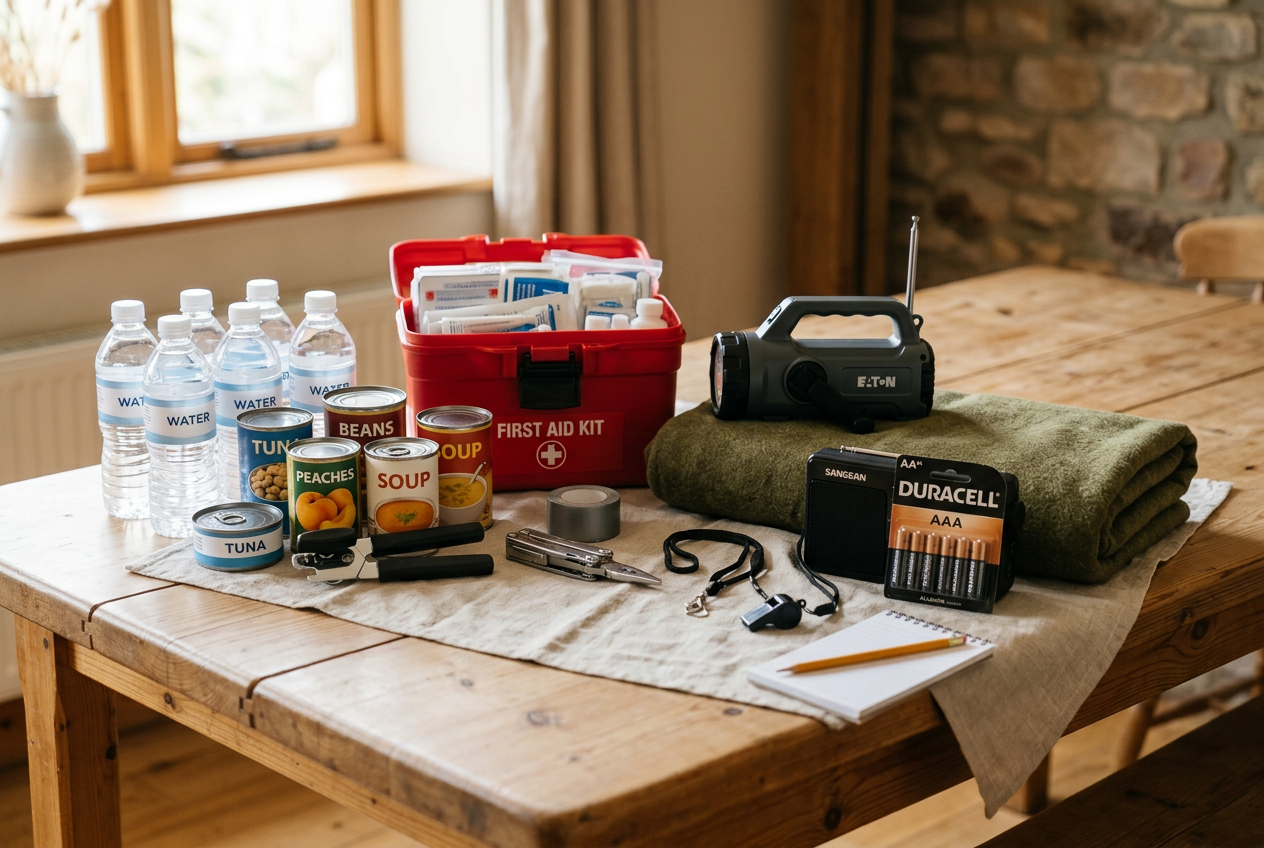
Getting ready is simple once you have the right basics on hand. Grab these few items, then read on to see why each one matters.
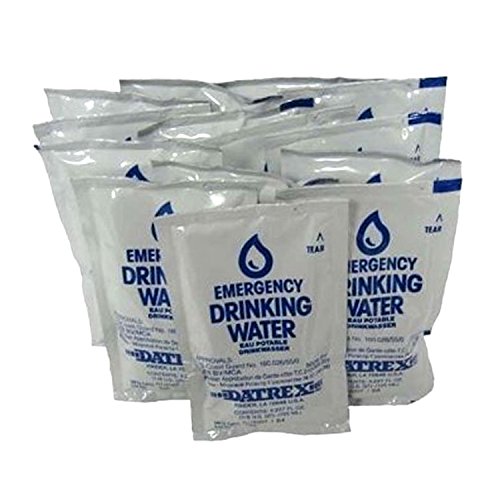
Datrex 72 Hour Water Packets
These sealed water packets give you a ready drinking supply for the first 3 days. They are small and tough, so they fit easily in any kit.
Check Price on Amazon
ReadyWise 120 Serving Food Bucket
This bucket holds 120 servings of meals that stay good for up to 25 years. It is an easy way to build the long term food stash the campaign suggests.
Check Price on Amazon
First My Family 4 Person Kit
This pack covers four people for 72 hours with food, water, first aid, and shelter gear. It is a grab and go answer for keeping your family safe until help comes.
Check Price on AmazonIn this guide
Why Trust This Guide?
This article was researched and reviewed by contributors with hands-on experience in emergency preparedness. They have tested gear, built real systems, and lived through situations where these skills actually mattered.
What the Governments Are Actually Asking For
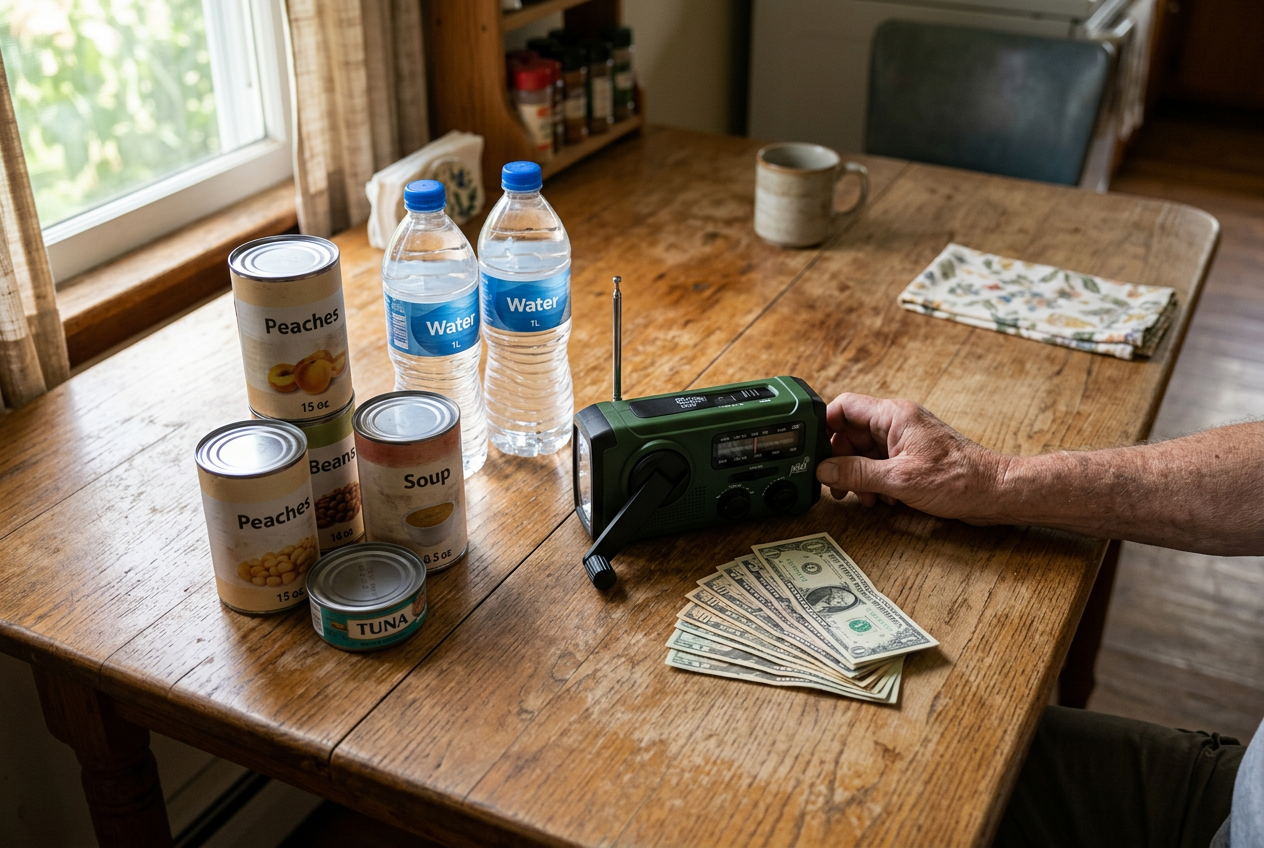
In late 2026, several governments sent the same basic message at once. They asked ordinary households to keep a small buffer of food, water, and cash at home. The goal is simple. They want you to cope on your own for a few days if normal services stop for a while.
The United Kingdom launched a campaign called “Be Ready.” UK officials, including the defence secretary, said households should keep basic food and water supplies at home. Their reason is to help build what they call “national resilience.” The United States rolled out a plan known as FORTRESS. Reports say it includes orders for major military bases to run for up to 90 days without outside power or supplies. Japan then issued its own advisory. Japan’s Disaster Management Minister urged households to keep essential supplies ready for emergencies. Parts of Europe, including Germany and Sweden, have shared similar plans too.
What “resilience” means
You will see the word “resilience” a lot in these messages. It sounds official, but the idea is plain. Resilience just means being able to bounce back after something goes wrong. For a household, it means you have enough on hand to manage a short bump without rushing to the store or the bank. If the power goes out or a delivery is delayed, you are not caught empty handed.
Why they picked these three things
The advice centers on three everyday basics. Food. Water. Cash. These are the things you use most and miss first when services break down.
The reason is the kind of trouble officials have in mind. They point to supply chain problems, cyber attacks, and severe weather. These events do not always cause huge damage. Often they just interrupt normal systems for a short time. A cyber attack might take card payments offline. A storm might close roads and empty shelves. A supply chain snag might delay stock for a few days. In each case, a small buffer at home carries you through.
Why a few days, not months
You may wonder why the advice is modest. Officials are not telling you to fill a basement. They suggest starting with a few days of supplies, not months. The UK’s earlier guidance, for example, pointed to a minimum of three litres of drinking water per person.
There are good reasons to start small. A few days covers most short disruptions. It is affordable for a normal household. It fits in a cupboard. And it does not encourage panic buying, which can empty shelves and hurt your neighbors. This is about calm, steady preparation, not hoarding.
The rest of this guide shows you how to build that simple buffer, one step at a time. You will start with water, add a small food supply, and keep a little cash on hand. Links to the news sources behind this section are listed at the end of the article.
Start With Water: The First Thing to Store
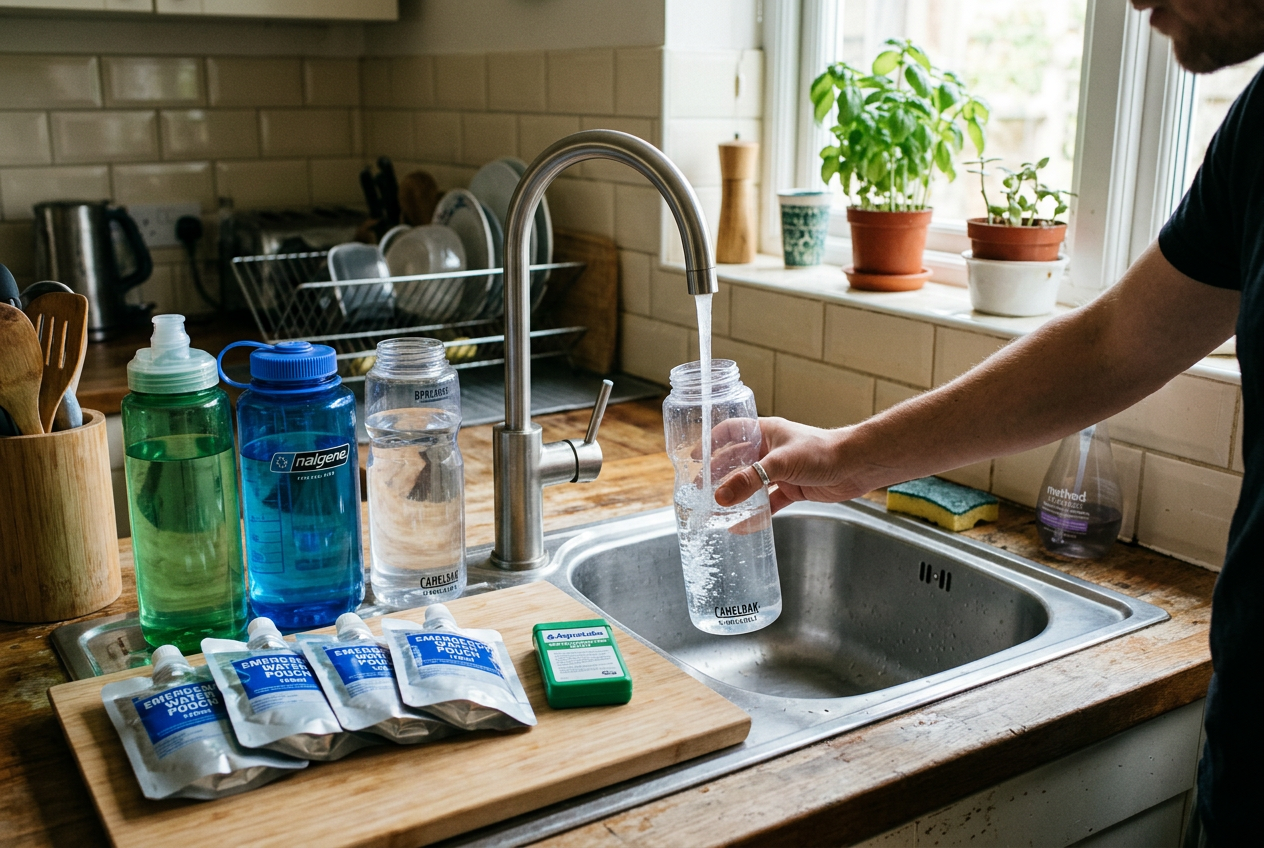
Water is the first thing to store. You can live weeks without food. You cannot go long without water. That is why the UK “Be Ready” campaign puts water near the top of the list.
How Much to Keep
The UK guidance suggests a minimum supply of about three litres of drinking water per person per day. That is for drinking only. You will also want more for cooking and washing up. A good starting goal is enough for three days per person. If you have the room, store more.
Do not forget pets. They need water too. Add some for each animal in your home.
The Free Way: Fill Clean Bottles From the Tap
You do not have to buy anything to start. Tap water works fine for storage. Here is the simple way to do it.
- Use clean plastic bottles with tight lids. Soda bottles work well.
- Wash them with soap and water first. Rinse well.
- Fill them to the top with tap water. Close the lid.
- Label each bottle with the date.
- Store them in a cool, dark spot away from sunlight.
Rotate this water every six months. Just pour the old water on your plants and refill. This keeps it fresh and keeps the habit going.
Compact Water for Go-Bags and Tight Spaces
Bottles take up room. If your storage is tight, or you want water for a grab-and-go bag, pre-packaged water packets are a smart choice. They are sealed, ready to drink, and easy to share. Each person gets their own pouch. No mixing or filtering needed.
A small 72-hour pack is good for one person’s kit.
A larger pack suits a whole household or a shared kit at work or school.

These packets have a long shelf life, so they need less rotating than tap water. Check the date printed on them.
Stored Water vs. Purification Tablets
Here is an important difference many people miss.
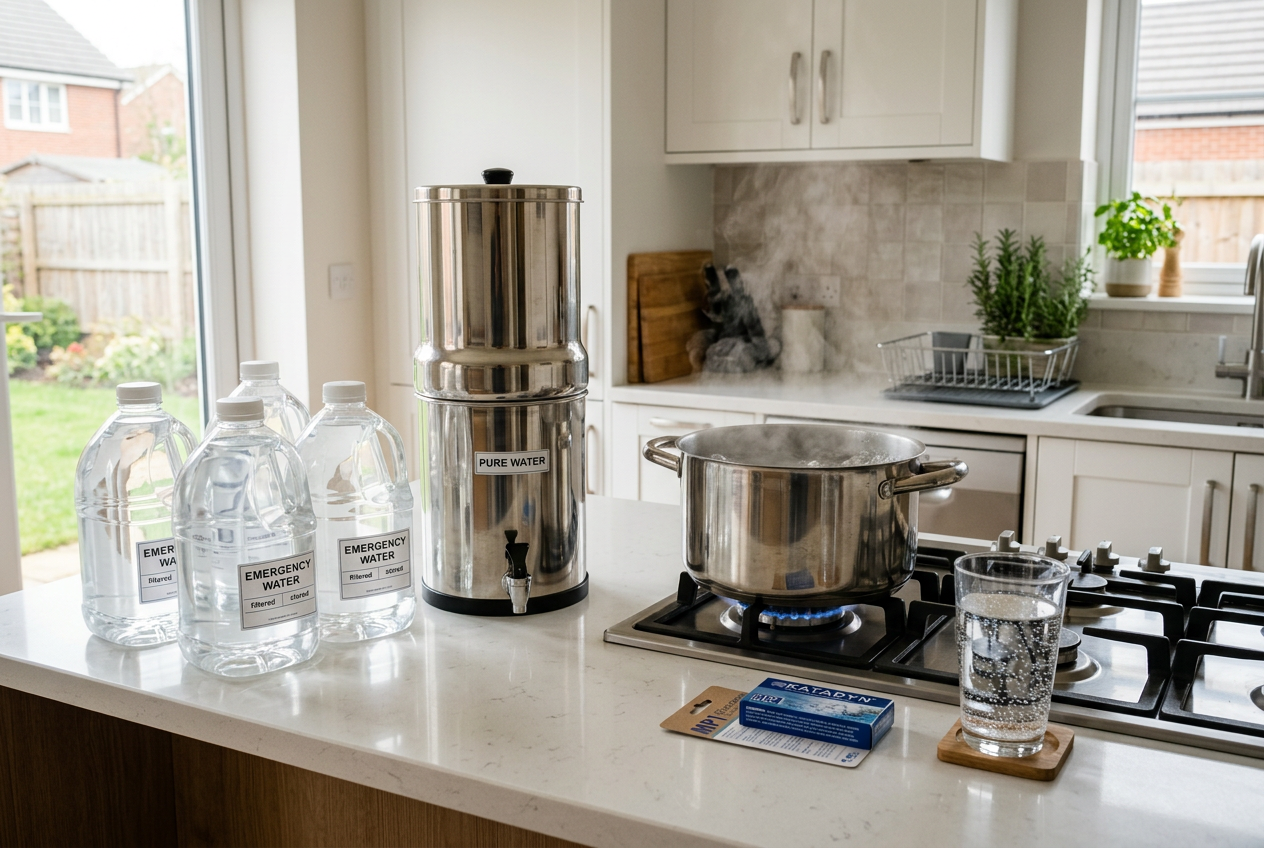
Stored water is clean water you keep ready to drink right now. Purification tablets do a different job. They make questionable water safe to drink. Think of a case where your stored water runs out and you must use water from a tap you do not trust, or from another source.

Tablets kill most germs in that water. They are light and compact, so they fit any kit. But they are a backup, not a replacement. Always start with real stored water first.
Start with water today. It costs nothing to fill a few bottles tonight.
Build a Simple Food Buffer You’ll Actually Eat
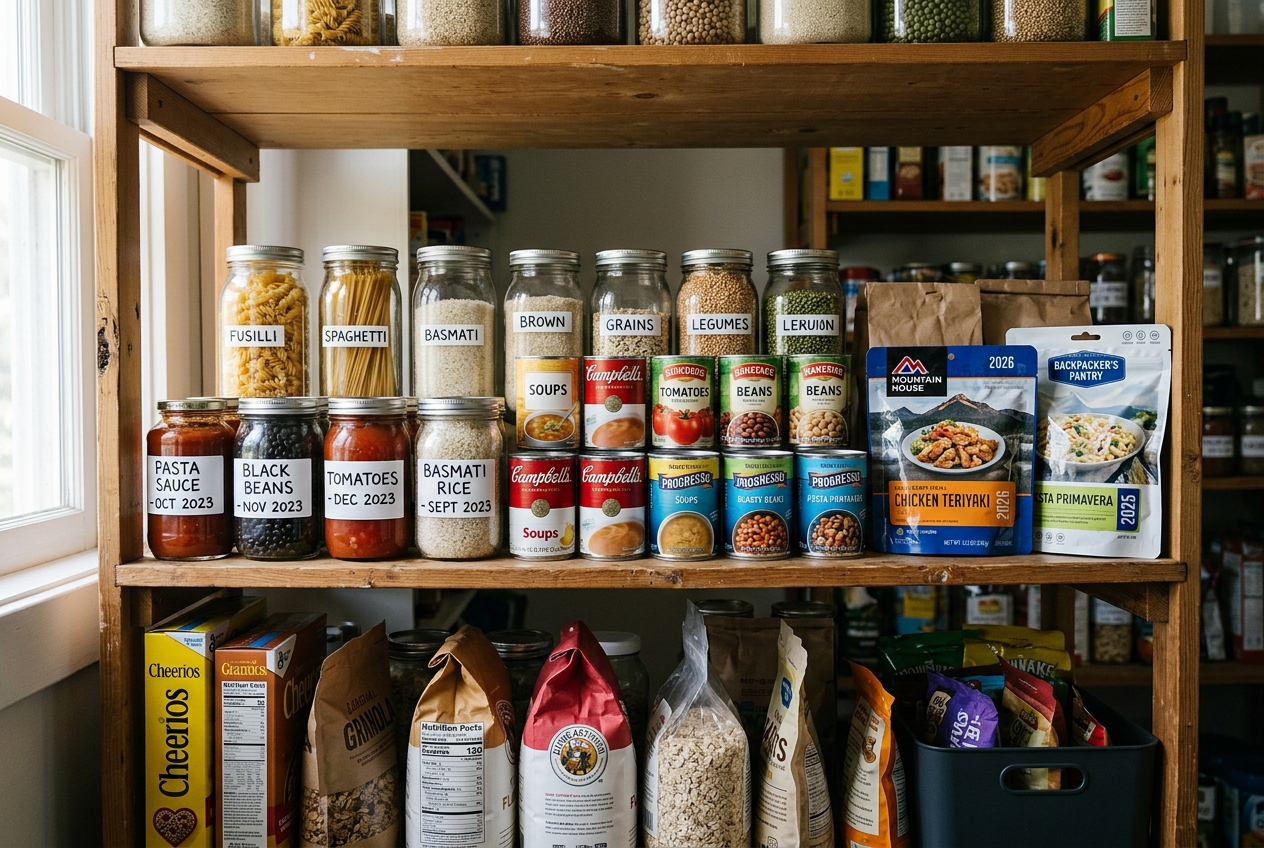
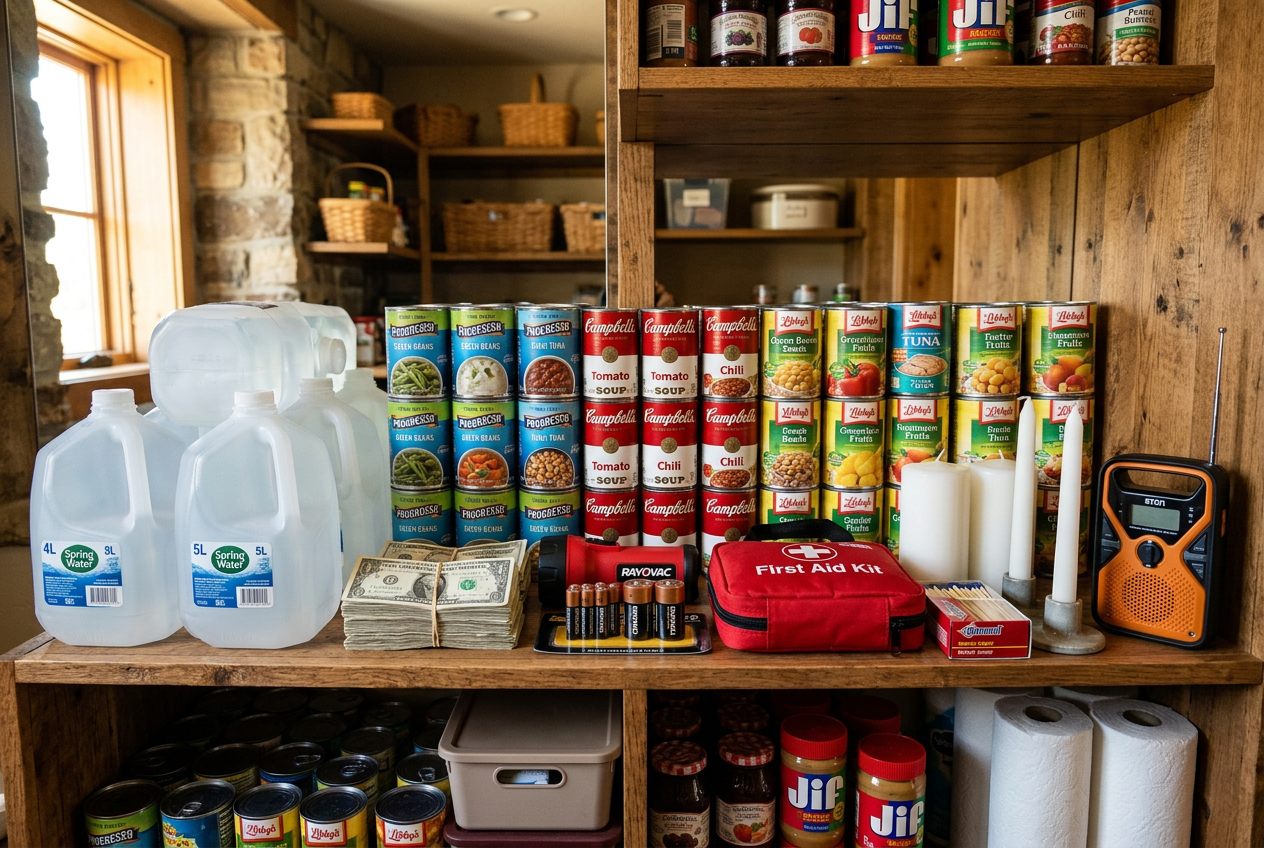
A food buffer is just extra food you keep at home. The governments in the US, UK, and Japan all suggest having some on hand. You do not need to panic buy. You do not need to hoard. Start small and build over time.
Begin With Food You Already Eat
The easiest way to start is simple. Next time you shop, buy a few extra cans and boxes of food your family likes. Think canned beans, soup, tuna, pasta, rice, peanut butter, and canned fruit. Add some crackers and shelf-stable milk too.
Pick foods you already enjoy. If you do not like it now, you will not eat it in an emergency. Aim for at least three days of meals per person to match the basic advice. Many people build toward one or two weeks over time.
Rotate So Nothing Goes to Waste
Here is the key habit. Eat the oldest items first, then replace them. This is called rotation. Put new cans at the back and older cans at the front. Check dates every few months. This way your buffer stays fresh and you never throw food away.
When a Long-Shelf-Life Kit Makes Sense
Regular groceries work great for a short buffer. But they expire in months or a couple of years. If you want a longer backup that you can forget about, a dedicated kit helps.
These kits last up to 25 years. Most use “just add water” meals. That matters during an outage when your stove or oven may not work. You only need to boil or warm some water. Some meals need no heat at all.
A sample bucket is a good first step. It lets you try the meals before you commit to a bigger supply.
If you want a full backup for one person, a three-month kit covers a lot. It gives over 2,000 calories a day with many meal types so you do not get bored.

You can also focus on one meal, like breakfast, with a smaller bucket.

Compare Your Options
The Simple Plan
Start with extra groceries this week. Build toward three days, then more. Rotate what you buy. Then add a long-shelf-life kit if you want a backup you can set and forget. That gives you food you will actually eat, plus a safety net for a longer outage.
Keep a Small Cash Buffer for Card and Bank Outages
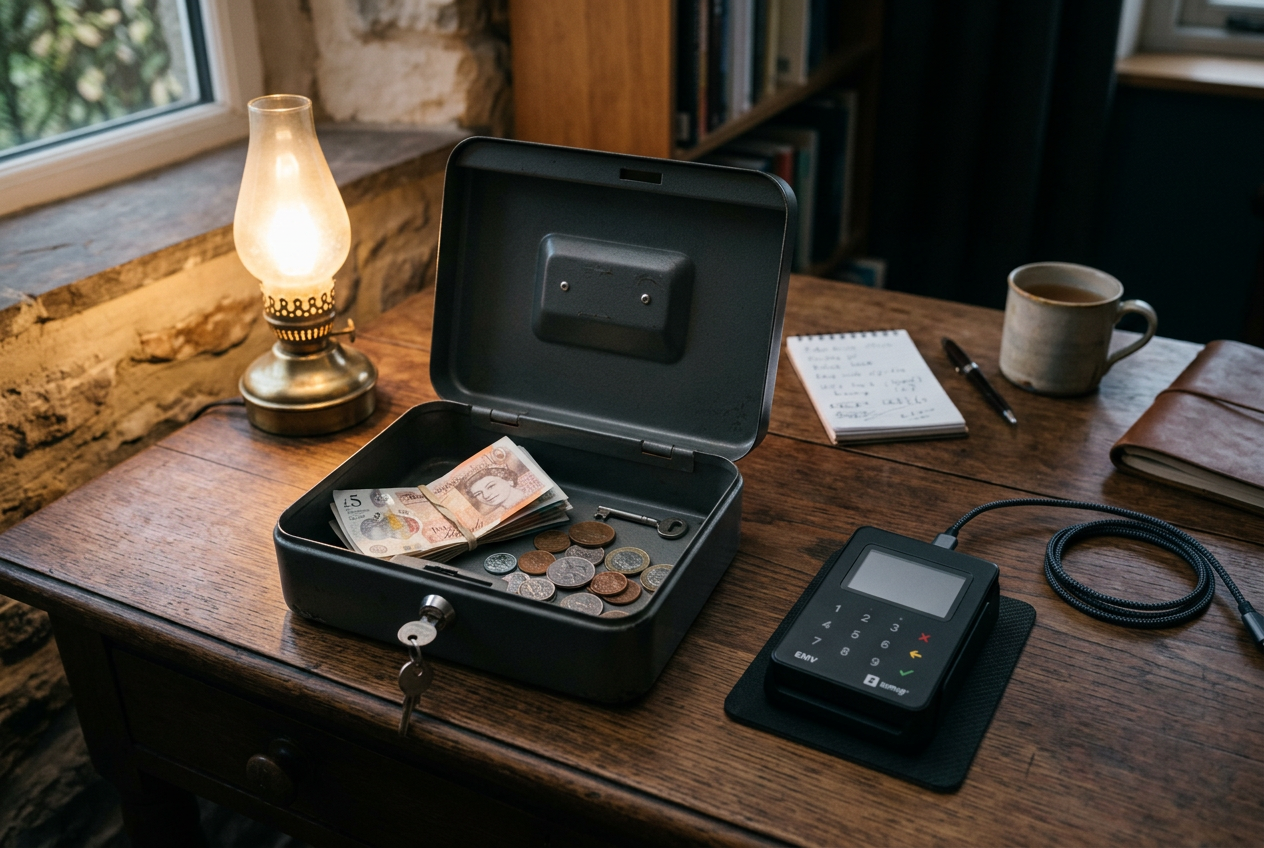
The “Be Ready” campaign and similar advisories in the US and Japan all mention one simple item: cash. This surprises some people. We pay for almost everything with cards and phones now. But that is exactly the point.
Why Cash Matters When Systems Go Down
Card readers need power and a network to work. ATMs do too. When those systems fail, your cards can stop working for a while. This can happen during a power cut, a storm, or a cyberattack on banks or shops.
Governments flagged cyber and supply chain disruption as real risks. The UK defence secretary warned households to be ready for problems with essential supply chains. If tills and card machines go offline, cash may be the only way to buy food, fuel, or other basics until things come back online.
Cash does not need batteries. It does not need a signal. That is why it belongs in your prep plan.
How Much to Keep
Keep a modest amount. This is a buffer, not a stash. A buffer covers a few days of small purchases if cards fail. Think bread, milk, fuel, or a quick trip to a local shop.
A simple way to decide is to picture a few days of normal spending for your household. Then set aside enough to cover that. You do not need a large sum. You are not trying to live off cash for weeks.
Use small bills. In an outage, shops may not be able to make change. A small bill is easy to spend. A large one may be refused. Mix in some coins too if you can.
Store It Safely
Pick a safe, dry spot in your home. A locked box or a fireproof document bag works well. Keep it away from where a thief would look first. Do not tell many people where it is.
Check on it now and then. Make sure the bills stay in good shape. Replace any that get damaged.
Why This Is Not Hoarding
A small cash buffer is normal, sensible prep. It is not hoarding. Hoarding means taking far more than you need and leaving less for others. That is not the goal here.
The goal is simple. You want to keep buying basics during a short outage without stress. A modest amount in a safe place does that job.
Keep Your Accounts Healthy Too
Cash is only one part of financial readiness. It also helps to keep your bank accounts in good order. That means knowing your balances, having a backup card, and keeping key account details somewhere safe.
For more on this, see our financial preparedness coverage. It walks you through account hygiene and simple steps to protect your money. A small cash buffer plus healthy accounts gives you a calm, steady base when systems wobble.
A Grab-and-Go Kit for the Whole Household
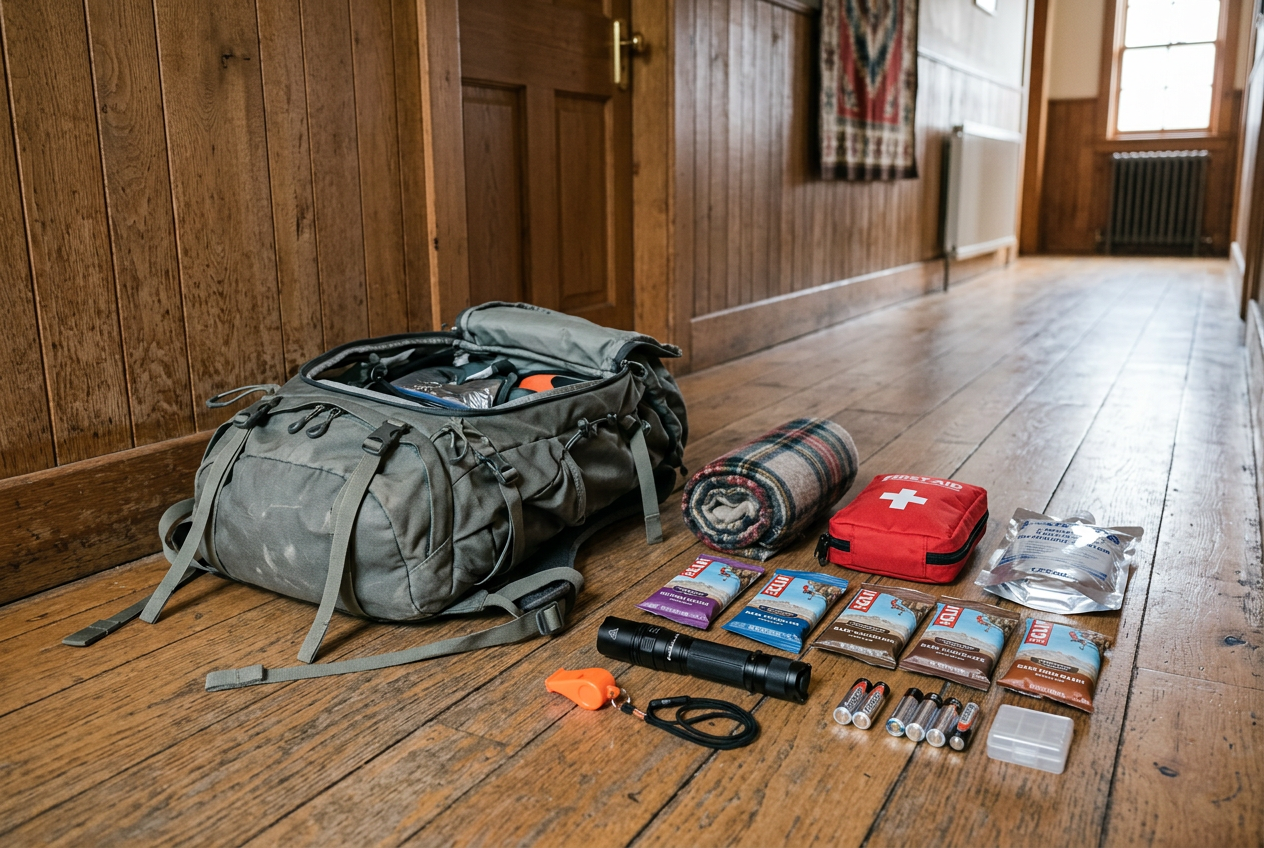
Some events give you no warning. A fire, a flood, or a gas leak can force you out of your home in minutes. Other times you need to stay put and wait. A grab-and-go kit helps with both. It holds the basics your family needs for about three days, all in one bag you can grab fast.
The idea is simple. When you are stressed and in a hurry, you should not have to think. Everything is already packed and ready by the door. This matches what the Be Ready campaign and other government advisories are asking households to do. The goal is three days, or 72 hours, of support for each person.
What a Kit Usually Holds
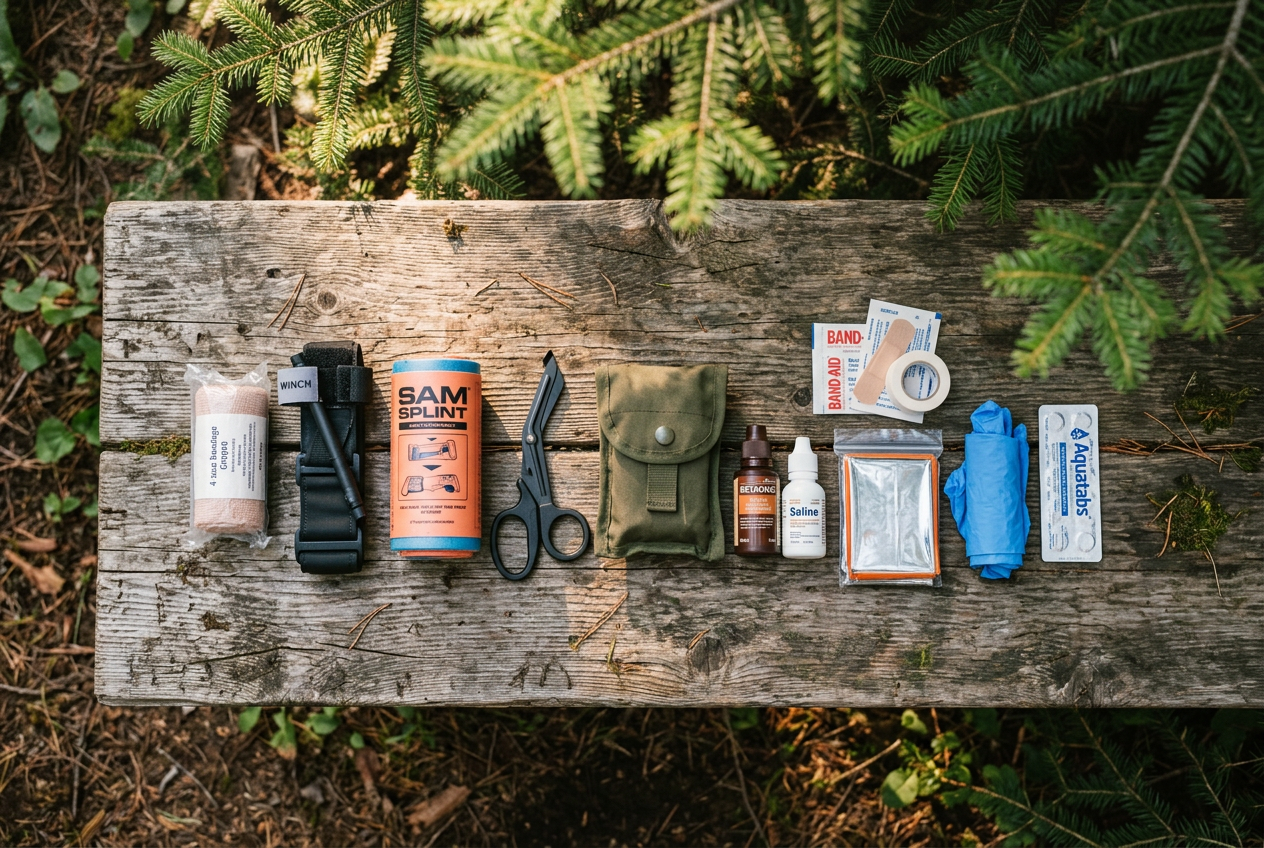
A good 72-hour kit covers the same core needs you have been storing. That means water and food rations, a basic first-aid kit, and items for warmth and shelter. Many kits also add tools like a flashlight, a whistle, and emergency blankets. The point is to keep your family safe until help arrives or until you reach somewhere stable.
Size It to Your Household
The number one rule is to match the kit to the number of people at home. Count everyone, including kids. Then add for pets if you have them. A kit built for two will not stretch to cover four people for three days.
If you have a small household, a two-person kit may be enough. This option packs 72 hours of survival gear, first aid, and more into one backpack.

For a bigger family, step up to a four-person kit. It includes food and water rations for four, an 85-piece first-aid kit, and materials for shelter and warmth. Both of these kits are built to exceed Red Cross guidelines for preparedness, so you know the basics are covered.
Or Build Your Own
You do not have to buy a kit. You can make one from things you may already own. Use a sturdy backpack or a tote bag. Then add:
- Bottled water and a few days of food that needs no cooking
- A first-aid kit and any medicines your family needs
- A flashlight and spare batteries
- A phone charger or power bank
- Copies of important papers in a sealed bag
- Some cash in small bills
- Warm layers, a blanket, and basic hygiene items
A built-your-own kit can work just as well. It costs less if you already have the parts. A pre-built kit saves time and makes sure you do not forget something.
Keep It Where You Can Reach It
Store your kit near an exit, like a front hall closet. Everyone at home should know where it is. Check it twice a year. Swap out old water, food, and batteries so your kit stays ready when you need it most.
Compare the Options at a Glance
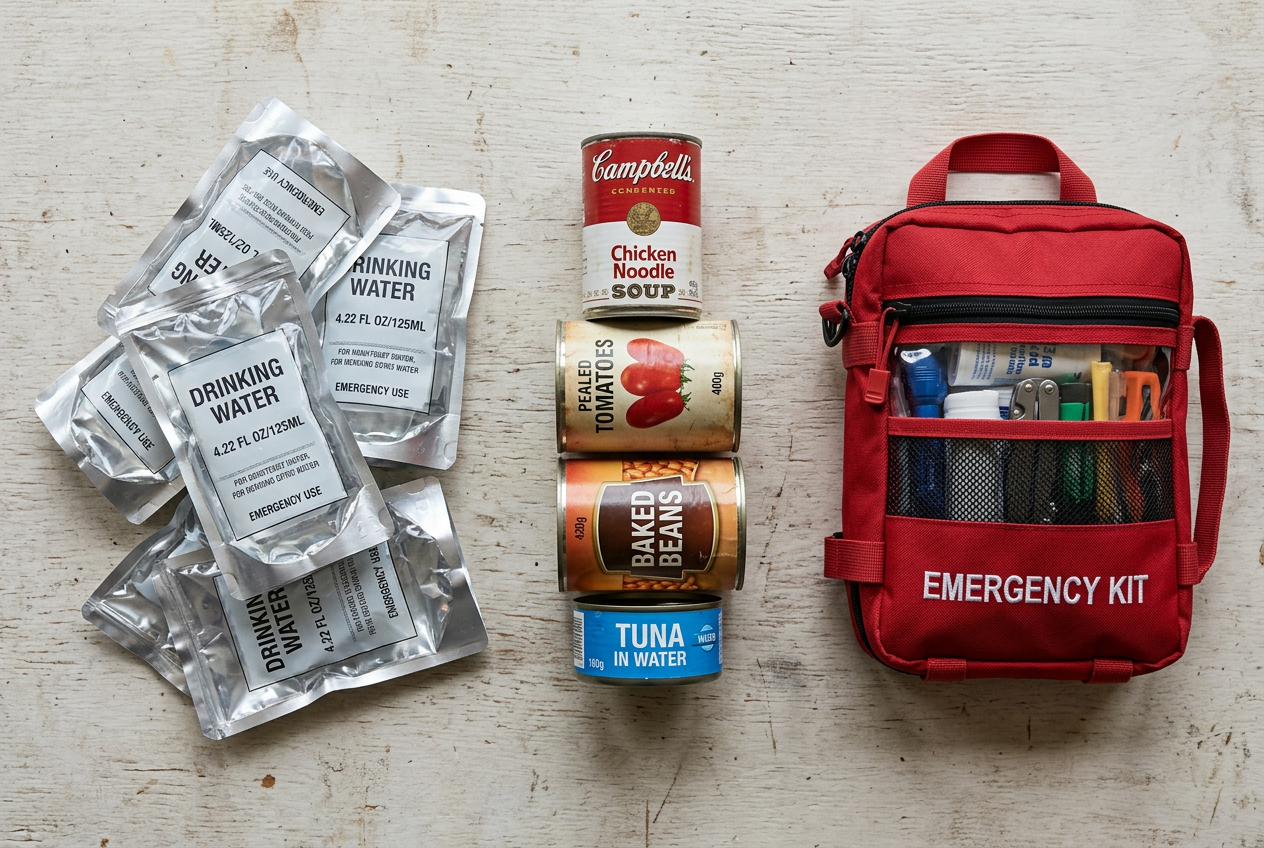
By now you know the basics. Store water, build a food buffer, keep a go-kit ready, and hold some cash. But which product fits your situation first? This table lines up the referenced items so you can match one to your need and budget.
Each product solves a different piece of the puzzle. Some cover water. Some cover food. Some pack a little of everything into one bag. Read the “Best For” column to see where each one fits.
How to Read This Table
Water comes first in almost every plan. The Datrex 3 day water packets and Mayday 50-pack pouches give you ready-to-drink water with no mixing. They store flat and split easily among family members. Aquatabs tablets are a smart backup. They treat tap or stored water when your packets run low. They do not replace clean water storage, but they stretch what you have.
For food, start small. The ReadyWise 120 serving sample bucket is a good first taste. It lets you try the meals before you commit to more. The Ready Hour breakfast bucket keeps your mornings simple. When you want real depth, the Ready Hour 3-month kit covers one person for about 90 days with over 2,000 calories per day.
The grab-and-go kits bundle food, water, and first-aid gear into one backpack. Pick the 2-person kit for a couple or small home. Choose the 4-person kit for a family. Both are built for 72 hours, which matches the three-day advice many governments now give.
What to Buy First Versus Later
Buy water first. It is cheap, simple, and the hardest to go without. Add a small food buffer next, starting with a sample bucket you know you will eat. A grab-and-go kit is a strong early pick too, since it covers many needs in one purchase. Save the large 3-month food kit for later, once your basics are set. Build in layers, not all at once.
Your Calm Prep Action Checklist
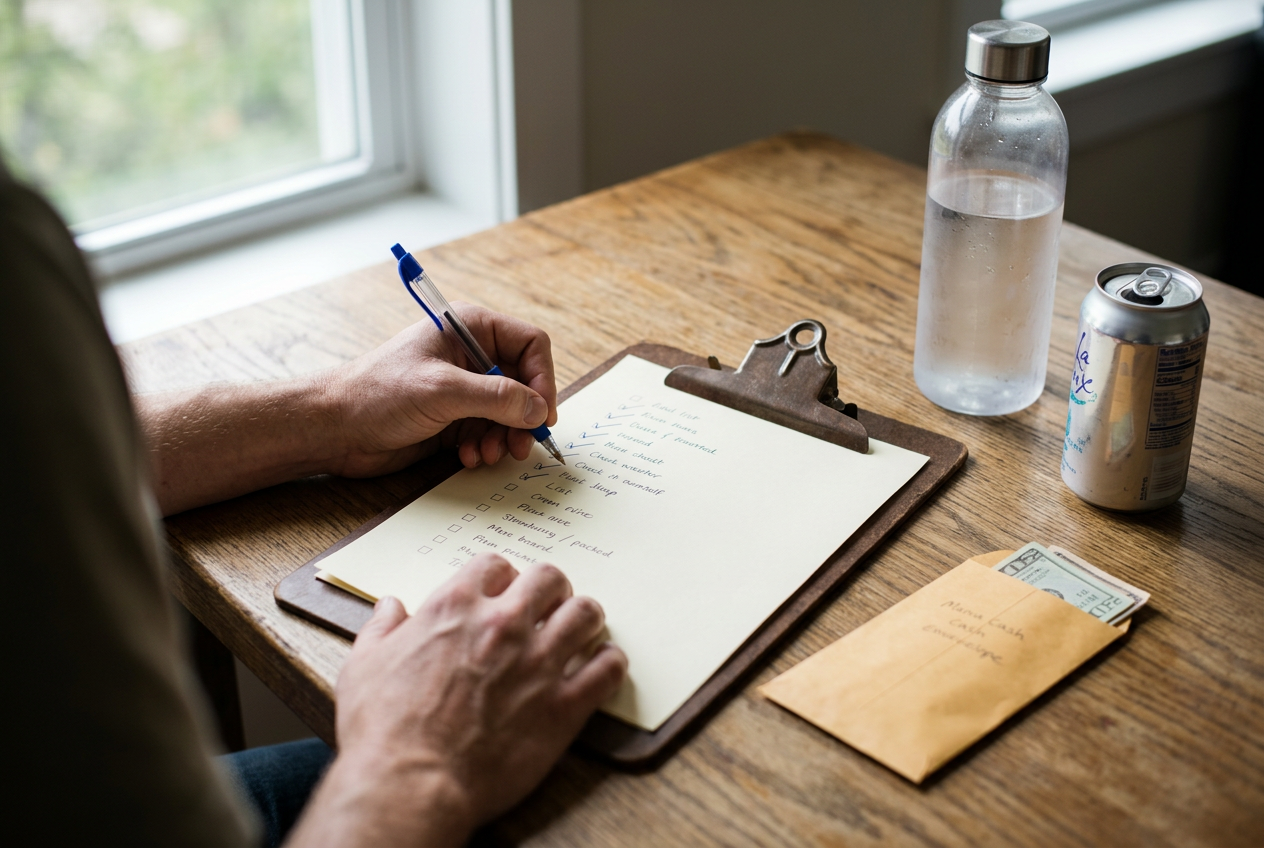
You do not need to do everything today. The goal is steady progress, not panic buying. Governments in the US, UK, and Japan are asking households to be ready, not to empty store shelves. Follow these steps in order over the next week. Each one is small. Together they add up.
Step 1: Store water first
Water comes first because you can only last a few days without it. The CDC recommends at least one gallon per person per day for drinking and basic hygiene: three days minimum, and two weeks if you can manage it. Start by filling clean bottles from the tap. For your kit or your car, sealed water packets store well and are easy to share.
You can also keep purification tablets on hand to treat water if your supply runs low.
Aquatabs water purification tablets remove most bacteria, viruses, and cysts, so they are a smart backup.
Step 2: Add a simple food buffer
Build a three day supply of food you already eat. Think canned beans, pasta, rice, and other shelf stable items. Add a few extra each shopping trip instead of buying it all at once. That keeps costs low and avoids waste.
If you want a ready made option with a long shelf life, a bucket of just add water meals can anchor your supply.
Step 3: Set aside a small cash buffer
Card systems and bank apps can go down during an outage. Keep a small amount of cash at home in small bills. This is not about hoarding. It is enough to cover a few days of basics like food, fuel, or a taxi. Store it somewhere safe and private.
Step 4: Make a family contact plan
Phone lines and the internet can fail. Agree now on how your household will reach each other. Pick one out of town contact everyone can call or text. Choose a meeting spot near home and a second spot farther away. Write the key numbers on paper in case your phone dies. Share the plan with everyone, including kids.
Step 5: Know how to get official alerts
You want real information fast, not rumors. Sign up for your local or national emergency alert service. In the UK, that includes the government’s Prepare guidance and public alert messages. Save the official sites and apps on your phone now, before you need them. Pick one or two trusted sources so you are not scrolling through social media during a crisis.
Keep it simple this week
Do not try to finish all five steps in one day. Spread them out. Store water on day one. Add a few food items on your next shop. Set aside cash when you can. Write the family plan over dinner. Sign up for alerts in five minutes. Small steps, done calmly, leave you far more ready than a single panic trip to the store.
You can print this page and tick off each step as you go.
Frequently Asked Questions
How much food and water should I keep?
Start small. Many government plans point to about three days of basic supplies at home. That covers food, water, and other essentials for each person in your house. The UK’s advice has mentioned keeping a minimum supply of drinking water per person. The goal is a short buffer, not a bunker.
For water, bottled water works fine. You can also store sealed emergency water pouches. These are easy to split among family members and simple to tuck into a kit.
For food, pick things you already eat. Canned beans, rice, pasta, and shelf stable snacks all work. If you want a ready made option, grab and go buckets can help fill gaps.
Is this hoarding?
No. Hoarding means buying far more than you need and clearing the shelves. That hurts your neighbors. The official advice is the opposite. It asks for a small, calm buffer at home.
Buy a little extra each shopping trip. Add a few cans or an extra jug of water. Over a few weeks you build a modest supply without panic buying. The plans from the US, UK, and Japan all stress steady, calm preparation. They do not ask you to stockpile a year of goods.
How much cash is reasonable?
The advice is to keep a small cash buffer at home. Card and bank systems can go down during a power cut or a cyber event. If that happens, cash still works.
The sources do not name a set dollar amount. A sensible approach is enough to cover a few small purchases, like food, fuel, or basic supplies, for a short period. Keep it in small bills. Store it somewhere safe and private. This is a backup, not your main savings.
How long do stored supplies last?
It depends on what you store. Regular canned and packaged food lasts months to a few years. Check the dates and rotate your stock. Eat the oldest items first and replace them. This keeps everything fresh and avoids waste.
Some emergency food kits are built for long storage. Certain buckets list a shelf life of up to 25 years when kept cool and sealed.
Water needs care too. Store it in a cool, dark spot away from chemicals. Bottled water has best by dates, so rotate it like food. You can also keep purification tablets as a backup. They let you treat tap or other water if your stored supply runs low.
Do I need to do this all at once?
No. Spread it out. Start with water this week. Add a few food items next trip. Set aside a little cash after that. Small steps add up, and you stay calm the whole way.
Your Next Steps
The news this week can feel like a lot. The US, UK, and Japan all asked households to get ready. Europe sent out plans too. But here is the calm truth. Readiness is not a one-time scramble. It is a steady habit you build over weeks and months. You do not need to buy everything today. You just need to start.
Think of it like saving money. You add a little at a time. Soon you have a real cushion. The same works for food, water, and cash. One trip to the store. One jug of water set aside. One small cash envelope. These small steps add up fast.
Pick One Thing to Do Today
Do not try to do it all at once. That is how people get overwhelmed and quit. Instead, pick one simple step and do it today. Here are a few easy ones:
- Fill a few clean bottles with tap water and store them.
- Buy a few extra cans of food you already eat.
- Set aside a small amount of cash in small bills.
- Charge a power bank and keep it ready.
Any one of these makes you more prepared than you were this morning. That is a real win. Tomorrow, you can do one more.
Keep Building a Little at a Time
If you want a faster start, a ready-made kit can cover the basics while you learn. A grab-and-go bag like the First My Family 4-Person kit gives you food, water, and first aid in one spot. For water you can grab and store, the Mayday water packets are compact and easy to tuck into a bag or closet. These are helpful starting points, not the whole plan. Your own water, food, and cash buffer still matters most.
Learn as You Go
You do not have to figure this out alone. We have simple guides to help you keep building at your own pace. If you are brand new, start with our beginner’s guide to home preparedness. It walks you through the basics in plain language with no pressure.
When you are ready for more, read our deeper guides on storing water safely, building a food buffer you will actually eat, and keeping a small cash buffer for card and bank outages. Each one gives you clear steps you can do this week.
Want to keep this plan handy? You can print this page and check off each step as you go. No download needed. Just print and use it.
The goal is not fear. The goal is calm. A prepared household sleeps better. You know you can handle a short outage or supply hiccup without panic. So take one step today. Then take one more next week. Little by little, you will be ready, and you will stay that way.
Sources and Further Reading
- CDC: How to Create an Emergency Water Supply
- Ministers and officials warn to stockpile essentials for …
- Government warns UK citizens to ‘stock up on food’
- 12 Emergency Items the Government Says You Need But Most …
- UK government warns people to stockpile ’three days of …
- How to prepare a basic emergency food supply on a tight …
- Every Briton should stockpile water and food supplies, government advises
- Prepare for supply chain disruption from cyber or climate emergencies, Streeting warns
- After US’s FORTRESS plan and UK’s ‘Be Ready’ campaign, Japan issues advisory for households to prepare for
- Pentagon orders bases to plan for 90 days without the grid as Britain urges families to stockpile food and water
- Europe Distributes Preparedness Plans In Case Of ‘Crisis Or War’