Ready
Historic El Niño Hits the Southwest: How Arizona Households Can Prepare for a Wet, Stormy Winter (2026)
Arizona is used to dry winters. This year may be very different. In October 2026, forecasters warned that a potentially historic El Niño could batter Arizona and the rest of the West. That means heavy rain and deep mountain snow may be on the way.
Here is the problem. Desert soil does not soak up water well. When hard rain hits dry ground, the water runs off fast. It rushes into washes, low spots, and streets. This can cause flash floods and debris flows. A debris flow is a fast slide of mud, rocks, and water. You do not need to live near a river to be at risk. Water can reach homes far from any stream.
Many Arizona households have never faced a wet, stormy winter like this one. The good news is that you can get ready. Simple steps now can protect your home and your family later.
This guide walks you through each step in plain language. You will learn how to find your flood risk and set up weather alerts you will not miss. We cover how to keep water out of your home and how to remove standing water safely. We also cover three-day supplies, a family plan, and safe driving when roads flood.
Let’s start with the first step. You need to know your flood risk before the storms arrive.
- El Nino is expected to bring heavy rain and flooding to the Southwest this winter 2026.
- Protect doors and low spots early, since flash floods can rise in minutes.
- Keep a pump ready to clear water out of basements, garages, and yards.
- Have a weather radio with NOAA alerts so you hear warnings even if the power goes out.
- Build your kit before the first big storm, not during it.
One practical preparedness move each week. No fear-mongering, ever.



Reviewed by Ryan C., Marcus T. & Elena V. — contributors with hands-on preparedness experience. How we test
A wet, stormy El Nino winter is heading for Arizona, and a few key tools can keep your home safe. Order these now, then read on to see why each one matters.

Water Activated Flood Barriers
These 6 foot barriers block water from sliding doors and other weak spots. They swell up in 5 to 10 minutes with no sand or shovels needed.
Check Price on Amazon
High Flow Submersible Pump
This pump moves up to 4500 gallons per hour to clear flooded basements, garages, and yards fast. Just plug it in to start pulling water down to the floor.
Check Price on Amazon
Solar Crank Weather Radio
It picks up NOAA weather alerts so you know when a storm or flood is coming. Solar and hand crank power keep it working and charge your phone even when the lights are out.
Check Price on AmazonIn this guide
Why Trust This Guide?
This article was researched and reviewed by contributors with hands-on experience in emergency preparedness. They have tested gear, built real systems, and lived through situations where these skills actually mattered.
Know Your Flood Risk: Washes, Low Spots, and Flash Floods
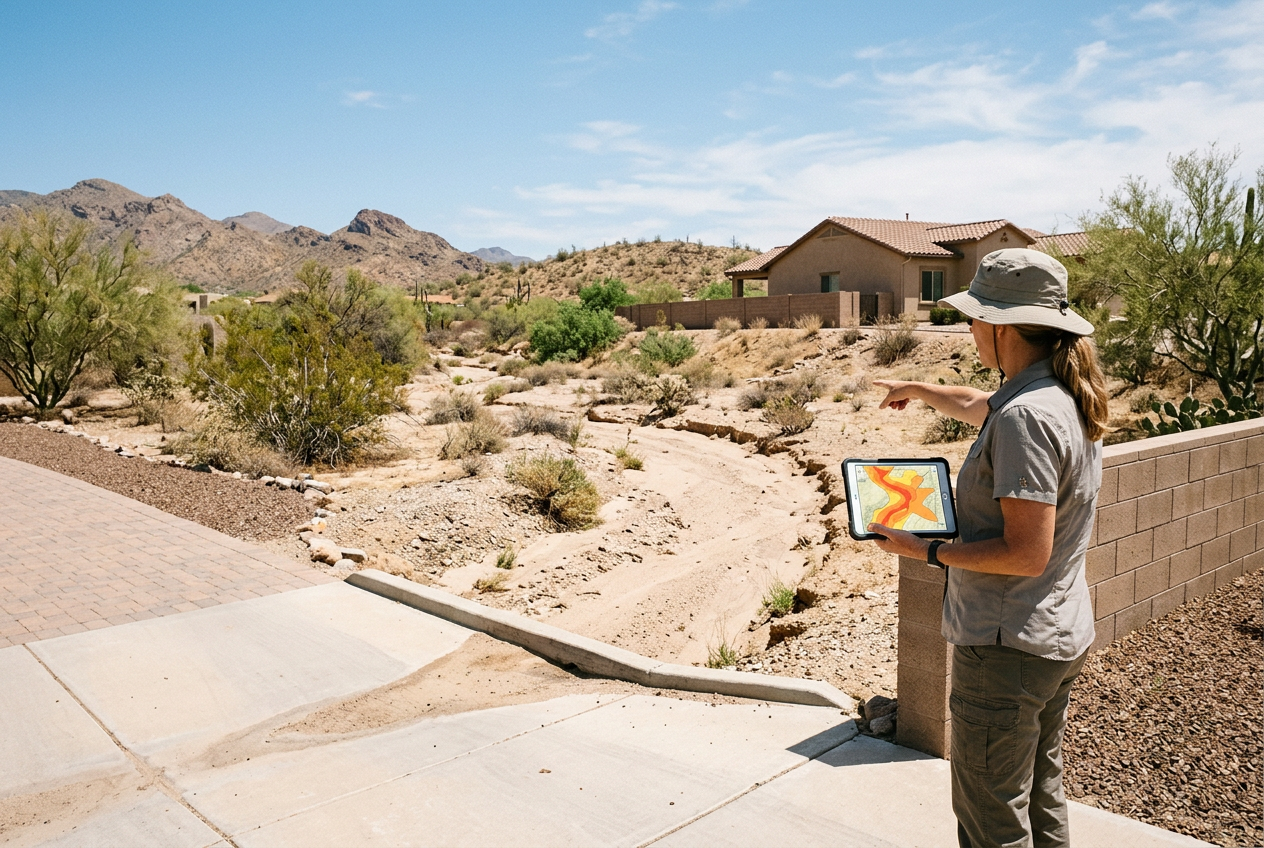
Before you buy anything, learn where water will go around your home. This step is free. It may be the most important thing you do all winter.
Arizona ground is a big reason flooding here is different. Dry desert soil is hard and packed. It does not soak up rain fast. When a storm hits, water runs across the surface instead. That runoff moves fast and goes straight to low spots.
Learn These Two Terms
A flash flood is a flood that comes on fast, often in minutes. You may not even see rain where you are. A storm miles away, up in the hills, can send a wall of water down into a dry wash near your home.
A debris flow is fast-moving water that carries mud, rock, and sticks. It is heavier and more dangerous than plain water. It can knock down fences, push cars, and damage walls. Burn-scarred land from past wildfires raises this risk.
Check Your Flood Risk by Address
Start with the FEMA Flood Map Service Center. It is a free government tool. You type in your home address and it shows if you sit in a mapped flood zone.
Here is how to use it:
- Search “FEMA Flood Map Service Center” and go to the official FEMA site.
- Type your full address into the search box.
- Look at the map. Shaded areas show higher flood risk.
Keep in mind one thing. These maps do not catch every risk. Many Arizona flood problems come from local washes and street flooding that maps may not show. So use the map as a start, not the final word.
Spot Where Water Flows Around Your Home
Now walk your own property. You know it better than any map. Look for these:
- Desert washes. A wash is a dry channel or ditch that fills with water during storms. If one runs near your home, water will move through it fast. Never park or build anything in a wash.
- Low spots and dips. Water pools in the lowest ground. Find the low points in your yard and driveway.
- Low driveways and garage entries. A sloped driveway that dips down to your garage can fill like a bowl. Water runs right to the door.
- Door thresholds near grade. Check which doors sit low to the ground. These are your weak points.
Go outside during the next light rain if you can do it safely. Watch where the water runs and where it collects. That shows you exactly where to place barriers later.
Write down what you find. Note each low door, each dip, and each wash. You will use this list in the next sections when you set up barriers and plan how to remove standing water.
Knowing your risk costs nothing. It tells you where to focus your time and money before the storms arrive.
Get Weather Alerts You Won’t Miss
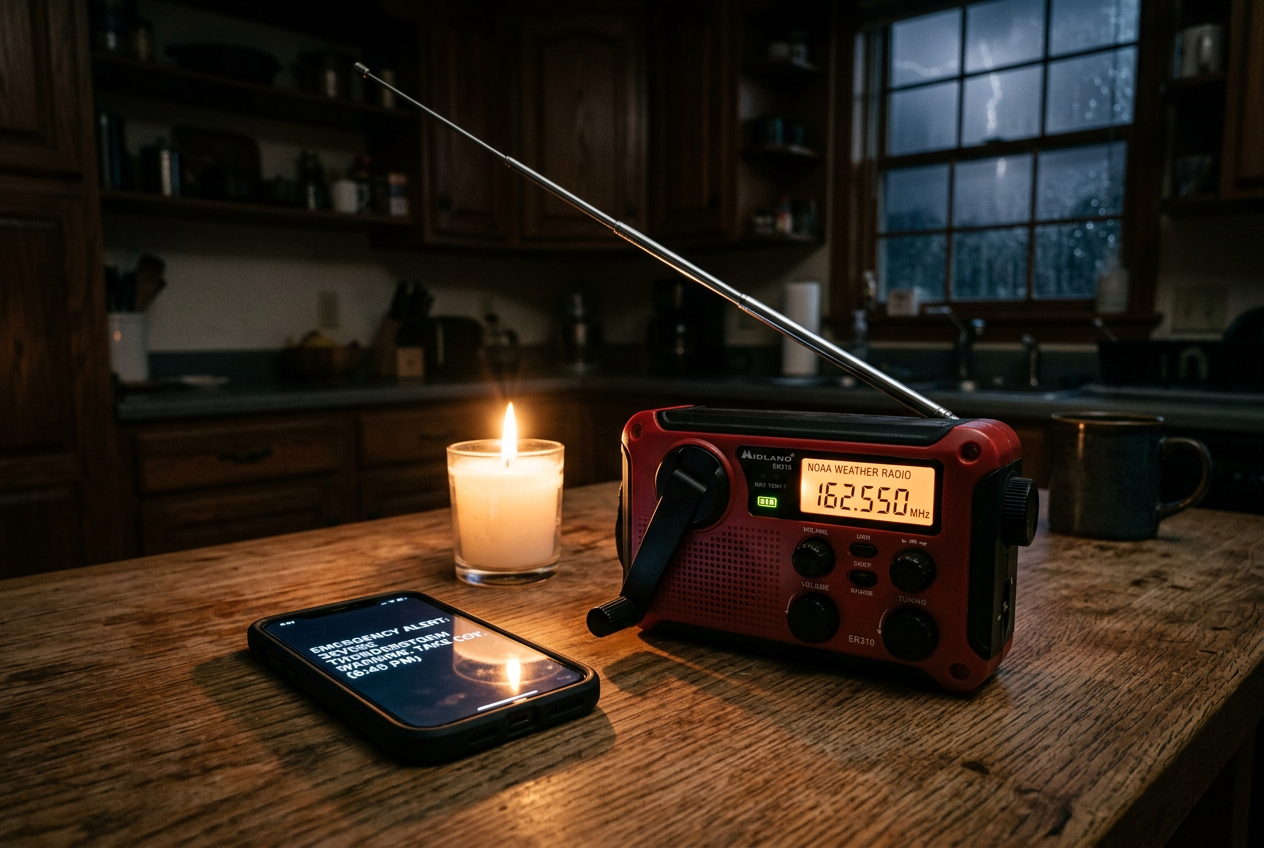
Flash floods can rise fast. You may get only minutes to act. That is why you need more than one way to hear a warning. A single phone alert is not enough. Power can go out. Cell towers can fail during storms. Plan for that now.
Sign Up for County Alerts
Most Arizona counties send free emergency alerts. These go out by text, call, or email. They can warn you about flash floods, road closures, and evacuations near your home.
To sign up, search for your county name plus “emergency alerts.” Look for your county’s official website. Enter your address and the ways you want to be reached. Add every phone in your home. Add email too.
Also turn on Wireless Emergency Alerts on your phone. These are the loud alerts that come through on their own. Open your phone settings and make sure government alerts are on. The National Weather Service uses these for flash flood warnings.
Keep a Backup You Can Hear
Alerts only help if they reach you. During a storm, the power may drop. Your phone battery may run low. You need a way to hear warnings that does not depend on the grid.
A NOAA weather radio is the answer. NOAA stands for the National Oceanic and Atmospheric Administration. It runs the government weather stations. A NOAA radio picks up weather broadcasts day and night. When a warning is issued, the radio sounds an alarm. This works even if the internet and cell service are down.
The best choice for a blackout is a hand-crank radio. You crank a handle to make power. No wall outlet needed. No batteries to run out. Many also charge with a solar panel or a USB cable. That gives you several ways to keep it running.
Here are two hand-crank NOAA radios to consider.
The RunningSnail radio covers AM, FM, shortwave, and NOAA weather bands. It has a hand crank, a solar panel, and USB-C charging. The built-in 4000mAh battery can also top off your phone during an outage. It adds a flashlight, an SOS alarm, and a compass. That makes it a useful all-in-one tool for storm season.
The Eoxsmile radio is certified by the National Weather Service. You can set it to your local weather band. When a severe weather alert goes out, it makes a loud SOS alarm for 9 seconds and flashes a red light. That can wake you at night. It charges by solar, hand crank, USB, or a wall plug, and it holds backup AAA batteries too.
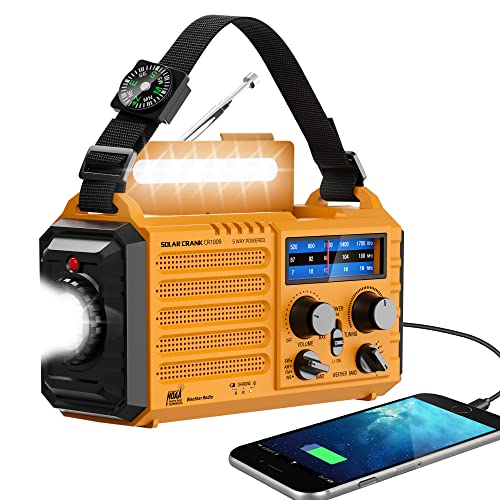
Either one gives you a warning that does not depend on power or cell service. Keep it where you sleep. Test it before the storms come. Make sure everyone in your home knows the alarm sound and what it means.
Keep Water Out: Barriers for Doors and Low Entry Points
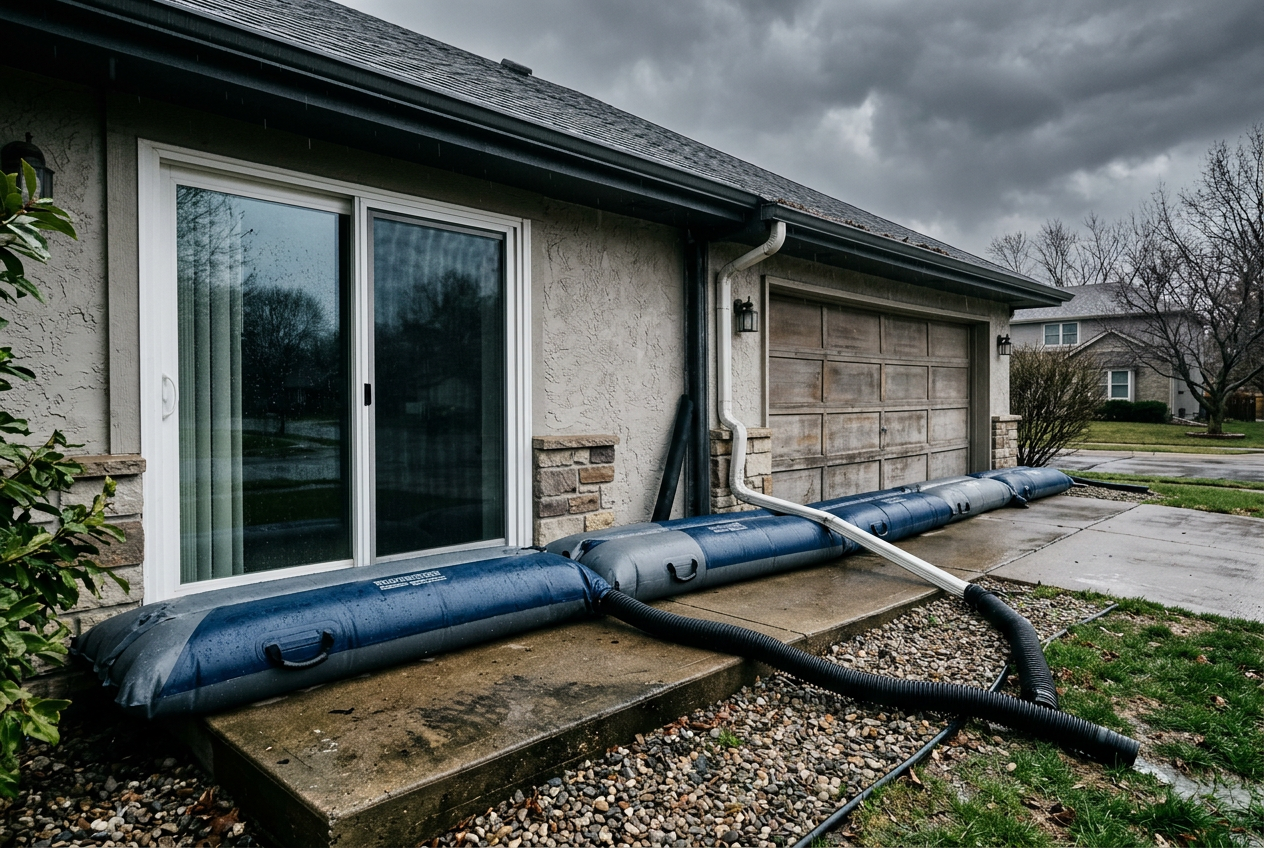
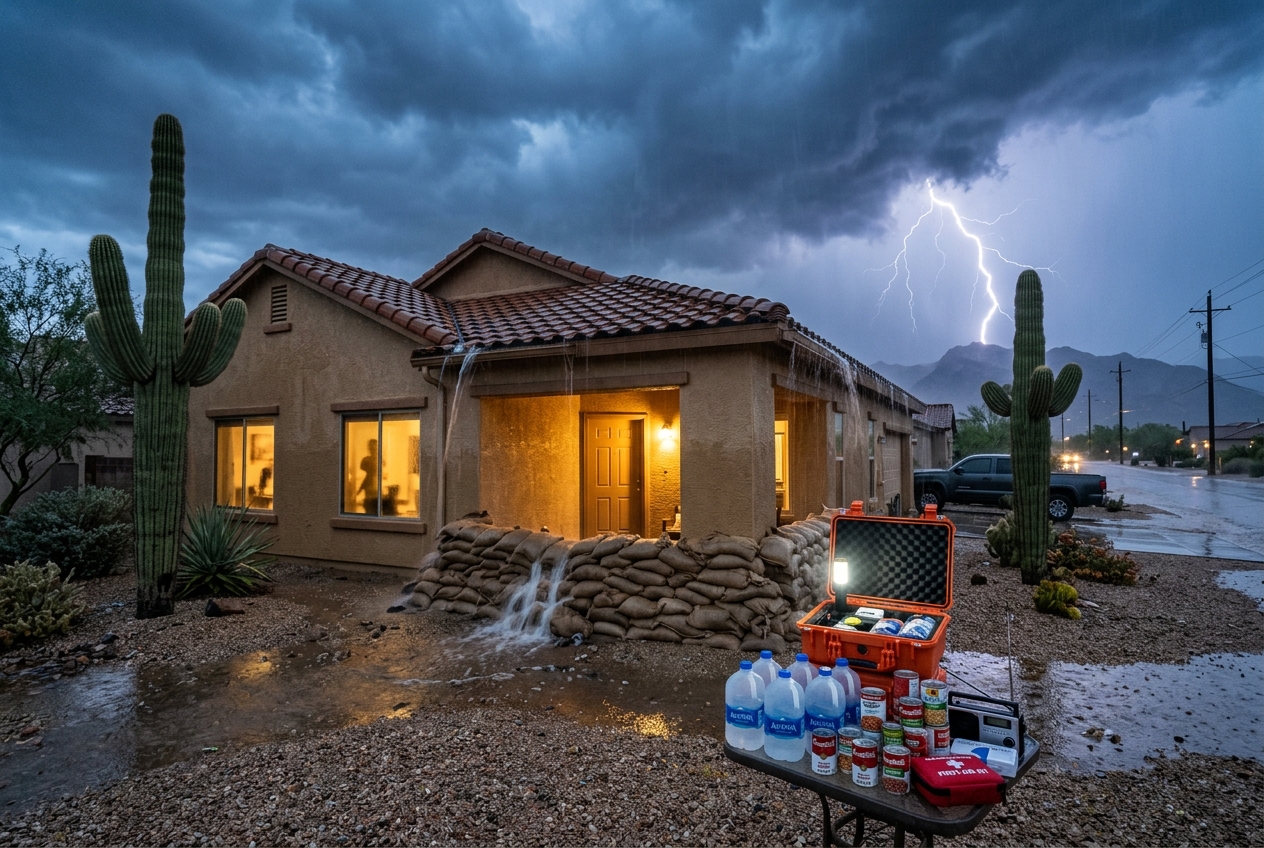
The best time to stop water is before it reaches your home. A few simple steps can push water away from doors and low spots. Start with these outside your house.
Move Water Away From Your Home
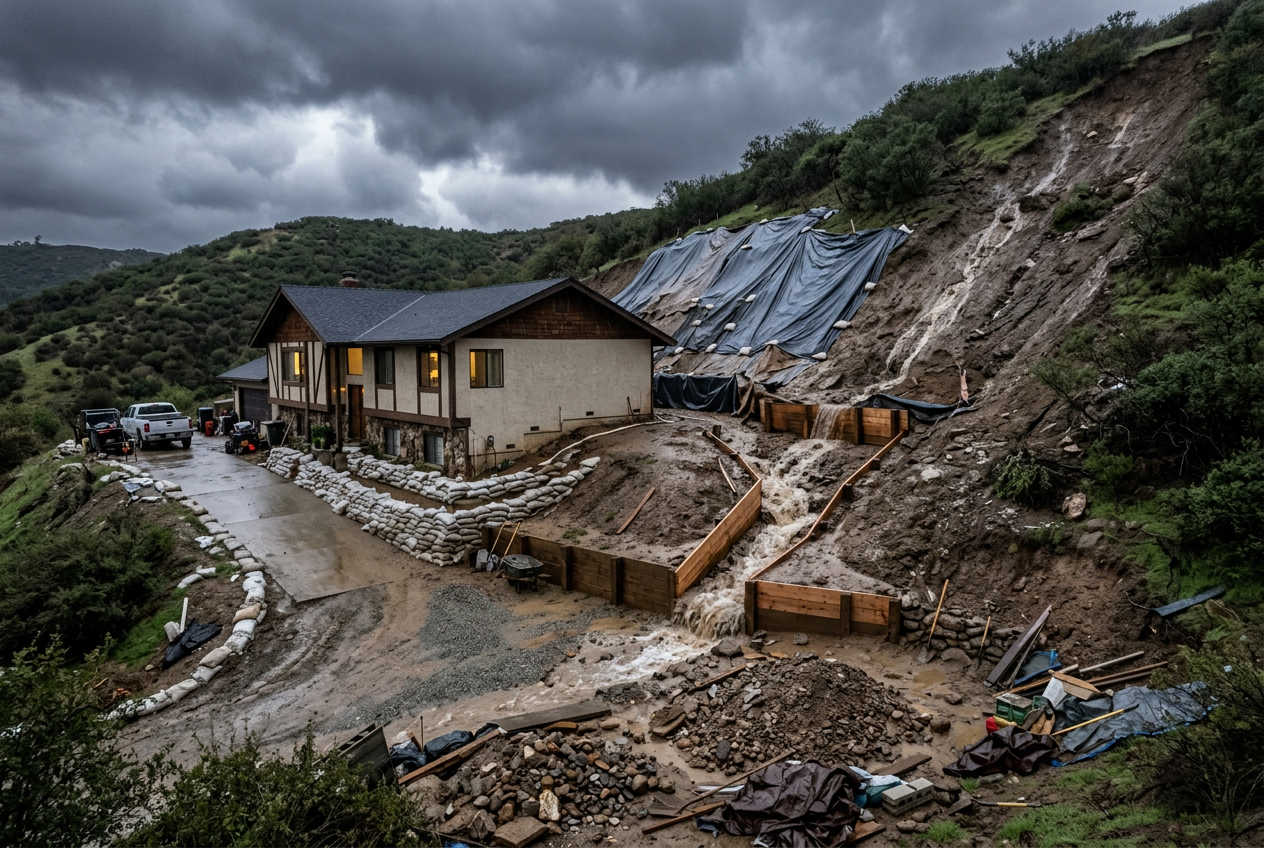
Look at the ground around your foundation. Water should flow away from the house, not toward it. If the soil slopes toward a wall, rain will pool there. You can add soil to build up low spots so the ground tilts away from the home. This is called grading.
Next, check your downspouts. These are the pipes that carry rain off your roof. If a downspout dumps water right next to the wall, add an extension. Point it so water runs several feet away onto the yard or driveway.
Then clear your gutters. Leaves and dirt can block them. When gutters clog, water spills over and lands next to your foundation. Clean them before the storms come.
Clear Debris From Nearby Washes
In Arizona, many homes sit near washes. A wash is a dry channel that fills fast during heavy rain. Walk the area near your home. Look for branches, trash, or built-up dirt that could block the flow. Clearing this helps water move past your property instead of backing up toward it. Do not enter a wash during or after rain. Only clear debris when it is dry and safe.
How Water-Activated Barriers Work
Some doors and openings sit low to the ground. Sliding glass doors and garage thresholds are common weak spots. Water finds the lowest gap and slips right in. A barrier can help here.
Water-activated barriers are a simple option. You lay them flat in front of the opening. When water touches them, a gel inside swells up and the barrier expands. There is no sand, no shovel, and no heavy lifting. They fold up small, so you can store them until you need them.
These barriers are made for sliding doors, french doors, and similar spots. Each one is about 6 feet long. You can place them end to end to cover a wider opening. They work well in front of a sliding door or around a leaking appliance. Lay them down early, before water arrives, so the gel has time to activate. Follow the directions that come with the product.
Know the Limits
Barriers help, but they are not magic. They slow and divert water. They do not stop a major flash flood. Flash floods move fast and carry mud and rocks. No home barrier can hold that back.
Use barriers for slow seepage, small pooling, and nuisance water at doors. If a strong flash flood is coming, do not stay to defend your home. Get to higher ground and follow local alerts. Your safety matters more than your property.
Get Water Out: Removing Standing Water Safely
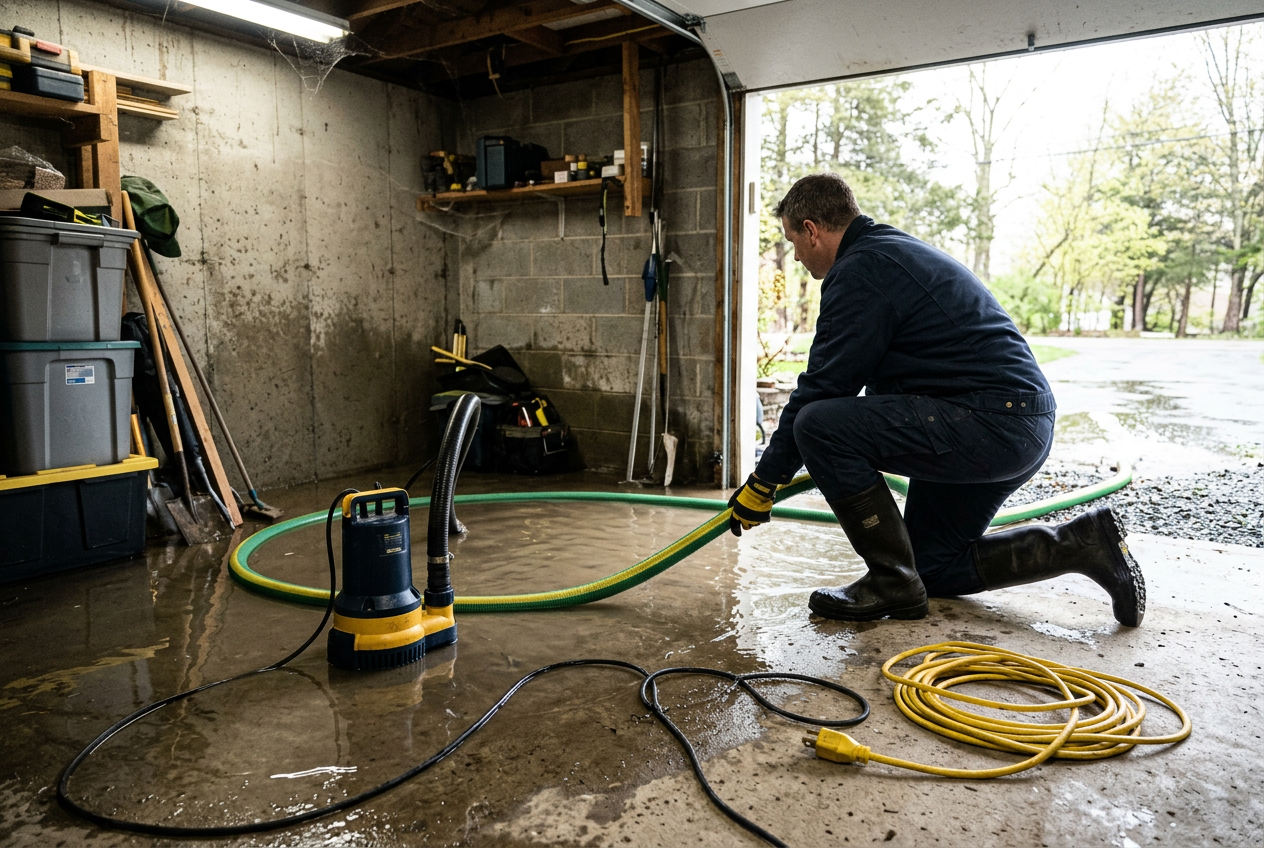
Storms can push water into your garage, a basement window well, or a low room. Once the rain stops and the area is safe, you may need to remove standing water. Here is how to do it without getting hurt.
Safety First: Stop and Look Before You Step In
Never walk into standing water until you know it is safe. Water can hide two big dangers.
The first is electricity. If water touches outlets, cords, or appliances, it may be charged. You cannot see this. Do not step in. First, shut off power to that area at your breaker box. Only do this if you can reach the breaker box without standing in water. If you are not sure, call a licensed electrician or your power company.
The second danger is contamination. Floodwater can carry sewage, chemicals, or sharp debris. Wear rubber boots and gloves. Keep it off your skin when you can. Keep children and pets away.
If the water is deep, moving, or you smell gas, do not enter. Leave and call for help.
How a Submersible Utility Pump Works
A submersible utility pump is a small pump you set down into the water. You plug it in, and it pushes water out through a hose to a drain, a street, or a lower spot outside. When the water is gone, you unplug it to stop.
These pumps are rated by how many gallons per hour (GPH) they move and how high they can lift water. Lift height matters if you need to push water up and out of a window well or garage.
Plug the pump into a GFCI outlet when you can. A GFCI outlet cuts power fast if it senses a problem near water. Keep the plug and cord up out of the water. Follow the directions that come with the pump.
Here are two submersible pumps built for this kind of job.
This pump moves up to 4500 GPH and can lift water up to 30 feet high. Its bottom suction design pulls water down to about 1/5 inch from the floor. That is helpful when you want to clear most of the water from a garage or window well.

This one moves up to 4755 GPH and lifts water up to 36 feet. It comes with a 23 foot hose and a filter bag that blocks small debris. The filter helps the pump keep running without clogging on clean or lightly dirty water.
Both pumps are made for clean or lightly dirty water, not heavy mud or sewage.
When to Call a Professional
Call for help if the water is deep, if it reaches outlets or your electrical panel, or if it carries sewage. Call a pro if water keeps coming back after you pump it out. Some jobs are too big or too risky to handle alone. There is no shame in making the call.
Compare Your Water-Removal Options
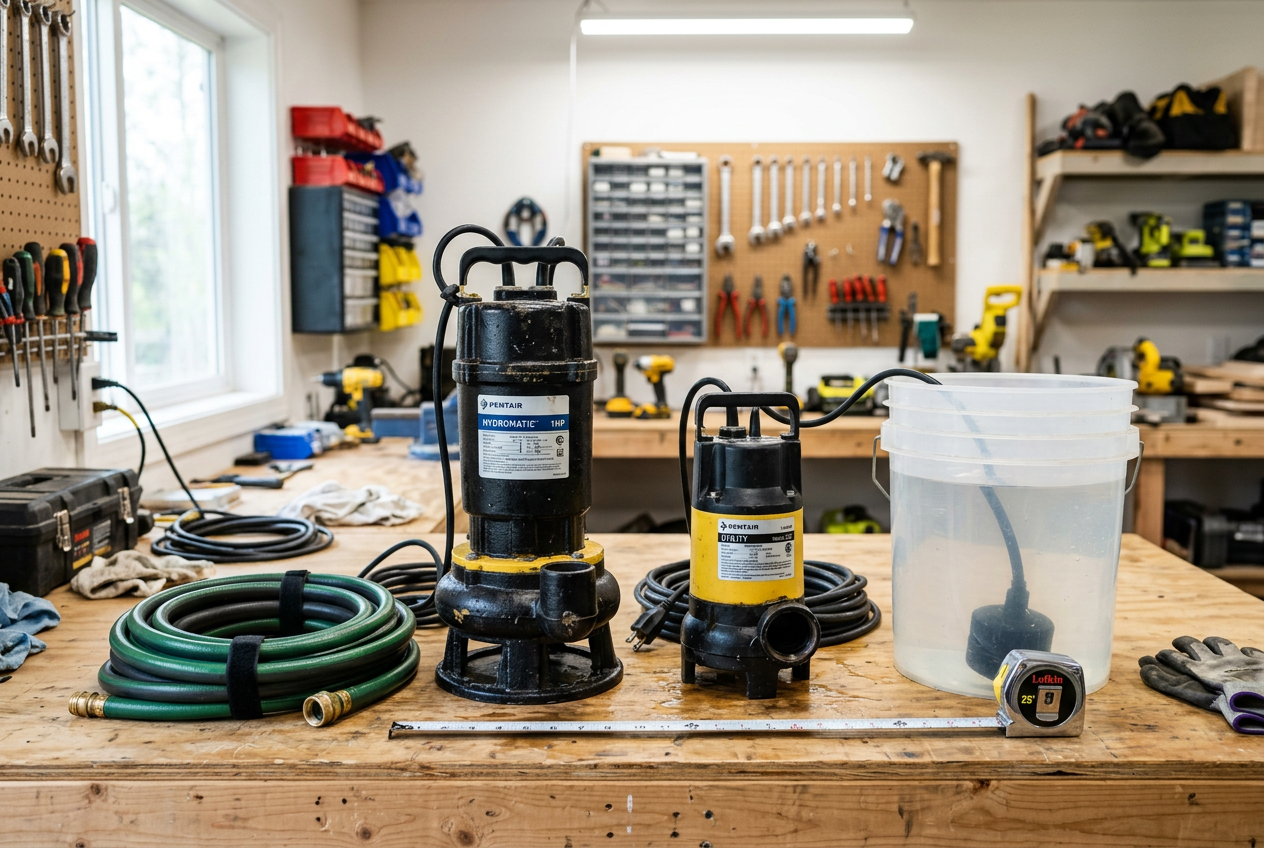
If flooding leaves standing water in your garage, basement, or yard, a submersible utility pump can help you move it out. You drop the pump into the water. It pushes water up through a hose and away from your home. The goal is to pick the right pump for your situation, not the biggest one you can find.
Below are two pumps you can compare on their specs and design.
What the numbers mean
Flow rate is how fast the pump moves water. It is measured in gallons per hour, or GPH. A higher number means the pump clears water faster. Both of these pumps are strong, so either one can handle a flooded garage or window well.
Lift height is how high the pump can push water. If you need to send water up and out of a basement or over a wall, lift height matters. The SEESII pump lifts water up to 36 feet. The AQUASTRONG pump lifts up to 30 feet. For most ground-level garages, both have more lift than you need.
Hose makes a difference
The SEESII pump comes with a 23 foot hose. That is handy if you want to move water well away from your home right out of the box. The AQUASTRONG pump does not include a hose. It comes with a discharge fitting and adapters, so you would need to add your own hose that fits. Factor that in before you buy.
Match the pump to your job
If you want a ready-to-use kit with a long hose for yard or driveway drainage, the SEESII is the simpler choice. If you mostly need to clear a flooded garage, window wells, or a low spot and you already have a hose, the AQUASTRONG works well and lets you pick your own hose length.
Important: clean or lightly dirty water only
These are utility pumps for clean or lightly dirty water. They can handle small bits of debris, but they are not sewage pumps. Do not use them for raw sewage or heavy sludge. Floodwater can also be dirty or unsafe. Wear gloves, keep electrical cords dry and away from the water, and plug into a protected outlet. If you are not sure the water is safe or the job is too big, call a professional.
Stock Up: Three-Day Supplies and a Family Plan
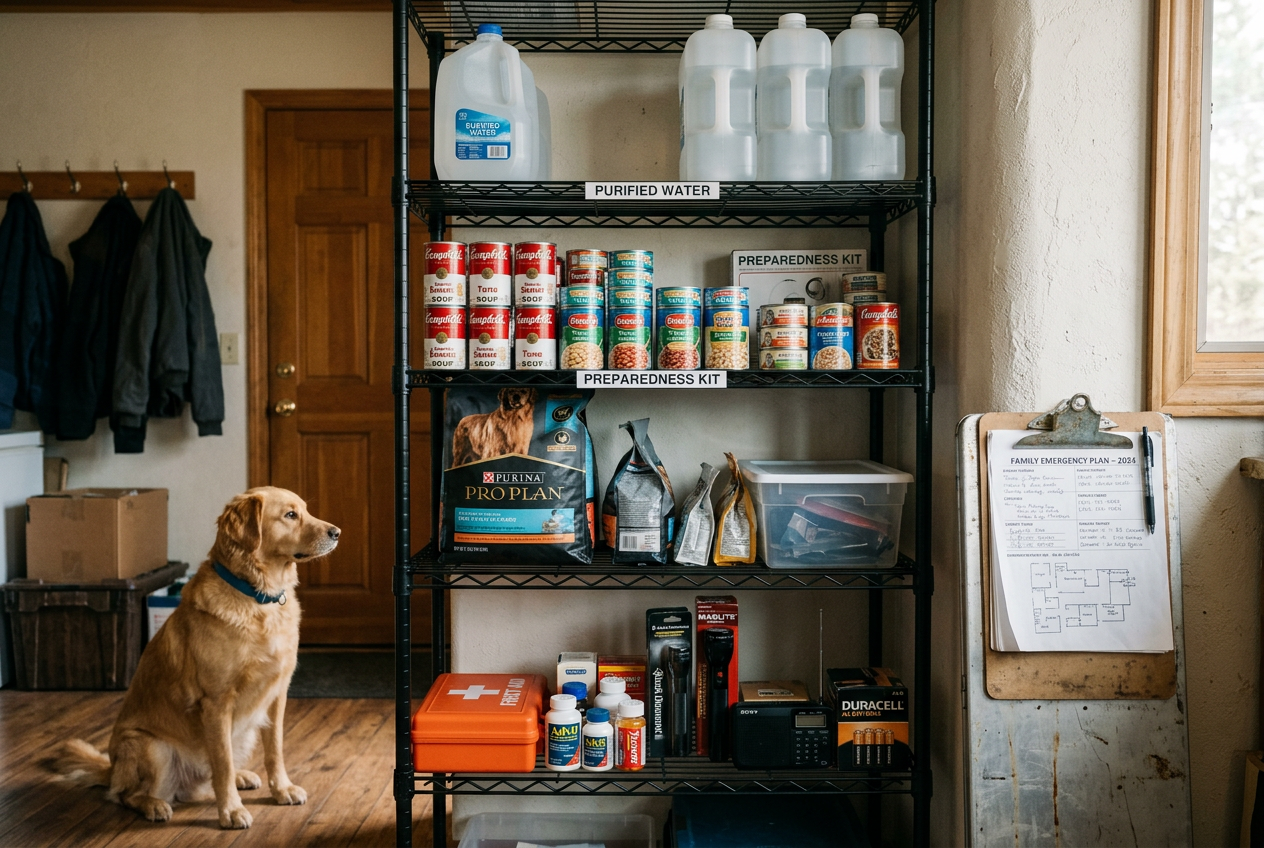
Storms can cut power and block roads. When that happens, help may not reach you right away. The fix is simple. Get your supplies and your plan ready now, before the rain starts. Doing this during a storm is too late.
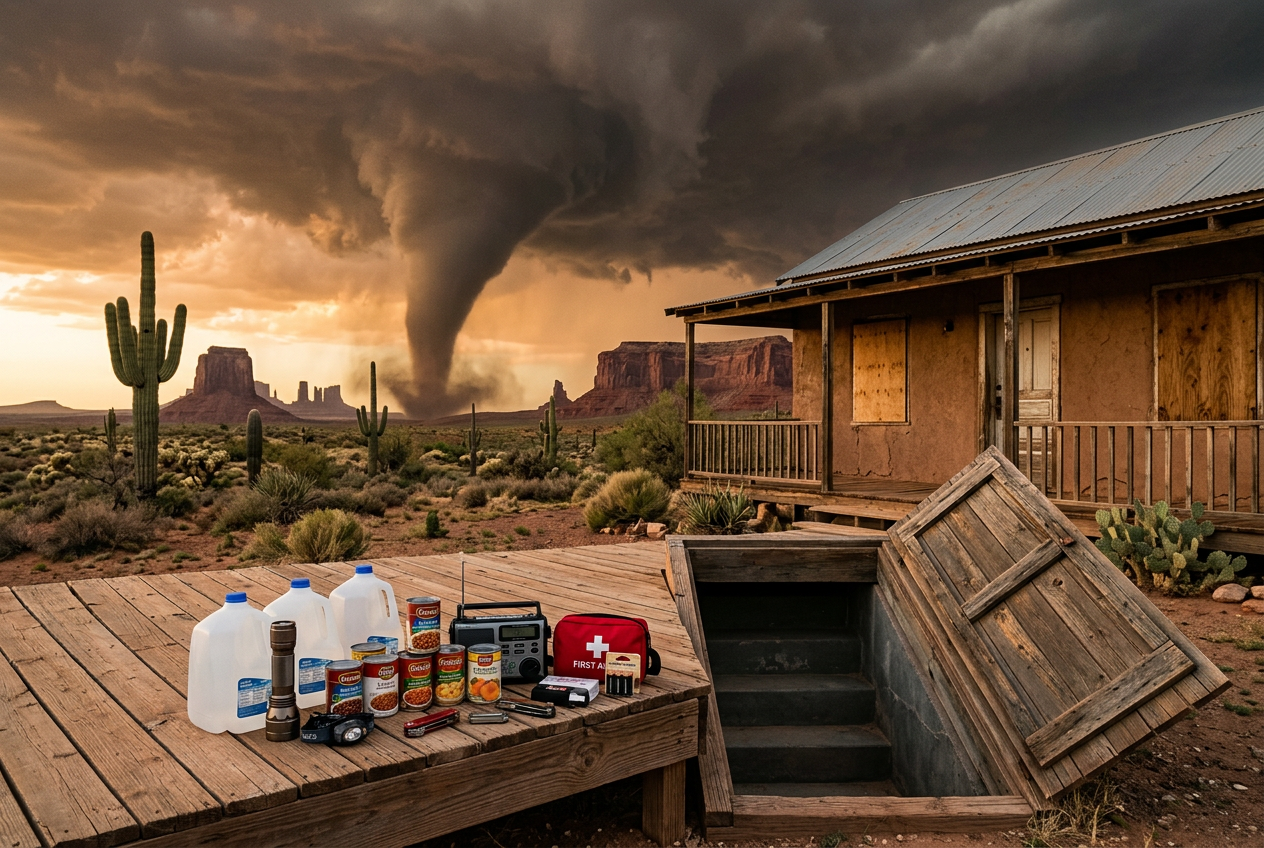
Store At Least Three Days of Supplies
Plan to care for your household for at least three days on your own. That means water, food, and medicine for every person. Do not forget your pets. They need food and water too.
Here is a simple starting list:
- Water. Store enough drinking water for three days. Keep extra for cooking and pets.
- Food. Pick foods that do not need cooking or a fridge. Canned food, peanut butter, and crackers work well. Keep a manual can opener nearby.
- Medicine. Set aside a three-day supply of any medicine your family takes. Include pet medicine if needed.
- Flashlights and batteries. Have a flashlight for each person. Store spare batteries. Do not rely on candles.
Check your supplies now. Some items may be expired. Replace them so they are ready when you need them.
Keep a Way to Hear Alerts
If the power goes out, you still need weather news. A hand crank emergency radio keeps working without wall power. You can charge it by crank, solar, or USB. Many models also pick up NOAA weather bands and can charge your phone.
A good pick is the RunningSnail solar hand crank radio. It has NOAA weather bands, a flashlight, and a battery bank for your phone. The Eoxsmile emergency radio is another option with a loud NOAA alert and SOS alarm.
Make a Simple Family Plan
Supplies are only half the job. Your family also needs a plan. Flooded roads can split your household apart fast. Talk it over now while things are calm.
Cover these basics:
- Where to go. Pick a safe spot to meet if roads flood and you cannot get home. Choose a place on higher ground.
- How to talk. Phone lines may be busy or down. Pick one person outside the area everyone can call or text. A text often goes through when a call will not.
- Who needs help. Think about kids, older family members, and anyone with special needs. Plan how you will reach them.
- Pets. Decide where pets will go if you must leave. Not all shelters take animals.
Write your plan down. Make sure everyone knows it. Keep a copy with your supplies.
Do these steps this week. You cannot shop or plan once the water is rising. A little work now keeps your household safe later.
Driving and Evacuation: Turn Around, Don’t Drown
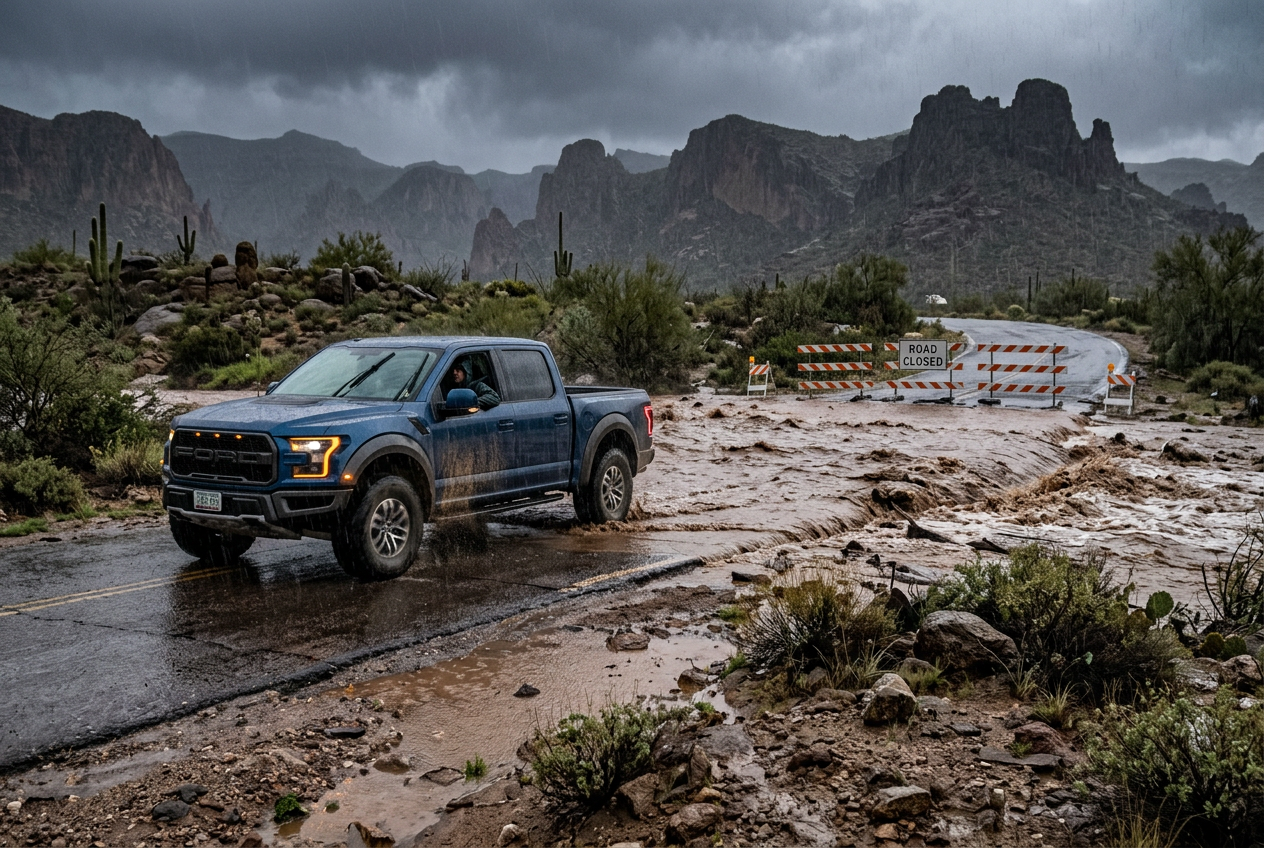
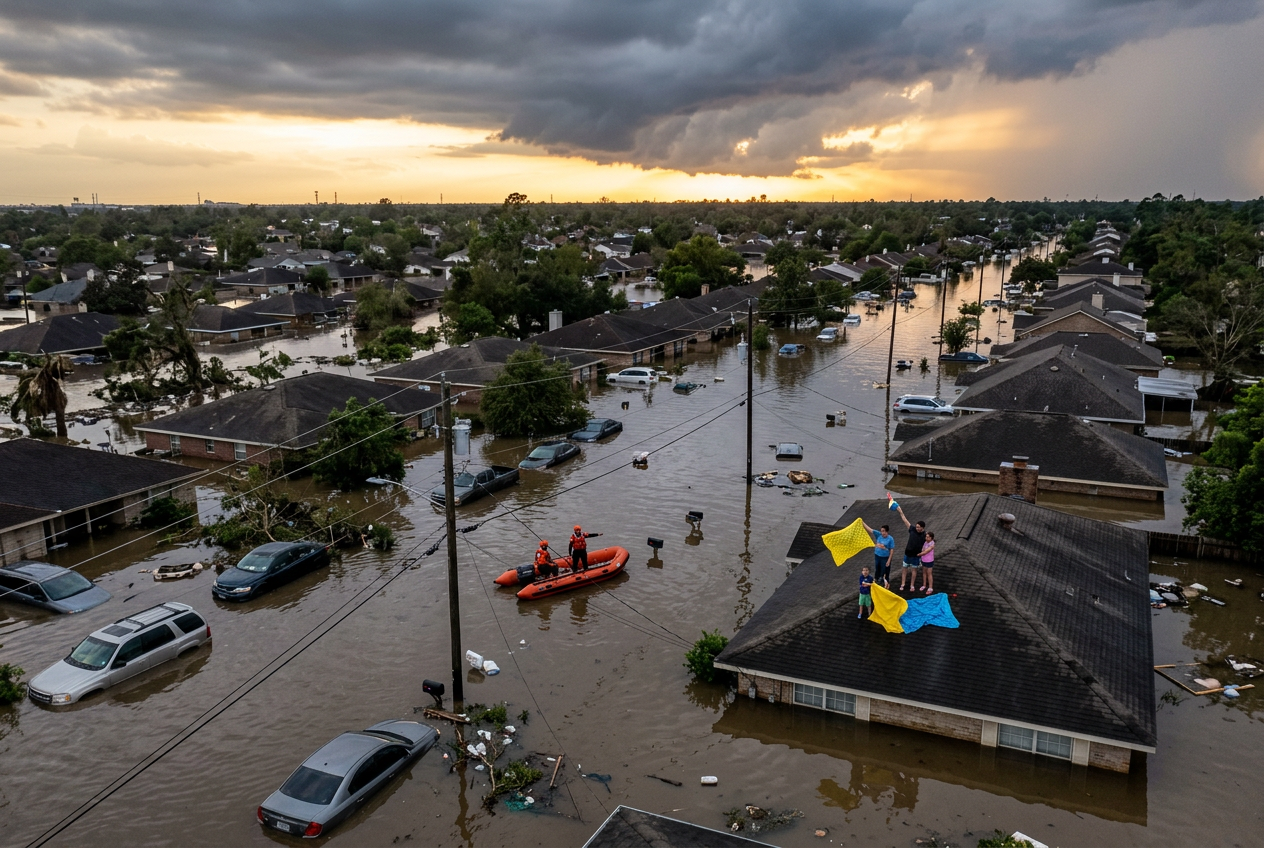
In Arizona, many flood deaths happen in cars. A flooded road may look shallow. It is not. Water can be deeper and faster than it looks. Just a small amount of moving water can push a car off the road. You cannot tell how deep a wash is just by looking at it. So the rule is simple. Turn around. Do not drown.
Never Drive or Walk Through Flooded Water
Do not drive into water on a road. Do not drive across a flooded wash. Even if other cars went through, do not follow them. The road under the water may be washed away. Your car can stall, float, or get swept downstream.
Walking is not safer. Moving water can knock you off your feet. Six inches of fast water is enough to make you fall. Stay out of flooded washes and low spots, even on foot. If you see water on the road, find another way.
Watch for Alerts Before You Leave
Check the weather before any trip this winter. Listen for flood watches and warnings. A watch means flooding is possible. A warning means flooding is happening or about to happen. If a warning is out for your area, delay your trip if you can.
A battery or crank weather radio helps when you lose power or cell service. It can wake you with a loud alert. Keep one in your home and think about one for your car.
Know Your Higher-Ground Routes
Pick your safe routes now, before a storm. Think about the roads you use every day. Which ones cross washes or dip through low spots? Those flood first. Plan another way that stays on higher ground.
Have more than one route. The road you planned may be closed. Keep a paper map in your car in case your phone dies. Talk with your family so everyone knows where to meet if you get split up.
Leave Early, Not Late
The safest time to leave is before the water rises. If local officials tell you to evacuate, go right away. Do not wait to see how bad it gets. Roads flood fast in the desert. Dry ground does not soak up heavy rain well, so water runs off quick and pools on roads.
Keep your gas tank at least half full during storm season. You do not want to search for fuel while roads are flooding. Pack a small bag with water, medicine, phone chargers, and supplies for pets. Put it by the door so you can grab it and go.
If you get caught by rising water, leave the car and move to higher ground if you can do so safely. Your life matters more than your vehicle.
FAQ: El Niño and Arizona Winter Flooding
Here are answers to common questions about flooding this winter. Keep these in mind as you prepare.
Do desert areas like Arizona really flood?
Yes. Arizona can flood, and this winter may bring more water than usual. Forecasters warn that a potentially historic El Niño winter could bring heavy rain and mountain snow to Arizona and the West. Dry desert soil does not soak up water well. Rain runs off fast. That water fills washes and low spots in minutes. So even a dry desert can see fast, dangerous flooding.
How deep does water need to be to be dangerous?
Less deep than most people think. Moving water is strong. It can knock you down or carry a car away. You cannot always tell how deep water is or how fast it moves. You also cannot see what is under it. The road may be washed out. That is why the rule is simple. Turn around, don’t drown. Never walk or drive into flood water. Find another way around.
How long does flood insurance take to start?
Often about 30 days. Many policies from the National Flood Insurance Program, or NFIP, have a waiting period of around 30 days before coverage begins. That means you cannot wait until a storm is close. If you want flood coverage for this winter, you need to act early. Call your insurance agent now and ask two things. First, does your current home policy cover flooding? Many home policies do not. Second, how long until flood coverage starts? Do not assume you are covered. Check before the storms hit.
Does my regular home insurance cover flooding?
Usually no. Standard home insurance often leaves out flood damage. Flood coverage is usually a separate policy. Review your insurance now. Confirm what you have and what you do not. If you need flood coverage, start the process early because of the waiting period.
How can I check my flood risk?
Use a flood map for your address. FEMA flood maps can show if your home sits in a higher risk area. Your county may also have local hazard maps. Look up your street before the rain comes. Knowing your risk helps you plan. If you live near a wash or in a low spot, you may need barriers and a plan to get out early.
How should I get storm warnings?
Use more than one alert source. Follow trusted local sources and sign up for local emergency alerts. A weather radio is a good backup when the power goes out. It can warn you day or night. Do not rely on just one way to get news. Phones can lose signal, and power can go out during storms.
How much water and food should I keep?
Enough for at least three days. Store water, food, and medicine for each person and pet for three days or more. More on this is in the supply section above.
Your Action Checklist Before the Storms Hit
Use this checklist to get ready step by step. It starts with free actions. Then it moves to things you may want to buy. You can do the first steps today. Work down the list as you have time. To save it, just print this page.
Free Steps You Can Do Today
1. Check your flood risk. Look up your address on the FEMA flood maps. Find out if you sit near a wash, a low spot, or a known flood zone. This tells you how much risk you face. It also helps you plan where to put barriers later.
2. Sign up for weather alerts. Turn on alerts on your phone. Follow your county emergency office and trusted local news. These warnings give you time to act before a storm hits. Do not rely on one source alone.
3. Clear your drainage. Walk around your home. Clean out gutters and downspouts. Clear leaves and dirt from any drains near your yard. Move water away from your doors and walls. This simple step costs nothing and helps a lot.
4. Make a family plan. Talk with everyone in your home. Pick a meeting spot. Decide who grabs what if you must leave fast. Write down phone numbers in case your phone dies. Do not forget plans for pets.
Review Your Insurance Now
5. Check your flood coverage. Most home insurance does not cover floods. You may need a separate flood policy. A new flood policy often takes about 30 days to start. So do not wait. Call your agent and ask what you are covered for today.
Steps That May Need a Purchase
6. Stock three days of supplies. Store enough water, food, and medicine for three days. Plan for every person and every pet. Keep flashlights and extra batteries where you can find them. A weather radio helps you hear alerts even in a power outage.
7. Position your barriers. Get your door barriers ready before the rain comes. Place them at low entry points like sliding doors. Water activated bags are light and easy to store until you need them. Set them out when a storm is in the forecast.
8. Stage a pump. If water does get in, you will want to remove it fast. Keep a submersible utility pump ready in your garage. Know where you will drain the water. Test that you have the right hose or adapter before the storm.
Start at the top of this list. Even the free steps make your home safer. Each item you finish puts you further ahead of the next storm. Do not try to do it all in one day. Just start now, and keep going.
Next Steps: Start This Week
You do not need to do everything at once. Start with the free steps that protect you the most. Then add supplies as you go. A historic El Niño winter may be coming to Arizona. The best time to prepare is now, before the storms hit.
Do These Free Steps First
The most important steps cost nothing. Do them this week.
Know your flood risk. Look up your address on FEMA flood maps. Walk around your home and yard. Find the low spots. Notice where water flows during rain. Learn where the nearest wash is. Washes can fill fast with flash floods, even when the sky above you looks clear.
Turn on weather alerts. Make sure your phone gets Wireless Emergency Alerts. These warnings are free and automatic. Sign up for alerts from your county too. Follow trusted local sources for updates.
Make a family plan. Decide where your household will meet if you get separated. Pick a route to higher ground. Talk about what each person will do. Include your pets in the plan.
Check your roads. Learn which streets near you flood first. Plan safer routes now, before you are stuck choosing in the rain. Remember the rule: turn around, don’t drown. Never drive through moving water.
Then Add Key Supplies
Once the free steps are done, build up your supplies. Do not hoard. Just cover the basics for your household.
Store enough water, food, and medicine for at least three days. Plan for every person and pet. Keep flashlights and extra batteries where you can reach them. A weather radio helps you hear alerts even if the power goes out. A hand crank model like the RunningSnail solar hand crank radio can charge by crank, solar, or USB, so you are not stuck without warnings.
If your doors or low entry points are at risk, think about barriers. Water activated bags like the Flood Hero sandbags are light and easy to store until you need them. If you want a way to remove standing water fast, a submersible pump such as the AQUASTRONG utility pump can help. Read the earlier sections for safe use before you buy.
Use Your Checklist and Local Guides
This article includes an action checklist above. You can print this page to keep it handy. Check off each step as you finish it.
Your county may have its own El Niño guidance for your area. The sources linked at the end of this article point to county and state resources. Those can tell you about local flood maps, sandbag stations, and alert sign ups near you.
Start small. Start free. Do one thing today. Each step you take now makes your household safer when the wet winter arrives.
Sources and Further Reading
- Weathering LA Rain
- El Nino flood safety tips for California drivers
- Ten things to do right now to prepare for predicted severe …
- Winter Preparedness Tips for Homeowners | CIG
- Prepare for El Niño Storm Season
- El Niño 2026, 27: U.S. winter impacts and how to prepare - CARE
- Potentially historic El Niño winter could batter Arizona