Ready
Tornado Preparedness in the Southwest: How Desert Households Can Get Ready (2026)
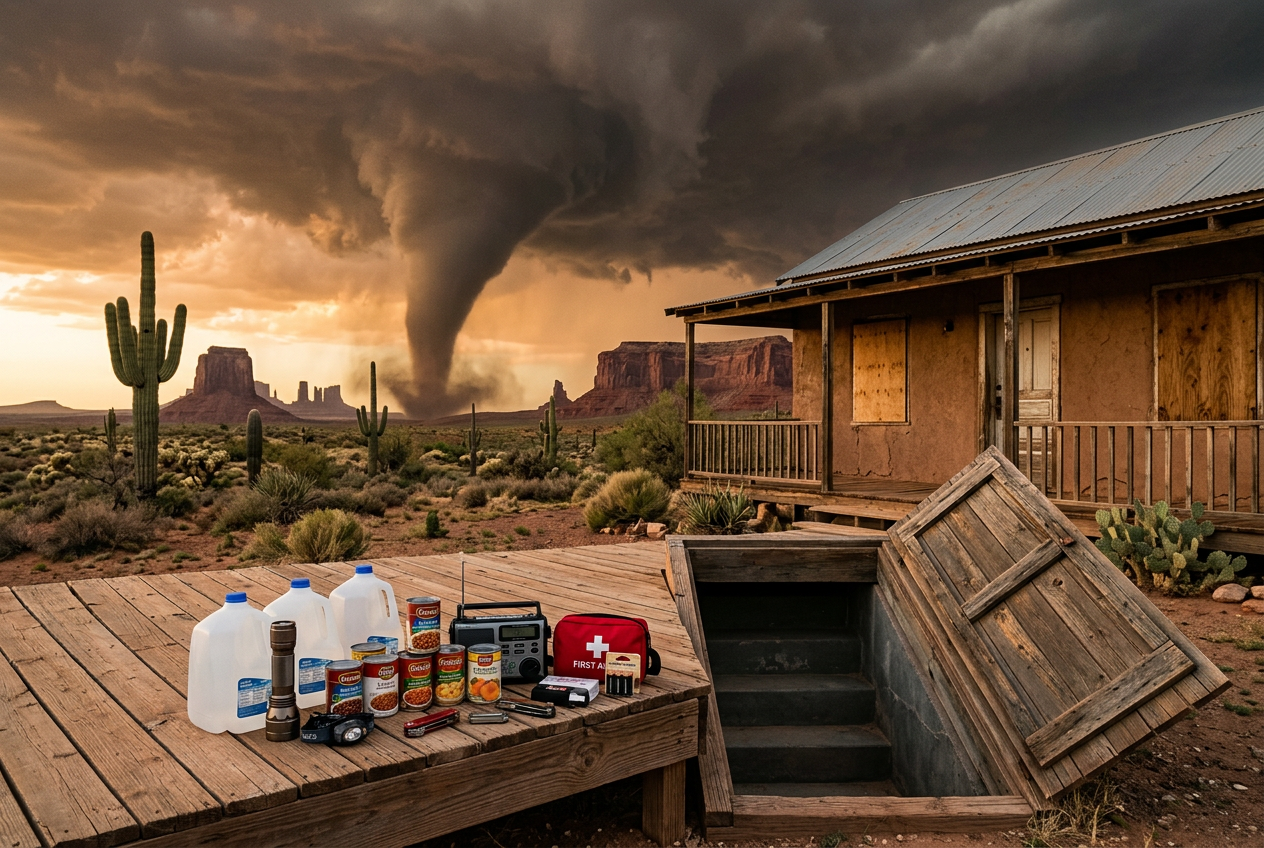
When people think of tornadoes, they picture the Midwest or the Deep South. They do not picture the desert. But tornadoes do happen in Arizona, New Mexico, and West Texas. They are less common here, and they often catch people off guard. That is part of the problem. When a storm is less expected, fewer homes are built to handle it.
Here is the bigger issue. Most desert homes have no basement and no storm cellar. In other parts of the country, those spaces are the first place people go. You may not have that option. So you need a different plan.
This guide is built for your situation. We will show you where to shelter when you have no basement. We will cover special steps for mobile and manufactured homes, which face extra risk in high wind. We will explain how to get storm alerts you can trust, so you are not relying on luck. We will also look at how tornado risk overlaps with monsoon storms, strong wind, and hail.
By the end, you will know how to pick a safe spot in your home. You will know how to get warnings early. You will have a simple 72-hour kit ready. And you will have a family plan you have actually practiced. The goal is simple. You will feel ready, not scared. Let’s get started.
- Tornadoes can and do hit desert states, so do not assume you are safe just because it is dry.
- Keep a NOAA weather radio ready so you get alerts even when the power and cell service are down.
- Build a kit with at least 72 hours of food, water, and first-aid supplies for everyone in your home.
- Pick a safe spot now, like a small interior room or hallway on the lowest floor, away from windows.
- Have reliable light sources charged and stored so you can see during a nighttime outage.



Reviewed by Marcus T., Elena V. & James W. — contributors with hands-on preparedness experience. How we test
Getting ready for a tornado means having the right gear on hand before the sky turns. Here are the items that help, and below you will find out exactly why each one matters.

Midland NOAA Weather Alert Radio
This radio warns you about more than 60 kinds of weather hazards for your exact area. It keeps alerting you even if the power goes out, so you get warning time to take cover.
Check Price on Amazon
4 Person 72 Hour Survival Kit
This backpack holds food, water, and an 85 piece first-aid kit for four people for three days. It keeps your family covered while you wait for help after a storm hits.
Check Price on Amazon
Rechargeable LED Camping Lanterns
These bright lanterns light up your safe room or hallway when the power is out. They also work as a power bank to keep your phone running during an emergency.
Check Price on AmazonIn this guide
Why Trust This Guide?
This article was researched and reviewed by contributors with hands-on experience in emergency preparedness. They have tested gear, built real systems, and lived through situations where these skills actually mattered.
Understand the Risk Where You Live
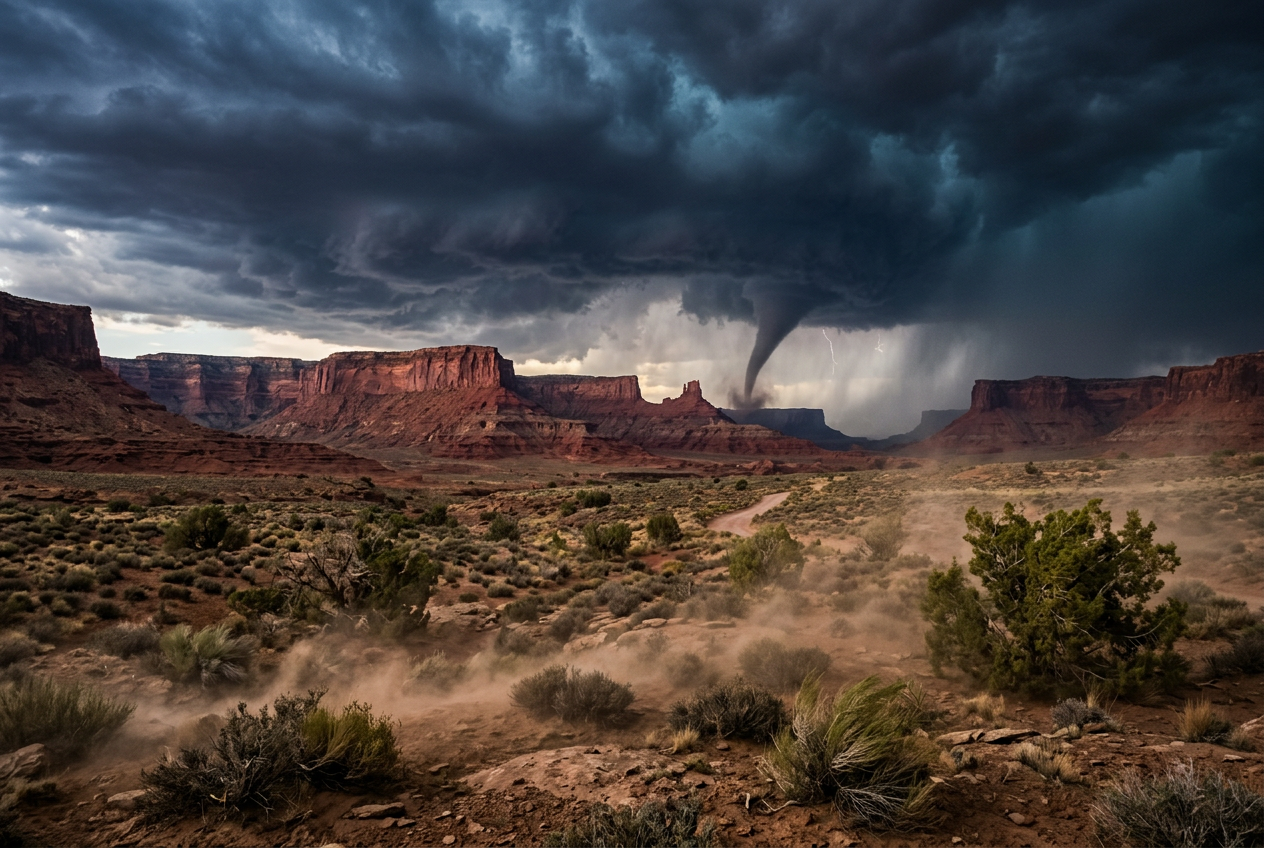
Tornadoes are not just a Midwest problem. They can happen in the Southwest too. Arizona, New Mexico, and West Texas all see them. They are less common here than in Tornado Alley. But they still happen, and they can still hurt people.
In the Southwest, tornadoes almost always come with severe storms. They do not just drop out of a clear sky. They form inside big, powerful thunderstorms. That means if a strong storm is in your area, the risk of a tornado goes up.
The Monsoon Season Connection
Many Southwest storms hit during summer monsoon season. These storms bring heavy rain, strong winds, and sometimes hail. A tornado can form inside one of these storms. So when monsoon storms roll in, pay attention to the sky and your phone.
Here is something important to know. A tornado is not the only danger in these storms. In fact, it may not even be the most likely one. Severe storms often bring damaging straight-line winds. These winds are not a tornado. They blow in one direction instead of spinning. But they can still knock down trees, tear off roof parts, and toss loose objects. Hail is another common threat. Hail can dent cars, crack windows, and damage roofs.
So when you prepare for tornadoes in the Southwest, you are really preparing for severe storms in general. The same safe room, the same kit, and the same plan help you with wind and hail too. That is good news. One set of steps covers several threats.
Tornado Watch Versus Tornado Warning
You need to know the difference between two words. They sound alike, but they mean very different things. Getting this right can keep your family safe.
A tornado watch means conditions are possible. The air is right for tornadoes to form. A watch covers a large area and can last for hours. You do not need to take cover yet. But you should stay alert. Keep your phone and weather radio on. Know where your safe spot is. Bring pets and loose outdoor items inside. Get ready to act fast if things change.
A tornado warning means take cover now. A warning means a tornado has been spotted or shows up on radar. This is the real thing. Do not wait. Go to your safe spot right away. A warning usually covers a smaller area and a shorter time. When you hear it, move.
Here is an easy way to remember it. A watch is like watching the pot, waiting to see if it boils. A warning means the pot is boiling, so act now.
Knowing these two words lets you act at the right time. You will not panic too early. And you will not wait too long. Later sections will show you where to shelter, how to get trusted alerts, and how to build a plan that fits your home.
How to Get Tornado Alerts You Can Trust
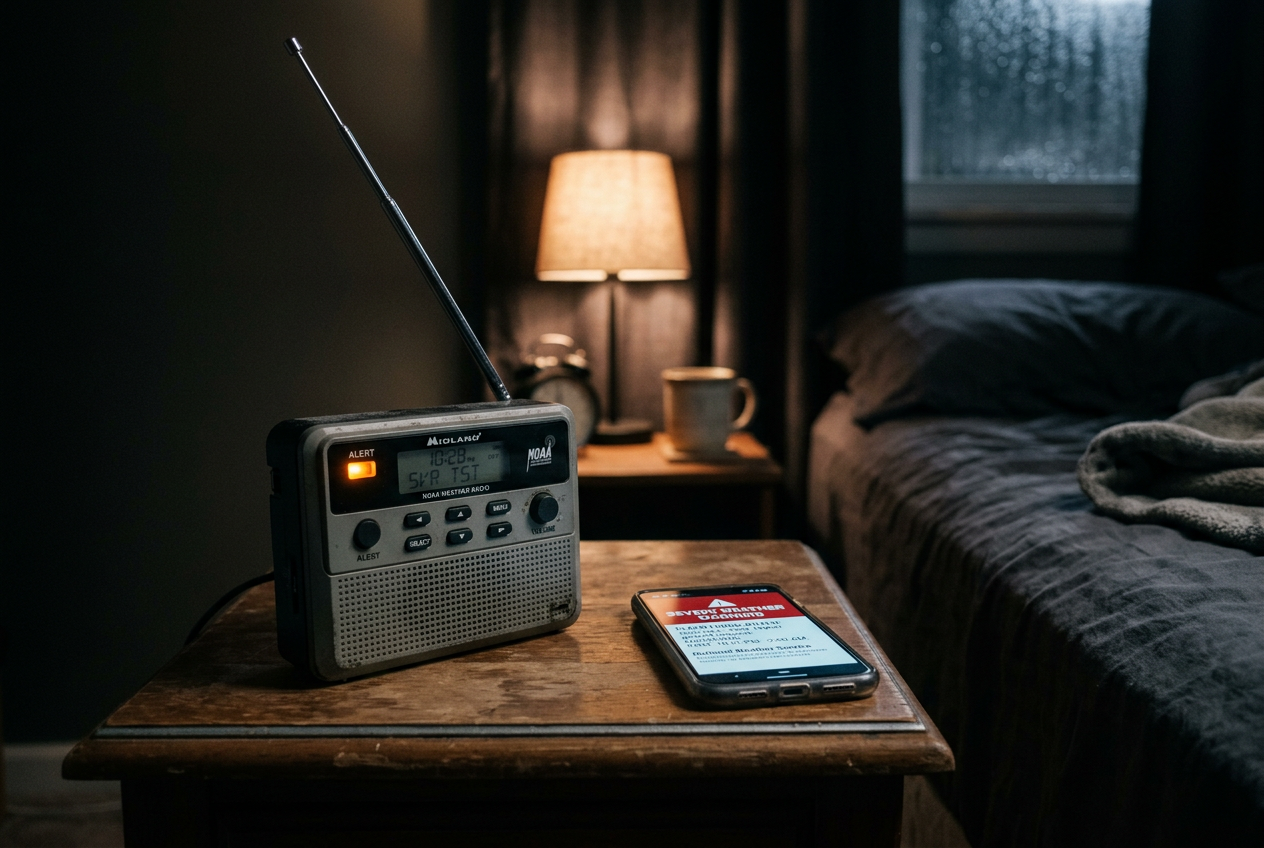
A tornado can form fast. You may have only minutes to act. The best way to stay safe is to set up more than one way to get warnings. If one method fails, another one still reaches you. This matters most at night, when you are asleep and cannot watch the sky or the news.
Start With Your Phone
Most phones already get Wireless Emergency Alerts. These are free messages from the government. They make a loud sound and show a warning on your screen. Your phone does not need an app for this. Check your phone settings and make sure emergency alerts are turned on. Keep the volume up at night so the sound can wake you.
Phone alerts are good, but they are not perfect. Your battery may die. The cell signal may drop during a storm. So you need a second method too.
Add a NOAA Weather Radio
A NOAA Weather Radio is a small device that listens to weather broadcasts all day and night. When a warning comes for your area, the radio sounds an alarm. This can wake you when a tornado warning hits at 3 a.m. That is why many households keep one by the bed.
This Midland model scans NOAA channels and alerts you to many kinds of weather hazards. It uses a trilingual display and color-coded alert indicators so you can see the alert type and how serious it is.
What S.A.M.E. County Codes Mean
Here is a common problem. A plain weather radio may beep for every warning in a wide region. That means it wakes you for storms far away. You stop trusting it. You may even turn it off. Then it cannot help you.
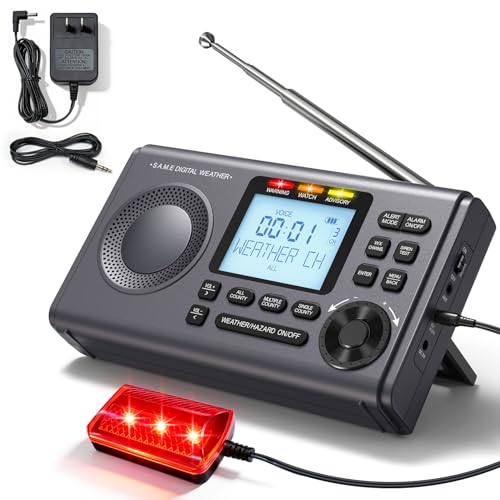
S.A.M.E. fixes this. S.A.M.E. stands for Specific Area Message Encoding. You enter a code for your own county. After that, the radio only alarms for your area. Fewer false alarms means you keep the radio on and you trust it.
This RunningSnail model supports S.A.M.E. codes for up to 23 counties. You can set All, Multiple, or Single county modes. It also has a battery backup and an external warning light, which helps during a power cut.
A Radio That Also Powers Up
Storms can knock out power. A radio with its own power source keeps working. This Mesqool model has a solar panel, a hand crank, and a large battery backup. You can also use it to charge a phone and as a flashlight.

Set up at least two methods today. Turn on phone alerts. Program a weather radio with your county code. Test both so you know they work before a storm comes.
Where to Shelter When You Have No Basement
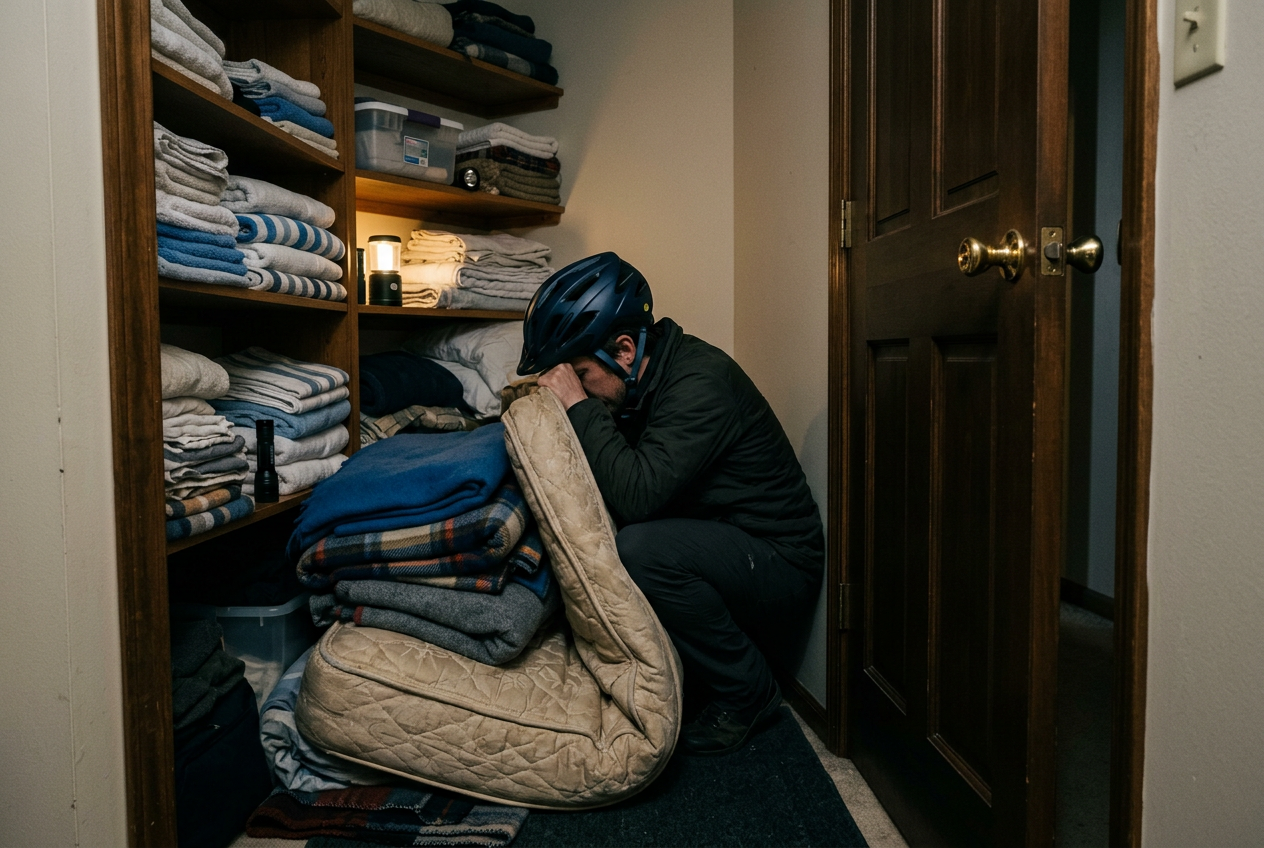
Most homes in the Southwest do not have a basement or a storm cellar. That is normal here. The good news is you can still find a safe spot inside your home. The goal is simple. You want to put as many walls as you can between you and the outside.
Pick the safest room
Start by looking for a small room on the lowest floor of your home. If you live in a single-story house, that means the ground floor. A small room is better than a big one. Small rooms have stronger walls and give flying debris less room to move.
Good choices include:
- A bathroom
- A closet
- A hallway in the center of your home
Stay away from outside walls. An outside wall is any wall that touches the outdoors. Pick a spot in the middle of your home instead. The more interior walls around you, the better.
Also stay away from windows. Windows break during a tornado. Broken glass and flying debris cause many injuries. A windowless room is the safest kind of room you can find.
If you cannot find a room with no windows, go to the room with the fewest windows. Then stay low and keep away from the glass.
Cover up to protect yourself
Once you are in your safe spot, the next step is to protect your head and body. Flying debris is the biggest danger during a tornado. Covering up can help keep you safe.
Here is what to do:
- Crouch down low to the floor.
- Cover your head and neck with your arms.
- Pull a blanket, a sleeping bag, or a mattress over you.
A mattress works well because it is thick and soft. It can shield you from debris. If you keep a spare mattress or thick blankets near your safe room, you can grab them fast.
A helmet is another smart tool. A bike helmet or a sports helmet protects your head from falling or flying objects. Head injuries are serious. If you have helmets at home, keep them close to your safe spot. Have one ready for each person in your household, including kids.
Make your safe spot ready now
Do not wait until a storm warning to get ready. Set things up ahead of time. Keep blankets, a mattress, or helmets in or near the room you picked. That way you are not searching for them when seconds count.
It also helps to keep a few other items in your safe spot. A flashlight or lantern lets you see if the power goes out. A charged phone lets you call for help. Sturdy shoes protect your feet from broken glass after the storm.
Walk through your plan with your family. Show everyone which room to go to. Practice getting there fast. When you already know where to go, you can act without panic.
Special Steps for Mobile and Manufactured Homes
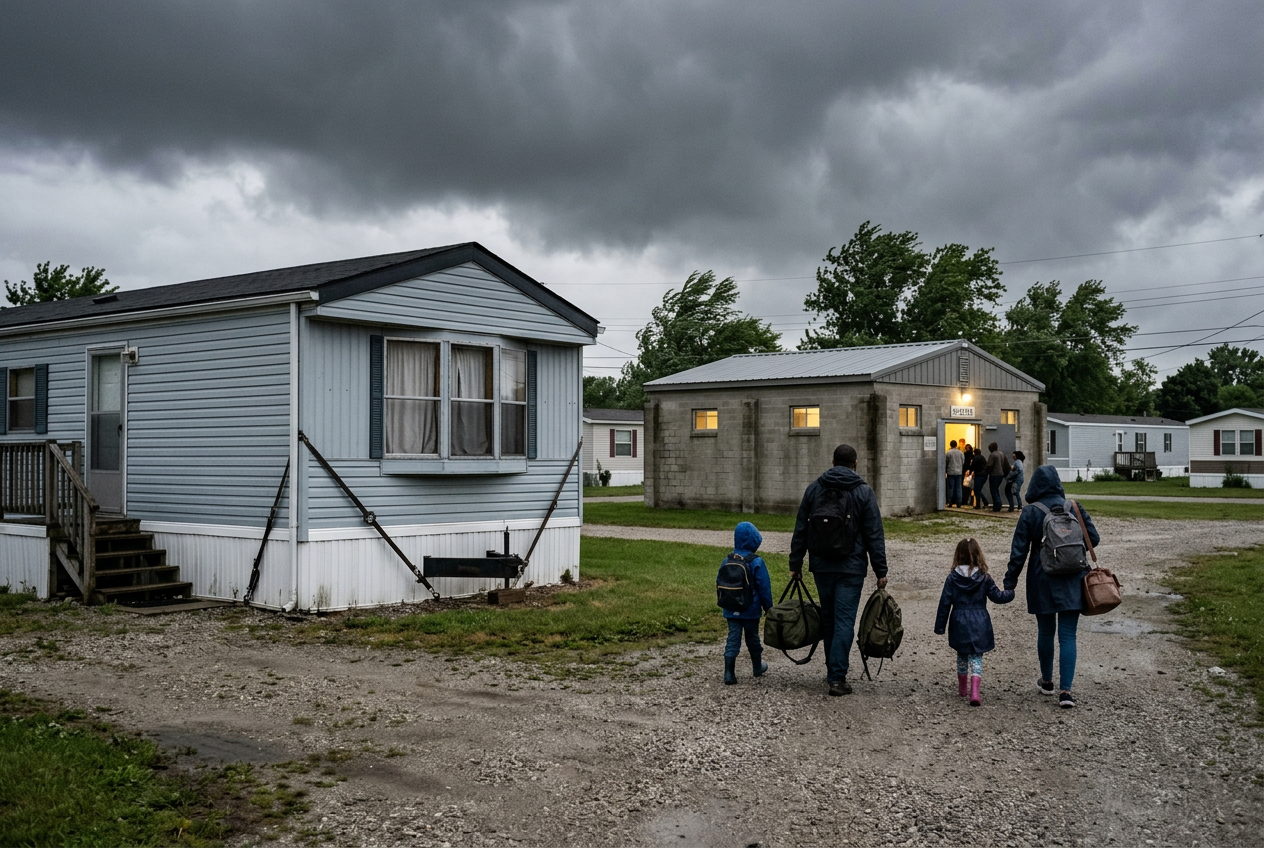
Mobile and manufactured homes are not safe places to be during a tornado. This is true even if your home is tied down with straps or anchors. Tie-downs help in normal wind. They do not protect you from a tornado. Strong tornado winds can lift, flip, or destroy these homes. The safest choice is simple. Leave early and go to a sturdier building.
Do not wait until you see the storm. By the time a tornado is close, it may be too late to drive or walk anywhere safe. You need to leave while you still have time. That means you should plan your move before storm season ever starts.
Find a Safer Building Now
Pick your safe spot ahead of time. The best option is a strong building with a basement or a small inner room on the lowest floor. Here are good choices to look for:
- A nearby community storm shelter or safe room.
- A public building like a library, church, or fire station that stays open during storms.
- A neighbor’s home that is built on a solid foundation, not a mobile home.
- A family member’s house that is close by.
Call your city or county office and ask if there is a public tornado shelter near you. Ask when it opens and how to get in. If a friend or neighbor has a sturdier home, ask ahead of time if you can come over when a warning is issued. It is much easier to ask now than during a storm.
Write down the address and the way to get there. Keep this note where you can grab it fast. Make sure every person in your home knows the plan.
Know When to Go
Timing matters most for mobile home residents. You need to act on a watch, not just a warning. Here is the difference in plain words:
- A watch means conditions are right for a tornado. This is your cue to get ready and think about leaving.
- A warning means a tornado has been spotted or shown on radar. This means go now.
Because your home is not safe, leave as soon as a tornado warning is issued for your area. Some people even choose to leave during a watch if storms look strong. If you must drive, know that heavy rain, wind, and hail can make roads hard to see and slick. Leave early enough to beat the worst of it.
Keep a way to hear alerts fast, even at night. A weather radio that sounds an alarm can wake you up and give you time to move. See the alerts section of this guide for more on this.
Do not try to ride out a tornado in a mobile home. The few minutes it takes to reach a stronger building can save your life. Plan your route, know your shelter, and go early.
Build a 72-Hour Kit and Keep Light On Hand
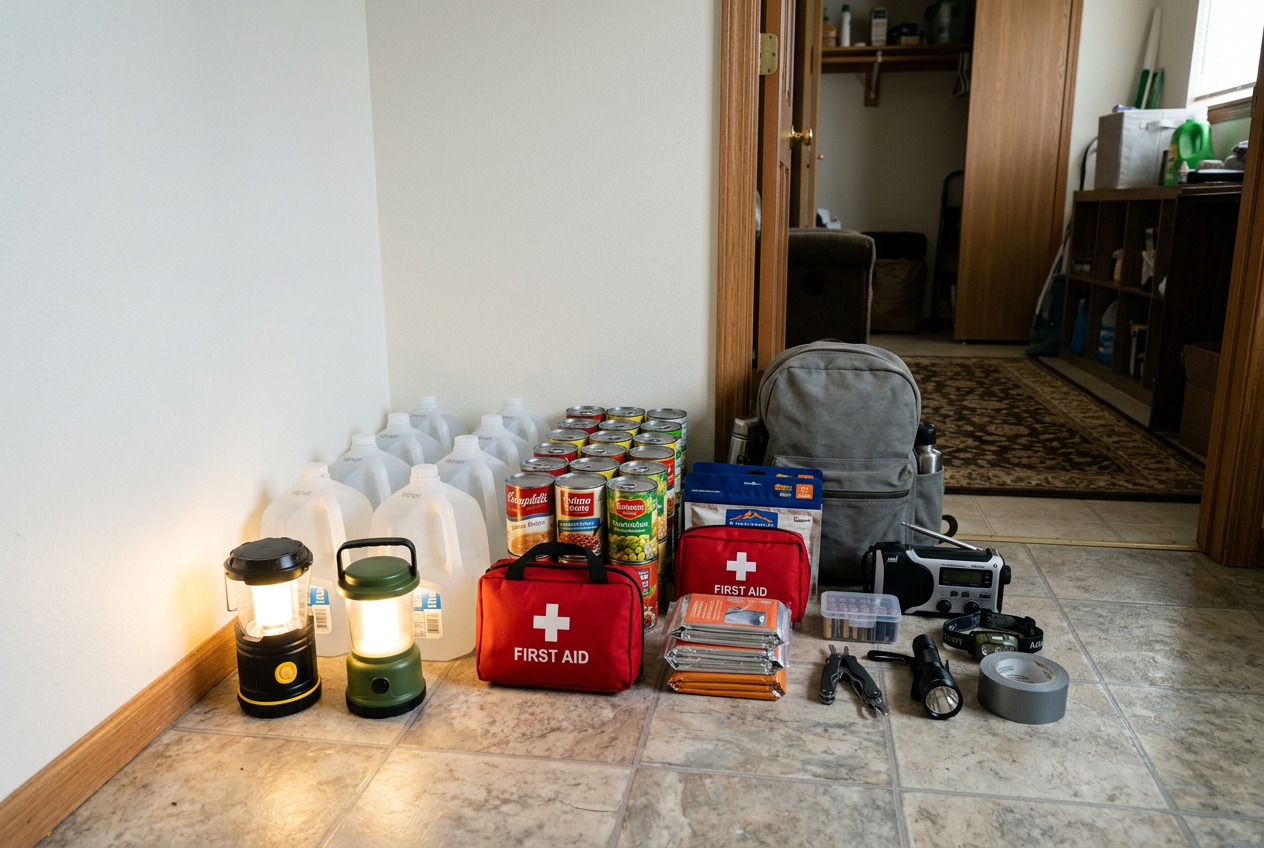
A storm can knock out power and block roads for days. You want enough supplies to care for your household for at least 72 hours, which is three days. Keep your kit in or very near your safe room. That way you can reach it fast when a warning hits. You do not want to search the house while a storm bears down.
What Goes in a 72-Hour Kit
Start with the basics. Here is what most households need:
- Water. Store enough for each person for three days. You use it for drinking and for cleaning.
- Food. Pack non-perishable food that needs no cooking. Think canned goods, bars, and sealed snacks.
- First aid. Keep a stocked first-aid kit on hand for cuts and scrapes.
- Shelter and warmth. Add blankets or materials to stay warm and dry. These also help if you need to cover yourself during a storm.
- Other items. A sealed container or bucket keeps everything together. Trash bags help with cleanup and sanitation.
You can build this kit yourself from items around your home. Or you can start with a ready-made kit and add to it. A pre-packed option saves time if you are new to this.
This kit covers food, water rations, a first-aid kit, and shelter and warmth items for four people. It comes in a backpack, so you can grab it and move to your safe spot fast. Check the contents when it arrives. Then add anything your family needs, like medicine or baby supplies.
Why Lanterns Beat Candles
You will likely lose power during a bad storm. It is tempting to light candles. Do not. A candle is an open flame. Storms can damage gas lines, and a gas leak plus an open flame is a serious danger. Candles also tip over easily in the dark.
Battery or rechargeable lanterns are the safe choice. They give steady light with no flame. Keep at least one in your safe room and spare batteries or a charge cable nearby.
Look for a lantern that is bright and can also charge your phone. That lets you keep a phone working to get alerts.
This rechargeable lantern puts out strong light and has a built-in battery that works as a power bank. A full charge lasts up to 12 hours. It is also water-resistant, which helps during a wet storm.
A solar option gives you another way to recharge if the power stays off for a while.
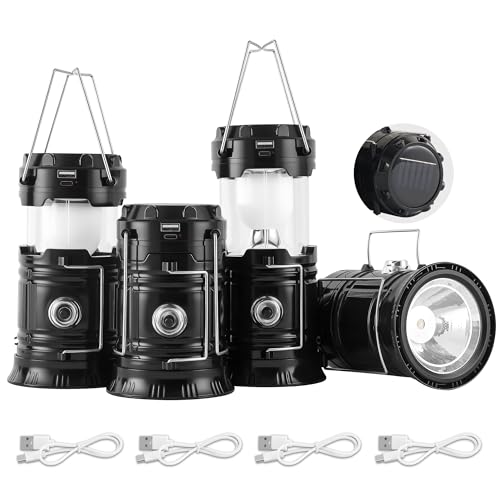
This collapsible lantern charges by USB or solar. It folds flat for storage and works as a flashlight or a lantern. Having more than one light means every person can keep one close.
Store your lights where you can find them in the dark. Check the batteries a few times a year so they are ready when you need them.
Comparison: Weather Radios and Emergency Lights at a Glance
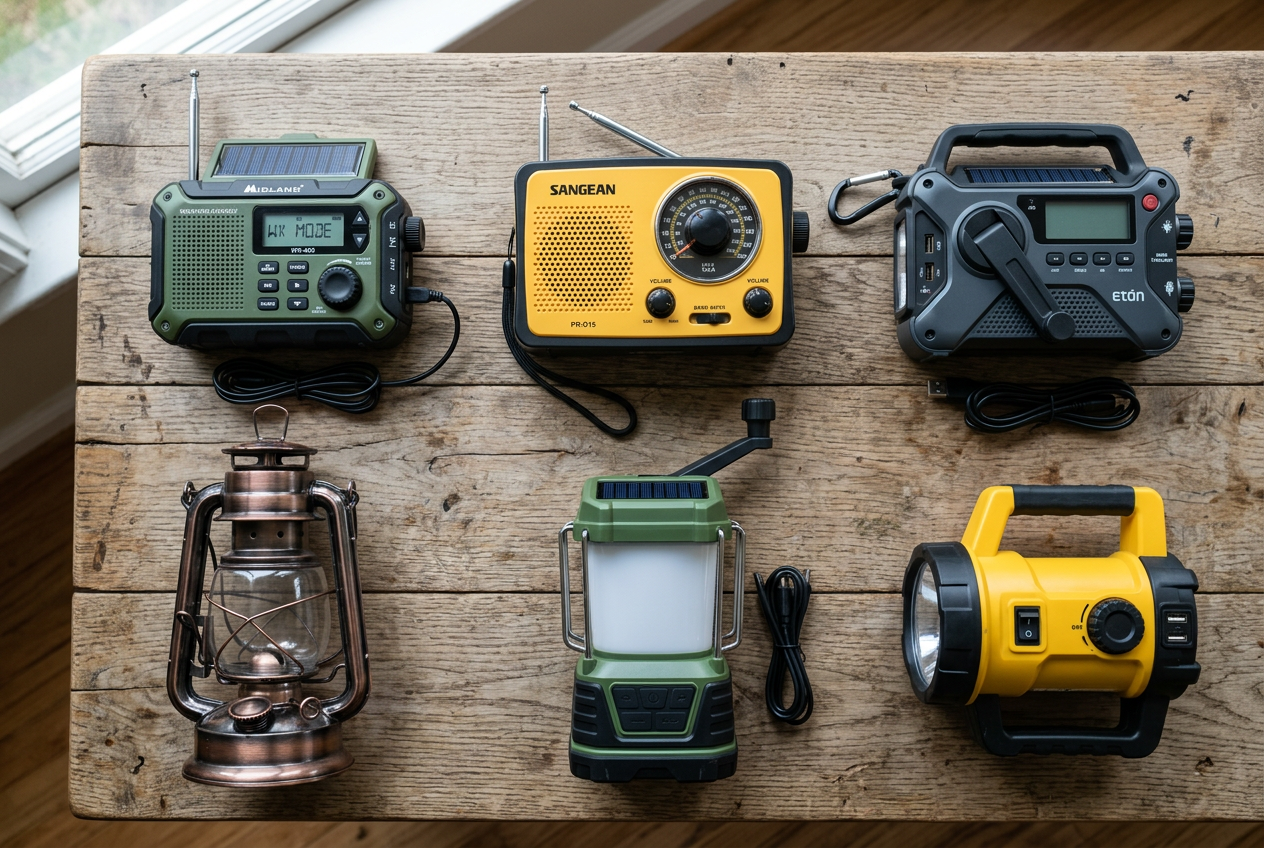
A good weather radio warns you fast. A good light keeps you going when the power is out. Below is a quick look at the products covered in this guide. Use it to match a product to what your home needs. All details come straight from the product listings.
Weather Radios Side by Side
All three radios pick up NOAA alerts. The big difference is how they get power and whether they use S.A.M.E. coding. S.A.M.E. lets you set your county codes so you only hear alerts for your area. That cuts down on false alarms.
The Midland WR120B and the RunningSnail radio both use S.A.M.E. coding. That makes them a strong pick if you want alerts just for your county. The RunningSnail adds battery backup and an external warning light. That helps if the power goes out during a storm.
The Mesqool radio works a different way. It charges by solar panel or hand crank. It also holds a 12000mAh battery and can charge your phone. If you worry about losing power for a long time, this one does not rely on a wall outlet.
Emergency Lights Side by Side
Both lanterns are rechargeable and come in multi-packs. The main choices are brightness, charging options, and whether they fold down for storage.
The LED Camping Lantern is the brighter option at 1800 lumens. A full charge lasts up to 12 hours. It charges by USB and can act as a power bank for your phone. It is water-resistant, rated IP44.
The Lichamp lantern is dimmer at 300 lumens, but it folds flat and comes in a 4-pack. It charges by solar or USB. That means one lantern per room, plus a backup in your kit.
How to Choose
Think about your biggest worry. If you want fast, local alerts, pick a S.A.M.E. radio. If you fear long outages, pick a solar or hand-crank model. For lights, more lumens means a brighter room. More packs means a light in every room. Many homes keep one of each.
Make and Practice a Family Plan
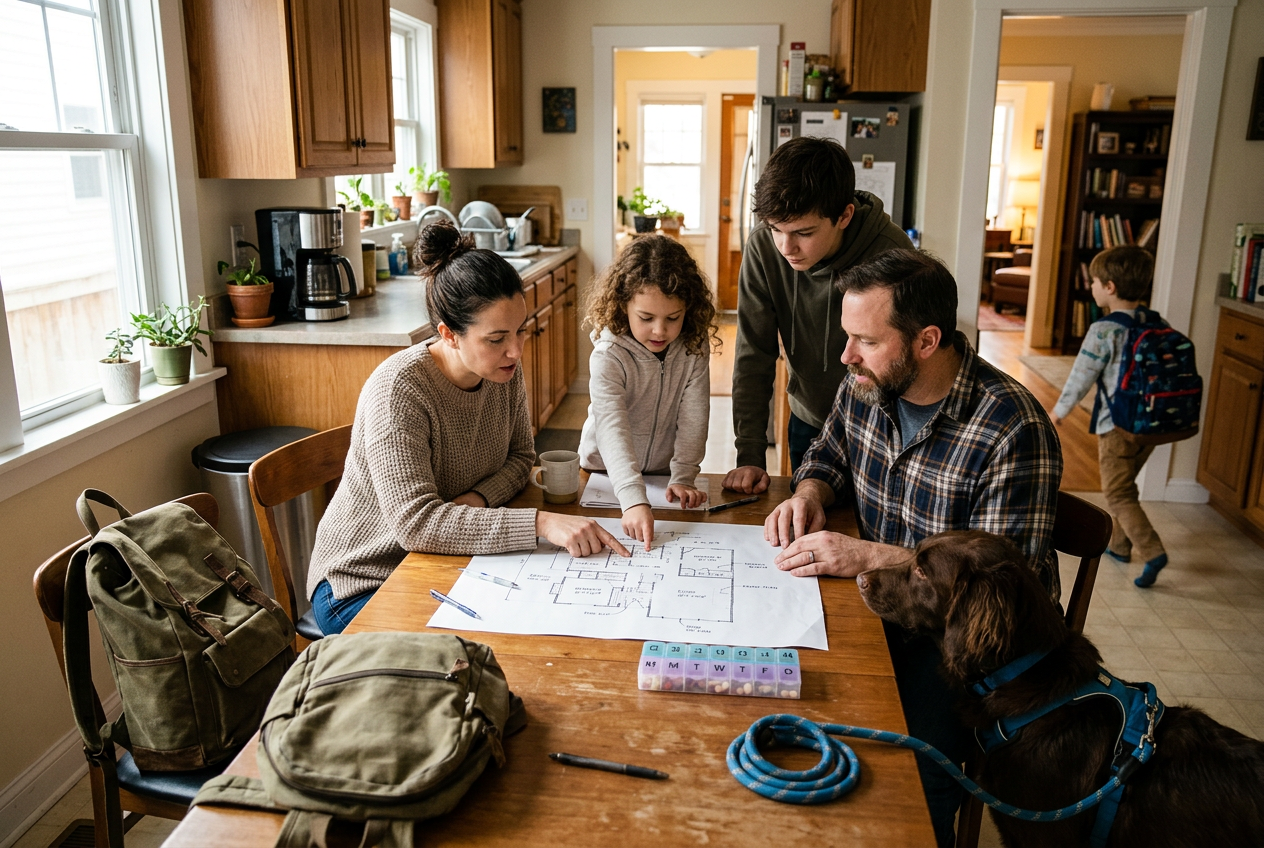
A tornado can hit fast. You may only have minutes to act. A simple written plan helps everyone know what to do. Write your plan down and keep it where the whole family can see it. Then practice it so no one has to think when a warning comes.
Write Down the Basics
Start with three key things. Keep it short and clear.
Your safe room. Name the exact spot where everyone goes during a tornado. This is the lowest level of your home, away from windows. A small interior room like a closet, bathroom, or hallway works well. Everyone should know this spot by name.
A meeting point. Pick a place to gather after the storm passes. Choose one spot outside your home for small emergencies. Choose a second spot away from your neighborhood in case you cannot go home. This helps you find each other if you get split up.
An out-of-area contact. Pick one person who lives far away. After a storm, local phone lines may be busy. It is often easier to reach someone in another city. Everyone can call or text this one person to check in. Make sure each family member has the number written down, not just saved in a phone.
Practice a Short Drill
A plan only works if people have done it. Hold a short tornado drill a few times a year. Call out “tornado warning” and have everyone go to the safe room. Time how long it takes. Practice covering your heads with arms, blankets, or pillows. Keep the drill quick and calm. Kids learn fast when it feels like a routine, not a scare.
Practice at different times too. Try one drill during the day and one at night. A storm can come when people are asleep.
Plan for Pets, Medicine, and Extra Help
Think about everyone in your home before a storm hits.
Pets. Keep a leash or carrier near your safe room. Have a plan to bring pets in fast. Keep some pet food and water with your kit.
Medications. List any medicines your family needs. Keep a few days’ worth in or near your kit if your doctor says it is safe. Note where you store them so you can grab them quickly.
Anyone who needs extra help. Some people move slower or need special care. This includes young children, older adults, and people with disabilities. Decide ahead of time who helps them get to the safe room. If someone uses a wheelchair, a hearing aid, or oxygen, plan how to move those items too.
Write all of this into your plan. Review it with the whole family once or twice a year. Update it when people move in, kids grow, or needs change. A plan you have practiced is worth far more than one you only wrote down.
Frequently Asked Questions
Can tornadoes really hit Arizona or New Mexico?
Yes. Tornadoes can happen in the Southwest. They are less common than in places like Oklahoma or Kansas. But they do occur. Many desert households do not expect them. That makes a simple plan even more important. The best first step is to check forecasts often. Know your risk before a storm arrives. A weather radio helps you get warnings fast.
Where do I hide if I have no basement?
Most homes in the Southwest have no basement or storm cellar. You can still shelter safely. Go to the lowest level of your home. Pick a small room in the center of the house. A bathroom, closet, or hallway works well. Stay away from windows. Put as many walls between you and the outside as you can. Cover yourself with blankets, a mattress, or cushions. This protects you from flying debris. See the shelter section above for more detail.
Is my mobile or manufactured home safe in a tornado?
No. Mobile and manufactured homes are not safe during a tornado. Even weak winds can flip or damage them. Do not try to ride out a tornado inside. You need a plan to leave early. Find a sturdy building nearby before storm season starts. A neighbor’s home, a public shelter, or another solid structure can work. Leave as soon as a warning is issued. Do not wait until you see the storm. The section on mobile homes above walks through this step by step.
What about monsoon wind and hail damage?
The Southwest gets strong monsoon storms. These bring heavy wind, hail, and dust. They are not always tornadoes. But they can still hurt people and damage homes. The same safe room works for these storms too. Go to an interior room away from windows. Bring in loose items from your yard before a storm hits. Park your car under cover if you can. A weather radio alerts you to many hazards, not just tornadoes.
What alerts should I trust?
Use official sources. A NOAA weather radio sends out warnings direct from the National Weather Service. It can wake you at night. Models like the Midland WR120B let you set your county so you only hear alerts that matter to you. Phone alerts help too. Do not rely on just one source.
How much food and water should I keep?
Keep enough to support your household for at least three days. That means food, water, and basic supplies. Store them in or near your safe room. A prebuilt kit like the First My Family 72 Hour Kit covers the basics for four people. You can also build your own.
How do I practice my plan?
Hold a tornado drill with your family. Do it more than once. Everyone should know where to go and what to grab. Practice makes the real thing less scary. Kids learn the plan faster when you practice together.
Your Tornado Readiness Checklist
Use this checklist to get ready this week. Each step is simple. You can do most of them in a single afternoon. Print this page and check off each item as you finish.
Set Up Your Alerts
- Turn on Wireless Emergency Alerts on your phone. Check your phone settings and make sure they are on.
- Pick a second way to get warnings. A NOAA weather radio keeps working even if the power and cell service go down. Look at the Midland WR120B or the RunningSnail NOAA radio.
- Program your county code into your weather radio. This is called S.A.M.E. It stops alerts for far-off areas and only warns you about your own county.
- Learn the difference between a watch and a warning. A watch means conditions are possible. A warning means take cover now.
Pick Your Safe Room
- Choose the lowest level of your home. Find a small inside room with no windows, like a closet, bathroom, or hallway.
- Clear a path to that room. Move clutter so you can get there fast.
- Put blankets, a mattress, or pillows nearby. You can cover your head and body with them.
- If you live in a mobile or manufactured home, these homes are not safe in a tornado. Find a sturdy building you can go to instead. Know where it is before a storm hits.
Pack Your 72-Hour Kit
- Gather food and water for at least three days. Pick non-perishable food that does not need cooking.
- Add a first-aid kit, trash bags, and a sealed container to hold it all.
- Keep light on hand. A battery lantern like the LED Camping Lantern or the Lichamp solar lantern helps if the power goes out.
- Prefer a ready-made kit? The First My Family 4-person kit covers four people for 72 hours.
- Store your kit in or near your safe room so you can grab it fast.
Run a Drill
- Write down your family plan. Note where to go and who to call.
- Walk every family member to the safe room. Time how long it takes.
- Practice covering your head and staying low.
- Repeat the drill every few months so everyone remembers.
Think About Other Storm Risks
- In the Southwest, monsoon winds and hail can hit too. The same safe room and kit help with those storms.
- Keep your weather radio charged or stocked with fresh batteries.
Do these steps one at a time. When every box is checked, your household is ready. Keep this page where you can find it, and review it before each storm season.
Next Steps
You do not need to do everything at once. The most important moves are simple, and you can start today. Two steps give you the biggest safety gain for the least effort. Set up reliable alerts. Pick your safe room. Do those two things first, and you are already far more ready than most desert households.
Start With Alerts You Can Trust
A tornado can form fast. You may have only minutes to act. That is why alerts come first. Make sure you can get a warning even when the power is out or you are asleep. A NOAA weather radio with S.A.M.E. programming lets you filter alerts to just your county. That means fewer false alarms and a loud warning when it really matters.
A dependable pick is the Midland WR120B. It scans NOAA channels, supports local county codes, and can wake you with an alarm. If you want battery and solar backup plus a hand crank, the Mesqool emergency radio adds those features for when the power fails. Either one is a strong first purchase.
Choose Your Safe Room Today
Once your alerts are set, walk through your home. Pick the lowest, most interior room with no windows. A small bathroom, closet, or hallway often works best. Put a sturdy item there to cover your head and body, like a mattress or heavy blankets. If you live in a mobile or manufactured home, know where you will go instead, since those homes are not safe in a tornado. Picking your spot now means no guessing when a warning sounds.
Build Out the Rest Over Time
With alerts and a safe room handled, you can add the other pieces at your own pace. Keep a 72-hour kit near your safe room with food, water, and first aid for everyone in the house. A ready-made option like the First My Family 4-person kit gives you a solid base to build on. Add light you can count on, since storms often knock out power. A rechargeable LED camping lantern keeps your safe room usable in the dark.
Keep Learning With These Guides
Want more detail on any step? These related ReadyGuidance guides walk you through the next layer:
- Our emergency radio guide helps you compare features and set up S.A.M.E. codes.
- Our 72-hour kit guide shows what to pack and how to store it.
- Our family plan guide helps you write a plan and run simple drills.
You can also use the readiness checklist earlier in this article. There is no separate download, but you can print this page and keep it with your kit.
Take the two key steps today. Set your alerts. Pick your safe room. Then build from there. A little effort now gives your household real protection when a storm moves in.
Sources and Further Reading
- Tornado safety plan and preparation tips
- TORNADO PREPAREDNESS
- Tornado Preparedness 101
- How to Prepare for Tornadoes - Tower Roofing
- How to Stay Prepared During Tornado Season
- Tornado Preparedness Planning
- Rio Grande Valley, Texas Hazardous Weather Awareness …
- Tornado Preparedness: A Guide to Staying Safe During …
- How to prepare for tornado season
- FOCUS USA: How to Prepare for a Tornado and Basic …