When Gas Prices Spike: How Households Can Protect the Budget and Cut Fuel Use (2026)
Gas prices are climbing fast, and it hurts. In recent days, several news reports showed oil trading above $100. Pump prices jumped as fighting between the U.S. and Iran disrupted energy supplies from the Gulf. Some reports noted gas rising about 15 cents in a single week. If your budget already feels tight, a spike like this can throw off your whole month.
The good news is that you have real options. You do not need to panic. You do not need to hoard fuel. Hoarding is risky, and it does not fix the problem. Instead, you can make smart changes that add up over time.
This guide walks you through practical steps. First, you will learn how to build a budget that plans for higher fuel costs. Then you will see how to drive less by combining trips and planning routes. We will cover simple ways to boost your car’s fuel efficiency, like keeping tires at the right pressure.
We compare tire-pressure gauges as optional tools for keeping your car’s tires properly inflated. And if you do keep a small fuel reserve, we explain how to handle it safely.
The point is simple. You can protect your household budget with steady, sensible habits. Let’s start with a plan that fits your money and your daily life.
- Keep tires at the pressure listed on your door sticker, since low tires can waste up to 3 percent of your fuel.
- Check tire pressure at least once a month and before long trips.
- Keep your engine tuned up so it runs clean and burns fuel efficiently.
- Combine errands into one trip and slow down to stretch every tank further.



Reviewed by Elena V., Priya K. & Beth O. — contributors with hands-on preparedness experience. How we test
Getting ready ahead of time makes a fuel crunch a lot easier to handle. Grab these tools now, then read on to see how each one helps.

ETENWOLF Pencil Tire Gauge
This gauge lets you check tire pressure fast and accurately so you can keep tires filled right. Properly inflated tires roll easier and use less fuel.
Check Price on AmazonIn this guide
Why Trust This Guide?
This article was researched and reviewed by contributors with hands-on experience in emergency preparedness. They have tested gear, built real systems, and lived through situations where these skills actually mattered.
Build a Fuel-Aware Household Budget

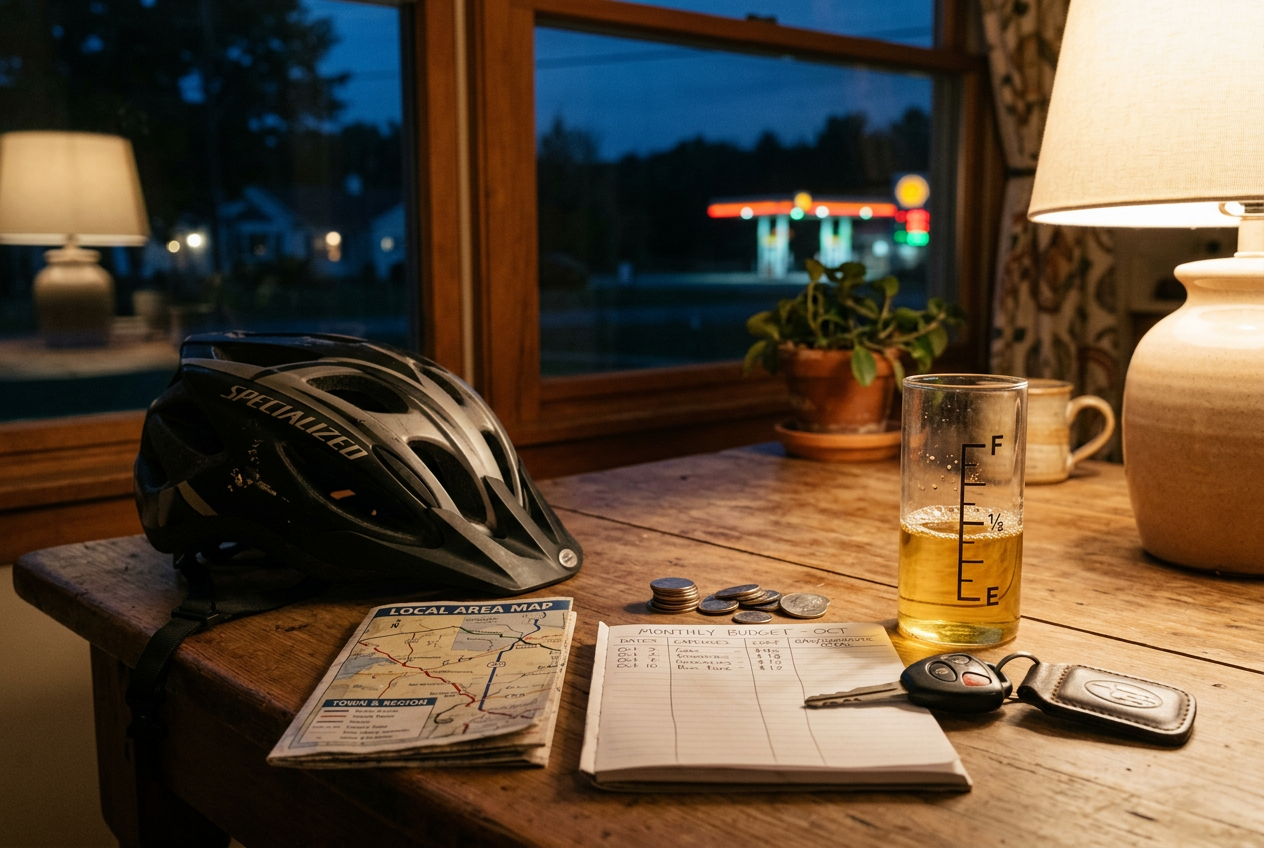
Start with what your household actually spends at the pump. Check receipts or your bank statement for the last month. Put gasoline in its own budget line so it does not disappear inside a larger category such as transport.
Track Trips Along With Spending
Write down the amount of each fill-up and the trips that matter most: work, school, groceries, and appointments. Separate trips you must make from errands you can combine or postpone.
You cannot always reduce your commute. Focus first on the miles you can control, such as repeated trips to the same shopping area.
Plan a Temporary Buffer
Estimate what your normal driving would cost at the price you are paying now. Compare that with your usual fuel budget. If there is a gap, decide how to cover it without cutting essentials.
A small temporary reduction in optional spending may help. So can combining errands or sharing a ride when practical. There is no single amount every household should set aside; use your own driving needs and available money.
Review Weekly During a Spike
Check your spending once a week while pump prices are changing quickly. Note whether a lower total comes from fewer miles, a cheaper fill-up, or both. This helps you see which habits are working.
Do not buy extra equipment simply because it is advertised as fuel-saving. Start with no-purchase changes. If you need a tire gauge, choose one suitable option rather than buying several. Money not spent on an unnecessary product stays available for the trips you need to make.
Drive Less and Consolidate Trips
The fastest way to spend less on gas is simple. Drive fewer miles. When gas prices spike and pinch your household budget, cutting trips helps right away. You do not need to buy anything. You just need a plan.
Chain Your Trips Together
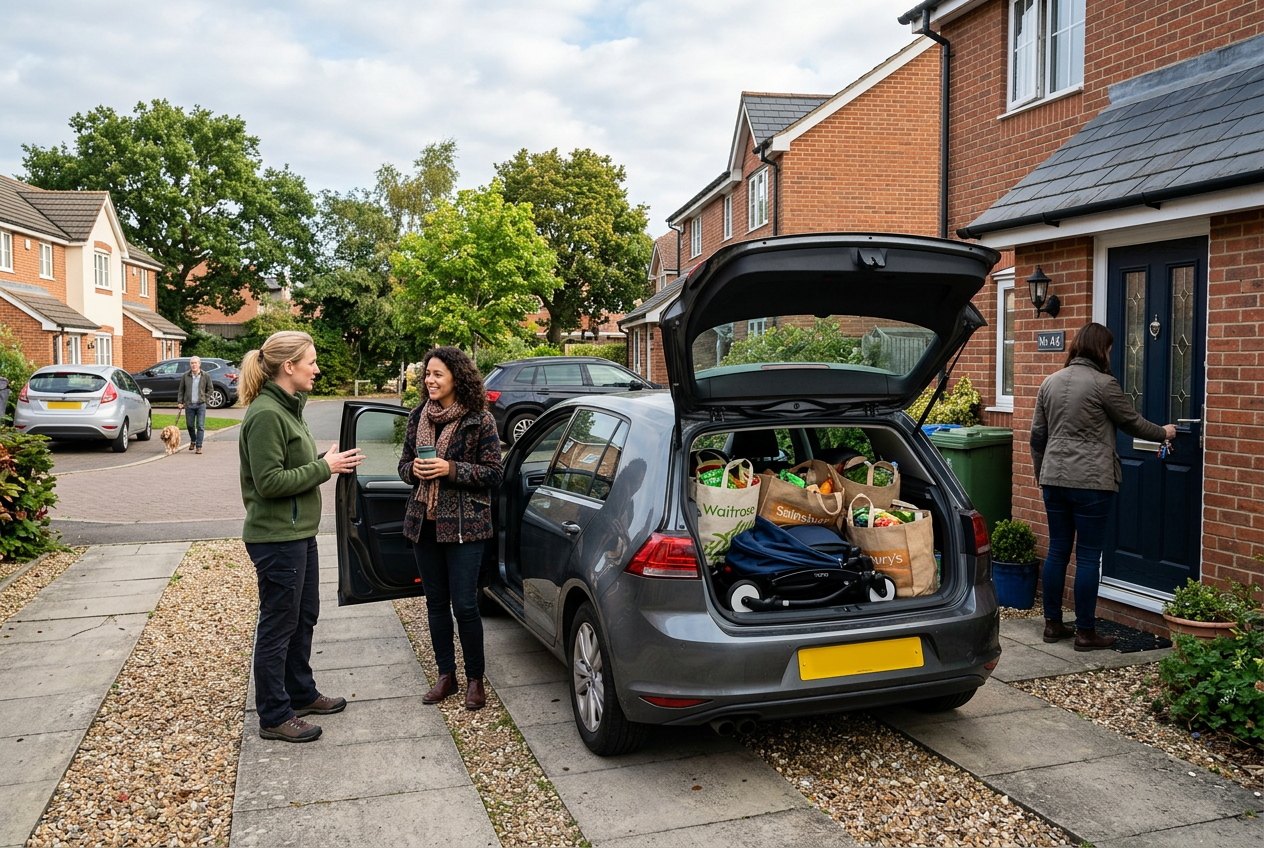
Trip chaining means you group errands into one drive. Instead of five short trips this week, you make one loop that hits every stop. Think about the bank, the store, the pharmacy, and the school pickup. Can you do them in one route?
There is a real reason this saves fuel. A cold engine burns more gas than a warm one. Every time your car sits and cools down, the next start is a cold start. Cold starts use extra fuel. When you chain trips, your engine stays warm between stops. Fewer cold starts means less waste.
Try to plan your loop so you never backtrack. Start at the stop farthest from home. Then work your way back. This keeps your route short and smooth.
Combine Errands With Others
You do not have to run every errand alone. Talk with people in your home. Make one shopping list for the whole family. Then one person handles the trip. That beats three people each making a run.
You can do the same with neighbors. Take turns on grocery runs. One week you go. Next week they go. Both homes save fuel.
Carpool When You Can
Carpooling splits the driving. If two coworkers ride together, one car stays home. That cuts fuel use in half for that trip. You can carpool to work, to church, or to kids’ games.
Set a simple schedule. Trade off who drives each day or each week. Keep the pickup spots close to home so you do not add extra miles.
Ask About Remote Work Days
If your job allows it, ask about working from home. Even one or two days a week makes a difference. A workday at home means zero commute miles. Over a month, that adds up.
Some jobs let you shift your hours too. Driving outside rush hour means less time stuck in traffic. Idling in traffic burns gas while you go nowhere. A smoother drive uses less fuel.
Think Before You Start the Car
Before each trip, ask one question. Do you really need to go right now? Sometimes a phone call or an online order does the job. Sometimes an errand can wait until you have other stops to pair it with.
Short hops are the most costly per mile. That quick drive down the block starts a cold engine and gains little. Try walking or biking for very close trips when it is safe. Your wallet and your car both win.
None of this costs money. It just takes a little planning. Fewer miles and fewer cold starts cut your fuel use today.
Improve Your Car’s Fuel Efficiency
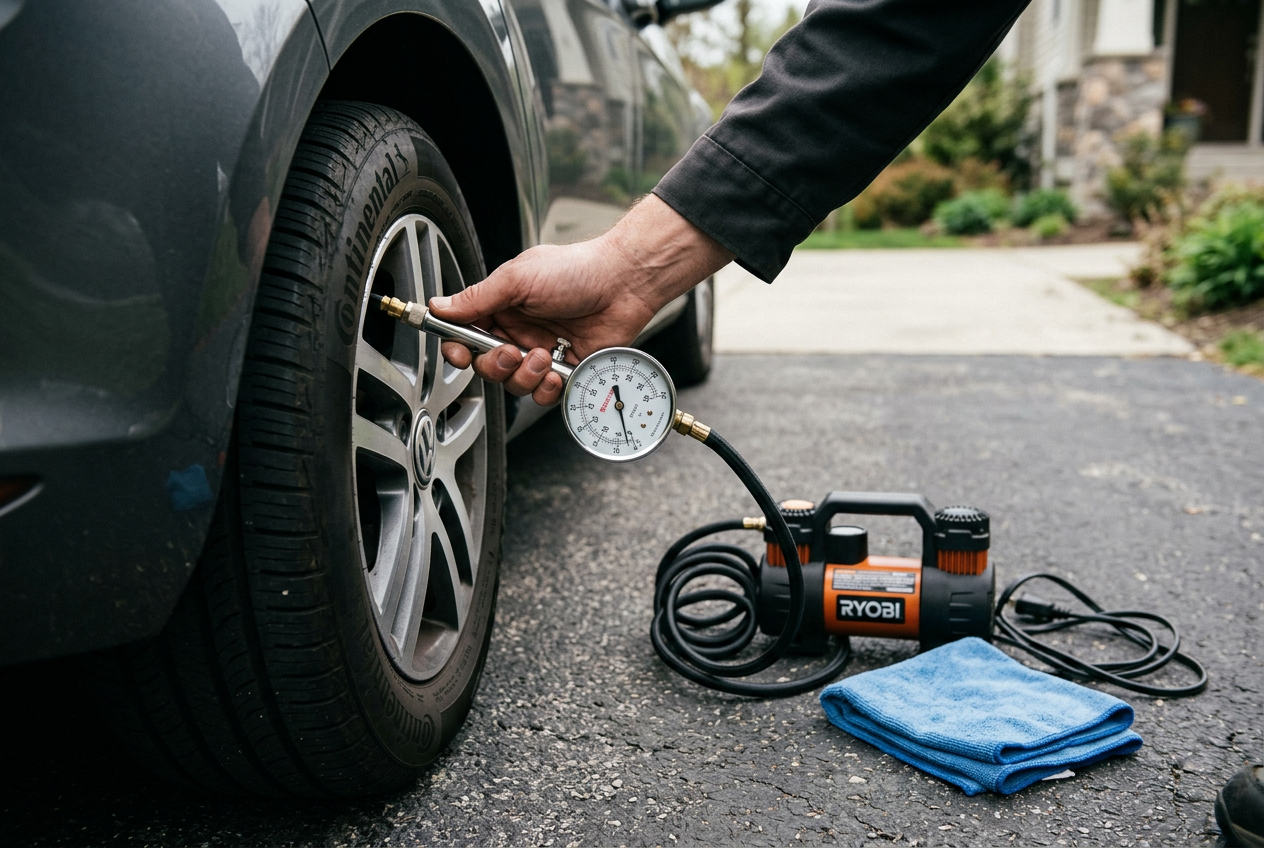
When gas prices spike, your car’s fuel use hits your budget hard. The good news is that small changes can stretch every gallon. You do not need new parts or costly repairs. You just need a few smart habits.
Keep Your Tires at the Right Pressure
Checking tire pressure is one of the cheapest ways to boost your MPG. Low tires drag against the road. That drag makes your engine work harder and burn more fuel. Firm tires roll easier and save gas.
Find the right pressure for your car. Look on the sticker inside the driver’s door or in your owner’s manual. Do not use the number on the tire itself. That number is the max, not the target.
Check your tires when they are cold. That means before you drive or after the car has sat for a few hours. Warm tires give a higher reading and can fool you. Check all four tires, plus the spare if you have one.
A good gauge helps you get it right. Cheap gauges can read off by a few pounds, and that can cost you fuel. A reliable pencil gauge is simple and lasts a long time. Look for one with clear markings and solid metal parts.
If you check your tires early in the morning or in a dark garage, a glow dial makes it easier to read. A dial gauge with a large face is a good pick for low light.

If you want the most exact reading, a digital gauge shows a clear number. This helps if you drive in very hot or very cold weather, where pressure shifts a lot.

Drive Smooth and Steady
How you drive changes how much gas you use. Fast starts and hard stops waste fuel. So try to speed up slowly and brake gently. Coast toward red lights when you can.
Keep a steady speed on the highway. Sudden bursts of speed drink gas. Cruise control can help you hold one speed on long trips.
Cut Down on Idling
A running engine that goes nowhere still burns fuel. If you wait in a parking lot or a long line, turn off the engine. Restarting uses less gas than sitting still for more than a minute or two.
Remove Extra Weight
Extra weight makes your engine work harder. Take heavy items out of the trunk that you do not need. A roof rack or cargo box also adds drag and cuts your MPG. Take it off when you are not using it.
These steps cost little or nothing. Together, they help your fuel go farther when prices are high.
Everyday Car Maintenance That Matters
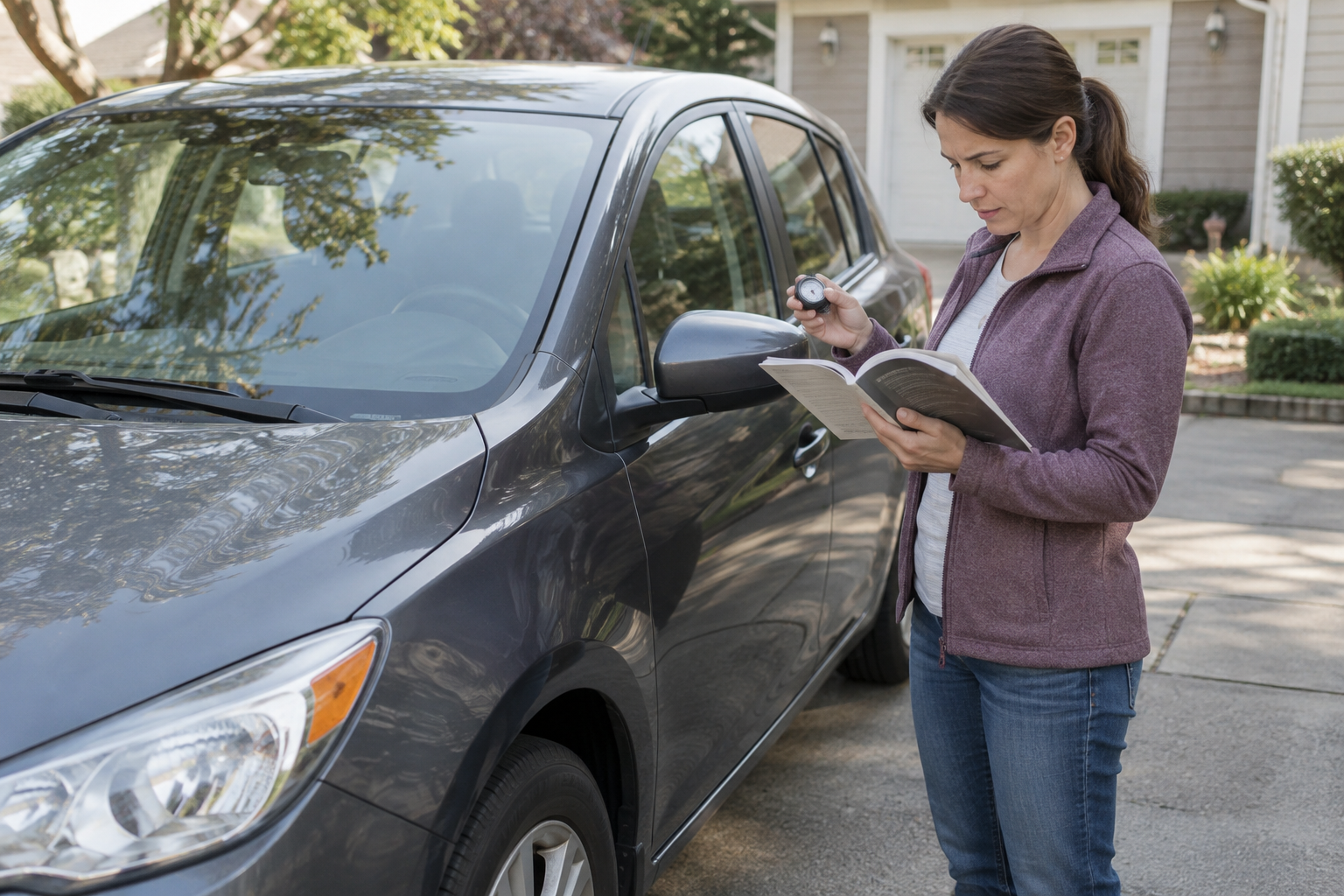
For most households, the vehicle that matters here is the car used for commuting, school runs, and errands. Start with its service schedule, not a generic bundle of replacement parts.
Follow Your Car’s Service Schedule
Check your owner’s manual for oil changes, inspections, and scheduled spark-plug replacement. Use the specified motor-oil grade. Service intervals and parts depend on the vehicle, so there is no universal tune-up kit to recommend to every driver.
The EPA’s fuel-saving guidance recommends routine maintenance and the manufacturer’s specified oil. If you are unsure what is due, bring your service history to a qualified repair shop before buying parts.
Address Problems Instead of Buying Parts on Spec
A poorly running engine deserves a diagnosis. Buying filters and ignition parts without knowing what is wrong can waste money. Ask what fault a proposed repair addresses and whether the part is actually due for replacement.
Replace Your Engine Air Filter When Due
Your engine air filter catches airborne dirt before it enters the engine. Checking it and replacing it when due is part of good car maintenance. Follow your owner’s manual, including any guidance for dusty driving conditions. This is the engine air filter, not the cabin filter that cleans air for passengers.
Here are two examples of replacement filters to help you start shopping. Neither is universal, and you do not need both. Check fit for your own vehicle before buying.
- K&N KNA-2385 engine air filter — check vehicle fit on Amazon: an example listed for select Ford and Lincoln trucks and SUVs. Do not assume it fits every engine or model year in those brands.
- ACDelco A3244C / 84121219 engine air filter — check vehicle fit on Amazon: a GM Original Equipment replacement-filter example. Match the part number to your vehicle; it is not a fit for every GM car or truck.
Enter your car’s year, make, model, and engine in the retailer’s fit checker, then confirm the part number against the filter manufacturer’s catalog or a trusted parts counter. If the results conflict, ask before ordering. The examples above show the type of maintenance item to look for, not a recommendation to force a particular filter into your car.
A fresh filter can restore airflow when the old one is restricted, but keep fuel-savings expectations realistic. The Department of Energy’s gas-saving guide notes that replacing a clogged air filter can improve acceleration in modern fuel-injected vehicles, but does not improve their fuel economy. Replace it for proper maintenance, not a promised MPG boost.
Performance Chips and Owner-Reported MPG: What to Check
Owner experiences can be useful when researching a vehicle upgrade, but a report of better mileage is not the same as a controlled test. If a reviewer reports an MPG gain, check their exact vehicle, engine, route, fuel, and other repairs or changes. A different driving pattern can change mileage without the device being responsible. Look for several tanks of fuel measured as miles driven divided by gallons added, rather than a single dashboard reading.
The ROPODE AFM/DFM disabler (B0CTJNM7XQ) on Amazon is an example readers may encounter. It is a cylinder-deactivation disabler for certain GM V6/V8 vehicles, not a universal performance chip. Check the exact vehicle and engine compatibility. We link it for context, not as a tested fuel-saving recommendation, and have not verified a fuel-economy improvement for this product.
That distinction matters: Chevrolet describes cylinder deactivation as a fuel-saving feature during light-load driving. Keeping all cylinders active does not establish a fuel-saving benefit. More power or a preferred driving feel is also not proof of better MPG.
Before spending money: Owner testimonials are anecdotal; a device may not deliver the claimed result, may produce no savings, or may increase fuel use. Consider its purchase cost, compatibility, and warranty implications. Do not choose a tune that disables required emissions controls: EPA guidance explains the federal prohibitions on emissions tampering. A disclaimer does not make an incompatible or unlawful modification appropriate. For a household trying to cut gas costs, routine maintenance and driving habits remain the starting point.
Make Tire Checks the Simple Routine
A tire-pressure gauge is useful across ordinary passenger cars. Choose one with a suitable range and a display you can read; you do not need all three gauges shown in this guide. Use the pressure specified for your car, not the maximum printed on the tire.
Keep a short record of tire checks and completed services. The goal is to maintain the car you rely on, not add purchases that do not fit your needs.
Product Comparison: Tire-Pressure Gauges
One suitable tire-pressure gauge is enough. These are alternative styles for the same job, not a shopping list. Keep a gauge you already own if it works reliably.
Tire gauges
All three tire gauges help you keep tires at the right pressure. Proper pressure lowers rolling drag and can help fuel use.
The ETENWOLF Pencil Gauge 2 Pack is a simple all-metal tool. It has two ranges and no battery to worry about. It is a good budget pick for basic checks.
The ETENWOLF 0-75 PSI dial gauge has a large glowing dial. That helps if you check tires at night or in a dark garage.
The ETENWOLF T300 digital gauge reads up to 200 PSI. It has thermal compensation, so it works in very cold or very hot weather. Pick it if you want a clear digital number.
Safe Fuel Handling if You Do Keep a Reserve
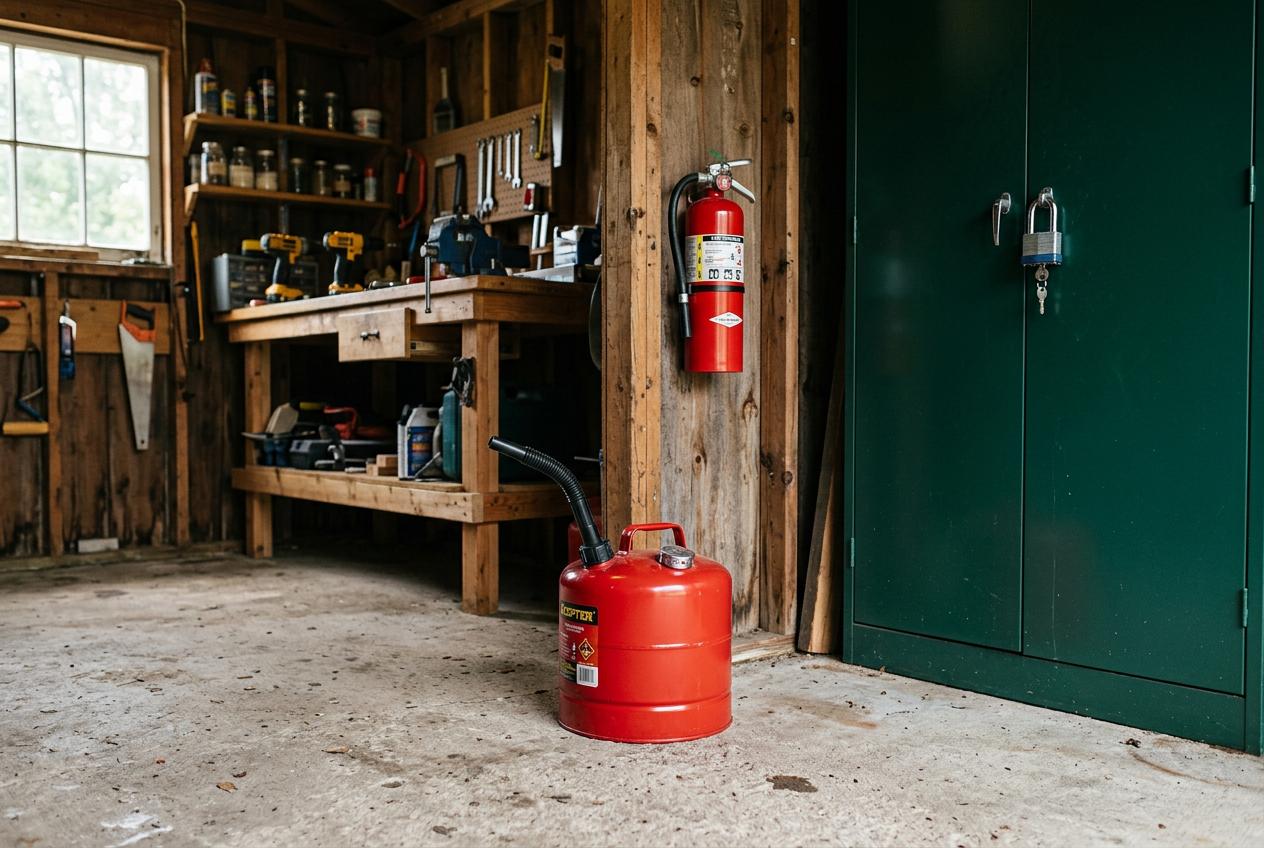
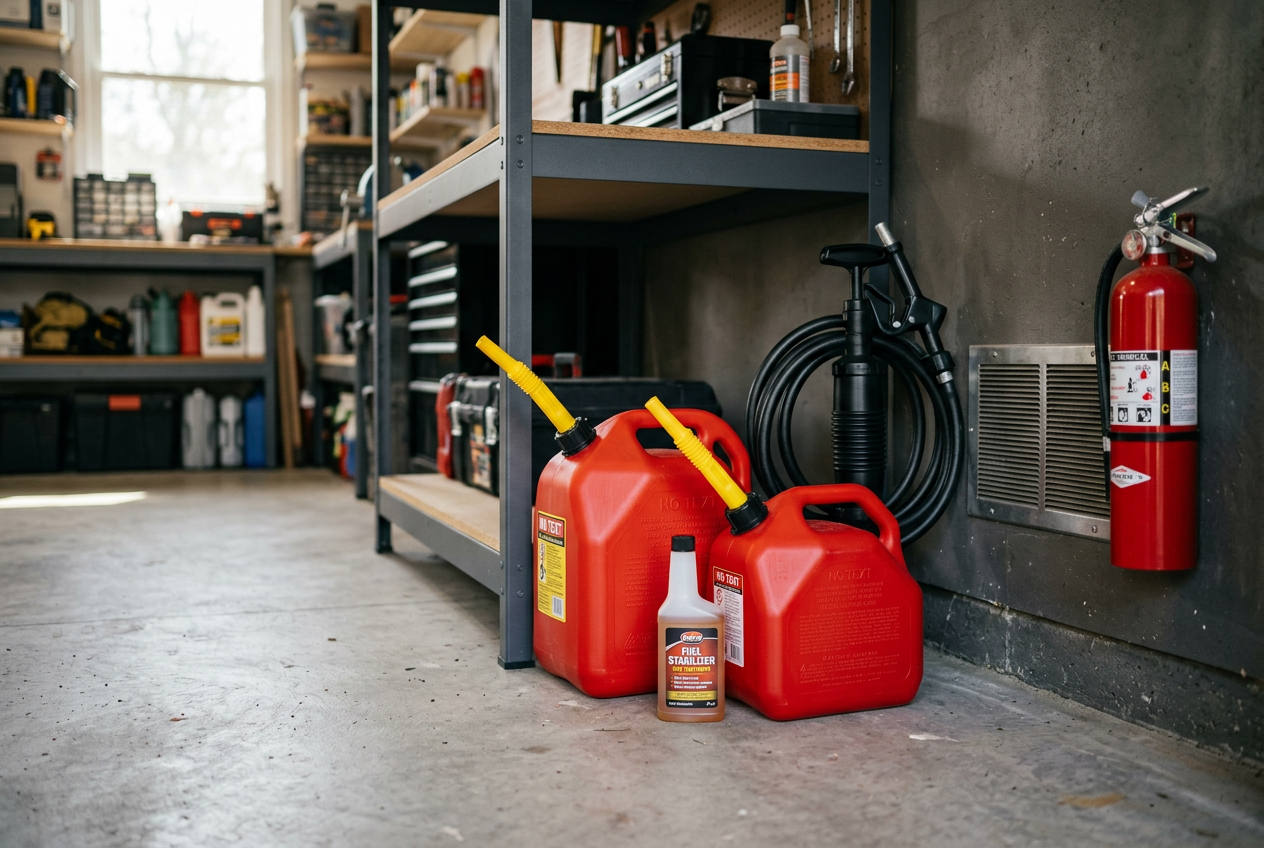
Some households keep a small amount of gasoline on hand. This can help you run a mower, a generator, or top off a car in a pinch. But gasoline is dangerous if you handle it the wrong way. Do not hoard fuel. Keep only what you can store and use safely. Follow these rules every time.
Use the Right Container
Only store gasoline in a container made for it. Look for a can that is rated for gasoline. Metal or approved plastic cans work. Do not use milk jugs, water bottles, or random buckets. Those can leak, melt, or build up dangerous vapor. Keep the cap tight and the container sealed when you are not using it.
Fill the can outside on the ground. Do not fill it in your car trunk or truck bed. Use only a gasoline-rated pump at the station. Leave some empty space at the top so the fuel has room to expand.
Where to Store It
Never store gasoline inside your living space. Do not keep it in the kitchen, a bedroom, or a hallway. Vapors can spread and catch fire. Store fuel in a detached shed or a well-aired spot away from your home.
Keep gasoline far from anything that can spark or make heat. That means water heaters, furnaces, stoves, and pilot lights. Even a small spark can set off gas vapor. Keep cans out of reach of children and pets. Store them low and out of the sun.
Check your local fire rules before you store fuel. Many towns limit how much you can keep. Follow those limits. They exist for your safety.
Handle Fuel with Care
Let a hot engine cool before you refuel it. Adding gas to a hot engine can start a fire. This is true for mowers, generators, and cars. Turn the engine off and wait.
Never use your mouth to start a siphon. Swallowing or breathing in gasoline is very harmful. If you need to move fuel, use a hand pump or a siphon tool made for the job.
Do not smoke near gasoline. Keep your phone and any flame away. Wipe up spills right away and let the area air out.
Fuel Does Not Last Forever
Gasoline breaks down over time. Old fuel can gum up an engine and cause hard starts. A fuel stabilizer can help slow this down when you add it to fresh gas. But a stabilizer does not fix fuel that has already gone bad. It cannot bring degraded gas back to life. Use your oldest fuel first, and do not stockpile more than you will use.
For a full walkthrough on safe storage, see our dedicated gasoline storage guide. Always follow the maker’s directions and your local fire rules.
Frequently Asked Questions
Why do gas prices spike so fast?
Many things can push prices up. Global events are a big one. In recent news, fighting between the U.S. and Iran has disrupted oil supply from the Gulf. Multiple sources report oil trading above $100 and pump prices jumping about 15 cents in one week. When oil supply is at risk, prices can rise fast.
Other factors matter too. Government officials note that both long-term trends and daily changes affect the cost of a gallon. So some rises are short spikes tied to news. Others are slower shifts. This is why the price at your local station can change from day to day.
Should I stockpile fuel when prices rise?
No. Stockpiling is not a smart plan. Storing large amounts of gasoline is risky and hard to do safely. Gasoline does not last forever, and it can break down over time. A fuel stabilizer may help slow that, but it cannot restore fuel that has already gone bad.
If you keep a small reserve for tools or emergencies, use approved containers only. Never store fuel in living space. Keep it away from heat, flames, and children. We cover safe handling in its own section. The better move is to cut how much fuel you use. That protects your budget without the danger.
How much does tire pressure affect my gas mileage?
Quite a bit. Underinflated tires make your engine work harder. That burns more fuel. Keeping tires at the pressure your car maker lists is one of the easiest ways to save.
Check your tires often with a good gauge. A simple pencil gauge like the ETENWOLF pencil gauge works well and is built to last. If you drive at night, a dial gauge with a glow face, such as the ETENWOLF glow dial gauge, is easier to read. Look for the right pressure on the sticker inside your driver’s door, not on the tire itself.
Your Fuel-Cost Action Checklist
Gas prices are jumping. News reports show pump prices rising fast while oil stays high. You do not have to feel stuck. Use this checklist to take action this week. Each step is simple. Each step helps you spend less on fuel.
This Week: Set Up Your Budget
- Look at your last month of spending. Find how much went to gas.
- Set a weekly fuel dollar limit. Track every fill-up.
- Move a little money into a buffer for higher pump prices.
- Plan for weeks when prices climb more. Adjust other spending if needed.
Start here. A clear budget helps every other step make sense.
This Week: Drive Less and Plan Trips
- Write down every trip you need to make.
- Group errands into one loop instead of many short drives.
- Pick the shortest route with the least stop-and-go traffic.
- Share rides with family, friends, or coworkers when you can.
- Skip trips you do not really need. Combine them for later.
Fewer trips means less gas used. This is the fastest way to cut fuel costs.
This Week: Check Your Tires
- Find the correct tire pressure. It is on a sticker inside the driver door.
- Check pressure when tires are cold, before you drive.
- Use a good gauge for an accurate reading. A pencil gauge like the ETENWOLF pencil gauge works well, or try the glow-dial gauge for low light.
- Add air if tires are low. Recheck after a week.
Underinflated tires waste fuel. This check takes only a few minutes.
This Month: Review Your Car’s Maintenance
- Check your owner’s manual and service history for work that is due.
- Use the specified motor-oil grade and follow the service schedule.
- Replace spark plugs and filters when required for your vehicle, not on a generic shopping schedule.
- Have running problems diagnosed before buying replacement parts.
- Keep checking tire pressure with one suitable gauge.
Maintenance is about keeping your everyday car in good condition, not buying a kit for unrelated equipment.
Keep It Going
- Review your budget each week.
- Recheck tire pressure once a month.
- Plan trips before you leave the house.
- Watch pump prices and adjust your plan as needed.
You cannot control gas prices. You can control how much fuel you use. Work through this list one step at a time. Small changes add up fast.
Next Steps
Gas prices are jumping right now. News reports show oil above $100 and pump prices rising fast. You cannot control world events. But you can control how much fuel you use and how you plan your money. Those two things are the fastest ways to soften the blow of a spike.
Start with the changes that cost you nothing. These are your cheapest wins. Drive less. Combine your errands into one trip. Slow down a little on the highway. Keep your tires at the right pressure. Skip the drive-through line and turn the engine off instead of idling. None of these steps require you to spend a dime. They just take a little planning. Do them first, because they pay off right away.
Next, spend a small amount on tools that keep saving you money. A good tire gauge is a smart place to begin. Underinflated tires waste fuel. Checking them often is simple and cheap. A digital or dial gauge makes the job easy.
After the free steps and small tools, look at your budget again. Build a line for fuel that reflects today’s prices, not last year’s. Prices change week to week, so your budget should change too. Check your gas spending every month. When prices climb, cut back on other spending or drive even less. When prices ease, you can relax a bit. The point is to keep the budget honest and current.
Do not rush to stockpile fuel. Hoarding is not the answer. It is risky, and it does not fix the real problem. If you do keep a small reserve, use approved containers only. Keep fuel out of living spaces, away from heat, flames, and children. Let engines cool before you refill them. Never siphon by mouth. Use gasoline-rated pumps and follow the maker’s directions and your local fire rules. Remember that fuel stabilizer does not bring back fuel that has already gone bad.
Here is the simple order to follow. First, make the free changes to how you drive. Second, buy a few low-cost tools that keep saving you money. Third, revisit your budget and update it as prices move. Fourth, follow your car’s maintenance schedule and address actual problems before buying parts.
A spike feels stressful. But small steps add up. Start today with the cheapest wins, then build from there. You will spend less and worry less, no matter what the pump says next week.
Sources and Further Reading
Ahead of first special session vote, Governor Newsom meets …
Natural gas prices - U.S. Energy Information Administration …
US Pain at the Pump Worsens After More US-Iran Fighting Lifts Oil Prices
Gas prices are about to take a big jump, analysts say, with the worst still to come