Ready
Cyberattack Bank Outage Emergency Cash: Why Households Need a Small Cash Buffer (2026)
Picture this. You stop for groceries after work. You tap your card at the checkout. Nothing happens. The card reader is down. You try the ATM outside. It is offline too. The cash in your pocket is now the only money you can spend.
This is not a far off worry. Recent news reports described a critical software flaw that forced many online services offline. It showed just how fragile our digital lives can be. Around the same time, officials in Britain told families to keep some food, water, and cash on hand as part of staying ready for problems like cyberattacks.
Here is the simple truth. When banks, card networks, or the internet go down, your money in the bank is still safe. You just cannot reach it for a while. Cards stop working. ATMs go dark. Shops that can still open may only take cash.
A small cash buffer fixes this. It is a no regret step. You keep a modest amount of cash at home so you can still buy food, fuel, or medicine during a short outage.
This article keeps things calm and practical. It is not about panic withdrawals or hoarding. You will learn how much cash makes sense, where to keep it safely, how to protect it from fire and water, and how to use it wisely during an outage.
- A cyberattack can knock bank apps, ATMs, and card readers offline for hours or even days.
- Keep a small cash buffer at home, enough to cover 3 to 7 days of basics like food, fuel, and medicine.
- Use a mix of small bills, since stores may not make change when systems are down.
- Store your cash and key documents in a locked, fire resistant box, not loose in a drawer.
- Review your buffer every few months and top it off after you dip into it.
One practical preparedness move each week. No fear-mongering, ever.



Reviewed by Beth O., Priya K. & Marcus T. — contributors with hands-on preparedness experience. How we test
A few simple items can keep your household steady when the banks go dark. Read on to see why a small cash buffer and a safe place to keep it matter.

SentrySafe Fireproof Chest
This fireproof chest keeps your emergency cash and important papers safe from heat and damage. The carrying handle lets you grab it fast if you need to leave.
Check Price on Amazon
Fireproof Metal Lock Box
A double layer steel box with fire insulation to protect money, passports, and documents. Dual combination and key locks give you two ways to keep valuables secure.
Check Price on Amazon
Small Steel Safe Box
A heavy duty steel box with anti pry hinges to guard your cash buffer at home. Its compact size makes it easy to tuck away out of sight.
Check Price on AmazonIn this guide
Why Trust This Guide?
This article was researched and reviewed by contributors with hands-on experience in emergency preparedness. They have tested gear, built real systems, and lived through situations where these skills actually mattered.
What Actually Happens When Banks and Card Payments Go Offline
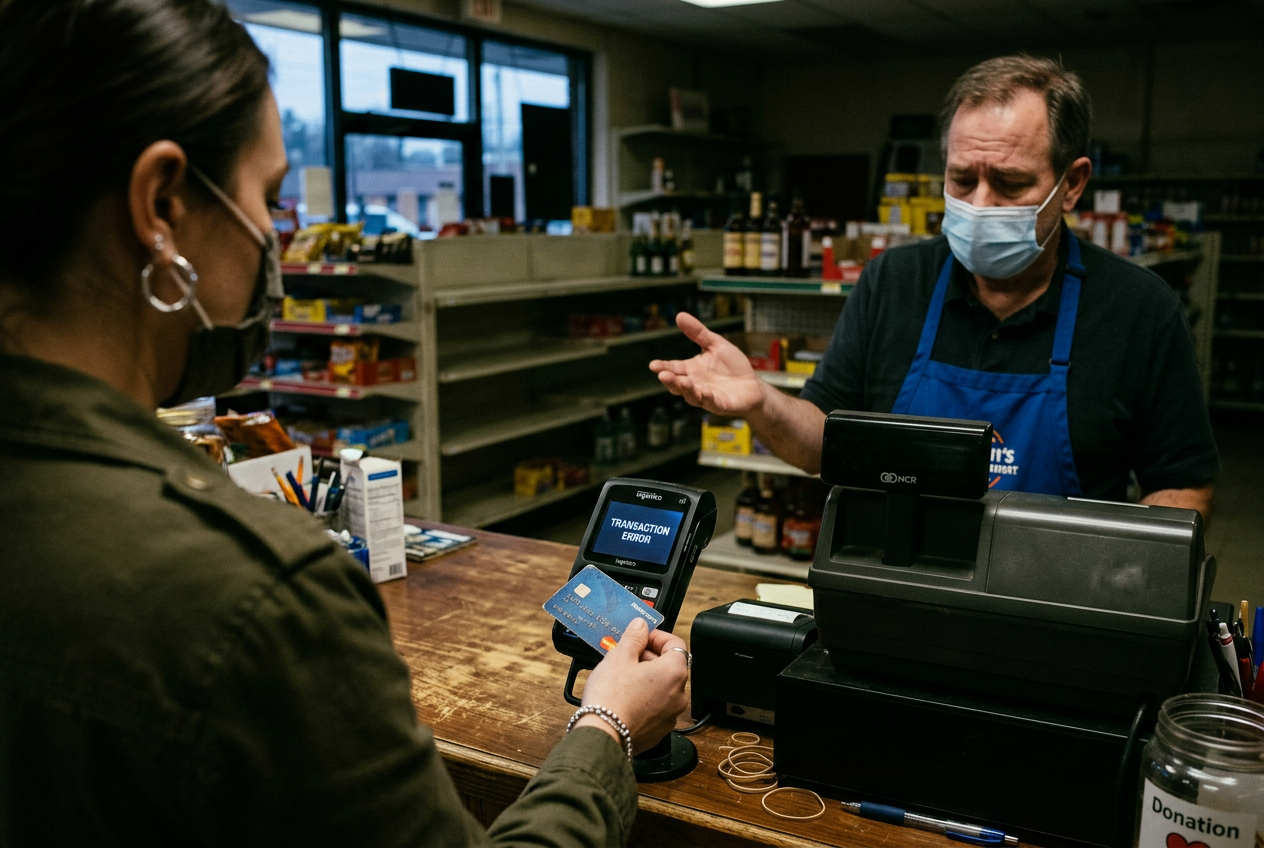
When a bank outage or cyberattack hits, the problem is not usually your money. It is your access to that money. Your funds are still in your account. You just cannot reach them the normal way. This is an important point, so keep it in mind if an outage ever happens to you.
Here is what the experience can look like at home and in the shops.
Card readers start declining
The first sign is often a card that will not go through. You tap or swipe, and the machine says the payment failed. Try again, and it fails again. This can happen at the grocery store, the gas station, or online. The card itself is fine. The system that checks and approves the payment is down.
ATMs go dark or run empty
Cash machines need a live connection to work. During a wider outage, some ATMs stop working completely. Others may still run but run out of cash fast. When word spreads, people rush to pull out money. The machines empty quickly. This is one reason a small cash buffer at home matters. You are not stuck in a long line hoping the machine still has bills.
Online banking and apps stop loading
You may try to check your balance or move money, and the app will not open. The website may time out or show an error. Phone lines can get jammed too. This is frustrating, but it does not mean your money is gone. The service is simply unreachable for a while.
Some stores cannot take any payment
In a bigger disruption, a shop may not be able to process payments at all. No cards. No phone wallets. In these moments, cash is often the only thing that works. News reports have pointed to the resilience of cash during bank outages for exactly this reason.
Short glitch or wider disruption?
Not every outage is a crisis. It helps to know the difference.
A short local glitch is small and brief. One store’s card reader goes down for an hour. Your bank app is slow for a few minutes. These fix themselves fast. You rarely need to do anything.
A wider disruption is bigger. It can hit many banks, shops, and services at once. Recent news has described a critical software flaw forcing services offline and showing how fragile our digital systems can be. Governments in the UK have even told families to keep some emergency cash on hand. A wider event may last longer, so having a little cash ready makes daily life easier.
Your money is usually still safe
The key takeaway is simple. An outage blocks access, not ownership. Your balance does not vanish because an app will not load. Systems come back online, and your money is there waiting. A small cash buffer just helps you get through the gap calmly, without panic or a mad dash to the ATM.
How Much Cash to Keep (and Why Hoarding Is the Wrong Move)
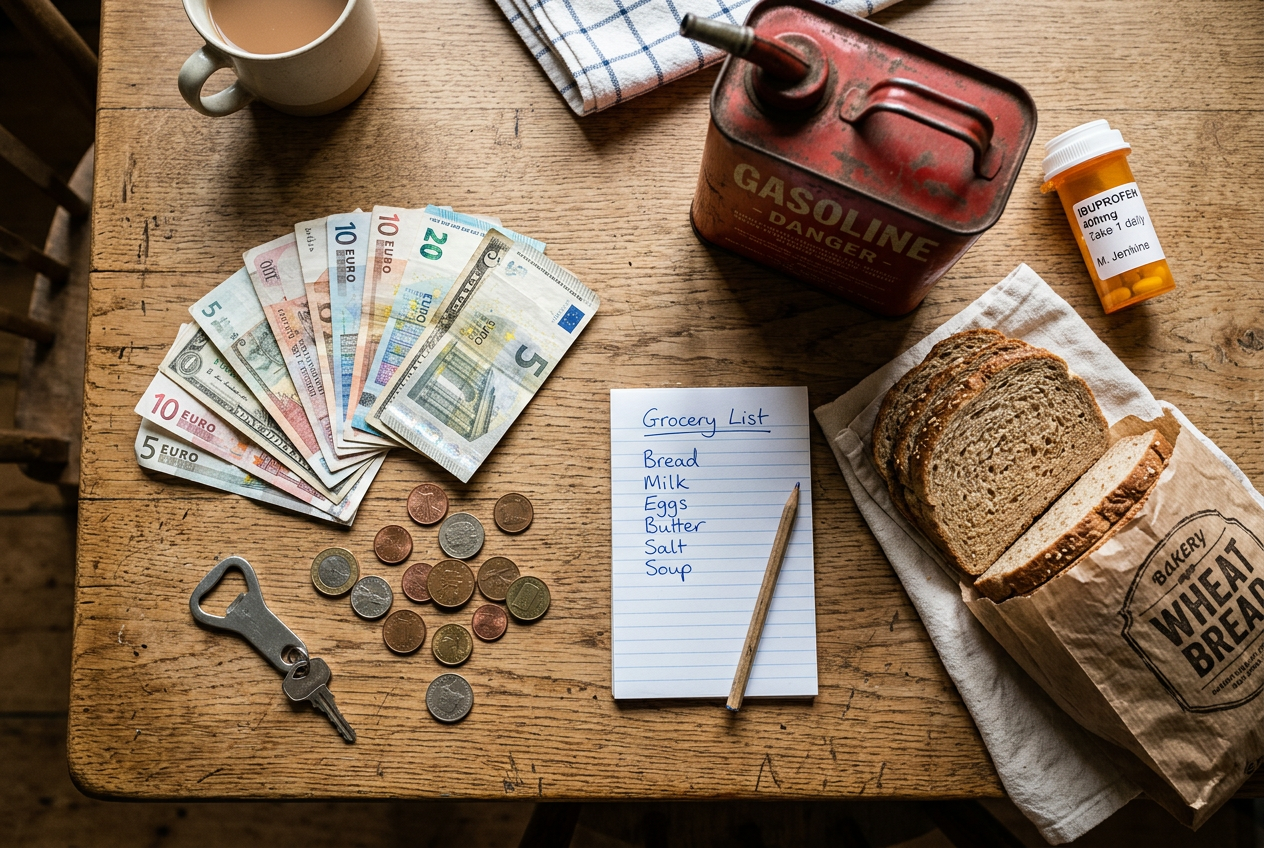
The goal here is simple. You want enough cash to get through a few days if your cards and bank apps stop working. You are not trying to live off cash for weeks. You are not trying to beat the bank. You just want a small cushion.
Think in “a few days,” not a dollar figure
Government advice in the UK now tells families to keep some emergency cash as part of being ready. The common framing is a few days of essentials. That means the things you would still need to buy if payment systems went offline for a short time.
Think about what your household actually spends on in a normal couple of days. A sensible buffer usually covers:
- Food and basic groceries
- Fuel for your car, if you drive
- Any medicine you might need to pick up
- Small daily costs like bread, milk, or a bus fare
Add those up for two or three days. That rough number is your target. There is no single “correct” amount. A large family needs more than one person living alone. Keep it realistic for your own life.
Use small bills and coins
Here is a point people often miss. In an outage, shops may not be able to give you change. Card machines might be down. Cash registers may not open the right way. If you only carry large bills, you could get stuck.
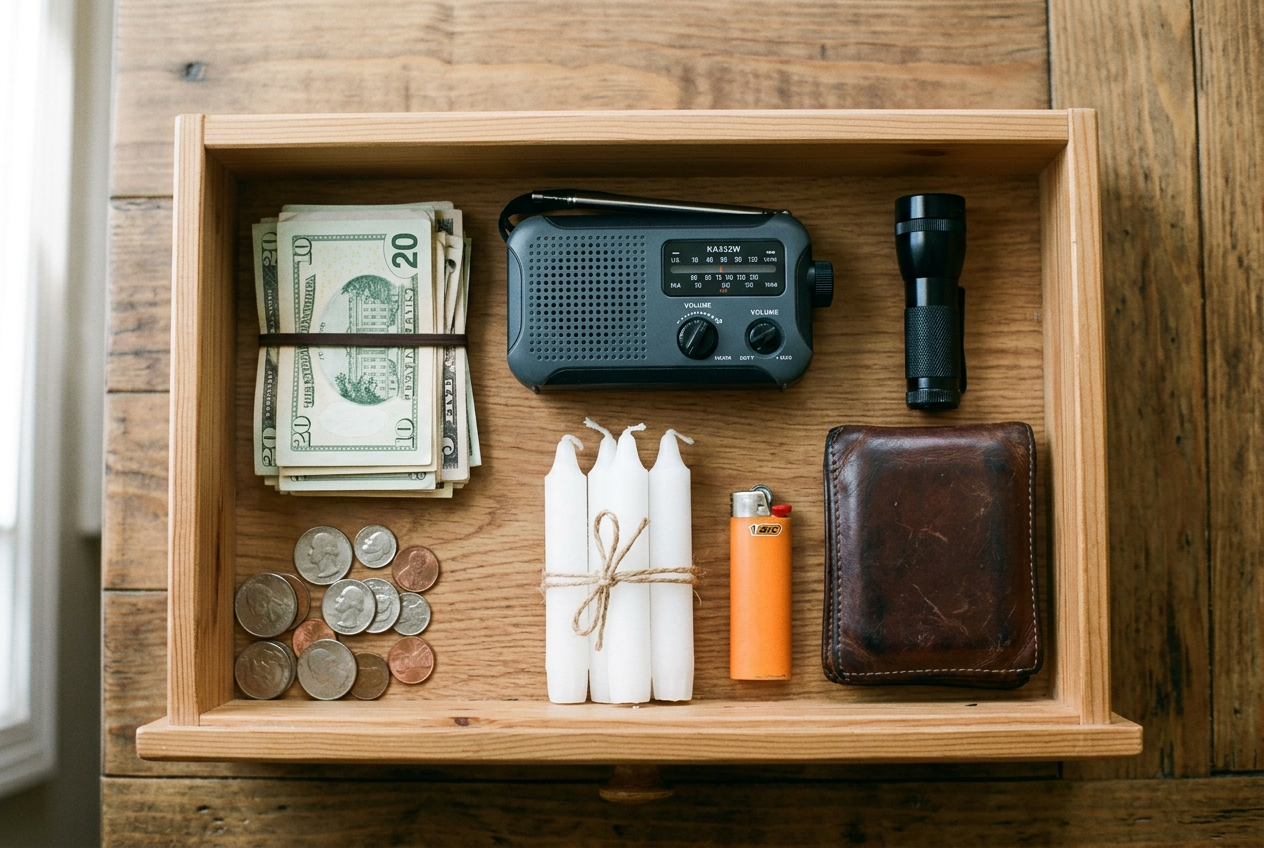
So mix it up. Keep a range of small bills. Add some coins too. Small notes and coins make it much easier to pay the exact amount. You also avoid the awkward moment where a shop cannot break a big note. A spread of small money is far more useful in a real outage than one or two large bills.
Why hoarding backfires
It can feel tempting to pull out a huge pile of cash “just in case.” Please do not do this. Emptying your account is the wrong move for a few reasons.
First, large amounts of cash at home are a theft and fire risk. The more you keep, the more you can lose in one bad moment.
Second, panic spreads. If lots of people rush to empty their accounts at the same time, ATMs run dry faster. That makes the outage worse for everyone, including you. Cash works best as a backup when people stay calm and take only what they need.
Third, a giant cash stash does not solve the real problem. A short outage calls for a short buffer. That is all.
Keep your buffer small, sensible, and quiet. Do not talk about it widely. Do not treat it like savings. It is a tool for a few hard days, nothing more. Next, we will look at where to keep that cash safely in your home.
Where to Keep Your Cash Safely at Home
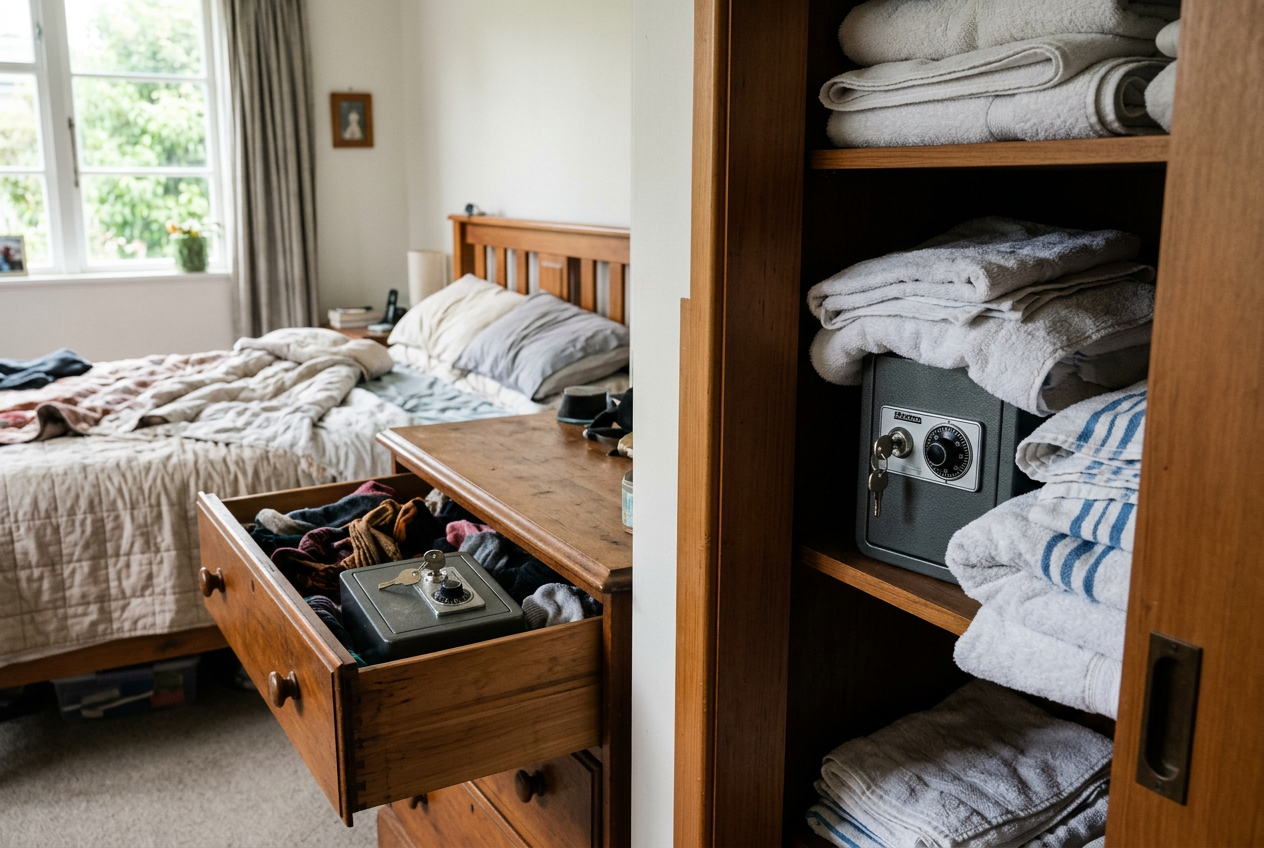
Once you have a small cash buffer, you need a smart place to keep it. The goal is simple. Your cash should be easy for you to reach, but hard for anyone else to find or grab.
Avoid the obvious hiding spots
Thieves know the common tricks. Skip the places people use most. That means not under the mattress, not in the sock drawer, and not in a cookie jar on the counter. These are the first spots a burglar checks.
Pick a quiet, out of the way spot instead. A closet shelf, a back drawer, or a cabinet works better. Just make sure you will remember where it is.
Split your cash into more than one place
Do not keep all your cash in one spot. Split it into two or three places around your home. This way, if one spot is found or damaged, you still have the rest.
Keep a small amount somewhere very easy to reach. That part is for a quick grab during a card or ATM outage. Keep the larger part in a more secure spot.
Use a locking box for safety
A plain envelope can be lost, stolen, or ruined by a spill or a small fire. A compact lock box adds real protection. It keeps cash and papers together and out of easy reach. It also protects against curious kids or guests.
Look for a box made of solid steel. Steel resists prying and forced entry much better than plastic. A heavy box is also harder to carry off.
The lock box below is built from cold rolled steel with a powder coated finish. It uses heavy duty locking bolts and anti pry hinges. It is small enough to tuck into a drawer or closet.
Key lock or combination lock?
You have two main lock types. Each has a trade off, so pick what fits your household.
A key lock is simple and reliable. It needs no batteries and no code to remember. But you must keep the key somewhere safe and know where it is. If you lose the key during an emergency, you are stuck. Keep a spare key in another secure spot.
A combination lock lets you open the box without a key. You just enter your code. This is handy if you worry about losing keys. The downside is you must remember the code. Do not write it on the box or nearby.
The mini safe below uses a programmable key code. You set your own three digit combination. It is lightweight steel and easy to move or store.

Think about quick access
During an outage, you may need cash fast. Store your box where you can get to it in the dark. Keep the key or code fresh in your memory. Practice opening it once so there are no surprises.
A good storage plan keeps your cash safe from theft, hidden from view, and ready when you need it most.
Protecting Cash and Documents from Fire and Water
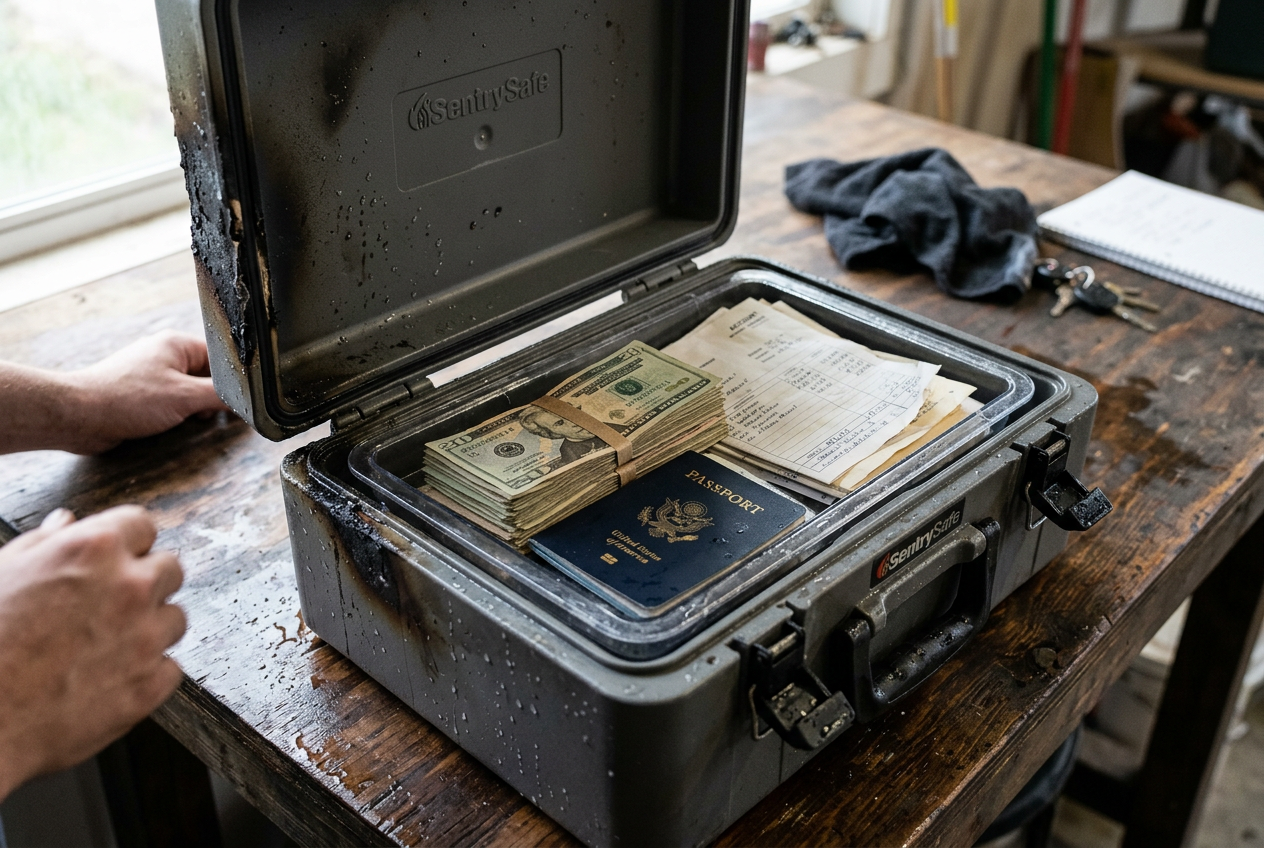
Your cash buffer is only part of the picture. The same plan should protect your passports, ID cards, and account records too. During an outage, you may need these papers to prove who you are or to reach your bank. Keeping them together in one safe spot means you can grab what you need fast. It also keeps them safe from everyday risks like a house fire or a burst pipe.
What fireproof and waterproof ratings mean
A fireproof box is really fire resistant, not fireproof. Ratings tell you how long the box protects its contents and at what heat. For example, some boxes are rated for half an hour at 1550°F. That gives your papers a chance to survive while help arrives. It does not mean they are safe forever in any fire.
Waterproof ratings work the same way. A box may be tested for water for a set time. That helps in a flood or if firefighters spray water. But no box lasts under water forever. Read the exact rating and match it to what you need.
One more thing to remember. A fire-resistant box is not a full-security vault. These boxes resist fire and water, but a thief could carry a small one away. Keep that in mind when you decide what to store and where.
Matching a box to what you store
Start by listing what you want to protect. Cash, a few passports, and some folded papers need only a small box. A big stack of unfolded documents needs a larger one.
For a basic fire-resistant chest with a key lock, this small SentrySafe box is a simple choice. It has a carrying handle and a privacy key lock.
If you want both fire and water protection in one unit, a document safe covers more. This SentrySafe model is fire rated and also tested for water submersion. It is larger, so it fits more papers flat.

Some people prefer a dual lock. These boxes let you use a combination or a key. The KYODOLED box has fire-resistant insulation and a carrying handle.

If you need to store A4 or letter papers without folding, look for a larger box. This one fits full-size papers flat and has a dual lock.
Here is another dual lock option that is fire resistant and water resistant. It also has a carry handle, so you can move it fast if you must leave.

A simple rule
Pick a box that fits your papers and your cash buffer with a little room to spare. Set your own combination if the box has one. Then store it somewhere out of plain sight. The box guards against fire and water. You still handle the security part by keeping it hidden and locked.
Lock Box and Safe Comparison
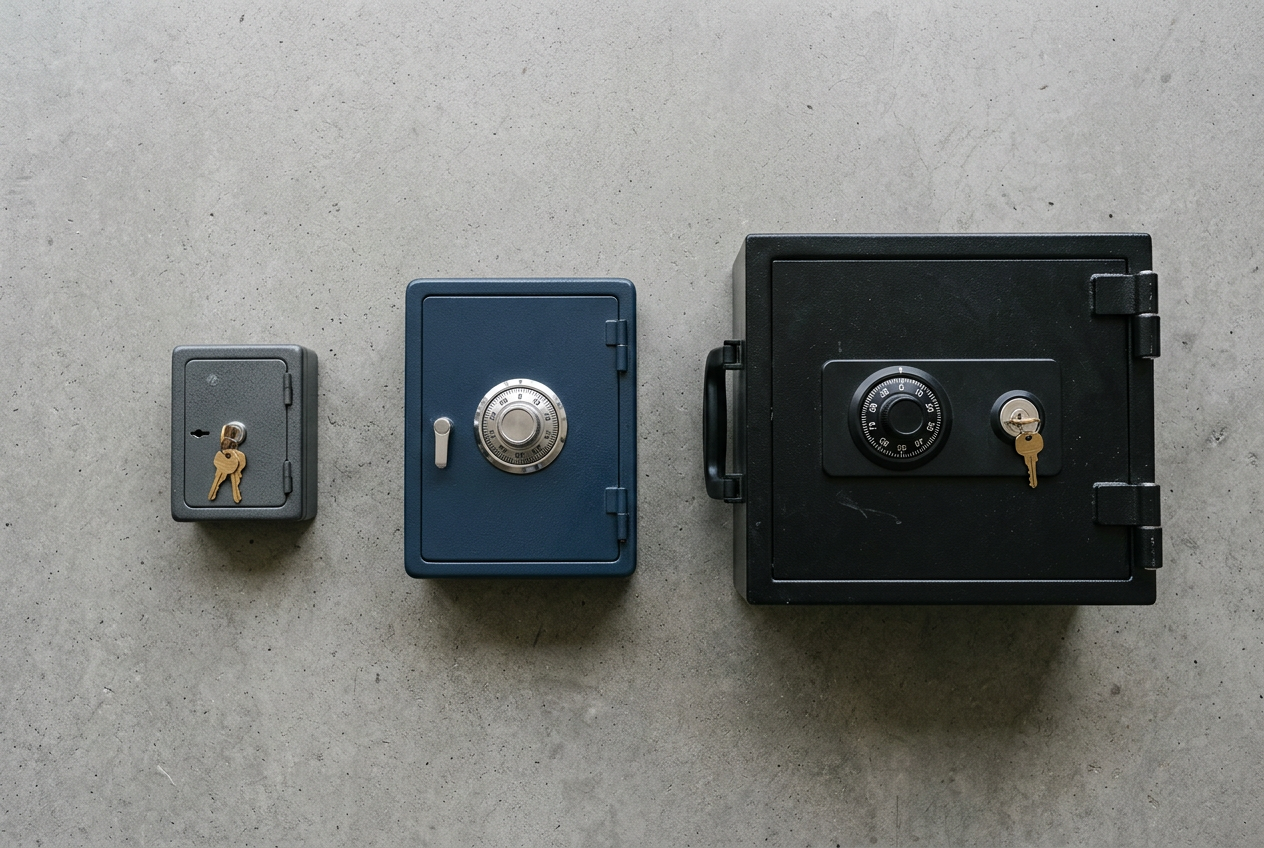
You do not need a huge safe for a small cash buffer. A simple lock box can hold your emergency cash and a few key papers. The best choice depends on how much fire and water protection you want, and how you like to unlock it. Here is a quick look at the options covered in this guide.
How to read the table
Lock type matters more than you think. A key lock is simple and needs no batteries. The downside is you must keep the key somewhere safe and easy to reach. A combination lock means no key to lose, but you must remember the code. A dual lock gives you both options. Pick the one that fits how you store things at home.
Fire and water resistance are listed only where the maker states them. Fire ratings like “UL 1/2 hour at 1550°F” mean the box is tested to protect contents for that short window. That is enough time for emergency crews to respond. Water resistance is less common. If you live in a flood-prone area, a waterproof model gives extra peace of mind.
Matching a box to your needs
For most households, a small or mid-size lock box is enough for a cash buffer and a few papers.
If you want the simplest option for cash and digital media, look at the SentrySafe fireproof chest. It uses a key lock and has a carrying handle.
If you want both fire and water protection, the SentrySafe document safe is tested for water submersion too. That makes it a strong pick if flooding is a worry.
If you prefer a keyless option or want to share a code with family, a dual-lock box like the KYODOLED fireproof lock box lets you unlock by key or combination.
One box is usually enough
You do not need several safes. One box that holds your small cash reserve and copies of key documents will do the job. Choose a size that fits your drawer or closet. Then follow the fire and water tips in the earlier sections to keep it in a smart spot.
Using Cash Calmly During an Outage
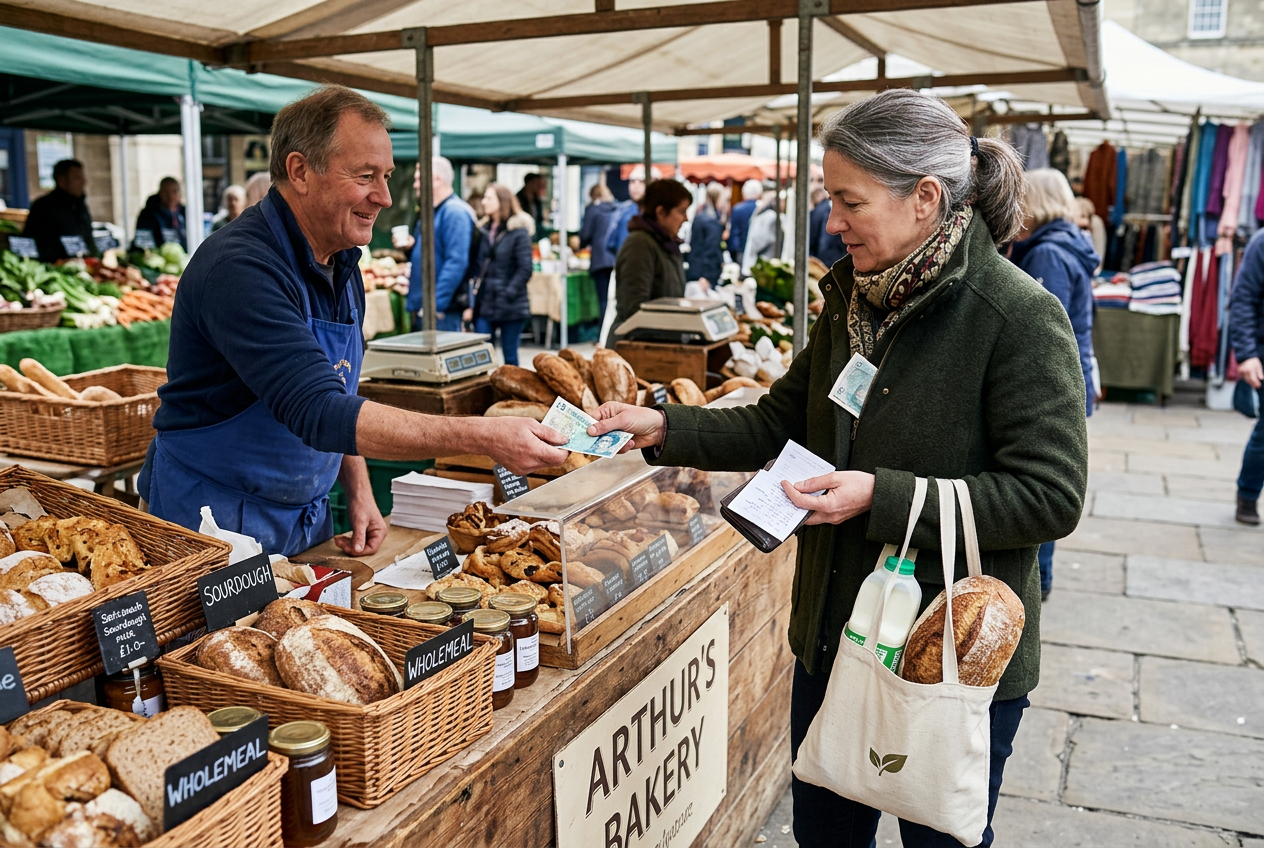
When card payments or bank systems go down, your cash buffer is there to cover basics. The goal is not to panic buy. The goal is to get through the outage calmly. Here is how to use your cash wisely while things are offline.
Buy only what you need
During an outage, focus on essentials. Think food, water, medicine, and fuel if you must travel. Skip anything that can wait. Your small cash reserve is meant to bridge a short gap, not to stock up on extras. Spending slowly means your cash lasts longer if the outage runs longer than expected.
Keep small bills ready
Stores may struggle to make change when their systems are down. Small bills make every purchase easier. They also help you avoid overpaying when a cashier cannot break a large note. When you build your cash buffer, include a mix of small bills. A pile of large notes is harder to use in a pinch.
Do not flash large amounts
Keep your cash out of sight. Pull out only what you need for each purchase. Do not fan out a stack of bills at the register. Keep the rest tucked away in a wallet, pocket, or bag. This is simple common sense. It keeps your money private and lowers your risk in a crowded store.
Ask about offline payment options
Some stores can still take payment even when their card readers are down. Ask the staff. They may have a manual backup, or they may only take exact cash. A quick, polite question can save you time and stress. If one store cannot help, another nearby may be set up differently.
Hold on to your receipts
Keep every receipt during an outage. If a payment does not go through right away, a receipt is your proof. It also helps you track what you spent from your cash buffer. Once systems come back online, receipts make it easier to check your accounts and spot any errors.
Keep a written list of key numbers
When banks and apps are offline, you cannot look things up on your phone. Keep a written list of your account numbers and bank phone numbers somewhere safe at home. A fireproof box is a good place for it. This way, you can still reach your bank or confirm details even when the internet is down.
Have a backup plan if it lasts longer
Most outages are short. But plan for the chance it runs longer than you expect. Know which local stores take cash. Decide what you will cut back on if your buffer gets low. Keep your cash reserve topped up again once the outage ends, so you are ready next time. A calm, simple plan beats scrambling at the last minute.
Pairing Cash with Your Wider Emergency Plan
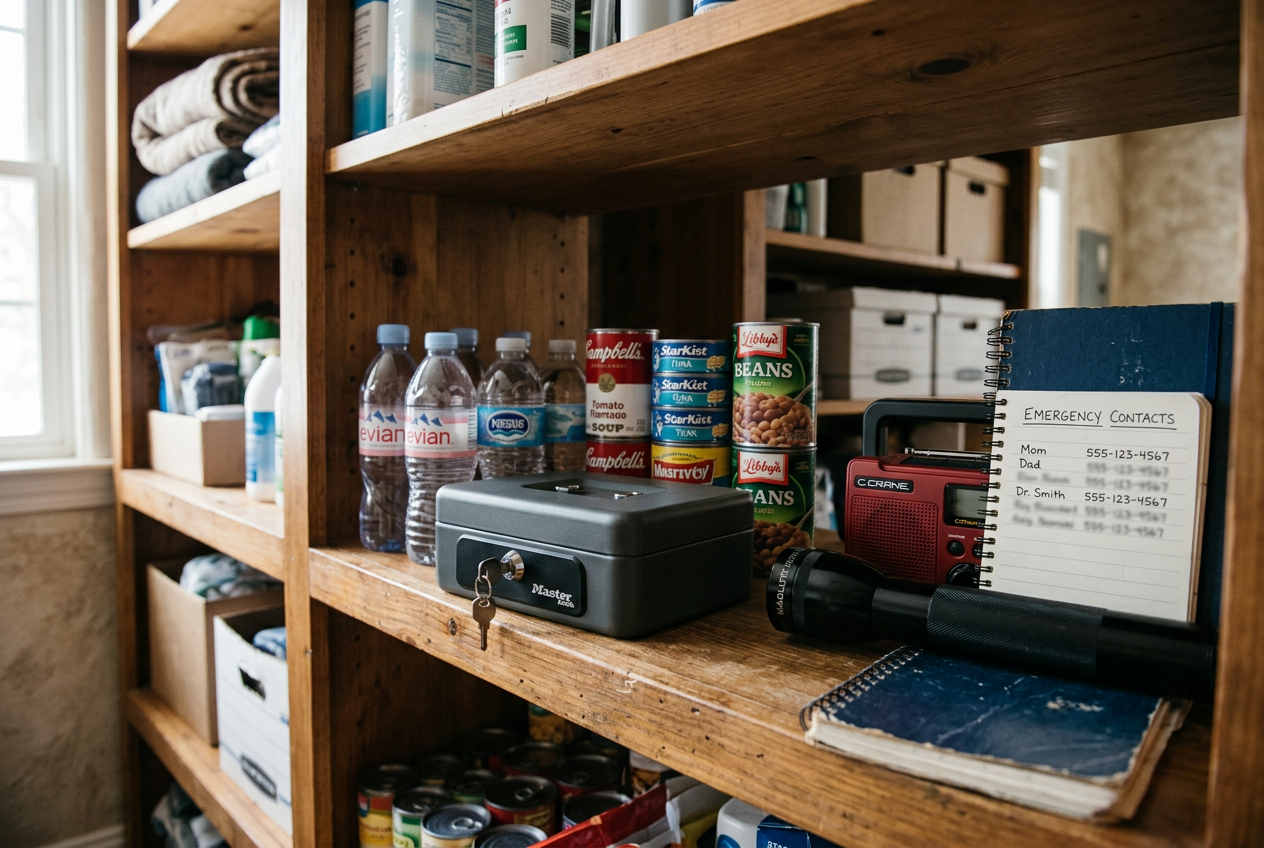
A cash buffer is one piece of a larger plan. It helps when card payments or bank apps go offline. But cash alone will not cover every need. The strongest plans pair cash with basic supplies and a way to stay in touch. Think of cash as the money part of your readiness, not the whole thing.
Governments have pointed to this wider approach. Recent reporting noted official advice for families to keep food, water, and cash on hand amid cyber risk. The reason is simple. During an outage, you may not be able to shop online, tap your card, or reach your bank quickly. Having a few basics at home buys you time and calm.
Food, water, and communication
Keep a small store of food that does not need the fridge or much cooking. Keep drinking water too. You do not need to go overboard. A few days of supplies is a sensible start for most households. This way, if stores cannot take cards for a while, you still have what you need at home.
Communication matters just as much. If the internet or your bank app is down, you want a way to get updates. A phone with a charged battery helps. A backup power bank helps more. Save key phone numbers somewhere other than your phone. Write down your bank’s phone line, a trusted contact, and your workplace. If your screen dies or your app logs you out, a paper note still works.
Account hygiene speeds your recovery
Good habits with your accounts help you bounce back faster once systems return. This is sometimes called account hygiene. It means keeping your records clean, safe, and easy to reach.
Here are simple steps you can take now:
- Keep a paper or offline copy of your account numbers and card details. Store it with your cash in a locked box.
- Write down the customer service numbers for your bank and card issuer. Do not rely only on the app to find them.
- Save important contacts in more than one place. A written list is a good backup.
- Keep copies of key documents, like ID and insurance papers, in a safe spot at home.
- Check your statements once services come back online. Look for any charges you do not recognize.
A fireproof lock box is a good home for these papers and your cash together. It keeps money and records in one safe, known place. That makes it quick to grab what you need when an outage hits.
Link your plans together
Your cash buffer does not replace your other prep. It works beside it. Food and water cover your basic needs. Communication keeps you informed. Account hygiene helps you recover. Cash bridges the gap when card and bank systems are offline. Build each part a little at a time. You do not need to do it all at once. Start small, keep it simple, and add to your plan as you go.
Frequently Asked Questions
Is my money still safe in the bank during a cyberattack?
Your money does not disappear during a cyberattack or outage. The problem is access, not the money itself. A cyberattack can make your bank and card accounts hard to reach for a while. You may not be able to log in, use your card, or pull cash from an ATM. But the balance in your account stays yours. Once systems come back online, you can use your money again. This is why a small cash buffer helps. It covers you for the short time when you cannot tap your accounts.
Should I withdraw a large amount of cash?
No. The goal is a small buffer, not a big pile of cash. Pulling out a large sum creates new risks. Cash at home can be lost, stolen, or damaged by fire or water. Taking out too much also does not help if many people rush to do the same thing. Keep only enough to cover basic needs for a few days. Think of it as a backup, not a bank replacement. Hoarding is the wrong move.
How long could an outage last?
There is no fixed answer. Some outages are over in hours. Others can stretch longer while teams fix the problem. You should plan for a short gap, not weeks. A cash buffer that covers a few days of basics gives you breathing room. If you want more cover for longer events, pair your cash with food, water, and other supplies. We talk about that in the wider emergency plan section.
Will stores accept cash if their systems are down?
Often, yes. When card machines and the internet go down, cash can still work. Many stores can take cash even when their systems are offline. Reports during past outages show cash kept people shopping when cards failed. But not every store will. Some shops have gone fully cashless and may struggle. Small amounts and exact change make cash payments easier for staff. Do not expect stores to give change if their tills are down.
What about coins and change?
Small bills and coins matter more than you might think. During an outage, a store may not be able to open its till or make change. If you only carry large notes, you could get stuck. Keep a mix of small notes and coins in your buffer. This lets you pay close to the exact amount. It also helps with things like parking meters, vending machines, or a quick buy at a market stall. A handful of coins and a few small notes can go a long way when systems are down.
Where should I keep this cash?
Keep it somewhere safe, dry, and out of sight at home. A small lock box or fireproof safe protects your cash and key documents together. We cover safe storage and good options in the sections above.
Your Cash-Buffer Action Checklist
Use this checklist to build your cash buffer step by step. You can print this page and keep it with your emergency plan. Work through the list at your own pace. There is no rush.
Decide on a modest amount. Pick an amount that covers a few days of basic needs for your household. Think about food, fuel, and any small bills you may need to pay in person. Keep it small. This is a short-term buffer, not a savings plan. Hoarding cash is not the goal.
Withdraw gradually in small bills. Do not pull out your whole buffer in one trip. Take out a little each time you visit the bank or ATM. This keeps your routine normal and avoids carrying large sums at once. Ask for smaller bills when you can. During an outage, shops may not be able to make change for large notes.
Store it securely at home. Keep your cash in a locked box or a fire-resistant box. A simple steel lock box keeps money out of sight and out of easy reach. A fire-resistant box adds extra protection for your cash and papers. Choose what fits your home and budget.
Split it between two spots. Do not keep all your cash in one place. Put some in your main box. Keep a smaller amount in a second, separate spot. If one location is damaged or hard to reach, you still have access to some money. This spreads your risk.
Write down key account info. During an outage, you may not be able to log in to your bank app or website. Write down your main account numbers, your bank’s phone number, and any customer service lines. Keep this note with your cash in the locked box. Do not write down full passwords or PINs. Store this paper somewhere safe and private.
Review every few months. Set a reminder to check your cash buffer a few times a year. Make sure the amount still fits your needs. Confirm your bills are in usable condition. Update your account info if anything has changed. Check that your box still locks and is in good shape.
Pair it with your wider plan. Your cash buffer works best alongside other basics like food, water, and a way to charge your phone. Cash is one part of being ready, not the whole plan.
That is it. A small cash buffer is simple to set up and easy to maintain. It gives you a calm backup if your bank or card payments go offline for a short time. Start with step one today. Even a small amount of cash on hand can help you handle a short outage with less stress.
Next Steps
A small cash buffer is one of the easiest preparedness steps you can take. You do not need special skills. You do not need a lot of money. You just need a modest amount of cash, a safe place to keep it, and a simple plan for using it well. If a cyberattack or bank outage knocks out your cards and ATMs, you will be glad you set this up early. You can start this week.
Here is where to go from here.
1. Set aside your cash this week
Pick a small, realistic amount that fits your budget. Keep it in a mix of smaller bills so you can pay without needing change. Add to it slowly if you want. The goal is a modest buffer, not a big pile of money at home. Remember, hoarding is not the point. A little cash to cover a few days of basics is plenty.
2. Lock down secure storage
Loose cash in a drawer is easy to lose or damage. A simple lock box keeps your money and key papers in one safe spot. If you want added protection from fire and water, a rated safe gives you more peace of mind. A compact option like the small steel lock box works well for cash and valuables. If you also want fire and water protection for documents, look at the SentrySafe fireproof and waterproof document safe.
3. Tidy up your account hygiene
While you are at it, take a few minutes on your bank and card accounts. Know how to reach your bank by phone if the app goes down. Keep a written note of key account numbers and phone numbers somewhere safe. Turn on alerts so you spot problems fast. Good account habits help you recover quicker if services go offline.
4. Build a broader 3-day household plan
Cash is one piece of a bigger picture. If an outage hits, you may also want food, water, and a way to stay in touch. Government advice during recent cyber events has pointed families toward keeping basic supplies on hand. Aim for a simple 3-day plan that covers water, easy food, light, and a way to charge your phone. Your cash buffer fits right alongside these basics.
Print this page
There is no separate download for this guide. If you want a checklist to follow, use the Cash-Buffer Action Checklist earlier in this article. You can print this page and keep it with your emergency supplies. That way the steps are handy even if your screen goes dark.
Start small. Set aside your cash, lock it away, and tidy up your accounts this week. Then add the rest of your plan over time. A little effort now means you will stay calm and ready if the next outage hits.
Sources and Further Reading
- They said the threats have been disrupting essential …
- Benefits of cash during bank outages
- Should you withdraw cash from an ATM in case of a cyberattack?
- Internet failures and cyber attacks are the proof that cash is …
- US banks on high alert for cyberattacks
- How a cyber crisis could affect banks and why you need an emergency cash supply
- Britain Tells Families to Stock Food, Water and Cash as Be Ready Campaign Launches Amid Cyber Chaos