Ready
Outer Banks Coastal Storm: What Hatteras-Area Households Should Do When an Evacuation Is Ordered (2026)
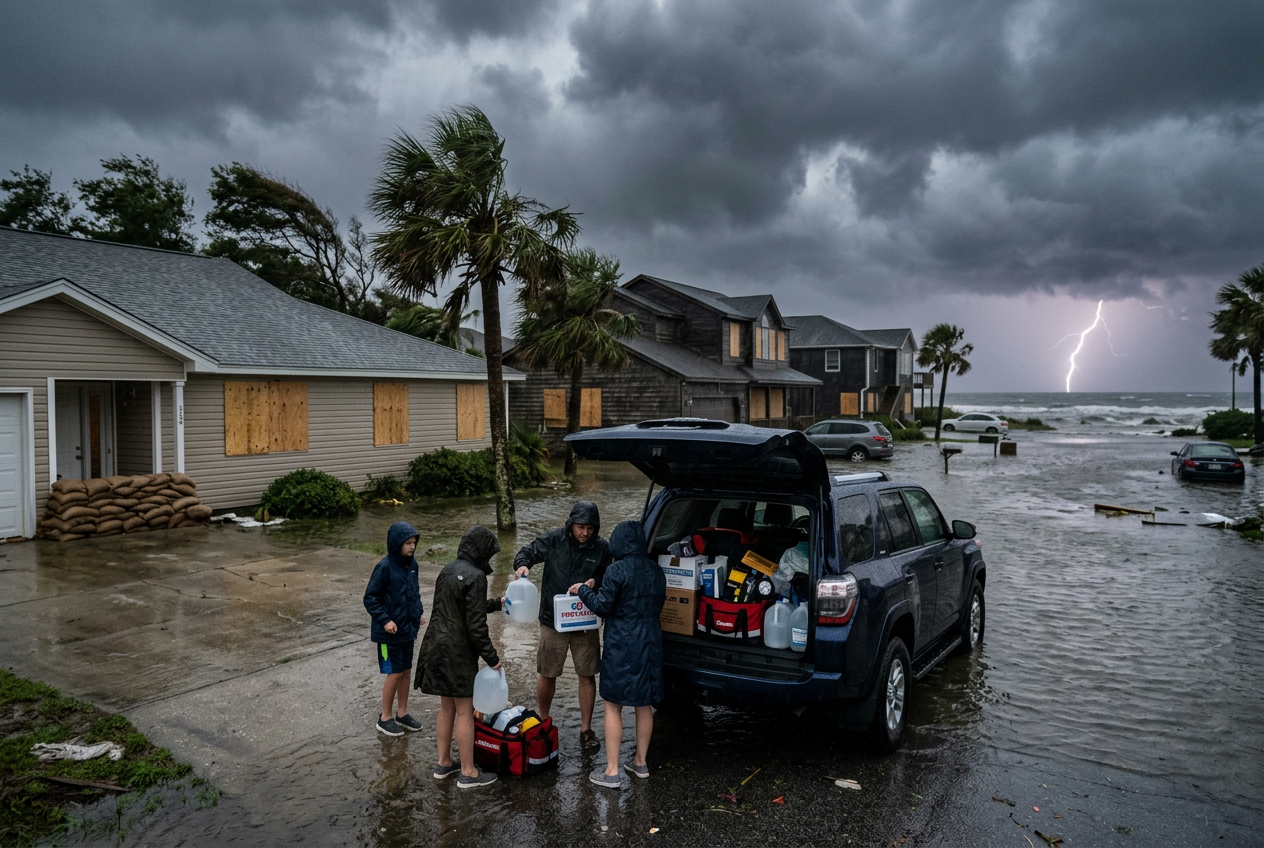
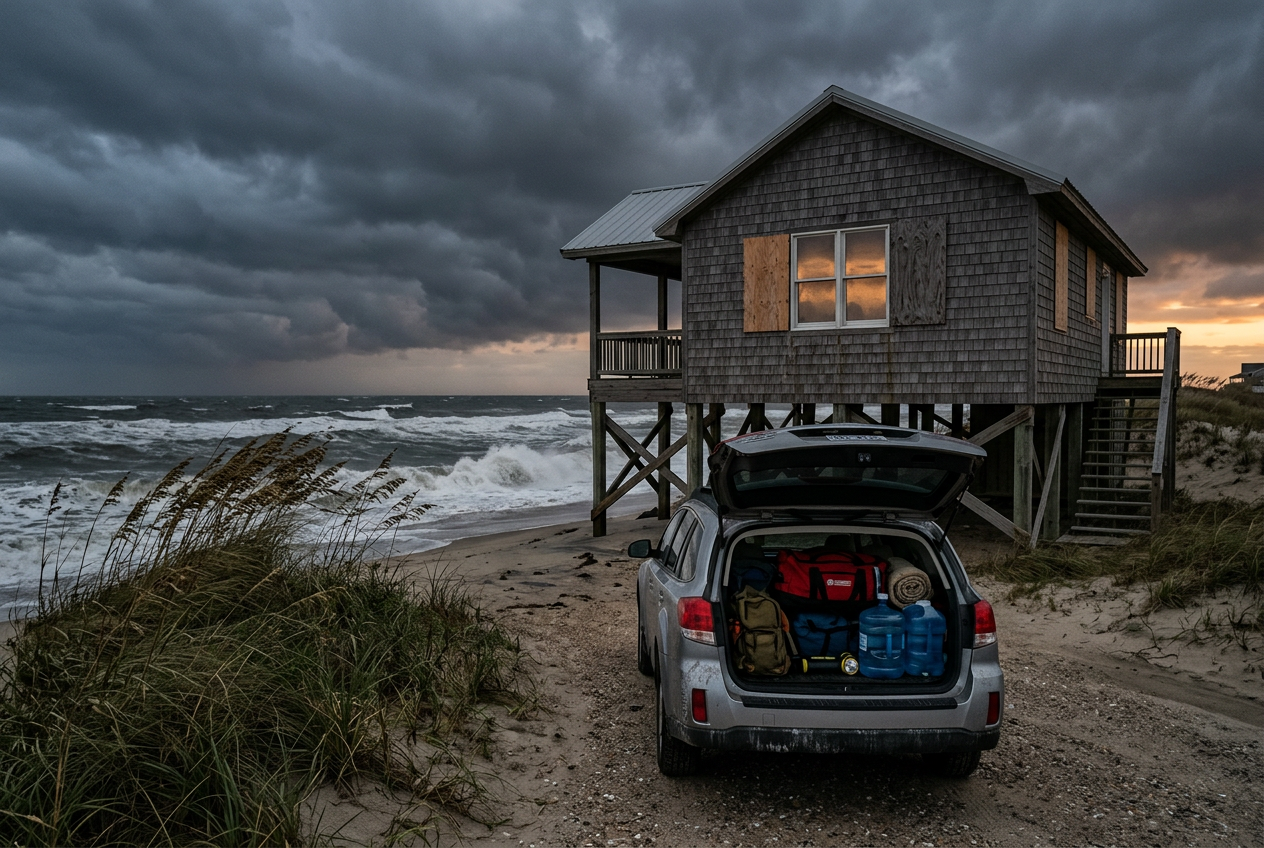
In October 2026, Dare County ordered all visitors to leave Hatteras Island. A coastal storm was moving in. It threatened NC Highway 12, the one road that connects the island to the mainland. When that road floods or washes out, there is no other way to drive off the island.
This is the hard truth about barrier islands. They are low, narrow strips of sand. Storm surge and heavy rain can flood them fast. One road out means traffic backs up quickly. If you wait too long, you may not get out at all.
An evacuation order is not always the same for everyone. A visitor evacuation tells tourists and renters to leave first. A resident evacuation comes next and tells people who live there to go too. It helps to know which order applies to you, because the timing matters.
This guide is for ordinary households. You do not need to be an expert. You just need clear, simple steps you can take right now.
We will walk you through what an evacuation order means and how to read the single-route problem on Highway 12. You will learn how to protect your documents, pack a go-kit, stay informed when power and cell service fail, secure your home, and prep your car for a long drive. We end with a quick action checklist and answers to common questions.
- When officials order an evacuation, leave right away. Hatteras Island has only one road out, so waiting can trap you.
- Pack a 72-hour kit with food, water, and first aid for every person before the storm hits.
- Keep a NOAA weather radio so you still get warnings and updates if the power and cell towers go down.
- Protect birth certificates, insurance papers, and deeds in a waterproof, fireproof bag you can grab fast.
- Fill your gas tank, charge your devices, and map your route early while roads are still open.



Reviewed by Elena V., James W. & Priya K. — contributors with hands-on preparedness experience. How we test
A few key items can make leaving your home much easier when a storm closes in. Grab these before you read on to see how each one helps.

Fireproof Waterproof Document Bag
Keeps your important papers like IDs, insurance, and deeds safe from water and fire. You can grab it in seconds and bring it with you when you evacuate.
Check Price on Amazon
NOAA Solar Hand Crank Radio
Gives you storm warnings and updates even when the power is out and cell service fails. The hand crank and solar charging also let you power up a phone and use the built in flashlight.
Check Price on Amazon
2-Person 3-Day Survival Kit
Holds food, water, and first aid supplies to keep two people going for 72 hours. It is ready to grab and go so you do not scramble to pack when an evacuation is ordered.
Check Price on AmazonIn this guide
Why Trust This Guide?
This article was researched and reviewed by contributors with hands-on experience in emergency preparedness. They have tested gear, built real systems, and lived through situations where these skills actually mattered.
Understand the Evacuation Order: Visitor vs. Resident, Voluntary vs. Mandatory
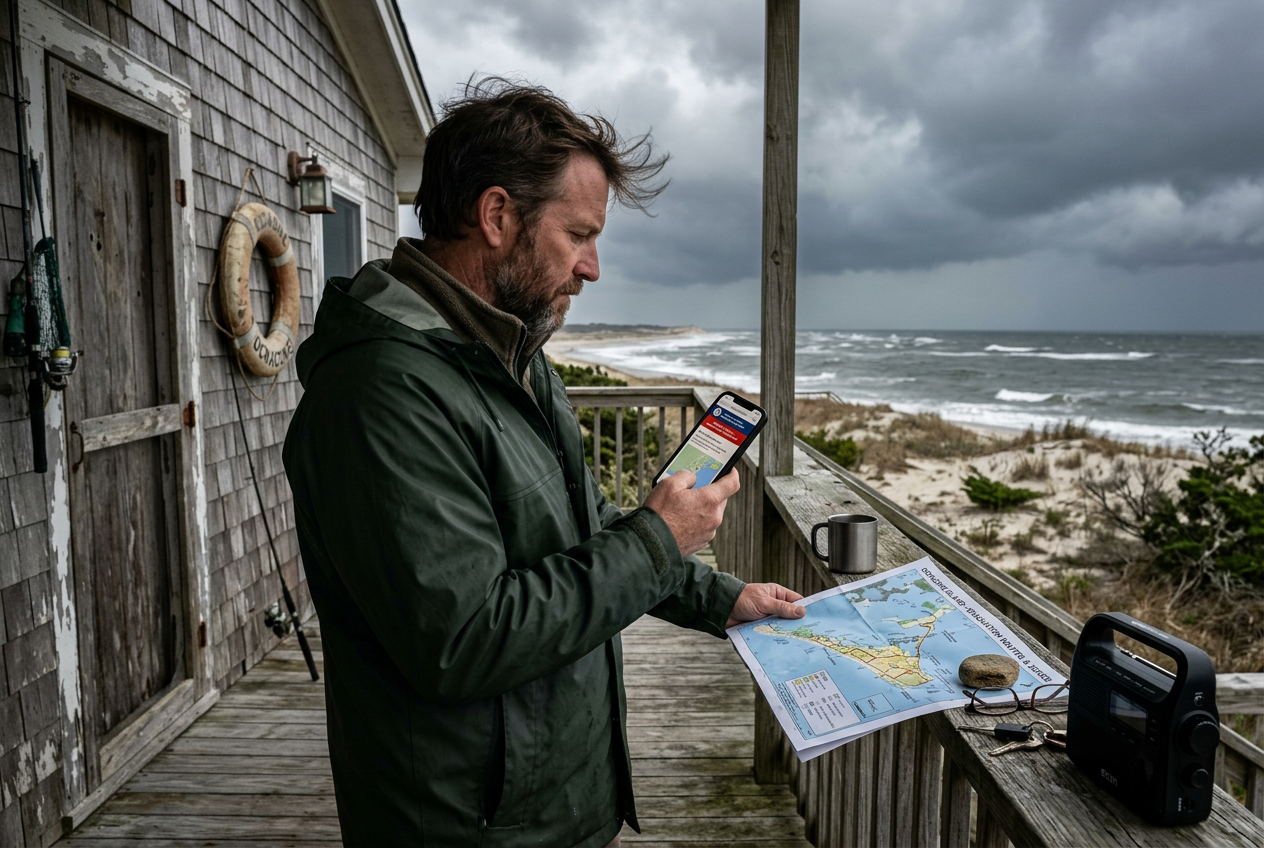
When a coastal storm threatens the Outer Banks, Dare County may order an evacuation. But not all orders mean the same thing. Knowing the difference helps you act fast and stay safe.
Visitor Orders Usually Come First
On Hatteras Island, evacuation orders often apply to visitors before residents. This is on purpose. Visitors do not know the roads or the risks as well as locals do. Getting them out early clears the way for everyone else.
In August 2025, Dare County ordered visitors in Rodanthe, Waves, Salvo, Avon, Buxton, Frisco, and Hatteras Village to leave. A visitor order went into effect, and then residents were told to go by a later deadline. In October 2026, Dare County again ordered all visitors off Hatteras Island as a coastal storm threatened NC Highway 12.
If you are renting a home or staying in a hotel, a visitor order likely means you. Pack up and go when told. Do not wait for a resident order to be added.
Voluntary vs. Mandatory
A voluntary order means officials strongly suggest you leave. A mandatory order means you are required to leave. Both are serious.
Even a voluntary order is a clear warning. If leaving is hard for you, like if you have pets, limited mobility, or no car, start acting on the voluntary order right away. You may not have time once it turns mandatory.
Get Your Facts From Official Sources
During a storm, rumors spread fast online. Social media posts and group chats can be wrong or out of date. Do not plan your evacuation around a stranger’s Facebook post.
Instead, follow Dare County Emergency Management. The county sends out official bulletins with exact deadlines and instructions. In 2025, one bulletin told people to make final preparations, secure property, evacuate with all personal belongings, and follow instructions from their property managers.
Check these trusted sources:
- Dare County Emergency Management announcements
- Local emergency alerts on your phone
- NOAA weather radio broadcasts
If you rent, your property manager may also pass along official instructions. Listen to them.
Why You Should Leave on the First Order
Here is the key reason to act early: Hatteras Island has effectively one road out. That road is NC Highway 12. When a storm hits, this road can flood and close.
If you wait, the water may rise and trap you on the island. Once Highway 12 closes, you cannot drive out. You would have to shelter in place through the storm, which is far more dangerous than leaving early.
So treat the first order as your signal to go. Do not wait for the deadline. Do not wait to see if the storm turns. The sooner you leave, the better your chances of a safe, calm drive out. The next section covers the single-route problem in more detail.
Know Your Only Way Out: NC Highway 12 and the Single-Route Problem
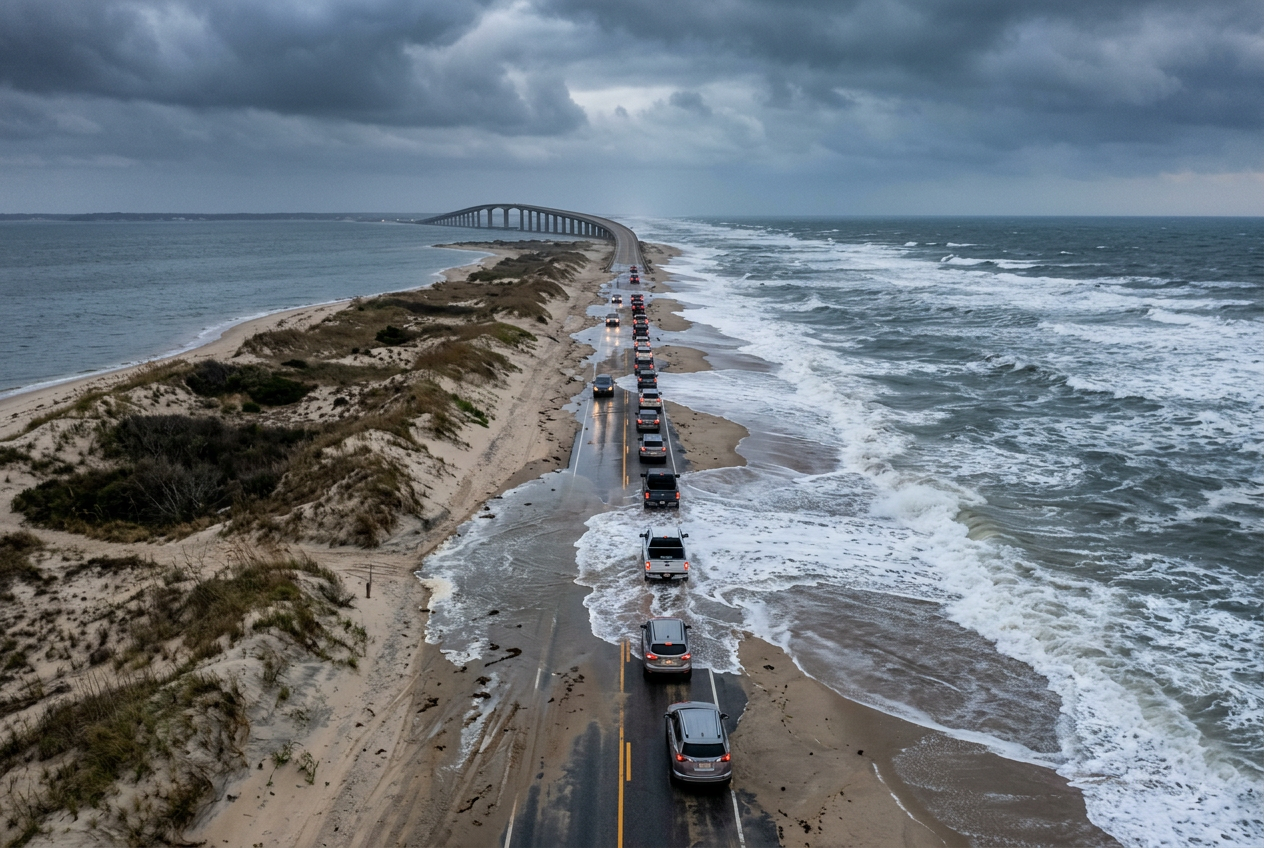
On Hatteras Island, there is really only one road off the island. That road is NC Highway 12. It runs the length of the island and connects the villages to the bridges and the mainland. Almost every household here uses NC 12 to leave when an evacuation is ordered.
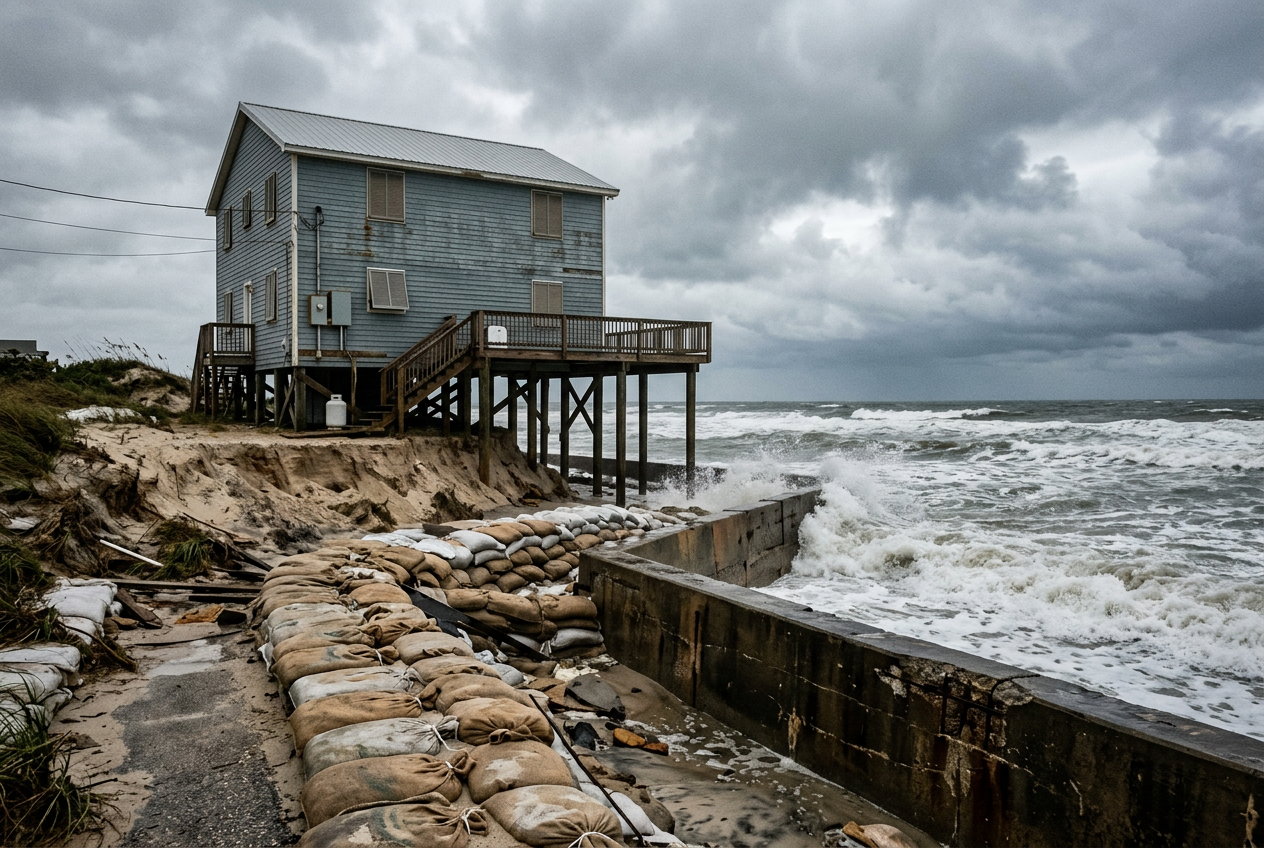
That single route is the heart of the problem. When a coastal storm hits, NC 12 is the first thing to flood. Storm surge pushes seawater across the road. Waves and sand wash over it. This is called overwash. It can happen fast, and it can happen with little warning. Once the road floods or breaks apart, you cannot drive out. You could be stuck on the island until the water drops and crews clear the road.
Leave Early, Not Late
The safest time to leave is early. Do not wait for the water to start rising. Do not wait to see how bad the storm gets. When Dare County orders an evacuation, treat that as your signal to go. Visitors are usually told to leave first, often hours before residents. If you are a visitor, go when your order starts. If you are a resident, pack and be ready so you can move the moment your turn comes.
Leaving early also helps you beat traffic. When everyone waits until the last hours, the road fills up. A slow line of cars on a flooding road is a dangerous place to be.
Know Where You Are Going
Before you pull out of the driveway, know where you are headed. Pick a mainland destination ahead of time. This could be a hotel, a friend’s house, or a relative’s home well away from the coast. Trying to figure this out while you drive wastes time and fuel. Have the address ready. Tell someone outside the area where you plan to go.
Keep Your Fuel Tank Topped Off
Gas stations on the island may close before the storm. Power outages can shut down pumps. A full tank gives you options. Top off your tank well ahead of the storm, not on the day the order comes. A good habit during storm season is to keep your tank at least half full at all times. That way you are never caught waiting in a long line at a pump that may run dry.
Ferries and Bridges May Stop
Some people leave Hatteras by ferry or by bridge. Keep in mind that ferry service can be suspended before and during a storm. Bridges may also close in high wind. Do not count on a ferry or bridge being open at the last minute. Check the status before you rely on it, and have a backup plan in mind.
Protect Your Irreplaceable Documents Before You Go
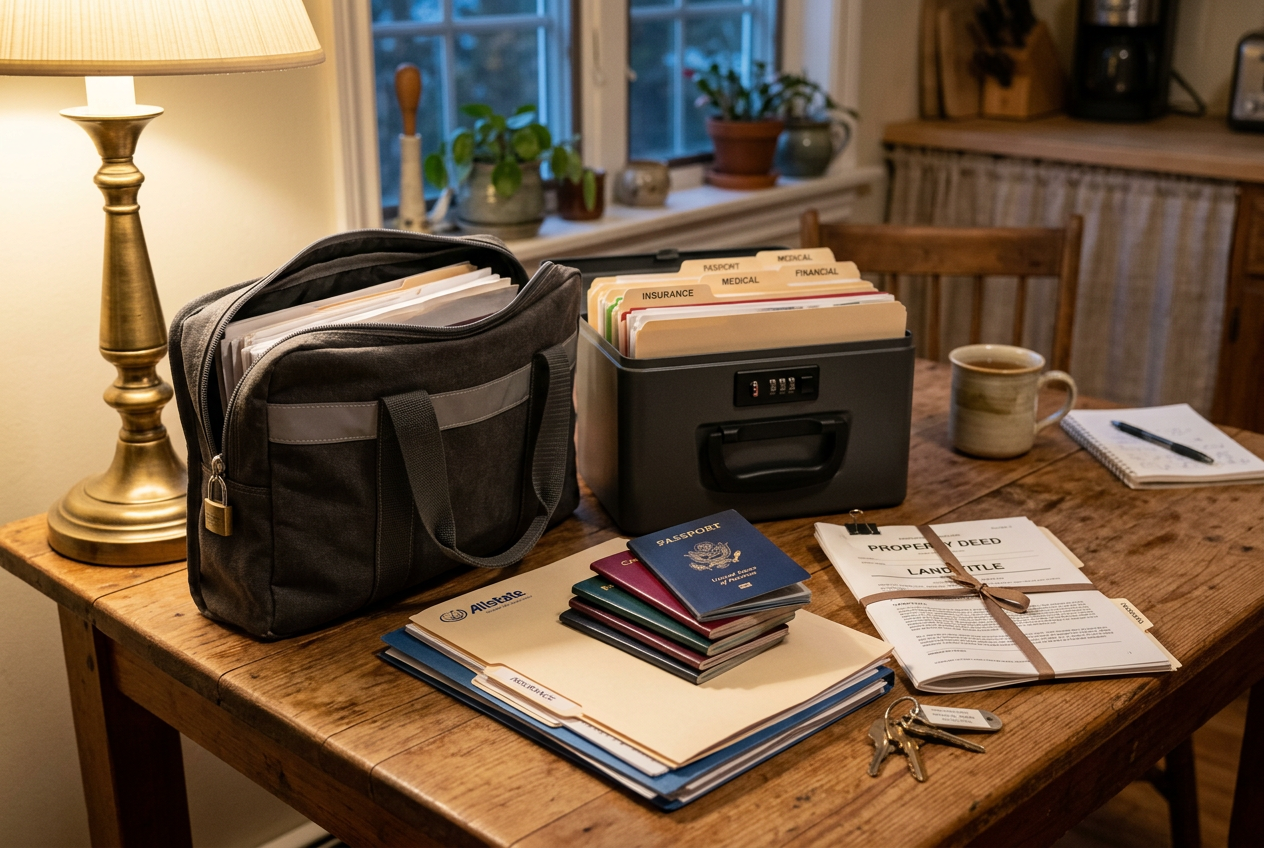
When a coastal storm hits Hatteras Island, flooding is a real risk. Water can ruin paper fast. Some documents are hard or slow to replace after a flood. So gather them before you leave. Keep them with you when you go.
Which papers to gather
Start by making a pile of your most important documents. These usually include:
- Driver’s licenses, passports, and other photo IDs
- Insurance policies, like home, flood, car, and health
- Property deeds, mortgage papers, and vehicle titles
- Birth certificates, marriage certificates, and Social Security cards
- Medical records, prescriptions, and a list of medicines you take
- Some cash in small bills, in case card readers are down
Put each person’s papers together so nothing gets lost. If you have time, take photos of each document with your phone. You can also save copies to a cloud account or email them to yourself. That way you have a backup even if the paper gets wet.
Keep everything in one place you can grab fast
The goal is simple. When the order comes, you want to grab all your papers in one move and go. A fire- and water-resistant document bag or box makes this easy. It keeps your papers dry if your home floods. It also protects them if a fire breaks out. Pack it ahead of time. Then you are not searching through drawers while you rush to leave.
A simple grab-and-go pouch
If you want something light and quick, a zip pouch works well. It holds your standard and legal-size papers flat. A good one is water resistant and fire resistant, with sealed zippers to keep water out.
This Andyer bag has two pockets and a night reflective strip, so you can find it fast in the dark. It is a smart pick for a small household that just needs the basics in one place.
Lockable organizers for more structure
Some households have many documents, or they want a lock for privacy. A larger organizer with slots and folders keeps things sorted. You can find a passport, a card, or a deed without digging.

The DocSafe box above has eight layers, many card slots and pockets, and a combination lock. It is soft sided and holds a lot. If you prefer a hard shell that resists dents and dust, this next one uses an accordion folder inside a sturdy case.
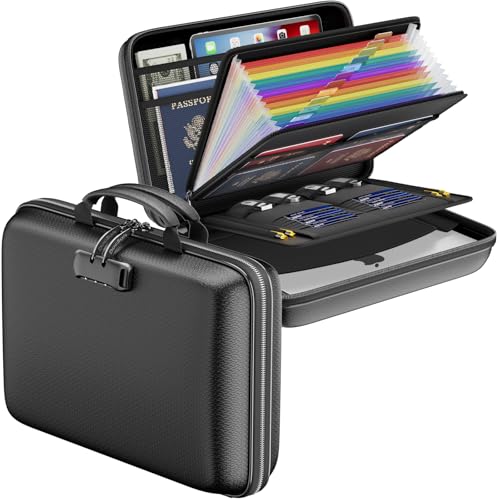
The hard-shell DocSafe has 13 labeled pockets and a lock. It stands up to rough handling in a packed car.
The main point
Pick one option and set it up now, before the storm. Load it with your key papers. Keep it near the door with your go-kit. When an evacuation is ordered, you grab it and go. No stress, no searching.
Build or Grab Your Go-Kit for the Road
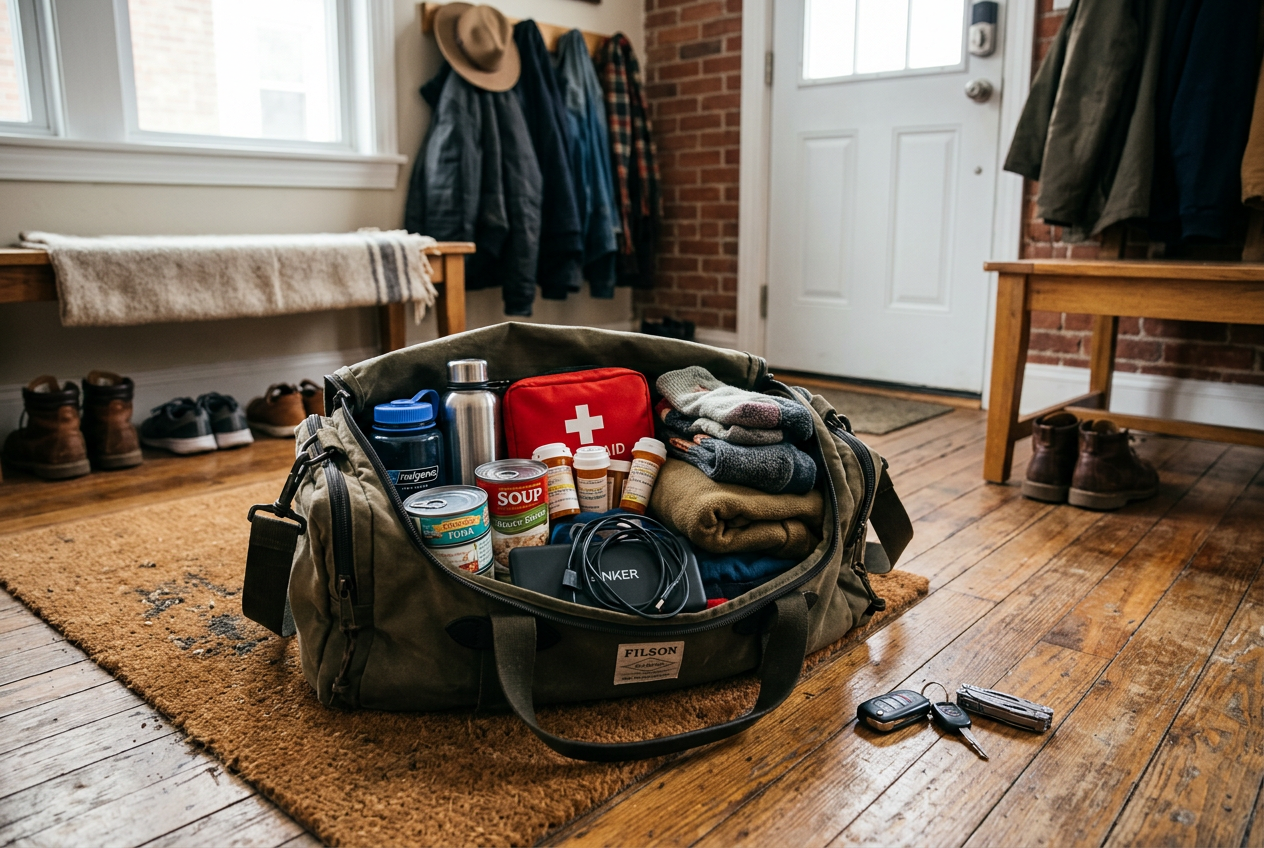
When an evacuation order comes, you may have only a few hours to leave. A go-kit is a bag you pack ahead of time. It holds the basics you need for the road. If your bag is ready, you grab it and go. You do not waste time hunting for supplies while traffic builds on NC Highway 12.
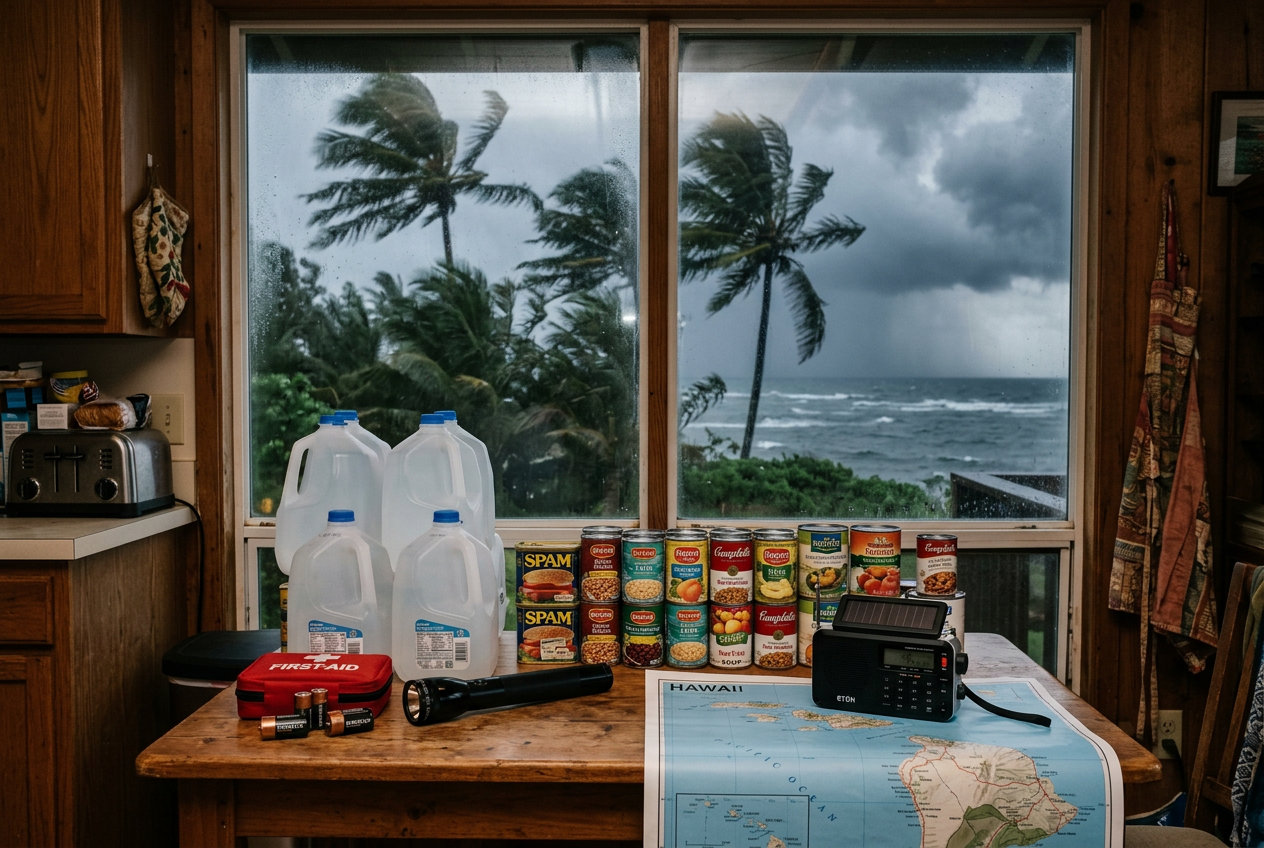
Think of a go-kit as supplies for about three days, or 72 hours. That gives you a cushion if you get stuck in slow traffic or lose power once you reach your destination.
What Every Go-Kit Should Hold
Pack these items for each person traveling:
- Water. Bottled water or sealed water pouches. Keep some in each bag.
- Food. Food that does not need cooking. Energy bars, canned food, and snacks work well. Pack a can opener if you need one.
- First aid. A basic first aid kit with bandages, gauze, and any wound care.
- Medications. Pack a few days of any prescriptions. Bring a written list of what you take and the doses.
- Phone chargers. A car charger and a battery pack. Your phone is your lifeline for updates.
- Warm and dry layers. A jacket, dry socks, and a blanket or poncho. Weather can turn cold and wet, and you may sit in your car for a long time.
Also add copies of key papers, cash in small bills, and a flashlight with spare batteries. Keep a comfort item for each child.
A Pre-Packed Kit Saves Time
You can build a go-kit from items you already own. That costs nothing. But a store-bought kit comes packed and ready. For a two-person household, this kit holds food bars, sealed water pouches, a first aid kit, ponchos, and survival blankets. Those blankets and ponchos help if you are stuck in traffic or lose power where you end up.
Match the Kit to Your Group
Pack enough for everyone in the car. A kit built for two people will not stretch to cover a family of five. Count heads first. Then pick a kit that fits that number, or build your own to match.
For larger families, a bigger kit covers more people with one purchase. This one is sized for up to five people. It packs the same type of basics in sturdy backpacks, so each person can carry a share.

Whatever kit you choose, check it before storm season. Swap out old water and expired food. Refill any medications. Add items for pets, babies, or anyone with special needs. A kit only helps if its contents are fresh and complete when you need to grab it and drive.
Stay Informed When Cell Service and Power Fail
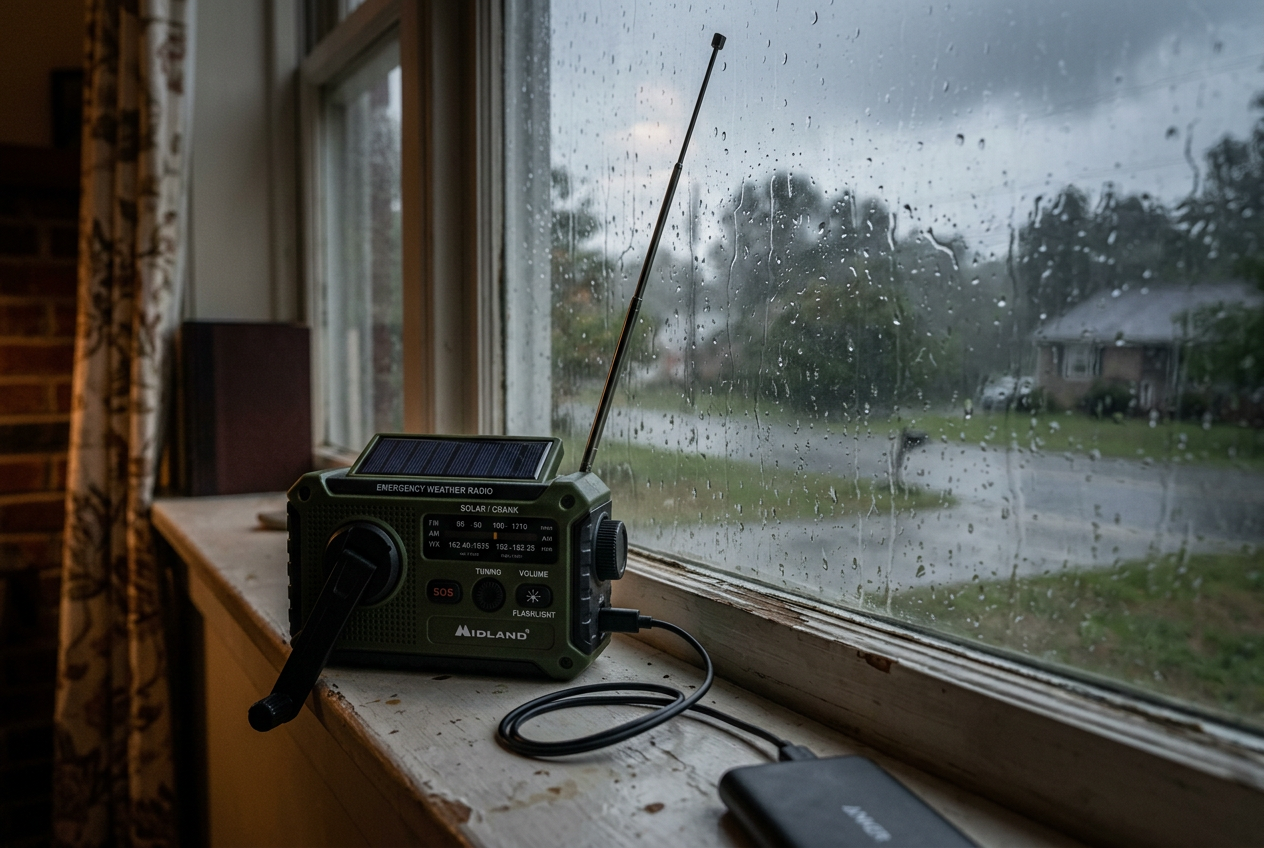
On a barrier island, a storm can knock out power and cell towers fast. When that happens, your phone may stop working. You could lose the updates you need most. That is why a NOAA weather radio matters. It pulls official forecasts and warnings straight from the National Weather Service. You do not need internet or cell service to hear them.
Why a Hand-Crank or Solar Radio
A plain battery radio works until the batteries die. A hand-crank or solar radio keeps going longer. You can turn a crank to make power by hand. You can set the radio in sunlight to charge. Many of these radios also have a built-in battery that can charge your phone. That lets you send one quick message or check a map when service comes back for a moment.
Keep the radio ready before the storm. Charge it fully. Test the crank and the lights. Know where it is so you can grab it fast.
How to Tune to the NOAA Weather Band
Turn the radio on. Switch it to the weather band, often marked WB or NOAA. Then scan the NOAA stations until you hear a clear voice. These broadcasts repeat updates all day. Leave the radio on that band during the storm so you catch new warnings.
Compare the Radios
Here are three emergency radios you can consider. All three get NOAA weather broadcasts. They differ in battery size, charging options, and extra features.
The FosPower A1 is a solid basic pick. It runs on a crank, solar panel, AAA batteries, or USB. It has a flashlight and a reading light. The smaller battery means less phone charging, but it still gives you a boost.
The next radio has a much larger 12000mAh battery. That holds more backup power for your phone. It also has a brighter 5W flashlight and a loud 120dB SOS alarm. Good for a longer outage.

This third radio also has a 12000mAh battery and a large solar panel. It adds dual USB outputs, so you can charge two small devices at once. The crank is built for quick, low-effort turning.

Any of these keeps you in touch with official updates when the grid goes down. Pick one, charge it now, and pack it with your go-kit.
Secure Your Home Before You Leave
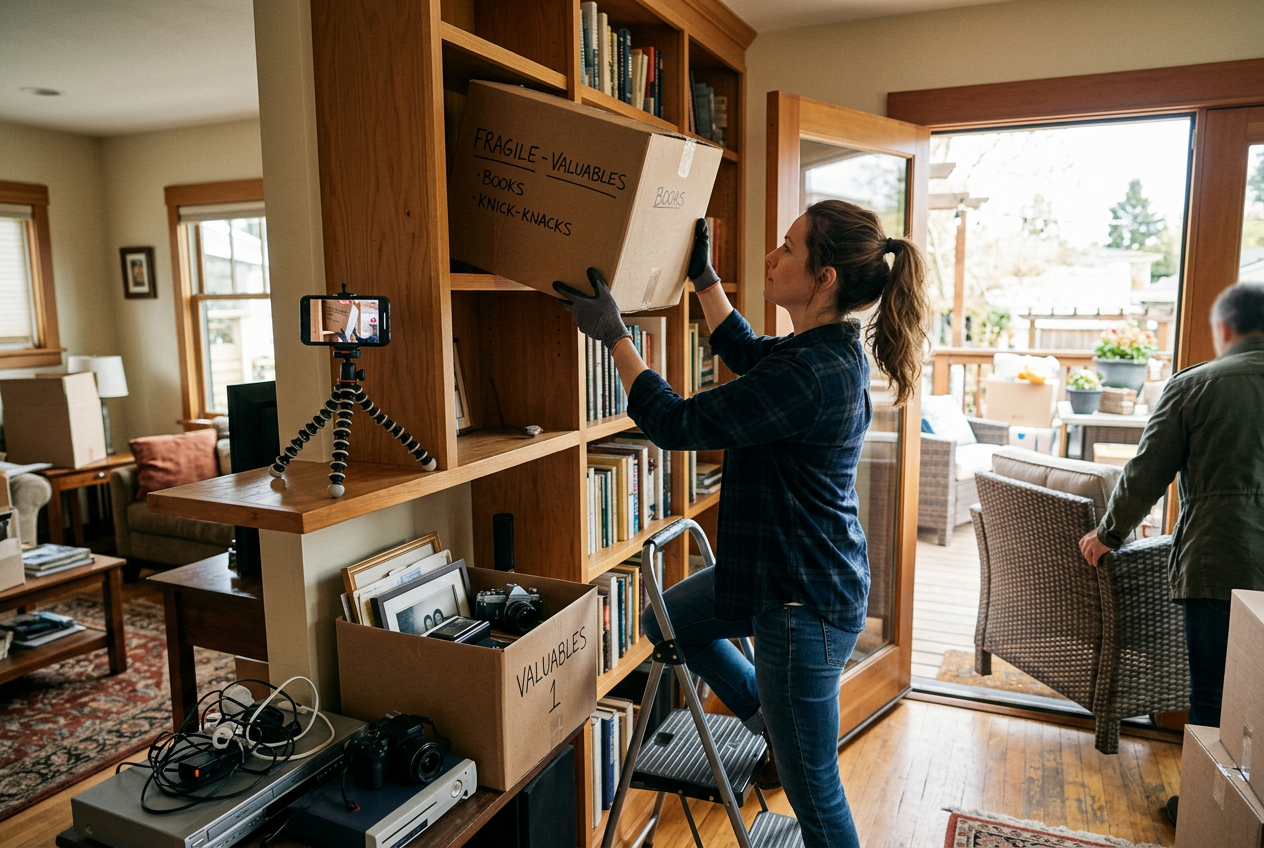
Once you decide to go, use your last hour at home wisely. A few simple steps can lower flood and wind damage. None of these cost money. They just take time, so start early.
Move Valuables Up High
On a barrier island like Hatteras, flooding is the big risk. Water can rise fast and soak everything on the ground floor.
Move what you can to a higher level. If you have a second floor, carry important items up there. Lift electronics, rugs, and small furniture off the floor. Put photos, keepsakes, and papers in sealed bags or plastic bins. Set them on counters, shelves, or beds.
You cannot save everything. Focus on items you cannot replace or easily buy again.
Unplug and Shut Off
Unplug TVs, computers, and other electronics before you leave. This protects them from power surges when the electricity flickers or comes back on.
Shut off utilities only if local officials or your utility company tell you to. Do not guess. Turning off gas or power the wrong way can be dangerous. If you do not know how, leave them on and follow official instructions. Your property manager may also have rules for rentals.
If you have time, turn off the main water valve. This can stop leaks and limit damage from burst pipes.
Bring In or Tie Down Outdoor Items
Wind can turn loose objects into flying danger. Walk around your yard and deck. Bring in anything that can blow away.
- Patio chairs and tables
- Grills and propane tanks
- Trash cans and recycling bins
- Potted plants and yard decor
- Kids’ toys and bikes
If an item is too heavy to move, tie it down or lay it flat. Close and lock all windows and doors. If you have storm shutters, close them.
Take Photos for Insurance
Before you leave, take pictures and video of your home. Do this inside and out. Walk through each room slowly. Open closets and cabinets. Capture your electronics, furniture, and anything of value.
These photos prove the condition of your home before the storm. If you file an insurance claim later, this record helps a lot. Save the photos to your phone and to the cloud if you can. Email them to yourself as a backup. That way you still have them even if your phone is lost or damaged.
Never Stay Behind to Protect Property
This is the most important rule. When officials order a mandatory evacuation, leave. Do not stay to guard your home or belongings.
Hatteras Island has one main road out, NC Highway 12. If it floods or closes, you could be trapped. No TV, furniture, or house is worth your life. Rescue crews may not be able to reach you once the storm hits.
Secure what you can, then go. Your things can be repaired or replaced. You cannot be.
Safe Fuel and Vehicle Prep for a Long Drive Out
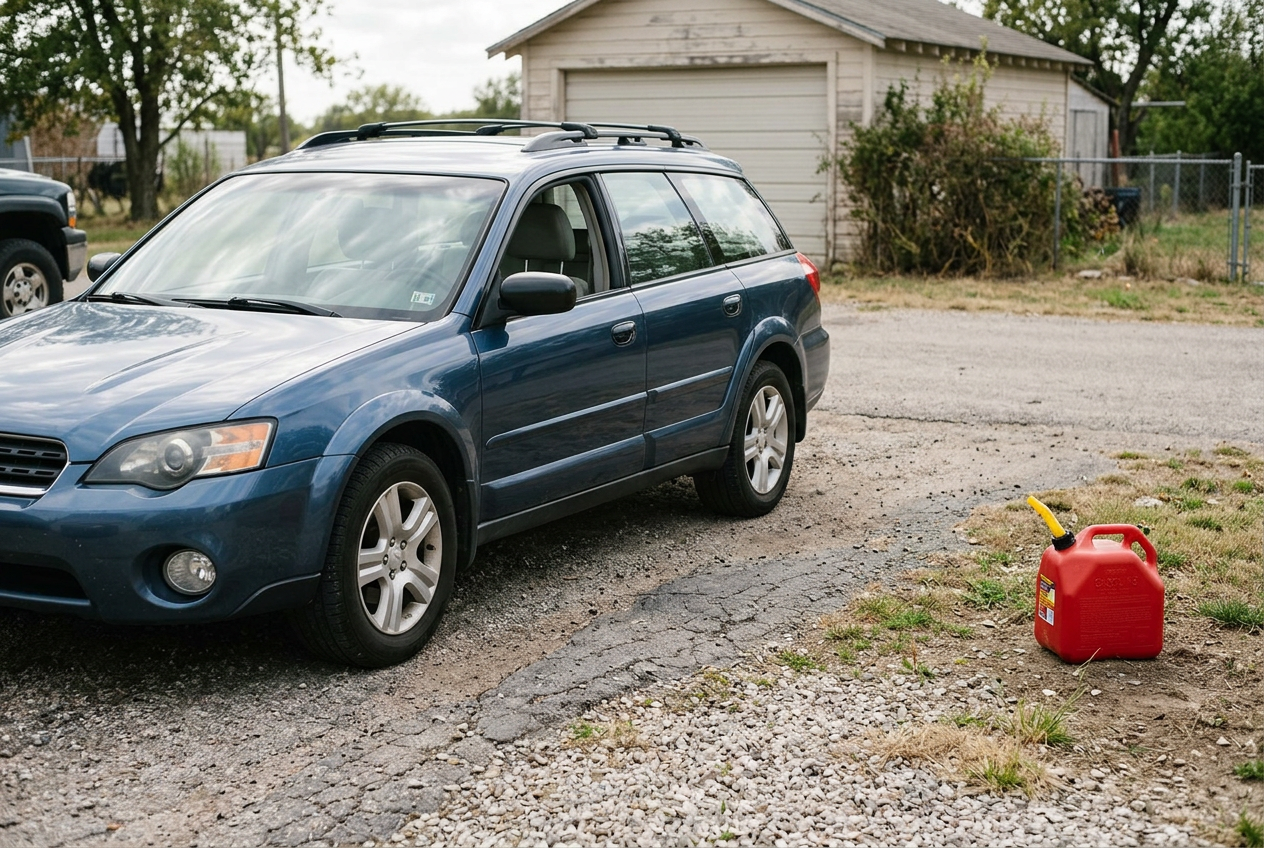
When an evacuation is ordered, your car is your way off the island. There is only one road out, NC Highway 12, and traffic can slow to a crawl. A full tank gives you room to handle delays, detours, and stop-and-go traffic. So fill up early.
Top Off Your Tank Early
Do not wait until the order comes. Gas stations on Hatteras Island are few. During a storm rush, they can sell out or close. Power outages can shut down the pumps too. Even a working station is no help if the line is an hour long.
The simple rule: when a storm is in the forecast, keep your tank above half full. The moment an evacuation looks likely, fill it all the way. That way you are ready to leave on short notice.
Check Your Vehicle Before You Go
A breakdown on Highway 12 in a storm is dangerous. Take a few minutes to check the basics:
- Tire pressure and tread, including the spare
- Windshield wipers and washer fluid
- Oil and coolant levels
- Headlights, brake lights, and turn signals
If a warning light is on, get it looked at before you leave if you have time.
Basic Fuel-Safety Rules for Spare Gasoline
Some households keep a small amount of spare gasoline. If you do, follow these safety rules. Gasoline is very flammable, and bad handling can start a fire or hurt someone.
- Use approved containers only. Store gas in a proper gas can made for fuel. Never use milk jugs, water bottles, or random containers.
- Never store fuel inside your home. Keep it out of living spaces, bedrooms, and attached areas. A detached shed or garage away from the house is better. Follow your local fire rules, as they may set limits.
- Keep it away from heat and flame. Store fuel away from water heaters, furnaces, pilot lights, and anything that sparks.
- Keep it away from children and pets. Store cans up high or locked away.
- Let engines cool before refueling. A hot engine can ignite fuel vapors. Turn the engine off and wait.
- Never siphon gas by mouth. Use a pump rated for gasoline. Swallowing or breathing gas is dangerous.
- Follow the maker’s directions on the container and any pump.
Two Things to Remember
Fuel stabilizer helps fresh gasoline last longer in storage. It does not restore gas that has already gone bad. Old, degraded fuel stays bad. Stabilizer cannot fix it.
Also, do not hoard gasoline. Keeping large amounts at home raises your fire risk and can leave less for your neighbors. A full tank plus a small, safely stored reserve is enough for most households. Fill up early, drive out early, and you will not need much more.
Action Checklist: What to Do the Moment an Order Is Issued
When an evacuation order comes, move fast but stay calm. Work through this list in order. You can print this page and keep it by your door for storm season.
Step 1: Confirm the Order
Check with official sources first. Do not act on rumors or social media posts alone. Look at Dare County alerts and local emergency notices. Know who must leave. Some orders cover visitors first, then residents. Know if the order is voluntary or mandatory. Mandatory means go now.
Step 2: Pick Your Destination
Decide where you are going before you drive. Pick a spot off the island, well inland. Call ahead to a hotel, friend, or family member. Have a backup in case your first plan fills up.
Step 3: Grab Your Go-Kit and Documents
Load your go-kit for the road. If you do not have one, a prepacked kit like the Ready America 2-person 72-hour kit covers food, water, and first aid for a small household. Grab your documents. A fireproof bag like the Andyer fireproof document bag keeps them together and easy to carry.
Step 4: Handle Pets and Medications
Do not leave pets behind. Bring food, a leash or carrier, and vet records. Pack all medications. Take at least a week’s supply if you can. Bring a list of what each person takes.
Step 5: Secure Your Home
Close and lock windows and doors. Unplug small electronics. Move valuables up high in case of flooding. Bring loose outdoor items inside.
Step 6: Fuel Up and Prep the Vehicle
Fill your gas tank before you leave. Let a hot engine cool before refueling. Check your tires and lights. Pack a phone charger and a weather radio so you can hear updates if power and cell service fail.
Step 7: Tell Someone Off-Island
Call or text a person who lives away from the coast. Share your plan, your route, and where you are going. Tell them when you expect to arrive. Check in when you get there.
Step 8: Leave Before NC 12 Floods
NC Highway 12 is your only way out. It floods fast during coastal storms. Do not wait for the last minute. Leave early, while roads are still clear.
Quick Reference
Work the list top to bottom. The sooner you finish, the safer your drive out will be.
Frequently Asked Questions
Below are short answers to questions many Hatteras-area households ask. Local rules change fast during a storm. Always check Dare County Emergency Management for the latest instructions.
What is the difference between a visitor evacuation and a resident evacuation?
Officials often order visitors to leave first. For the October 2026 coastal storm, Dare County ordered all visitors to evacuate Hatteras Island starting at 8 p.m. the evening before the storm threat. A resident evacuation comes next, or at the same time, when the danger is higher. Visitors usually have less time, so they go first to clear the roads. If you are renting a home or staying in a hotel, you are a visitor. Follow the visitor order right away.
Is the evacuation mandatory or voluntary?
Read the order carefully. A voluntary order means officials strongly suggest you leave. A mandatory order means you are required to leave. During recent storms, Dare County issued mandatory evacuation orders for Hatteras Island. When an order is mandatory, do not wait. Roads can flood and close with little warning.
What should I do if I can’t leave before the deadline?
Try your best to leave while the roads are open. NC Highway 12 is the only way off Hatteras Island, and it floods easily. If you truly cannot get out in time, call Dare County Emergency Management for guidance. Do not drive through water on the road. You cannot tell how deep it is or if the road under it has washed away. Stay informed with a hand crank weather radio so you can hear updates if power and cell service fail.
Should I shelter in place instead of leaving?
If officials order a mandatory evacuation, the safe choice is to leave. Barrier islands like Hatteras face flooding from storm surge and heavy surf. With only one road out, staying can trap you with no quick way to get help. Only consider sheltering in place if you cannot evacuate and officials tell you to do so.
When can I return to the island after the storm?
Wait for officials to say it is safe. Do not try to return on your own. NC Highway 12 may be flooded, washed out, or blocked by sand and debris. Property managers and county officials will share re-entry details when roads are checked and reopened. Watch Dare County Emergency Management announcements for the return schedule.
Where do I get current, local instructions?
Dare County Emergency Management is your main source. They issue the evacuation orders, set the deadlines, and share re-entry news. Save their contact info before a storm arrives. A weather radio tuned to NOAA broadcasts is a good backup when the internet goes down. The exact dates, deadlines, and forecasts change with each storm, so always confirm the latest details from the county.
Conclusion and Next Steps
A coastal storm on the Outer Banks does not give you much warning. When Dare County orders an evacuation, the safest choice is almost always the same. Leave early. Leave on the first order. Do not wait to see if the storm turns.
The core message of this guide is simple. You can remember it in three parts.
Act on the First Order
When an evacuation order comes, that is your go-time. It does not matter if the sky still looks clear. Visitor orders often come first, then resident orders follow. Know which one applies to you, and move as soon as it is your turn. Early traffic is lighter. Early roads are drier. Waiting only makes the drive harder and more dangerous.
Use Your Single Route Early
Hatteras Island has one main way out, and that is NC Highway 12. A single route means a single point of failure. Flooding, sand, or storm surge can close it fast. The sooner you start, the better your chance of getting off the island before conditions get bad. Leaving early is the one choice that protects you the most.
Have Everything Ready in Advance
The worst time to gather documents and supplies is the hour the order drops. That is when stress is high and time is short. The fix is to prepare now, before the next storm season. Two things make the biggest difference.
First, protect your papers. Keep your IDs, insurance records, deeds, and other key documents in one grab-and-go container. A fireproof and water-resistant option like the Andyer fireproof document bag keeps them safe and easy to grab in the dark. If you want more room and a lock, the DocSafe fireproof organizer box holds more and stays organized.
Second, build your go-kit. A ready-made kit saves you from scrambling. The Ready America 2-person 72-hour kit covers food, water, and first aid for a short trip out. Larger families can look at the Stealth Angel 5-person kit. Add a hand-crank weather radio so you can still hear updates when power and cell service fail. The FosPower NOAA radio is a solid, compact choice.
Your Clear Next Action
Do one thing today. Sit down with your household and review your family emergency plan. Talk through these questions:
- Who leaves, and in which vehicle?
- Where will you go, and who will you call to check in?
- Where are your documents and your go-kit stored right now?
- How will you hear the next order if the power is out?
Write the answers down. You can print this page and keep the checklist with your kit. A plan you make today is a plan you will not have to figure out in the middle of a storm. Prepare now, and when the next order comes, you will already be ready to go.
Sources and Further Reading
- Dare County has declared a state of emergency and issued …
- Mandatory Evacuation Issued for Hatteras Island - GovDelivery
- Mandatory evacuation orders issued for the Outer Banks ahead …
- Hurricane preparedness tips for Corolla Beach, NC
- Evacuations ordered for NC’s Outer Banks as Hurricane …
- Visitors ordered to evacuate Hatteras Island as coastal storm threatens N.C. Highway 12, U.S.
- EMS One-Stop: Weather whiplash, preparing EMS for stronger storms