Ready
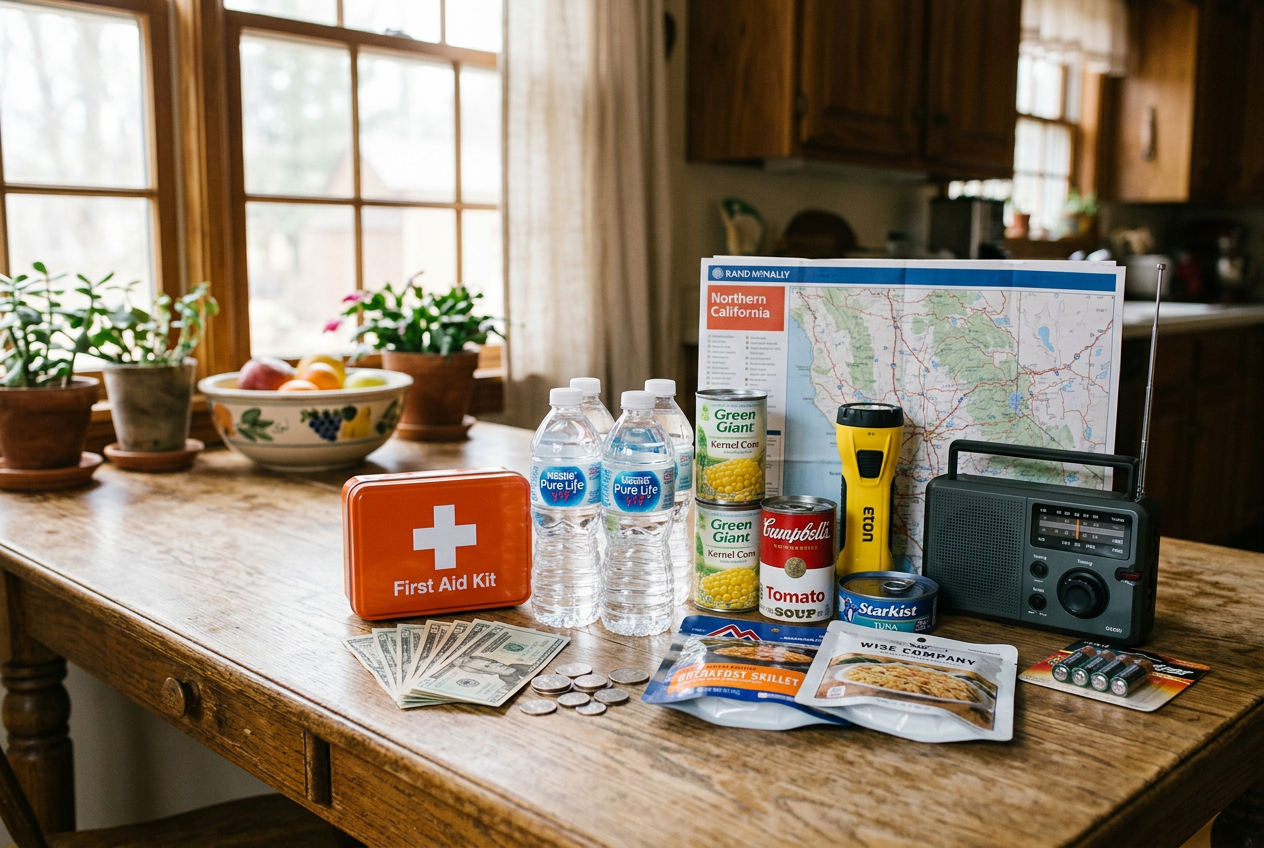
Why Governments Are Telling Households to Keep 3 Days of Food, Water, and Cash (2026)
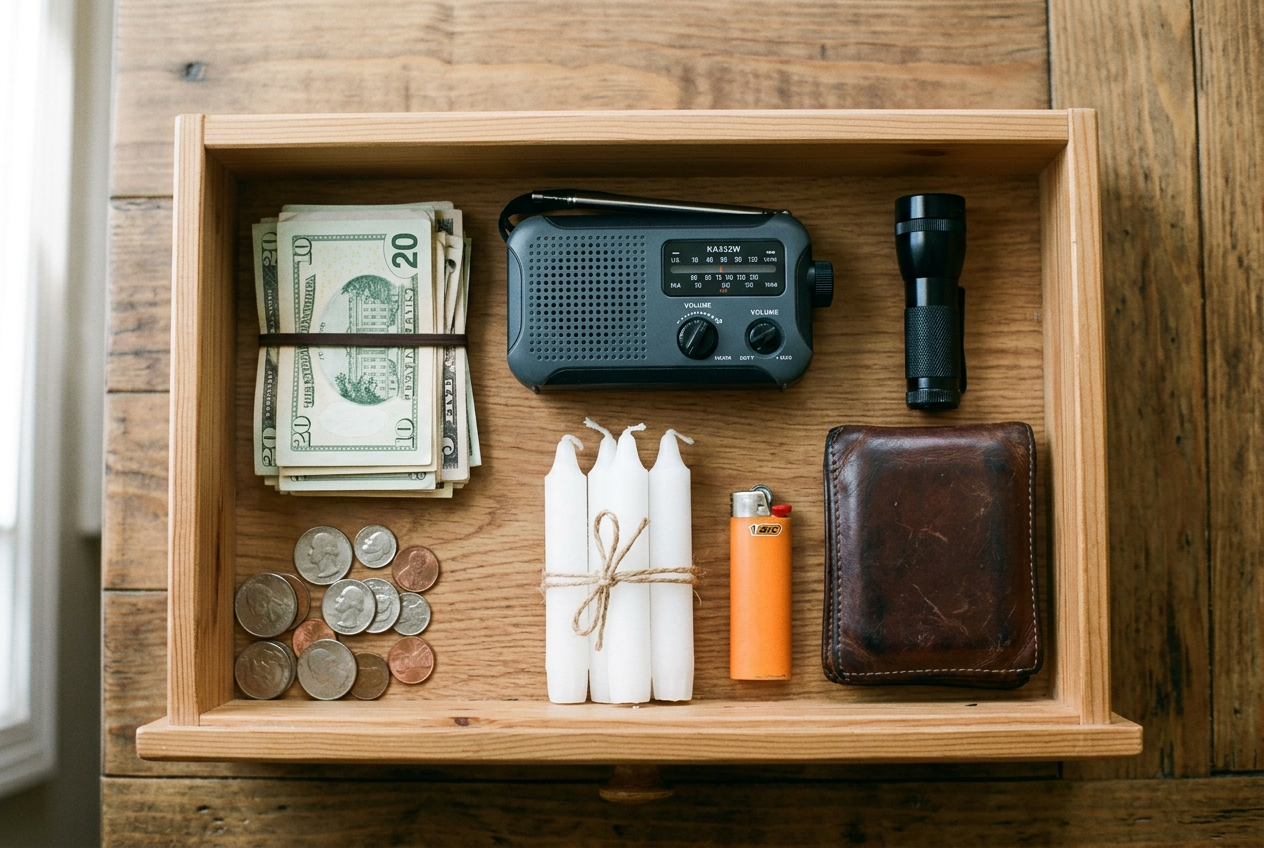
In October 2026, the UK government told its citizens to keep three days of food, water, and cash at home. The advice came as part of a new “Be Ready” campaign. One big reason? A cyberattack could knock out payment systems and disrupt supply chains. If card readers go down and store shelves empty out, you want to be able to care for your family for a few days.
You might be reading this in the US and wondering if it matters to you. It does. A three-day supply is not about panic. It is about being ready for any short disruption. A power outage, a bad storm, or a computer problem at the bank can all cause the same trouble. The fix is the same no matter the cause.
This is sensible, calm preparedness. You do not need a bunker. You do not need to hoard. You just need enough to get through about 72 hours on your own.
In this article, we will walk you through it step by step. You will learn what a cyberattack can actually disrupt at home. Then we will cover how to store three days of water, keep no-cook food, and keep some cash on hand. We will also cover light, first aid, and warmth. By the end, you will have a simple checklist you can start this week.
- Governments now advise keeping at least 3 days of food, water, and cash at home.
- A cyberattack can knock out payment systems, so stores may only take physical cash.
- Plan for about 1 gallon of water per person per day, so 3 gallons each for 72 hours.
- Store shelf stable food that needs little or no cooking and lasts for years.
- Keep a ready to grab kit so you can act fast instead of scrambling during a crisis.
One practical preparedness move each week. No fear-mongering, ever.



Reviewed by Elena V., Ryan C. & Priya K. — contributors with hands-on preparedness experience. How we test
A few simple supplies can keep your household safe when the power or internet goes down. Order these basics now, then read on to learn why three days matters.

4Patriots 72-Hour Food Kit
This kit gives one person 20 servings and about 4,800 calories to cover a full 3 days. The meals last up to 25 years, so you can store it now and trust it will be ready later.
Check Price on Amazon
Saratoga Farms Water Containers
These stackable 5-gallon jugs hold 20 gallons total, enough drinking water for several people through a 72-hour event. The flat tops nestle together so you can store plenty of water in a small space.
Check Price on Amazon
Ready America 2-Person 72-Hour Kit
This grab-and-go backpack covers two people for 3 days with food bars, water pouches, and first aid supplies. It is ready the moment you need to leave home or shelter in place.
Check Price on AmazonIn this guide
Why Trust This Guide?
This article was researched and reviewed by contributors with hands-on experience in emergency preparedness. They have tested gear, built real systems, and lived through situations where these skills actually mattered.
What a Cyberattack Can Actually Disrupt at Home
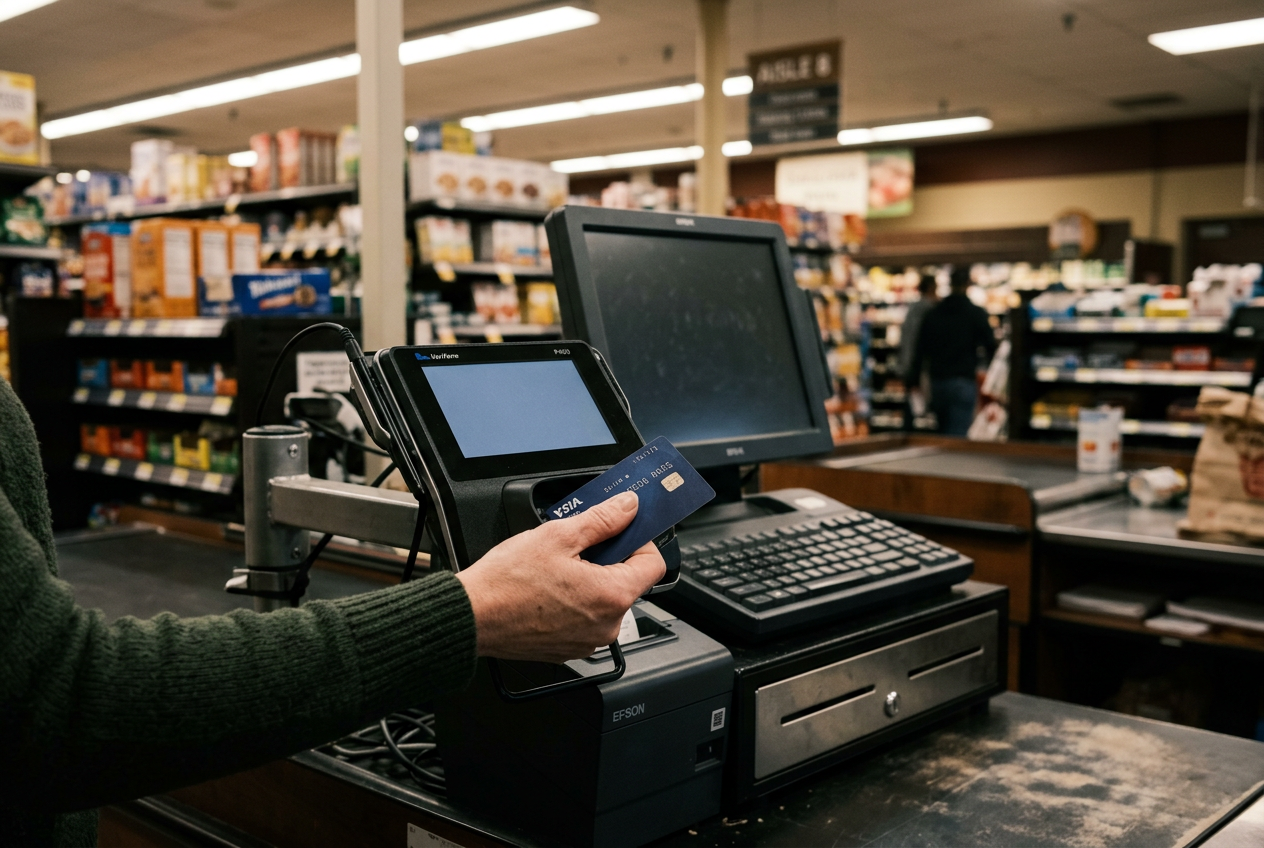
A cyberattack sounds scary. But for most households, the real risk is simpler than it sounds. It is not about your home computer getting hacked. It is about the big systems you use every day going down for a while.
Think about how you pay for things. When you tap a card or phone, that payment travels through banks and card networks in seconds. You never see it happen. A cyberattack on one of those systems could slow it down or stop it. For a short time, card readers in stores might not work. ATMs might be empty or offline. Online banking might freeze.
This is why the UK government recently told the public to keep three days of emergency supplies at home. News reports from Reuters, the Independent, and others tie this advice partly to the risk of cyberattacks on payment systems and supply chains. The idea is simple. If card payments stop for a day or two, a little cash and a little food help you carry on without panic.
What could briefly go down
Here are the everyday things a cyberattack could disrupt for a short time:
- Card payments. Stores may only take cash if card networks are down.
- ATMs. Machines may stop working or run out of cash fast.
- Online banking. You may not be able to check balances or move money.
- Store restocking. Shops rely on computers to order and track stock. If those systems are hit, shelves may stay empty longer than usual.
Notice the pattern. These are things that make normal life harder for a short window. They are not the end of the world. They are a gap you can plan for.
Why three days is the target
Three days is a short buffer, not a doomsday stockpile. The goal is to ride out a temporary outage while systems come back online. Most disruptions get fixed. Payment networks have backup plans. Stores get restocked. Power comes back. Three days gives you breathing room so you are not stuck if things slow down for a day or two.
This matters for one big reason. You should not panic buy or hoard. Hoarding makes shortages worse for everyone. It empties shelves faster. The point is not to fear the worst. The point is to keep a small, sensible supply on hand so a brief outage does not throw off your week.
Think of it like keeping a spare phone charger or a flashlight. You hope you never need it. But if the moment comes, you are glad it is there. The rest of this guide shows you how to build that small buffer, step by step, starting with water.
Step 1: Store Three Days of Water (About a Gallon Per Person Per Day)
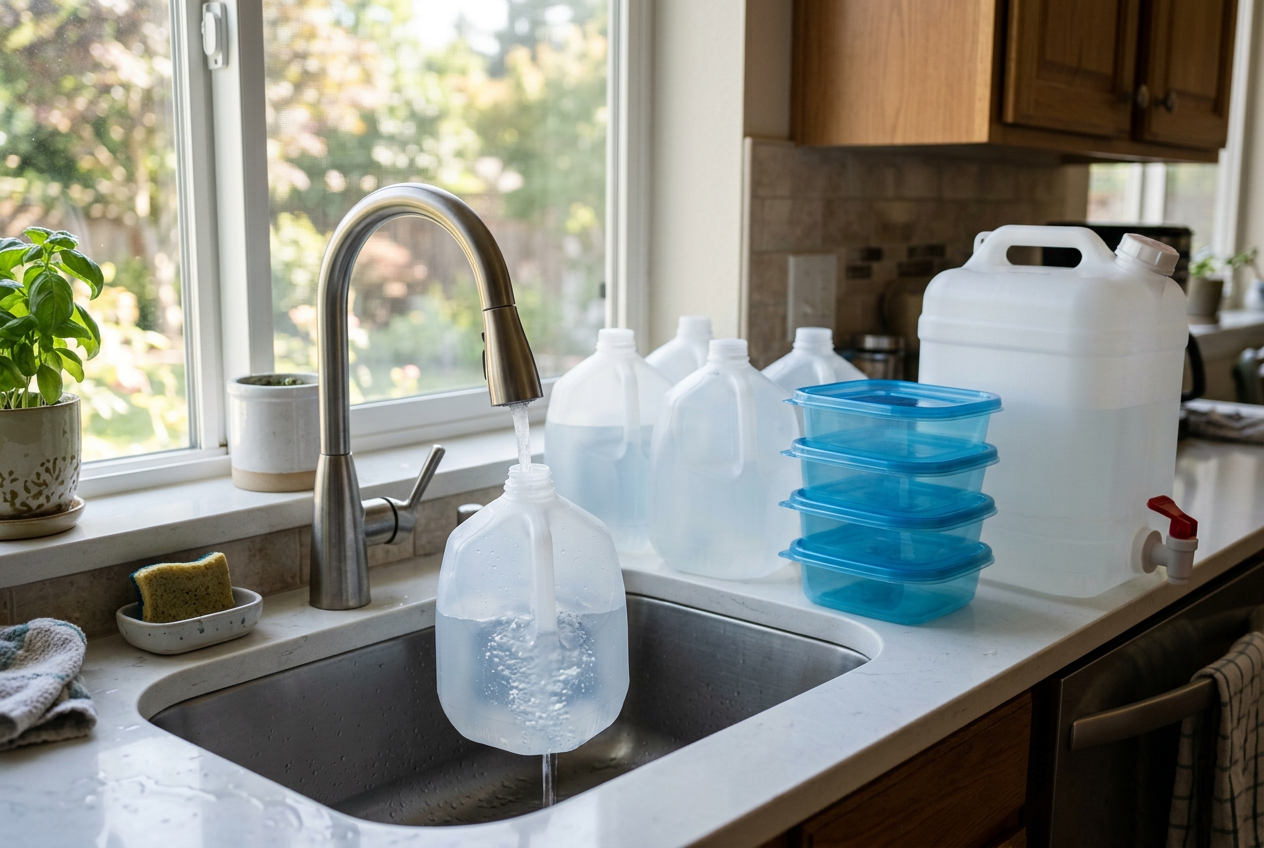
Water comes first. You can live only a short time without it. If a cyberattack or other crisis hits water systems or power, your tap may stop. So a small store of water at home gives you a safety buffer.
How Much You Need
Plan for about one gallon per person per day. That covers drinking and some basic cleaning. For three days, that means three gallons for each person.
Here is a simple way to do the math:
- One person: 3 gallons
- Two people: 6 gallons
- Family of four: 12 gallons
Do not forget pets. Add some extra water for them too. People who are sick, pregnant, or in hot conditions may need more.
The No-Cost Way
You do not have to buy anything to start. The cheapest option is to fill clean containers from your own tap.
Use food-safe containers with tight lids. Clean soda bottles or juice bottles work well. Rinse them out first. Fill them with tap water, seal them, and store them in a cool, dark spot. Label each one with the date. Check and refresh your stored water every few months.
Avoid old milk jugs. They are hard to clean fully and can break down over time. Also skip any container that once held something toxic.
Ready-Made Storage Options
If you want a simple, sturdy setup, purpose-built containers make it easier. They are made from food-grade plastic and designed to last.
Stackable containers help you store more water in less space. The set below includes four 5-gallon containers. They nest together so you can stack them in a closet or garage. Twist breathing ports help the water pour out without getting air locked. Keep in mind each container weighs about 40 pounds when full, so pick a spot where you will not need to move them far.
A portable jug with a spigot is handy if you want easy pouring. The jug below holds about 5.3 gallons and has a spigot for filling bottles and pots. It comes with a shoulder strap, so you can carry it more easily. The wide mouth makes it simple to clean and refill.

Quick Comparison
Start with whatever you can do today. Even filling a few bottles from the tap puts you ahead. You can add purpose-built storage later as your budget allows.
Step 2: Keep Three Days of No-Cook Food
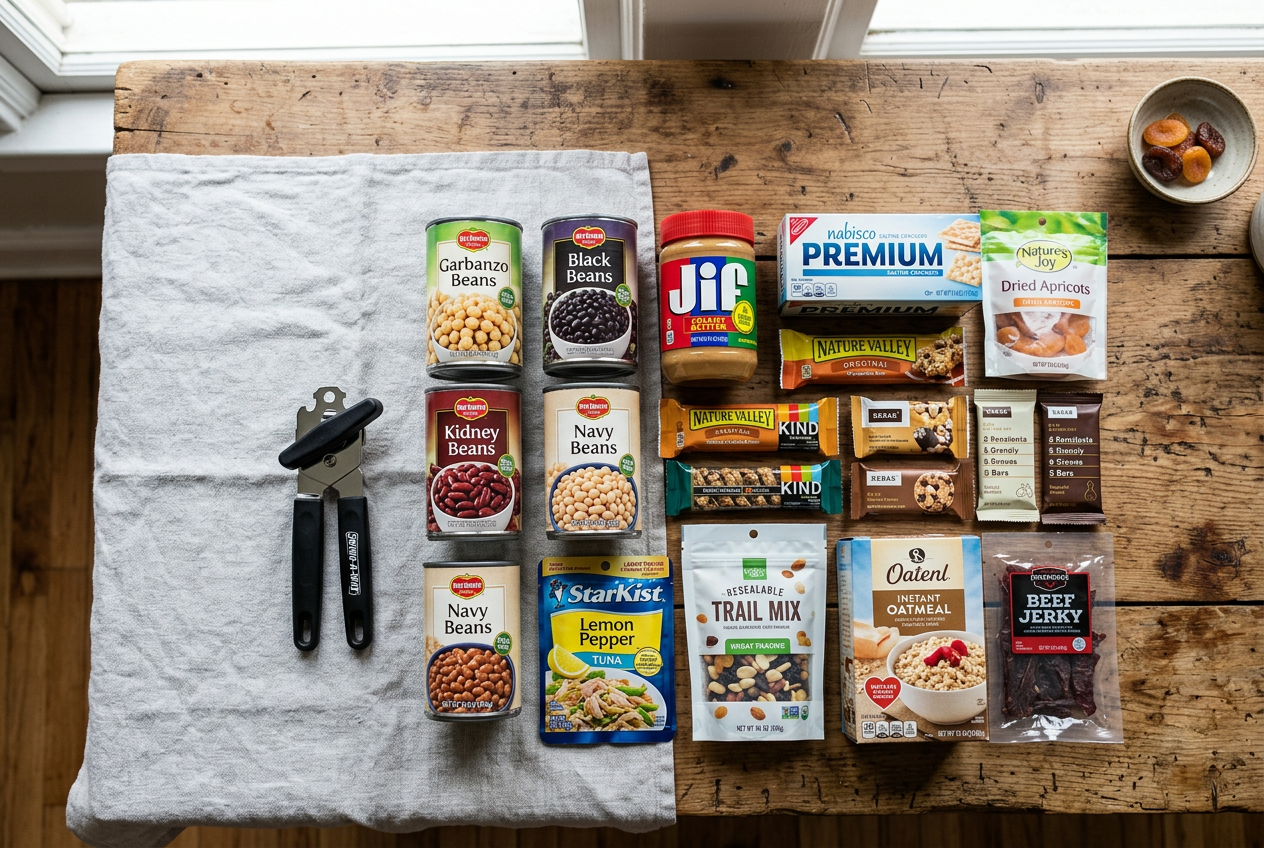
During a cyberattack or power outage, your stove and fridge may not work. So your food needs to be ready to eat with no cooking. Store-bought groceries you already buy can do most of the job. You just need enough for three days.
How Much Food Do You Need
Plan for about three meals a day, plus snacks, for each person. A rough goal is around 1,600 to 2,000 calories per person each day. Some people need more. Kids, teens, and active adults often eat more than that. Pets need food too, so add a few days of their meals.
Count out loud by meal. Three breakfasts, three lunches, three dinners, times how many people live with you. That math keeps you from guessing.
Foods That Need No Fridge or Cooking
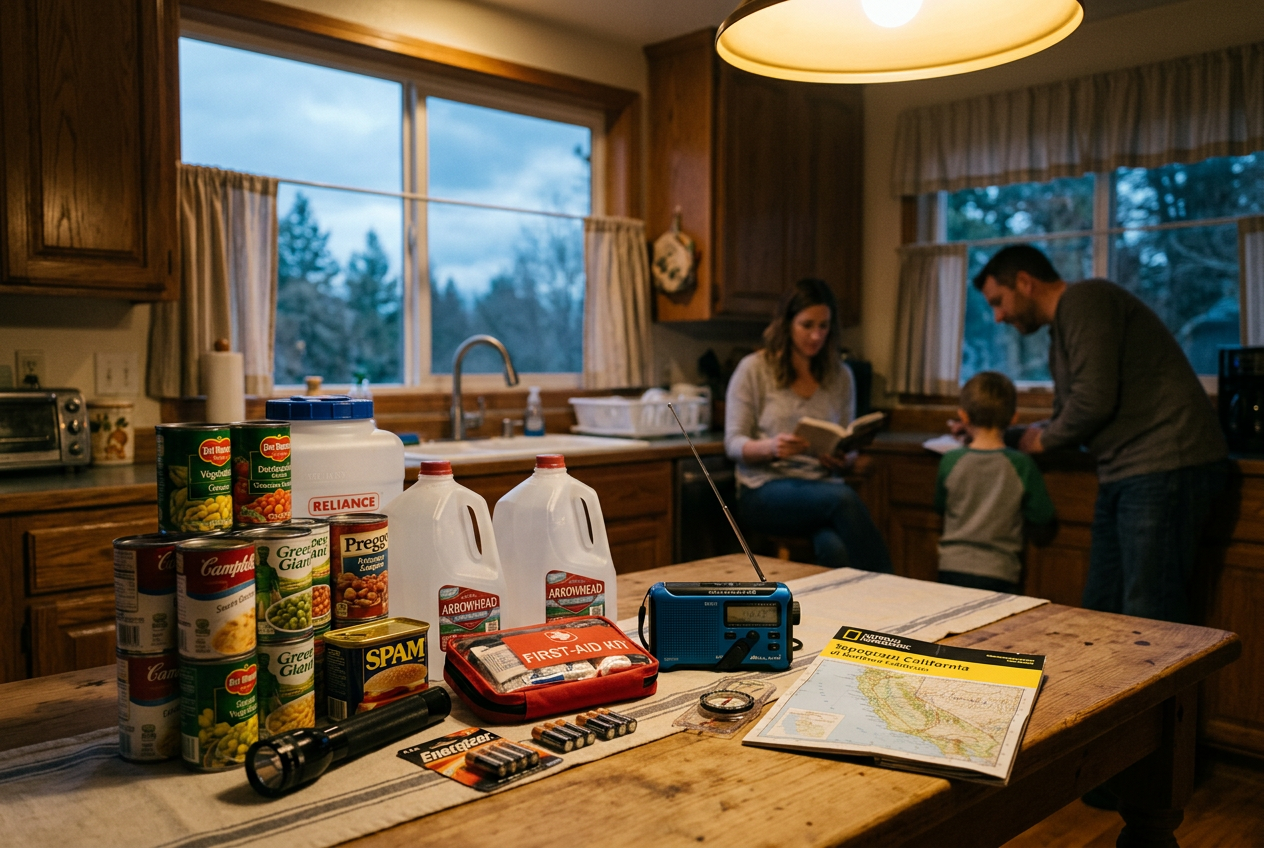
Pick foods that keep well at room temperature and open with a simple pull tab or opener. Good choices include:
- Canned beans, chili, soup, tuna, chicken, and vegetables
- Peanut butter and nut butters
- Crackers, cereal, and granola bars
- Dried fruit, nuts, and trail mix
- Pouches of cooked rice or pasta that are ready to eat
- Shelf-stable milk or plant milk boxes
- Canned fruit packed in juice
Keep a manual can opener in the same spot. An electric one will not help if the power is down. Add a few comfort foods your family likes, such as cookies or candy. In a stressful time, a familiar treat helps.
Rotate What You Store
Buy a few extra of the canned and boxed foods you already eat. Store them, then use the oldest ones first in your normal meals. Replace what you use. This “first in, first out” habit keeps your stock fresh and cuts waste. Write the date on new items with a marker so you can spot the oldest ones fast.
A Point-and-Eat Kit for Simple Backup
If you would rather not build a kit from scratch, a ready-made survival food supply is an easy start. It is lightweight, stores for a long time, and needs no fridge. Keep in mind many of these kits still ask you to add hot water, so they work best when you also have stored water and a safe way to heat it. Check the directions before you rely on one.
Here is a quick look at how these food options compare.
Start with what is already in your pantry. You may be closer to three days than you think.
Step 3: Keep Some Cash on Hand
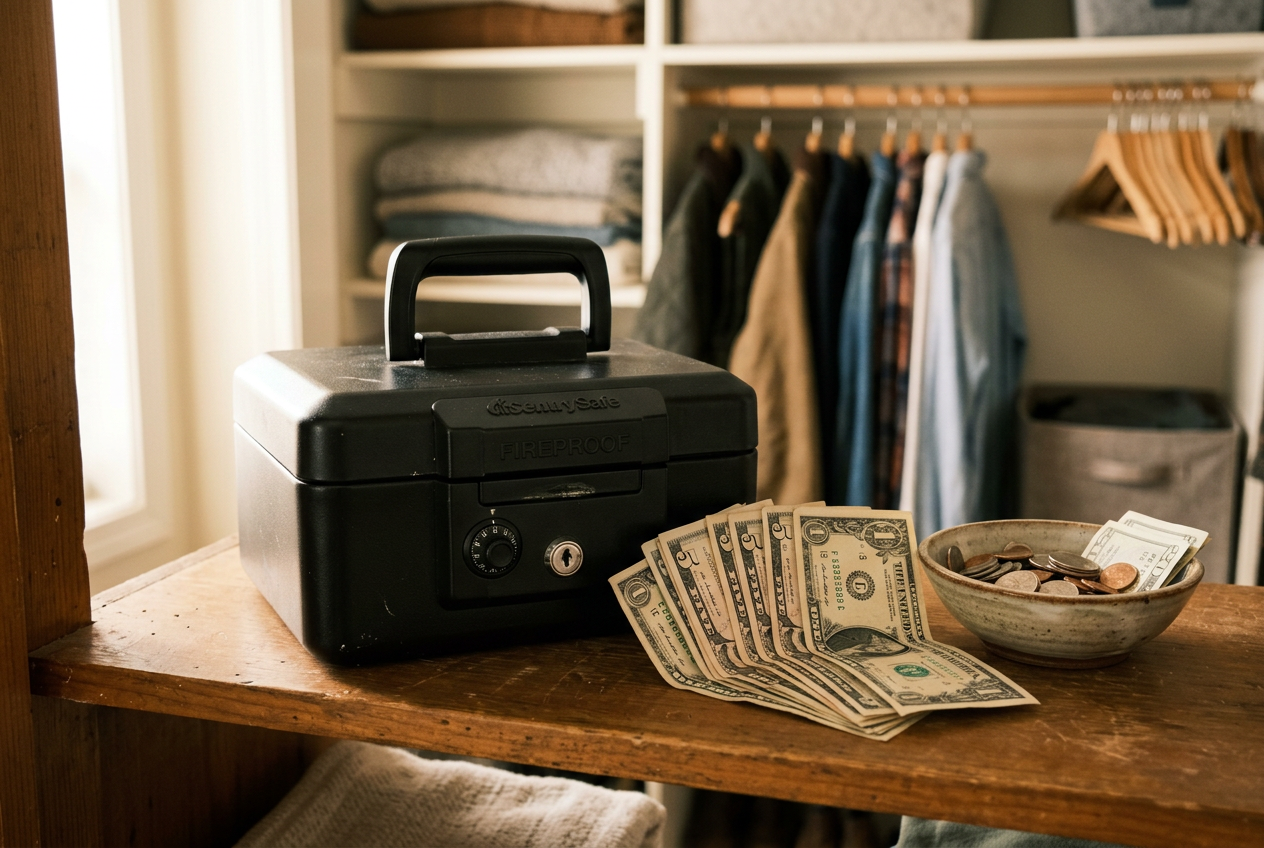
The UK’s new guidance tells people to keep some cash at home. This is one of the clearest, simplest steps you can take. And it costs you nothing extra. You just set aside money you already have.
Here is why cash made the list. Most of us pay with cards or phones now. That works fine most days. But those payments depend on computers, internet, and power. A cyberattack on payment systems could knock them out. So could a plain power cut. When that happens, card readers stop working. ATMs can go dark too. Stores may only take cash, or they may close.
In that moment, a little cash lets you keep buying what you need. Think bread, water, batteries, or fuel for a short drive. Cash does not need a signal. It does not need power. It just works.
How Much to Keep
There is no magic number. The goal is a modest amount that covers a few days of basics. Not your life savings. Do not empty your bank account. Do not pull out a huge pile and keep it in the house.
A good way to think about it: how much would your household spend on food, water, and small needs over three days? Keep around that amount. That might be a small stack of bills for one person. It might be a bit more for a family. Pick a number that feels right for your home and your budget.
Use Small Bills
This part matters. Keep your cash in small bills. Think ones, fives, tens, and twenties.
Why? In an outage, stores may not be able to make change. A clerk with no power and no cash drawer cannot break a large bill. If all you have is big notes, you may not be able to buy a small item. Small bills let you pay close to the exact amount. They also stretch further across several small purchases.
A few coins can help too. Some machines and small shops still use them.
Keep It Somewhere Safe
Store your cash somewhere safe and private at home. Pick a spot you will remember but a thief would not check first. A small lockbox works well. A fireproof box is even better, since it also protects against fire and water.
Tell one trusted person in your household where it is. That way someone else can reach it if you cannot.
Check on it now and then. Make sure it is still there and still in small bills. If you dip into it, top it back up when you can.
This step takes ten minutes. Set aside a modest amount, break it into small bills, and tuck it away. Then you can move on to the other basics.
Step 4: Cover the Other Basics (Light, First Aid, Warmth, Info)
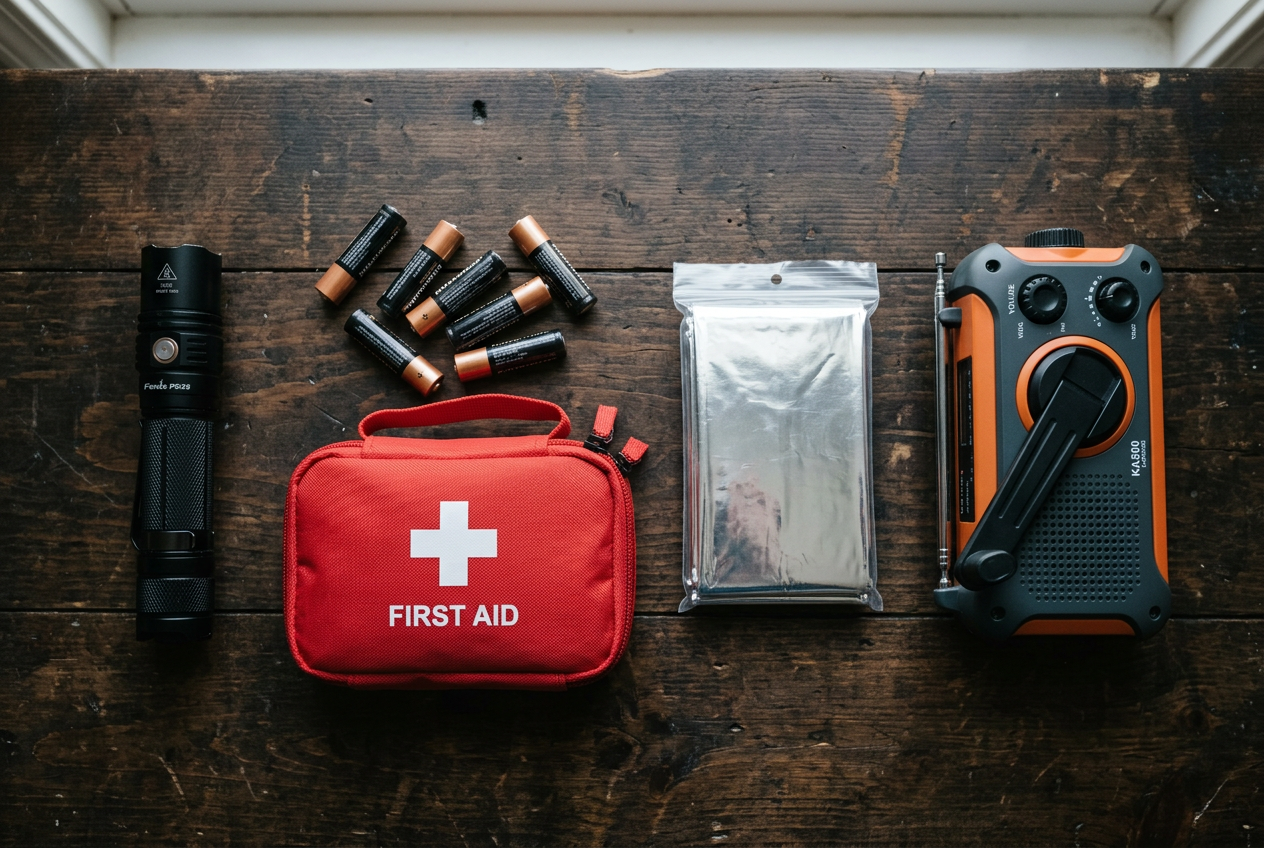
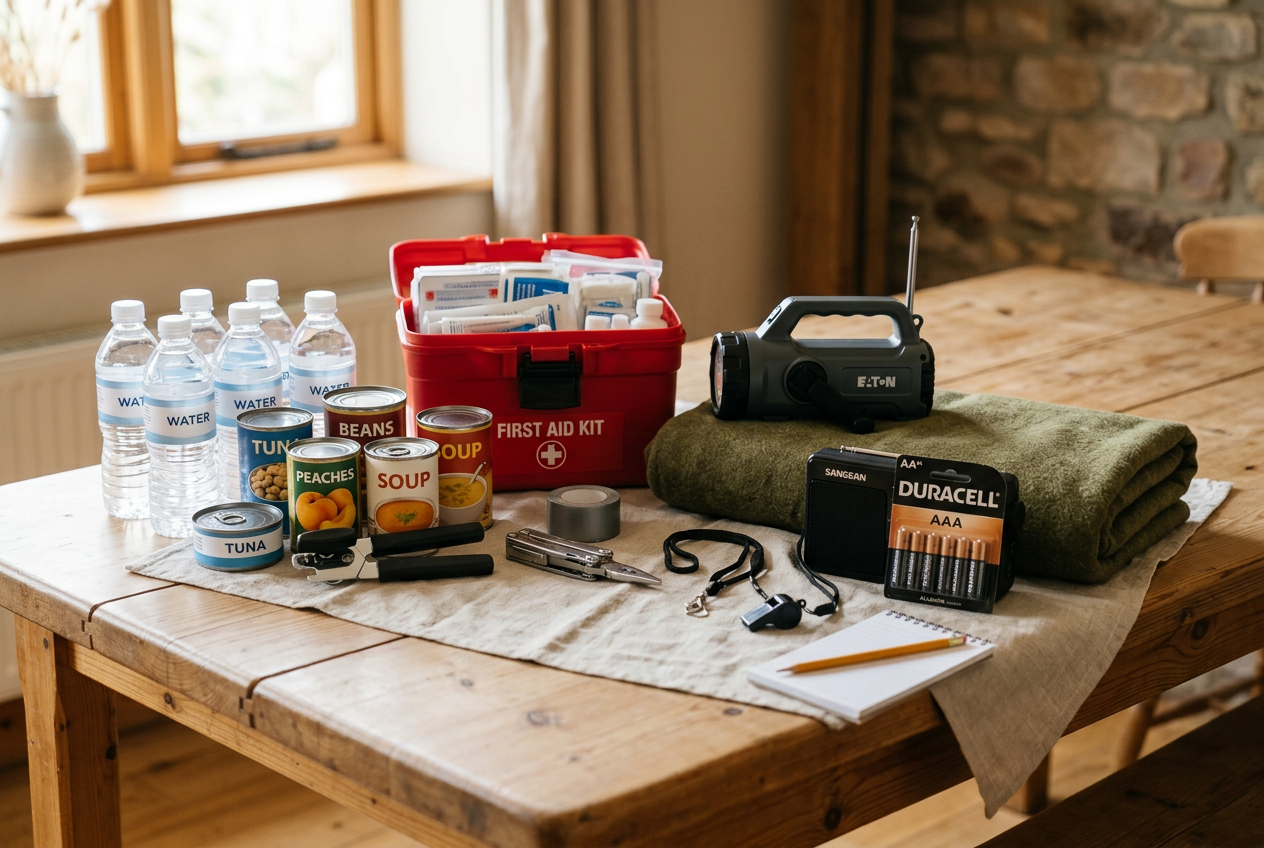
Food, water, and cash are the core of your kit. But a power outage affects more than your fridge and your card reader. You also need light, basic medical supplies, a way to stay warm, and a way to get news. These items help in almost any emergency, not just a cyberattack. Let’s walk through each one.
Light
When the power goes out, you need light you can hold. Keep a flashlight in a spot you can find in the dark. A headlamp is even better because it frees up your hands. Store spare batteries with it. Check the batteries a couple of times a year to make sure they still work. Avoid using candles if you can. They are a fire risk, especially with kids or pets around.
First Aid
A simple first aid kit handles small problems so you do not have to leave home. Stock bandages, gauze, tape, and antiseptic wipes. Add any medicine your family takes every day. Also keep a few basics like pain relievers and gloves. You do not need a fancy kit. You just need enough to treat minor cuts and scrapes until help is available.
Warmth
If the heat goes out in cold weather, warmth matters fast. Keep extra blankets where you can reach them. Emergency blankets are thin, cheap, and fold up small. Warm layers like hats, socks, and jackets help too. Plan to gather everyone into one room. A smaller space is easier to keep warm.
Information
During a crisis, you want real news, not rumors. But the internet and cell service may be down. A battery radio or a hand-crank radio lets you hear official updates. A hand-crank model does not need batteries at all. You just turn a handle to power it. Keep one in your kit so you always know what is happening.
A Grab-and-Go Kit That Bundles the Basics
If you would rather not gather all these pieces one by one, a prebuilt kit is an easy start. The Ready America kit below is built for two people and covers several of the basics we just listed. It includes food bars, sealed water pouches, a 33-piece first aid kit, dust masks, gloves, emergency ponchos, and survival blankets. That gives you food, water, first aid, and warmth in one bag.
A kit like this is a good base, but it is not the whole plan. It does not include a flashlight or a radio, so add those yourself. The food and water inside are meant to get you through about three days, not longer. Think of it as a fast starting point. You can build on it over time.
Start with one or two of these items this week. You do not have to buy everything at once. Each small step makes your home a little more ready.
Quick Comparison: Which Supplies Fit Your Household
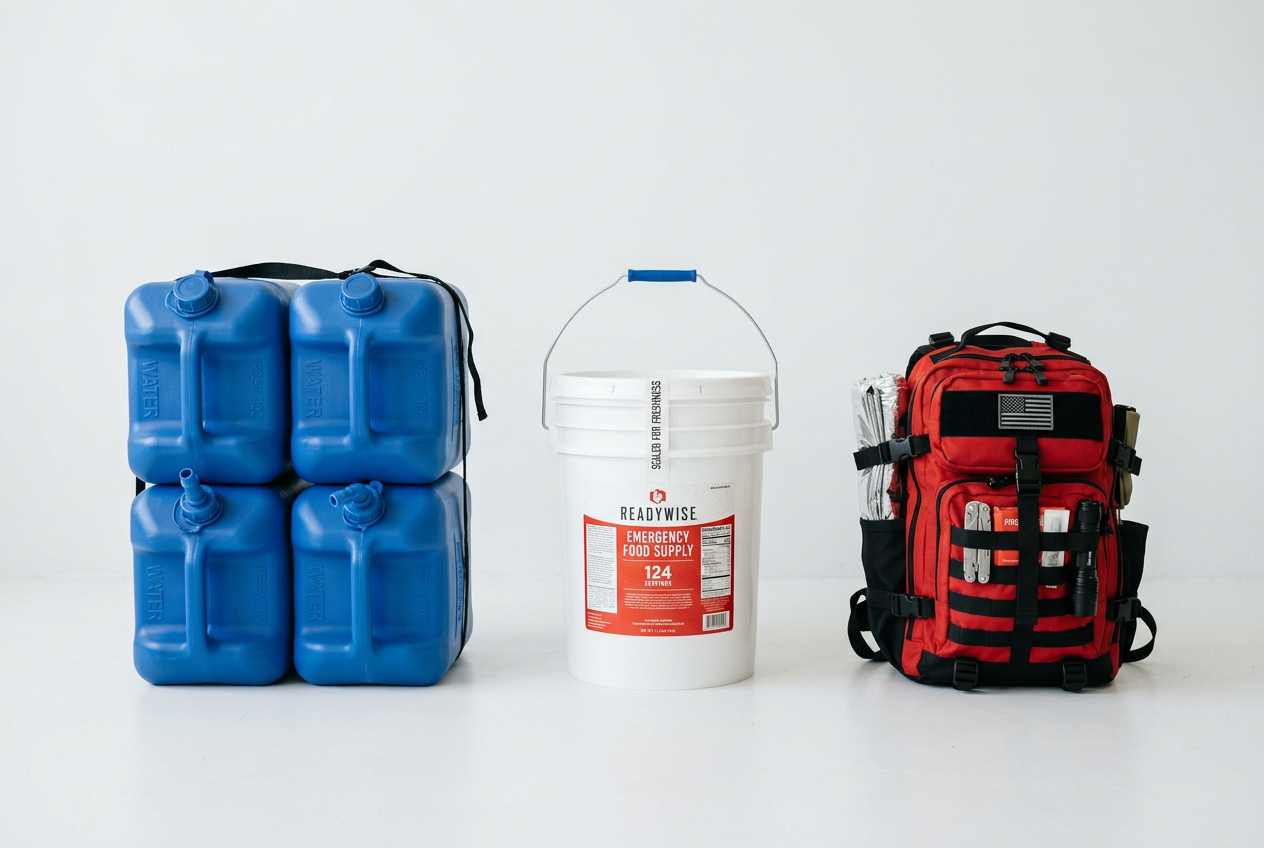
Not every household needs the same supplies. A single person has different needs than a family of four. Some people want to build their own kit piece by piece. Others want a grab-and-go bag that is ready now. The table below compares the water, food, and all-in-one options covered in this article. Use it to match a product to your household size and your comfort level.
How to Read This Table
Water takes up the most room, so think about space first. The Saratoga Farms set gives you four 5-gallon containers that stack to save floor space. That is a good fit if you want to store water at home and refill it over time. Remember that each full container weighs about 40 pounds, so place them where you will not need to carry them far.
The Ryscam 5.3-gallon jug has a spigot and a carry strap. That makes it easier to pour and move. It holds less water than the full Saratoga set, so it suits one or two people, or it can add to your main supply.
For food, the 4Patriots 72-Hour Kit holds 20 servings and about 4,800 calories. That is roughly one person for three days at 1,600 calories a day. You may want more calories, so plan for two kits if two people share one. The long shelf life means you can store it and forget it for years.
If You Want One Simple Choice
If building a kit feels like too much, an all-in-one option saves time. The Ready America 2-Person Backpack packs food bars, water pouches, a first aid kit, blankets, and ponchos into one bag. It is built for two people for three days. The water pouches are small, so you will still want extra drinking water at home. This kit works well in a car or by the door, ready to grab.
Match It to Your Household
For one person, a single food kit plus one water jug covers the basics. For a family, add more water containers and a second food kit. If you travel or want something ready right now, start with the all-in-one backpack and build from there. You do not need to buy everything at once. Pick one item this week and add more later.
Your 3-Day Readiness Checklist
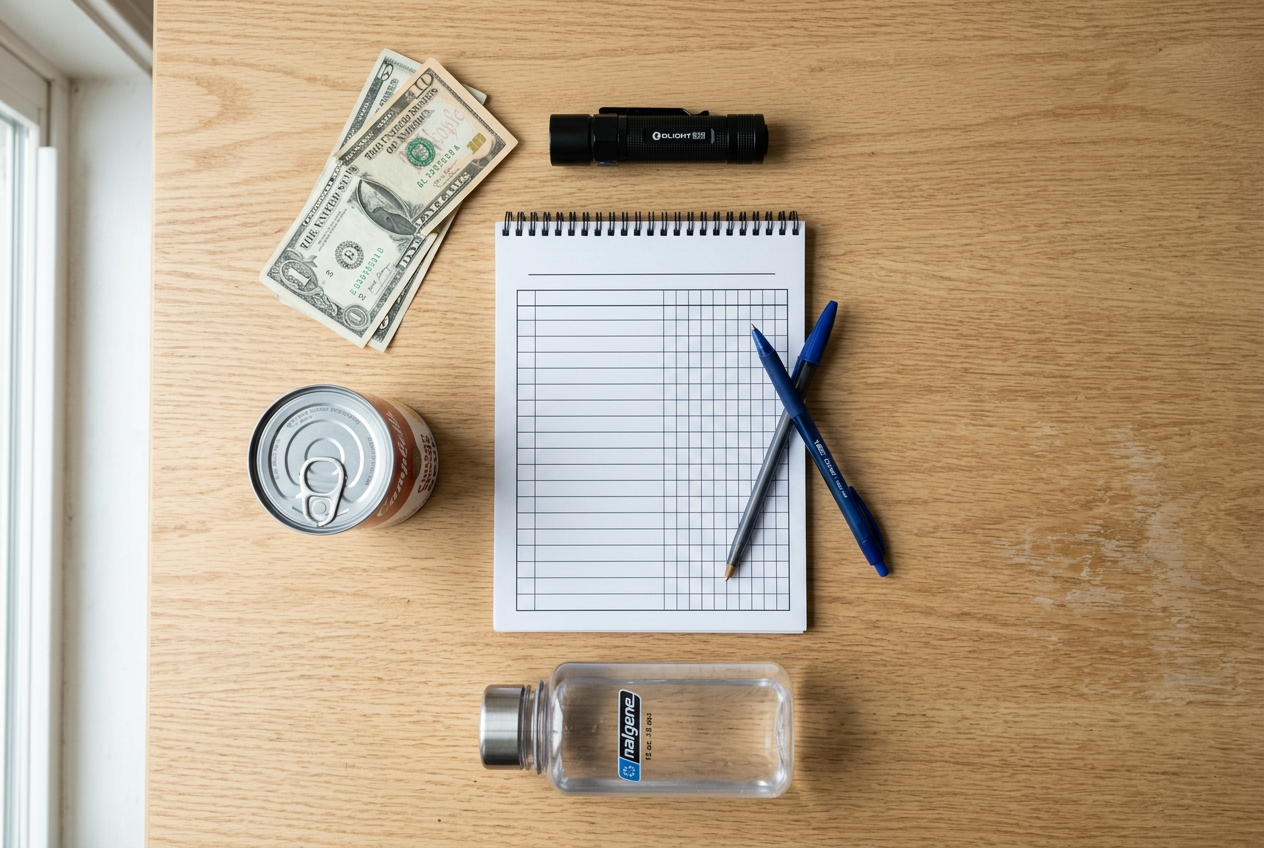
Use this list to get ready in one weekend. Start with the free steps first. You can do most of these today without buying anything. When you are done, print this page and stick it on the fridge.
Start With What You Already Have (No Purchase Needed)
- Fill clean bottles or jugs with tap water. Aim for about one gallon per person per day for three days.
- Set aside no-cook food you already own. Think canned beans, peanut butter, crackers, and tuna.
- Find a manual can opener. Check that it works.
- Gather flashlights and spare batteries from around the house.
- Check your phone charger and any power banks. Charge them now.
- Pull out blankets, warm clothes, and extra socks for each person.
- Locate your first aid supplies. Note what is missing.
- Write down a simple family plan. List a meeting spot and key phone numbers on paper.
Add Cash and Fill Small Gaps
- Keep some cash at home in small bills. A cyberattack can disrupt card payments, so cash helps you buy basics.
- Buy any first aid items you are short on, like bandages and pain relief.
- Get a battery or hand-crank radio so you can hear news during a power outage.
- Top up batteries, water containers, and shelf-stable food as needed.
The Quick Checklist
If You Want Ready-Made Options
Buying a kit is optional. These can fill gaps if you are short on time.
For water storage, a stackable container set gives you a tidy way to keep several days on hand.
For food, a shelf-stable 72-hour kit covers three days of meals without cooking.
For an all-in-one starting point, a 2-person grab bag bundles food, water pouches, warmth, and first aid.
Review It Twice a Year
Set a reminder to check your supplies every six months. Rotate food before it expires. Refill water. Replace old batteries. Update your phone numbers and meeting spot. Small check-ins keep your kit ready without a big effort later.
Pick one row from the table and finish it today. Even filling a few water jugs puts you ahead of where you were this morning.
Frequently Asked Questions
Is this just a UK thing, or does it matter for US households?
The recent news comes from the UK. The British government asked people to keep three days of food, water, and cash at home. But the idea works for any household. Storms, power outages, and cyberattacks can hit payment systems anywhere. When card readers or ATMs go down, cash still works. When stores close for a day or two, your own supplies fill the gap. You do not need a UK address to find this useful. The steps in this article apply to an ordinary US home too.
How much cash should I keep at home?
There is no single right number. The guidance says to keep “some” cash, just in case. A good goal is enough to cover a few small, important things. Think gas, food, or a quick pharmacy trip if cards stop working for a day or two. Keep the cash in small bills. During an outage, stores may not be able to make change. Store it somewhere safe and private at home. Do not keep so much that losing it would hurt. The point is a short backup, not a stockpile.
Is three days really enough?
Three days is a starting point, not a hard limit. It covers many short emergencies. Most power outages and local disruptions pass within a few days. Three days of food, water, and cash buys you time until things come back online or help arrives. If you want more, you can build up slowly. Add a little each shopping trip. But do not rush out and buy everything at once. Do not hoard. Start with three days, then grow it if your home has space and your budget allows.
Can I use tap water I store myself?
Yes. You do not have to buy bottled water. You can fill clean, food-grade containers with tap water at home. This is a no-cost way to meet the goal. Use containers made for drinking water, like BPA-free jugs. If you want ready-made storage, a stackable set like the Saratoga Farms water containers is built for this. Label each container with the date you filled it. Store them somewhere cool and dark, away from sunlight. Swap the water out every six months or so to keep it fresh. The general goal is about a gallon per person per day. That covers drinking and some basic needs.
What if I do not want to build a kit from scratch?
You can. Some people prefer a ready-made grab bag. A kit like the Ready America 2-person 3-day backpack packs food, water, first aid, and warmth in one bag. It is a simple way to cover the basics fast. But you do not need to buy anything to start. Filling water jugs and setting aside some cash today are free first steps.
The Bottom Line: Start Small This Week
Let’s keep this simple. The UK government recently told households to keep three days of food, water, and cash on hand. This is sensible advice, not a reason to panic. The goal is just to be ready for a short disruption, like a power outage or a cyberattack that knocks out payment systems for a few days. You do not need a bunker. You do not need to spend a lot of money. You just need a small buffer so a bad day does not turn into a crisis.
The best way to start is to do one thing today. Not everything. Just one.
Pick One First Step Today
Here are two easy wins. Choose one and do it before the week ends.
Fill some water. Water is the most important thing and the easiest to start. Grab a few clean containers and fill them. Aim for about a gallon per person per day for three days. If you want a cleaner setup, a food-grade storage container made for this job holds more in less space and is easy to pour. A stackable option like the Saratoga Farms water containers fits in a closet or garage corner.
Get a little cash. If a cyberattack hits payment systems, cards and apps may not work for a short time. Keep a small amount of cash at home in small bills. Enough to cover a few days of basics like food, fuel, or a quick errand. Store it somewhere safe and private. This is a no-stress step you can do on your next trip to the bank.
That is it. One step today. Another next week.
Build From There
Once water and cash are handled, the rest is easy to add over a few trips. Stock three days of no-cook food you already like to eat. Add a flashlight, a battery or crank radio, and a basic first aid kit. If you want a ready-made starting point, a kit like the Ready America 2-person 3-day backpack covers food, water pouches, warmth, and first aid in one bag. It is a simple way to check a few boxes at once.
Spread the cost over a few weeks if that helps. There is no rush. Do not hoard. The point is a calm, steady buffer, not a stockpile that empties the store shelves for your neighbors.
Want to Go Beyond Three Days?
Three days is a starting line, not a finish line. Many readers like to work up to a week or two over time. If that is you, check out our related guides on building a longer food and water supply, storing food safely, and keeping your home ready for power outages.
Start small. Start this week. One full water jug and a little cash will put you ahead of most households. You can print this page and use the checklist above as you go.
Sources and Further Reading
- Cybersecurity preparedness tips after BBC news report
- Government’s 3-day emergency kit advice explained
- Securing Your Home and Family: A Comprehensive Guide …
- Uk defence secretary 3-day emergency kit advice oct 2024
- What are the best ways to prepare for food and water …
- UK tells public to keep three days’ emergency supplies at home
- Emergency survival kits should be in every home, says the government - this is what you need
- UK households urged to prepare for emergencies and ‘attacks’ in new government guidance
- UK Quietly Warns Citizens to Stock Up on Emergency Supplies