Ready
Governments and the Pentagon Are Prepping for Long Disruptions: A Calm Household Readiness Plan (2026)
You may have seen the headlines. In late October 2026, news outlets reported that the Pentagon told U.S. military bases to plan for 90 days without the outside power grid. The plan covers fuel, communications, and supply chains if a war cuts off normal support. Around the same time, the UK launched a “Be Ready” campaign urging families to keep food and water on hand. Japan and Finland shared similar advice for households.
It is easy to read all this and feel worried. But here is the key point. The 90-day plan is for large military bases, not for your home. Those bases are huge. They have their own power, fuel, and people to run everything. No one is telling ordinary families to stockpile 90 days of supplies. That is not the goal, and it is not needed.
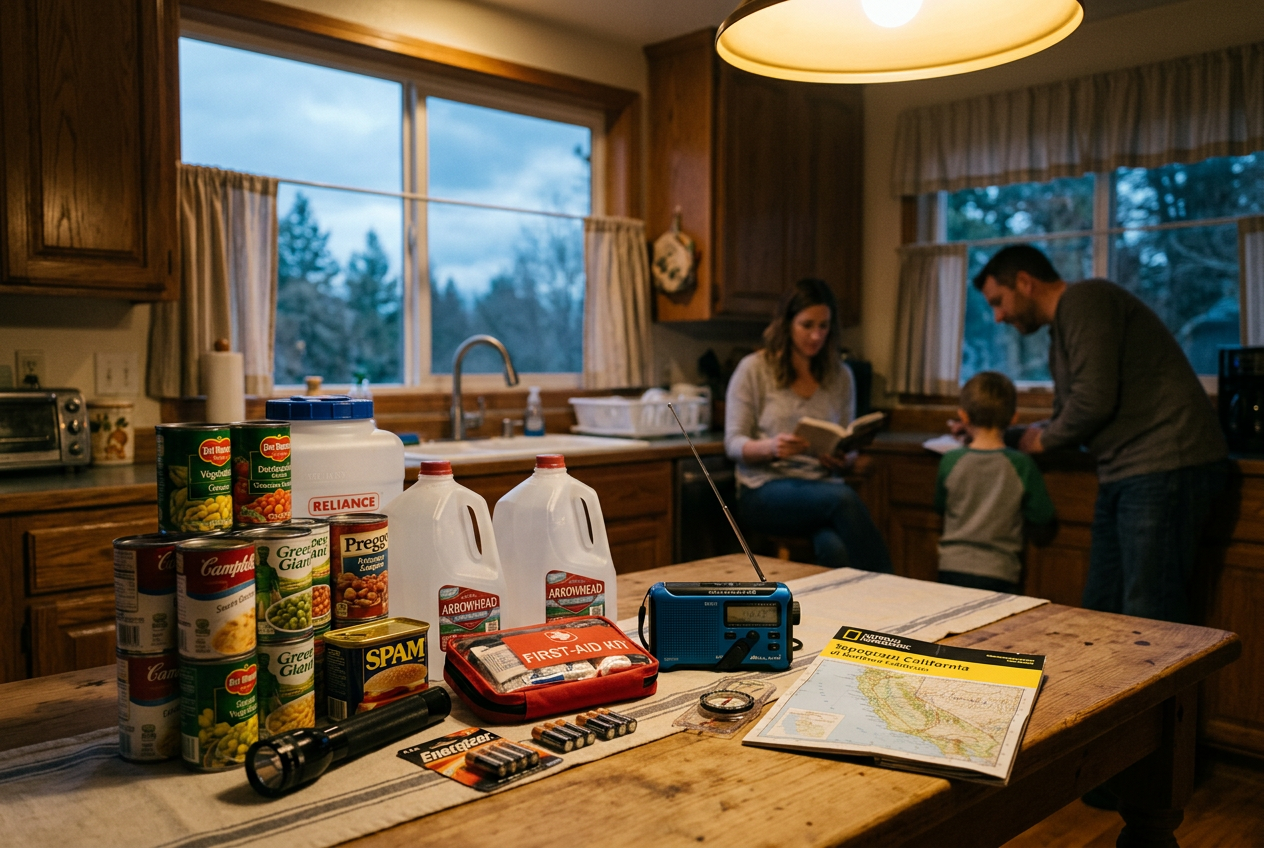
So what should you actually do? The smart answer is calm and simple. You start small. You build a short, layered plan that covers the basics: water, food, light, and first aid for a few days. You add backup power only if it fits your life and budget.
This article walks you through that plan step by step. We cover a 3-day baseline, easy food to store, backup power without rewiring your home, and the free steps that matter most. No fear. Just useful, doable guidance.
- Plan for at least 90 days of self reliance, not just a weekend, since big disruptions can stretch on.
- Store enough water and food to cover every person in your home for 72 hours as a first layer, then build toward longer coverage.
- Keep a backup power source ready so your pumps, lights, and fridge keep working when the grid goes down.
- Choose shelf stable food that lasts for years so you can rotate it without waste.
- Build your kit now, in calm times, so you are not scrambling when things get tense.
One practical preparedness move each week. No fear-mongering, ever.



Reviewed by Elena V., Priya K. & Dale M. — contributors with hands-on preparedness experience. How we test
Getting ready for a long disruption starts with a few smart items in your home. Keep reading to see why each one matters and how it keeps your household calm.

2-Person 72-Hour Kit
This grab and go backpack covers two people for three days with food, water, and first aid. It is your starting layer for evacuations or the first hours of any disruption.
Check Price on Amazon
4Patriots 72-Hour Food Kit
This food supply gives you 20 servings and lasts up to 25 years on the shelf. It lets you store meals now and rotate them slowly as you build toward longer coverage.
Check Price on Amazon
Jackery HomePower 3600 Plus
This solar generator keeps pumps, heaters, and your fridge running when the grid is down. With solar panels you can recharge it from the sun, so your home stays powered through long outages.
Check Price on AmazonIn this guide
Why Trust This Guide?
This article was researched and reviewed by contributors with hands-on experience in emergency preparedness. They have tested gear, built real systems, and lived through situations where these skills actually mattered.
What the Headlines Actually Mean for Your Household
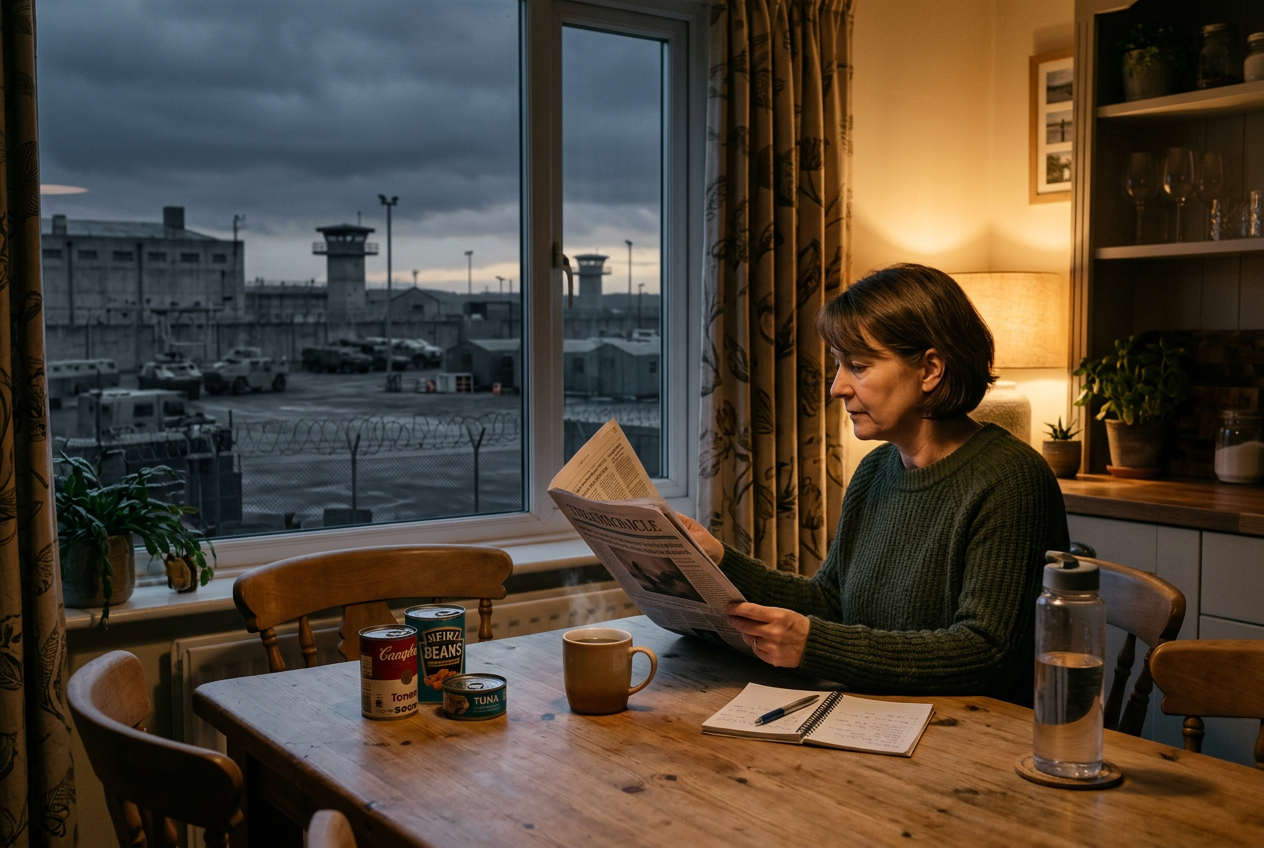
The news sounds big. Reports say the Pentagon wants major U.S. military bases to run for 90 days without outside help. That means power, fuel, communications, and supplies, all handled on base if a war cuts off the grid. News outlets like Fox News and Fortune covered this plan in late October 2026.
Around the same time, other governments made similar moves. The UK launched a “Be Ready” campaign. It urges households to keep three days of food and water on hand. Japan issued a similar advisory. The message across these countries is the same. Keep basic supplies at home.
It is easy to mix these two stories together. Do not. They are very different tasks.
A base is not a household
A military base planning for 90 days off the grid is solving a huge problem. It has to power buildings, run equipment, store fuel, and support many people for months. That is a planning job for engineers and logistics teams. It is not a model for your family.
Your household has a much smaller job. You need to stay safe and comfortable for a short stretch if the power goes out or stores close for a few days. That is it. You are not trying to run a base. You are trying to get through a disruption calmly.
What governments are actually asking of you
The advice aimed at regular families is modest. The widely repeated starting point is about three days of food, water, and essentials. That is the baseline from the UK campaign and echoed in guidance from groups like Ready.gov and the Red Cross.
Three days. Not three months. Not a bunker. The goal is simple. If something goes wrong for a short time, you can take care of yourself and your family without rushing to a crowded store.
This is basic readiness, not survivalism. You do not need special skills. You do not need to turn your home into a fortress. You just need a few supplies and a simple plan.
Why this matters for your wallet and your nerves
When scary headlines spread, people panic-buy. They grab more than they need. This empties shelves and wastes money. It also adds stress.
You can skip all of that. A calm three-day baseline costs far less than a giant stockpile. It fits in a closet or a corner. And it covers the most likely problems a normal household faces, like a storm, an outage, or a short supply hiccup.
So here is the plain takeaway. The base plan is a government and military story. Your job is much smaller. Start with three days of water, food, light, and first aid. Build from there only if you want to. The rest of this guide walks you through each step, one calm choice at a time.
Start With a 3-Day Baseline (Water, Food, Light, First Aid)
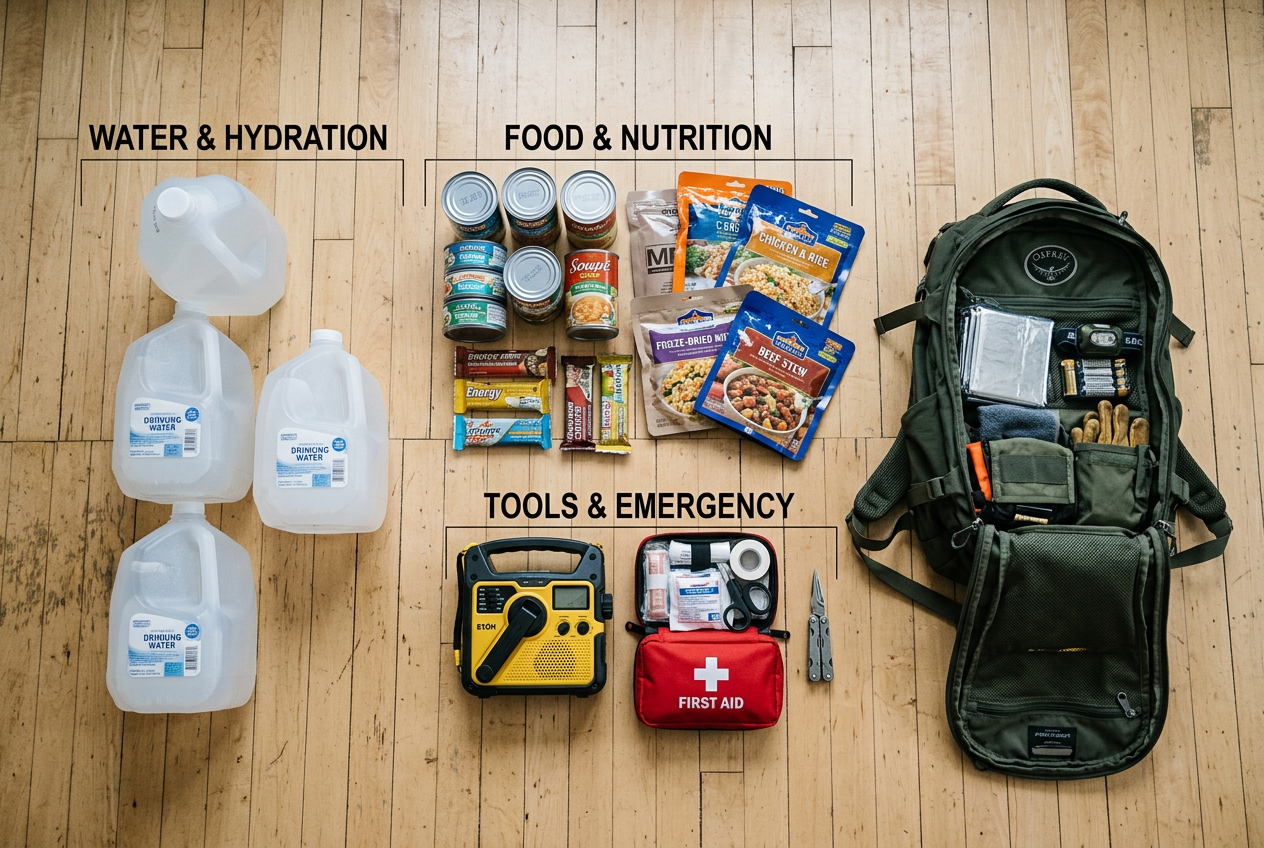
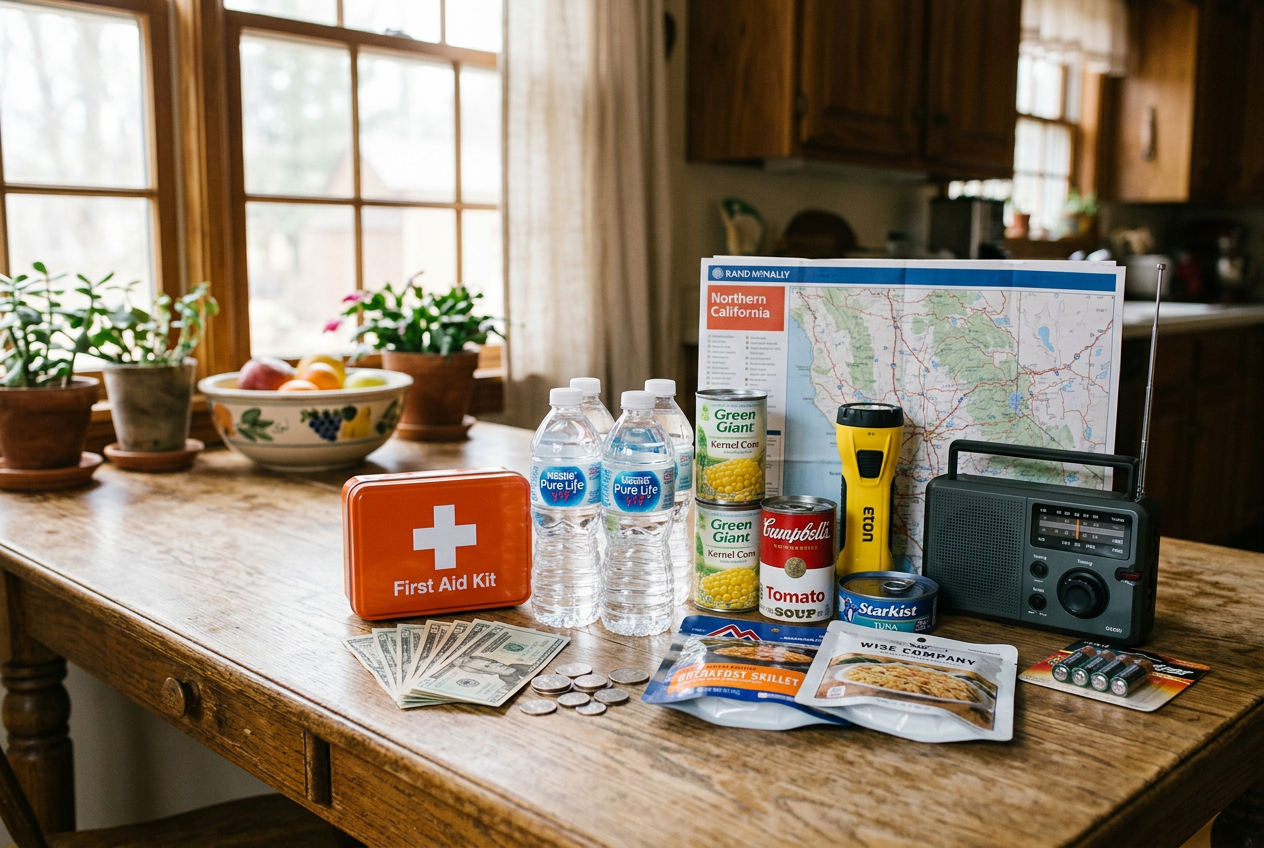
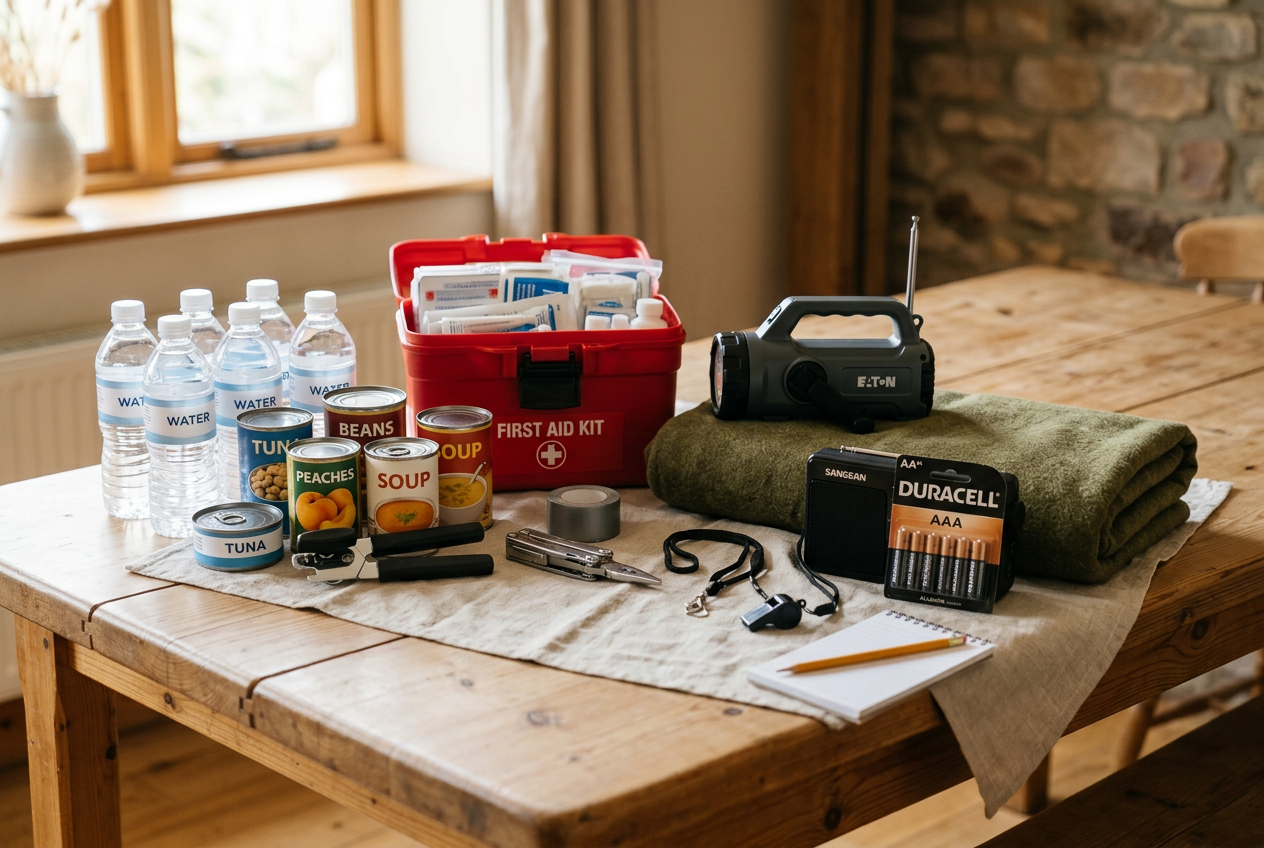
The news can feel big. The first step is small. You do not need to stockpile or panic buy. You just need a simple three-day baseline at home. Three days covers most short disruptions. It also gives you a calm head start if something lasts longer.
Here is what a baseline includes.
Water
Store about one gallon of water per person per day. For three days, that is three gallons per person. Count your pets too. Water is the most important item on this list. People can go a while without food. No one does well without water.
Food
Keep three days of food that needs little or no cooking. Think canned beans, canned fruit, peanut butter, crackers, and granola bars. Pick foods your family already eats. Make sure you have a manual can opener. You do not want food that needs a stove or a microwave if the power is out.
Light
Have a flashlight or two, plus spare batteries. A headlamp is nice because it keeps your hands free. Candles can work, but they are a fire risk. A battery light is safer and easier.
First aid
Keep a basic first aid kit. Bandages, gauze, tape, pain relievers, and any daily medicines your family takes. Check the kit twice a year and replace what you use.
Let a pre-packed kit do the heavy lifting
Buying each item one at a time takes time and planning. A pre-packed kit skips that. It gathers food bars, water pouches, first aid, and shelter items in one bag. This is a fast way to get a baseline in place this week.
For a two-person household, this kit packs emergency food bars, sealed water pouches, a 33-piece first aid kit, ponchos, and survival blankets. It is a simple starting point for a couple or a small home.
If you want a bit more, this deluxe two-person kit adds water purification tablets, a BPA-free bottle, lighting, and hygiene items. It suits people who want a few extra tools in the same compact bag.

For a larger family, a bigger kit makes more sense. This one is built for five people and follows guidance from preparedness experts and agencies. It fits a full household under one roof.

What to add from home for free
A kit is a jump-start, not the whole plan. Add free items you already own. Copies of ID and insurance papers. A little cash in small bills. A phone charger and a battery pack. Comfort items for kids. A written list of emergency contacts. These cost nothing and make your baseline much stronger.
Pick one kit size that fits your household. Add the free items this week. That is your baseline done.
Food You Can Store Without Worry
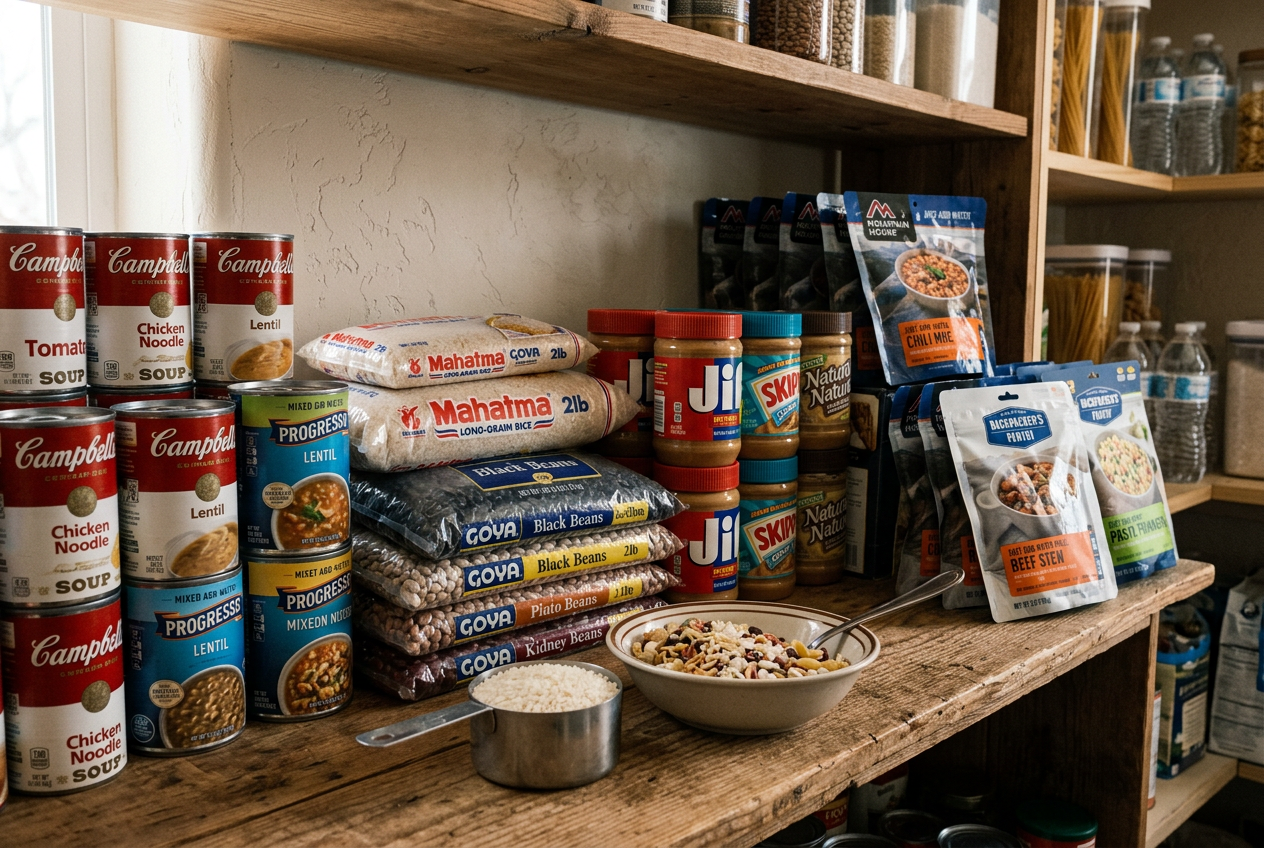
Food prep sounds hard. It is not. You do not need a stockpile. You just need a few days of food you can eat without power.
Start with a simple goal. Keep enough food for three days. That is the baseline most experts suggest. If you want more later, you can build toward two weeks. That step is optional. For most households, it is not urgent. Do not rush out and hoard.
Use What You Already Eat
The easiest plan costs almost nothing. Look in your pantry. Canned beans, canned soup, peanut butter, pasta, rice, and canned fruit all store well. So do crackers, oats, and shelf-stable milk.
Buy a few extra of these items on your normal grocery trips. Use the oldest cans first. Then replace them. This is called rotating your pantry. It keeps your food fresh and keeps waste low. Pick foods your family likes. Do not store things you will never eat.
Keep a manual can opener too. An electric one is useless if the power is out.
Plan for Calories
Think about calories, not just meals. An adult needs roughly 1,600 to 2,000 calories a day during a normal stretch. Some people need more. Children and large adults may eat differently. Add a little extra to be safe.
Water matters for cooking too. Many stored meals need water to prepare. Keep that in mind when you plan your water supply.
Just-Add-Water Emergency Kits
Emergency food kits are another option. These meals use long shelf life packaging. You just add water, heat, and eat. Some need no heat at all. They store for years, so you do not rotate them often.
A small kit covers a short gap. The 4Patriots kit holds about 20 servings. That is roughly three days for one person at around 1,600 calories a day. You may want more. These kits are light and easy to stash in a closet.
If you decide to extend toward two weeks or more, a larger kit does the job. The Ready Hour kit holds 846 servings and claims over 2,000 calories per day. It comes in a portable container. Again, this is an optional step. Buy it only if it fits your plans and budget.

Compare Your Food Options
Pick one path and start small. A full pantry is not the goal. A calm, ready household is.
Keeping the Lights On: Backup Power Without a Whole-Home Rewire
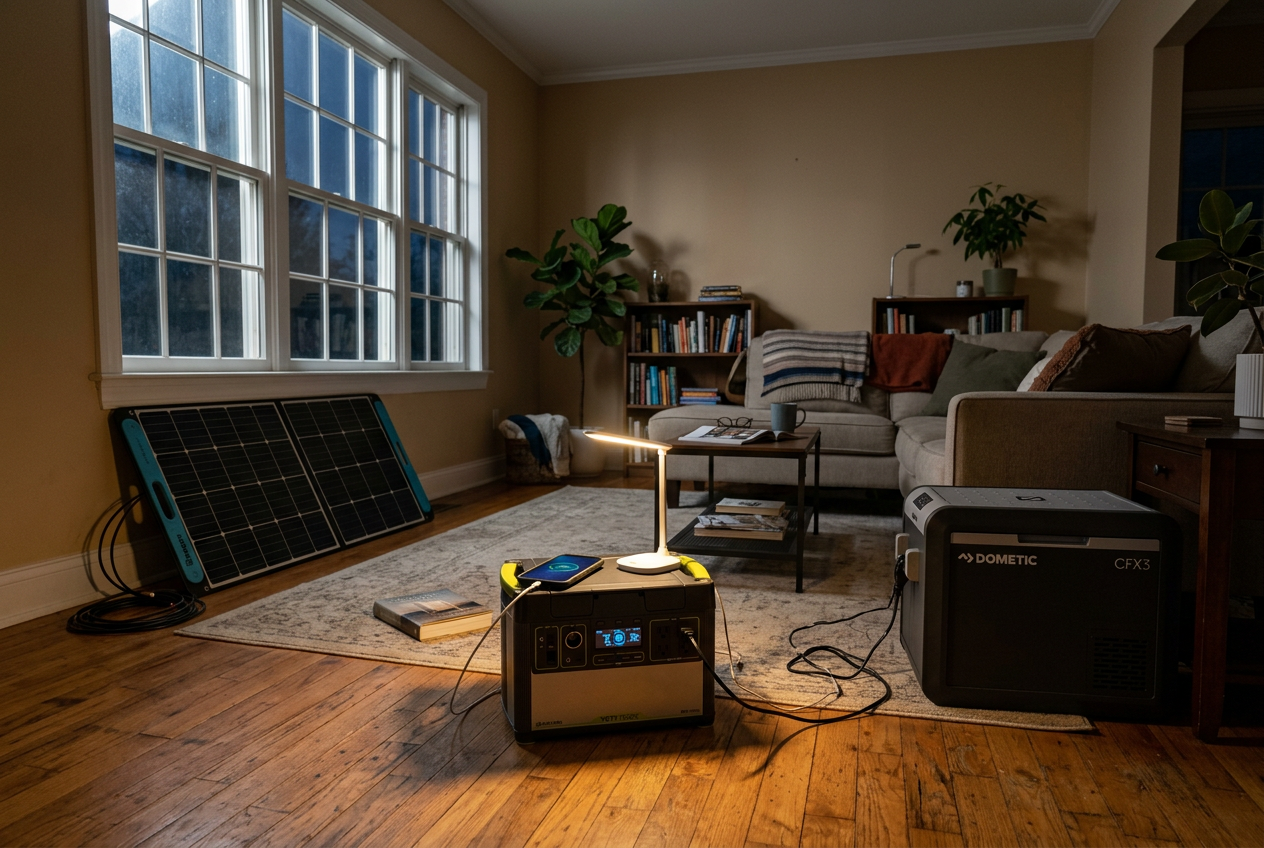
When the power goes out, you do not need to rewire your house. A portable power station can cover the basics. These are big rechargeable batteries in a box. You charge them from a wall outlet or from solar panels. Then you plug in your phone, a lamp, a small fridge, or a medical device.
Think of them as a backup battery for your home, not a full generator. They are quiet. They make no fumes. You can use them safely indoors, unlike gas generators. That makes them a good fit for an ordinary household.
What they can and cannot do
Be realistic about size. A power station is not a 90-day answer. It is for short outages, lasting hours or a few days. It also cannot power everything at once. Big items like central heat, electric stoves, and whole-home air conditioning draw too much. Focus on what matters most: phones, lights, internet, a fridge, or equipment like a CPAP machine.
Match the unit to your real needs. Make a short list of what you must keep running. Add up how much power those items use. A smaller unit covers phones, lights, and a laptop. A larger unit can run a fridge and more for longer.
A mid-size unit works for many homes. It can charge devices and run a few key items.

If you have higher needs, like a larger fridge plus medical gear, a bigger unit gives you more room. Some larger stations can be expanded with extra batteries.
When solar makes sense
Solar panels help when an outage runs long. The battery alone will drain. Panels let you recharge during the day, as long as you have sun. If you lose power for more than a day, solar is worth it. For a short outage, charging from the wall before the storm may be enough.
Here is a simple comparison of the two options above.
When to call a professional
A portable unit you plug into is safe to use yourself. But do not try to wire one into your home’s main panel. That is a job for a licensed electrician. Connecting backup power to your house wiring the wrong way is dangerous. It can harm you or utility workers. If you want a permanent setup, get professional help.
Start small and simple. A charged power station and a few lights can keep your household calm and steady through most short outages.
Compare Starter Kits and Power Options at a Glance
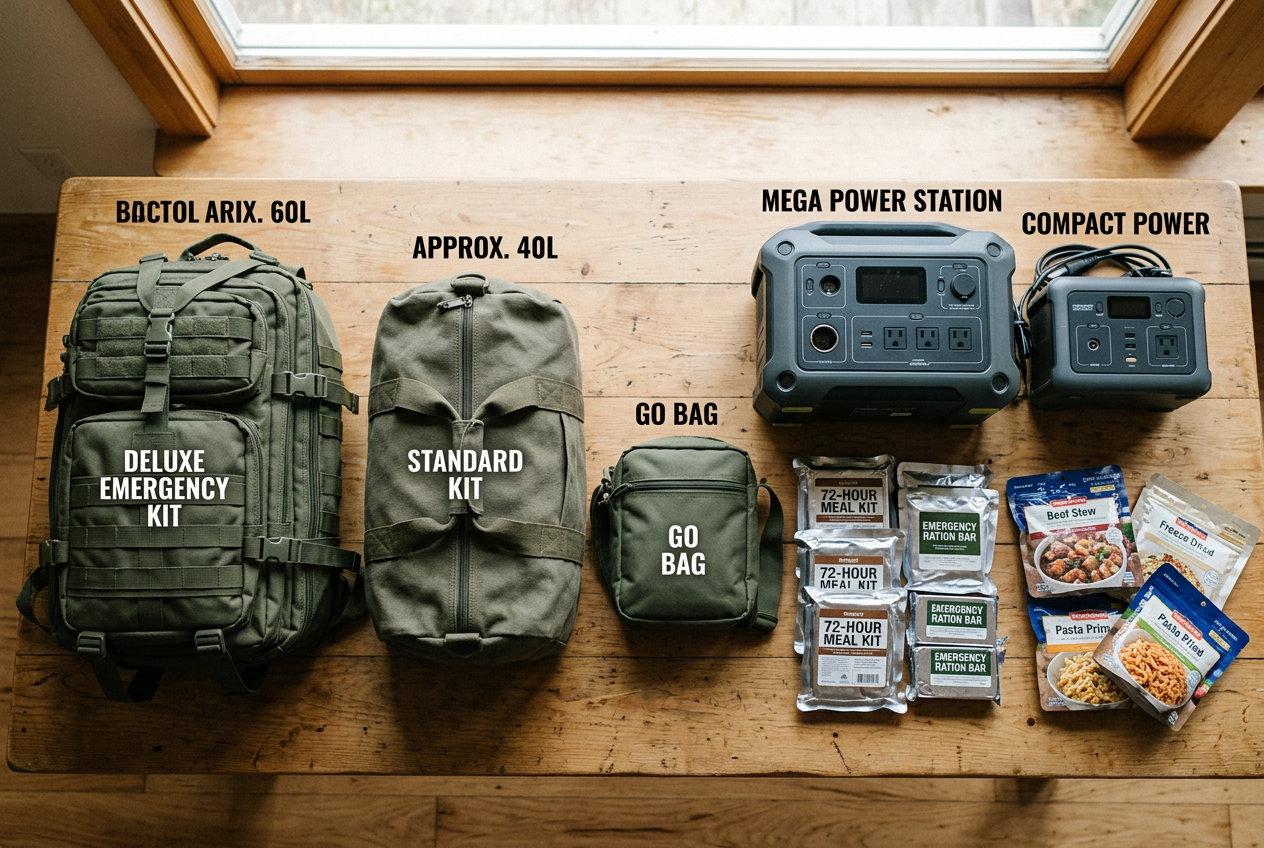
The products below fall into three groups. Grab-and-go kits hold food, water, and first aid for a few days. Food supplies cover longer stretches. Power stations keep your phones, lights, and small devices running. Use the table to match each one to your household size and needs.
How to Pick Your Starting Point
Start with a kit that covers your people. The Ready America 70280 and 70285 both serve two people for three days. The 70285 adds water purification tablets, a reusable bottle, and extra tools. If your household is bigger, the Stealth Angel 5 Person kit packs supplies for a family in one bag.
A grab-and-go kit covers water, food, and first aid in a single step. That makes it a good first buy for people new to this. If you want to spread things out, buy the food and power pieces on their own.
Food Supplies
Food kits are about calories and shelf life, not shelter. The 4Patriots 72-Hour Food Kit gives you a short food cushion with a long shelf life. If you want to store more, the Ready Hour 3-Month Supply holds many more servings and a wide range of meals. Both just need water and heat. You do not need a long-term supply to start. Three days of food is a fine baseline.
Power Options
Power stations do not replace a wired home generator. They store energy in a battery. You charge them from the wall or from solar panels, then plug in your phones, lights, or a small fridge.
The Jackery Explorer 2000 v2 is lighter and good for small needs during an outage. The Jackery HomePower 3600 Plus holds more power and can expand for bigger households. Match the size to what you actually need to run.
A Simple Rule
Pick one kit for your household size first. Add a food supply if you want more days. Add a power station last, once your water and food are set. Build in steps. You do not need everything at once.
The No-Purchase Steps That Matter Most
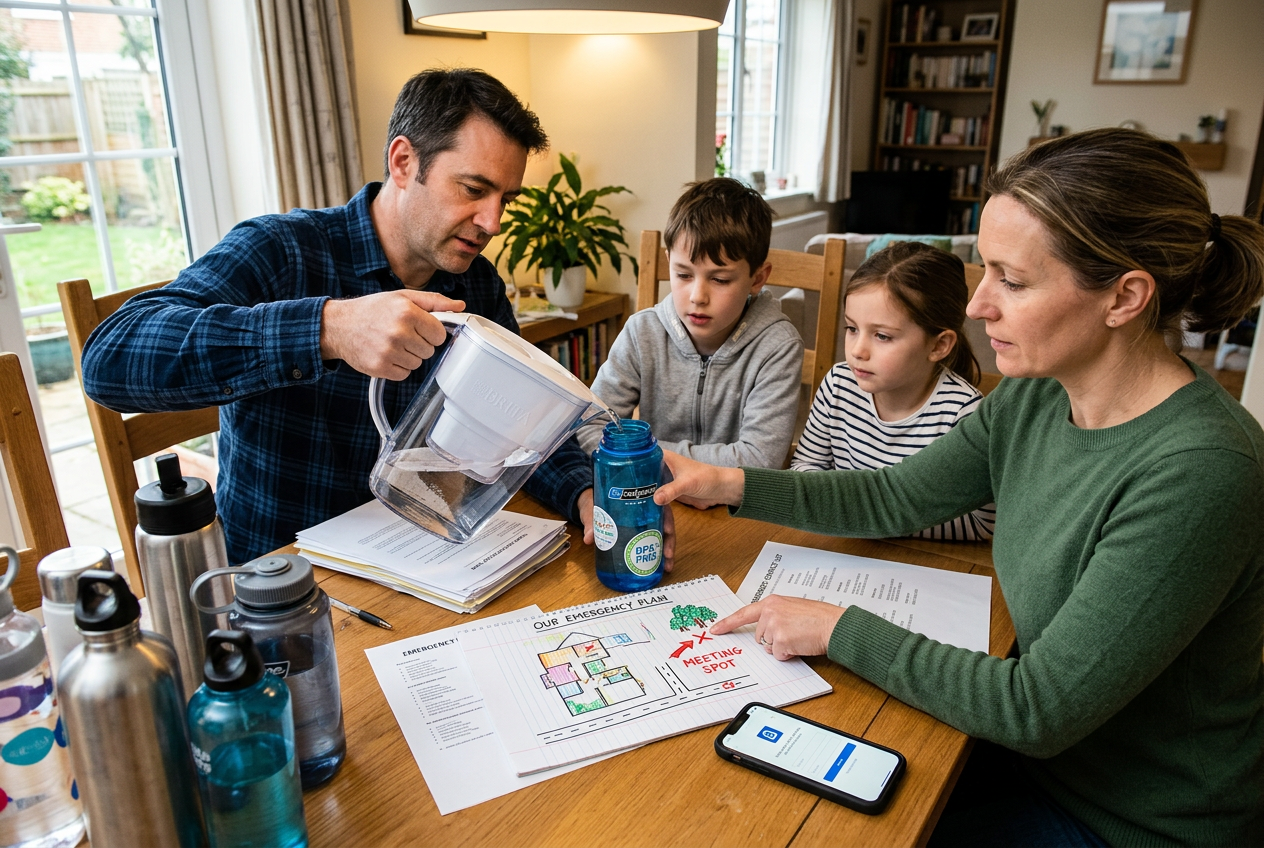
Gear gets a lot of attention. But the best parts of readiness cost nothing. They are about planning, not spending. If you only have one hour, spend it here first. These steps often matter more than any kit.
Write a Simple Family Plan
A family plan is just a short list of what to do and who does what. Write it down. Keep it where everyone can find it. Cover a few basic questions. Where will you go if you must leave home? How will you reach each other? Who picks up the kids if you cannot?
Keep it short and plain. A plan on paper is better than one in your head.
Pick a Meeting Place
Choose two spots to meet. One should be near your home, like a neighbor’s porch or a corner. The other should be farther away, in case you cannot get back home. Make sure everyone in the house knows both places by name.
Print Your Contacts
Phones die. Networks can go down. Write down key phone numbers on paper. Include family, a doctor, a school, and one out-of-town contact. An out-of-town friend can act as a message relay if local lines are busy. Put a copy in your wallet and one at home.
Learn Where Your Shutoffs Are
You should know how to turn off your home’s water and gas. Find the main water valve now, before you need it. It is often near where the water line enters the house. Turning it off can stop a flood from a broken pipe.
Gas is different. Know where your gas meter and shutoff are. But only turn off gas if you smell gas or are told to by officials. Turning gas back on can be unsafe. A professional or the utility should usually do that. If you ever smell gas, leave the house first, then call for help from outside.
Fill Water From the Tap
You do not need to buy cases of bottled water to start. Clean containers and fill them from your tap. Aim for one gallon per person per day. A three-day supply is a good baseline. Store the water in a cool, dark spot. Label it with the date and swap it out every so often.
Sign Up for Local Alerts
Your town or county likely offers free emergency alerts by text or email. Sign up today. Also set your phone to get wireless emergency alerts. These tell you about weather, evacuations, and other local events. This is free and takes a few minutes.
None of these steps require a credit card. They just need a little time. Do the free work first. Gear can come later, once your plan is solid. Readiness is mostly thinking ahead, not buying more stuff.
Frequently Asked Questions
Do I really need 90 days of supplies?
No. The 90-day plan you saw in the news is for military bases, not homes. News reports say the Pentagon wants major U.S. bases to run for 90 days without outside power, fuel, or supply chains. That is a goal for large installations with their own needs. It is not advice for your household.
For an ordinary home, a 3-day baseline is a calm place to start. Other governments agree. News reports say the UK’s “Be Ready” campaign advises households to keep three days of food and water. Japan and the UK both asked families to keep essential supplies at home. Three days covers most common disruptions like storms or short outages.
Is this news a sign of war?
No one can promise what the future holds. But the smart response is not fear. It is quiet preparation.
Several governments shared readiness messages around the same time. The Pentagon issued its base plan. The UK launched a three-year “Be Ready” campaign. Japan gave households an advisory to keep supplies. These moves are about being ready for many kinds of problems, from weather to cyber issues. A 3-day home kit is useful no matter what happens. It helps during a power cut or a bad storm just as much as anything else.
How much water and food is enough?
A common guideline is one gallon of water per person per day. For a 3-day plan, that means three gallons per person. If you have pets, add water for them too. In hot weather, you may want more.
For food, pick items you can store without worry and eat without cooking. Pre-made kits can make this simple. A 72-hour kit like the Ready America 2-Person 3-Day kit bundles food bars and water pouches together. Longer-term food options like the 4Patriots 72-Hour Survival Food Kit offer meals with a long shelf life. Start with three days, then add more only if you have the room and the budget. Do not hoard.
Is a generator or power station better?
For most households that want simple, safe backup, a portable power station is often the easier choice. It stores power in a battery. You can use it indoors. There is no fuel to store and no exhaust to worry about. Many models, like the Jackery Explorer 2000 v2, pair with solar panels so you can recharge during the day.
A fuel generator can make more power for longer. But it needs gasoline, which must be stored safely in approved containers, away from living spaces, ignition, and children. Let hot engines cool before you refuel. Never run a generator indoors. For a new household just starting out, a power station is usually the friendlier first step.
Your Calm Readiness Action Checklist
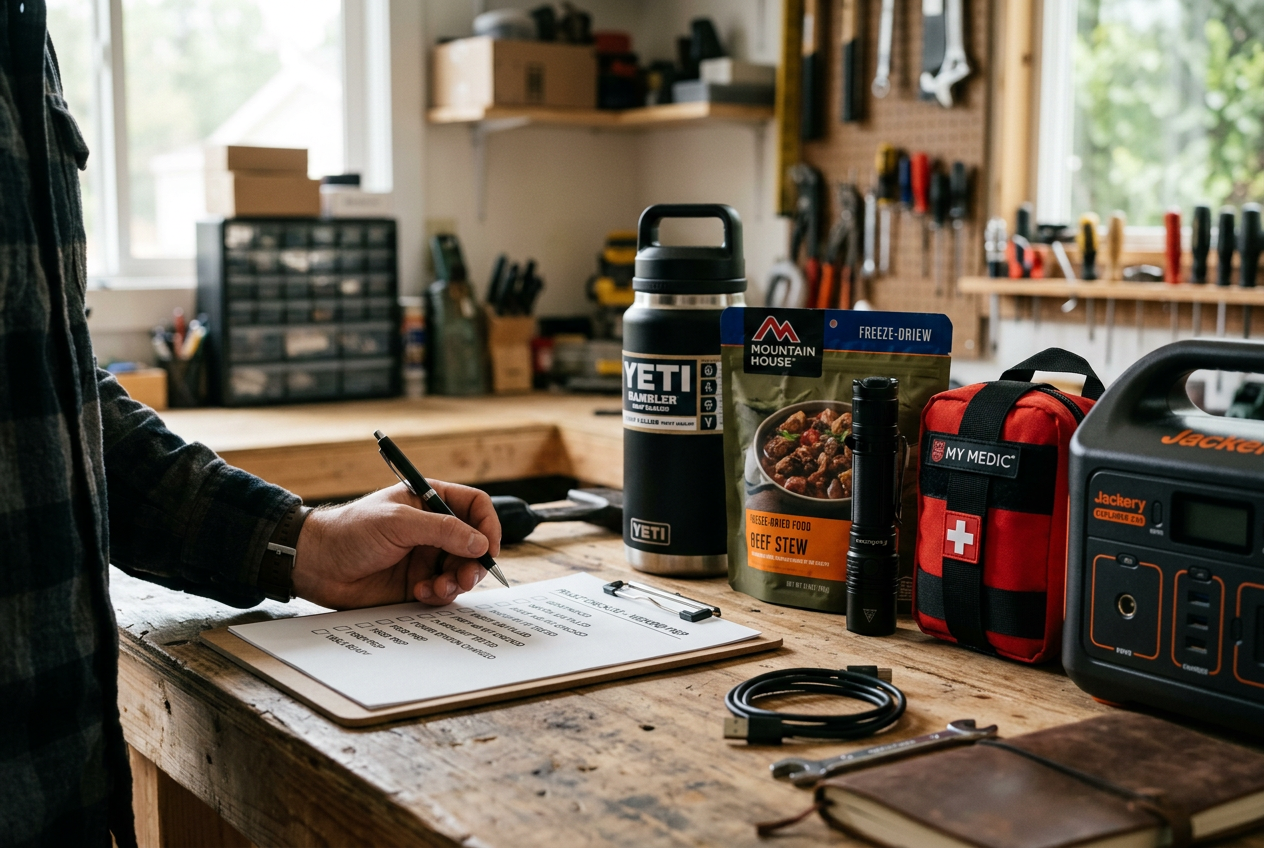
You do not need to buy everything at once. You do not need to panic. This list breaks the work into small steps you can finish over one weekend. Start at the top and work down. Each step builds on the last.
Step 1: Store your water
Water comes first. Set aside at least one gallon per person per day. For a 3-day baseline, that means three gallons per person. Use clean containers made for drinking water. Store them in a cool, dark spot away from sunlight. Add a few bottles for pets if you have them. This step is cheap and simple, so do it first.
Step 2: Stock three days of food
Pick foods your family already eats and will not go bad fast. Think canned soup, peanut butter, crackers, dried fruit, and nut bars. Choose items that need little or no cooking. A manual can opener is a must. If you want a ready-made option, a kit like the 4Patriots 72-Hour Survival Food Kit gives you a simple starting point with a long shelf life.
Step 3: Assemble light and first aid
You want light that does not need the grid. Pack flashlights, a battery lantern, and extra batteries. Keep them where you can find them in the dark. Next, build or buy a first aid kit. Add any daily medicines your family takes. A prebuilt option such as the Ready America 2-Person 3-Day Survival Kit bundles food, water, light, and first aid in one bag, which saves time.
Step 4: Write your family plan
Sit down for 20 minutes and write a simple plan. Note where you will meet if you get separated. List phone numbers on paper, not just in your phone. Pick one out-of-town contact everyone can call. Write down where your water, food, and first aid are stored. Keep a copy on the fridge and one in each car.
Step 5: Set up alerts
Turn on emergency alerts on your phone. Check your settings so warnings are not muted. Learn how your local area sends updates during storms or outages. Keep a battery or hand-crank radio as a backup if cell service drops.
Step 6: Consider a backup power option
This step is optional. If you rely on medical devices or lose power often, a portable power station can keep phones and small devices running. A unit like the Jackery Explorer 2000 v2 charges from the wall or solar panels and needs no rewiring. Match the size to your real needs, not the biggest model you can find.
Finish strong
That is the whole list. Water, food, light and first aid, a written plan, alerts, and maybe backup power. You can print this page and check off each step as you go. Done over a weekend, these steps turn worry into quiet confidence.
Next Steps: Build Confidence, Not Fear
The headlines can feel heavy. The Pentagon wants major U.S. military bases to run for 90 days without outside help if war cuts off power and supply chains. The UK launched a “Be Ready” campaign. Japan and Finland have issued their own advisories for households. That is a lot of serious news at once.
Here is the calm way to read it. These stories describe big institutions planning for worst-case problems. A military base is not a home. It has its own fuel, power, water, and supply needs that have nothing to do with your kitchen. The 90-day figure belongs to bases, not families. When governments tell households to prepare, they point to something much smaller. The UK, for example, suggests keeping about three days of food and water on hand. That is a goal any ordinary home can meet.
So the sensible response is not panic. It is not a garage full of supplies you will never use. The sensible response is a modest, layered plan you build one step at a time.
Finish the 3-Day Baseline First
Start where this article started. Get the simple things in place for three days. Water, one gallon per person per day. Shelf-stable food you already like. A flashlight and spare batteries. A basic first aid kit. A plan for how your family will reach each other.
If you would rather buy most of this in one box, a prepackaged kit can get you there fast. The Ready America 2-person 3-day backpack bundles food bars, water pouches, first aid, and shelter items together. For a larger home, the Stealth Angel 5-person kit covers a bigger group. These are a starting point, not the whole answer. You can still add your own water, medicines, and comfort foods.
Do not rush to buy everything. Take the no-purchase steps first. Save emergency contacts. Learn how to shut off your utilities. Charge your phone and power banks. Those cost nothing and matter most.
Expand Only If You Want To
Once your 3-day baseline is done, you are in good shape for most short outages. Many households stop right there, and that is fine.
If you want more peace of mind, the next sensible step is a two-week supply. This stretches the same simple ideas a little further. More water storage. More food you rotate and eat. A backup power option if you rely on medical devices or want to keep a fridge running. Our two-week supply guide walks through that next layer in plain steps, without pressure.
Readiness is not about fear. It is about confidence. You cannot control the headlines. You can control a shelf, a flashlight, and a plan. Build it slowly. Then get on with your life, knowing you are ready.
Sources and Further Reading
- Preparing Your Family for Emergencies
- Disaster Preparedness for Military Families | FLASH
- BASE EMERGENCY PREPAREDNESS GUIDE
- Ready.gov: Plan Ahead for Disasters
- Extreme Heat Safety
- Inside the Pentagon’s doomsday plan to keep America fighting if global war erupts
- Pentagon orders bases to plan for 90 days without the grid as Britain urges families to stockpile food and water
- After US’s FORTRESS plan and UK’s ‘Be Ready’ campaign, Japan issues advisory for households to prepare for
- UK launches ‘Be Ready’ campaign urging households to prepare for emergencies