Ready
Ready
Why Gas Prices Are Spiking Right Now: A Household Guide to Cutting Fuel Costs This Fall (2026)
Every time you fill up this fall, the total seems to climb a little higher. If you have noticed the pump costing more lately, you are not alone. Many households are watching fuel prices rise right now, and it stings. Filling the tank used to be a small line in the budget. This fall, it feels like a much bigger one.
The good news is that you have more control than you might think. You cannot change what happens with oil markets or global supply. But you can change how much fuel you use and how much you pay to fill up.
This guide keeps things simple. First, we explain why gas prices go up, using plain terms and real factors. You will learn what actually drives prices at the pump. Then we get to the part that matters most for your wallet: what you can do about it starting today.
Most of the steps here are free. Things like planning your trips, driving a little smarter, and keeping your tires properly filled. A few low-cost tools can help too, and we will point those out.
We will not tell you to panic or hoard fuel. That is not safe, and it does not help. Instead, we focus on small, practical actions that add up. Let’s start with why prices are rising, then move to what you can do about it.
- Check your tire pressure monthly and match the number on your door jamb sticker. Underinflated tires waste fuel.
- Watch your real-time fuel use so you can spot bad driving habits that burn extra gas.
- Slow down and ease off the pedal. Driving 65 instead of 75 can save a good chunk of fuel.
- Combine trips and keep your engine tuned so you drive fewer miles and run cleaner.
- Keep a simple gauge in the glove box so checking your tires takes under two minutes.



Reviewed by Marcus T., Priya K. & Dale M. — contributors with hands-on preparedness experience. How we test
Getting ready for the fall fuel crunch starts with a few smart tools in your car. Keep reading to see why each one helps you use less gas.
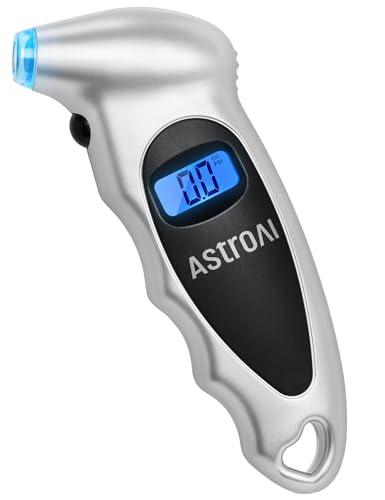
AstroAI Digital Tire Gauge
This gauge reads to within 1 PSI so you can set each tire to the right level. Correct pressure lowers rolling resistance and helps you get more miles from every tank.
Check Price on Amazon
ScanGauge SG2 Fuel Monitor
It plugs into your OBD2 port and shows your fuel use and cost-per-mile in real time. Seeing the numbers live helps you drive smoother and cut wasted gas.
Check Price on Amazon
ETENWOLF Pencil Gauge 2-Pack
These simple pencil gauges are calibrated for accurate readings and need no batteries. Keep one in each vehicle so tire checks are quick and easy.
Check Price on AmazonIn this guide
Why Trust This Guide?
This article was researched and reviewed by contributors with hands-on experience in emergency preparedness. They have tested gear, built real systems, and lived through situations where these skills actually mattered.
Why Are Gas Prices Going Up? The Main Factors Explained
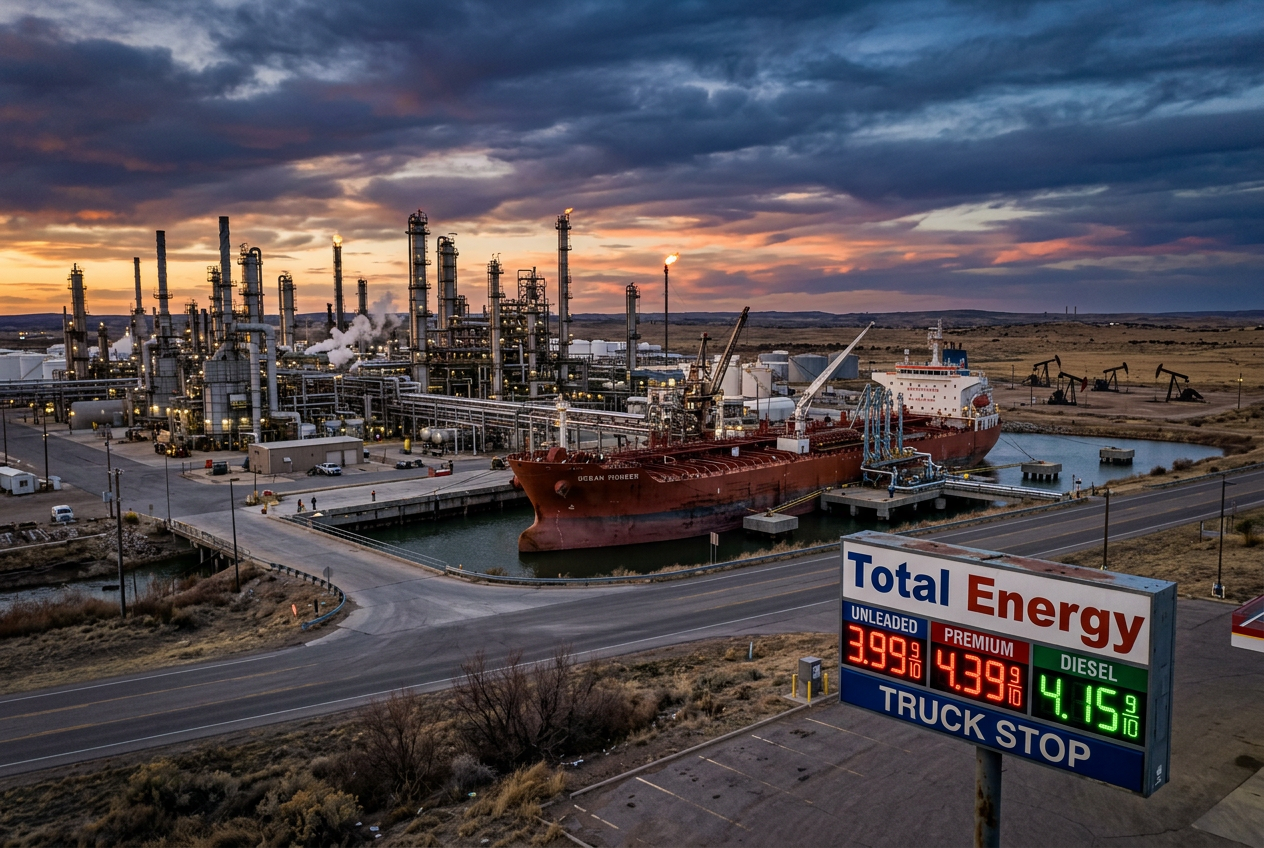
Gas prices do not rise for one simple reason. Several forces push on the price at the same time. When they all move the wrong way at once, you feel it fast at the pump. Here are the main drivers, explained in plain words.
The Cost of Crude Oil
Crude oil is the raw material that gets turned into gasoline. It is the single biggest piece of what you pay. When crude oil gets more expensive, gas usually follows.
Many things move the price of crude oil up and down. It trades on a global market, so buyers and sellers all over the world affect it. According to the U.S. Energy Information Administration, higher U.S. oil production in recent years has helped slow the rise of oil and gas prices. But it does not stop it.
Refinery Capacity
Refineries turn crude oil into the gas you put in your tank. There are only so many of them, and they can only process so much at a time. That limit is called capacity.
If a refinery shuts down for repairs, or if there are fewer refineries than before, less gas gets made. Less supply with the same demand tends to push prices up. Michigan’s consumer protection office lists a drop in U.S. refinery capacity as one factor that has historically affected gas prices.
Seasonal Demand
Demand means how much gas people want to buy. When more drivers hit the road, demand goes up. Higher demand can raise prices, especially if supply cannot keep up.
Demand rises and falls with the seasons and with daily life. When lots of people fill up at the same time, that pressure shows up in the price.
Global Supply Disruptions and Geopolitical Events
Oil moves around the world by ship and pipeline. If that flow gets blocked or slowed, supply drops. Events far from home can still hit your local station.
Global supply disruptions and geopolitical events can affect how oil gets transported. When shipping routes are cut off or shaky, the price of crude can jump. That works its way down to the pump.
Why No Single Fix Lowers Your Price
Notice that all these forces act at once. Crude oil cost, refinery limits, demand, and world events all push on the price together. That is why prices can feel unpredictable.
Here is the key takeaway. You cannot control any of these big forces. You cannot change the world oil market or fix a refinery. So do not waste energy worrying about things you cannot touch.
What you can control is how much fuel your household uses. That is where your real savings live. The rest of this guide focuses on simple, no-cost steps and smart tools that stretch every tank. Let’s turn to what you can actually do.
What You Can Actually Control: Reducing How Much Fuel You Use

You cannot set the price at the pump. That number depends on things far outside your driveway, like crude oil costs, refinery output, and events overseas. Worrying about it will not lower your bill.
Here is the good news. You can control how much fuel you burn. And that is where real savings live. Every gallon you do not use is money you keep. These wins do not require you to buy anything expensive. Many cost nothing at all.
Think of it this way. There are three big levers you can pull. Drive less. Drive smarter. Keep your car in good shape. Let’s look at each one.
Drive Less
The simplest way to cut fuel use is to drive fewer miles. You do not have to give up your car. You just have to plan a little.
Combine errands into one trip instead of many. This is called trip-chaining. A cold engine uses more fuel, so one longer trip is often better than several short ones. Group your stops by location. Run the grocery run, the pharmacy, and the bank in one loop.
Ask yourself before each trip: do I really need to go right now? Can it wait until tomorrow when you are already headed that way? Small choices like this add up fast over a full tank.
Drive Smarter
How you drive changes how much fuel you use. You can save gas with the car you already own.
Ease off the gas pedal. Hard starts and quick stops waste fuel. Smooth, gentle driving stretches every gallon. Slow down on the highway. Higher speeds burn more fuel. Leave a little earlier so you are not rushing.
Do not let your engine idle for long. If you are waiting somewhere and it is safe to do so, turn the engine off. Idling burns fuel and moves you nowhere.
These habits are free. They cost you nothing but a little attention. We will cover more of them in the next section.
Keep Your Car in Good Shape
A well-maintained car uses less fuel. Nothing here needs to be complicated.
One of the easiest checks is your tire pressure. Tires that are low on air make your engine work harder. That means more fuel burned for the same trip. Checking your tires takes just a few minutes, and we will show you exactly how later in this article.
Follow the maintenance schedule in your owner’s manual. Clean filters and fresh oil help your engine run the way it was built to run.
Small Wins Stack Up
No single tip will cut your fuel bill in half. But these habits stack. Drive a few fewer miles. Ease off the pedal. Keep your tires full. Over a full tank, and over a whole month, the savings are real. Best of all, most of them cost you nothing.
Free Habits That Stretch Every Tank
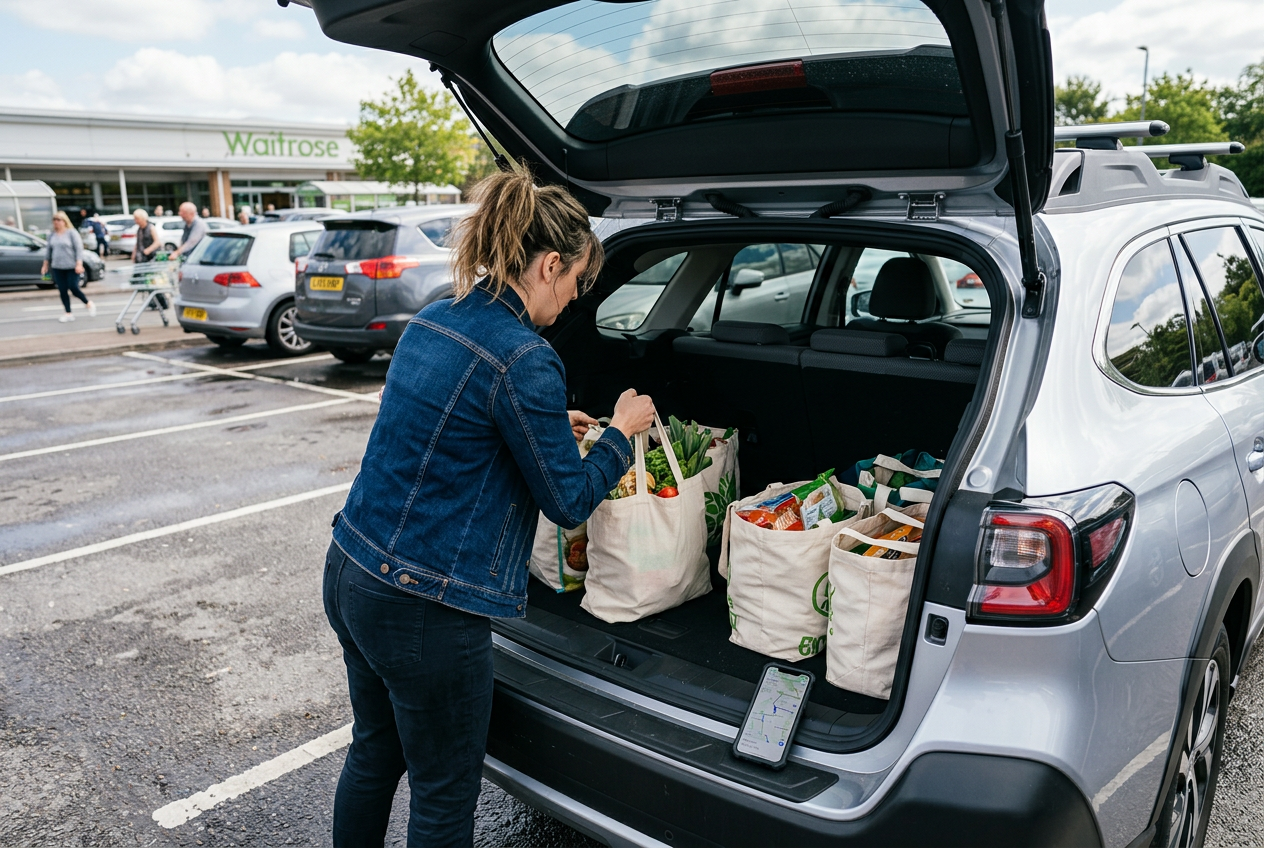
The best way to spend less on gas is to use less of it. You do not have to buy anything. A few simple driving and planning habits can stretch every tank. You can start today.
Combine Your Errands Into One Trip
This is called trip-chaining. Instead of taking three short trips this week, group your errands together. Hit the bank, the store, and the pharmacy in one loop. A warm engine runs more efficiently than a cold one. Short, separate trips force your engine to start cold again and again. One planned trip uses less fuel than several small ones.
Before you leave, think about the order of your stops. Pick a route that flows in one direction. This cuts backtracking and saves miles.
Ease Off the Gas and the Brake
How you drive matters a lot. Hard acceleration and sudden braking waste fuel. Every time you punch the gas, you burn more. Every time you slam the brakes, you throw away the speed you paid for.
Try to drive smoothly instead. Accelerate gently. Look ahead so you can coast to slow down. Leave more space between you and the car in front. This gives you time to ease off the pedal instead of stomping the brakes.
Slow Down on the Highway
Higher speeds burn more fuel. As you go faster, wind pushes back harder against your car. Your engine has to work more to fight it. Easing off the highway speed can help your fuel go further. You do not have to crawl. Just backing off a little makes a difference.
Cut Down on Idling
An idling engine burns gas and goes nowhere. If you are waiting a long time, and it is safe to do so, turn the engine off. Warming up your car for many minutes before you drive is usually not needed with modern engines. Sitting in a long drive-thru line also burns fuel. Parking and walking inside can save gas.
Lighten the Load
Extra weight makes your engine work harder. Take a look in your trunk and back seat. Are you hauling heavy items you do not need? Tools, gear, or bags of stuff add weight. Remove what you do not need for the trip. A lighter car uses less fuel.
Use a Free Fuel-Price App
Prices can change from one street corner to the next. Free fuel-price comparison apps show you the cost at stations near you. You can spot a cheaper station before you fill up. Check the app before a big trip or when your tank is low.
A word of caution. Do not drive far out of your way just to save a few cents. The extra miles can cancel out your savings. Use the app to pick a good station along a route you were already taking.
These habits cost nothing. Start them now and you will see the savings add up.
Check Your Tire Pressure: A Simple Fuel-Saver
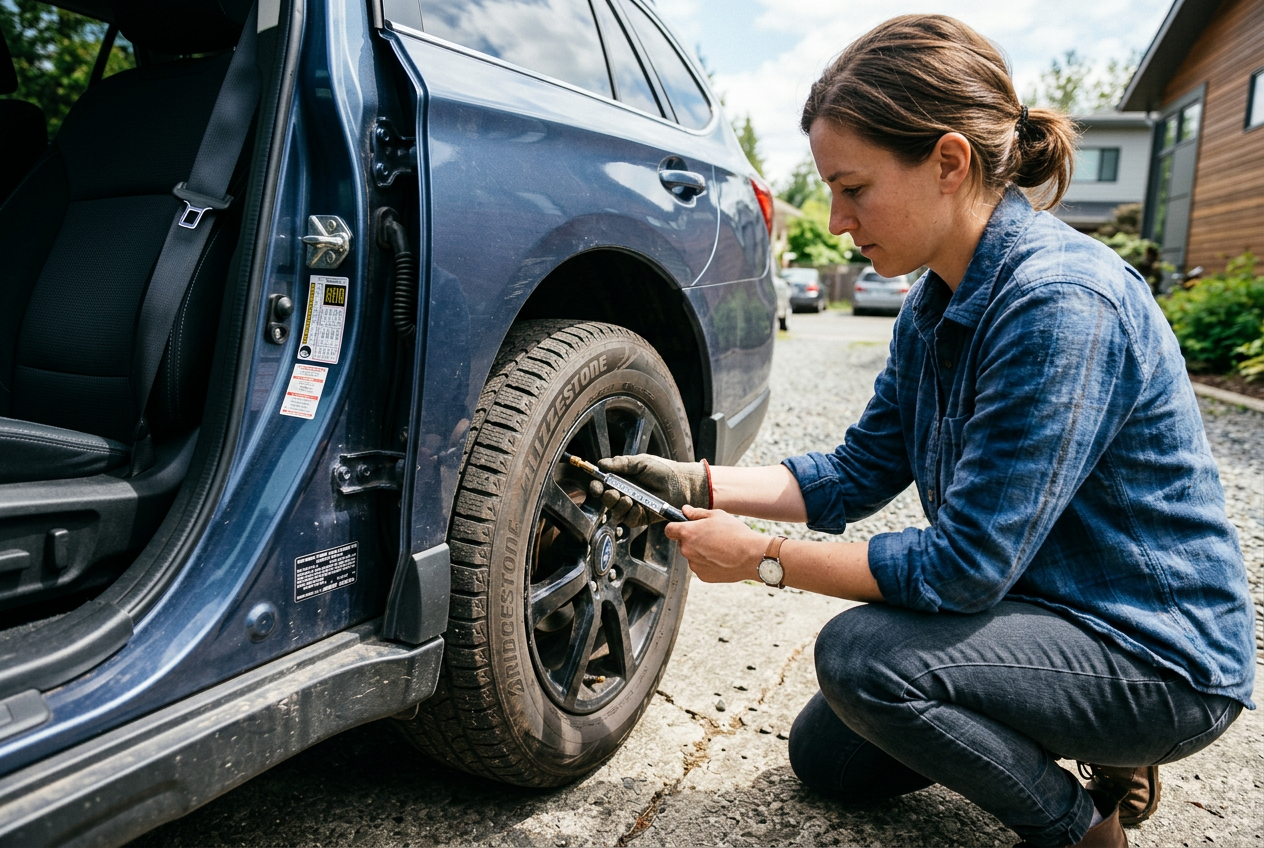
Your tires do more than keep you rolling. They can quietly raise your fuel costs too. When a tire is low on air, it gets soft and flat at the bottom. That means more of the tire touches the road. This creates more drag, so your engine has to work harder. Harder work means more fuel burned for the same trip.
Keeping your tires at the right pressure fixes this. It is one of the easiest ways to stretch every tank. Best of all, it costs you nothing but a few minutes each month.
Find Your Correct PSI
PSI stands for “pounds per square inch.” It is just the way we measure air pressure in a tire. Every car has a recommended PSI set by the maker.
Do not use the number printed on the tire itself. That number is the maximum the tire can hold, not the target for your car. Instead, open the driver’s door and look at the sticker on the door jamb. That is the metal frame the door closes against. The sticker lists the correct PSI for your vehicle. You can also find it in your owner’s manual.
Check Tires When They Are Cold
Air pressure changes with heat. Driving warms up your tires and pushes the reading higher. That can trick you into thinking the pressure is fine when it is not.
For the most accurate reading, check your tires when they are cold. That means before you drive, or after the car has sat for a few hours. Then compare each tire to the PSI on your door jamb sticker. Add air if a tire is low. Many gas stations have air pumps you can use.
Make this a monthly habit. It only takes a few minutes and keeps your car running its best.
Pick a Simple Gauge
You need a tire pressure gauge to do this right. A good gauge is small, cheap, and easy to use. Here are two beginner friendly options.
The first is a digital gauge. It shows the number on a clear screen, so there is no guessing. This one is factory calibrated to be accurate within 1 PSI. It has a backlit screen and a small light on the nozzle, which helps you see the valve stem in the dark. You can also switch between PSI and other units with one button.
The second is a dial gauge. Instead of a screen, it uses a needle on a round face. This one is built tough and calibrated by hand for solid accuracy. The large dial glows, so you can read it at night or in a dim garage. It works on cars, trucks, SUVs, and more.

Either style works well. Pick the one that feels easiest for you to read. Keep it in your glove box, and checking your tires becomes a quick monthly step.
Tire Gauges and Inflators Compared: Pick the Right One
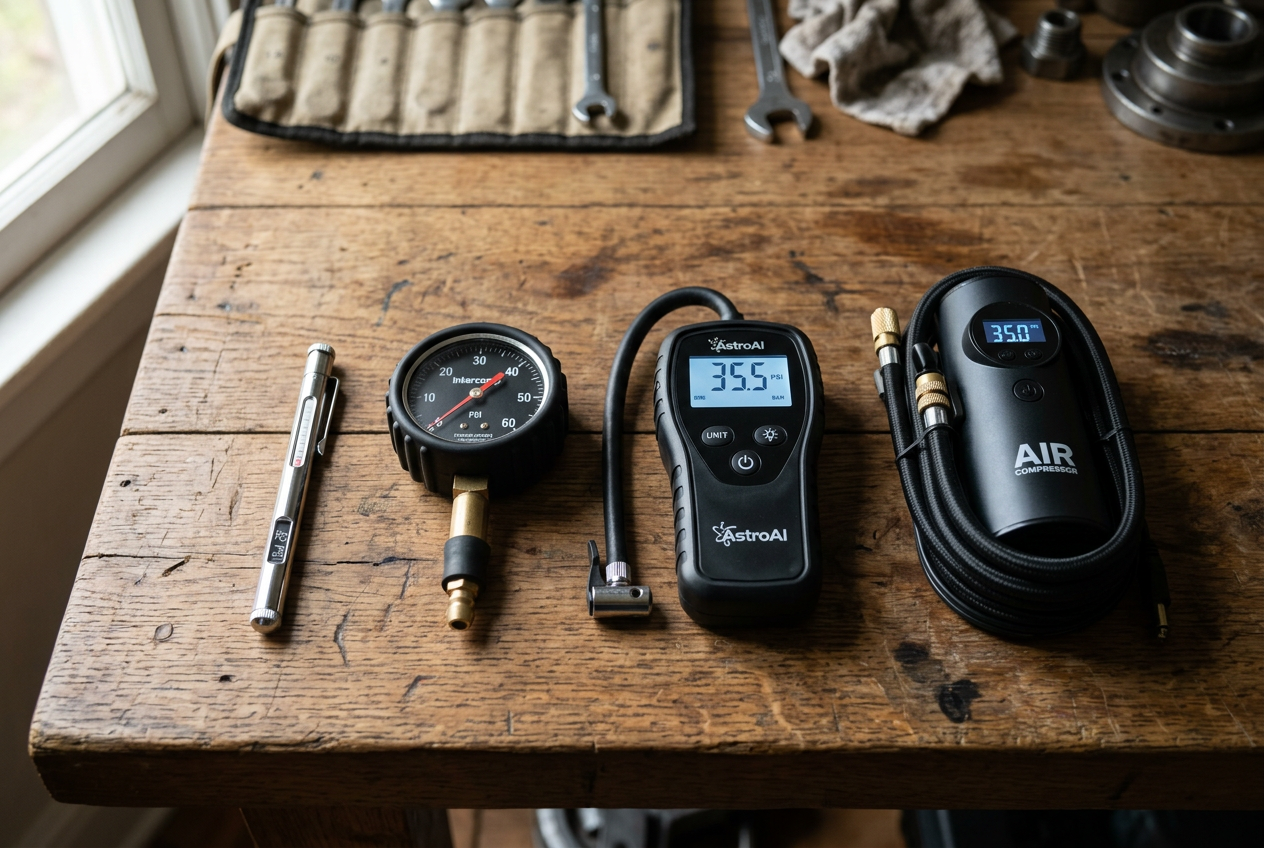
Keeping your tires at the right pressure helps you use less fuel. To check pressure, you need a tire gauge. Some tools only read the pressure. Others can also add air. Here is how to pick the right one without spending more than you need.
Read-Only Gauge vs. Gauge Plus Inflator
A read-only gauge does one job. It tells you the pressure inside your tire. You still need a separate air pump or a gas station air machine to add air.
A gauge plus inflator does two jobs. It reads the pressure and pumps air into the tire. This is handy if you want one tool that does everything. It usually needs to connect to an air source, like an air compressor.
Pencil Gauges vs. Digital Gauges
Pencil gauges are simple and tough. They have no batteries and no screen. A small stick pops out to show the pressure. They are usually low cost and last a long time. The trade-off is that the tiny numbers can be hard to read, especially at night.
Digital gauges have a lit screen. The numbers are big and easy to read in the dark. Many are accurate in hot or cold weather. They do need batteries. They often cost a bit more than pencil gauges.
Quick Comparison
The Simple, Low-Cost Picks
If you want a basic tool that never needs batteries, a pencil gauge is a smart choice. The ETENWOLF two-pack is calibrated by hand and made of solid metal. It offers two pressure ranges for different vehicles.
The AstroAI pencil two-pack is another solid option. It has a stainless steel body, shows PSI, kPa, and BAR, and includes a built-in deflator valve to let out extra air.

The Easy-to-Read Digital Pick
If small numbers bother you, go digital. The ETENWOLF T300 has a clear screen and works in cold or hot weather. It stays accurate at very low and very high pressures.

The All-in-One Pick
Want one tool to check and fill? The AstroAI digital gauge with inflator does both. Squeeze the trigger to add air, press the button to let air out. It connects to a 1/4 inch NPT air line, so you need an air compressor to use it.

For most first-time buyers, a pencil gauge or the digital T300 does the job well. Pick the inflator combo only if you already have an air compressor at home.
See Your Real Fuel Economy with an OBD2 Gauge
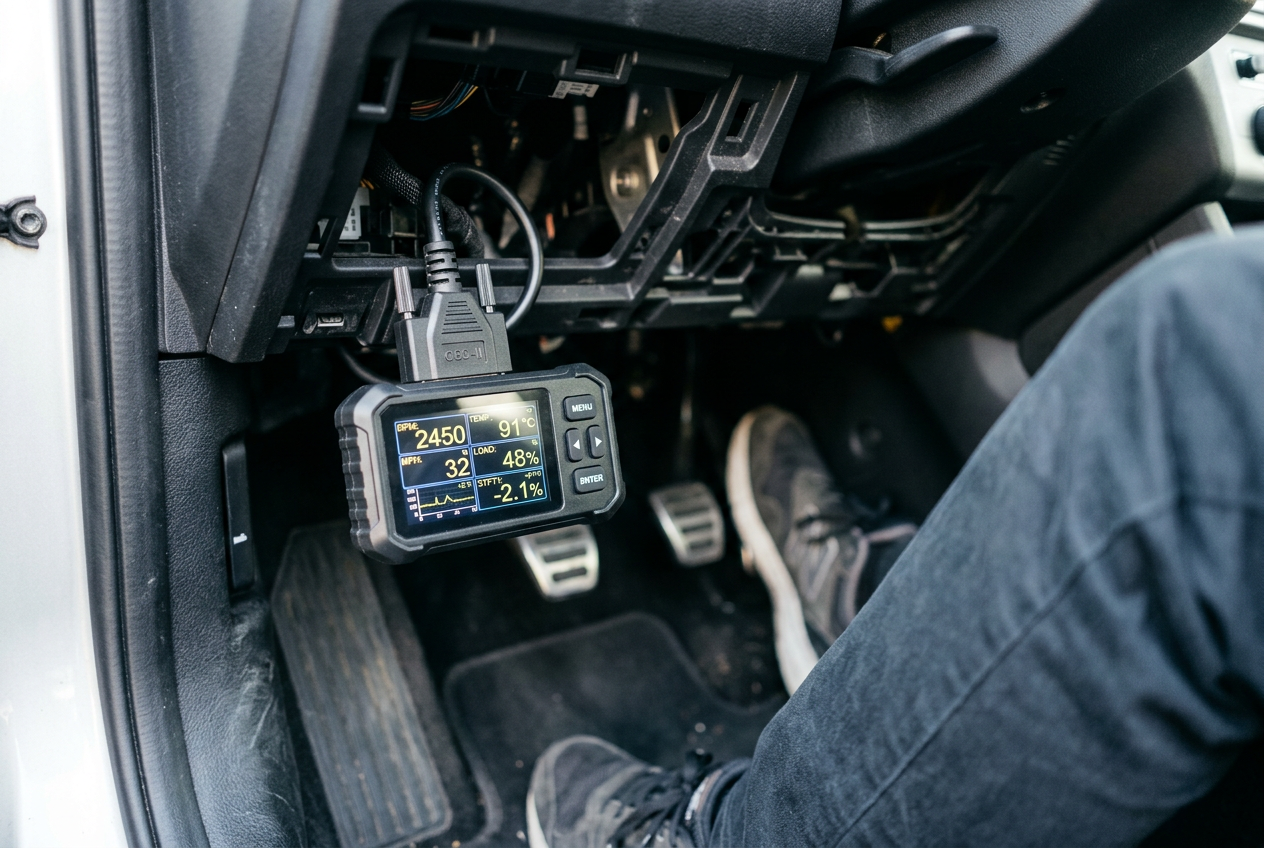
The free habits above will help you use less gas. But how do you know if they are working? Most cars only show a rough average. That number can be hard to read while you drive. If you like to see real numbers, a plug-in gauge can help.
An OBD2 gauge is a small device. It plugs into a port under your dash. Once it is connected, it can show you live data from your car. This includes how much fuel you are burning right now. Some gauges even show your cost per mile. That means you can watch how your driving affects the tank as it happens.
How It Works
Almost every car built in 1996 or newer has an OBD2 port. OBD2 stands for On-Board Diagnostics, version two. It is a standard 16-pin plug. You will usually find it under the steering wheel, near your knees. You do not need to be a mechanic to use it. You just plug the gauge into the port. Then you follow the setup steps in the manual.
Once it is running, the gauge reads data from your car’s computer. It turns that data into simple numbers on a screen. You can see things like fuel use, engine speed, and coolant temperature. Watching these numbers helps you learn which habits waste gas. For example, you might see your fuel use jump when you speed up fast. That is a clear sign to ease off the pedal.
A Popular Option
One well-known choice is the ScanGauge SG2. It is a small 3-in-1 tool. It works as a trip computer, a diagnostic scan tool, and a set of digital gauges. It can show up to 37 gauges, depending on your car. It uses simple 5-button controls. It works on all 1996 or newer OBD2 vehicles. That includes gas, diesel, propane, and hybrid cars.
With a tool like this, you can watch your fuel use and cost per mile in real time. You can also check coolant temperature and engine speed. Over time, this data helps you drive in a smoother, cheaper way.
Is It Worth It?
Be clear about one thing. This is an optional tool. It is not a must-have. You do not need it to save gas. The free habits from earlier sections work on their own. A gauge just makes the results easy to see.
Some drivers love data. They enjoy watching numbers and finding ways to improve. If that sounds like you, a gauge can turn saving gas into a fun challenge. If it does not, skip it. You can still cut your fuel costs without spending a dime.
Your Fuel-Cost-Cutting Action Checklist
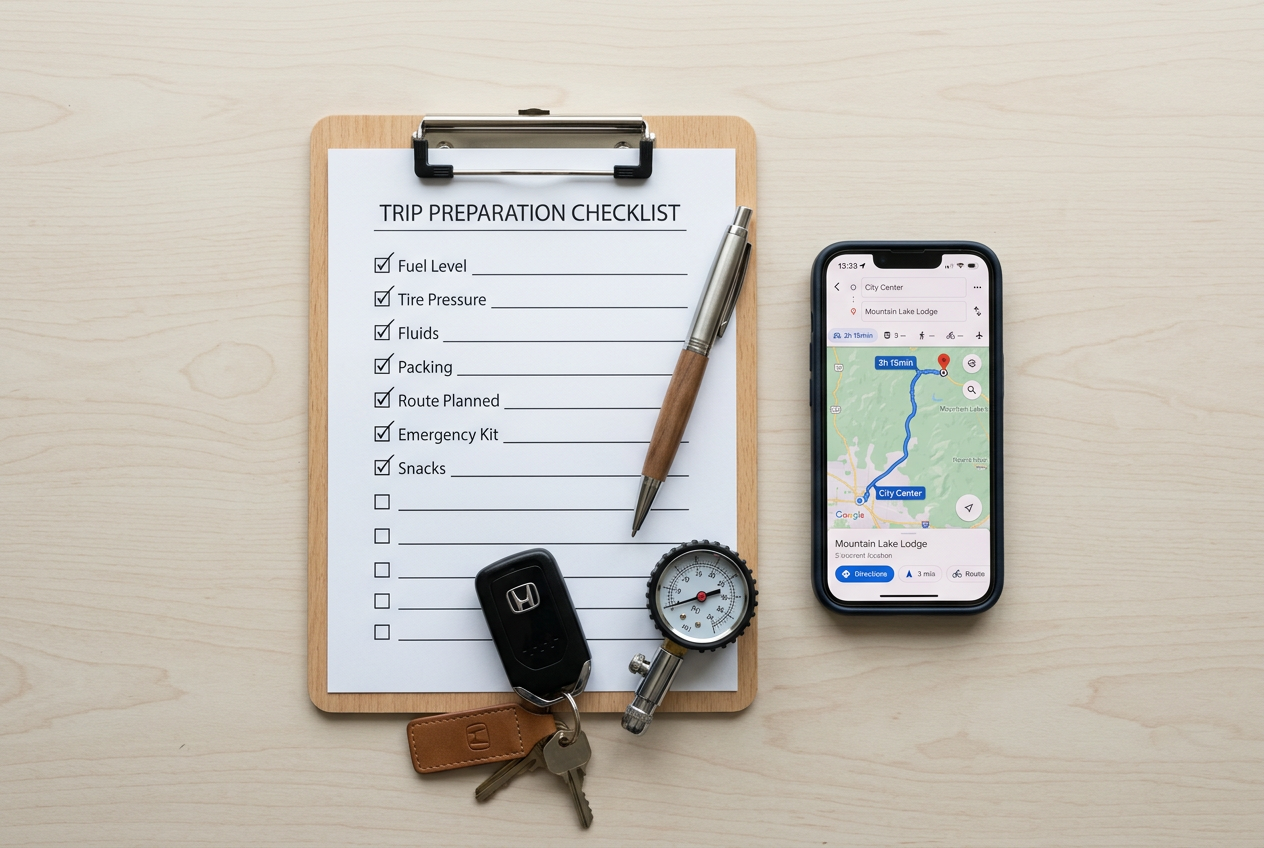
Prices at the pump are high right now. You cannot control the global market. But you can control how much fuel you burn each week. Here is a simple list you can start today. Do these steps in order. Each one saves a little. Together they add up.
1. Plan and combine your trips
Look at your week ahead. Write down every place you need to go. Then group errands into one trip instead of many. This is called trip-chaining. One longer trip with a warm engine uses less fuel than many short cold starts. Pick a day to run errands all at once.
2. Slow down and drive smoothly
Speeding, hard braking, and fast starts waste gas. Ease onto the pedal. Look ahead so you can coast to red lights instead of braking hard. On the highway, back off your speed a little. Smooth, steady driving stretches every tank. It is also safer for you and everyone else on the road.
3. Check your tire pressure
Under-inflated tires drag and burn more fuel. Find your correct pressure on the sticker inside the driver’s door jamb. Do not use the number on the tire wall. Check your tires when they are cold, before you drive far. A simple gauge makes this easy.
If you want a tool that also fills the tires, an all-in-one inflator saves a trip to the gas station air pump.
4. Compare station prices with a free app
Gas prices can change from block to block. A free fuel-price app on your phone shows current prices near you. Check it before you fill up. Do not drive far out of your way to save a few cents. The extra miles can cancel out your savings. Use the app to pick a cheap station you already pass.
5. Clear out extra cargo
Extra weight makes your engine work harder. Open your trunk and back seat. Take out anything you do not need to carry every day. Roof racks and cargo boxes also add drag and burn more fuel. Remove them when you are not using them.
Want to see your real numbers?
If you like data, an OBD2 gauge plugs into your car and shows your true fuel use as you drive. It works on most 1996 or newer vehicles. Watching your numbers can help you spot the habits that waste the most gas.
Print this list
You do not need a fancy download. Just print this page and keep it in your car or on the fridge. Check off one item at a time. Small steps add up fast, and you can start the very first one today.
Frequently Asked Questions
Do gas prices go down in fall?
Gas prices can move up or down at any time of year. Many factors drive the price at the pump. These include the cost of crude oil, demand from drivers, and refinery output. Global supply problems and world events can push prices higher too. There is no promise that fall brings lower prices. The best plan is to focus on what you can control. Use less fuel and shop for better prices near you.
Does premium fuel save money?
For most cars, no. Premium fuel costs more than regular. It does not make your car use less gas unless your vehicle needs it. Check your owner’s manual. If it says regular is fine, use regular. Paying more for premium when your car does not need it just costs you money.
Does topping off my tires really matter?
Yes. Tires that are low on air create more drag. That makes your engine work harder and burn more fuel. Keeping your tires at the right pressure is a simple, no-cost way to save. Find the correct number on the sticker in your driver’s door jamb. Do not use the number on the tire itself. That is the maximum, not the target. A basic gauge makes this easy to check.
Is it worth driving far for cheaper gas?
Usually not. If you drive many miles out of your way to save a few cents per gallon, you burn fuel getting there. That can cancel out your savings. A fuel-price app can help you find good prices along routes you already drive. Fill up where it is close and cheap, not far away.
Should I stock up on fuel now?
No. Do not hoard gasoline. Storing large amounts of fuel is risky and does not fix the real problem of high prices. If you do keep a small amount for tools like a mower, follow basic safety rules.
- Use only approved fuel containers.
- Never store fuel inside your living space.
- Keep fuel away from any flame, spark, or heat source.
- Keep it away from children.
- Let a hot engine cool before you refuel.
- Never siphon fuel with your mouth.
- Use only gasoline-rated pumps.
- Follow your local fire rules and the maker’s directions.
Also know this. Fuel stabilizer can help slow fresh fuel from going bad. It cannot fix or restore fuel that has already gone bad. Buying extra fuel to “beat” prices is not a smart move. It brings fire risk into your home with little real benefit. The safer path is to drive less, keep your car in good shape, and shop smart at the pump.
Conclusion: Small Steps Add Up
You cannot control why gas prices are going up. Global oil supply, demand, and events far from your driveway set the price you see at the pump. Those forces are out of your hands. But that is not the whole story. What you can control is how much fuel you burn and how carefully you spend.
That part matters more than most people think. A well maintained car uses less gas. Smart driving habits stretch every tank. Together, these small changes add up over weeks and months. They put real money back in your budget, no matter what happens to prices.
Let’s recap the simple moves you can make right now. None of them cost much, and many cost nothing at all.
- Drive gently. Ease off the gas. Avoid hard braking and fast starts. Smooth driving saves fuel.
- Plan your trips. Group your errands into one loop instead of many short trips. This is called trip chaining, and it cuts wasted miles.
- Check your tire pressure. Underinflated tires drag and waste gas. A quick check keeps your car rolling right.
- Use a fuel price app. These free apps show you which nearby stations have the lowest prices. A short detour can pay off.
Every one of these habits works on its own. Stacked together, they lower your fuel spending in a way you can actually feel.
Your Next Two Steps This Week
Pick two easy actions and do them in the next few days. First, check your tire pressure. You need a good gauge to get it right. A simple digital gauge like the AstroAI Digital Tire Pressure Gauge makes this quick and clear, even in a dim garage. Match the number on the sticker inside your driver’s door. If your tires are low, top them off.
Second, download a fuel price app to your phone. It takes a few minutes. After that, you can spot the cheapest gas near you before you fill up. This one habit can save you on every single tank.
Want to see your real fuel use over time? An OBD2 gauge like the ScanGauge SG2 plugs into your car and shows live fuel economy. Watching those numbers can help you drive smarter and prove that your new habits are working.
If higher gas prices are just one part of a wider money squeeze, you are not alone. Many households feel the pinch across their whole budget right now. Our companion budget guide walks you through more ways to trim spending when costs climb.
You did not cause this price spike, and you cannot end it. But you can take charge of your own tank. Start this week. Small steps really do add up.
Sources and Further Reading
- Rising gas prices, explained | Stanford Report
- Safer Roads Owing to Higher Gasoline Prices - PMC - NIH
- Factors affecting gasoline prices - U.S. Energy Information …
- Increased Gas Prices? Again?
- Why Gas Prices Are Rising and How to Save Money …