Ready
A Calm First Shopping Trip: Building Three Days of Food and Water Without Panic Buying (2026)
You have probably seen the news lately. UK authorities recently advised households to put together a personal emergency kit, and 72-hour preparedness guidance has been adopted in the UK and elsewhere. Reports describe similar advice in other countries, and the BBC has covered what families are stocking up on. After headlines like these, it is normal to feel a little pushed to act. Many people are searching right now for how to start.
Here is the good news. You do not need to panic buy. You do not need a garage full of supplies or special “survival” gear. A basic three-day supply fits into one calm, ordinary grocery trip. In fact, you may already have much of it in your kitchen.
This guide walks you through that first trip step by step. The goal is simple. You want enough food and water for everyone in your home for 72 hours. That is it.
We will start with the easy math, so you know exactly how much to get. Then you will check what you already own before you spend a dime. We will cover everyday pantry foods to toss in the cart, how to store your drinking water, and a pre-built kit option if you are short on time. You will also get tips to keep everything fresh, plus a one-trip checklist you can print.
No stress. No hype. Just one calm trip.
- Store at least 1 gallon of water per person each day, so a family of four needs about 12 gallons for three days.
- Keep ready to eat meals on hand so you do not need to cook during a stressful time.
- Add shelf stable protein like canned meat to round out your meals and keep you full.
- Pick stackable containers so your supplies fit neatly in a closet or under a bed.
- Build your kit calmly over one trip instead of grabbing everything in a rush.
One practical preparedness move each week. No fear-mongering, ever.



Reviewed by Elena V., Ryan C. & Priya K. — contributors with hands-on preparedness experience. How we test
A few smart picks now mean you will be ready when it matters. Keep reading to see why these three items belong in your first supply run.

5-Gallon Stackable Water Containers
These hold 20 gallons total, enough drinking water for a small family for several days. The flat tops and bottoms stack together so they fit in tight spaces.
Check Price on Amazon
Yoder's Canned Meat Variety Case
This case gives you 12 cans of fully cooked meat across six kinds, ready to eat right out of the can. It adds filling protein to your meals with a very long shelf life.
Check Price on Amazon
ReadyWise 132-Serving Food Bucket
This bucket packs 132 servings of ready to eat meals into one stackable container. It covers your main meals so you stay fueled without cooking during an emergency.
Check Price on AmazonIn this guide
Why Trust This Guide?
This article was researched and reviewed by contributors with hands-on experience in emergency preparedness. They have tested gear, built real systems, and lived through situations where these skills actually mattered.
How Much You Actually Need: The Simple Three-Day Math
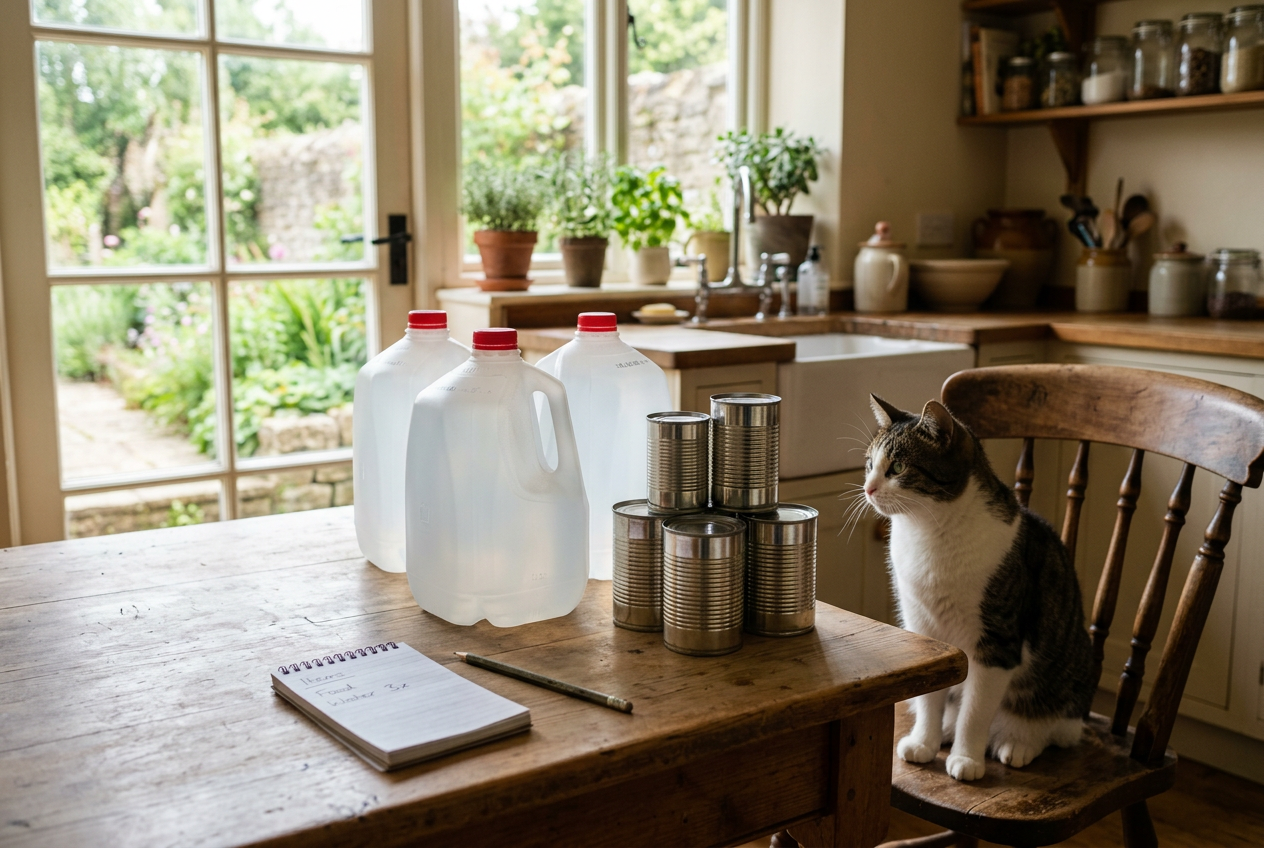
Before you shop, you need a small number on paper. That number tells you exactly what to buy. It stops you from grabbing too much or too little. The math is simple. Let’s walk through it.
Water: About One Gallon Per Person Per Day
A common guideline is to store about one gallon of water per person per day. That gallon covers both drinking and small tasks like washing hands or cooking.
For three days, that means about three gallons per person.
Here is the quick math:
- 1 person = about 3 gallons
- 2 people = about 6 gallons
- 4 people = about 12 gallons
Your real needs can change. Hot weather, young children, nursing mothers, and sick family members may need more. Use the gallon-a-day number as a safe starting point, then round up a little if you are unsure.
Food: A Three-Day Supply You Will Actually Eat
For food, the goal is a three-day supply of non-perishable meals. Think three days of breakfasts, lunches, and dinners for each person.
Two words come up a lot here, so let’s keep them plain:
- Non-perishable means food that does not spoil quickly. It does not need a fridge to stay safe for a long time.
- Shelf-stable means almost the same thing. It can sit on a shelf for months or years and still be fine to eat.
Canned soup, canned meat, peanut butter, crackers, and dry pasta are all good examples. We cover specific picks in a later section.
Don’t Forget Pets
Pets count too. If you have a dog or cat, add three days of their food and water. Pets drink more than you might think. A simple rule is to store extra water for them, not just the people in your home.
Write Your Number Down First
Now put it together. Count everyone in your household. Count your pets. Write the totals on a slip of paper or in your phone. Take this with you when you shop.
Here is what a small household list might look like:
That is it. No guessing in the store. No panic buying. You walk in knowing your gallons and your meals.
This three-day target is the same amount many government guides now suggest for a basic start. Three days is a calm, doable goal for a first trip. You can always add more later once the basics are in place.
Keep your number handy. In the next steps, you will check what you already own before you spend a cent.
Shop Your Own Kitchen First (The No-Purchase Step)
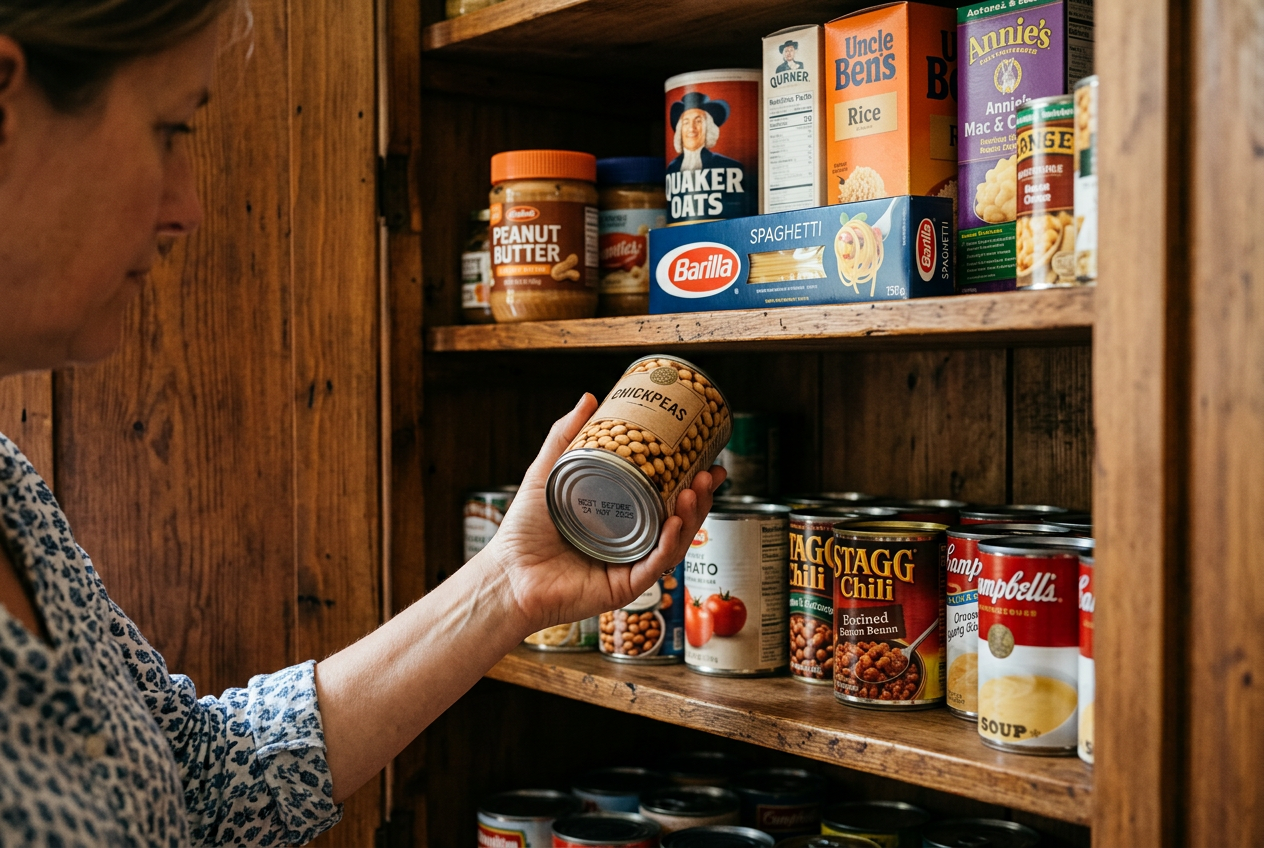
Before you spend a single dollar, look in your own kitchen. Most homes already have more emergency food than you think. This step is free. It can cover a surprising amount of your three-day list. One of the first tips in family preparedness guides is simple. Check the food you already have first.
Open Every Cupboard
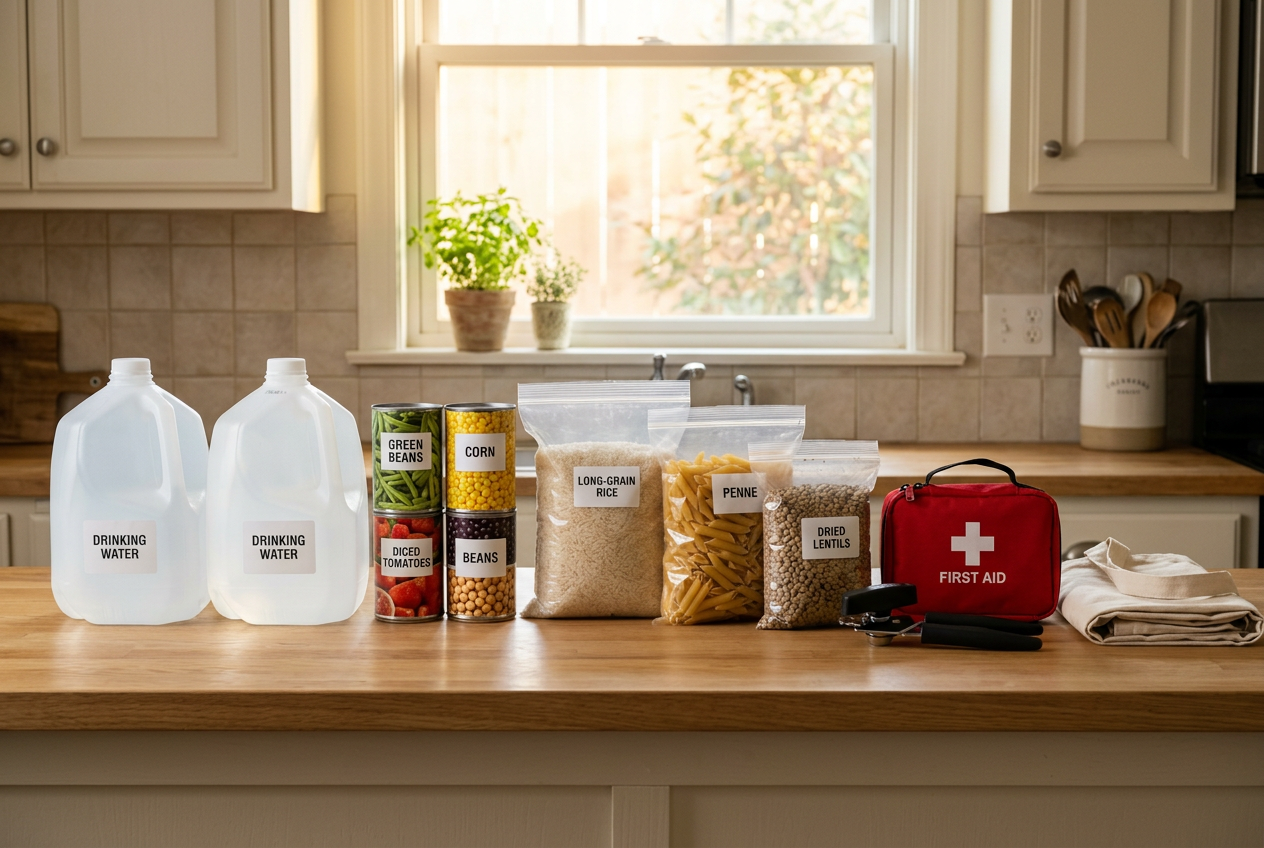
Pull out everything from your pantry and shelves. Look for foods that last a long time and need no fridge. These are the items you want:
- Canned beans, soup, vegetables, and fruit
- Canned meat, tuna, or chili
- Pasta and rice
- Peanut butter
- Crackers and dry cereal
- Bottled water or sealed juice
Set these on the counter where you can see them. You may find enough canned goods for a meal or two already. That means fewer items to buy later.
Write Down What You Have
Grab a piece of paper or your phone. Make a quick list of what you found. Note how many cans, boxes, and bottles you have. This list becomes your starting point. You will fill in only the gaps, not buy things twice.
Think about meals, not just random items. Three days means about nine meals per person. Rice and canned meat make a meal. Pasta and canned sauce make a meal. Peanut butter and crackers make a snack or a light meal. When you picture real meals, it is easier to see what you still need.
Check the Dates
Every canned or boxed food has a date on it. Look for “best by” or “use by” on the label. Pull anything that is already expired and toss it. For food that is still good, note the date next to it on your list.
Put the items with the soonest dates at the front. You will use these first. This is the start of good rotation. It keeps your supply fresh without waste.
Look for Gaps, Not Duplicates
Now compare your list to your three-day plan. Maybe you have plenty of canned vegetables but no protein. Maybe you have rice but nothing to go with it. These empty spots are your real shopping list.
The goal is to fill gaps, not to pile up more of what you already own. Ten cans of corn will not feed you well. A mix of foods will. Aim for a balance of protein, grains, and something you actually like to eat.
Keep It Simple
Do not stress about having the perfect pantry. You are only building three days of food. Many people finish this free step and find they are already halfway there. That leaves just a short, calm trip to the store for the rest. No panic. No bulk hauling. Just a few missing items to round out your supply.
Everyday Pantry Foods to Put in the Cart
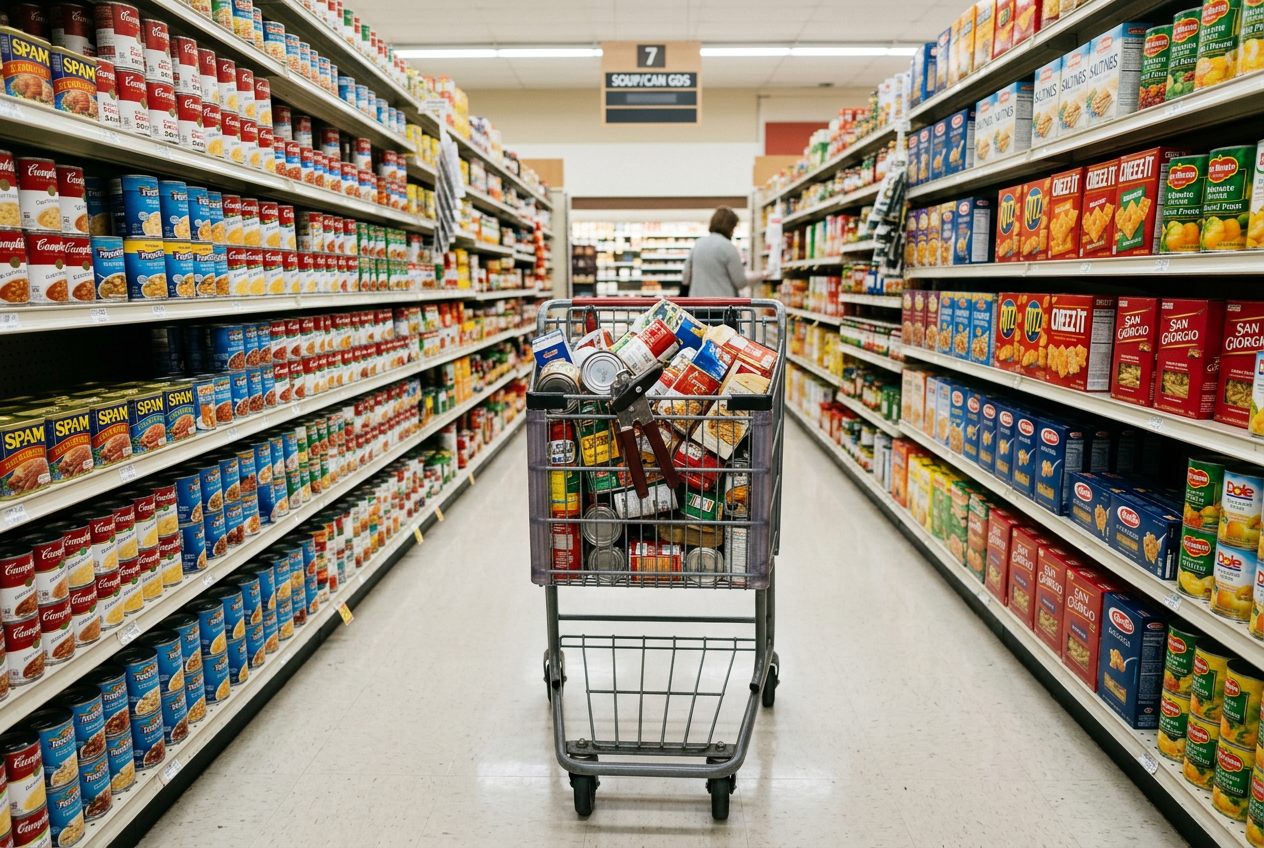
Now for the fun part. You get to fill your cart with real food. The trick is simple. Buy foods your family already eats. That way nothing goes to waste. If you rotate these foods into normal meals, your three-day supply stays fresh and useful.
Walk the aisles you already know. Here is what to look for.
Canned Soups and Stews
Start with canned soups and stews. These are warm, filling, and often ready to eat. Some canned foods are ready to eat while others need heating, so check each product’s label carefully. If a label says it is ready to eat, you can eat it cold from the can during a power outage. Beef stew is a good pick because it has meat and vegetables in one can.

Canned Meat and SPAM
Next, grab some canned meat. It adds protein to any meal. You can mix it into pasta, rice, or eggs. It lasts a long time with no fridge needed.
SPAM is a classic choice. It works for breakfast, lunch, or dinner. You can slice it, fry it, or eat it as is.

If you want variety, a canned meat case gives you several kinds in one box. This one has beef, chicken, pork, turkey, and more. It is fully cooked and ready to use in soups, tacos, or sandwiches.
Peanut Butter, Crackers, and Pasta
Peanut butter is a beginner favorite. It needs no cooking. It gives you protein and energy. A jar lasts a long time in the pantry.
Add crackers to go with it. They store well and make an easy snack or small meal.
Dry pasta is cheap and lasts a long time. Keep in mind it needs water and heat to cook. So pair it with ready-to-eat foods for days when the power is out.
Canned Fruit and Vegetables
Round things out with canned fruit and vegetables. These give you nutrition without a fridge. Canned fruit also adds something sweet. Both are ready to eat right from the can.
Pick Ready-to-Eat Items
When the power is out, your stove may not work. So lean toward foods you can eat cold. Here is a quick way to sort what you buy.
Do Not Forget the Can Opener
Here is the item people forget most. A manual can opener. Many of your foods come in cans. An electric opener will not work in an outage. A simple hand-crank opener is a must-have. Buy one and keep it right with your food. Without it, your canned meals are stuck in the can.
Storing Your Three Days of Drinking Water
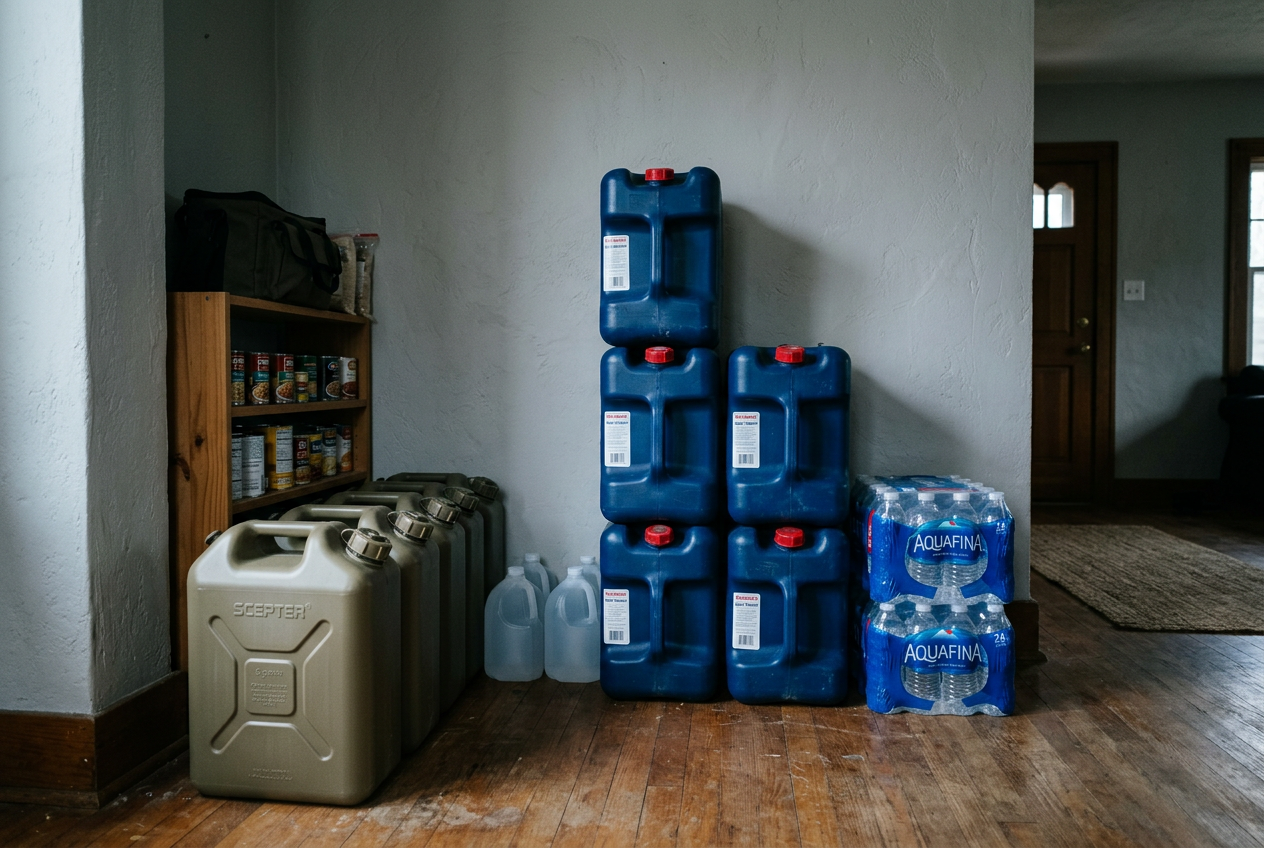
Water is the most important thing to store. You can go longer without food than without water. The good news is that storing three days of drinking water is simple. You do not need special gear or a big budget.
How Much Water You Need
A common guide is at least one gallon per person per day. That covers drinking plus some water for cooking and washing. For three days, multiply the number of people in your home by three.
Here is the easy math:
- 1 person: 3 gallons
- 2 people: 6 gallons
- 4 people: 12 gallons
Do not forget pets. Add a little extra for them too. If someone is sick, or if the weather is hot, you may need more. When in doubt, round up.
The Two Easiest Ways to Store It
For a beginner, two options are safest and simplest.
The first is store-bought bottled water. You can buy it right in the grocery aisle on the same trip. It comes sealed and ready. This is the no-fuss choice.
The second is filling clean, food-grade containers yourself. Food-grade means the plastic is safe to hold things you eat and drink. Look for containers made from BPA-free, food-grade plastic. Do not reuse old milk jugs. They are hard to clean and can grow bacteria.
Wherever you store water, keep it in a cool, dark place. Heat and sunlight can break down plastic over time. A closet, pantry, or low shelf works well.
Saving Space in a Small Home
Water takes up room fast. A single gallon weighs over eight pounds, and families need many gallons. In a small home or apartment, this can feel like a problem.
Sturdy, stackable containers help. They nestle together so you can store more water in less floor space. Containers with handles are easier to carry and pour. This matters because full containers are heavy.
One option is the Saratoga Farms 5-gallon stackable set. According to the product’s manufacturer listing (details we have not independently verified), it includes four 5-gallon containers for 20 gallons total. Using this guide’s 1 gallon per person per day standard, that is about three days of water for a family of six, or about five days for four people. Note: the manufacturer’s listing bases its day counts on half a gallon per person per day, which is a reduced-ration minimum; we recommend the full 1 gallon per person per day standard, so plan for fewer days than the package claims. The manufacturer listing also states the containers are made from BPA-free, food-grade HDPE plastic and are designed to stack. Full containers are heavy, so store them where you do not need to lift them far. Always confirm the current specifications on the product page before buying.
Rotate It to Keep It Fresh
Stored water does not last forever, and over time odors and chemicals can pass through thin plastic. Store it away from strong smells and refresh it on a regular schedule. A common guideline is to replace stored water about every six months. Mark the fill date on each container with a marker so you know when it is time.
That is it. Buy it or fill it, store it cool and dark, and refresh it on a schedule. Your three days of water is done.
Optional Shortcut: Pre-Built Kits for People Short on Time
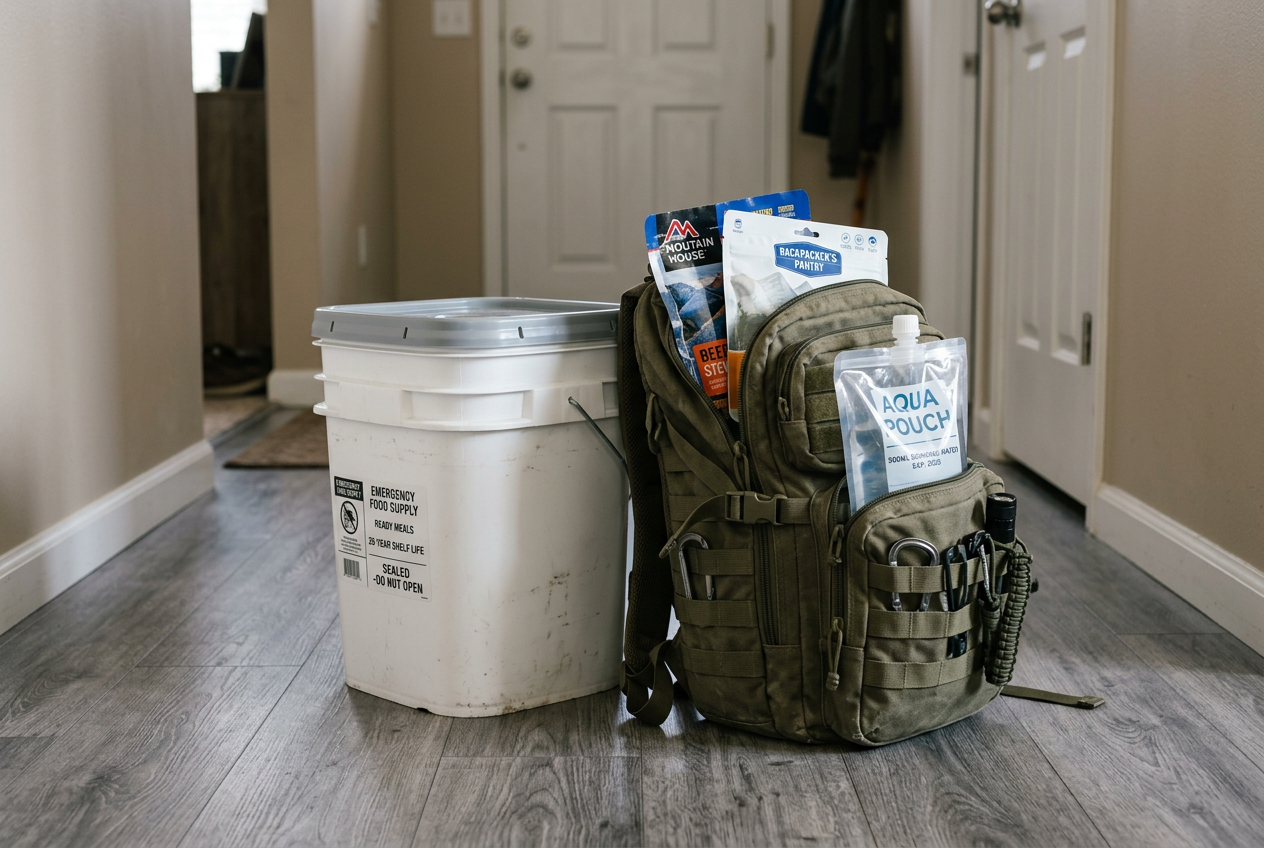
You do not need a pre-built kit. Everyday pantry foods and some stored water cover three days just fine. But some people want a faster start. Maybe you are short on time. Maybe you would rather buy one box and be done. If that sounds like you, a ready-made kit can help.
There are two main types. It helps to know the difference before you shop.
Long-Shelf-Life Food Supplies
The first type is a bucket of food meant to last a long time. These are filled with dried meals. You add hot water, wait a few minutes, and eat. The ReadyWise bucket below lists a large serving count and a long shelf life, according to unverified manufacturer specifications you should confirm on the product page. It stacks easily and stores in a pantry, car, or closet.
Here is the catch. These meals say “just add water.” That means you still need clean water to make them. If your tap water is unsafe, or the power is out, you need a safe water source first. A food bucket does not replace your stored drinking water. It is extra food, not a full plan.
A bucket like this is best as backup food. It is handy if you want a long-term reserve you rarely touch. It is not a grab-and-go kit for leaving the house.
Complete Grab-and-Go Kits
The second type packs food, water, and basic gear into one bag. This is the kind you grab on your way out the door. It is built for leaving home fast, not just sitting in the pantry.
The Ready America backpack is marketed to support four people for three days, bundling long-shelf-life food and water rations with a first aid kit, lighting, and tools in one weather-resistant bag. These are unverified manufacturer specifications, so confirm the current contents on the product page before buying.

The Complete Earthquake Bag is similar. According to unverified manufacturer specifications, it also covers four people for three days, using calorie food bars and water pouches so the water comes with it. That matters, because packaged water pouches mean you are not stuck needing a stove or hot water. The listing also describes a filter straw, a hand-crank flashlight and radio, a first aid kit, and more. Confirm the current contents on the product page before buying.

Which One Fits You
Think about what you want. A food bucket gives you a large long-term food reserve, but you supply the water. A full backpack gives you food, water, and gear in one grab-and-go bag, ready for an evacuation.
Remember, none of this is required. A calm trip through your normal grocery aisle still works. A kit just trades a little money for less planning. Pick what fits your time and comfort.
Comparison Table: Everyday Pantry vs. Pre-Built Kits
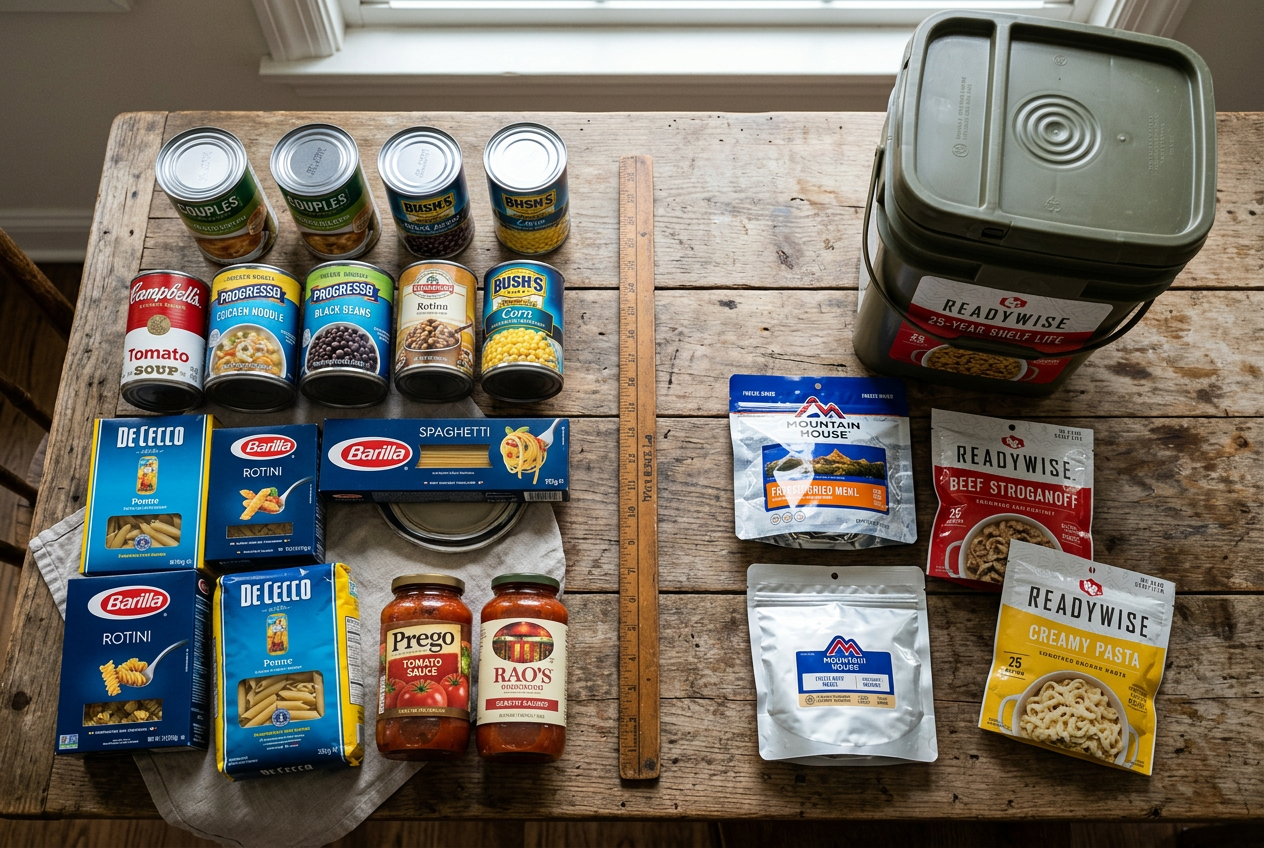
You have two simple ways to build your three days of food. You can grab everyday pantry foods from the grocery store. Or you can buy a pre-made emergency kit. Both work. The right choice depends on your budget, your time, and your taste.
Here is a quick look at how they stack up.
What the table means for you
The pantry path is the easiest way to start right now. You pick foods you already eat. Think canned beef stew, canned meat, and other shelf stable items. You can grab these on one calm trip. Canned foods like Dinty Moore Beef Stew or SPAM Classic are ready to eat. They do not need water to prepare. That matters a lot if your water supply is tight.
The trade-off is shelf life. Most grocery cans last months or a few years, not decades. So you need to rotate them. That just means you eat the older cans and buy new ones. It keeps your supply fresh and saves money.
Pre-built kits solve a different problem. They save you time and thinking. One box can hold days of food for your whole household. Many have a very long shelf life. A bucket like the ReadyWise Emergency Food Supply can last up to 25 years. You store it and forget it. That is great if you are busy or want a simple grab-and-go option.
But kits have downsides too. They cost more at once. Many meals are “just add water.” So you need extra water on hand to make them. Some people also find the taste less familiar than their own pantry foods.
Most households do best with a mix
You do not have to pick just one path. In fact, a blend works well for most people.
Start with everyday pantry foods for your first three days. They are cheap, familiar, and ready to eat. Then, when your budget allows, add a long-life option. A canned meat case like Yoder’s Canned Meat Variety gives you years of protein with almost no fuss. Or a kit gives you a sealed backup you never have to think about.
The goal is simple. Build something today. You can always add more later. A calm start beats a perfect plan you never finish.
Keeping It Fresh: Rotation and Storage Without Stress
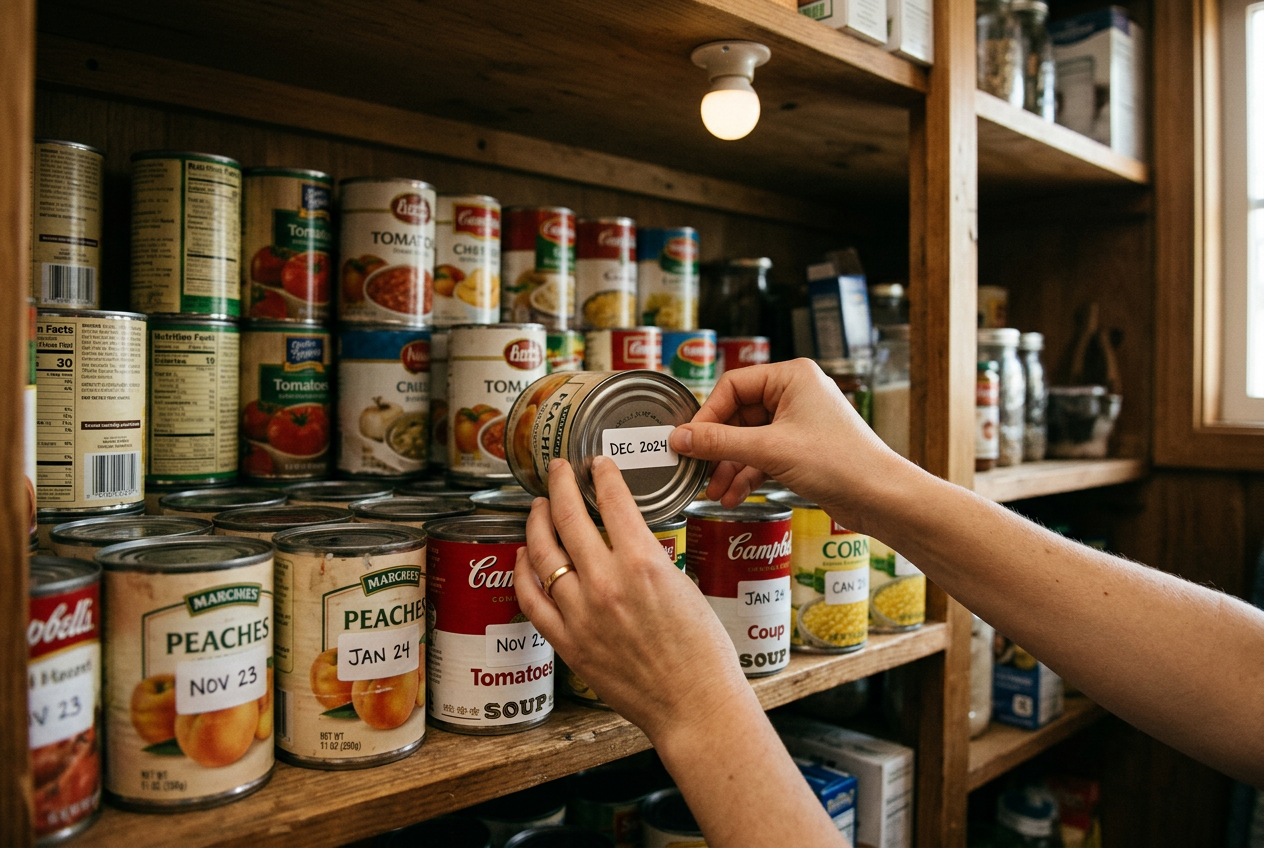
You have your three days of food and water in the cart or on the shelf. Now comes the easy part. A few simple habits keep everything usable. You will not waste money, and nothing will expire before you use it.
Pick a Good Spot
Store your food and water in a cool, dark, dry place. Heat and light wear food down faster. A closet, a low cupboard, or a shelf in a spare room all work well. Keep water in the same kind of spot. A cool, dark place helps it stay fresh longer.
Try to keep your supply off the floor if you can. A bare floor can get cold and damp. A shelf or a sturdy box keeps your cans and containers dry.
Label the Date
When you bring food home, write the purchase date on each item. A marker works fine. You can also write the “best by” date in big numbers so you can read it fast.
This small step saves you guessing later. One glance tells you what to use first.
Use “First In, First Out”
“First in, first out” is a simple rule. It means you use your oldest items first and put the newest items at the back. Grocery stores do this every day. You can do it at home too.
When you buy a new can of stew or a fresh pack of water, slide it behind the older ones. Pull from the front when you cook. This way, nothing sits untouched for years.
Cook From Your Supply
Here is the trick that makes rotation feel natural. Use your emergency food in normal meals. It is not a sealed box you only open in a crisis. It is just extra pantry food.
Open a can of beef stew on a busy night. Fry some canned meat with eggs for breakfast. Add a can of chicken to soup or pasta. When you use an item, write it on your shopping list and buy one to replace it.
This keeps your three days always fresh and always full. The food you eat is the food you store. Nothing goes to waste.
Some products are built for the long haul instead. Items like Yoder’s canned meat list a long shelf life in their manufacturer specifications (which you should confirm on the product page), and freeze-dried buckets can last much longer. You do not need to rotate those as often. They are fine to set aside and check once a year.
Check Your Supply Twice a Year
Pick two easy dates to remember. Many people use the start of spring and fall. On those days, look through your supply. Check the dates. Use anything close to expiring. Refill any gaps.
That is the whole routine. Store it cool and dark, label the date, use the oldest first, and cook from it like normal food. No stress, no waste.
Frequently Asked Questions
Do I really need special long-term food?
No. For your first three days, everyday pantry foods work fine. Canned soup, canned meat, peanut butter, crackers, and canned fruit all store well. You already know how to eat these. You will not waste money on foods your family hates.
Long shelf life products do exist. Some canned meats are packed for a manufacturer-stated storage life of up to 10 years, and some freeze-dried products list up to 25 years, though shelf life varies considerably by product and packaging. These can be handy if you travel light or want a backup. But they are not required to get started. A calm trip down the regular grocery aisle is enough.
How long does bottled water last?
Store-bought bottled water keeps well for a long time when stored right. Keep it in a cool, dark spot. Keep it away from direct sunlight and strong smells. Chemicals and odors can pass through thin plastic over time.
If you want to store more water, use food-grade containers made for drinking water. BPA-free HDPE plastic jugs are a common choice. Some stackable containers hold five gallons each and nestle together to save space. Fill them, label them, and check them now and then.
What about pets and medications?
Do not forget your pets. They need food and water too. Set aside a few days of pet food and some extra water for them. Keep it with your own supplies so it is easy to find.
Medications matter just as much. Check what your family takes each day. Try to keep a small reserve on hand if your pharmacy and doctor allow it. Also write down your emergency contacts and keep that list with your supplies. A quick check of your medicine and contacts should be part of your first steps.
Is three days really enough?
Three days is a solid starting point. Many government preparedness messages point to a 72-hour supply. UK government advice recently urged households to keep 72 hours of food and water. Other countries suggest three to seven days of food, drinking water, and other basics.
So three days covers a common baseline. It helps you ride out a short power outage or a day or two stuck at home. Once you have your three days set, you can slowly add more. There is no need to rush or panic buy. Build up a little at a time.
Where should I keep everything?
Pick one spot that is cool, dark, and dry. A pantry shelf, a closet, or a corner of the garage all work. Keep food and water together so you can grab them fast. Keep them away from heat and away from strong chemical smells. Check the dates a couple of times a year and swap out anything old.
Your One-Trip Action Checklist
Here is your plan for one calm trip. Work through it in order. You can print this page and check off each step as you go. No rushing. No panic buying.
Before You Leave Home
Step 1: Count your household. Write down how many people live with you. Do not forget pets. This number sets how much food and water you need.
Step 2: Shop your own kitchen first. Look in your pantry and cabinets. You may already own canned soup, beans, tuna, rice, or crackers. Pull out anything shelf-stable you can eat with little or no cooking. Write down what you have so you do not buy it twice.
Step 3: Do the water math. Use one gallon of water per person per day. That is the target throughout this guide, since it covers drinking plus cooking and washing. Multiply your target by the number of people and days. For example, one gallon times four people times three days equals 12 gallons.
Here is a quick table to copy onto your list.
At the Store
Step 4: Buy familiar shelf-stable foods. Choose foods your family already eats. Canned meat, canned stew, peanut butter, pasta, and crackers all work well. Pick items that need little cooking. A canned classic like SPAM Classic or a ready-to-eat Dinty Moore beef stew can round out a few meals.
Step 5: Grab a manual can opener. This is easy to forget. If the power is out, an electric opener will not work. A cheap hand opener solves that. Buy one now.
Step 6: Buy or fill your water. You can buy sealed bottled water. Or use clean, food-grade containers you can refill. Stackable jugs like the Saratoga Farms 5-gallon containers store a lot of water in a small space.
Back Home
Step 7: Store it in a cool, dark spot. Heat and light shorten shelf life. A closet, low cabinet, or basement shelf works. Keep food and water off the floor if you can.
Step 8: Label and note dates. Write the date you bought each item. Mark the earliest expiration on your calendar so you remember to rotate.
That is the whole trip. Eight steps, one cart, no stockpiling. You now have three days of food and water for your household. Keep this list handy. When you use something, replace it on your next normal grocery run.
Next Steps After Your First Trip
Take a breath. You did it. You now have three days of food and water for your household. You did it without panic. You did it without clearing the shelves. That calm, step by step approach is the whole point. It is the right way to prepare.
So what comes next? There is no rush. You already have a solid base. The steps below are simple things you can add over time. Pick one. Do it when you are ready.
Make a Simple Family Plan
Food and water are only part of being ready. A plan helps your household know what to do. Sit down together for a few minutes. Talk through the basics.
Here are good things to cover:
- Where will you meet if you are not home together?
- Who is your out of town contact to call or text?
- Where are your emergency contacts written down?
- Who checks on kids, older family members, or pets?
Write it on paper. Keep a copy on the fridge. Keep one in each bag or wallet. Phones may not work in an emergency, so do not rely on them alone.
Add a Small Cash Buffer
Card readers and ATMs can go down during a power outage. A little cash on hand helps you buy small things when machines are offline. You do not need a large sum. A small amount in small bills is enough for most short events. Keep it somewhere safe and dry with your other supplies.
Review Your Medicines and First Aid
Check what medicines your household takes often. Note the names and doses on your family plan. Keep a basic first aid kit where you can reach it. This is an easy thing to look over while you are already thinking about being ready.
Think About Two Weeks, Over Time
Several countries now suggest keeping three to seven days of supplies. Some households aim for two weeks. You do not have to jump there today. The smart way is to grow slowly. Each normal grocery trip, add one or two extra cans you already eat. Buy an extra jug of water now and then. Over a few weeks, your three days quietly becomes a week, then two.
The key is to keep it calm. Keep it part of your normal shopping. No stockpiling. No stress.
Keep Learning at Your Own Pace
You have the hardest part done. The first trip is behind you. From here, small steps add up.
When you are ready, read our other beginner guides on this site. They walk you through the same calm way. One short step at a time. Print this page if it helps you remember your checklist. Then go enjoy knowing your household is a little more ready than it was before.
Sources and Further Reading
- Small step emergency preparation checklist for families
- What are some essential items to add for emergency …
- Emergency Food Supply For Beginners: What To Store
- Food and Water Checklist
- Emergency Preparedness: Food, Water, and Medication …
- How to prepare for an emergency: What households in different countries stock up on
- UK Be Ready Campaign Urges Households to Stockpile Food and Water for 72 Hours: how 5 outlets framed it
- Why countries urge emergency food supplies and what Thais should prepare