Ready
Ready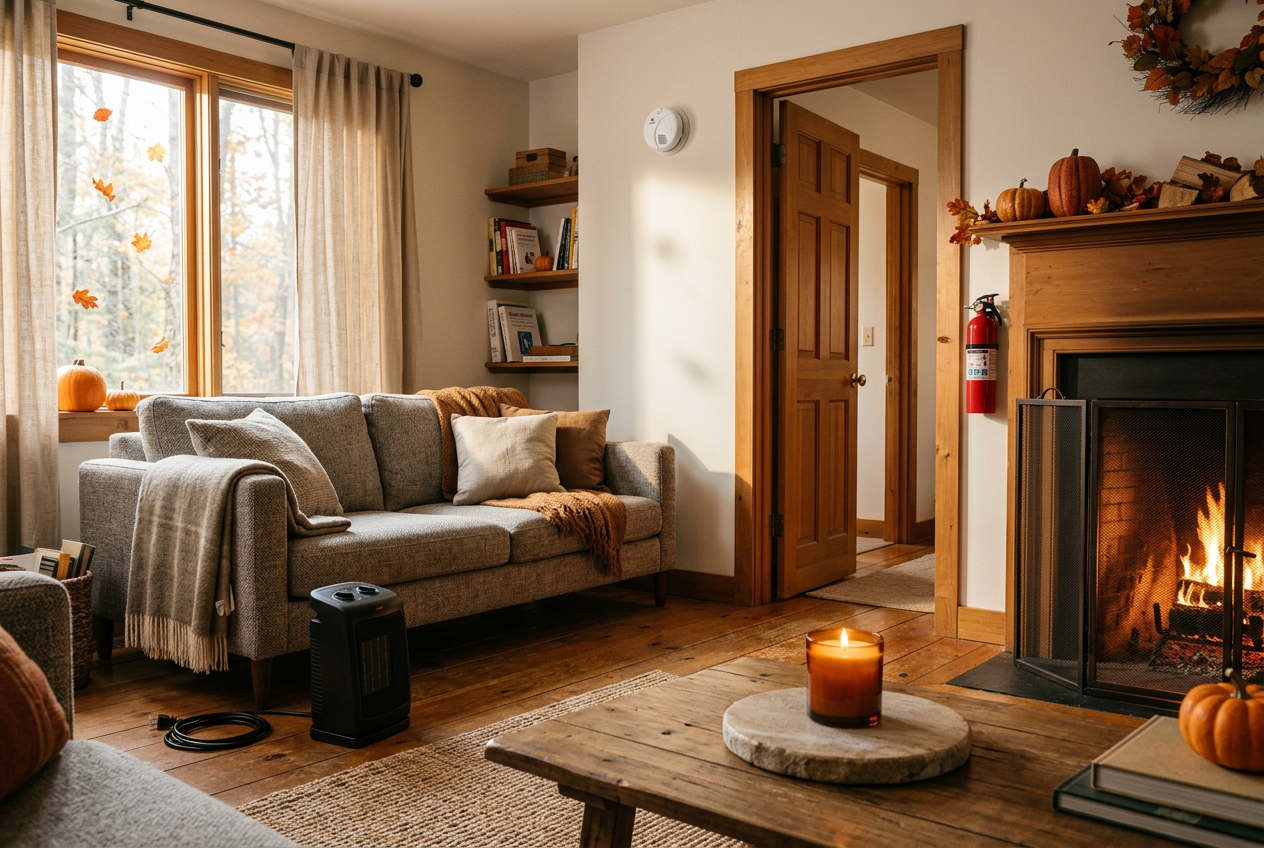
Home Fire Prevention Tips: A Simple Room-by-Room Guide for October (2026)
October is a good time to think about fire safety. This is when Fire Prevention Week happens each year. It is also when the weather turns cooler. That change matters more than you might think.
When it gets cold, your daily habits shift. You start using space heaters. You cook more warm meals on the stove. You may light candles when it gets dark earlier. Each of these small changes adds a bit of fire risk to your home. The good news is that a few simple steps can lower that risk fast.
This guide walks you through your home one room at a time. We start with smoke alarms on every level. Then we move to the kitchen, where most home fires begin. We cover fire extinguishers and how to use them. We look at bedrooms, living areas, and the risks from heaters, cords, and candles. We also check the garage, laundry, and storage spots, where hidden dangers hide. Finally, we help you build and practice an escape plan.
Here is the best part. Most of these steps cost nothing. They take just a few minutes each. You do not need to be an expert. You just need a little time and this simple checklist.
Let’s make your home safer this October, one room at a time.
- Put a working smoke alarm on every level of your home and inside each bedroom, and test them once a month.
- Keep a fire extinguisher in the kitchen, since cooking is the top cause of home fires.
- Change smoke alarm batteries at least once a year, or when the alarm chirps.
- Never leave stoves, candles, or space heaters running when you leave a room.
- Make an escape plan with two ways out of every room and pick one outside meeting spot.



Reviewed by Marcus T., James W. & Priya K. — contributors with hands-on preparedness experience. How we test
Getting ready for a home fire starts with a few key tools on hand. Here is why these three belong in your house before you read the full guide.

First Alert Battery Smoke Alarm
This alarm gives you an early warning so your family has time to get out safely. Its smart sensing also cuts down on false alarms from normal cooking.
Check Price on Amazon
Kidde Basic Home Fire Extinguisher
This compact extinguisher stops small fires from trash, wood, liquids, and electrical gear before they spread. Its all-metal build and easy pull pin make it ready when seconds count.
Check Price on Amazon
Ougist ABC Fire Extinguisher
With a 5 pound charge and reach up to fifteen feet, this handles grease and electrical fires from a safe distance. The easy-grip handle lets anyone use it without training.
Check Price on AmazonIn this guide
Why Trust This Guide?
This article was researched and reviewed by contributors with hands-on experience in emergency preparedness. They have tested gear, built real systems, and lived through situations where these skills actually mattered.
Start With Working Smoke Alarms on Every Level
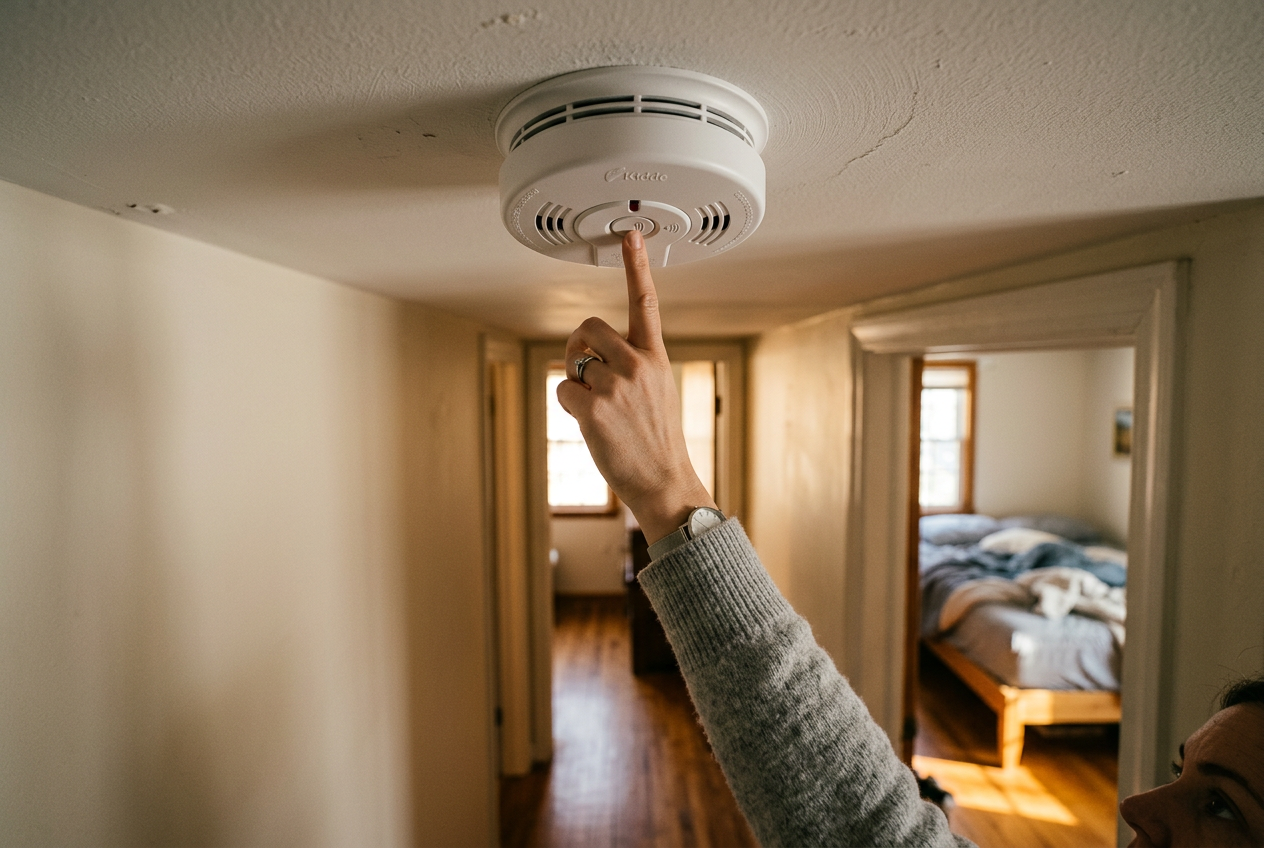
A smoke alarm is your first warning in a fire. It gives you time to get out. This is the single most important step you can take. So start here before anything else.
Where to Put Them
Fire safety groups agree on the basics. Put a smoke alarm on every level of your home. Put one inside each bedroom. Put one outside each sleeping area too. That way an alarm can wake you no matter where a fire starts.
Do not skip the lower levels or the hallway. A fire in the kitchen or basement should still alert someone asleep upstairs.
Battery vs. 10-Year Sealed Alarms
You have two main choices. Both work well when you use them right.
A standard battery alarm uses a battery you can swap out. It is easy to install and easy to maintain. When the battery runs low, you replace it. Some newer models also cut down on false alarms from cooking.
A 10-year sealed alarm has a battery built in for the life of the unit. You never change the battery. You just replace the whole alarm after about ten years. This is a simple choice if you forget battery swaps. Some of these use a 9V battery that you replace, while others use a sealed lithium battery you never touch.

If you want a sealed unit that meets a common safety testing standard, look for one that is UL217 listed. That mark means the alarm passed set testing requirements.

Why Photoelectric Sensors Matter
Alarms use different sensors. A photoelectric sensor is good at catching slow smoldering fires. These fires give off light smoke and little heat. They can smolder for hours before they burst into flames. That is why a photoelectric alarm can catch trouble early, before you smell or see it.
A working smoke alarm cuts the risk of dying in a home fire by about half. That is a big payoff for a small device.
Test Them Every Month
Buying alarms is not enough. You have to keep them working. Test each one every month. Just press the test button and listen for the sound. If it is weak or silent, fix it right away.
Keep them clean too. Dust can build up inside. Vacuum or dust each alarm now and then so the sensor stays clear.
If an alarm chirps at odd times, that often means a low battery. Replace the battery or the whole unit if it is sealed. Never pull the battery to stop the noise and leave it out. An alarm with no power cannot warn you.
October is a good month to set a monthly test habit. Pick a day and stick with it.
The Kitchen: The Most Common Place Fires Start
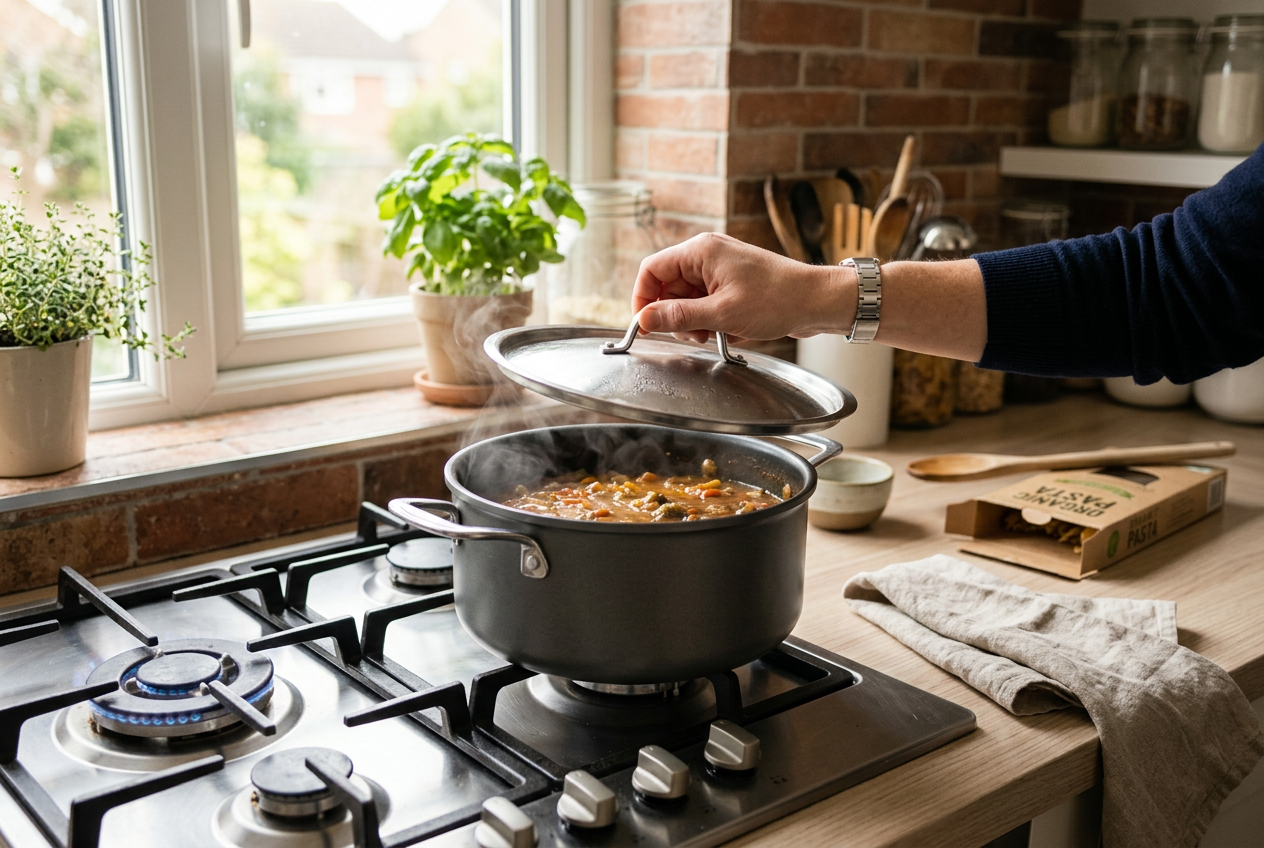
Most home fires start in the kitchen. The good news is that many of these fires are easy to prevent. The best safety tips for fire prevention in the kitchen cost you nothing. They are just simple habits you build over time.
Never Leave Cooking Unattended
The number one rule is simple. Watch your cooking. Most kitchen fires start when someone steps away from the stove. A pot on high heat can catch fire fast. Food left too long can burn and flame up.
If you are frying, boiling, or grilling, stay in the kitchen. Do not walk away to check your phone or answer the door. If you must leave, even for a minute, turn off the stove first.
Simmering or baking gives you a little more room. But you still need to stay in your home and check often. Set a timer so you do not forget the food is cooking.
Keep Flammable Things Away From the Stove
Look around your stove right now. Are there dish towels near the burners? Paper towels? A stack of mail or food packaging? These items can catch fire in seconds.
Keep towels, oven mitts, paper bags, and boxes well away from the heat. Move plastic bags and wooden spoons back too. Give your stove a clear, empty space around it. This one habit stops a lot of fires before they start.
Loose sleeves can also catch fire. Roll them up or wear close-fitting clothes when you cook.
Manage Grease Safely
Grease fires are some of the most dangerous kitchen fires. Hot oil can burst into flames if it gets too hot. And a grease fire grows fast. It can spread from the pan to your cabinets in moments.
Here is the most important part. Never pour water on a grease fire. Water makes it worse. It splashes the burning oil and spreads the flames.
Instead, keep a pan lid close by whenever you fry. If the oil catches fire, slide the lid over the pan. This smothers the flames by cutting off the air. Turn off the burner and leave the lid in place. Do not move the pan. Let it cool all the way down before you touch it.
A metal cookie sheet works too if you do not have a lid handy. Baking soda can also put out a small grease fire. Never use flour, since flour can make things worse.
When to Get Out
Some fires are too big to fight. If the fire is spreading, or if you feel unsure, do not try to be a hero. Get everyone out of the house. Close the door behind you if you can. Then call 911 from outside. Your life matters more than your kitchen.
Keep a Fire Extinguisher Within Reach (and Know How to Use It)
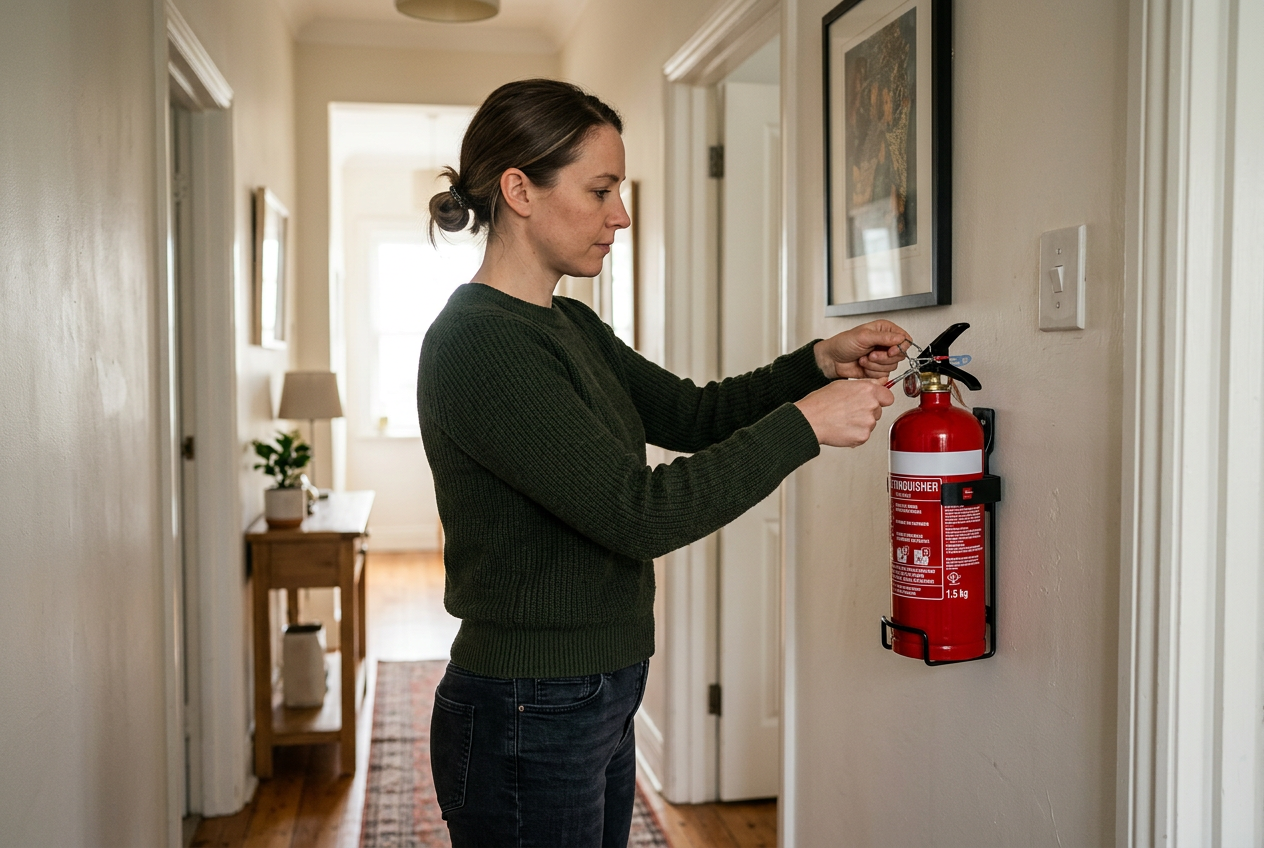
A fire extinguisher can stop a small fire before it spreads. But it only helps if you can reach it fast and know how to use it. Keep one on each level of your home. The kitchen is a smart spot for one. So is the garage.
What “ABC-Rated” Means
Look for an extinguisher marked “ABC.” This tells you what kinds of fires it can put out. Here is what each letter means:
- A is for common items like wood, paper, cloth, and trash.
- B is for burning liquids and gases, like grease or gasoline.
- C is for electrical fires, like a bad cord or appliance.
An ABC extinguisher covers all three. That makes it a good choice for most homes. You do not need a different one for each room. One rating handles the fires you are most likely to face.
Extinguishers also carry a number rating, like 1-A:10-B:C or 2-A:10-B:C. A higher number means it can handle a slightly larger fire. A basic model works well for tight spots and quick grabs.
A mid-range model gives you more agent and a longer reach. That extra size can help in a kitchen or a garage.
A heavy-duty model built with all-metal parts is a solid pick if you want something sturdy. Some can be recharged by a certified pro after use.
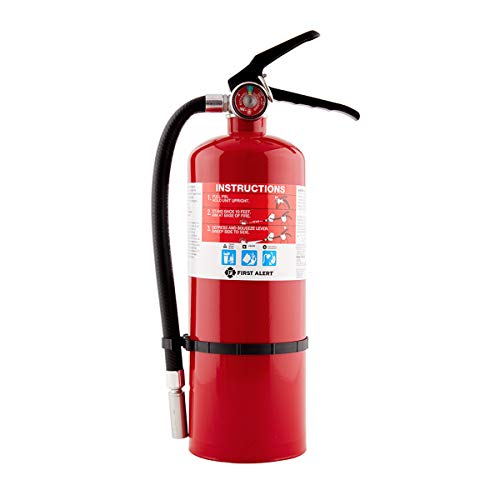
The PASS Method
When a small fire starts, use the PASS method. It is easy to remember:
- P is for Pull. Pull the safety pin at the top.
- A is for Aim. Aim the nozzle at the base of the fire, not the flames.
- S is for Squeeze. Squeeze the handle to release the spray.
- S is for Sweep. Sweep from side to side until the fire is out.
Stand back a safe distance when you start. About six to eight feet is a good rule. Move closer only as the fire shrinks. Keep an exit behind you so you can leave fast if things change.
Only for Small, Early Fires
An extinguisher is for a small fire you catch right away. It is not for a fire that has already spread. If the flames are bigger than a trash can, do not fight it. If the room is filling with smoke, get out.
Your life comes first. Get everyone out of the house. Then call for help from outside. Never go back in for a thing. And never let a fire get between you and your exit.
Check the pressure gauge on your extinguisher a few times a year. The needle should sit in the green zone. If it does not, replace or recharge the unit.
Extinguisher Comparison: Which Size and Rating for Each Room
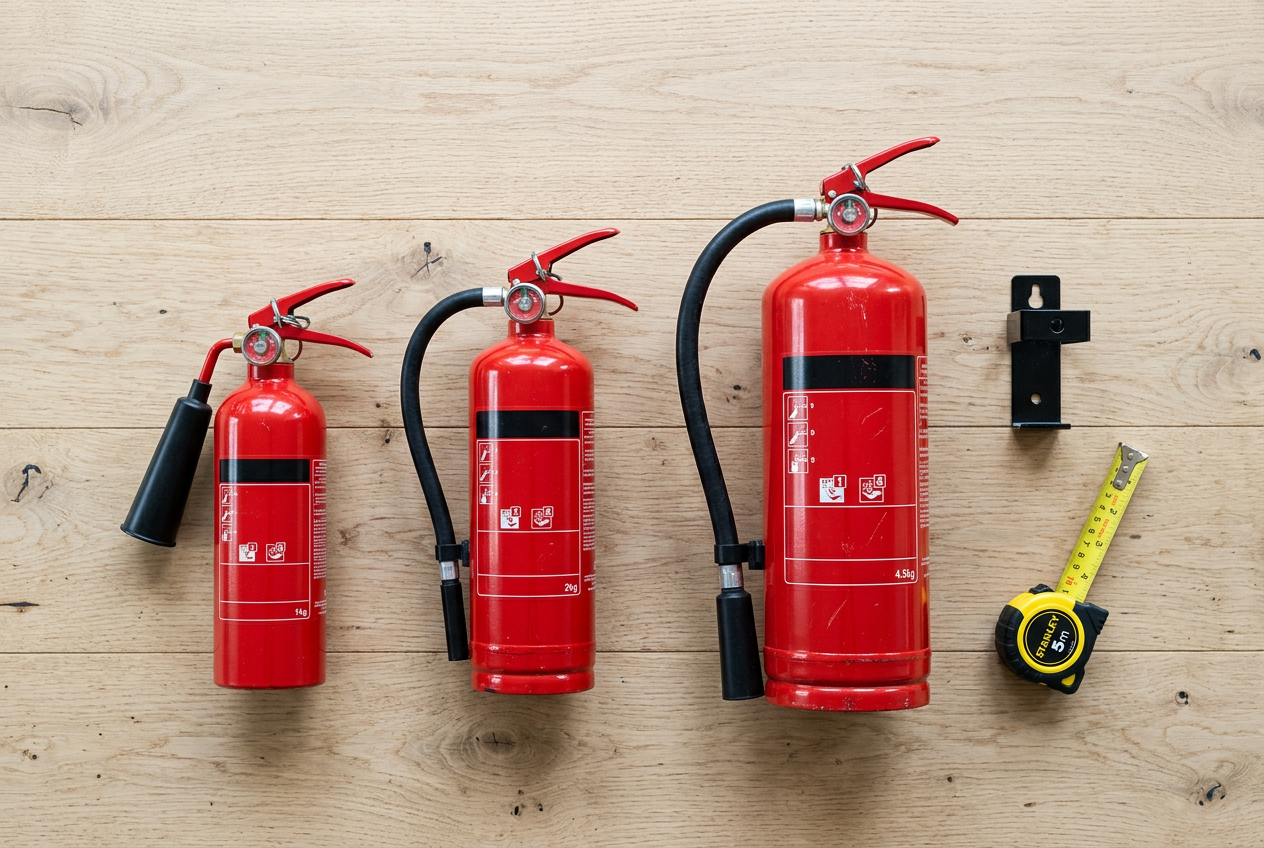
Picking a fire extinguisher can feel confusing. But you only need to understand two things. Size and rating. Once you know these, choosing the right unit for each room is simple.
What the Numbers Mean
Every extinguisher has a rating like 2A:10B:C. The letters tell you what fires it fights.
- A means wood, paper, cloth, and trash.
- B means gasoline, oil, and grease.
- C means live electrical fires from outlets and appliances.
An ABC-rated extinguisher covers all three. That makes it a smart choice for most homes.
The numbers before the letters show how much fire it can handle. A higher number means more power. For example, a 2A:10B:C unit puts out larger fires than a 1A:10B:C unit.
Size is measured in pounds. A 5 lb unit holds more than a smaller one. It sprays longer and reaches farther. But it is heavier to lift.
Compare Your Options
Here are the two units side by side. Use this to match the right one to each room.
The Larger Unit for High-Risk Rooms
The Amerex B500 is a 5 lb ABC extinguisher. Its higher 2A rating handles bigger fires. It sprays from 12 to 18 feet away. That lets you stay back from heat and smoke while you fight the flames. The discharge lasts about 14 seconds.
This unit works well in the kitchen, garage, and car. Its steel body holds up in a hot trunk or a cold garage. One 5 lb unit can cover a whole level of your home. The 2-pack lets you place one in the kitchen and one in the garage.

Smaller Units to Fill the Gaps
The Kidde home extinguisher is lighter and easier to grab. It carries a 1A:10B:C rating. That covers the same three fire types, just in smaller amounts. It comes in a 4-pack with mounting brackets included.
This unit is a good fit for bedrooms, hallways, and other spare rooms. The 4-pack lets you spread protection across many spaces without overbuying. Its easy pull pin makes it simple for most adults to use.

How to Choose Without Overbuying
You do not need a large unit in every room. Put the bigger 5 lb extinguisher where fires are most likely, like the kitchen and garage. Use smaller units to cover bedrooms and hallways. That way you stay protected without spending more than you need.
Whichever unit you pick, check the pressure gauge often. Mount it where you can reach it fast. And read the label so you know how to use it before a fire ever starts.
Bedrooms and Living Areas: Heaters, Cords, and Candles
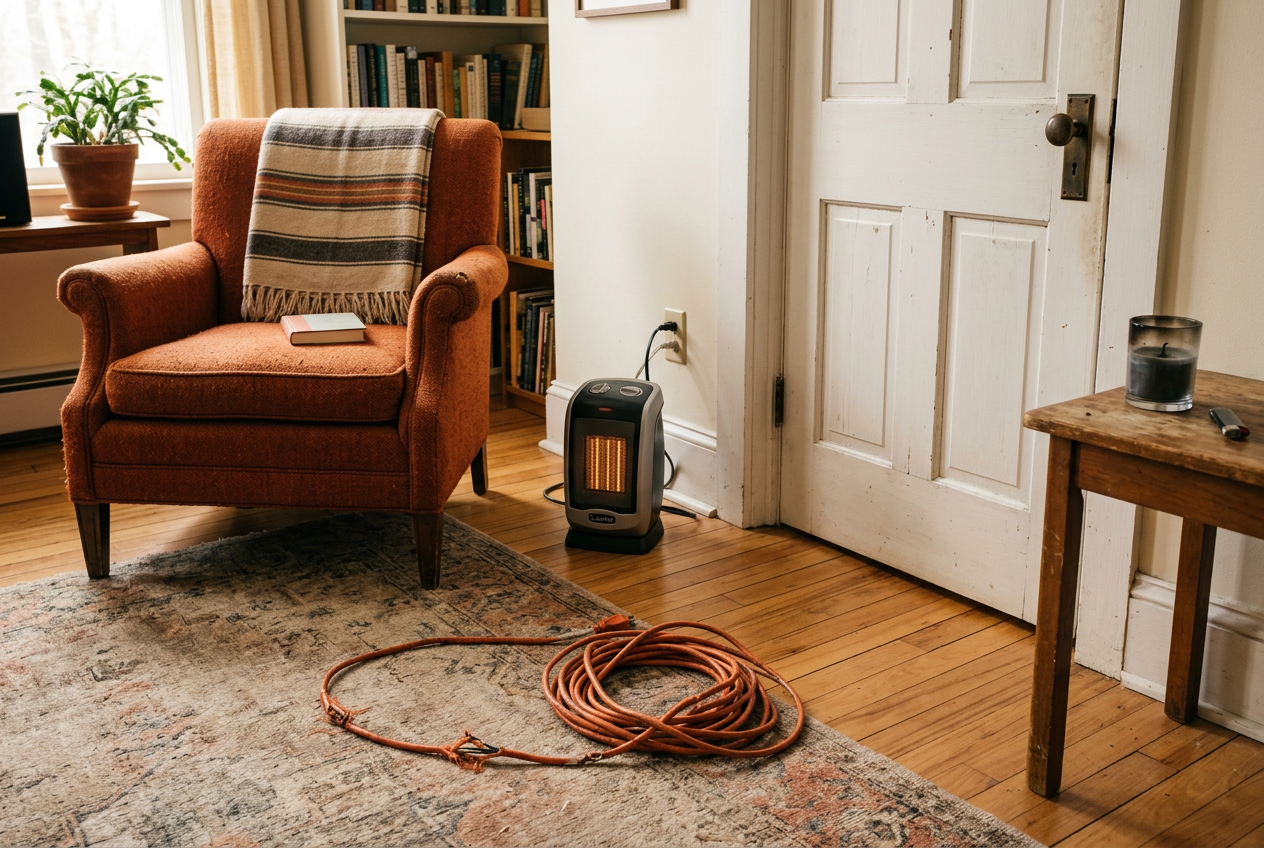
When the weather cools, you spend more time in your bedroom and living room. You also plug in more devices. Space heaters come out of storage. Candles get lit for a warm glow. These comforts can start fires if you are not careful. A few simple habits keep these rooms safe.
Give Space Heaters Room to Breathe
A space heater needs open space around it. Keep at least three feet of clearance on all sides. That means no blankets, curtains, furniture, or clothes nearby. These items can catch fire fast if they touch a hot heater.
Set the heater on a hard, flat surface. Do not place it on a rug, a bed, or a couch. Plug it straight into a wall outlet. Do not use an extension cord or a power strip with a heater. Those can overheat.
Turn the heater off when you leave the room or go to sleep. Never let it run alone.
Check Your Cords and Outlets
Cords wear out over time. Look at the cords on your lamps, chargers, and other devices. If you see a cord that is frayed, cracked, or split, stop using it. Damaged cords can spark and start a fire.
Do not run cords under rugs or across doorways. The wire inside can break where you step. Do not tuck cords behind furniture where heat can build up.
Watch how much you plug into one outlet. When you overload an outlet, it can overheat. Spread your devices across different outlets. Unplug things you are not using.
Never Leave Candles Burning Alone
Candles are a common cause of home fires. The rule is simple. Never leave a burning candle unattended. Blow it out before you leave the room. Always put it out before you sleep.
Keep candles away from anything that can burn. That includes curtains, bedding, books, and paper. Set them in sturdy holders that will not tip over. Keep them out of reach of children and pets.
Battery-powered flameless candles give you the same soft light with no flame. They are a safe choice for a bedroom or a busy living room.
Sleep With Bedroom Doors Closed
Here is one habit that can save lives. Close your bedroom door at night. A closed door slows a fire down. It blocks smoke and heat from reaching you as fast. This buys you more time to wake up and get out.
Make sure a working smoke alarm is inside each sleeping room and just outside it. The alarm wakes you. The closed door protects you while you react. Together, they give your family the best chance to escape safely.
Garage, Laundry, and Storage: Hidden Fire Risks
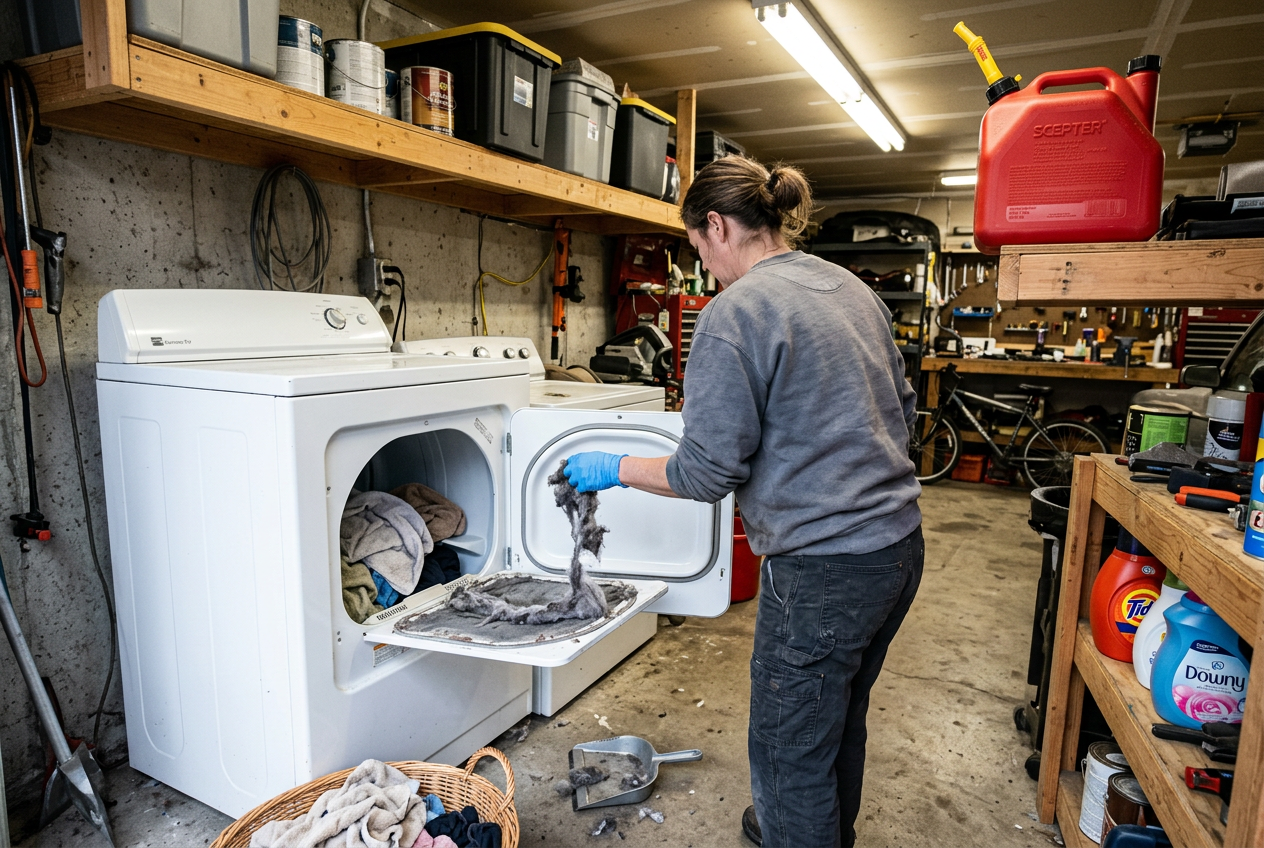
Some of the biggest fire risks in your home are in rooms you rarely think about. The garage, the laundry room, and storage areas often hold clutter, heat, and flammable liquids. A quick check in these spots can lower your risk a lot.
Clean Your Dryer Lint
Your clothes dryer makes lint every time you use it. That lint builds up fast. It catches fire easily when it gets hot.
Clean the lint trap after every load. Do not skip this step. A clean trap helps your dryer run better and safer.
Also check the vent pipe that runs from your dryer to the outside. Lint can build up in there too. Clean it a few times a year. If you cannot reach it, a professional can help.
Never run the dryer while you are asleep or away from home. If a fire starts, you want to be there to catch it early.
Store Flammable Liquids Safely
The garage is a common place for fires to start. That is because people store fuel, paint, and other flammable liquids there. These items give off fumes. A small spark can set them off.
Follow these simple rules for storing gasoline and other fuels:
- Use approved containers only. Do not use old jugs or open cans.
- Keep fuel out of living spaces. The garage or a shed is better than inside your home.
- Store fuel away from anything that makes heat or sparks. That means water heaters, furnaces, and pilot lights.
- Keep fuel and other flammable liquids out of reach of children.
- Let engines cool before you add fuel.
- Never siphon fuel with your mouth.
Only keep as much fuel as you need. Do not stockpile it. More fuel means more risk. Always follow the directions on the container and your local fire rules.
Keep Clutter Away From Heat
Storage areas fill up with boxes, papers, and old items. That is normal. But clutter near a heat source is a hidden danger.
Look at where your water heater, furnace, and dryer sit. Keep boxes, rags, and other items well clear of them. Give these appliances space to breathe. A pile of paper or cloth too close to heat can start a fire.
Watch out for oily rags too. Rags soaked in paint thinner or oil can catch fire on their own. Store them in a sealed metal container, or let them dry outside before you throw them away.
One Quick Win
Take five minutes this week. Walk through your garage and laundry room. Clean the lint trap. Move fuel away from your water heater. Clear boxes from around your furnace. These small steps make a real difference.
Make and Practice a Two-Way Escape Plan
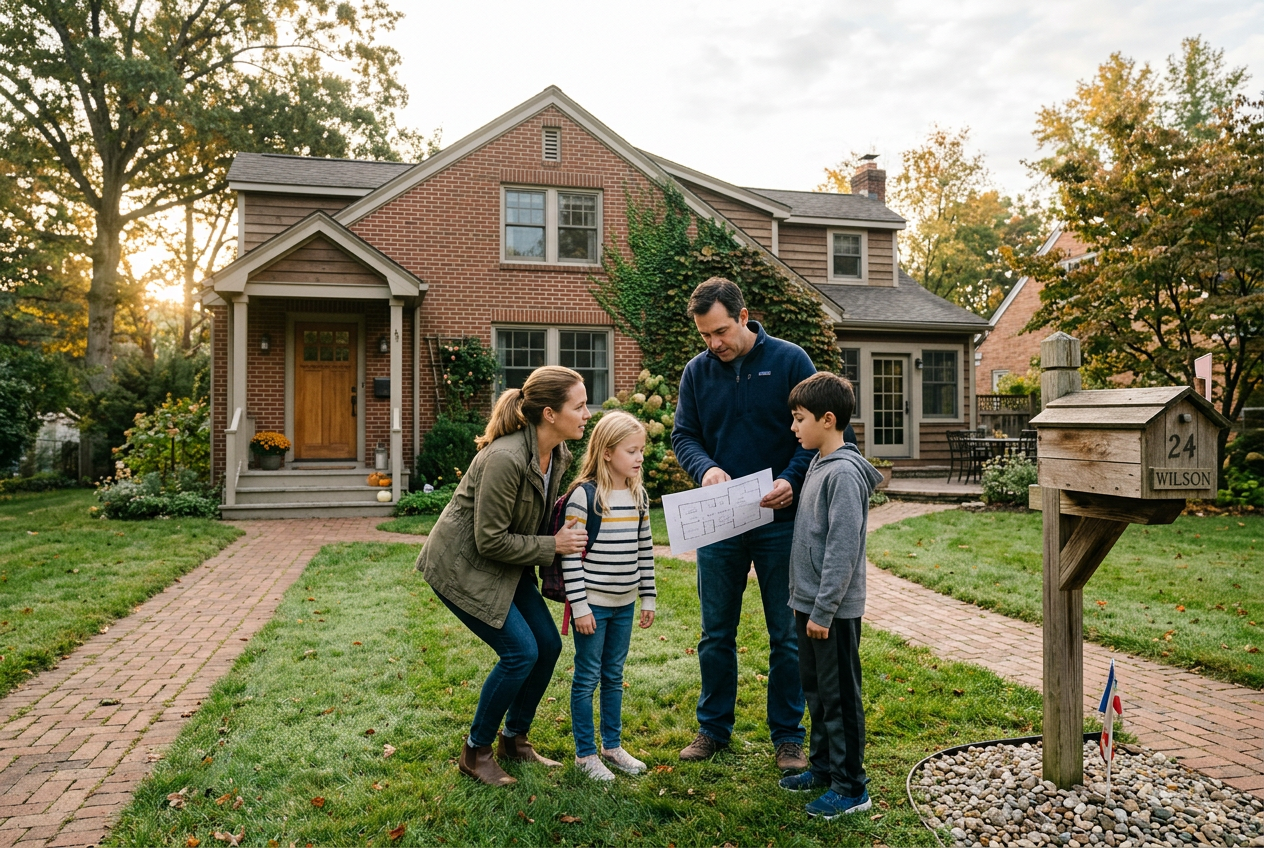
Prevention lowers the chance of a fire. But you still need a plan to get out fast if one starts. A working smoke alarm gives you the warning. Your escape plan tells everyone what to do next. When people know the plan, they stay calm and move quickly.
The Red Cross suggests you talk with all family members about a fire escape plan. Do this before you ever need it. A few minutes of planning now can save precious seconds later.
Map Two Ways Out of Every Room
Fire can block a hallway or a door in seconds. That is why you want two exits from each room. This is often called a two-way escape.
Walk through your home room by room. In each room, find the first way out. This is usually the door. Then find a second way out. This is often a window. Make sure every window opens easily. Check that screens or storm windows can come off fast.
If a room is on an upper floor, plan how people will reach the ground safely. Talk about this with each person who sleeps up there.
Keep your paths clear. Do not block doors or windows with furniture or clutter. An exit only helps if you can reach it.
Pick One Outside Meeting Spot
Choose a spot outside where everyone will meet. Pick something easy to find, like a tree, a mailbox, or a neighbor’s driveway. Make it far enough from the house to be safe.
The meeting spot does one big job. It lets you count heads. When everyone gathers there, you know who is out and who may still be inside. Tell firefighters if someone is missing. Never go back inside a burning home yourself.
Practice With Everyone in the House
A plan only works if people have done it. Practice your escape plan with everyone who lives there. Include children, older adults, and anyone who needs extra help.
Try to practice at least twice a year. Fire Prevention Week in October is a good time for one round. Walk each route. Then time how fast everyone can get to the meeting spot.
Add these habits to your practice:
- Crawl low under smoke. Clean air stays closer to the floor.
- Feel a door before you open it. If it is hot, use your second way out.
- Once you are out, stay out.
Some safety groups also suggest you sleep with bedroom doors closed. A closed door can slow a fire and give you more time.
Talk through what each person will do at night, when a fire is hardest to notice. When the whole household knows the plan, a scary moment turns into a set of simple steps. That calm, fast exit is the last and most important part of home fire prevention.
Frequently Asked Questions About Fire Prevention
Here are quick answers to the questions new homeowners ask most. Keep these simple rules in mind, and you will build safer habits fast.
How often should I test my smoke alarms?
Test each smoke alarm once a month. Press the test button and listen for the loud beep. This tells you the alarm has power and works. Some guides suggest a weekly test, so pick a routine you will actually keep. A working smoke alarm gives you early warning and more time to get out.
It also helps to keep alarms clean. Dust and vacuum them so they can sense smoke well.
When should I replace a smoke alarm?
Even a good alarm does not last forever. Many alarms are built to work for about ten years. Some models, like the SITERWELL 10-year smoke detector, are made for a long service life while you keep the battery fresh. When an alarm reaches the end of its life or sends a fault signal, replace it right away. Do not wait.
If your alarm uses a normal battery, change the battery when it starts to chirp. That chirp means the battery is low.
Does one fire extinguisher cover my whole house?
One extinguisher is a good start, but most homes need more than one. A common home model is rated for the three main fire types. That means Class A for wood, paper, and cloth, Class B for grease and gasoline, and Class C for electrical fires. An extinguisher with a rating like 2-A:10-B:C can handle these common home fires.
The real problem is reach. In an emergency, you may not have time to run across the house. It is smarter to keep one in the kitchen and one on each level. Some sets come in packs so you can spread them out. Place them where you can grab one fast, like the Amerex B500 two-pack or a multi-pack for a bigger home.
What should I do if the fire is too big to fight?
Get out. Do not try to be a hero. A fire extinguisher is only for a small fire that just started. If the fire is spreading, filling the room with smoke, or blocking your exit, leave right away.
Follow these steps:
- Get everyone out of the house.
- Close doors behind you to slow the fire.
- Call 911 once you are safely outside.
- Never go back inside for belongings.
Only use an extinguisher if the fire is small, you have a clear path to escape, and you can stand well back. If you feel unsure at all, skip the extinguisher and get out.
Where should I put smoke alarms?
Put one on every level of your home. Place one inside each bedroom and one just outside each sleeping area. This gives you the widest coverage while you sleep.
Your October Fire Prevention Action Checklist
This is your quick action list. You can do most of these tasks today. Work through each room, one step at a time. Want a copy? Just print this page and check off each item as you go.
Smoke Alarms
- Put a smoke alarm on every level of your home.
- Place one inside each bedroom and outside each sleeping area.
- Test every alarm by pressing the test button. Do this once a month.
- Vacuum or dust each alarm to keep it clean.
- If an alarm is old or fails the test, replace it. A working alarm can cut your risk of dying in a home fire in half.
Need a new one? A battery model like the First Alert Battery Smoke Alarm is easy to install. A SITERWELL 10-Year Smoke Detector runs for years before you replace it.
Kitchen
- Keep an eye on the stove while you cook. Never leave cooking food alone.
- Clear the stovetop and counters of towels, paper, and packaging.
- Keep pot handles turned inward so no one bumps them.
- Turn off burners when you step away.
Fire Extinguisher
- Keep at least one extinguisher on each level.
- Mount it where you can grab it fast, near an exit.
- Check the pressure gauge so the needle sits in the green.
- Learn how to use it before you ever need it.
A home-rated ABC extinguisher works on wood, liquids, and electrical fires. The Kidde Basic 110 is a simple single unit. The Amerex B500 2-Pack lets you cover more rooms.
Bedrooms and Living Areas
- Give space heaters at least three feet of open space on all sides.
- Never leave a heater running when you sleep or leave the room.
- Check cords for cracks, frays, or damage. Replace any bad cords.
- Do not run cords under rugs or across doorways.
- Never leave burning candles alone. Blow them out before bed.
- Keep matches and lighters out of children’s reach.
Garage, Laundry, and Storage
- Clean the dryer lint trap after every load.
- Store gasoline in approved containers only.
- Keep fuel out of living spaces and away from any flame or spark.
- Keep fuel away from children.
- Let engines cool before you refuel.
Escape Plan
- Draw a map of your home. Mark two ways out of every room.
- Pick a meeting spot outside, like a tree or mailbox.
- Walk through the plan with everyone in your home.
- Sleep with bedroom doors closed. This slows a fire down.
- Practice your plan at night, when a real fire is hardest to escape.
Do these steps this month, and your home will be far safer. Small habits add up. Come back to this list next October and run through it again.
Next Steps: Turn These Tips Into Habits
You have done the hard part. You read the room-by-room tips. Now the goal is to make fire safety a habit. Habits stick when they are simple and happen on a set schedule. Two small routines will protect your family all year.
Test Your Smoke Alarms Every Month
Smoke alarms are your best early warning in a fire. But they only help if they work. Pick one day each month to test every alarm in your home. Many people use the first of the month. Others test when they pay a bill or change a calendar page. Choose a day you will remember.
Testing is easy. Press and hold the test button until the alarm sounds. Do this on every level of your home, inside each bedroom, and outside each sleeping area. If an alarm is silent or weak, replace the battery or the whole unit right away.
If you are still adding alarms, look for models built to reduce false alarms and easy battery access, like the First Alert battery smoke alarm. If you want fewer battery swaps, a sealed 10-year smoke detector runs for years and still reminds you when power is low. Whatever model you own, the monthly test matters most.
Run a Family Fire Drill Once a Year
A plan only works if everyone knows it. Once a year, run a family fire drill. October is a great time because it lines up with Fire Prevention Week. Walk through your two-way escape plan. Practice getting out of each room by two paths. Pick a meeting spot outside and make sure every family member knows it.
Talk it through with kids in plain words. Ask them what they would do if the alarm sounded at night. Keep it calm. The goal is confidence, not fear. Do this drill every year so it stays fresh.
You can build both habits right now. Add the monthly alarm test to your phone calendar. Set a yearly reminder for your family drill. Small steps like these turn good intentions into real protection.
Keep Learning
Fire safety works best as part of a bigger plan. When you are ready, keep going with two related guides on our site.
First, build a full family emergency plan. This covers how you reach each other, where you meet, and what supplies you keep on hand. A fire drill fits right into that larger plan.
Second, learn how to store gasoline safely. Fuel is a hidden fire risk in many garages. The right containers, the right spots, and simple rules keep it away from ignition sources and children.
You do not need to do everything today. Start with the monthly alarm test. Add the yearly drill. Then read one more guide when you have time. Steady, small steps keep your home safer year after year.
Sources and Further Reading
- Home Fire Prevention & Safety Tips
- Key Fire Safety Tips for the Media
- 10 Fire Safety Tips
- General Fire Safety Information - Ready Illinois
- Fire Safety Tips | Department of State - https dos ny gov
- Winter Weather Preparedness Week 2021