Ready
Invest 93L Threatens Florida: A Household Checklist Before the Rain and Wind Arrive (2026)
Rain and wind are heading toward parts of Florida. The system behind it is called Invest 93L. If that name sounds strange, here is the plain version. An “invest” is just an area of weather that forecasters are watching closely. It is not a named storm yet. The National Hurricane Center uses the label to track a system and run their models on it.
Invest 93L is moving slowly. That matters. Slow systems can dump a lot of rain in one place. Right now it is bringing gusty winds and heavy rain. It could also get stronger. But forecasts can change. The storm may shift, weaken, or grow. That is why you prepare now, before you know the full picture.
This guide is built for that. It skips the hype and gives you fast, practical steps you can take this week. You do not need to be an expert. You just need a plan and a little time.
Here is what we cover. First, how to check the latest forecast and find your zone. Then how to protect your home from wind and rain. We walk through building a simple 72 hour kit and compare a few pre-packed options. We cover power outage prep, plus water, food, and staying in touch. At the end you get a full checklist you can work through or print.
Let’s get you ready.
- Build a kit that covers everyone in your home for at least 72 hours, including food and water.
- Keep a backup power source charged so you can run phones, lights, and small devices if the lights go out.
- Store supplies in a waterproof bag so rain and flooding do not ruin what you need most.
- Have a weather radio ready so you can hear updates even when cell service drops.
- Pack a first-aid kit and warmth supplies in case help takes time to arrive.
One practical preparedness move each week. No fear-mongering, ever.



Reviewed by Marcus T., Elena V. & James W. — contributors with hands-on preparedness experience. How we test
Getting ready for Invest 93L starts with having the right gear on hand. Grab these items now, then read on to learn why each one matters.

Sirius Pre-Packed Hurricane Kit
This kit comes packed with hurricane basics like a lantern, food, and a weather radio for two people. The waterproof bag keeps everything dry when the rain and wind hit.
Check Price on Amazon
Jackery Explorer 300 Power Station
A lightweight backup battery that keeps your phones, lights, and small devices running during a blackout. It gives you reliable power when the grid goes down.
Check Price on Amazon
First My Family 4-Person Kit
This backpack holds food, water, and an 85-piece first-aid kit for a family of four over 72 hours. It also includes shelter and warmth supplies to keep everyone safe until help arrives.
Check Price on AmazonIn this guide
Why Trust This Guide?
This article was researched and reviewed by contributors with hands-on experience in emergency preparedness. They have tested gear, built real systems, and lived through situations where these skills actually mattered.
Check the Latest Forecast and Know Your Zone
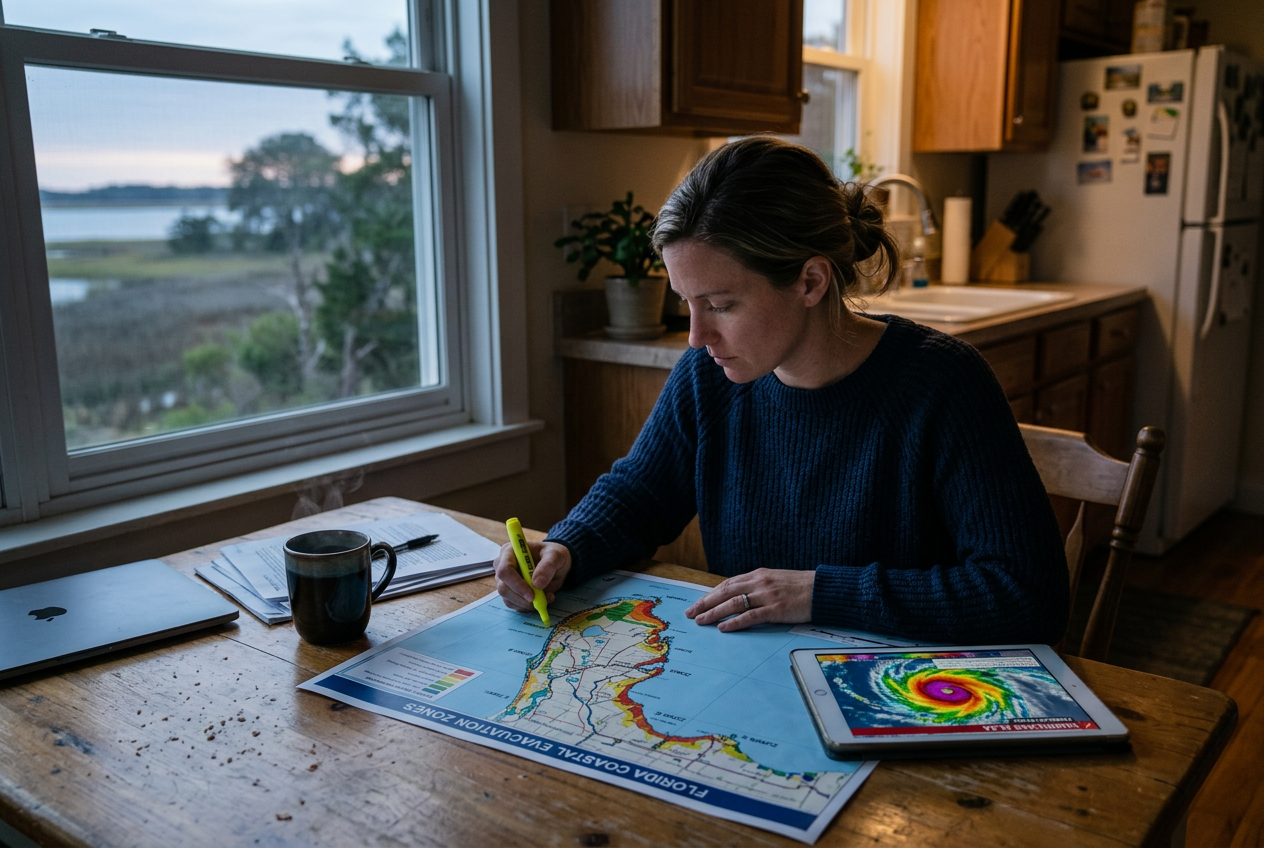
Invest 93L is a slow-moving system. It is bringing gusty winds and heavy rain toward parts of Florida. It may get stronger. The first step is simple. Find out what the storm is doing right now, and learn if you live in a risky area.
Get updates from official sources
Start with the National Hurricane Center. They give official storm updates and track the path of systems like Invest 93L. Check their website often. Storms can change fast, and slow movers can shift over hours.
Next, find your local emergency management office. Every Florida county has one. They post alerts for your area. They also tell you when to leave and where to go. Local news and your county website are good places to look.
Be careful with social media. You may see maps, warnings, or scary posts shared by friends. These are often old, wrong, or taken out of context. Do not act on a post you cannot confirm. Always check the claim against the National Hurricane Center or your local officials first.
Know your evacuation and flood zone
Many Florida homes sit in evacuation or flood-prone zones. You need to know yours before the rain arrives. Your county emergency management website can tell you your zone. Look it up now while you have power and internet.
If you live in an evacuation zone, pay close attention. Officials may ask you to leave. Know your route before you need it. Even if you are not in an evacuation zone, low spots can still flood. A slow storm dumps rain over the same area for a long time.
Watch versus warning
These two words sound alike, but they mean different things.
A watch means the hazard is possible. Conditions could happen in your area. Use this time to get ready. Finish your prep and check your supplies.
A warning means the hazard is expected or already happening. Act now. If officials tell you to leave, leave. Do not wait.
Listen for both wind watches and warnings, and flood watches and warnings. A slow storm can trigger a flood warning even when the wind stays modest.
Slow storms bring more rain
Here is the key point with Invest 93L. It is moving slowly. A slow storm sits over an area and keeps dumping rain. That means more water over time. More water means a higher chance of flooding, even if the winds never get very strong.
Do not judge the risk by wind alone. Watch the rain totals and the flood alerts for your area. Check the forecast at least twice a day as the storm gets closer. The situation can change, and you want the newest information before you make any decision.
Protect Your Home Before the Wind and Rain Arrive
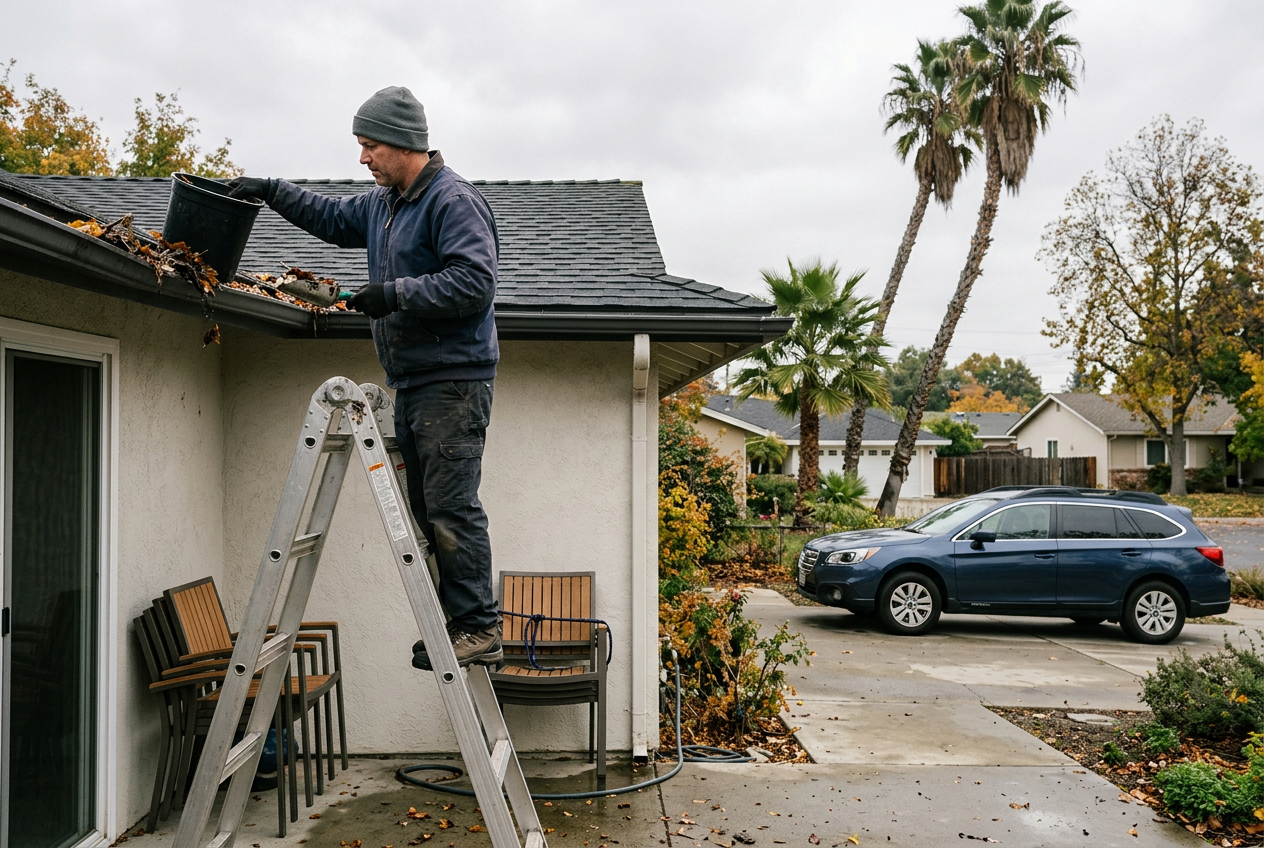
Invest 93L is slow moving. That gives you time to protect your home. Many of the best steps cost nothing. You just need a little effort before the rain and wind arrive. Start now while the weather is still calm.
Clear Drains and Gutters
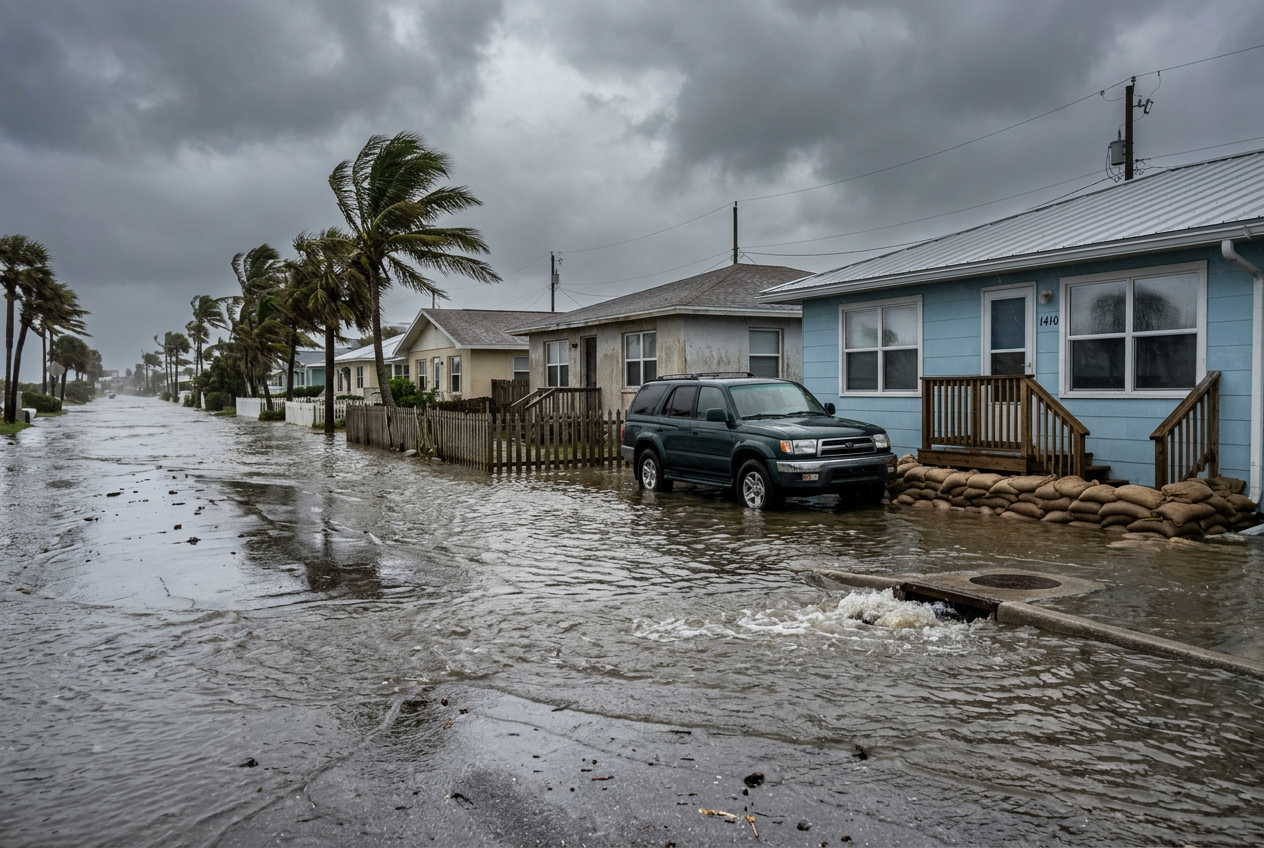
Heavy rain needs somewhere to go. Walk around your home and check the storm drains near your property. Clear away leaves, trash, and anything blocking the flow. Clean out your gutters too. Clogged gutters can overflow and push water toward your home. This is one of the simplest ways to lower your flood risk.
Secure or Bring In Loose Items
Gusty winds can turn everyday objects into flying debris. Walk your yard and look for anything that could blow away. This includes patio chairs, grills, trash cans, potted plants, garden tools, and kids’ toys. Bring these items inside a garage or shed if you can. If something is too big to move, tie it down or push it against a wall. A loose lawn item can break a window fast.
Protect Windows and Doors
Windows and doors are weak points during a storm. If you own storm shutters, close them. If you do not, you can still take steps with what you have. Close and lock all windows and doors. Move furniture away from large glass doors. Stay away from windows once the wind picks up.
During the storm, keep clear of windows and glass doors. Stay in an interior room if the wind gets strong. A hallway, closet, or bathroom with no windows is a good safe spot.
Park Vehicles Away From Trees
Strong wind can snap tree limbs or bring down whole trees. Do not park your car under a large tree or near big branches. Move it to an open area or your garage if you have one. Avoid parking in low spots where water can pool. A flooded street can ruin a car quickly.
Plan for Flooding
If your home sits in a low area or floods easily, act early. Move valuables off the floor and onto higher shelves. Lift important papers, electronics, and family keepsakes. Put key documents in a sealed plastic bag or a waterproof container. If you have sandbags, place them near doors where water tends to enter.
Unplug electronics you can live without. This protects them from power surges during the storm.
Keep It Realistic
You do not need to do everything at once. Focus on the biggest risks first. Clear the drains, secure loose items, protect your car, and lift valuables if flooding is a worry. These steps take a few hours at most. They can save you money and stress once the wind and rain hit.
Build or Refresh Your 72-Hour Kit
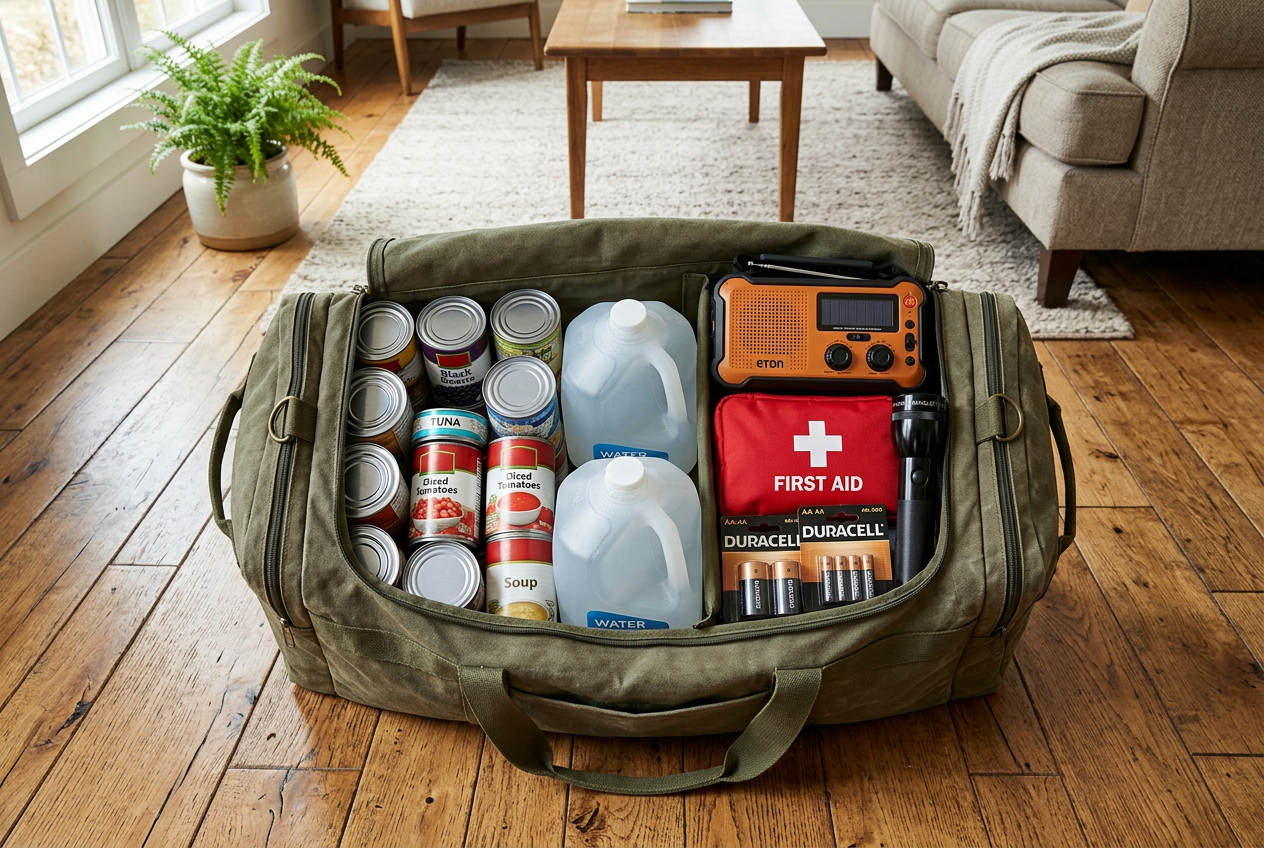
A 72-hour kit holds what your family needs for three days. Why three days? After a storm, help can be slow. Roads may flood. Power may stay off. Stores may close. You need to care for your family without the grid for at least that long.
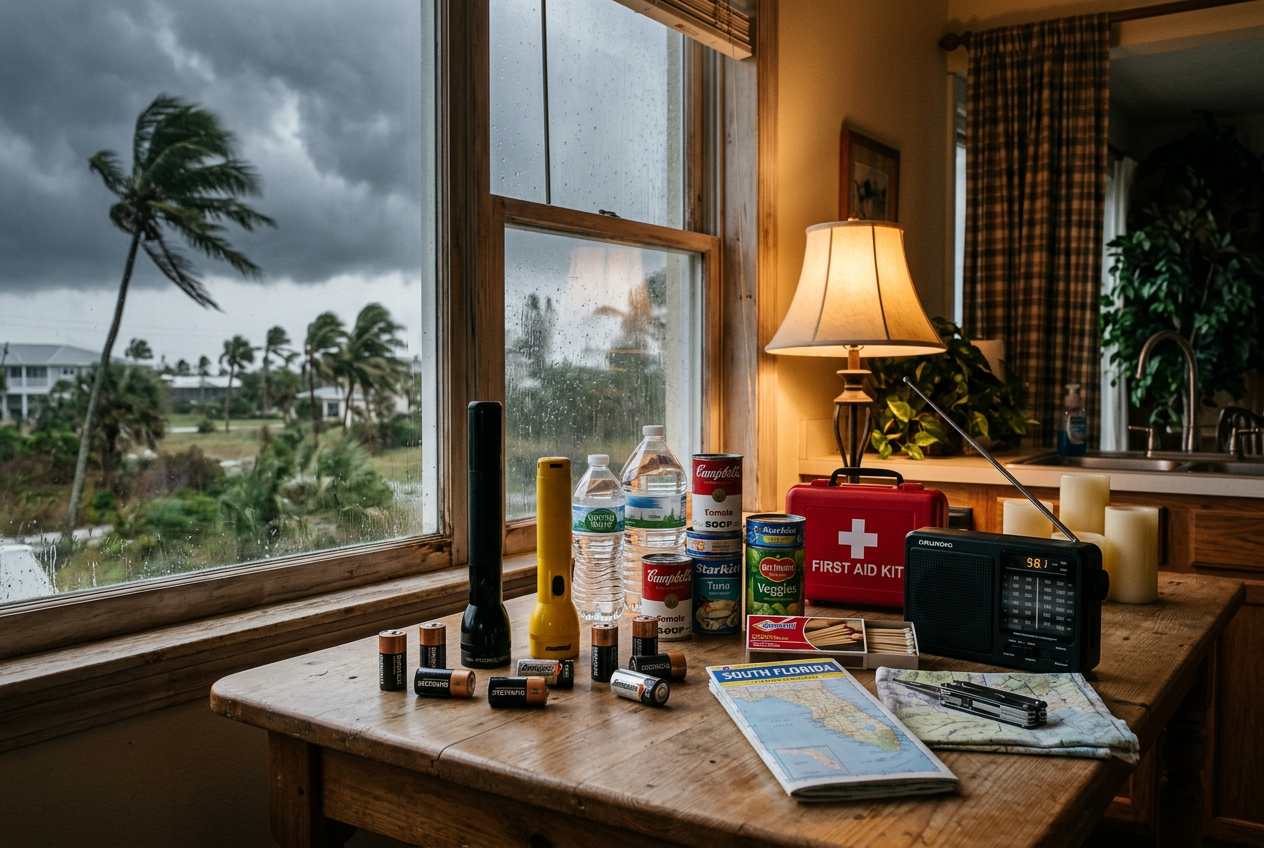
Your kit covers four basics: food, water, first aid, and light. Pick food that needs no cooking, like canned goods, peanut butter, and granola bars. Store one gallon of water per person per day. For a family of four, that means twelve gallons for three days. Add a first aid kit for cuts and small hurts. Pack a flashlight, a battery lantern, or a hand-crank light. Keep spare batteries too. A battery or hand-crank weather radio helps you hear updates when the power is out.
Build One From Home
You may already own much of this. Check your pantry for canned soup, fruit, and crackers. Fill clean jugs with tap water now, before the rain arrives. Grab the flashlight from the junk drawer and test it. Pull together any bandages, pain relievers, and daily medicines. Put it all in one waterproof bin or bag. Keep it by the door so you can grab it fast.
Building your own kit costs less and lets you pick what your family likes. This works well if you have time before the storm.
When a Pre-Packed Kit Saves Time
Invest 93L is slow-moving, but it could still arrive before you finish shopping. If you are short on time, a pre-packed kit is ready in one box. It bundles food, water, first aid, and light together. This is a smart choice if you are new to prepping or have no supplies at all.
Match the kit size to how many people live in your home. A kit for two will not stretch to feed four.
For a two-person household, these options cover the basics in one grab-and-go bag:

For a family of four, these kits pack food, water, and first aid for more people:

For a larger household, a five-person kit holds more supplies in one bag:

Refresh What You Already Have
Maybe you bought a kit last season. Open it now and check it. Look at the dates on food and water. Swap out anything expired. Test the flashlight and radio. Replace dead batteries. Add any medicine your family takes every day. A kit only helps if its contents still work.
Whether you build your own or buy one, do it today. Water jugs, batteries, and kits often sell out fast once a storm is near. Set your kit where you can reach it quickly, and tell everyone in your home where it is.
Compare Pre-Packed Emergency Kits at a Glance
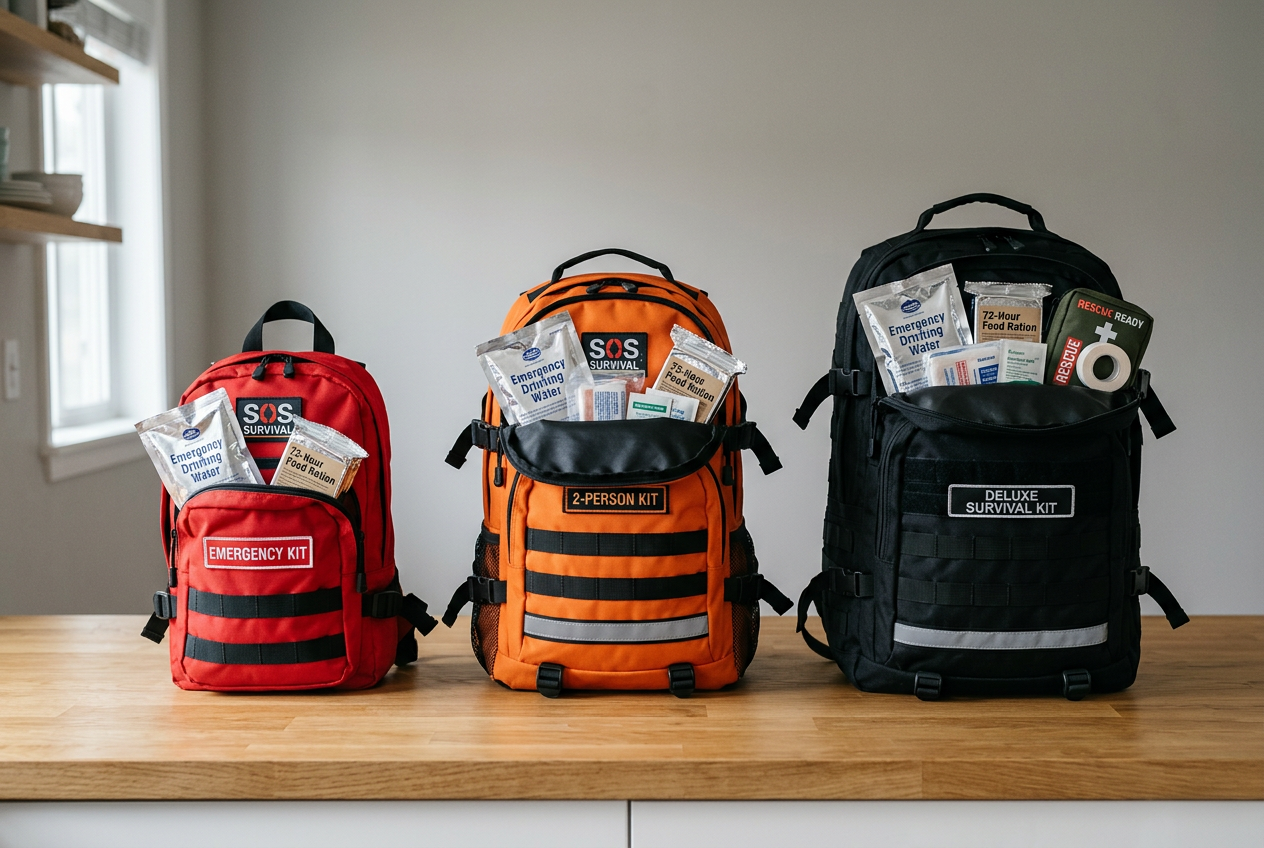
A pre-packed kit saves you time. The supplies come sorted and ready in one bag. That matters when Invest 93L is closing in and store shelves are thin. But kits are not all the same. Some cover two people. Others cover five. Food amounts, first aid pieces, and extras vary too. Use the table below to match a kit to your household fast.
How to read the table
Start with the number of people. Pick a kit that covers your whole household. If you have four people, a two-person kit will run short. You can also buy two smaller kits instead of one large one. That gives you backup if one bag gets wet or lost.
Next, look at food and water. Most kits hold enough for about 72 hours. That is three days. The Ready America 70280 lists 4800 calories in food bars and 12 water pouches for two people. The Family Emergency Kit uses SOS brand rations with a 5-year shelf life. A longer shelf life means you replace supplies less often.
First aid and extras
First aid size matters if someone in your home gets a cut or scrape. The First My Family kit includes an 85-piece first aid kit, the largest listed here. Smaller kits still cover basic care. Check what is inside before you trust it for a bigger family.
Extras can tip your choice. The Sirius Survival Hurricane Kit adds a lantern and a weather radio. A weather radio helps you hear updates if the power and cell service drop. That fits a slow storm like Invest 93L, which may bring long outages.
Matching a kit to your home
For a couple or a small space, a two-person kit works well. For a family, step up to a four or five-person kit like the Stealth Angel 5 Person kit.
Remember, a pre-packed kit is a starting point. It will not hold your medicines, baby supplies, or pet food. Add those yourself. Check the water amount too. Most kits do not meet the common goal of one gallon per person per day. Keep extra water on hand at home. A kit gets you going fast. Your own additions make it fit your household.
Plan for Power Outages
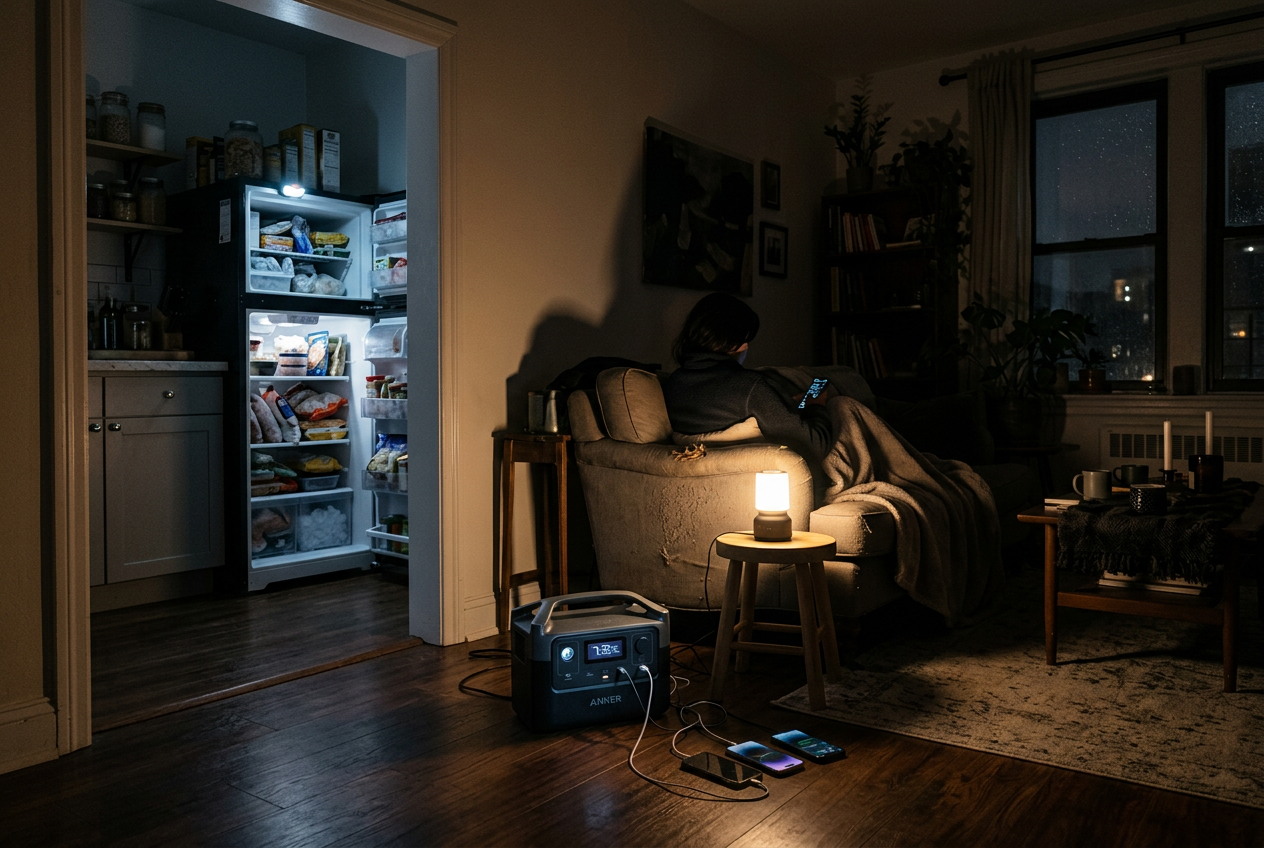
Invest 93L is moving slowly. Slow storms sit over an area longer. That often means longer power outages. Plan now, before the lights go out.
Charge Everything Early
Charge your phones, tablets, and laptops while power is still on. Charge any backup batteries too. A small battery bank keeps a phone going for a day or more. Do this well before the rain and wind arrive.
Keep Your Freezer Cold Longer
A full freezer holds its cold longer than an empty one. Fill empty space with jugs of water. Freeze them ahead of time. They keep food cold if the power drops. Keep the freezer door shut as much as you can. Every time you open it, cold air escapes.
Understand Portable Power Stations
A portable power station is a big rechargeable battery. It can run small devices during an outage. It is safe to use indoors. A gas generator is not. Gas generators make carbon monoxide. That gas can kill you. Never run one inside your home or garage. Portable power stations give off no fumes, so they are a safe indoor choice.
Two numbers tell you what a unit can do.
- Watt-hours (Wh) means how much energy it stores. More watt-hours means it runs longer.
- Watts (W) means how much power it can push out at once. More watts means it can run bigger devices.
A small unit can charge phones, run a few lights, and may run a CPAP machine overnight. Always check your CPAP’s own power needs first. A larger unit with higher watts can run a fridge or more devices. Always follow the maker’s directions.
Here are three options at different sizes.
The Jackery Explorer 300 is light at 7.5 pounds. It has 292 watt-hours and 300 watts of output. It is a good pick for phones, lights, and small devices.

The BLUETTI Elite 30 V2 holds 288 watt-hours. It puts out 600 watts, with a surge mode for short bursts. That higher output can run more at once, like a CPAP or a small appliance.

The Jackery Explorer 1000 v2 is the largest here. It holds 1,070 watt-hours and pushes 1,500 watts. It can run bigger items like a fridge for a time. It weighs more, near 24 pounds.
Charge any power station fully before the storm. A dead battery helps no one.
Water, Food, and Communication Essentials
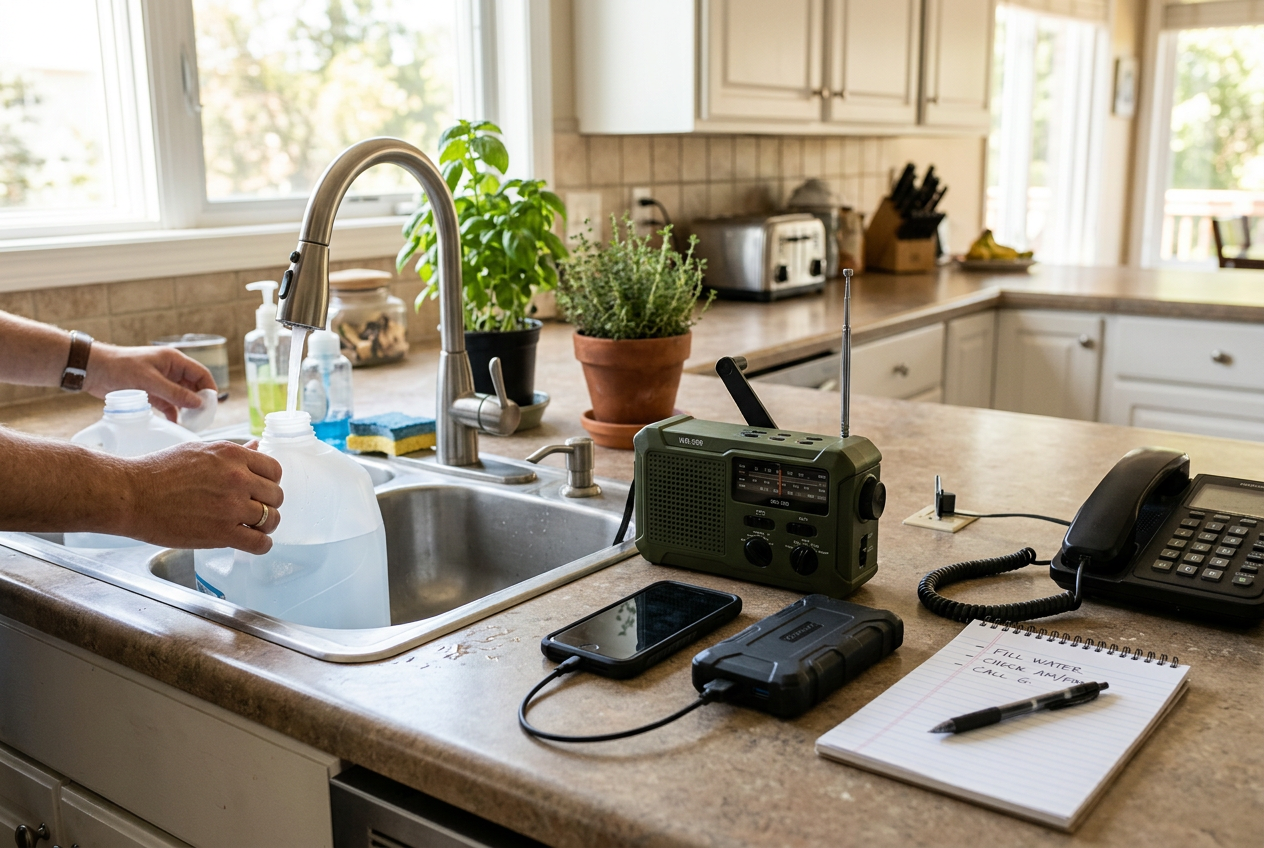
Invest 93L is slow moving. That means heavy rain and gusty winds could stick around. When a storm lingers, water service and power can both fail. A little prep now keeps your family safe and in touch.
Store Clean Drinking Water
Water is your most important supply. A common goal is one gallon per person per day. Plan for at least three days. Add more if you have pets or young kids.
Fill clean containers before the rain arrives. Use food-safe jugs or clean pitchers with lids. You can also fill a few clean pots. Do this early, before any boil-water notice goes out. A boil-water notice means your tap water may not be safe to drink. If one is issued, water you stored ahead of time stays clean.
Do not forget water for washing and flushing. You can fill a bathtub for that use. Keep your drinking water separate and covered.
Keep Simple, No-Cook Food
Pick foods that need no stove and little or no water. Think canned beans, peanut butter, crackers, and dried fruit. Keep a manual can opener nearby. A gas stove or electric burner may not work if power goes out.
A pre-packed kit can cover food and water fast. The Ready America 72-hour kit for two includes food bars and sealed water pouches. For bigger households, the First My Family four-person kit packs rations for four. These help fill gaps while you add your own supplies.
Stay Informed With a Weather Radio
Cell towers can go down in a storm. A battery or hand-crank weather radio keeps you updated when your phone cannot. Look for one that gets NOAA weather alerts. A hand-crank model works even when batteries run out. Keep spare batteries ready either way.
Some hurricane kits include a weather radio. The Sirius Survival hurricane kit packs a weather radio, a lantern, and food in a waterproof bag. That gives you updates and light in one place.
Make a Family Communication Plan
Pick one person who lives out of the area to be your main contact. This is your out-of-area contact. When local lines are busy, long-distance calls or texts often still work. Everyone in your family should know this number by heart or keep it written down.
Agree on where to meet if you get split up. Share the plan with kids and older family members too.
Keep Phones Charged
Charge every phone and power bank before the wind picks up. A portable power station can recharge phones and radios for days. The Jackery Explorer 300 is light and runs small devices. For longer outages, the BLUETTI Elite 30 V2 offers more power and can charge fast.
Send text messages instead of calling when service is weak. Texts use less signal and get through more often. Save battery by lowering screen brightness and closing unused apps.
Your Pre-Storm Action Checklist
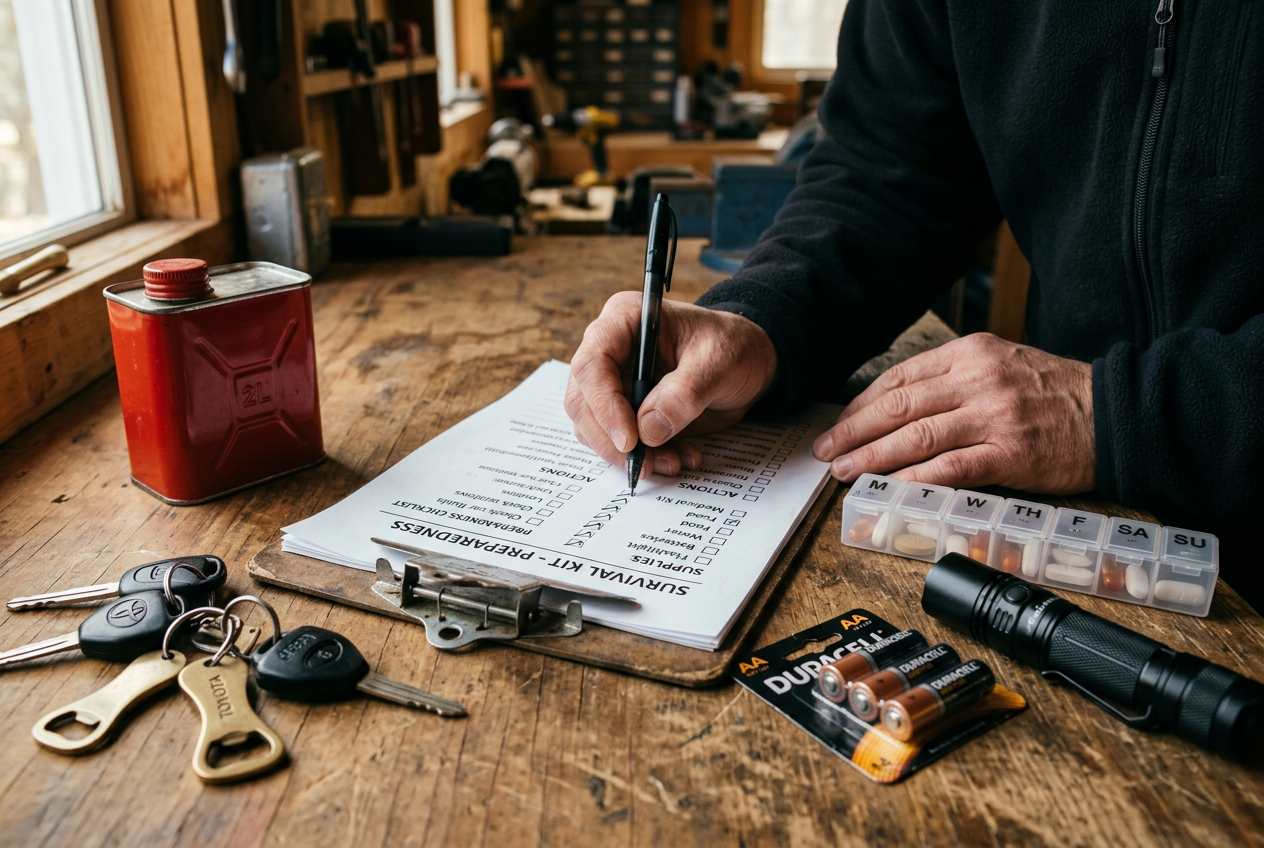
Invest 93L is slow moving. It is bringing gusty winds and heavy rain toward Florida. That gives you a little time to get ready. Work through this list today. Start at the top and move down. Each step is quick. You can print this page and check off each item as you go.
1. Confirm the latest forecast
Check the forecast before you do anything else. Storms shift. Know your evacuation zone. Listen to local officials and the National Hurricane Center. Keep a weather radio or phone alerts on so you hear updates fast.
2. Secure your yard
Walk around your home. Bring in loose items. This means lawn chairs, trash cans, potted plants, and kids’ toys. High winds can turn these into flying objects. Clear your storm drains and gutters so water can flow away from your house. Tie down or store anything you cannot bring inside.
3. Top off fuel
Fill your car’s gas tank now. If you use fuel for a generator, store it the safe way. Use approved containers only. Never keep fuel in your living space. Keep it away from heat, sparks, and children. Let any engine cool before you refuel. Do not use your mouth to siphon gas. Use a gasoline rated pump. Follow the maker’s directions and local fire rules. Do not hoard fuel. Buy only what you need.
4. Refill medications
Check your prescriptions. Refill anything that is low. Ask your pharmacy for an early refill if you can. Keep medicines in a dry, waterproof bag. Make a short list of what each family member takes.
5. Charge your batteries
Charge your phones, power banks, and flashlights now. If you have a portable power station, charge it to full. A unit like the Jackery Explorer 300 can keep phones and small devices running during an outage. Larger units like the Jackery Explorer 1000 v2 can run more. Charge before the power goes out, not after.
6. Assemble your kit
Pull your 72 hour kit together. You need water, food, a first aid kit, and a flashlight. A pre packed option like the First My Family 4 Person kit covers the basics for a household. Check that your food and water are not expired. Add batteries and any items your family needs.
7. Prep for flooding
Invest 93L is bringing heavy rain. Move valuables and important papers to a high spot. Put them in waterproof bags or bins. Know where water pools near your home. Stay away from flooded roads. Never drive through moving water.
8. Final sweep
Charge one more time. Fill clean containers with drinking water. Tell family and neighbors your plan. Keep your phone close. Stay indoors and away from windows once the wind picks up. Then wait for the all clear from local officials.
Frequently Asked Questions
What does “Invest 93L” mean?
An “invest” is a short way to say “area of investigation.” The National Hurricane Center uses this label for a weather system it is watching. The number and letter just help forecasters track it. Invest 93L is the system now moving toward Florida. It is bringing gusty winds and rain. The label does not tell you how strong the storm will get.
Can an invest become a hurricane?
Yes, it can. An invest is a system forecasters think may grow stronger. Some invests fade. Some grow into tropical storms or hurricanes. Right now, Invest 93L is slow-moving and packing gusty winds and rain. Forecasters say it could strengthen. That is why you should prepare now, before you know the final outcome. Watch official updates for changes.
How much water and food should I store per person?
A common goal is a three-day supply for each person in your home. Store water for drinking and basic needs. Pick foods that need no cooking and no refrigeration. Canned goods, peanut butter, crackers, and energy bars all work. Do not forget a manual can opener. If you want a ready-made option, a pre-packed kit can cover the basics for two people.
Is a portable power station safe to use indoors?
Yes. A portable power station uses a battery, not fuel. It makes no fumes. That makes it safe to run inside your home. This is different from a gas generator. A gas generator makes deadly carbon monoxide. Never run a gas generator indoors or in a garage. A battery power station is a good indoor choice for phones, lights, and small devices.
Where do I get trustworthy storm updates?
Stick to official sources. The National Hurricane Center tracks systems like Invest 93L. Your local news and emergency managers share zone and shelter news. A battery or hand-crank weather radio helps when the power goes out. Keep your phone charged so you can get alerts. Avoid rumors on social media. Confirm big claims with an official source first.
Quick-answer recap
Here is a short look at the key questions.
Should I buy supplies now or wait?
Buy what your home needs, then stop. Do not hoard. Hoarding leaves less for your neighbors. Get your three-day kit ready, check your water, and charge your devices. A calm, early start beats a last-minute rush. You can print this page and use the checklist as you go.
Next Steps Before the Storm
The best time to prepare is now, while the weather is still calm. Invest 93L is a slow-moving system. It is bringing gusty winds and heavy rain toward Florida, and it could still strengthen. You do not want to be rushing around in the wind and rain trying to find supplies. Take action today.
Do These Things First
Start with the steps that protect your family right away. Here is where to begin:
- Check your evacuation zone. Know if you live in a flood-prone area.
- Fill your kit. Make sure you have water, food, a flashlight, and a battery radio.
- Charge your phone and any backup batteries now.
- Clear storm drains near your home. Secure loose items in your yard.
- Fill your car with gas while stations are open.
- Set up a way to reach family if the power goes out.
If you still need a kit, a pre-packed option can save you time. A grab-and-go bag like the First My Family 4-person kit covers the basics for a household. For backup power, a unit like the BLUETTI Elite 30 V2 can keep phones and small devices running during an outage. Pick what fits your household size and needs.
Keep Watching the Forecast
A storm like this can change. The forecast you see today may not match tomorrow. Keep checking official updates from the National Hurricane Center and your local news. Listen for any watches or warnings.
Pay close attention if local officials speak. If an evacuation is ordered for your area, leave early. Do not wait. Roads get crowded fast, and a slow-moving storm means the rain and wind can last a long time.
Stay ready to adjust your plan. If the system gets stronger, you may need to do more. That could mean adding more supplies, boarding up windows, or leaving sooner than you expected. Being flexible keeps you safe.
After You Prepare
Once your home and kit are ready, there is not much left to do but wait and watch. Keep your phone charged. Keep your radio nearby. Stay indoors and away from windows once the wind picks up.
If you lose power, use caution. Only use fuel-powered generators outdoors, far from windows and doors. Never bring them inside. Keep flashlights and your weather radio close so you stay informed.
Remember, you do not need to buy everything at once. Many of the smartest steps cost nothing. Clearing drains, charging batteries, filling water containers, and making a family plan are all free. Focus on what protects your household most.
Go back through your pre-storm checklist one more time. You can print this page to keep it handy. Check off each task as you finish it. If you take these steps now, you will feel calmer and safer when the rain and wind finally arrive. Preparing early is always the smartest move.
Sources and Further Reading
- Florida hurricane preparation checklist
- SURVIVAL GUIDE 2021
- Hurricane Preparedness Checklist: Ensuring Safety and …
- Hurricane Safety Tips for Florida Homeowners
- HURRICANE SEASON PREPAREDNESS IMPORTANT FOR …
- Will Invest 93L strengthen? Severe weather ahead for parts of Florida
- Your Florida power outage checklist before winter storms hit