Safe Gasoline Storage (2026): Cans, Stabilizers, and Transfer Pumps
A generator during a storm. A chainsaw after a big wind. A snowblower on a cold morning. Many households like to keep a small amount of gasoline on hand for times like these. Having fuel ready can save you a trip when stores are busy or closed.
But gasoline is not like other supplies. It burns easily. Its vapors can catch fire fast. It can go bad over time. And it needs the right container, or it becomes a real danger in your home or garage.
This guide takes a safety-first approach. It is not about buying huge amounts of fuel or reacting to worries about prices or supply. It is about keeping a modest reserve the smart way. Storing too much fuel is risky, so we do not suggest hoarding.
Here is what we cover. First, how much fuel makes sense and where to keep it. Then, how to choose approved fuel cans and safety containers. We look at fuel stabilizers that help stored gas last longer. We explain gasoline-rated transfer pumps for moving fuel without spills or mouth siphoning. And we walk through safe rotation and handling, step by step.
One rule stays true throughout. Always follow the maker’s directions and your local fire codes. Those rules come first. This guide gives you the plain, practical basics to store gasoline safely.
- Store gasoline in approved safety cans, not random containers, to cut down on spills and fumes.
- Add stabilizer to fresh gasoline according to its label; storage life depends on the fuel, conditions, and product directions.
- Keep fuel in a cool, well aired spot away from your home and any sparks or heat.
- Use a transfer pump to move gas cleanly instead of tipping and pouring by hand.
- Check your stored fuel and containers regularly so nothing leaks or breaks down.



Reviewed by Elena V., Priya K. & Dale M. — contributors with hands-on preparedness experience. How we test
Getting ready means having the right gear on hand before you need it. Grab these items now, then read on to see why each one matters.

STA-BIL Fuel Stabilizer
This keeps stored gasoline fresh so it still works when you need it. Without it, gas can break down in just a few months and clog your engine.
Check Price on Amazon
Justrite Type II Safety Can
This tough steel can is built to hold gasoline safely and pour without messy spills. Its controlled trigger helps you fill up tanks or tools with less waste.
Check Price on Amazon
Gasoline-Rated Hand Siphon Pump
A squeeze bulb starts the flow without mouth siphoning or electrical power. Check gasoline compatibility and follow the supplied directions.
Check Price on AmazonIn this guide
Why Trust This Guide?
This article was researched and reviewed by contributors with hands-on experience in emergency preparedness. They have tested gear, built real systems, and lived through situations where these skills actually mattered.
How Much Fuel Should You Store (and Where)?
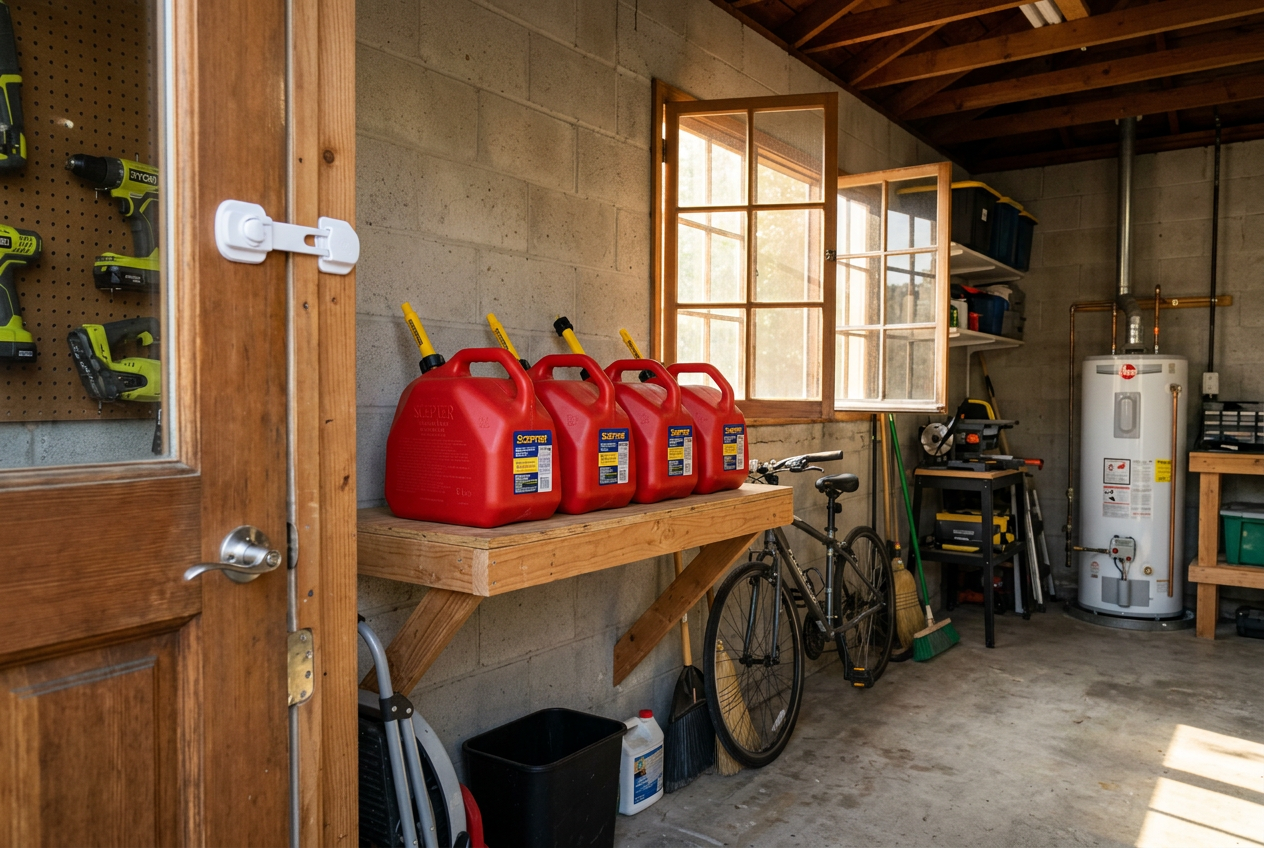
There is no single magic number for how much gasoline to keep at home. The right amount depends on your local rules. Fire codes and guidance based on National Fire Protection Association (NFPA) sections can set limits for home fuel storage. These limits are not the same everywhere. So before you store any gas, check with your local fire department or building rules.
The safest plan is to store a modest amount. Think about what you really need for short emergencies, like running a generator or a lawn mower. You do not need to fill your garage with fuel. Storing too much gas raises the risk of fire and makes rotation harder. Old gas also goes bad over time. Storing more than you can use before it degrades is a waste.
Keep It Small and Simple
Store only what you can safely use and rotate. A few approved cans is often plenty for most homes. Apartment dwellers should be extra careful. Storing gasoline in an apartment is strongly discouraged. If you live in a small space with no safe outdoor storage, gasoline storage may not be a good idea at all.
Where to Store Gasoline
Where you keep fuel matters as much as how much you keep. Follow these basic rules:
- Store gas cans in a cool, well-ventilated area only.
- Keep fuel away from living space. Do not store it inside your home.
- Keep it far from any ignition source. This includes water heaters, furnaces, pilot lights, and electric sparks.
- Keep gasoline out of reach of children.
- Never leave a container open. Always put the cap back on right after use.
A detached shed or a well-ventilated garage away from appliances is often a better choice than inside the house. Gasoline gives off vapors. Those vapors can travel and reach a flame or spark. Good airflow helps keep vapors from building up.
Use the Right Containers
Only store gasoline in approved fuel containers. Do not use random jugs or bottles. Approved safety cans are built to handle fuel and reduce spills and vapor problems. We cover how to choose these cans in the next section. Keeping fuel in the right can, in the right place, is the core of safe gasoline storage.
Check Local Rules First
Rules can change based on where you live and how your building is set up. What is fine in one town may break the rules in another. Call your local fire department or check your local fire code before you store fuel. This one step protects you, your family, and your neighbors. It also keeps you on the right side of the law.
Choosing Approved Fuel Cans and Safety Containers
The container matters just as much as the fuel. Gasoline gives off vapors that can catch fire fast. That is why you should store it only in approved containers made for the job. The Consumer Product Safety Commission warns against storing gasoline in anything except sturdy containers built for fuel. Old jugs, milk bottles, and random plastic cans are not safe. They can leak, melt, or crack.
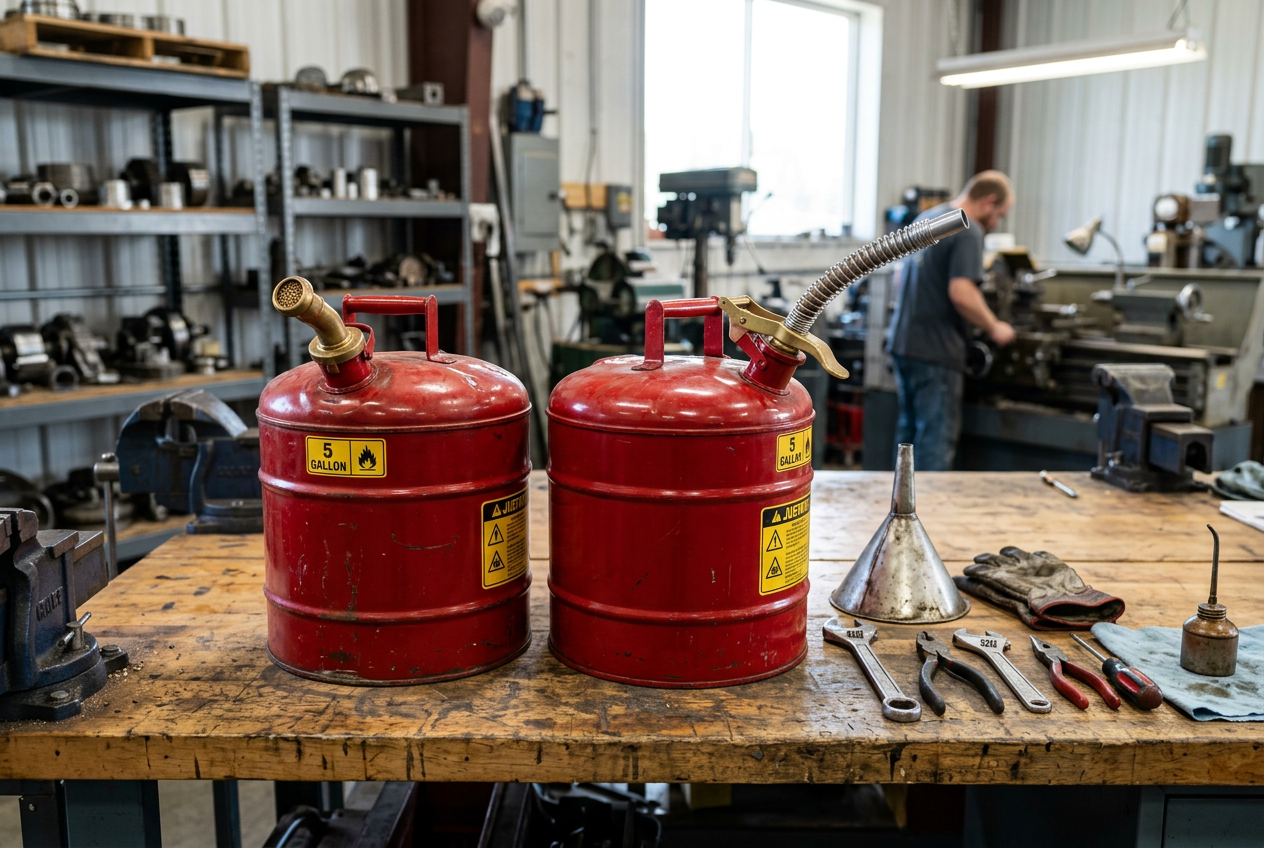
Approved safety cans are built to reduce these risks. Many are made from steel and are pressure-tested. Good cans also have features that help stop spills and hold back flames. Always keep the cap on after each use. Never leave a fuel container open.
Type I vs Type II Safety Cans
There are two main types of safety cans. Knowing the difference helps you pick the right one.
A Type I can has a single opening. You use that one spout to both fill the can and pour fuel out. Many come with a funnel to help. Type I cans are simple and work well for basic storage and pouring.
A Type II can has two openings or a controlled-transfer design. This gives you more control when you pour. That extra control helps you fill smaller openings without spilling. If you often pour into tight fill necks, a Type II can may suit you better.
Both types can be approved and safe. Your choice depends on how you plan to use the can.
A Simple Type I Option
The Eagle 5 Gallon Type I can is a straightforward choice. It has a single opening for filling and pouring. It comes with a funnel to make that easier. The spout cap self-closes to help prevent leaks and spills. The cap also opens on its own to vent vapors inside the can, which helps keep pressure down.
Safety features include a fixed handle and a double interlock no-weld bottom seam. It also has a non-sparking flame arrestor. That part helps keep the liquid inside from igniting and helps stop flames from spreading.

A Controlled-Transfer Type II Option
The Justrite Type II can is built for more careful pouring. It uses a patented manifold and a Safe-Squeeze trigger. Together these give smooth, glug-free dispensing with better flow control. This design helps reduce spills and supports more accurate fuel transfer.
It is made from galvanized steel with a chemical-resistant powder-coat finish. It is pressure-tested and built for repeated use in demanding settings. A flexible metal hose lets you direct fuel into smaller openings with more accuracy. An ergonomic lift lever makes refilling faster.
Whichever can you pick, follow the maker’s directions. Keep the container closed, keep it away from heat and children, and store it in a cool, well-ventilated spot. Check your local fire rules too, since they can differ by area.
Fuel Stabilizers: Keeping Stored Gas Usable
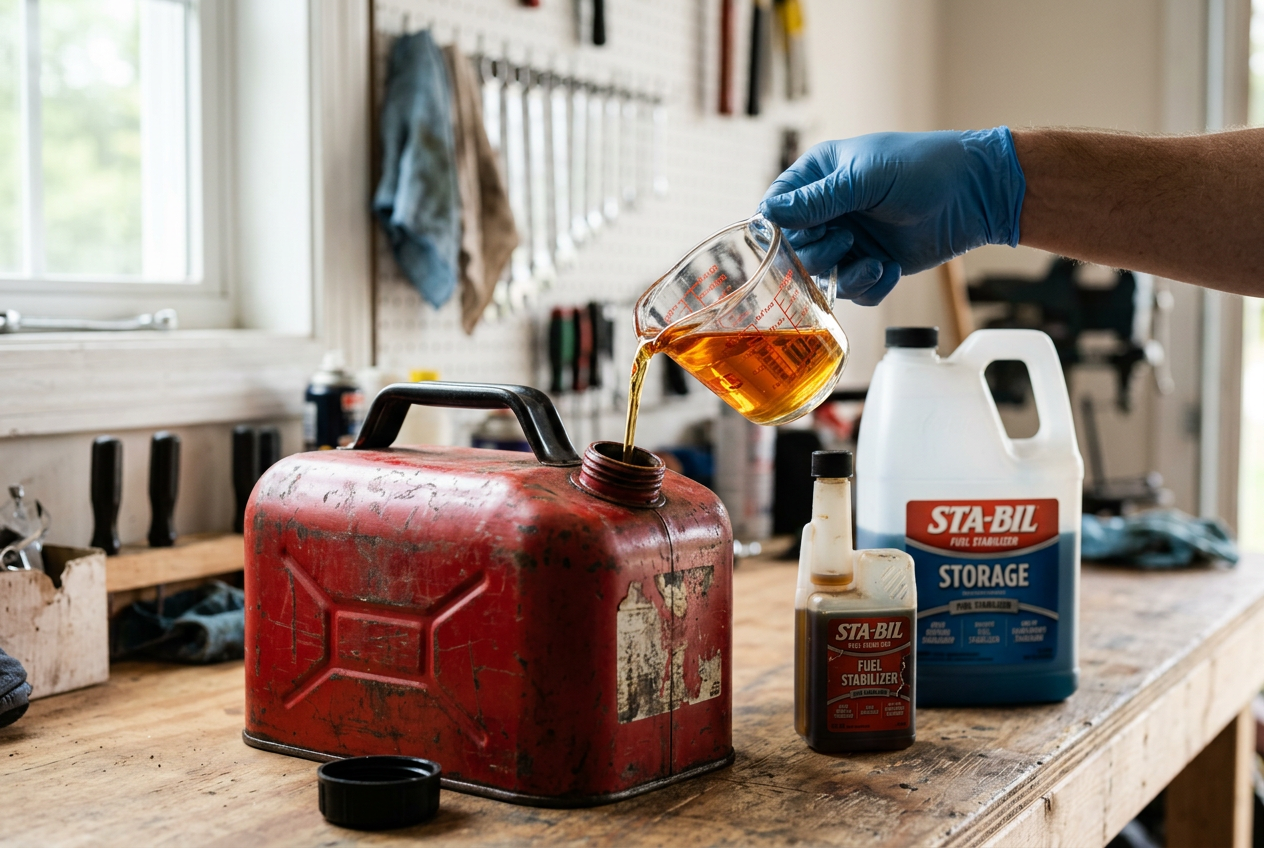
Gasoline does not last forever. Over time, it starts to break down. It can turn gummy or stale. Old gas can be hard to start in an engine. It can also leave deposits that clog small parts. This is why stored fuel needs some help to stay usable.
A fuel stabilizer is a liquid you add to gasoline. You mix it in when the gas is fresh. It slows down the natural breakdown that happens while the fuel sits. Think of it as a way to buy more time. It helps keep your stored gas closer to fresh for longer.
What a Stabilizer Can and Cannot Do
Here is the important part. A stabilizer works best when you add it to good, fresh fuel. It cannot undo damage that already happened. If your gas has already gone bad, stabilizer will not fix it. It does not turn stale fuel back into fresh fuel. So add it early, not after the fact.
Always follow the maker’s mixing directions. The label tells you how much stabilizer to use for a certain amount of gas. Using too little may not help much. Using too much is a waste. Read the bottle and measure carefully. Every product may be a little different, so trust the label over guesswork.
Choosing the Right Size for Your Needs
The size of stabilizer you buy depends on how much fuel you keep and how often you rotate it.
If you only store a small amount of gas now and then, a small bottle makes sense. It is easy to store. It treats a modest amount of fuel. You will not have leftover product sitting around for years.
The STA-BIL Storage Fuel Stabilizer comes in a 16 ounce bottle. That is a good match for someone with one or two small cans. You add a measured amount to fresh gas, then store it as directed.
A Simple Rule
Pick the size that matches how much gas you actually store. Do not buy a huge jug for one small can. Buy fresh gas, add stabilizer right away, and follow the label. Stabilizer is a helper, not a magic fix. Fresh fuel and good rotation still matter most.
Gasoline-Rated Transfer Pumps: Start With a Simple Option
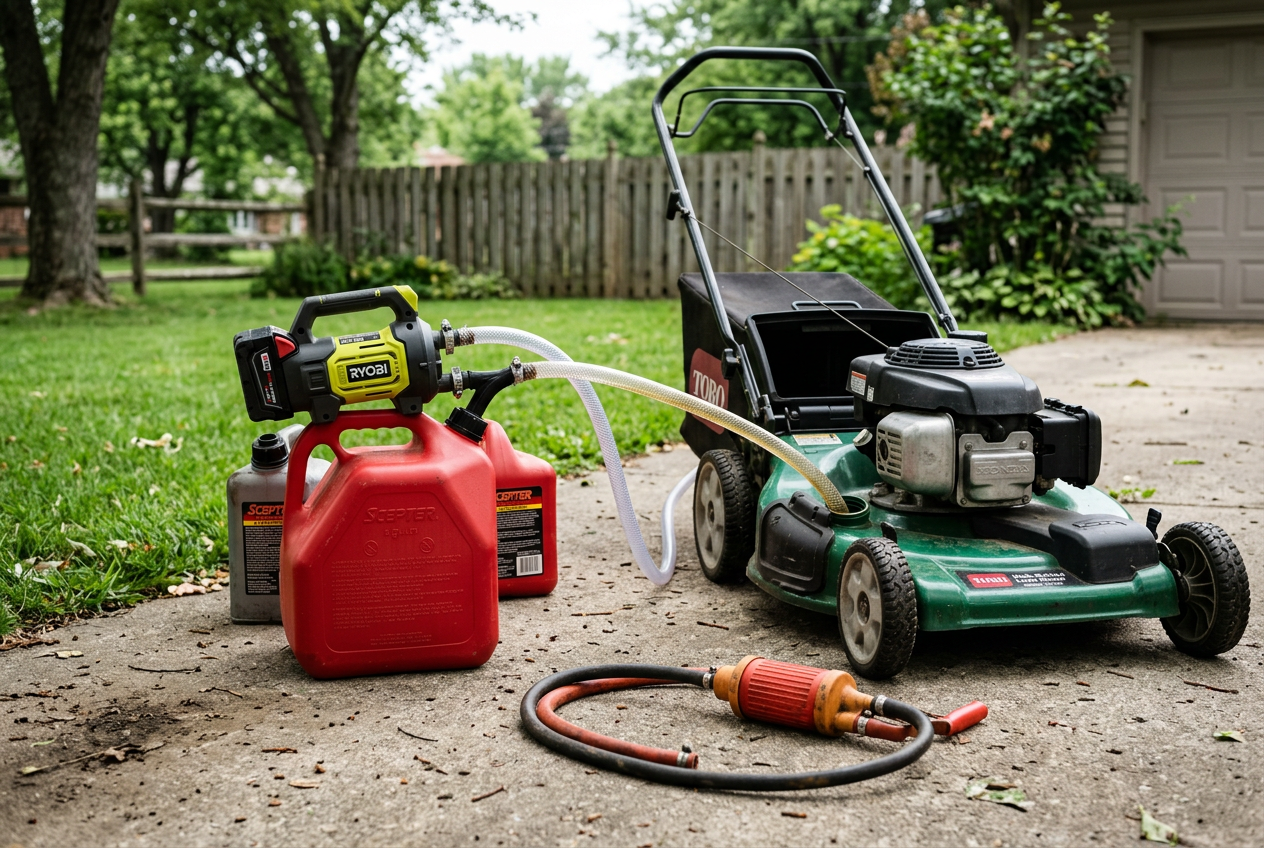
For a small household reserve, start with the approved can’s intended pouring system. A pump is optional, not a reason to store more fuel. If you need one, choose a gasoline-compatible hand pump that suits your containers and read its directions before use.
Do not assume a water pump, an unmarked hose, or a generic electric pump is safe for gasoline. This guide does not recommend large tank-transfer systems or electrical pump installations for beginners. Never start a siphon with your mouth, and let equipment cool before refueling.
Hand Siphon Pumps
You do not always need power. A hand siphon pump lets you move fuel with a squeeze bulb. This is a good backup for remote spots or small jobs.
One choice is a portable siphon pump with two PVC hoses. It weighs about 290 grams, so it is easy to carry. A one-way check valve stops fuel from flowing back. You squeeze the bulb a few times to start the flow. It works with gasoline, diesel, and oil. Note that it is not made for drinking water or edible oils.
No matter which pump you pick, keep it away from flames and heat. Read the directions first. Work slowly, and never rush a fuel transfer.
Product Comparison: Cans, Stabilizers, and Pumps at a Glance
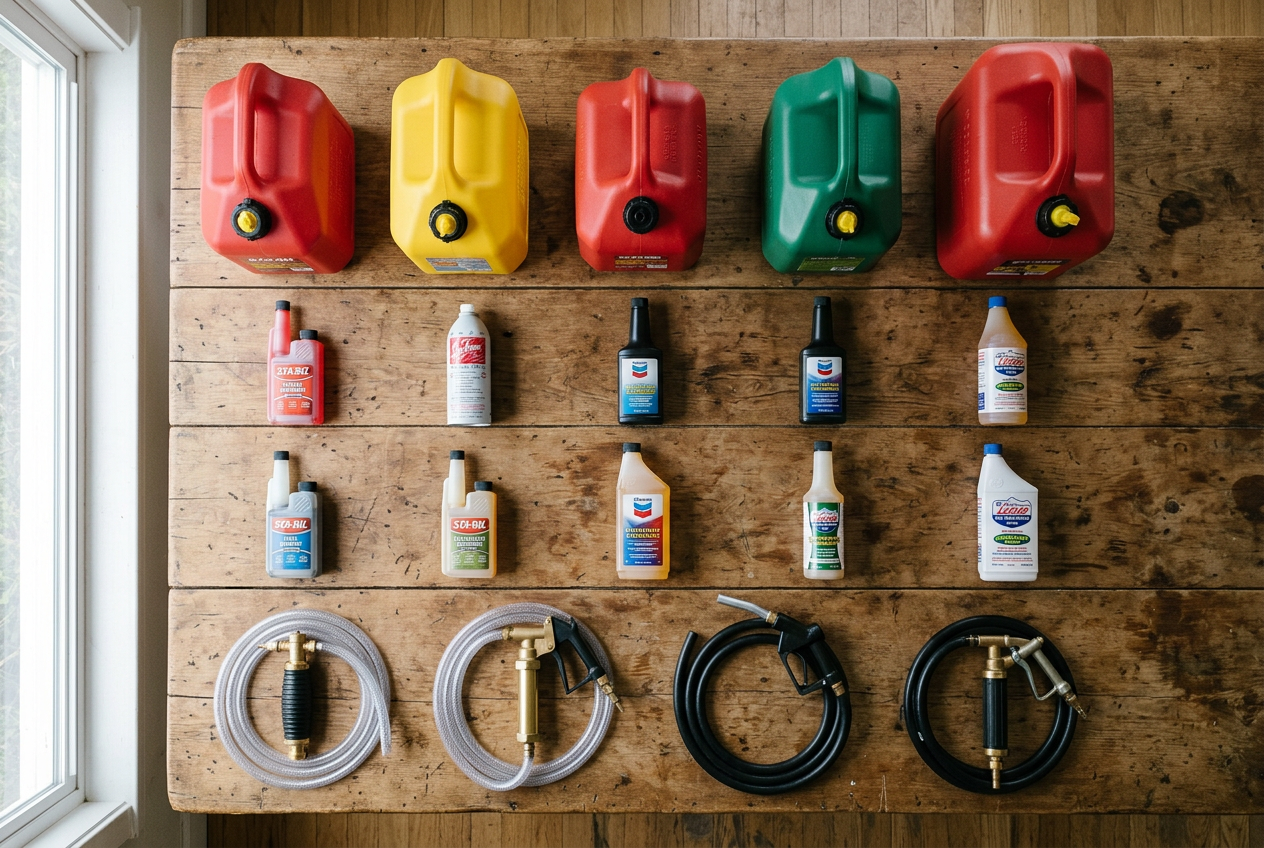
You have seen the cans, stabilizers, and pumps above. Now let’s put them side by side. This makes it easier to match a product to your needs. Look at the type, the key features, and the best use case for each one. Then pick what fits your setup.
The table below groups every product by category. For cans, focus on capacity and the pour design. For stabilizers, note the size and what they are made to do. For pumps, look at how they move fuel and how fast they work. Always follow the maker’s directions and your local fire rules no matter which item you choose.
How to read this table
Start with your storage goal. If you just want a modest emergency supply, a Type I can like the Eagle 5 Gallon is easy to fill and pour. It has a self-closing spout and a flame arrestor built in. If you want more control when you pour into small openings, the Justrite Type II uses a flexible hose and a trigger. That helps cut spills.
Matching stabilizer size to your supply
Stabilizer does not fix old or bad gas. For a modest reserve, select an appropriately sized bottle and use the label’s treatment ratio. There is no need to buy bulk quantities for a small household supply.
Picking a transfer method
For a modest household transfer, a gasoline-rated hand siphon pump avoids an electrical hookup. Use the can’s designed pouring system if that already works for you. Follow the pump instructions, and never siphon by mouth.
Safe Fuel Rotation and Handling Step-by-Step
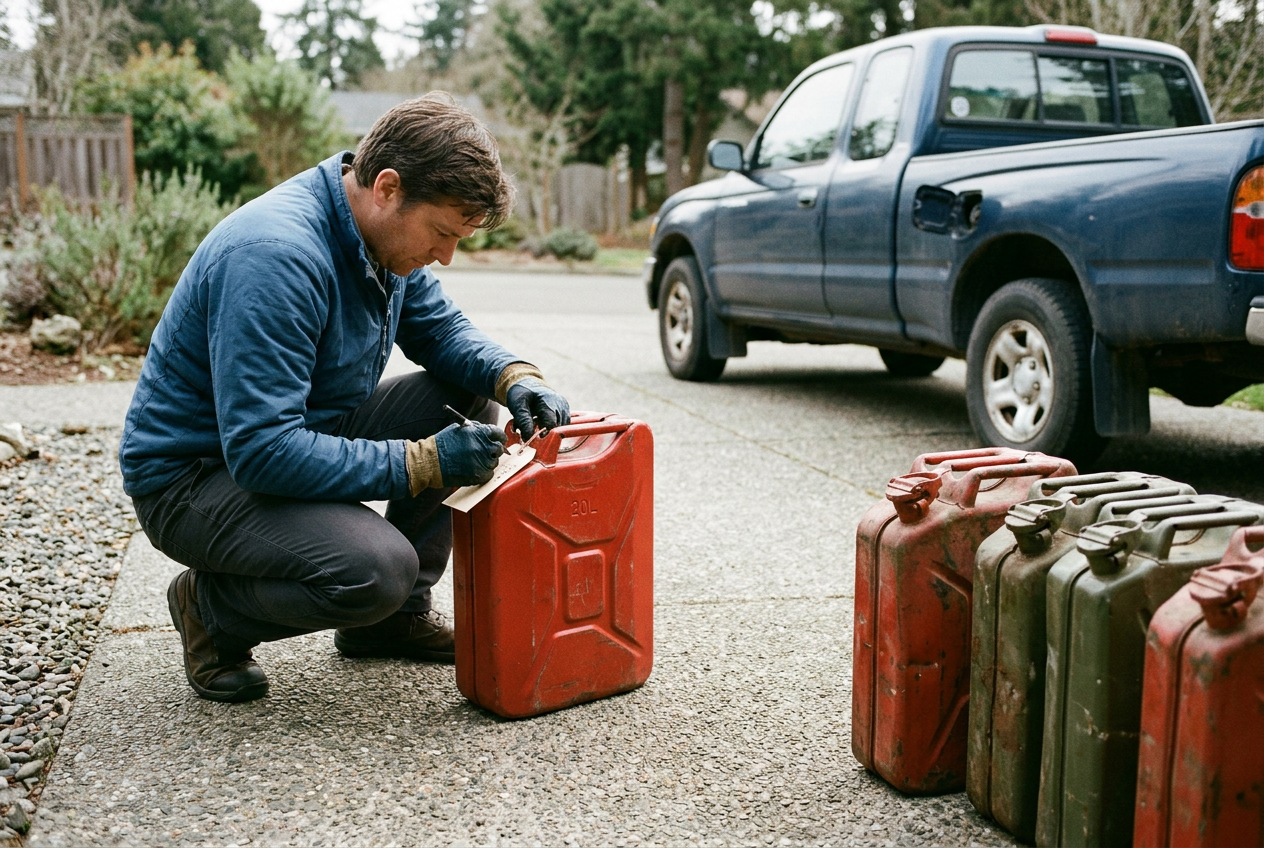
Stored gasoline does not last forever. It breaks down over time. A simple routine keeps your fuel fresh and safe to use. Follow these steps to rotate and handle your gas the right way.
Step 1: Label and Date Every Can
Write the fill date on each can. Use a marker or a stick-on label. This tells you how old the fuel is. It also helps you use the oldest gas first. Keep your cans in a cool, well-ventilated spot. Never store them in your living space. Keep them away from heat, sparks, and open flames. Keep them away from children too.
Step 2: Add Fuel Stabilizer
Add stabilizer when you fill a fresh can. This helps the fuel stay usable longer. Follow the mix directions on the product label. Do not guess the amount. Products like STA-BIL Storage Fuel Stabilizer are made for this job.
Remember one thing. Stabilizer does not fix old, degraded fuel. It only helps fresh fuel stay good. If gas has already gone bad, stabilizer will not bring it back.
Step 3: Use the Oldest Fuel First
Check your dates. Use the oldest gas first. Pour it into your car, mower, or other equipment. Then it does not sit around and go stale. This is the heart of rotation. Fuel gets used before it can break down.
Cool your engine before you refuel. A hot engine can ignite gas vapors. Let the engine sit and cool down first. Do not smoke or use anything with a flame near the fuel. Turn off nearby heaters and pilot lights.
Step 4: Refill the Empty Can
Once a can is empty, refill it with fresh gas. Add stabilizer again. Write the new date on the can. Now that can goes to the back of the line. This keeps the cycle going.
When you fill a can at the station, set it on the ground. Do not fill it in your car or truck bed. Static can cause a spark. Keep the nozzle touching the can while you pour.
Step 5: Handle and Cap With Care
Never use your mouth to siphon fuel. It is dangerous and can make you sick. Use a gasoline-rated transfer pump instead. A gasoline-rated pump moves fuel safely and cuts down on spills.
Always put the cap back on after each use. An open can lets vapors escape. Vapors can build up and catch fire. A tight cap keeps the fuel sealed and safe.
Wipe up any spills right away. Let spilled gas dry in the open air, away from any flame. Follow the directions from your can and pump makers. Follow your local fire rules too. A little care each time keeps your stored fuel safe and ready.
Safe Gasoline Storage Frequently Asked Questions
How long does stabilized fuel last?
Fuel stabilizer helps stored gas stay usable longer. Products like STA-BIL Storage Fuel Stabilizer are made to slow down how fast fuel breaks down. But there is no single shelf life that fits every case. How long your fuel lasts depends on the fuel type, how you store it, and how warm the storage spot gets. To get the best results, follow the directions on the stabilizer bottle. Add it to fresh fuel, not old fuel. Then keep the container sealed and stored in a cool, well-ventilated area. Rotate your fuel on a regular schedule so you always use the older gas first.
Can stabilizer bring old gas back to life?
No. This is a common mix-up. Fuel stabilizer does not restore gas that has already gone bad. It only works to protect fresh fuel from the start. If your gas is already old or degraded, adding stabilizer will not fix it. That is why you add stabilizer when the fuel is new. If you are not sure whether your stored gas is still good, do not force it into an engine. Handle old fuel with care and dispose of it the right way. Check your local rules for how to get rid of degraded fuel safely.
Where should I store gasoline?
Store gas cans in a cool, well-ventilated area only. Never store fuel inside your living space. Keep it away from any ignition source, like a furnace, water heater, or pilot light. Keep it out of reach of children too. If you live in an apartment, storing gasoline is not a good idea. Always put the cap back on right after you use the can. Never leave a fuel container open. Check your local fire rules before you store fuel at home. Those rules can set limits on how much you may keep and where.
What kind of container should I use?
Use only approved fuel containers made for gasoline. Do not store gas in random jugs or bottles. Approved safety cans are built with safety features that help prevent spills and leaks. For example, the Eagle 5 Gallon Type I Red Safety Gas Can has a self-closing spout cap and a flame arrestor. The Justrite Type II Gasoline Safety Can is made from galvanized steel and is FM approved. A smaller container, around 5 gallons or less, is easier to handle and lift.
How should I move fuel safely?
Use the approved container’s pouring system or a gasoline-rated hand pump when appropriate. Follow the manufacturer’s directions and let equipment cool before refueling. Never siphon by mouth. Do not improvise an electrical pumping setup.
Safe Fuel Storage Action Checklist
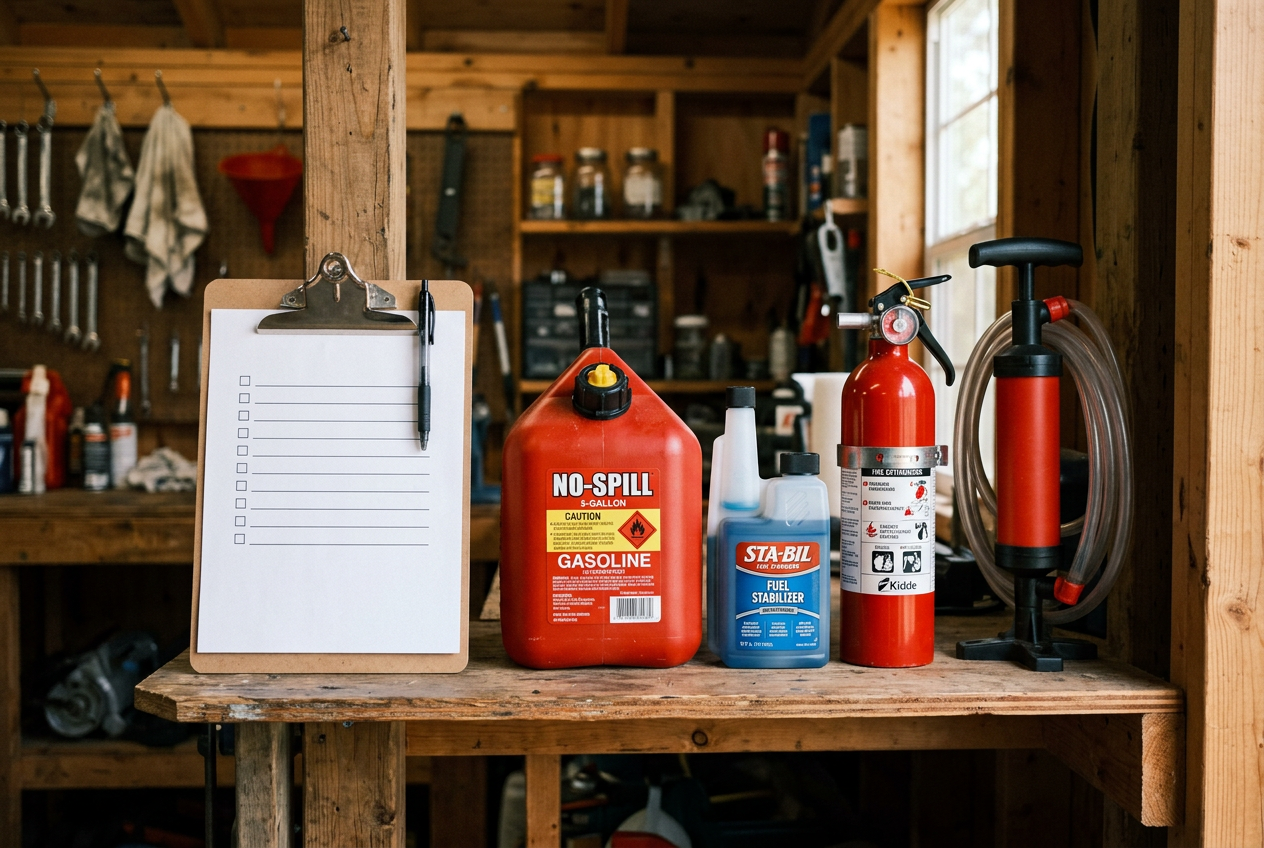
Use this checklist to store gasoline the safe way. Work through it step by step. It covers your containers, your storage spot, stabilizer use, rotation, pumps, and fire safety. Always follow your local fire rules too.
Use Approved Containers Only
- Store gasoline in approved fuel cans made for the job. The CPSC warns against using containers that are not built for fuel.
- Pick sturdy metal safety cans when you can. Options like the Eagle 5 Gallon Type I safety can or the Justrite Type II safety can are made for flammable liquids.
- Keep containers to a modest size. Many local rules point to small cans, often 5 gallons or less.
- Always put the cap back on after each use. Never leave a fuel can open.
- Do not store more fuel than you need. Store a modest amount, not a hoard.
Pick a Safe Storage Spot
- Store cans in a cool, well-ventilated place. A detached shed or garage works better than a home.
- Never store gasoline inside your living space.
- Keep fuel far from any ignition source. That means no pilot lights, heaters, sparks, or open flames.
- Keep cans out of reach of children.
- Check your local fire code for storage limits before you buy fuel.
Add Stabilizer and Rotate
- Add a fuel stabilizer to fresh gas before you store it. A product like STA-BIL Storage Fuel Stabilizer can help keep stored fuel usable longer.
- Remember that stabilizer does not fix old or degraded fuel. It only helps fresh fuel last.
- Follow the dose on the label. Do not guess.
- Set a rotation schedule. Use your stored gas in your vehicles or equipment, then refill with fresh fuel.
- Label each can with the fill date so you know what to use first.
Move Fuel the Safe Way
- Use a gasoline-rated pump to move fuel. Do not use a pump that is not made for gasoline.
- If needed, choose a gasoline-rated hand pump that fits your containers and requires no electrical hookup.
- Never siphon fuel with your mouth.
- Follow the pump maker’s directions every time.
- Let hot engines cool down before you refuel them.
Stay Fire Safe
- Keep a working fire extinguisher near your storage area.
- Never smoke or use a phone that could spark near fuel.
- Wipe up spills right away and let the area air out.
- Fill cans on the ground, not in a truck bed or on a surface that can build static.
- Close every cap tight before you walk away.
Run through this list each time you store or move gas. A few simple habits keep you and your home safe.
Conclusion and Next Steps
Safe gasoline storage is not hard. It just takes the right gear and a few good habits. The goal is simple. Store a modest amount of fuel. Keep it fresh. Keep it away from people and heat. You do not need a huge stockpile to be ready. A small, well managed supply is safer and easier to handle.
Start with an approved container. Never use milk jugs or random bottles. Pick a safety can built for gasoline, like the Eagle 5 Gallon Type I Red Safety Gas Can or the Justrite Type II Gasoline Safety Can. These are made to reduce spills and vent vapors safely. Always put the cap back on after each use. Store the can in a cool, well ventilated spot. Keep it out of your living space. Keep it away from any flame, spark, or heat source. Keep it away from children.
Next, add a fuel stabilizer. Fresh gas breaks down over time. A stabilizer helps stored gas stay usable longer. The STA-BIL Storage Fuel Stabilizer is one option for smaller batches. Remember one key point. Stabilizer helps keep good fuel good. It cannot fix gas that has already gone bad. So add it early, when the gas is fresh.
Then set up a rotation plan. Old fuel should get used before it degrades. A simple rule works well. Pour stored gas into a vehicle or tool on a set schedule. Then refill your can with fresh gas. This keeps your supply fresh and cuts waste. Write the fill date on the can or a tag so you know its age.
For a small household transfer, a gasoline-rated hand pump is an option when the can’s own pouring system does not meet your needs. It needs no electrical power. Read its directions, never siphon by mouth, and let equipment cool before refueling.
Before you build your setup, check your local fire codes. Rules on how much fuel you can store at home vary by area. Some guidelines are based on fire codes and can change from place to place. Your local fire department can tell you what applies where you live. Following those rules keeps you legal and safe.
Here is your next step. Pick one approved can. Add a stabilizer. Set a rotation date. That is a complete, safe starter system. You can grow from there if your needs change. Just keep the amount modest. Hoarding fuel adds risk, not safety.
Want to go further with your planning? Browse the other preparedness guides on ReadyGuidance.com. You can pair safe fuel storage with power, water, and food plans. A little steady prep beats a last minute rush. Start small, stay safe, and keep your supply fresh.
Sources and Further Reading
- Fuel Container, Gasoline and Other Liquid Fuel Safety
- Consumers Warned Against Storing Gasoline
- Recommended Emergency Home Fuel Storage Limits and …
- OSHA Safety Can Regulations
- Gasoline Safety
- CPSC: Fuel Container, Gasoline and Other Liquid Fuel Safety