Ready
Ready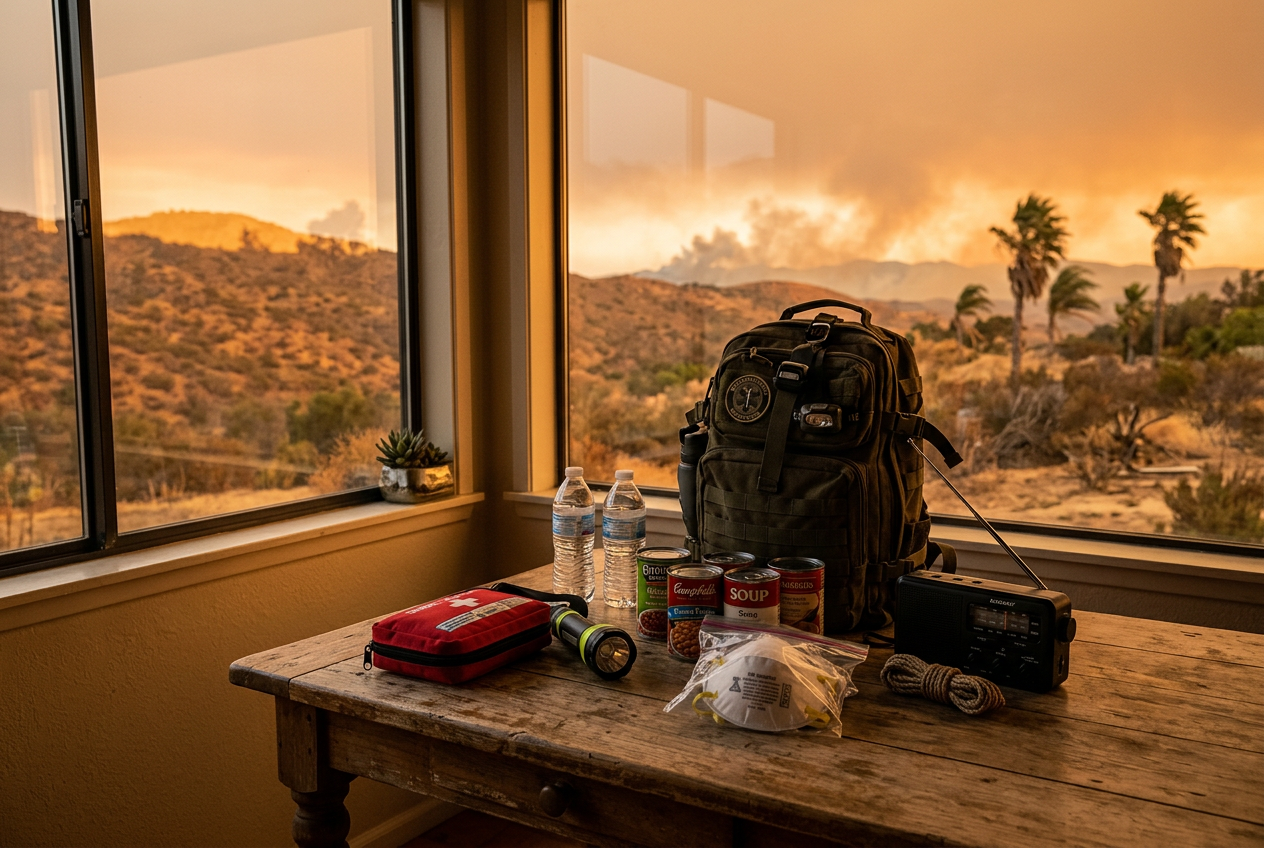
Active Southern California Wildfires: A Household Readiness Checklist During Red-Flag Conditions (2026)
Fires are burning in parts of California right now. Near Santa Clarita in Los Angeles County, the Bouquet Fire burned more than 1,000 acres. Officials issued evacuation orders on October 5, 2026. A few days earlier, the Bull Fire near Verdi prompted evacuation warnings for nearby areas. If you live in or near a fire zone, this is not the time to wait and see.
Here is the problem. When an evacuation order comes, you may have only minutes to leave. Fire officials urge people to go right away when told. There is no time to pack, search for keys, or decide what matters most. The work has to be done before the order arrives. That is what being “go-ready” means.
This guide will help you get ready now, even if you have never prepared for anything like this. You will learn the difference between a red-flag warning, an evacuation warning, and an evacuation order. You will set up alerts and plan two ways out. You will build a go bag and compare ready-made kits. You will learn how to protect your lungs from smoke and how to harden your home and car. Then you will know exactly what to grab and how to leave safely when the order comes.
Let’s start with the basics, then move step by step. You can print this page and use it as your checklist.
- During red-flag conditions, keep a packed go-bag by the door so you can leave within minutes.
- Plan for at least 3 days, or 72 hours, of food and water for everyone in your household.
- Protect your lungs from smoke and ash with N95 respirators for each family member.
- Know your evacuation routes and have a backup, since fast-moving fires can close roads.
- Sign up for local alerts and keep your phone charged so you hear warnings early.



Reviewed by James W., Priya K. & Beth O. — contributors with hands-on preparedness experience. How we test
Getting ready for a wildfire starts with having the right gear on hand before the smoke rolls in. Here are the key items to grab now, and below you will learn exactly why each one matters.

3M N95 Respirators, 20 Pack
Wildfire smoke and ash can hurt your lungs, and these N95 masks filter at least 95 percent of those tiny particles. A pack of 20 gives your whole household plenty for the days air stays unhealthy.
Check Price on Amazon
Ready America 2-Person Kit
This grab-and-go backpack holds 72 hours of food and water for 2 people, so you can leave fast without scrambling. It keeps the basics ready in one spot for a quick evacuation.
Check Price on Amazon
Family 4-Person Survival Kit
This compact backpack organizes emergency supplies for a family of 4 in one lightweight bag you can carry out the door. It helps a bigger household stay together and ready when it is time to go.
Check Price on AmazonIn this guide
Why Trust This Guide?
This article was researched and reviewed by contributors with hands-on experience in emergency preparedness. They have tested gear, built real systems, and lived through situations where these skills actually mattered.
Know the Difference: Red-Flag Warning, Evacuation Warning, and Evacuation Order
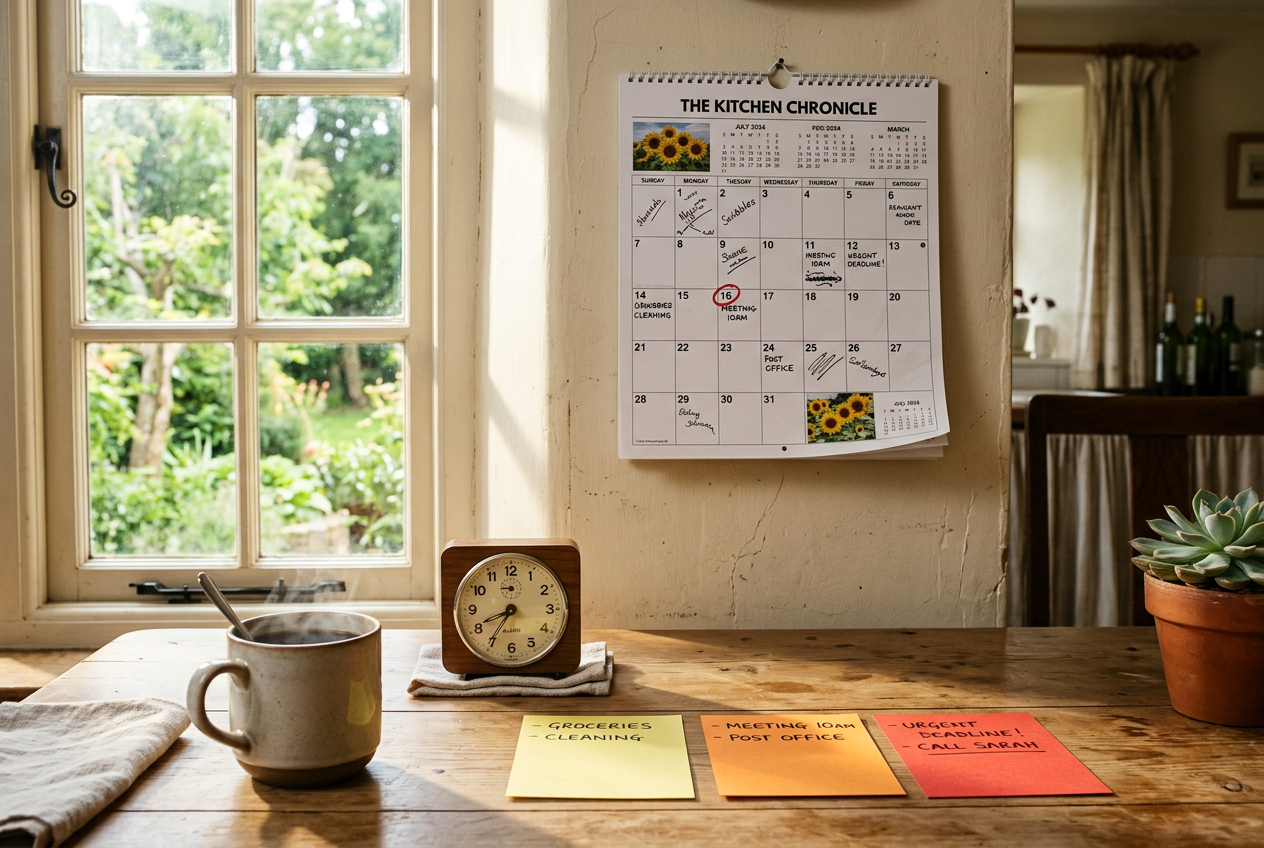
When a wildfire is near, you will hear different alerts. Each one means something different. Knowing the difference helps you act fast and stay safe. Right now, fires like the Bouquet Fire near Santa Clarita have triggered evacuation orders. If you live in a fire zone, you need to know what each warning means before one reaches you.
Red-Flag Warning: Fire Weather Is Here
A red-flag warning is about the weather. It means conditions are ready to make fires spread fast. This often happens when the air is dry, the wind is strong, and the land is parched. A red-flag warning does not mean a fire is burning near you. It means that if a fire starts, it could grow quickly and move fast.
Think of a red-flag warning as your cue to get ready. Check your go bag. Keep your phone charged. Park your car facing out so you can leave fast. Stay alert for more news. This is the time to prepare, not panic.
Evacuation Warning: Get Ready to Leave
An evacuation warning means there is a real threat nearby. Officials are telling you to get ready to leave. You do not have to go yet. But you should act like you will.
During an evacuation warning, do these things now:
- Put your go bag by the door.
- Load pets, medicine, and important papers in the car.
- Wear closed shoes and keep keys in your pocket.
- Stay tuned to local alerts.
If you have young children, older family members, or anyone who needs extra time, leave during the warning. Do not wait for the order. It is better to leave early than to rush later.
Evacuation Order: Leave Now
An evacuation order means go. Right now. This is the most urgent alert. Officials have decided the area is too dangerous to stay. Fire experts say you should never wait after an order comes. Waiting can put your life at risk. Roads can fill with traffic. Smoke can block your view. Fire can move faster than you expect.
When you get an evacuation order, grab your go bag and leave. Do not stop to pack more. Do not wait to see what your neighbors do. Follow the routes officials give you.
Never Wait for a Second Notice
Here is the most important rule. Do not wait for a second warning. Alerts may not always reach you in time. Cell service can fail. Power can go out. If you feel unsafe, leave on your own, even without an order.
The safest choice is always to leave early. If you are ready during a red-flag warning, you can act calmly when an order comes. That calm can save your life.
Sign Up for Alerts and Plan Two Ways Out
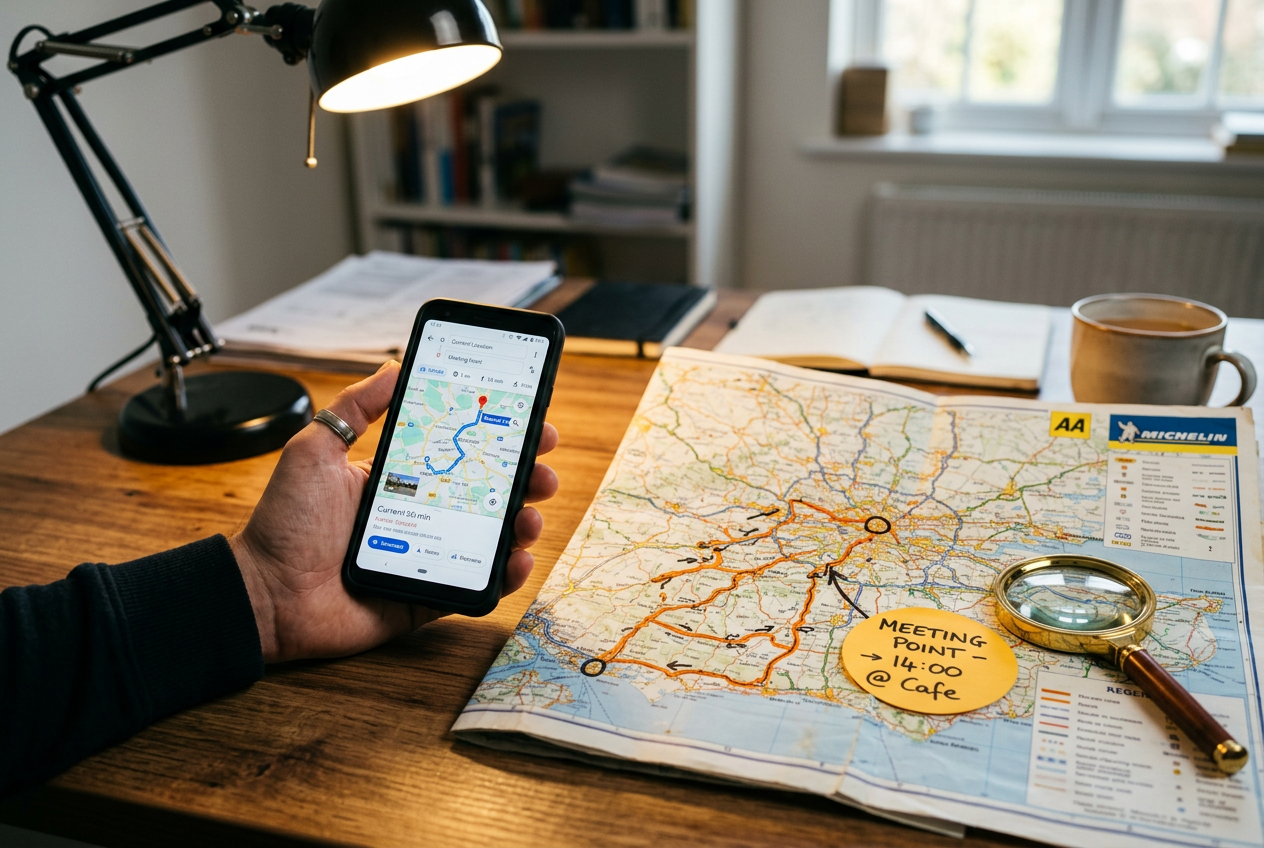
Fires move fast. The Bouquet Fire near Santa Clarita grew to over 1,000 acres before evacuation orders went out on October 5, 2026. You may get only minutes to leave. The best way to stay ahead is to set up alerts now and plan your exit before you need it. These steps are free. They do not cost you anything but a little time.
Register for Your County’s Alert System
Each county in Southern California runs its own emergency alert system. These systems send warnings straight to your phone by text, call, or email. Search online for your county name plus “emergency alerts” to find the sign-up page. For example, Los Angeles County uses a system that lets you register your home and work addresses. That way you get warnings for the places that matter most to you.
Sign up every adult in your home. Add a backup contact too, like a family member who lives somewhere else. If your phone dies or loses signal, someone else can still reach you.
Follow Cal Fire and Local Agencies
Cal Fire posts updates on active fires and red-flag conditions. Follow their official accounts on social media. Also follow your local fire department and sheriff’s office. These agencies often post evacuation news first. Keep a battery-powered radio at home as a backup. When cell towers fail, radio may still work.
Turn on Wireless Emergency Alerts in your phone settings. These are the loud warnings that come through even when your phone is on silent. Most phones have this on by default, but check to be sure.
Map at Least Two Ways Out
Never count on just one road. A fire, a crash, or heavy traffic can block your main route. Cal Fire advises planning at least two evacuation routes. Pick one that goes a different direction from the other. Drive both routes once so you know them by heart.
Keep a paper map in your car. This matters more than you might think. When cell service fails, your phone map may not load. A paper map always works. Mark your two routes on it with a pen. Circle the roads that lead out of your area.
Pick a Family Meeting Point
Your family may not be together when an order comes. Someone could be at work or school. Choose a meeting point outside your neighborhood where everyone knows to go. A good spot is easy to find and far from the fire risk. Think of a store parking lot, a park, or a relative’s home in another town.
Pick a second meeting point too, in case the first one is not safe. Write both spots down. Make sure every family member, including kids, knows where to go. Practice saying the plan out loud together. A clear plan saves precious minutes when every second counts.
Build Your Go Bag Before You Need It
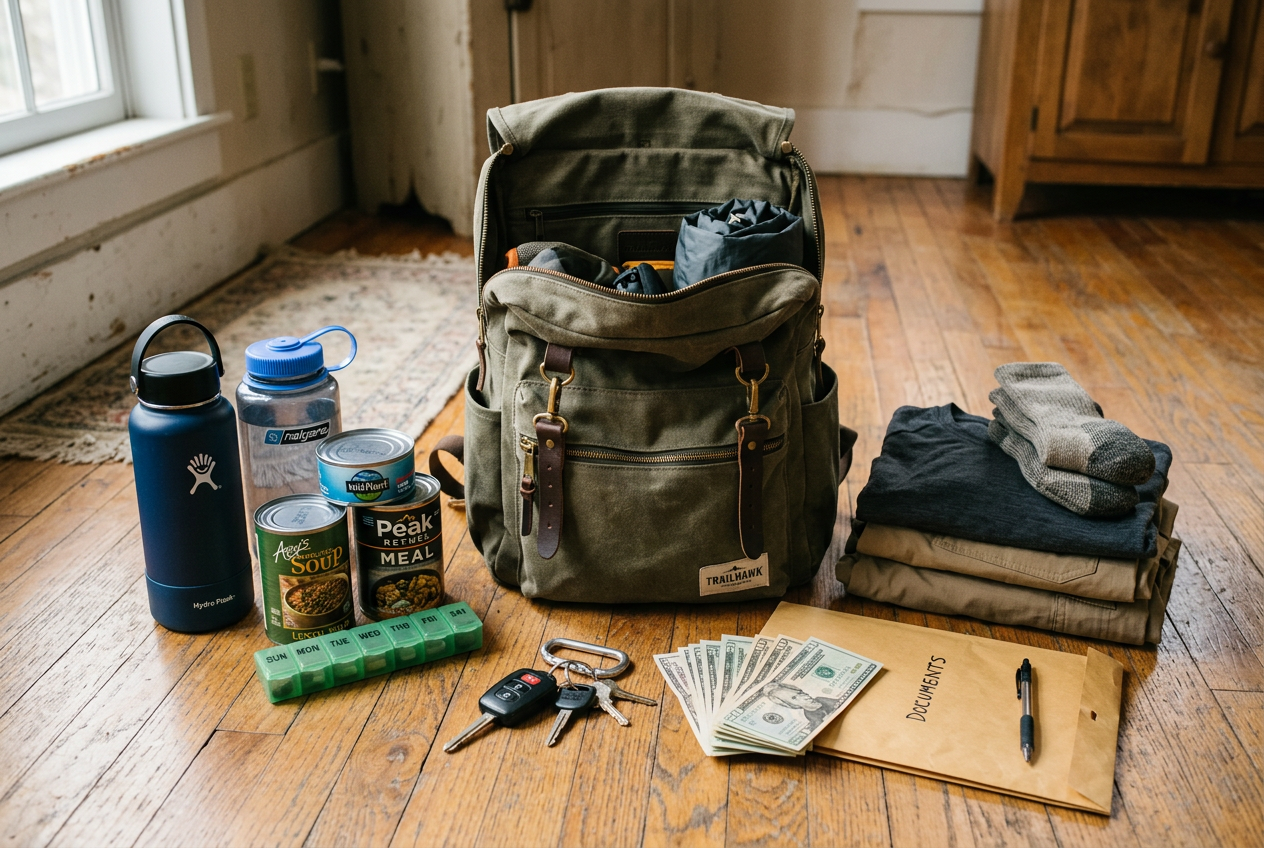
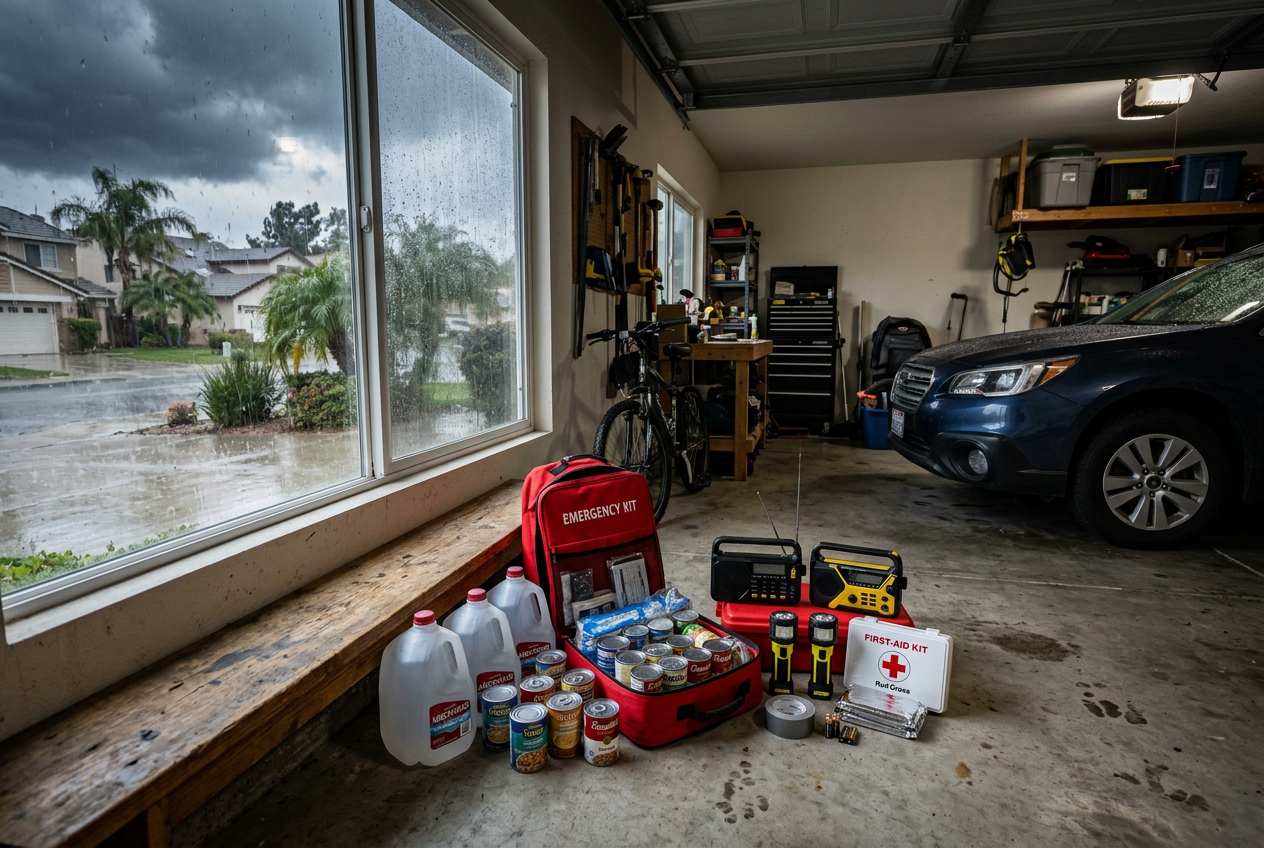
A go bag is a backpack packed with the basics you need if you have to leave fast. When an evacuation order comes, you may have only minutes. You should not be looking for your medicine or digging for car keys. Pack the bag now, while things are calm. Keep it by the door or in your car.
Make one go bag for each person in your home. Children and older adults may need extra items. Do not forget your pets. They need food and water too.
What to put in each bag
Here is what Cal Fire and local experts say a go bag should hold:
- A three-day supply of water for each person. That is about one gallon per person per day.
- A three-day supply of non-perishable food. Think canned goods, energy bars, and other foods that do not spoil.
- Your prescriptions and any medical items you use.
- Extra car keys. If you lose your main set, you still need to drive.
- Cash. Card machines may not work during a power outage.
- Important documents. Keep copies of your ID, insurance papers, and home records in a waterproof bag.
- A change of clothes for each person. Pack sturdy shoes too.
- A map with at least two ways out of your area. Do not count on your phone alone.
- N95 masks to help protect your lungs from smoke.
Check your bag a few times a year. Water and food go bad. Medicine expires. Swap out old items so your bag is always ready.
Build it yourself or start from a kit
You have two ways to do this. You can gather every item yourself. This lets you control exactly what goes in. Or you can buy a pre-packed emergency kit and add your own items to it. A kit gives you a head start. It already has food, water, and basic gear in one bag. You just add your prescriptions, keys, cash, and documents.
For one person, this single-person kit is a simple starting point. It comes in a grab-and-go backpack with food bars, water pouches, a first aid kit, a mask, an emergency blanket, and a rain poncho. The food bars and water have a five-year shelf life.

For a household, this family kit is built for four people. It uses a compact backpack and includes Coast Guard approved food rations and water with a five-year shelf life. The food bars need no water or heating.
Remember, no kit comes with your medicine, your keys, or your papers. Always add those yourself. A pre-packed kit is a starting point, not the finish line. The goal is a bag that fits your family and is ready before you ever need it.
Compare Pre-Packed Emergency Kits
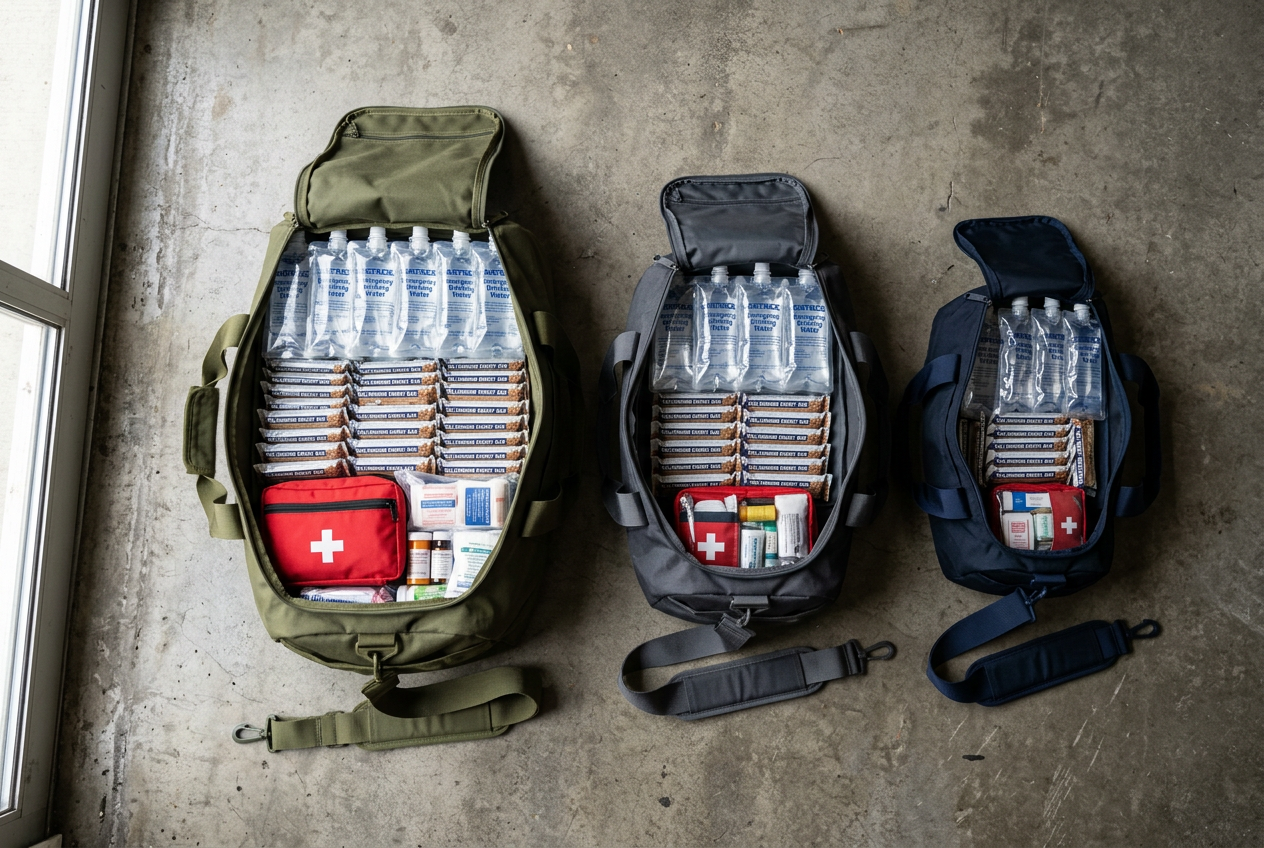
A pre-packed kit saves time. It gives you food, water, and first aid in one bag. That means less to gather when an evacuation order comes. Below is a quick way to match a kit to your household size.
Remember one thing. No kit is complete on its own. You still need to add your own items. That means medications, copies of important documents, extra car keys, cash, and phone chargers. If you have pets, pack their food and water too. Think of these kits as a strong starting point, not a finished go bag.
Small households or a car kit
The Ready America 2-Person kit is the smallest option here. It holds two emergency food bars with 4,800 total calories. It also has 12 sealed water pouches. You get a 33 piece first aid kit, dust masks, and nitrile gloves. Two ponchos and two survival blankets help with rain and cold. This is a good fit for one or two people. It can also live in your car trunk for quick trips.
Families of four
The Ready America Deluxe kit is built for four people for 72 hours. It includes four 2,400-calorie food bars and four 1-liter Aqua Literz water cartons. The first aid kit is larger here, with 107 pieces. You also get a power station for lighting, safety goggles, leather work gloves, and an emergency whistle. The extra gear makes it a stronger pick for a full household.
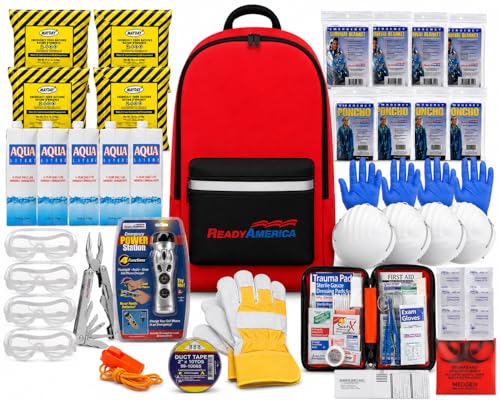
The First My Family kit also covers four people for 72 hours. It comes with food and water rations for four and an 85 piece first aid kit. It includes shelter and warmth supplies too. The maker says the kit exceeds Red Cross guidelines for preparedness. It ships in a black backpack that is easy to grab and carry.

How to choose
Start with your household size. One or two people may do fine with the smaller kit. A family of four should look at one of the larger options. Compare the first aid piece count and the extras that matter to you. A power station helps during a power outage. More first aid pieces help with minor injuries.
Whichever kit you pick, add your personal items right away. Store the bag near your door so you can grab it fast when an order comes.
Protect Your Lungs From Wildfire Smoke
Wildfire smoke is more than a bad smell. It carries tiny particles that can slip deep into your lungs. These fine particles can make it hard to breathe. They can also bother your eyes, nose, and throat. People with asthma, heart problems, or lung trouble feel it most. So do children and older adults. A cloth bandana or a surgical mask will not block these small particles well. You need the right mask.
Why N95 Respirators Work
An N95 respirator is built to filter at least 95 percent of certain non-oil-based particles. That is where the “95” comes from. Look for the words “NIOSH approved” on the package. NIOSH is the government group that tests and approves these masks. That label tells you the mask meets the standard.
The most important part is the seal. A mask only works if it fits snug against your face. Air should not leak in around the edges. Press the metal nose clip down over your nose. Make sure the straps are tight but not painful. If air leaks, the mask cannot protect you.
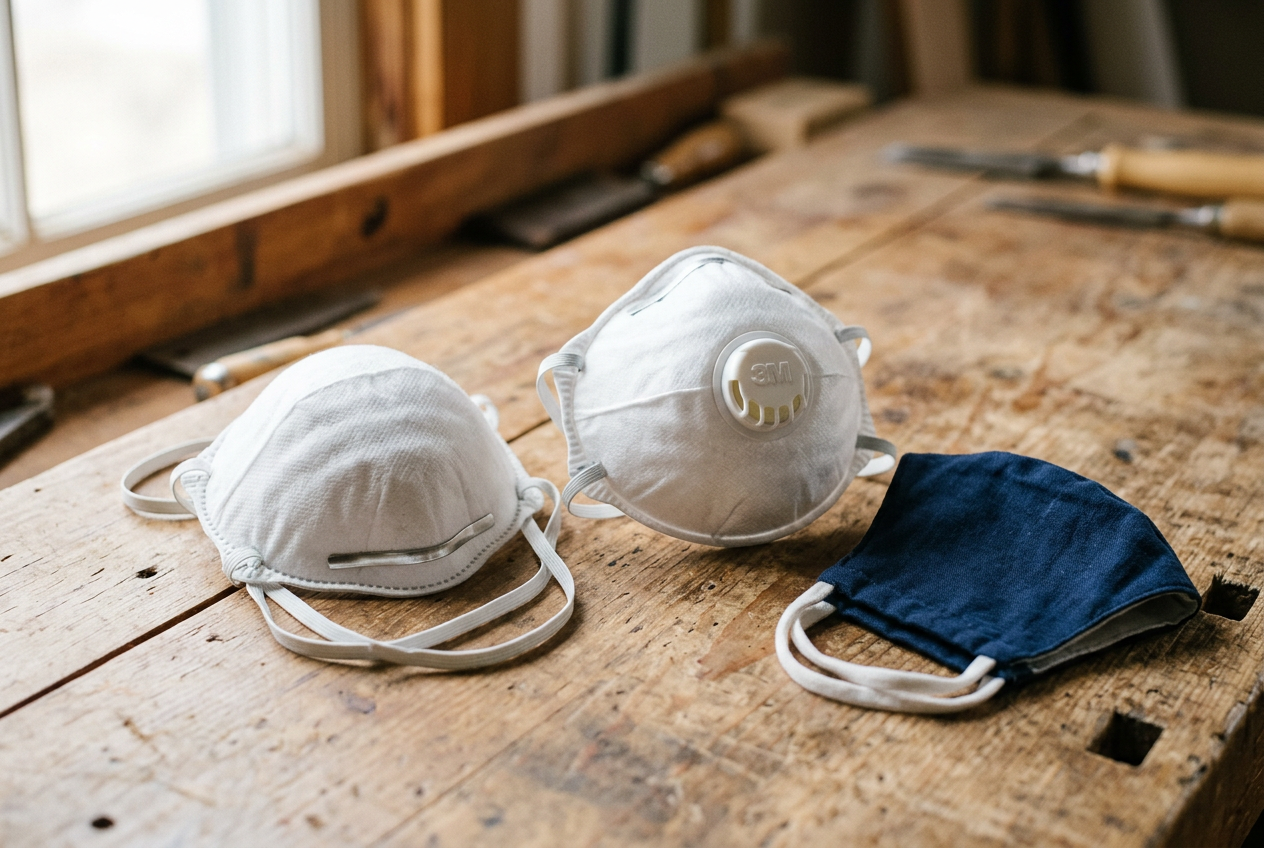
The 3M 8210 is a classic non-valved N95. It comes in a large pack, which is handy for a whole household.
Valved Versus Non-Valved
Some N95 masks have a small plastic valve on the front. This valve opens when you breathe out. It lets warm, moist air escape. That makes the mask feel cooler and easier to breathe in. If you need to wear a mask for a long time, a valved mask can feel more comfortable.
The 3M 8511 is a valved N95. The valve directs your breath downward and can make breathing easier.

Here is the trade-off. A valve lets your own breath out without filtering it. That is fine for smoke protection for yourself. But it does not protect other people from your breath. For wildfire smoke, this is usually not a problem. Pick whichever style you will actually wear.
KN95 Masks as a Lower-Cost Option
KN95 masks are a cloth-style option. They often cost less and fold flat for your go bag. They use several layers of material to catch particles. These are non-medical masks, so do not expect the same testing as a NIOSH-approved N95.

With any KN95, the seal still matters most. A loose mask leaks air no matter how good the filter is. Bend the nose clip to fit your face. Pull the ear loops snug. Check that all four edges press against your skin.
Simple Steps to Remember
Keep a few masks in your go bag for each person. Store spares in the car too. Put a mask on before you step into heavy smoke. Replace a mask that gets wet, dirty, or hard to breathe through. Clean air is still best, so stay indoors with windows closed when you can.
Harden Your Home and Prepare the Car Before an Order
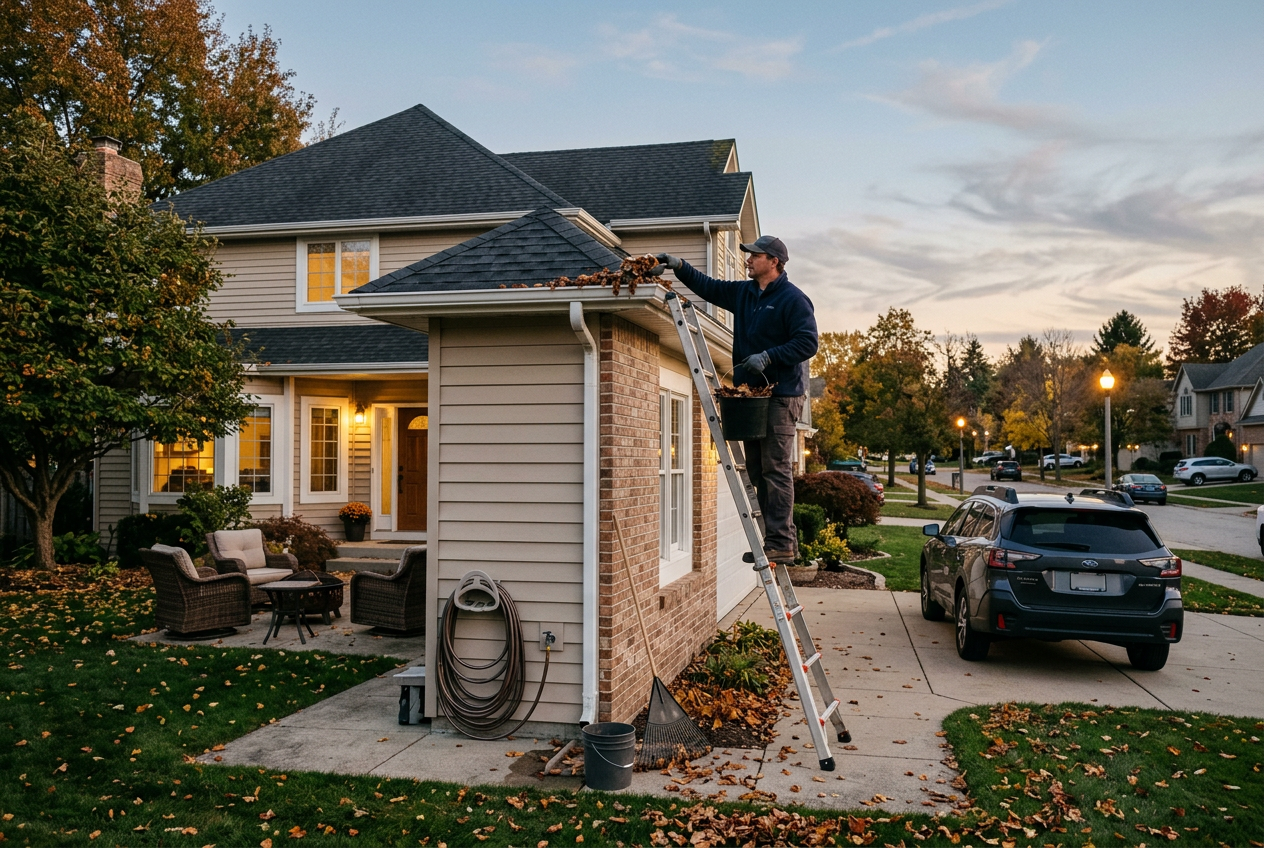
You do not have to buy anything to make your home safer today. During red-flag conditions, a few simple chores can help. Many of these steps take just an hour. Do them now, before any evacuation order comes.
Clear the Space Around Your House
Dry leaves and pine needles catch fire fast. Blowing embers can land in them and start a fire near your walls. Clean these out today.
- Scoop dry leaves and needles out of your gutters.
- Rake up dead leaves and dry plants near the house.
- Clear anything dry from under your deck or porch.
Next, look at the stuff resting against your walls. Door mats, patio furniture, and cushions can all burn. Embers can set them on fire, and that fire can spread to your home.
- Move door mats away from the house.
- Pull patio furniture and cushions well away from the walls.
- Move firewood piles and propane tanks far from the house if you can.
Close Up Your Home
Flying embers can get inside through open windows and doors. Close them to keep embers out.
- Close all windows and doors.
- Shut vents where you can.
- Close blinds and curtains made of nonflammable material.
Do not lock yourself out of your plan. Keep your keys and your go bag by the door so you can leave fast.
Get the Car Ready
Your car is your way out. Set it up now so you are not fumbling later. Back the car into the driveway, facing out toward the street. This lets you drive away quickly without backing up in a hurry.
- Back the car in, nose pointed out.
- Roll up the windows and close the vents.
- Point the car toward your planned exit route.
- Keep your keys where you can grab them fast.
Keep the Tank Full During Red-Flag Days
Gas stations can lose power or get crowded during a fire. A full tank means you can leave right away. During red-flag conditions, try to keep your tank at least half full. Fill up early, not at the last minute.
When you refuel, follow these safety basics:
- Let a hot engine cool before you add fuel.
- Use only approved gasoline containers if you store any fuel.
- Never store gasoline inside your home or living space.
- Keep fuel away from heat, sparks, and children.
- Never siphon gas with your mouth.
- Use a pump made for gasoline, and follow the directions on it.
- Follow your local fire rules for storing fuel.
Do not stockpile extra gas. A full tank plus one approved container is plenty for most households. Hoarding fuel is a fire risk, not a safety plan. These small steps make your home harder to burn and your exit faster when minutes matter.
When the Order Comes: What to Grab and How to Leave Safely
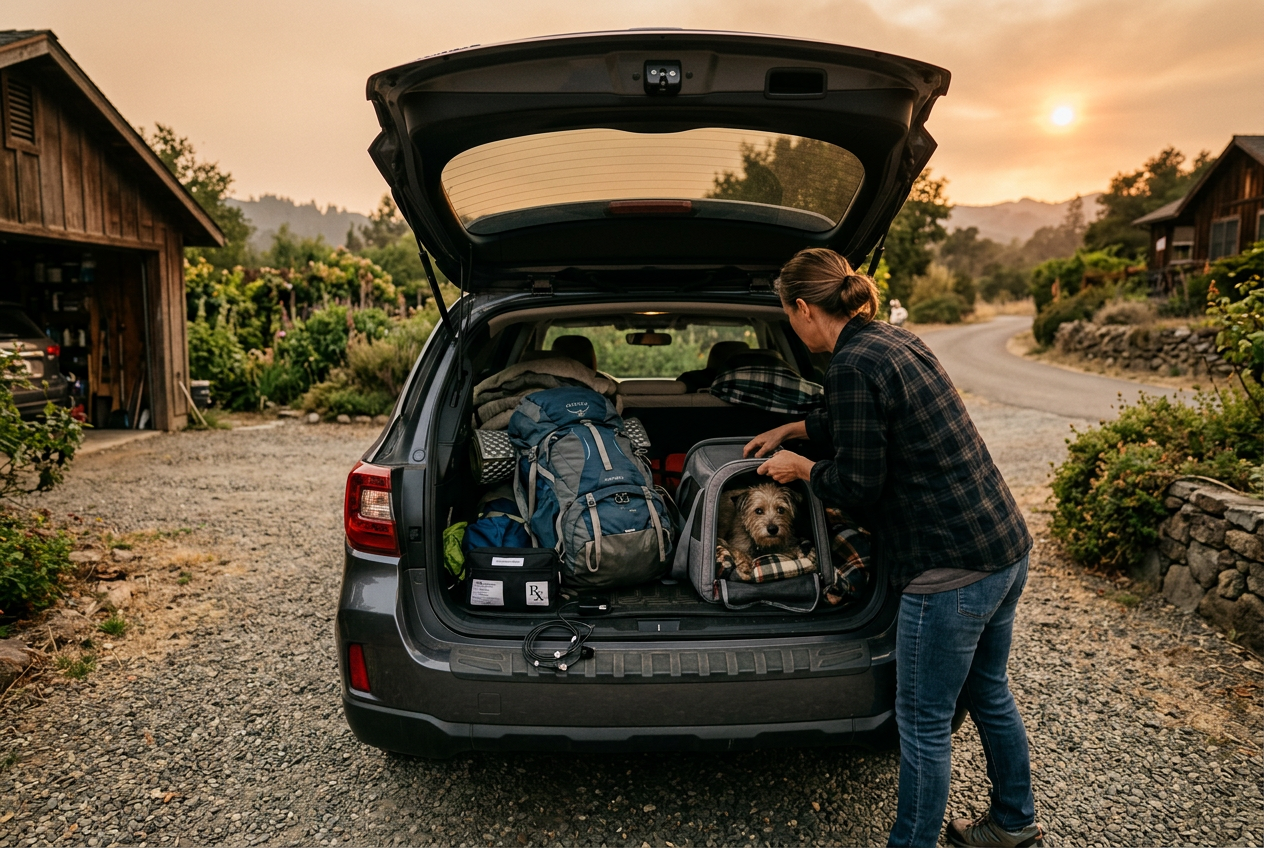
An evacuation order means leave now. Do not wait. Fire officials tell people not to delay once the order comes. Waiting to pack more can put you in danger. The goal is simple. Get out fast and get out safe.
If you built a go bag before today, this part is easy. Grab it and go. If you have not built one yet, you still need to move quickly. Below is a fast grab list. Keep it short. Do not try to take everything.
Your Fast Grab List
Grab these items first. Keep them near the door so you can move in seconds.
- Your go bag, if you have one packed
- Medications and any medical items you need
- Important documents, like IDs, insurance papers, and records
- Phones and chargers
- Cash and extra car keys
- Pets and their supplies, like food, water, a leash, and a carrier
Put pets in carriers or on leashes early. Scared animals try to hide. Loading them first saves time. Pack a few days of pet food and water too.
If you do not have a kit yet, a pre-packed one can cover basics like food, water, and first aid. A grab-and-go option like the Ready America 2-Person 3-Day Backpack is built to pick up and carry. Keep one by the door for next time.
Dress to Leave Safely
What you wear matters. Put on long sleeves and long pants. Choose closed shoes, not sandals. This protects your skin from heat and flying embers. Thick cotton is a good choice. Skip loose or flammable clothing.
Keep an N95 mask handy for smoke. A mask like the 3M 8511 N95 respirator helps filter out small smoke particles. Put it on if the air gets thick.
How to Drive Out
Follow the two routes you mapped before. If one road is blocked, use the other. Do not rely on just one way out. Roads can close fast during a fire.
Turn your headlights on, even in daytime. Smoke makes it hard to see. Headlights help you see and help others see you. Drive slow and steady. Watch for other cars, people on foot, and emergency crews.
Listen to your phone alerts as you go. Officials may change routes or share new orders. Keep your windows up and your air on recirculate to keep smoke out of the car.
Leave Immediately
This is the most important rule. Do not go back for more stuff. Things can be replaced. You cannot. If officials say go, go right away. A few extra minutes packing is not worth the risk. Trust the order and drive out on your mapped route.
Frequently Asked Questions
Do I really need to leave if my house looks fine?
Yes. If officials give an evacuation order, leave right away. Do not wait to see how the fire looks. Waiting can be dangerous. Fire can move fast and change direction. Roads can fill up or close. By the time things look bad, it may be too late to drive out safely. A house that looks fine now can be cut off in minutes. Trust the order, not what you see out your window.
What if I only have minutes to go?
Grab your go bag first. That is why you pack it early, before any order comes. If your bag is ready by the door, you can leave fast. If you do not have a bag yet, grab these four things: your medicines, your phone and charger, your car keys, and any people and pets. Then get in the car and drive out. Do not go back for extra items. Your life matters more than your stuff.
Keep your car ready too. Try to keep the gas tank at least half full during red-flag conditions. Back the car into the driveway so you can pull out fast. Know your two ways out of the neighborhood.
Are cloth masks good enough for smoke?
No. Cloth masks do not block the tiny particles in wildfire smoke. You need an N95 mask to filter those small bits. An N95 is designed to catch at least 95 percent of certain particles. A cloth mask or a loose paper mask will not do that job.
Pick a NIOSH-approved N95 for smoke protection. The 3M 8210 N95 comes in a pack so each person can have one. If you want easier breathing, the 3M 8511 N95 with a Cool Flow valve directs your breath out and makes exhaling simpler. Keep a few masks in your go bag.
Should I store extra gasoline at home?
Be careful here. Do not hoard fuel. Storing lots of gasoline raises your fire risk, which is the last thing you want during red-flag conditions. If you do keep some fuel, follow basic safety rules.
Use approved gas containers only. Never store gasoline inside your living space. Keep it away from any flame, spark, or heat source. Keep it away from children. Let a hot engine cool before you add fuel. Never start a siphon with your mouth. Use a pump made for gasoline. Always follow the container maker’s directions and your local fire rules.
Keep in mind that fuel stabilizer does not fix fuel that has already gone bad. The smartest move for most households is simple. Keep your car tank topped up during fire season so you are ready to drive out. That beats keeping extra cans around the house.
Your Quick Action Checklist
Use this list to get ready this week. Right now, fires like the Bouquet Fire near Santa Clarita have active evacuation orders. If you live in or near a fire zone, do not wait. Work through these steps in order.
Step 1: Sign Up for Alerts
Find your county’s emergency alert system. Sign up with your phone number and email. Turn on Wireless Emergency Alerts on your phone. Follow Cal Fire and your local fire department for updates. Pay attention to air quality warnings too.
Step 2: Map Two Ways Out
Pick at least two routes out of your neighborhood. Cal Fire says your plan should include a map with at least two evacuation routes. Write them down. One road may be blocked by fire or traffic. Make sure every adult in your home knows both.
Step 3: Build a Go Bag for Each Person
Pack a bag now so you can grab it fast. Include these items:
- Three-day supply of non-perishable food and water per person
- Food and water for your pets
- Prescriptions and medical items
- Extra car keys
- Cash
- A copy of your evacuation route map
- N95 masks
If you want a ready-made base, a pre-packed kit saves time. Then add your own medicine and documents.
Step 4: Stage N95 Masks
Wildfire smoke hurts your lungs. Keep NIOSH-approved N95 masks where you can reach them fast. Put some in each go bag and some in the car.
Step 5: Fuel the Car Now
Keep your gas tank at least half full during red-flag conditions. Gas stations may close or lose power. Park the car facing out so you can leave quickly. If you store extra fuel, use only approved containers. Never store fuel in living space. Keep it away from heat, flames, and children. Let the engine cool before you refuel. Never use your mouth to siphon gas. Follow the maker’s directions and your local fire rules.
Step 6: Harden Your Home
Do these before any order comes:
- Clear dry leaves and brush away from the house
- Move patio furniture and firewood away from walls
- Close all windows and vents
- Have a hose ready and water nearby
Step 7: Know Your Leave-Now Plan
When officials say evacuate, leave right away. Do not wait. Waiting can put you in danger. Grab your go bags, your pets, your phone, and your car keys. Help family members who need extra time. Follow your mapped route. Listen to your alerts as you drive.
Do This Today
Print this page and check off each step. Keep it with your go bag. The best time to get ready is before the order comes. If you finish one step today, finish the rest this week.
Next Steps: Get Go-Ready Today
Fires are burning in and near parts of California right now. The Bouquet Fire near Santa Clarita forced evacuation orders. The Bull Fire near Verdi prompted evacuation warnings. If you live near an active fire or in a red-flag area, now is the time to act. Do not wait for an order to reach your door.
Fire officials are clear on this point. When authorities tell you to evacuate, leave right away. Waiting can put your safety at risk. The best time to get ready is before any order comes. That means today.
Here is how to finish the job. Take these three steps now, in this order.
1. Sign Up for Alerts First
You cannot act on a warning you never get. Sign up for your county’s emergency alert system. These alerts tell you when a warning or order hits your area. Keep your phone charged and nearby. Turn on wireless emergency alerts in your phone settings. This step costs nothing and takes just a few minutes.
2. Finish One Go Bag Today
You do not need a perfect kit. You need one bag that is ready to grab. Pack a three-day supply of water and non-perishable food for each person. Add food and water for your pets too. Include any prescriptions and medical items. Pack extra car keys, some cash, and N95 masks to protect your lungs from smoke. Add a map that shows at least two ways out of your area.
If you want a head start, a pre-packed kit covers many of these basics in one bag.
You can add your own prescriptions, keys, cash, and masks to round it out. For the masks, a NIOSH-approved N95 gives real protection from smoke particles.
The goal is simple. By the end of today, you should have one bag you can carry out the door in seconds.
3. Review Your Routes With Everyone
A plan only works if your whole household knows it. Sit down with everyone today. Walk through your two ways out. Pick a meeting spot in case you get split up. Make sure every adult knows where the go bag sits and how to grab it. If you have kids, keep the message calm and clear.
Do these three steps and you are go-ready. You will not scramble if an order comes. You will just leave.
Want to keep this checklist handy? You can print this page and post it where your household will see it. Review it again when the next red-flag warning hits your area. A few minutes now can save you from a dangerous rush later.
Get your alerts on. Pack one bag. Talk through your routes. Do it today.
Sources and Further Reading
- How to safely evacuate a wildfire
- Staying safe in a wildfire: What to pack and when to evacuate
- Wildfire preparation tips for SoCal homeowners
- What To Do During a Wildfire in California
- Wildfire safety tips for California residents
- Bull Fire: Vegetation fire near Verdi, Nevada, prompts evacuation order
- Bull Fire in Washoe County | Updates and Maps
- Evacuation orders remain near Santa Clarita after Bouquet Fire burns 424 ha (1 048 acres) in Los Angeles County, California