Ready
The '90 Days Without Power' Headlines: A Calm, Realistic Household Backup Plan (2026)
Maybe you have seen the headlines. “Could you survive 90 days without power?” They are everywhere right now. The number sounds scary. It makes it feel like you need to fill your whole house with supplies.
Here is the calm truth. That 90 day number did not come from a guide for families. It comes from the Pentagon. A new military program called FORTRESS wants major U.S. bases to run on their own for up to 90 days if a crisis cuts off power, water, or fuel. News reports make this clear. The 90 day figure is a standard for military bases, not a target for your pantry.
So you can relax a little. You do not need to stockpile three months of food and gas. That kind of fear driven buying is not helpful, and it can even be unsafe.
This guide gives you a grounded plan instead. You will learn what the headlines really mean, and what they do not. You will set a realistic goal, starting with 3 days and building toward 2 weeks. You will see simple ways to keep the lights on and charge your phone. You will learn about backup power for medical devices and other essentials. We will also cover water, food, and staying warm without buying special gear.
By the end, you will have a clear checklist and a calm next step. No hype. Just practical help.
- Plan in layers: small backup power for phones and lights, plus a larger station for fridges and devices.
- Store enough light for every room, with spare AA batteries ready to swap in.
- A 1024Wh station can run a mini fridge and recharge a phone around 28 times during an emergency.
- Pair power stations with optional solar panels so you can refill them when the grid stays down for weeks.
- Test your gear now so you know how it works before you ever need it.
One practical preparedness move each week. No fear-mongering, ever.



Reviewed by Marcus T., Priya K. & Elena V. — contributors with hands-on preparedness experience. How we test
Getting ready for a long outage starts with a few key tools in your home today. Keep reading to see how each one fits into a calm, workable plan.

Jackery Explorer 300 Power Station
At just 7.5 lbs with 292Wh, this grab-and-go station keeps phones, radios, and small devices charged. It is the easy backup you can carry room to room or take outside.
Check Price on Amazon
Lichamp LED Lantern 4 Pack
These collapsible 350 lumen lanterns give 360 degree light so no room stays dark during an outage. Running on AA batteries means you can keep them going with simple spare cells.
Check Price on Amazon
STARYLINE 1000W Power Station
With 1000W output and 1024Wh capacity, it can run a mini fridge, laptop, or kettle during a long blackout. This is the heavy lifter that keeps essentials working when the grid is down for days or weeks.
Check Price on AmazonIn this guide
Why Trust This Guide?
This article was researched and reviewed by contributors with hands-on experience in emergency preparedness. They have tested gear, built real systems, and lived through situations where these skills actually mattered.
What the Headlines Actually Mean (and Don’t)

You have probably seen the headlines. “Could you survive 90 days without power?” They sound scary. They are meant to grab your attention. But the real story is calmer than it looks.
The 90-day number comes from the Pentagon. It is part of a new military plan called FORTRESS. The goal is to make sure major U.S. military bases can keep running for up to 90 days without outside power, water, fuel, or supplies. News reports say the plan is designed to stop bases from being “starved out, shut down, or cut off” during a crisis.
That is the key point. The 90-day figure is a standard for military bases. It is not advice for your home.
Why a Base Is Not Your House
A military base is huge. It may hold thousands of people. It runs hospitals, airfields, and command centers. It cannot simply close during a war or disaster. So planners want it to stand alone for a long time if supply lines get cut.
Your household is different. You are one family in one home. Your needs are smaller. Your power, water, and food use are tiny next to a base. So the same number does not fit your life. One news report put it plainly: the 90-day figure is a Pentagon standard for its own bases, not your pantry.
What Governments Actually Tell Households
Real guidance for families is much shorter. Public safety advice often says you should be ready to be on your own for about three to fourteen days. That means you can get by for a few days to two weeks if services stop.
Why that range? Most power outages are short. They last hours or a few days. Big storms can stretch longer. A two-week goal covers almost every event a normal household will ever face. It is a realistic target you can actually reach without spending a fortune or filling your garage.
Current News vs. Lasting Advice
It helps to split two things in your mind.
One is the news. The Pentagon plan is a current event. It is interesting, but it is about defense policy, not your kitchen.
The other is evergreen advice. That is the steady, boring guidance that does not change with the headlines. Keep some water. Keep some food. Keep a way to make light. Have a plan for your phone and any medical devices. This advice was true last year, and it will be true next year.
So take a breath. You do not need to prepare like a military base. You need a simple, sensible plan for a few days up to two weeks. The rest of this article shows you how to build that, step by step, without panic and without buying things you do not need.
Set a Realistic Household Goal: Start With 3 Days, Build Toward 2 Weeks
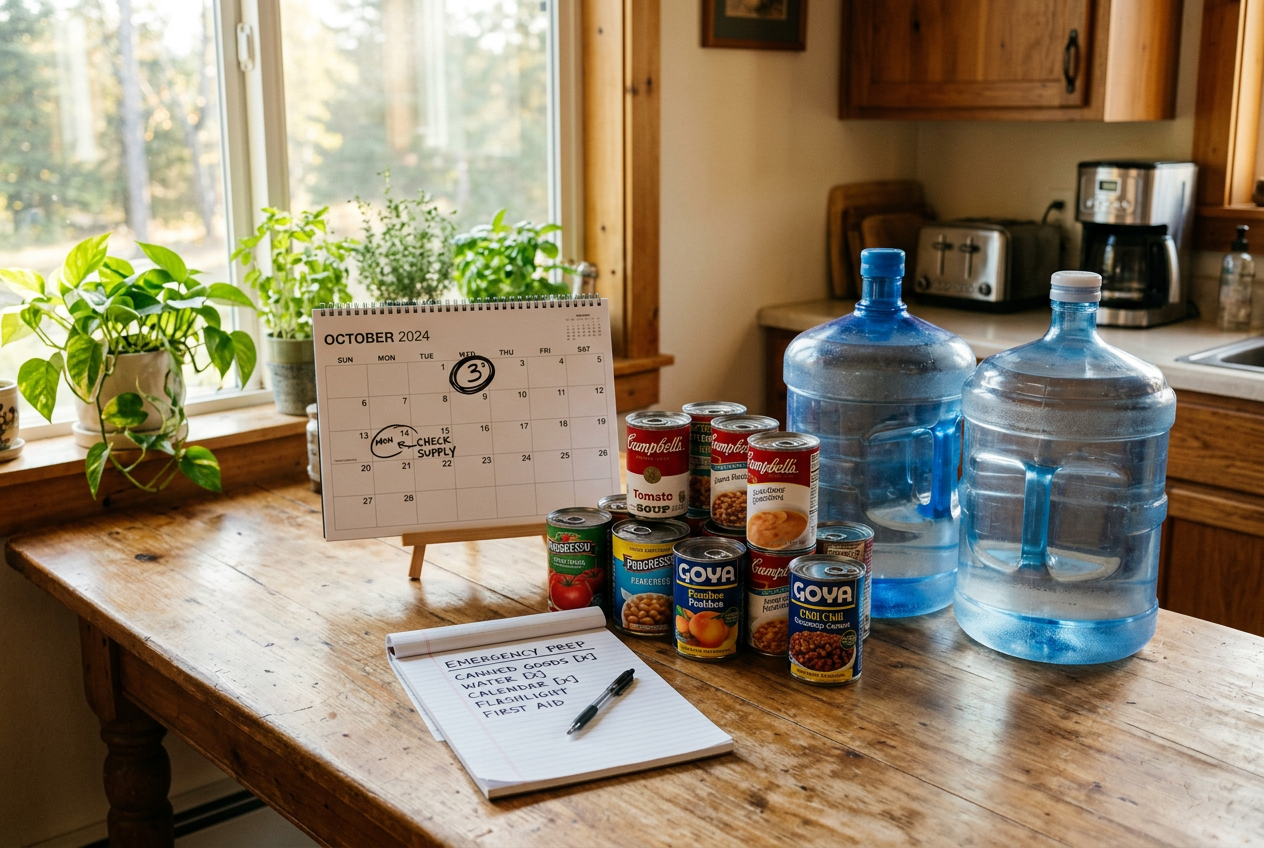
The “90 days without power” headlines come from a Pentagon plan for military bases. That 90-day figure is a goal for large bases, not your home. News reports on the plan even note this directly. The 90-day number is a military base standard, not a household pantry target. So let go of that scary number. You do not need to stock three months of supplies.
Instead, aim for a goal that fits real life. Most power outages last hours or a few days. A sensible plan starts small and grows over time.
Step one: Cover the first 72 hours
Your first goal is three days, or 72 hours. One widely shared piece of guidance says you should be ready to be on your own for at least three to fourteen days. Three days is a strong start. It covers most short outages well.
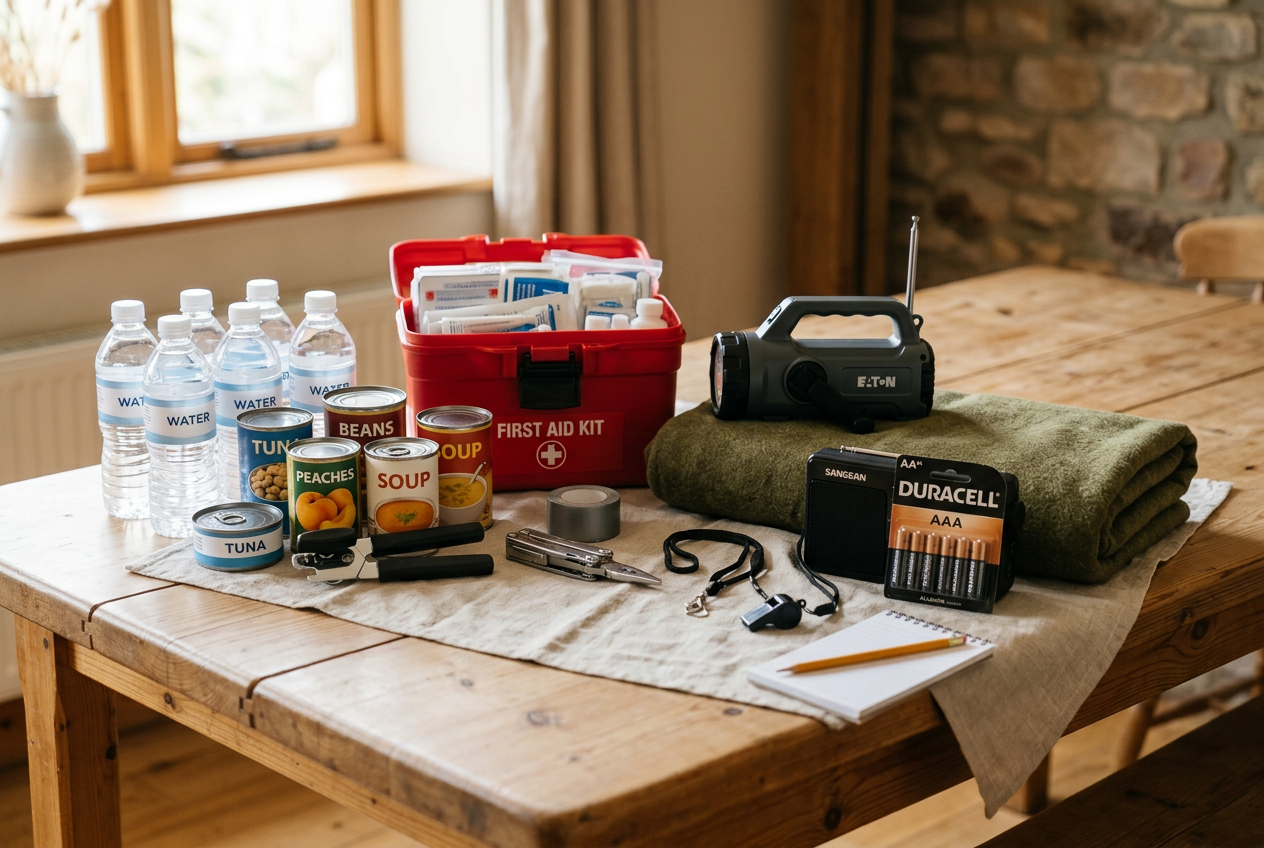
For 72 hours, keep enough water, food, light, and basic power on hand for everyone in your home. Think about anyone who needs a medical device. Think about pets too. You do not need special gear to begin. Use what you already own first. Fill clean jugs with water. Keep some shelf-stable food you already eat. Have a flashlight or lantern ready.
Step two: Build toward two weeks
Once your three days are solid, stretch your goal toward two weeks. You do not have to buy it all at once. Add a little each week. Grab an extra case of water on a normal shopping trip. Pick up a few more canned goods. Over a couple of months, you will reach two weeks without any strain on your budget.
Two weeks is a strong, realistic target for an ordinary household. It covers longer storm outages and gives you breathing room. It is far more useful than panic-buying 90 days of supplies you cannot store or afford. This slow, steady approach is the opposite of hoarding. You are simply building a small buffer.
Free steps you can take today
Some of the best steps cost nothing.
- Learn your outage history. Think back. How long have past outages in your area actually lasted? This tells you how much backup you really need.
- Know your local resources. Find out where your town opens warming or cooling centers. Note where you can get water or charge a phone if needed.
- Check your home now. Walk through your house. See what lights, water, and food you already have.
- Make a simple plan. Write down who needs what during an outage. Keep it where everyone can find it.
Start with three days. Grow toward two weeks. That calm, tiered goal beats any headline number.
Keep the Lights On: Battery Lanterns and Simple No-Purchase Lighting
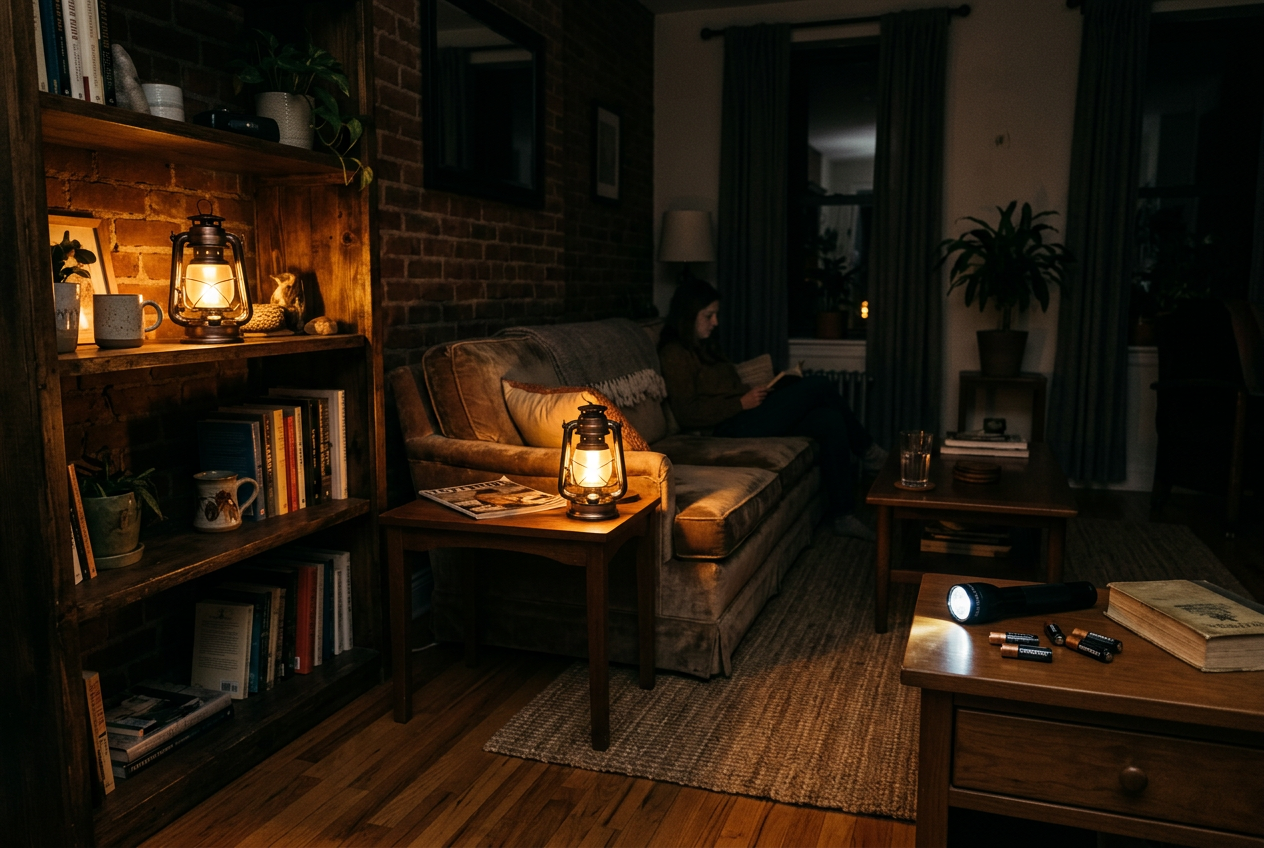
When the power goes out, the first thing you notice is the dark. Good lighting makes everything else easier. You can find your supplies, check on family, and stay calm. So lighting is the best place to start.
Skip the Open Flame
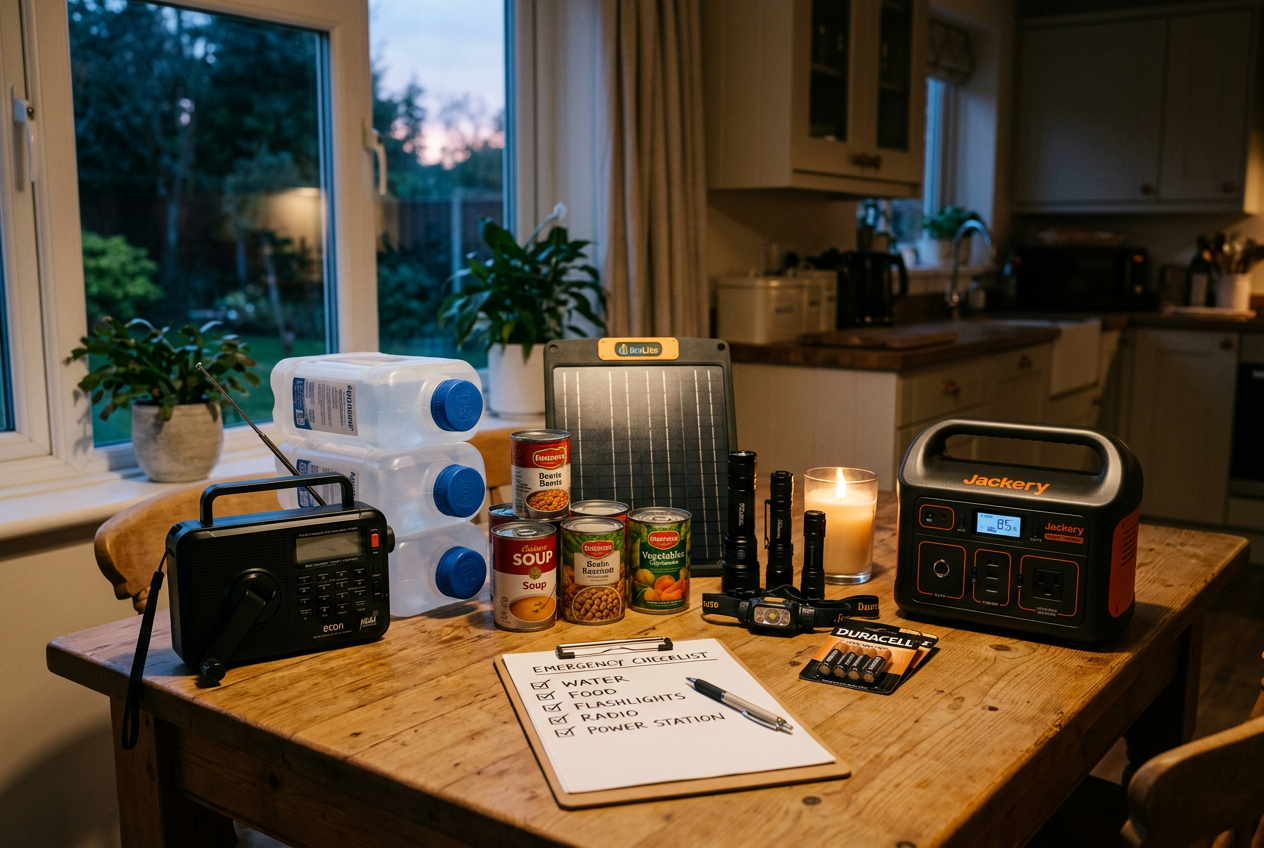
Candles feel cozy, but they are a fire risk. A knocked-over candle can start a house fire fast. Kids and pets make this worse. Battery-powered lanterns are a safer choice. They do not get hot enough to burn you. They will not set anything on fire. And you can leave them on while you sleep.
Understand Lumens and Batteries
Two simple things matter when picking a lantern: brightness and batteries.
Brightness is measured in lumens. More lumens means more light. For a single room, something in the range of 150 to 350 lumens is plenty. A lantern that lights up a whole room is more useful than a narrow flashlight beam.
Batteries matter too. Most small lanterns use AA or AAA batteries. These are easy to find and cheap to stock. Pick lanterns that use one type if you can. That way you only buy and store one kind of battery. Keep a fresh pack or two set aside for outages.
Good Lantern Options
Here are a few battery lanterns that fit an ordinary household. All of them fold flat for storage and turn on with a simple pull. No tricky switches.
The Lichamp lantern comes in a 4 pack and puts out 350 lumens. That is bright enough to light a room well. It uses 3 AA batteries each. A 4 pack means you can put one in several rooms at once.
The MalloMe lantern is more pocket-sized. It gives up to 300 lumens and runs on 3 AAA batteries. It is a good grab-and-go light for a bag or a bedside table.

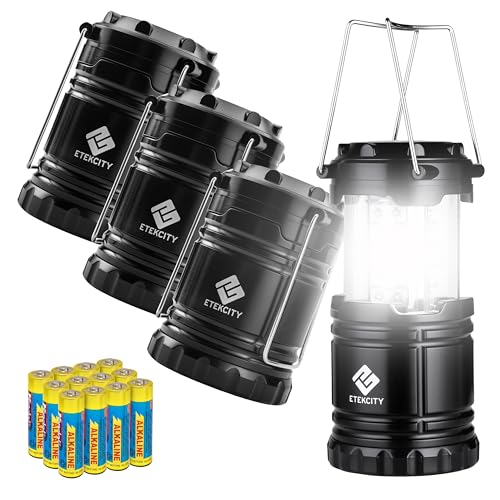
The Etekcity lantern comes in a 4 pack and includes batteries, so it works right out of the box. It reaches 154 lumens and lets you dim it by collapsing it. Dimming helps your batteries last longer.
No-Purchase Lighting Tips
You do not have to buy anything to be more ready. Try these free steps today:
- Keep your phone charged. Your phone flashlight works in a pinch. When you hear about a storm or outage risk, charge your phone and any power banks early.
- Put a flashlight by your bed. Outages often happen at night. A light within reach saves you from stumbling in the dark.
- Place a light in each key room. Think kitchen, bathroom, and bedrooms. One light per room means no one is left in the dark.
- Check your batteries now. Swap in fresh ones before you need them. Store spares in a spot everyone knows.
Start with light. It is the simplest win and it makes the rest of your plan feel doable.
Backup Power for Phones, Medical Devices, and Small Essentials
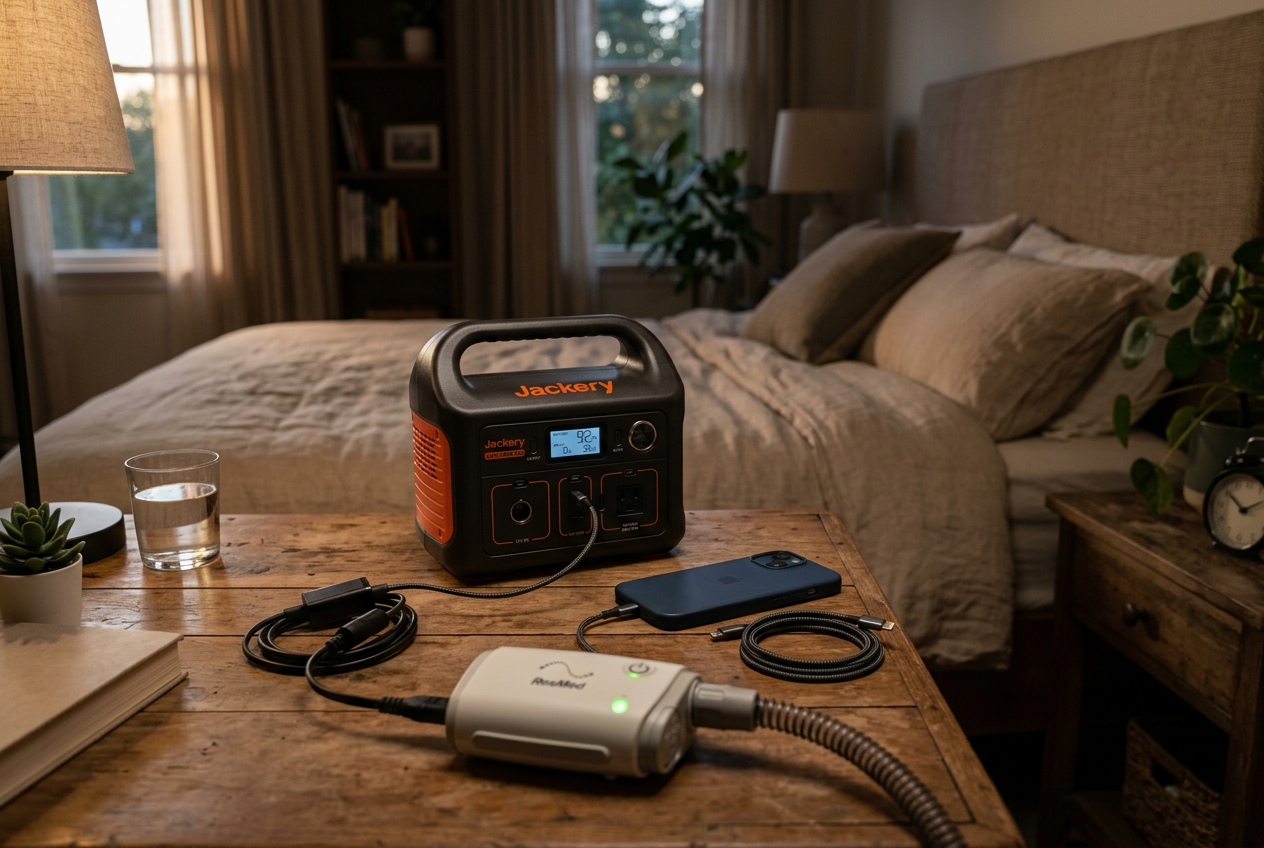
When the power goes out, your phone still matters. So does your Wi-Fi router, a few lights, and any medical device you rely on. A portable power station can keep these running for a while. Think of it as a big rechargeable battery in a box. You charge it ahead of time. When the grid goes down, you plug your small devices into it.
These units are different from loud gas generators. They make no fumes. They are safe to use indoors. You can keep one near your bed or on a counter. Many people use them to run a CPAP machine at night during a short outage.
Watt-Hours vs Watts: The Two Numbers That Matter
Two numbers tell you what a power station can do. They sound alike, but they mean different things.
Watt-hours (Wh) tell you how much energy is stored. This is the size of the tank. A bigger number means it runs your devices longer.
Watts (W) tell you how much it can power at once. This is the strength. If a device needs more watts than the unit can give, it will not run. Some units have a higher “surge” or “lifting” number for short bursts.
So you want enough watt-hours to last through the outage, and enough watts to run the device you need. Small units in the 280 to 300 watt-hour range are a good fit for short outages. They can charge phones many times, run a few lights, keep a router on, and power a CPAP for part or most of a night.
A Few Small Units to Consider
Here are three compact options. All three use LiFePO4 batteries, a long-lasting type that holds up over many years of charging.
The Jackery Explorer 300 holds 292 watt-hours and gives 300 watts of output, with a 600-watt surge. It is light at about 7.5 pounds. It has AC outlets, USB ports, and a car port.

The BLUETTI Elite 30 V2 holds 288 watt-hours and gives 600 watts, with a 1500-watt lifting mode for short bursts. That extra strength lets it run a few more things, like a small kettle.

The Jackery Solar Generator 300 is the same 292-watt-hour unit bundled with a 40-watt solar panel, so you can recharge from the sun.
Charging and Safety Basics
Recharge your unit from a wall outlet before a storm. You can also recharge from a solar panel when the grid is down. Keep the unit dry and out of direct heat. Do not cover it while it runs. Follow the maker’s directions. Charge it every few months so it stays ready. For any medical device, check with your device maker that the power station works with it before you count on it.
Powering More: Mid and Larger Capacity Stations for Longer Disruptions
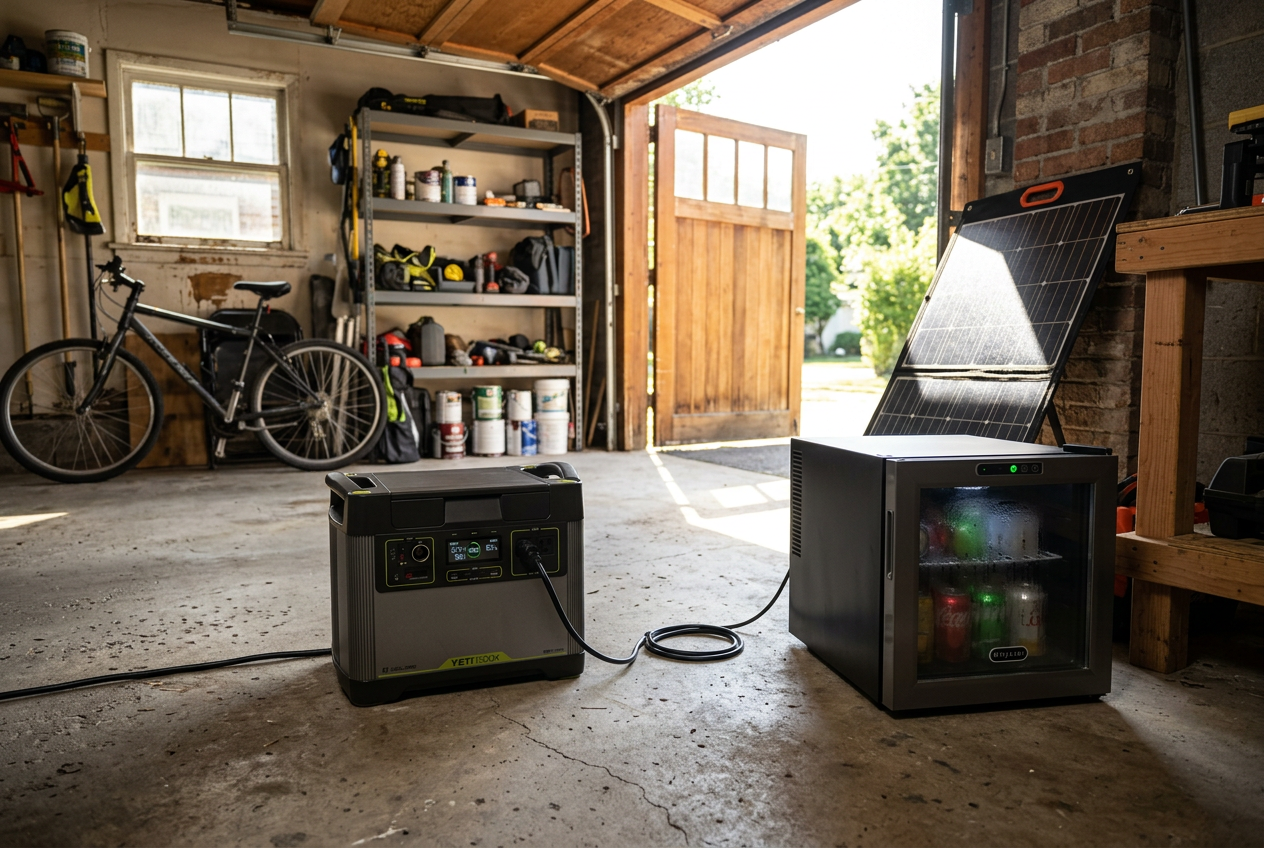
Sometimes a small battery bank is not enough. Maybe you want to keep a mini fridge running. Maybe someone in your home uses medical gear that needs steady power. Maybe an outage drags on for more than a day. That is when a bigger power station can help.
A power station is a large battery in a box. It has outlets like the ones on your wall. You charge it ahead of time. Then it runs your devices when the grid is down. Unlike a gas generator, it makes no fumes. You can use it safely indoors.
When a Bigger Station Makes Sense
Think about what you actually need to power. A phone and a lamp need very little. A mini fridge, a laptop, or a small medical device needs more. The more you want to run, and the longer you want to run it, the more battery capacity you need.
Capacity is measured in watt-hours (Wh). A higher number means more stored power. Output is measured in watts (W). That tells you how strong a device the station can run at once.
A mid-size station works well for many homes. It can charge phones many times over. It can run a mini fridge or a laptop for hours.
This STARYLINE model holds 1024Wh and puts out 1000W. That is enough for a mini fridge, a kettle, or a laptop for a full workday. It comes in three colors. There is also a bundle with a 200W solar panel.
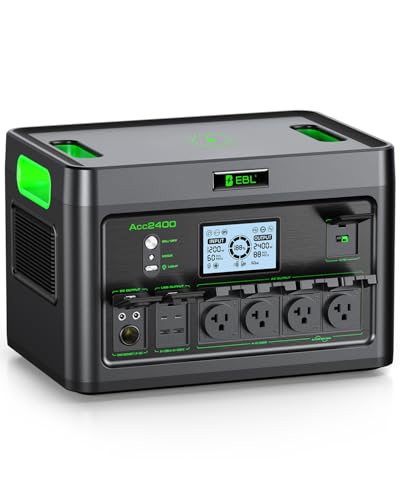
If you want to power more devices, or run them longer, a larger station fits better. The EBL station below holds 1843.2Wh and puts out 2400W. It has 12 outlets. It can run higher-wattage gear like a kettle or a hair dryer. It also switches to backup power fast during a blackout, which protects a computer from losing data.
Match the Size to Real Needs
Do not buy the biggest unit out of fear. The viral “90 days” headlines are about military bases, not your home. A single power station will not run your whole house for three months. That is not what these are for.
Instead, list the few things you truly need to keep going. Add up their power use. Pick a station that covers those needs with a little room to spare. That is smarter than overbuying.
Solar Recharge and Honest Limits
Both stations can take solar panels. Solar lets you refill the battery when the grid is down. But solar is slow. It needs sun and clear weather. The STARYLINE panel takes 6 to 8 sunny hours for a full charge. On cloudy days, it charges much less.
So plan around real limits. A power station plus solar can stretch your backup power for days. It cannot replace the grid forever.
Compare the Options: Which Backup Fits Your Home
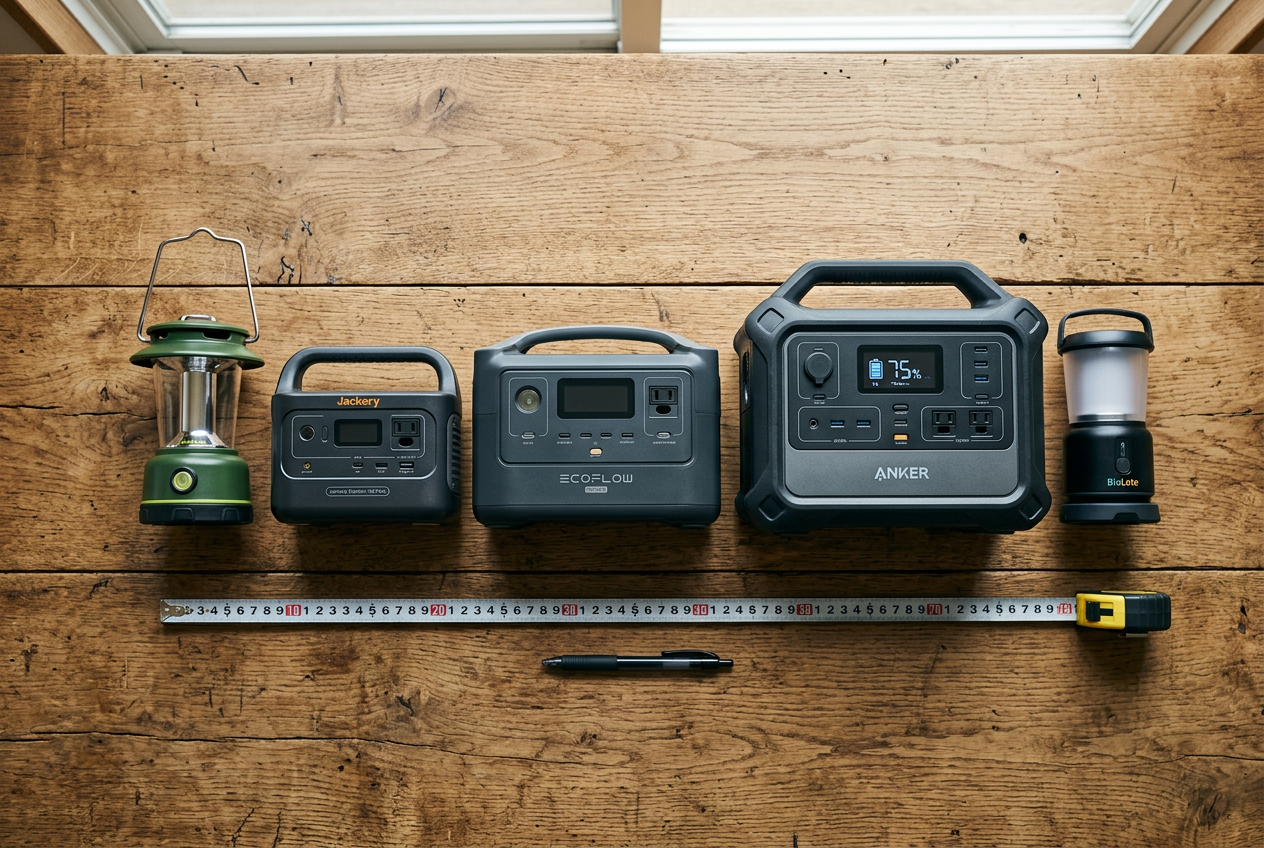
By now you have seen a few lights and power stations. This section puts them side by side. The goal is simple. Pick the smallest option that meets your real needs. You do not need to buy the biggest one.
Here is how to read the table.
- Capacity (Wh) means watt-hours. It is the size of the battery. Bigger numbers store more energy. Lanterns use small AA or AAA batteries, so they have no watt-hour rating.
- Output (W) means watts. It is how much power the station can push out at once. A higher number runs bigger devices, like a mini fridge.
- Weight tells you how easy it is to carry.
- Best for gives you a quick match to a real need.
Matching a product to your goal
Start with lighting. A lantern like the Lichamp 4 pack or the Etekcity set covers the whole family for a short outage. These run on simple batteries. They are cheap to keep ready.
Next comes phones and small medical devices. If you only need to charge a phone, a CPAP, or a laptop, a small station is enough. The Jackery Explorer 300 and the BLUETTI Elite 30 V2 both fit this job. They are light and easy to store. If you want to recharge from the sun, look at the Jackery 300 with a solar panel.
For more, you need more watts and more watt-hours. The STARYLINE 1000W can run a mini fridge or an electric kettle for a while. If you want to power many things at once, or run higher-watt gear, the EBL 2400W holds the most energy here.
Remember the big picture. The 90-day figure is a military base standard, not a home target. You do not need to power your whole house for months. Pick the option that matches a realistic goal, like 3 days building toward 2 weeks. Buy once, buy right, and do not overspend.
Water, Food, and Staying Warm Without Buying Specialist Gear
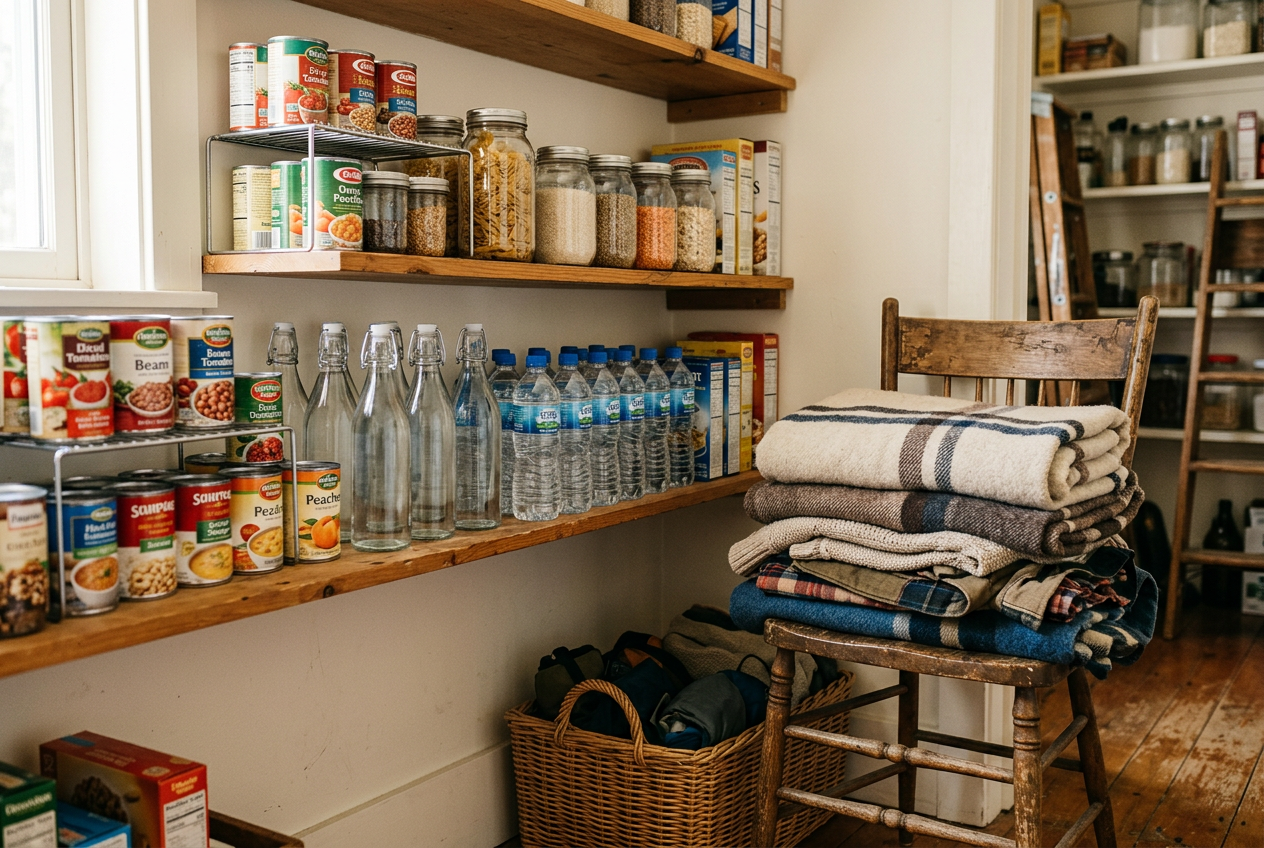
The headlines focus on power. But a real plan also covers water, food, and warmth. The good news is you can handle all three with things you likely own. You do not need special gear or a huge budget.
Store Water the Simple Way
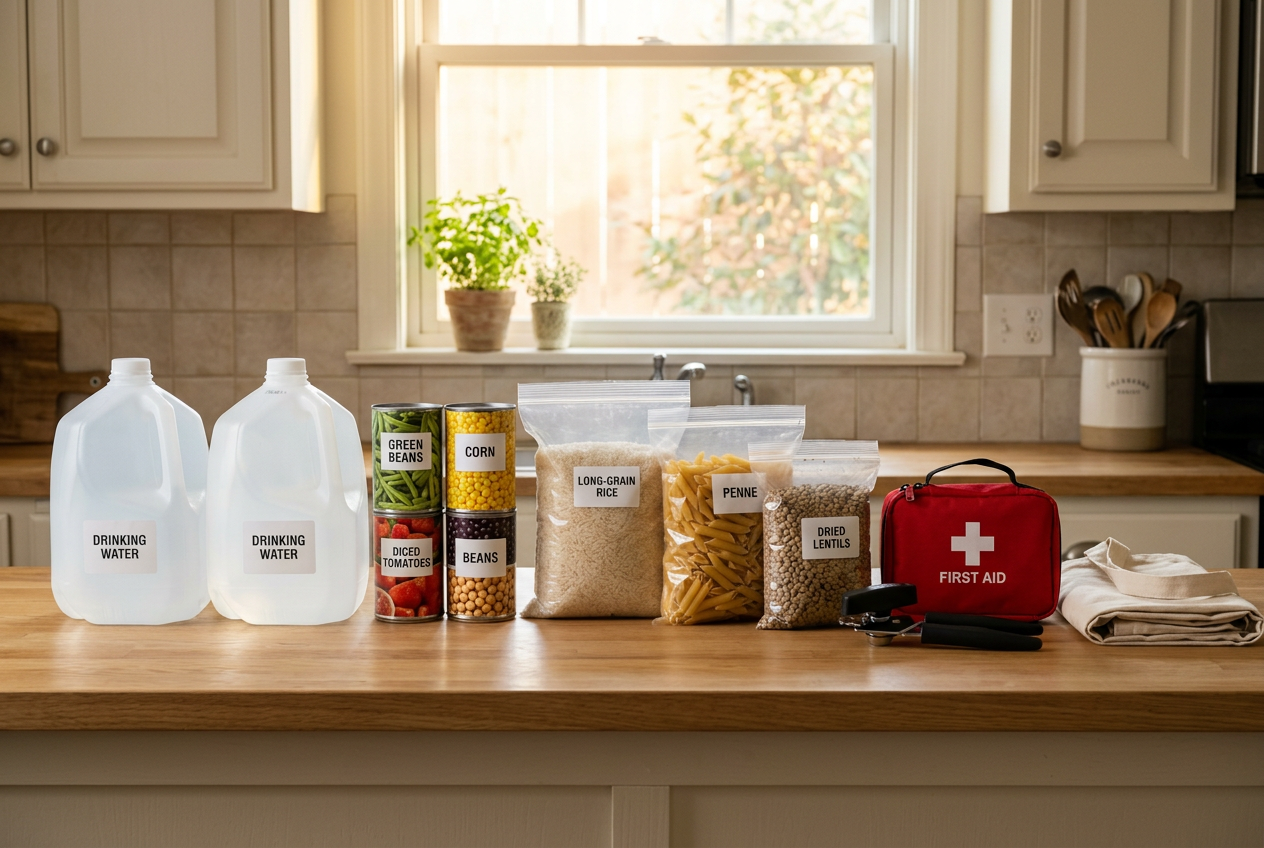
Water comes first. You can store tap water in clean containers at home. Use food-grade bottles or jugs with tight lids. Many people reuse clean store-bought water bottles or buy sealed cases.
A common guideline is about one gallon per person per day. That covers drinking and basic needs. Keep a few days’ worth to start. Store it in a cool, dark spot away from sunlight.
If you are not sure your water is safe to drink, do not guess. Follow official local guidance. Your water utility or local authorities will tell you if you need to boil water or use another method.
Keep Shelf-Stable Food on Hand
You do not need fancy survival meals. Build your supply from food you already eat. Think canned beans, canned vegetables, peanut butter, rice, pasta, and crackers. Pick foods that last a long time and need little or no cooking.
A manual can opener is a smart, cheap backup. If the power is out, an electric opener will not work.
Rotate your supply. Eat the oldest items first and replace them. This keeps food fresh and stops waste. Do not hoard. Build a calm, steady supply that fits your space and your family.
Stay Warm Without Special Equipment
If the heat goes out, layers do most of the work. Wear a few thin layers instead of one thick one. Add a hat and socks. Your body loses heat fast, so cover up.
Blankets and sleeping bags you already own are your main tools. Close off one room and keep everyone together. Body heat and shared space help a lot. Hang a blanket over a doorway to trap warm air.
Never burn charcoal or run a generator indoors. Never use a gas stove or oven to heat a room. These give off carbon monoxide, which can kill. Keep fuel-burning gear outside and away from windows.
Know When to Leave
Sometimes staying home is not safe. If it gets too cold, or if someone has a medical need you cannot meet, go to an official shelter. Local authorities open warming centers during long outages. Listen to local news or alerts for locations.
| Essential | No-Purchase Option | Simple Add-On | Key Safety Note |
|---|---|---|---|
| Water | Clean reused bottles | Sealed water cases | Follow local boil notices |
| Food | Food you already eat | Canned goods, pasta | Keep a manual can opener |
| Warmth | Layers, blankets, one room | Extra sleeping bags | No indoor burning |
| Shelter | Stay home if safe | None needed | Use official warming centers |
These basics matter more than any 90-day headline. Cover them first, and you are already far ahead.
Your 90-Day-Headline Action Checklist
The headlines talk about 90 days. That number is a military base standard, not a goal for your home. You do not need to panic-buy. You just need a few smart steps. Start small. Build over time. Here is a simple list you can start this week.
Step 1: Fix Your Lighting First
Lighting is the easiest win. Do not use candles if you can avoid them. They are a fire risk. Battery lanterns are safer and brighter. A multi-pack lets you put light in each main room. The Etekcity LED lanterns come in a 4 pack with batteries included, so they work right out of the box. Keep a few spare batteries with them.
Step 2: Keep Phones Charged
Your phone is your lifeline. It holds your contacts, maps, and alerts. Get a power bank or a small power station so you can recharge during an outage. A small unit like the Jackery Explorer 300 can charge phones many times over. It can also run a CPAP or other small device for a while. Keep it charged and ready.
Step 3: Store Water
Water matters more than almost anything. A common guide is one gallon per person per day. Start with a 3 day supply. That means 3 gallons per person. Use clean, food-safe containers. Store some for pets too. Build toward a 2 week supply over time if you have room.
Step 4: Build a Simple Food Shelf
You do not need special survival food. Buy extra of what you already eat. Pick canned and dry foods that do not need cooking or cold storage. Add a manual can opener. Start with 3 days of meals. Grow it toward 2 weeks as your budget allows. Rotate items so nothing goes to waste.
Step 5: Make a Family Plan
Talk with your household. Agree on where to meet if you get split up. Pick one out-of-town contact everyone can call or text. Write down important numbers on paper in case phones die. Know how to shut off your water and gas if told to. A plan costs nothing and helps everyone stay calm.
Step 6: Add a Modest Backup Battery
Once the basics are done, think about more power. Size it to your real needs, not a 90 day fantasy. A mid-size station can run a few small essentials for a day or two. Pairing one with a solar panel lets you recharge when the sun is out. Buy what fits your home and budget. Do not overspend chasing a military timeline.
Work down this list one step at a time. Start this week. You can print this page to keep the checklist handy.
FAQ: Common Questions About the 90-Day Headlines
Do I really need 90 days of supplies at home?
No. The 90-day number comes from a Pentagon plan for military bases. It is not a target for your pantry. The plan, called FORTRESS, aims to let major U.S. bases run for up to 90 days without outside power, water, fuel, or supplies. That is a military goal for a war or major crisis. It was never meant to tell families how much to store.
Guidance for regular households is much smaller. Common advice is to be ready to be on your own for three to fourteen days. Start with three days. Then build toward two weeks as you can. That is a calm, realistic goal.
Will the grid actually fail for 90 days?
The headlines do not say that will happen to your home. The Pentagon plan is about keeping bases from being “starved out, shut down, or cut off” during a crisis. It is a worst-case plan for military sites, not a forecast for your street.
Most power outages that regular households face are short. They last hours or a few days, often from storms. Planning for a few days covers the events you are most likely to see. A longer plan is a nice bonus, not a daily need.
How much backup power is enough?
That depends on what you want to run. You do not need to power your whole house. Think about the few things that matter most.
For phones and small items, a small power station like the Jackery Explorer 300 or the BLUETTI Elite 30 V2 can keep devices going. If you need to run a mini fridge or a few larger items, a mid-size unit like the STARYLINE 1000W station gives you more room. For bigger needs over a longer outage, a larger station like the EBL 2400W station holds more energy.
Pick the smallest unit that covers your real needs. You do not need to buy the biggest one just because of a scary headline.
Do I need a generator and lots of fuel?
Not to start. Many households do fine with battery lanterns and a power station. If you do store fuel, handle it with care. Use approved containers only. Never store fuel in your living space. Keep it away from heat, flames, and children. Let engines cool before you refuel. Follow the maker’s directions and your local fire rules.
What is the simplest first step?
Start small. Get a few battery lanterns. Keep spare batteries. Add a power station for phones and small needs. Store some water and food you already eat. That covers most real outages without panic or big spending.
Should I rush out and stockpile?
No. Do not hoard. Buy a little at a time. A steady, calm plan beats a panic buy every time.
The Calm Bottom Line and Your Next Step
Here is the simple truth behind the scary headlines. The 90-day figure is a military goal for large bases. It is not a target for your home. The Pentagon’s FORTRESS plan is about keeping big bases running if power, water, and supplies get cut off during a crisis. Your kitchen pantry does not need to match a military base.
So take a breath. You do not need to buy 90 days of food. You do not need a basement full of fuel. You do not need to panic because a news story asked, “Could you survive 90 days without power?”
What you need is a steady, tiered plan. Start small. Build up over time.
Keep It Simple
Begin with 3 days. Most short outages pass in a few days. Having 3 days of light, water, food, and phone power covers the vast majority of real events.
Then build toward 2 weeks. You do not have to do this all at once. Add a little each month. A few extra cans. An extra case of water. A battery lantern or two. This slow, calm approach beats a panic buy every time.
This is how real experts talk about it. One Florida writer covering the headlines pointed out the same thing. The 90-day number is a base standard, not a pantry goal. A simple, realistic plan is what actually helps your family.
Your One Next Action Today
Do not try to do everything at once. That is how people get overwhelmed and quit. Instead, pick one single item from your action checklist and do it today.
Here are a few easy choices:
- Fill a few clean containers with water.
- Buy or test one battery lantern, like the Lichamp 4-pack lantern.
- Check that you have fresh AA or AAA batteries on hand.
- Charge up a small power station, like the Jackery Explorer 300, so it is ready to go.
- Set aside a few extra cans of food you already eat.
Just pick one. Finish it before the day ends. Tomorrow, pick the next one. Small steps add up fast.
Keep Learning at Your Own Pace
Want to go deeper on one topic? Take it slow and read up when you are ready. Our other guides cover backup power in more detail, from small battery packs for phones and medical devices to larger stations for longer outages. We also have guides on storing water safely, building a simple food supply, and staying warm without special gear.
You can print this page to keep the checklist handy. There is no need to download anything.
The bottom line stays the same. Stay calm. Start with 3 days. Build toward 2 weeks. Do one thing today. That is a plan that actually works for a normal household.
Sources and Further Reading
- A new Pentagon initiative aims to ensure major U.S. …
- Pentagon Prepares Bases to Operate 90 Days Without …
- PENTAGON’S 90-DAY SURVIVAL PLAN 🇺🇸 …
- Could you survive 90 days without power? Expert sounds …
- What is the 90-day survival plan from the Pentagon?
- Could you survive 90 days without power? Expert sounds alarm
- Do you really need 90 days of supplies? Here’s what governments actually recommend (and the plan I’m following)
- Pentagon orders bases to plan for 90 days without the grid as Britain urges families to stockpile food and water