 Ready
California Coastal Flooding Continues, Energy Costs Pressure Households
King-tide coastal flood advisories persist along the California coast through this week, while new analysis ties much of 2026's US inflation to higher oil prices. A South Carolina nuclear lab fire was contained with no outside contamination found.
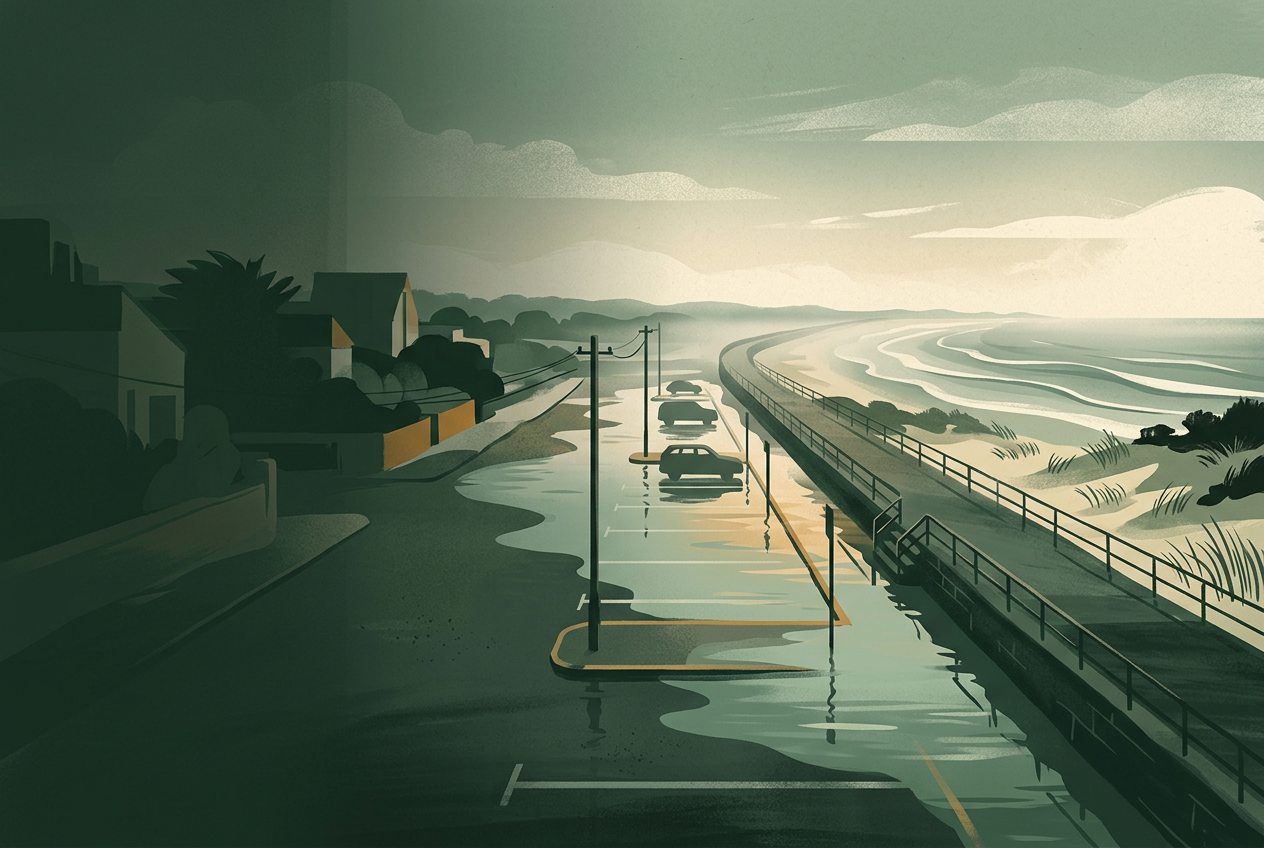
California coastal flood advisories continue through the week
What’s reported: The Orange County Register, relaying a National Weather Service San Diego advisory, reports a coastal flood advisory for the Orange County and San Diego County coasts valid from Thursday afternoon until 2 p.m. Friday, October 30. Forecasters cite observed high tides running 1.4 to 1.6 feet above astronomical predictions, with the highest tides around 11 a.m. Thursday and noon Friday. Minor coastal flooding is expected, with possible road closures and shoreline erosion. Separately, ABC7 reports a coastal flood advisory for the San Francisco Bay Area through Saturday at 6 p.m., with flooding possible in coastal and bay-shoreline areas; light rain is possible on Halloween. This continues multi-day king-tide coverage from earlier briefings.
What it may mean for households: These are recurring minor tidal flooding events affecting low-lying coastal areas such as parking lots, bike paths and harbor walkways, not widespread inland flooding.
One practical step: If you live or park near the California coast, check tide timing, move vehicles off low-lying lots before late-morning high tides, and never drive through water of unknown depth.
Sources: Coastal flood advisory for Orange County Coast and San Diego County Coastal Areas for Thursday and Friday · AccuWeather Forecast: Cloud cover moves in overnight; Coastal Flood Advisory through Saturday ·
New analysis ties most of 2026 US inflation to oil price shock
Single-source report — not independently confirmed.
What’s reported: A Greenpeace Germany analysis, released via Greenpeace USA, reports that rising oil prices accounted for roughly 75 percent of the increase in overall US inflation for 2026. US consumer price inflation rose from 2.4 percent in January to 3.4 percent in July, peaking at 4.3 percent in May; the report estimates July inflation would have reached only 2.6 percent without the oil crisis tied to the war with Iran and the closure of the Strait of Hormuz. The report states households can reduce exposure through measures such as heat pumps, rooftop solar and electric vehicles. This is advocacy analysis, not neutral reporting, and continues prior briefings on fuel-driven costs.
What it may mean for households: Energy prices continue to drive broader household costs, from transport to food and heating, and the figures come from an advocacy group rather than an independent analyst.
One practical step: Trim fuel use with combined trips and steady driving, and plan ahead for higher winter heating bills.
Sources: War on Iran oil price shock drove most of 2026 rise in US inflation, new Greenpeace analysis finds ·
South Carolina nuclear lab fire contained, no outside contamination found
What’s reported: NBC News, citing the Associated Press, and Fox News report that a fire at the Savannah River National Laboratory near Aiken, South Carolina, prompted a site area emergency declaration Wednesday afternoon that temporarily restricted incoming traffic and air and rail service nearby. Officials said the fire was extinguished Wednesday night, radiological surveys found no detectable contamination, and the site returned to normal operations. One employee was taken to a hospital with minor injuries. The Savannah River Site is a Department of Energy complex that once produced nuclear weapons materials.
What it may mean for households: Officials report the emergency was resolved the same day with no detectable contamination outside the lab; there is a buffer zone between most facilities and public areas.
One practical step: No household action is needed outside the immediate site area; if you live near a facility like this, know how to receive official alerts through local radio, TV and your phone.
Sources: Fire briefly triggers emergency at South Carolina lab on former nuclear weapons site · Emergency declared at South Carolina nuclear site after fire erupts at lab ·
Today’s takeaway: If you live on the California coast, expect a few more days of minor high-tide flooding and avoid driving through standing water. Elsewhere, focus on trimming fuel and energy costs heading into winter.
Sources
- AccuWeather Forecast: Cloud cover moves in overnight; Coastal Flood Advisory through Saturday
Published February 14, 2020 - War on Iran oil price shock drove most of 2026 rise in US inflation, new Greenpeace analysis finds
Published October 28, 2026 - Fire briefly triggers emergency at South Carolina lab on former nuclear weapons site
Published October 29, 2026 - Coastal flood advisory for Orange County Coast and San Diego County Coastal Areas for Thursday and Friday
Published October 28, 2026 - Emergency declared at South Carolina nuclear site after fire erupts at lab
Published October 29, 2026