 Ready
October 30, 2026
A prolonged power and water outage in the US Virgin Islands shows why backup supplies matter, a UK writer shares lessons from a storm-driven blackout, and a Kentucky university project highlights how microgrids keep critical sites running during outages.
US Virgin Islands outage leaves St. Thomas and St. John without power or water for days
Single-source report — not independently confirmed.
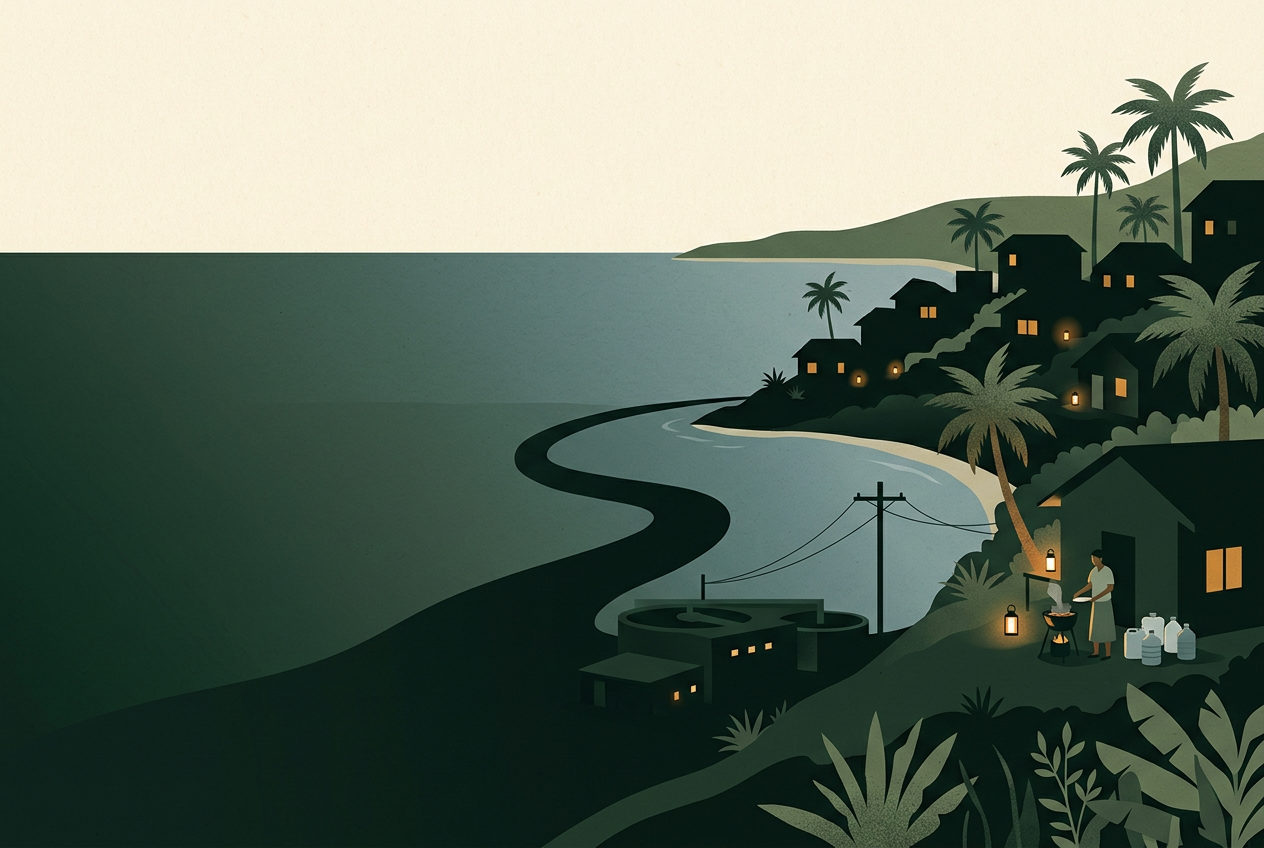
What’s reported: The Cool Down, drawing on a community reporter's TikTok account, reports that equipment failures at the Virgin Islands Water and Power Authority left St. Thomas and St. John without electricity or running water for nearly four days, closing schools and government offices. Residents described being unable to cook, flush toilets, or refrigerate medicine, and resorting to bucket showers. The report says crews worked continuous shifts to install critical parts, and commenters said St. Croix also faces outages and high bills. Some accounts in the comments, including reports of patients needing powered oxygen and refrigerated insulin, were not independently verified. The piece relies on social media, not official confirmation.
What it may mean for households: Outages can knock out water alongside power, since many systems need electricity to pump and treat it. Medicine that needs refrigeration and medical devices that need power are especially vulnerable.
One practical step: Keep at least several days of drinking water stored (about one gallon per person per day) and a non-electric way to cook and light your home. If anyone relies on refrigerated medicine or powered devices, plan backup power and ask your pharmacy about storage guidance now.
Sources: US Virgin Islands residents go days without power or water as bills pile up ·
A storm blackout becomes a case for a deep pantry, not panic buying
Single-source report — not independently confirmed.
What’s reported: The Guardian recounts a writer's experience during back-to-back UK storms that caused repeated power cuts, including one lasting eight hours. The author describes scrambling through the fridge before turning to a store cupboard, and reflects on recent UK government advice to keep 72 hours of supplies, including three liters of water per person per day and non-perishable food. The piece argues for gradually building a deep pantry of a few extra shelf-stable items each week rather than panic buying, which can create shortages. It suggests no-cook meals, UHT milk, and first-in, first-out rotation, and warns that a cooking stove is needed if the power is out.
What it may mean for households: A slow, steady approach to stocking food avoids both empty cupboards and the strain panic buying puts on supply chains. No-cook and shelf-stable options matter most when the power is out.
One practical step: Add two or three extra shelf-stable items to each shopping trip until you have a few days' worth, and place newer items behind older ones so you use the oldest first. Keep a non-electric cooking option and some no-cook meals on hand.
Sources: What an eight-hour power cut taught me about food stockpiling ·
Kentucky university to build a microgrid to keep critical operations running in outages
Single-source report — not independently confirmed.
What’s reported: WNKY reports that Western Kentucky University will receive a $2 million award from the state Office of Energy Policy, funded through the US Department of Energy's State Energy Program, to build a microgrid at its Innovation Campus. The release says the system will combine solar power, battery storage, existing backup generators, and advanced controls, and can operate independently during an outage to support critical facilities, including a disaster operations center that works with Kentucky Emergency Management. This is an institutional project, not a household product, described from a university release.
What it may mean for households: The project illustrates a principle households can borrow: pairing stored energy with a way to recharge, so essentials keep running when the grid goes down. It is a planned campus system, not a service for residents.
One practical step: For your own home, identify your few true essentials (phone, lights, medical devices, perhaps a fridge) and size a modest battery or power station plus a charging method to cover them, rather than trying to power everything.
Sources: WKU receives $2 million to develop microgrid to improve campus safety during power outages ·
Today’s takeaway: Extended outages can cut both power and water at once. A modest water store, non-perishable food, and an off-grid cooking and light plan keep households steady during multi-day disruptions.
Sources
- WKU receives $2 million to develop microgrid to improve campus safety during power outages
Published October 29, 2026 - What an eight-hour power cut taught me about food stockpiling
Published October 29, 2026 - US Virgin Islands residents go days without power or water as bills pile up
Published October 30, 2026