Ready
How to Help Your Parents Prepare for Emergencies: A Step-by-Step Guide (2026)
Your parents raised you. Now you may be the one watching out for them. That feels strange at first. But it is very common. Many adult children end up helping aging parents get ready for emergencies. Often their parents have never made a plan at all. They may not have a flashlight they can find in the dark. They may not know who to call if the power goes out.
The good news is that you do not have to fix everything in one weekend. You also do not have to spend a lot of money. Most of the first steps cost nothing. They just take a little time and a simple conversation.
Talking about emergencies ahead of time helps a lot. It can reduce fear and confusion when something real happens. Everyone knows what to do. That calm matters more than any gadget you can buy.
This guide walks you through it step by step. You will start with an easy talk and a basic plan. Then you will organize medications and medical devices. You will look at medical alert systems. You will build a simple home kit. You will get ready for power outages and cold weather. You will learn how to stay safe if a parent wants a generator. And you will set up ways to stay in touch.
Small steps matter most. Let us start with the first one.
- Pack a 72 hour emergency kit with food and water for at least 3 days.
- Discuss how a parent could call for help, including whether an alert service fits their needs.
- Keep a hand crank radio ready so they get weather alerts during a power outage.
- Write down emergency contacts and a simple meet up plan together.
- Check and refresh supplies every 6 months so nothing is expired or dead.



Reviewed by Marcus T., Elena V. & James W. — contributors with hands-on preparedness experience. How we test
A few key items can make your parents much safer when trouble hits. Grab these now, then read on to see how each one helps.

2-Person 3-Day Survival Kit
This backpack holds food bars, water pouches, and first aid for two people for 3 full days. It lets your parents grab one bag and go during an evacuation.
Check Price on Amazon
Hand Crank Emergency Radio
When the power goes out, your parents can crank or use solar to keep this radio running for NOAA weather alerts. It also works as a flashlight and an SOS signal in the dark.
Check Price on AmazonIn this guide
Why Trust This Guide?
This article was researched and reviewed by contributors with hands-on experience in emergency preparedness. They have tested gear, built real systems, and lived through situations where these skills actually mattered.
Start With a Conversation and a Simple Plan

The best place to start is a talk, not a shopping list. Sit down with your parents and ask what worries them most. A flood? A long power outage? A fire? When you talk about it ahead of time, it feels less scary. It also helps everyone know what to do when stress is high.
Keep the first talk short and kind. Your parents may feel like you are taking over. Make it clear you are planning together, not telling them what to do. Ask questions and let them answer. Then write things down as you go.
A good family plan covers four simple things. Walk through each one with your parents.
How will they get alerts?
Your parents need a way to hear about storms, fires, and other dangers. This could be a phone that gets weather alerts. It could be a local radio or TV station. A battery or hand crank radio is a smart backup, because it works even when the power is out. Make sure your parents know how to turn it on and find a weather station. We cover good radio picks later in this guide.
Where will they shelter?
Talk about where your parents will go if they need to stay home and stay safe. For some storms, that means an inside room with no windows. For other events, it could be the lowest floor or the highest floor. Pick the spot now so there is no guessing later.
What is their evacuation route?
Sometimes staying is not safe, and your parents need to leave. Plan how they will get out. Pick a main route and a backup route. Think about whether your parents drive, or if someone will need to pick them up. If they use a walker, wheelchair, or oxygen, plan for how those come along too.
Who will they contact?
Pick one or two people your parents will call or text in an emergency. It helps to choose someone who lives far away, since local phone lines can get busy. Write down names and numbers on paper. Phones can die or get lost. Put a copy by the phone and one in a wallet or purse.
Write it down and share it
Once you have the plan, write it out in plain words. Keep it simple enough to read fast. Then share it with anyone who helps care for your parents. This means other family members, a neighbor, or a home aide. Everyone who helps should know the shelter spot, the route, and the contacts.
You do not need a fancy form. You can print this page and fill in the blanks by hand. Keep one copy at your parents’ home and keep a copy yourself. Review the plan once a year, or any time something changes, like a new address or a new medicine.
Organize Medications and Medical Devices
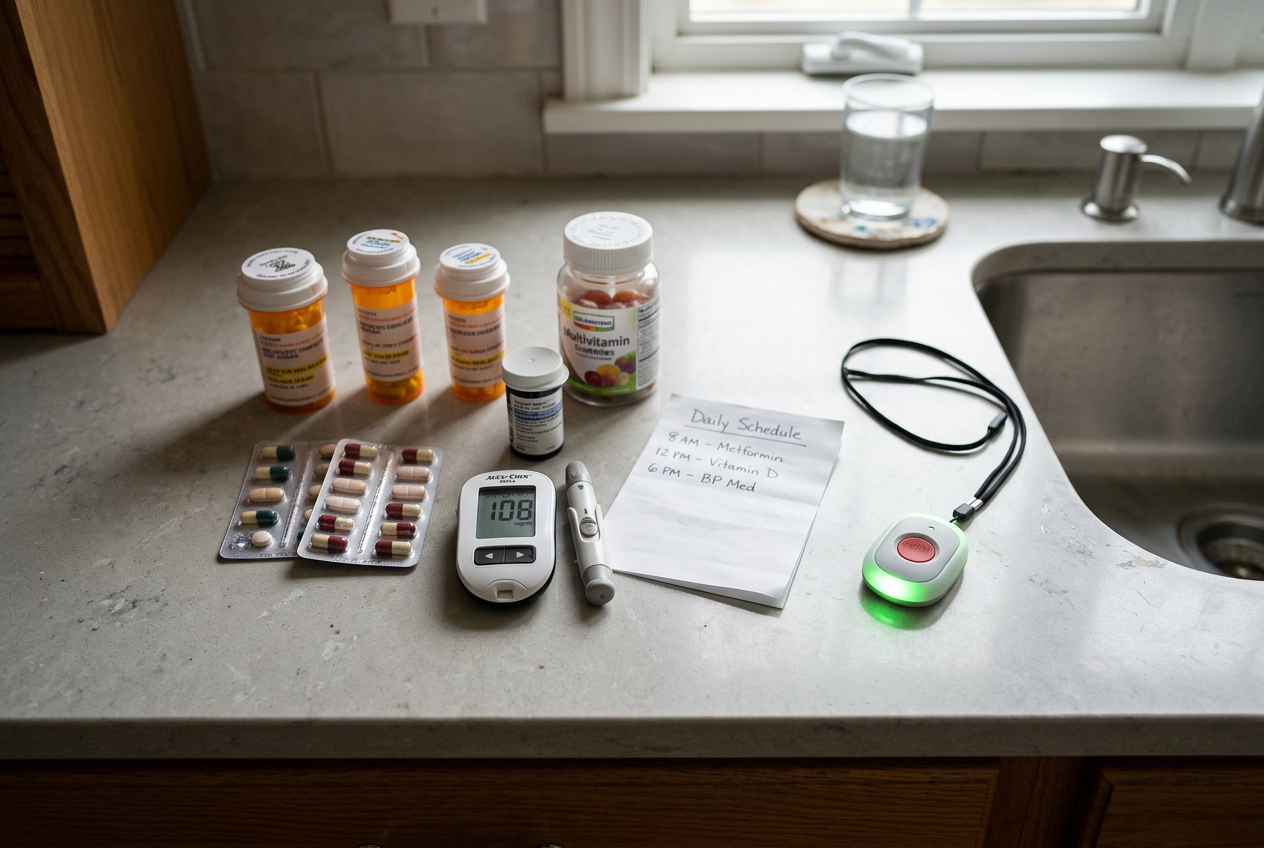
Medicine is often the biggest worry in an emergency. Many older adults take daily pills. Missing even a few doses can cause real problems. That is why this step matters so much for your parents.
Start by gathering everything in one spot. Collect all prescription drugs. Add over-the-counter items like pain relievers or allergy pills. Include vitamins too. A clear bin or a zip bag works well. Keep it somewhere easy to grab if they need to leave fast.
Make a Simple Medication List
Next, help them write down each medicine. For every one, note the name, the dose, and how often they take it. Add the reason they take it. Also list the doctor who prescribed it. Keep one copy with the medicine. Keep another copy in their wallet or purse. Store a photo on your phone as a backup.
Update this list any time a medicine changes. An up-to-date list helps doctors and responders act fast. It also helps you refill the right things.
Ask About Backup Supplies
Talk to their doctor or pharmacist about a backup supply. Ask if your parents can keep a few extra days of pills on hand. Some plans allow this. Some do not. The pharmacist can explain the rules and help you plan. Do not stockpile more than the pharmacist advises.
Ask how to store each medicine. Some need to stay cool. Others are fine at room temperature. Follow the directions on the label.
Plan for Devices That Need Power
Some parents use medical devices that run on electricity. Think of oxygen machines, CPAP units, or powered wheelchairs. These stop working in an outage. Make a plan before that happens.
Ask the doctor what to do if the power goes out. Some devices have battery backups. Some do not. Write down how long a battery lasts. Keep the device maker’s phone number handy. If a device is critical, call the power company and ask about their medical priority list.
Medical Alert Systems
If a parent lives alone or has fallen before, a medical alert pendant can help. These wearable buttons call for help with one press. Many also sense a fall on their own. Keep in mind that most need a monthly subscription. Check what each one costs before you buy.
Pick the one that fits your parent’s life. Think about whether they stay home or go out often. Think about who should get the alert first.
Build a Basic Emergency Kit for Their Home
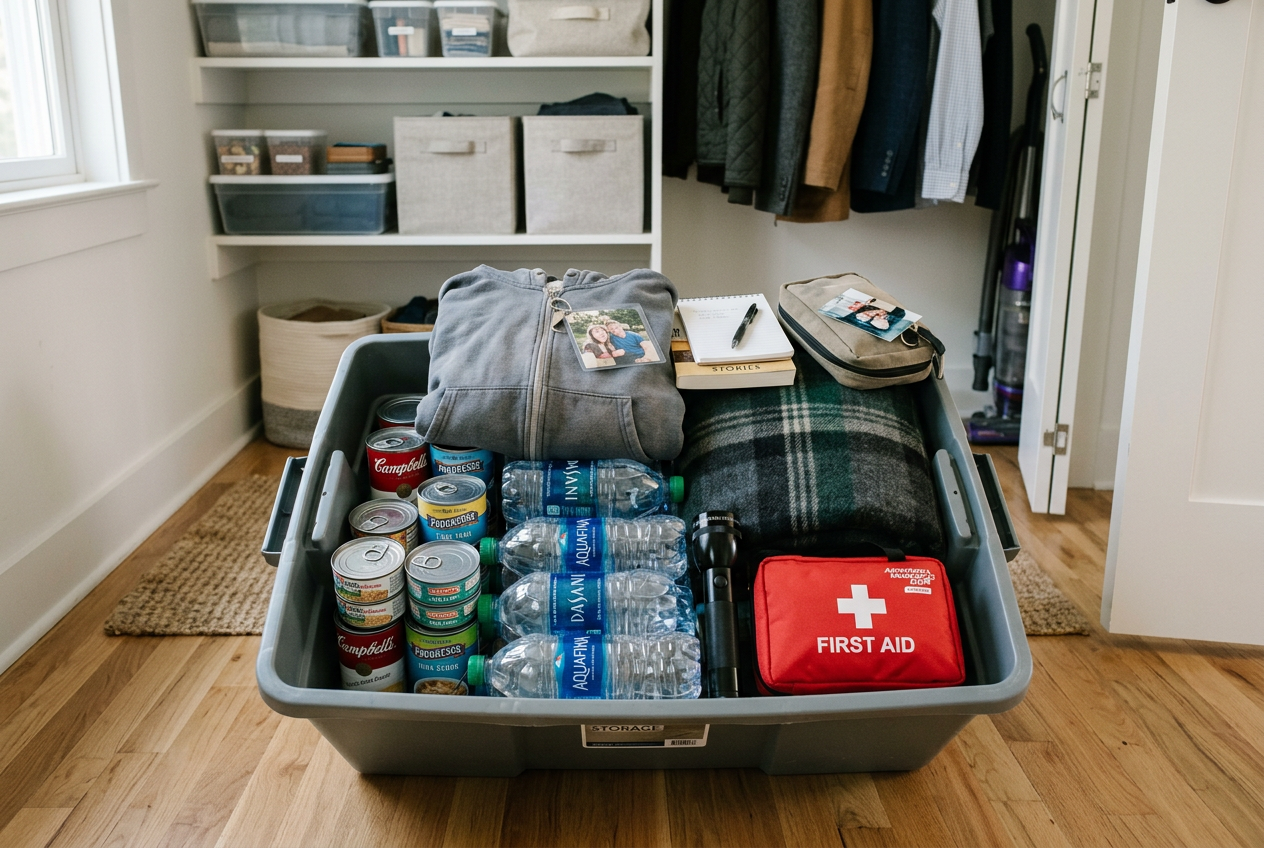
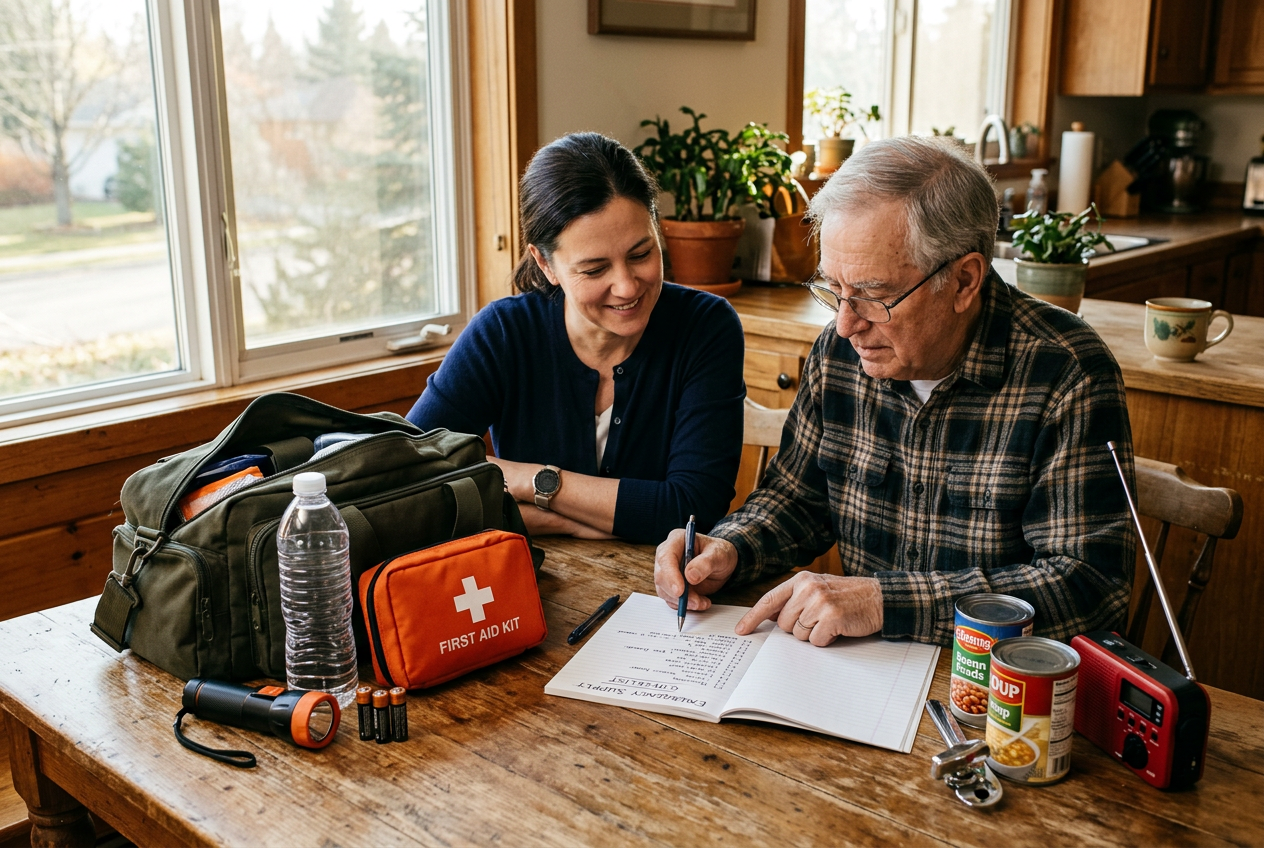
An emergency kit is just a set of supplies your parents can grab fast. The goal is simple. They should have enough to get through at least three days at home without help. Here is what to gather.
Start With Water and Food
Water comes first. Store a three-day supply. A common guideline is one gallon per person per day. That covers drinking and basic cleaning. If your parents have pets, add water for them too.
Next, add nonperishable food. This means food that does not spoil and does not need the stove. Think canned soup, peanut butter, crackers, and canned fruit. Pick things your parents already like to eat. Do not forget a manual can opener.
Add Light, Warmth, and First Aid
Add a flashlight for each person. Keep spare batteries nearby. Avoid candles if you can, since open flames are a fire risk.
Pack blankets to help your parents stay warm during a power outage. A warm layer matters most for older adults, who can get cold faster. Set aside extra clothing too.
Then add first aid supplies. A basic kit should hold bandages, gauze, tape, and gloves. This helps with small injuries until help arrives.
A Pre-Assembled Kit Is a Fine Starting Point
Building a kit from scratch can feel like a lot. If your parents feel overwhelmed, a ready-made kit is an easy first step. It puts the basics in one place. Then you can add personal items later.
For a two-person home, a shared kit covers both parents. This one includes emergency food bars, sealed water pouches, a first aid kit, ponchos, and survival blankets. The blankets are useful for staying warm during an outage.
A pre-assembled kit is a base, not the whole answer. Water pouches and food bars help in a pinch, but you may still want to store extra water and food for a full three days.
Make the Kit Theirs
Now personalize it. Add a few days of their medications if their doctor says that is safe. If they use a medical device, note its power needs. Include copies of important contacts and papers.
Then add comfort items. A spare pair of glasses, a book, or a favorite snack can ease stress during a scary time. Store the kit somewhere easy to reach, and show your parents exactly where it is.
Prepare for Power Outages and Staying Warm
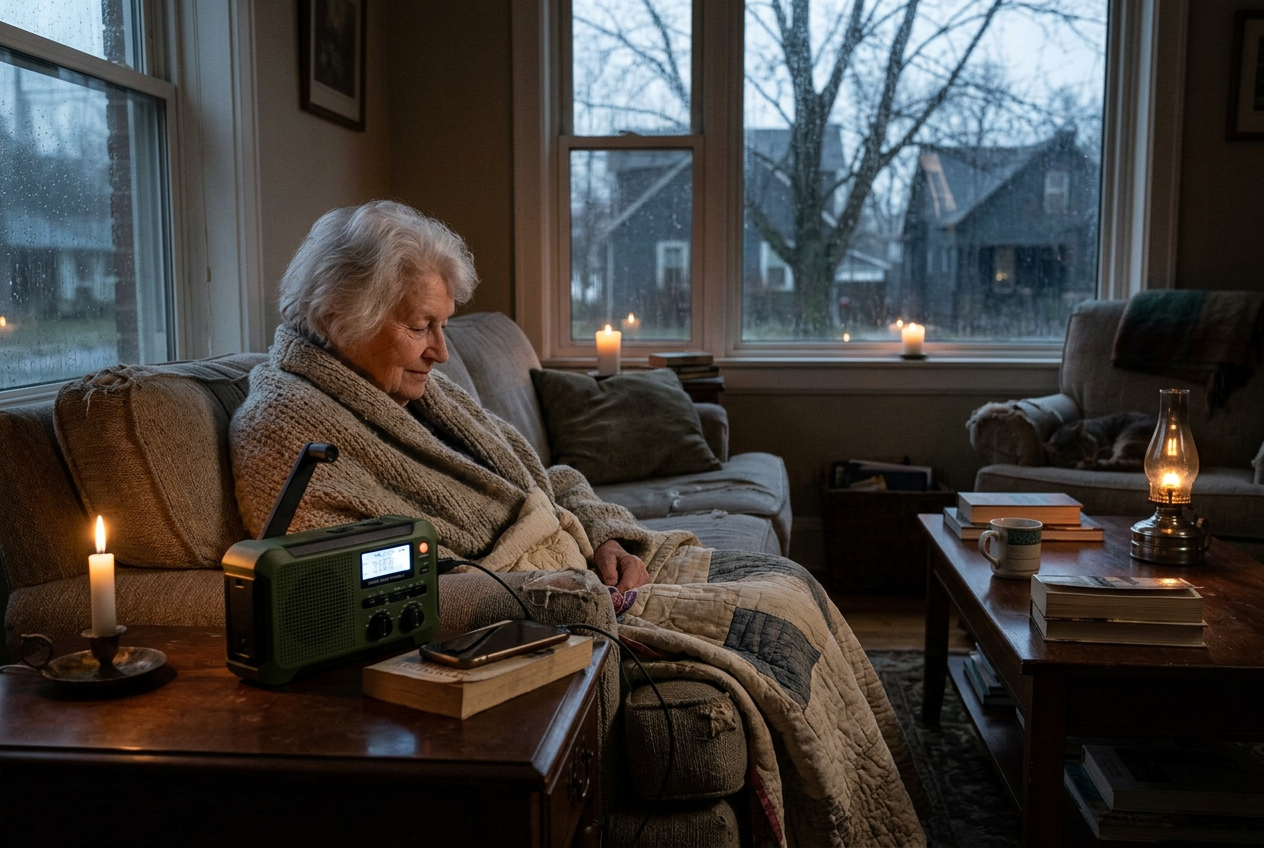
Power outages happen in every season. They can come from storms, wind, or heavy snow. For older parents, a cold house can be a real problem. The good news is that a few simple steps can keep them safe and warm until the power comes back.
Keep Heat in One Room
When the heat goes out, help your parents pick one room to stay in. A smaller room holds warmth better than a whole house. Close the door. Close the curtains or blinds too. This helps trap heat and blocks cold air.
Keep blankets in that room where they are easy to reach. Extra blankets, sleeping bags, and warm throws all help. A chair with a blanket over the lap works well for sitting.
Dress in Layers
Teach your parents to layer their clothing. Many thin layers hold heat better than one thick coat. Start with a base layer, add a sweater, then add a jacket. Don’t forget a hat, since it keeps your head warm and covered. Warm socks and slippers keep feet from getting cold.
Layering is free and simple. It is one of the best ways to stay warm during an outage.
Use a Hand-Crank Radio
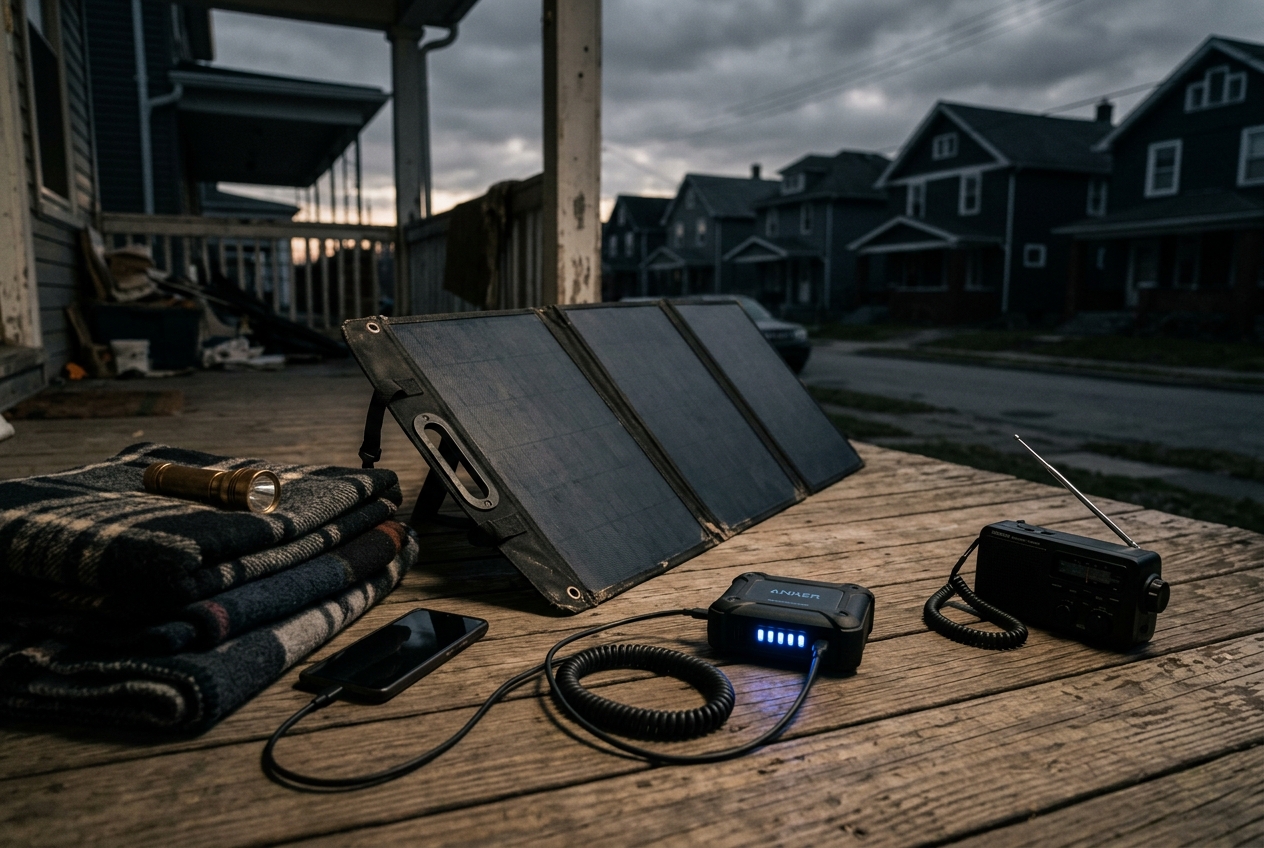
When the power is down, your parents still need to know what is going on. A hand-crank radio is a smart tool. It can pick up AM, FM, and NOAA weather alerts. That means your parents can hear storm warnings and local news even when the TV and internet are out.
These radios do not need wall power. Many charge with a hand crank, a solar panel, or a USB cord. Some have a flashlight built in. That gives your parents light during a dark outage.
Here is one option to consider.
This Emgykit radio has three LED flashlights and an SOS alarm. It charges three ways: hand crank, solar, and Type-C. The SOS siren can help your parents get attention if they are stuck during a storm.
Keep Their Phone Charged
Some emergency radios have a built-in battery that can charge a phone. That matters a lot. A charged phone lets your parents call for help and stay in touch with you. Show them how to plug the phone into the radio and crank or use the solar panel when needed.

If a Parent Wants a Generator: Carbon Monoxide Safety First
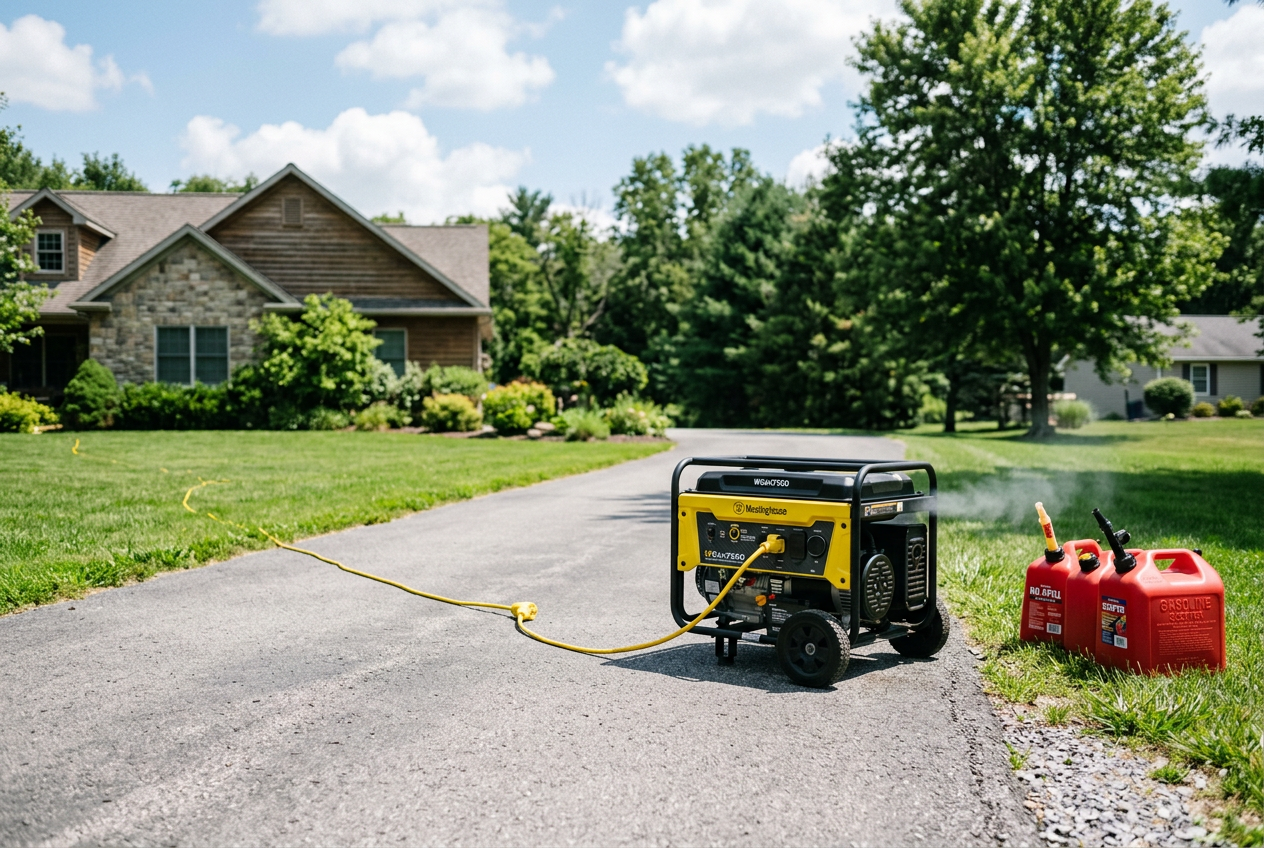
A generator can keep the lights on and medical devices running when the power goes out. But it’s not a simple plug-and-play gadget. If your parent wants one, there’s one rule that matters more than any other. Get that right first, then you can think about everything else.
Decide What Needs Power and for How Long
Before you start comparing machines, figure out what your parent actually needs to run. Make a list of the devices that matter during an outage, then add up their wattages. Here are rough estimates for some common essentials:
- Refrigerator: 300 to 800 watts
- Sump pump: 750 to 1,500 watts
- Space heater: 1,500 watts
- Window air conditioner: 1,000 watts
- Lights: 5 to 80 watts per bulb
- Computer: 60 to 300 watts
A typical home needs around 5,000 watts to run several major appliances at once. You’ll likely need more to power a whole heating or cooling system, or high-demand items like an electric dryer or oven. Leave a little breathing room between your total and the machine’s maximum, because appliances like a refrigerator surge when they first kick on.
Just as important is how long you need that power. A short outage of a couple of hours is a very different problem from one that drags on for days.
Generator or Battery Power Station?
There are two broad paths here: a fuel-burning generator or a battery-powered portable power station. They solve different problems.
A portable power station is really just a large rechargeable battery with outlets. It’s quiet, easy to start, and produces no carbon monoxide, so it skips all the outdoor-placement safety steps a generator requires. The trade-off is run time. A power station won’t keep appliances running nearly as long as a comparably sized generator. It’s best for outages that last hours, not days, and for keeping a phone charged, a few lights on, or a fridge running a little longer.
To estimate run time, divide the power station’s capacity (in watt-hours) by the load it’s powering (in watts). For example, a 3,600 watt-hour station running everything at its full 3,600-watt output lasts about one hour. But that same station powering only a 700-watt refrigerator runs for more than five hours. Solar panels can stretch run time somewhat, though recharging from an outlet is fastest, and that’s hard to do when the power is out.
A fuel-burning generator supplies more power for longer. The main types are:
- Portable generators: Movable, cost less, and have no installation expense unless they’re tied into the home’s wiring. Most run on gasoline, so you have to store and manage fuel. Typical output is 3,000 to 8,500 watts.
- Inverter generators: Also portable, but much quieter and more fuel-efficient. They cost more than a comparable portable generator but run longer on the same gas.
- Home standby generators: Installed permanently, run on natural gas or propane, and start automatically during an outage. They supply the most power but are by far the most expensive, and installation by a licensed electrician often costs more than the generator itself.
For a parent who faces short, occasional outages and wants something simple and safe, a battery power station may be the better fit. For long outages or heavy loads, a fuel generator does the job. Whichever you choose, the safety rules below still apply to anything that burns fuel.
Never Run a Generator Indoors
Any generator that burns fuel makes carbon monoxide. This gas has no color and no smell. You can’t see it or taste it. It can build up fast and make someone pass out, or worse, before they realize anything is wrong. This is the single biggest danger with generators.
So the rule is simple. Never run a fuel-burning generator inside the house. Not in the garage. Not in the basement. Not on a covered porch. Opening a door or window does not make it safe. Even a garage with the door up can trap the gas.
Here’s what safe placement looks like:
- Run the generator at least 20 feet from the home.
- Point the exhaust away from the house, not toward it.
- Keep it clear of windows, doors, and vents, so fumes can’t drift back inside.
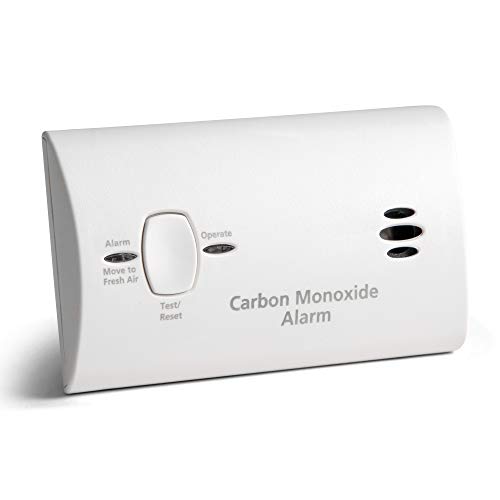
Walk your parent through these steps together. Older adults may not notice the early signs of carbon monoxide, like a headache or feeling dizzy. That makes the placement rule even more important. A battery carbon monoxide alarm inside the home adds another layer of safety. Look for detectors that are UL 2034 certified or ETL listed, and consider a low-level CO detector, which is especially important for older people. Check that it works and has fresh batteries.
When to Call a Professional
Some people want a generator that connects directly to the home’s wiring. This is not a do-it-yourself job. Wiring a generator into a house the wrong way can shock utility workers or start a fire. For any setup that ties into the home’s electrical system, hire a licensed electrician. A professional knows the local code and can install the right safety switch.
A simple portable generator that powers a few things through its own outlets is easier. Even then, read the manual with your parent so they know how to use it safely.
Handle Fuel the Safe Way
Fuel needs care too. Help your parent follow these basic rules:
- Store fuel in approved containers only. Never use random jugs or bottles.
- Do not store fuel inside living space. Keep it out of the house.
- Keep fuel away from anything that could spark or flame, and away from children.
- Let the engine cool before you refuel. Hot parts can ignite spilled fuel.
- Never siphon fuel by mouth.
- Use a pump made for gasoline if you need one.
- Follow the maker’s directions and your local fire rules.
One more note. Fuel stabilizer can keep stored gasoline from clogging the fuel system, but it can’t fix fuel that has already gone bad. There’s no need to stockpile large amounts. Keep a reasonable supply, stored safely, and replace it as the maker suggests.
Help Them Stay in Touch During an Emergency
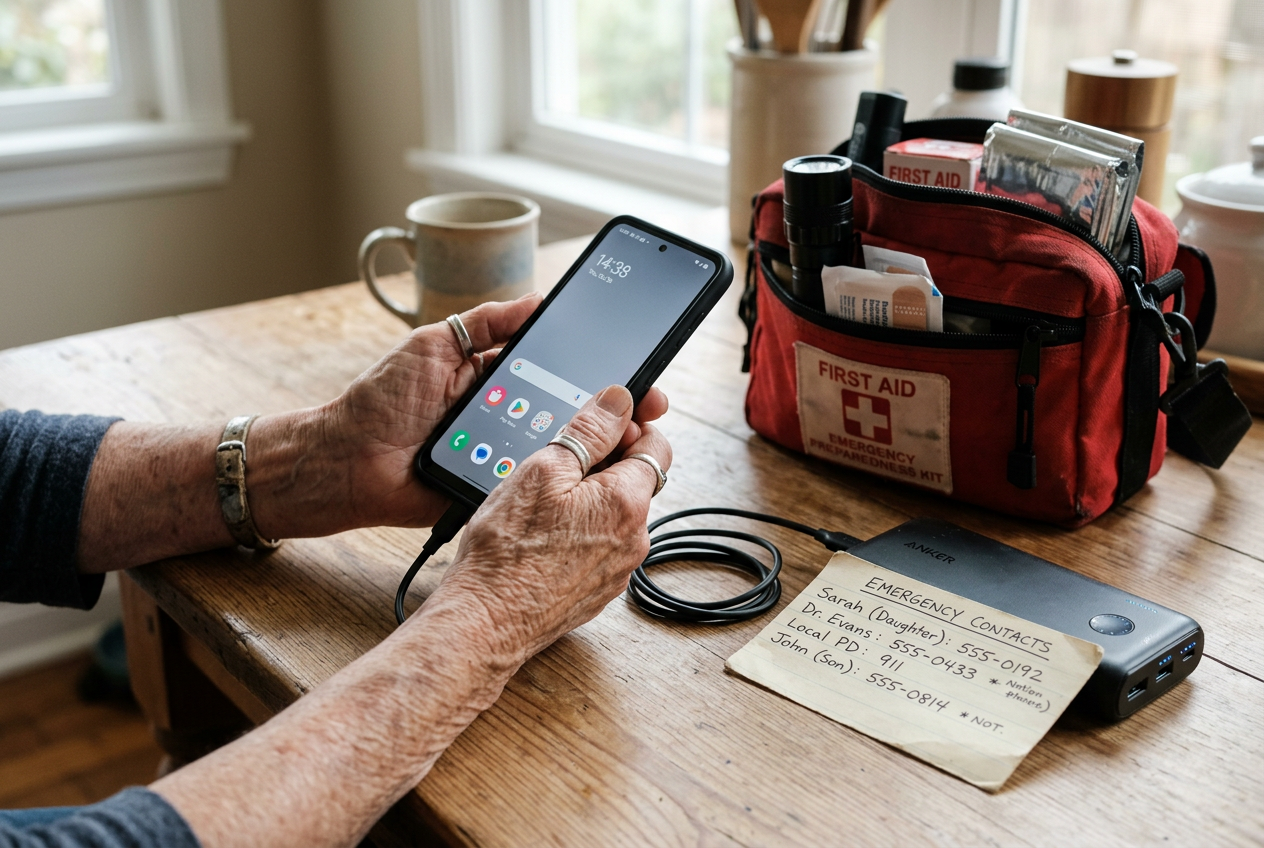
In an emergency, staying in touch gives everyone peace of mind. Your parents need a simple way to reach you. You need a way to reach them. A little planning now makes this much easier later.
Pick an Out-of-Area Contact
Choose one person who lives far away to be the family contact. This could be a cousin, a sibling, or a close friend in another city. During a local disaster, nearby phone lines can get busy. A call to someone out of the area often goes through more easily.
Here is how it works. If your parents cannot reach you, they call the out-of-area contact. You call that same person too. Then that person passes messages between you. Make sure your parents know who this person is and how to reach them.
Write Down Key Phone Numbers
Most people keep every number in their phone. That works until the battery dies. Then those numbers are gone.
Help your parents write important numbers on a card by hand. Include your number, the out-of-area contact, their doctor, and a neighbor. Keep one copy in their wallet. Keep another copy in their emergency kit. Writing the numbers down takes a few minutes and solves a big problem.
Test That Help Actually Reaches You
If your parents use a medical alert device, do not assume it works. Test it, and make sure everyone knows who receives the alert. Try it once together so they know how to call for help.
Do the same with their phone. Make a test call. Make sure they know how to answer and how to call you back. If they struggle with the phone, write simple steps on the number card.
Plan for Charging When the Power Is Out
A phone is only useful if it has power. During an outage, your parents need a backup way to charge it.
A hand crank radio with a built-in charger solves two problems at once. It gives you weather updates and it can charge a phone. The RunningSnail Hand Crank Radio has a USB-C port and can charge most phones in a pinch. It runs on hand crank, solar power, or a USB cable. Crank it for a few minutes to add some charge. This is slow, so use the phone only for short, important calls.
A charged power bank is another good option. Keep it in the kit and charge it every few months.
Keep Chargers Near the Kit
Store the charging cords and the radio in the emergency kit. That way, your parents are not hunting for them in the dark. Keep everything in one spot they can reach easily.
Frequently Asked Questions
How much water and food should my parents keep?
Aim for at least a three-day supply. That means nonperishable food and water for each person. Choose foods your parents already like and can open and eat with little effort. Rotate items before they expire. If your parents do not want to shop for everything, a prepacked kit is a simple start. The Ready America 2-person kit includes food bars and sealed water pouches for two people for three days.
Is a medical alert system worth the monthly fee?
It can be, especially if your parent lives alone or has fallen before. These devices let your parent call for help with one button. Many add fall detection, which sends an alert on its own. Most systems charge a monthly subscription, so compare what you get.
Some services connect to a 24/7 monitoring center. Others send alerts directly to family. Compare the cost, where the device works, and who will respond.
Can my parent safely run a generator?
Yes, but only with care. A generator gives off carbon monoxide. That gas has no smell and can kill. Never run a generator indoors, in a garage, or near open windows. Keep it outside and far from the house.
Store fuel in approved containers only. Keep it out of living spaces, away from heat and flames, and out of reach of children. Let the engine cool before you refuel. Never siphon fuel by mouth. Use a gasoline-rated pump. Always follow the maker’s directions and your local fire rules. If your parent is not comfortable with these steps, a generator may not be the right choice. See the generator section above for more.
How do I start if my parent is resistant?
Keep it simple and low pressure. Start with a short talk, not a big project. Discussing a plan ahead of time helps reduce fear. Ask what worries them most, then tackle one thing at a time.
Begin with easy wins. A flashlight by the bed. A list of emergency contacts on the fridge. A few extra bottles of water. Small steps feel manageable. You can also frame it as helping you worry less, not as a sign they cannot manage.
What should they do during a power outage?
Keep a way to get news and warnings. A hand crank radio works when the power is out and can also charge a phone. The RunningSnail hand crank radio has AM/FM/NOAA bands, a flashlight, and a USB charger. To stay warm, close off unused rooms, layer clothing, and use blankets. Make sure any medicines that need refrigeration have a backup plan. Keep phones charged before a storm hits.
Your Action Checklist
Here is a simple checklist you can work through with your parents. Go step by step. You do not have to do it all in one day. Many steps cost nothing. A few need a purchase, and those are marked.
You can print this page and check off each item together.
Step 1: Make the Plan (Free)
Sit down with your parents and talk it through. Agree on what to do if they need to leave home fast. Pick a safe place to go. Write down an evacuation route. Choose one out of town contact everyone can call or text. Make sure your parents know how they will get emergency alerts and warnings. Write the plan on paper and keep a copy where it is easy to find.
Step 2: Organize Medications and Medical Devices (Free)
Make a list of every medicine your parents take. Include prescriptions, over the counter drugs, and vitamins. Note the dose and the doctor who prescribed each one. Keep the list with the written plan. If your parents use a device that needs power, talk about a backup plan for outages.
Step 3: Build a Basic Kit (Some Purchases Optional)
Gather supplies to last at least three days. Include water, food that does not spoil, a flashlight, a first aid kit, and warm blankets. You can build a kit from items at home, which is free. Or you can buy a ready made kit to save time. A prebuilt option like the Ready America 72-hour kit for two people covers food, water, and first aid in one bag.
Step 4: Plan for Outages and Staying Warm (Some Purchases Optional)
Talk about how your parents will stay warm if the power goes out. Layer clothes and blankets. Close off one room to hold heat. A hand crank radio keeps them informed when the power is down. Many models also charge a phone. Options like the RunningSnail hand crank radio run on crank, solar, or USB.
Step 5: Set Generator Safety Rules (Free)
If a parent wants a generator, set safety rules first. Never run a generator indoors or in a garage. Keep it far from windows and doors. This protects against carbon monoxide, a gas you cannot see or smell. Store fuel only in approved containers, never inside the living space. Keep fuel away from heat and children. Let the engine cool before you refuel. Always follow the maker’s directions and local fire rules.
Step 6: Confirm a Way to Stay in Touch (Some Purchases Optional)
Make sure your parents can reach you fast. Keep phones charged. Practice calling the out of town contact. For a parent who lives alone, a medical alert device can help.
Work through these steps together, and your parents will be far more ready.
Next Steps
You do not need to do everything at once. In fact, trying to do it all in one weekend can feel like too much. Your parents may get tired or worried. You may get stuck on the hard parts. The better plan is to start small and keep going.
Pick One or Two Things This Week
Look back over this guide. Choose just one or two steps to finish this week. Here are some easy ones to start with:
- Sit down and talk through a simple plan together. Agree on how you will reach each other if the power or phones go down.
- Make a list of their medicines and any medical devices they use. Keep a copy on paper and a copy on your phone.
- Order or build a basic emergency kit for their home. A ready-made option like the Ready America 2-person 3-day kit gives them food, water, and first aid in one box.
- Add a hand-crank weather radio so they can hear alerts during an outage. The RunningSnail hand crank radio works without wall power.
Small wins build trust. Once your parents see that one step was easy, they are more open to the next one.
Revisit the Plan Over Time
A plan is not a one-time job. Things change. Your parents may start a new medicine. They may move. Their phone or contact list may change. Try to check in a few times a year. A good habit is to review the plan when the seasons change, like before winter and before storm season.
Walk through the plan out loud together. Ask simple questions. Does everyone still know the meeting spot? Is the kit still stocked? Are the batteries fresh? Does the medicine list still match what they take? A short review keeps the plan useful.
If a parent is thinking about a medical alert device, this is a good time to talk it over.
Keep Learning Together
Some topics in this guide deserve a deeper look. If your parents lose power often, read our guide on preparing for power outages. It covers how to stay warm and keep food safe. If they live where it gets cold, our guide on winter storms goes further on staying warm and safe when the heat goes out.
The goal is not to scare anyone. The goal is to help your parents feel calm and ready. A little planning now means fewer worries later. Pick your first step today. Then take the next one when you are both ready. Over time, those small steps add up to real peace of mind for the whole family.